Interpretation of the evidence for the effi
cacy and safety of
statin therapy
Rory Collins, Christina Reith, Jonathan Emberson, Jane Armitage, Colin Baigent, Lisa Blackwell, Roger Blumenthal, John Danesh, George Davey Smith, David DeMets, Stephen Evans, Malcolm Law, Stephen MacMahon, Seth Martin, Bruce Neal, Neil Poulter, David Preiss, Paul Ridker, Ian Roberts, Anthony Rodgers, Peter Sandercock, Kenneth Schulz, Peter Sever, John Simes, Liam Smeeth, Nicholas Wald, Salim Yusuf, Richard Peto
Summary
This Review is intended to help clinicians, patients, and the public make informed decisions about statin therapy for the prevention of heart attacks and strokes. It explains how the evidence that is available from randomised controlled trials yields reliable information about both the effi cacy and safety of statin therapy. In addition, it discusses how claims that statins commonly cause adverse eff ects refl ect a failure to recognise the limitations of other sources of evidence about the eff ects of treatment. Large-scale evidence from randomised trials shows that statin therapy reduces the risk of major vascular events (ie, coronary deaths or myocardial infarctions, strokes, and coronary revascularisation procedures) by about one-quarter foreach mmol/L reduction in LDL cholesterol during each year (after the fi rst) that it continues to be taken. The absolute benefi ts of statin therapy depend on an individual’s absolute risk of occlusive vascular events and the absolute reduction in LDL cholesterol that is achieved. For example, lowering LDL cholesterol by 2 mmol/L (77 mg/dL) with an eff ective low-cost statin regimen (eg, atorvastatin 40 mg daily, costing about £2 per month) for 5 years in 10 000 patients would typically prevent major vascular events from occurring in about 1000 patients (ie, 10% absolute benefi t) with pre-existing occlusive vascular disease (secondary prevention) and in 500 patients (ie, 5% absolute benefi t) who are at increased risk but have not yet had a vascular event (primary prevention). Statin therapy has been shown to reduce vascular disease risk during each year it continues to be taken, so larger absolute benefi ts would accrue with more prolonged therapy, and these benefi ts persist long term. The only serious adverse events that have been shown to be caused by long-term statin therapy—ie, adverse eff ects of the statin—are myopathy (defi ned as muscle pain or weakness combined with large increases in blood concentrations of creatine kinase), new-onset diabetes mellitus, and, probably, haemorrhagic stroke. Typically, treatment of 10 000 patients for 5 years with an eff ective regimen (eg, atorvastatin 40 mg daily) would cause about 5 cases of myopathy (one of which might progress, if the statin therapy is not stopped, to the more severe condition of rhabdomyolysis), 50–100 new cases of diabetes, and 5–10 haemorrhagic strokes. However, any adverse impact of these side-eff ects on major vascular events has already been taken into account in the estimates of the absolute benefi ts. Statin therapy may cause symptomatic adverse events (eg, muscle pain or weakness) in up to about 50–100 patients (ie, 0·5–1·0% absolute harm) per 10 000 treated for 5 years. However, placebo-controlled randomised trials have shown defi nitively that almost all of the symptomatic adverse events that are attributed to statin therapy in routine practice are not actually caused by it (ie, they represent misattribution). The large-scale evidence available from randomised trials also indicates that it is unlikely that large absolute excesses in other serious adverse events still await discovery. Consequently, any further fi ndings that emerge about the eff ects of statin therapy would not be expected to alter materially the balance of benefi ts and harms. It is, therefore, of concern that exaggerated claims about side-eff ect rates with statin therapy may be responsible for its under-use among individuals at increased risk of cardiovascular events. For, whereas the rare cases of myopathy and any muscle-related symptoms that are attributed to statin therapy generally resolve rapidly when treatment is stopped, the heart attacks or strokes that may occur if statin therapy is stopped unnecessarily can be devastating.
Introduction
Used appropriately, modern medical therapies have the potential to prevent a large proportion of the burden of cardiovascular disease. However, their appropriate use relies on the availability of robust data on safety and effi cacy, as well as on a sound understanding of the interpretation and application of such evidence.
Randomised controlled trials of adequate size are needed to be confi dent that any moderate benefi ts and any moderate harms of a treatment have been assessed suffi ciently reliably.1–4 In certain circumstances, available evidence from randomised trials about the eff ects of a treatment may be limited (perhaps because it is deemed not possible or too diffi cult to do adequate trials).2
However, the particular context that this Review addresses is the appropriate interpretation of evidence
about the safety and effi cacy of a treatment when
randomised trials of it have been conducted in large numbers of many diff erent types of patient (as is the case for statin therapy), as well as the additional value of information from observational studies based on cohorts, health-care databases, or other sources.3–5 Not only have the limitations of observational studies4,6–9 often been underestimated when attributing adverse eff ects to treatment (such as misleading claims that statins cause side-eff ects in one-fi fth of patients10–12), but also the strengths of randomised trials with masked treatment allocation and systematic ascertainment of many Lancet 2016; 388: 2532–61
Published Online
September 8, 2016 http://dx.doi.org/10.1016/ S0140-6736(16)31357-5
Clinical Trial Service Unit & Epidemiological Studies Unit and MRC Population Health Research Unit, Nuffield Department of Population Health, University of Oxford, Oxford, UK (Prof R Collins FRS, C Reith FRCP (Glasg.), J Emberson PhD, Prof J Armitage FRCP, Prof C Baigent FRCP, L Blackwell BSc, D Preiss PhD, Prof R Peto FRS); Ciccarone Center for the Prevention of Heart Disease, Division of Cardiology, Johns Hopkins University School of Medicine, Baltimore, MD, USA
(Prof R Blumenthal MD, S Martin MD); MRC/BHF Cardiovascular Epidemiology Unit, Department of Public Health and Primary Care, University of Cambridge, Cambridge, UK
(Prof J Danesh FMedSci); MRC Integrative Epidemiology Unit, University of Bristol, Bristol, UK (Prof G Davey Smith DSc); Department of Biostatistics and Medical Informatics, University of Wisconsin, Madison, WI, USA
(Prof D DeMets PhD); Department of Medical Statistics (Prof S Evans MSc), Clinical Trials Unit
(Prof I Roberts PhD), and Department of Non-Communicable Disease Epidemiology
(Prof L Smeeth FRCGP), London School of Hygiene & Tropical Medicine, University of London, London, UK; Wolfson Institute of Preventive Medicine, Barts and The London School of Medicine and Dentistry, Queen Mary University of London, London, UK (Prof M Law FRCP, Prof N Wald FRS); The George Institute for Global Health
Prof B Neal PhD,
Prof A Rodgers MBChB), and the National Health and Medical Research Council Clinical Trial Centre (Prof J Simes MD), University of Sydney, Sydney, Australia; International Centre for Circulatory Health & Imperial Clinical Trials Unit
(Prof N Poulter FMedSci), and the International Centre for Circulatory Health, National Heart and Lung Institute
(Prof P Sever FRCP), Imperial College London, London, UK; Center for Cardiovascular Disease Prevention, Brigham and Women’s Hospital, Harvard Medical School, Boston, MA, USA (Prof P Ridker MD); Centre for Clinical Brain Sciences, University of Edinburgh, Edinburgh, UK
(Prof P Sandercock DM); FHI 360, University of North Carolina School of Medicine, University of North Carolina, Chapel Hill, NC, USA
(Prof K Schulz PhD); and Population Health Research Institute, Hamilton Health Sciences and McMaster University, Hamilton, ON, Canada (Prof S Yusuf DPhil)
Correspondence to: Prof Rory Collins, Nuffield Department of Population Health, University of Oxford, Richard Doll Building, Old Road Campus, Oxford OX3 7LF, UK
[email protected] diff erent types of adverse event have been
under-estimated for the reliable assessment of the safety and effi cacy of treatment.3,9,13–15
This Review fi rst considers the generic strengths and limitations of randomised trials and observational studies for assessing the eff ects of treatment, and then considers the specifi c evidence that is available on the effi cacy and safety of statin therapy. It concludes by considering the public health implications of the failure to recognise the full benefi ts of using statin therapy and of the exaggerated claims that have been made about the rates of side-eff ects.
Randomised controlled trials: strengths and
weaknesses for assessing the benefi ts and harms
of treatment (panel 1)
Like-with-like comparisons within randomised trials The key strength of randomised controlled trials is that the process of randomisation results in groups of patients who diff er from each other only by the play of chance with respect to their risks of having all types of health outcome (ie, the randomised treatment groups are balanced with respect to both known and unknown risk factors, irrespective of whether or not these have been assessed).3,9,13–16 In addition, masking assignment of study treatment with a placebo minimises the diff erential assessment of adverse events between the study treatment groups following randomisation.17,18 Continued follow-up of all randomised patients (even if some stop taking their assigned treatment) maintains the like-with-like comparison produced by the randomisation process (since, for example, the patients who stop may diff er between the randomised groups).3 Consequently, subject to statistical tests of the likely impact of chance, the observed diff erences in the rates of health outcomes between the randomly assigned patient groups within a trial (ie, intention-to-treat comparisons) can be attributed causally to diff erences in the study treatment.
Information about a health outcome does not need to be obtained in the same way in the diff erent randomised trials of an intervention (eg, diff erent statin trials recorded muscle-related outcomes diff erently; appendix) for the comparisons of the rates of the outcome between the randomly allocated groups within each separate trial to provide unbiased assessments of any real eff ects of the treatment. However, biases can be introduced by making non-randomised comparisons between rates of events across diff erent trials, not only because the outcome defi nitions may diff er but also because the types of patient studied and the duration of follow-up may diff er. Such between-trial comparisons may be seriously misleading,19 which is the reason why meta-analysis of randomised trials involves statistical methods that are based on the within-trial diff erences in a particular outcome.20,21
Robustness for detecting real treatment eff ects
It has been suggested that ascertainment of adverse events in randomised trials may not be suffi ciently
specifi c or sensitive to detect adverse eff ects of treatment reliably.11,12,22–24 However, comparisons within randomised trials with unbiased ascertainment of outcomes between the treatment groups are robust against both over-ascertainment and under-over-ascertainment.25 For example, if the study treatment produced a 20% proportional decrease (or increase) in the rate of an outcome that occurred in 10% of control patients, then (as shown in table 1) the ability to detect such an eff ect in a randomised trial of 20 000 patients would not be much altered by the random addition of 10–20% of reported events that were not actually the outcome of interest (ie, false positives). Likewise, similar amounts of under-ascertainment (ie, false negatives), would not materially aff ect the ability to detect such eff ects in a trial. Moreover, these false positives would have little or no impact on estimates of the absolute eff ects, and the false negatives would have limited impact. The robustness of these within-trial randomised comparisons applies not only to the detection of benefi cial eff ects, but also to the detection of harms that a treatment might cause (such as any muscle-related symptoms with statin therapy).
It has been suggested that, when data for some types of health outcome are not available from all of the relevant randomised trials of a treatment, this will bias the assessment of its eff ects.11,26,27 However, although some of these trials may have recorded all types of health outcome reported by the participating patients,
See Onlinefor appendix Panel 1: Contribution of randomised trials for assessing
treatment eff ects
Like-with-like patient comparisons
Randomisation results in groups of patients that diff er from each other only by the play of chance with respect to their risks of suff ering all types of health outcome, so observed diff erences in rates of health outcomes can generally be attributed causally to diff erences in study treatment.
Like-with-like outcome comparisons
Non-diff erential outcome ascertainment between the randomised treatment groups within a trial helps to minimise bias in the assessment of treatment eff ects. It can be enhanced by masking, which is likely to be of most value for symptomatic adverse events that are subjective.
Robustness for detecting eff ects
Comparisons within randomised trials with unbiased ascertainment of outcomes between treatment groups are robust for the detection of both benefi cial and harmful eff ects of treatment.
Generalisability of evidence
others may have only recorded those outcomes that were considered serious (typically defi ned as resulting in admission to hospital or death), perhaps because previous trials had ruled out material diff erences in less serious outcomes. If information on a particular outcome is not available from a randomised trial because it was not recorded that would not bias assessment of the eff ects of the treatment based on trials that did record the outcome. Also, if randomised trials have already reported results based on large numbers of occurrences of a particular outcome (as with muscle-related outcomes in statin trials; appendix) then the inclusion of any unpublished data from other trials that did record such outcomes is not likely to materially alter the assessment of the eff ect of the treatment on that outcome.
Intention-to-treat analyses based on comparisons between all randomised patients, irrespective of whether they were adherent to their assigned study treatment (ie, stopped taking the active drug or, if assigned to the control group, started taking it), will tend to underestimate the eff ects produced by actually taking the treatment. However, rather than using potentially biased on-treatment comparisons among only those patients who took their assigned study treatment, more appropriate allowance can be made by applying an approximate estimate of the level of adherence to estimates of the treatment eff ects provided by the intention-to-treat comparisons.28 For example, if the average adherence to treatment assignment is two-thirds and the observed relative risk reduction (or increase) is 20%, then the adjusted estimate of the eff ect of actual use of the treatment would be a 30% proportional reduction (or increase).
Specifi city versus sensitivity of composite outcomes When there is clear evidence that a treatment produces eff ects on the incidence of diff erent types of outcome that are in the same direction and of similar magnitude (eg, the reductions in coronary events, strokes, and revascularisations produced by statin therapy29–34), combination of these outcomes in a composite outcome (eg, major vascular events in the statin trials) may well provide more robust assessments of the eff ects of the treatment because they involve larger numbers of events than for any of the constituent outcomes. That does not necessarily mean that—when deciding whether the absolute benefi ts of the treatment outweigh the harms for any particular type of patient (eg, off ering statin
therapy to individuals at lower vs higher risk of
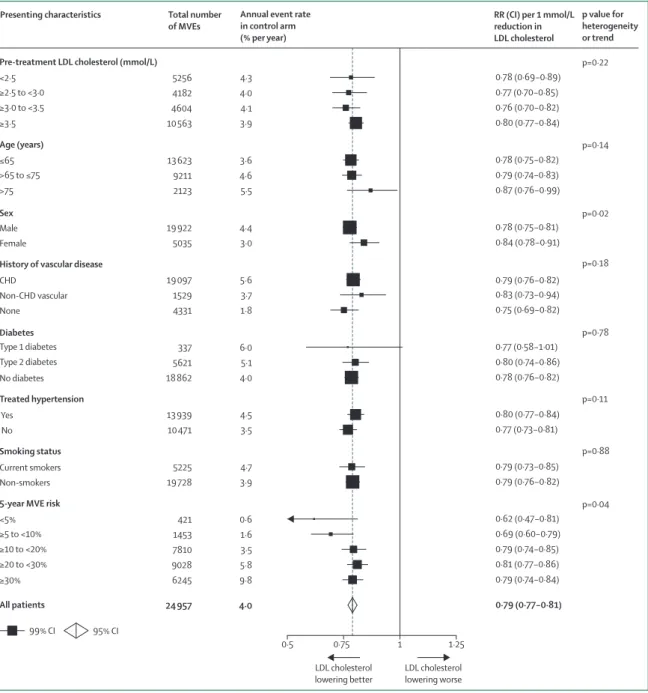
cardiovascular events)—equal weight should be given to the diff erent components of such composite outcomes. Instead, such analyses of composite outcomes may allow more reliable evidence to emerge about the eff ects of the treatment in diff erent circumstances (eg, the similar proportional reductions in major vascular events that have been found with statin therapy among many diff erent types of patient;29–34 fi gure 1).
However, when a treatment has eff ects on diff erent outcomes that diff er in direction, then their combination in a composite outcome will reduce the ability to detect these outcome-specifi c eff ects and limit generalisability of the analyses.35–38 For example, if a treatment reduces the incidence of ischaemic strokes but increases the incidence of haemorrhagic strokes (as appears to be the case for statin therapy31,39) then the adverse eff ect on haemorrhagic strokes may be missed by an assessment based on the composite of all stroke types since ischaemic strokes occur more commonly in most circumstances. By contrast, the assessment of the eff ects of the treatment on ischaemic and haemorrhagic strokes considered separately would not only be more sensitive to any benefi ts and harms, but it would also yield fi ndings that are more readily generalised to diff erent settings (as with the use of aspirin in primary and secondary prevention40).
Likewise, if treatment produced similar proportional reductions in vascular mortality and increases in non-vascular mortality, then the eff ect on the composite outcome of all-cause mortality would depend on the ratio of vascular to non-vascular deaths in a particular setting: the treatment would appear to be benefi cial when vascular deaths predominated, but harmful when non-vascular deaths predominated. Instead, the application of the proportional reductions and increases in the separate causes of death to the expected rates of these outcomes in the population of interest would yield estimates of the absolute eff ects of treatment on each type of death and, thus, of the net eff ect on survival for particular types of individual (as is described later in the context of statin therapy).4,41
The lack of sensitivity and generalisability of composite outcomes can be even more problematic when they Active
(n=10 000) Control (n=10 000)
Relative reduction
Absolute reduction
Z
score*
True events
800 (8·0%) 1000 (10·0%) 20% 2·0% 4·9
Extra false outcomes (evenly distributed†)
+10% 890 (8·9%) 1090 (10·9%) 18% 2·0% 4·7
+20% 980 (9·8%) 1180 (11·8%) 17% 2·0% 4·5
Missing real outcomes (unevenly distributed†)
–10% 720 (7·2%) 900 (9·0%) 20% 1·8% 4·6
–20% 640 (6·4%) 800 (8·0%) 20% 1·6% 4·3
*For context, a Z score of 4·0 is equivalent to a p value of <0·0001. †The numbers of participants in whom true events would not have occurred would be slightly diff erent between the treatment groups, but this produces little imbalance in the numbers of false events that can be recorded among such patients in the two treatment groups when true events are relatively uncommon (as in this example). Consequently, false events have been approximately evenly distributed because they would not be aff ected by treatment assignment. By contrast, there would be fewer real outcomes to be missed in the active treatment group (since the treatment reduces the rate of the outcome), so the numbers of missed real outcome events are unevenly distributed between the treatment groups.
involve very disparate outcomes. It has been suggested that the assessment of statin therapy should be based on the composite outcome of all serious adverse events of any kind (eg, mixing vascular outcomes that are known to be prevented by statin therapy with outcomes in gastrointestinal, genitourinary, neuropsychiatric, and other systems that may not be aff ected).11 A key problem with such an approach is that it can prevent the identifi cation of both specifi c benefi ts and specifi c hazards of treatment. For example, analyses of specifi c outcomes
among the 25 673 randomised patients in the THRIVE trial were able to detect that niacin therapy (nicotinic acid) is associated with unexpected hazards (ie, increases in serious infections and bleeding)42 that would have been missed by analyses based on a composite of adverse events (as in the case of the AIM-HIGH trial43 of niacin). Consideration of the eff ects of treatment on specifi c outcomes allows any diff erences in its eff ects to be determined, and its use can then be appropriately targeted at those who are likely to get more benefi t than harm.
Figure 1: Similar proportional reductions in risks of major vascular events per mmol/L LDL cholesterol reduction in randomised trials of statin therapy among people with diff erent presenting characteristics
Adapted from CTT Collaboration website. RRs are plotted for the combined comparisons of MVE rate in randomised trials of routine statin therapy versus no routine statin therapy and of more versus less intensive statin therapy, weighted per 1·0 mmol/L LDL cholesterol reduction at 1 year. The size of the squares is proportional to the numbers of events recorded (ie, statistical information) in the particular comparison. CHD=coronary heart disease. RR=rate ratio. MVE=major vascular event.
0·5 0·75 1 1·25
Total number of MVEs
Presenting characteristics Annual event rate
in control arm (% per year)
RR (CI) per 1 mmol/L reduction in LDL cholesterol
p value for heterogeneity or trend
99% CI 95% CI
LDL cholesterol lowering worse LDL cholesterol
lowering better
<2·5 5256 4·3 0·78 (0·69−0·89)
≥2·5 to <3·0 4182 4·0 0·77 (0·70−0·85)
≥3·0 to <3.5 4604 4·1 0·76 (0·70−0·82)
≥3·5 10 563 3·9 0·80 (0·77−0·84)
≤65 13 623 3·6 0·78 (0·75−0·82)
>65 to ≤75 9211 4·6 0·79 (0·74−0·83)
>75 2123 5·5 0·87 (0·76−0·99)
Male 19 922 4·4 0·78 (0·75−0·81)
Female 5035 3·0 0·84 (0·78−0·91)
CHD 19 097 5·6 0·79 (0·76−0·82)
Non-CHD vascular 1529 3·7 0·83 (0·73−0·94)
None 4331 1·8 0·75 (0·69−0·82)
Type 1 diabetes 337 6·0 0·77 (0·58−1·01)
Type 2 diabetes 5621 5·1 0·80 (0·74−0·86)
No diabetes 18 862 4·0 0·78 (0·76−0·82)
Yes 13 939 4·5 0·80 (0·77−0·84)
No 10 471 3·5 0·77 (0·73−0·81)
Current smokers 5225 4·7 0·79 (0·73−0·85)
Non-smokers 19 728 3·9 0·79 (0·76−0·82)
<5% 421 0·6 0·62 (0·47−0·81)
≥5 to <10% 1453 1·6 0·69 (0·60−0·79)
≥10 to <20% 7810 3·5 0·79 (0·74−0·85)
≥20 to <30% 9028 5·8 0·81 (0·77−0·86)
≥30% 6245 9·8 0·79 (0·74−0·84)
All patients 24 957 4·0 0·79 (0·77−0·81)
Pre-treatment LDL cholesterol (mmol/L) p=0·22
Age (years) p=0·14
Sex p=0·02
History of vascular disease p=0·18
Diabetes p=0·78
Treated hypertension p=0·11
Smoking status p=0·88
5-year MVE risk p=0·04
Value of meta-analyses of randomised trials
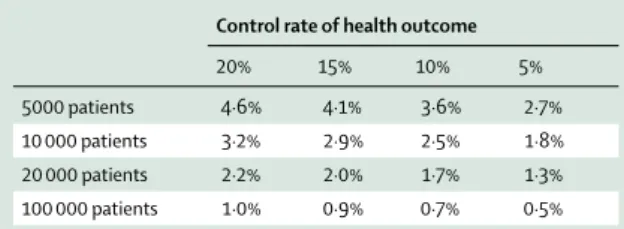
Meta-analyses of randomised trials may be required when the eff ects of a treatment on some particular outcome are likely to be moderate and too few cases of it have occurred in any individual trial to assess the eff ects suffi ciently reliably.3,20,44–47 For example, table 2 shows that a meta-analysis of 100 000 randomised patients (as is available for statin therapy33) would have 90% statistical power at p=0·01 to detect an absolute excess of 0·5% in the incidence of events that occur in 5% of patients in the control group (ie, a 10% proportional increase) and an absolute excess of 1% for events that occur in 20% of patients in the control group (ie, a 5% proportional increase). Meta-analysis can also reduce the impact of selective emphasis on eff ects observed in particular trials that may overestimate the real eff ects3,20,46 (eg, the excess of diabetes cases with statin therapy fi rst noticed in the JUPITER trial48 was found to be smaller in other statin trials49) or may not even be real (eg, the small excesses of incident cancer cases in the CARE trial50 and the PROSPER trial51 were not confi rmed by the much larger numbers of cases in the other statin trials52,53).
However, meta-analyses of randomised trials are not typically required to detect large eff ects of a treatment on common outcomes. Instead, individual trials will suffi ce if they have recorded large enough numbers of cases of the outcome of interest—eg, a trial of 2500 patients allocated to active treatment versus 2500 allocated to matched placebo would have at least a 90% chance at p=0·01 of detecting a 20% versus 15% diff erence in event rate if it existed; and a trial of 20 000 patients would have similar statistical power to detect (or refute) reliably an absolute diff erence as small as about 2% (ie, 20% vs 18%; table 2). In such circumstances, it may be more informative to consider the separate within-trial comparisons in each of the relevant randomised trials in order to determine whether (when considered in the context of the other trials) any of them do provide compelling evidence that there are any relevant eff ects on any specifi c outcomes (eg, muscle-related outcomes reported in the large randomised placebo-controlled trials of prolonged exposure to statin therapy; appendix).
In addition, an individual trial that has been specifi cally designed to assess the eff ects of a treatment on some particular outcome especially carefully (eg, serial assess-ments of cognitive function54–58 and of lens opacities59–61 in
statin trials) may be more sensitive to any real eff ects of treatment than would be a meta-analysis based on the less specifi c assessment of the outcome in all of the other randomised trials—or, to an even greater extent, on non-randomised comparisons involving data recorded for entirely diff erent purposes in observational studies.
Generalisability of evidence on effi cacy from randomised trials
It has been suggested that, because of the exclusion criteria in randomised trials, results from observational studies based on use of a treatment in routine practice (sometimes referred to, misleadingly, as “real world evidence”) are more widely generalisable about its eff ects.10,11,22,24,62–64 However, meta-analyses of randomised trials with diff erent eligibility criteria that have included large numbers of diff erent types of patients (eg, although some statin trials excluded people who were older or who had particular conditions, other statin trials did not) may be able to address this putative limitation by yielding unbiased information based on suffi cient numbers of individuals with diff erent characteristics that can then be widely generalised (eg, with the statin trials,29–34,65 older and younger people, women and men, individuals with and without pre-existing occlusive vascular disease or other conditions).37,66 Such analyses would not, of course, provide direct evidence among those types of patients who were excluded largely or wholly from randomised trials because the treatment was considered to be contraindicated. However, if the treatment is not used routinely in such patients, nor would observational studies provide such evidence and, in most cases, the eff ects in such circumstances would be of limited clinical relevance.
The risk ratio for a particular outcome in a randomised controlled trial is the ratio of the proportion of the treated patients and control patients who develop the specifi c outcome. As a result, only those individuals who have the outcome contribute information on the risk ratio. Moreover, inclusion of individuals who will not have the outcome (such as most of those in a primary prevention population) would not change the eff ect of treatment in individuals who will have it.37,67 In general, therefore, any proportional reductions or increases in the rate of a specifi c outcome should be expected to be similar in diff erent circumstances. Consequently, when a treatment has been shown unequivocally to aff ect the rate of a particular outcome, defi nite evidence of an eff ect in each separate type of person is not generally required. Instead, it may be more appropriate to conclude that the treatment produces similar proportional eff ects on that outcome among diff erent patient types (as has been found generally with statin therapy29–33), unless compelling evidence emerges that the eff ect in a particular group of patients diff ers from the overall risk ratio.3,13,68–71
This feature of similar proportional eff ects of treatment on specifi c outcomes is useful for generalising results from randomised trials. It is, of course, the absolute—not Control rate of health outcome
20% 15% 10% 5%
5000 patients 4·6% 4·1% 3·6% 2·7%
10 000 patients 3·2% 2·9% 2·5% 1·8%
20 000 patients 2·2% 2·0% 1·7% 1·3%
100 000 patients 1·0% 0·9% 0·7% 0·5%
the proportional—eff ects on outcome that matter for an individual when considering the use of a treatment. However, application of the proportional eff ects of a treatment on specifi c outcomes from randomised trials to the absolute rates of these outcomes derived from observational studies in some particular population of interest (eg, for secondary prevention in patients at high risk of recurrent vascular events vs primary prevention in lower-risk individuals in the general population) can yield generalisable estimates of both the absolute benefi ts and the absolute harms of a treatment.4,41 Combination of these separate estimates then enables the net eff ect of using the treatment to be estimated for particular types of individual.
Generalisability of evidence on side-eff ects from randomised trials
It has been claimed that randomised trials yield under-estimates of rates of side-eff ects because they exclude patients in whom the treatment being studied causes
adverse eff ects (eg, patients with so-called “statin intolerance”).11,12,22–24,64,72–78 However, for treatments that are not yet on the market or that have not yet been widely adopted into routine practice (as was the case during the recruitment phase of many of the large clinical outcome trials of statins65,79), few patients will have previously been exposed to the treatment and excluded because of having had problems with it.
Some trials use a pre-randomisation run-in phase to improve the subsequent adherence to the randomly assigned treatment (whether active drug or placebo). Run-in phases involving the use of a placebo (as in about half of the large trials of statin vs control; appendix) would not lead to underestimates of the rates of
side-eff ects. Indeed, by improving post-randomisation
adherence, the sensitivity of randomised comparisons to detect any eff ects of treatment would be expected to be
improved.80 Less commonly, trials have used run-in
phases with the active drug (as in a few of the large statin trials; appendix), which may exclude some patients in whom the treatment might cause adverse eff ects soon after starting it (although, in one of the large statin trials, no diff erences in reasons for stopping treatment were observed between placebo and active phases of run-in81). However, it is less likely that use of an active run-in would prevent the emergence of genuine side-eff ects during the later years of such trials. For example, it was the SEARCH randomised trial with an active run-in phase that identifi ed a substantial proportional increase in the risk of myopathy with simvastatin 80 mg daily (a regimen that had been recommended for routine care82) compared to simvastatin 20 mg daily (appendix).83
For all of these reasons, evidence about side-eff ects from randomised trials is likely to be far more widely generalisable to routine practice than is often asserted.
Observational studies: limited additional value
for assessing the eff ects of treatment when
large-scale evidence exists from randomised
controlled trials (panel 2)
Observational epidemiological studies have been extremely valuable for identifying associations of risk factors with disease (eg, smoking with lung cancer; blood pressure and cholesterol with cardiovascular disease), but their value for the assessment of the eff ects of treatment is more limited.
Potential to detect large eff ects on rare outcomes Case reports to regulatory authorities or studies based on health-care databases often involve the exposure of large numbers of individuals to a treatment that is being used in routine practice. Consequently, they have the potential to detect large adverse eff ects on health outcomes that would not normally be expected to occur (eg, Reye’s syndrome with aspirin use in children; tendon dis-orders with fl uoroquinolones; myopathy with statin therapy).2,4,9,84–87 Such studies are also able to detect large Panel 2: Contribution of observational studies for
assessing treatment eff ects
Detect large eff ects on rare outcomes
Exposure to treatment in large numbers of individuals in observational studies based on health-care databases or on post-marketing case reports enables large eff ects (adverse or benefi cial) to be detected on outcomes that would otherwise not be expected to occur (ie, are usually rare).
Assess eff ects of prolonged exposure
Observational studies may involve data on prolonged exposure to a treatment that can enable long-term eff ects to emerge, although the available information about duration and dose may be incomplete in available databases, limiting the inferences that can be drawn.
Biases due to diff erences in risks
Even when associations between treatment and health outcomes remain after statistical adjustment for observed diff erences between diff erent groups of individuals, the associations may still refl ect residual confounding due to diff erences that were assessed incompletely or not at all.
Biases due to diff erences in ascertainment
Patients treated in routine practice know they are taking a particular drug and, indeed, may be told it has side-eff ects and be monitored more closely. Consequently, any associations with a treatment in observational studies may be biased by diff erences in reporting and detection of health outcomes between patients who are taking it and those who are not.
Generalisability of evidence
benefi cial eff ects of a treatment when a good outcome would otherwise not be expected (eg, insulin for diabetic ketoacidosis; penicillin for lobar pneumonia; ganciclovir for cytomegalovirus retinitis).2,84 However, because of the potential biases that are inherent in observational studies, they cannot be relied on for demonstrating the causal nature of treatment-related associations when the relative risks are moderate (eg, less than 3–4-fold) or relate to health outcomes that are common in the types of patient studied.4,6,7,9,84–87 In such circumstances, large observational studies may well yield associations of treatment with health outcomes that have small random errors (ie, are precise) but that are not causal.
This limitation is not confi ned to the assessment of benefi cial treatment eff ects, but applies equally to the detection of harmful eff ects. For, although unintended adverse eff ects may be more plausible than are any unintended benefi cial eff ects,88 the potential impact of the biases in observational studies is similar irrespective of the direction of the associations. Consequently, when large-scale evidence from randomised controlled trials does exist (as it does for statin therapy), the additional value of information from non-randomised observational studies about treatment eff ects is very limited.
Potential to assess the eff ects of prolonged exposure to treatment
An oft-cited advantage of observational studies is that they may involve prolonged exposure to the treatment of interest. However, adequate data about the use of a treatment in health-care databases might not involve a duration of exposure that is longer than in the randomised trials. For example, in several prominently reported health-care database studies of statin therapy, the average treatment exposure ranged from 2 to 5 years89–92 (compared with about 4–5 years in the randomised trials designed to assess clinical effi cacy and safety33). Moreover, information about the duration and dose of the treatment might be incomplete in databases (eg, based on limited prescription data without information about actual use) that have not been compiled specifi cally for the purpose of assessing the eff ects of that specifi c treatment (eg, primary care or hospital data that are being used for patient care or administrative purposes).93–97
In addition, whereas randomised trials assess the eff ects of a specifi c exposure (ie, a particular dose of a particular drug with information about adherence) on outcomes that are sought systematically, observational studies often only assess more general associations (eg, prescription of many diff erent doses of a drug, or a class of drug, on ill-defi ned outcomes), which may prevent the detection of eff ects that are specifi c (eg, the higher rate of myopathy with simvastatin 80 mg daily than with 20 mg daily83). Combination of precise information about the treatment that is received during a specifi c period in a randomised trial and prolonged follow-up of outcomes after the trial
has ended (perhaps through linkage to electronic health records) may also enable the reliable assessment of the later eff ects of the treatment (as has been done for statin therapy98–106) while avoiding the potential biases that are inherent in observational studies.
Biases due to diff erences in underlying risks of health outcomes
The magnitude of the potential biases inherent in observational studies of treatment is often under-estimated in the interpretation of associations that are found with health outcomes.4,6–9,16,86 Confounding by indication, or contraindication, occurs when the treatment being considered tends to be provided more, or less, often to individuals with medical conditions or other characteristics that are associated with increased, or decreased, risks of various health outcomes (which is, of course, what would be expected to occur in clinical
practice107). Bias may also be introduced by other
diff erences in the underlying risks of developing health outcomes among the individuals who have received a particular treatment and the individuals with whom they are compared who have not received that treatment. Even when associations between the treatment and health outcomes remain after statistical adjustment for observed
diff erences between these diff erent groups of individuals, the adjusted associations might still refl ect residual confounding due to diff erences in factors that were assessed incompletely or not at all (and so would not necessarily have been taken fully into account in adjusted analyses) or due to other inadequacies in the approach to adjustment (eg, using the wrong statistical model).6,7,95,108–110
Consequently, relying on evidence from observational studies about the eff ects of treatment on common outcomes—rather than considering it to be hypothesis generating—may well have adverse consequences for patients and public health. For example, in observational studies, the use of hormone replacement therapy by post-menopausal women was associated with about 50% less coronary disease than among women who did not use it.111–113 This apparent protective eff ect was considered by many to be biologically plausible because of the marked diff erences in rates of coronary heart disease between men and women before the menopause, as well as the known eff ects of oestrogens on lipid profi les.113–115 As a result, hormone replacement therapy was widely prescribed to prevent coronary disease (even though it was not licensed for that purpose),116 becoming one of the most commonly used medications in high-income countries.
used or the timing of initiating treatment mattered),121,122 but these were eventually refuted.123,124 Likewise, randomised trials have not confi rmed the 30% higher risk of breast cancer found in observational studies of oestrogen-alone preparations, although the results for combined oestrogen–progestin preparations in these diff erent types of study appear similar.125–127 Despite these discrepancies, the similarity of the direction—but not the size128,129—of the diff erences in the rates of stroke and pulmonary embolism in observational studies and in randomised trials of hormone replacement therapy has been used to justify continued reliance on observational evidence,2 rather than as an illustration of the diffi culty of determining which, if any, associations with treatment in observational studies provide a reliable basis for safe and eff ective care of patients and the public.
A number of reviews have compared the estimates of treatment eff ects from observational studies and randomised trials, but their methods have been criticised (chiefl y because of concerns about the methods used to select the studies and compare the results) and their fi ndings have been inconsistent.108 It has been concluded that these reviews identifi ed many examples where the results for the same intervention were on average the same, but also many examples where the results diff ered. For example, there have been many claims about the benefi ts of various vitamin supplements based on observational studies130,131 that have been reliably refuted by large randomised trials.132–134 Similarly, when compared with the results from randomised trials of the eff ects of treatments for several diff erent cancers, observational studies have generated improbable results despite controlling for comorbidity, extent of disease, and many other characteristics that were recorded in detailed databases135–137 (as is also the case for reported associations of statins with lower rates of cancer92,138–140).These fi ndings are consistent with empirical studies in which biases in observational studies were shown to be large enough to conclude falsely that treatment produced benefi t or harm, with none of a range of statistical strategies (such as regression analysis or propensity matching) capable of adjusting adequately or predictably for bias.95,108–110
Biases due to diff erences in the ascertainment of health outcomes
Observational studies of treatment eff ects are often based on health outcome data that have been recorded without consistent coding or validation.93–97 Moreover, by contrast with the situation in randomised controlled trials with masked treatment assignment (ie, when patients and their doctors do not know whether they are taking the active treatment or a matching placebo), patients being treated in routine practice know that they are taking a particular drug, as do their doctors. Indeed, the patients may have been specifi cally told that the treatment has potential side-eff ects141–144 (eg, patients given statin therapy are typically advised that serious muscle problems can
occur, albeit rarely, and to advise their doctors if they develop muscle pain or weakness145–148), and they may be more closely monitored by their doctors. Such biases may be exacerbated by concomitant changes in lifestyle recommended by the patients’ doctors (eg, the prescription of physical activity as well as statin therapy might lead to exercise-induced muscle pain being attributed to the drug). Consequently, assessment of the eff ects of a treatment in observational studies may be biased by diff erences in the reporting and detection of health outcomes between the patients who are taking it and those who are not.141–144
However, although it has been shown that randomised controlled trials without masked treatment assignment can produce misleading estimates of treatment eff ects (particularly for subjective outcomes),17,18,144 the inability to make allowances for such ascertainment biases is rarely acknowledged adequately in the interpretation of observational studies95,149,150 (including for statin therapy89,91,151,152). The magnitude of these biases can be large.142,153 For example, in a masked randomised trial among patients considered to be statin intolerant because of a history of muscle pain on statin therapy, myalgia was reported by about one-quarter of patients irrespective of whether they were taking atorvastatin 20 mg daily or placebo tablets (with PCSK9 inhibitor injections) for 24 weeks, but the rates fell below 5% immediately after stopping either the active or placebo tablets.154,155 These results indicate the extent to which misattribution of adverse events can bias assessments of treatment in observational studies which, necessarily, do not involve masked ascertainment of outcomes.
Potential benefi ts and harms of lowering LDL
cholesterol concentrations
Associations between LDL cholesterol and vascular disease
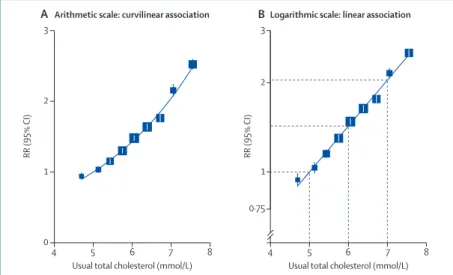
By contrast with observational studies of treatment, observational epidemiological studies are valuable for the assessment of causal risk factors. In particular, such studies have shown that there is a continuous positive association between blood concentrations of LDL cholesterol and the rates of coronary heart disease events in diff erent populations, without any suggestion within the range that has been studied of a threshold below which a lower concentration is not associated with a lower risk.156,157 The absolute diff erence in coronary disease risk associated with a given absolute diff erence in LDL cholesterol is greater at higher concentrations (fi gure 2A), which helps to explain the emphasis in previous treatment guidelines on individuals with hypercholesterolaemia. However, if risk is plotted on a logarithmic scale, then the proportional diff erence in risk associated with a given absolute diff erence in LDL cholesterol concentration is similar throughout the range (fi gure 2B).
cardiovascular disease risk per mmol/L reduction in LDL cholesterol should be expected to be similar irrespective of the starting cholesterol concentrations (rather than, as has been suggested for statin therapy,10 being evidence that the eff ects are not related to cholesterol lowering). Moreover, the absolute reduction in vascular risk per mmol/L reduction in LDL cholesterol would also be expected to be similar for individuals who have similar levels of risk but present with diff erent cholesterol concentrations. The results of randomised controlled trials of statin therapy support these epidemiological expectations (as described later),29–33,160,161 and treatment guidelines now tend to focus on an individual’s risk of having atherosclerosis-related events as well as on their LDL cholesterol concentration.162,163
Lower concentrations of cholesterol have been associated in observational studies with higher rates of all-cause mortality, particularly in older people.164–166 However, such associations can be shown not to be causal. For example, using the Mendelian randomisation approach, lower genetically determined LDL cholesterol concentrations are associated with lower all-cause mortality even among individuals aged older than 90 years.167 It appears that pre-existing disease causes lower cholesterol concentrations (so-called “reverse causality”);168 spurious associations can often be reduced in analyses of observational epidemiological studies of risk factors by censoring the fi rst few years of follow-up.
Causal relationship between LDL cholesterol and vascular disease
Observational studies can provide evidence about associations of risk factors with health outcomes, but they do not necessarily suffi ce to confi rm the causal nature of such associations. In the case of LDL
cholesterol, several additional sources of evidence have helped to show that the continuous association with atherosclerotic disease is causal. These include experimental studies of atherosclerosis in animals, monogenic and polygenic associations in human beings, and randomised trials of LDL cholesterol-lowering therapy (which also assess the extent of risk reversibility and its timescale).
Experimental studies in animals have shown that diets that raise LDL cholesterol concentrations increase the extent of atherosclerosis in the arterial wall, and that lowering LDL cholesterol concentrations with either diet or drugs (including statins) can reduce atherosclerosis.169,170 Genetic disorders in human beings (in particular, LDL receptor mutations) that cause large elevations of LDL cholesterol concentrations are associated with substantially elevated rates of atherosclerotic disease.171,172 Moreover, these disorders (ie, familial hyper-cholesterolaemia) provide compelling evidence of dose eff ects, whereby individuals in European and North American populations who inherit the abnormal genetic variant from both parents typically have LDL cholesterol concentrations greater than 13 mmol/L and coronary events before the age of 20 years,171 whereas those who inherit the abnormal variant from one parent typically have concentrations greater than 8 mmol/L and events in early middle-age.172 In addition, several common genetic variants have been identifi ed that cause much smaller increases in LDL cholesterol concentration and these are associated with correspondingly smaller increases in the risk of coronary events, providing further evidence in support of a causal association.173
Proven benefi cial eff ects of lowering LDL
cholesterol concentration with statin therapy
In the pre-statin era, meta-analyses of randomised controlled trials of cholesterol-lowering diets, drugs, and ileal bypass surgery showed that, within a few years of reducing blood cholesterol concentrations, rates of non-fatal myocardial infarction and coronary death are reduced.174 In addition, the randomised trials that involved larger and more prolonged cholesterol reductions yielded larger reductions in the rates of coronary events. However, it was suggested that these benefi cial eff ects might be off set by excesses in non-coronary deaths and cancers, which generated uncertainty about the overall benefi ts of lowering cholesterol.175–177 The development of statins, which can lower LDL cholesterol concentration to a greater extent than any of the previously available treatments, provided an opportunity to obtain clear evidence about the benefi cial eff ects of LDL cholesterol lowering on atherosclerotic events and deaths, as well as to determine whether it produces adverse eff ects on other causes of major morbidity and mortality.178 For, although it may not always be possible to distinguish between adverse eff ects caused by lowering LDL cholesterol concentration and those due to off -target eff ects of statins (such as
Figure 2: Diff erent shape of association of blood concentrations of total cholesterol with rates of coronary heart disease mortality when plotted on (A) an arithmetic scale and (B) a logarithmic scale
Adapted from Prospective Studies Collaborative meta-analysis.157 The log-linear association in panel B indicates
that the same absolute diff erence in cholesterol concentration is associated with the same proportional diff erence in coronary heart disease mortality throughout the cholesterol range in the observational studies included (and studies in other populations indicate this association continues at lower concentrations158,159).
RR (95%
CI)
RR (95%
CI)
Arithmetic scale: curvilinear association
4 5 6 7 8
0 1 2 3
Usual total cholesterol (mmol/L) Usual total cholesterol (mmol/L)
4 5 6 7 8
0·75 1 2 3
Logarithmic scale: linear association
myopathy), reliable evidence of a lack of adverse eff ects with statin therapy should be generalisable about the safety of lowering LDL cholesterol concentrations per se.
Eff ects of statin therapy on LDL cholesterol concentrations
During the past 20 years, the increasingly widespread use of statin therapy among individuals who are known to have occlusive vascular disease or are considered to be at increased risk of cardiovascular events for other reasons (eg, having high cholesterol concentrations or other risk factors, such as older age, hypertension, or diabetes) has been associated with downward shifts in the distributions of LDL and total cholesterol concentrations in many populations.179,180 In addition, because of the tendency for statin therapy to be prescribed more commonly to individuals with elevated LDL cholesterol concentrations, the proportions with high concentrations have been preferentially reduced.179,180 Representative data from population-based studies conducted before evidence of benefi cial eff ects of statin therapy on fatal and non-fatal vascular events emerged from large randomised trials indicate that average LDL cholesterol concentrations in European and North American populations among people in middle and old age are about 4 mmol/L in the absence of statin therapy.181,182
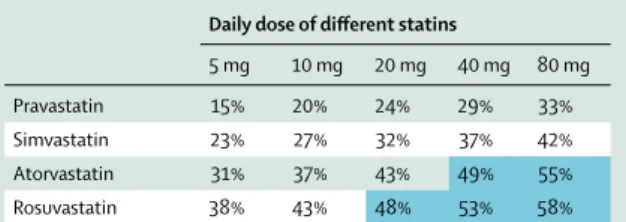
The proportional reductions in LDL cholesterol achieved with statin therapy are not materially aff ected by the starting LDL cholesterol concentration or by other patient characteristics (such as age, sex, vascular risk, genetic markers).31,183 Diff erent statins have diff erent potencies, with the newer agents (eg, atorvastatin and rosuvastatin) able to produce larger reductions in LDL cholesterol per mg of drug than the older agents (eg, simvastatin and pravastatin; table 3).160,163 Irrespective of the statin used, each doubling of the dose produces an extra reduction of about 6 percentage points in LDL cholesterol (eg, 43% vs 49% reductions with atorvastatin
20 mg vs 40 mg daily). The American College of
Cardiology/American Heart Association 2013 Blood Cholesterol Guideline classifi ed statin regimens as being of low intensity (eg, <30% LDL cholesterol reduction with simvastatin 10 mg daily), moderate intensity (eg, 30% to <50% reduction with simvastatin 20–40 mg, atorvastatin 10–20 mg, or rosuvastatin 5–10 mg daily), or high intensity (eg, ≥50% reduction with atorvastatin 40–80 mg or rosuvastatin 20–40 mg daily).162 Use of high-intensity statin therapy would be expected to reduce LDL cholesterol by at least 2 mmol/L in individuals who present with concentrations of 4 mmol/L or more (ie, about half of the population in the absence of statin therapy181,182), but by only about 1 mmol/L in those presenting with concentrations of 2 mmol/L. Consequently, since the proportional reductions in rates of vascular events with statin therapy are related to the absolute reductions in LDL cholesterol that are achieved, intensive statin therapy should be focused on patients at
higher risk of vascular events rather than just on those with high cholesterol concentrations.162,163,186
The Cholesterol Treatment Trialists’ (CTT) Collaboration was established to conduct meta-analyses of individual patient data from all of the randomised controlled trials of statin therapy that were scheduled to involve at least 2 years of treatment in at least 1000 patients.79 Pre-specifi cation of the inclusion of a defi ned set of large trials and of the approach to their analysis before the results of any of the trials were available was intended to avoid selection bias. During the scheduled study treatment periods (which were typically about 5 years), the average reduction in LDL cholesterol was about 1·0 mmol/L in the trials that compared the eff ects of allocating routine statin therapy versus no routine statin therapy, and it was further reduced by about 0·5 mmol/L in the trials that compared allocation to more versus less intensive statin regimens.31 That is, based on combination of the intention-to-treat analyses of these two sets of trials, allocation to an intensive statin regimen versus no routine statin therapy reduced LDL cholesterol concentrations by 1·5 mmol/L. However, such comparisons underestimate the LDL cholesterol reductions that can be achieved by actually taking a particular regimen, since some of the patients did not take their assigned statin therapy or more intensive statin therapy throughout the scheduled study treatment period, whereas some of the patients in the control groups started to take a statin or a more intensive
regimen.29 Instead, based on the LDL cholesterol
reductions that can be achieved (table 3), the use of more intensive statin therapy would have been expected to reduce LDL cholesterol by about 2 mmol/L in such patients.
Reductions in rates of major vascular events (panel 3) The prespecifi ed purpose of the CTT meta-analyses was to assess the eff ects of lowering LDL cholesterol on atherosclerotic events in diff erent types of patient more reliably than would be possible in any of the separate randomised trials and (given previous concerns about cholesterol-lowering therapy) to determine whether
Daily dose of diff erent statins
5 mg 10 mg 20 mg 40 mg 80 mg
Pravastatin 15% 20% 24% 29% 33%
Simvastatin 23% 27% 32% 37% 42%
Atorvastatin 31% 37% 43% 49% 55%
Rosuvastatin 38% 43% 48% 53% 58%
Shaded boxes indicate regimens that can produce about a halving or more in LDL cholesterol concentrations (largely irrespective of patient characteristics, including presenting concentrations of cholesterol). The 2016 cost for generic atorvastatin 40 mg daily in the UK is about £2 per 28 days of treatment;184 rosuvastatin 20 mg
daily currently costs about £25 per month,185 but it became available as a generic in
the USA during 2016.
Table 3: Average relative reductions in LDL cholesterol concentrations
there were adverse eff ects on non-vascular causes of death and site-specifi c cancers.79 Consequently, data were sought for each of the eligible trials about the baseline characteristics of each patient and about myocardial infarctions, strokes, coronary revascular-isations, cancers, and causes of death that occurred during the scheduled treatment period (but not any other adverse events, which is the subject of an ongoing project187). Follow-up of outcomes in the trials was reported to be about 99% complete. It was pre-specifi ed that results of the meta-analyses would be presented as risk reductions per mmol/L reduction in LDL cholesterol.29,79
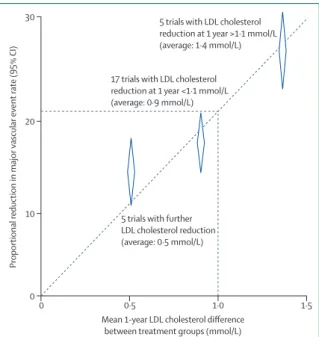
In total in the CTT meta-analyses, there were about 25 000 major vascular events (defi ned as the composite of coronary deaths or non-fatal myocardial infarctions, strokes of any type, and coronary revascularisation procedures) during an average of about 5 years of scheduled study treatment. The proportional reductions in these major vascular event rates were related to the absolute reductions in LDL cholesterol that were achieved (fi gure 3). Overall, in the trials of routine statin therapy versus no routine use, there was a 20% proportional reduction in the major vascular event rate per mmol/L
LDL cholesterol reduction (fi gure 4). The proportional risk reduction was smaller during the fi rst year after starting treatment, whereas it was 24% (ie, a risk ratio of
0·76) on average during each subsequent year that
allocation to statin therapy was continued (p<0·0001 for diff erence between eff ects in fi rst vs later years). In the
trials of more versus less intensive statin regimens, the average 0·5 mmol/L further reduction in LDL cholesterol yielded a 15% further proportional reduction in the rate of major vascular events (fi gure 3), corresponding to a 28% reduction (ie, a risk ratio of 0·72) per mmol/L further LDL cholesterol reduction during each year of treatment (with no apparent delay after increasing the intensity of statin therapy).31
Consequently, the proportional reduction in the risk of major vascular events per mmol/L was about one-quarter in the trials of statin versus no statin (after an initial delay) and of more versus less intensive therapy. Based on the combined fi ndings from these two sets of trials, it can be estimated that reducing LDL cholesterol concentrations by 2 mmol/L would reduce the risk of major vascular events by about 45% (derived as [1·0–(0·75 × 0·75)] × 100) during each year treatment is continued. In principle, even larger reductions in LDL cholesterol would be expected to produce even larger risk reductions (eg, 60–70% with 3–4 mmol/L LDL cholesterol reductions); however, this is likely only to be clinically relevant in limited circumstances (eg, for individuals
Panel 3: Proven benefi cial eff ects of statin therapy
• Eff ective low-cost statin regimens (eg, generic atorvastatin 40 mg daily costs about £2 per month) reduce LDL cholesterol by more than 50% (ie, at least 2 mmol/L in individuals presenting with LDL cholesterol concentrations of ≥4 mmol/L).
• Large-scale evidence from randomised trials shows that
each 1 mmol/L reduction in LDL cholesterol with statin therapy produces a proportional reduction of about 25% in the rate of major vascular events (coronary deaths, myocardial infarctions, strokes, and coronary
revascularisations) during each year (after the fi rst) that it continues to be taken. Consequently, lowering LDL cholesterol by 2 mmol/L reduces risk by about 45%. • Lowering LDL cholesterol by 2 mmol/L with an eff ective
statin regimen for about 5 years in 10 000 patients would typically prevent major vascular events in about 1000 (10%) patients at high risk of heart attacks and strokes (eg, secondary prevention) and 500 (5%) patients at lower risk (eg, primary prevention).
• Despite reports based largely on non-randomised observational studies, there is not good evidence that statin therapy produces benefi cial eff ects on other health outcomes (eg, cancer, infections, respiratory disease, arrhythmias) .
Figure 3: Proportional major vascular event reductions versus absolute LDL cholesterol reductions in randomised trials of routine statin therapy versus no routine statin use and of more intensive versus less intensive regimens Adapted from CTT Collaboration website. Proportional risk reductions are plotted against the average LDL cholesterol reduction at 1 year in meta-analyses of trials of routine statin therapy versus no routine statin therapy with average LDL cholesterol reduction greater than and less than 1·1 mmol/L, and of trials of more versus less intensive statin therapy with a further 0·5 mmol/L reduction in LDL cholesterol. The vertical axis labels of 10%, 20%, and 30% are not equally spaced because they represent reductions on the log scale (ie, the labels are plotted at –log[0·9], –log[0·8], and –log[0·7], respectively). These risk reductions relate to the average eff ects on risk observed in these trials including the fi rst year of study treatment (when the risk reduction is smaller) and to the LDL cholesterol reductions achieved at 1 year (rather than the average diff erence for the scheduled study treatment period), which may underestimate the eff ects of actually taking statin therapy long term (fi gure 4).
Mean 1-year LDL cholesterol difference between treatment groups (mmol/L)
Proportional reduction in major vascular event rate (95%
CI)
0 10 20 30
0 0·5 1·0 1·5
5 trials with further LDL cholesterol reduction (average: 0·5 mmol/L) 17 trials with LDL cholesterol reduction at 1 year <1·1 mmol/L (average: 0·9 mmol/L)
with familial hypercholesterolaemia who have very high LDL cholesterol concentration).
In these meta-analyses, statin therapy produced similar proportional reductions per mmol/L LDL cholesterol reduction in the risks of each of the main components of the composite outcome of major vascular events (ie, myocardial infarctions and coronary deaths; strokes of any type; or coronary revascularisations).32 The proportional reductions in major vascular events were also similar among diff erent types of patient.29–34 For example, as would be expected from the log-linear associations in observational epidemiological studies between coronary disease risk and cholesterol concentration (fi gure 2B), the proportional reductions in risk per mmol/L reduction were about the same irrespective of the concentrations of cholesterol at presentation (fi gure 1). The proportional risk reductions appeared to be smaller among individuals aged older than 75 years who were included in these trials, but they had a higher prevalence of severe heart failure and end-stage renal disease (conditions associated with non-atherosclerotic vascular outcomes not much infl uenced by lowering LDL cholesterol).188 Moreover, since the absolute risks of major vascular events were higher among older individuals, the absolute benefi ts were of similar size to those among younger individuals. The proportional risk reductions also appeared to be slightly smaller among the women included in these trials. However, this apparent diff erence could be accounted for largely by diff erences in non-sex-related characteristics, and the relative eff ects were similar for men and women at equivalent risk of cardiovascular events.33 The risks of major vascular events were reduced in secondary prevention as well as in primary prevention (including among individuals with diabetes or hypertension),29,31 but the proportional reductions were somewhat larger among lower-risk individuals. This fi nding is consistent with results from Mendelian randomisation studies,189 which indicate that genetically determined exposure to lower LDL cholesterol concentrations before athero sclerosis has developed may produce larger risk reductions.173
In general, the absolute benefi ts of using statin therapy depend on an individual’s absolute risk of atherosclerotic events and the absolute reduction in LDL cholesterol that can be achieved. For example, 5 years of treatment with a statin regimen that lowers LDL cholesterol by 2 mmol/L would be expected to prevent major vascular events in about 1000 (10%) higher-risk patients per 10 000 treated and in about 500 (5%) lower-risk patients per 10 000 treated (fi gure 5; which also provides estimates of the absolute benefi ts with smaller LDL cholesterol reductions).32 The continued follow-up of patients beyond the end of the trials has found that the benefi ts of statin therapy persist (and may even become larger)98–106 for many years after the diff erences in statin use between the randomised groups have ceased. However, of more relevance for a treatment that is
Figure 5: Predicted absolute reductions in risks of major vascular events (after the fi rst year) by lowering LDL cholesterol with statin therapy for 5 years in people at diff erent levels of absolute risk
Available from CTT Collaboration website. Lifetable estimates derived from major vascular event risks in respective categories and risk reductions (after the fi rst year) per mmol/L LDL cholesterol reduction. The risk groups are equivalent to annual rates of major coronary events of 0·8%, 1·6%, 3·2%, and 5·6%, and vascular death of 0·3%, 1·0%, 2·3%, and 5·8%. The National Institute for Health and Clinical Excellence (NICE) recommends that statin therapy is considered for those individuals without known cardiovascular disease who have an estimated 10-year risk of developing cardiovascular disease (defi ned as myocardial infarction, coronary heart disease death, angina, stroke, or transient ischaemia) of at least 10%.163 This cardiovascular disease event was not available in the CTT
meta-analyses, but it can be estimated by multiplying observed vascular death rates within risk categories by 3–4, yielding a 10-year cardiovascular disease risk of about 10% for the lowest risk group.32
1600 1440
1130
730 800
680 540
540
370
170 250 310
1010 1400
1200
1000
800
600
400
1·0
1·5
2·0
5–9 10–19
20–29 ≥30
200
0
Major vascular events avoided per 10
000 patients
treated for 5
years
LDL cholesterol reduction (mmol/L) with statin treatment
5-year risk
of major
vascular event (%)
Figure 4: Proportional reductions in risks of major vascular events per mmol/L reduction in LDL cholesterol during each year of scheduled statin treatment, in randomised trials of routine statin therapy versus no routine statin use
Adapted from CTT Collaboration website. For each time period, RRs weighted by trial-specifi c LDL cholesterol reductions at 1 year relate to participants at risk of a fi rst post-randomisation major vascular event during the time period in the meta-analysis of trials of routine statin therapy versus no routine statin therapy. Consequently, the overall RR of 0·76 for the period after the fi rst year indicates that risk is reduced by about one-quarter in each year that treatment continues (ie, the absolute benefi ts increase with increasing duration of treatment). As non-compliance to the randomly assigned treatment increased with longer duration in the trials (because of study statin therapy being stopped or because of statin therapy being started in the control group), the per mmol/L reductions based on LDL cholesterol reductions at 1 year are likely to underestimate the reductions in MVE risk per mmol/L LDL cholesterol reduction later in these trials. p<0·0001 for test of heterogeneity between RR in fi rst year and RR in 1–≥5 years. RR=rate ratio. MVE=major vascular event.
RR (CI) per 1 mmol/L reduction in LDL cholesterol Annual event rate
in control arm (% per year) Total
number of MVEs
0–1 year 1–2 years 2–3 years 3–4 years 4–5 years ≥5 years
All years
Years 1–≥5
3·8 3·4 3·6 3·6 3·7 3·9
3·6
3·6 4680
3580 3124 2483 1819 1018
16 704
12 024
0·91 (0·85–0·97) 0·78 (0·73–0·85) 0·76 (0·70–0·82) 0·72 (0·66–0·79) 0·78 (0·71–0·87) 0·76 (0·65–0·87)
0·80 (0·78–0·82)
0·76 (0·74–0·79)
1 0·5
99% CI 95% CI 0·75 1·25
LDL cholesterol lowering worse LDL cholesterol