N. Siddiqui. M.B.B.S.
A Master’s Paper for the MSPH degree in MCH. October, 2011. 36, pages.
Advisor:
ABSTRACT:
Breastfeeding barriers in substance using mothers is an important issue to be addressed as the benefits offered by breastfeeding might be counteracted by the infant and maternal health consequences of drug exposure. A literature review is conducted in this regard, to focus on the new advancements in the literature, and to get proof and evidence to support the topic of review.
Smoking, alcohol, heroin, cocaine and cannabis /marijuana were the drugs of abuse and were searched in relation to breastfeeding. Seventeen studies were selected out of hundred after extensive literature search.
BREASTFEEDING BARRIERS IN MOTHERS WHO USE SUBSTANCES
by
Naheed Q Siddiqui
A Master’s paper submitted to the faculty of the University of North Carolina at Chapel Hill
in partial fulfillment of the requirements for the degree of Master of Science in
Public Health
Chapel Hill, North Carolina November 2011
Approved by
Table of Contents
Chapters Page #
Chapter-1 2
1.1 Objective 2
1.2 Introduction 2
Chapter-2 5
2.1 Significance of breastfeeding 5
2.2 History and global trends 5
2.3 Recommendations of breastfeeding 6
2.4 Prevalence of breastfeeding: trends in developed and underdeveloped countries 7 2.5 Conceptual models describing barriers to breastfeeding 8
Chapter-3 11
3.1 Substances in breast milk 11
3.2 Prevalence of substance use during breastfeeding 11
3.3 Impact of substances on breastfeeding infants 12
3.3.1 Tobacco 12
3.3.2 Alcohol 13
3.3.3 Cannabis/Marijuana/Pot 14
3.3.4 Cocaine 15
3.3.5 Heroin 16
3.4 Conceptual model describing breastfeeding barriers in mothers using substances 16 Chapter-4 19
4.1 Evidence (literature review) 19
4.2 Selected studies review on Tobacco 21
4.3 Selected studies review on Alcohol 23
4.4 Selected studies review on Cocaine, Heroin and other substances 24
4.5 Summary 24
4.6 Conclusion 26
References & Appendix 28-34
Chapter 1
1.1 OBJECTIVE
Answers to the following questions were sought: What is the rate, duration and
exclusivity of breastfeeding in women using substances? What are the breastfeeding
barriers in women who use substances? What circumstances force a substance using
women to quit breast feeding, and start formula? Is it acceptable to initiate breastfeeding
in a substance using mother? Is there any safe amount of substance use which could be
continued without any harm to the child? This last question appears controversial.
1.2 INTRODUCTION:
Breastfeeding is the gold standard for infant nutrition. Pregnant mothers that use
substances, which include smoking, alcohol (both legal), cocaine, marijuana and heroin
(last three illegal), should keep in mind their known hazards on the fetus, due to their
transmission through breastmilk. The term substance abuse refers to an unhealthy pattern
of substance (alcohol or drug) use that results in significant problems in one of the
following ways;1 an inability to adequately take care of one’s responsibilities or fill their role, the frequent use of substances in situations where it might be dangerous to do so (for
example, driving while under the influence or during pregnancy), repeated legal problems
due to substance use, and the continued use of substances even though the substance use
Certain substances like alcohol whilst using during normal social life is never
considered substance abuse, but during pregnancy and breastfeeding the situation is quite
different. Caution is necessary when smoking, drinking or using illicit drugs after
delivery as it can convey to the baby via breastmilk. Therefore, for the purposes of this
research, we define substance use during breastfeeding as the intake of any amount of
substances, including tobacco, alcohol, and illicit drugs, or continuum of the habit of
taking these substance during breastfeeding.
Mothers are advised to stop using and abusing substances during pregnancy and some
of them follow their clinician’s advice, but then it is common for them to relapse during
the postpartum period. To understand the consequences of these legal and illegal
substances on the breastfeeding practices and the infants themselves, we reviewed
relevant literature published between the years 2001-2011.
The first chapter in this paper captures objectives and introduction. The second
chapter is about the significance of breastfeeding; global and domestic historic trends and
barriers to breastfeeding were reviewed with non-anecdotal references. A conceptual
model on potential obstacles or support to breastfeeding was also reviewed (fig-1). The
third chapter is about women abusing substances like tobacco, alcohol, cocaine, cannabis
and heroin. The effects and impact of these legal, and illegal, substances on breastfeeding
practices and on infants were evaluated in this chapter. A hypothetical, conceptual model
was also discussed to analyze the barriers to breastfeeding in substance using women.
The fourth, and last, chapter consists of a literature review of chosen articles from 2000
to 2011 in relation to breastfeeding in women using substances. In this final chapter,
seventeen selected studies were reviewed critically to understand the modern trend about
breastfeeding in women using substances. This review was also to judge the amount of
work done in the last decade on this topic, tried to identify the barriers to breastfeeding in
mothers using substances, and to understand the ways to overcome the problems and
issues for better intervention. The gaps and limitations were identified in the literature to
guide new studies.
Chapter 2
2.1 SIGNIFICANCE OF BREASTFEEDING
Breastfeeding should be protected, promoted and supported globally in all
communities, as it is best for an infant’s health. 2,3 Breastfeeding is an interactive process between maternal biology and infant instinct.4 Breastmilk naturally contains appropriate amounts of carbohydrates, proteins, fats, minerals, vitamins, and hormones as well as
maternal antibodies.5 Among the most important benefits to the infant is the safest and
best method for nurturing and optimizing infant development, growth and health.6
Women who breastfeed their infants experience several health benefits, including
concurrent fertility reduction, lower risks of breast cancer, and probable protection
against osteoporosis and late onset obesity.7, 8There is an important public health question about the costs related to infant feeding. It is estimated that if full (exclusive)
breastfeeding were practiced for 12 weeks in the United States, 2.16 billion dollars would
be saved annually (using illness as a sole indicator of cost).9
2.2 HISTORY AND GLOBAL TRENDS OF BREASTFEEDING
For millennia, infants were normally breastfed and the breastfeeding mother was
early medical writers told mothers that artificial feeding led to children being “stupid,
vacant and not right in the head.” 12
During the 18th century, if a woman chose not to breastfeed or she could not, the most
likely situation was to have the baby fed by another lactating woman called wet nurse.12 In 1870; a German chemist called Liebig devised a substitute for breastmilk.13 By the early 20th century, manufacturers had begun to advertise such product as an option for all
newborns. The International Code of Marketing of Breastmilk Substitutes (1981) has
been in place for about two decades, and simultaneously, much effort to protect
breastfeeding from commercial influences has followed.14
In 1990, the United States signed onto the Innocenti Declaration on the Protection,
Promotion and Support of Breastfeeding, which was adopted by the World Health
Organization (WHO) and the United Nations Children’s Fund (UNICEF).15 This declaration called upon all governments to nationally coordinate breastfeeding activities,
ensure optimal practices in support of breastfeeding through maternity services, take
action on the International Code of Marketing of Breast-milk Substitutes (the Code),14and pass legislation to protect and preserve breastfeeding among working women. In 1991,
UNICEF and WHO jointly launched the Baby Friendly Hospital Initiative, by putting
into practice the "10 steps to successful breastfeeding".15 Many maternity facilities throughout the world are now striving to achieve "Baby Friendly" status. One
requirement for being "Baby Friendly" is that a facility shall not accept or distribute free
2.3 RECOMMENDATIONS
The WHO recommends exclusive breastfeeding for six months for all infants, with
continued breastfeeding until two years of age together with complementary foods.16 UNICEF also recommends exclusive breast feeding for about 6 months.17 The position of the American Academy of Pediatrics is unclear; in two different sections of their
Pediatric Nutrition Handbook, they alternatively recommend human milk “as the
exclusive nutrient source ... during the first 6 months,” and “to delay introduction of solid
foods until 4 to 6 months.18 The recommended rate, duration and exclusivity of the breastfeeding should be adopted and made to benefit all; however, the risk associated
with women who use substances and breastfeed needs to be carefully considered. It is
possible that there may be certain substances for which there is no harm done to the
infant via breastfeeding; however, these pathways need to be better understood before
reaching a conclusion and implementing any policy.
2.4 PREVALANCE OF BREASTFEEDING
The global data from UNICIF (2003 to 2008),19 show that the exclusive, global breastfeeding rate was almost 37% in the first few months (<6 months) of age, and this
rate was actually the same as shown for developing countries.
In Sub-Saharan Africa, it was 32%, and in Asia and Latin America it was 41%.20 The Rates of Healthy People MICH -21 Data Report of 2007-09 shows that 74% of infants
born in US in 2006 were breastfed, while the goal was 81.9% and 47.3% were breastfed
2.5 CONCEPTUAL MODELS IN PREVIOUS LITERATURE DESCRIBING
BARRIERS TOWARDS BREASTFEEDING
The behaviors towards breastfeeding are described by different conceptual models in
the literature. 21,22 These models were unfolding the different barriers or determinants of breastfeeding by exclusivity, duration and / or rate.
Fig-1 identifies the different factors that may influence the breast feeding practices, or
the decision to breastfeed, and shows the time period where they have the most influence.
The figure also shows the factors related to initiation and duration of breastfeeding in a
hospital or clinical setting and afterwards in the daily life as follows:
1- Commercial marketing: Media representation in television and cinema for formula and
lack of breastfeeding, aggressive marketing of formula (samples, gifts and coupons) to
mothers through hospitals and clinicians’ offices and public perception secondary to
aggressive marketing influences decision for breastfeeding initiation and continuation.22, 23
2- Obstetric and maternity staff : As described above hospital staff especially obstetric and
maternity staff has a great influence in initiation and continuation (duration) of
breastfeeding as they are in direct contact with the patient while they are in hospitals for
first few days after delivery and also when they come for follow-up during postpartum
3- Pediatric staff: Has the same role as maternity and obstetric staffs as the patients visit
them for vaccination and regular pediatric check-ups. 24 21, 22
4-Maternal concerns about exclusive breastfeeding: Single parenting, lethargy, lack of
sleep, nutritional deficiency, postpartum infection and depression all can contribute to
mothers concerned about initiation, duration and exclusive breastfeeding.25
5- Family, work place and social pressure:24 26 These are the most important factors as there are different myths in every culture and society related to breastfeeding
initiation, duration and exclusivity, although they have no relation to facts, it still
transfers to other generations. Breastfeeding is still not publically popular and there
are no separate rooms or areas at work or public places for mothers to feed their
Chapter 3
3.1 SUBSTANCES IN BREASTMILK
There are different illicit drugs and medications which secrete in the breastmilk and
could cause harmful effects on the baby, constituting a contraindication to
breastfeeding.27 Tobacco, alcohol, marijuana, cocaine and heroin are the most commonly used substances, both domestically and internationally.28 The substances impact not only the infants, but breastfeeding practices as well. Clinicians need to first determine if the
mother is using any drug and which drugs she is using. Once the drug has been identified,
a decision has to be made about the infant’s safety. If breastfeeding is determined to be
safe for the infant, then the mother will be counseled to do so, since the breastfeeding
would be beneficial for the infant and mother both.
3.2 PREVALANCE OF SUBSTANCE USE DURING BREAST FEEDING:
It is estimated globally that more than half of the breastfeeding women are taking
some type of drugs.29 Almost 43% of women who were breastfeeding in the past 12 months reported alcohol use; whereas, 36% of women who were both pregnant and
breastfeeding in the past 12 months reported alcohol use.30 A Norwegian study reported that 80% of breastfeeding women with a 6-month old child reported using alcohol.31 The 2007 National Survey on Drug Use and Health revealed that among pregnant women
15-44 years of age in the United States, 5.2% had used illicit drugs in the past month,
found that 5.5% of mothers reported taking an illicit substance during gestation. 33 Mothers who abuse substances during pregnancy were also more likely to continue, or
relapse in the postpartum period or during the breastfeeding period.34 The 1985 National Maternal and Infant Health Survey (NMIHS) found that only one third of the women who
quit smoking during pregnancy were still abstinent one year postpartum, with the
majority relapsing in the first 3 months after delivery.35
3.3 IMPACT OF SUBSTANCES ON INFANT AND BREAST FEEDING:
The impacts of these substances on infants and on breastfeeding, as well, have a wide
range of effects, depending on the substance and the population.
3.3.1 TOBACCO
Data from National Health Survey of 2005 show that, in the US, about 21.5% of
women of childbearing age are smoking regularly, and 17% are continuing smoking
during pregnancy.36 The data from Canada37 has similar statistics, reporting 21.3% in childbearing age, and 13% during pregnancy, and in Australia38 it is 21.6% and 17.3 % respectively.
Nicotine is the primary health hazard substance which is inhaled rapidly via smoking.
From the respiratory tract, it absorbs quickly and rapidly goes into the blood circulation.
Nicotine passes from the circulation by simple diffusion to the breast milk. The half life
of nicotine is almost 97 minutes.39 The primary metabolite of nicotine is cotinine, which has a half-life of 15 to 20 hours and serum concentrations that are 10-fold higher
Cigarette smoking affects large numbers of women with approximately 25% using
tobacco during pregnancy, and 5% to 20% during breastfeeding.13,41 It is associated with a shortened duration of breastfeeding, 14 and decreases the milk volume.42 Shortened breastfeeding duration may be caused by the effects on milk volume. Although some
studies report shortened duration, they have not specifically measured the volume.
However, a lower prevalence of breastfeeding at 6 to 12 weeks postpartum among
smokers was reported when compared with nonsmokers, even within the same
socioeconomic group. 32,14 It is also claimed that nicotine changes the flavors of the breastmilk.32
The infant absorbs nicotine mainly by inhalation, and partially by the breastmilk.32 Nicotine is an appetite suppressant.32 Babies can be restless and irritated. Sometimes, they refuse to take the milk. In increased doses, nicotine causes diarrhea, vomiting and
tachycardia (increased heart rate), respiratory illness, and otitis media. 32, 43
AAP (American Academy of Pediatrics) recognizes pregnancy and lactation as two
ideal times to promote smoking cessation, but does not indicate that mothers who smoke
should not breastfeed.44
3.3.2 ALCOHOL
Alcohol consumption among lactating women is common in the United States and
other countries as well.45 Epidemiological studies found that although lactating women were less likely to report occasional binges of heavy drinking, the regular drinking
patterns at 1 and 3 months after giving birth ( i.e., postpartum) did not differ significantly
After drinking, alcohol absorbs and comes into the blood stream. By simple diffusion,
it quickly comes into breast milk, and achieves almost same concentration as the maternal
blood level.32 Alcohol flavors and changes the smell of the breast milk.47
Oxytocin release is affected by ingestion of two standard1 drinks of alcohol. It can be partially or completely inhibited, which results in hindrance of the milk-ejection reflex. 48 Infant livers are immature, at least for the first three months, and during this period, the
detoxification rate of alcohol is about half slower than the rate of adults, so it is harmful
for infants. Evidence shows that one standard drink per day is associated with a decrease
in psychomotor development of the baby. 41 Binge drinking (five standard drinks), even weekly, has the same effect. Studies have seen that one standard drink causes infant
sedation, and it takes 4.5 hours before he is more wakeful.49 The infant needs to suckle more, but there is less milk ejection. 50
3.3.3 CANNABIS/ MARIJUANA/ POT
In 2010, marijuana was noted by the United Nations as being the most widely used
illicit substance in the world. 51 Studies have shown that marijuana smoke contains 50–70 percent more carcinogenic hydrocarbons than tobacco smoke, and is an irritant to the
lungs. 52 In animal studies, the breastfeeding mothers using marijuana had decreased milk production in the mammary glands.52 Delta-9-tetrahydrocannabinol, or THC, is the main psychoactive ingredient in marijuana. 53 THC is fat-soluble, which means it builds up in the body with chronic use. Studies have shown that it actually concentrates in the
breastmilk, and the infant is exposed to a higher level than the mother. After a
breastfeeding mother uses marijuana, THC is evident in her baby's urine and stools.52 During the first month of life, if a baby is exposed to marijuana via breastfeeding; it
declines the motor development at one year of age.54
3.3.4 COCAINE
Studies have also demonstrated fluctuating rates of cocaine use during pregnancy over
time.55,56 A study of cocaine use during pregnancy in Boston demonstrated that 18% of women abused substances at least once during pregnancy.57, 58
The use of cocaine is often considerably associated with the use of other drugs or
multiple substance use and usually associated with poor lifestyles and low socioeconomic
conditions.18 This is clear from studies that women using cocaine during pregnancy are at risk for shorter gestation, premature delivery, spontaneous abortion, abruption-placentae
and other multisystem malformations.59
Cocaine or crack should not be used near the baby, as there are chances of inhalation
and toxicity.60 Due to ethical issues, we cannot administer drugs to see the effects on breastfeeding and on babies, so there is a lack of supporting studies, and milk-to-plasma
ratios for cocaine have not been determined yet. 61,62 Additionally, mothers who use cocaine are difficult to enroll in studies as they may have hesitation to share cocaine use
with their healthcare providers. A significant amount of cocaine appears in human milk
and, after absorption, comes into the fetal circulation, placing the infant at significant risk
3.3.5 HEROIN
Heroin is an opioid derivative, appears in human milk, and places the infant at high
risk for toxicity. Historically maternal breastfeeding has been considered a possible
method of treating addicted newborns from withdrawal symptoms, as the heroin secretes
in breastmilk, and offsets the withdrawals. 63, 32 Currently, heroin use is considered by the American Academy of Pediatrics as a contraindication to breastfeeding.64
3.4 CONCEPTUAL MODEL DESCRIBING BREASTFEEDING BARRIERS IN
MOTHERS WHO USE SUBSTANCES
The importance of breastfeeding cannot be overemphasized. The choice of
breastfeeding by the pregnant or newly postpartum woman with a history of past or
current drug abuse is challenging for many reasons, thus the rate, duration and exclusivity
are unpredictable. Besides the known harmful effects of using substances, the barriers,
attitudes and behaviors that are the determinants of breastfeeding in women who use
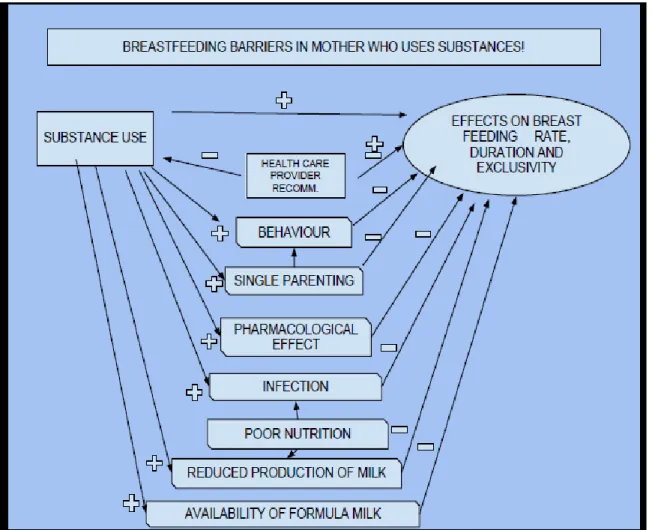
substances are not well understood. To address this gap in the literature, we developed a
conceptual model that explains the breastfeeding barriers in mothers who use substances.
The components are as follows (Figure 2):
1- Behavior: Women who use substances frequently engage in risk-taking behavior, such as
carelessness and negligence, which also puts the infant at risk. 65,66
2- Pharmacological effects: There are side effects and withdrawal symptoms of drug
intervention are prevalent in the drug abuse population.67 Illicit drugs are frequently included with dangerous adulterants. These all can pose additional threats to infants.68 3- Infection risk: Populations who use drugs are at higher risk for infections, by using
syringes or risky sexual activity, such as human immunodeficiency virus and/or hepatitis
B or C virus infections.69
4- Poor nutrition: This can reduce milk production, and also predisposes the women to
infection, which can also be harmful to the baby.60
5- Reduced production of milk: Milk production depends upon different factors, not only
nutrition of mother, but also the effects of different illicit substances the mother uses and
suckling action of baby.32
6- Single parenting: Mothers using substances are usually single mothers,70, 71with many other stressors to respond and attend to, so it is quite difficult for them to continue
breastfeeding, or exclusively on breastfeeding in the first place.
7- Availability of formula: Although this occurs less often, mothers using substances might
be dependent on social services, and WIC programs. Formula milk is made more easily
available for them, so they prefer to quit breastfeeding and use the easily available
formula.72, 73,74
8- Recommendations of health care provider: Breastfeeding is always recommended by
health care providers except in selected cases of mothers who are using substances.
Usually, a careful individual evaluation is required prior to the institution of
breastfeeding and if necessary, the mothers either stop using the substance or stop
breastfeeding due to the concern about potential harm to the baby. This evaluation and
Chapter 4
4.1 EVIDENCE: LITERATURE SEARCH AND ANALYSIS
To support the conceptual model and objective of this paper to analyze the barriers to
breastfeeding, a literature review was conducted. Eleven years of data2 were searched, and seventeen studies, published from 2000 to 2011, were selected for further study.
These mainly encompassed the topics of initiation, rate, duration, exclusivity and effects
of breastfeeding on the infants of mothers who use substances. These studies were of
different population groups who use substances of US, UK, Italy, Norway (Oslo), Turkey
and Australia. Data extracted from each of the included studies has been summarized using
a narrative chart summary, and organized using different themes (Appendix). The analyses
of the studies were performed on the basis of key measures, analytic process, major
findings and their selected strengths and weaknesses. Study population groups were also
reviewed. We found ten studies on smoking, four on alcohol, two on other substances,
including opioids and one study mentioned all substances (smoking, alcohol, etc) (Figure
3).
2
Method: A systematic review was undertaken; a wide range of medical, social and public health electronic databases to identify published studies addressing breastfeeding barriers in women using substances.
Databases searched: The following key electronic health, social science and education databases were searched: Embase, CINHAL, PsychInfo, Medline PubMed and the Cochrane Database of Systematic Reviews, Google and Google Scholar, using a combination of medical subject headings (MeSH) and free text search. Literature search was done for studies published in English from 2001 to July, 2011, reporting quantitative or qualitative data studies on breastfeeding and substance use.
(Key words: breastfeeding barriers in women using substances, substance abuse and breastfeeding, smoking and breastfeeding, Alcohol and breastfeeding, Cannabis and breastfeeding, cocaine and breast feeding and heroine and breastfeeding, Nicotine and breastfeeding).
Search result: More than 100 studies were found.
Inclusion criteria: Only17 original study articles selected including randomized control trials, controlled, longitudinal studies, prospective and retrospective studies. Only smoking, alcohol, opioids, heroin, cocaine, cannabis and marijuana related studies included.
Fig- : 3
4.2 SELECTED STUDIES ON TOBACCO
The studies on the topic of smoking discussed the impact and association of smoking
on the duration, early weaning, family history, prolactin level, and amount of breast milk.
Some of them also tried to evaluate the adverse effect of tobacco on the infant.
We found two studies by Pellegrini 76and by Ilett, 77which were confirmed by reliable laboratory tests that maternal exposure of nicotine leads to significant appearance of
nicotine or cotinine in breast milk. The effects were attributed to smoking in the first
study and to the nicotine patch use in the second study. It was also observed that nicotine
patch use can reduce the concentration of nicotine and cotinine to almost half, as
compared to smoking. The sample was small (N= 45), and only 35 participants
completed the study. The results were based on laboratory tests after certain intervals;
therefore, the evidence seems reliable. The Ilett study also found that after smoking or
use of nicotine, the amount of breast milk was reduced. This study supports the
conceptual model (chapter 3), that one of the barriers for breastfeeding in mothers using
substances is reduced production of breastmilk due to the effect of maternal substance
use.
Liu et al.78 and Weiser et al.79discussed the effect of smoking on initiation of breastfeeding and early weaning. Altogether, they had the survey sample of more than
3000 participants. They successfully established the association of tobacco smoking of
mothers with no initiation and less duration of breastfeeding. They also explained the
relationship between smoking and the reduced amount of breastfeeding and early
initiation of weaning. Both studies were based on self-reported data, and no laboratory
Giglia80 and Higgins et al. 81 tried to do their study from a different prospective. They added some new findings in the literature that cessation of smoking can increase the
duration of breastfeeding. They did their survey study on 745 women and 384 (226
subjects in Giglia’s study, 158 subjects in Higgins et al.’s study) of them were using
tobacco.
Yilmaz et al. 82 and Stroud et al. recognized short term hazards of smoking, and Batstara 83 mentioned the long term hazards of smoking on exposed population of infant and children. Yilmaz et al. observed that the 254 infants exposed to tobacco smoking had
negative consequences on growth, and an increased rate of infection. Urinary cotinine
was also measured to confirm the status of smoking. Stroud et al. have seen that tobacco
exposure to breastfed infants made them more irritable and difficult to handle, as
compared to non-tobacco exposed infants (study sample of both was N=28 in both study
arms). In those small samples, he did not exclude the effect of abstinence syndrome,
although saliva cotinine was measured to confirm the exposure in both mothers and
infants. The Batstara study compared long-term scholastic performance between
breastfed and bottle fed infants, and found a significant negative association in 388 bottle
fed infants, as compared to 182 breastfed infants. This was a long term study of 25 years.
But the follow up data was retrospectively collected, so there were chances of recall bias.
Godale’s 84 study tried to examine the attitude and behavior towards breastfeeding by discussion and group interview. He found need of consistency in education and
awareness about breastfeeding promotion postpartum. The interview was taken from
4.3 SELECTED STUDIES ON ALCOHOL
The studies on alcohol and breastfeeding were quite divergent, reflecting differences
in behavior, family history, and correlation with income, education and prolactin level.
Alvin et al.85 study concluded that mothers, who use alcohol, or their partners, were inclined toward breastfeeding if they had a higher education and higher income. Those
who never breastfed, and did early weaning of their infant, seemed to reflect a lower
educational and income status. This was a large study (N=3235) but the questionnaire
was asked in front of partner, so the validity is unclear.
Mennella et al. 86with small sample size (N=13) found that after an hour of drinking of alcohol, milk secretion significantly decreased, but such deficit was not related to the
prolactin level. It was a double-blind study and the laboratory tests were performed to
measure the prolactin levels. This also supports our conceptual model of breastfeeding in
mothers abusing substances.
Giglia et al. 87 did a discussion survey consisting of four sessions to understand the awareness of alcohol intake risk during breastfeeding. They found that most women are
ignorant about the effects of alcohol on infant or breastmilk, so they do not limit their
drinking. Although the size of the study was small and based on different self-reported
information, this is an area for further concern and requires additional study.
Mennella88 conducted another study about two years after above mentioned study. This new study was an experimental study, recruited 28 women with family history of
alcohol use, and observed the patterns of breastfeeding among them. Their main
conclusion was that there were blunted prolactin levels in these women, possibly due to
4.4 SELECTED STUDIES ON COCAINE, HEROIN AND OTHER SUBSTANCES
Wachman 89 concluded in a retrospective study that the initiation and continuation of breastfeeding rate was very low in opioid-dependent mothers. The sample size was of
fairly large (N= 276) and study comprised of six years of data collection.
Goel.90collected retrospective data, and mentioned the high prevalence rate of hepatitis C in substance using, breastfeeding women. They concluded that the initiation
of breastfeeding in women who use heroin, cannabis and other substance was more than
three times less, than the general population of non-substance using women. This also
supports our conceptual mode; substance use is a barrier to breastfeeding among mothers.
The Wallace 91 study collected data in both breastfeeding and non breastfeeding women (N=979) and found high prevalence of alcohol use in pregnant and breastfeeding
women, who were highly educated, English speaking older mothers as compare to non
pregnant and non breastfed women. He found lower cannabis use in these women than
the general population, while the rate of smoking was almost the same in breastfeeding
and non-breastfeeding women.
4.5 SUMMARY
We can see in the literature that there is an ever increasing volume of evidence
highlighting the importance of breastfeeding in infancy, as well as in later life.5,6,7 There are international recommendations available to promote exclusive breastfeeding as the
breastfeeding practices remain controversial. Evidence shows that either they do not
breastfeed, or stop after a brief period of time. To understand the barriers and dilemmas
for breastfeeding in substance abusing mothers, we conducted this literature review and
assessed seventeen studies.
It is quite interesting that we found ten studies in the last eleven years of literature
review on smoking and tobacco use during breastfeeding, which emphasized rate,
initiation and duration of breastfeeding, while studies on alcohol, opioids and other
substance abuse were much fewer. (Figure 1).
A probable reason for under reporting of maternal use of substances is that the
mothers who are using substances to the point of abusing substances often become
involved with the child welfare system, and are more likely to lose their parental rights,
compared with mothers who do not use substances.92 The fear of losing the child custody, the fear of problems with the law and the fear of potential harm to infant are the
main issues which can hinder mothers who use substances from participating in a
research study.93
Evidence from our literature review about smoking revealed that researchers concur
on known hazards of smoking on breastfeeding, but no study exclusively could describe
the barriers for breastfeeding in tobacco smokers. According to the above review, it is
known that reduced breastfeeding frequency lowers the breast milk volume and supply.
Nicotine also makes the infant irritable, and difficult to handle and console.
In this review, the literature is limited about effects of alcohol use on infants during
breastfeeding. Alcohol use is a legally accepted practice during breastfeeding despite its
reporting, as legal issues are always a concern. Variation of laws across states and
between countries further complicates this issue.
There is limited literature about any safe amount of substances which could be taken
by mothers without any potential harm to infant or the breastfeeding initiation, duration
or exclusivity. As with any experimental study on substance use, there are legal and
ethical issues that could hinder the availability of randomized studies on substance abuse
and breastfeeding in humans; therefore, we must rely on evidence from observational
studies.
We found large gaps in the literature and therefore could not answer all our questions
about breastfeeding barriers and dilemmas in mothers using substances. There is a need
for more studies in this area, using better data collection methods to measure the risk of
not breastfeeding versus breastfeeding among mothers who use substances. Identifying
the determinants of breastfeeding practices among mothers who use substances will
improve the design of targeted interventions, determine the absolute contraindications of
substance use on infant health and help to formulate national public health policy.
4.6 CONCLUSION
Human milk is considered the ideal milk for infants. This literature review tried to
capture the barriers and potential contraindications to breastfeeding in mothers abusing
substances (tobacco, alcohol, marijuana, cocaine and heroin). Our literature review
found that using substances has an influence on breastmilk and maternal/infant feeding
patterns. Tobacco smoking has negative impact on initiation, duration and exclusivity of
same effects on breastfeeding, but further study of the short and long term effects of
alcohol on infants is required. Counseling and education are needed to raise awareness of
the effects of these legally permissible substances while breastfeeding. It is also
recommended to include them as contraindicated in health professional’s guidelines,
since there is no quantification of a safe limit.
Other substances, including marijuana, cocaine, and heroin, all have hazardous effects
on breastfeeding and on infants as well. Further, we did not find any new studies from
the last eleven years that revised those hazards. Due to ethical issues, these drugs are
difficult to study in humans, so their use should be a contraindication to breastfeeding
REFERENCES
1 First MB. (Ed.) Diagnostic and Statistics Manual of Mental Disorders. Washington, DC: American Psychiatric Association. 1996.
2 American Academy of Pediatrics Work Group on Breastfeeding. Breastfeeding and the use of human milk.Pediatrics. 1997; 100:1035-1039.
3
World Health Organization, United Nations International Children’s Emergency Fund. Ten steps to promote successful breastfeeding. Geneva: Mother and Child Health Division, World Health Organization; 1989.
4
Small MF. Our babies, ourselves: How biology and culture shape the way we parent. New York: Anchor Books. 1998.
5 The American Academy of Pediatrics. The promotion of breastfeeding. Pediatrics.1982; 69: 654-658 6 Owen CG, Martin RM, Whincup PH, Davey-Smith G, Gillman MW, & Cook DG. The effect of
breastfeeding on mean body mass index throughout life. American Journal of Clinical Nutrition. 2005; 82: 1298 – 1307.
7 Institute of Medicine. Nutrition during lactation. Report of the sub-committee on nnutrition dduring llactation of the ccommittee on nnutritional sstatus during ppregnancy and llactation. Washington, DC, National Academy Press, 1991; 5: 1-297
8 The American Academy of Pediatrics and Center for Advanced Health Studies. Substance abuse: A Guide for health professionals. Elk Grove Village, American Academy of Pediatrics. 1988; 115-182
9
Labbok M. Costs of not breastfeeding in the US. In ABM News and Views, Ed 1. Rochester, NY, Academy of Breastfeeding Medicine. 1995; 7
10
Sexton C. From the archive: World breastfeeding week. Royal College of Midwives' collections. 2011. 11 Cassidy.T. The surprising history of how we born: Birth: Chatto & Windus. 2007.
12
Valerie F. Breasts, Bottles and Babies: A history of infant feeding. Edinburgh University Press.1986. 13 Krantz, JZ and Kupper NS. Cross-nursing: wet nursing in a contemporary culture. Pediatrics 1981; 67: 715-17.
14
World Health Organization. International code of marketing of breastmilk substitutes. 1981; Available at: http://www.who.int/nutrition/publications/code_english.pdf. Accessed on 9/20/2011.
15 World Health Organization: Protecting, promoting and supporting breastfeeding: the special role of maternity services. Geneva, World Health Organization. 1989.
16
World Health Organization. Exclusive breastfeeding for six months best for babies everywhere. Statement. 2011; Accessed on 10/15/2011:Available on:
17 United Nations Children’s Fund. F a c t s f o r L i f e . Wallingford: P&LA, 1993. 18
Committee on Nutrition, American Academy of Pediatrics. Pediatric Nutrition Handbook. 4th ed. Elk G r o v e V i l l a g e , I l l i n o i s : A m e r i c a n A c a d e m y o f Pediatrics. 1998; 18-38
19
Unicef. The state of the world’s children’s. Special Edition. 2008. (Accessed on 10/2/2011). Available at:
http://www.unicef.org/rightsite/sowc/pdfs/statistics/SOWC_Spec_Ed_CRC_TABLE%202.%20NUTRITIO N_EN_111309.pdf.
20
United Nation Children’s Funds. Progress for children. A report card on Nutrition. 2006; 4.
21 Allison B, Knight E, and Neuendorffer MJ, Hollis C. Editor. Using communication to solve nutritional problems: A compendium. An International Nutrition Communication Service (INCS) Publication. 1986 22 Lamontagne C, Hamelin MA and St-Pierre M. The breastfeeding experience of women with major difficulties who use the services of a breastfeeding clinic: a descriptive study. International Breastfeeding Journal. 2008; 3: 1
23 LamontagneC, Hamelin AM and St-Pierre M. The breastfeeding experience of women with major difficulties who use the services of a breastfeeding clinic: a descriptive study. International Breastfeeding Journa. 2008; 3: 17
24 Moore T, Gauld R and Williams S. Implementing baby friendly hospital initiative policy: the case of New Zealand public hospitals. International Breastfeeding Journal. 2007; 2: 8
25Graef P, McGhee K, Rozycki J, Postpartum concerns of breastfeeding mothers. Journal of Midwifery and Women’s Health. 1988; 33:2: 62-66
26 Sikorski J, Renfrew MJ, Pindoria S, Wade A: Support for breastfeeding mothers: a systematic review. Paediatr Perinat Epidemiol. 2003; 17: 407-417
27
Taylor ML. Achieving eexclusive bbreastfeeding in the United States: Findings and rrecommendations. Washington D.C. US. Breastfeeding Committee. 2008.
28 Mazibuko F. Drugs and young people: prevention and therapeutic models of intervention within the context of social development. International conference on social welfare. Cape Town, South Africa. 11. 2000.
29 Stultz EE, Stokes JL, Shaffer ML, Paul IM, Berlin CM. Extent of medication use in breastfeeding women. Breastfeed Med.2007; 2: 3:145–151
30
Mattick RP, Black E. Prevalence and predictors of alcohol use in pregnancy and breastfeeding among Australian women. Birth. 2011; 38: 1
31
Alvik A, Haldorsen T, Lindemann R. Alcohol consumption, smoking and breastfeeding in the first 6 months after delivery. Acta Paediatr. 2006; 95(6): 686-93.
33 Blevins WM. Factors related to the outcomes of a residential substance abuse treatment program for women; paper dissertation in the faculty of Ohio University. 2008; 2-10
34Johnston V, Thomas DP, McDonnell J, Andrews RM. Maternal smoking and smoking in the household during pregnancy and postpartum: Findings from an Indigenous cohort in the Northern Territory. Medical Journal of Australia. 2011; 194:10: 556- 559
35
Howard CR, Lawrence RA. Breastfeeding and drug exposure. Obstetrics and Gynecology Clinics.
1998; 25: 1: 195-216
36 DHHS, SAMHSA. 2005 National Survey on Drug Use & Health: National Results. Office of Applied studies. Accessed on 10/10/2011. Available on: URL:
http://www.oas.samhsa.gov/NSDUH/2k5NSDUH/2k5Results.htm.
37 Health Canada.Canadian Tobacco Use Monitoring Survey (CTUMS) 2005. Accessed on 11/2/2011 Available on line at: URL: http://www.hc-sc.gc.ca/hc-ps/tobac-tabac/research-recherche/stat/ctums-esutc_2005-eng.php.
38 AIHW 2005. 2004 National Drug Strategy Household Survey: first results. Cat. no. PHE 57. Canberra: AIHW. (Accessed on 10/10/2011).
Available on line at: URL: http://www.aihw.gov.au/publications/index.cfm/title/10122
39
Fisher D. Social Drugs and Breastfeeding: Handling an issue that isn’t black and white. Health-e-Learning. 2006; 1-7. Available at pdf: (Accessed on 10/10/2011)
http://www.hawaii.edu/hivandaids/Social%20Drugs%20and%20Breastfeeding.pdf
40
Lambers DS, Clark KE. The maternal and fetal physiologic effects of nicotine. Semin Perinatol. 1996; 20 : 2: 115-126.
41
Lyon AJ. Effects of smoking on breast feeding. Arch Dis Child, 1983; 58: 378-380
42 Vio F, Salazar G, Infante C. Smoking during pregnancy and lactation and its effects on breast-milk volume. Am J Clin Nutr. 1991; 54:1011-1016
43 Rajs J, Råsten-Almqvist P, Falck G, Eksborg S, Andersson BS. Sudden infant death syndrome: postmortem findings of nicotine and cotinine in pericardial fluid of infants in relation to morphological changes and position at death. Matern Child Nutr. 2008; 4: 2: 95-105.
44 Center for disease control and prevention. Breastfeeding. 2010. Accessed on 11/03/2011 http://www.cdc.gov/breastfeeding/faq/index.htm
45
Pepino MY, Steinmeyer AL, Mennella JA. Lactational state modifies alcohol pharmacokinetics in women. Alcohol Clin Exp Res. 2007; 31: 6: 909 –918
46 Little RE. et al. Maternal alcohol use during breast feeding and infant mental and motor development at one year. New England Journal of Medicine. 1990; 321: 425-430
47 Mennella J, Beauchamp G. The transfer of alcohol to human milk. Br Review. 1992; 2: 6: 286-290. 48
49 Mennella JA, Gerrish CJ. Effects of eexposure to aalcohol in mother's milk on iinfant Sleep. Pediatrics. 1998; 101: 5: 2
50
Mennella JA. Regulation of milk intake after exposure to alcohol in mothers' milk. Alcohol Clin Exp Res. 2001; 4: 590-3.
51
UNODC. World Drug Report 2010. United Nations Publication, 2.4 Cannabis. 194. Retrieved on 10.22.2011. URL: http://www.unodc.org/documents/wdr/WDR_2010/2.4_Cannabis
52 Mittleman MA, Lewis RA, Maclure M. et al. Triggering myocardial infarction by marijuana. Circulation. 2001; 103 :23: 2805-9.
53 Perez-Reyes M, Wall ME. Presence of delta 9-tetrahydrocannabinol in human milk. N Engl J Med. 1982; 23:307 :13: 819-820.
54
Astley SJ, Little RE. Maternal marijuana use during lactation and infant development at one year. Neurotoxicol Teratol.1990; 12: 2: 161-8.
55 Cregler LL, Mark H. Medical complications of cocaine abuse [review]. N Engl J Med. 1986; 315:1495-1500
56 Bhuvaneswar CG, Grace Chang G, Epstein LA and Stern,TA, Cocaine and opioid use during pregnancy: Prevalence and management. J Clin Psychiatry. 2008; 10: 1: 59–65.
57 Frank DA, Zuckerman BS, Amaro H. et al. Cocaine use during pregnancy: Prevalence and correlates. Pediatrics. 1988; 82: 888-895
58
Zuckerman B, Frank DA, Hingson R. et al. Effects of maternal marijuana and cocaine use on fetal growth [see comments]. N Engl J Med. 1989; 320:762-768
59 Chasnoff IJ, Lewis DE, Squires L. Cocaine intoxication in a breast-fed infant. Pediatrics; 1987; 80: 836-838
60 Dickson PH, Lind A, Studts P. et al. The routine analysis of breast milk for drugs of abuse in a clinical toxicology laboratory. J Forensic Sci. 1994; 39: 207-14.
61 Bateman DA, Heagarty MC. Passive freebase cocaine ('crack') inhalation by infants and toddlers. Am J Dis Child. 1989;143: 25-7
62 Heidemann SM, Goetting MG. Passive inhalation of cocaine by infants. Henry Ford Hosp Med J. 1990; 38: 252-254
63 Briggs GG, Freeman RK, Yaffe SJ, Heroin. In Mitchell CW (ed): Drugs in Pregnancy and lactation. Baltimore, Williams and Wilkins, 1994; 413-415
64 Committee on Drugs and the American Academy of Pediatrics: The transfer of drugs and other chemicals into human milk. Pediatrics . 1994; 93:137-150
66 Mardones F, Vial I, Vio F, Salinas J, Albala C. Some recent determinants of breast feeding in Chile. Rev Chil Pediatr. 1989; 60: 1: 54-62
67
Hendrick, V. Treatment of postnatal depression. British Medical Journal, 2003; 327, 1003-1004 68 de Moraes Barros MC, Guinsburg R, de Araújo Peres C, et al. Exposure to marijuana during pregnancy alters neurobehavior in the early neonatal period. J Pediatr. 2006; 149:781-7.
69 Howard CR, Lawrence RA. Breastfeeding and drug exposure. Obstet Gynecol Clin North Am. 1998; 25: 1: 195-217.
70 Gilman SE, Breslau J, Subramanian SV, Hitsman B, Koenen KC, Social factors, psychopathology, and maternal smoking during pregnancy. American Journal of Public Health. 2008; 98: 3: 448- 453
71 Cetano R, Ramisetty- Milker S, Floyd LR, Mc Grath C. The epidemiology of drinking among women of child-bearing age. Alcohol Clin Exp Res. 2006; 30: 6: 1023-1030
72 RoseD, BodorJN and Chilton M. Has the WIC incentive to formula-feed led to an increase in overweight children? AJPH. 2008; 98: 106-110
73
Ryan AS, Zhou W. Lower breastfeeding rates persist among the special supplemental nutrition program for women, infants, and children participants, 1978-2003. Pediatrics. 2006; 117:1136-1146
74 Hurley KM, Black MM, Papas MA, Quigg AM. Variation in breastfeeding behaviors, perceptions, and experiences by race/ethnicity among a low-income statewide sample of special supplemental nutrition program for women, infants, and children (WIC) participants in the United States. Matern Child Nutr. 2008 ; 4 :2: 95-105
75
Arizona department of economic security, guidelines for identifying substance-exposes newborns, A publication of: The governor’s action plan on child protective services reform.2005. Accessed on 11/4/2011 Pdf: http://www.governor.state.az.us/cps/documents/SenGuidelines.pdf
76
Pellegrini M. Liquid chromatography/electrospray ionization tandem mass spectrometry assay for determination of nicotine and metabolites, caffeine and arecoline in breast milk. Rapid Commun. Mass Spectrum. 2007; 21: 2693–2703
77
Ilett KF. Use of nicotine patches in breastfeeding mothers: Transfer of nicotine and cotinine into human milk. Clinical pharmacology and Therapeutics. 2003; 74: 6
78 Liu j, et al. Breastfeeding duration and perinatal cigarette smoking in a population-based cohort. American Journal of Public Health; 2006; 96: 2: 311-314
79 Weiser TM. et al, Association of maternal smoking status with breastfeeding practices: Missouri, 2005. Pediatrics. 2009; 124: 6: 1603-1610.
80 Giglia CR, Which women stop smoking during pregnancy and the effect on breastfeeding duration, BMC Public Health. 2006; 6: 195
81
Higgins TM, Effects of cigarette smoking cessation on breastfeeding duration. Nicotine & Tobacco Research. 2010; 12: 5: 483–488
82
83 Batstra L. Can breast feeding modify the adverse effects of smoking during pregnancy on the child’s cognitive development?, J Epidemiol Community Health. 2003; 57: 403–404
84
Goldade K. Breastfeeding and smoking among low-income women: Results of a longitudinal qualitative study. BIRT. 2008; 35: 230-240
85
Alvik A, Haldorsen T, Lindemann R. Alcohol consumption, smoking and breastfeeding in the first six months after delivary. Acute Paediatrica. 2006; 95: 686-693
86 Mennella JA. Pepino Y. Biphasic effects of moderate drinking on prolactin during location. Alcohol Clin Exp Res. 2008; l 32: 11: 1899-1908
87 Giglia CR. et al. “Alcohol and breastfeeding: what do Australian mothers know?” Asia Pac J Clin Nutr. 2007; 16: 473-477
88 Mennella JA. Breast feeding and prolactin level in lactation women with family history of Alcoholism. Pediatrics. 2010; 125: 1162-1170
89 Wachman EM. Breastfeeding rates among mothers of infants with neo-natal abstinence syndrome. Breast feeding Medicine. 2010; 5: 4: 159-164
90
Goel N. Perinatal outcome of illicit substance use in pregnancy—comparative and contemporary socio-clinical profile in the UK. Eur J Pediatr. 2011; 170: 199–205
91 Wallace C. Substance use, psychological distress and violence among pregnant and breastfeeding Australian women; Australian and New Zeland G of PH. 2007; 31: 1: 51-56
92 Hser YI. et. al. The California Treatment Outcome Project (CalTOP) final report(chap. IX). 2003 15–16. Retrieved August, 2011, from:
http://www.uclaisap.org/caltop/FinalReport/Chapter%20IX%20Treatment%20Outcomes.pdf
93Thompson B, Levitt P, Stanwood G, Prenatal exposure to drugs. effects on brain development and
APPENDIX
SELECTED STUDIES FOR LITERATURE REVIEW OF BREASTFEEDING BARRIERS IN MOTHERS WHO USE SUBSTANCES!
1-Citation (Authors, Title of Article, Journal, Year)
Liu j et al. Breastfeeding Duration and Perinatal Cigarette Smoking in a Population-Based Cohort. American Journal of Public Health; 2006: 96: 2: 311-314
Weiser T M, et al, Association of Maternal Smoking Status With Breastfeeding Practices: Missouri, 2005. Pediatrics. 2009; 124: 6: 1603-1610.
Mennella JA. Breast feeding and Prolactin level in lactation women with family history of Alcoholism. Pediatrics 2010; 125: 1162-1170
Giglia CR et al “Alcohol and breastfeeding: what do Australian mothers know?” Asia Pac J Clin Nutr.2007;16:473-477
Goel N. Perinatal outcome of illicit substance use in pregnancy— comparative and contemporary socio-clinical profile in the UK. Eur J Pediatr. 2011; 170:199–205
Wachman EM, Breastfeeding Rates Among Mothers of Infants with Neo-natal abstinence syndrome. Breast feeding Medicine. 2010; 5:4:159-164 2-Research Questions Addressed
How BF duration and Maternal smoking pattern related , before during and after pregnancy?
what is the association of maternal Smoking status (as a risk factor) with breastfeeding practices (initiation and Duration) in 2005 in Missouri?
what is the association between Family History of Alcoholism, prolactin level and BF behavior in lactating women?
What knowledge, assumptions and attitude were there about safe level of Alcohol taking during lactation in Australian mothers?
What was perinatal outcome
of illicit substance use in pregnancy in a large UK city and compare with published literature?
What are the breast feeding rates among mothers of infants with neonatal abstinence syndrome? 3-Data Source/ Sample USA 2006, Statewide, Georgia
USA, Missouri, Post partum women
Clinical and translational research center at the University of Pennsylvania., US
Perth metropolitan area of Western Australia between 2002-2003
2003-2007 data was recognized by retrospective from medical and lab record. (UK)
Boston medical Center opioid, Boston, MA, from July, 2003 to June 2009. USA
4-Key Measures
N= 3047, 2000-2001 data, state wide Georgia, survey data
N= 3000, 1789 were responded (61%)
N=28
7 were family history positive for Alcohol dependence and 21 with negative F. history
N=17, discussion with groups done and qualitative content analysis was applied.
N=168 N=276
5-Analytic Process
Consists of Stratified Random Analysis, used Kaplan Meier life table.
Stratified Sample, Pop. based survey, multivariable binominal regression analysis, data analysis by cox proportional analysis.
Two days experimental study. Serum measurement of Prolactin level
systematically summary of different themes established
Data was collected on mother–infant pair from medical notes and laboratory records. Chi-square and Mann– Whitney U tests were used
Retrospective Chart review. BF eligibility was determined by urine toxicology screening at admission. 6-Major Findings Women who smoked 10 or more cigarette more likely Not to fed 10 weeks as compared to non smoker with increased risk of early weaning.
Moderate/ heavy and light smoking during the post partum period were associated with failure to initiate breastfeeding and weaning sooner.
Women with family hist. +ve, showed blunted Prolactin level to breast stimulation.
women were not aware of the risk of drinking alcohol and lack of knowledge may limit the control that women have over this behavior
Besides controlled use of methadone, heroin, cannabis and benzodiazepines were the most
commonly used drugs. Hep-C, prevalence was about 30%. Only 14.3% were BF at discharge as comp to 50% in G. Population.
Due to unknown reason BF rates among opioid dependent women were very low. Minority of women stated and half of them stopped at 5.5 days.
7-Additional Notes
-Based on self revealed data. No lab test done. Chances of over or under reporting.
-Based on self reported data. Retrospective analysis. -Did not adjusted variables like PP Depression.
-First experimental evidence of its kind -small sample size -lab. Tested Prolactin level measurement.
-Any significant research was not done before in this area.
-data was just gathered via discussion, self descriptive -shows specific social-class Retrospective data No follow up done No reason for low BF feeding mentioned
-Long duration study -Retrospective chart review.
1-Citation (Authors, Title of Article, Journal, Year)
Alvik A, Haldorsen T, Lindemann R. Alcohol consumption, smoking and breastfeeding in the first six months after delivary. Acute Paediatrica, 2006; 95: 686-693
Mennella JA, Pepino Y. Biphasic effects of moderate drinking on Prolactin during location. Alcohol Clin Exp Res, 2008;l 32: 11: 1899-1908
Stroud LR. et al. Maternal smoking and newborn neuro-behavior: a pilot study of effects at 10-27 days. J Pediatr. 2009; 154(1): 10-16
Higgins TM., Effects of cigarette smoking cessation on
Breastfeeding duration. Nicotine & Tobacco Research. 2010 :12: 5: 483–488
Goldade K,. Breastfeeding and Smoking among Low- Income Women: Results of a Longitudinal Qualitative Study. BIRTH; 2008 35:230-240
Pellegrini M. Liquid chromatography/electrospray ionization tandem mass spectrometry assay for determination of nicotine and metabolites, caffeine and arecoline in breast milk. Rapid Commun. Mass Spectrum. 2007; 21: 2693–2703
2-Research Question(s) Addressed
What are the consumption of alcohol and smoking and their relation with breastfeeding?
What is biphasic effects of moderate drinking on Prolactin during lactation?
What are the effects of maternal smoking in newborn behavior at 10-27 days.
Whether smoking cessation increase BF rate?
What are contextual factors that contribute to breastfeeding intentions & behavior. How smoking status affected women’s decision making about breastfeeding? Whether Liquid chromatography/electrospray ionization tandem mass spectrometry assay for determination of nicotine and metabolites, caffeine and arecoline in breast milk is effective?
3-Data Source/ Sample
Pregnant women at Ulleval University Hosp. Oslo from 2000-2001
Study on pregnant women in Philadelphia, Pennsylvania, USA
Infants 56 mothers age between 17-36 years from women and Infant hospital at Rhode Island., USA
Maternal reports of BF collected 2, 4,8, 12 and 24 PP week. Burlington, USA. In a university based out-patient research clinic.
Low income women in the southwest U.S. who smoked during pregnancy, interviewed at 1, 3 and 6 months post partum. over an 18-month period (2000–2002)
Study done in Italy, Breast milk samples came from Spain, Italy and India.
4-Key Measures
N=1873 (1873 out of 3235 actually asked the questions)
N=13, a 4 session study, Pumping increases Prolactin level
N=56, (28 Smoked exposed and 28 Non- exposed), maternal and infants saliva cotinine measured. Neurobehavior was measured with NICU Network NB scale.
N= 158, self reported smoking entry. Completed a brief questionnaire with history of continuous cigarette smoking for past 7 days. Assessment done at 2, 4, 8, 12 and 24 PP week.
N=44, Each woman inter-viewed 9 times. (6 times during pregnancy and 3 times postpartum.), using semi-structured questionnaire, taped, transcribed and analyzed. N=20 samples
Self reported smoking status was confirmed in nursing mothers.
5-Analytic Process
Longitudinal, pop. based , questionnaire based survey. Codes used for questionnaire
4 Session, 2x2 within subject study. double blinded
Maternal interview were taken and lab test were done.
Smoking status was verified by Urine Cotinine testing by using Enzyme Immunoassay. t-test and chi-sq test was used for analysis
Longitudinal qualitative study of smoking, Pregnancy and BF.
Based on discussion.
This method was applied to the analysis of analyses in human milk to assess substance exposure in breast-fed infants in relation to eventual clinical outcomes. This
LC/MS/MS assay provides adequate sensitivity and performance characteristics for the simultaneous
quantification of biomarkers of three of the drugs most commonly used worldwide 6-Major
Findings
86% breastfed totally or partially for 6 months, with higher levels of education or partner with higher education, higher income then who weaned earlier or never B
Milk yield was significantly lower in an hour after drinking alcohol. But such deficit were not sig. related to Prolactin level or speed at which alcohol was eliminated
Tobacco exposed infants were more excitable, hypertonic, and required more handling compared with unexposed infants. Smoking cessation increases BF duration.
More consistency & routine in educating women on relationship between smoking & breastfeeding needed in promoting breastfeeding postpartum
. Nicotine and Cotinine in breast milk after smoking and chewing betel quid both confirmed by Liquid chromatography/electrospray ionization
7-Additional Notes
Population based study with relatively higher response rate. Used different levels of Alcohol consumption. The questionnaire asked in OPClinic in presence of Partners.
Small sample size. Repeatedly after certain intervals blood test done so reliable findings.
Neonatal abs. syndrome was not excluded. Sample size was small.
Based on rural Caucasian population so the result cannot be generalized. No differentiation in different categories of BF.
Small sample size. Self reported data so chances of greater underreporting
Small sample. Exact history and time of smoking was not available so correlation could not be established