ii
Abstract
Introduction: Based on research that revealed the poor state of patient safety in the U.S. health care system, the Institute of Medicine drafted a landmark report titled To Err is Human: Building
a Safer Health System. Attention to the value of training providers to work effectively in teams
as a strategy for increasing safety was a major theme in this report and in all the action that followed its publication. Training programs teaching teamwork and interprofessional or interdisciplinary understanding are now given the title Interprofessional Education (IPE), and early training in IPE is one of the most effective ways to make teamwork instrumental to improving patient safety.
Objective:Can an IPE intervention for medical, nursing, and pharmacy students alter student attitudes, knowledge, skills, team performance, and/or team outcomes in a direction conducive to improving teamwork?
Methods: Analysis of survey data gathered from students in University of North Carolina health affairs schools (medicine, nursing, and pharmacy), to evaluate the change in student attitudes toward their colleagues in other disciplines, students’ knowledge of teamwork in the clinical setting, students’ skills in teamwork activities, understanding of the teamwork process and the shared mental model, and team outcomes and performance following an IPE intervention by testing change over two simulated patient encounters
Results: Survey data analysis revealed statistically significant changes in attitudes about other health care professionals in medical, nursing, and pharmacy students among almost all of the attitude variables assessed. The data regarding the knowledge of students about teamwork and how to run through a clinical scenario with respect to seven teamwork multiple choice questions was not conclusive. Surveys in which students assessed their teammates across disciplines after initial and second simulated patient encounters were also inconclusive, and appropriate statistical analysis to mine these data further was beyond the scope of this paper. Finally, survey data from observers of students’ teamwork process skills, understanding of a shared mental model, and teamwork outcomes and performance show significant inter-encounter change in a few key areas after students had been exposed to IPE.
iii
Acknowledgments
First and foremost, I would like to say thank you to both of my Master’s Paper readers, Dr. Sue Tolleson-Rinehart and Dr. Kenya McNeal-Trice. They provided an endless supply of support, guidance, and patience with my practicum work on the research and with the writing of this paper. Dr. Tolleson-Rinehart was a steady mentor throughout my time in the Health Care and Prevention Master’s program as I worked to improve my writing and researching skill set, and in the months of data collection and analysis required for completion of this research project and Master’s Paper. She was incredibly generous with her time and was a vital resource for my work with the material. This project would not have been possible were it not for the project created by Dr. McNeal-Trice and her generosity in sharing the data from this program with me. I will be forever grateful for her selflessness in allowing me to take the data of such a special project and attempt to create cohesive conclusions. She shared with me her time, her vision, and her encouragement through challenges and accomplishments. She gave me the insight to conceptualize the process and goals of Interprofessional education projects and her program specifically, and supported me for the duration of my writing of this paper.
Thank you also to all of the students who participated in this program over the years. It was your work with this new educational model that allowed me to participate in the literature regarding interprofessional education. Without your patience and open minds, this project would not have been possible. You voluntarily contributed so much time, insight, and constructive criticism, making this research project’s completion possible. I sincerely appreciate your help.
iv
Table of Contents
Abstract……….………ii
Acknowledgements………...……….iii
Table of Contents………...………iv
List of Tables and Figures..………..……….v
Introduction………..1
Background and Significance……….. 2
Methods……….13
Results……….…………..16
Discussion………..22
Conclusion……….26
References……….28
Tables and Figures………...33
Appendix 1: Systematic Review……….38
Appendix 2: Surveys for Students and Observers………..47
Appendix 3: Raw Data Tables ………...67
Appendix 4: Analyzed Data and Keys………...76
v
List of Tables and Figures
Table 1: Student Participation………...33 Table 2: Attitudes about Pre-Professional Students from Other Disciplines………...34 Table 3: Change in Teamwork Skills, a Shared Mental Model, and Team Outcomes…………..35 Figure 1: Graph of Change in Attitudes about Health Care Professional Following IPE by
36
Introduction
Humans make mistakes, so much so that there is a colloquialism in English popularized following the publication of Alexander Pope’s poem An Essay on Criticism: “to err is human.”1
However, humans function within systems, and systems can be designed to reduce errors. Reduction of error in some professional systems may also decrease injury or harm, and
therefore increase safety. Two landmark studies published in the 1990s highlighted how error in the medical profession leads to high morbidity and mortality (over half of the adverse events in the hospitals hosting the studies were preventable medical errors).2 Extrapolating the data from
these studies and applying them to the entire U.S. health care system shows that over 120,000 Americans likely die annually due to preventable medical errors.3 Those governing the health
care system (both the U.S. government and professional societies) took notice of these findings and began to investigate the problem of patient safety, and how it could be improved. The Institute of Medicine (IOM) produced a formal report in 2000 titled after that colloquial phrase,
To Err is Human: Building a Safer Health System, and the report raised all these issues.2
Attention to the value of training providers to work effectively in teams as a strategy for increasing safety was a major theme in this report and in all the action that followed its
publication. Core messages of the IOM report included a focus on the fact that a substantial amount of harm results from medical error, and these errors are largely systems-based problems rather than the failure of any given individual.3 Therefore improvements in patient
safety must come from changes in the system rather than from trying to improve the work of discrete players.4 Health system thought leaders like Donald Berwick and Lucian Leape
comment that the health care system is one of the most complex professional industries in the U.S.5 The system contains multiple hierarchical divisions of labor (such as physicians, physician
2 versus occupational therapists, etc.) that must work together.5 This is important because
increased complexities within a system also increase the propensity for error.2,5 The nature of
these relationships in health care has created a culture of fragmentation that halts
communication and effective teamwork between these various divisions.5 To move toward
simplifying such complicated relationships and to create a culture that fosters teamwork, all of those invested in the system must be involved. This means that providers of all levels, care organizations, patients, and governing agencies must work together to create change systematically and integrate safety into health care.2
Training programs teaching teamwork and interprofessional or interdisciplinary understanding are now given the title Interprofessional Education (IPE). The World Health Organization’s (WHO) definition of IPE is that it is. “…occurring when two or more professions learn about, from and with each other to enable effective collaboration and improve health outcomes.”6(p.7) The Committee of Health Professions Education states that the purpose of IPE
is to teach students “the ability of professionals to cooperate, collaborate, communicate, and integrate care as part of an interdisciplinary healthcare team.”7(p. 4) The WHO agrees with the
IOM: effective collaboration in the delivery health care improves patient outcomes, and safety is one of those outcomes.6 Early training is one of the most effective ways to create such an
environment, making IPE instrumental to changing patient safety.6 The present study tests the
ability of one IPE intervention to change the attitudes and teamwork skills of medical, nursing, and pharmacy students.
Background and Significance:
The Quality of Health Care in America Committee was established in June of 1998, organized by the IOM to produce what became the landmark report To Err is Human.2To Err is
Human recommended a national movement to increase patient safety by reducing medical
3 goal was establishing training programs that improve teamwork. These programs would ideally rely on tested methods that have proven to be effective in other industries where teamwork is vital to safety (anesthesia and aviation training programs were particular examples provided by the committee).2
To follow these recommendations, aspiring health care professions will require training in interprofessional and interdisciplinary teams to improve communication, teamwork, and understanding of the roles of different team members. Currently, training in many facilities uses interdisciplinary training on new technology, such as simulated patient cases, to accomplish these goals.2 This interdisciplinary approach was proposed as one major aspect of creating a
new culture in the U.S. health care system in which there is an open flow of communication throughout the levels of the hierarchy and also among different specialists.4 To deliberately alter
such deeply rooted traditions within a system, the training for this new way of working must begin at an early point in the careers of the providers in the system, before these traditions become ingrained in the way they practice. Therefore the best target for such an intervention would be during the education of providers (medical school, nursing school, pharmacy school, etc.).4
The idea of team-based interprofessional training finally got traction following the IOM report. Improvements in simulation equipment, making scenarios for training more educational without putting actual patients at risk, was also very important.5 The new importance of
competency in interprofessional communication and teamwork is seen in the Accreditation Council on Graduate Medical Education’s changed curriculum requirements. These skills are now woven into many of the competencies and milestones to be mastered during residency for physicians.8 Even hospitals not conducting graduate medical education are now requiring
training in these skills for current staff.4 However, these professional skill requirements are not
4 has not taught them to form trusting relationships with mutual goals for teamwork and a
commitment to safety.
The IOM’s recognition of the failure to close the gap and change the culture is at the heart of yet another report, 2001’s Crossing the Quality Chasm: A New Health System for the
21st Century.9 This report specifically demanded more progress in early health professional
education to enhance safety in the health care setting.9 A large summit meeting in June of 2002,
itself interprofessional, convened in 2002 to form strategies for accomplishing this goal.7 Barely
more than a decade has passed since the U.S. health care system has taken many strides to systematically incorporate interprofessional training into medical education, or the education of other health care providers. Incorporation, evaluation, and measurement of these training programs in pre-licensure health education therefore is also in its infancy, as few of these programs have been implemented following such recent recommendations.10 This leaves ample
room for growth in research on evaluation of the programs at all stages of development as well as outcomes regarding safety improvement.11
Although there is little literature regarding the specific outcomes from interprofessional education among pre-licensure health care trainees, there is a substantial and constantly growing body of evidence on the association between high quality teamwork and improvement in patient safety, as well as improvement in clinical outcomes generally.12 Even by the time the
5 created with the endpoint of ingraining this mindset into the culture of the entire health care system of the U.S.13
Understanding of why and how IPE programs can shift the health care culture—and why more research is necessary for starting these programs in pre-licensure health care students—is enriched by a deeper understanding of the evolution of the U.S. health care education system and the steps that have been taken to initiate IPE thus far. Many smaller systems reside within the larger US health care system; this new mindset about the importance of teamwork, and the training that engenders it, must imbue both the major and the minor systems. The largest barriers within the smaller systems of academic medical institutions include the heterogeneity of training styles, students, leaders, and schedules allowing for these trainings to take place.14 The Cochrane Collaboration was able to complete a systematic review
of the literature on the influence of medical IPE on patient and trainee satisfaction and clinical outcomes in the year 2000, at the same time of the publication of To Err is Human. Cochrane Collaborators found a moderate improvement in both of these areas following IPE, however each of the training programs and evaluation methods were distinct and there was little overlap between studies, making it hard to identify which particular aspects of IPE are most responsible for influencing the endpoints.15 Within the larger health care system, our current model of
training health care providers emphasizes a professional’s ability to work autonomously and does not integrate the education of different care providers. It also delegates the leadership role to physicians de facto, without regard for situations that call for others to lead, or for the general ability of a diverse health care team to function more dynamically.10
6 on the assessment of both individual and team performance, and allow for studying the
teamwork process itself, as well as the outcomes of teamwork.13 For a training program to be
instituted its methods and techniques must have been studied enough to show that it validly and reliably crosses all the frontiers of the macro and micro systems of health care.13 As the
competency of an institution (a medical institution or the whole U.S. health care institution itself) is dependent on the competencies of the individual parts (providers, medical centers), training individuals to have competency in teamwork will allow the spread of teamwork productivity throughout overarching organizations.16 To understand how competent teams allow
organizations and their larger systems to improve, we need a common working concept of the definition of “team” in health care.
A system is made up of individual parts, but each part or element is dependent on every other element in the collection, and this interdependence is what makes systems larger than the sum of their parts. A system’s parts collaborate in the effort to achieve a collective goal.18
Following this reasoning, any given provider must understand how different health care
professionals are able to influence one another within the collective group of providers, and how each member can influence the common goal. Competencies are constructed on foundations of capabilities built from knowledge, skills, and attitudes.8 A competent provider has first acquired
substantive education, then practices enough to be able to engage in reliable execution, and finally puts both of these to the service of commitment to achieving a goal. A competent provider not only demonstrates his or her own capability, but understands the competence of others working with her or him. Safe, high quality clinical work emerges from this synthesis of the acquisition of individual synthesis, and the recognition of similar acquisition in one’s colleagues.
7 wholly interdependent players, but each will have distinct roles and will have interdependent tasks.19 For team members to work together, each must understand what competencies are
necessary to accomplish the goal at two levels: members must know their own respective roles, and must understand the team’s collective role as well. Each member of the team should also have a firm understanding of what behavior is germane to completing the duties and how to integrate these competencies and behaviors into action. Finally, team members must all have an established understanding of the goal.20 It is from this baseline understanding among all
members that team strategy is formed and efficient, effective work can be completed. Because a major barrier to optimal teamwork is the culture of fragmentation and autonomy within the U.S. health care system, it is a real challenge to teach providers to view patients and the team
through the viewpoint of other health care professionals. Without this ability, though, it is almost impossible to conceptualize a clinical problem and the potential solutions and then covey this information in a comprehendible way to team members of different professions such that they can take effective action.17 Providers have a foundation of knowledge from which they draw
their conception of a clinical problem and potential solutions. These foundations are not the same between professions or at different stages of training, but each profession will have certain unique parts of their knowledge base to contribute to the team.17 Each provider will also
possess a set of ethics and morals that allows her or him to work through difficult clinical
situations. The ethical and moral perspectives of the various health care professional disciplines are somewhat different, but each point of view is an important part of the collective health care team’s shared understanding of a comprehensive approach to patient care.17 It is the
8 Those seeking to integrate IPE into health profession education see IPE through the lenses of systems, competencies, teams, and the disciplinary barriers trainees face. The
development process itself, though, has been fragmented. Many studies have different contexts, different knowledge, skill, and attitude goals, and different assessment strategies.8 One of the
major publications in the field of IPE identifies four keys skills following a consolidation of existing literature. These include leadership, mutual support, situation monitoring, and communication.21 From these four skills, the Agency for Healthcare Research and Quality
(AHRQ), collaborating with the Department of Defense, created a team training program called Team Strategies and Tools to Enhance Performance and Patient Safety (TeamSTEPPS™).22
The goal of TeamSTEPPS™ was to enhance patient safety, after AHRQ and the Defense Department were satisfied by research showing that teams are less likely to make mistakes than are individual actors. This effect of teamwork is magnified when each member of a team understands her or his own responsibility and role, as well as that of all other team members.23
Despite the strong evidence for teamwork itself as a method of improving safety, training alone does not assure a functional team. The literature displays the need for members of a team to be willing participants in communication and coordination toward a shared goal.23 In the case of
health care, the common goal among all providers, and the health care system, is optimal outcomes for patients while using resources most efficiently. TeamSTEPPS™ relies on the notion that for a team to accomplish that goal of excellent outcomes and wise resource use, members must maintain a commitment to a set of knowledge, skills, and attitudes (KSAs) conducive to cooperation.24
The surprising collaboration with the Department of Defense (DoD) stemmed from the 2001 passing of the Floyd D. Spence National Defense Authorization Act (NDAA).25 This
9 in order to improve patient safety. This group then collaborated with AHRQ and together they created the national standard for team training in health care, TeamSTEPPS™. The more than 25 years of study of teamwork training in health care and other fields since the original program was completed in 2005 has now benefited from many additional contributors from different organizations and disciplines who have helped to clarify and amend the training, but TeamSTEPPS™ continues to keep the four skills of leadership, mutual support, situation monitoring, and communication at its core. 22
Following the implementation of TeamSTEPPS™, studies suggest that these four core skills are teachable, and that post-training improvement is observed in individual team members and in the team as a whole.8 One skill thought of as a possible fifth core addition was
adaptability/flexibility, but the creators found it too abstract to lend itself to training. However, it is necessary to be adaptable as clinical scenarios are unpredictable. Therefore, TeamSTEPPS™ requires that members of a team constantly monitor the performance of others and provide assistance as needed to enable adaptability within any scenario and within the confines of the TeamSTEPPS™ training. This performance monitoring follows the organization and planning of team roles, allowing for a free flow of communication based on an understanding of
responsibilities.26 Improvements attributable to TeamSTEPPS™ training have been grouped
into these main domains: a shared mental model, adaptability, team orientation, mutual trust, team performance, and patient safety.22 Definitions of these domains are presented in
the AHRQ report on TeamSTEPPS™ development,22 and we will use that report to describe
them here.
A shared mental model is a framework for organizing team member interactions and how these will relate to the task the team is performing.22 Teams and their members achieve
adaptability when they possess the competence to alter strategies depending on the context—
10 team resources to the needs that present themselves. Team orientation is the “Propensity to take other’s behavior into account during group interaction and belief in the importance of the team’s goals over individual member’s goals.”22(p. 8) Mutual trust in the context of
TeamSTEPPS™ is intuitive, and is defined as the trust among all members of the team that all other members will act in the interest of the common goal and of their teammates through actively participating in their planned and predetermined role. Team performance is also intuitive in that the performance measures will be context driven and essentially are the clinical duties that should be performed in a given clinical scenario are completed according to medical guidelines. Finally, and perhaps most importantly, AHRQ defines patient safety as “…a discipline in the health care sector that applies safety science methods toward the goal of achieving a trustworthy system of health care delivery. Patient safety is also an attribute of health care systems; it minimizes the incidence and harm of, and maximizes recovery from, adverse events.”27 (p. 6) These outcomes are evaluated within the TeamSTEPPS™ training
protocol.
The four key skills taught through TeamSTEPPS™™ create much room for research on how they are best developed and deployed.8 The skill of communication requires a message to
be transferred from one team member to another, its receipt needs to be verified by the recipient, and finally, in order to create an open flow of communication, the original sender should again verify the integrity of the message. This allows both team members to actively acknowledge that the correct communication has occurred.28 Providing mutual support in the
context of a team involves constant assistance, coaching, and feedback between team
11 than on an individual.29 Constant evaluation within a team activity is considered the skill of
“situational monitoring.” This will allow regular updates to the team that each member’s work is progressing according to their role and responsibility.28 This requires a deep understanding of
the role of each team member. Finally, team leadership requires that every member of the team is capable of directing, organizing, and coordinating the other members, and that each member is willing to allocate tasks as needed all while maintaining the morale of the team.30
For example, if a team is responding to a code, the first team member to arrive at the patient’s side should be capable of taking on the leadership role, regardless of his or her
profession. Once the rest of the team members are present, the leader should be able to clearly and confidently ask for help with the various necessary tasks. Other members of the team should also be able to communicate the need for assistance as needed. Throughout all team communication, the tone and substance of what is said and done should reinforce the
importance of every member of the team as well as the collective goal of providing efficient and effective patient care.
Underlying the training for all of these skills is the hope that team members will possess affirmative attitudes about their role in the team as well as the roles of their teammates and the team as a whole. Each member of a team will also have an individual attitude toward the team goal.8 Research suggests that the nature of these attitudes can greatly influence team
outcomes.20 For example, a team member may believe that particular authority figures have a
larger knowledge base and therefore should be the team member with all the answers. This belief system can lead to some team members being dismissive of input from others, along with some team members being unwilling to share their own input. This suppression disadvantages the whole team.17 A team norm of collaboration and respect is most conducive to effective
12 In summary, the development of the major initiative in IPE, TeamSTEPPS™, shows significant improvements in integrating multidisciplinary teamwork into the training of providers. However, we still find many gaps in the knowledge base about teamwork training and the health care system needs to implement more programs to study the incorporation of teamwork training along the continuum of trainees’ careers, specifically in terms of inclusion within undergraduate health profession education. There is not yet enough data to show whether TeamSTEPPS™ or teamwork training in general improves patient safety in the U.S. health care system. Also, although some data support cause and effect relationships between TeamSTEPPS™ training or other teamwork training programs and sustained improvements in team performance and outcomes, too few programs, running for too few years, prevent us from drawing strong conclusions. AHRQ has presented these lacunae as a challenge to institutions, and has even highlighted the importance of starting such training in pre-licensure students in order to track progress and patient safety changes as well as to initiate the culture change that is so vital to the success of this program.7,22 Academic medical institutions in North Carolina have taken on
this challenge, and both Duke University and the University of North Carolina (UNC) have been administering an adaptation of TeamSTEPPS™ to medical, nursing and pharmacy students.22
One adaptation of TeamSTEPPS™ at UNC is done by providing IPE to fourth-year medical students who intend to enter pediatrics and obstetrics and gynecology residency programs. These students work through simulations and other training alongside nursing students and pharmacy students. This program was initiated in 2009, and has evolved considerably since its inauguration. In each year, students completed both trainings and
13 teamwork training programs adapted from TeamSTEPPS™ into student curricula before these trainees enter their careers or graduate medical education. This study commences such an analysis of the IPE experience at UNC.
Methods
Study Design
I conducted secondary data analysis of survey data from five years of a pilot IPE program implemented at UNC as an adaptation of the TeamSTEPPS™ training. I also
conducted a systematic review of the literature to discover how this program, its evaluation, and its outcomes compare to similar programs instituted at other academic medical hospitals. The pilot program at UNC began in 2009 with the goal of understanding five things about students from each participating health care discipline: attitudes of health care students towards students of other disciplines, knowledge of students about teamwork in the clinical setting, skills of
students in teamwork activities, understanding of the teamwork process and the shared mental model, and team outcomes and performance. The students participating at UNC were either medical students, nursing students, or pharmacy students, and the five endpoints of interest were evaluated through surveys providing before and after data for an IPE intervention.
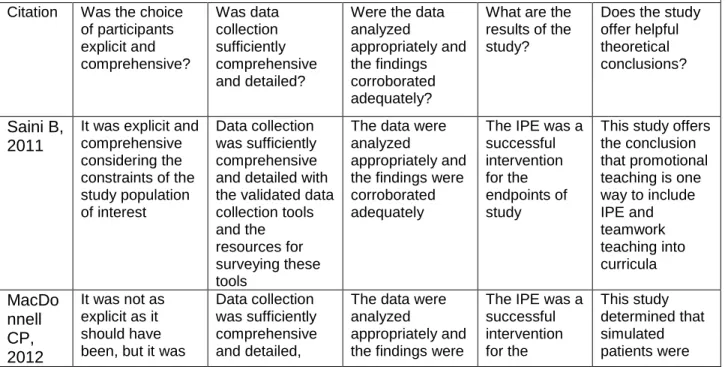
Therefore to compare this program to others present in the literature, I searched for articles that detailed programs featuring the same types of students as well as including only those which incorporated an IPE intervention with survey analysis of the students before and after the intervention. Further details about this review of the literature are in Appendix 1.
McNeal-14 Trice her and colleagues (Julie Byerley, D. Joey Woodyard, Jim Barrick, Carol Durham, Kathy Alden, Kelly Scolaro, Alice Chuang, Brian Loveland, Shelby Marx, and Jennifer Alderman) created a short course that could inject IPE during the final weeks of study for students,
immediately before their completion of medical school and the beginning of their residency. Dr. McNeal-Trice was the Pediatrics Clerkship Director when she began the program in 2009, and this naturally led her to focus on enhancing the education of fourth year students who intended to enter pediatric residency programs. Thus she started her pilot teamwork training program using those medical students. She was able to collaborate with UNC School of Nursing to include nursing students in the initial IPE course, and later collaborated with the UNC Eshelman School of Pharmacy. The pilot program itself consisted of a “Birthing Simulation” involving two emergent birthing case scenarios in which students were required to effectively communicate the details of the case, care for the laboring mother, facilitate the birth of the infant, and
resuscitate the infant. Prior to the simulation, all groups of students completed an online module on TeamSTEPPSTM training. Upon completion of both simulation experiences, students
completed assessments of medical, nursing, and pharmacy team members regarding communication skills and teamwork dynamics.
Participant Recruitment
15 may have motivated students to choose the “selective” as well. During the years 2009, 2010, 2011, ad 2012 of the program, data were assessed using only aspiring pediatricians in their fourth year of medical school and nursing students. The nursing students were in their senior maternal child course and selected to attend the session as well. Starting in the year 2013, fourth year medical students planning on entering obstetrics and gynecology and pharmacy students were also included in the program by faculty in their respective areas of study. The pharmacy students were in their final year of their program, they were informed of the opportunity, and they volunteered to participate based on availability. A breakdown of the numbers of students involved in the study can be seen in Table 1. The number of medical, nursing, and pharmacy students that completed all surveys from all five years of study was 159 (82, 64, and 13 respectively).
Data Collection
The evaluative surveys were on paper, to be filled out by hand, during the years of 2010, 2011, and 2012. However beginning in 2013 and continuing in 2014 and 2015, the surveys were administered using Qualtrics (Qualtrics 2015, Provo, Utah; see qualtrics.unc.edu), which is the survey software supported by UNC for faculty and student research and education. The surveys themselves were almost completely unchanged over the years, with the exception of including the correct for pharmacy students and aspiring ob-gyn physicians. Beginning in 2013, questions assessing teamwork skills of students following simulated patient encounters included a new “not applicable” response option. This change was driven by student feedback from previous years. This and other details of the resulting over-tine survey database are presented in Appendix 4, and the evaluative surveys themselves can be seen in Appendix 2.
16 multiple choice questions measuring students’ knowledge of how to function as a team in a clinical scenario.30 These two surveys tools were administered to students before a simulated
patient encounter. Following the patient encounter, another survey asked students to evaluate the teamwork skills of other students in the simulation. A third party evaluator who was not a student involved in the simulation surveyed the apparent understanding of the teamwork process and the shared mental model, as well as team outcomes and performance during the simulation exercise. The students underwent a debriefing session following their first simulation and evaluation, during which faculty-driven IPE took place with active participation from all students. After a second simulated patient encounter, the post-simulation surveys were administered a second time, and a second debriefing session ensued again led by faculty delivering IPE training. Student identification numbers on all surveys permitted linking individual-level pre- and post-encounter data.
Data Analysis
17
Results
Survey data analysis revealed that there were statistically significant changes in attitudes about other health care professionals in medical, nursing, and pharmacy students among almost all of the attitude variables assessed. The data about the knowledge of students about teamwork and how to run through a clinical scenario with respect to seven teamwork multiple choice questions was not conclusive. Surveys in which students assessed their
teammates from all health care disciplines following a first and then a second simulated patient encounter were also inconclusive, and appropriate statistical analysis of these data on
assessment of teamwork skills is beyond the scope of this paper. Finally, the outside observer data on teamwork process skills, understanding of a shared mental model, and teamwork outcomes and performance show significant change from the initial simulated patient encounter to the second patient encounter in a few key areas.
Attitudes
18 didn’t change their views of whether “nurses are detached” (mean difference = 0.11 +/- 1.17, with a p of 0.307.
The data look somewhat different when we break them down by student type. Medical students did not significantly change their response to the “nurses are arrogant” trigger, although the average response to this question decreased in agreement (mean difference = -0.06 +/- 0.62, p = 0.056) and pharmacy students’ attitudes about nurses were hardly changed at all by IPE. The pharmacy students did not revise their responses to “nurses are caring,” “nurses are confident,” “nurses are detached,” “nurses are good communicators,” “I am comfortable communicating with nurses,” “I am comfortable giving directions to a nurse,” “I am interested in a nurse's assessment of a patient.” and “I am interested in a nurse's thoughts on treatment plans.” IPE is associated with a change in pharmacy students’ attitudes on only four triggers: “Nurses are dedicated,” “Nurses are dithering (make a fuss/agitated),” “Nurses are arrogant,” and “I am comfortable taking directions from a nurse.” It is easy to observe from this data that the collective data for statistical significance in change does not accurately represent the
change in attitudes of each pre-professional discipline specifically. This is made visually obvious through the graphical representation of the data in Figure 1.
In the aggregate, nursing and pharmacy students appeared to change their views of doctors following IPE for every attitude assessed (agreeing more strongly with those attitudes having positive valences, and decreasing in their agreement with attitudes having negative valences). Once again, digging beneath the aggregate finding shows intergroup differences. The data do not show that nursing students had a statistically significant change in their level of agreement with “Doctors are confident,” (mean difference = 0.13 +/- 0.75, p = 0.1176) or
19 Attitudes about pharmacists appeared to change least on the whole, but nursing and medical students did vary somewhat in their changed views of pharmacists. Neither group increased in their agreement to the trigger “Pharmacists are confident,” (mean difference = 0.12 +/- 0.79, p = 0.1854) or decreased in their agreement with “Pharmacists are dithering (make a fuss/agitated)” (mean difference = -0.08 +/- 0.88, p = 0.0585) Medical student respondents also did not change their reaction to “I am interested in a Pharmacist's thoughts on treatment plans.” Nursing students, on the other hand, did significantly change their response to “Pharmacists are dithering (make a fuss/agitated).” A summary of all of the collective attitude changes can be seen in Table 2. Once again, all of the changes in attitudes following IPE broken down by pre-professional student type can be seen in Figure 1 where we see, once again, that ceiling effects may limit the possibility of change. Nursing students generally appear to start out viewing pharmacists more favorably than do medical students, giving medical students more room for revising their attitudes.
Knowledge
20 students answered “Call-out,” while 64.04% answered correctly following IPE. The most
common incorrect response both before and after IPE was “Time-out.”
The same four out of the seven questions answered correctly >99% of the time both before and after IPE by medical students were answered correctly >97% of the time by nursing students. Their responses were similar to the medical students for the other 3 questions as well, except they improved in the percentage of correct responses to the question “Who is the leader in medical teams?” rather than worsened, with a correct response of “Varies by circumstance” 73.33% of the time before IPE and 81.08% of the time following IPE.
Pharmacy students had similar responses: they too answered the same four questions correctly >95% of the time even before their IPE exposure. They showed substantial
improvement in their response to “The best communication tool or method to get critical information to the whole team during an emergency or complex procedure is…?” as had the medical and nursing students and, like the nursing students, they improved on “correct” knowledge of the appropriate team leader.
Indicators of student assessment of their peers from other disciplines following the initial and second simulated patient encounters were also inconclusive. Disentangling these
assessment data is beyond the scope of this paper. Finally, the outside observer data do show significant change from first to second simulated patient encounters following IPE. The outside observers were asked to assess teamwork process skills, the shared mental model, and team outcomes and performance. Before addressing the observational data, however, we should turn to students’ assessment of one another’s skills.
Skills
21 “Medical student, Group 4” we could, in theory, attach all assessment of that given student in each encounter. Because so many students did not fill out this section of the survey correctly (missing data, responses not applicable to the question, etc.), it was not possible to match data from the initial survey to the follow-up survey.
Students in the early years of the project also apparently failed frequently to provide data even for global group ratings. Finally, in the ideal world where every student correctly identifies him or herself and correctly generates assessment data for every other student, the complexity of the analysis would be beyond the scope of the present paper, although future such research could likely benefit from the use of network analysis and other relational statistical techniques. Teamwork Process Skills, a Shared Mental Model, and Team Outcomes
Observers who evaluated the interdisciplinary teams as they completed their simulated patient encounters also completed surveys using questions that assessed the teams’ teamwork process skills, understanding of a shared mental model, and teamwork outcomes and
performance. The results from these surveys are exciting, as they show significant changes from the initial to the second patient encounter following IPE in the areas of members recognizing their roles and responsibilities for the clinical scenario, improvement in the
exchange of information between teammates throughout the case,members working actively to ensure that the entire team has a shared comprehension of their teamwork process, and
collective team demonstration of improved understanding of individual responsibilities in the treatment plan.
22 (p=0.0017). Although only four out of the eighteen questions showed statistically significant change following IPE, these four questions are important indicators of real improvement in the understanding of a shared mental model and in team outcomes according to the
TeamSTEPPS™ model. These data can be appreciated more fully in table form; Table 3 provides more insight into the mean differences from the initial simulation to the second simulation, and how significant or not these changes were. Also, a graphical representation of the data can be seen in Figure 2.
Discussion
This study provides support for many key benefits of implementing IPE into
undergraduate health professional education curriculum, and provides insight into methods for incorporating such training. The three most striking areas of IPE’s potential to reach IOM goals, at least as evidenced in these data, are the notable changes in attitudes about health care providers by students of other disciplines following an IPE program, the increase in a shared mental model of students following IPE, and the improvements in teamwork performance and outcomes.2 AHRQ’s TeamSTEPPS™ model was adapted at UNC to match the needs of
students. This pilot program provides evidence supporting this kind of adaptation of
TeamSTEPPS™ to student curricula and also provides the statistical evidence for the areas where this adaptation needs improvement.22
It is clear from the attitude change data that an IPE training program accomplished through simulated patient encounters creates a significant difference in important attitudes toward the processes of work and the roles and capacities of one’s colleagues. The IOM and the Accreditation Council for Graduate Medical Education specifically noted attitudes as one of the three main qualities (knowledge, skills, and attitudes); these shared attitudes of mutual respect are necessary if we are to create effective interdisciplinary health care teams.2,8
23 have a definite upper limit and for which the risk of a large concentration of responses occurring at or near this upper limit is high.32 Ceiling effects mask or actually prevent the possibility of
further attitude change. The floor effect, of course, is the obverse: the risk of most responses congregating at an indicator’s lower limit may then artificially inflate apparent attitude change.32
Assessing change when either a ceiling or a floor effect may be in place results in the problem of scale attenuation, which is the term used when variance between scores may be limited by some factor (in this instance, the ceiling or floor effect).32 Ceiling and floor effects and
the attenuation they can cause could reduce the internal validity a study. A scale ranging only from one to five for assessing how strongly one agrees that a peer is a caring individual, or has other normatively admirable attributes, may obscure more nuanced attitudes that could be represented with a more detailed scale. Therefore it would be easy to argue that ceiling and floor effects were possible scale attenuators for this set of data. However, the fact that the results of this study demonstrate statistically significant change following IPE in almost all of these attitudes, despite scale attenuation from ceiling and floor effect, only further strengthens the argument that IPE is a valid method for creating the kind of attitude change that leads to improvement in teamwork among health care providers.
There is another consideration, however, for these data, and it presents a limitation in the interpretation of the results as strictly supportive of such an IPE program. The ethical aspect of this study involves the fact that it is built into a curriculum through which most students involved harbor some concern about their grade and or the perception of their participation by the faculty administering the course. Therefore the astute student may consciously or
24 The changes in knowledge were not significant, but this information is important for moving forward with incorporating knowledge questions into an IPE curriculum for students that may need to deviate from this pilot program. According to the interprofessional summit meeting in 2003 which produced the report Health Professions Education: A Bridge to Quality,
knowledge of basic teamwork roles that are applicable to and adaptable for any clinical scenario are vital for improving teamwork skills and patient outcomes.7 For the students assessed in this
survey, one of the biggest limitations to gaining meaningful information from the knowledge assessment was that most students had an adequate working knowledge of these teamwork skills before the IPE program. This could be seen as a vote of confidence in the changing culture of heath care education and health care in general that students from all disciplines involved had a solid knowledge base for these questions, and also that all three student types had such a similar knowledge base. It could also be representative of the fact that all student groups were in the senior-level portions of their field of study. It is possible that if the curriculum were earlier in the health profession education of all groups, the knowledge scores would be significantly different.
However, the three questions that had varying levels of knowledge at baseline and varying degrees of improvement or worsening should be considered. In particular, it is
25 The best communication method for conveying information to the whole team during an emergency or complex procedure is an important knowledge question that would allow a student to apply this tool to any clinical scenario in which teamwork is needed. Although this was the question that saw the most dramatic gains in correct answers, the percentage of correct responses was only as high as 66.67% following the IPE, and as low as 59.46%. Proper,
efficient, and effective communication is cited by all groups working to improve interprofessional teamwork in the health care setting as a vital component for success.2-9 Therefore although
there was marked improvement in the knowledge of communication on the part of students completing this pilot program, there is room for improvement. Lastly, the lack of knowledge on this topic before beginning the program suggests that this is an area which may require more time and effort in teaching to students, starting even earlier in their undergraduate health professional education. It is also possible that improper communication is being modeled to these students by their evaluating faculty, and as such although this paper argues for early incorporation of IPE into student curricula, it should not detract from the importance of continued IPE throughout graduate education and careers.
26 Students’ apparently improved competence to recognize their role and responsibilities for a clinical scenario support the notion that this IPE training improved team orientation and a shared mental model. Also, improvement in the exchange of information between teammates throughout the simulated cases shows that although some aspects of communication were not well learned (as was the case with the knowledge questions), other aspects of communication skills within the team were significantly improved. Strong communication fosters mutual support and, again, supports an understanding of a shared mental model. Results showed that
individuals improved on working actively to ensure that the entire team has a shared comprehension of their teamwork process, which provides evidence that this IPE training program increased team orientation and team performance. Finally, a collective team
demonstration of improved understanding of individual responsibilities in the treatment plan will almost certainly increase patient safety, the most prudent goal of the TeamSTEPPS™ model for accomplishing the improvements suggested by the IOM.2
The final limitation of this study is the voluntary nature of survey completion. The data results may suffer from voluntary response bias in that not all students who enrolled responded to any of the surveys, and some responded to certain aspects but not others. The type of student who would be more likely to respond to voluntary surveys is the type of student from which we drew our data, and this sub-sample may not be representative of the entire group of students. All the students, moreover, regardless of the state of their survey completion, are students who chose to participate in the program rather than a random sample of students, again biasing our data and reducing the external validity of the results. In mitigation, however, if these students were entirely previously supportive of IPE, our data should have shown such strong pre-IPE ceiling effects that we could not have seen any change.
Conclusion
27 goals set forth by the AHRQ and the IOM for improved patient safety as accomplished by
improved teamwork.2,22 Although there is currently little evidence that shows how IPE can be
effectively incorporated into undergraduate health care curricula, the evidence presented in this paper will add to this growing field of research and will, we hope, spur more projects.4 Creating
a cultural shift in the U.S. health care system can most efficiently and effectively be
accomplished by starting to train the youngest members of that system in a mindset which encompasses the necessarily changing set of values and attitudes.5
This program has many accomplishments, but also suffered from a few limitations, challenges, and failures. If IPE such as this is to be integrated into student curricula and continues as a basis for research into the efficacy of this technique, the bias of student
participation in optional programs created by revered faculty must be addressed in some way. The program at UNC had one method of reducing such a bias for the medical students involved in that their participation occurs after their match into residency programs. However, the bias remains overall. Questions to assess knowledge of teamwork skills should be adapted to better represent the information that may be gleaned from the IPE training session itself, and the IPE training should be tailored to better address the topics of team leadership and team
communication in emergency settings. Finally, more knowledge questions should be developed that will allow for better assessment and also facilitate better teaching tools for the skill of adaptability.
This program has brought many students together in ways that medical, nursing, and pharmacy education programs have rarely done. Satisfaction has been a major reason that more and more students enroll in the course voluntarily with each passing year. It is
28 actual patient safety outcomes resulting from student training in IPE. This is the intended
29
References
1. Gordon I. Alexander Pope: Essay on Criticism. The Literary Encyclopedia. March 21, 2002. http://www.litencyc.com/php/sworks.php?rec=true&UID=5312. Accessed June 5, 2015.
2. Kohn L, Corrigan J, Donaldson M, editors. To Err is Human: Building a Safer Health
System. Washington, DC: National Academy Press; 2000.
3. Berwick DM, Leape LL. Reducing errors in medicine: It’s time to take this more seriously.
BMJ 1999;319:136–7.
4. Maddox PJ, Wakefield M, Bull J. Patient safety and the need for professional and educational change. Nursing Outlook. 2001;49(1):8-13.
5. Berwick DM, Leape LL. Five years after To Err Is Human: What have we learned?
JAMA. 2005;293:2384-90.
6. World Health Organization. Framework for action on interprofessional education and collaborative practice. Geneva: World Health Organization. 2010:63.
7. Greiner AC, Knebel, editors. Health Professions Education: A Bridge to Quality. Washington, DC: National Academy Press; 2003.
8. Accreditation Council for Graduate Medical Education. ACGME program requirements for graduate medical education in pediatrics. 2013.
https://www.acgme.org/acgmeweb/Portals/0/PDFs/Milestones/320_PedsMilestonesProje
ct.pdf. Accessed June 22, 2015.
9. Corrigan J. Crossing the Quality Chasm: A New Health System for the 21st Century.
Washington, DC: National Academy Press; 2001.
30 11. Robertson J, Bandali K. Bridging the gap: Enhancing interprofessional education using
simulation. J Interprof Care. 2008;22(5):499–508.
12. Baker DP, Gustafson S, Beaubien JM, Salas E, Barach P. Medical teamwork and patient
safety: the evidence-based relation. Rockville, MD. Agency for Healthcare Research and
Quality; 2005. Publication No. 05-0053.
13. Baker DP, Salas E, King H, Battles J, Barach P. The role of teamwork in the professional education of physicians: current status and assessment recommendations. Joint
Commission Journal on Quality and Patient Safety. 2005; 31:185-202.
14. Kvarnstrom S. Difficulties in collaboration: a critical incident study of interprofessional healthcare teamwork. J Interprof Care. 2008;22(2):191-203.
15. Reeves S, Zwarenstein M, Goldman J, Barr H, Freeth D, Hammick M, Koppel I.
Interprofessional education: effects on professional practice and health care outcomes.
Cochrane Database of Systematic Reviews; 2008: Issue 1. Art No.: CD002213. DOI:
10.1002/14651858.CD002213.pub2.
16. Cannon-Bowers JA. Salas E. A framework for developing team performance measures in training. In: Brannick MT, Salas E, Prince C, eds. Team Performance Assessment and
Measurement. Mahwah, NJ: Lawrence Erlbaum Associates;1997: 45-62
17. Cark PG. What would a theory of interprofessional education look like? Some
suggestions for developing a theoretical framework for teamwork training. J Interprof Care. 2006;20:577-589.
18. Nolan TW. Understanding medical systems. Annals of Internal Medicine. 1998;128:293-298.
31 20. Driskell JE, Salas E. Collective behavior and team performance. Human Factors. 1992;
34: 277-288.
21. Alonso A, Baker D, Holtzman A, Day R, King H, Toomey L. Salas E. Reducing medical error in the military health system: is team training the right prescription? Human
Resources Management Review. 2006;16:396-415.
22. King HB, Battles J, Baker DP, Alonso A, Salas E, Webster J, Toomey L, Salisbury M.
TeamSTEPPS™: team strategies and tools to enhance performance and patient safety.
Agency for Healthcare Research and Quality. 2006.
http://www.ahrq.gov/downloads/pub/advances2/vol3/Advances-King_1.pdf. Accessed
June 3, 2015.
23. Sims DE, Salas E, Burke SC. Is there a “big five” in teamwork? 19th Annual Meeting of
the Society for Industrial and Organizational Psychology. Chicago, IL; 2004.
24. Morey JC, Simon R, Jay GD, et al. Error reduction and performance improvement in the emergency department through formal teamwork training: Evaluation results of the MedTeams project. Health Serv Res. 2002;37:1553-1581.
25. Floyd D .Spence National Defense Authorization Act for Fiscal Year 2001.
https://www.congress.gov/bill/106th-congress/house-bill/4205. Accessed June 10, 2015. 26. Seamster TL, Kaempf GL. Identifying resource management skills for airline pilots. In:
Salas E, Bowers C, Edens E, eds. Improving teamwork in organizations: Applications of
resource management training. Mahwah, NJ: Lawrence Erlbaum Associates; 2001. p.
9-30.
27. Emanuel L, Berwick D, Conway J, Combes J, Hatlie M, Leape L, et al. What exactly is
patient safety? Agency for Healthcare Research and Quality.
http://www.ahrq.gov/professionals/quality-patient-safety/patient-safety-
32 28. Monrouxe L. Identity, identification and medical education: why should we care? Medical
Education. 2010;44:40-49.
29. Pangaro L. A new vocabulary and other innovations for improving descriptive in-training evaluations. Academic Medicine. 1999;74:1203-1207.
30. Losby J, Wetmore A. CDC coffee break: Using Likert scales in evaluation survey work. February 14, 2012. http://www.cdc.gov/dhdsp/pubs/docs/cb_february_14_2012.pdf. Accessed June 11, 2015.
31. Bruin, J. What statistical analysis should I use? Statistical analyses using Stata. UCLA: Statistical Consulting Group. 2006. http://www.ats.ucla.edu/stat/stata/ado/analysis/. Accessed May 25, 2015.
32. Hessling RM, Traxel NM, Schmidt TJ. Ceiling Effect. The SAGE Encyclopedia of Social
Science Research Methods. 2004. http://dx.doi.org/10.4135/9781412950589. Accessed
June 10, 2015.
33. Saini B, Shah S, Kearey P, Bosnic-Anticevich S, Grootjans J, Armour C. An interprofessional learning module on asthma health promotion. Am J Pharm Educ. 2011;75(2):30.
34. Chiang LC, Hsu JY, Liang WM, Yeh KW, Huang JL. Developing a scale to measure self-efficacy on asthma teaching for health care providers. J Asthma. 2009;46(2):113-7. 35. Heinemann GD, Schmitt MH, Farrell MP, Brallier SA. Development of an Attitudes
Toward Health Care Teams Scale. Eval Health Prof. 1999;22(1):123-42.
36. Reid R, Bruce D, Allstaff K, McLernon D. Validating the Readiness for Interprofessional Learning Scale (RIPLS) in the postgraduate context: are health care professionals ready for IPL? Med Educ. 2006;40(5):415-22.
37. MacDonnell CP, Rege SV, Misto K, Dollase R, George P. An introductory
33 38. Wright MC, Phillips-Bute BG, Petrusa ER, Griffin KL, Hobbs GW, Taekman JM.
Assessing teamwork in medical education and practice: relating behavioural teamwork ratings and clinical performance. Med Teach. 2009;31(1):30-8.
39. Lyons KJ, Giordano C, Speakman E, Isenberg G, Antony R, Hanson-Zalot M, Ward J, Papastrat K.J. Jefferson interprofessional clinical rounding project: an innovative approach to patient care. Allied Health. 2013;42(4):197-201.
40. Lapkin S, Levett-Jones T, Gilligan C. A cross-sectional survey examining the extent to which interprofessional education is used to teach nursing, pharmacy and medical
students in Australian and New Zealand universities. J Interprof Care. 2012;26(5):390-6. 41. Casper E. The theory of planned behavior applied to continuing education for mental
health professionals. Psychiatric Services. 2007;58(10):1324–1329.
34
Tables and Figures
Table 1: Student Participation
Number of
Students
Year
2011
Year
2012
Year
2013
Year
2014
Year
2015
Completed Pre and Post
Survey Total Over 5 Years
Nursing
9
13
15
21
17
64
Medical
12
16
22
22
29
82
35 Table 2: Attitudes about Pre-Professional Students from Other Disciplines
Nurses Assessed pre/post by Medical & Pharmacy Students Mean pre Mean post Change p value Nurses are caring 4.57 4.75 0.18 0.0011
Nurses are confident 4.09 4.36 0.26 0.0014
Nurses are dedicated 4.57 4.75 0.18 0.0033
Nurses are detached 1.40 1.51 0.11 0.3070*
Nurses are good communicators 3.80 4.28 0.48 0.0000
Nurses are dithering (make a fuss/agitated) 1.63 1.29 -0.34 0.0000
Nurses are arrogant 1.31 1.17 -0.14 0.0032
I am comfortable communicating with nurses 3.82 4.27 0.45 0.0000
I am comfortable giving directions to a nurse 3.08 4.01 0.93 0.0000
I am comfortable taking directions from a nurse 3.87 4.38 0.51 0.0000
I am interested in a nurse's assessment of a patient 4.63 4.82 0.19 0.0023
I am interested in a nurse's thoughts on treatment plans 4.42 4.71 0.28 0.0000
Doctors Assessed pre/post by Nursing & Pharmacy Students Mean pre Mean post Change p value Doctors are caring 3.51 4.40 0.90 0.0000
Doctors are confident 4.05 4.23 0.18 0.0228
Doctors are dedicated 3.97 4.45 0.48 0.0000
Doctors are detached 2.50 2.08 -0.41 0.0038
Doctors are good communicators 2.87 3.77 0.90 0.0000
Doctors are dithering (make a fuss/agitated) 1.81 1.56 -0.24 0.0099
Doctors are arrogant 2.51 1.71 -0.79 0.0000
I am comfortable communicating with doctors 2.92 3.75 0.84 0.0000
I am comfortable taking directions from a doctor 2.87 3.74 0.87 0.0000
I am comfortable giving directions to a doctor 3.19 3.95 0.75 0.0000
I am comfortable giving an assessment of a patient to a doctor 4.16 4.49 0.34 0.0001
I am comfortable giving my thoughts on treatment plants to a doctor 4.16 4.39 0.23 0.0043
Pharmacists Assessed pre/post by Medical & Nursing Students Mean pre Mean post Change p value Pharmacists are caring 3.64 4.31 0.68 0.0000
Pharmacists are confident 4.09 4.21 0.12 0.1854*
Pharmacists are dedicated 4.07 4.43 0.36 0.0000
Pharmacists are detached 2.31 1.85 -0.46 0.0002
Pharmacists are good communicators 3.49 4.04 0.55 0.0000
Pharmacists are dithering (make a fuss/agitated) 1.37 1.29 -0.08 0.0585*
Pharmacists are arrogant 1.51 1.31 -0.19 0.003
I am comfortable communicating with Pharmacists 3.73 4.26 0.54 0.0000
I am comfortable giving directions to a Pharmacist 3.10 3.81 0.71 0.0000
I am comfortable taking directions from a Pharmacist 3.99 4.38 0.39 0.0000
I am interested in a Pharmacist's assessment of a patient 3.84 4.33 0.49 0.0000
36 Table 3: Change in Teamwork Process Skills, a Shared Mental Model, and Team Outcomes
Questions for Assessment Simulation
1 Mean
Simulation 2 Mean
Mean
Change p value
PROCESS: Does the team identify a leader at the
onset of assessment? 3.21 3.44 0.23 0.1467
PROCESS: Does the leader solicit input from other
team members? 3.41 3.44 0.024 0.9594
PROCESS: Does the leader consider input from
other team members and act appropriately? 3.38 3.53 0.15 0.4544
PROCESS: Does the leader guide team members
through process? 3.12414 3.47 0.30 0.0801
PROCESS: Does the leader voice activities aloud? 3.61 3.63 0.00 0.9748
PROCESS: Does the leader use appropriate
structured-language? 2.96 2.88 -0.09 0.7849
PROCESS: Does the team identify and voice the
task at hand? 3.46 3.66 0.19 0.315
SHARED MENTAL MODEL: Do team members
recognize their role/responsibility for the case? 2.93 3.63 0.70 0.0009*
SHARED MENTAL MODEL: Do team members share information with each other throughout the case?
3.36 3.69 0.33 0.021*
SHARED MENTAL MODEL: Do team members call attention to actions that they feel could cause errors or complications?
3.44 3.28125 -0.16 0.4379
SHARED MENTAL MODEL: Do team members
adjust procedures to avoid errors? 3.33 3.13 -0.21 0.5323
SHARED MENTAL MODEL: Do the team members
voice activities aloud? 3.50 3.69 0.19 0.3838
SHARED MENTAL MODEL: Do the team members
ensure team comprehension of process? 3.11 3.53 0.42 0.0129*
SHARED MENTAL MODEL: Does the team use
appropriate structured-language? 2.81 2.97 0.15 0.2781
OUTCOME: Does the team arrive at the most
appropriate treatment plan with regards to the case? 3.50 3.81 0.31 0.1571
OUTCOME: Does the team request appropriate
consultations? 3.50 3.25 -0.25 0.553
OUTCOME: Does the team demonstrate
understanding of individual responsibilities in the treatment plan?
2.90 3.50 0.60 0.0017*
OUTCOME: Does the team provide appropriate
information to the patient/family? 2.96 3.19 0.22 0.3108
36
Figure 1: Graph of Change in Attitudes about Health Care Professional Following IPE by Student Discipline
36
Appendix 1: Systematic Review
Does an IPE Intervention in for Medical, Nursing, and Pharmacy Students alter Student Attitudes, Knowledge, Skills, Team Performance, or Team Outcomes?
Introduction
During the 1990s, research revealed dramatic evidence exposing the poor state of patient safety and preventable morbidity and mortality in the U.S. health care system. 2 This
spurred the Institute of Medicine (IOM) to create the Quality of Health Care in America
Committee in 1998, and by the year 2000 this committee issued a landmark report titled To Err
is Human: Building a Safer Health System.2 In this document the IOM called for an overhaul of
how patient safety is executed within the system, and established goals for reducing medical errors. The Agency for Healthcare Research and Quality (AHRQ) defines patient safety as “…a discipline in the health care sector that applies safety science methods toward the goal of achieving a trustworthy system of health care delivery. Patient safety is also an attribute of health care systems; it minimizes the incidence and impact of, and maximizes recovery from, adverse events.”27 (p. 6)
Attention to the value of training providers to work effectively in teams as a strategy for increasing safety was a major theme in this report and in all the action that followed its
publication.3 Training programs teaching teamwork and interprofessional or interdisciplinary
understanding are now given the title Interprofessional Education (IPE). The Committee of Health Professions Education states that the purpose of IPE is to teach students “the ability of professionals to cooperate, collaborate, communicate, and integrate care as part of an
interdisciplinary healthcare team.”7(p. 4) Early training is one of the most effective ways to make
IPE instrumental to improving patient safety, as students during their health professional training are able to have the core values and skills taught in IPE ingrained in the way they practice, in turn shifting the entire culture of the health care system.6 Health professional educators have
40 evaluation, and measurement of these IPE programs in pre-licensure health education is in its infancy as few of these programs have been implemented following such recent
recommendations.10
The main model for IPE is the program titled Team Strategies and Tools to Enhance Performance and Patient Safety (TeamSTEPPS™™), released to the public in 2006 following the creation by the AHRQ in collaboration with the Department of Defense. 22 The idea of
teamwork within TeamSTEPPS™™ relies on the notion that for a team to accomplish goals, members must maintain a commitment to a set of knowledge, skills, and attitudes (KSAs) conducive to cooperation.24 This model calls for teaching four main skills in order to enhance
teamwork: leadership, mutual support, situation monitoring, and communication. These are evaluated through assessing the presence of a shared mental model, adaptability, team orientation, mutual trust, team performance, and patient safety.22
Based on this information and the program implemented and studied at UNC School of Medicine as an adaptation of TeamSTEPPS™™, I performed a limited systematic review of the literature in search of programs with a similar model. UNC’s pilot program included medical, nursing, and pharmacy students in an IPE intervention, and evaluated changes in student attitudes, knowledge, skills, team performance, and team outcomes according to the measures mentioned in the description of TeamSTEPPS™™ using survey data. Therefore, my limited systematic review searched the literature for programs featuring: (1) the same set of student types, (2) an IPE intervention, and (3) evaluation of change of one or more of the characteristics mentioned in the UNC pilot program following the IPE training.
Search Strategy
Between June 2nd and June 4th of 2015, I searched the PubMed database using the