Initiatives to Reduce Hypertension in
the United States:
Sodium Reduction in the Food Industry
Jackie Geralnick
MPH/RD Candidate
University of North Carolina- Chapel Hill
Gillings School of Global Public Health
1
Executive Summary
Sodium is an important mineral for both food production and human health. In the food supply, sodium plays many roles including taste, flavor, texture, functionality and food safety. In the body, sodium is necessary to maintain proper fluid balance. However, excess sodium intake has been correlated with increased blood pressure and hypertension, which is a risk factor for cardiovascular disease, the leading cause of death in the United States. The 2010 Dietary Guidelines for Americans recommend that healthy individuals consume a maximum of 2,300 mg of sodium per day, and individuals who are 51 and older and those of any age who are African American or have hypertension, diabetes, or chronic kidney disease limit their sodium intake to 1,500 mg/day. Despite these recommendations, the Institute of Medicine estimated that Americans consume an average of 3,400 mg/day based on NHANES data from 2003-06.
In response to evidence that Americans consume excessive levels of sodium, many public health organizations are calling for a government intervention in the amount of sodium in the food supply. Approximately 77% of the sodium in American diets comes from packaged foods and foods purchased outside of the home. This is considerably more than the sodium that naturally occurs in foods (12%), and the amount that consumers add during cooking (5%) and eating (6%). In the last several years, there have been voluntary efforts involving the food
industry to decrease sodium in their products, including the sodium reduction project led by the Grocery Manufacturers Association and the National Sodium Reduction Initiative led by the health department in New York City. Despite voluntary reformulations, the Institute of Medicine released a report, Strategies to Reduce Sodium Intake in the United States, which
recommended that “the Food and Drug Administration (FDA) should expeditiously initiate a process to set mandatory national standards for the sodium content of foods” and “the food industry should voluntarily act to reduce the sodium content of foods in advance of the implementation of mandatory standards.”
With the staggering prevalence of hypertension and cardiovascular disease in the US, industry-wide sodium reduction is estimated to decrease the incidence of hypertension and prevent numerous cardiovascular events, such as heart attacks and strokes. Proponents of this effort believe this intervention could save hundreds of thousands of lives and billions of dollars in health care costs. Opponents of sodium reduction believe that this will not be an efficacious strategy. As demonstrated through consumer surveys and market research, reducing sodium intake is not a concern of the average consumer and many consumers do not think lower sodium products taste good. If consumers do not purchase the reformulated products based on lack of awareness or motivation or poor taste perception, the strategy may do little to decrease sodium intake. Additionally, the efficacy of a population-wide intervention has not yet been proven and the evidence linking sodium to hypertension is inconclusive. Finally, opponents note that other dietary interventions may be more beneficial than efforts targeting sodium and there is some evidence indicating a sodium reduction to the level recommended in the 2010 Dietary
Guidelines for Americans could actually cause more harm than good.
2
Initiatives to Reduce Hypertension in the United States: Sodium Reduction in the Food Industry
What is the Issue?
In 2010, Campbell’s introduced a new line of soups, Select Harvest, which claimed to be “100% natural”. Besides touting all-natural ingredients, the soups were also lower in sodium than other Campbell’s soup lines, such as Chunky and Slow Kettle. In July 2011, the company’s CEO-elect announced that the company would increase the amount of sodium in the Select Harvest line in response to poor sales.1 This announcement sparked outrage from numerous
consumer interest and public health organizations, claiming that the company was wrong to backtrack and add sodium to its products when there is such a need for low-sodium diets.
This incident brings into the spotlight an important question surrounding public health efforts to decrease sodium in the industry: can sodium reduction in the food supply be an effective intervention to decrease sodium intake, decrease hypertension prevalence, and therefore decrease adverse health outcomes?
What is the Background?
Sodium is a natural mineral that is necessary for physiological health. It is generally added to foods for its functional properties, most commonly in the form of salt, sodium chloride. Sodium plays a role in taste and flavor, food safety to prevent microbial growth, and functionality for proper leavening, binding, emulsification, fermentation control, osmolarity, water-activity, color development, texture, and other food preparation processes.2
Other additives containing sodium include monosodium glutamate (MSG), sodium
propionate, sodium bicarbonate (baking soda), and sodium stearoyl lactylate.2
As seen in Figure 1, the majority of sodium in the diet comes from processed foods and foods eaten outside of the home, followed by naturally occurring sodium, and sodium added while eating and during cooking.4 Of total dietary
intake, approximately one-third of sodium comes from restaurant foods. The largest contributors of sodium in processed foods are yeast breads, chicken and chicken mixed dishes, pizza, pasta, and cold cuts (Table 1).5
Rank Food Group 1 Yeast breads
2 Chicken and chicken mixed dishes
3 Pizza
4 Pasta and pasta dishes 5 Cold cuts
6 Condiments
7 Mexican mixed dishes
8 Sausage, franks, bacon, and ribs 9 Regular cheese
10 Grain-based desserts
Figure 1. Source of Sodium in the Diet
3
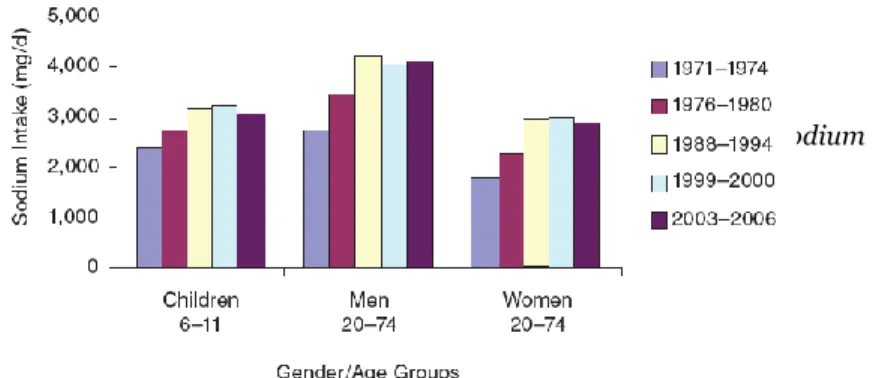
Although sodium is vital for health, Americans consume more than the recommended amounts. As seen in Figure 2, sodium intake has increased since the 1970s. Based on data from the National Health and Nutrition Examination Survey (NHANES) in 2003-04 and 2005-06, the Institute of Medicine (IOM) estimates that Americans consume approximately 3,400 mg of sodium a day.6 This exceeds the 2010 Dietary Guidelines for Americans maximum recommendation of 2,300 mg/day,
and 1,500 mg/day for individuals who are 51 and older and those of any age who are African American or have hypertension, diabetes, or chronic kidney disease.7 The Center for Disease
Control estimates that 47.6% of Americans should aim for the lower target, yet 98.6% of this population consumes more than 1,500 mg/day. Additionally, of the remaining population that should keep intakes below 2,300 mg/day, 88.2% consume more than this amount.8
Currently there are several initiatives taking place to reduce sodium in the industry. The first is industry led. From 2002 to 2009, the Grocery Manufacturers Association collaborated with its member companies to reformulate products and reduce sodium in over 3,000 product choices. Companies have created individual policies to decrease sodium on average 10-25% of entire portfolios over the next few decades.9Historically, many reduced and low-sodium foods
and foods with low-sodium claims in the marketplace have not been successful because consumers tend to perceive low-sodium foods with flavor loss. In an effort to prevent
discouraging consumers from purchasing lower-sodium products, food industry companies have mostly kept these changes silent to the public, known as stealth reductions, and elected not to use a sodium claim on a label or publicize the reformulations.
The New York City Department of Health and Mental Hygiene has coordinated the National Sodium Reduction Initiative (NSRI) among 70 cities, states, and national health organizations. The goal is to reduce American sodium intake by 20% over 5 years by working with industry and restaurants to decrease salt in foods by 25%. As of March 2011, there were 28 companies signed onto the initiative.10
In 2010, the IOM released Strategies to Reduce Sodium Intake in the United States. The report summarized current research, consumer perceptions, and recommendations to reduce sodium intake. Among these recommendations, the IOM suggested that FDA set standards for sodium content in foods, the food industry should voluntarily reduce sodium in foods in anticipation of mandatory standards, government and public health organizations should support sodium reduction efforts and increase education and awareness efforts, and federal agencies should monitor sodium intake and content in foods.11
Despite the numerous efforts to reduce sodium, there are several challenges to
decreasing the amount of sodium in the food supply. First, there is currently no acceptable salt substitute. As previously described, sodium is essential for food safety, functionality, shelf-life and palatability. Although there are some substitutes available, there is not one that is effective
Table 1. Top sodium-rich foods based on
contribution to total dietary sodium intake
SOURCE: NCI “Relative contributions of dietary sodium
sources”5
Figure 2. Trends in mean sodium intake from food for
three gender/age groups, 1971–1974 to 2003–2006, from NHANES 2003–2006
4
for all food categories. Salt replacements, such as potassium chloride, may be able to replicate the taste of salt but have different chemical properties from sodium and therefore may not effectively replicate the other roles of sodium in foods. Additionally, salt replacements may have off-tastes that may decrease consumer acceptance of these substitutes. Currently the industry only has the technical ability to reduce sodium at a rate of 10-30%.12
Cost is another barrier to sodium reduction as salt substitutes are much more expensive than salt. Salt costs approximately $0.10/pound while potassium chloride, which has only 10-30% of salt intensity and produces off-flavors, costs more than a $1.00/pound, and divalent salts, which have less than 10% salt intensity and bitter tastes, cost more than $1.25/pound. These additional expenses must be incurred by the food manufacturers, consumers, or both.13
Finally, consumer acceptance of sodium reduction is a large barrier to sodium reduction in the industry. Sodium plays an important role in consumer perception of a product’s flavor and texture, and dramatic changes in sodium reduction may not be acceptable to consumers. There cannot be significant decreases in sodium intake if consumers refuse to purchase the products with lower levels of sodium.14
Given the barriers and challenges to sodium reduction in the food supply, to what extent can an industry-wide sodium reduction be efficacious?
Why the Need for Sodium Reduction?
Many proponents of sodium reduction in the food industry feel that this intervention is necessary to decrease cardiovascular disease risk. Cardiovascular disease (CVD) is defined as “a group of disorders of the heart and blood vessels” that includes coronary heart disease,
cerebrovascular disease, peripheral arterial disease, rheumatic heart disease, congenital heart disease, deep vein thrombosis and pulmonary embolism.CVD manifests in acute events that include heart attacks and strokes. The main risk factors include high blood pressure, high blood cholesterol, diabetes mellitus, tobacco use, diet, physical inactivity, obesity, excessive alcohol use, and genetics.15
Although approximately 80% of CVD cases are preventable,15 the American Heart
Association estimates that CVD is the number one cause of death in the United States,
responsible for 1 in every 2.9 deaths in 2006. It accounted for 34.2% (864,480) of all deaths in 2005, more than cancer (559,312), accidents (117,809), Alzheimer’s disease, (71,599), and HIV/AIDS (12,543). Based on the 2005 mortality data, 1 American dies from CVD every 37 seconds, or 2,400 deaths each day. Further, strokes accounted for 1 of every 18 deaths in the United States in 2006, with a stroke occurring every 40 seconds.16
Therefore, public health efforts attempt to ultimately decrease the prevalence of CVD. The American Heart Association estimates that 1 in 3 adults has CVD, equal to an estimated 80,000,000 Americans. Of these adults, 73,600,000 were diagnosed with high blood pressure, or hypertension, defined as systolic pressure greater than 140 mm Hg or diastolic pressure >90 mm Hg, use of antihypertensive medication, or being told at least twice by a physician or other health professional that one has HBP.15 TheCDC reports that in 2005-06, an additional 28% of
U.S. adults had prehypertension, defined as systolic blood pressure 120–139 mm Hg or diastolic BP 80-89 mm Hg, and not pharmacologically treated for high blood pressure.17 Unfortunately,
as Figure 3 shows, the levels of hypertension have increased, not decreased since the 1980s.18
5
With nearly 1 in 3 Americans living with hypertension, the CDC recommends that Americans follow the Dietary Guidelines for Americans to decrease the prevalence of hypertension by limiting sodium intake. Part of these
recommendations includes caution of processed foods, which contribute significantly to
sodium intake.19
Several studies have demonstrated beneficial health outcomes with decreased sodium intake. The Dietary Approaches to Stop Hypertension (DASH) study found that when
participants followed a diet rich in fruits, vegetables, grains, low-fat dairy, lean meat and
poultry, fish, beans, and nuts that was also low in sodium (1,500 mg), they had improvements of 8.9 mm Hg compared to the typical American diet that was also higher in sodium (3,270 mg).20
The Trials of Hypertension Prevention found that nutritional counseling to reduce sodium intake led to consumption of 24%
less sodium after 3 years, resulting in decreases of 1.7 mm Hg in systolic
pressure and 0.9 mm Hg in diastolic pressure, and 18% reduction in incidence of hypertension.21
Further analysis has estimated that an average decrease of 3 mm Hg in systolic blood pressure would lead to 11% fewer strokes, 7% fewer coronary artery disease events, and 5% fewer deaths overall, saving 122,000 lives a year.22 Another study estimated that a 50% reduction in sodium
intake could decrease systolic blood pressure by 5 mm Hg, leading to a 20% reduction in prevalence of hypertension and 150,000 fewer deaths per year.23
Reductions of sodium in the diet have the potential to save millions of lives and billions of dollars in the health care costs associated with hypertension. Americans spent approximately $316.4 billion in 2010 on heart disease,24 including $15 billion a year on blood pressure
medications.25 In 2009, Americans spent $73.4 billion on the direct and indirect costs of
hypertension26. Several experts have estimated that sodium reduction efforts could help to
diminish these costs. The CDC estimates savings of $4 billion in health care costs per year and $32.1 billion over the lifetime of adults 40-85 years with reductions of ~10% in the food
supply.27 CSPI estimates that saving 150,000 lives a year by reducing sodium intake from 4,000
mg to 2,000 mg would save $1.5 trillion over 20 years.28 A study by the University of California-
San Francisco found that reducing salt by ½ teaspoon (3 grams) per day could prevent nearly 100,000 heart attacks and 92,000 deaths each year, saving about $24 billion in healthcare costs.29
Reducing sodium in the food supply may prevent other adverse health outcomes in addition to reducing CVD and hypertension prevalence. For example, high sodium intake has been identified as an important dietary risk factor for gastric cancer. Studies have found that subjects with the higher intakes of sodium had an increased risk of developing gastric cancer30
and limiting salt and salted food consumption is a plausible and practical strategy to prevent gastric cancer.31 As this is a common cancer, sodium reduction in the food supply may provide
Figure 3. Trends in elevated blood pressure/hypertension
from the NHANES for persons >20 years of age.
6
additional public health benefits beyond improving prevalence of heart disease and
hypertension. Although less well studied, sodium reduction may also help to decrease other health problems associated with increased sodium intake, including osteoporosis, kidney stones, impaired lung function and worsened asthma symptoms, higher rates of stomach ulcers, and increased mortality from coronary heart disease.32
Finally, an industry-wide sodium reduction may best benefit from government regulation. First, national mandates would level the playing field for food companies. By instating maximum levels of sodium in food products, companies should be encouraged to reduce the sodium in their products knowing their competition is required to as well.
Additionally, reducing sodium in the food supply could affect the restaurant industry. As many restaurants use the large food manufacturers to supply products, an industry-wide sodium reduction effort could also help to reduce the level of sodium contributed by foods eaten outside of the home. This type of government effort may be cost-effective as well. Dr. Kirsten Bibbins-Domingo, an associate professor of medicine and epidemiology at UCSF, writes that “For every dollar spent in regulating salt, anywhere from seven to 76 healthcare dollars could be saved.”33
What are the Challenges to Sodium Reduction?
Consumer Perceptions, Attitudes, and Behaviors: Consumer perceptions, attitudes, and behaviors may be the largest barrier to a successful sodium reduction. Research has shown that
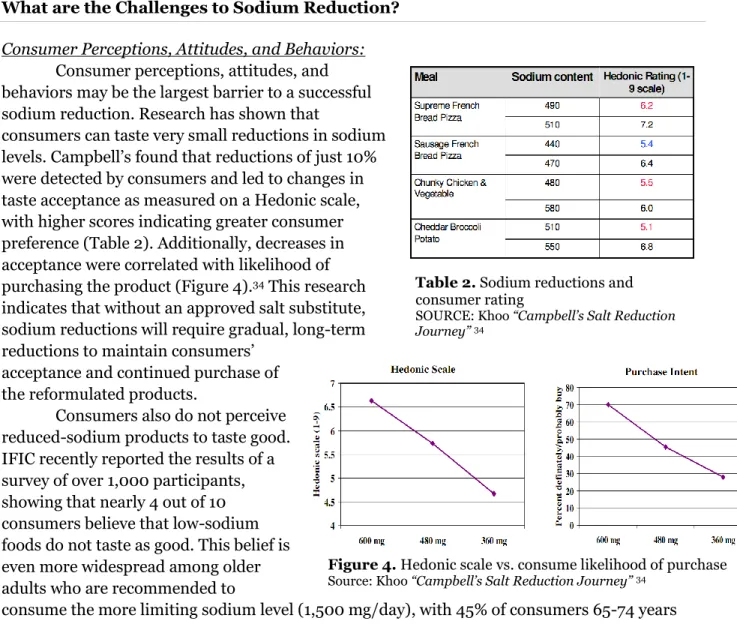
consumers can taste very small reductions in sodium levels. Campbell’s found that reductions of just 10% were detected by consumers and led to changes in taste acceptance as measured on a Hedonic scale, with higher scores indicating greater consumer preference (Table 2). Additionally, decreases in acceptance were correlated with likelihood of purchasing the product (Figure 4).34 This research
indicates that without an approved salt substitute, sodium reductions will require gradual, long-term reductions to maintain consumers’
acceptance and continued purchase of the reformulated products.
Consumers also do not perceive reduced-sodium products to taste good. IFIC recently reported the results of a survey of over 1,000 participants, showing that nearly 4 out of 10 consumers believe that low-sodium foods do not taste as good. This belief is even more widespread among older adults who are recommended to
consume the more limiting sodium level (1,500 mg/day), with 45% of consumers 65-74 years
Table 2. Sodium reductions and
consumer rating
SOURCE: Khoo “Campbell’s Salt Reduction
Journey” 34
Figure 4. Hedonic scale vs. consume likelihood of purchase
7
old and 59% of consumers 75+ years old agreeing that low-sodium foods do not taste as good. Regardless of sodium reduction efforts by industry, there may be little effect on sodium intake if consumers do not purchase and consume these products.35
The IFIC report also showed that consumers are not currently concerned with their sodium intake. While 83% of consumers surveyed believed that sodium intake was an important concern for Americans, significantly less (42%) were concerned with their own personal sodium intake. Further, 57% of consumers stated that they are not currently limiting sodium and 59% are not concerned with sodium reduction because they feel they are in good health or are not convinced it is necessary.35
Sodium reduction is also perceived as less important for an overall healthy diet. When asked which factors were among the three most important in contributing to a healthy diet, limiting sodium was third-tier. Consumers believed increasing fruits and vegetables, limiting sugar and saturated fat, increasing fiber, and monitoring calories were more significant to a healthy diet than limiting sodium. Although Americans perceive sodium as one of the greatest factors impacting hypertension, this was second to weight reduction.35 A study by Mintel found
similar results to the IFIC survey. Consumers were more likely to perceive insufficient physical activity and dietary fat as the main causes of heart disease rather than excess salt intake.36
Consumers are not knowledgeable about sodium recommendations or their own personal sodium intake. Based on the IFIC survey, over half of consumers stated they “do not know” the daily sodium recommendations for their own daily sodium consumption, while nearly another quarter incorrectly responded “about 1,000 mg” or “about 3,000 mg”. Additionally, Americans appropriately recognize
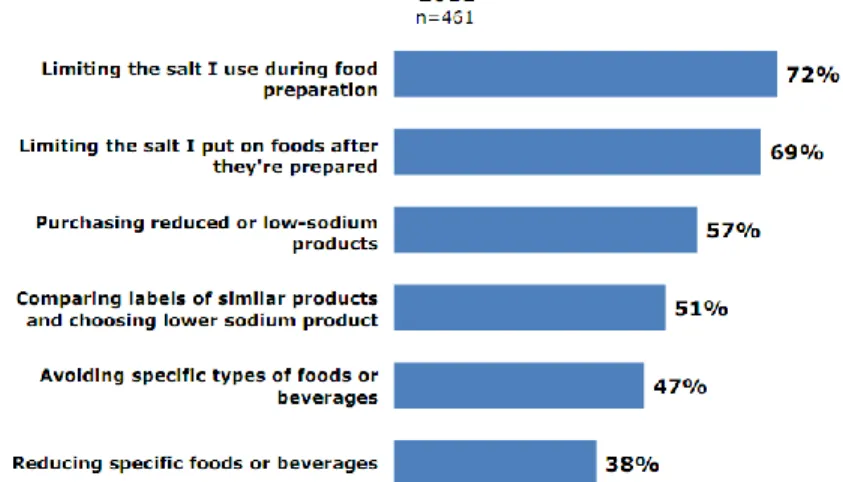
the contribution of sodium from packaged and prepared foods and restaurant foods, yet they are more likely to reduce sodium in their diet by limiting the amount of salt added during and after food preparation than purchasing reduced or low-sodium products (Figure 5).
Consumers also inaccurately tend to believe that foods with the highest amount of sodium per serving also contribute the most sodium to their diets. These results indicate that public health messages concerning sodium recommendations are not accurately and appropriately reaching the consumers.37
The results of the Campbell’s study, IFIC report, and Mintel study demonstrate a large barrier to sodium reduction. In order for an industry-wide effort to be efficacious, consumers need to be educated on the greatest contributing sources of sodium in their diet and need to be motivated to purchase reformulated products. Without support to improve consumer
perceptions, attitudes, and behaviors, a sodium reduction effort in the food supply may not have the life-saving and health care cost-saving effects that experts are predicting.
Figure 5. Consumer’s responses about ways to decrease
sodium in the diet
8 Sales Data:
Market trends from previous years support consumer research on attitudes and
behaviors and do not indicate that reformulated products will be accepted by consumers. Low-sodium products are one of the largest growing sectors in the food industry, yet they are not leading to proportionate sales. According to Datamonitor’s ProductLaunch Analytics service, “low-sodium” was the #1 growth claim in 2009, with 157 launches.38 However Packaged Facts
recently reported that the U.S. market for these products was estimated at $21.8 billion in 2009, representing only about 2.8% of the estimated total U.S. food and beverage sales of $600 billion in that year. 39 Further, research by NielsenWire found “no salt/sodium” health claims to rank
just 8th among claims in dollar sales growth between 08-09.40
As previously mentioned, stealth reformulations have been ongoing. Unfortunately, sales data for products that have undergone long-term, gradual reductions are proprietary and
therefore unable to be used to support/argue against stealth reformulations. However, as seen with the Campbell’s Select Harvest story, not all stealth reformulations may be successful and accepted by consumers.
Insufficient Practical Evidence:
Current sodium reduction efforts have yet to show a beneficial effect on adverse health outcomes or even sodium intake. Stealth industry reductions have been ongoing for decades yet there is little evidence that this has led to any decrease in sodium intake or improved health outcomes. For example, Campbell’s has been reducing sodium in their products for 40 years, introducing low-sodium soups in the 1970s and beginning a silent reduction of 5-20% in the 1980s.41 From 2002-2009, many of the largest manufacturing companies reformulated their
recipes to reduce sodium in over 3,000 products, and have pledged to continue these reductions. 42 Despite these ongoing reductions, there is little evidence that this has led to a
change in sodium intake or hypertension prevalence.
International sodium reduction efforts have yet to show a change in sodium intake either to support efforts in the US. In Scotland, the food industry has reduced sodium in their products by 10-25% since 2006. However a recent report by the Food Standards Agency found that people were still consuming the same amount of sodium. The Agency suggested the consistent intake may indicate that people were “voluntarily adding more with the shaker or are simply eating more food (and calories) to satisfy their need for sodium”.43 The latter would be cause for
concern in the US and counter current efforts to fight obesity.
Inconclusive Scientific Research:
An industry wide sodium reduction may also not be effective at reducing CVD as hypertension is a
multifactorial disease. Besides sodium intake, risk of hypertension is associated with age, family history, excess body weight, physical inactivity, inadequate intake of potassium, fruits and vegetables, and excess alcohol intake.Many Americans have at least one risk factor for heart disease (Table 3), and in 2003, approximately 37% of adults reported having two or more of risk factors.44As
sodium intake is only one risk factor for hypertension,
Risk Factor %
Inactivity 39.5
Obesity 33.9
High Blood Pressure 30.5
Cigarette Smoking 20.8
High Cholesterol 15.6
Diabetes 10.1
Table 3. Percent of Americans
with a risk factor for heart disease In 2005-06
SOURCE: CDC “Usual Sodium Intakes
9
more research is necessary to determine whether a sodium reduction in the food supply will have a significant impact on the prevalence of hypertension. With the high cost of reformulation that would be borne on the industry, more research may be needed to determine if sodium reduction is more cost-effective than interventions in other areas of hypertension risk, such as programs to increase intake of fruits and vegetables and to increase physical activity.
Additionally, research into the effects of sodium on hypertension is incomplete. According to the American Dietetic Association’s Evidence Analysis Library, the evidence demonstrating the relationship between sodium, blood pressure, and hypertension is not conclusive for all races and age groups. First, there is limited evidence of a relationship between sodium bicarbonate intake and blood pressure in normotensive adults and no existing evidence to suggest a relationship between sodium glutamate intake or sodium citrate intake and blood pressure in normotensive adults. While there is good evidence to show the effect of dietary potassium on the sodium and blood pressure relationship, there is limited evidence of the effect of mineral interactions and other dietary factors on the sodium and blood pressure relationship and no existing evidence of the effect of dietary calcium on the sodium and blood pressure relationship.45
Experts are also unsure of whether a sodium reduction effort would be effective as the prevalence of salt sensitivity is not widespread in the population. Salt sensitivity is seen in people that show large changes in blood pressure in response to acute or chronic changes in sodium intake. There are many factors that play a role in determining sodium sensitivity, including genetics, race/ethnicity, body mass, diet, and disease state (hypertension, diabetes, renal dysfunction).49 Salt sensitivity, however, does not manifest in all individuals. It is more
prevalent with increasing age, in blacks, and in the presence of hypertension. It is seen in
approximately 55% of white patients with hypertension vs. 30% of the normotensive population, and in 72% of black patients with hypertension vs. 43% of black patients without hypertension.50
More research may be necessary to determine the true reach of a sodium reduction intervention. Further, several Cochrane reviews found that the evidence supporting a population-wide sodium reduction is not comprehensive. Most recently, a meta-analysis found that sodium reductions led to decreases in blood pressure in normotensive and hypertensive individuals, 1% and 3.5% respectively, but also led to a significant increase in plasma renin, plasma aldosterone, plasma adrenaline, plasma noradrenaline, cholesterol, and triglycerides, which have been correlated with negative health outcomes.46 Another review found that despite short-term
improvements in individuals with hypertension, the “overall harms or benefits” of a population-wide reduction are unknown.47 Another study found that “there is insufficient evidence to
confirm the predicted reductions in people dying prematurely or suffering cardiovascular disease".48 These reviews seem to caution the use of small scale sodium reductions as an
example for industry-wide sodium reduction.
Additionally, there is evidence that sodium reduction alone may not be the most effective dietary intervention to reduce hypertension prevalence. The DASH diet found the whole foods diet combined with a sodium diet was better at reducing blood pressure than the
low-sodium diet alone. This suggest that interventions promoting a diet full of fruits, vegetables, lean meats, low-fat dairy, nuts and legumes may be just as important to reducing blood pressure than an intervention targeting sodium.51 Bussemaker et al describe how high levels of potassium
10
that magnesium may be an integral part of reducing blood pressure. While the evidence is not yet conclusive, the authors believe that increased intake of magnesium and potassium with reduced sodium intake may be more a more effective strategy to fight hypertension that just focusing on one mineral.53 These results may suggest that the promotion of a diet high in fruits
and vegetables as well as potassium and magnesium may be just as effective at reducing adverse health outcomes as the promotion of a low-sodium diet.
Finally, there is some research that would suggest that decreased sodium may have negative health outcomes. Research from Harvard University suggests that low-sodium diets are linked to increased insulin resistance, putting patients at risk for diabetes.54 Additional research
has linked low-sodium diets to increased risk of falls in the elderly,55 decreased cognitive
function,56 and premature death.57 Until the risks of a low-sodium diet are established and well
known, it may be dangerous to extrapolate small scale studies reducing sodium intake to the general population.
What’s Next?
The severity and prevalence of heart disease in the United States deserves public health attention. While a public health effort to decrease sodium in the food supply may be a useful intervention to improve hypertension levels in the US, it cannot be considered the magic bullet to improve health outcomes. At the present time, there may be insufficient evidence to warrant a sodium reduction effort from the food industry. Based on current consumer attitudes and
perceptions of low-sodium and reduced-sodium foods, reformulations may not be accepted by consumers. Regardless of the sodium levels in foods, there will be little effect on intake if consumers are unwilling to purchase reformulated products or choose to add back sodium through the salt shaker. Additionally, industry involvement may be most successful if reductions are stealth and gradual to allow consumers to adjust to decreased levels of sodium and to
prevent deterring consumers from purchasing lower sodium products. Unfortunately, a slow, incremental sodium reduction may take years to see a significant improvement in health outcomes, suggesting a need for public health interventions in the meantime. Finally, there is insufficient evidence to strongly link sodium reduction to hypertension and sodium reductions many not be the most effective dietary intervention to decrease hypertension prevalence.
Perpetuation of the sodium reduction effort should begin with public health
interventions. Public health authorities must work with the general public to improve consumer knowledge about sodium levels in foods and the relationship between sodium and adverse health outcomes. Interventions should strive to increase consumer motivation to choose low-sodium products, especially to emphasize the importance of reduction to all populations, not just those individuals that have already been diagnosed with hypertension. Finally, public health officials should aim to increase consumer self-efficacy to reduce sodium in the diet. While the food industry works to reformulate products, interventions should work to encourage
consumers to purchase these products. Successful public health interventions should lead to increased consumer demand for lower sodium products, increasing manufacturers’ interest in the effort and drive reformulations in industry. Reductions in sodium intake will be best achieved through a combination of industry and public health involvement.
11
interventions focus on “sustainable diet-related behavioral changes through selection of lower-sodium foods, portion control, and other healthful food choices”.58 As seen in a recent consumer
study, consumers are already aware of the importance of increasing fruits and vegetables in their diet.59 These changes may be best achieved through the promotion of nutritious foods,
such as the DASH diet full of fruits, vegetables, fish, lean poultry, low-fat dairy, and nuts, rather than singling out a specific nutrient as with sodium. Promotion of an overall healthy diet instead of demonizing an essential mineral may be the most effective type of nutrition message.
Finally, a coordinated research effort among the public and private sector is necessary for research and monitoring. Further research into salt substitutes and technologies to reduce sodium in the food supply would be advantageous to product reformulations. This may include research into salt taste receptors, differences in sodium taste preferences among different populations, methods to mitigate the off-tastes associated with many currently available salt substitutes, and the role of sodium in flavor enhancement at low levels of use. Most of this research is proprietary and not available to the public. Research regarding sodium functionality is also necessary to ensure foods maintain the minimum level of sodium necessary for food safety and adequate shelf-life. Temporal research investigating consumer acceptance of sodium reduction and the levels where sodium changes are detectable may improve the speed with which a sodium reduction effort may occur. Additional research should investigate the
recommended level of sodium intake to prevent any unintended health consequences. Lastly, a system to monitor sodium levels in the food supply to compare to sodium intake with changes in health outcomes is necessary to determine the effectiveness of an industry intervention and encourage further reformulations in the industry.
12
References
1. Scott-Thomas, Caroline. “Campbell’s to add back sodium to combat soup sales slump.” Food
navigator-usa.com. 13 July 2011.
http://www.foodnavigator-usa.com/On-your-radar/Sodium-reduction/Campbell-s-to-add-back-sodium-to-combat-soup-sales-slump
2. GMA (Grocery Manufacturers Association). 2011. “Comment of the Grocery Manufacturers Association on Interagency Working Group on Food Marketed to Children: Proposed Nutrition Principles: FTC Project No. P094513.” Washington, D.C.
3. Mattes, RD, Donnelly, D. “Relative contributions of dietary sodium sources.” Journal of the American College of Nutrition. 1991 Aug;10(4):383-393.
4. Jacobson, Michael. “Salt: The Forgotten Killer... and FDA’s Failure to Protect the Public’s Health.” Center for Science in the Public Interest. Washington, D.C. 2005.
http://cspinet.org/salt/saltreport.pdf
5. NCI (National Cancer Institute). “Sources of Sodium Among the US Population, 2005-06.” Risk Factor Monitoring and Methods Branch Website. Applied Research Program.
http://riskfactor.cancer.gov/diet/foodsources/sodium/. Updated December 12, 2010. Accessed November 4, 2011.
6. IOM (Institute of Medicine). 2010. Strategies to Reduce Sodium Intake in the United States. Washington, D.C: The National Academies Press.
7. U.S. Department of Health and Human Services, U.S. Department of Agriculture. Dietary Guidelines for Americans. 2010.
8. CDC (Centers for Disease Control and Prevention). “Usual Sodium Intakes Compared with Current Dietary Guidelines- United States, 2005-2008.” Morbidity and Mortality Weekly Report. Centers for Disease Control and Prevention. Vol. 60 No. 41. 21 October 2011. 9. Levy, Sarah. “Putting Flavor on the Menu in a Low-Sodium World.” Presentation to the American Dietetic Association Food and Nutrition Conference and Expo. 27 September 2011. 10. “Cutting Salt, Improving Health.” New York City Department of Health and Mental Hygiene.
http://www.nyc.gov/health/salt.
11. IOM op cit. 12. GMA op cit.
13. Khoo, Chor—San. “Campbell’s Salt Reduction Journey.” Presentation to the Institute of Medicine. 30 March 2009.
http://www.iom.edu/~/media/Files/Activity%20Files/Nutrition/ReduceSodiumStrat/KHOO.p df
14. GMA op cit.
15. “Cardiovascular Diseases.” World Health Organization. 2011
http://www.euro.who.int/en/what-we-do/health-topics/noncommunicable-diseases/cardiovascular-diseases/definition
16. Lloyd-Jones, et al. Heart Disease and Stroke Statistics—2009 Update. A Report From the American Heart Association Statistics Committee and Stroke Statistics Subcommittee. Circulation. American Heart Association. 15 December 2008.
17. Ostchega, Y et al. Hypertension Awareness, Treatment, and Control — Continued
Disparities in Adults: United States, 2005–2006. Division of Health and Nutrition Examination Surveys. http://www.cdc.gov/nchs/data/databriefs/db03.pdf
18. IOM op cit.
19. “High Blood Pressure.” Centers for Disease Control and Prevention. 2011.
http://www.cdc.gov/bloodpressure/index.htm
13
21. Welton, Paul et al. “The effects of nonpharmacologic interventions on blood pressure of persons with high normal levels. Results of the Trials of Hypertension Prevention, Phase I.” Journal of the American Medical Association. 1992 Mar 4;267(9):1213-20.
22. Cutler, JA, Follmann D, Allender PS. Randomized trials of sodium reduction: an overview. Am J Clin Nutr. 1997; 65(suppl):643S–51S.
23. Havas S, Roccella EJ, Lenfant C. Reducing the public health burden from elevated blood pressure levels in the United States by lowering intake of dietary sodium. Am J Pub Health. 2004; 94:19–22
24. CDC op cit 25. Jacobson op cit 26. IOM op cit 27. CDC op cit 28. Jacobson op cit
29. Hammit, Lauren. “Even a small dietary reduction in salt could mean fewer heart attacks, strokes and deaths.” UCSF. 20 January 2010. http://www.ucsf.edu/news/2010/01/4348/even-small-dietary-reduction-salt-could-mean-fewer-heart-attacks-strok
30. Peleteiro, B. “Salt intake and gastric cancer risk according to Helicobacter pylori infection, smoking, tumour site and histological type.” British Journal of Cancer (2011) 104, 198–207. doi:10.1038/sj.bjc.6605993 www.bjcancer.com Published online 16 November 2010
31. Wang, XQ. “Review of salt consumption and stomach cancer risk: epidemiological and biological evidence.” World J Gastroenterol. 2009 May 14;15(18):2204-13.
32. Jacobson op cit. 33. Hammit op cit 34. Khoo op cit
35. “Is Sodium on American Plates and Minds? An Assessment of Consumer Attitudes and Behavior with Respect to Dietary Sodium.” International Food Information Council, August 2011.
36. Faron, Krista, and David Lockwood. "Sodium: The next Trans Fat?" Webinar. Mintel International Group, 12 Aug. 2009.
37. IFIC op cit.
38. Lukovitz, K. “Sodium: Consumer Ambivalence Poses F&B Challenges.” MarketingDaily. Accessed 7 Oct 2011.
39. “Low- and No-Sodium Foods and Beverages in the U.S.” Packaged Facts. 1 May 2010. 40. “U.S. Healthy Eating Trends Part I: Commitment Trumps the Economic Pinch.” NielsenWire. 26 Jan 2010. http://blog.nielsen.com/nielsenwire/consumer/healthy-eating-trends-pt-1-commitment-trumps-the-economic-pinch/
41. Khoo op cit. 42. GMA op cit.
43. “Salt intakes remain static in Scotland.” Food Standards Agency. 22 June 2011. http://www.food.gov.uk/news/newsarchive/2011/june/salt
44. CDC op cit
45. American Dietetic Association. “Sodium Evidence Analysis Project.” Evidence Analysis Library. 2011. http://www.adaevidencelibrary.com/topic.cfm?cat=3034
33. Khoo op cit
46. Graudal NA, Hubeck-Graudal T, Jurgens G. Effects of low sodium diet versus high sodium diet on blood pressure, renin, aldosterone, catecholamines, cholesterol, and triglyceride. Cochrane Database of Systematic Reviews 2011, Issue 11. Art. No.: CD004022. DOI: 10.1002/14651858.CD004022.pub3
47. Jürgens G, Graudal NA. Effects of low sodium diet versus high sodium diet on blood
14
of Systematic Reviews 2004, Issue 1. Art. No.: CD004022. DOI: 10.1002/14651858. CD004022.pub2
48. Taylor RS, Ashton KE, Moxham T, Hooper L, Ebrahim S. Reduced dietary salt for the prevention of cardiovascular disease. Cochrane Database of Systematic Reviews 2011, Issue 7. Art. No.: CD009217. DOI: 10.1002/14651858.CD009217
49. Franco, Veronica and Suzanne Oparil. “Salt Sensitivity, a Determinant of Blood Pressure, Cardiovascular Disease and Survival.” J Am Coll Nutr June 2006 vol. 25 no. 3 2475-2555. 50. Hamet, Pavel. “Salt sensitivity and CVD: New research seasons the diet-vs-genes debate and supports practical clinical interventions.” Vol.14, No.11, November 2006
http://www.parkhurstexchange.com/clinical-reviews/ct_11_vol14
51. Vollmer op cit
52. Büssemaker E eta l. “Pathogenesis of hypertension: interactions among sodium, potassium,
and aldosterone.” Am J Kidney Dis. 2010 Jun;55(6):1111-20. Epub 2010 Mar 12.
53. Houston M. “The role of magnesium in hypertension and cardiovascular disease.”J Clin Hypertens (Greenwich). 2011 Nov;13(11):843-7. doi: 10.1111/j.1751-7176.2011.00538.x. Epub 2011 Sep 26.
54. Garg, R. “Low-salt diet increases insulin resistance in healthy subjects.” Metabolism. July 2011: Volume 60, Issue 7, 965-968.
55. Renneboog B et al. “Mild chronic hyponatremia is associated with falls, unsteadiness, and attention deficits.” Am J Med. 2006 Jan;119(1):71.e1-8.
56. Flicker, L et al. “Predictors of impaired cognitive function in men over the age of 80 years: results from the Health in Men Study.” Age Ageing. 2005 Jan;34(1):77-80.
57. Taylor, R et al. “Reduced Dietary Salt for the Prevention of Cardiovascular Disease: A Meta-Analysis of Randomized Controlled Trials.” American Journal of Hypertension 24, 843-853 (August 2011) |doi:10.1038/ajh.2011.115