Gillespie H. The Associations of Race with Health Status in the Family Practice Setting of North Carolina
The Associations of Race with Health Status in the Family Practice Setting of North Carolina
Heather Gillespie
A Master's Paper submitted to the faculty of The University of North Carolina at Chapel Hill
In partial fulfillment of the requirements for The degree of Master of Public Health in
The Public Health Leadership Program
Chapel Hill
Gillespie H. The Associations of Race with Health Status in the Family Practice Setting of North Carolina
Abstract
Context: Minority race and ethnicity are associated with poorer health and
shortened survival and there are well-documented disparities in the quality of
health care that African Americans receive compared to Whites. However, there
is little research that looks at disparities in health among family practice patients.
Objective: The aim of this cross sectional study is to identify differences in
health-related quality of life, health risk factors, and chronic diseases between
African American and White patients of family physicians in North Carolina.
Methods: Data for this study comes from the North Carolina Health Project
(NCHP), a family practice network and research database of family practices in
North Carolina. A four-page self- administered questionnaire that included
sociodemographic data, health risk factors, chronic conditions, and health-related
quality of life measures was completed by 4381 African American and White
respondents.
Results: Obesity, insufficient exercise, high blood pressure, and diabetes were all
found to be more likely to be reported by African Americans than by Whites in
our population adjusted for age, gender and education level. African Americans
also reported poorer health-related quality of life.
Conclusion: This study compliments previous evidence of racial disparities in
chronic disease and health risk factors between African Americans and Whites,
and it highlights specific factors that may be focused on in the family practice
Gillespie H. The Associations of Race with Health Status in the Family Practice Setting of North Carolina
Introduction
In the recent literature there has been a lot of interest in health disparities,
especially related to race. Minority race and ethnicity are associated with poorer
health and shortened survival, and the process and delivery of health care
contribute to disparities in health outcomes.1•2 Membership in a minority
racial/ethnic group has been shown to be a risk factor for lower quality and less
intensive care? Among the best-documented disparities in the quality of care that
African Americans receive compared to Whites are those in the area of
cardiology. There is strong evidence that revascularization procedures may be
underused in treating blacks with coronary disease--a difference that cannot be
explained by the clinical features of their disease4 Elderly blacks also receive
less appropriate preventive care, including mammography and vaccinations.5
Studies have shown that middle-aged (45-64) African American women are at
greater risk of developing Type 2 diabetes, with almost 50% of the excess risk
possibly related to modifiable risk factors.6
Studies suggest several possible explanations for disparities in health.
These include: socioeconomic status (SES), access, health related behavior,
discrimination, and racism. Race and ethnicity are important determinants of
health in the United States, whether they represent actual differences or a
constellation of factors that affect health and health status. It has been shown that
blacks have disproportionate health problems as demonstrated by a higher
Gillespie H. The Associations of Race with Health Status in the Family Practice Setting of North Carolina However, they historically receive less medical care, and disparities in health exist
on the bases of race and ethnicity even when problems of access and other SES
conditions are factored out. 8
Family practice physicians care for a population of adults with a high
prevalence of chronic conditions and impairments. It is well known that lifestyle
behaviors can contribute to chronic disease, and overall information about health
behaviors in minority groups is insufficient. The family practice office constitutes
an important site for intervention and public health messages. A recent study
showed no evidence of lower levels of preventive care in black patients compared
to white patients in primary care practices9 However, in the population as a
whole, blacks receive less preventive care. Currently, no research has been
reported that describes differences by race among patients with access to family
practice care in North Carolina.
The aim of this cross sectional study is to identify differences in
health-related quality of life, health risk factors, and chronic diseases between African
American and White patients in family practices in North Carolina. There is some
evidence to show that African Americans get sicker at an earlier age, and we will
also explore the differences in the distribution of disease among age categories
between African Americans and Whites. We are interested in the cultural and
societal implications of race and its consequences in health care particularly as
they pertain to primary care practice and cause of disparities. This study provides
Gillespie H. The Associations of Race with Health Status in the Family Practke Setting of North Carolina them in focusing their clinical encounters and interventions on the greatest causes of health disparities and in working to close the gap.
Gillespie H. The Associations of Race with Health Status in the Family Practice Setting of North Carolina
Methods
Study Population:
Data for this study comes from the North Carolina Health Project (NCHP),
a family practice network and research database of family practices in North
Carolina sponsored by the UNC Center for Health Promotion and Disease
Prevention, the UNC Department of Family Medicine, and the UNC Thurston
Arthritis Research Center, in collaboration with the North Carolina Academy of
Family Physicians. Data were collected in 200 I from a cohort of over 4,000
community-based patients from fifteen sites, representing twelve practices. The
practices included in this project represent three geographic areas of North
Carolina (west, central, and east), rural and urban locations within these areas, and
a selection of practices with a high proportion of minorities.
For the development of the NCHP, potential sites were identified by a
statewide survey of North Carolina Academy of Family Practice membership and
from recommendations of Family Practice Department faculty based in
Wilmington, Chapel Hill, Greensboro, Charlotte, and Asheville. Each identified
practice was telephoned to obtain contact information, to identify the county in
which the practice was located, to estimate the daily patient volume and to
estimate the percentage of patients who are racial and ethnic minorities. Practices
that could not be contacted were deleted from the list, yielding 28 sites eligible for
selection.
l
l
-:r-Gillespie H. The Associations of Race with Health Status in the Family Practice Setting of North Carolina
The 28 eligible practices were divided into six strata by location in the
state (west/central/east) and rural/urban status. Within each stratum, all practices ! ;
l
reporting less than 40% of their visits from racial/ethnic minorities were
highlighted, and the seven practices with high reported ethnic/minority i
f
populations were selected for recruitment Then, one practice from each of the six
strata was randomly selected (using a random numbers table). Following
~
t
selection, all practices received a recruitment site visit by one of the principal
Research assistants were hired for all sites. The research assistants were
f
I
I
investigators to explain the study.
responsible for handing out questionnaires (see explanation below), answering
participants' questions, assisting participants of low literacy levels with
questionnaire completion, and performing other similar tasks.
Completed and incomplete questionnaires were mailed to UNC on a
weekly basis, and three assistants entered all data into an Access database.
Random checks were conducted of the data entry process to ensure accuracy, and
data were cleaned and converted to SAS files for analysis.
The designation of rural or urban was based on the USDA rural-urban
continuum codes for the county in which the practice was located.10
Study Questionnaire:
Data for this study came from a four-page, self-administered
Gillespie H.
The Associations of Race with Health Status in the Family Practice Setting of North Carolina office at the time of their visit, and the following measures were obtained for use
in this study:
;
• Sociodemographic data were collected, including age, race, gender, weight,
l
height, marital status, working status, and education level.
• Health related quality of life was evaluated, using the SF-12 and Behavioral
Risk Factor Surveillance System (BRFSS) study instrument.
• Risk behaviors were noted, including little or no exercise on a usual day and
current smoking status.
Academy of Orthopedic Surgeons (AAOS) Musculoskeletal Outcomes Data
I
• Chronic health conditions were assessed, using a modification of the American
Evaluation and Management System comorbidity form. (A list of common health
problems including heart disease, high blood pressure, lung disease, stroke,
osteoarthritis, ulcer/stomach disease, kidney disease, liver disease, cancer,
l
depression, anemia, chronic back pain, chronic shoulder/neck pain, rheumatoidr
arthritis, fibromyalgia, and diabetes was used.)For this study, health-related quality of life (HRQOL) was assessed, using
a five-point rating scale of general health taken from a single question used on J_
both the BRFSS and SF-12 study instruments. The five-point scale was clustered
into two points: fair/poor versus good/very good/excellent, effectively
Gillespie H. The Associations of Race with Health Status in the Family Practice Setting of North Carolina
Body mass index (BMI) was computed for each participant based on
self-reported height and weight. BMI =(weight in kilograms)/(height in metersl Of the sixteen chronic health problems asked about, six were selected for analysis. These six items were high blood pressure, heart disease, osteoarthritis, depression, chronic back pain and diabetes. The conditions chosen for analysis
were determined by high interest and prevalence in the family practice setting and low probability of misinterpretation.
Rheumatoid arthritis was not used because of the suspicion of its interpretation as "rheumatism." Osteoarthritis was chosen to represent joint pain/disease, and fibromyalgia was deleted because of probable misinterpretation. Liver disease and chronic shoulder pain had a low reported prevalence in this study and were not used in the analysis. Anemia/blood disease was believed to be misleading and omitted because of the confusion with "high blood" and "low blood" (terms used in this population to represent high blood pressure and anemia
respectively).
The questionnaire used in this study allowed respondents to check multiple categories when asked to self identify their race/ethnicity. We omitted the few participants who did not check "black" only or "white" only from our analysis.
There were I 0 participants who checked both black and white. The numbers were too small for adequate analysis as a distinct group in this study.
Educational attainment is used as a proxy for socioeconomic status (SES).
Gillespie H. The Associations of Race with Health Status in the Family Practice Setting of North Carolina indicator of SES.11 It was divided into three categories: less than a high school
diploma, high school diploma and greater than a high school diploma, for these
analyses.
Analysis:
Demographic information was stratified by African Americans and
Whites, and the frequency of chronic conditions by age was calculated. Pearson
chi-square analyses and 2-sample t-tests were used to detect significant
differences between African Americans and Whites.
Odds ratios between African Americans and Whites were analyzed, using
analysis of covariance, with health habits, risk factors, chronic conditions, and
health related quality of life as factors, and age, gender and education level as
covariates. All statistical tests were two sided (alpha=0.05).
Racially stratified age group analyses were used to determine the
distribution and frequency of selected health indicators among the three age
groups between African Americans and Whites.
Data from the SAS database were transformed into a Stata database and all
statistical computations were performed using Stata 7.0 software.
t-t
f
l
I
F
!
I
Gillespie H.
The Associations of Race with Health Status in the Family Practice Setting of North Carolina
Results
In the 15 practice sites, there were 7680 eligible participants, of which
4772 consented to participate, for a recruitment rate of 62%. Approximately 10% of participants were not able to complete the self-report questionnaire without support from the research assistants.
Demographics:
Among the respondents in the NC Health Project, 900 self-reported their race as "black" only, and 3481 reported their race as "white" only. The overall demographic information for our population, stratified by race, is reported in Table 1. Within our population, 76% of African Americans were female, and 70% of Whites were female. The mean ages (and standard deviations) were 47 (16.5) and 49 (16.9) for African Americans and Whites, respectively.
Approximately half of the sample population of both African Americans and Whites were from a rural setting. A greater percentage of Whites had more than a high school education (53% compared to 39% for African Americans). Thirty
percent of African Americans had less than a high school diploma, compared to 17% of Whites.
Marital status was determined using five categories (married, widowed,
Gillespie H.
The Associations of Race with Health Status in the Family Practice Setting of North Carolina Americans were currently working full time or part time, compared to 59% of
Whites.
Health Risk Factors:
Health risk factors highlighted in this study were smoking status, exercise,
body mass index (BMI), and high blood pressure. There was no significant
difference in smoking status between African Americans and Whites, with
approximately 36% of both groups currently smoking. There was a significant
difference in the percentage of the population defined as obese (BMI >= 30). BMI
was calculated from self-reported height and weight measurements; 53.4% of
African Americans, compared to 35.5% of Whites, were classified as obese.
Overall, 56% of African Americans and 42% of Whites reported getting no
exercise on a typical day. A greater percentage of African Americans reported
high blood pressure.
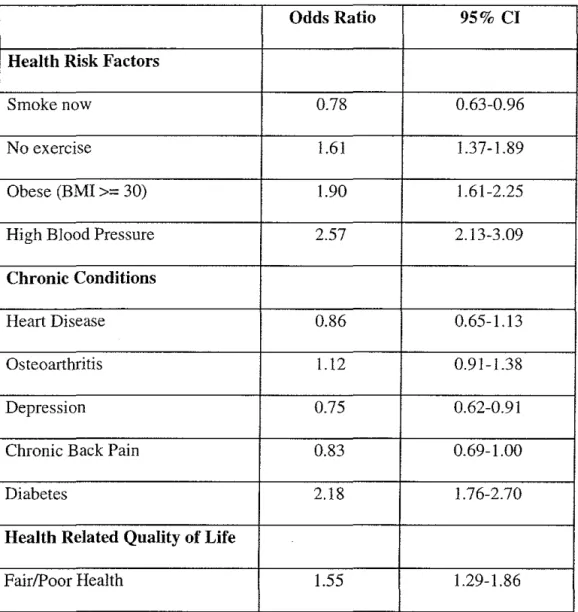
Odds ratios for the various risk factors and conditions among African
Americans and Whites, adjusted for age, gender and education level, are found in
Table 2. Significant odds ratios comparing African Americans and Whites were
found in obesity, exercise, and high blood pressure. African Americans had a
higher likelihood than Whites of reporting problems in these three areas.
The odds of being obese, for African Americans, were nearly twice as
great as for Whites (OR 1.90; 95% confidence interval {CI} 1.61-2.25), adjusted
for age, gender, and education level. African Americans also were more likely to
Gillespie H. The Associations of Race with Health Status in the Family Practice Setting of North Carolina The odds of having high blood pressure for African Americans, compared to
Whites, were 2.57 (95% CI 2.13-3.09), adjusted for age, gender, and education
level. Significant differences also existed between African Americans and Whites
in their odds of reporting that they smoked.
Chronic Diseases:
Of the self-reported chronic diseases analyzed in this study, the frequency
of self-reporting diabetes was significantly greater among African Americans than
Whites. There was no significant difference in percentages of self-reported heart
disease, osteoarthritis, depression, or chronic back pain between African
Americans and Whites.
African Americans had significantly greater odds of reporting diabetes
than Whites, as seen in Table 2 (OR 2.18; 95% CI:I.76-2.70). Significant
differences also existed between African Americans and Whites in their odds of
reporting depression and chronic back pain.
Age comparisons:
The health indicators were analyzed in three age categories ( < 40, 40-64,
and >= 65) to compare frequencies between African Americans and Whites in our
population (Table 3). The percentages in the table represent, for example, "Of
those African Americans under the age of forty, what percentage report smoking
now?"
African Americans reported insufficient exercise, obesity, high blood
Gillespie H. The Associations of Race with Hea1th Status in the Family Practice Setting of North Carolina groups. African Americans older than 64 years of age reported significantly more
osteoarthritis than Whites. For all other health indicators analyzed, African
L
American and White patients stratified by age, reported similar frequencies of health risk factors and chronic conditions.
Quality of Life:
About 37% of African Americans reported having fair/poor health compared to 24.3% of Whites. Significant odds ratios comparing African Americans and Whites were found in health-related quality of life (Table 2). African Americans had a higher likelihood than Whites of reporting fair/poor overall general health. The adjusted odds ratio of African Americans compared to Whites reporting poor or fair health was 1.55 (95% CI: 1.29-1.86).
Among those subjects who reported having heart disease, high blood pressure, osteoarthritis, depression, and chronic back pain, African American subjects reported having decreased health related quality of life (fair/poor health)
Gillespie H. The Associations of Race with Health Status in the Family Practice Setting of North Carolina
Discussion
This study corroborates previous evidence that there are racial disparities in chronic disease and health risk factors between African Americans and Whites, and it highlights specific factors that may be focused on in the family practice setting. Many risk behaviors associated with chronic disease are modifiable, and
this data provides evidence that family practitioners should focus on culturally sensitive behavioral interventions and prevention techniques.
Health Behaviors and Chronic Diseases:
Our research documents racial disparities for several health risk factors and chronic diseases as well as health-related quality of life among the patients using the primary care practices surveyed. Among patients with access to family practice centers in North Carolina, there are significant differences between African American and White patients in their likelihood of reporting certain health risk factors, chronic conditions, and health-related quality of life measures. Obesity, insufficient exercise, high blood pressure, and diabetes were all found to be more likely to be reported by African Americans than Whites in our
population. The odds of describing their health as fair or poor also were greater for African Americans than Whites in our population.
We compared our data to the North Carolina state-specific Behavioral Risk Factor Surveillance System (BRFSS) to assess differences between our
population and the whole state. The BRFSS is a state-based telephone survey of
I
jI
Gillespie H. The Associations of Race with Health Status in the Family Practice Setting of North Carolina the civilian, non-institutionalized adult population that includes data on selected
health-status indicators and health-risk behaviors.
Using North Carolina BRFSS 2000 Data12 for comparison shows that a
greater percentage of our population reported fair or poor general health than the
state population overalL The state data in 2000, (total respondants: 2905)
reported 23.3% of African Americans with fair/poor general health compared to
36.6% in our population. Statewide, 14.9% of Whites reported fair/poor health
compared to 24.3% in our population. Our primary care population reported a
lower smoking prevalence, higher obesity prevalence, higher diabetes prevalence,
I
and similar osteoarthritis prevalence compared to the state population. Physical
activity questions between the two studies were not similar enough for adequate
r
comparison of this factor.
For all age groups, African Americans report more diabetes, increased
obesity, high blood pressure, and inadequate exercise. In those under the age of
40, the percentage of African Americans reporting high blood pressure and
diabetes is twice that of Whites. This data supports the argument that minorities
develop disease at an earlier age. The causal factors should be examined further,
and prevention, screening, and intervention programs for minorities should begin
I
lat a younger age.
Potential Causes of Health Disparities:
Previous literature has documented possible explanations for racial
Gillespie H. The Associations of Race with Health Status in the Family Practice Setting of North Carolina discrimination, and racism. The most important factor is differences in SES. In
recent work that attempted to control for SES, the disparities were diminished, but
they still existed. In this study educational status is used as a proxy for SES, and disparities persist (however this is an imperfect proxy).
Counseling For Health Behavior Change:
This survey provides further evidence that there are significant disparities
in health risk factors and chronic conditions among racial and ethnic minorities.
Identification of potentially modifiable risk factors that may contribute to excess
disease risk suggests potential targets for prevention strategies. The findings of
this study underscore the need for counseling patients about behavior changes in
the primary care setting. The data suggest that there is opportunity for primary
care physicians to have an impact on health disparities in racial minorities. There
is some data describing behavior differences among blacks and whites that may be
useful in tailoring behavior modification interventions in primary careB
Many of the disparities documented in this study can be modified by
lifestyle changes such as increased physical activity, nutrition, and smoking
cessation. Patients look to their physicians for advice regarding preventive
behavior, and the majority cite their physicians as their primary sources of
information about health.14 Behavior modification interventions can be of
significant value in these patients, and literature has shown that primary care
Gillespie H. The Associations of Race with Health Status in the Family Practice Setting of North Carolina
A meta analysis of primary care-based physical intervention studies
revealed that physical activity counseling is effective, with stronger results
obtained from interventions that were brief (3-l 0 minutes), tailored to the
participants characteristics and preferences, and included supplemental written
materials.15 Furthermore, literature about smoking cessation demonstrates that
physician intervention can change patient behavior.16
A survey of primary care patients by Finkelstein suggests that achieving a
healthy weight (defined as BMI between 18.5-24.9 kg/m2) will maximize a
patient's subjective sense of well being. 17 The increased likelihood of obesity in
African Americans in our population may partly explain the increased likelihood
of their reporting a lower health-related quality of life.
In counseling patients for behavior change, especially those from minority
communities, it is important to be aware of existing barriers to practicing good
health behaviors and the importance of tailoring interventions to the individual
patient. Physical activity intervention from primary care physicians was found to
be effective in reaching a large segment of sedentary adults.15 It is recommended
that key strategies of physical activity counseling be integrated into routine
practice.15 Counseling should particularly target African Americans and other
minorities because they are at a higher risk.
Limitations:
Several possible limitations of this study deserve mention. First, the data
Gillespie H. The Associations of Race with Health Status in the Family Practice Setting of North Carolina biases in such data. In this study, educational status is used as a proxy for SES.
We are aware that this is a limitation, as education is an imperfect proxy for SES,
but there is reasonable evidence of a sufficiently strong relationship to control for
the effects of SES.11
National data suggest that about 25% of all adults are completely
sedentary (not physically active), and in blacks it is closer to 40%. Our percentage
of "no exercise" responses may be higher than those reported for the general
population because our question asks about "exercise," which may be interpreted
as strenuous activity, rather than "physical activity."
Compared to the statewide BRFSS data, our survey population had an
increased incidence of specific health indicators and poorer quality of life.
However, one would expect to find higher rates of disease and health risk factors
in those seeking care and utilizing physician services than in the general
population.
It is well documented that there is a disparity in access to services between
racial/ethnic groups. The patients in our sample all had access to care on the day
that they completed the survey, but they may not have always had this access to
care. Data on prior or future use of health services and barriers to care were not
included in this study. Additionally, the quality of care, even with equal access
may be different for African Americans and Whites. Even in groups with access
to services, we continue to see disparities in health quality of life and chronic
Gillespie H. The Associations of Race with Health Status in the Family Practice Setting of North Carolina possible social determinants of health that can be targeted for intervention and
also be the focus of future research.
In summary, the self-reported prevalence of obesity, high blood pressure,
insufficient exercise, diabetes, and poor health-related quality of life are
significantly higher among African Americans than among Whites seeking care in
North Carolina family practice clinics. This study documents that, compared to
Whites, African Americans also have a tendency to develop these habits and
conditions at a younger age. This investigation does not have the strength to
determine cause and effect relationships, but rather to outline conditions and
populations for further research. At this time further research is needed to
Gillespie H. The Associations of Race with Health Status in the Family Practice Setting of North Carolina
References
1
Sorlie PD, Backlund E, Keller JB. US Mortality by economic, demographic and social characteristics. Am J Public Health. 1995;85:949-956.
2
Andrulis DP. Access to care is the centerpiece in the elimination of socioeconomic disparities in health. Ann Intern Med. 1998;129:412-416.
3
The Morehouse Medical Treatment and Effectiveness Center. Racial and ethnic Differences in Access to Medical Care: A Synthesis of the Literature. Menlo Park, Calif: The Henry J. Kaiser Foundation; 2000.
4
Peterson ED, Shaw LK, DeLong ER, Pryor DB, Califf RM, Mark DB. Racial Variation in the Use of Coronary Revascularization Procedures, Are the Differences Real? Do They Matter? N Eng! J Med. 1997;336:480-6.
5
Gornick ME, Eggers PW, Reilly TW, eta!. Effects of Race and income on
mortality and use of services among Medicare beneficiaries. N Eng] J Med. 1996;335:791-799.
i
,
!
L
Gillespie H. The Associations of Race with Health Status in the Family Practice Setting of North Carolina
6
Brancati FL, Kao WHL, Folsom AR, Watson RL, Szklo M. Incident Type 2
Diabetes Mellitus in African American and White Adults, The Atherosclerosis
Risk in Communities Study. JAMA. 2000;283(17):2253-2259.
7
Liao Y, McGee DL, Cao G, Cooper RS. Black-White Differences in Disability
and Morbidity in the Last Years of Life. Am J Epidemiol. 1999; 149(12): 1097-1103.
8
Hargraves JL, Cunningham PJ, Hughes RG. Racial and Ethnic Differences in
Access to Medical Care in Managed Care Plans. HSR: Health Services Research.
Oct. 2001;36:5:853-868.
9 Williams, RL et
a!. Race and Preventive Services Delivery Among Black Patients and White Patients seen in Primary Care. Medical Care.
2001 ;39(11): 1260-1267.
10
Beale C. Rural-urban continuum codes for North Carolina. Available at:
http://www.ers.usda.gov.briefing/Rural/Data!Codes/Coes.asp?C=R&ST=NC.
Gillespie H. The Associations of Race with Health Status in the Family Practice Setting of North Carolina
11
Liberatos P, Link BG, Kelsey JL. The measurement of social class in epidemiology. Epidemiol Rev. 1988;10:87-121.
12 North Carolina Center for Health Statistics, BRFSS. Available at:
http://www.schs.state.nc.us/SCHSdev/healthstats/brfss/. Accessed June 13, 2002.
13
James, SA. Primordial Prevention of Cardiovascular Disease among African Americans: A Social Epidemiological Perspective. Prev Med 1999;29:S84-89.
14
Andersen RE, Blair SN, Cheskin LJ, Bartlett SJ. Encouraging Patients to Become More Physically Active: The Physician's Role. Ann Intern Med.
1997; 127:395-400.
15
Eakin EG, Glasgow RE, Riley KM. Review of Primary Care-Based Physical Activity Intervention Studies. J Fam Pract. Feb 2000;49(2): 158-168.
16
Kottke TE, Battista RN, DeFriese GH, Brekke ML. Attributes of successful smoking cessation interventions in medical practice: a meta-analysis of 39
Gillespie H. The Associations of Race with Health Status in the Fami1y Practice Setting of North Carolina
17
Finkelstein MM. Body Mass Index and Quality of Life in a Survey of Primary
Care Patients. J Fam Pract. 2000;49(8):734-737.
L
I
Gillespie H. · The Associations of Race with Health Status in the Family Practice Setting of North Carolina
Table 1: Selected characteristics of African-American and White Adult
Family Practice Patients in North Carolina
African-Amer. White p-value*
(N
=
900) (N=
3481)o/o or o/o or
Mean (S.D.) Mean (S.D.)
Female gender 75.9% 69.5% < 0.001
Age in years 47 (16.5) 49 (16.9) 0.0024
Rural 48.1% 53.2% 0.007
Education < 0.001
Less than High School 29.6% 16.5%
High School Diploma 31.7% 30.1%
Beyond High School 38.7% 53.4%
Marital Status < 0.001
Married 32.7% 65.4%
Widowed 12.1% 8.4%
Living w/ partner 5.3% 2.7%
Separated/Divorced 22.6% 13.4%
Never Married 27.3% 10.3%
Gillespie H. The Associations of Race with Health Status in the Family Practice Setting of North Carolina
Table 1 (cont'd): Selected characteristics of African-American and White
Adult Family Practice Patients in North Carolina
Health Risk Factors
Smoking now 36.3% 35.7% 0.785
No exercise 56.3% 41.6% < 0.001
Obese (BMI >= 30) 53.4% 35.5% < 0.001
High B 1 ood Pressure 49.9% 32.8% <0.001
Chronic Conditions
Heart Disease 10.4% 12.1% 0.189
Osteoarthritis 26.4% 25.1% 0.439
Depression 25.8% 28.0% 0.209
Chronic Back Pain 25.8% 26.5% 0.663
Diabetes 22.7% 12.6% <0.001
Health Related Quality of Life
Fair/Poor Health 36.6% 24.3% <0.001
*Significance tests for comparisons were calculated using Pearson's chi-square test for categorical variables and the 2-sample t-test for continuous variables
~-b
f
t
I
:rf
Gillespie H. The Associations of Race with Health Status in the Famlly Practice Setting of North Carolina
Table 2: Adjusted Odds Ratio of Selected Health Indicators Among African
American Family Practice Patients Compared to Whites*
L
Odds Ratio 95% CI
Health Risk Factors
Smoke now 0.78 0.63-0.96
No exercise 1.61 1.37-1.89
Obese (BMI >= 30) 1.90 1.61-2.25
High Blood Pressure 2.57 2.13-3.09
Chronic Conditions
Heart Disease 0.86 0.65-1.13
Osteoarthritis 1.12 0.91-1.38
Depression 0.75 0.62-0.91
Chronic Back Pain 0.83 0.69-1.00
Diabetes 2.18 1.76-2.70
Health Related Quality of Life
Fair/Poor Health 1.55 1.29-1.86
..
Gillespie H. The Associations of Race with Health Status in the Family Practice Setting of North Carolina
Table 3: Age Group Frequency of Health Indicators Among
African-American and White Adult Family Practice Patients
African Amer. White p-value*
'
Smoke now
r
t
Age<40 40.9% 43.5% 0.529 I
Age 40-64 38.4% 38.4% 0.994
Age >=65 14.1% 13.2% 0.842
No exercise
Age<40 56.9% 39.4% <0.001
Age40-64 56.2% 42.2% <0.001
Age>=65 54.4% 43.7% 0.029
Obese (BMI >= 30)
Age<40 50.6% 34.2% <0.001
Age 40-64 57.2% 40.8% <0.001
Age>=65 44.2% 24.5% <0.001
High Blood Pressure
Age<40 23.0% 10.0% <0.001
Age 40-64 62.7% 37.6% <0.001
Gillespie H.
The Associations of Race with Health Status in the Family Practice Setting of North Carolina
Table 3 (cont'd): Age Group Frequency of Health Indicators Among
African-American and White Adult Family Practice Patients
Heart Disease
Age <40 1.7% 1.2% 0.548
Age40-64 9.9% 10.6% 0.701
Age >=65 36.4% 36.0% 0.935
Osteoarthritis
Age <40 5.7% 5.3% 0.754
Age40-64 32.3% 28.7% 0.170
Age >=65 63.0% 52.3% 0.032
Depression
Age <40 22.3% 25.3% 0.281
Age 40-64 32.0% 32.1% 0.974
Age>=65 18.6% 23.3% 0.274
Chronic Back Pain
Age <40 16.2% 19.3% 0.233
Age 40-64 31.1% 29.0% 0.418
Gillespie H. The Associations of Race with Health Status in the Family Practice Setting of North Carolina
Table 3 (cont'd): Age Group Frequency of Health Indicators Among
African-American and White Adult Family Practice Patients
Diabetes
Age<40 6.1% 3.2% 0.020
Age 40-64 32.3% 14.8% <0.001
Age>=65 38.5% 23.5% 0.001
Gillespie H. The Associations of Race with Health Status in the Family Practice Setting of North Carolina
Acknowledgment