MPH Self-Study Report
Submitted to:
Council on Education for Public Health
Submitted by:
Master of Public Health Program
Geisel School of Medicine at Dartmouth:
The Dartmouth Institute for Health Policy
& Clinical Practice
Submitted in:
December 2015
i
Abbreviations Used in the Self-Study
AAMC Association of American Medical Colleges
AAP Affirmative Action Plans
ABRCMS Annual Biomedical Research Conference for Minority Students ACGME Accreditation Council for Graduate Medical Education
ADA Americans with Disabilities Act
APTR Association of Prevention Teaching Research ASPPH Association of Schools and Programs of Public Health
AY Academic Year
CEPH Council on Education for Public Health
CME Continuing Medical Education
CMS Committee on the Medical School
CPDE Center for Program Design and Evaluation
CPH Certified in Public Health
CSC Community Service Committee
DCAL Dartmouth Center for the Advancement of Learning DHLPMR Dartmouth-Hitchcock Leadership Preventive Medicine Residency
DHMC Dartmouth-Hitchcock Medical Center
DS Decision Support
ECS Evaluative Clinical Sciences
EO/AA Equal Opportunity and Affirmative Action
ERF Electronic Resource File
FTE Full Time Equivalency
GCO Graduate Career Office
GPA Grade Point Average
GRE Graduate Record Examination
HC Head Count
HRSA Health Resources and Services Administration
IDE Institutional Diversity & Equity
IDP Individual Development Plan
IRB Institutional Review Board
LCME Liaison Committee on Medical Education
LMSA Latino Medical Student Association
LPMR Leadership Preventive Medicine Residency
LPS Local Performance Sites
MALS Master of Arts and Liberal Studies
MBA Master of Business Administration
MCAT Medical College Admission Test
MD Medical Doctor
MHCDS Master of Health Care Delivery Science
MPH Master of Public Health
MS Master of Science
NAAHP National Association of Advisors for Health Professions
ii NEASC New England Association of Schools and Colleges
NEPHTC New England Public Health Training Center NHAHEC New Hampshire Area Health Education Center NHDHHS New Hampshire Department of Health and Human Services
NRSA National Research Service Award
NSS Nathan Smith Pre-medical Society
OFCCP Office of Federal Contract Compliance Programs OIDE Office of Institutional Diversity & Equality OPEO Office of Professional Education and Outreach
OSP Office of Sponsored Projects
PhD Doctor of Philosophy
PI Principal Investigator
SAC Student Advisory Committee
SACNAS Society for Advancement of Chicanos and Native Americans in Science
SFR Student/Faculty Ratio
SIIPC Summer Institute for Informed Patient Choice
SNMA Student National Medical Association
SOPHAS Schools of Public Health Application Service
TA Teaching Assistant
TDI The Dartmouth Institute for Health Policy & Clinical Practice
TIPH This is Public Health
TOEFL Test of English as a Foreign Language
UME Undergraduate Medical School
VAMC Veterans Affairs Medical Center
1
Table of Contents
EXECUTIVE SUMMARY ... 3 CRITERION 1.0 ... 7 1.1MISSION ... 9 1.2EVALUATION ... 15 1.3 INSTITUTIONAL ENVIRONMENT ... 231.4 ORGANIZATION AND ADMINISTRATION ... 31
1.5 GOVERNANCE ... 37
1.6 FISCAL RESOURCES ... 49
1.7 FACULTY AND OTHER RESOURCES ... 53
1.8 DIVERSITY... 61
CRITERION 2.0 ... 73
2.1 DEGREE OFFERINGS ... 75
2.2 PROGRAM LENGTH ... 79
2.3 PUBLIC HEALTH CORE KNOWLEDGE ... 81
2.4 PRACTICAL SKILLS ... 83
2.5 CULMINATING EXPERIENCE ... 89
2.6 REQUIRED COMPETENCIES ... 93
2.7 ASSESSMENT PROCEDURES ... 101
2.8 BACHELOR’S DEGREES IN PUBLIC HEALTH. ... 109
2.9 ACADEMIC DEGREES ... 111
2.10 DOCTORAL DEGREES. ... 113
2.11 JOINT DEGREES ... 115
2.12 DISTANCE EDUCATION OR EXECUTIVE DEGREE PROGRAMS ... 117
CRITERION 3.0 ... 119 3.1 RESEARCH... 121 3.2 SERVICE ... 147 3.3 WORKFORCE DEVELOPMENT ... 163 CRITERION 4.0 ... 173 4.1 FACULTY QUALIFICATIONS ... 175
4.2 FACULTY POLICIES AND PROCEDURES ... 183
4.3 STUDENT RECRUITMENT AND ADMISSIONS. ... 189
4.4 ADVISING AND CAREER COUNSELING. ... 197
3
Executive Summary
Brief History of the MPH Program
In November 2001, the Dartmouth College Board of Trustees approved the development of a new Master of Public Health degree program and assigned oversight of it to the Dartmouth Medical School (now named the Geisel School of Medicine at Dartmouth). To provide the new program with a strong academic setting, it was placed within what was then called the Center for the Evaluative Clinical Sciences (CECS), a unit of the medical school. CECS already offered a Master of Science degree, established in 1993, and a Doctor of Philosophy degree, established in 1994. Both of those degrees were in the Evaluative Clinical Sciences.
In the fall of 2002, 47 students enrolled in the new MPH program. There were 31 graduates in its first graduating class in 2003. In the summer of 2007, CECS changed its name to The Dartmouth Institute for Health Policy & Clinical Practice (TDI). Dr. James Weinstein, a 1995 graduate of our MS program, became Director of TDI, taking over after a long stewardship by John “Jack” Wennberg, MD, MPH, who established CECS in 1989. In 2013, Elliott Fisher, MD, MPH, a longtime faculty member, was named Director of TDI. In June 2015, we graduated 40 MPH students.
The strength of TDI’s educational programs is its diverse student population, the expert faculty commitment to teaching and research, continuous improvement of the curriculum, and the successes of its graduates. The program recruits a mix of physicians, mid-career professionals, and recent undergraduates – all from diverse experiences, ethnicities, and age ranges. The faculty is comprised of clinicians and scholars with expertise in diverse areas of health care that form the impetus for TDI’s work in measuring, organizing, and improving health and health care.
Background
The Dartmouth Institute for Health Policy & Clinical Practice, then called the Center for the Evaluative Clinical Sciences, was established in the fall of 1989 under the leadership of Jack Wennberg, MD, MPH, a pioneer in the field of outcomes research and originator of the
Dartmouth Atlas of Health Care. For nearly three decades, TDI has asked questions no one else was asking. The answers we found, documenting geographic and ethnic variations in the delivery and quality of care, increasing over diagnosis and over treatment of patients, better value and lesser cost through shared decision making, quality improvement, and new approaches to systems of care, have radically changed understanding of our health care systems. TDI provides a centralized forum for researchers to raise fundamental questions about health care outcomes; treatment variations; and how medical and public health resources are distributed, decisions made, and systems improved.
The development of the Dartmouth Atlas of Health Care is one of a number of research efforts at TDI. Current research at TDI ranges from the evaluation of health care (from diseases/conditions to health systems), studies on interventions, improvements and implementations in health and health care, and research on engagement and empowerment of patients and consumers. Investigators within TDI include physicians, epidemiologists, economists, sociologists, psychologists, health services researchers, decision analysts, medical geographers, and statisticians. TDI is committed to collaborative research, the use of diverse methods,
4 interdisciplinary research, and the primacy of the patient and consumer in the rational use of health care.
Since the teaching faculty is comprised of active researchers at TDI, they play an important role in bringing current methodologies and research findings to the classroom environment, as well as providing vehicles for student research projects. The majority of the faculty members hold a primary or joint appointment in TDI or other Geisel School of Medicine’s departments.
Since 2004, 474 students have graduated from the MPH program. These graduates have entered into significant positions in public health and health care. Alumni have maintained close
affiliations with the TDI and its faculty and staff, as evidenced by their willingness to hire new graduates, return to campus as guest speakers, collaborate in providing clinical and public health sites for students, and update us with new information, such as job promotions, publications, and awards. In some cases, local alumni have stayed connected to us by working with teaching faculty as part-time teaching assistants while working in full-time jobs in nearby health and healthcare institutions.
Major Accomplishments and Updates since the last Self-Study Report (2008)
2009: Jim Yong Kim, MD, PhD, is named President of Dartmouth College, succeeding James Wright.
2010: Wiley Souba, MD, MBA, DSc, is named Dean of the Dartmouth Medical School. 2012: Dartmouth Medical School changes its name to the Geisel School of Medicine at Dartmouth.
2012: Mark Splaine, MD, MS named Director of Education for TDI, succeeding Gerald O’Connor, PhD, ScD.
2012-13: TDI’s Curriculum Committee develops core competencies for the educational programs and conducts an associated review of courses for those core competencies to assess coverage and identify overlaps and gaps.
2012-13: MBA/MPH program started (with two students and currently six alumni; now have 10 applications for 2015-16).
2013: Elliott Fisher, MD, MPH, is appointed Director of TDI, succeeding James Weinstein. 2013: Philip Hanlon, PhD, is named President of Dartmouth College, succeeding Jim Yong Kim. 2013: TDI joins the Association of Schools and Programs of Public Health (ASPPH) as a
founding member.
2014: Karen Tombs, EdD, is named Director of Education for TDI, succeeding Mark Splaine. 2014: Major education program evaluation in 2014, prompting an update of the missions statement.
2015: Online MPH program is under development with recruitment and admissions underway for the start in August 2016.
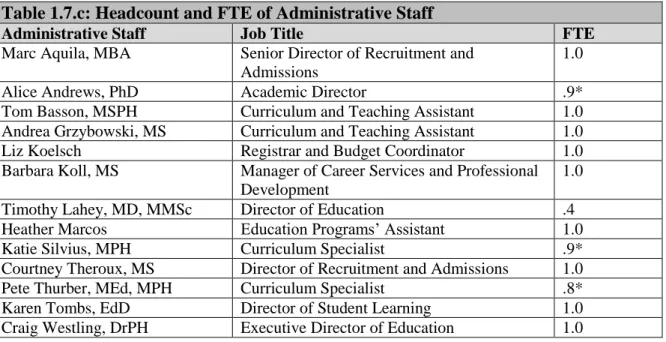
2015: Tim Lahey, MD, MMSc, named Director of Education. An Education Leadership team is created and consists of Dr. Lahey, Karen Tombs, EdD, Director of Student Learning, Alice Andrews, PhD, Academic Director, and Craig Westling, DrPH, Executive Director. This team is responsible for the strategic direction and oversees the day-to-day operations of the educational programs.
5 2015: Mission statement is revised - The mission is to produce health care leaders who are
grounded in the skills to measure, organize and improve health and health care in a rapidly changing health care environment.
Education
The educational goal of the MPH program is to prepare current and future public health
practitioners and researchers to address public health challenges. Through the core competencies which are attained by students through a variety of required and elective courses, students develop a set of knowledge, skills, and attitudes that prepares them to practice and conduct research in a variety of employment settings or seek further education (e.g. medical school, doctoral programs). The Class of 2015 has a 100% placement rate for employment or further education.
We recruit a diverse class of student each year – in educational and professional backgrounds, race/ethnicity, and gender. TDI strives for diversity among its faculty but similar to Dartmouth College and Geisel School of Medicine, it continues to struggle with recruiting minority faculty. Efforts continue to be made by Dartmouth College, Geisel School of Medicine, and TDI to improve the number of diverse faculty members, particularly related to race/ethnicity, and TDI continues to seek alternative methods for exposing students to experts in the field who are minorities.
TDI continues to assess and evaluate its degree programs in an effort to maintain a continual improvement process. Alumni surveys are conducted every three years, exit surveys have been conducted the last two years, and a major program evaluation was undertaken in 2014. In the fall of 2015, TDI’s educational programs (MPH, MS, PhD, and certificate programs) signed a
contract with the Dartmouth Center for Program Design and Evaluation (CPDE) to help us develop a more robust set of evaluation processes. CPDE will help us develop a set of tools specific to our program goals and will help us strengthen our outcomes measurement and progress tracking.
Research
The research goal of the MPH program is to conduct and disseminate collaborative scholarly and applied research. Faculty members work with each other and with others across Geisel and the College on a variety of research projects, including breast cancer screening, prevention research, mental health/health promotion, community-based health initiatives, informed choice, and drug facts boxes, to name just a few. Funding for research by the faculty has remained consistent from grants and contracts, which is not a simple feat in these times of fiscal cutbacks at the federal level. Publications and presentations by faculty continue to be a means to disseminate the important findings in the faculty’s research.
Students also participate in a variety of research activities – through course projects, independent studies, and capstone projects. Student research include systematic reviews, research proposals, research manuscripts, program evaluations, program interventions, quality improvement projects, decision and cost-effectiveness analyses, and health policy reviews.
6 Service
The service goal of the MPH program is to advance population health of communities in New Hampshire, the region, and worldwide through education, research, and service. Faculty members are committed to serving TDI, Geisel School of Medicine, and Dartmouth College through their activities on various committees. Beyond the academic institution, faculty members lead or serve on various professional committees related to public health, ethics, health policy, peer-reviewed publications, and are leaders or members of various health- and healthcare-related associations. At the Geisel School of Medicine, community service is not a requirement for faculty promotion or tenure, so we are fortunate to have such a service-committed group of faculty members.
The number of community service organizations is high for a small rural community in New Hampshire, and the opportunities for service experience abound across Dartmouth College. MPH students take advantage of these opportunities, often finding opportunities on their own,
participating in opportunities through courses and the required internship, and leading service experiences with their fellow classmates. Service and internship opportunities also exist for regional, national, and international service. For example, an annual Indian Health Service trip to Minnesota is held each spring and involves a combination of medical and TDI students. The number of public health internship sites and preceptors has also grown over the years as new relationships develop and strengthen through the valued work of our students.
In sum, TDI builds on its strong institutional history of outstanding public health education with a distinctive focus on health care delivery amid a close-knit community of teacher scholars with close mentoring relationships with a diverse and service-minded student body. With the
development of an online MPH program, we now embark on a time of expansion and mission crystallization aimed at training the next generation of health care leaders ready to overcome the major challenges of public health today.
7
Criterion 1.0
9
1.0 The Public Health Program
1.1 Mission. The program shall have a clearly formulated and publicly stated mission with supporting goals and objectives.
1.1.a. A clear and concise mission statement for the program as a whole.
The mission is to produce health care leaders who are grounded in the skills to measure, organize and improve health and health care in a rapidly changing health care environment.
1.1.b. A statement of values that guides the program.
At Dartmouth, we are committed to these values:
Dartmouth expects academic excellence and encourages independence of thought within a culture of collaboration.
Dartmouth faculty members are passionate about teaching our students and are at the forefront of their scholarly or creative work.
Dartmouth embraces diversity with the knowledge that it significantly enhances the quality of a Dartmouth education.
Dartmouth recruits and admits outstanding students from all backgrounds, regardless of their financial means.
Dartmouth fosters lasting bonds among faculty, staff, and students, which encourage a culture of integrity, self-reliance, and collegiality and instill a sense of responsibility for each other and for the broader world.
Dartmouth supports the vigorous and open debate of ideas within a community marked by mutual respect.
1.1.c. One or more goal statements for each major function by which the program intends to attain the mission, including at a minimum, instruction, research, and service.
The overall goal of the MPH program is to provide students with a cadre of classroom-based courses, teamwork experiences, experiential learning opportunities, capstone project, and an internship project that prepares them for employment or future graduate work in the five core content areas of public health. We achieve this goal by focusing on three areas with specific goal statements:
Education
Prepare current and future public health practitioners and researchers to address public health challenges.
Research
Conduct and disseminate collaborative scholarly and applied research. Service
10 Advance population health of communities in New Hampshire, the region, and worldwide
through education, research, and service.
1.1.d. A set of measurable objectives with quantifiable indicators relating to each goal statement as provided in Criterion 1.1.c. In some cases, qualitative indicators may be used as appropriate.
11
Table 1.1.d.: Goals and Measurable Objectives
Mission: To produce health care leaders who are grounded in the skills to measure, organize and improve health and health care in a rapidly changing health care environment.
Goals Objectives Indicators
Goal 1 - Education:
Prepare current and future public health practitioners and researchers to address public health challenges.
Recruit, retain, and graduate high-quality students.
Recruitment sites (Table 4.3.a)
Admissions, acceptance, enrollment data (Tables 4.3.d, 4.3.e, 4.3.f(2))
GPA/Test scores data (Table 4.3.f(2)) Class composition (Table 4.3.f(1)) Graduation rates (Table 2.7.b(1)) Employment data (Table 2.7.b(2)) Offer a unique and competency-based
program that addresses the core areas of public health and the challenges faced in the current U.S. healthcare system.
2014 program evaluation summary (ERF 1.2a(2) and 1.2.a(3))
Curriculum Committee review of core competencies (ERF 2.6.c)
Alumni survey and program evaluations (ERF 1.2.a(1) and 2.7.a)
Offer workforce development opportunities to current public health professionals to advance population health.
# and professions of certificate program enrollees (Table 3.3.a)
Workforce development offerings (ERF 3.3.b) Recruit and retain highly qualified,
multidisciplinary faculty.
Faculty recruitment and current faculty listing (1.3.c and Tables 4.1.a and 4.1.b)
Retention efforts (4.2.b) Provide educational support to faculty
and students through quality staff, resources, and infrastructure.
Use of teaching assistants, curriculum specialists, instructional designers, and other support staff (1.7.a) Library, computing, and space resources (1.7.d, 1.7.f, and
1.7.g) Prepare students for careers in public
health practice and research.
Employment data (Table 2.7.b(2) Alumni survey results (ERF 1.2.a(1))
2014 program evaluation data (ERF 1.2.a(2) and 1.2.a(3))
Goal 2 - Research:
Conduct and disseminate collaborative scholarly and applied research.
Compete successfully for external funding that address public health challenges. [faculty]
# of grants funded and $$ received by the faculty (3.1.c, ERF 3.1.c)
Disseminate research findings through publications, presentations, and other communicative opportunities. [faculty]
# of publications by faculty (3.1.d and 4.1.d) # of presentation by faculty (3.1.d and 4.1.d)
12 Conduct relevant capstone projects
and present findings to a public health audience. [students]
List of capstone project titles and type of proposal (ERF 2.5.a)
Goal 3 – Service:
Advance population health of communities in New Hampshire, the region, and
worldwide through education, research, and service.
Participate in service to Dartmouth and with local, regional, national and international organizations to advance population health. [faculty]
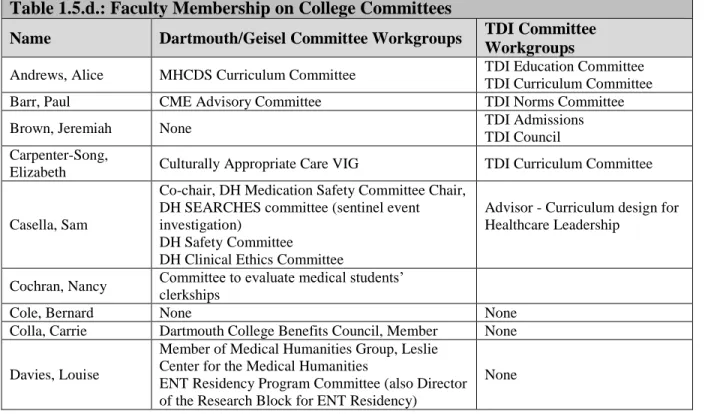
List of faculty and their service commitments to Dartmouth (Table 1.5.d)
List of faculty and their service commitments to external organizations (Table 3.2.c(2))
Advance the population health of communities through course projects, internships, and student-led offerings. [students]
List of service organizations linked to course projects (Table 3.2.c(1))
List of internship sites and internship project titles (ERF 2.4.b)
List of student-run community service activities outside of class offerings (3.2.c)
13
1.1.e. Description of the manner through which the mission, values, goals and objectives were developed, including a description of how various specific stakeholder groups were involved in their development.
Since our last accreditation site visit in 2008, the mission, goals, and objectives have been reviewed and updated to reflect feedback from the site visitors and continued review. The mid-term report to CEPH in 2011 addressed these first changes. In 2014, we embarked on a program evaluation that involved surveys, focus groups, and interviews with various stakeholders
(alumni, faculty, students, employers, staff, potential employers, admitted applicants who chose to enroll elsewhere). Also in 2014-15, we hired a firm to conduct market research to assess the marketplace for public health programs and the possibility of starting an online MPH program. After reviewing feedback from the program evaluation and the market research, the education leadership team slightly revised the mission to our current statement to better reflect the aims of our MPH program.
1.1.f. Description of how the mission, values, goals and objectives are made available to the program’s constituent groups, including the general public, and how they are routinely reviewed and revised to ensure relevance.
TDI makes its mission, values, goals, and objectives available to the public through its website for its educational programs. The URL for TDI’s educational programs is
http://tdieducation.dartmouth.edu/
The mission is reviewed by the Management, Education, and Curriculum Committees and through Town Hall meetings for faculty and staff. Currently, we do not have an external group who reviews the mission, values, goals, and objectives.
1.1.g. Assessment of the extent to which this criterion is met and an analysis of the program’s strengths, weaknesses, and plans relating to this criterion.
This criterion has been met with commentary.
Strengths:
Program evaluation and market research helped us revise our mission statement, which better reflects not only what we offer but also what the population health community needs from our trained students.
Weaknesses:
The mission, values, goals and objectives for the MPH program are not regularly
reviewed by stakeholders external to TDI. The development of the online MPH program involves many more stakeholders (internal and external) than we have accessed in the past with our residential MPH program. The use of a market research firm in 2014, not only aided in determining whether the graduate school market could sustain another
14 online MPH program but also helped us assess our curricular strengths and weaknesses with external stakeholders as we considered offering an online MPH program.
Plans for Improvement:
From the value we received from the program evaluation and the market research, we have started discussions to develop a Community Advisory Council, and this Council will regularly review the mission, goals, values, and objectives.
15
1.2 Evaluation. The program shall have an explicit process for monitoring and evaluating its overall efforts against its mission, goals and objectives; for assessing the program’s effectiveness in serving its various constituencies; and for using evaluation results in ongoing planning and decision making to achieve its mission. As part of the evaluation process, the program must conduct an analytical self-study that analyzes performance against the accreditation criteria defined in this document.
1.2.a. Description of the evaluation processes used to monitor progress against objectives defined in Criterion 1.1.d., including identification of the data systems and responsible parties associated with each objective and with the evaluation process as a whole. If these are common across all objectives, they need be described only once. If systems and
responsible parties vary by objective or topic area, sufficient information must be provided to identify the systems and responsible party for each.
The MPH program has processes for monitoring, evaluating and assessing the program’s efforts related to its objectives. Continuous evaluation is conducted throughout the year and informs program planning and quality enhancement efforts.
The Director of Education is responsible for the oversight of routine monitoring of activities pertaining to curriculum, student recruitment and admissions, financial and human resources, academic standards, faculty development, and marketing. Data are collected throughout the year through surveys, evaluations, interviews, informal feedback and official meetings with various stakeholders (students, faculty, alumni, staff, employers, internship preceptors, etc.). Data from those sources are reviewed by the Education Leadership team, and recommendations are brought forward to the appropriate Committee(s) (Management, Education, Curriculum, Admissions). Major program changes are reviewed by the Management Committee, Education Committee, and Curriculum Committee, and when appropriate, the Geisel School of Medicine and the Council on Graduate Programs. For example, when the online MPH program was first proposed, it required considerable discussion and planning to ensure that it was value-added for the MPH program as a whole and met the needs of various constituencies. The program plan was reviewed by the Management Committee, Education Committee, Curriculum Committee, Geisel School of Medicine leadership, Council on Graduate Studies, and the Provost’s Academic Planning
Council (at the College level). Interim Dean Duane Compton of the Geisel School of Medicine at Dartmouth will submit the plan for final approval by the Dartmouth College’s Board of Trustees in the spring of 2016. There is consensus that the expansion of the program is a crucial step in the institution’s development as it will expand opportunities for the MPH program to reach a broader audience of students and produce health care leaders who grounded in the skills to measure, organize and improve health and health care in a rapidly changing health care environment.
Specific evaluation activities include the following:
Course Evaluations provide timely assessments of faculty teaching and course content. Course evaluations are summarized and distributed to respective course faculty. Course evaluation summaries are available in the Electronic Resource File (ERF) 2.7 and ERF 4.2.c.
16 Student Town Halls are held by the Director of Education each month. All enrolled students are invited to attend and the Director holds an informal discussion seeking feedback from the students.
Alumni Surveys are distributed approximately every three years and measure the overall performance of the program against goals of the program and overall needs within the field of work. The most recent survey was distributed in the winter of 2014 to all 141 MPH alumni from the Classes of 2011, 2012, and 2013 (with 68 responses). See full report in ERF 1.2.a(1).
Program Evaluation conducted during Summer and Fall 2014
Starting in the summer of 2014, a two-person redesign team collected data over a 90-day period from interviews with alumni, faculty, partners, employers, current students and prospective students accepted into the MPH program at TDI who chose to enroll elsewhere, and from surveys of recent program graduates. Based on these data, the team documented findings and developed recommendations with regular input from a faculty advisory group and other key stakeholders. See Phase 1 and Phase 2 reports in ERF 1.2.a(2) and ERF 1.2.a(3), respectively. Market Research was conducted in November 2014 in order to gain an understanding of how to market to individuals interested in graduate education. This research assisted our program in developing and thinking about tactical messaging for students who are being recruited. See ERF 1.2.a(4) for full report.
Program Evaluations are distributed at the end of each academic year or shortly after graduation to all graduating students. See ERF 1.2.a(5) for full report from 2015.
External Reviews are required every ten years by the college and bring in external experts to evaluate the overall performance of the academic institution. Dartmouth College’s most recent review by the New England Association of Schools and Colleges was in 2010 with
re-accreditation granted through 2019. Geisel School of Medicine’s most recent review by the Liaison Committee on Medical Education was in 2013 with re-accreditation granted through 2020-2021.
1.2.b. Description of how the results of evaluation processes described in Criterion 1.2.a. are monitored, analyzed, communicated, and regularly used by managers responsible for enhancing the quality of programs and activities.
The results of the above evaluation and planning activities are used by TDI’s Management Committee, Education Committee, and Curriculum Committee to identify, recommend, and implement long-term strategic plans, policy changes, recruitment strategies, course
improvements and additions, and overall program improvements.
1.2.c. Data regarding the program’s performance on each measurable objective described in Criterion 1.1.d must be provided for each of the last three years. To the extent that these
17
data duplicate those required under other criteria (eg, 1.6, 2.7, 3.1, 3.2, 3.3, 4.1, 4.3, 4.4), the program should parenthetically identify the criteria where the data also appear.
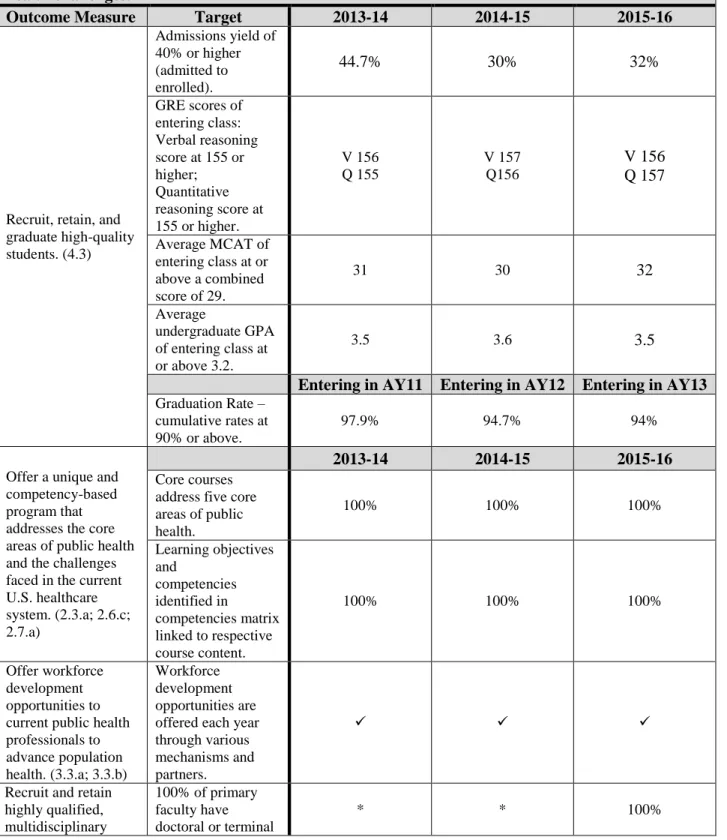
Table 1.2.c. Outcome Measures for the Past Three Years
Goal 1:Prepare current and future public health practitioners and researchers to address public health challenges.
Outcome Measure Target 2013-14 2014-15 2015-16
Recruit, retain, and graduate high-quality students. (4.3) Admissions yield of 40% or higher (admitted to enrolled). 44.7% 30% 32% GRE scores of entering class: Verbal reasoning score at 155 or higher; Quantitative reasoning score at 155 or higher. V 156 Q 155 V 157 Q156 V 156 Q 157 Average MCAT of entering class at or above a combined score of 29. 31 30 32 Average undergraduate GPA of entering class at or above 3.2. 3.5 3.6 3.5
Entering in AY11 Entering in AY12 Entering in AY13 Graduation Rate –
cumulative rates at 90% or above.
97.9% 94.7% 94%
Offer a unique and competency-based program that addresses the core areas of public health and the challenges faced in the current U.S. healthcare system. (2.3.a; 2.6.c; 2.7.a)
2013-14 2014-15 2015-16 Core courses
address five core areas of public health. 100% 100% 100% Learning objectives and competencies identified in competencies matrix linked to respective course content. 100% 100% 100% Offer workforce development opportunities to current public health professionals to advance population health. (3.3.a; 3.3.b) Workforce development opportunities are offered each year through various mechanisms and partners.
Recruit and retain highly qualified, multidisciplinary 100% of primary faculty have doctoral or terminal * * 100%
18 faculty. (1.3.c; 4.1.c; 4.2.a) degrees in health- or healthcare-related field and/or research-related field. Diverse expertise, housed in various departments across campus (at least 50% of faculty with more than 1 departmental appointment). * * 78% At least 60% of all teaching faculty on College/Medical School/TDI Committees. * * 73% At least 60% of all teaching faculty participating in local, regional, national, or international health- and healthcare-related organizations. * * 70% At least 15 FTE of total faculty time are dedicated to teaching or activities relevant to the public health program. 16.25 18.6 18.75 At least 50% of faculty with significant practice experience. * * 59% Provide educational support to faculty and students through quality staff, resources, and infrastructure. (1.7.i) Hire a second Curriculum Specialist (beginning in AY16). N/A N/A
Hire two Curriculum and Teaching Assistants annually.
Fiscal, library, computing, and space resources are sufficient for faculty, staff, and students.
Prepare students for careers in public health practice and
Job
placement/further education rate above
19 research. (ERF 1.3.a(1-3); Table 2.7.b(2)) 90% within 12 months after graduation. 85% or higher of alumni report to be adequately prepared or better for current job.
Class of 2011 Class of 2012 Class of 2013
59% 58% 75%
2014 program evaluation data.**
2013-14 2014-15 2015-16 N/A See Criterion 2.7 Pending Goal 2:Conduct and disseminate collaborative scholarly and applied research.
2013-14 2014-15 2015-16 Compete successfully
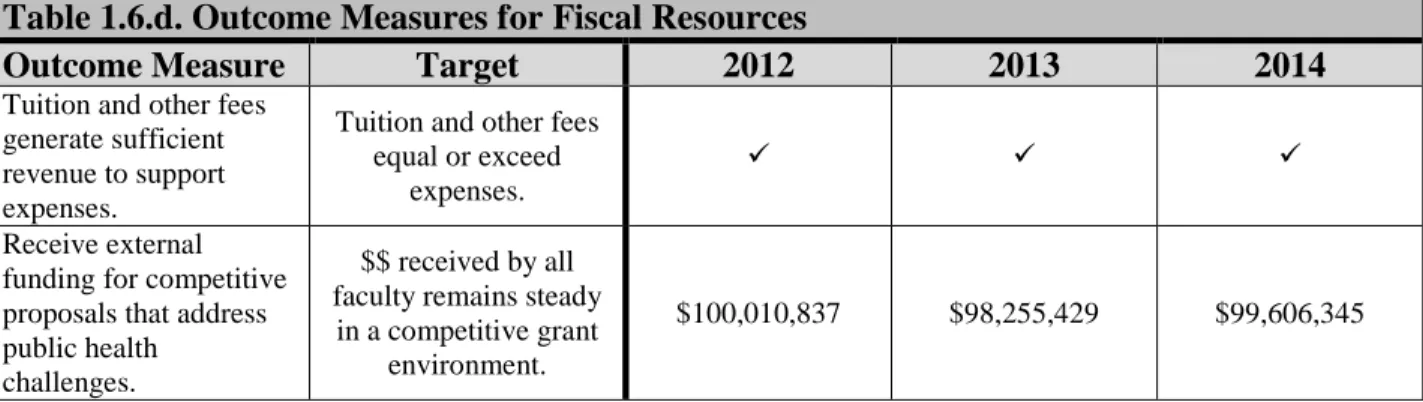
for external funding that address public health challenges. [faculty] (3.1.d and 4.1.d) $$ received by all faculty remains steady in a competitive grant environment. $100,010,837 $98,255,429 $99,606,345 Disseminate research findings through publications, presentations, and other communicative opportunities [faculty]. (3.1.d; 4.1.d) At least 90
publications per year by all teaching faculty.
110 98 121
At least 90 presentations per year by all teaching faculty.
105 119 121
Conduct relevant capstone projects and present findings to a public health audience [students]. (2.5) # and variety of capstone projects 44: (10 intervention; 16 research proposals; 11 policy reviews; 3 program evaluations; 1 quality improvement project; 3 research reports) 33: (5 intervention; 12 research proposals; 6 policy reviews; 3 program evaluations; 2 quality improvement project; 4 research reports; 1 other) pending # of public capstone presentations 44 33 pending
Goal 3:Advance population health of communities in New Hampshire, the region, and worldwide through education, research, and service.
Participate in service to Dartmouth and with local, regional, national and international organizations to advance population health [faculty]. (1.5.d and 3.2.c(2)) At least 60% of all teaching faculty on College/Medical School/TDI Committees. * * 73% At least 60% of all teaching faculty participating in local, regional, national, or international health- * * 70%
20
and healthcare-related organizations. At least 15 FTE of total faculty time are dedicated to teaching or activities relevant to the public health program. 16.25 18.6 18.75 At least 50% of faculty with significant practice experience. * * 59% Advance the population health of communities through course projects, internships, and student-led offerings [students]. (3.2.c) 2012-13 2013-14 2014-15 # of community-based projects embedded in courses. * * 33 # of community organizations. * * 39 Plan various activities during Public Health Week each year (began in 2014-15 academic year).
N/A
*Data collected across all three years instead of per year.
**Data not stratified by class year but is a group of alumni across various years and MPH and MS degree programs.
d. Description of the manner in which the self-study document was developed, including effective opportunities for input by important program constituents, including institution officers, administrative staff, faculty, students, alumni, and representatives of the public health community.
Dartmouth began its work on the Self-Study during the spring 2014. Karen Tombs, EdD, Director of Student Learning, and Katherine Silvius, MPH, Curriculum Specialist, coordinated the writing efforts. Dr. Tombs and Ms. Silvius worked with a variety of faculty and staff
members within the MPH program, at the Geisel School of Medicine, and at Dartmouth College to collect and collate the appropriate data and content. The 2014 program evaluation team served in an advisory role since its evaluative work and subsequent recommendations for improvements were directly linked to the Self-Study.
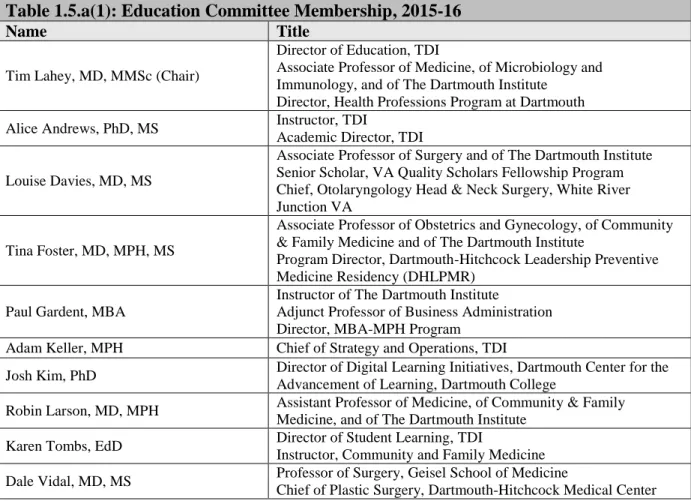
Early drafts of the four criteria were sent for review to the program leadership (Director of Education, Academic Director, Executive Director), and updates were provided to the Education Committee and Curriculum Committee during their regular meetings. Both the Education and the Curriculum Committees include alumni members.
21 As drafts were reviewed and revised, more complete drafts were shared with the MPH program leadership, Curriculum Committee, and Geisel leadership.
1.2.e. Assessment of the extent to which this criterion is met, and an analysis of the program’s strengths, weaknesses, and plans relating to this criterion.
This criterion has been met with commentary.
Strengths:
Oversight by three Committees integral to the MPH program (Management, Education, and Curriculum Committees).
Completion of 2014 Program evaluation, which contributed to the revision of the mission, development of a marketing plan, and improvements to the curriculum.
Completion of alumni survey in 2014 (to the Classes of 2011, 2012, and 2013), which contributed to the overall program evaluation analysis.
Completion of market research, which contributed to the overall program evaluation analysis and helped us better define our MPH program, including how to best market and recruit new students.
Weaknesses:
Evaluation plans are not formalized and some aspects are not routinized but instead completed on an ad hoc basis.
Plans for Improvement:
In the fall of 2015, the educational programs (MPH, MS, PhD, and certificate programs) signed a contract with the Dartmouth Center for Program Design and Evaluation to help us develop a more robust set of evaluation processes. CPDE will help us develop a set of tools specific to our program goals and will help us strengthen our outcomes measurement and progress tracking. While the 2014 program evaluation provided a rich source of data, we also realized we needed a more comprehensive program evaluation plan. CPDE will help us develop a more formal and systematic approach to track our graduates and assess competencies on an ongoing basis. This approach will include existing and new in-course assessments linked to competencies to assure achievement by students and improved mechanisms to assess student and graduate application of competencies in internship and workplace settings. Specific plans to achieve this include a review of existing processes and measures, revision and development of new measures as needed, and creation of an updated evaluation process and infrastructure to systematically collect, analyze and report data related to competencies, program progress and needed improvements or changes.
23
1.3 Institutional Environment. The program shall be an integral part of an accredited institution of higher education.
1.3.a. A brief description of the institution in which the program is located, and the names of accrediting bodies (other than CEPH) to which the institution responds.
The Master of Public Health degree is located in The Dartmouth Institute for Health Policy and Clinical Practice (TDI), a unit of the Geisel School of Medicine.
The Dartmouth Institute for Health Policy and Clinical Practice
The Dartmouth Institute for Health Policy and Clinical Practice was established in the fall of 1988 under the leadership of John E. Wennberg, MD, MPH, a pioneer in the field of outcomes research and originator of the Dartmouth Atlas of Health Care. TDI provides a centralized forum for researchers to raise fundamental questions about health care outcomes; treatment variations; and how medical resources are distributed, decisions made, and health care systems improved. Among its nearly 30 years of accomplishments, it has established a new discipline and
educational focus in the Evaluative Clinical Sciences, introduced and advanced the concept of shared decision-making for patients, demonstrated unwarranted variation in the practice and outcomes of medical treatment, and shown that more health care is not necessarily better care. Healthy skepticism about new treatments and medical “breakthroughs,” an understanding of the risks and benefits of many common therapies and surgeries, and unique educational programs have produced more informed agents of change among physicians, health professionals, the media, and the public.
These questions were at first considered heretical. But in the last three decades, the work of Jack Wennberg and others at TDI has proven to be among the most prescient and valuable in
establishing a new understanding of our health care system and what works and what doesn’t. Today, under the leadership of TDI Director Elliott Fisher, MD, MPH, TDI has embraced an ambitious mission: to be the preeminent research and educational institution devoted to the reform of the U.S. health care system. Our vision: to achieve a patient-centered, high quality, cost-effective health care system with access and excellence for all.
The clinician scholars, epidemiologists, economists, social scientists, statisticians, and others who make up the diverse faculty of TDI are devising solutions, offering policy changes, and proving through demonstration how health care can be delivered more effectively, with better outcomes, improved patient and provider satisfaction, and at less cost.
As it has done over the past three decades, TDI will continue to seek constant improvement by asking the tough questions, evaluating the best evidence, and innovating and devising solutions while working through the necessary implementation that will allow for real and sustained cost effective change to occur. Changing the status quo, especially in a complex and entrenched system, is not easy, but it is exciting and it is necessary.
The problems with our health care system are now well understood. The public is still besieged by messages that scare rather than inform. The risks and benefits of new (and old) treatments are
24 insufficiently understood. Patients often make decisions that aren’t aligned with their
preferences. Overuse and overdiagnosis remain rampant, and health care is too often confused with health. High and rising health care costs pose a threat to everyone: undermining schools, devouring government budgets, and keeping wage growth flat. We also have a much better understanding of what will be required to address these problems – and the country is beginning to implement them. Dartmouth is uniquely positioned to help accelerate the transformation we need through our research, educational programs and partnerships with health care systems here, across the country and around the world.
Geisel School of Medicine
The Master of Public Health degree is located in The Dartmouth Institute for Health Policy and Clinical Practice, a unit of the Geisel School of Medicine. Located on the Dartmouth College campus, the Geisel School of Medicine is a beacon of learning and discovery, stimulating inquiry and harnessing ingenuity for new solutions and better health. The nation's fourth oldest medical school, it melds the resources of an Ivy League institution and a world-class medical center (Dartmouth-Hitchcock Medical Center) for education, research and service. The Geisel School of Medicine cultivates leaders and innovators of vision and virtuosity who are expanding knowledge, and using it wisely and collaboratively to transform medicine and patient care. Faculty, students, and staff work together in an environment of collaboration and collegiality that promotes personal and professional development and lifelong learning.
The mission of Geisel School of Medicine is to improve the lives of the communities we serve through excellence in learning, discovery, and healing and to foster an inclusive, diverse
community that reflects our world and addresses the most challenging issues in health care. The school aspires to be the medical school that sets the standard for educating physicians, scientists, and teachers to be leaders of change in creating a healthier, better world and to build a diverse and inclusive community reflective of our world in order to enrich learning, foster innovation and help tackle the most vexing challenges in health care
Geisel encompasses 19 clinical and basic science departments, TDI, Norris Cotton Cancer Center, Dartmouth Psychiatric Research Center, New Hampshire Area Health Education Center, Hood Center for Children and Families, and other multidisciplinary programs.
Research programs in cancer and its prevention, cell and molecular biology, genetics,
immunology, ethics, neurosciences, public health and medical services, bring international and national distinction. Regionally, the medical school is designated an Area Health Education Center for New Hampshire.
Geisel School of Medicine has approximately 350 faculty, including 118 tenured and tenure-track faculty, and part-time and adjunct members who teach medical, undergraduate and graduate students, residents, postgraduate fellows and other health professionals, conduct research, and care for patients.
The diverse mix of talented individuals who enrich the mosaic include about 350 medical students and 350 graduate students (including those in the MPH program; other graduate level programs include MS, MALS, PhD).
25 Geisel School of Medicine resides on the campus of Dartmouth College in Hanover, New
Hampshire. It is part of the Dartmouth-Hitchcock Medical Center (DHMC, an academic medical center) in Lebanon, New Hampshire, comprised of Mary Hitchcock Memorial Hospital,
Dartmouth-Hitchcock Clinic and the White River Junction Veterans Affairs Medical Center in Vermont. It is accredited by the Liaison Committee on Medical Education (LCME), which is co-sponsored by the Association of American Medical Colleges and the American Medical
Association. Dartmouth College
Founded in 1769, Dartmouth is a member of the Ivy League and consistently ranks among the world’s greatest academic institutions. Dartmouth has forged a singular identity for combining its deep commitment to outstanding undergraduate liberal arts and graduate education with distinguished research and scholarship in the Arts & Sciences and its three leading professional schoolsthe Geisel School of Medicine, Thayer School of Engineering, and the Tuck School of Business. Twenty graduate programs leading to doctoral degrees in the arts and sciences and eleven graduate programs leading to master’s degrees in the arts and sciences also exist. Dartmouth’s unique blending of university resources with a college focus on education offers small classes, top-flight facilities, and an outstanding faculty. Professors at Dartmouth are among the leaders in their fields yet remain committed to teaching. The school is small with
approximately 4,200 undergraduate and 2,000 graduate students as of Fall 2014.
Dartmouth College is accredited by the New England Association of Schools and Colleges (NEASC).
1.3.b. One or more organizational charts of the university indicating the program’s
relationship to the other components of the institution, including reporting lines and clearly depicting how the program reports to or is supervised by other components of the
institution.
In November 2001, the Dartmouth College Board of Trustees approved the development of a Master of Public Health degree program and assigned oversight of it to the Geisel School of Medicine. To provide the new program with a strong academic setting, it was located within TDI, an Institute of the Geisel School of Medicine.
Lines of Accountability
The Director of Education at TDI is responsible for strategic planning, program implementation and evaluation, and collaboration with relevant departments and offices at Dartmouth College, Geisel School of Medicine, and Dartmouth-Hitchcock Medical Center.The Director of
Education reports to the Director of TDI who in turn is accountable to TDI’s Management Committee, which in turn reports to TDI’s Director, The Director of TDI who then reports to the Dean of the Geisel School of Medicine/Vice-President of Health Affairs for Dartmouth College. The Dean/Vice-President reports to the President and Provost of Dartmouth College.
26 Three key leadership positions (Executive Director, Academic Director, Director of Student Learning) are responsible for the day-to-day operations for the MPH program and other degree and certificate programs within TDI, including program planning, evaluation, and management. These three positions report to the Director of Education.
Prerogatives extended to Academic Units regarding Names, Titles and Internal Organization Dartmouth College and Geisel School of Medicine recognize the Master of Public Health Program. The MPH program falls under the purview of the Office of Graduate Studies for academic and student conduct issues and the professional degree, upon completion of all degree program requirements, is conferred by Geisel School of Medicine, through Dartmouth College. See Figure 1.3.b(1) for the organizational chart for Dartmouth College and Figure 1.3.b(2) for the organizational chart for the Geisel School of Medicine.
27
28
29
1.3.c. Description of the program’s involvement and role in the following:
budgeting and resource allocation, including budget negotiations, indirect cost recoveries, distribution of tuition and fees, and support for fund-raising
personnel recruitment, selection and advancement, including faculty and staff academic standards and policies, including establishment and oversight of curricula Budgeting and Resource Allocation
Geisel School of Medicine is part of Dartmouth College. It operates with its own budget and it is not a separate legal identity. Accordingly, the Trustees of Dartmouth College, who have a Committee on the Medical School (CMS), are ultimately responsible for Geisel. Financial resources for the Medical School are derived through three sources: indirect money from research grants, tuition, and endowments.
As a unit within Geisel, TDI reports to the Dean of the Medical School/Vice President of Health Affairs for Dartmouth College. The Trustees approve faculty appointments and the Geisel budget.The Geisel School of Medicine adheres to Dartmouth College fiscal responsibility and reporting commensurate with other Dartmouth graduate schools and programs.
TDI graduate programs are self-supporting, with the funding sources based on tuition and fees collected from the masters’ programs. Program expenses include all MS, MPH, and PhD teaching faculty and staff compensation, operating costs, and capital equipment acquisition for classroom and administrative offices.
Personnel Recruitment, Selection, and Advancement
Dartmouth is an equal opportunity, affirmative action employer.
The MPH program, TDI, and Geisel School of Medicine adhere to the policies of Dartmouth College relative to personnel recruitment, selection, and advancement. Dartmouth College’s Faculty Handbook, which outlines the personnel recruitment, selection, and advancement in Part III and is available as a PDF at
http://www.dartmouth.edu/~dof/pdfs/dartmouth_fac_handbook.pdf. Many of the administrative functions within Geisel and TDI, such as Human Resources, the Controller, Legal Counsel, Purchasing, and Libraries are institution-wide and report to the Provost of the College, the Vice President for Administration and Finance, or the President of Dartmouth College.
Academic Standards and Policies
TDI follows the high academic standards of Dartmouth College in all of its graduate programs, including candidacy for the advanced degree, contact hours, transfer credit, grading, and academic probation. The academic standards for the MPH Program may be viewed in TDI’s MPH and MS Student Handbook, which is located in ERF 1.3.c.
Oversight of the degree programs at TDI is provided by the Council on Graduate Studies., including the MPH (which has an agreement with the Office of Graduate Studies for this oversight since policies and procedures for graduate students are more applicable to the MPH students than the policies and procedures for medical students under Geisel). The Council on Graduate Studies consists of the Chair of each of the degree-granting graduate programs at
30 Dartmouth, as well as one member from each of the three Professional School faculties, two graduate student representatives, the Dean and Assistant Deans of Graduate Studies. This body plans and coordinates the interests of all Masters and Doctoral graduate programs with other activities of the faculties and committees on campus.
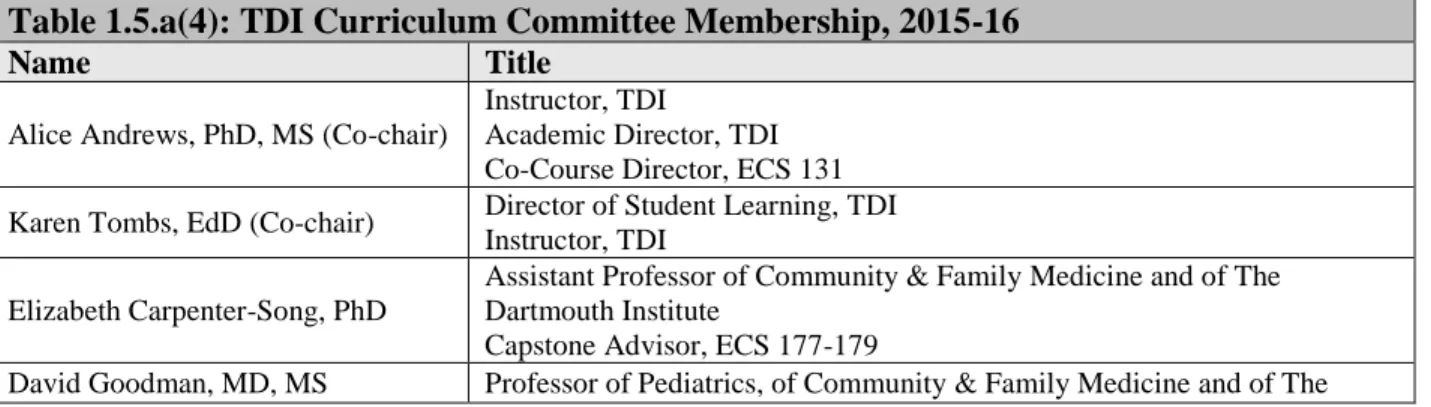
Within TDI, the Curriculum Committeeprovides active oversight of Master’s level educational programs (MPH and MS) to ensure the curriculum achieves TDI’s educational competencies. The Curriculum Committee coordinates its efforts to align with the TDI Education Committee, which oversees all educational programs at TDI.
1.3.d. If a collaborative program, description of all participating institutions and delineation of their relationships to the program.
N/A
1.3.e. If a collaborative program, a copy of the formal written agreement that establishes the rights and obligations of the participating universities in regard to the program’s operation.
N/A
1.3.f. Assessment of the extent to which this criterion is met and an analysis of the program’s strengths, weaknesses, and plans related to this criterion.
This criterion has been met.
Strengths:
Dartmouth College and Geisel School of Medicine have passed the rigorous standards for accreditation by the New England Association through its Commission on Institutions of Higher Education and the Liaison Committee on Medical Education, respectively. Institutions of higher learning achieve accreditation when they have “clearly defined purposes appropriate to an institution of higher learning; has assembled and organized those resources necessary to achieve its purpose; is achieving its purpose; and has the ability to continue to achieve its purpose” (New England Association of Schools and Colleges).
TDI manages its budget, adheres to the hiring practices of Dartmouth College and Geisel School of Medicine, and upholds the academic standards set forth by the College and the MPH program.
Weaknesses:
None identified.
Plans for Improvement:
31
1.4 Organization and Administration. The program shall provide an organizational setting conducive to public health learning. The organizational setting shall facilitate
interdisciplinary communication, cooperation and collaboration that contribute to achieving the program’s public health mission. The organizational structure shall effectively support the work of the program’s constituents.
1.4.a. One or more organizational charts showing the administrative organization of the program, indicating relationships among its internal components.
Please see Figure 1.4.a for the functional organizational chart for TDI below.
32
1.4.b. Description of the manner in which interdisciplinary coordination, cooperation, and collaboration occur and support public health learning, research, and service.
TDI’s education and research faculty and staff are responsible for research in their specific areas, advancing the mission of TDI, and many of these faculty members teach in the degree programs at TDI. Research teams often have faculty from various disciplines and departmental
appointments (primary, secondary, and tertiary), which further expands the collaborative nature and collegiality at TDI.
Interdisciplinary coordination, cooperation and collaboration are integrated into the Dartmouth academic system at several levels. As a program within TDI, the MPH program is very closely integrated into the Geisel School of Medicine system and the Dartmouth College system. Beyond the joint programs between Geisel School of Medicine (MD/MPH) and Tuck School of Business (MBA/MPH), the following areas are evidence of interdisciplinary coordination, cooperation, and collaboration:
Interdisciplinary Activities: Outside of TDI’s own faculty, experts in various fields from across the Dartmouth College campus (i.e., economics, psychology, biology, and political science) participate in teaching and research to expand the breadth of particular areas of study. In some cases, students conduct directed research with experts from other Dartmouth departments, while working under the general supervision of a TDI faculty member. In this way, they are given the opportunities to explore areas of particular interest that may not be covered in the same depth in classroom discussions and research.
The Medical School and College Approval Process: Any important approval process, such as the approval of the MPH program in 2001 (and approval-in-process of the online MPH program), begins with internal discussions at the Curriculum, Education, and Management Committees, with input from faculty at Town Halls and other faculty meetings. Proposals are then reviewed and approved in the following order:
1) Council on Graduate Studies 2) Senior Associate Deans at Geisel 3) Dean’s Advisory Board at Geisel
4) Provost’s Academic Planning Committee 5) Dean of the Geisel School of Medicine 6) Dartmouth College Board of Trustees
At each stage, the proposal must comply with the standards within the unit and meet a demonstrated need in the community of interest. TDI is highly valued and supported by Dartmouth College, as well as the Geisel School of Medicine and its faculty.
Geisel Faculty: The MPH teaching faculty members receive their appointments through the Geisel School of Medicine and as such, comply with the rules and regulations of Geisel.
Dartmouth is proud of its collegial spirit, which is demonstrated in the sharing of faculty between academic areas. TDI’s faculty members frequently teach in medical school courses and, in turn, medical school faculty members participate in TDI courses.
33 Committees: Medical School committee appointments are comprised of faculty and
administrators from various departments and units, including TDI. Leadership roles are assumed equally between faculty members without preferential treatment for one unit over another. Information Systems: Through electronic communication, there is a sophisticated information system that exists between TDI, Geisel School of Medicine, and Dartmouth College. The President of the College and Dean of the Geisel School of Medicine provide frequent communications regarding the status of important issues, as well as timely announcements. Through electronic communications, TDI students are routinely invited to special educational sessions or social activities offered by the Geisel School of Medicine or the College. The ease of this electronic communication system expedites important communications for timely decision making.
Resources: Dartmouth College provides all of its programs and schools with equal resources across campus, including computer expertise, human resources, legal counsel, purchasing, library services, and continuing education opportunities for all faculty and staff.
Collegiality: Collegiality is integrated into the common fiber of Dartmouth College, as evidenced by the actions of students, faculty, and the community. Students are encouraged to help one another instead of competing. They are expected to share their skills and knowledge through community service and to advance the theme of integrity in their daily actions. As a result, Dartmouth has an outstanding record of public service by its students.
Faculty from across the campus give of their time to guide students in research projects or to counsel them in academic matters. They commonly work across department borders to advance the goals of research, teaching, and community service and are expected to act as mentors to junior faculty, as well as students.
1.4.c. Assessment of the extent to which this criterion is met and an analysis of the program’s strength, weaknesses, and plans relating to this criterion.
This criterion has been met.
Strengths:
Through the collaborative efforts of the administration and faculty of TDI, Geisel School of Medicine and Dartmouth College, the MPH program provides a setting conducive to learning, research, and service.
Weaknesses: None.
Plans for Improvement:
34
1.4.d. Identification of written policies that are illustrative of the program’s commitment to fair and ethical dealings.
The Dartmouth MPH Program adheres to policies of integrity and ethical conduct as
promulgated by Dartmouth College. Information is found in the Student Handbook (ERF 1.3.c) and is also publicly available at the following URL: http://tdi.dartmouth.edu/education/degree-programs/academics/policies
1.4.e. Description of the manner in which student grievances and complaints are addressed, including the number of grievances and complaints filed for each of the last three years.
Dartmouth College is committed to a policy of non-discrimination to assure that its educational programs and activities are available to all students without regard to sex, race, color, religion, handicap, or national or ethnic origin. The College grievance procedure outlined below provides a means to assure prompt due process to any graduate student who believes that she or he has been discriminated against on the basis of sex, race, color, religion, handicap, or national or ethnic origin.
Association with Dartmouth College involves participation of a free and open community where all students are recognized and rewarded on the basis of individual performance, rather than on any particular personal convictions or preferences, including sexual or affectional orientation. Any graduate student who feels discriminated against for these reasons may also use this grievance procedure.
Resolution by Informal Negotiation
Any graduate student who believes he or she has been discriminated against should first seek a resolution of the problem through informal discussion. Initially, the student should attempt to discuss the problem with the faculty member, administrative officer, staff person or student directly concerned. If a resolution is not reached through discussion, the student should then bring the problem to the attention of TDI’s Director of Education or Director of Student Learning.
In cases where a student is uncomfortable about discussing the problem with the party directly concerned or is uncertain whether to initiate a grievance, he or she may seek, in confidence, the advice of the Affirmative Action Officer or the Dean of Graduate Studies who, with the student’s permission, will seek to resolve the problem through discussion with the involved parties.
Procedure
If a resolution has not been achieved within ten working days from the time the grievance was first raised, the student should prepare a written statement of the allegations and submit it to TDI’s Director of Education. The Director, or the Director’s designee, will have ten days to: (1) achieve a settlement by negotiating with the parties identified in the complaint; or (2) submit the case for consideration to the Dean of Graduate Studies.
35 In regard to written complaints involving academic matters, the Dean of Graduate Studies, or designee, will have two weeks to: (1) achieve a settlement by negotiating with the parties involved; or (2) submit the case for consideration by the Provost. The Provost shall consult with appropriate faculty members involved and shall also meet with the student bringing the
complaint before making a final decision with regard to the matter. The decision of the Provost on the complaint shall be forwarded to the President for his review and disposition as outlined in the Presidential Review section of this document.
Committee on Student Grievances
The Grievance Committee shall be a committee appointed by the Dean of Graduate Studies and composed of two students from a slate nominated by the graduate student representatives and two members of the faculty or administration. At least one of the members will be female and one a minority with the further constraint that both will not be students. The Affirmative Action Officer shall serve as an advisor to the Committee. The Chair of the Committee shall be the Chairperson of the Council on Graduate Studies of his/her designee.
Formal Hearing
The Committee on Student Grievances will conduct a hearing as soon as is practical after full written notification of the grievance by the Chairperson. Both the student who initiated the grievance and the person against whom the grievance is lodged may make statements and bring evidence; either party will be allowed to bring witnesses and/or an adviser. Each party has the right to be represented by counsel or other representative. However, the College has no
obligation to provide counsel for the complainant. The college will normally not be represented by legal counsel unless the complainant chooses to be represented by counsel. If any party intends to employ legal counsel, he/she shall inform the Dean’s Office of this fact no later than 72 hours prior to the hearing, and that Office shall provide such information to the other party and to the Chairperson of the Grievance Committee. Formal rules of evidence shall not be
applicable to any hearing before the Grievance Committee, and any evidence or testimony which the Committee believes to be relevant to a fair determination of the complaint may be admitted. The Committee reserves the right to exclude incompetent, irrelevant, immaterial and unduly repetitious evidence. The Committee may seek additional information or testimony which it finds relevant to resolving the grievance, and may also, at its discretion, establish additional procedures for governing the hearing.
The Chairperson of the Grievance Committee shall rule on all matters of procedure and admissibility of evidence. Any member of the Committee not concurring in the ruling of the chair may request a private session of the Committee for debate on the point.
Upon either party’s request, a verbatim record shall be kept of all sessions in which testimony and evidence are present regarding the case, and all parties to the hearing may have access to this record. All findings, recommendations, and conclusion of the Grievance Committee shall be based solely on the evidence presented as part of the hearing. A majority vote of the Committee members present shall determine the final decision.
36 The time frames described above may, in extenuating circumstances, be adjusted by the
Committee. The definition of “extenuating circumstances” will be determined by a majority vote of the Committee.
Decision
The Committee shall reach a decision within five working days after the termination of hearings. (In case the hearings have to be adjourned to gather more information, the total adjournment time should not exceed ten working days.) The Committee will forward its decision and
recommendations to the President of the College. Presidential Review
Within twenty working days, the President may accept the findings and recommendations; reject the findings and recommendations; request that the grievance be reheard, taking into account new information; propose alternative methods of rectifying the situation if discrimination has occurred and financial expenditures are involved; or take any other action the President deems appropriate. The final decision of the President is binding and shall not be subject to review under any other grievance procedure in force in the institution.
Grievances over the last three years