CONTRIBUTIONS OF GERMAN-TURKISH CIVIL SOCIETY ORGANIZATIONS TO GERMAN POLITICAL DISCOURSES OF BELONGING
Anna Elizabeth Brashear
A thesis submitted to the faculty of the University of North Carolina at Chapel Hill in partial fulfillment of the requirements for the degree of Master of Arts in the Department of Political
Science, Concentration TransAtlantic Studies.
Chapel Hill 2017
Approved by:
John D. Stephens
Liesbet Hooghe
© 2017
ABSTRACT
Anna Elizabeth Brashear: Contributions of German-Turkish Civil Society Organizations to German Political Discourses of Belonging
(Under the direction of: John D. Stephens)
This thesis seeks to illuminate the participatory role and contribution processes of
German-Turkish civil society organizations by bringing together existing secondary literature on migrant social organizations' purpose and practices with primary source material about two German-Turkish organizations in Berlin: the Türkischer Bund in Berlin-Brandenburg
TABLE OF CONTENTS
1. Introduction ………...…...1
2. Literature Survey……….…...6
2.1 Historical Background………..………...…….6
2.2 Existing Literature……….………...………8
2.2.1 Integration Discourses ……….………13
2.2.2 Citizenship Discourses……….……….17
3. Theoretical Framework………...………...…...22
4. Case Study: Turkish-German Migrant Organizations in Berlin………... 28
4.1 Profiling Two Turkish-German Migrant Organizations………..28
4.2 Method……….………...…31
4.3 Findings……….…………...…..33
4.3.1 Türkischer Bund in Berlin Brandenburg (TBB)………....…...…33
4.3.2 Türkische Gemeinde zu Berlin (TGB)………...43
5. Conclusions……….…...48
6. Appendix……….……….………..52
1. INTRODUCTION
This thesis, submitted for the fulfillment of the Master of Arts in Political Science at University of North Carolina, Chapel Hill, examines the role of German-Turkish civil society organizations in the production of discourses of belonging within the German political
landscape. It analyzes how German-Turkish organizations position themselves with respect to national political discourses on issues such as citizenship, German national identity, immigration and integration, and following this orientation, how they engage with German political
institutions to promote their position and pursue policy goals. Aligning with the view that
migrant organizations possess an integrative function, I argue that a part of this function seeks to change unsatisfactory discourses of belonging by structurally involving migrant organizations in the formulation of more effective integration policies that facilitate deeper political incorporation and more equal participation of migrant communities in society.
The subject of migrant civil society organizations in Europe and their political potential has garnered significant research attention in recent years, especially as Europe continues to struggle with migration realities that include rapidly changing demographics, contested national and cultural identities, and the socioeconomic challenges of integrating minority groups with migratory backgrounds. Migrant organizations have thus been identified by academics and politicians alike as potential mediators between established political institutions and migrant groups, channels for increased migrant political participation, and bodies of political
aforementioned premise, as I consider migrant organizations, based on the literature, to indeed possess significant potential as political actors in countries of settlement.
I have chosen to look at the dynamics of German-Turkish migrant-based civil society organizations in Berlin. Turkish migrant organizations in Germany are an interesting research subject for several reasons, not the least of which for the simple fact that the population of residents and citizens with a Turkish background in Germany numbers around 3 million, making it the largest immigrant group in Germany according to fairly consistent numbers from both the 2008 and 2015 micro-censuses (Halm et al. 2012: 38; Statistisches Bundesamt 2015: 128).
Over the past several decades, scholars have been at work to reevaluate the social
dynamics and demographics of Germany as a de facto country of immigration in light of the fact that nearly 17 million German residents, or approximately 20% of the German population, have some kind of migration background (Migrationshintergrund) as of 2015. It is a term that is rather specific to the German immigration discourse. A migration background, as defined by the
German federal office of statistics, describes a person who either does not possess German citizenship through birth, or who has at least one parent who does not possess German citizenship through birth. “Through birth” here refers to the jus sanguinis approach to citizenship, or citizenship passed down by “ethnically German” parents through blood as opposed to place of birth. A policy change made in 2000, however, grants children of non-citizens, who have resided lawfully in Germany for at least 8 years, German citizenship through birth (Statistisches Bundesamt 2015: 128).
91-93). Additionally, the Turkish community is strongly represented in migrant-identified civil society organizations, referred to sometimes as migrant self-organizations or MSOs: of 16,000 MSOs identified in Germany in 2001 study, around 11,000 involved people predominantly from the Turkish community. Another later study identified fewer migrant organizations in general, but noted that 28% were established by migrants with Turkish backgrounds (Halm et al. 2012: 41). This has caused scholars to note German-Turks’ relatively strong tendency to organize under civil society organizational structures (Pries 2013: 2). Içduygu writes that Turkish immigrants engaged rather quickly in civic and political activities in a variety of forms after arriving in destination countries, such as establishing civil society organizations, getting involved in political parties, acquiring citizenship and/or actively demonstrating and petitioning (Içduygu 2009: 135). Still, he suggests that despite the expansive literature about Turkish migration
patterns and immigrant experiences, “[…] relatively little is known about their civic and political participation in the receiving societies in which they live” (Içduygu 2009: 137). Throughout the thesis, I discuss how Turkish migrant organizations can be spaces for political participation and contribution and argue that the TBB and TGB are examples of this, providing new insights about how migrant organizations may be shaping and reshaping political discourses of belonging. Migrant groups and their associations are interacting with and influencing Germany’s political landscape; Germany’s future will certainly be impacted by its changing demographics, and to get a better sense of Germany’s policy direction in years to come, it will be useful to observe the ways that different groups are making claims in the political sphere today (Foroutan 2016: 230-1).
national identity, immigration and integration, and following this orientation, how do they engage with German political institutions to promote their position and pursue policy goals pertaining to these issues? There are two major components of the research question: the first is to understand where we can locate migrant organizations on a number of issues pertaining to belonging and inclusion; the second is to then evaluate how certain positions on these discourses might translate into policy demands and outcomes that have transformative potential for the dominant discourse itself.
To provide answers to this research question, the thesis is structured as follows: first, I undertake a survey of the existing literature about migrant social organizations in general, then I turn to Turkish migrant social organizations specifically. This survey will lay the foundation for understanding what has been written on the subject of Turkish migrant organizations as well as what has been argued in terms of their potential for burgeoning participatory practices of citizenship. I also clarify my own contribution and how I see it enriching and/or challenging certain segments of the existing literature. Following this survey, I provide a theoretical basis for the concepts I wish to discuss and define the terms I wish to employ; this section sets out
2. LITERATURE SURVEY
This section first provides a brief history of Turkish migration in Germany followed by an overview of the existing literature concerning migrant organizations in Germany generally, Turkish migrant organizations in particular and the citizenship and integration debates in which research about the activities of migrant organizations has been steeped. I offer an assessment of the conditions under which current and ongoing research about migrant organizations is taking place and point out key developments. Throughout the survey, I identify gaps or remaining questions in the literature and conclusively, I clarify the contribution that this thesis intends to make.
2.1 Historical Background
The Turkish migration story to Germany is one which has been iterated and reiterated many times—still I wish to briefly summarize the general historical background in order to provide a sense of the setting in which these organizations developed. Despite a longer history of migration between Germany and Turkey pre-dating both world wars, most scholars draw
contracts. From 1961 until 1973, Germany hosted nearly 2.5 million guest workers, of which 528,414 were Turks, according to statistics kept by the federal agency of labor (Yurdakul 2009: 25). By 1973, Turks represented about 10.8% of the German labor force (Akgündüz 2008: 127).
The worldwide oil shock of 1973 led the West German government to terminate the remaining guest worker contracts, thus officially ending the first wave of Turkish labor
discourse towards topics like integration and citizenship. The remainder of the literature review examines the development of these discourses amidst migrant groups’ growing demands for inclusion.
2.2 Existing Literature
Empirical research on migrant organizations (MOs) in Germany has been a growing field since its birth in the 1980s, a time in which Turkish immigrants in German public discourse were largely construed as a “problem” (Thränhardt 2000: 15). Due to this political atmosphere, early works tended to focus on segregation and the establishment of “parallel societies” as negative effects of immigrant organizations (Çetinkaya 2000: 83). This perception slowly changed over the decades.
One of the most prolific German scholars on the subject, Ludger Pries, has written extensively about Turkish and Polish immigrant associations in Germany, but notes that the field is still developing. Despite a number of empirical studies conducted on migrant organizations since the 1980s and the evolution from negative to more positive interpretations, he maintains that “[…] no consensus has been reached on the predominant role and impact of MSOs” (Pries 2013: 2). While he also maintains that there is no generally accepted definition of migrant organizations, he provides one that identifies three predominant characteristics as follows:
[…] associations (1) whose goals and objectives are derived primarily from the situation and the interests of individuals with a history of
migration and (2) whose members are mostly individuals with a migration background and (3) in whose internal structures and processes individuals with a migration background play a significant role. (Pries 2013: 1)
distinct ethnic or religious group to encompassing multiple identity groupings—yet Pries’ three aforementioned characteristics direct attention to the shared identity and function of MOs as places of collective resources and action specifically shaped by and aimed towards groups whose major identity factor is rooted in a migration history or experience.
Yurdakul argues that the migration factor remains important to the identity and function of MOs, even after first-generation immigration has concluded, because such organizations were initially founded as a form of political resistance to societal structures that continually denied immigrants’ rights and full political participation long after initial immigration (Yurdakul 2009: 114). Since these structural barriers continue to exist in the status quo, MOs continually operate from a premise of migration experience and concerns, even if many members with migration backgrounds have no first-hand migration experience. Thus MOs are inherently geared towards addressing challenges specific to particular migrant groups over multiple generations. Odmalm has distinguished four major functions of MOs in Europe, namely 1) to act as links between home and host societies and offer services, advice and expertise about social and legal issues affecting migrants 2) to complement state efforts towards integration and provide information and training in the native language 3) to act as political and community representatives of particular ethnic and identity groups and 4) to serve as transnational contact points and actors (Odmalm 2009: 158; see also Oner 2014: 77).
& Sezgin 2012: 5; Kücükhüseyin 2002). Some earlier work identifies different objectives of MOs in order of frequency and priority, listing the top ten objectives as follows: (in descending order) culture, meeting, religion, sports, counseling, guidance, politics, education, humanitarian aid and leisure (Pries 2013: 2). While this is necessary groundwork, it provides little insight into the more complex activities MOs are engaged in or the impacts MOs may have on individual members as well as other groups, political institutions, public discourses and society at large. Thus scholars gradually began asking questions about what exactly it is that MOs do and whether these activities have noteworthy effects on societies of immigration.
Whereas the early literature focused on the conditions for formation and the kinds of tasks such associations were created to fulfill, the more recent literature is concerned with the links that MOs have established to formal channels of political participation in the receiving countries, the citizenship politics of the receiving country, the political opportunity structures in which MOs are embedded and the public discourses surrounding MOs (Faist 2009: 317). This reflects a shift, one which early scholars like Thränhardt called for, towards framing MOs less as passive political objects and focusing instead on their activities and claims; in fewer words, their potential as political actors (Thränhardt 2000: 46). While Yurdakul interprets the establishment of MOs in Germany as a form of political resistance, other scholars link their establishment to policy developments in the guest worker years. Halm et al. reference post-War Germany’s Anwerbestopp, or contract termination policy of 1973, as a catalyst for immigrant groups to
Immigrants therefore took on active roles towards negotiating community issues early on. Halm et al. suggest that this explains the “[…] sudden emergence of MOs of a new quality in the 1970s, quickly replacing the few ‘workers’ organizations’ established in the 1960s that allowed for only informal exchange […]” (Halm et al. 2012: 41).
The existing literature specifically concerning Turkish MOs in Germany exhibits a similar arc, first presenting such organizations as examples of self-segregation, but eventually through more historical and descriptive work, has regarded Turkish MOs as potential bridging agents between an immigrant community and formal institutions. Çetinkaya elaborated on the specific development of Turkish MOs in each decade starting in the 1960s, when organizations predominantly took the form of workers’ unions, where Turkish guest workers had spaces to exchange information about working conditions and pool their resources towards solving collective workers’ problems. These included organizations like the Verein türkischer
Arbeitnehmer in Köln und Umgebung, or the Organization for Turkish Workers in the Cologne
Area, and Europäische Föderation Türkischer Sozialisten (Avrupa Türk Toplumcular
Federasyonu), or the European Federation of Turkish Socialists. Few organizations existed that
did not have some direct connection to guest worker concerns. The Turkish MOs of the 1960s were therefore initially founded to provide stability to guest workers who, living in separate quarters without family or contacts, were very disconnected from German society (Çetinkaya 2000: 85).
With 70% of all Turkish guest workers arriving to Germany between 1970 and 1973, and the subsequent reunifications of their families in Germany, the 1970s saw the greatest
religiously-oriented Turkish MOs were founded at this time and remained closely connected to Turkey. Another trend was the increase of political organizations as a response to Turkish politics. The 70s were the most crucial foundational phase for religious and political
organizations as well as for the umbrella organizations bringing these together (Çetinkaya 2000: 86-7).
In the 1980s, Turkish MOs continued to differentiate and address various social needs arising from new settlement, adding many sports, work, cultural, social-service oriented, leisure, women’s, parents’ and youth organizations. These years also marked a shift towards interest- and service-oriented organizations that sought to represent and assist Turkish immigrants in the public realm—further evidence of their intention to settle and become a part of German society. Some scholars have noted that Turkish MOs flourished in these years to counter the deficits in service provisions that would have normally been arranged by charity organizations or the German state. Others have found that such interpretations portray immigrants as too passive or reactionary, pointing instead to families’ proactive desire to preserve their origin-country culture and community links (Kyrieri & Brasser 2012: 69). Çetinkaya also notes a definitive shift
towards Germany and German politics as the anchor of Turkish MO activities during this period, further evidence of Turks’ own recognition of their permanent status as a minority group in Germany (Çetinkaya 2000: 87-8).
In my survey, I have found that recent literature on Turkish MOs tends to relate to two major discursive fields: 1) Integration discourses, which continually look at Turkish MOs in terms of integrative potential, largely as a response to earlier literature suggesting that MOs had a segregative function and 2) Citizenship discourses, which tend to forego definitive conclusions about integration in favor of highlighting political participation and multiple avenues and arenas for citizenship practice. Naturally these discursive fields overlap in some of the literature, but I find it useful to orient ourselves with these two major approaches in mind. First I will discuss integration debates, then look at examples focused more heavily on citizenship debates.
2.2.1 Integration Discourses
A large variety of Turkish MOs remain active today and expand their reach while more sharply defining their goals. While a significant portion are religious (38%), that leaves nearly 2/3 of Turkish MOs that are secular in nature, encompassing sport/leisure,
economic/professional, cultural, political, educational and social purposes (Towers et al. 2015: 97). Roughly 14% of these MOs are also considered multifunctional (Halm et al. 2012: 42). Some scholars have focused on the identity- and community-building potential of civil society organizations, noting that they can often help migrant-identified members navigate “ […]
multiple belongings and symbolic resources (territorial, religious, cultural, linguistic, ethnic, and national) in a transnational context” (Can 2013: 87).
However, as a complement to understanding the identity-building processes going on inside of Turkish MOs, a number of scholars have been interested in the links forged between
political actors, framing MO political participation as the key to improving integration policy in Germany. They begin by pointing out the shortcomings of a policy tool created to balance out the lack of formal representation for many immigrants in Germany, namely the advisory councils for foreigners (Ausländerbeiräte) at local, state and federal levels. There were more than 320 in Germany in 2009, yet their role is limited to consultation and turnout for the council elections is perpetually below 20% (Kyrieri & Brasser 2012: 68). Therefore the authors see Turkish MOs as the missing link in input-feedback policy creation cycles and argue that the failure of the German state to engage with such organizations as partners in the past can explain ineffective former integration policies “[…] since non-involvement means that regular input and feedback loops do not flow” (Kyrieri & Brasser 2012: 65).
They note several promising signs of improvement on this front, referring to the German Integration Summit that has taken place since 2006 and gives MOs direct access to federal and regional decision makers while allowing them to simultaneously exchange with other MOs to define desired policy changes. Moreover, they note an increase in MO participation with state-subsidized projects. From 2008 to 2012, the percentage of projects funded by the Federal Agency for Migration and Refugees (BAMF) that were run by MOs increased from 11% to 27% as result of eased restrictions and requirements, which aimed towards making state funding more easily accessible for small civil society organizations. Direct MO involvement in policy
conclusion that MOs are perceived more and more as political actors, but not political partners, especially when it comes to integration policy conceptualization (Kyrieri & Brasser 2012: 77-9, 82). Oner has drawn a similar conclusion, commenting that while MOs act increasingly as representative bodies, they lack “[…] full bargaining power vis-à-vis the German authorities” (Oner 2014: 81).
Other scholars like Mueller have also criticized the fact that “integration” is the main working goal of the German state when they partner with MOs, yet German policy continues to lack the anti-discrimination measures to ensure the conditions of access and equality for
German-Turks’ integration into various facets of public life. Thus he considers it no surprise that many service-based and religious organizations do not emphasize “integration” as a major goal when the Turkish community continues to experience discrimination in housing, employment and education, and opt instead to offer access to these services directly through the MO as a solution. Mueller thus points out that the shortcomings of integration have defined the character of many MOs in the North Rhine Westphalia industrial region of Germany as “self-help” community organizations (Mueller 2006: 423-4, 437).
The origins of the integration/segregation debate specifically related to MOs in Germany can be found in two texts from the 1980s. The first, written in 1982 by Georg Elwert, envisioned MOs as important resources for integration that could provide guidance and facilitate the
French-style “assimilationist” approach was perceived as too nationalist, therefore too uncomfortable for Germans with memories of the nationalist past.
However, integration has not been the magical word for everyone; some groups have proved harder to “integrate” than others, and many question if the term integration is just a more politically correct term for a desired, de facto assimilation. Thränhardt points out that, in this vein, groups considered “culturally” closer to Germans, perhaps sharing the same religion, are less often accused of self-segregation than the Turkish community. Factors like class and the size and visibility of the immigrant group also seem to determine the ease of “integration” for various groups (Thränhardt 2000: 41). Integration has thus become a loaded term in some circles, and while in the public discourse it still has a generally positive connotation, scholars have struggled with its implications specifically for the Turkish community. Thus while pointing out that since the turn of the new century, in both the public discourse and for the German state, MOs have been viewed as valuable dialogue partners for the development and implementation of
integration policies, Pries also argues that MOs should be regarded as multi-functional and the goal should not be to define them either as integrative or segregative (Pries 2013: 2). He claims that such attempts oversimplify the activities of MOs and restrict their role as either “bridges of integration” or “integration traps”, thus overlooking their multidimensionality and potential to serve a number of different purposes in the public realm, from raising awareness about certain social issues to facilitating a variety of participatory processes at different levels of German public life (Pries 2013: 6).
traditional thinking that successful integration means the loosening of ties to ethnic networks or transnational spheres. They posit, rather, that successful integration may hinge upon the
acceptance of such border-crossing formulations (Glick Schiller et al. 2004: 1). Glick Schiller et al. envision five pathways to successful incorporation, one of which they label “local public foreigners” and is based on the Turkish case in Germany. They specifically use a case study on MOs in Bamberg to highlight how Turkish migrant associations have imitated the structure of German civil society organizations, for instance by hosting open houses (Tag der offenen Tür) in order to remain visible in their migrant character on the one hand, but assert their local, public character oriented towards German society on the other. In settings like this they can highlight two simultaneous identities at once, being “publicly Turkish” by openly proclaiming the
Turkish-migrant nature of the organization, yet adhering to German associational structures and organizational rituals, thereby challenging the notion that “foreignness” is necessarily
incompatible with actively participating in German civil society (Glick Schiller et al. 2004: 6). The authors are essentially operating within the integration discourse with this concept, yet showing how MOs can simultaneously challenge the parameters of integration.
2.2.2 Citizenship Discourses
Other scholars have chosen to write about MOs in terms of citizenship modes and practices. Starting from the premise that citizenship determines the relationship between the state and the individual, citizen status defines both the rights accorded and the obligations expected of
not wish to give up their Turkish passports in exchange for exclusive German citizenship, the result is being locked out of formal channels of political participation (Kyrieri & Brasser 2012). Germany’s citizenship regime has traditionally been based on the jus sanguinis or “ethnic/blood” model of citizenship, meaning that proof of ethnic German ancestry was required to attain
German citizenship, therefore German naturalization, or “becoming” German, was not possible. This citizenship regime was finally restructured in 2000 with Germany’s new immigration law, which now allows naturalization after a certain period of residence and also allows children born in Germany to foreigners to attain citizenship under certain conditions as well. However,
restrictions on dual citizenship continue to prevent many Turkish citizens from becoming naturalized (Halm et al. 2012: 64). This regime stands in contrast to the jus soli
assimilation/republican model in France and the multicultural “pillarization” model in the Netherlands (Odmalm 2009: 151-2).
cultural community of a society, and can take various forms according to that society’s own conception of legitimate and acceptable political and cultural practices.
Another concept that builds on citizenship as political and cultural practice is Ehrkamp & Leitner’s “relational citizenship”. It seeks a definition beyond formal status, instead
conceptualizing citizenship as: “[…] constituted, practiced, interpreted and contested through the state and institutions of civil society and through civic actions, and at multiple geographic scales ranging from the local to the supranational” (Ehrkamp & Leitner 2003: 144). These models provide a framework for understanding MO activities as central to citizenship practice. First they suggest that citizenship does not have to be accorded formally in order to be practiced, and second, they emphasize that this practice is located within civil society structures. Thus scholars like Odmalm draw the connection between restrictive formal citizenship policies in Germany and the pursuit of alternative forms of political participation: “[…] the lack of formal political
opportunities have led migrants to develop alternative and more civil society-orientated means of participation” (Odmalm 2009: 153-4).
crucial gap maintained by structural inequalities (Foroutan 2015: 2). Thus Ehrkamp & Leitner put aside state-centered approaches to citizenship in order to highlight how MO leaders and organizers have taken the construction of citizenship upon themselves, not as passive recipients, but as proactive agents who expand and enrich civil society via a multitude of new organizations designed to support their members’ well-being in addition to providing a platform to make political claims on local, state and national levels (Ehrkamp & Leitner 2003: 131).
As noted, literature on Turkish MOs often displays overlaps between integration and citizenship debates and indeed, they are inextricable from each other, even when some of the literature focuses more heavily on a single discourse. Yurdakul’s excellent and especially relevant work on Turkish MOs in Berlin is an example of bridging these discourses. In contrast to Ehrkamp & Leitner, she argues that while claims-making does occur via certain platforms for non-citizens, the distinction between citizen and non-citizen is still important because it formally enshrines who has the recognized right to make legitimate claims against state authorities
(Yurdakul 2009: 110). In her book, she presents a case study on the political participation of five Turkish MOs in Berlin, two of which I also examine in this thesis.
process by which MOs highlight migrant concerns and identities as visible and constitutive parts of modern German identity, has been expressed by post-migration scholars as a vision for changing long-standing institutions to be more inclusive of Germany’s increasingly diverse population (Foroutan 2015: 6).
Having outlined the pre-existing literature on the topic of MOs, from looking at initial descriptive groundwork and historical development, the integrative/segregative debate, to shifts toward writing about MOs as political actors with the power to challenge traditional notions of integration and legitimate forms of citizenship, I wish to clarify my own intent for contribution. In the body of literature focused on MOs as political actors and agents, there is research on the types of claims MOs make and the ways that they challenge the state on issues like integration initiatives and formal citizenship. Where I see a gap is precisely in understanding where and by which means the new discourses about traditional concepts like integration or citizenship are being produced.
3. THEORETICAL FRAMEWORK
implications for the way we talk about modern German civil society and the goals of new political actors within civil society representing Germany’s changing demographics.
The institution of civil society is an important framework for locating MOs embedded in the German political landscape. Civil society has been defined as two-dimensional, its first dimension relating to the type of social action it fosters and the second referring to the specific social sphere where such action occurs. Regarding the first dimension, such social action observable within civil society is:
[…] oriented toward conflict, compromise, and agreement in the public sphere; it stresses individual independence and collective self-
organization; it is nonviolent; it recognizes differences and plurality as legitimate; it is related to general issues, frequently oriented toward something like the ‘common good’ […] (Kocka 2012: 17)
The social action that characterizes civil society organizations then, is action aimed at challenging certain issues and promoting certain changes in the public sphere. Therefore, in observing the social actions of MOs it will be important to continually observe these actions in relation to their receipt in the public sphere and analyze how such actions are inserted into the public realm. Regarding the second dimension, the social sphere or landscape of civil society consists of non-governmental self-organizations that represent an extensive network of different associational formations like “[…] clubs, associations, social movements, networks, and
usually constitutional democracy based on the rule of law (Kocka 2012: 18). Vibrant civil society has been linked to the production of social capital, which not only increases trust amongst citizens, but also in democratic political institutions and is thus considered by scholars as a precondition for well-functioning democracy (Berger, Galonska & Koopmans 2004: 492; see also Putnam 1993). Furthermore, civil society helps maintain balances of power in
democratic societies due to its role as a “ […] counterweight to state power” (Rueschemeyer, Huber Stephens & Stephens 1992: 6). Civil society thus acts as a social realm that stimulates and sustains political engagement and participation across various societal groups (Faist 2009: 318, 320).
In Germany, civil society has been entrenched since the late 18th century, a time when most organizations had distinctly Catholic or social democratic orientations; however, in modern times, and specifically since the 1970s, civil society in Germany has take a more issue-centered approach. German civil society organizations are typically independent of the state, although many receive their primary funding through the state is some shape or form. Yet the corporatist elements of the German system, characterized by a long history of privileged relationships between the state and trade unions, churches and certain welfare and business organizations, noticeably puts immigrant, minority and Islamic organizations at a disadvantage when it comes to participation in policymaking processes (Oner 2014: 75-6).
For example, because Islam is not a state-recognized religion in Germany
(Mueller 2006: 422). Thus, not every organization has the same political clout or enjoys equal access within the German civil society landscape, which is another important defining feature.
A discussion of German civil society inevitably leads to a discussion of the political opportunity structure for our case. It is interesting to reveal the ways that civil society
general setting for negotiations and determine the power configurations. The power
configuration, in turn, defines the chances of success for social action and the willingness of those representing the political system toward implementing certain reforms or changes. With this view, the potential for change as a result of social action is determined by the dynamics between the powerful actors in the political system and the collective agents for change, considering the types of restrictions on both members of the system and challengers to it. This model therefore also highlights political context, noting that the:
[…] country-specific mix determines the set of strategic options available for the mobilisation of the ‘challengers’. It provides the crucial link
between the POS and the challengers’ decision to mobilise or not, their choice of the form of mobilisation, the sequence of events to be organised, and the target of their campaign. (Kriesi et al. 1992: 220)
Therefore we can expect, based on this model, that the structure of Germany’s political system plays a decisive role in the interactions between the state and CSOs (likewise MOs).
There is evidence for shifting POS when it concerns MOs. Several scholars have referred to the Integration and Islam Conferences put on annually by the German federal government since 2006 as examples of a trend toward establishing more partnerships with MOs and enhancing co-development projects. Based on the models, examples like these present new political windows of opportunity and can have effects on the POS in the long term, shifting it in favor of MOs (Halm et al. 2012: 40). Pries & Sezgin have also noted the relevance of POS for studies concerning MOs because it provides a conceptual framework for discussing not only the aims and goals of organizations, but how they go about achieving these in the political
distribution of resources and historical precedents as other important factors to consider when examining POS. He further argues that there is a certain type of feedback loop that influences political opportunities, and that MOs may also redefine their goals, objectives and strategies as a response to the types of political cues they receive through interactions with the state (Odmalm 2009: 154-7).
When it specifically concerns MOs, other scholars include the idea of certain types of “migration regimes” as another important aspect of the POS. The migration regime refers to “ […] a country’s system of values, laws, practical policies, and procedures relating to the control of migration (emigration and immigration regulations) and the treatment—that is, the inclusion or exclusion—of individuals with a migration background” (Pries 2013: 5). Understanding the migration regime as part of the POS reveals another dimension of the structure that is especially relevant for MOs, namely that different migrant groups may also have different types of access to the political system based on their participation rights as enshrined in citizenship policy.
4. CASE STUDY: TURKISH-GERMAN MIGRANT ORGANIZATIONS IN BERLIN
4.1 Profiling Two Turkish-German Migrant Organizations
The two migrant civil society organizations in Berlin chosen for the case study are the Türkischer Bund in Berlin-Brandenburg or the Turkish Union in Berlin-Brandenburg (TBB) and
the Türkische Gemeinde zu Berlin or the Turkish Community of Berlin (TGB). Both are umbrella organizations (Dachverbände) that count a number of other smaller organizations as members and act as a common resource and representative voice for these smaller organizations. As of this year, the TBB has 30 member organizations in addition to 75 individual members. In comparison, the TGB represents 76 smaller organizations, thus holding status as the largest Turkish umbrella organization in Berlin and representing around 100,000 citizens. Both are categorized as e.V. (eingetragener Verein) organizations, which are officially registered organizations with the German government, and both receive state funds for various projects, usually designed to provide or improve access to different social services for German-Turks. Thus another commonality between the two organizations is the perception by German state authorities of their primary role as social service providers. Notably, the TBB has consistently received far more state funds than TGB based on its close relationship and ties to Germany’s social democratic party (SPD) (Yurdakul 2009: 82; Oner 2014: 81). While the sources do not specify exactly how the level of state funding is determined, state funds can stem from a
(affiliated with the SPD), or from federal, state-subsidized “tandem” projects overseen and co-developed by the Federal Office for Migration and Refugees (BAMF) (Kyrieri & Brasser 2012: 78).
Both the TBB and TGB organize educational and job training initiatives and offer social and legal counseling services. Additionally, they hold events like workshops, talks or social gatherings and create campaigns. On some political issues, they take similar stances. An example of this has been their common critique of Germany’s new citizenship law, and the political priority of expanding aspects of this law, like dual citizenship. Both groups found enough common ground on this issue to release statements, engage in lobbying and establish a common, firm position calling attention to their concerns with the law (Yurdakul 2009: 114).
However, the two organizations also diverge politically along certain lines and display a different composition of members. One reason that the TGB has many more member
organizations is due to its religious-conservative orientation, thus being the natural umbrella organization for many Turkish-affiliated mosques. The TGB’s membership is comprised mainly of mosques and sports clubs, but also includes legal, cultural and parents’ organizations. The social-democratic TBB, on the other hand, has fewer member organizations but a greater variety of more secular-oriented groups formed around music, culture, education, sports, charity,
medicine, the environment, politics and women’s and parents’ issues. Yurdakul contrasts the political backgrounds of the leadership in each organization, remarking that they represent two groups of Turkish founding elites. The TBB founders belong to the group of traditional
and respected community leaders, sometimes religious leaders, who had greater appeal to ordinary Turkish people and religious Turks. Thus the TBB’s founding displays a more elitist top-down approach while the TGB developed in a more grassroots manner (Yurdakul 2009: 71).
Moreover, while both groups express their commitment to integration and equal
participation in German society in their mission statements, they advocate different approaches. In its mission statement, the TBB calls for German-Turks to work towards a better future in Berlin and in Germany as equal contributors in the society. While the organization advocates for a diverse society in which different identities and ways of life are accepted and valued, and while it rejects all forms of racism and discrimination, it does not make a particular statement about Turkish identity as the basis for realizing this vision, nor does it use the term “integration”. Instead, it seems to present a picture of its members as firmly rooted in German society as a minority group, and considers itself a voice for many different minority groups, not just the Turkish minority. This is not to say that integration plays little or no role in the TBB—rather, it seems that integration is perceived as a given for people with a Turkish background in German society, thus the greater concerns are about equal opportunity, means of participation and improving communal life in both social and political terms.
At TGB on the other hand, the discussion about integration is centered on a transnational approach that highlights the importance of preserving Turkish national identity. The organization cites its commitment to the maintenance of Turkish heritage and roots for German
remnants of the problematic treatment of past Turkish immigrants and they aim as an
organization to bridge the gaps left by that troubled migration history, thus helping Turks find their place in Berlin. They count “integration of Turkish-descended people into the German society” amongst their primary goals, yet defend against an assimilatory interpretation of integration. Therefore, the organizations sketch two distinct visions for effective forms of participation and incorporation into German society.
4.2 Method
Prior presenting the case study results, I will briefly explain the method for data
For each organization, I collected and analyzed all available source materials for the years 2016 and 2017 to date. This entailed an analysis of each official website (mission statements, project summaries, service offerings), 82 combined press releases, 10 newsletters, and 8 additional documents consisting of public reports, campaign materials and public letters. I identified important, recurring policy issues and coded the press releases according to the main focus of their content across the categories citizenship, German national identity, immigration and integration. Some press releases simultaneously addressed multiple categories and some did not fall into any of the aforementioned categories. With the analysis and coding of the source material, I aimed to get a better impression of the types of policy issues that are most often addressed and the particular claims or demands being made in these policy areas. The analysis also provided insights into the location of various channels of discourse production about policy issues relevant for migrant communities.
The research also provides a more complex picture of the role of migrant organizations in policymaking processes; the following findings challenge the polarized narrative of MOs as bodies that are either integrative or segregative. Rather, it suggests that MOs are displaying democratic engagement and increased levels of integration precisely because of the ways they challenge pre-existing integration discourses and through the claims they make on the state for greater representation and participation opportunities for the migrant community. By rejecting certain aspects of German integration politics, Turkish MOs carve out a position for themselves as players whose historical experiences give them unique insight as to which integration policies succeed and fail. The MOs consistently draw attention to their integration experiences in
policymaking bodies by pointing out areas of hypocrisy and instances where the project of integration is used as a veil for discrimination, or more often where integration is not seen as a two-way street; in order to challenge pre-existing discourses of belonging from new angles, Turkish MOs’ demands are heavily anchored in interpretations of German law and democratic foundations of the German state, a strategy by which the organizations simultaneously display a formidable knowledge of the Federal Republic’s legal, political and philosophical foundations. The following sections provide an analysis of Turkish MOs’ contributions to German discourses of belonging in addition to an outline of their strategies for achieving desired policy outcomes.
4.3 Findings
4.3.1 Türkischer Bund Berlin in Brandenburg (TBB)
From those press releases deemed relevant, the frequency of the focal issues were, in ascending order, citizenship (5 entries), immigration (12 entries), German national identity (16 entries) and integration (29 entries). Additionally, there were 13 instances of entries receiving multiple codings, where two or more categories were heavily addressed. The distribution highlights integration policy as a central priority of the organization, with that topic area occupying nearly half of all press releases in the time period and nearly two-thirds of the press releases with pertinent content. Therefore understanding the nuances of the TBB’s stance on integration and the ways in which it challenges current integration policy is central to the discourse analysis as well as the TBB’s perception of its own role in the policymaking arena.
From 46 relevant press releases, some entries repeated or elaborated on issues that were published once before. Therefore, I selected 35 press releases for summary and analysis. The vast majority of the press releases focused on challenges to integration policy or contributed to public debates about the necessities of integration in addition to demands for increased anti-discrimination measures at the regional level in Berlin-Brandenburg. Other recurring topics were debates about dual citizenship and state loyalty, increased representation in public life as a form of more effective integration, and policy concerning the humanitarian treatment and effective integration of refugees. The stark evidence for the TBB’s active engagement with integration policy issues contradicts the argument that MOs have a primarily segregative function. While the TBB often challenges flaws in integration policy, this in no way points to a desire for
measures, which would do more to recognize qualifications obtained outside of Germany and provide additional job training to integrate migrants into the labor market. While praising the initiative, the TBB also points out the unequal criteria for the acceptance of credentials between EU and non-EU states and criticizes the more intense scrutiny of credentials obtained outside of the EU. On the basis of transparency and non-discrimination, the TBB calls for the equalization of standards to be met by both EU and non-EU citizens for the recognition of their former qualifications (Türkischer Bund in Berlin-Brandenburg 2016a).
In another instance, the TBB expressed its approval of a master plan for integration and security drafted by the Berlin Senate in March of last year. Amongst the positively received proposals were new integration concepts that aimed to make health care and higher educational opportunities more accessible to migrant communities, increasing initiatives targeted toward women, youth and families, and greater measures to facilitate smooth transitions for participants in integration courses into the labor market (Türkischer Bund in Berlin-Brandenburg 2016b). However, a week later, the TBB published another press release heavily criticizing the federal Minister of the Interior for his proposals concerning refugee integration, characterizing these as the antithesis of German “welcome culture” (Türkischer Bund in Berlin-Brandenburg 2016c). These two contrasting entries demonstrate praise and criticism aimed at the regional and federal levels respectively concerning two different target groups of integration. Interestingly, the TBB’s criticisms of German refugee policy conform to a common pattern in the source material, in which the TBB justifies its counsel to political institutions by referencing the integration
This thematic thread was picked up again after the parliamentary committee of the interior released an outline of policy proposals that would become the new integration law, which was enacted in May of 2016. The TBB refrained from sharp critique, but emphasized the lack of meaningful reforms or innovative approaches in the proposal, labeling the
recommendations as a re-packaged, better-sounding version of the same ineffective integration policies already in place. The TBB lamented another “missed chance” for the German
government to create more modern and inclusive integration legislation at this juncture (Türkischer Bund in Berlin-Brandenburg 2016d).
It is clear from the wide range of the TBB’s responses to integration issues in Germany that the political discourse reflects the extremes of the current public debate. The TBB responded to the securitization of integration politics, often slanted against Muslim practices, evidenced by repeated calls for burka bans and bans on the use of Arabic language in religious ceremonies or the mandatory serving of pork in public daycares and schools; however, in the same short time window, the TBB has praised progressive stances espoused by German political foundations like the Friedrich-Ebert Foundation based on reports it released on Germany’s future as a
multicultural society of immigration (Türkischer Bund in Berlin-Brandenburg 2016e; f; g; 2017a).
independent senate committee for integration, refugee and anti-discrimination as opposed to the current structure, in which the committee of the interior handles these issues. Moreover, it demands more representation of minority groups in public service positions along with the recognition of some Islamic holidays by public institutions.
The motif of representation as the best form of integration is repeatedly emphasized in separate entries, whether as an appeal for greater numbers and visibility of party candidates with migration backgrounds, demands for quotas and anonymous application procedures to boost new hires with migration backgrounds in public administrative branches, or as celebrations of a growing number of applicants with migration backgrounds for Berlin’s police force (Türkischer Bund in Berlin-Brandenburg 2016h; i; j; 2017b). Therefore, representation is viewed as a missing component of current integration legislation. Finally, it calls for more direct democracy and participation rights via communal voting rights for non-German citizens, seeing as many German-Turks hold Turkish citizenship and are thus prevented from voting in local elections or public referenda. The TBB published these positions in addition to each party’s responses to the demands, thereby demonstrating to its members its active engagement in maintaining input-feedback policy cycles with the regional government.
The second major issue addressed by the TBB is the continuous struggle of migrant communities in the face of discrimination and the lack of strong anti-discrimination measures to legally combat discriminatory practices. This issue is at the crossroads of integration and German national identity. On the one hand, the TBB is pro-integration as evidenced by its active
it is not a two-way street, and that includes restructuring institutions in such a way that migrants have equal opportunities to become integrated.
Viewing integration as a two-way street is a paradigm that also challenges conventional notions of German national identity, demanding concessions also from the dominant groups in German society to ensure the successful incorporation of the minority groups, which in this case means enacting further legislation to protect minorities and guarantee their equal rights. The TBB have repeatedly called for more anti-discrimination measures and resources in public schools and have requested the establishment of an independent judiciary solely responsible for dealing with discrimination cases (Türkischer Bund in Berlin-Brandenburg 2016k). A case that exemplifies the link between anti-discrimination measures and the view of integration as
compromise with minorities was brought forth by a female, Muslim schoolteacher in Berlin who fought for her right to wear a headscarf in the classroom. One of the TBB’s sub-projects, the Anti-Discrimination Network of Berlin (ADNB), assisted her in preparing her case. The issue of the headscarf in schools has come into direct conflict with regional neutrality laws in Germany that require public servants to refrain from displaying religious symbols in the workplace. Moreover, head and face coverings worn by Muslim women in Europe have become a generally contentious symbol of the debate about Islam’s compatibility with Western values. Therefore, the fight to rightfully wear a headscarf in German public schools symbolizes to a large degree the paradigm of integration as a two-way compromise. The TBB reported continually on the
The urgency of addressing discrimination issues is expressed by both references to hate crimes of the past, such as the infamous murder of a Turkish family in Solingen 23 years ago, and continued instances of discrimination in the present, as documented by an ADNB annual report and anecdotal reports, one of which told of a German-Turkish family being denied an urban garden plot on the grounds that the “migrant quota” for the garden community had already been reached (Türkischer Bund in Berlin-Brandenburg 2016l; m; n). The TBB makes appeals to policymakers and tracks their continued commitment to anti-discrimination, in many cases criticizing the conservative Christian Democrats and its sister party in Bavaria for what they observe as exacerbations of discriminatory speech and policy views, whilst they applaud the socially progressive parties, the Greens in particular, and Berlin’s red-red-green left-wing coalition of the Social Democrats, the Left (Linke) and the Greens (Türkischer Bund in Berlin-Brandenburg 2016f; o; p).
The TBB appeals to policymakers more frequently on the regional level, but also occasionally directs its strategy toward the federal, European and even international level. It proposed improvements for current EU anti-discrimination laws and published an open letter to Chancellor Angela Merkel concerning federal policymakers’ efforts to follow up on a UN Committee’s recommendations made to Germany to enact anti-discrimination and anti-racial-profiling measures (Türkischer Bund in Berlin-Brandenburg 2016q; r). The TBB’s efforts on this issue serve a dual purpose, to first raise awareness about the continued discrimination that
The final recurring theme of the TBB’s press releases concerns the citizenship status of the community they represent and what the organization sees as double standards about
citizenship and loyalty of German-Turkish citizens. This issue is discussed in light of two debates, one about the rights of German-Turks to remain involved in Turkish politics while residing in Germany and one about dual citizenship. First it should be noted that the TBB’s demands to policymakers continually address naturalization restrictions for the migrant
community. Last year it called for reforms to German naturalization procedures, with the goals of 1) obtaining allowance to hold multiple citizenships 2) removing the so-called “option model” by which young people born with multiple citizenships must choose one at age eighteen 3) removing the requirement for family members residing abroad to pass German language and cultural studies tests in order to obtain family reunification visas, and 4) simplifying the naturalization process, including the reduction of fees.
Naturalization restrictions remain one of the biggest items on the TBB’s policy agenda because of the strong perception amongst their community members that German-Turkish citizens are disproportionately disadvantaged by the current policy, whilst the German
government tolerates other multiple citizenship holders, like EU citizens or those from privileged partner countries like the United States. In an entry from August of last year, the TBB responded to comments made by Angela Merkel about her concerns that German-Turks held pro-Erdoğan demonstrations in Cologne. The TBB cited two quotes from former German presidents in reply, both of which suggest that citizenship should not be conflated with loyalty and that transnational ties are an increasingly common reality in Germany. They suggest that Germany should
who “belong to [Germany]”, thereby enriching society rather than threatening it (Türkischer Bund in Berlin-Brandenburg 2016s).
These statements touch on both discourses of German national identity and citizenship. The TBB advocates a broader perspective on what it means to be “German”, which could also mean having ties to other countries based on Germany’s history. It rejects the idea that German-Turks should be viewed as less loyal on the basis of their interest or involvement in Turkish politics. Simultaneously, the TBB calls attention to the problem with citizenship policy, which prevents many German-Turks from accessing full German citizenship in the first place, since they do not wish to give up their Turkish citizenship in exchange. This places the Turkish migrant community in a double bind; on the one hand, citizenship policy presents greater obstacles for Turks to obtain German citizenship than other nationalities, yet on the other hand, German-Turks are criticized for maintaining connections to Turkey.
In the face of criticisms about the demonstrations, particularly from Christian Democratic politicians, the TBB emphasizes that German-Turks represent a broad political spectrum and, while not all German-Turks condone Erdoğan’s politics, German-Turks of all political
character. It challenges the monolithic character of German citizenship policy and suggests that the reality of many German-Turks is to be involved with both German and Turkish politics as a way of being active citizens. Thus, the TBB continues to push for policy outcomes that will more closely align citizenship policy and citizenship practices for the migrant community.
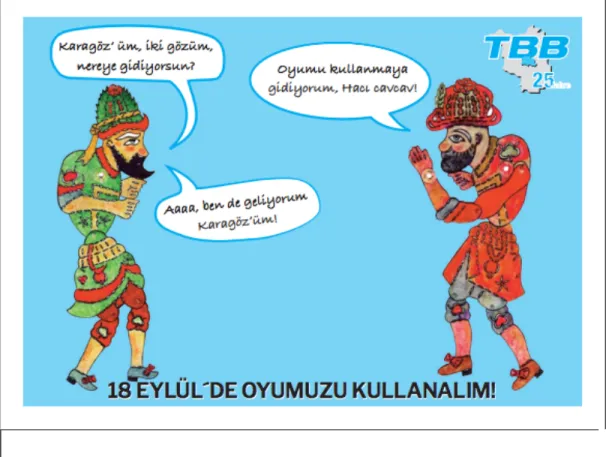
While the press releases often link readers directly to relevant reports, public letters and further reading material, the newsletters and social media pages of the TBB serve a different purpose, mainly to encourage greater political engagement and participation amongst members while providing an image of the TBB to the public. The TBB led a large-scale “postcard campaign” prior to the Berlin regional elections, encouraging German-Turkish voters to make their voices heard. The postcards contained Turkish-language messages combined with Turkish cartoon imagery to encourage German-Turks to go to the polls.2 The TBB’s social media also
advertised the campaign and organized an election picnic on the day of the elections to encourage higher turnouts.
policy agenda, creating a feedback-loop between the formulation of political demands by the organization and political engagement by its community members and supporters.
4.3.2 Türkische Gemeinde zu Berlin (TGB)
The TGB focuses on a narrower set of issues in its press releases and policy demands; this is partly due to the fact that the TGB also concentrates on Turkish-Muslim political issues as opposed to the more broad, secular-oriented TBB. Thus, many of their political concerns address Islamophobia and the struggles of Muslim religious minority groups in Germany. The TGB also does not rely as heavily on press releases to disseminate information to the public, though the press releases available do provide strong evidence of the TGB’s positions and policy demands. For the same time window, the TGB published only 10 press releases, of which 5 contained relevant content pertaining to discourses of belonging. All of the relevant press releases focused on integration, and each one also takes the paradigm of integration as compromise, whether this comes in the form of calls to denounce German right-wing politics as anathema to integration and German democratic values, or demands for anti-discrimination legislation and greater involvement of MOs in policy formulation. Three entries emphasized the importance of political participation through demonstrations and voting and demanded more local voting rights for non-citizens, demonstrating the strong support for citizenship practice and participation, regardless of citizenship status. Finally, the TGB also strongly emphasizes representation as the best form of integration, calling for Muslim representation in a number of public administrative branches and notably also on public radio stations.
with the TBB, the TBB tend to criticize center-right parties more for appeasing AfD supporters while the TGB views the AfD and its anti-Muslim stances as a direct threat to both the Muslim community and German democratic values. The TGB invokes German values of tolerance, mutual respect and religious freedom to condemn the AfD’s stances and suggests that the party is creating a conflict where there has predominantly been peaceful coexistence for over 50 years. By presenting the AfD as anti-democratic, the TGB positions itself in contrast as a democratic actor fully aware of Germany’s democratic norms and freedoms. This serves once again to challenge conventional discourses about integration and German national identity; furthermore, this stance attempts to turn nativist, anti-Muslim sentiment on its head as evidence of poor integration and a deficient understanding of German culture and values on the part of right-wing supporters. Invoking German democratic values thus allows the TGB to present itself as an actor that is well-integrated enough to understand the foundation of liberal, democratic German society and also to recognize threats toward German values (Türkische Gemeinde zu Berlin e.V. 2016-2017a; c; d).
Yet the TGB also criticizes current integration policy and aligns with the TBB in its demands for more anti-discrimination legislation and reforms to the neutrality laws that
be re-evaluated by German policymakers and institutions and reviewed for their own implicit bias. Structural barriers, like the neutrality laws, must be modified or removed to create equal grounds for Muslims in German society. For this reason, while the TGB sees the importance of continued integration work, they also challenge the current integration concept so that
policymakers are pushed to re-evaluate whether current policies make full incorporation possible for the groups from which it demands better integration.
For these reasons, in its set of policy demands for Berlin’s ruling parties, the TGB proposes the creation of more institutional structures for a variety of MOs to be involved in integration policy formulation. The combination of MOs’ links to migrant communities, migration and integration experience and organizational competencies uniquely position those organizations to offer integration assistance and formulate integration initiatives and goals. The TGB frames this not only as a resource they can offer society, but also as an act of deeper incorporation for the MOs themselves. Therefore, they call for an expansion of sustainable structures and resources for integration work by MOs, more community engagement with and through MOs, and more initiation by existing integration-focused state institutions for
cooperation with MOs. The TGB expresses a vision of more collaborative, two-way integration process by arguing that such measures would also give majority-groups in society more access to intercultural engagements.
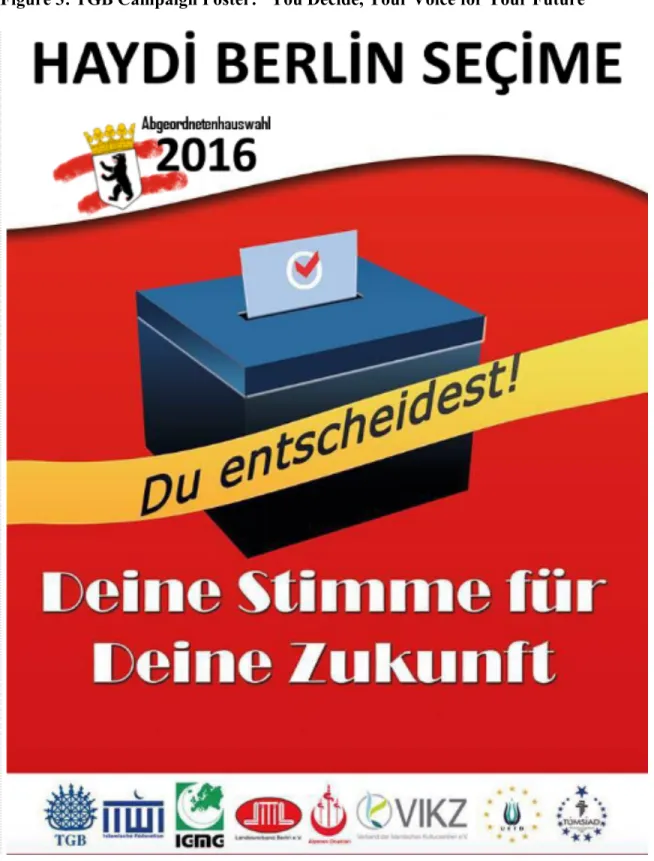
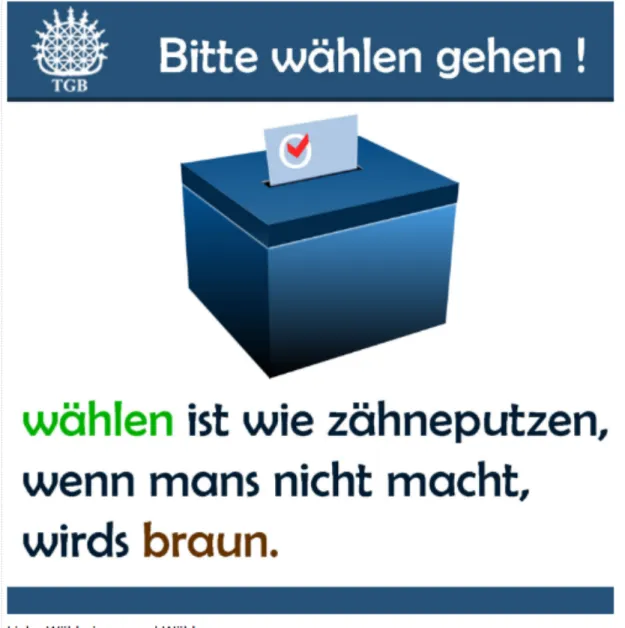
your future” for Berlin’s regional elections. Another makes a reference to the danger of AfD, noting its strong results in another German state and warning that “Voting is like brushing your teeth, if you don’t do it, they’ll turn brown!” (Brown is a reference to the color of the NSDAP) (Türkische Gemeinde zu Berlin e.V. 2016-2017a).3 An important item on TGB’s policy agenda is securing communal voting rights for non-citizens. This is also evidence of the TGB’s
encouragement of a practiced citizenship; maintaining transnational ties to Turkey is important for the TGB, but their claims for communal voting rights also demonstrate that Turkish
citizenship should not prevent migrant communities from being active, engaged citizens in local German politics.
Finally, the TGB adheres to the idea that representation is the best form of integration by demanding more Muslim representation in public service positions, specifically in the advisory council of Berlin’s public radio and to sit on Berlin’s commission for hardship cases. They argue that Muslim representation in Berlin’s public radio is an important step towards equal
representation and will help avoid misrepresentations of Islam and Muslims, therefore changing or avoiding the production of negative, Islamophobic discourses on public informational
channels. Likewise, representation on the hardship case commission would be important because many applicants to the commission come from the Muslim community and a representative would have more contextual knowledge and social and religious competency concerning the issues that Muslims might bring before the commission. Several of the TGB’s projects also cooperate with other public service branches, like the police and fire department, in order to create initiatives to boost the number of applicants from young people with migration
public schools, is linked to a petition on the TGB’s website (Türkische Gemeinde zu Berlin e.V. 2016-2017e). Greater incorporation of the German-Turkish Muslim community in many
5. CONCLUSIONS
My case study shows that the two organizations selected share many common political positions and goals pertaining to citizenship, German national identity, immigration and
integration. The issues particularly revolve around problematic integration politics; both groups challenge conventional, one-sided integration discourses and demand changes to current
integration policies with the goal of facilitating better incorporation and political participation opportunities by removing barriers of a discriminatory nature. Thus public debates about these various “discourses of belonging” inevitably return to ill-fitting approaches toward integration as the root problem. My research shows Turkish MOs in Berlin making significant claims to
owning and finding solutions to such problems in the policy realm. Not only do they see themselves as political actors in the discussion about integration policy’s failings, they see themselves as policy partners whose unique and long-standing experience with German
integration policy puts them in a position to propose reforms toward more effective integration politics. They display extensive engagement in policy feedback cycles, through which they make demands on their policymakers, track their commitment to policy changes, and in the meantime, constantly offer criticisms of undesirable policies alongside proposals for better solutions.
advocates more pathways to official citizenship. The focus of both MOs on increased
opportunity for participation regardless of citizenship status and greater representation displays, in fact, a deeply integrative character of Turkish MOs in Berlin, serving as a rebuke to the idea that such groups seek to seal themselves off from society. Rather, the evidence supports my argument that MOs are not only integrative, but also seek to change unsatisfactory discourses of belonging by structurally involving MOs in the formulation of more effective integration policies that facilitate deeper political incorporation and more equal participation of migrant groups in German society.
Thus when it comes to discourses of belonging and policy reflections of these discourses, Turkish MOs seek to play a transformative role. They seek to transform and open up notions of German national identity when they claim that German-Turks can be both transnational as well as loyal and active citizens of the German state. They seek to transform the idea of citizenship as something that can be practiced, even when it is officially withheld, by encouraging migrant communities to vote, demonstrate, sign petitions and make demands on their policymakers. Their demands for communal voting rights enshrine this idea of a practiced, active citizenship so that even non-citizens can become more incorporated into their local polities. Most importantly, they seek to transform the integration discourse by reconceiving it as policy hinged upon compromise that comes in the form of greater recognition, representation and extra protections for minority groups from discrimination in German society. Turkish MOs display their willingness to engage as active civil society institutions whilst they make continued demands on the German state to meet them halfway with the reform of integration policy measures.