ORIGINAL RESEARCH ARTICLE
Evaluation of the Krio Language Version of the London Measure of
Unplanned Pregnancy in Western Area, Sierra Leone
DOI: 10.29063/ajrh2019/v23i4.10
Nataliya Brima
1,2*, Thomas T. Samba
3, Anita Yamba
4, Geraldine Barrett
5, Judith Stephenson
5and Jennifer Hall
5King‘s Centre for Global Health & Health Partnerships, School of Population Health & Environmental Sciences, Faculty of Life Sciences and Medicine, King‘s College London, Room 2.10, Global Health Offices, Weston Education Centre, Cutcombe Road, London, SE5 9RJ1; UCL Centre for the Health of Women, Children and Adolescents, Institute for Global Health, University College London, 3rd floor, Institute of Child Health, 30 Guilford Street, London WC1N 1EH, United Kingdom2; District Management Health Team Office, Ministry of Health and Sanitation of Sierra Leone, PMO, Cline Town by Queen Elizabeth Quay, Freetown, Sierra Leone3; Pharmacy Board of Sierra Leone, Central Medical Stores Compound, New England Ville, Freetown, Sierra Leone4; EGA Institute for Women‘s Health, University College London, Medical School Building, 74 Huntley Street, London, WC1E 6AU, United Kingdom5
*For Correspondence: E-mail: [email protected]; Phone: +4407930271138
Abstract
New ways of measuring pregnancy planning/intention such as the London Measure of Unplanned Pregnancy (LMUP), which recognise the complexity of the construct, are being adopted worldwide. The aim of this study was to evaluate the psychometric properties of the Krio version of the LMUP in Sierra Leone. An interviewer-administered version of the LMUP was translated into Krio and pre-tested with 12 pregnant women. Field testing involved 172 pregnant women aged 15–42, with 87 completing a re-test. Completion rates of LMUP items were 100%. LMUP scores 1-12 were captured. Reliability: the scale was internally consistent (Cronbach‘s alpha 0.84) and stable (weighted Kappa 0.93). Construct validity: all hypotheses were confirmed. Principal components analysis revealed five items (items 2-6) related to one construct. Mokken scaling procedure selected the same five items. Removal of item 1 (which had 97% endorsement of the ‗no contraception‘ response option) brought about only a very slight improvement in LMUP performance, therefore we recommend retaining all six items. The Krio LMUP is reliable, valid and suitable to use in Sierra Leone. (Afr J Reprod Health 2019; 23[4]:81-91).
Keywords: Pregnancy, psychometric validation, Sierra Leone, unplanned pregnancy, Krio
Résumé
De nouvelles façons de mesurer la planification / l'intention de la grossesse telles que la Mesure de Londres de la grossesse non planifiée (MLGNP), qui reconnaissent la complexité de la construction, sont adoptées dans le monde entier. Le but de cette étude était d'évaluer les propriétés psychométriques de la version Krio de la MLGNP en Sierra Leone. Une version de la MLGNP administrée par un intervieweur a été traduite en Krio et pré-testée auprès de 12 femmes enceintes. Les tests sur le terrain ont impliqué 172 femmes enceintes âgées de 15 à 42 ans, dont 87 ont effectué un nouveau test. Les taux d'achèvement des articles MLGNP étaient de 100%. Les scores MLGNP 1-12 ont été capturés. Fiabilité: l'échelle était cohérente en interne (alpha 0,84 de Cronbach) et stable (Kappa pondéré 0,93). Validité de construction: toutes les hypothèses ont été confirmées. L'analyse des composantes principales a révélé cinq éléments (éléments 2 à 6) liés à une construction. La procédure de mise à l'échelle Mokken a sélectionné les cinq mêmes éléments. La suppression du point 1 (qui avait approuvé à 97% l'option de réponse «sans contraception») n'a entraîné qu'une très légère amélioration des performances de la MLGNP, nous recommandons donc de conserver les six points. La version Krio de la MLGNP est fiable, valide et adaptée à une utilisation en Sierra Leone. (Afr J Reprod Health 2019; 23[4]: 81-91).
Introduction
As of 2017, 885 million women of reproductive age (15–49) living in low and middle income countries (LMICs) wanted to avoid a pregnancy, yet 214 million of these women were not using a modern contraceptive method1, i.e. they have an unmet need for modern contraception. Data for 2015 show that the highest level of unmet need is in West and Central Africa (24%)2 where unmet need has not declined, unlike other areas2. Of the estimated 206 million pregnancies in 2017 in LMICs, 43%, or nearly 89 million, were unintended1. Also in 2017, an estimated 308,000 women in LMICs died from pregnancy-related causes, and 2.7 million babies died in the first month of life1; sub-Saharan Africa carries a disproportionate burden of maternal and neonatal deaths and teenage pregnancy. Up to 44% of maternal deaths could be averted through full access to certain vital services: contraceptive care to help women avoid unintended pregnancies, and maternal and newborn health care to help mothers and newborns through pregnancy, delivery and the postnatal period1,3.
Unintended pregnancy is high on the agenda of many countries globally and particularly in LMICs. Reduction of unintended pregnancy is key for achieving Sustainable Development Goals 3 (Good Health and Wellbeing) and 5 (Gender Equality) by 20304.
Unintended pregnancy exposes women
unnecessarily to the risks of morbidity and mortality associated with pregnancies in general, and risks that are linked directly to unintended pregnancy, such as adverse effects due to unsafe abortion5, delayed antenatal care6,7 and reduced educational opportunities and financial situation for the woman7. The health of the child may also be affected as adverse pregnancy outcomes appear to be more common in unintended pregnancies6. Furthermore the child is less likely to complete vaccination during childhood, and more likely to have poor child growth (stunting)7. Meeting girls' and women's need for contraception and improving their access to sexual and reproductive health care will increase their chances for education, ensure healthy lives and promote well-being for them, their children
and their families and provide a foundation for sustainable development at local, national and global levels8-10.
A better understanding of women‘s behaviour and their reproductive intentions is needed to improve the sexual and reproductive health (SRH) and rights of women and young people and meet their need for family planning4. Now, estimates of the level of unplanned pregnancy in LMICs are based on a two-part question in the Demographic and Health Survey (DHS). However, there is increasing acceptance of the need to use more sophisticated methods to measure this complex construct11-18.
A tool to measure pregnancy intention has been developed by researchers in the United Kingdom; the London Measure of Unplanned Pregnancy (LMUP)11. It has already been translated, validated and used in several countries around the world19-28. The LMUP consists of six questions covering contraceptive use, timing, intention, desire for a baby, discussion with the partner and pre-conception preparation (see http://www.lmup.org for the full English version). The answers to those questions are converted into a total score from zero to 12, with 0 meaning most unplanned and 12 most planned11. Importantly, the LMUP allows women to express ambivalence, mixed feelings or contradictory ideas, rather than forcing women to categorise their pregnancy as planned or unplanned. The scale‘s world-wide usage has shown that the LMUP is a simple and reliable method for assessing unplanned pregnancies and can be used to measure pregnancy intention in a wide range of settings. However, any measure needs to be translated and validated before being used in a new context.
aged 15-19 years have either begun childbearing or are pregnant, the seventh highest rate among LMICs30.
This research was conducted in Western Area, which is one of four principal divisions of Sierra Leone. Western Area is the most densely populated area in Sierra Leone and home to a third of the total population of the country. During and after the ten-year civil war, rural migrants escaping violence settled in Western Area creating large urbanised settlements with squalid living conditions. Extremely overcrowded, with low-quality housing, limited access to clean water and safe sanitation, these slums represent the most vulnerable neighbourhoods of Freetown. Western Area is divided into two districts: the Western Area Rural and the Western Area Urban, with a population of 444,270 and 1,055,964, respectively and with 25.7% and 27.5% of those populations being women of childbearing age31. The most widely spoken language in Sierra Leone and Western Area is Krio. In this study our aim was to translate and validate the LMUP for use in the Krio language in Sierra Leone using classical and modern test theories.
Methods
As the literacy level in Sierra Leone is low30, it was not feasible to use the original version of
LMUP, which was designed for
self-administration. Therefore, we started with the Indian-English version that was adapted for interviewer administration19 and question six was adapted to LIC setting context using our experience from Malawi21. We sent this version to a native Krio speaker (a female with extensive experience in health research) who translated it into Krio. Before she commenced the translation, we provided her with a synopsis of the LMUP. A working group was created to review the translation. The English and Krio versions of each question were read at a working group meeting. Each member of the group was asked to translate the question back from Krio to English and the translation was compared and corrected as necessary before agreeing and approving it. The working group consisted of the original translator, the District Medical Officer of Western Area (a
medical doctor), a locally trained nurse-midwife, a Community Health Assistant (a qualified nurse), a Community Chief Deputy (a local leader) and three representatives of the public, (a local father, mother and a church pastor), plus NB from UCL.
Data collection was carried out at Waterloo Community Health Centre (WCHC) in Waterloo, the second largest city in Western Area after Freetown. This is the largest Health Centre in the area, covering both Rural and Urban areas. We pre-tested the Krio LMUP using cognitive interviewing techniques. Pregnant women and women with babies of up to six months old were recruited for these interviews from WCHC antenatal and under five clinics. The purpose of these interviews was to determine how easy it was for women and girls to understand the questions, to further check the translation and to see if the questions were acceptable.
After finalising the Krio LMUP32, we field-tested it at antenatal and under five clinics at WCHC. The translator and two of her colleagues, all of whom were native Krio speakers and had experience in data collection, were trained by NB to conduct the interviews. All women who were either pregnant or had a baby under six months old, who were aged 15 or over and were attending any one of the clinics on 22nd, 25th, 29th September and 2nd October 2017 were invited to participate. Our target sample size was 100 with a minimum of 50 completing a re-test within 14 days33.
women in the clinic were offered drinking water while waiting to be interviewed. We gave participants a unique identification number on a card and asked them to bring it with them on their return. We used this number to link the test and re-test data, as their questionnaires were completely anonymised.
We recorded the respondent‘s answers on a paper version of questionnaire. Data was inputted into a password protected Excel spreadsheet that was saved on the UCL drive, 30% records were cross-checked at random to check for and eliminate data entry errors.
Analysis of psychometric properties
To assess acceptability, we used feedback from the cognitive interviews as well as examining missing data rates, with no missing data indicating greater acceptability34. To assess item discrimination, we checked the item-endorsement values to ensure that no item had endorsement of over 80%33. We evaluated targeting of the scale and confirmed the range of scores by reviewing the total score distribution.
To assess reliability, we evaluated internal consistency by calculating the standardised Cronbach‘s α (alpha) statistic using the standard cut off point of 0.735. Furthermore, we examined all item-rest correlations and we considered a minimum correlation of 0.20 to be acceptable36. We assessed test-retest stability with weighted kappa, a score above 0.60 was considered substantial37. These cut off points are the same as those used in previous validations20,21,23.
We examined construct validity by two methods: hypothesis testing and principal component analysis. We generated the hypotheses by adapting those that were previously used in LMUP validations to suit the Sierra Leone context11,19-23. The three main hypotheses were: pregnancies will be reported as more unplanned (i.e. LMUP score will be lower) in women 1) with three or more live children; 2) who are unmarried; or 3) who are aged under 22 (the median age in our sample) or over 30. We tested the hypotheses using non-parametric testing (Mann Whitney U). To evaluate the internal structure of the LMUP we used Principal Component Analysis (PCA).
If all items loaded onto one component with an Eigenvalue larger than one (i.e. are measuring the same construct), the scale would be considered valid34. Based on our findings, we decided to conduct a sensitivity analysis to see if, by removing the first question (contraception use), the validity of the scale would be affected.
In addition, we performed further analysis based on modern test theory. To examine the full dataset, we carried out a Mokken scaling procedure (monotone homogeneity assumption). Items with a Loevinger H coefficient >0.3 were eligible for scaling38,39. We used Loevinger H coefficient to assess the whole scale (Loevinger H <0.4 meaning the scale is ―weak‖, 0.4 to 0.49 meaning the scale is ―medium‖, and ≥0.5 meaning the scale is ―strong‖)38
.
We used STATA 14 (Stata Corp. 2005. Statistical Software: Release 9.0. College Station, TX: Stata Corporation) for all analyses.
Results
Pre-testing
We conducted cognitive interviews on twelve women attending the WCHC antenatal or under five clinics. The women‘s median age was 23 (range 18 – 37) and one quarter of the women were married. Two of them reported ‗no education‘, three ‗primary‘ and seven ‗secondary‘ as highest education; the number of previous pregnancies was between zero and four, and women were between six and nine months pregnant (n=8) or had a baby between three and six months old (n=4).
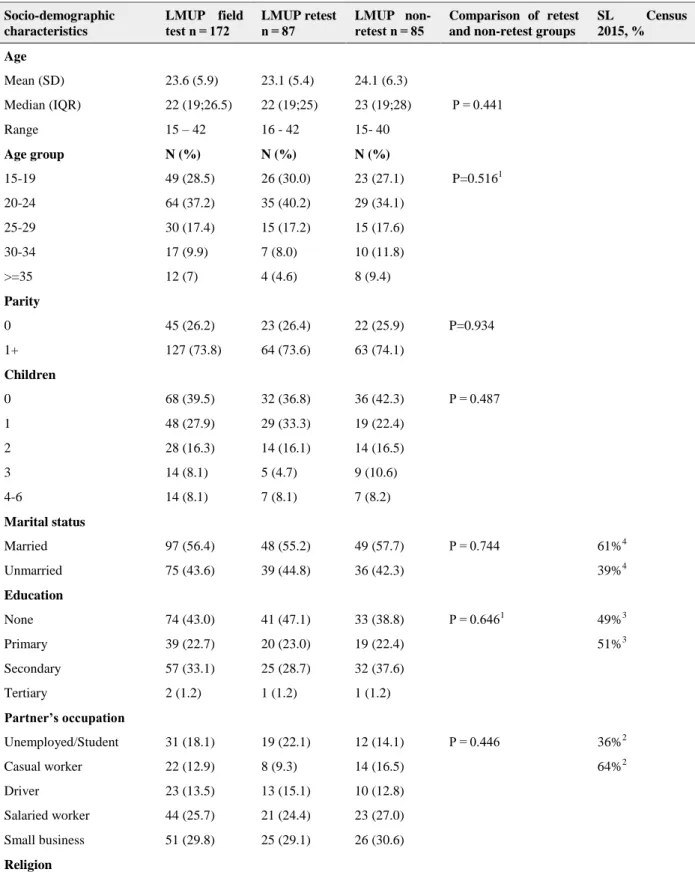
Table 1: Characteristics of women completing the London Measure of Unplanned Pregnancy (LMUP) field test and re-test compared to the general population of Sierra Leone30
Socio-demographic characteristics
LMUP field test n = 172
LMUP retest n = 87
LMUP non-retest n = 85
Comparison of retest and non-retest groups
SL Census 2015, %
Age
Mean (SD) 23.6 (5.9) 23.1 (5.4) 24.1 (6.3)
Median (IQR) 22 (19;26.5) 22 (19;25) 23 (19;28) P = 0.441
Range 15 – 42 16 - 42 15- 40
Age group N (%) N (%) N (%)
15-19 49 (28.5) 26 (30.0) 23 (27.1) P=0.5161
20-24 64 (37.2) 35 (40.2) 29 (34.1)
25-29 30 (17.4) 15 (17.2) 15 (17.6)
30-34 17 (9.9) 7 (8.0) 10 (11.8)
>=35 12 (7) 4 (4.6) 8 (9.4)
Parity
0 45 (26.2) 23 (26.4) 22 (25.9) P=0.934
1+ 127 (73.8) 64 (73.6) 63 (74.1)
Children
0 68 (39.5) 32 (36.8) 36 (42.3) P = 0.487
1 48 (27.9) 29 (33.3) 19 (22.4)
2 28 (16.3) 14 (16.1) 14 (16.5)
3 14 (8.1) 5 (4.7) 9 (10.6)
4-6 14 (8.1) 7 (8.1) 7 (8.2)
Marital status
Married 97 (56.4) 48 (55.2) 49 (57.7) P = 0.744 61%4
Unmarried 75 (43.6) 39 (44.8) 36 (42.3) 39%4
Education
None 74 (43.0) 41 (47.1) 33 (38.8) P = 0.6461 49%3
Primary 39 (22.7) 20 (23.0) 19 (22.4) 51%3
Secondary 57 (33.1) 25 (28.7) 32 (37.6)
Tertiary 2 (1.2) 1 (1.2) 1 (1.2)
Partner’s occupation
Unemployed/Student 31 (18.1) 19 (22.1) 12 (14.1) P = 0.446 36%2
Casual worker 22 (12.9) 8 (9.3) 14 (16.5) 64%2
Driver 23 (13.5) 13 (15.1) 10 (12.8)
Salaried worker 44 (25.7) 21 (24.4) 23 (27.0)
Small business 51 (29.8) 25 (29.1) 26 (30.6)
Socio-demographic characteristics
LMUP field test n = 172
LMUP retest n = 87
LMUP non-retest n = 85
Comparison of retest and non-retest groups
SL Census 2015, %
Christianity 56 (32.6) 27 (31.0) 29 (34.1) P=0.666
Islam 116 (67.4) 60 (69.0) 56 (65.9)
Tribe
Temne 75 (43.6) 37 (42.5) 38 (44.7) P=0.853
Mende 34 (19.8) 16 (18.4) 18 (21.2)
Limba 26 (15.1) 13 (14.9) 13 (15.3)
Other 37 (21.5) 21 (24.2) 16 (18.8)
Residence
Western Rural 127 (73.8) 70 (80.5) 57 (67.1) P=0.046
Western Urban 45 (26.2) 17 (19.5) 28 (32.9)
1Fisher exact test, the rest are Chi sq test 2
% is given as a proportion of total working age (15-64) males unemployed/full time students vs employed 3
% is given as a proportion of total females 3 years and above never vs ever attended any school level. 4
% is given as a proportion of total females 10 years and above ever vs never married
Figure 1: Frequency distribution of Krio LMUP score
added the following prompt questions after the first question: what contraception method did you use? when did you stop using it? and why did you stop using it? Based on these questions the interviewer then agreed with the woman which the correct response was.
We also altered some options of question six on pre-pregnancy preparations. Firstly, most women were not aware of folic acid specifically. After some further discussion with women and
local midwifes we rephrased this option to ‗took folic acid or any other vitamins‘ Secondly, we added more contextually relevant option ‗kept money, bought clothes for the baby‘, similar to the Malawi version of LMUP.
Field-test: women’s characteristics
We collected data from 172 women, which was much higher than our target of 100. Women were aged from 15–42 (median 22, mean 23.6) and
0
10
20
30
40
F
re
q
u
e
n
cy
0 12
lmup_score
almost two-thirds had primary education or less. Over half of women (56%) were married and they had between zero and six live children (median 1) (see Table 1).
Field test: psychometric properties
We had no missing data and all items apart from item one had responses with less than 80% endorsement. Item one (contraception in the month before pregnancy) had 97% endorsement of the response option of not using contraception. The range of LMUP scores from one to twelve was captured in the field test (see Figure 1). The median score was seven.
The whole scale Cronbach‘s α was 0.84 The item-rest correlation was low for question one (0.04), above 0.7 for questions two to five and acceptable for question six (0.49) (see Table 2).
Just over a half of the sample (87 women) returned for the re-test. There was no significant difference in terms of age, parity, number of live children, marital status, education, partner‘s occupation, religion or tribe between groups of women that returned and did not return for re-test (see Table 1). These two groups were found to be significantly different by residence (p=0.046). This may be because we had a limited amount to offer to cover transport cost and for those women who lived further from the Health Centre it may not have been enough.
The test-retest interval ranged from 5-10 days and mean was seven days. The median difference in the scores at test and re-test was zero (mean 0.08). The stability was excellent (weighted κ = 0.92).
All our hypotheses were confirmed: women who already had three or more children alive (p = 0.0046), unmarried women (p=0.0001), and women who were below 22 or over 30 (p = 0.0136) were all more likely to report their pregnancies as more unintended (see Figure 2).
PCA showed that five items were measuring one construct as they loaded onto one component which had an Eigenvalue of 3.7. There was a second component which was of borderline significance as it had an Eigenvalue of 1.00. This component mainly represented item one (contraception), with a loading of 0.99 from this item (as shown in Table 2).
Field test: sensitivity analysis
We re-analysed the LMUP without item one (contraception) because of the low item-rest correlation and PCA findings. Removing this item meant that the LMUP scores reduced to zero to 10 and the median score fell to four. There was an increase in Cronbach‘s α from 0.84 to 0.91 and on PCA the first component had an Eigenvalue of 3.73 with no significant second component. All hypothesis tests were still statistically significant (data not shown).
Field test: scaling
The Mokken analysis showed that items differed in their ‗difficulty‘, with item one (contraceptive use) being easiest to endorse, followed by items two, four, five, and three, and item six (pre-conceptual preparations) as hardest to endorse. The items conformed to a basic Guttmann structure (Table 2). The Mokken scaling procedure selected five items into the scale (H = 0.81 for whole scale), as item one missed selection with a Loevinger H coefficient =0.21. However, even with item one included, the Loevinger H coefficient for the overall 6-item scale was still strong at 0.80.
Discussion
Item one had high endorsement of one response option because most of the women, regardless of
Figure 2: Total LMUP score by - a) number of living children; b) marital status; c) age group
Table 2: Principal component and Mokken analysis of Krio London Measure of Unplanned Pregnancy
PCA
Component (Eigenvalue = 3.7) 1 Component (Eigenvalue = 1.0) 2 Mokken
Items Item-rest
correlations Item loadings Item loadings Loevinger H
1 – Contraception 0.045 0.03 0.99 0.21
2 – Timing 0.882 0.48 -0.03 0.83
3 – Intention 0.882 0.48 -0.04 0.83
4 – Desire 0.878 0.48 -0.05 0.85
5 – Partner 0.774 0.45 -0.03 0.76
6 - Preparation 0.492 0.31 0.14 0.68
their pregnancy intentions did not use contraception in the month before pregnancy. This
who have never used any modern method of contraceptives in their life (86%)40 and very high discontinuation rate among women (76%)41 due to fear of infertility, unavailability and misunderstanding of side effects.
There is now mounting evidence that item one (contraception) has a weaker association with intention to become pregnant than was seen in the original development study. This is likely to be due to the higher levels of unmet need for family planning in these settings, which means that many women are not using contraception (and score two on item one) but are otherwise not planning a pregnancy (and score lowly on the other questions). This leads to results like ours of low item-rest correlation and a second component on PCA. The sensitivity analyses in our study and the Malawi evaluation21 and the Mokken analyses in our study and the USA evaluation20 all show an improvement in the psychometric properties of the scale with item one removed. However, they also show that the measure is still strong if item one remains in. Furthermore, item one is one of the two items relating to the behaviour component of the conceptual model underpinning the development of the LMUP. The qualitative groundwork showed that behavioural items did have content validity; indeed, the fact that there is variability in these items across different contexts shows their relevance to the concept. This leads us to conclude that item one should remain in the scale.
Ethical Approval
The ethical approval for this study was granted by the University College London Research Ethics Committee (Ethics Application 10663/00) and Ministry of Health and Sanitation of Sierra Leone Research Ethics Committee. The District Medical Officer and the Community Health Officer in charge of the WCHC gave approval to conduct the research in Western Area antenatal clinics.
Limitations
The main limitation of this study was that we were not able to test Krio LMUP on women who were planning to have or had had an abortion, because
abortion is illegal in Sierra Leone. However, as the original UK version of LMUP development and validation included abortion as an outcome, the Krio LMUP could be used in these women11. Another possible limitation was that, because 3% of women do not attend antenatal care during pregnancy28, we may have missed women who are different in important ways because we recruited our women during antenatal clinics. In particular, we may have missed those with the most unplanned pregnancies (leading to birth), as these women are known to be less likely to attend antenatal care42, and this may also explain why we had no women with an LMUP score of zero. However, since we also recruited from postnatal baby clinics (which 97% of women attend), this limitation may be partially mitigated.
Conclusion
Our results show that the Krio LMUP is a valid and reliable measure of pregnancy intention that can be used in Sierra Leonean women. It has a slightly weaker performance than the original UK version, however, it performs as well or better than most other translations to date. This successful validation of the Krio LMUP contributes to a wider body of work relating to the LMUP, continuing to demonstrate its relevance and utility worldwide. The LMUP is a comprehensive measure covering all aspects of pregnancy intention that allows us to ‗draw‘ a fuller picture of pregnancy intention and planning. It can provide critical insight for studies on unmet need for family planning, understanding of pregnancy planning behaviour and intention, relationships between pregnancy intentions and maternal and neonatal health outcomes and abortion in Sierra Leone and can be used to help the government of Sierra Leone to tailor national programmes for provision of family planning services in the country.
Contribution of Authors
protocol, data collection tools and analysis plan. NB led and co-ordinated in-person all in-country activities under the supervision of JH. AY and TTS translated and contributed to pre-testing the questionnaire. AY co-ordinated the field work, NB and AY, with support of two data collectors, conducted the interviews, TTS provided technical advice and local expertise and facilitated in-country arrangements with MoH and health facilities. NB analysed the data under the supervision of GB and JH. NB and JH wrote the first draft and all authors commented on successive drafts of the paper and approved the final version.
References
1. Guttmacher Institute. Adding It Up: Investing in Contraception and Maternal and Newborn Health, 2017. https://www.guttmacher.org/fact-sheet/adding-it-up-contraception-mnh-2017. Accessed 2 March 2019.
2. United Nation Population Fund. Universal Access to
Reproductive Health.
http://www.unfpa.org/sites/default/files/pub-pdf/UNFPA_Reproductive_Paper_20160120_onlin e.pdf. Accessed 2 March 2019.
3. Ahmed S, Li Q, Liu L and Tsui AO. Maternal deaths averted by contraceptive use: an analysis of 172 countries. Lancet 2012; 380.
4. United Nations Development Programme. Sustainable
Development Goals (see
https://sustainabledevelopment.un.org for related resources collated by United Nations SDG Knowledge Platform, accessed 7th January 2018). Geneva: United Nations, 2015.
5. Sciarra JJ. Global issues in women's health. International Journal of Gynecology & Obstetrics. 2009;104(1):77.
http://dx.doi.org/10.1016/j.ijgo.2008.09.001. Access ed 2 March 2019.
6. Hall JA, Benton L, Copas A and Stephenson J.
Pregnancy Intention and Pregnancy Outcome: Systematic Review and Meta-Analysis. Matern Child Health J. 2017;21(3):670-704. . Popul Stud (Camb). 2003;57(1):7-93
7. Tsui AO, McDonald-Mosley R and Burke AE. Family Planning and the Burden of Unintended Pregnancies. Epidemiol Rev. 2010;32(1):152–74. 8. United Nations Development Programme. Sustainable Development Goals. Knowledge Platform. Geneva:
United Nations, 2015.
https://sustainabledevelopment.un.org. Accessed 2 March 2019.
9. Brown W, Druce N, Bunting J, Radloff S, Koroma D, Gupta S, Siems B, Kerrigan M, Kress D and Darmstadt GL. Developing the "120 by 20" goal for
the Global FP2020 Initiative. Stud Fam Plann 2014; 45(1):73-84.
10. Singh S, Darroch JE and Ashford LS. Adding It Up: The Costs and Benefits of Investing in Sexual and Reproductive Health. New York: Guttmacher Institute; UNFPA, 2014.
11. Bachrach CA and Newcomer S. Intended pregnancies and unintended pregnancies: distinct categories or opposite ends of a continuum? Fam Plann Perspect 1999, 31(5):251–252.
12. Barrett G, Smith S and Wellings K. Conceptualisation, development and evaluation of a measure of unplanned pregnancy. J Epidemiol Community Health 2004, 58:426–433.
13. Barrett G and Wellings K. What is a 'planned'
pregnancy? Empirical data from a British study. Soc Sci Med 2002, 55:545–557.
14. Petersen R and Moos M: Defining and measuring unintended pregnancy: Issues and concerns. Women Health Iss 1997, 7(4):234–240.
15. Santelli J, Rochat R, Hatfield-Timajchy K, Gilbert B, Curtis KM, Cabral R, Hirsch JS and Schieve L. The Measurement and Meaning of Unintended Pregnancy. Perspect Sex Reprod Health 2003, 35:94–101.
16. Santelli JS, Lindberg LD, Orr MG, Finer LB and Speizer I. Toward a multidimensional measure of pregnancy intentions: evidence from the United States. Stud Fam Plann 2009, 40(2):87–100.
17. Speizer IS, Santelli JS, Afable-Munsuz A and Kendall C. Measuring factors under- lying intendedness of women's first and later pregnancies. Perspect Sex Reprod Health 2004, 36(5):198–205.
18. Stanford JB, Hobbs R, Jameson P, DeWitt MJ and Fischer RC. Defining dimensions of pregnancy intendedness. Matern Child Health J 2000, 4(3):183–189.
19. Rocca CH, Krishnan S, Barrett G and Wilson M. Measuring pregnancy planning: an assessment of the London measure of unplanned pregnancy among urban, South Indian women. Demogr Res. 2010; 23:293.
20. Morof D, Steinauer J, Haider S, Liu S, Darney P and Barrett G. Evaluation of the London Measure of Unplanned Pregnancy in the United States population of women. PloS One. 2012;7(4):e35381. 21. Hall J, Barrett G, Mbwana N, Copas A and Stephenson J.
Understanding pregnancy planning in a low-income country setting: validation of the London measure of unplanned pregnancy in Malawi. BMC Pregnancy Childbirth. 2013;13(1):200.
22. Roshanaei S, Shaghaghi A, Jafarabadi MA and Kousha A. Measuring unintended pregnancies in postpartum Iranian women: validation of the London Measure of Unplanned Pregnancy. EMHJ. 2015;21:8. 23. Borges ALV, Barrett G, dos Santos OA, Nascimento
NC, Cavalhieri FB and Fujimori E. Evaluation of the psychometric properties of the London measure
Portuguese. BMC Pregnancy Childbirth. 2016;16:244.
24. Habib MA, Raynes-Greenow C, Nausheen S, Soofi SB, Sajid M, Bhutta ZA and Black K. Prevalence and determinants of unintended pregnancies amongst women attending antenatal clinics in Pakistan. BMC Pregnancy Childbirth. 2017;17:156.
25. Almaghaslah E, Rochat R and Farhat G. Validation of a pregnancy planning measure for Arabic-speaking women. PLoS One. 2017;12(10)
26. Goossens J, Verhaeghe S, Van Hecke A, Barrett G, Delbaere I and Beeckman D. Psychometric properties of the Dutch version of the London Measure of Unplanned Pregnancy in women with pregnancies ending in birth. PLoS One. 2018; 13(4) 27. Lang AY, Hall JA, Boyle YA, Harrison CL, Teede H,
Moran LJ, Barrett G. Validation of the London Measure of Unplanned Pregnancy among pregnant
Australian women. 2019
https://doi.org/10.1371/journal.pone.0220774 28. Bukenya JN, Nalwadda CK, Neema S, Kyambadde P,
Wanyenze RK, Barrett G. Pregnancy Planning among Female Sex Workers in Uganda: Evaluation of the Psychometric Properties of the London Measure of Unplanned Pregnancy. AJRH. 2019; 23(3)
29. UNDP. Human Development Report 2016.
http://hdr.undp.org/sites/default/files/2016_human_ development_report.pdf. Accessed 2 March 2019. 30. Statistics Sierra Leone (SSL) and ICF International.
Sierra Leone Demographic and Health Survey 2013. SSL and ICF International. 2014. https://dhsprogram.com/pubs/pdf/FR297/FR297.pdf . Accessed 2 March 2019.
31. Statistics Sierra Leone (SSL). 2015 Population and
Housing Census. SSL.
2016.https://www.statistics.sl/wp- content/uploads/2017/01/final-results_-2015_population_and_housing_census.pdf. Accessed 2 March 2019.
32. London Measure of Unplanned Pregnancy: Krio version.
2019. Available from:
www.lmup.org.uk/docs/LMUP_Krio.pdf (Accessed 10.11.2019
33. Roscoe J. Fundamental Research Statistics for the Behavioural Sciences. 2nd edition. New York: Holt Rinehart & Winston; 1975.
34. Loewenthal K. An introduction to psychological tests and scales. 2nd edition. London: Psychology Press; 2001.
35. Streiner D and Norman G. Health Measurement Scales: a practical guide to their development and use. 4th edition. Oxford: Oxford University Press; 2008. 36. Cronbach LJ. Essentials of psychologic testing. 5th
edition. New York: Harper & Row; 1990. 37. Landis J and Koch G. Measurement of observer
agreement for categorical data. Biometrics 1977, 33(1):159–174.
38. Kline P. The new psychometrics: science, psychology and measurement. London: Routledge; 1998. 39. Mokken RJ, editor. A theory and procedure of scale
analysis. Berlin, Germany: De Gruyter. RJ Mokken1971A theory and procedure of scale analysisBerlin, GermanyDe Gruyter 1971
40. UNFPA Sierra Leone. Investing in family planning is key to saving women‘s lives in Sierra Leone. 2017. http://sierraleone.unfpa.org/en/news/investing- family-planning-key-saving-women‘s-lives-sierra-leone. Accessed 2 March 2019.
41. UNAIDS. Uptake and discontinuation of long-acting reversible contraceptives (LARC) in Low-income. 2015.
https://dhsprogram.com/pubs/pdf/AS54/AS54.pdf. Accessed 2 March 2019.