July,
1968
CD
Maybevou.'never·thought you
ager .ota ietaildairy store in\
communications.
Butit's happening right now a
stores operated by High's Dairy
fWashington, D.C.
metropolitan
~
Thissystem for ordering daid
pies standard Touch-Tone$ phone
Istore and the computer center
a
Instead of writing out all the
item~manager calls the computer cente,
regular telephone network-and
i:conFUTERS
AnD
1\
U
TOn
r\
T 1 0 i l
JULY, IP68
.65
'nt is the ma n
yith communi·
~ms.
Not
another disk
pack?
We're not satisfied just to lease
or sell you an Audev Disk Pack.
Maybe you won't be satisfied
just to have a unit that meets
the most exacting physical and
magnetic parameters in the
industry? Possibly, you need
more than Audev's complete
compatibility with all existing
100 and 200 track drives.
That's why a full measure of
old- fashioned Audev service is
packed with each Disk Pack.
Through the years, this desire
to give our customers better
service has helped us sell a lot of
computer tape. We expect to
sell a lot of Disk Packs too.
DISK PACKS AND COMPUTER TAPE •
AUdE!V~
Audio Devices, Inc., a subsidiary of Capitol Industries, Inc., 235 East" 42 Street, New York 10017Letters To The Editor
Computers and Education
The March issue of Computers and A utomation was especially interesting to me. I am a mathematics teacher in high school in suburban Minneapolis and have recently taken some computer courses and become interested in this area of mathematics-related work in high schools. The topic of "Computers and Education" decided for me that I would accept your invitation for com-ments and suggestions.
Are there any publications specializ-ing in computers and/or programmspecializ-ing for teachers? It seems to me that a good many math teachers might appre-ciate such a publication or such a de-partment in a current publication. If it were known by math teachers that such a department existed in a computer magazine it would be quite a good way to keep informed in the field and should be a good source of potential sub-scribers. Why not put such a depart-ment in C&A, make it known through such an organization as National Coun-cil of Math teachers, or the various state organizations of math teachers, and see if there is enough demand for a sec-tion aimed at secondary school use of computers and programming?
I enjoy your magazine and feel it is a good way of keeping informed on devel-opments in the field of programming at a nominal cost.
CHARLES HUTCHINSON Crystal, Minn. 55427
(Ed. Note - There are publications specializing in computers and program-ming for teachers and people in educa-tion, and there will be more and more. As to our having a department on this subject, we like your idea, and we will try to find someone who might handle this as a department.)
Notice to Ing Jaroslav Kucera,
Prague
We thank you for your letter of March 18, and we wish to reply to it - but your letter does not have your street address. Would you please tell us your street ad-dress?
The Editor
The Ten-Mile Gap -
Comments
I read with great interest the article in your March issue, "The Ten-Mile Gap - Part I: The Problem". I felt that the article clearly set out one of the major causes of unrest in our cities today. It is very encouraging to see someone in a position of responsibility take positive action to help correct some of our social problems today. While your article did not mention specific methods of overcoming the problem, I'm sure you are well aware that defining the problem is usually the hardest part of solving it.
I hope that this letter, along with any others that you may have received, will help spur you to greater efforts in attacking the problem created by those of us who do not have the proper at-titude toward social concern.
R. M. MERRITT Manager
ISD Systems & Procedures Wilcox Electric Company, Inc. Kansas City, Mo. 64127
Law and Computer Technology
It may please you to know that my article, "The Impact of Data Processing Technology on the Legal Profession", in your April issue has generated many more inquiries than the first publication of the article in a legal magazine.
If I write anything I think you might be interested in, I'll surely advise you. VAUGHN C. BALL
Univ. of Southern Calif. Law Center
Los Angeles, Calif. 90007
CAUML Comments
Your January editorial ("A::cess to Information and a Mailing List of All Computer People") has us in complete agreement. We would like to have our names included in your name and ad-dress files: . . .
I find your magazine very helpful in this rapidly changing field.
KENNETHW. KEMNER V ice President
Automated Data Processing, Inc. St. Mary's, Pa. 15857
©(Q)lnfl)D~M~@~§
and automation
Vol. 17, No.7 - July, 1968
Editor Edmund C. Berkeley
..t1ssociate Editor Sharry Langdale
Assistant Editors
Contribtttillg Editors
Adt'isory Committee
Art Directors
Fulfillment Manager
Moses M. Berlin Linda Ladd Lovett Neil D. MacDonald
John Bennett Andrew D. Booth Dick H. Brandon John W. Carr III Ned Chapin Alston S. Householder Peter Kugel Leslie Mezei Rod E. Packer Ted Schoeters
T. E. Cheatham, Jr. James J. Cryan Richard W. Hamming Alston S. Householder Victor Paschkis
Ray W. Hass Daniel T. Langdale
William J. McMillan
Advertising Representatives
NEW YORK 10018, Bernard Lane 37 West 39 St., 212·279·7281
CHICAGO 60611, Cole, Mason, and Deming 737 N. Michigan Ave., 312-787-6558
PASADENA, CALIF. 91105, Douglas C. Lance 562 Bellefontaine St., 213-682-1464
SAN FRANCISCO 94123, Richard C. Alcorn 2152 Union St., 415-922-3006
ELSEWHERE, The Publisher Berkeley Enterprises, Inc. 815 Washington St., 617-332-5453 Newtonville, Mass. 02160
Editorial Offices
BERKElEY ENTERPRISES, INC. 815 WASHINGTON STREET, NEWTONVILLE, MASS. 02160
CIRCULATION AUDITED BY AUDIT BUREAU OF CIRCULATIONS
COMPUTERS AND AUTOMATION IS PUBLISHED MONTHLY AT 815 WASHINGTON ST., NEWTONVillE. MASS. b2160, BY BERKElEY ENTER. PRISES, INC. PRINTED IN U.S.A. SUBSCRIPTION RATES, UNITED STATES, $15.00 FOR I YEAR, $29.00 FOR 2 YEARS, INCLUDING THE JUNE DIRECTORY ISSUE; CANADA, ADD 50¢ A YEAR FOR POSTAGE; FOREIGN, ADD $3.50 A YEAR FOR POSTAGE. ADDRESS ALL EDITORIAL AND SUBSCRIPTION MAIL TO BERKELEY ENTERPRISES, INC., 815 WASHINGTON ST., NEWTONVILLE, MASS .• 02160. SECOND CLASS POSTAGE PAID AT BOSTON, MASS.
POSTMASTER, PLEASE SEND ALL FORMS 3579 TO BERKElEY ENTER-PRISES, INC., B15 WASHINGTON ST., NEWTONVILLE, MASS. 02160.
(i) COPYRIGHT, 1968, BY BERKELEY ENTERPRISES, INC. CHANGE OF ADDRESS, IF YOUR ADDRESS CHANGES, PLEASE SEND US BOTH YOUR NEW ADDRESS AND YOUR OLD ADDRESS (AS IT APPEARS ON THE MAGAZINE ADDRESS IMPRINT), AND AllOW THREE WEEKS FOR THE CHANGE TO BE MADE.
July, 1968, Vol. 17, No.7 Ti.Jf 1l?1ga::::ine of tbe deJign. applicationJ. and implications of information pl'Ocessillg sJ'stemJ.
S pedal Feature:
Computer Installations: E.yperiellc('s and Lessons
18 PROGRAM GENERATORS: HOW GOOD ARE THEY?
by James R. Ziegler
When, where, and to what extent can program generators be used profitably? and some experiences showing that generators do have a valid place in software for many users.
22 THE IMPACT OF DIGITAL COMPUTERS UPON STEEL WORKS OPERATIONS
by W. E. Miller
How digital computers, used for process control, have, in a relatively short time, achieved a position of importance unparalleled by any other industrial change in the last four decades.
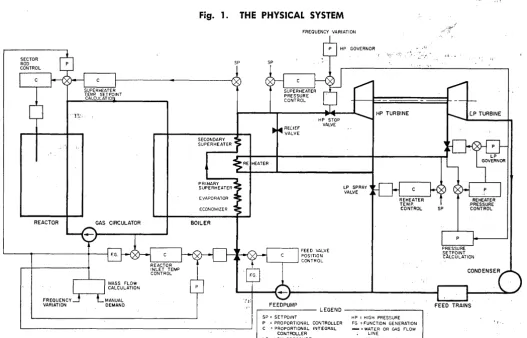
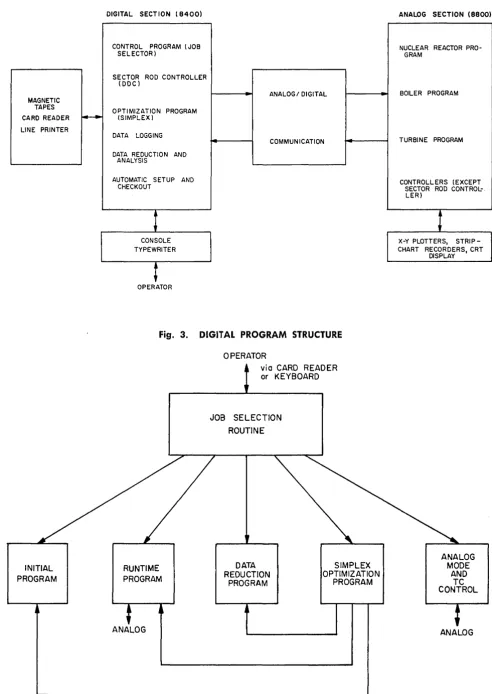
26 OPTIMIZATION OF A NUCLEAR POWER PLANT BY HYBRID COMPUTER
by Joseph J. Kovacs
How a study led to the use of a hybrid computer facility: the physical system; the programming techniques that produced the computer model of a nuclear po'ver plant; and the results of the study from both a computational and an engineering viewpoint.
34 SYSTEMS ANALYSIS, COMPUTERS, AND THE FUTURE OF PROFESSIONAL SERVICES
by Dr. Robert W. Krueger
An examination of the enormous and growing amount of work that needs to be done by firms engaged in professional systems analysis, with multi-disciplined professional staffs.
Regular Features
Editorial
6 Who's Who in the Computer Field - and Who Are the Distinguished Computer People?, by Edmund C. Berkeley
ComjJUta J1arket Report
32 American Dominance of World Computer Market, by Ted Schoeters
C&A
~Vorldu-,ide37 Report from Great Britain, by Ted Schoeters
Fifteen Years Ago in "Computers and Automation"
38 Computers in the Factory (Part 1), by David W. Brown
Jobs and CareErs in Data Processing
40 Long-Range Planning in Personnel: The Impact of the Computer, by Charles A. Morrissey
Ideas: Spotlight
42 Forks and Computers - and Serving the Changing World
1\1ulti-Access Forum
10 Good Communication Between People, Between Machines, and Between People and Machines - and Obfuscation, by Robert P. Bigelow, James Peacock, and the Editor
12 Separate Pricing for Hardware and Software, by Richard C. Jones
12 A Standards Committee for Private Data Processing Schools Has Been Formed by DPMA
14 Computer Professionals for Peace (CPP) Are Programming a Computer to Produce Voting Lists to Aid Peace Candidate Campaigns, by Edward Elkind
14 Association of Independent Software Companies Formed
15 Data Processor Connects Needs with Resources during Aftermath of Washington Civil Dis-orders
15 Open Letter to All Medical Computing Programs, by E. R. Gabrieli
15 Automatic Data Processing Must Deal with Social Problems: Dr. H. R. J. Grosch
16 Rapid Efficient Starting of Acquaintanceships in the Computer Field, by Roger Barnard
16 Teleoperators and Human Augmentation, by Edwin G. Johnson and William R. Corliss
17 Winning Entries in the IFIP Congress Computer-Composed Music Competition
17 C&A Financial Market Place - $70 Million Firm Seeks Service Bureau in Northeast
17 1969 Spring Joi,nt Computer Conference - Call for Papers
COMPCTERS and ACTOMATIO:'\ for July, 1968
The front
COVel'shows how
almost a mBlion electrical
components can be made on
silicon leafas the size of a
postage stamp -
and not
much thicker.
They u-,ere
fabricated using new
tech-niques for integrated
electron-ics developed at Bell
Lab-oratories,
1\1urra), Hill, New
Jersey. Each little square,
small enough to be visible
through a postage stamp
per-foration hole, contains 672
transistors and resistors. See
page
55 for more information.
Departments
44 Across the Editor's Desk - Com-puting and Data Processing Newsletter
62 Advertising Index
8 Bulletin Board
43 Calendar of Coming Events
62 CAUML (Computer and Automa-tion's Universal Mailing List)
58 Monthly Computer Census
56 New Contracts
57 New Installations
61 New Patents
by Raymond R. Skolnick
42 Problem Corner
by Walter Penney, COP
C·
a
EDITORIAL
Who's Who in the Computer Field
- and Who Are the Distinguished Computer People?
As our readers know, we are in the process of preparing for publication another edition of Who's Who in the Computer Field, the fifth edition 1968-69. We have probably received over 500 entries from just mentioning the project in the pages of Com/JUters and Automation and publishing the entry form
(see the entry form on a page following this editorial). Every day when we open our mail, we find half a dozen more entries for the Who's Who, and sometimes a lot of them. \Ve are grateful for the initiative of those people who have sent us these entries. We expect to put out a mailing in July addressed to over 60,000 people in the computer field invit-ing their entries for the Who's Who.
But the major problem with a good Who's Who in the Com/JUter Field is finding and including the distinguished people in the computer field: Who are they? And how do we find them? In fact, what is a "distinguished person"?
The dictionary gives for the definition of "distinguished":
1. conspicuous; marked
2. noted; eminent; famous
3. having an air of distinction; having an appearance of eminence or superiority.
This is slightly helpful; we certainly wish to include persons who are eminent or famous, or appear to be. But what are the observable criteria?
Most of the time we can rapidly observe evidence of dis-tinction:
1. Accomplishments: A man who has accomplished a great deal is distinguished. Accomplishments are measured in worthwhile things produced: research successfully completed; computing devices designed; computer programs produced; papers written; books published; etc.
2. Positions: A man who has held important positions is distinguished. An officer of a company is distinguished; a manager of a computer installation is distinguished; a head of a government bureau is distinguished; a supervisor of a group of computer people is distinguished.
Sometimes a person of no worth is placed by accident in an important position, and thereupon he holds it for a while, for better or worse. Often among the former ruling families of Europe, a prince came to the throne only to show by his behavior, his unfitness to rule; even so, he was remembered.
3. Degrees, Awards, and Honors: A man who has received an award or honor, or who has obtained a degree from a school, or who has received a cerl'ificate showing courses studied and passed, is distinguished - more or less, depend-ing on various factors, such as the nature of the degree or honor, and the standing of the organization awarding it.
In the field of computers and data processing, all holders of the Certificate of Data Processing from the Data Process-ing Management Association are certainly distProcess-inguished; the certificate represents study, experience, and passing a profes-sional examination.
4.
Memberships: A man who is a member of a society with significant requirements for admission is distinguished; but if all he has to do is pay dues to the society, he surely has not earned any distinction.(j
5. Seniority: Finally, there is semonty: a person who entered the field of computers and data processing a long time ago is distinguished. His major accomplishments may be in mathematics or management, he may no longer be working in the field, but it is desirable to include him, if possible.
Are there accordingly enough ways of being distinguished in the field of computers and data processing so that almost everybody in the field is distinguished?
Perhaps - but not everybody. A person who has been in the field two years as an ordinary programmer is not "dis-tinguished"; a person who has been two years in the field as a salesman of hardware is not "distinguished".
But there is another part of the problem. How do we find (for entry in the Who's Who) the persons who are the "most distinguished" people in the computer field? And for that matter, how do we identify the "most distinguished" people? The "most distinguished" people in the computer field are those who have made the largest or most significant contribu-tions to the advancement of the field. They have been heads of important computer laboratories. They have designed the most important developments in the construction of comput-ers. They have formed or guided the activities of the im-portant associations, groups, schools, conferences, etc., in the computer field, leading to dissemination and fertilization of computer knowledge. They have been invited by the U. S. Congress and other bodies to testify as authorities on the state of the computer field. Or they have done similar outstanding things related to the computer field. When the history of the computer field is written, significant changes will be attributed to them. Among these people are Howard H. Aiken, former head of the Harvard Computation Laboratory, where the first automatic digital computer began operation in 1944; and John W. Mauchly and
J.
Presper Eckert, whose computer ENIAC was the first electronic digital computer that operated at 5,000 additions per second in 1946.Recently, I went to the library of a computer field associa-tion to see if I could find a list or data on the 500 to 1,000 most distinguished people in the computer field. There was no such list. The only data there consisted of some biographical information on some 50 people in the computer field who had recently given some lectures. It is unlikdy that any library anywhere contains such a list.
So we appeal to the readers of Computers and Automation: Please send us the name, location, and basis for distinction of those dozen or two dozen persons whom you think are the "most distinguished" in the computer field (see the blank at the end of this editorial). We will tally the responses; and we hope we will be able to present a report to our con-stituency on those persons whom our readers consider to be the "most distinguished" in the computer field.
This problem cannot today be solved by a computer; only people can solve it.
e-~c.~
Editor
\
NOMINEES FOR "MOST DISTINGUISHED" COMPUTER PEOPLE
I nominate for "most distinguised" persons in the computer field, the following: (attach more paper if necessary)
In my country, which is _ _ _ _ _ _ _ _ _ _ _ _ _ _ _ _ _ _ _ _ _ _ _
Name Address or Location Basis for Distinction
•
•
•
•
•
In my region, which is
Name Address or Location Basis for Distinction
•
•
•
•
•
In my professional area, which is
Name Address or Location Basis for Distinction
•
•
•
•
•
Sent in by:
Name ___________________________________ Title ________________________________ _
Organization ______________________________________________________________ ___
Address __________________________________________________________________ ___
When completed, please send to WHO'S WHO EDITOR, Computers and Automation, 815 Washington st., Newtonville, Mass. 02160
ENTRY FORM FOR WHO'S WHO
If you wish to be considered for inclusion in Who's Who, please
complete the following form or provide us with the equivalent I
information:
1. Name? (Please print) _________________ _
2. Home Address ? _ _ _ _ _ _ _ _ _ _ _ _ _ _ _ _ _ _ _
3. Organization ? _ _ _ _ _ _ _ _ _ _ _ _ _ _ _ _ _ _ _
4. Us Address? _ _ _ _ _ _ _ _ _ _ _ _ _ _ _ _ _ _ _ _ _
5. Your Title ? _ _ _ _ _ _ _ _ _ _ _ _ _ _ _ _ _ _ ___
6. Your Main Interests? Applications Business Construction Design Logic Management
( ) ( ) ( ) ( ) ( ) ( )
Mathematics ()
Programming ()
Sales ( )
Systems ( )
other ( )
(Please specify) _ _ _ _ _ _ _
7. Year of Birth ? _ _ _ _ _ _ _ _ _ _ _ _ _ _ _ _ _ _
8. Education and degrees ? _ _ _ _ _ _ _ _ _ _ _ _ _ _ _
COMPUTERS and AUTOMATION for July, 1968
9. Year Entered Computer Field ? _ _ _ _ _ _ _ _ _ _ _ _
10. Occupation? _ _ _ _ _ _ _ _ _ _ _ _ _ _ _ _ _ _ _ _
11. Publications, Honors, Memberships, and other
Distinctions? _ _ _ _ _ _ _ _ _ _ _ _ _ _ _ _ _ _ _ _ _
(attach paper if needed)
12. Associates or friends who should be send "Who's Who" entry forms?
Name and Address
When completed, please send to:
Who's Who Editor, Computers and Automation, 815 Washington St., NewtonVille, Mass. 02160
©
(Q)
01rl1
CQ)
(1J.]
[~@
~§)
and au1t:ornat;ion
Bulletin Board
The AUG U S T issue special feature is: THE SIXTH ANNUAL COMPUTER ART CONTEST The winning entry in our annual contest will appear on the cover of this issue, and we expect to publish more than 20 examples of computer art inside. Closing date for contest entries is Friday, July 5.
The S E PTE M BE R issue special feature will be: JOBS AND CAREERS IN DATA PROCESSING A recent survey forecasts that by 1970, the computer industry will need 100,000 more programmers, 130,000 more analysts, and over 50,000 more EDP managers and supervisors. Where will they come from? How will they be trained? Who will train them? .. •. these are some of the questions which our September issue will explore.
The 0 C TO B E R issue will have a special feature on: TIME SHARING
Time sharing, its growth, its applications, its successes and failures, and its significance, will be up for discus-sion in this issue.
THE PROGRAMMING PROFESSION, PROGRAMMING THEORY, AND PROGRAMMING EDUCATION, by Larry L. Constantine, Information & Systems Institute, Inc. (Feb., 1968)
"The classic challenge has been that programming lacks: (1) an ordered body of knowledge, (2) active interaction between the field's practitioners and that body of knowledge, and (3) a systematic educational process for imparting the knowledge to new entrants to the field. How are we meeting this challenge?"
THE FULL CONTROL OF OPERATIONS IN DATA PROCESSING, by Russell W. Fenske, Univ. of Wisc. (April, 1968)
"There are some characteristic s which typify a data processing operation which is out of control: peak loads require more and more overtime of personnel; other departments increase their complaints about late deliveries of important information and reports; the work stations and machine areas become clogged with backlogs of jobs; 'crises' occur and closer to-gether; and the effects of infrequent equipment break-downs cause traumatic reactions in the whole organi-zation. "
COMMUNICATIONS DATA PROCESSING SYSTEMS:
8
DESIGN C ONSIDERA TIONS, by Lester A. Probst, FAIM (May, 1968)
"The key to the successful implementation and even-tual operation of a communications data processing system is a planned, organized, and well-managed effort by a competent study team. "
BULLETIN BOARD ENTRIES
If you are a subscriber or reader of Computers and Automation and would like us to list something of in-terest on our "Bulletin Board", please send it to us for consideration. We want to publish announcements that may be of general concern or value -either here, in "Letters to the Editor", or in "Multi-Access Forum".
C &A Computer has Arrived
We have acquired a powerful, modern, small, general-purpose computer (a Digital Equipment Corporation PDP-9 with 8000 registers of core memory, each 18 bits long, and with one microsecond cycle time). It is especially suited for education, study, and research. Young people who are children of our subscribers are eligible to come play with it, use it, and learn computing. For more information Circle No. 4 on the Reader Service card. We are also inaugurating a "hands-on-the-computer" course for supervisory management, "Course C12: Computing, Programming, and Systems Fundamentals". For more information, see page 43 of this issue.
Financial Market Place
Sometimes large organizations ask us if we know of small, upsurging computer companies who are looking for more financial muscle to grow and expand. Some-times small companies ask us if we know of sources where they can obtain such muscle. If you are in either category, write us your specifications in brief, and we shall try to bring about introductions. (See also "C&A Financial Market Place" on page 1 7 in this issue. )
Who's Who in the Computer Field
We plan to publish a "Who's Who in the Computer Field 1968-69", which we hope will contain at least 10,000 capsule biographies of computer people. If you would like to be considered for inclusion, please see the entry form on page 7 of this issue. For more infor-mation, see pages 6 and 7 of this issue.
C&A Data Base
We are setting out to produce a data base of general service to the computer field, containing names of over 200,000 people in the computer field, together with in-formation about organizations, installations, computers, etc. For more information, see page 16 of the May issue, or circle No. 2 on the Reader Service Card.
C &A Universal Mailing List
Computer persons who are interested in receiving through the mail information about new developments in the computer field are invited to join the C&A Universal Mailing List. For more information see page 7 in the April issue, or circle No. 3 on the Reader Service Card.
Readers Service
If you would like more information about any topic mentioned in our magazine, to be sent to you with mini-mum effort on your part, we suggest you use the read-ers' service card. It is valid up to 60 days after the first of the month of issue. If it does not have a number or a space suiting the topic you are interested in, just mark it up to tell us what you want.
Is this
the year of the
Biomediputer?
An electric eye - guided by a computer - looks through a microscope at a blood smear. Seated at a scope displaying this picture, a diagnostician aims a pointer at a large, dark blood cell and interrogates the computer: "How many like this are there in the sample? What is its average diameter? How many larger ones are there? How many smaller? In the last 100 sl ides we examined, were there any like this? If so, display those slides."
He's asking questions only an extraordinarily sophisticated machine could answer. But these things are not impossible, indeed, in the evolution of information-handling machines, they are inevitable.
As surely as numbers were coded to make adding machines possible, and letters were coded to make the telegraph possible, and arith metic was coded to make computers possible, so visual information has to be coded in order that we can manipulate it at high speed. Not just translate it from one form to
another, but interpret it and act upon the interpretation.
That is our business, manipulating visual information using optical, electronic, and programmed devices. Systems we have delivered are now reading oscilloscope wave forms, analyzing seismograms and oil well logs, extracting positional data from theodolite photographs, examining biomedical samples, interpreting oceanolog ical film, cleaning up soiled engineering drawings, making charts and graphs from digital data. But these are only beginnings.
We are pushing the inevitable, you might say. And your inquiry may influence the direction.
Information International Inc. 545 Technology Square, Cambridge, Mass. 02139 (617) 868-9810
11161 West Pico Boulevard, Los Angeles, California 90064 (213) 478-2571
Designate No. 12 on Reader Service Card
MULTI-ACCESS FORUM
GOOD COMMUNICATION BETWEEN PEOPLE, BETWEEN MACHINES, AND BETWEEN
PEOPLE AND MACHINES - AND OBFUSCATION
I. From Robert P. Bigelow
Hennessey, McCluskey, Earle and Kilburn 60 State St.
Boston, Mass. 02109
Y.our May editorial of Obfuscation strikes a tender spot. As a member of a profession which has been damned through the years for writing turgidly, even to the extent of 96-word sentences, I feel that both a defense and an explanation are warranted. Many of the documents which lawyers draft are intended primarily to communicate with other lawyers. We have our own lingo and our own style; we have an ability to communicate to each other. The same can be said for other professions and industries, be it medicine, actuarial science or computers.
The communications problem arises when members of dif-ferent professions attempt to communicate with each other, or members of one profession tr,y to communicate with ea'ch other about something that is not common to their profession. For example, the 96-word sentence produced by the lawyer was probably completely understandable to another lawyer. Unfortunately, you are an actuary. Have you ever seen some of the life insurance policy language drafted by actuaries? And neither the lawyer nor the actuary has done a very good job in communicating to the layman who buys the policy.
As an example of the second type of communication failure, take discussion between you and your associate editor on mov-able partitions. It is probmov-able that two architects or two space planners, or 'one of each, would have had little difficulty in understanding each other.
Your editorial points up the special precautions which need to be taken when persons of differing background are attempt-ing to converse.
II. From James Peacock, Managing Editor
EDP
Industry Report
60 Austin St.Newtonville, Mass. 02160
Your discussion of obfuscation in the May issue touched a sore point in my constitution. I applaud you for publishing this and I sincerely hope it will lead to serious consideration of the important point you make in your editorial.
10
Naturally, as a writer, I couldn't help playing with your "Memorandum for Assistant Editors from the Editor". My first inclination was to submit a Number 8:
8. When a higher level of work interaction among scientists, theorists, and naval engineers has been noted to exist, there has been detected an increasing correlation in the occurrence of progress in the dis-covery of unsuspected areas for systematization of scientific and design calculations.
But efforts in this direction could be extended virtualLy ad infinitum. Therefore, I felt required, also, to submit a Num-ber 0, to retain the numNum-bering scheme in your Memorandum:
O. As mathematicians, theorists, and naval engineers work together more closely, they have found new and unsuspected areas in which scientific and design cal-culations can be made more systematic.
As far as the more important portion of your editorial is concerned, I hope to make some more contributions later on.
III. From the Editor
We appreciate the helpful comments of Robert Bigelow and James Peacock.
The conveyance of clear and correct ideas from one human being to another, or to a machine, or from a machine to another machine or to a human being, is becoming a more and more important problem.
A computer program for playing championship checkers now exists: How should it convey ideas for championship play to a human being?
With the arrival of our own computer, Computers and Automation is starting a laboratory on computer-assisted in-struction, computer-assisted explanation, computer-assisted documentation, and computer-assisted conveyance of ideas.
We hope the day will come when an assistant editor can give a plan for an article to the computer, and the computer will produce a reasonably good first draft, such as a clever sec-retary with an adequate file of information could produce.
In the meantime, the frailties of human beings are again emphasized: there is a wrong word in our May editorial "How to Obfuscate, and How Not To", as printed. In line 6 in the left-hand column, please replace the word "Definition" with the word "Derivation".
How to look at
background/foreground
programming.
Designate No. 9 on Reader Service Card
One nice thing about the 18-bit word PDP-9 is that it gave us ample room to provide a true background / foreground system in only 16K of memory.
With our background /foreground system, program development and on-line system functions can be handled concurrently.
Background / foreground program-ming is one of the reasons why trying to compare the PDP-9 with 16-bit computers is like trying to compare apples and oranges. It's more than mere coincidence that no comparably priced 16-bit compact computer offers back-ground / foreback-ground programming - that no 16-bit machine can cope with it in the same amount of space.
Other PDP-9 reasons are equally compelling. For an enthusiastic but objective look at them, write us.
Send me a free copy
ot:
'How to Compare 16-bit apples with 18-bit oranges ."name
title
company
address
COMPUTERS· r\/'DDULES
SEPARATE PRICING FOR HARDWARE AND SOFTWARE
Richard C. Jones, President Applied Data Research Inc. Route 206 Center
Princeton! N.J. 08540
The issue 'Of separating the pricing 'Of hardware and saft-ware is the issue 'Of free campetitian. In virtually every phase 'Of 'Our lives, we favar campetitian and the right 'Of a can-sumer ta make the buying decisian. Our country was faunded an this basis, and 'Our legal system, presumably, is canstructed ta protect this right.
In discussing the separatian 'Of the pricing 'Of hardware and saftware there are twa aspects 'Of the prablem: legal can-sideratians and user concan-sideratians.
Legal Considerations
It is 'Our strang belief that the current pricing practices are in vialatian 'Of anti-trust laws. These laws were farmulated
ta pramate free campetitian. Histary has praved that in this type 'Of market environment, prices ga dawn while quality and service improve.
One 'Of the well-knawn techniques far restricting free,
cam-petitive markets is the sa-called tie-in sale; the technique by which a producer in a strang pasitian in 'One market expands his strength by farcing cansumers ta purchase, alang with the desired praduct, ather praducts where the praducer daes nat
enjay as pranaunced a favarable pasitian.
These arrangements have been time and again held ta be in restraint 'Of trade: United Shae Machinery was prevented
from cantinuing the practice 'Of selling 'Only ta shae manu-facturers wha used their equipment exclusively; Eastman Kadak was prevented fram selling film processing alang with film; IBM was prevented from restricting the use 'Of their equipment 'Only ta thase wha punched cards 'Of IBM's manu-facture.
The twa key graups - IBM and the Justice Department
- have recently declined an invitatian ta present their views an the legal aspects 'Of this issue.
We have develaped and are marketing an autamatic flaw-charting package called AUTOFLOW. IBM distributes a software package that is intended ta salve a similar prablem. Our system has a price tag; IBM's system is included in the price 'Of the machine.
Because we felt this was an unfair competitive practice, we 'Obtained prafessianal advice fram a law firm specializing in anti-trust and an ecanamist wha has cansulted with the Justice Department as an "expert" an related matters. Bath 'Of these saurces felt 'Our pasitian has merit. We have presented 'Our views ta the Justice Department and sa far have received
na reply. This is nat surprising since, in their investigatian 'Of
~he camputer industry, separate pricing is 'Only 'One 'Of many Issues.
When we purchased 'Our IBM 360/40, we inquired as ta
the price withaut saftware. We were tald it was the same. I wander - daes that mean that their software isn't warth anything, 'Or that the price is laaded with things we dan't want? I abject ta paying my unfair share 'Of saftware I dan't want. I further abject ta any manufacturer's attitude that the user is incapable 'Of making a buyer's decisian.
User Considerations
If, as we cantend, the present pricing practices canstitute restraint 'Of trade, ecanamic theary wauld predict that the effects 'Of such restraint wauld be clearly visible in terms 'Of inferiar praducts at high prices. We think that such effects are present.
It is 'Our cantentian that the user is paying far the lack 'Of
campetitian in saftware in at least five areas:
1. The pricing of equipment includes the cast 'Of highly specialized packages which are applicable ta a very
small segment 'Of user papulatian.
2. The efficiency of software is an issue aver and aver.
The introductian 'Of campetitian by campanies wha sell saftware an its merits would place emphasis where it belangs.
3. The amount of equijJment required is 'Of primary cancern ta manufacturers. Saftware that daes nat
sell equipment 'Or that reduces memary and periph-eral requirements beyand thase 'Otherwise required are nat in the manufacturer's interest.
4. Excessive user personnel and unnecessary costs result fram the present appraach which includes
aver-elabarate, difficult-ta-use, systems saftware.
5. The maintenance of software currently leaves much ta be desired. Placing the ecanamic emphasis where it belangs wauld imp rave the situation.
If separate pricing far saftware existed taday, the user wauld be benefiting in each 'Of the areas abave. He cauld make a decisian ta buy saftware either fram the manufac-turer 'Or fram other saurces 'Of supply. Separatian wauld not only greatly widen the user's choices, but wauld alsa campel
the manufacturer to praduce much better software.
Campetition histarically has benefited the cansumer. The software area certainly needs ta be improved. A competitive
saftware market could be a majar factor in its improvement.
A STANDARDS COMMITTEE FOR PRIVATE DATA PROCESSING SCHOOLS HAS BEEN
FORMED BY DPMA
Education Dept.
Data Processing Management Association 505 Busse Highway
Park Ridge, III. 60068
The first meeting of a newly-farmed DPMA Private Data Processing Schoals Standards Committee was held in May in Chicaga.
The fourteen members represent the computer manufac-turing industry, education, gavernment, private EDP schoals, and associations.
12
At the meeting, faur sub-cammittees were 'Organized and charged with making a study and recammendations on: man-agement and sales methods; instructianal personnel qualifica-tions; curriculum development and implementation; and graduate placement.
Over a thausand private EDP schaals exist today, because
da ta processing needs qualified personnel. Many of these schools give creditable training, but others are not so con-scientious. The result has been that many poorly trained or unqualified people have received employment in data pro-cessing, and later find that their knowledge or skills are in-adequate.
This practice is grossly unfair, to the students who pay for but do not receive adequate training, and to the business
organizations which later employ them. The place to stop or curtail this practice is with those schools that are not providing adequate instruction.
The new committee will endeavor to provide guidelines for instruction, and make them available, so that all private EDP schools that are sincerely motivated will have meaning-ful yardsticks to apply.
COMPUTER PROFESSIONALS FOR PEACE (CPP) ARE PROGRAMMING A COMPUTER TO
PRODUCE VOTING LISTS TO AID PEACE CANDIDATE CAMPAIGNS
Edward Elkind, Chairman, CPP
711 Amsterdam Ave.
New York, N.Y. 10010
A number of computer professionals, concerned about the role of computers in war and for peace, have organized them-selves in New York City. Started by five people in January, Computer Professionals for Peace has approximately 70 paid-up members now, and is carrying out a varied program of pro-peace activities.
Members will use their computer skills in peace-related activities. For example, a committee of CPP members is now programming a computer to produce voter lists to be used in the campaigns of peace candidates. Other proposed activi-ties include free computer services to peace organizations, free-lance computer work in return for donations, and a free program of instruction in computer skills for the disadvan-taged.
CPP is seeking to provide a range of activities for members of varying viewpoints who nevertheless abhor the prime use of computers for military purposes. Besides expanding its membership and programs in New York, CPP hopes to at-tract members and form local chapters elsewhere.
Following are some excerpts from the CPP statement of purpose:
"We, as professionals in the computer field, have become increasingly aware that modern warfare is decisively depen-dent on the use of computer techn'Ology. The burden of moral responsibility for the potential destructiveness of our profes-sional endeavors has convinced us that we must have a voice in the ultimate use of our skills. For this reason, we have }oined together to express our concern by word and action,
and to seek to change those national policies which we be-lieve are leading to catastrophe.
"Our immediate concern is the war in Vietnam. The pres-ent policy of the United States governmpres-ent is no longer credible. Optimistic forecasts have finally been lost in the sounds of recent battles in the cities of Vietnam. We claim to be repelling a foreign invader when, in fact, Americans are the foreigners. We are propping up a corrupt and tyrannical regime which has ~iven its own people more than sufficient cause to revolt. We are destroying the people we claim to be defending and, in the process, killing thousands of American soldiers.
"While the problems of poverty, urban decay, and racial tension are increasing at home, with increasing neglect, more and more of our young men are being drafted to fight and die. The human energies and material resources of the United States are diverted from meeting pressing domestic needs. Our taxes are devoted t'O destruction abroad instead of being used for construction at home . . . .
"We, as COrllputer professionals, wish to contribute to the creation of a world in which the constructive potentials of our skills can be fully realized for the betterment of mankind. We wish to improve the quality of human life by using computers to solve problems of hunger and deprivation, not to implement more sophisticated weapons systems destructive of human life.
"We invite computer people to join Computer Profession-als for Peace. VVe seek to provide a focus for educating other members of our' profession, and a means for expressing our views as a professional group."
ASSOCIATION OF INDEPENDENT SOFTWARE COMPANIES FORMED
Association of Independent Software Companies
P.O. Box 4548
Washington, D.C. 20017
The Association of Independet:tt Software Companies was f'Ormed in May in Washington, D. C. A principal objective of the organization will be to foster, advance, and promote trade and commerce in the interests of those profit-seeking companies engaged in the business of supplying services for the analysis, design, coding, testing, documenting, and instal-lation of information handling systems for operation with electronic data processing equipment.
The fact that this association is formed at this time is a sign of the continuing maturity of the computer software field. The total business of the originating members sums to over one hundred million dollars annually.
The founding member firms are: Applied Data Research, Inc.; Aries Corp.; Auerbach Corp.; Computer Applications,
14
Inc.; Computer Usage Development Corp.; Computing and Software, Inc.; Comress; Informatics, Inc.; The Merle Thomas Corp.; Planning Research Corp.; and Wolf Research and Development Corp.
In the coming months the Association will 'concern itself with such subjects as: competition from the not-for-profit organizations; protection of proprietary programs; clarifica-tion of the role of contractor with respect to civil service; and the question of separating procurement and pricing of hard-ware and softhard-ware.
Inquiries about membership in the Association from or-ganizations are invited, and may be directed to the Member-ship Chairman at the above address.
DATA PROCESSOR CONNECTS NEEDS WITH RESOURCES DURING AFTERMATH OF WASH·
INGTON CIVIL DISORDERS
The Jonker Corp.
26 Summit Ave.
Gaithersburg, Md. 20760
A data processing system loaned to the Washington, D. C. Government by the Jonker Corp. helped thousands of per-sons whose homes and possessions were lost in the civil dis-orders that occurred in Washington April 5-7.
The $6000 system was installed April 8th at the Citizens Information Service located in the Old District Court House at 451 Indiana Ave., N.W. Through April 12th the data processor met more than 1000 individual requests for resources. The system was manned by employees of Jonker Corp. and Systemetrics Corp. Both personnel and the equipment were loaned to the city free of charge.
Here is how the operation worked: all available resources which had been volunteered to the Citizens Information Ser-vice - workers, homes, food, clothing, etc. - were indexed on· "optical coincidence" cards. By utilizing light which shines through punched holes, the system matched needs to resources in a matter of seconds.
For example: if a request was received for volunteer
workers to man a clothing distribution center in N.W. Wash-ington, the system rapidly identified the volunteer individuals who lived closest to the need - and who were available to work during the day. The names and telephone numbers were given to operators who contacted the volunteers.
An electronic digital computer could not have been used effectively in the crises because several weeks would have been needed to program it effectively. The Jonker J-301 sys-tem was answering inquiries within 20 minutes after installa-tion.
David A. Delo, Executive Director of Systemetrics (Wash-ington based consultants in urban affairs and municipal prob-lems who researched and wrote portions of the recent Kerner Report) said that "from our experience and background in investigating the riots of last summer, no city had previously utilized this type of a disaster system. The Jonker Termatrex system provided a good basis for a disaster control informa-tion system".
OPEN LETTER TO ALL MEDICAL COMPUTING PROGRAMS
E. R. Gabrieli, M.D., F.C.A.P.
Director, Clinical Information Center
Department of Social and Preventive Medicine State University of New York at Buffalo Meyer Memorial Hospital
462 Grider St.
Buffalo, N.Y. 14215
At the recent conference of the New York Academy of Sciences on "The Use of Data Mechanization and Computers in Medicine" substantial progress was reported by several lec-turers. The currently available hardware seems adequate; the medical knowledge and software is rapidly developing. The aim of a national, and international health information net-work with supporting data banks, seems to be almost within reach.
The great problem we are faced with is t'0 maintain com-patibility among the individual projects. Standardized cri-teria for diagnosis, uniform coding of therapeutic procedures, patient identification, compatible design of the data bank, are some important considerations. Education of health profes-sionals to utilize the new technology, education of the public
to eliminate the distrust of automation, fear th'\t privacy is in danger, are equally critical issues. Coordinated planning is urgently needed.
In order to facilitate communications in the area of planning a full session of a symposium (to be held· in Buffalo, New York, September 19-21, 1968) will be devoted to re-viewing the currently available plans. The major health agencies have responded promptly to our call for plans.
By this open letter we invite opinions, recommendations, and plans from all projects concerned with medical data handling. All material received will be compiled in a semi-formal publication which will be available to all interested parties.
AUTOMATIC DATA PROCESSING MUST DEAL WITH SOCIAL PROBLEMS: DR. H. R.
J.
GROSCH
Association for Computing Machinery
211 East 43 St.
New York, N.Y.
Speaking at the National Bureau of Standards, Gaithers-burg, Md., on May 16th, Dr. Herbert R.
J.
Grosch declared that the real measure of the computer profession is what it does to close the gap between solving clean, scientific lems and solving messy social, political, and economic prob-lems that beset our country today.Dr. Grosch is the Director of the Center for Computer Sciences and Technology at the Bureau of Standards. He gave the keynote address at the Seventh Annual Technical
COMPUTERS and AUTOMATION for July, 1968
Symposium of the Washington, D. C. Chapter of the Associa-tion for Computing Machinery, attended by over 600 persons.
Dr. Grosch stated that we can no longer say about social problems, "It is not our business". Computer professionals are concerned, and the power of the computer is a positive necessity in the solution of current urgent social problems. New groups, which may include the present computer as-sociations as ''lell as social and economic groups, will be neces-sary for discussing and studying these problems with computers.
RAPID EFFICIENT STARTING OF ACQUAINTANCESHIPS IN THE COMPUTER FIELD
Roger Barnard
101 Western Ave.
Cambridge, Mass. 02139
At the conference of the International Federation of In-formation Processing Societies this summer, some thousands of computer people will be coming together from all over the world. They will want to know each other. Can we apply our professional mastery of computer technique to the problem:
How to make it easy for perhaps 3000 computer people gathered in Edinburgh for a week in August to become quickly acquainted with each other, and quickly find out mutual interests and backgrounds, and become friends?
It seems to me much good could be accomplished by the following proposed information system:
• Have each person who registers for or arrives for the conference fill out (if he wishes) a form telling his background, interests, current activities, current prob-lems, hobbies, what he is currently working on or thinking about.
• Convert the information on this form into a punched card (of a special type, which I shall describe), for this person to carry with him.
• Encourage each person ( who feels so inclined) to match his card with the card of somebody - met during the conference - by holding the two cards together up to the light to reveal where there is over-lapping of holes - so that common interests will be at once detected.
The existing anthropomorphic system c'Onsists of diffident, gently inquiring, and sometimes fatiguing conversation be-tween two relative strangers, who are only wearing badges showing their names and organizations. The existing system does not work quickly or positively. It may take as long as
ten or fifteen minutes to find out most of the answers about mutual interests, and some mutual interests may not be dis-covered at all. Who has not felt the sense of wonder and delight in making a new friend, when one says (or feels like saying), "Where have you been all my life?"
The proposed system could be amusing and exciting, and could very quickly show two individuals encountering each other Con a bus, or in adjacent seats, etc.) what sorts of in-terests they had in common. Of course, it would not replace the existing system of exploratory conversation - but it would supplement it and give it a running start.
In regard to some details -of the proposed system: (1) In the proposed system it would be important to choose the parameters reasonabLy well, and assign each a fixed column in the punch card. An example of a parameter would be "interested in problem-oriented programming languages"; (2) I t would be necessary to punch successive degrees of a param-eter in such a way that a high degree of the paramparam-eter would produce punching of each lower degree of that parameter -only in this way would overlapping holes show mutual interest when the cards were held up together to the light; (3) It would be necessary that each column of the card be inter-preted, because people would not be able to remember that, for example, calumn 54 meant "habby: callecting butterflies". Interesting statistical infarmation about attendees at the canference cauld, af caurse, be derived as a byproduct.
On same accasians in the past when this idea has been mentianed, it has been promptly squelched, as to'O unusual or
toO' mechanical. But it seems tame that sacial mores abaut camputer saciety meetings have naw changed considerably. The prapasal cauld now be judged on its merits as an in-f.armatian system, rather than on its nancanfarmity with old anthrapamarphic ways of daing things.
TELEOPERATORS AND HUMAN AUGMENTATION
Edwin G. Johnson and William R. Corliss National Aeronautics and Space Administration
Washington, D.C. 2.0546
Teleaperators are general-purpase, dexterous, cybernetic machines. Like a starekeeper's lengthy tangs, they enable men to manipulate things fram afar. Some teleaperators help a man praceed as if he himself were in a hastile enviranment, where actually he cauld nat wark. Same enhance his strength and adraitness.
Althaugh developed f'Or handling radiaactive materials and explaring space, same teleoperatars already have been adapted
far use underseas. Their further development may be ex-pected in industry, rehabilitation centers, and amusement parks.
Since 1948, same 3,000 manipulatar arms have been built in the United States. Mare than 80 percent were shipped to atomic energy installatians. These "master-slaves" are only the advance guard af an army af man-machine systems n'Ow assembling to' serve man in a variety af ways, such as
salvag-16
ing ships at the bottam af the sea and enabling armless per-sans to' feed and care for themselves.
Far mare infarmatian, see a recent survey by the Atamic Energy Cammissian and NASA entitled "Teleoperators and Human Augmentatian". This survey is a synthesis and order-ing of knawledge of these new devices, and an assessment of the impact af teleaperator design an technology as a whole. I t stresses principles that will cantinue to' be valid despite further changes in this technalagy; and explains the principal subsystems of thase naw being used. Demands placed an the subsystems in a broad range of applicatians are listed, and actuating, sensing, and terminal devices are discussed.
The survey is identified as NASA SP-5047, and is available
fram the Superintendent af Dacuments, U.S. Gavernment Printing Office, Washingtan, D.C. 20402.
WINNING ENTRIES IN THE IFIP CONGRESS COMPUTER-COMPOSED MUSIC
COMPETI-TION
IFIP Congress 68 23 Dorset Sq. London, N.W. 1 England
First prize in the IFIP Congress 68 computer-composed music competition has been awarded to Iannis Xenakis of France. The piece of music that won the award is for a string quartet and was composed by a Fortran program run on an IBM 7090 computer.
Second prize goes to "ZASP", a piece of electronic music submitted by Peter Zinovieff and Alan Sutcliffe of the U.K. This composition is performed under the control of a DEC PDP-8/S computer and was composed on an I.C.T. 1905 computer.
A quartet for strings in C major submitted by Lambert Meertens of the Netherlands received a sepcial mention by the judges.
It is hoped to perform the winning entries at IFIP Congress
C&A FINANCIAL MARKET PLACE
68 during a musical concert to be given in the Usher Hall, Edinburgh, on Thursday evening August 8th.
Members of the adjudicating committee were: Dr. A. P. Speiser (Chairman), Professor Henk Badings, Professor Dr. Heinz Zemanek, Mr. Lionel Salter, and Professor Stanley Gill. Dr. Speiser is the President of the International Federa-tion f.or InformaFedera-tion Processing. Professor Badings is Profes-sor of Composition at the Hochschule fUr Musik in Stuttgart. He is a leading contemporary composer, his best known work being the radio opera "Orestes" which won the Prix Italia in 1954. Professor Zemanek is the Austrian member of the IFIP General Assembly. Mr. Salter is Assistant Controller of Music, British Broadcasting Corp. Professor Gill is Professor of Computing Science and Director of the Centre for Com-puting and Automation, Imperial College, London.
$70 Million Firm Seeks Service Bureau in Northeast
I. From K. Wiswell c.ompany 687 New York, N.Y.
I've noticed your May 1968 "Bulletin Board" on introducing large organizations to upsurging computer companies.
We are a $70 million distribution firm with a wholly owned service bureau as a separate profit center. We are interested in acquiring - for cash - another service bureau in the northeast United States where the management is strong and where a substantial part of the revenue is coming from one or two proprietary applications that can be marketed to many other prospects.
We have substantial capital and marketing resources to add to such an enterprise.
We are not interested in a "catch-as-catch-can" job shop
that does a little of everything with no field of particular specialization and expertise.
How should we next proceed?
II. From the Editor
Nothing we know of at the moment matches your require-ments. We are publishing the statement of your interest; and we will see what results.
If~ any reader is interested, please write: C&A Financial Market Place, Computers and Automation, 815 Washington St., Newtonville, Mass. 02160.
1969 SPRING JOINT COMPUTER CONFERENCE -
CALL FOR PAPERS
T. H. Bonn
Technical Program
Committee Chairman
1969 Spring Joint Computer Conference Honeywell EDP200 Smith St.
Waltham, Mass. 02154
Original technical papers are invited on all aspects of the computer and information processing field for presentation at the 1969 Spring Joint Computer Conference to be held May 14-16, 1969, in Boston, Mass.
Papers must be submitted by Oct. 7, 1968.
The main purpose of the 1969 Conference is to stimulate those engaged in research, advanced development, design, and use of computers and their programs to communicate their ideas and experiences freely through presentation of high quality technical papers.
Authors should not be limited to the general fields of hard-ware, softhard-ware, systems, and applications but should also con-sider the technical-social aspects involving the use of
com-COMPUTERS and AUTOMATION for July, 1968
puters. It is suggested authors submit original ideas and experiences relating to secrecy and privacy, the inquiry by the Federal Communications Commission into data communi-cations, the design and promulgation of standards in the industry, problems of competition, and the direction of the industry's growth.
Five copies of the entire paper should be submitted, includ-ing a 100-to-150-word abstract and a text of not more than 7,500 words. A full set of rough illustrations, when applicable, should accompany the text and be keyed to it. Final texts will be published in the conference proceedings by the Ameri-can Federation of Information Processing Societies (AFIPS), sponsor of the Joint Computer Conferences.
18
PROGRAM GENERATORS:
James R.
Ziegler~Pres.
Turn-Key Computer Applications
27608 Silver Spur Rd.
Rolling Hills
Estates~Calif. 90274
How good are program generators?
''''hen, where and to what extent can they be used profit-ably?
These questions are vital. And they are becoming more critical all the time. Consider: The population of automatic computers is exploding at the rate of more than 1,000 instal-lations of machines per month. Even if the software segment of thc information processing industry lives up to its forecasts and quadruples by 1975, available personnel will still make up only a fraction of the programming pool needed to install these systems under tried-and-true techniques.
In this unfolding crisis, program generators have been re· garded, on the one extreme, as a panacea to solve the bulk of the computer users' problems. The opposing extremists tcnd to see generators as useless, as instruments of frustration for the really skilled programmer.
The real value of generators seems to lie somewhere in be-tween these extremes. But, where? The time has come when a lot of people will need to know just how they can use pro-gram generators and to what extent they can rely on them.
Program Generators
Most appraisals (and appraisers) tend to treat program generators as something new and largely untried. However,
James R. Ziegler holds an M.A. in mathematics from Pennsylvania State University and has taught program-ming and mathematics at the University of California at Los Angeles for the past 19 years. He was formerly director of Advanced Programming Research for the National Cash Register Company. He is a frequent lec-turer, is the author of the book Time-Sharing Data Processing Systems (Prentice-Hall), and several defini-tive papers on advanced programming techniques.