University of Warwick institutional repository: http://go.warwick.ac.uk/wrap
A Thesis Submitted for the Degree of PhD at the University of Warwick
http://go.warwick.ac.uk/wrap/54323
This thesis is made available online and is protected by original copyright.
Please scroll down to view the document itself.
Stochastic Pattern Formation in Growth Models
with Spatial Competition
by
Adnan Ali
Thesis
Submitted to the University of Warwick
for the degree of
Doctor of Philosophy
Centre for Complexity Science and Mathematics Institute
Contents
Acknowledgments iv
Declarations v
Abstract vi
Notation vii
Chapter 1 Introduction 1
Chapter 2 Non-equilibrium growth 9
2.1 KPZ universality class . . . 11
2.1.1 KPZ equation . . . 11
2.1.2 Connections to Edward Wilkinson universality class . . . 13
2.1.3 Lateral growth . . . 15
2.1.4 Scaling arguments . . . 17
2.1.5 Exactly solvable models in the KPZ class . . . 19
2.2 Eden model . . . 20
2.2.1 Lattice models . . . 21
2.2.2 Off-lattice model . . . 22
2.2.3 Exact Solution of Eden models . . . 26
2.3 Growth and pattern formation in biological systems . . . 26
2.3.1 Space-limited population growth . . . 29
Chapter 3 Segregation patterns in growing populations 33 3.1 Introduction . . . 33
3.2 Family of Eden models . . . 35
3.3 Main Results . . . 39
3.3.1 Quantitative analysis of the colony surface . . . 39
3.3.3 Sector patterns . . . 47
3.4 Realistic reproduction times . . . 49
3.5 Conclusion . . . 51
Chapter 4 Computing amplitudes for the Eden model 54 4.1 Introduction . . . 54
4.2 Dynamic Renormalization group theory . . . 55
4.3 Mode coupling calculation . . . 60
4.3.1 Deriving the correlation function . . . 62
4.3.2 Deriving the form of the gradient squared . . . 63
4.3.3 Deriving the prefactor of the domain boundary . . . 65
4.4 Conclusion . . . 68
Chapter 5 Scale invariant growth processes in expanding space 69 5.1 Introduction . . . 69
5.2 Main results . . . 73
5.2.1 Mapping . . . 74
5.2.2 Basic properties of the mapping . . . 75
5.3 Applications to self-similar models . . . 77
5.4 Generalized geometries . . . 80
5.4.1 Decreasing radial domain . . . 81
5.4.2 Motion on a general evolving domain . . . 82
5.5 Generalized local interactions . . . 84
5.5.1 Finite size particles . . . 85
5.5.2 Structures in n+ 1 dimensions . . . 86
5.5.3 Branching coalescing structures . . . 87
5.6 Discussion . . . 91
Chapter 6 Exact results on scale invariant growth 94 6.1 Introduction . . . 94
6.2 Rigorous derivation of the mapping . . . 95
6.2.1 Brownian motion . . . 96
6.2.2 α-stable L´evy process . . . 99
6.2.3 Fractional Brownian motion . . . 100
6.3 Analytical derivation forhNFi andhDF2i . . . 104
6.3.1 Computing statistics for fractional Brownian motion . . . 105
Chapter 7 Growth, competition, range expansions and beyond 109
7.1 Summary of the main results . . . 109
7.2 Population fronts in competition growth models . . . 111
7.2.1 Introduction . . . 111
7.2.2 Equivalence of radial and fixed domain colonies . . . 112
7.2.3 Discussion . . . 115
7.3 Further applications . . . 117
7.3.1 Non-local growth and DLA . . . 117
7.3.2 Possible application in cosmology . . . 119
Appendix A Elliptic theta functions 122 Appendix B Stochastic analysis 123 B.1 Probability space . . . 123
B.2 Stochastic process . . . 124
B.3 Stochastic integration . . . 124
Acknowledgments
First and foremost, I would like to express my deepest gratitude to my supervisor
Stefan Grosskinsky. I cannot stress how much I have appreciated his constant
guid-ance, support and dedication throughout the past few years. In particular, I am
thankful to him for his continuous availability to discuss my work, and sharing his
wisdom in the most benevolent manner. I would also like to thank him for reading
through my thesis many, many times and I appreciate his insightful comments.
I would also like to thank my second supervisor Ell´ak Somfai, who has also
played a significant role in my research. He dedicated more time and effort towards
me than what many students get from their main supervisor. Additionally, I would
also like to thank him for reading my through thesis and providing me with his
comments. A special thanks is given to Robin Ball for his inspiring discussions with
me.
My work has been supported by the Engineering and Physical Sciences
Re-search Council as part of the University of Warwick Complexity Science Doctoral
Training Centre. I am grateful to the Complexity DTC and EPSRC for allowing
me to conduct my research. I would also like to thank all members of the DTC for
making my time in the department so enjoyable.
I would also like to thank all members of my family for their constant support,
encouragement and belief in me. A warmest gratitude is given to my parents for
everything they have done for me. In particular, a special thanks is given to my
wife Roheena Ali for her affection and support.
Finally and most importantly, I would like to thank my Lord Allah almighty,
Declarations
This work has been composed by myself and has not been submitted for any other
degree or professional qualification.
• Parts of Chapter 2 have appeared in the article titled: Pattern formation through genetic drift at expanding population fronts, Advances in Complex
Systems, Vol. 13, No. 3 (2010) 349366. Authors: Adnan Ali and Dr. Stefan
Grosskinsky.
• Results in Chapter 3 and parts of Chapter 4 have been published in the ar-ticle titled: Reproduction-time statistics and segregation patterns in growing
populations, Physical Review E 85, 021923 (2012). Authors: Adnan Ali, Dr.
Ell´ak Somfai and Dr. Stefan Grosskinsky.
• Results from Chapter 5 have been submitted for publication, with article titled: Scale invariant growth processes in expanding space. Authors: Adnan Ali,
Prof. Robin C. Ball, Dr. Stefan Grosskinsky and Dr. Ell´ak Somfai.
Abstract
The field of stochastic growth encompasses various different processes which are ubiquitously seen across the physical world. In many systems, stochasticity appears quite naturally, where inherent randomness provides the right setting for the tone of motion and interaction, whose symphony leads to the surprising emergence of interesting patterns and structure. Although on the microscopic scale one can be overwhelmed by the randomness arising from the fluctuating interactions between components, on the macroscopic scale, however, one is mesmerized by the emergence of mathematical beauty and symmetry, leading to complex structures with fractal architecture.
Competition between components adds an extra degree of complexity and leads to the possibility of critical behaviour and phase transitions. It is an important aspect of many systems, and in order to provide a full explanation of many natural phenomena, we have to understand the role it plays on modifying behaviour. The combination of stochastic growth and competition leads to the emergence of inter-esting complex patterns. They occur in various systems and in many forms, and thus we treat competition in growth models driven by different laws for the stochas-tic noise. As a consequence our results are widely applicable and we encourage the reader to find good use for them in their respective field.
Notation
a≪b b assymptotically dominates a
a∝b a is propotional tob
a→b Quantityaconverges to quantity b
|X| Cardinality of the setX
pdf Probability density function
cdf Cumulative distribution function
pde Partial differential equation
∇ Defined as∇:= (∂x∂ 1, . . . ,
∂
∂xn) for x∈R
n
∆ Laplacian operator, defined as ∆ :=Pn
i=1 ∂
2
∂x2 i
for each xi∈R
hai,E[a] Expectation of random variable awith to respect to a probability measureP
dist.
= Denotes equality in distribution for two random variables (Chapter 5 and 6)
L The system size for a fixed, strip and linear geometry
y(x, t) The KPZ interface withx∈Rn and t≥0 (Chapter 2, 3 and 4)
(v0, ν, λ, D) Parameters of the KPZ equation (Chapter 2, 3 and 4)
(α, β, z) Exponents of the KPZ universality class (Chapter 2, 3 and 4)
S(t), S(r0, t) Roughness of an interface (Chapter 2 and 3)
C(l, t) Height-height correlation function (Chapter 3 and 4)
ξk Lateral correlation length (Chapter 2, 3 and 4)
h(t) Average height of the linear interface (Chapter 2)
f(·) Family-Vicsek scaling function (Chapter 2 and 3)
Ψ(t) Denote’s the general index set of particles at timet (Chapter 3)
Fδ Cumulative distribution function of reproduction times with parameter δ ∈
(0,1] (Chapter 2)
T Random reproduction time (Chapter 2 and 7)
τ Vertical correlation length (Chapter 2)
ζ GUE or GOE random variable (Chapter 2)
Exp(1/δ) Exponential distribution with meanδ
Gamma(ρ3, ρ4) Gamma distribution with parameters ρ3 >0 andρ4 >0
Xh, h≥0 Stochastic process in a fixed geometry
Yr, r≥r0
Stochastic process moving on the perimeter of a growing circle
γ Local scale invariance exponent such thatγ >0 (Chapter 5, 6 and 7)
H Hurst exponent such thatH ∈(0,1)
Z := (Zt, t≥0) Rescaled stochastic process
B= (Bt, t≥0) Standard Brownian motion
BH = (BtH, t≥0) Fractional Brownian motion with Hurst exponentH ∈(0,1)
Lα= (Lα
t, t≥0) α-stable L´evy process withα∈(0,2)
σ2
δ Prefactor of the boundary process (Chapter 3, 4 and 7)
ψ Brillouin zone (Chapter 4)
G0(k, w) Bare propagator (Chapter 4)
hNF(h)i,hNR(r)i Number of particles on the fixed domain and radial domain, respectively
hD2F(h)i,hD2R(r)i Inter-particle distance squared function on the fixed domain and radial do-main, respectively
L(t) Continuous function used for the length of an isotropic growing domain [0, L(t))
(Chapter 5 and 6)
ρ Density of particles (Chapter 5 and 6)
ϑ3(·,·) The elliptic theta function of third kind (Chapter 5 and 6)
Chapter 1
Introduction
Stochastic growth processes are observed ubiquitously in many phenomenon across nature and lead to the formation of rough complex surfaces with a variety of interest-ing patterns [95, 204, 216]. These patterns are very fascinatinterest-ing and have attracted a tremendous amount of attention in recent years from a range of research fields, where similar structural behaviour is seen to arise in many systems which at first sight ap-pear to have no connection (see [17, 132, 142] for a general review). For instance, the propagation of rough surfaces are observed in a broad variety of physical and biological processes, examples include the spread of fluid in a porous or disordered medium [77, 161], directed polymers in a random medium [28, 39, 101], colloid ag-gregation [129], vapor and electron deposition [128], molecular-beam epitaxy [217], and bacteria and tumor growth [27, 47, 205].
In the last three decades there has been a considerable effort in understanding the dynamics of growing random surfaces. From a theoretical perspective, much of the interest is due to the recognition that surface fluctuations, despite being random, appear to have intrinsic scaling behavior in both space and time, where the structures that appear are typically very complex but can be described in terms of fractal geometry [52, 142, 205]. Although many growing structures themselves are not fractals, their surface however exhibits anisotropic scaling, a characteristic of scale invariant geometry.
process. A dramatic example is viscous fingering, where in constant width channel geometry a stable Saffman-Taylor finger of fixed shape propagates [176], while in radial geometry a continuously tip splitting branched structure emerges [160, 197]. In biological growth spatial range expansion is often coupled to drift and competi-tion in the genetic pool and these processes are identified to have a major influence on the gene pool of natural populations [111, 127]. This is quite visibly seen in colonies of microbial species, where spatial range expansion leads to striking spatial segregation in populations along the advancing frontier. As a consequence, sector-ing patterns emerge as a distinct footprint of past expansions. These patterns are a result of dynamical competition between distinct and fluctuating phases, and play an important role in determining the final morphology [70, 71].
In general, the combination of spatial competition with range expansions can have a variety of consequences on the dynamical behaviour of a system. For example in evolutionary biology, this leads to a phenomenon known as genetic drift, which we studied in [5]. Genetic drift is one of several evolutionary processes which lead to changes in allele frequencies in a population over time. It is different from other non-random processes such as natural selection, where over a period of time biological traits become more or less common in a population due to differential reproduction leading to heritable advantages becoming dominant. Genetic drift is driven purely by random sampling and chance events, and is now widely accepted to be a major evolutionary force (see [69, 137] and references therein). In large populations the variations introduced by genetic drift are typically small compared to the population size, and these systems are dominated by the law of large numbers. But in small populations genetic variation and fluctuations in allele frequencies can have a significant impact and may even lead to speciation i.e. dominance of a single allele [2, 71, 151].
For populations that undergo range expansions, the local reproductive pop-ulation is smaller than the whole, therefore the effects of random sampling have a significant impact on the allele frequencies, where chance effects are enhanced. In such cases genetic drift can therefore be considered as the major force for spatial segregation and genetic demixing. For some species such as humans it has even been shown to be the primary force responsible for particular set of genetic features [2, 32]. The changes brought by genetic drift can be beneficial, increasing adaptation speed to changing environmental challanges and therefore the chances of survival. They can also be neutral or harmful when gene variants disappear, which results in a reduced genetic variability in the population [94].
and can be seen to occur in processes such as viscous fingering [161, 176], crystal growth [113, 125, 153] and grain coalescence in alloys [170]. In a variety of these processes the morphology is generated through the influence of factors such as diffu-sion, quenched disorder, interface roughness, noise, nucleation, and so on. Common patterns amongst them are fractal structures [17, 132]. These structures consists of a collection of stable phases that grow steadily into space with some control parame-ters [177]. Such structures emerge quite frequently in various physical and biological systems, leading to the appearance of a variety of patterns, which are visibly seen in systems such as turbulent fluids [22] or in the growth of bacterial colonies [112]. The problem is to determine how the various mechanisms introduced by range expan-sion affect growth dynamics, pattern formation and the resulting interplay between phases.
In natural systems, the growing entities usually exhibit additional degrees of freedom. This is most prominent in biological settings, where spatial expansion has been seen to occur in the history of many organisms [32, 175, 196]. A common familiar theme is that in response to environmental changes, such as climate and biophysical, species tend to move to favorable habitats [71, 80]. This spreading pro-cess is driven by cooperative and non-linear evolution rules, where during expansion the system develops features which are often rather complex [202]. Over time as a direct result of previous spatial expansions, strong genetic differences occur between the characteristics of the lineage. These differences are subsequently amplified by a genetic bottleneck, where the genetic variability of the entire population is seen to increase and subsequently leading to biodiversity. In the case of population migra-tion, due to a moving bottleneck at the expanding frontier the genetic diversity of the sub-population depends sensitively on the population dynamics of the colonist [57, 70, 211]. For example, the ‘Out of Africa’ theory combines together factors such as previous range expansions, low population densities and random genetic drift to explain the major genetic differences that exist between Homo sapiens. In addition, the phenomenon known as the ‘Isolation by Distance’ explains the genetic similarities within a particular region [169, 172].
that spatial structures are actually very crucial, where they affect spatiotemporal dynamics of interacting components and are important characteristics of ecological systems. Interaction and competition are ever-present amongst all species, where they lead to Darwinian selection and speciation, which is seen to characterize the structure in phylogenetic trees. Due to their facile nature, microbial systems have established themselves as excellent systems for not just the study of evolutionary forces and biodiversity, but also for the formation of defensive alliances, as well as structural complexity [70, 90].
The classic case of systems containing ideal particles rarely occur in na-ture and variations in physical or architectural properties in particles are present in many systems. In particular, in context of ecological systems, spatial heterogeneity in competing microbial species attracts much interest due to displaying the emer-gence of characteristics such as stability, biodemography and coexistence [90, 211]. Quite surprisingly, many of these processes can be understood by using the methods and tools from statistical physics. Here stochastic systems containing interacting particles have progressively been used to shed light on the dynamics of spatially ex-tended systems. In particular, they have provided a deeper insight into key features of various interactions and their relative importance on the dynamical behaviour [71, 120].
Numerous example can be cited where the use of statistical physics has lead to novel insights once applied to biological problems. Some of these include the application of statistical mechanics to neural networks [89, 184], stochastic walkers with long range correlation functions to model DNA sequences [35], or the use of phase transition theory to understand the behavior of animal collectives [64]. A striking instance of alliance between physics and biology is seen in the emergence of spatial patterns produced by growing microbial colonies and has become the focal point of many intense studies in statistical physics during the previous few decades [23, 155]. Thus a clear qualitative understanding has emerged of the various morphological patterns that such colonies exhibit.
of the arms observed in viscous fingering or crystal growth [17, 136]. A common question is; are these patterns universal in nature and if so, are there some general principles which are common to processes such as colony growth, fluid flow and crystal growth?
The fascination with researching growing colonies of microbial species stems from rapidly increasing interest in fractal growth phenomena arising in biology. More and more experimental investigations into biological structures reveal the fractal nature of various objects, some examples are the structure of the bronchial tree or the dendritic pattern of neurons, spiral fractals occuring in clouds, and fractal branching patterns in electrical discharge (see [132, 142, 204] for a broad review). The formation of such structures are influenced by a large number of factors and in practice it is hard to investigate all of them [17]. Through a combination of physical and biological strategies, one can hope for attaining a heuristic understanding of the global dynamics in these systems. A natural question is whether these systems and their structural properties can be captured by identifying a small number of laws. This can lead to determining a suitable model, where the microscopic details only include the essential physics and ignore the less important details.
In this thesis we use the methodology of non-equilibrium statistical mechan-ics to understand spatial competition in stochastic growth processes. Of particular interest are models of biological systems with radially symmetric growth, such as bacterial colonies or tumors. Although our work is purely theoretical, as an appli-cation we treat the formation of patterns occuring in microbial populations with competing strains, which has received a tremendous amount of interest recently [69, 70, 71, 111, 112, 127].
Central to our study is non-equilibrium growth and its influence on species spreading, which is a physical process that is very common. Examples can include processes such as deposition, diffusion, adsorption and aggregation on a surface, fluid flow in porous media, dendritic growth, electro-convection of turbulent liquid crystal, epidemic spreading, etc (see [17, 142] for a general review). Over the years, different collections of such processes have been extensively studied using experimental and simulation tools. In the latter, the validity of the results depend sensitively on the essential physical details, including the embedding geometry. It can be observed that the morphologies which emerge due to spreading phenomena are not universal under a statistical physics terminology and depend on the considered underlying geometry.
particle motion, interparticle interactions and most of all pattern morphology. Our aim is to study various structures in different geometries that can arise from compe-tition between various components. As an application, we study the two-component case in detail, since this provides a general framework for characterizing a partic-ular phenomenon, explained in detail in Chapter 3. Recently, various theoretical growth models with two species domain boundaries or phases in competition have been studied [45, 71, 177, 178, 202, 203]. A particularly interesting set of natural examples are the experiments on microbial colonies in [69] and [112]. Competition in these systems is driven by the growth of domains into open space resulting from the motion of the domain boundaries, where these are fractal objects with power-law behaviour. These experiments show that the competitive growth of separate do-mains and their coarsening patterns are a universal phenomenon. In particular, the indications are that competition is vital for biodiversity and emergence of pattern formation in ecosystems [90].
We provide a detailed mathematical framework for the study of spatial fluctu-ations and competition leading to nucleation of possible phases in stochastic growth models. In particular, we present an exact analysis backed up with simulation data to promote a theory which can replace previous mean field studies [45, 177]. As an application we look at populations that display characteristics of spatial compe-tition. In particular, we show that there is a strong indication that the observed segregation patterns are an emergent phenomenon which to a large extent is inde-pendent of the microscopic details.
[47, 95], this universality class is known to be very important in statistical physics which includes a wide variety of growth models. An understanding of this class is of paramount importance to our study and is also performed in Chapter 2.
In Chapter 3 under the non-equilibrium statistical mechanics framework we introduce a more realistic variation of the Eden model. Detailed events based simula-tions are used alongside the theoretical framework to measure the scaling exponents and the amplitude functions which are associated with the advancing fronts of mi-crobial colonies on a hard agar substrate. Here our aim is to affirm the universality class to which the system belongs to, where we perform a qualitative comparison of the patterns produced with the ones in [69]. This qualitative analysis is performed for self-affine growing interfaces in a strip geometry, where we show that colonies with different species exhibit a universal behavior and the reported differences can be completely described by our results.
The numerical measurments shown in Chapter 3 are then followed by Chap-ter 4, which contains exact computations and predictions for various amplitude functions. Through a mode coupling analysis we connect the microscopic details of our growth model with the continuum theory and we show that our theoretical predictions work well with the simulation data.
or on a biologically growing substrate.
A rigorous derivation of some results in Chapter 5 are performed in Chap-ter 6. Here we present exact derivation of key formulas for the processes considered. In particular, we provide mathematical validity to mean field equations and extend previous known results to characterize processes with long range correlations.
Chapter 2
Non-equilibrium growth
Surface growth is a great topic of scientific interest in statistical physics, due to the self-similarity and universality emerging from dynamical local processes in a wide variety of different systems. This phenomenon therefore covers many technologi-cal and practitechnologi-cal applications, examples include crystal growth [38, 125], epitaxial deposition [78], bacterial colony formation [84, 108, 204], propagation of burning fronts [17, 122] and fluid motion in a porous media [19, 82, 161]. It is thus a very important problem to understand the mechanisms leading to such surfaces.
Typically due to the stochastic nature of growth, the interface exhibits a rough morphology and the understanding of this is an active field of non-equilibrium statistical mechanics and irreversible growth phenomena [52, 96, 205]. Surface roughening is seen to occur in many physical problems of practical interest, rang-ing from crystal-growth and deposition processes [195], to two-phase flow in porous media [82]. Hence a deeper understanding of surface roughening can be expected to benefit many applied sciences.
process andz =α/β, the dynamic exponent, related to the saturation time of the surface and the spread of correlations [84, 142, 205].
In general the evaluation of these scaling exponents is firmly based on mod-ern statistical mechanics. For a large number of rough condensed phases many measurable quantities are seen to obey scaling relations. For example, the dynam-ical kinetic roughening process can be described by the interface roughness, which is defined as the root mean squared fluctuations of the surface and denoted asS(t) (2.12), this is seen to increase as a power law with time,S(t)∼tβ. The roughness will usually saturate at a value that will increase with a power-law of system size
L, where S(L) ∼ Lα. The scaling properties of many surfaces have been
inves-tigated by means of both numerical and experimental techniques [195, 205, 207]. Scaling is seen as a universal tool with surprising power of prediction, where simple measurements in complicated systems allow us to capture the inherent behaviour. Through studying scaling relations, and infering the values of scaling exponents, this approach permits the deduction of the likely universality class that a growth process belongs to [17].
The universality class is a concept which codifies the fact that for certain physical processes there are only a few essential details which will determine the behaviour. Suprisingly different systems which although appear to have no connec-tion are found to behave quantitatively similarly [17]. Thus for a large number of systems, the values of the exponents seem to be independent of many factors charac-terizing their details. For example, the values ofαandβ do not depend on whether we look at a microbial colony or a directed polymer in a random media [84, 96]. In fact, the scaling behaviour and the surface distribution of bacteria colonies seems to be the same as those measured for the burning front of a sheet of paper, despite the obvious differences in the growth mechanism [122, 155].
For many systems, it is known that their asymptotic coarse-grained dynam-ics can be described by a continuum stochastic differential equation [48, 95]. These equations allow us to understand the behaviour of a growth process on a macroscopic level through the combination of determistic terms and noise. For many systems, randomness or dynamical noise is an inherent component of the equation of motion. The effect of randomness is an aspect which makes growth processses both inter-esting and difficult. Where the noisy local fluctuations lead to the dynamics of the interface displaying scale-invariant behaviour and is a process which is responsible for producing kinetic roughening, a property which seems to play an essential role in shaping the morphology of the interface [117].
processes, there is a fluctuating nature of advancing flux, i.e. locally the surface grows at random positions and at random times. Here the presence of noise generally leads to the emergence of dynamics and behaviour which require novel treatments. Current techniques revolve around dealing with stochastic partial differential equa-tions, examples which are widespread in nature are dynamics which usually evolve subject to gravitational forces, dissipative forces and a fluctuating drive, all of which can be conveniently expressed by a Langevin type equation [8, 62]. These equations typically describe the surface at large length scales, so we neglect short length scales details such as interactions between components and only consider the mesoscopic coarse-grained properties [17]. In this context, one of the most important concepts is the Kardar-Parisi-Zhang equation and universality class.
2.1
KPZ universality class
Following the seminal work of Kardar, Parisi, and Zhang (KPZ), the kinetic roughen-ing phenomenon of many stochastic interfaces has sparked a tremendous amount of interest in the statistical mechanics community [40, 52, 95, 117]. The KPZ frame-work has lead to a deeper understanding of a broad range of complex structures which arise in the field of non-equilibrium statistical mechanics (see [17, 142] for more details). The KPZ universality class aggregates a large portion of observed in-terface dynamics, for instance bacterial colony growth, burning fronts and turbulent fluids are all believed to be described by the KPZ class [22, 47, 122]. Scientist from the field of classical statistical mechanics have also been attracted to the area, since there exists a direct connection between driven interfaces and disordered equilibrium systems such as directed polymers in a random medium [96, 101, 117]. The KPZ behaviour has been observed in a large number of theoretical models [55, 139, 201] and in a few experimental systems [84, 195]. All these studies have lead to the development of a wealthy inventory of powerful and innovative methods which can be used to analyze and understand KPZ surfaces (see [40] for a recent review).
2.1.1 KPZ equation
One particular important system in the KPZ class is the Kardar-Parisi-Zhang (KPZ) equation, which was introduced to describe the coarse-grained mesoscopic evolution of a rough surface, growing under the deposition of particles.
contributions
∂ty=v0+ λ
2(∇y)
2+ν∆y+√Dη(x, t). (2.1)
The first two terms on the right-hand side arise from a gradient expansion of the macroscopic inclination-dependent growth rate [95, 117]. The last two terms de-scribe the microscopic dynamics, where the Laplacian withν >0 corresponds to a smoothing mechanism and the fluctuationsη(x, t) are described by space-time white noise which is Gaussian distributed, with zero mean and covariance
hη(x, t)η(x′, t′)i=δ(x−x′)δ(t−t′).
The surfacey(x, t) governed by Eq. (2.1) produces a self-affine interface. An object is said to be self-affine if a small part of it looks the same as the whole after this part has been expanded in an anisotropic way. E.g. if the fractal is embedded in two dimensions, this matching can be achieved by rescaling the size horizontally and vertically by different factors. Formally, if an object has coordinates P = (x1, x2, . . .) then an anisotropic scaling is bP := (b1x1, b2x2, . . .) and a self-affine
object is invariant under this transformation, for a particular chosenb= (b1, . . . , bn)
and bi > 0, i.e. the object is given by the same equation in coordinates P and bP
[17]. For surface growth, the heighty(x, t) of an interface is self-affine if the function is invariant under the following self-affine transformation
x→x′ =bx t→t′ =bzt
y→y′ =bαy (2.2)
where (α, β, z) are as defined above.
In 1 + 1 dimensions the KPZ class is uniquely determined by the values
α= 1/2, β = 1/3 and z= 3/2. (2.3)
The 1 + 1 dimensional KPZ equation is capable of explaining not just the values of the exponents but also the scaling functions and surface distribution for several surface growth models such as Eden, ballistic deposition and solid-on-solid models [14, 40, 47, 55, 116, 139, 150], and these models are said to be the discrete versions of the continuum theory (2.1). In higher dimensionality the scaling behaviour and universality class is much less clear [100, 119].
touch. For this growth model a direct connection to the continuum equation can be established through a limiting procedure, where on coarse-grained scales the hydrodynamic modes of the rough surface can be described by a long-wavelength expansion. The cellular automatons that give rise to the ballistic model can then be transformed through a limiting procedure into an integrable difference-difference equation. This, with a combination of perturbation methods on the microscopic pre-scriptions, can be reduced to the KPZ equation (2.1) through the Burgers equation [150].
The KPZ equation can be mapped to a number of other surface growth models. The so-called Hopf-Cole transformation(u= log(y) see [14]) maps the KPZ interfacey(x, t) into a directed polymer diffusion equation driven by a multiplicative noise [96]. Whereas, the Burgers equation describing the evolution of a vorticity-free velocity fieldu(x, t) can be mapped onto the KPZ equation by taking the the transformationu=−∇y [143]. Also, the Kuramoto-Sivashinsky equation [174]
∂y
∂t =−∆y(x, t)− ∇
4y(x, t) +1
2(∇y(x, t))
2,
has the same large spatial scale, long time behavior as the KPZ equation [143].
2.1.2 Connections to Edward Wilkinson universality class
The KPZ equation is the simplest equation which describes a fluctuating interface that is undergoing lateral growth. When the lateral growth term is removed i.e.
λ= 0, the universality class changes and the resulting linear equation for thed+ 1 dimensional interface reads
∂y
∂t =v0+ν∆y(x, t) +
√
Dη(x, t). (2.4)
the scaling properties of the EW class are determined by a unique set of exponents. Using the self-affine transformation (2.2), a scaling analysis of (2.4) with v0 = 0 ,
gives the following
∂y ∂t =b
z−2ν∂2y ∂x2 +b−
d/2+z/2−α√Dη(x, t)
and in order for the equation to be invariant under the transformation, the right hand side must be independent of the parameter b. This leads to equating the powers ofb to zero and gives the following
α= 2−d
2 , β = 2−d
4 , z= 2, (2.5)
which ford= 1 lead to different values compared to (2.3).
The crucial ingredient introduced in the KPZ equation (2.1) and not present in the corresponding linear counterpart (2.4), is a non-linear term which takes into account the fact that the interface grows locally normal to the surface. In particular the KPZ equation can be thought of an extension to the EW equation with the inclusion of non-linear terms in order to explain the lateral growth phenomenon observed in a variety models [62, 95]. It is therefore necessary to look at the terms of (2.4) in greater detail to see how they relate to the growth dynamics. The parameter
ν >0 is known as the surface tension and the term ν∆y(x, t) will act to smoothen the interface. This can be seen through the following: Consider an interfacey(x, t) in 1 + 1 dimensions governed by Eq. (2.4), then in a small time interval [t, t+δt] we have
y(x, t+δt) =y(x, t) +δtv0+δtν
∂2y(x, t)
∂x2 ,
where for the moment we have neglected the stochastic noise. Presumingy(x, t) is locally concave in a small interval (x−ǫ, x+ǫ), at the local maximum x the term
ν∂
2y(x, t) ∂x2 <0
so thaty(x, t+δt)< y(x, t) +δtv0. This leads to a smoothing effect which reduces
the irregularities of the interface compared to the average height increase [17]. For example in the random deposition with surface relaxation model, a newly arriving particle that creates a bump is re-distributed to other parts of the surface through the mechanism of surface diffusion.
If we apply the expectation operator on (2.4), we have
∂hyi
∂t =hv0i+hν∆y(x, t)i+h
√
Since hη(x, t)i = 0 and by imposing periodic boundary conditions at the edges of the domain we havehν∆y(x, t)i= 0, the average velocity is then
∂hyi ∂t =v0.
The uniform nature of the velocity will not affect the scaling properties of the interface. Since by viewing the interface from a system of coordinates that move with velocity v0 and performing a change of variables y → y′ = y+v0t, one can
effectively set v0 = 0.
2.1.3 Lateral growth
In order to describe growth models such as the ballistic deposition and Eden model mentioned above, Kardar, Parisi and Zhang proposed Eq. (2.1) as an extension to the EW equation (2.4) to include terms which take into account the mechanism of lateral growth [95]. The resulting equation is valid only in the small gradient approximation i.e. in the limit|∇y| ≪1. This approximation is consistent with the requirement on the roughness exponent that α < 1, since for a self-affine surface we haveδy ∼(δx)α. This means that local slopes δy/δx∼(δx)α−1 decrease as we increase the sizeδxof the chosen domain.
A common source of lateral growth in many models such as Eden and ballistic deposition is that the surface tends to grow locally normal to the interface. One can envision adding a new particle to an aggregate in the direction that is locally normal to the interface, this leads to a gradient expansion [17, 95]. Since growth occurs locally normal, in a time interval [t, t+δt], we generate an increase by δy
along they-axis, which by Pythagoras theorem gives
δy= ((vδt)2+ (vδt∇y)2)1/2, (2.6)
with the requirement that |∇y| ≪1, expanding (2.6) gives
δy≈vδt(1 +1 2(∇y)
2+. . .),
the term generated leads to the interface equation
∂y(x, t)
∂t =v+
v
2(∇y)
2+. . . .
This physical argument suggests to add an additional term to (2.4) which describes the lateral growth mechanism and is proportional to (∇y)2, leading to the KPZ
For certain physical processes, an alternative method to derive a growth equation is to exploit the physical symmetries present in the system. In most sys-tems, the symmetries that exist have the same scaling properties as the continuum equation. Therefore the symmetry principles can lead to determining which terms to include in the equation of motion. The KPZ equation (2.1) is the simplest growth equation that breaks the up/down symmetry i.e.
y→ −y.
The source of this symmetry breaking is known to be the existence of a driving force which cannot be transformed away. This force acts in the perpendicular direction to the interface and leads to determining the direction of growth. For models in the KPZ class, this symmetry breaking is due to the presence of lateral growth, which leads to the inclusion of terms such as (∇y)2k,k∈N in the growth equation. The
lowest order term of this sort is obviously (∇y)2 which if added to (2.4) leads to the (2.1). Note the terms (∇y)2k, k ≥2 are usually not included since we assume that |∇y| ≪ 1 and in the large scale limit the term (∇y)2 will dominate the rest
[17, 142].
We can also consider a geometrical interpretation of the non-linear term. Suppose at time t the interface y(x, t) is governed by Eq. (2.1), at time t+δt the height of the interface is
y(x, t+δt) =y(x, t) +δtλ
2(∇y)
2,
where for now we neglect the contribution from the Laplacian, the additive term and the noise. Since for allx∈Rdwe have (∇y)2 ≥0,this term will therefore generate an increase in the local height of the interface by the addition of material if λ >0 or a decrease in the interface by removing material ifλ < 0. This is in contrast to the Laplacian term, which re-organizes the interface height such that the total mass remains unchanged [17]. Thus the non-linear term for λ > 0 increases the height of the interface, where more material is added to parts with a larger local slope, this will lead to the average velocity of the interface increasing even when v0 = 0.
Therefore, the material added by the non-linear term can be seen to generate an excess velocity, where the mean velocity of an interface governed by Eq. (2.1) is given by
v∞=v0+ λ
2h(∇y)
2i (2.7)
2.1.4 Scaling arguments
The non-linear term in the KPZ equation is responsible for a phase transition from one universality class to another, and should lead to a correct prediction for scaling exponents. These can be easily observed numerically for growth models and take values as in (2.3). As illustrated above for the EW equation (2.4), the values of the scaling exponents were obtained using the transformation (2.2), and here we replicate the approach for the KPZ equation. Under the self-affine transformation (2.2) the equation (2.1) withv0 = 0 becomes
∂y
∂t =νb
z−2
∇2y+λ 2b
α+z−2(
∇y)2+b−d/2+z/2−α√Dη,
again to insure scale invariance the right hand side has to be independent of the parameter b. By equating the powers of b to zero, this procedure however leads to three scaling relations for two exponents, namely,α and z. To proceed forward one can argue for KPZ models the non-linear term is the most important since it generates lateral growth, therefore this term should dominate over the Laplacian. This leads to the following relations: α= (2−d)/3 andβ = (2−d)/(4 +d), and in
d= 1 we have
α= 1/3 and β = 1/5,
which clearly differ from the measured values of the exponents given in (2.3). The reason the scaling argument method does not provide us with a correct set of values for the exponents is that under rescaling the system, the terms (ν, λ, D) in the equation do not renormalize independently, since they are coupled to each other [96]. So in order to have scale invariance, we cannot simply equate the exponents ofb to zero, as the coefficients (ν, λ, D) also change under rescaling [17, 95].
In order to obtain the values of the scaling exponents via scaling arguments, we use Galilean invariance and by mapping to the Burgers equation this leads to a scaling relation between two independent exponents. Further, we use information known for the stationary solution of Eq. (2.1) and this will give us the roughness exponentα in one dimension [17, 215]. The noisy Burgers equation for a vorticity free velocity fieldv(x, t) is
∂v
∂t +λ(v· ∇)v=ν∇
2v− ∇η, (2.8)
whereνis the viscosity and∇η(x, t) is the random force. The noisy Burgers equation can be mapped to the KPZ equation through the change of variables
and because of this transformation, the Burgers equation belongs to the KPZ uni-versality class and has the same scaling exponents. The left hand side of (2.8) originates from the total derivative
Dv
Dt =
∂v
∂t +λ(v· ∇)v,
where after rescaling with (2.2) we expect this total derivative to remain unchanged. This leads to the rescaled prefactor ¯λ=bα+z−2λremaining unchanged so that ¯λ=λ
[17, 143]. So the coefficient of the non-linear term in the rescaled KPZ equation also remains unchanged and the relation
α+z= 2
is expected to hold. This relationship is a connection between the two unknown exponents α and z =α/β and this characteristic relationship of growth is valid in all spatial dimensionsd >0.
This relation is also a consequence of a symmetry for the KPZ equation known as Galilean invariance. This arises from the microscopic dynamics of the in-terface formation i.e. the lateral growth rule, and corresponds to the law of physics remaining unchanged. The Burgers equation is invariant under the Galilean trans-formation and this results in an invariance under tilting of the KPZ interface by an infinitesimal angleθ, the transformation is
y′ =y+θx
x′ =x−λθt
t′ =t. (2.10)
The tilted KPZ equation satisfies
∂y′(x′, t′)
∂t′ =ν∇
2y′+ λ
2(∇y
′)2+√Dη(x′+λθt′, t′),
this displays Galilean invariance since the uncorrelated noise is invariant as well [17]. Applying the transformation (2.2) to the tilted equation with coordinates (x′, t′, y′)
and to the non-titled equation with coordinates (x, t, y) leads to
y′=y+θb1−αx x′=x−λθbz−1t
t′=t, (2.11)
It is known that the exact solution for the stationary state of a KPZ equation in 1 + 1 dimensions is a Brownian motion [86]. A Brownian motion has a roughness exponent 1/2 and this will characterize the fluctuations of y(x, t) for t≫Lz. Since the saturated interface has a roughness exponentα, we thus have
α= 1/2, z= 2−α= 3/2 and β =α/z = 1/3.
These values are consistent with the measured exponents for 1 + 1 dimensional models in the KPZ class.
2.1.5 Exactly solvable models in the KPZ class
The universality class for the surface dynamics of a particular model can be inferred mainly from measuring the scaling properties of the surface fluctuations by means of scaling exponents [51]. However, there exists a number of other universal quantities that are also suitable for determining the class of a surface. Examples include the stationary distributions of the global interface width and the extremal height [7, 55], and the distribution of the height during the transient regime that’s prior to saturation of the interface [40]. Both flat and radial KPZ growth models have been subject to recent analytical and experimental investigations [55, 195]. These agree with the conjecture in [181], where interface-fluctuations in systems belonging to the KPZ universality class are described by well-known universal distributions in random matrix theory [10, 157]. In 1+1 dimension for a particular set of models proposed to be in the KPZ class the distributions during the transient growth regime have been computed exactly. For example the limiting solution of the height distributiony(x, t) of a particular set of single step solid on solid models [100] has been determined analytically in [91]. Another relevant example is the surfacey(x, t) of the polynuclear growth model, where in [165] the Airy process (with distribution governed by the Painlev´e II equation) was found to be the limiting process describing the surface fluctuations. Furthermore, the one-point fluctuations of the growing KPZ interface can be expressed as
y(0, t)≃v∞t+D 2ν
2
λt1/3ζ,
whereζ is the random amplitude dependent on the geometry of growth. For linear growth where the initial interface starts from a flat line of seeds, the law ofζ is the Gaussian orthogonal ensemble (GOE) Tracy-Widom distribution, which governs the largest eigenvalue distribution of real symmetric matrix [10, 55, 157]. On the other hand, growth from a single seed which also represents radial growth leads toζ
the distribution of the largest eigenvalue for complex Hermitian random matrices [10, 55, 181]. Full descriptions of the properties of the Tracy-Widom distribution for the largest eigenvalues of GUE and GOE can be found in [10]. The solution of the 1 + 1 dimensional KPZ equation with an initial condition that induces the growth of curved surfaces has also been found, where the limit for the radius fluctuations is the GUE distribution and the analytical results have subsequently been corroborated through a numerical evaluation [181].
Experimentally, the GOE and GUE distributions have also been observed, for example in the slow combustion of paper sheets [122]. Where the surface of a burning front that evolved from a flat initial condition was seen to be in agreement with the GOE case. Also a recent experiment on growing interfaces of liquid crystal turbulence allowed the investigation of an isotropically growing radial and flat sur-faces [195]. It was shown that these sursur-faces belong to the KPZ universality class, where the interface position exhibited agreement with GUE or GOE distributions, and the cumulants from second to fourth order also matched.
Thus, from theoretical and experimental studies, the GUE and GOE are universal features of the KPZ class. Where they describe the distributions of the interface position in one-dimensional growth from flat and radial seed.
2.2
Eden model
In 1961, Eden introduced a lattice based stochastic growth model, which over the years has been used to investigate many processes, such as epidemics, tumor growths and percolation theory and henceforth has become a standard growth model for de-scribing the propagation of rough surfaces [47, 52, 108]. The Eden model is one of the simplest growth models, and is generally considered as a prototype refer-ence to describe cluster growth and aggregation phenomena, with many potential applications in physics, chemistry and biology [119, 194] including the formation of cell colonies such as bacteria and tissue cultures [84, 155]. The original model was introduced on a regular square lattice. The growth mechanism begins with a seed particle at the origin, and subsequently at each iteration an identical particle is added to the cluster on a uniformly chosen empty site next to the cluster. Such a prescription generates a compact cluster of cells with a random perimeter.
above [7, 92, 119].
2.2.1 Lattice models
There exists three well known versions of the lattice based Eden model labelled A, B and C, which differ in the microscopic rule of choosing the growing sites [17, 67, 92]. These differ only on the short-range scale and different versions exhibit different finite size corrections. In version A, all unoccupied sites adjacent to the surface are assigned the same probability and one site is chosen at random to add a new particle. The surface of this version contains a great number of small holes which artificially increases the interface roughness. Due to this, the version is known to have poor convergence [139]. The original model introduced by Eden is known as version B [47]. Here the growth prescriptions involves considering all open bonds with equal probability, where open bonds are defined as those that join an occupied site to an unoccupied site. In version C, all occupied sites of the surface with empty neighbours are assigned the same probability to produce an offspring. Then at each time step one of these sites is chosen at random and a new particle is added on any of the nearest-neighbour empty sites with equal probability. Version C is known to have good scaling properties and is the most biologically relevant for studying the formation of microbial colonies driven by mitosis [84]. These three versions can be shown to be effectively different, by considering simple examples of growth in Z2 with a particular configuration of the surface and empty sites [92].
The irreversible nature of growth leads to the surface of the Eden cluster displaying a morphology with kinetic roughening. This model is therefore considered to be in the field of non-equilibrium statistical mechanics [17, 92]. One finds that the surface of the cluster becomes smoother going from modelA to C. In general, scaling theory of critical phenomena tells us that for large system sizes the behaviour is independent of small length scale details. Therefore the scaling properties in each version are not affected by the differences in the growth rules. The three versions of the Eden model therefore produce interfaces that differ microscopically, but all give similar statistics for quantities such as the roughnessS(t), where the exponents are the same and therefore all three versions are known to belong to the KPZ universality class [17, 92, 142]. In addition, further versions of the Eden model which only differ by small modifications to the microscopic growth rules are also expected to be in the KPZ class [67].
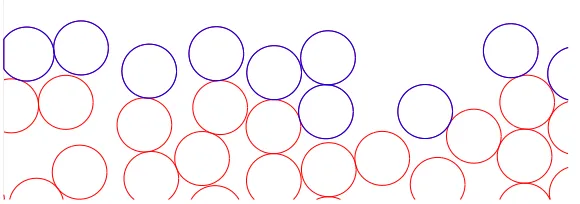
sedi-Figure 2.1: Microscopic snapshot of the off-lattice Eden model version C. Growth events result in active cells (in blue) placing a child at a random position touching their surface. The new cell position is selected such that it does not overlap with existing cells. Inactive cells (in red) are those which have no space to place a child in their neighbourhood.
mentary sandstones [31] or colloidal silicate particles [26, 98] and biological such as the morphology of cancer cells [24, 27, 67, 212]. The original model was proposed as a lattice-based representation for the development of bacterial colonies [47]. The lattice based models are very easy to simulate, but experience anisotropic growth due to the underlying lattice [210]. Due to this anisotropic behaviour numerical simulations to extract the surface properties are very cumbersome. Required con-vergence to the KPZ state is slow and large system sizes are needed to verify the universality class.
2.2.2 Off-lattice model
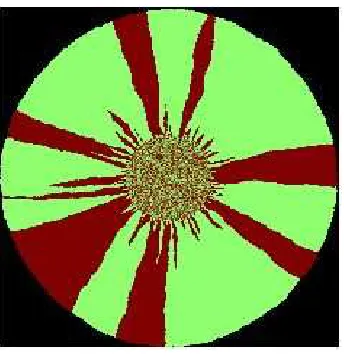
[image:33.595.184.474.129.231.2]Figure 2.2: Simulations of the off-lattice Eden model. (a) Circular colony with approximately 10500 cells, an initial radiusr0 = 15, in units of cell diameter, and
grown to a final radius of approximately 70. (b) Linear colony with approximately 5500 cells in a strip of widthL= 100, grown to a final height of approximately 70. In each figure, cells are of diameter 1, red cells indicate the interior and blue cells indicate the colony surface.
finite-size scaling analysis [92, 119]. Figure 2.2 shows examples of off-lattice Eden cluster growth from (a) circle of seeds inR2 and (b) line of seeds in a strip of sizeL with periodic boundary conditions. The populations contain approximately 10500 and 5500 cells respectively. Active cells are marked in blue and exist mostly only on the cluster boundary called the surface. We see that the interior cells are uniformly distributed but the surface is uneven and rough. One of the trivial aspects of an Eden model is the compact character of the resulting cluster, with a solid core that has a fractal dimension equal to the dimension of space [47, 139]. Although the interior appears quite simple, the surface is non-trivial. Simulations of the Eden model show that despite the simplistic nature of the algorithm, the surface is highly irregular, where the irreversible dynamics lead to interesting effects arising in the scaling properties of the growing interface [92]. The scaling properties of the surface show a self-affine fractal geometry [5, 6, 17, 119] and the surface of the Eden model in 1 + 1 dimensions is consistent with the KPZ scaling relationα+z= 2.
These fluctuations are described by the roughness of the surface, which is given by the root mean squared displacement of the surface height as a function of
t[17, 142], defined as
S(t) :=D1
L
Z L
0
y(x, t)−h(t)2
dxE1/2 , (2.12)
where the average surface height is given by
h(t) :=D1
L
Z L
0
y(x, t)dxE. (2.13)
Starting from a flat surface the valueS(t) is expected to increase as
S(t)∝tβ for t≪ts,
where ts is the expected interface saturation time. The power-law increase in the
roughness does not continue indefinitely but is followed by a saturation regime due to a finite size effect, where for a fixed value ofLthe roughness is expected to reach a saturation value
S(t)∝Lα for t≫ts.
The emergence of this saturation regime is linked to the appearance of lateral cor-relations on the surface which arise due to the growth rules and lead to height fluctuations spreading in the lateral direction. Although this spread is local, how-ever, over time the information spreads globally. The typical distance over which the surface is correlated is characterized by the lateral correlation length denoted byξk. The value oftsdepends on the size of the system wherets∼Lz, and thus by
S(ts)∼tβs =Lzβ=Lα
we have the following scaling relationz=α/β. At the beginning of the process the interface is uncorrelated, during growth ξk grows with time. For a finite system,
ξk cannot grow indefinitely and when ξk reaches the size of the system, the entire interface is correlated resulting in saturation of the interface roughness. Thus at the point of saturation
ξk ∼L∼t1s/z,
and the dynamical relationship ξk(t) ∼ t1/z holds for all smaller times [17]. Note
that for the radial surface, the roughness scales according toS(r0, t) ∼tβ and due
to the continuous expansion in space the surface will never saturate [119].
10−2 10−1 100 10−1
〈 h/L3/2〉
〈
S(h)/L
1/2
〉
L=300 L=400 L=500
Figure 2.3: The roughnessS(t) for the lattice version of the Eden C model for several values of system sizeLand clusters growing on a strip geometry as in Figure 2.2(b). The roughness displays the correct power-law behaviour with exponents consistent with the KPZ universality class. As described in the text, the Family-Vicsek (2.14) rescaling of the axes is used to obtain a data collapse.
useful scaling for these rough interfaces [52]. The main properties of the surface
y(x, t) can be characterized by the Family-Vicsek scaling relation of the roughness with exponents as in (2.3) such that
S(t) =Lαf(t/Lz) , (2.14)
where the scaling functionf(u) has the property
f(u)∝
(
uβ u≪1
1 u≫1 . (2.15)
Such a scaling behaviour has been shown for many discrete models including ballistic deposition and continuum growth [17, 52, 84, 95, 142], and also holds for other universality classes such as Edward Wilkinson [48].
self-affine fractals and are characterised by the global roughness exponent α= 1/2 and growth exponentβ = 1/3.
2.2.3 Exact Solution of Eden models
Investigations in the radial distributions of surfaces obtained with large-scale simu-lations of several Eden radial clusters with different microscopic growth rules have been shown to be consistent with the KPZ interface distributions [55, 181]. The one-point radius distribution has been shown to satisfy
R(t)≃v∞t+D 2ν
2
λt1/3ζ,
where (ν, λ, D) are as in Eq. (2.1) and v∞ from (2.7). As one would expect the random variableζ follows the GUE Tracy-Widom distribution for the largest eigen-value. This is in complete agreement with the conjectures proposed for the governing behaviour of curved surfaces in the KPZ universality class. Further support of the distribution is given by measuring the cumulants, where the order n+ 1 cumu-lants associated to radial distribution have also been measured to converge to the corresponding GUE cumulants [7].
2.3
Growth and pattern formation in biological systems
Pattern formation is ubiquitous in the natural world, fascinating patterns are ob-served in a wide range of different processes, from spatial distribution of simple single cell organisms to more complex cases such as the grazing patterns of flock of sheep [13, 53]. Recently there has been extensive investigations on the formation of patterns occuring in various fields of physics and biology [17, 195]. Some noticeable examples are systems such as alloys [170], fluids [142, 174], crystals [19], ceramics [115], polymers [12, 28], bacteria cells [136, 204], and viruses [88, 219]. Interestingly, despite fundamental differences in various systems where microscopic details differ, seemingly similar forms of patterns can be seen to emerge. Thus there should exist a universal mechanism which is largely responsible for the formation of these patterns [87].
order to study biological systems, one must understand the underlying mechanism and should not use an arbitary model with rules and dynamics set to reproduce data. Whereas, including all biological details can lead to unmanageable parame-ters, jeopardizing any potential for a theoretical understanding. It is therefore not surprising that the formation of patterns in biological systems have been given much attention from various scientific disciplines. In many cases, the emergence of the patterns is both a complex and fascinating feature [13, 136, 199].
A very good starting point is the formation of patterns in populations of simple biological objects such as single-cell organisms. These systems are composed of a vast number of cells and are found to be usually dominated purely by physical conditions [23, 105, 136, 199]. Experiments of microbial species reveal that they can display a range of colony formations which is also seen in other areas of physics [136, 155]. Although these colonies exhibit some species dependent effects, they are known to be within the rare domains of biological modelling where the combination of physical conditions and universality dominate over complicated biological mecha-nisms. Therefore the growth phenomena in these biological colonies can be discussed in physical terms [13, 109]. In particular, the dynamical properties in these systems can be understood by comparing the structure and interface to theoretical growth models, proposed for non-biological systems [95, 134]. Understanding pattern for-mation in such systems can greatly benefit the studies of more complicated patterns in biology and nature [155, 205].
There exist many advantages in using microbial species for the study of pat-tern formation. Firstly, one has a great deal of control over the cellular dynamics. Microbial species are known to depend sensitively on the conditions of their environ-ment. For example, the rate of colony growth is determined by the amount of initial nutrientscn, and the agar concentration ca will determine the motility of the cells
Saccha-(a) (b)
Figure 2.4: Morphological diagram of colonies expected for the bacteriumB. subtilis
grown on a petri dish. The diagrams display morphologies which also appear for var-ious processes that belong to the field of non-equilibrium statistical mechanics. (a) The colony formation depend on the petri dish conditions such as the concentration of agar ca and concentration of nutrients cn. (b) Without cellular movement, the
resulting structures are simple and display either Eden like or DLA like behaviour. The diagrams have been taken with permission from [155], copyright (1992) Physical Society of Japan.
romyces cerevisiae,Salmonella typhimurium,Bacillus subtilis andProteus mirabilis
[20, 36, 87, 99, 183, 187, 188].
In recent years there has been a thorough experimental investigation on the formation of colonies that several kinds of species can develop. These experiments are usually performed on a petri dish where a drop of solution containing cells is inoculated at the centre of the dish. In these colonies the two factors ca and cn are largely responsible for the development of the morphological structure and
the patterns observed [136, 155, 208]. In particular complete phase diagrams have been obtained for the colonies of species such as B. subtilis, P. mirabilis, E. coli,
In these colonies, microscopic observations show that there exist two main distinct type of growth mechanisms (see Figure 2.4(a)). The first is without active movement of individual cells, here growth is seen to be static, leading parts of the colonies grow solely by cell division which leads to an increase in the population mass and colony area [155]. In such a region the colony is seen to form DLA and Eden like patterns. The other morphologies are only seen when there is an active movement of cells. This growth mechanism results in a constant dynamical change on microscopic length scales, where the cells appear to have a random motion. The cellular movement seems to be a mechanism which induces a morphological change. This is confirmed by carrying out experiments using immotile strains with no flagella. The phase diagram seen here are simple, where the morphological change in the colonies is reduced to DLA (lowcn) and Eden (highcn) like patterns for all ca, see Figure 2.4(b).
Recently there have been a number of models which have attempted to cap-ture the morphological struccap-ture observed in the experiments of microbial colonies. The most common methods are surface growth models [108, 109, 136] and reaction diffusion based models [13, 105, 123, 214]. These models are used to describe the formation of structures on a macroscopic scale and do not capture the fundamental microscopic differences which exists between distinct species.
2.3.1 Space-limited population growth
Spatial competition is a common phenomenon in growth processes and can lead to interesting collective phenomena such as fractal geometries and pattern formation [17, 123, 136]. This is not only relevant in biological contexts such as range ex-pansions of biological species [57, 211] or growth of micro-organisms, but as well in social contexts such as the dynamics of human settlements or urbanization [56]. These phenomena often exhibit universal features which do not depend on the de-tails of the particular application, and have been studied extensively in the physics literature [12, 17, 19, 136, 142].
(a) (b)
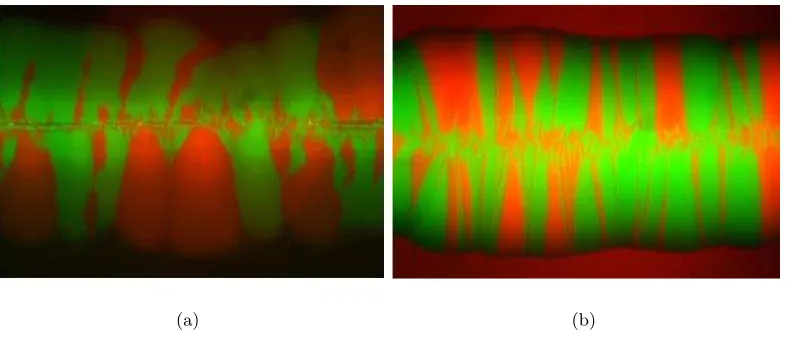
Figure 2.5: Fluorescent images of colonies of (a) E. coli and (b) S. cerevisiae. The scaling properties of both patterns are believed to be in the KPZ universality class, and the differences are due to microscopic details of the mode of reproduction and shape of the micro-organisms. The images have been taken with permission from [69], copyright (2007) National Academy of Sciences, USA.
can be neglected on the timescale of growth, which leads to static patterns and is also a relevant regime for range expansions. We further assume that there is no shortage of resources, where growth and competition of species is purely space limited and spatially homogeneous. This situation can be studied with colonies of immotile microbial species grown under precisely controlled conditions on petri dish with hard agar and rich growth medium. In this regime, the stochastic local multiplication of cells governs the development of a colony [205].
Under these conditions one expects the colony to form compact Eden-type clusters, which has recently been shown for various species including S. cerevisiae,
E. coli,B. subtilis and S. marcescens [69, 155].
period of four days. For both species the microbial populations are made of two strains, which are genetically identical except for having different fluorescent label-ing. Reproduction is asexual, and the fluorescent label carries over to the offsprlabel-ing. Although at the beginning of the experiments the strains are well mixed, during growth rough sector shaped segregated regions develop.
Compactness within the initial habitat and the use of immotile cells leads to the populations evolving only at the leading edge. As the colony grows, cells that are squeezed out of the colonization front no longer participate in the colonization process. From the initial well mixed population, sectors of single gene alleles emerge which compete for space and grow at the cost of those left behind and can either expand or lose contact to the population front. This drives a coarsening process, which leads to a gradual decrease in the number of sectors and is a consequence of genetic drift acting at the leading edge of the range expansion [70]. In the frame-work of this thesis, the domain coarsening process can be understood through the fluctuating path of the boundaries separating neighbouring sectors. A domain can be seen to be “dead” and no longer contributes to growth when the leading ends of its boundaries meet and annihilate. The sectors surviving this annihilation process grow in size at the cost of those left behind, and appear to surf on the wave front [70, 107].
A quantitative model and analysis of sector boundaries has been presented in [71, 111], where the assumption is made that the fluctuations of the motion taken by the leading tip of the domain boundary are diffusive. However, the authors also discuss that this idealization is not quite correct, since already in [69] the mean squared displacement of the sector boundaries was estimated from experimental data to grow superdiffusively. This superdiffusive behaviour can be attributed to the roughness of the population front, following works on competition interfaces [177] for rough surfaces in the KPZ universality class. Since the experiment uses immotile strains on hard agar, there is no noticeable change in the population behind the expanding front. Therefore Figure 2.5 provides a frozen record of the domain competition and coarsening process during colonization.
ForS. cerevisiae the colony patterns share similar qualitative behaviour with theE. coli population. However, the domain boundaries are less rough compared to
here Eden-like behaviour for both colonies.