ISSN Print: 2380-4327
Quantum Neutron Unit Gravity
Donald Chakeres
1, Vola Andrianarijaona
21Department of Radiology, The Ohio State University, Columbus, OH, USA 2Department of Physics and Engineering, Pacific Union College, Angwin, CA, USA
Abstract
Quantum gravity and the transformation of a neutron star or the merger of two neutron stars into a black hole are important topics in cosmology. Ac-cording to the Schwarzschild radius relationship, a black hole arises when two times of the gravitational binding energy of the gravitational system, GBE, equal the annihilation energy of its total mass. From a quantum perspective, the integer number of neutrons defines the GBE and mass in the merger of binary pure neutron stars transforming to a black hole. Therefore, one can scale all gravitational binding energy relationships by using neutron mass, energy, distance, time, or frequency equivalents. We define GBEn0_ unit of the neutron as the binding energy, 1.4188 × 10−49 J, of a virtual system of two neu-trons separated by the neutron Compton wavelength. The GBEn0_ unit di-vided by a neutron’s rest mass energy represents a fundamental, dimension-less proportionality constant, 9.4252 × 10−40,
0_ unit
n
k . The square root of
0_ unit
2kn , αG, which we introduce here as a coupling constant, is identical in concept to the fine structure constant found in electromagnetic physics, but for gravity. Both αG and GBEn0_ unit inter-relate the neutron, proton, elec-tron, Bohr radius, speed of light, Planck’s constant, GBE of the electron in hydrogen, and Planck time. This paper demonstrates a direct conceptual and computational rationale of why the neutron and its negative beta decay quan-tum products accurately can represent a quanquan-tum gravitational natural unit system.
Keywords
Quantum Gravity, Neutron, Black Holes, Neutron Stars
1. Introduction
Developing a quantum model of gravity has been an important conceptual goal in physics [1]-[6]. Uniting cosmologic physics and quantum physics is a contin-How to cite this paper: Chakeres, D. and
Andrianarijaona, V. (2017) Quantum Neu-tron Unit Gravity. Journal of High Energy Physics, Gravitation and Cosmology, 3, 267-276.
https://doi.org/10.4236/jhepgc.2017.32022
Received: February 28, 2017 Accepted: March 26, 2017 Published: March 29, 2017
Copyright © 2017 by authors and Scientific Research Publishing Inc. This work is licensed under the Creative Commons Attribution International License (CC BY 4.0).
http://creativecommons.org/licenses/by/4.0/
uing incomplete process. Many different models have been proposed, but none have seamlessly united quantum, classical and cosmologic phenomena [7]. Neu-tron, n0, neutron stars, NS, and black holes, BH, are ideal conceptual, computa-tional, and observational settings to interrogate gravitational properties at the extremes of short and long distances, and high gravitational binding energies,
GBEs [8]-[14]. Many new observations are being acquired that lend themselves to interpretations of the basic properties and scaling of gravitational systems. Recent gravity wave measurements are dependent upon a robust gravity model
[15][16].
A NS is related to the transformation of atomic matter, in the simplest case hydrogen, H, to a degenerate n0 state driven by gravity. NSs can be characterized by a few physical factors since they are composed predominately of neutrons, and these are referred to as equations of state [17][18]. Some theoretical studies consider NSs as pure n0 matter [19]. Some models describe the core as superfluid neutron-degenerate matter (mostly neutrons, with some protons and electrons). About 5% of all known NSs are in binary systems [20]. In some theories of bi-nary evolution it is expected that NSs also exist in bibi-nary systems with a BH. It has been proposed that coalescence of binaries consisting of two NSs may be re-sponsible for producing short gamma-ray bursts [21].
A BH is a mathematically defined region of spacetime exhibiting such a po-werful gravitational force that no particle or electromagnetic radiation can es-cape. The classic Schwarzschild radius equation states that a BH arises when the annihilation energy of the total mass with a Schwarzschild radius of rs, (massBH_rs)c2 in joules, equals two times GBE in joules for any BH horizon mea-suring rs (see Equation (1) and Equation (2)). From a quantum perspective of a pure binary NS system transformation to a BH, Equation (2) is a mathematical imperative expressing the equivalence between the integer number of neutrons defining the annihilation mass and the paired masses defining the GBE[22][23].
(
_)
2
2 massBH rs s
G r
c
=
(1a)
or
(
mass _s)
2 2s BH r
r c G
= (1b)
(
)
(
)
2
2 2
4
_
2
_
nnihilat
ma ion
2
ss a _ 2
2
mass
2 2
s rs rs
s s
BH r BH BH
s BH r
s s
r c E J GBE
G
r c G r
G G
r
c = = =
=
× = ×
× (2)
both simultaneously. Another similar physical single and paired example would be related to matter/anti-matter pair production which is also important in the properties of BHs [24]. In pair product there are photon and two anti-particles in which the total energies are scaled equally. In anti-matter matter annihilation there are two matter entities and two photons. The number 2 reflects the paired physical state relationship. Both are associated with physical transformation settings where the velocity of matter is related to the speed of light, c, and the annihilation energy of the rest mass, mc2. In the transformation of a binary sys-tem of NSs to a BH, the GBE scaling can be defined equivalently and solely in integer multiples of the energy of n0, equaling 1.5053 × 10⁻¹⁰ J, which is a natu-ral energy unit. This energy unit could be also expressed in term of its equiva-lent in frequency, νn0, (by dividing the energy by Planck’s constant h) or in
terms of n0 Compton wavelength,
0 n
cν . Therefore gravity can be scaled as a single natural unit system that is inter-related by integer multiples or integer fractions of n0 units.
The goal of this paper is to evaluate the specific units from a quantum integer perspective of a natural scaling based solely on the neutron, which define a sys-tem of gravity that is conceptually and computationally consistent with standard gravitation models and methods for NSs and BHs.
2. Virtual Neutron Gravity Energy Unit,
GBE
n0_unitWe define the simplest virtual n0 based natural unit gravitational system,
GBEn0_unit, as the GBE of virtual paired n0 masses separated by
0 n
λ , a distance that is equal to the speed of light divided by the annihilation frequency of the neutron, νn0. The GBE in Joules of this system, GBE n0_unit J, 1.4188 × 10−49 J, is
described in Equation (3).
( )
0( )( )
0 00
0
2 2
-49
_ unit J J J 1.4188 10 J
n n n
n
n
G m
G m GBE
c
λ
ν
= = = × (3)
Here, mn0 denotes the mass of the neutron, 1.6749 × 10⁻²⁷ kg, G, the
univer-sal Newtonian gravitational constant, and c the speed of light. vn0 represents the frequency equivalent of the neutron, 2.2719 × 10²³ Hz,
(
)
0 2
n
m c h. λn0 is the n0 Compton wavelength 1.3196 × 10⁻¹⁵ m.
0_ unit
n
GBE values in other physical unit equivalents include frequency 2.1413 × 10⁻¹⁶ Hz (
0_ unit _ GBE n
ν
), Compton wavelength 1.4001 × 1024 m, and mass 1.5787 × 10−66 kg.3. Virtual Neutron Gravity Dimensionless Coupling
Proportionality Constant Unit,
k
n0_unitGBEn0_unit J is related to a proposed dimensionless coupling proportionality con-stant ratio with the n0_unit in J, with
0_ unit J 0 J n
GBE n equaling 9.4252 × 10−40 from Equation (4) in multiple physical units. Here n0 J represents the Joule equivalent of n0, 1.5053 × 10⁻¹⁰ J. This proportionality constant is referred to as
0_ unit
n
k , where kn0_ unit times any physical unit value of the neutron equals
0_ unit
n
(
)
0( )
0 00
0 0 uni_
0 t 0 unit unit _ unit unit 40 _ _ 0 _ 9.425 J J J
Hz kg
Hz kg 2 10
n n n n G n n n BE n GBE GBE
n h v
GBE m k ν ν − = = × = = = (4)
4.
k
n0_unit, Planck Time, and HydrogenOur proportionality constant, kn0_unit is also defined by several equivalent rela-tionships involving GBEn0_unit; Planck’s constant, h; Planck time, tP; and the fre-quency equivalents of the neutron, proton (p+), electron (e−), Bohr radius (a0), and GBE of the electron in hydrogen; respectively vn0, vp+, ve−, va0, vGBE_e in
Eq-uation (5). The vGBE_e is derived and valid identical to the Bohr radius derivation. These are also natural unit constants. One is defined by the degenerate neutron state and the other equivalently by the hydrogen state that is non-degenerate. Additionally, the negative n0 beta decay products represent the closest natural gravitational system to the virtual pure n0 system. Thus we find that the n0 serves as a fundamental unit for the origin of all of the hydrogen products as well. The product of 2
P
t , the frequency of one mass, the frequency of the other mass, the frequency of the distance equals the GBE in Hz. In the neutron unit setting the
kn0_unit is related to the product of 2
P
t and v3n0, divided by vn0, therefore the
product of 2
P
t and vn20, Equation (5).
( )
( )
(
)
uni 0 0 _ 0 0 0 0 t 0 3 _ 2 2 _ _ unit 40 Hz 9.4252 H 0 z 1 n o oGBE n GBE e
p e a
n n
GBE e n
P n
p e a
n
v
v
t v
k ν ν
ν ν ν ν
ν ν ν ν ν − − − − + + − = = = = = × (5)
From Equation (5) the ratio of vGBE_n0_unit divided by vGBE_e− is related to the ra-tio of quantum entities of vn0 cubed divided by the product of vp+, ve−, and va0,
7.3836 × 10⁷, Equation (6).
( )
0 0 _ unit3 7 _ 10 7.3836 n o GBE n p a
GBE e e
ν ν
ν − ν ν ν+ −
= = × (6)
5. Proposal of a Gravitational Constant Analogous of the
Fine Structure Constant,
α
GWe also find interest in computing the square root of 2kn0_ unit, 4.3417 × 10⁻²⁰, a dimensionless constant similar to the fine structure constant, α, in both concept and computation, but for gravitational, non-electromagnetic physical systems. It is described herein as αG, Equation (7). The fine structure constant α is related to the electromagnetic binding energy of the electron in H, and involves p+, e−, and a0. Additionally αG represents the ratio of a velocity divided by c that is also a β
as α represents a specific β for hydrogen. The mass of the electron times the product of α ×c squared divided by two is equal to the ionization binding energy of hydrogen, which is the Rydberg constant equivalent. The kinetic ener-gy and the binding enerener-gy are similar in concept to the transformation point to a BH in Equation (2). An identical gravitational mathematical property will be shown later in Equation (8).
unit 0 uni 0 _ 0 0 0 _ 0 0 t 0 _ u 20 3 nit _ 2 2 2 2 Hz 2 Hz
4.3417 1
) 0 ( n n o GBE P n n GBE GBE e n n
p e a n
G G kn t
ν
α β ν
ν
ν ν
ν ν
ν ν ν− ν
− + − = = = = = × = = (7)
The kinetic energy of this virtual n0-system is the mass of n0 times the product of (αG × c) squared divided by 2. This equals GBEn0_ unit, Equation (8). Thus we find the Gravitational Binding energy neutron unit exactly equals the kinetic energy of the binary neutron pair identical to the pattern seen with one defini-tion of α. This pure n0-based unit gravitational system is a virtual system because it does not have a significantly long lifetime. Our derived constant αG equals the square root of the product of 2 and vn0 squared times the frequency equivalent
of the GBE of the electron in hydrogen, vGBE_e− divided by the product of vp+, ve−, and va0 from Equation (7). This unites gravitational scaling and multiple other
fundamental quantum entities.
( )
0( )
0 0(
)
0 0
0
2 2 2
_ unit J J J 2 J
G
n n n
n n
n
G m G m c
GBE m
c
α
λ
ν
= = =
(8) The mathematical connection with the closest natural atomic system, which represents hydrogen, shows that vGBE_e is a fundamental constant with similar importance to quantum gravity, and is analogous to the significance of the elec-tromagnetic binding energy of the electron in H to photon and electromagnetic systems. This constant cannot be measured, but it does not diminish its physical significant. In fact, the Bohr radius, rest mass of the electron, and the Rydberg constant that define the hydrogen quanta cannot be experimentally measured either. This fundamental frequency vGBE_e− equals, 2.9000 × 10⁻²⁴ Hz; equivalently 2.1381 × 10−74 kg; 1.0337 × 1032 m; or 1.9216 × 10−57 J. The product of
0 n
v and
vGBE_e− equals 0.65885 Hz2 so vGBE_e− is closely scaled by the mathematical scalar reciprocal of νn0. Whence vGBE_e− divided by the product of vp+, ve−, and va0
also equals the fundamental gravitational, quantum, and relativistic constant Planck time squared, 2
P
t . Planck time tP (h not the reduced Planck’s constant,
ħ) equals 1.35141(08) × 10−43 s. All frequency equivalent gravitational systems fulfill the relationship of the 2
P
t ratio including that of hydrogen and vGBE_n0_unit, Equation (7).
The value of αG equals the product of square root of 2, vn0, and tP as derived
elec-tromagnetic properties of H. Now GBEn0_unit can be calculated from ratio/product relationships of G c m, , , , , n0 vn0 α λG n0 as seen in Equation (8).
6. Definition of the Newtonian Gravitation Constant in
Neutron Units
As an added and quite surprising result the Newtonian gravitational constant G
can be completely defined in the defined units of the n0 mass, its Compton wa-velength, its unit GBE; or with c and neutron frequency equivalent as in Equa-tion (9).
( )
( )
0 0 0
0 0 0
_ unit _ unit
2 2
n n n
n n n
GBE
cGBE
G
m
m
λ
ν
=
=
(9)Equivalently, the Newtonian gravitational constant G can also be defined in units of n0, c, h, tP, vp+, ve−, va0, vGBE_e−,and neutron beta decay products in H as shown in Equation (10). This is analogous to the inter-relationship of multiple fundamental quantum constants that can define a0 or α.
( )
( )( )
(
( )
)
( )( )
(
)
( )
0
0 0 0 0 0
0 0 0 0 0 0 3 2 2 3 2
3 3 5
2 ni
_
_ u t
2 2
G
G n
n n n n n
P GBE e
n n
P p e a
n n n c c c G
m m m
k
c t c c
t
m m h
ν ν
ν ν ν
ν ν α λ α ν − + = = = = = = (10)
7. Gravitational Binding Energy of Any System from
an Integer Neutron Perspective
The GBE can be calculated for any system using the integer unit n0 perspective by Equation (11). mass1 mn0 is the integer number of equivalent neutrons of one mass, #1n0. Also
0
2
mass mn equals the integer number of neutron equiva-lences of the second mass, #2n0. We define #λn0 as the integer number of n0 Compton wavelengths of the masses separation distance, λ. All of the # values are dimensionless integers.
(
)(
)
0
0 0
0 0 0
0 0
1 2
_ unit _ unit
#1 #2
mass mass J
#
n
n n
n n n
n n
GBE GBE GBE
m m λ λ λ = =
(11)
8. An Example of the Transition of a Symmetric Binary Pure
Neutron NS System to a BH
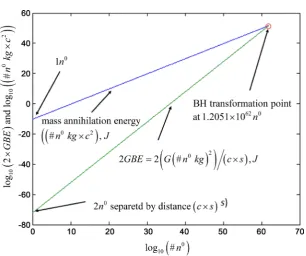
Figure 1. Transformation of a symmetric binary neutron star system to a black hole.
Figure 1 is a plot showing the transformation of the binary symmetric neutron system to a black hole with a Schwarzschild radius of c × s. The X-axis is log10 # of n0. The Y-axis is in log10 Joules of the annihilation energy of the # of n0, the upper blue line; and 2 times the gravitational binding energy, GBE, of a system with # of n0 separated at a distance of c × s, the lower green line, Equation (2). The far left side of the plot begins at a binary sin-gle n0 system. To the right the integer number of n0 of each component of the pair in-creases towards 1.2051 × 1062 neutrons. At that specific # of n0, red circle, 2 times the GBE and the annihilation energy of the mass are equal leading to the transformation to a BH.
constant G, which computes to a total mass of 2.0186 × 1035 kg from Equation (12). This is described as massBH c s_ × . Other unit equivalents of massBH c s_ ×
are: 1.8141 × 1052 J; frequency of 2.7379 × 1085 Hz; Compton wavelength of 1.0950 × 10−77 m; and integer number of neutrons 1.2051 × 1062n0. We evaluate the GBE of a paired neutron system starting with 1 n0 to 1.2051 × 1062n0, or 2.0186 × 1035 kg for the mass. The product of 2, the mass squared and G divided by c × s equals twice the GBE of each individual incremental pair neutron sys-tems, Equation (13).
5 3
3
mass 2.0185 10 kg 2 BHc s
c s
G = × =
× ×
(12)
(
)
22 2 mass
mass c s
c s
BH BH
G c c
s
× ×
× × ×
×
= (13)
(13)). This demonstrates that binary gravitational systems from any pairing of two neutrons, two stars, and two NS, and one BH can be described by a quan-tum n0-based system.
9. Discussion
These results show how gravitation systems, indeed the Newtonian Gravitational constant itself, can be completely scaled by a quantum or n0-unit system (see Equations ((9)-(11)).) This is an imperative of the mathematical definitions of pure NSs transforming to simplest non-rotating BHs. The GBE of any system represents dimensionless integer fractional values of the neutron as the base unit, which provides dimensionless ratio coupling constants defined by kn0_unit and αG. Surprisingly, these are related to quantum subatomic constants derived from the frequency equivalents of the neutron, hydrogen, and tP, (Equation (10)). This demonstrates a system that bridges from quantum to gravitational. Similarly both α and αG represent conceptually and computational parallel β
values, but are relegated to widely divergent physical settings. The fine structure constant α relates to electromagnetic relationships of hydrogen, whereas αGis for neutron gravitational relationships. The electromagnetic binding energy of the electron in hydrogen, related to the Rydberg constant, is a fundamental scaling factor for all electromagnetic relationships including α. The GBE of the electron in hydrogen plays an identical role for neutron quantum gravity. Though our derived GBE_e-value is not directly observable it still represents an important fundamental inter-relational constant identical in concept to the other hydrogen quanta.
The time and distance units of gravity may also be defined by n0-equivalents. The time unit is one second divided by v sn0 , 4.4017 × 10⁻²⁴ s. The distance unit
is λn0, c vn0 equals 1.3196 × 10⁻¹⁵ m. Any gravitational system can be
interro-gated where time, distance, matter, and energy can all be evaluated as one of these quantum states. Likewise in quantum physics, where there are only specific quantum states possible, the only possible gravitational states are related to integral numbers of neutrons for the masses and λn0 for the distances in a
purely n0-unit gravitational system, Equation (11). Clearly, all possible GBEs are also only integer or integer fraction values of GBEn0_ unit. Perhaps the quantiza-tion of the gravitaquantiza-tional field may be discovered in our approach.
10. Conclusions
In conclusion, mathematical definitions of pure Neutron Stars and Black Holes define an imperative that the scaling of the gravitational binding energy must be defined in quantum unit equivalents of the neutron. The dimensionless ratios,
kn0_unit and αG, of a pure neutron gravitational system, are defined by four quan-tum entities, and the n0, the speed of light, the products of negative n0 beta de-cay, p+, e−, a0, vGBE_e−, as in Equations ((5), (7)). Newton’s Gravitational constant
being scaled by the neutron which is an imperative in the NS BH transition. Time (chronon), matter (second quantization), distance (Planck scales), and energy (Rydberg spacing) also must be quantum integer based on n0. Since all of the dimensions of a gravitational system are scaled by a single natural unit, the neutron, the system can be computationally analyzed as dimensionless inter-re- lationships just as electromagnetic systems are with the fine structure constant as in Equation (11).
Acknowledgements
We would like to thank Richard Vento, Columbus State Community College— retired for his help in the preparation of the paper.
References
[1] Ashtekar, A., Baez, J., Corichi, A. and Krasnov, K. (1998) Quantum Geometry and Black Hole Entropy. Physical Review Letters, 80, 904-907.
https://doi.org/10.1103/PhysRevLett.80.904
[2] Padmanabhan, T. (1998) Quantum Structure of Spacetime and Blackhole Entropy. Physical Review Letters, 81, 4297-4300.
https://doi.org/10.1103/PhysRevLett.81.4297
[3] Husain, V. and Pawłowski, T. (2012) Time and a Physical Hamiltonian for Quan-tum Gravity. Physical Review Letters, 108, Article ID: 141301.
https://doi.org/10.1103/PhysRevLett.108.141301
[4] Marshakov, A. (2009) Two-Dimensional Quantum Gravity and Quasiclassical In-tegrable Hierarchies. Journal of Physics A: Mathematical and Theoretical,42, Ar-ticle ID: 304021.
[5] Reuter, M. and Schwindt, J.M. (2007) Scale-Dependent Metric and Minimal Length in QEG. Journal of Physics A: Mathematical and Theoretical,40, 6595-6605.
https://doi.org/10.1088/1751-8113/40/25/S04
[6] Oriti, D., Pereira, R. and Sindoni, L. (2012) Coherent States in Quantum Gravity: A Construction Based on the Flux Representation of Loop Quantum Gravity. Journal of Physics A: Mathematical and Theoretical,45, Article ID: 244004.
[7] Lykken, J. and Spiropulu, M. (2014) Supersymmetry and the Crisis in Physics. Scientific American,310, 34-39. https://doi.org/10.1038/scientificamerican0514-34
[8] Gürlebeck, N. (2015) No-Hair Theorem for Black Holes in Astrophysical Environ-ments. Physical Review Letters,114, Article ID: 151102.
https://doi.org/10.1103/PhysRevLett.114.151102
[9] Pasham, D.R., Strohmayer, T.E. and Mushotzky, R.F. (2013) Discovery of a 7 mHz X-Ray Quasi-Periodic Oscillation from the Most Massive Stellar-Mass Black Hole IC 10 X-1. The Astrophysical Journal Letters,771, Article ID: L44.
[10] Agulló, I., Barbero, G.J., Díaz-Polo, J., Fernández-Borja, E. and Villaseño, E. (2008) Black Hole State Counting in LQG: A Number Theoretical Approach. Physical Re-view Letters, 100, Article ID: 211301.
https://doi.org/10.1103/PhysRevLett.100.211301
[11] Ammon, M., Gutperle, M., Kraus, P. and Perlmutter, E. (2013) Black Holes in Three Dimensional Higher Spin Gravity: A Review. Journal of Physics A: Mathematical and Theoretical,46, Article ID: 214001.
Neu-tron Star Matter. Journal of Physics A: Mathematical and General,12, 6.
https://doi.org/10.1088/0305-4470/12/6/004
[13] Durgapal, M.C., Rawat, P.S. and Bannerji, R. (1980) Structures with Extreme Relati-vistic Cores. Journal of Physics A: Mathematical and General,13, 3761-3768.
https://doi.org/10.1088/0305-4470/13/12/025
[14] Durgapal, M.C., Pande, A.K. and Pandey, K. (1979) Isothermal Neutron Star Core. Journal of Physics A: Mathematical and General,12, 6.
https://doi.org/10.1088/0305-4470/12/6/016
[15] Favata, M. (2014) Systematic Parameter Errors in Inspiraling Neutron Star Binaries. Physical Review Letters, 112, Article ID: 101101.
https://doi.org/10.1103/PhysRevLett.112.101101
[16] Abbott, B.P., et al. (LIGO Scientific Collaboration and Virgo Collaboration) (2016) GW151226: Observation of Gravitational Waves from a 22-Solar-Mass Binary Black Hole Coalescence. Physical Review Letters, 116, Article ID: 241103.
https://doi.org/10.1103/physrevlett.116.241103
[17] Prakash, M., Ainsworth, T.L. and Lattimer, J.M. (1988) Equation of State and the Maximum Mass of Neutron Stars. Physical Review Letters, 61, 2518.
https://doi.org/10.1103/PhysRevLett.61.2518
[18] Takami, K., Rezzolla, L. and Baiotti, L. (2014) Constraining the Equation of State of Neutron Stars from Binary Mergers. Physical Review Letters, 113, Article ID: 091104. https://doi.org/10.1103/PhysRevLett.113.091104
[19] Lattimer, J.M. (2012) Constraints on Neutron Star Radii. Annual Review of Nuclear and Particle Science,62, 485-515.
https://doi.org/10.1146/annurev-nucl-102711-095018
[20] Baumgarte, T.W., Cook, G.B., Scheel, M.A., Shapiro, S.L. and Teukolsky, S.A. (1997) Binary Neutron Stars in General Relativity: Quasi-Equilibrium Models. Physical Review Letters,79, 1182-1185.
https://doi.org/10.1103/PhysRevLett.79.1182
[21] Dubus, G. (2008) High Energy Gamma-Ray Emission from Binaries. New Astron-omy Reviews, 51, 778-784.
[22] Morales-Técotl, H.A. and Rovelli, C. (1994) Fermions in Quantum Gravity. Physical Review Letters, 72, 3642-3645. https://doi.org/10.1103/PhysRevLett.72.3642
[23] Casals, M. and Ottewill, A. (2012) Spectroscopy of the Schwarzschild Black Hole at Arbitrary Frequencies. Physical Review Letters, 109, Article ID: 111101.
https://doi.org/10.1103/PhysRevLett.109.111101
[24] Hawking, S.W. and Ross, S.F. (1995) Pair Production of Black Holes on Cosmic Strings. Physical Review Letters, 75, 3382-3385.
Submit or recommend next manuscript to SCIRP and we will provide best service for you:
Accepting pre-submission inquiries through Email, Facebook, LinkedIn, Twitter, etc. A wide selection of journals (inclusive of 9 subjects, more than 200 journals)
Providing 24-hour high-quality service User-friendly online submission system Fair and swift peer-review system
Efficient typesetting and proofreading procedure
Display of the result of downloads and visits, as well as the number of cited articles Maximum dissemination of your research work