An IOT Based Vehicle License Plate Recognition
Using Object Detection Algorithm In Smart Cities
R. Komalapriya1, A. Sangeetha Shiny2
1, 2
Department of Computer Science and Engineering, Panimalar Institute of Technology Poonamallee.
Abstract: The Object Detection Algorithm is an important challenge in Internet of Things (IoT) area and Smart cities applications. In particular, vehicle License plate recognition and object detection are an important issue’s in Smart cities. The important key techniques in IoT applications are searching stolen vehicles, road traffic monitoring, vehicle parking control, etc. In this paper, we propose a method in a moving object using object detection algorithm and also it recognize the black-white texture of the plate that is used to extract vehicle license plate. According to this algorithm, we transform the RGB image into a grayscale image directly as strengthening the background color of the license plate.
Keywords: Internet of Things(IoT), Stolen vehicles, Vehicle License Plate Recognition(VLPR), Object Detection Algorithm, Background Image, Grayscale Image.
I. INTRODUCTION
Vehicle License Plate Recognition system mainly consists of three major parts; License plate detection, character segmentations and character recognitions. Due to imperfect imaging conditions license plate detection is a crucial task. In this paper we concern with this problem. The license plate location is the precondition steps to find and the key to plate location recognition. License plate location is demanded to locate the plate area accurately, integrally, to remove non-plate area completely, and the algorithm is demanded to be simple as well as high efficiency, so the key factor is how to extract those distinct features to distinguish between plate area and non-plate area.
The problem of detecting this car license plate in 2D images. In the algorithm we enhance the car image at interest regions by estimating image edge density. Using edge information across license plate is a good approach for license plate detection. In this presence of dark characters on the white plate results strong edges at plate region. Strong edges may exist at non plate regions. Hence for having better description of license plates employing other features such as plate color beside edge information is discriminative. To extract license plate features, other way is based on the plate’s regular change of grayscale, namely, the plate’s texture feature. It needs to do first order difference at horizontal direction to stand out the area whose texture changes frequently at that direction.
The basic algorithm is convert primary color image to grayscale image or binary image, use this grayscale image or binary image to do first order difference at horizontal direction to get horizontal difference image, sum and project this horizontal difference image at horizontal direction, smooth this projected value, search license plate region on the smoothed projection and crop it for the first time to gain a horizontal strip which contains the license plate area, sum and project this horizontal strip at vertical direction, smooth it, then crop it for the second time to gain the license plate area. This way is simple in theory, but if there are many textures in non-plate area or the non-plate is tilting, the miss location rate will be high. This present a novel license non-plate localization method based on arrangement of the characters in standard license plates. To complete the whole VLPR system, we continue to segment and recognize the license plate characters using some simple methods. The performance of the proposed system is tested on our own collected image dataset. This paper results on car images in real complex scene confirms the robustness of this proposed method can be against severe imaging conditions.
II. ARCHITECTURE
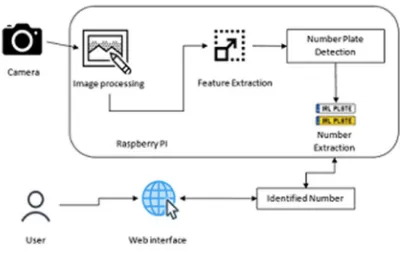
Fig. 1 Architecture Diagram
In this Architecture, The Raspberry pi is used to access the gray scale image and convert the binary image. In that gray scale image, it is converted as gradient image. Using this gradient image, x-direction to filter the image and used to search the brightness values to find the particular x-direction areas and it is also used to find the y-direction areas. In that case, the camera can have captured only a gradient image, then the gradient image compared with the user’s vehicle plate number. If both are same, then the message is sent to a particular user. If they didn’t match, then check with the other number.
III. PROPOSED SYSTEM
The technique for automatically detecting license plate consists methods like the horizontal edge detection, the vertical edge detection, the edge statistical analysis, the hierarchical-based license plate location, another method is Morphology-based license plate extraction that which will be described in detail in this section according to the processing order. If an image consists of regions of interest on a contrasting background. But for the image that containing license plate may also include the dynamo and fore-baffle these are the contents which have very strong horizontal edges. These edges have great effect on the license plate location. We can see that vertical edge detector is better than horizontal edge detector in suppressing horizontal noise before vertical edge detection a linear filter is used to smooth the image and apply the illuminance normalization to reduce the influence of light in background. The change of images is very great and good way on the highway which include the lighting change in surrounding change license plate surface change. So choosing the threshold of edge is not random or any other field. It is difficult to distinguish and identify the license plate from the fore lamps. After checking with the character of license plate we choose four different thresholds. The process of determining the candidate regions is step by step. First, points are joined to lines. Then lines are joined to rectangles. Finally, the system the different threshold of the license plate location is regarded as the different scale. The thresholds are 64, 32, 16, 8, which are the first, the second, the third, the forth scale. In the big scale, the number of the FPs is small, the run time of system is little, but the license plate is detected hard. In the low scale, the more FPs, long time, more regions are gotten, but maybe some fake license plates are also detected. If the switch pattern is adopted, that is to say, if some candidates are detected the single word cutting and recognition and finding. This are done in the region the license plate is hard to find and detect. To resolve the problem, we use the hierarchical-based location method. Concretely, the results of the first, second, and the third scale are fused. Normally, if the plate is detected in the first scale, it is also detected in the second scale and the third scale. After this fusion section, the 7-8 candidate regions are gotten, and only 3 regions are remained at most by the following rules. Priority is given to the rectangles gotten from the first scale. Priority is given to the rectangles in the bottom of the images. Priority is given to the rectangles, which correspond to the dimension and the ratio of the standard license plate. The intersecting regions can be referred to the section B. After the three scales, if there are no yet detected candidate regions, the hierarchical method will enter the forth-scale section. Because of more FPs, more candidates will be produced.
IV. RELATED WORKS
It presents a vehicle number plate extraction algorithm based on the edges of the plate and is used for monitoring the highway vehicles. In this method used to improve the location as well as detecting the particular object. This method is divided into four sections, they are edge detection, statistical analysis, vehicle number plate location, number plate extraction. In this algorithm it is quickly detect the region of the vehicle number plate (Bai Hongliang and Liu Changping).
recognized by the digital camera. The gradient image is used to convert the textured characteristics. The result shows the location of the vehicle (Gang Li, Rongdi Yuan, Zuyuan Yang, Xiyue Huang)
Vehicle plate recognition is an important role in the transportation system. In this paper, the efficient algorithm for license plate recognition is proposed. The purpose of this paper, is used to, locate the theft vehicle using particular limitation in a vehicle plate as well as background of the image. In this method, we implemented the morphology method as well as efficient algorithm for detecting the vehicle plate from the moving object. Compared with other method is restricted by some conditions. But this method used to access the particular image as well as the time complexity is very efficient to identify the theft vehicle. This result is support for the transportation system (Haiqi Huang, Ming G, Hongyang Chao)
We consider the problem is to detect the vehicle license plate in 2D images. The first stage of the algorithm, the image is captured and corner the edge density of the image. The filtered image is used to extract the candidate’s vehicle plate. The easiness of this process, it is suitable for the real-time monitoring vehicle. In order to extract the vehicle plate of the candidates the two important methods are used, they are geometrical criteria and color descriptions. The first method is used to filter the plate. The second method is used to detect the particular candidate vehicle plate as well as regions (Alireza Ahmadyfard and Vahid Abolghasemi).The vehicle number plate recognition is a useful image technique which is used to detect only the number plate. There are several applications in this method that is restricted by some conditions. For this purpose, the traffic and monitoring the vehicle is effective method. Many methods are implemented, but the learning purpose of the edge –detection method of the plate is an important method. The vehicle plate is detected and using image process techniques is to examine the particular area of the plate, resize it and converted into gray scale image. The gray scale image is to check with the candidate’s number plate as well as it shows the region of the vehicle (A.R.Isra, A.Gokulanathan)
V. MODULE EXPLANATION
A. Image Capturing - Python
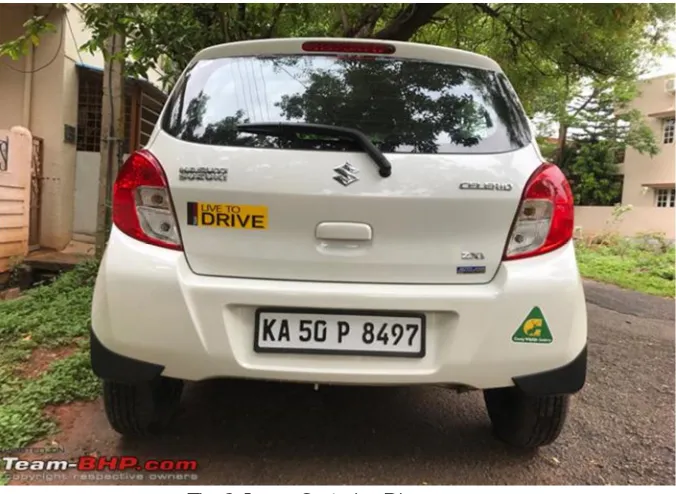
[image:3.612.146.484.409.656.2]In this module we create a basic infrastructure to establish the proposed feature of image handling in python. Prepare the python environment to access video input device, in this case a camera. Familiarizing the image handling library called openCV for python.
Fig. 2 Image Capturing Diagram
B. Image Frame Cleaning And Preprocessing
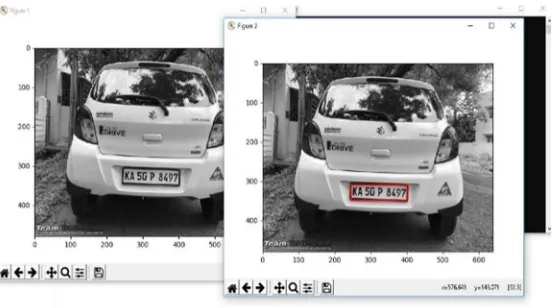
Fig. 3 Gray Scale Image C. Detecting Number Plate Using Contours
After edge detection, all high intensity pixels were scanned from left to right in the X axis and top to bottom for Y axis. The concentration of white pixels will give a fair knowledge of where the more number of edges were available in x-axis. This will give the approximate starting location of x-axis. Concentration of white pixels in y-axis is also scanned to get the approximate location of the y-axis. Due to the variable text or images available in the vehicle, we may have more than one region of interest of the number plate.
D. Transforming Number Plate Image To Text
The region of interest for the number plate area was detected from the previous module. We will try to fit the number plate area and ratio of width and height. If the possible number plates region is identified, the image is cropped for the dimension of the detected number plate. The number plate image is then processed with simple optical character recognition software to convert to a text.
VI. EXISTING SYSTEM
The existing system utilizes other technologies like IR reader, smart card or NFC. These technologies are expensive and laborious to implement. The system which uses computer vision to address these problem were using a single central computing server to process the collected images using cameras scattered across the smart city. This in turn clogs the network since it needs to push live video to the server for processing. Another technology is morphology based license plate detection. This method is to extract important features of contrast as guidance to search the license plates. Extract potential text information from the image, a method is proposed using adaptive threshold, fractal filter and morphological analysis. Edge statistics in combination with morphological approaches are proposed to eliminate the undesired edges in the images. Color based methods are also attempted which make use of the colors of the vehicle license plate. Color based method combined with the texture characteristics is proposed to try to detect license plate from the color image. The combination of edge information and plate color are utilized to identify the vehicle license plates. Based on neural network techniques, other recognition methods of vehicle license plates are proposed. These methods are designed to train classifiers to offer a proper response to the license plate images. The authors apply genetic algorithm (GA) to the training process and combine the statistic features together with structure features. A vehicle license plate detection method using neural network approaches is already exist.
VII. CONCLUSION
REFERENCES
[1] H. Bai, C. Liu, “A hybrid license plate extraction method based on edge statistics and morphology,” 17th IEEE International Conference on Pattern Recognition, pp. 831 – 834, Vol. 2, 2004.
[2] G. Li, R. Yuan, Z. Yang, X. Huang, “A yellow license plate location method based on RGB model of color image and texture of plate,” Second Workshop on Digital Media and its Application in Museum & Heritages, pp. 42 - 46, 2007.
[3] L. Luo, H. Sun, W. Zhou, L. Luo, “An efficient method of license plate location,” 1st International Conference on Information Science and Engineering, pp. 770 - 773, 2009.
[4] A. Ahmadyfard, V. Abolghasemi, “Detecting license plate using texture and color information,” International Symposium on Telecommunications, pp. 804 - 808, 2008.
[5] G. Sun, C. Zhang, W. Zou, G. Yu, “A new recognition method of vehicle license plate based on genetic neural network,” The 5th IEEE Conference on Industrial Electronics and Applications, pp. 1662 – 1666, 2010.
[6] Y. Liu, D. Wei, N. Zhang, M. Zhao, “Vehicle-license-plate recognition based on neural networks,” IEEE International Conference on Information and Automation, pp. 363 - 366, 2011.
[7] B. Li, B. Tian, Q. Yao, K. Wang, “A vehicle license plate recognition system based on analysis of maximally stable extremal regions,” 9th IEEE International Conference on Networking, Sensing and Control, pp. 399 - 404, 2012.
[8] W. Pei, Z. An, Y. Zhu, X. Jia, X. Zuo, F. Wang, “A rapid vehicle recognition and retrieval system,” 2nd International Conference on Systems and Informatics, pp. 748 - 753, 2014.
[9] S. Chen, H. Xu, D. Liu, B. Hu, H. Wang, “A vision of IoT: applications, challenges, and opportunities with China perspective,” IEEE Internet of Things Journal, Vol. 1, Issue 4, pp. 349 - 359, Aug 2014.
[10] H. Rajput, T. Som, S. Kar, “An automated vehicle license plate recognition system,” Computer, Vol. 48, Issue 8, pp. 56 - 61, Aug 2015.
[11] O. Mendoza-Schrock, M. Rizki, V. Velten, “Manifold and transfer subspace learning for cross-domain vehicle recognition in dynamic systems,” 18th International Conference on Information Fusion, pp. 1954 – 1961, 2015.