Parallelism in Coordination as an Instance of Syntactic Priming:
Evidence from Corpus-based Modeling
Amit Dubey and Patrick Sturt and Frank Keller
Human Communication Research Centre, Universities of Edinburgh and Glasgow 2 Buccleuch Place, Edinburgh EH8 9LW, UK
{adubey,sturt,keller}@inf.ed.ac.uk
Abstract
Experimental research in psycholinguis-tics has demonstrated a parallelism effect in coordination: speakers are faster at pro-cessing the second conjunct of a coordi-nate structure if it has the same internal structure as the first conjunct. We show that this phenomenon can be explained by the prevalence of parallel structures in cor-pus data. We demonstrate that parallelism is not limited to coordination, but also ap-plies to arbitrary syntactic configurations, and even to documents. This indicates that the parallelism effect is an instance of a general syntactic priming mechanism in human language processing.
1 Introduction
Experimental work in psycholinguistics has pro-vided evidence for the so-called parallelism prefer-ence effect: speakers processes coordinated struc-tures more quickly when the two conjuncts have the same internal syntactic structure. The processing advantage for parallel structures has been demon-strated for a range coordinate constructions, includ-ingNPcoordination (Frazier et al., 2000), sentence coordination (Frazier et al., 1984), and gapping and ellipsis (Carlson, 2002; Mauner et al., 1995).
The parallelism preference in NP coordination can be illustrated using Frazier et al.’s (2000) Exper-iment 3, which recorded subjects’ eye-movements while they read sentences like (1):
(1) a. Terry wrote a long novel and a short poem during her sabbatical.
b. Terry wrote a novel and a short poem dur-ing her sabbatical
Total reading times for the underlined region were faster in (1-a), where short poem is coordinated with
a syntactically parallel noun phrase (a long novel), compared to (1-b), where it is coordinated with a syntactically non-parallel phrase.
These results raise an important question that the present paper tries to answer through corpus-based modeling studies: what is the mechanism underlying the parallelism preference? One hypothesis is that the effect is caused by low-level processes such as syntactic priming, i.e., the tendency to repeat syntac-tic structures (e.g., Bock, 1986). Priming is a very general mechanism that can affect a wide range of linguistic units, including words, constituents, and semantic concepts. If the parallelism effect is an in-stance of syntactic priming, then we expect it to ap-ply to a wide range of syntactic construction, and both within and between sentences. Previous work has demonstrated priming effects in corpora (Gries, 2005; Szmrecsanyi, 2005); however, these results are limited to instances of priming that involve a choice between two structural alternatives (e.g., da-tive alternation). In order to study the parallelism ef-fect, we need to model priming as general syntac-tic repetition (independent of the structural choices available). This is what the present paper attempts.
Frazier and Clifton (2001) propose an alternative account of the parallelism effect in terms of a copy-ing mechanism. Unlike primcopy-ing, this mechanism is highly specialized and only applies to coordinate structures: if the second conjunct is encountered, then instead of building new structure, the language processor simply copies the structure of the first con-junct; this explains why a speed-up is observed if the second conjunct is parallel to the first one. If the copying account is correct, then we would ex-pect parallelism effects to be restricted to coordinate structures and would not apply in other contexts.
In the present paper, we present corpus evidence that allows us to distinguish between these two com-peting explanations. Our investigation will proceed as follows: we first establish that there is evidence
for a parallelism effect in corpus data (Section 3). This is a crucial prerequisite for our wider inves-tigation: previous work has only dealt with paral-lelism in comprehension, hence we need to establish that parallelism is also present in production data, such as corpus data. We then investigate whether the parallelism effect is restricted to coordination, or whether it also applies also arbitrary syntactic con-figurations. We also test if parallelism can be found for larger segments of text, including, in the limit, the whole document (Section 4). Then we investi-gate parallelism in dialog, testing the psycholinguis-tic prediction that parallelism in dialog occurs be-tween speakers (Section 5). In the next section, we discuss a number of methodological issues and ex-plain the way we measure parallelism in corpus data.
2 Adaptation
Psycholinguistic studies have shown that priming affects both speech production (Bock, 1986) and comprehension (Branigan et al., 2005). The impor-tance of comprehension priming has also been noted by the speech recognition community (Kuhn and de Mori, 1990), who use so-called caching language models to improve the performance of speech com-prehension software. The concept of caching lan-guage models is quite simple: a cache of recently seen words is maintained, and the probability of words in the cache is higher than those outside the cache.
While the performance of caching language mod-els is judged by their success in improving speech recognition accuracy, it is also possible to use an abstract measure to diagnose their efficacy more closely. Church (2000) introduces such a diagnostic for lexical priming: adaptation probabilities. Adap-tation probabilities provide a method to separate the general problem of priming from a particular imple-mentation (i.e., caching models). They measure the amount of priming that occurs for a given construc-tion, and therefore provide an upper limit for the per-formance of models such as caching models.
Adaptation is based upon three concepts. First is the prior, which serves as a baseline. The prior mea-sures the probability of a word appearing, ignoring the presence or absence of a prime. Second is the positive adaptation, which is the probability of a word appearing given that it has been primed. Third is the negative adaptation, the probability of a word
appearing given it has not been primed.
In Church’s case, the prior and adaptation prob-abilities are estimated as follows. If a corpus is di-vided into individual documents, then each docu-ment is then split in half. We refer to the halves as the prime set (or prime half) and the target set (or target half).1We measure how frequently a document half contains a particular word. For each word w, there are four combinations of the prime and target halves containing the word. This gives us four frequencies to measure, which are summarized in the following table:
fwp,t fwp¯,t
fwp,¯t fwp¯,¯t
These frequencies represent:
fwp,t = # of times w occurs in prime set and target set
fwp¯,t = # of times w occurs in target set but not prime set
fwp,¯t = # of times w occurs in prime set but not target set
fwp¯,¯t = # of times w does not occur in either target set or prime set
In addition, let N represent the sum of these four frequencies. From the frequencies, we may formally define the prior, positive adaptation and negative adaptation:
Prior Pprior(w) =
fwp,t+fw¯p,t
N (1)
Positive Adaptation P+(w) =
fwp,t
fwp,t+fwp,t¯
(2)
Negative Adaptation P−(w) =
fw¯p,t
fw¯p,t+fw¯pt,¯
(3)
In the case of lexical priming, Church observes that P+Pprior>P−. In fact, even in cases when Pprior quite small, P+ may be higher than 0.8. Intuitively,
a positive adaptation which is higher than the prior entails that a word is likely to reappear in the target set given that it has already appeared in the prime set. We intend to show that adaptation probabilities provide evidence that syntactic constructions behave
similarity to lexical priming, showing positive adap-tation P+greater than the prior. As P−must become smaller than Ppriorwhenever P+ is larger than Pprior, we only report the positive adaptation P+ and the
prior Pprior.
While Church’s technique was developed with speech recognition in mind, we will show that it is useful for investigating psycholinguistic phe-nomenon. However, the connection between cogni-tive phenomenon and engineering approaches go in both directions: it is possible that syntactic parsers could be improved using a model of syntactic prim-ing, just as speech recognition has been improved using models of lexical priming.
3 Experiment 1: Parallelism in Coordination
In this section, we investigate the use of Church’s adaptation metrics to measure the effect of syntac-tic parallelism in coordinated constructions. For the sake of comparison, we restrict our study to several constructions used in Frazier et al. (2000). All of these constructions occur in NPs with two coordi-nate sisters, i.e., constructions such asNP1CC NP2, whereCCrepresents a coordinator such as and.
3.1 Method
The application of the adaptation metric is straight-forward: we pick NP1 as the prime set and NP2 as the target set. Instead of measuring the frequency of lexical elements, we measure the frequency of the following syntactic constructions:
SBAR An NP with a relative clause, i.e.,
NP→NP SBAR.
PP AnNPwith aPPmodifier, i.e.,NP→NP PP.
NN AnNPwith a single noun, i.e.,NP→NN.
DT NN An NP with a determiner and a noun, i.e.,
NP→DT NN.
DT JJ NN An NP with a determiner, an adjective
and a noun, i.e.,NP→DT JJ NN.
Parameter estimation is accomplished by iterating through the corpus for applications of the rule NP
→NP CC NP. From each rule application, we create a list of prime-target pairs. We then estimate adap-tation probabilities for each construction, by count-ing the number of prime-target pairs in which the
PP SBAR N DT N DT ADJ N 0
0.5 1
Probability
[image:3.612.315.520.53.196.2]Prior Adaptation
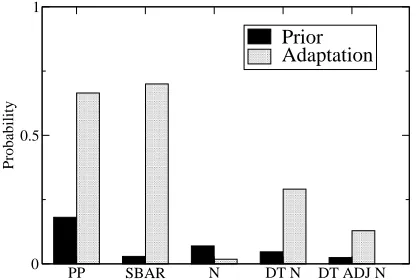
Figure 1: Adaptation within coordinate structures in the Brown corpus
PP SBAR N DT N DT ADJ N 0
0.5 1
Probability
Prior Adaptation
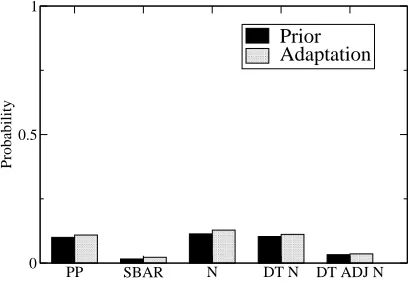
Figure 2: Adaptation within coordinate structures in the WSJ corpus
construction does or does not occur. This is done similarly to the document half case described above. There are four frequencies of interest, but now they refer to the frequency that a particular construction (rather than a word) either occurs or does not occur in the prime and target set.
To ensure results were general across genres, we used all three parts of the English Penn Treebank: the Wall Street Journal (WSJ), the balanced Brown corpus of written text (Brown) and the Switchboard corpus of spontaneous dialog. In each case, we use the entire corpus.
Therefore, in total, we report 30 probabilities: the prior and positive adaptation for each of the five con-structions in each of the three corpora. The primary objective is to observe the difference between the prior and positive adaptation for a given construction in a particular corpus. Therefore, we also perform a
[image:3.612.313.521.245.385.2]PP SBAR N DT N DT ADJ N 0
0.5 1
Probability
[image:4.612.313.520.53.196.2]Prior Adaptation
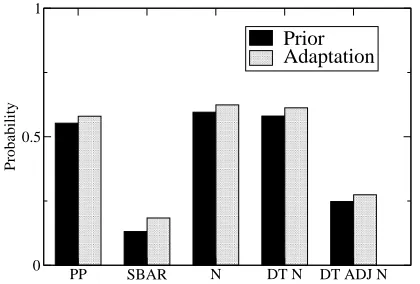
Figure 3: Adaptation within coordinate structures in the Switchboard corpus
3.2 Results
The results are shown in Figure 1 for the Brown cor-pus, Figure 2 for the WSJ and Figure 3 for Switch-board. Each figure shows the prior and positive adaptation for all five constructions: relative clauses (SBAR) aPPmodifier (PP), a single common noun (N), a determiner and noun (DT N), and a determiner adjective and noun (DT ADJ N). Only in the case of a single common noun in the WSJ and Switchboard corpora is the prior probability higher than the posi-tive adaptation. In all other cases, the probability of the given construction is more likely to occur inNP2 given that it has occurred in NP1. According to the
χ2 tests, all differences between priors and positive adaptations were significant at the 0.01 level. The size of the data sets means that even small differ-ences in probability are statistically significant. All differences reported in the remainder of this paper are statistically significant; we omit the details of in-dividualχ2tests.
3.3 Discussion
The main conclusion we draw is that the parallelism effect in corpora mirrors the ones found experimen-tally by Frazier et al. (2000), if we assume higher probabilities are correlated with easier human pro-cessing. This conclusion is important, as the experi-ments of Frazier et al. (2000) only provided evidence for parallelism in comprehension data. Corpus data, however, are production data, which means that the our findings are first ones to demonstrate parallelism effects in production.
The question of the relationship between compre-hension and production data is an interesting one.
PP SBAR N DT N DT ADJ N 0
0.5 1
Probability
[image:4.612.72.282.54.197.2]Prior Adaptation
Figure 4: Adaptation within sentences in the Brown corpus
PP SBAR N DT N DT ADJ N 0
0.5 1
Probability
Prior Adaptation
Figure 5: Adaptation within sentences in the WSJ corpus
We can expect that production data, such as corpus data, are generated by speakers through a process that involves self-monitoring. Written texts (such as the WSJ and Brown) involve proofreading and edit-ing, i.e., explicit comprehension processes. Even the data in a spontaneous speech corpus such as Swtich-board can be expected to involve a certain amount of self-monitoring (speakers listen to themselves and correct themselves if necessary). It follows that it is not entirely unexpected that similar effects can be found in both comprehension and production data.
4 Experiment 2: Parallelism in Documents
[image:4.612.314.522.244.385.2]explana-PP SBAR N DT N DT ADJ N 0
0.5 1
Probability
[image:5.612.314.520.52.196.2]Prior Adaptation
Figure 6: Adaptation between sentences in the Brown corpus
PP SBAR N DT N DT ADJ N 0
0.5 1
Probability
[image:5.612.71.281.55.196.2]Prior Adaptation
Figure 7: Adaptation between sentences in the WSJ corpus
tion for the effect: one in terms of a construction-specific copying mechanism, and one in terms of a generalized syntactic priming mechanism. In the first case, we predict that the parallelism effect is re-stricted to coordinate structures, while in the second case, we expect that parallelism (a) is independent of coordination, and (b) occurs in the wider discourse, i.e., not only within sentences but also between sen-tences.
4.1 Method
The method used was the same as in Experiment 1 (see Section 3.1), with the exception that the prime set and the target set are no longer restricted to being the first and second conjunct in a coordi-nate structure. We investigated three levels of gran-ularity: within sentences, between sentences, and within documents. Within-sentence parallelism oc-curs when the prime NP and the target NP oc-cur within the same sentence, but stand in an
ar-PP SBAR N DT N DT ADJ N 0
0.5 1
Probability
[image:5.612.71.281.244.386.2]Prior Adaptation
Figure 8: Adaptation within documents in the Brown corpus (all items exhibit weak yet statistically signif-icant positive adaptation)
PP SBAR N DT N DT ADJ N 0
0.5 1
Probability
Prior Adaptation
Figure 9: Adaptation within documents in the WSJ corpus
bitrary structural relationship. CoordinateNPs were excluded from this analysis, so as to make sure that any within-sentence parallelism is not confounded coordination parallelism as established in Experi-ment 1. Between-sentence parallelism was measured by regarding as the target the sentence immediately following the prime sentence. In order to investi-gate within-document parallelism, we split the doc-uments into equal-sized halves; then the adaptation probability was computed by regarding the first half as the prime and the second half as the target (this method is the same as Church’s method for measur-ing lexical adaptation).
[image:5.612.313.520.255.398.2]than sentences should be level of analysis. We will investigate this separately in Experiment 3 below.
4.2 Results
The results for the within-sentence analysis are graphed in Figures 4 and 5 for the Brown and WSJ corpus, respectively. We find that there is a paral-lelism effect in both corpora, for all the NP types investigated. Figures 6–9 show that the same is true also for the between-sentence and within-document analysis: parallelism effects are obtained for allNP
types and for both corpora, even it the parallel struc-tures occur in different sentences or in different doc-ument halves. (The within-docdoc-ument probabilities for the Brown corpus (in Figure 8) are close to one in most cases; the differences between the prior and adaptation are nevertheless significant.)
In general, note that the parallelism effects un-covered in this experiment are smaller than the effect demonstrated in Experiment 1: The differ-ences between the prior probabilities and the adap-tation probabilities (while significant) are markedly smaller than those uncovered for parallelism in co-ordinate structure.2
4.3 Discussion
This experiment demonstrated that the parallelism effect is not restricted to coordinate structures. Rather, we found that it holds across the board: for
NPs that occur in the same sentence (and are not part of a coordinate structure), forNPs that occur in ad-jacent sentences, and for NPs that occur in differ-ent documdiffer-ent halves. The between-sdiffer-entence effect has been demonstrated in a more restricted from by Gries (2005) and Szmrecsanyi (2005), who investi-gate priming in corpora for cases of structural choice (e.g., between a dative object and a PP object for verbs like give). The present results extend this find-ing to arbitraryNPs, both within and between sen-tences.
The fact that parallelism is a pervasive phe-nomenon, rather than being limited to coordinate structures, strongly suggests that it is an instance of a general syntactic priming mechanism, which has been an established feature of accounts of the human sentence production system for a while (e.g., Bock,
2The differences between the priors and adaptation proba-bilities are also much smaller than noted by Church (2000). The probabilities of the rules we investigate have a higher marginal probability than the lexical items of interest to Church.
1986). This runs counter to the claims made by Fra-zier et al. (2000) and FraFra-zier and Clifton (2001), who have argued that parallelism only occurs in coordi-nate structures, and should be accounted for using a specialized copying mechanism. (It is important to bear in mind, however, that Frazier et al. only make explicit claims about comprehension, not about pro-duction.)
However, we also found that parallelism effects are clearly strongest in coordinate structures (com-pare the differences between prior and adaptation in Figures 1–3 with those in Figures 4–9). This could explain why Frazier et al.’s (2000) experi-ments failed to find a significant parallelism effect in non-coordinated structures: the effect is simply too week to detect (especially using the self-paced reading paradigm they employed).
5 Experiment 3: Parallelism in Spontaneous Dialog
Experiment 1 showed that parallelism effects can be found not only in written corpora, but also in the Switchboard corpus of spontaneous dialog. We did not include Switchboard in our analysis in Experi-ment 2, as this corpus has a different structure from the two text corpora we investigated: it is organized in terms of turns between two speakers. Here, we exploit this property and conduct a further experi-ment in which we compare parallelism effects be-tween speakers and within speakers.
PP SBAR N DT N DT ADJ N 0
0.5 1
Probability
[image:7.612.313.520.53.196.2]Prior Adaptation
Figure 10: Adaptation between speakers in the Switchboard corpus
production and parsing use distinct mechanisms. In our terms, it predicts that between-speaker positive adaptation should not be found, because it can only result from priming from comprehension to produc-tion, or vice versa. Conversely, the prodedural view outlined by Bock and Loebell predicts that positive adaptation should be found within a given speaker’s dialog turns, because such adaptation can indeed be the result of the facilitation of production routines within a given speaker.
5.1 Method
We created two sets of prime and target data to test within-speaker and between-speaker adaptation. The prime and target sets were defined in terms of pairs of utterances. To test between-speaker adapta-tion, we took each adjacent pair of utterances spo-ken by speaker A and speaker B, in each dialog, and these were treated as prime and target sets respec-tively. In the within-speaker analysis, the prime and target sets were taken from the dialog turns of only one speaker—we took each adjacent pair of dialog turns uttered by a given speaker, excluding the in-tervening utterance of the other speaker. The earlier utterance of the pair was treated as the prime, and the later utterance as the target. The remainder of the method was the same as in Experiments 1 and 2 (see Section 3.1).
5.2 Results
The results for the between-speaker and within-speaker adaptation are shown in Figure 10 and Fig-ure 11 for same five phrase types as in the previous experiments.
PP SBAR N DT N DT ADJ N 0
0.5 1
Probability
[image:7.612.72.282.54.196.2]Prior Adaptation
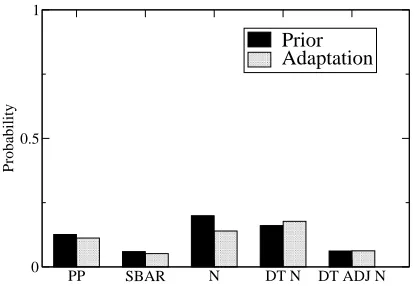
Figure 11: Adaptation within speakers in the Switch-board corpus
A positive adaptation effect can be seen in the between-speaker data. For each phrase type, the adaptation probability is greater than the prior. In the within-speaker data, by comparison, the magnitude of the adaptation advantage is greatly decreased, in comparison with Figure 10. Indeed, for most phrase types, the adaptation probability is lower than the prior, i.e., we have a case of negative adaptation.
5.3 Discussion
The results of the two analyses confirm that adap-tation can indeed be found between speakers in di-alog, supporting the results of experimental work reviewed by Pickering and Garrod (2004). The re-sults do not support the notion that priming is due to the facilitation of production processes within a given speaker, an account which would have pre-dicted adaptation within speakers, but not between speakers.
The lack of clear positive adaptation effects in the within-speaker data is harder to explain—all current theories of priming would predict some ef-fect here. One possibility is that such efef-fects may have been obscured by decay processes: doing a within-speaker analysis entails skipping an interven-ing turn, in which priminterven-ing effects were lost. We in-tend to address these concerns using more elaborate experimental designs in future work.
6 Conclusions
cor-pus. The effect occurs in a wide range of contexts: within coordinate structures (Experiment 1), within sentences for NPs in an arbitrary structural config-uration, between sentences, and within documents (Experiment 2). This strongly indicates that the par-allelism effect is an instance of a general processing mechanism, such as syntactic priming (Bock, 1986), rather than specific to coordination, as suggested by (Frazier and Clifton, 2001). However, we also found that the parallelism effect is strongest in co-ordinate structures, which could explain why com-prehension experiments so far failed to demonstrate the effect for other structural configurations (Frazier et al., 2000). We leave it to future work to explain why adaptation is much stronger in co-ordination: is co-ordination special because of extra constrains (i.e., some kind of expected contrast/comparison be-tween co-ordinate sisters) or because of fewer con-straints (i.e., both co-ordinate sisters have a similar grammatical role in the sentence)?
Another result (Experiment 3) is that the paral-lelism effect occurs between speakers in dialog. This finding is compatible with Pickering and Garrod’s (2004) interactive alignment model, and strengthens the argument for parallelism as an instance of a gen-eral priming mechanism.
Previous experimental work has found parallelism effects, but only in comprehension data. The present work demonstrates that parallelism effects also oc-cur in production data, which raises an interesting question of the relationship between the two data types. It has been hypothesized that the human lan-guage processing system is tuned to mirror the prob-ability distributions in its environment, including the probabilities of syntactic structures (Mitchell et al., 1996). If this tuning hypothesis is correct, then the parallelism effect in comprehension data can be ex-plained as an adaptation of the human parser to the prevalence of parallel structures in its environment (as approximated by corpus data) that we demon-strated in this paper.
Note that the results in this paper not only have an impact on theoretical issues regarding human sen-tence processing, but also on engineering problems in natural language processing, e.g., in probabilistic parsing. To avoid sparse data problems, probabilistic parsing models make strong independence assump-tions; in particular, they generally assume that sen-tences are independent of each other. This is partly
due to the fact it is difficult to parameterize the many possible dependencies which may occur between adjacent sentences. However, in this paper, we show that structure re-use is one possible way in which the independence assumption is broken. A simple and principled approach to handling structure re-use would be to use adaptation probabilities for prob-abilistic grammar rules, analogous to cache proba-bilities used in caching language models (Kuhn and de Mori, 1990). We are currently conducting further experiments to investigate of the effect of syntactic priming on probabilistic parsing.
References
Bock, J. Kathryn. 1986. Syntactic persistence in language pro-duction. Cognitive Psychology 18:355–387.
Bock, Kathryn and Helga Loebell. 1990. Framing sentences.
Cognition 35(1):1–39.
Branigan, Holly P., Marin J. Pickering, and Janet F. McLean. 2005. Priming prepositional-phrase attachment during com-prehension. Journal of Experimental Psychology: Learning,
Memory and Cognition 31(3):468–481.
Carlson, Katy. 2002. The effects of parallelism and prosody on the processing of gapping structures. Language and Speech 44(1):1–26.
Church, Kenneth W. 2000. Empirical estimates of adaptation: the chance of two Noriegas is closer to p/2 than p2. In
Pro-ceedings of the 17th Conference on Computational Linguis-tics. Saarbr¨ucken, Germany, pages 180–186.
Frazier, Lyn, Alan Munn, and Chuck Clifton. 2000. Processing coordinate structures. Journal of Psycholinguistic Research 29(4):343–370.
Frazier, Lyn, Lori Taft, Tom Roeper, Charles Clifton, and Kate Ehrlich. 1984. Parallel structure: A source of facilitation in sentence comprehension. Memory and Cognition 12(5):421– 430.
Frazier, Lynn and Charles Clifton. 2001. Parsing coordinates and ellipsis: Copyα. Syntax 4(1):1–22.
Gries, Stefan T. 2005. Syntactic priming: A corpus-based ap-proach. Journal of Psycholinguistic Research 35.
Kuhn, Roland and Renate de Mori. 1990. A cache-based natural language model for speech recognition. IEEE Transanctions
on Pattern Analysis and Machine Intelligence 12(6):570–
583.
Mauner, Gail, Michael K. Tanenhaus, and Greg Carlson. 1995. A note on parallelism effects in processing deep and surface verb-phrase anaphors. Language and Cognitive Processes 10:1–12.
Mitchell, Don C., Fernando Cuetos, Martin M. B. Corley, and Marc Brysbaert. 1996. Exposure-based models of human parsing: Evidence for the use of coarse-grained (non-lexical) statistical records. Journal of Psycholinguistic Research
24(6):469–488.
Pickering, Martin J. and Simon Garrod. 2004. Toward a mech-anistic psychology of dialogue. Behavioral and Brain
Sci-ences 27(2):169–225.
Szmrecsanyi, Benedikt. 2005. Creatures of habit: A corpus-linguistic analysis of persistence in spoken English. Corpus