© 2018 Xu et al. This work is published and licensed by Dove Medical Press Limited. The full terms of this license are available at https://www.dovepress.com/terms.php
Neuropsychiatric Disease and Treatment 2018:14 153–164
Neuropsychiatric Disease and Treatment
Dove
press
submit your manuscript | www.dovepress.com
Dovepress 153
O r i g i N a l r e s e a r c h
open access to scientific and medical research
Open access Full Text article
a meta-analysis of data associating
DRD4
gene
polymorphisms with schizophrenia
Feng-ling Xu Xue Wu Jing-jing Zhang Bao-jie Wang Jun Yao
Department of Forensic, genetic and Biology Medicine, school of Forensic Medicine, china Medical University, shenyang, china
Abstract: To explore the association between DRD4 polymorphisms and schizophrenia risk, a meta-analysis was carried out with 41 case–control articles. Specifically, we included 28 articles (5,735 cases and 5,278 controls) that pertained to the 48 bp variable number tandem repeat (VNTR) polymorphism, nine articles (1,517 cases and 1,746 controls) that corresponded to the 12 bp tandem repeat (TR), six articles (1,912 cases and 1,836 controls) that addressed the 120 bp TR, 10 articles (2,927 cases and 2,938 controls) that entailed the −521 C.T polymorphism, six articles (1,735 cases and 1,724 controls) that pertained to the −616 C.G polymorphism, and four articles (1,191 cases and 1,215 controls) that involved the −376 C.T polymorphism. Pooled analysis, subgroup analysis, and sensitivity analysis were performed, and the data were visualized by means of forest and funnel plots. Results of pooled analysis indicated that the −521 CC variant (Pz=0.009, odds ratio [OR] =1.218, 95% confidence interval [CI] =1.050–1.413) and genotype L/L (ie, long allele) of the 120 bp TR were risk factors of schizophrenia (Pz=0.004, OR =1.275, 95% CI =1.081–1.504). The 48 bp VNTR, the 12 bp TR, the −616 C.G polymorphism, and the −376 C.T polymorphism were not associated with schizophrenia. Additional research is warranted to explore the association between polymorphisms of DRD4 and schizophrenia risk.
Keywords: DRD4, schizophrenia, meta-analysis, polymorphism
Introduction
Schizophrenia is a chronic, severe mental disorder with a tremendously variable clinical presentation. Results of studies in which schizophrenia occurrence was evaluated among twins or children who were adopted have shown that this disease results from an interaction of genetics and environmental factors.1 Specifically, schizophrenia is a
multigene disease with a heritability of 60%–70%.2 Although the pathogenesis and
etiology of schizophrenia are not understood fully,3 a large body of evidence has
indi-cated that dopamine dysfunction is involved in the occurrence of this disease.4–6
Dopamine is an endogenous neurotransmitter that primarily functions by binding to dopamine receptors, which have five types. The D4 receptor has attracted attention in the field of schizophrenia research. In postmortem brain striatum of patients with schizophrenia, the density of D4 receptor was significantly higher than in brain tissues of unaffected patients; in contrast, the density of D2 and D3 receptors remained modest.7
This upregulation of D4 receptor has been shown to be related to the disease rather than to pharmacological effects of treatment.8 The pharmacological characteristics of
D4 resemble those of D2 and D3, but the affinity of D4 for clozapine is an order of magnitude higher.9 Hence, DRD4 (chromosome 11p15.5) is a potential susceptibility
gene for schizophrenia.10
The SZGene database is a viable resource for ascertaining the risk of schizophrenia.11,12
Other investigators have determined that the −521 C.T and 120 bp tandem repeat
correspondence: Jun Yao school of Forensic Medicine, china Medical University, No 77 Puhe road, shenbei New District, shenyang, 110122, china
Tel +86 24 3193 9433 email [email protected]
Journal name: Neuropsychiatric Disease and Treatment Article Designation: Original Research
Year: 2018 Volume: 14
Running head verso: Xu et al
Running head recto: DRD4 and schizophrenia: a meta-analysis DOI: http://dx.doi.org/10.2147/NDT.S156479
Neuropsychiatric Disease and Treatment downloaded from https://www.dovepress.com/ by 118.70.13.36 on 25-Aug-2020
For personal use only.
Dovepress
Xu et al
(TR) polymorphisms in DRD4 are associated with nominally significant summary odds ratios (ORs) as risk factors for schizophrenia (P=0.003 and 0.005, respectively).11 However,
despite a great deal of research, an association between DRD4 polymorphisms and schizophrenia risk remains debatable.
TRs in DRD4 include a 48 bp variable number TR (VNTR), a 12 bp TR, and a 120 bp TR. The 48 bp VNTR is located in the third exon of DRD4 and encodes a sequence of 16 amino acids in the region of the third cytoplasmic loop. Polymorphisms in the 48 bp VNTR were found to differ in the recruitment of cellular cAMP.13 The 12 bp TR (rs4646983)
is located in the first exon of DRD4, which corresponds to the N terminus of the gene product. Variants of the 12 bp TR modify an N-terminal glycosylation site, which affects expression levels of the membrane protein.14 The 120 bp TR
is located 1.2 kb upstream from the initiation codon, and polymorphisms at this site affect transcriptional efficiency.15
Some researchers noted that the 120 bp TR was associated with attention-deficit hyperactivity disorder (ADHD)16,17 and
schizophrenia.18 However, Tsutsumi et al19 demonstrated that
the 120 bp TR was not related to the risk of schizophrenia. The −521 C.T polymorphism (rs1800955), located in the promoter region of DRD4, has been shown to be associated with novelty seeking20,21 and schizophrenia.22
Mitsuyasu et al suggested that the −521C variant could be a risk factor for schizophrenia among female patients.23
How-ever, other investigators found no relationship between −521 C.T and schizophrenia.24 The −616 C.G (rs747302) and
the −376 C.T (rs916455) polymorphisms are located in the promoter region of DRD4; these variants have not been associated conclusively with schizophrenia risk. A pooled analysis of data regarding polymorphisms in DRD4 and schizophrenia risk is warranted.
Meta-analyses are proven tools for ascertaining asso-ciations of gene polymorphisms with disease.25–27 Several
meta-analyses previously have addressed the potential asso-ciations between DRD4 polymorphisms and schizophrenia risk.28–31 However, the authors of these studies examined just
one polymorphic locus28 or did not include the latest data.31
Herein, we describe the results of our meta-analysis of the association between DRD4 and schizophrenia risk.
Materials and methods
literature searches
The SZGene, PubMed, and China National Knowledge Infra-structure (CNKI) databases were searched with the keywords “schizophrenia” and “DRD4”. Reference lists from relevant articles also were screened to identify additional studies.
inclusion criteria and exclusion criteria
Studies with the following features were included in the meta-analysis: 1) case–control design; 2) involved patients with schizophrenia; 3) presented relevant data for case and control groups (eg, allele/genotype frequencies, sample size, ethnicity, schizophrenia diagnostic criteria, and control group source); 4) removed duplicate sample data; and 5) published before September 1, 2017. Studies were excluded for the following reasons: 1) no control group; 2) no usable genotype frequency data (attempts were made to contact authors via email for these data); and 3) duplicate reported sample data.
statistical analysis
A meta-analysis was carried out using Stata Version 10.0 (StataCorp LP, College Station, TX, USA). The P-value of Hardy–Weinberg equilibrium (PHWE) was calculated for the control groups. ORs and 95% confidence intervals (CIs) were calculated to evaluate the strength of the associations. Under a random model,32,33 associations between DRD4 and
the risk of schizophrenia were analyzed. A random model took into account population differences and heterogeneity among studies.25,34 Pairwise differences between genotypes
(AA vs aa, Aa vs aa, and AA vs Aa [A being the risk factor]) were used to determine a suitable genetic model.35
The heterogeneity of the studies was determined by Cochran’s chi-square-based Q-statistic test.36 The degree
of heterogeneity was expressed as I2 and was divided into
low (I2,25%), medium (I2~50%), and high (I2.75%)
heterogeneity groups.37 I2.50% was regarded as indicating
substantial heterogeneity.38 Publication bias was calculated
using Egger’s test and was represented as a funnel plot in which the standard error of log(OR) of each study was plotted against its log(OR). A sensitivity analysis was conducted to test the impact of removing each single study on the pooled result. Statistical power was calculated by means of the PS program, as described previously.39,40 P-values corresponding
to association, heterogeneity, and publication bias tests were represented as Pz, Ph, and Pe, respectively. Statistical signifi-cance was defined as P,0.05 for all analyses.41
Results
Description of studies
A total of 211 English-language articles were obtained from SZGene and PubMed, and 14 Chinese-language articles were obtained from CNKI. After removing duplicate studies and those that did not meet our inclusion criteria, 41 articles were used in the meta-analysis (Figure 1). Specifically, 28 articles addressed the 48 bp VNTR,23,42–68 nine articles involved the 12 bp
Neuropsychiatric Disease and Treatment downloaded from https://www.dovepress.com/ by 118.70.13.36 on 25-Aug-2020
Dovepress DRD4 and schizophrenia: a meta-analysis
TR,23,43,48–50,69–72 six articles pertained to the 120 bp TR,18,19,65,72–74
10 articles addressed the −521 C.T polymorphism,18,22–24,58,72–76
six articles referred to −616 C.G,18,23,72,74–76 and four articles
entailed −376 C.T.18,23,72,75 Details of these studies are listed
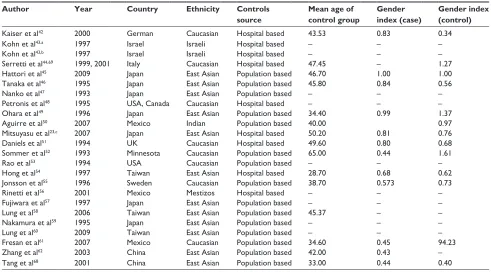
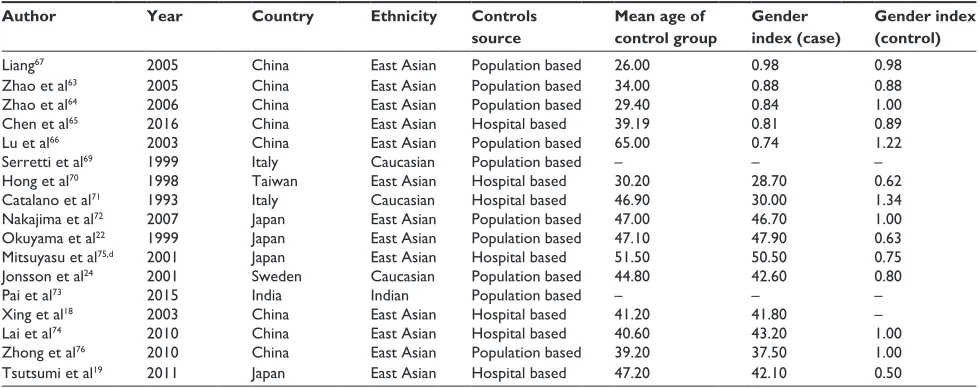
in Table 1. We omitted loci from our meta-analysis that were not represented in at least four articles.
results of data analysis
No association between the 48 bp VNTr and schizophrenia risk
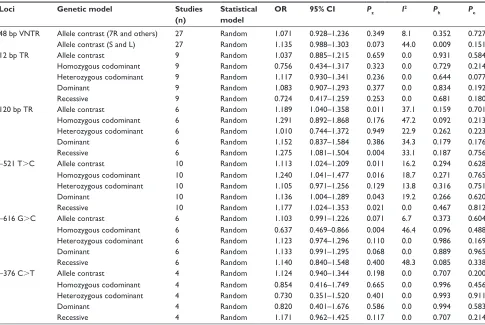
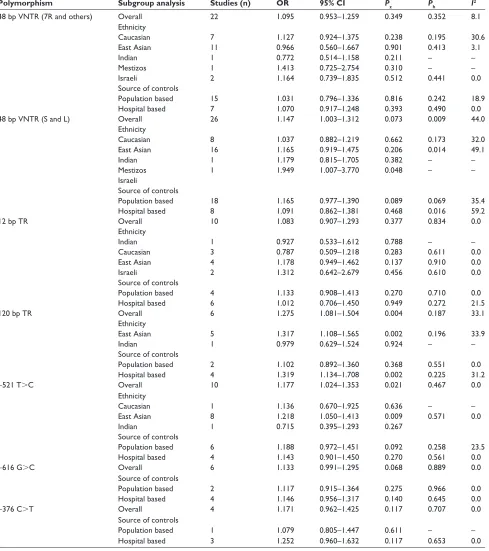
Allele frequencies of the 48 bp VNTR are listed in Table 2. Results of pooled analyses are summarized in Table 3, and data from subgroup analyses are depicted in Table 4. We were
'XSOLFDWHVRIDUWLFOHVQ 1RFDVH±FRQWUROVWXG\UHODWHGZLWK RFFXUUHQFHRIVFKL]RSKUHQLDQ
ES9175
1 ES91751 ES91751 ±7!&1 91751 ±*!& ±&!71 DUWLFOHV
IURP6=*HQH DQG3XE0HG GDWDEDVHV
DUWLFOHV IURP&1., GDWDEDVH
DUWLFOHVLQFOXGHGLQPHWDDQDO\VLV DUWLFOHVDIWHUUHPRYLQJ
$EVWUDFWUHYLHZXQDEOHWRJHWIXOO 3')Q
0HWDDQDO\VLVQ
1RWUHODWHGZLWKWDUJHWORFLQ 1RGHWDLOHGGDWDRIJHQRW\SHQ
Figure 1 study selection process in this meta-analysis.
Abbreviations: cNKi, china National Knowledge infrastructure; VNTr, variable number tandem repeat.
Table 1 Characteristics of studies that qualified to be included in the meta-analysis
Author Year Country Ethnicity Controls
source
Mean age of control group
Gender index (case)
Gender index (control)
Kaiser et al42 2000 german caucasian hospital based 43.53 0.83 0.34
Kohn et al43,a 1997 israel israeli hospital based – – –
Kohn et al43,b 1997 israel israeli hospital based – – –
serretti et al44,69 1999, 2001 italy caucasian hospital based 47.45 – 1.27
hattori et al45 2009 Japan east asian Population based 46.70 1.00 1.00
Tanaka et al46 1995 Japan east asian Population based 45.80 0.84 0.56
Nanko et al47 1993 Japan east asian Population based – – –
Petronis et al48 1995 Usa, canada caucasian hospital based – – –
Ohara et al49 1996 Japan east asian Population based 34.40 0.99 1.37
aguirre et al50 2007 Mexico indian Population based 40.00 0.97
Mitsuyasu et al23,c 2007 Japan east asian hospital based 50.20 0.81 0.76
Daniels et al51 1994 UK caucasian hospital based 49.60 0.80 0.68
sommer et al52 1993 Minnesota caucasian Population based 65.00 0.44 1.61
rao et al53 1994 Usa caucasian Population based – – –
hong et al54 1997 Taiwan east asian hospital based 28.70 0.68 0.62
Jonsson et al55 1996 sweden caucasian Population based 38.70 0.573 0.73
rinetti et al56 2001 Mexico Mestizos hospital based – – –
Fujiwara et al57 1997 Japan east asian Population based – – –
lung et al58 2006 Taiwan east asian Population based 45.37 – –
Nakamura et al59 1995 Japan east asian Population based – – –
lung et al60 2009 Taiwan east asian Population based – – –
Fresan et al61 2007 Mexico caucasian Population based 34.60 0.45 94.23
Zhang et al62 2003 china east asian Population based 42.00 0.43 –
Tang et al68 2001 china east asian Population based 33.00 0.44 0.40
(Continued)
Neuropsychiatric Disease and Treatment downloaded from https://www.dovepress.com/ by 118.70.13.36 on 25-Aug-2020
Dovepress
Xu et al
unable to obtain specific data regarding the number of 7-repeat (7R) alleles in the 48 bp VNTR,44 despite multiple attempts
to contact the corresponding author. Thus, this study was omitted from our analysis of an association between 7R and
schizophrenia risk. When we conducted a pooled analysis of the remaining 5,316 cases and 4,677 controls, we found that 7R was not associated with schizophrenia risk (Pz=0.349, OR =1.071, 95% CI =0.928–1.236) under a random effects model with a
Table 2 allele frequency of 48 bp VNTr polymorphism
Author Allele distribution Allele frequency
Cases (n) Controls (n) Cases (n) Controls (n)
Short (#4) Long ($5) Short (#4) Long ($5) 7R Others 7R Others
Kaiser et al42 1,006 270 1,182 322 232 1,044 282 1,222
Kohn et al43,a – – – – 22 76 52 238
Kohn et al43,b – – – – 13 85 17 101
serretti et al44,69 709 129 990 212 – – – –
hattori et al45 1,066 54 1,076 60 2 1,118 6 1,130
Tanaka et al46 134 6 133 7 0 140 2 138
Nanko et al47 148 12 152 10 2 158 0 162
Petronis et al48 77 23 154 46 21 79 32 168
Ohara et al49 286 20 227 15 18 288 10 232
aguirre et al50 120 72 224 114 46 146 98 240
Mitsuyasu et al23,c 406 18 447 27 1 423 3 471
Daniels et al51 159 53 193 45 52 160 45 193
sommer et al52 182 48 171 59 43 187 54 176
rao et al53 39 17 31 9 17 39 8 32
hong et al54 172 6 78 6 0 178 0 84
Jonsson et al55 187 49 124 28 42 194 23 129
rinetti et al56 36 38 48 26 31 43 25 49
Fujiwara et al57 34 0 22 0 0 34 0 22
lung et al58 1,216 44 846 10 3 1,257 0 856
Nakamura et al59 189 13 98 6 0 202 0 104
lung et al60 1,774 54 838 8 0 1,828 0 846
Fresan et al61 88 54 285 119 47 95 104 300
Zhang et al62 131 3 145 7 0 134 0 152
Tang et al68 980 40 332 10 1 1,019 0 342
liang67 176 26 185 25 4 198 2 208
Zhao et al63 78 246 75 249 3 321 6 318
Zhao et al64 41 121 40 136 0 162 3 173
chen et al65 219 49 299 37 0 268 0 336
lu et al66 155 5 157 3 1 159 0 160
Notes: aethnicity is ashkenazi which included Jews whose origin (or whose parents’ origin), was in european countries, apart from the Balkans; bethnicity is non-ashkenazi
which included Jews whose origin was in North africa or asia. cincluded 48 bp VNTr, 12 bp Tr, and 120 bp Tr.
Abbreviations: 7r, 7 repeat; VNTr, variable number tandem repeat.
Table 1 (Continued)
Author Year Country Ethnicity Controls
source
Mean age of control group
Gender index (case)
Gender index (control)
liang67 2005 china east asian Population based 26.00 0.98 0.98
Zhao et al63 2005 china east asian Population based 34.00 0.88 0.88
Zhao et al64 2006 china east asian Population based 29.40 0.84 1.00
chen et al65 2016 china east asian hospital based 39.19 0.81 0.89
lu et al66 2003 china east asian Population based 65.00 0.74 1.22
serretti et al69 1999 italy caucasian Population based – – –
hong et al70 1998 Taiwan east asian hospital based 30.20 28.70 0.62
catalano et al71 1993 italy caucasian hospital based 46.90 30.00 1.34
Nakajima et al72 2007 Japan east asian Population based 47.00 46.70 1.00
Okuyama et al22 1999 Japan east asian Population based 47.10 47.90 0.63
Mitsuyasu et al75,d 2001 Japan east asian hospital based 51.50 50.50 0.75
Jonsson et al24 2001 sweden caucasian Population based 44.80 42.60 0.80
Pai et al73 2015 india indian Population based – – –
Xing et al18 2003 china east asian hospital based 41.20 41.80 –
lai et al74 2010 china east asian hospital based 40.60 43.20 1.00
Zhong et al76 2010 china east asian Population based 39.20 37.50 1.00
Tsutsumi et al19 2011 Japan east asian hospital based 47.20 42.10 0.50
Notes: gender index = female/male. aethnicity is ashkenazi which included Jews whose origin (or whose parents’ origin), was in european countries, apart from the Balkans; bethnicity is non-ashkenazi which included Jews whose origin was in North africa or asia. cincluded 48 bp VNTr, 12 bp Tr, and 120 bp Tr; ddid not include 48 bp VNTr,
12 bp Tr, and 120 bp Tr.
Neuropsychiatric Disease and Treatment downloaded from https://www.dovepress.com/ by 118.70.13.36 on 25-Aug-2020
Dovepress DRD4 and schizophrenia: a meta-analysis
power of 0.271 (Table 3 and Figure S1).35 No association was
found in subgroup analysis by ethnicity (ie, Caucasian [Pz=0.238, OR =1.127, 95% CI =0.924–1.375], East Asian [Pz=0.901, OR =0.966, 95% CI =0.560–1.667], Indian [Pz=0.211, OR
=0.772, 95% CI =0.514–1.158], Mestizos [Pz=0.310, OR =1.413, 95% CI =0.725–2.754], and Israeli [Pz=0.512, OR =1.164, 95% CI =0.739–1.835]). Moreover, no association of 7R with the risk of schizophrenia was ascertained in subgroup analysis by source of controls. No significant heterogeneity was found in the pooled or subgroup analyses.
To incorporate data from the study of Serretti et al,44 the
48 bp VNTR was classified into S (short allele, #4 TRs) and L (long allele, $5 TRs) groups. In the study by Kohn et al,43 the
48 bp VNTR data could not be categorized into S and L groups, so this study was omitted from the analysis. The remaining data comprised 5,637 cases and 5,074 controls (Table 3 and
Figure S2). Results of a pooled analysis indicated no rela-tionship between this polymorphism and schizophrenia risk (Pz=0.073, OR =1.135, 95% CI =0.988–1.303) with a power of 0.909. No association was found in the subgroup analysis by source of control or by ethnicity, except for Mestizos (Pz=0.048, OR =1.949, 95% CI =1.007–3.77). Significant
heterogeneity was found in the pooled analysis (Pe=0.009,
I2=44%) and in the subgroup analysis by ethnicity in the East
Asian subgroup (Pe=0.014, I2=49.1%) and by source of control
in the hospital-based subgroup (Pe=0.016, I2=59.2%).
No association between the 12 bp Tr and schizophrenia risk
To evaluate the relationship between the 12 bp TR and the risk of schizophrenia, 1,517 cases and 1,746 controls were included (Table 5 and Figures S3–S7). Allele groups were defined as in (ie, inserted) and de (ie, deleted). In the dominant model,34,35 the pooled OR using a random effects model was
1.083 (Pz=0.377, 95% CI =0.907–1.293) with a power of 0.154 (Table 3). No association was found in subgroup analysis by ethnicity or by source of controls (Table 4). No significant het-erogeneity was observed in the pooled or subgroup analyses.
genotype l/l of the 120 bp Tr might be a risk factor for schizophrenia
In a random model, a pooled analysis was conducted (1,912 cases and 1,836 controls) to evaluate the relationship between genotype L/L of the 120 bp TR and schizophrenia Table 3 Pooled associations of DRD4 polymorphisms and schizophrenia
Loci Genetic model Studies
(n)
Statistical model
OR 95% CI Pz I2 P
h Pe
48 bp VNTr allele contrast (7r and others) 27 random 1.071 0.928–1.236 0.349 8.1 0.352 0.727
allele contrast (s and l) 27 random 1.135 0.988–1.303 0.073 44.0 0.009 0.151
12 bp Tr allele contrast 9 random 1.037 0.885–1.215 0.659 0.0 0.931 0.584
homozygous codominant 9 random 0.756 0.434–1.317 0.323 0.0 0.729 0.214
heterozygous codominant 9 random 1.117 0.930–1.341 0.236 0.0 0.644 0.077
Dominant 9 random 1.083 0.907–1.293 0.377 0.0 0.834 0.192
recessive 9 random 0.724 0.417–1.259 0.253 0.0 0.681 0.180
120 bp Tr allele contrast 6 random 1.189 1.040–1.358 0.011 37.1 0.159 0.701
homozygous codominant 6 random 1.291 0.892–1.868 0.176 47.2 0.092 0.213
heterozygous codominant 6 random 1.010 0.744–1.372 0.949 22.9 0.262 0.223
Dominant 6 random 1.152 0.837–1.584 0.386 34.3 0.179 0.176
recessive 6 random 1.275 1.081–1.504 0.004 33.1 0.187 0.756
−521 T.c allele contrast 10 random 1.113 1.024–1.209 0.011 16.2 0.294 0.628
homozygous codominant 10 random 1.240 1.041–1.477 0.016 18.7 0.271 0.765
heterozygous codominant 10 random 1.105 0.971–1.256 0.129 13.8 0.316 0.751
Dominant 10 random 1.136 1.004–1.289 0.043 19.2 0.266 0.620
recessive 10 random 1.177 1.024–1.353 0.021 0.0 0.467 0.812
−616 g.c allele contrast 6 random 1.103 0.991–1.226 0.071 6.7 0.373 0.604
homozygous codominant 6 random 0.637 0.469–0.866 0.004 46.4 0.096 0.488
heterozygous codominant 6 random 1.123 0.974–1.296 0.110 0.0 0.986 0.169
Dominant 6 random 1.133 0.991–1.295 0.068 0.0 0.889 0.965
recessive 6 random 1.140 0.840–1.548 0.400 48.3 0.085 0.338
−376 c.T allele contrast 4 random 1.124 0.940–1.344 0.198 0.0 0.707 0.200
homozygous codominant 4 random 0.854 0.416–1.749 0.665 0.0 0.996 0.456
heterozygous codominant 4 random 0.730 0.351–1.520 0.401 0.0 0.993 0.911
Dominant 4 random 0.820 0.401–1.676 0.586 0.0 0.994 0.583
recessive 4 random 1.171 0.962–1.425 0.117 0.0 0.707 0.214
Notes: l, long allele; s, short allele.
Abbreviations: CI, confidence interval; OR, odds ratio; 7R, 7 repeat; TR, tandem repeat; VNTR, variable number TR.
Neuropsychiatric Disease and Treatment downloaded from https://www.dovepress.com/ by 118.70.13.36 on 25-Aug-2020
Dovepress
Xu et al
risk (Table 6 and Figures S8–S12). In the recessive model,34,35
genotype L/L was found to be a potential risk factor for schizophrenia (Pz=0.004, OR =1.275, 95% CI =1.081–1.504) with a power of 0.959 (Table 3). Findings from subgroup analysis indicated significant associations in East Asian
(Pz=0.002, OR =1.317, 95% CI =1.108–1.565) and hospital-based subgroups (Pz=0.002, OR =1.319, 95% CI =1.134–1.708) (Table 4). No association was found for the other subgroups, and no significant heterogeneity was ascertained in the pooled or subgroup analyses.
Table 4 subgroup associations of DRD4 polymorphisms with schizophrenia
Polymorphism Subgroup analysis Studies (n) OR 95% CI Pz Ph I2
48 bp VNTr (7r and others) Overall 22 1.095 0.953–1.259 0.349 0.352 8.1
ethnicity
caucasian 7 1.127 0.924–1.375 0.238 0.195 30.6
east asian 11 0.966 0.560–1.667 0.901 0.413 3.1
indian 1 0.772 0.514–1.158 0.211 – –
Mestizos 1 1.413 0.725–2.754 0.310 – –
israeli 2 1.164 0.739–1.835 0.512 0.441 0.0
source of controls
Population based 15 1.031 0.796–1.336 0.816 0.242 18.9
hospital based 7 1.070 0.917–1.248 0.393 0.490 0.0
48 bp VNTr (s and l) Overall 26 1.147 1.003–1.312 0.073 0.009 44.0
ethnicity
caucasian 8 1.037 0.882–1.219 0.662 0.173 32.0
east asian 16 1.165 0.919–1.475 0.206 0.014 49.1
indian 1 1.179 0.815–1.705 0.382 – –
Mestizos 1 1.949 1.007–3.770 0.048 – –
israeli
source of controls
Population based 18 1.165 0.977–1.390 0.089 0.069 35.4
hospital based 8 1.091 0.862–1.381 0.468 0.016 59.2
12 bp Tr Overall 10 1.083 0.907–1.293 0.377 0.834 0.0
ethnicity
indian 1 0.927 0.533–1.612 0.788 – –
caucasian 3 0.787 0.509–1.218 0.283 0.611 0.0
east asian 4 1.178 0.949–1.462 0.137 0.910 0.0
israeli 2 1.312 0.642–2.679 0.456 0.610 0.0
source of controls
Population based 4 1.133 0.908–1.413 0.270 0.710 0.0
hospital based 6 1.012 0.706–1.450 0.949 0.272 21.5
120 bp Tr Overall 6 1.275 1.081–1.504 0.004 0.187 33.1
ethnicity
east asian 5 1.317 1.108–1.565 0.002 0.196 33.9
indian 1 0.979 0.629–1.524 0.924 – –
source of controls
Population based 2 1.102 0.892–1.360 0.368 0.551 0.0
hospital based 4 1.319 1.134–1.708 0.002 0.225 31.2
−521 T.c Overall 10 1.177 1.024–1.353 0.021 0.467 0.0
ethnicity
caucasian 1 1.136 0.670–1.925 0.636 – –
east asian 8 1.218 1.050–1.413 0.009 0.571 0.0
indian 1 0.715 0.395–1.293 0.267
source of controls
Population based 6 1.188 0.972–1.451 0.092 0.258 23.5
hospital based 4 1.143 0.901–1.450 0.270 0.561 0.0
−616 g.c Overall 6 1.133 0.991–1.295 0.068 0.889 0.0
source of controls
Population based 2 1.117 0.915–1.364 0.275 0.966 0.0
hospital based 4 1.146 0.956–1.317 0.140 0.645 0.0
−376 c.T Overall 4 1.171 0.962–1.425 0.117 0.707 0.0
source of controls
Population based 1 1.079 0.805–1.447 0.611 – –
hospital based 3 1.252 0.960–1.632 0.117 0.653 0.0
Notes: l, long allele; s, short allele.
Abbreviations: CI, confidence interval; OR, odds ratio; 7R, 7 repeat; TR, tandem repeat; VNTR, variable number TR.
Neuropsychiatric Disease and Treatment downloaded from https://www.dovepress.com/ by 118.70.13.36 on 25-Aug-2020
Dovepress DRD4 and schizophrenia: a meta-analysis
The −521 cc variant might be a risk factor for
schizophrenia
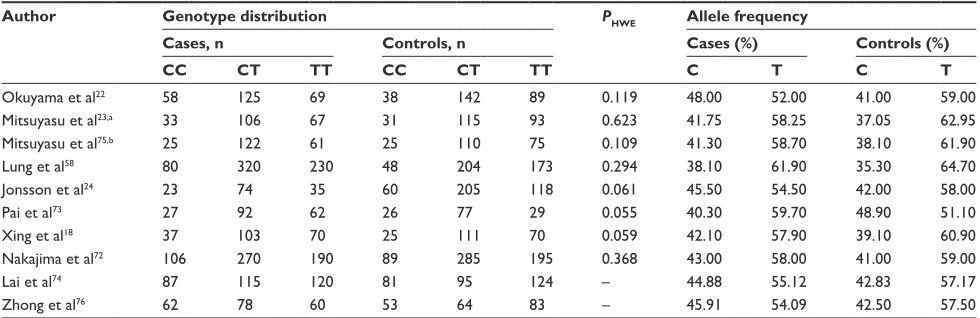
Pooled and subgroup analyses were performed in a random model with 2,927 cases and 2,938 controls (Table 7 and
Figures S13–S17). In the recessive model, −521 CC was found to be a potential risk factor for schizophrenia in the
pooled analysis (Pz=0.021, OR =1.177, 95% CI =1.024–1.353) with a power of 0.656 (Table 3). In subgroup analyses by ethnicity and source of controls, the association was only detected in the East Asian subgroup (Pz=0.009, OR =1.218, 95% CI =1.050–1.413) (Table 4). No significant heterogeneity was noted in the pooled or subgroup analyses.
Table 5 genotype distribution and allele frequency of 12 bp Tr
Author Genotype distribution PHWE Allele frequency
Cases, n Controls, n Case (%) Controls (%)
in/in in/de de/de in/in in/de de/de in de in de
Petronis et al48 43 6 1 80 20 0 0.267 92.00 8.00 90.00 10.00
Ohara et al49 144 9 0 116 5 0 0.816 97.06 2.94 97.93 2.07
serretti et al44,69 184 28 0 225 37 1 0.689 0.93 0.07 0.93 0.07
aguirre et al50 48 34 1 75 55 4 0.102 78.31 21.69 76.49 23.51
Mitsuyasu et al23,a 136 56 5 176 53 10 0.027 83.20 16.70 84.70 15.30
Kohn et al43,b 40 9 0 126 19 0 0.311 94.00 6.00 91.00 9.00
Kohn et al43,c 44 4 1 53 6 0 0.416 94.00 6.00 94.00 6.00
hong et al54 68 10 2 35 7 0 0.556 91.25 8.75 91.70 8.30
catalano et al71 76 3 0 69 6 0 0.718 98.10 1.90 96.00 4.00
Nakajima et al72 413 140 12 431 119 18 0.008 85.50 14.50 86.50 13.50
Notes: PhWe, P-value of hardy–Weinberg equilibrium. aincluded 48 bp VNTr, 12 bp Tr, and 120 bp Tr. bethnicity is ashkenazi which included Jews whose origin (or whose
parents’ origin), was in european countries, apart from the Balkans; cethnicity is non-ashkenazi which included Jews whose origin was in North africa or asia.
Abbreviations: de, deleted; in, inserted; Tr, tandem repeat.
Table 6 genotype distribution and allele frequency of 120 bp Tr
Author Genotype distribution PHWE Allele frequency
Cases, n Controls, n Cases (%) Controls (%)
S/S S/L L/L S/S S/L L/L S L S L
Mitsuyasu et al23,a 10 75 129 13 87 139 0.898 77.80 22.20 76.40 23.60
Pai et al73 23 77 87 11 61 64 0.501 32.90 67.10 30.50 69.50
Xing et al18 20 77 113 28 98 80 0.816 27.90 72.10 37.40 62.60
Nakajima et al72 24 183 362 33 192 345 0.363 20.00 80.00 23.00 78.00
Tsutsumi et al19 24 138 248 16 158 211 0.041 22.68 77.32 24.68 75.32
lai et al74 28 161 133 40 166 94 0.013 33.70 66.30 41.00 59.00
Notes: l, long allele; PhWe, P-value of hardy–Weinberg equilibrium; s, short allele. aincluded 48 bp VNTr, 12 bp Tr, and 120 bp Tr.
Abbreviation: Tr, tandem repeat.
Table 7 genotype distribution and allele frequency of −521 c.T
Author Genotype distribution PHWE Allele frequency
Cases, n Controls, n Cases (%) Controls (%)
CC CT TT CC CT TT C T C T
Okuyama et al22 58 125 69 38 142 89 0.119 48.00 52.00 41.00 59.00
Mitsuyasu et al23,a 33 106 67 31 115 93 0.623 41.75 58.25 37.05 62.95
Mitsuyasu et al75,b 25 122 61 25 110 75 0.109 41.30 58.70 38.10 61.90
lung et al58 80 320 230 48 204 173 0.294 38.10 61.90 35.30 64.70
Jonsson et al24 23 74 35 60 205 118 0.061 45.50 54.50 42.00 58.00
Pai et al73 27 92 62 26 77 29 0.055 40.30 59.70 48.90 51.10
Xing et al18 37 103 70 25 111 70 0.059 42.10 57.90 39.10 60.90
Nakajima et al72 106 270 190 89 285 195 0.368 43.00 58.00 41.00 59.00
lai et al74 87 115 120 81 95 124 – 44.88 55.12 42.83 57.17
Zhong et al76 62 78 60 53 64 83 – 45.91 54.09 42.50 57.50
Notes: PhWe, P-value of hardy–Weinberg equilibrium. aincluded 48 bp VNTr, 12 bp Tr, and 120 bp Tr; bdid not include 48 bp VNTr, 12 bp Tr, and 120 bp Tr.
Abbreviation: Tr, tandem repeat.
Neuropsychiatric Disease and Treatment downloaded from https://www.dovepress.com/ by 118.70.13.36 on 25-Aug-2020
Dovepress
Xu et al
Table 9 genotype distribution and allele frequency of −376 c.T
Author Genotype distribution PHWE Allele frequency
Cases, n Controls, n Cases (%) Controls (%)
CC CT TT CC CT TT C T C T
Mitsuyasu et al23,a 177 34 1 193 43 1 0.39 91.50 8.50 90.45 9.45
Mitsuyasu et al75,b 179 28 1 168 41 1 0.367 92.80 0.72 89.80 1.02
Xing et al74 137 66 7 127 74 5 0.126 81.00 19.00 79.60 20.40
Nakajima et al72 453 100 8 447 108 7 0.869 90.00 10.00 89.50 10.50
Notes: PhWe, P-value of hardy–Weinberg equilibrium. aincluded 48 bp VNTr, 12 bp Tr, and 120 bp Tr; bdid not include 48 bp VNTr, 12 bp Tr, and 120 bp Tr.
Abbreviation: Tr, tandem repeat.
Table 8 genotype distribution and allele frequency of −616 c.g
Author Genotype distribution PHWE Allele frequency
Cases, n Controls, n Cases (%) Controls (%)
GG GC CC GG GC CC G C G C
Mitsuyasu et al23,a 102 89 19 112 98 30 0.243 69.80 30.20 67.10 32.90
Mitsuyasu et al75,b 89 89 30 100 85 25 0.296 64.20 35.80 67.90 32.10
Xing et al18 83 100 27 91 102 13 0.025 63.30 36.70 68.90 31.10
Nakajima et al72 267 248 49 285 224 59 0.134 69.00 31.00 69.50 29.50
lai et al74 161 113 48 166 102 32 0.009 67.55 32.45 72.33 27.67
Zhong et al76 112 77 31 107 68 25 0.010 68.41 31.59 70.50 29.50
Notes: PhWe, P-value of hardy–Weinberg equilibrium. aincluded 48 bp VNTr, 12 bp Tr, and 120 bp Tr; bdid not include 48 bp VNTr, 12 bp Tr, and 120 bp Tr.
Abbreviation: Tr, tandem repeat.
)XQQHOSORWZLWKSVHXGR FRQILGHQFHOLPLWV
/RJ25
± ±
6WDQGDUGHUURURIORJ25
Figure 2 Funnel plot analysis for the detection of publication bias in the association
between the 48 bp VNTr (7r vs others) and schizophrenia.
Abbreviations: Or, odds ratio; 7r, 7 repeat; VNTr, variable number tandem repeat.
No association between −616 c.g and the risk of
schizophrenia
In a random model, pooled (Table 3) and subgroup (Table 4) analyses were performed with 1,735 cases and 1,724 controls (Table 8 and Figures S18–S22). Using the dominant model, results of the pooled analysis indicated a lack of an associa-tion between −616 C.G and schizophrenia risk (Pz=0.068, OR =1.133, 95% CI =0.991–1.295) with a power of 0.45. All cases and controls in this analysis corresponded to the East Asian subgroup. Findings from a subgroup analysis of source of controls showed no association. There was no significant heterogeneity in the pooled or subgroup analyses.
No association of the −376 c.T variant with
schizophrenia
We assessed the relationship between the −376 C.T poly-morphism and schizophrenia risk in pooled and subgroup analyses of 1,191 cases and 1,215 controls in a random model (Tables 3, 4, and 9 and Figures S23–S27). In the recessive model, −376 C.T was not associated with the risk of schizo-phrenia in a pooled analysis (Pz=0.117, OR =1.171, 95% CI =0.962–1.425) with a power of 0.357 (Table 3). No asso-ciation was detected in subgroup analyses by ethnicity or source of controls (Table 4). No significant heterogeneity was ascertained in the pooled or subgroup analyses.
sensitivity analysis
The results of sensitivity analyses showed that the combined ORs did not change significantly for meta-analyses in which
each study was omitted singly. Thus, the results were con-sidered stable and reasonable.
Publication bias
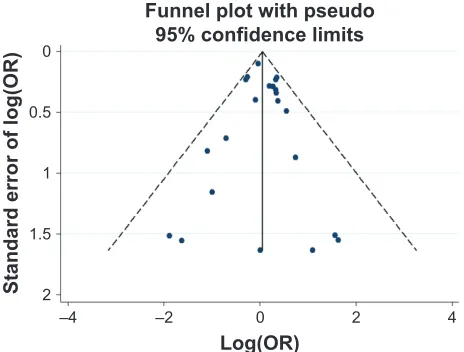
Potential publication bias was found in funnel plots in which the standard error of log(OR) of each study was plotted against its log(OR). No evidence of publication bias was found in pooled analyses (Figures 2–8).
Discussion
Results of other studies have associated the 7R polymorphism with ADHD in a meta-analysis77 and with increased brain
Neuropsychiatric Disease and Treatment downloaded from https://www.dovepress.com/ by 118.70.13.36 on 25-Aug-2020
Dovepress DRD4 and schizophrenia: a meta-analysis
)XQQHOSORWZLWKSVHXGR FRQILGHQFHOLPLWV
/RJ25
± ±
6WDQGDUGHUURURIORJ25
Figure 3 Funnel plot analysis for the detection of publication bias in the association
between 48 bp VNTr (l vs s) and schizophrenia.
Notes: l, long allele; s, short allele.
Abbreviations: Or, odds ratio; VNTr, variable number tandem repeat.
)XQQHOSORWZLWKSVHXGR FRQILGHQFHOLPLWV
/RJ25
± ±
6WDQGDUGHUURURIORJ25
Figure 4 Funnel plot analysis for the detection of publication bias in the association
between 12 bp Tr and schizophrenia.
Abbreviations: Or, odds ratio; Tr, tandem repeat.
)XQQHOSORWZLWKSVHXGR FRQILGHQFHOLPLWV
/RJ25
±
6WDQGDUGHUURURIORJ25
Figure 5 Funnel plot analysis for the detection of publication bias in the association
between 120 bp Tr and schizophrenia.
Abbreviations: Or, odds ratio; Tr, tandem repeat.
±
/RJ25
6WDQGDUGHUURURIORJ25
)XQQHOSORWZLWKSVHXGR FRQILGHQFHOLPLWV
Figure 6 Funnel plot analysis for the detection of publication bias in the association
between −521 c.T and schizophrenia.
Abbreviation: Or, odds ratio.
±
/RJ25
6WDQGDUGHUURURIORJ25
)XQQHOSORWZLWKSVHXGR FRQILGHQFHOLPLWV
Figure 7 Funnel plot analysis for the detection of publication bias in the association
between −616 c.g and schizophrenia.
Abbreviation: Or, odds ratio.
)XQQHOSORWZLWKSVHXGR FRQILGHQFHOLPLWV
± ± /RJ25
6WDQGDUGHUURURIORJ25
Figure 8 Funnel plot analysis for the detection of publication bias in the association
between −376 c.T and schizophrenia.
Abbreviation: Or, odds ratio.
Neuropsychiatric Disease and Treatment downloaded from https://www.dovepress.com/ by 118.70.13.36 on 25-Aug-2020
Dovepress
Xu et al
activity to unpleasant stimuli.78 We sought to determine
whether 7R was also associated with schizophrenia risk. Findings of our pooled and subgroup analyses indicated that 7R was not associated with the risk of schizophrenia. Similarly, we found that the 48 bp VNTR (classified into L and S groups) was not associated with schizophrenia risk in most of our pooled and subgroup analyses, which is con-sistent with previously published meta-analyses.29,30 Only
in the Mestizos subgroup, an association was detected. Our literature search yielded one article addressing Mestizos patients, and this article had an insufficient sample size to verify this association. Hence, the utility of the 48 bp VNTR as a means to assess schizophrenia risk in the Mestizo population warrants additional investigation. Lung et al28
demonstrated an association between the 48-bp VNTR and schizophrenia risk but noted that sample bias might have led to a false-positive result.29
We determined that the L/L genotype of the 120 bp TR and the −521 CC variant might be risk factors for schizophre-nia among East Asians; this relationship was not found in other populations. This discrepancy between East Asians and other populations might have resulted from the small sample sizes of the other ethnicity subgroups, the distinct genetic backgrounds, or different demographic or lifestyle factors within the subgroups. The statistical power for the pooled analysis of the 12 bp TR, the −616 C.G polymorphism, and the −376 C.T variant was low. Therefore, these results will need to be validated further. In a study of linkage
disequi-librium (LD) of DRD4 that included 17 polymorphisms,23
the authors found no LD between −521 T.C and 120 bp TR (r2=0.00). For all pairs of −616 C.G, −376 C.T, 12 bp TR,
and 48 bp VNTR, no significant LD was observed.
Multiple meta-analyses have been conducted to date on the association between DRD4 and schizophrenia. The current meta-analysis included some new studies, involved a large sample size, and had high statistical power. We addressed six loci in DRD4; no other meta-analysis involving four of these loci (12 bp TR, 120 bp TR, −616 C.G, and −376 C.T) has been carried out. Moreover, we conducted subgroup analysis by ethnicity and by source of controls and included data both from SZGene and the CNKI databases.
The results described herein should be interpreted with caution. The present study was limited by a lack of exact allele/genotype frequencies for some of the included articles, despite our efforts to acquire this information from the cor-responding authors. Therefore, these articles were omitted from the meta-analysis. Second, controls in some of the articles did not conform to Hardy–Weinberg equilibrium
because of sample bias. Third, case–control studies were included in this meta-analysis, but family-based studies were not.77 The ability to exploit cosegregation of variants
with disease within families helps distinguish causal from noncausal factors. Family-based studies are more powerful to detect risk factors of diseases.79 Moreover, we did not address
possible interactions between the six loci and epigenetic factors. An association between DRD4 and schizophrenia risk was detected based on case–control studies rather than on functional ones. Our results will need to be validated on a functional level.
Conclusion
The −521 CC variant and the L/L genotype of the 120-bp
TR might be risk factors for schizophrenia. No association with schizophrenia was detected for the 48 bp VNTR, the 12 bp TR, −616 C.G, or −376 C.T. Our results may pro-vide an informative reference for subsequent genome-wide association studies.
Acknowledgments
This study was supported by the National Natural Science Foundation of China (No 81601653) and the Doctoral Research Start Foundation of Liaoning Province (201601115) (both to Dr Jun Yao). The article was edited by native English-speaking experts of BioMed Proofreading, LLC.
Disclosure
The authors report no conflicts of interest in this work.
References
1. Sullivan PF. The genetics of schizophrenia. PLoS Med. 2005;2(7):e212. 2. Tsuang MT, Stone WS, Faraone SV. Schizophrenia: a review of genetic
studies. Harv Rev Psychiatry. 1999;7(4):185–207.
3. Wray NR, Visscher PM. Narrowing the boundaries of the genetic architecture of schizophrenia. Schizophr Bull. 2010;36(1):14–23. 4. Carlsson A. The current status of the dopamine hypothesis of
schizo-phrenia. Neuropsychopharmacology. 1988;1(3):179–186.
5. Sit SY. Dopamine agonists in the treatment of Parkinson’s disease past, present and future. Curr Pharm Des. 2000;6(12):1211–1248. 6. Howes O, McCutcheon R, Stone J. Glutamate and dopamine in
schizo-phrenia: an update for the 21st century. J Psychopharmacol. 2015; 29(2):97–115.
7. Seeman P, Guan HC, Van Tol HH. Dopamine D4 receptors elevated in schizophrenia. Nature. 1993;365(6445):441–445.
8. Sumiyoshi T, Stockmeier CA, Overholser JC, Thompson PA, Meltzer HY. Dopamine D4 receptors and effects of guanine nucleotides on [3H]raclopride binding in postmortem caudate nucleus of subjects with schizophrenia or major depression. Brain Res. 1995;681(1–2): 109–116.
9. Van Tol HH, Bunzow JR, Guan HC, et al. Cloning of the gene for a human dopamine D4 receptor with high affinity for the antipsychotic clozapine. Nature. 1991;350(6319):610–614.
10. Macciardi F, Petronis A, Van Tol HH, et al. Analysis of the D4 dop-amine receptor gene variant in an Italian schizophrenia kindred. Arch
Gen Psychiatry. 1994;51(4):288–293.
Neuropsychiatric Disease and Treatment downloaded from https://www.dovepress.com/ by 118.70.13.36 on 25-Aug-2020
Dovepress DRD4 and schizophrenia: a meta-analysis
11. Allen NC, Bagade S, McQueen MB, et al. Systematic meta-analyses and field synopsis of genetic association studies in schizophrenia: the SzGene database. Nat Genet. 2008;40(7):827–834.
12. Bertram L. Genetic research in schizophrenia: new tools and future perspectives. Schizophr Bull. 2008;34(5):806–812.
13. Asghari V, Sanyal S, Buchwaldt S, Paterson A, Jovanovic V, Van Tol HH. Modulation of intracellular cyclic AMP levels by different human dopamine D4 receptor variants. J Neurochem. 1995;65(3): 1157–1165.
14. Kornfeld R, Kornfeld S. Assembly of asparagine-linked oligosaccha-rides. Annu Rev Biochem. 1985;54:631–664.
15. D’Souza UM, Russ C, Tahir E, et al. Functional effects of a tandem duplication polymorphism in the 5′flanking region of the DRD4 gene.
Biol Psychiatry. 2004;56(9):691–697.
16. McCracken JT, Smalley SL, McGough JJ, et al. Evidence for linkage of a tandem duplication polymorphism upstream of the dopamine D4 receptor gene (DRD4) with attention deficit hyperactivity disorder (ADHD). Mol Psychiatry. 2000;5(5):531–536.
17. Mill J, Fisher N, Curran S, Richards S, Taylor E, Asherson P. Poly-morphisms in the dopamine D4 receptor gene and attention-deficit hyperactivity disorder. Neuroreport. 2003;14(11):1463–1466. 18. Xing QH, Wu SN, Lin ZG, et al. Association analysis of polymorphisms
in the upstream region of the human dopamine D4 receptor gene in schizophrenia. Schizophr Res. 2003;65(1):9–14.
19. Tsutsumi A, Glatt SJ, Kanazawa T, et al. The genetic validation of heterogeneity in schizophrenia. Behav Brain Funct. 2011;7:43. 20. Okuyama Y, Ishiguro H, Nankai M, Shibuya H, Watanabe A, Arinami T.
Identification of a polymorphism in the promoter region of DRD4 associated with the human novelty seeking personality trait. Mol
Psychiatry. 2000;5(1):64–69.
21. Ronai Z, Szekely A, Nemoda Z, et al. Association between Novelty Seeking and the -521 C/T polymorphism in the promoter region of the DRD4 gene. Mol Psychiatry. 2001;6(1):35–38.
22. Okuyama Y, Ishiguro H, Toru M, Arinami T. A genetic polymorphism in the promoter region of DRD4 associated with expression and schizo-phrenia. Biochem Biophys Res Commun. 1999;258(2):292–295. 23. Mitsuyasu H, Kawasaki H, Ninomiya H, et al. Genetic structure of the
dopamine receptor D4 gene (DRD4) and lack of association with schizo-phrenia in Japanese patients. J Psychiatr Res. 2007;41(9):763–775. 24. Jonsson EG, Ivo R, Forslund K, et al. No association between a
pro-moter dopamine D(4) receptor gene variant and schizophrenia. Am J
Med Genet. 2001;105(6):525–528.
25. Munafo MR, Flint J. Meta-analysis of genetic association studies.
Trends Genet. 2004;20(9):439–444.
26. Barendregt JJ, Doi SA, Lee YY, Norman RE, Vos T. Meta-analysis of prevalence. J Epidemiol Community Health. 2013;67(11):974–978. 27. Lanara Z, Giannopoulou E, Fullen M, et al. Comparative study and
meta-analysis of meta-analysis studies for the correlation of genomic markers with early cancer detection. Hum Genomics. 2013;7(1):14. 28. Lung FW, Tzeng DS, Shu BC. Ethnic heterogeneity in allele variation
in the DRD4 gene in schizophrenia. Schizophr Res. 2002;57(2–3): 239–245.
29. Glatt SJ, Faraone SV, Tsuang MT. Schizophrenia is not associated with DRD4 48-base-pair-repeat length or individual alleles: results of a meta-analysis. Biol Psychiatry. 2003;54(6):629–635.
30. Jonsson EG, Sedvall GC, Nothen MM, Cichon S. Dopamine D4 receptor gene (DRD4) variants and schizophrenia: meta-analyses. Schizophr Res. 2003;61(1):111–119.
31. Shi J, Gershon ES, Liu C. Genetic associations with schizophrenia: meta-analyses of 12 candidate genes. Schizophr Res. 2008;104(1–3): 96–107.
32. Terracciano A, Sutin AR, An Y, et al. Personality and risk of Alzheimer’s disease: new data and meta-analysis. Alzheimers Dement. 2014;10(2):179–186.
33. Palmer SC, Gardner S, Tonelli M, et al. Phosphate-binding agents in adults with CKD: a network meta-analysis of randomized trials. Am J
Kidney Dis. 2016;68(5):691–702.
34. Pan Y, Yao J, Wang B. Association of dopamine D1 receptor gene polymorphism with schizophrenia: a meta-analysis. Neuropsychiatr
Dis Treat. 2014;10:1133–1139.
35. Thakkinstian A, McElduff P, D’Este C, Duffy D, Attia J. A method for meta-analysis of molecular association studies. Stat Med. 2005; 24(9):1291–1306.
36. Zintzaras E, Ioannidis JP. Heterogeneity testing in meta-analysis of genome searches. Genet Epidemiol. 2005;28(2):123–137.
37. Higgins JP, Thompson SG, Deeks JJ, Altman DG. Measuring incon-sistency in meta-analyses. BMJ. 2003;327(7414):557–560.
38. Naing C, Reid SA, Aung K. Comparing antibiotic treatment for lep-tospirosis using network meta-analysis: a tutorial. BMC Infect Dis. 2017; 17(1):29.
39. Dupont WD, Plummer WD Jr. Power and sample size calculations for studies involving linear regression. Control Clin Trials. 1998; 19(6):589–601.
40. Xu FL, Ding M, Yao J, et al. Association between mitochondrial DNA variations and schizophrenia in the northern Chinese Han population.
PLoS One. 2017;12(8):e0182769.
41. Sedgwick P, Marston L. How to read a funnel plot in a meta-analysis.
BMJ. 2015;351:h4718.
42. Kaiser R, Konneker M, Henneken M, et al. Dopamine D4 receptor 48-bp repeat polymorphism: no association with response to antipsychotic treatment, but association with catatonic schizophrenia. Mol Psychiatry. 2000;5(4):418–424.
43. Kohn Y, Ebstein RP, Heresco-Levy U, et al. Dopamine D4 receptor gene polymorphisms: relation to ethnicity, no association with schizophrenia and response to clozapine in Israeli subjects. Eur Neuropsychopharmacol. 1997;7(1):39–43.
44. Serretti A, Lilli R, Lorenzi C, Lattuada E, Smeraldi E. DRD4 exon 3 variants associated with delusional symptomatology in major psycho-ses: a study on 2,011 affected subjects. Am J Med Genet. 2001;105(3): 283–290.
45. Hattori E, Nakajima M, Yamada K, et al. Variable number of tandem repeat polymorphisms of DRD4: re-evaluation of selection hypothesis and analysis of association with schizophrenia. Eur J Hum Genet. 2009; 17(6):793–801.
46. Tanaka T, Igarashi S, Onodera O, et al. Lack of association between dopamine D4 receptor gene and schizophrenia. Am J Med Genet. 1995; 60(6):580–582.
47. Nanko S, Hattori M, Ikeda K, Sasaki T, Kazamatsuri H, Kuwata S. Dopamine D4 receptor polymorphism and schizophrenia. Lancet. 1993; 341(8846):689–690.
48. Petronis A, Macciardi F, Athanassiades A, et al. Association study between the dopamine D4 receptor gene and schizophrenia. Am J Med
Genet. 1995;60(5):452–455.
49. Ohara K, Nakamura Y, Xie DW, et al. Polymorphisms of dopamine D2-like (D2, D3, and D4) receptors in schizophrenia. Biol Psychiatry. 1996;40(12):1209–1217.
50. Aguirre AJ, Apiquian R, Fresan A, Cruz-Fuentes C. Association analysis of exon III and exon I polymorphisms of the dopamine D4 receptor locus in Mexican psychotic patients. Psychiatry Res. 2007;153(3):209–215. 51. Daniels J, Williams J, Mant R, Asherson P, McGuffin P, Owen MJ. Repeat
length variation in the dopamine D4 receptor gene shows no evidence of association with schizophrenia. Am J Med Genet. 1994;54(3):256–258. 52. Sommer SS, Lind TJ, Heston LL, Sobell JL. Dopamine D4 receptor
variants in unrelated schizophrenic cases and controls. Am J Med Genet. 1993;48(2):90–93.
53. Rao PA, Pickar D, Gejman PV, Ram A, Gershon ES, Gelernter J. Allelic variation in the D4 dopamine receptor (DRD4) gene does not predict response to clozapine. Arch Gen Psychiatry. 1994;51(11):912–917. 54. Hong CJ, Lee YL, Sim CB, Hwu HG. Dopamine D4 receptor variants in
Chinese sporadic and familial schizophrenics. Am J Med Genet. 1997; 74(4):412–415.
55. Jonsson E, Brene S, Geijer T, et al. A search for association between schizophrenia and dopamine-related alleles. Eur Arch Psychiatry Clin
Neurosci. 1996;246(6):297–304.
Neuropsychiatric Disease and Treatment downloaded from https://www.dovepress.com/ by 118.70.13.36 on 25-Aug-2020
Neuropsychiatric Disease and Treatment
Publish your work in this journal
Submit your manuscript here: http://www.dovepress.com/neuropsychiatric-disease-and-treatment-journal Neuropsychiatric Disease and Treatment is an international,
peer-reviewed journal of clinical therapeutics and pharmacology focusing on concise rapid reporting of clinical or pre-clinical studies on a range of neuropsychiatric and neurological disorders. This journal is indexed on PubMed Central, the ‘PsycINFO’ database and CAS,
and is the official journal of The International Neuropsychiatric Association (INA). The manuscript management system is completely online and includes a very quick and fair peer-review system, which is all easy to use. Visit http://www.dovepress.com/testimonials.php to read real quotes from published authors.
Dovepress
Dove
press
Xu et al
56. Rinetti G, Camarena B, Cruz C, et al. Dopamine D4 receptor (DRD4) gene polymorphism in the first psychotic episode. Arch Med Res. 2001; 32(1):35–38.
57. Fujiwara Y, Yamaguchi K, Tanaka Y, et al. Polymorphism of dopamine receptors and transporter genes in neuropsychiatric diseases. Eur Neurol. 1997;38 Suppl 1:6–10.
58. Lung FW, Chen N, Shu BC. Dopamine D4 receptor gene and the -521C.T polymorphism of the upstream region of the dopamine D4 receptor gene in schizophrenia. Psychiatr Genet. 2006;16(4):139–143. 59. Nakamura M, Inoue A, Hemmi H, Suzuki J. Positive associations
between dopamine D4 receptor polymorphism and schizophrenia. Eur
Neuropsychopharmacol. 2006;6(Suppl 3):136–136.
60. Lung FW, Shu BC, Kao WT, Chen CN, Ku YC, Tzeng DS. Asso-ciation of DRD4 uVNTR and TP53 codon 72 polymorphisms with schizophrenia: a case-control study. BMC Med Genet. 2009;10:147. 61. Fresan A, Camarena B, Apiquian R, Aguilar A, Urraca N, Nicolini H.
Association study of MAO-A and DRD4 genes in schizophrenic patients with aggressive behavior. Neuropsychobiology. 2007;55(3–4): 171–175.
62. Zhang M, Jianjun Y, Yongchao Q, Xia Z, Yinping H, et al. Association of schizophrenia with six candidate functional genes. Zhonghua Yi Xue
Yi Chuan Xue Za Zhi. 2003;20(1):69–71.
63. Zhao A, Zhimin X, Jindong C, Xiaogang C, Zhening L, et al. Association analysis of dopamine D4 receptor gene with quality traits and quantita-tive traits of schizophrenia. Chin J Psychiatry. 2005;38(1):3–6. 64. Zhao A, Jinuo Z, Jia F, Yuhu Z. Association analysis of dopamine D4
gene and serotonin 2A receptor gene in schizophrenia. Chin J Behav
Med Brain Sci. 2006;15(10):865–867.
65. Chen X, Jianhua C, Weidong J. Association of DRD4 exon III gene polymorphism with attack behavior and psychiatric symp-toms in patients with schizophrenia. Chin J Clin Med. 2016; 10(18):2692–2695.
66. Lu Z, Dongxiang W, Yiping Q, Fei L, Ye Z, et al. Association analysis of dopamine DR4 receptor gene and apolipoprotein E gene in schizo-phrenia. Chin J Psychiatry. 2003;36(1):17–20.
67. Liang KW. [The association of DA2, DA3, and DA4 receptor gene polymorphology with schizophrenia also in medical jurisprudence and human genetics studies] [doctor’s thesis]. Shenyang: China Medical University; 2005. Chinese.
68. Tang Y, Zhuoji C, Rulun Z, Chaofeng Z. Association analysis of schizophrenia and dopamine D4 receptor gene polymorphism. Chin J
Med Sci. 2001;81(16):995–998.
69. Serretti A, Lilli R, Di Bella D, et al. Dopamine receptor D4 gene is not associated with major psychoses. Am J Med Genet. 1999;88(5): 486–491.
70. Hong CJ, Chiu HJ, Chang YS, Sim CB. Twelve-nucleotide repeat polymorphism of D4 dopamine receptor gene in Chinese familial schizophrenic patients. Biol Psychiatry. 1998;43(6):432–435. 71. Catalano M, Nobile M, Novelli E, Nothen MM, Smeraldi E. Distribution
of a novel mutation in the first exon of the human dopamine D4 receptor gene in psychotic patients. Biol Psychiatry. 1993;34(7):459–464. 72. Nakajima M, Hattori E, Yamada K, et al. Association and synergistic
interaction between promoter variants of the DRD4 gene in Japanese schizophrenics. J Hum Genet. 2007;52(1):86–91.
73. Pai P, Arathil P, Kotambail A, et al. Association of GRIN1, ABCB1, and DRD4 genes and response to antipsychotic drug treatment in schizophrenia. Psychiatr Genet. 2015;25(3):135–136.
74. Lai JH, Zhu YS, Huo ZH, et al. Association study of polymorphisms in the promoter region of DRD4 with schizophrenia, depression, and heroin addiction. Brain Res. 2010;1359:227–232.
75. Mitsuyasu H, Hirata N, Sakai Y, et al. Association analysis of poly-morphisms in the upstream region of the human dopamine D4 receptor gene (DRD4) with schizophrenia and personality traits. J Hum Genet. 2001;46(1):26–31.
76. Zhong H, Liang P, Yongsheng Z, Jie P, Zhenghao H. Association of dopamine D4 receptor gene promoter region polymorphism with schizophrenia. Adv Mod Biomed. 2010;10(11):3231–3234.
77. Smith TF. Meta-analysis of the heterogeneity in association of DRD4 7-repeat allele and AD/HD: stronger association with AD/HD com-bined type. Am J Med Genet B Neuropsychiatr Genet. 2010;153B(6): 1189–1199.
78. Gehricke JG, Swanson JM, Duong S, et al. Increased brain activity to unpleasant stimuli in individuals with the 7R allele of the DRD4 gene.
Psychiatry Res. 2015;231(1):58–63.
79. Yang Z, Thomas DC. Two-stage family-based designs for sequencing studies. BMC Proc. 2014;8(Suppl 1):S32.
Neuropsychiatric Disease and Treatment downloaded from https://www.dovepress.com/ by 118.70.13.36 on 25-Aug-2020