Veterinary Medicine: Research and Reports
Dove
press
O R i g i n a l R e s e a R c h
open access to scientific and medical research
Open access Full Text article
Midazolam sedates Passeriformes for field
sampling but affects multiple venous blood
analytes
J Jill heatley1 Jennifer cary2,3
lyndsey Kingsley1
hughes Beaufrere4
Karen e Russell5
gary Voelker2,3
1Department of small animal clinical
sciences, college of Veterinary Medicine and Biomedical sciences,
2Department of Wildlife and Fisheries
sciences, 3Texas a&M Biodiversity
Research and Teaching collections, Texas a&M University, college station, TX, Usa; 4health sciences
centre, Ontario Veterinary college, University of guelph, guelph, On, canada; 5Department of Veterinary
Pathobiology, college of Veterinary Medicine and Biomedical sciences, college station, TX, Usa
correspondence: J Jill heatley Department of small animal clinical sciences, college of Veterinary Medicine and Biomedical sciences, Texas a&M University, 408 Raymond stotzer Parkway, college station, TX 77843-4474, Usa Tel +1 979 845 1202 email [email protected]
Abstract: Feasibility and effect of midazolam administration on blood analytes and for sedation of Passeriformes being collected in a larger study of genetic biodiversity was assessed. Midazo-lam (5.6±2.7 mg/kg) was administered intranasally prior to sampling, euthanasia, and specimen preparation of 104 passerine birds. Each bird was assessed for sedation score and then multiple analytes were determined from jugular blood samples using the i-STAT® point of care analyzer
at “bird side”. Most birds were acceptably sedated, sedation became more pronounced as mida-zolam dose increased, and only a single bird died. Electrolyte concentrations and venous blood gas analytes were affected by midazolam administration while blood pH, packed cell volume, hemoglobin, and calculated hematocrit were not. Intranasal midazolam gives adequate sedation and is safe for short-term use in free-living Passeriformes. Based on venous blood analyte data, sedation of Passeriformes prior to handling appears to reduce stress but also produces venous blood gas differences consistent with hypoventilation relative to birds which were not given midazolam. Further study is recommended to investigate midazolam’s continued use in free-living avian species. Studies should include safety, reversal and recovery, effect upon additional endogenous analytes, and compatibility with studies of ecology and toxicology associated with pollution or other environmental degradation in Passeriformes.
Keywords: Avian, benzodiazepine, biochemistry, blood gas, electrolyte, clinical pathology
Introduction
Sampling for evaluation of hematological and biochemical analytes is a useful, non-lethal, and minimally invasive method to determine health status of the individual bird and avian populations.1–8 However, venipuncture and blood sample collection
from Passeriformes is often hindered by patient size and temperament as well as clinical skill of the sample collector. Furthermore, the effect of capture and handling stress on various blood analytes is difficult to control and account for in field studies.9
Midazolam is a short-acting benzodiazepine with potent anxiolytic, amnestic, hyp-notic, anticonvulsant, muscle relaxant, and sedative properties, convenient for use in animals based on a short elimination half-life, water solubility allowing multiple administration options, rapid onset of action, reversibility, and minimal cardiovascular effects.10–12 Midazolam has been administered intranasally to sedate parrots, canaries Serinus canarius, finches Taeniopygia guttata, and other avian species for research and
clinical case management.11–16 Sedation with midazolam in birds decreases
vocaliza-tion, flight, and defense responses, and facilitates handling for diagnostic and minor therapeutic procedures.11,12,17,18 Additional study of midazolam has been recommended
for “reducing stress in captured wild birds”.14
Veterinary Medicine: Research and Reports downloaded from https://www.dovepress.com/ by 118.70.13.36 on 27-Aug-2020
For personal use only.
Number of times this article has been viewed
This article was published in the following Dove Press journal: Veterinary Medicine: Research and Reports
Dovepress heatley et al
The objective of this prospective cross-sectional study was to assess feasibility and safety of the sedative midazolam administered intranasally to Passeriformes in a field setting. Midazolam was hypothesized to be an easily administered, rapid-onset, effective, and safe sedative for Passeriformes to facilitate handling and sample collection. Midazolam’s effect on select venous blood analytes was also assessed by comparing those obtained in this study to a study that assessed Passeriforme health in nonsedated birds.19 Some nonspecific
measures of stress such as lactate or glucose concentrations were also hypothesized to differ based on administration of midazolam. These findings are the first large-scale assess-ment of midazolam sedation in free-living Passeriformes and the first report of the effect of midazolam on venous blood analytes in these species.
Materials and methods
specimen collection
In conjunction with an ongoing specimen collection for assessment of avian genetic variation and biodiversity in Texas, 104 Passeriformes were sampled from March to June 2012 from eight counties of Texas (Bastrop, Caldwell, Comal, Grimes, Hays, Kerr, Travis, Williamson). Coordinates of sampling spanned 29.47.686–30.55.011 N latitude and 96.05.604–99.23.731 W longitude. Time of day for sampling ranged from 7.30 am to 12.45 pm central standard time. Season, region, time of day, and method of capture of birds were similar to a previous study in which sedation was not administered.19 Research was conducted under required
Texas Parks and Wildlife and United States Fish and Wildlife Permits and with approval of the Texas A&M University Institutional Animal Care and Use Committee.
animal sampling
Birds were captured via mist net and placed in cloth bags until administration of midazolam (5 mg/mL injection USP; Hospira, Inc., Lake Forest, IL, USA) intranasally at a dose of 5.55±2.66 (mean ± standard deviation [SD], range 2.39–13.5) mg/kg.12,15,17 Birds were initially dosed based on
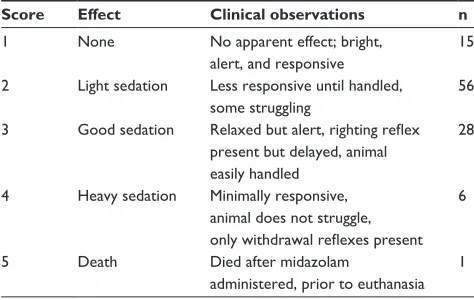
weights (Table 1) generalized from known species weight ranges; exact dosages were later recalculated using post-mortem frozen bird weight. Birds were then held in bags for at least 5 minutes to allow calming and sedation to occur before sampling. Sedation score was determined based on a modified sedation scale (Table 2).20,21 Animals were manually
restrained for collection of 0.2–0.5 mL of blood via jugular venipuncture with needle and syringe. Jugular venipuncture was chosen as a central nonlethal sampling option which
Table 1 Midazolam (5 mg/mL solution) dosing for field sedation
of Passeriformes Midazolam volume (mL)
Approximate weight (g)
Passeriformes
0.01 10–20 chickadee, titmice,
warbler, vireo, sparrow
0.02 30–50 cardinal, woodpecker,
mockingbird, inca dove
0.03 ∼80 Jay, white-winged dove,
mourning dove
Table 2 Modified sedation scale and clinical effect of midazolam
on free-living Passeriformes
Score Effect Clinical observations n
1 none no apparent effect; bright,
alert, and responsive
15
2 light sedation less responsive until handled, some struggling
56
3 good sedation Relaxed but alert, righting reflex present but delayed, animal easily handled
28
4 heavy sedation Minimally responsive, animal does not struggle, only withdrawal reflexes present
6
5 Death Died after midazolam
administered, prior to euthanasia 1 allowed closed sampling for appropriate determination of venous blood gases and acid based status in the noncritical patient.9,22,23 Adverse or unusual events were recorded and
records were reviewed for similar events in nonsedated birds from a previous study.19
sample analysis
Blood samples were collected with needle and syringe and then transferred to lithium heparin microtainer tubes (Sarstedt, IDEXX Laboratories, Westbrook, ME, USA); analyses occurred within 5 minutes of sample collection using the i-STAT® system (Abbott Laboratories, Abbott Park,
IL, USA). Blood gas cartridges (CG4+ or CG8+) were used first, followed by cartridges which did not analyze blood gases (6+, E3+, or E3+Cl). Time of day was recorded as time of analyte results for the first cartridge. Analytes determined were based on the cartridge and blood volume obtained and included: pH (venous), venous carbon dioxide partial pressure (pCO2), venous oxygen partial pressure (pO2), lactate, bicarbonate (HCO3), total carbon dioxide (TCO2), base excess (BE), venous dissolved oxygen (sO2), ionized calcium, glucose, blood urea nitrogen (BUN), calculated hematocrit (Hct), hemoglobin (Hgb), sodium (Na), potassium (K), and chloride (Cl). Most values obtained by the i-STAT®
Veterinary Medicine: Research and Reports downloaded from https://www.dovepress.com/ by 118.70.13.36 on 27-Aug-2020
Dovepress Midazolam sedates Passeriformes
system are measured directly, but TCO2, BE, Hgb and sO2, are calculated.24 Lithium heparin microhematocrit tubes
(Statspin® centrifuge; Iris® sample processing, Westwood,
MA, USA) were used to determine packed cell volume (PCV) and were centrifuged at 15,000 g for 3 minutes within 24 hours of blood collection. After venipuncture, a physical examination was performed. Birds were then humanely killed via thoracic compression and frozen until preparation as stan-dard museum specimens that are deposited at the Biodiversity Research and Teaching Collections at Texas A&M University. Species, sex, and age were determined based on external field markings and confirmed during specimen preparation. Body weight was determined at specimen preparation.
additional calculations
Temperature corrections with an assumed Passeriforme core body temperature of 41.3°C were performed for pH, pCO2, and pO2 as follows:9,24
T41.3 C pO (pO ) 10
3.88
2 2
(5.49 10 (pO2) 0.071)
(9.72 10
° =
+ × ×
×
-11
9××
(pO2)3.88+2.30)(4.3)
T41.3°C pH = pH - 0.0147(4.3) + 0.0065(7.4 - pH)(4.3)
T41.3°C pCO2= pCO2[10(0.0817)]
Anion gap was calculated for the median analyte values of birds treated and not treated with midazolam via the formula:
Anion gap = (Na + K) - (Cl + HCO3)
For comparison to Hgb values determined by the iSTAT-1®, Hgb was calculated via the passerine formula:25
Hgb = (0.33)(PCV) + 0.011
statistical methods
Initial data analyses were performed with the statistical software Analyse-it® (Analyse-it Software, Ltd., Leeds, UK)
for Microsoft Excel (Version 2.20 Microsoft Office v 2010; Microsoft Corporation, Redmond, WA, USA). To assess the effect of midazolam on blood analytes, analyte values of Pas-seriformes receiving midazolam were compared with those obtained from the same species of passerines collected in the previous years which did not receive midazolam.19 Species
were grouped for comparison of values via Kruskal–Wallis one-way analysis of variance when species numbers were greater than two and had at least one bird in the sedated and nonsedated categories (Table 3). Analysis of variance was used to assess the effect of midazolam dose (mg/kg) on bird sedation score. Kruskal–Wallis one-way analysis of variance assessed the effect of Hct on BUN. A Bland–Altman plot
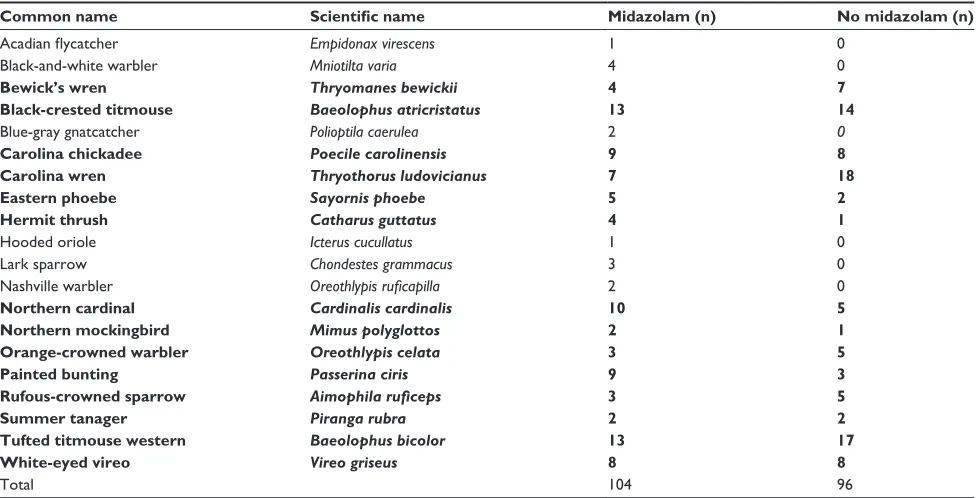
Table 3 Midazolam treated and untreated Passeriformes sampled for isTaT-1 values
Common name Scientific name Midazolam (n) No midazolam (n)
Acadian flycatcher Empidonax virescens 1 0
Black-and-white warbler Mniotilta varia 4 0
Bewick’s wren Thryomanes bewickii 4 7
Black-crested titmouse Baeolophus atricristatus 13 14
Blue-gray gnatcatcher Polioptila caerulea 2 0
Carolina chickadee Poecile carolinensis 9 8
Carolina wren Thryothorus ludovicianus 7 18
Eastern phoebe Sayornis phoebe 5 2
Hermit thrush Catharus guttatus 4 1
hooded oriole Icterus cucullatus 1 0
lark sparrow Chondestes grammacus 3 0
nashville warbler Oreothlypis ruficapilla 2 0
Northern cardinal Cardinalis cardinalis 10 5
Northern mockingbird Mimus polyglottos 2 1
Orange-crowned warbler Oreothlypis celata 3 5
Painted bunting Passerina ciris 9 3
Rufous-crowned sparrow Aimophila ruficeps 3 5
Summer tanager Piranga rubra 2 2
Tufted titmouse western Baeolophus bicolor 13 17
White-eyed vireo Vireo griseus 8 8
Total 104 96
Note: species selected for comparison of analytes are in bold.
Veterinary Medicine: Research and Reports downloaded from https://www.dovepress.com/ by 118.70.13.36 on 27-Aug-2020
Dovepress heatley et al
was used to determine the agreement of Hct and PCV for all samples. Additional statistical analysis was performed with R for mixed modeling.26 The effect of selected variables on
iSTAT-1 values was assessed using a linear mixed model with iSTAT-1 values as outcome variables; age, sex, midazolam sedation (1 or 0), and interactions as fixed effects; and spe-cies as random effect. Residual plots were used to assess linearity, homogeneity of variances, normality, and outliers. A type III analysis of variance was performed on the fixed effects and post hoc comparisons were performed using a Tukey adjustment. When necessary to meet assumptions of the linear mixed models, log transformation of the outcome variables was used. When assumptions of the linear models could not be met, a two-sample Wilcoxon test was performed on the iSTAT-1 values to assess the effect of midazolam sedation, sex, and age separately. Alpha of 0.05 was used for significance for all statistical outcomes.
Results
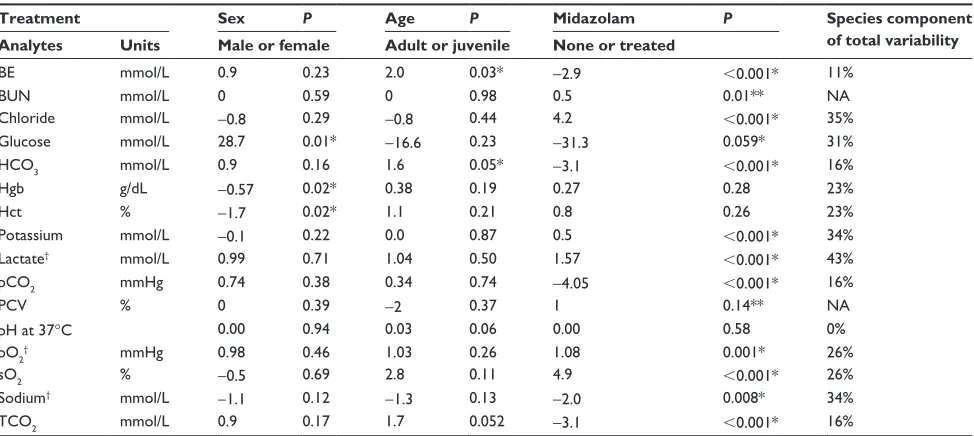
One hundred and four birds were captured and sedated from a variety of Passeriformes, mostly of the Paridae family (Table 3). Midazolam doses administered aver-aged 5.6±2.7 mg/kg. Notable side effects were regurgita-tion in two birds and egg producregurgita-tion in three birds after administration of midazolam; these clinical signs were not noted in the previous field season. A single bird, excluded from the figure, received 2.79 mg/kg midazolam and was given a sedation score of 2 but died during sampling. Sedation scores increased as midazolam dose increased (Figure 1). To assess the effect of midazolam on multiple blood analytes, we compared analytes of blood samples from 95 Passeriformes which had midazolam administered to those obtained from 96 birds which were not adminis-tered midazolam (Table 3). Electrolyte concentrations and venous blood gas analytes were affected by midazolam sedation although hematological values (PCV, Hgb, Hct) and pH were not (Tables 3–5). The midazolam-treated group had lower pO2 and sO2 while pCO2, TCO2, and HCO3 were higher in birds receiving midazolam. Modeling of multiple variables (species, age, sex, and midazolam administration) found that some variability occurred based on species for all analytes (Table 5). However, blood gases and acid–base analytes appeared least affected by species (,27%). Age affected BE and HCO3 while the effect of sex was limited to glucose, Hct, and Hgb. Most BUN values were below the limit of detection (2 mg/dL) for the analyzer (n=95); reported BUN values (n=12) were nonparametrically dis-tributed (Shapiro–Wilk P,0.0001). Detection of BUN was
0
1 2
Sedation score
Midazolam mg/kg
3 4
Mean ANOVA P<0.0001
2 4 6 8 10 12 14 16
Figure 1 sedation of 102 free-living Passeriformes with intranasal midazolam. Notes: Box and whisker plot of the midazolam dose range (top and bottom whiskers),
median line, mean, and the 1st and 3rd quartiles within each sedation score. sedation of Passeriformes based on midazolam dose was significantly different between groups.
Abbreviation: anOVa, analysis of variance.
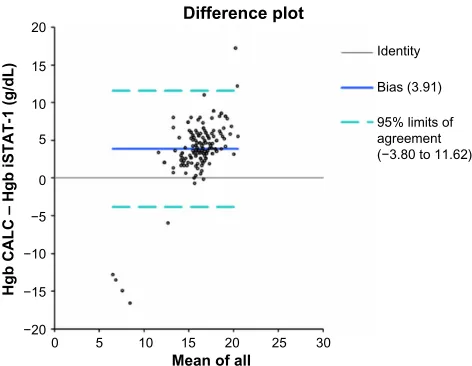
not affected by Hct (Kruskal–Wallis P=0.5923) midazolam administration did not have effect on detection or detected concentrations of BUN. (Kruskal–Wallis P=0.2833) (n=60, median 5.0, 95% confidence interval 4.5–7.6 mg/dL). PCV as determined by centrifugation and Hct as reported by the iSTAT-1 had poor agreement (Figure 2). Hgb as determined by the iSTAT-1 and via calculation from PCV had poor agreement (Figure 3). Temperature correction of median values for venous blood pH (pHT41.3=7.507), pO2, and pCO2 in groups treated and not treated with midazolam caused no clinically significant changes. Temperature correction of median pO2 venous blood values of birds receiving and not receiving midazolam, respectively, were 46.11 and 51.51 mmHg. Temperature correction of pCO2 resulted in median pCO2T41.3 with and without midazolam equaling 31.74 and 37.18 mmHg, respectively. Median anion gap calculated for groups administered and not administered midazolam also failed to reveal a clinically significant dif-ference at 14.4 and 13.1, respectively.
Discussion
sedation
Based on adequate sedation for most birds in this study and the death of only a single bird, midazolam appears safe and efficacious with a wide margin of safety for short-term field sedation in Passeriformes. Intranasal administration was cho-sen based on a previous study that found that this route was easy and offered high bioavailability, rapid onset of action, reduced pain compared to intramuscular administration, and
Veterinary Medicine: Research and Reports downloaded from https://www.dovepress.com/ by 118.70.13.36 on 27-Aug-2020
Dovepress Midazolam sedates Passeriformes
Table 4 effect of midazolam on isTaT-1 values for venous blood of Passeriformes
Treatment Midazolam No midazolam
Analytes Units Median Q1 Q3 N Median Q1 Q3 N KW P-value
Base excess mmol/l 6 2.7 9.0 77 3.0 -1.0 6.0 80 0.0002
BUn** mmol/l 2 2 2 7 2 2 3 17 0.2833
chloride mmol/l 119 117 122 73 124 120 126 55 ,0.0001
glucose mmol/l 364 231 393 75 327 282 384 75 0.0118
hcO3 mmol/l 28 25 30.4 77 24.1 21.4 27.0 80 ,0.0001
hct % 42 39 45 75 42 39 45 81 0.6956
hgb g/dl 14.3 13.3 15.3 75 14.3 13.3 15.3 81 0.7301
Potassium mmol/l 3.4 3.1 4.0 73 4.2** 3.5 4.7 80 ,0.0001
lactate mmol/l 2.79 2.35 3.13 78 4.39** 3.50 5.45 53 ,0.0001
pcO2 mmhg 30.8 26.1 33.9 80 26.3 23.0 29.2 80 ,0.0001
PcV % 54 50 60 63 55** 52.4 60 92 0.1403
ph at 37°c 7.57 7.52 7.61 77 7.58** 7.54 7.63 80 0.3307
pO2** mmhg 34 31 38 78 38.0 34.0 40.0 80 0.0008
sO2 % 77 71 82 77 81 76 85 80 0.0012
sodium mmol/l 158 156 161 75 157 153 160 81 0.0368
TcO2 mmol/l 29 26 31 77 25 22 28.6 80 ,0.0001
Total 94 92
Notes: **shapiro–Wilk P-value for normality .0.05 nonnormal; KW significant P,0.05.
Abbreviations: BUn, blood urea nitrogen; hct, isTaT-1 calculated hematocrit; hgb, hemoglobin; KW, Kruskal–Wallis; pcO2, venous carbon dioxide partial pressure; PcV,
packed cell volume; pO2, venous oxygen partial pressure; Q1, 1st quartile; Q3, 3rd quartile; sO2, venous dissolved oxygen; TcO2, total carbon dioxide.
Table 5 Mean difference of isTaT-1 parameters based on sex, age, and midazolam sedation
Treatment Sex P Age P Midazolam P Species component
of total variability Analytes Units Male or female Adult or juvenile None or treated
Be mmol/l 0.9 0.23 2.0 0.03* -2.9 ,0.001* 11%
BUn mmol/l 0 0.59 0 0.98 0.5 0.01** na
chloride mmol/l -0.8 0.29 -0.8 0.44 4.2 ,0.001* 35%
glucose mmol/l 28.7 0.01* -16.6 0.23 -31.3 0.059* 31%
hcO3 mmol/l 0.9 0.16 1.6 0.05* -3.1 ,0.001* 16%
hgb g/dl -0.57 0.02* 0.38 0.19 0.27 0.28 23%
hct % -1.7 0.02* 1.1 0.21 0.8 0.26 23%
Potassium mmol/l -0.1 0.22 0.0 0.87 0.5 ,0.001* 34%
lactate† mmol/l 0.99 0.71 1.04 0.50 1.57 ,0.001* 43%
pcO2 mmhg 0.74 0.38 0.34 0.74 -4.05 ,0.001* 16%
PcV % 0 0.39 -2 0.37 1 0.14** na
ph at 37°c 0.00 0.94 0.03 0.06 0.00 0.58 0%
pO2† mmhg 0.98 0.46 1.03 0.26 1.08 0.001* 26%
sO2 % -0.5 0.69 2.8 0.11 4.9 ,0.001* 26%
sodium† mmol/l -1.1 0.12 -1.3 0.13 -2.0 0.008* 34%
TcO2 mmol/l 0.9 0.17 1.7 0.052 -3.1 ,0.001* 16%
Notes: *Significant difference controlling for the other variables, fixed effects of linear mixed model. All interactions were nonsignificant; **Wilcoxon test P-values, differences are shown for the median. †log transformation.
Abbreviations: Be, base excess; BUn, blood urea nitrogen; hct, isTaT-1 calculated hematocrit; hgb, hemoglobin; na, not applicable; pcO2, venous carbon dioxide partial
pressure; PcV, packed cell volume; pO2, venous oxygen partial pressure; sO2, venous dissolved oxygen; TcO2, total carbon dioxide.
reduced likelihood of neuromuscular damage in these very small species.15 In addition, intranasal administration requires
minimal training or equipment and is rapid and inexpensive.27
However, full recovery and release of birds was not a goal of this study. Further study of midazolam reversal and monitor-ing prior to release as well as long term effects of this sedative drug on free-living avian species are recommended. This study
was similar to a previous trial which found an increased risk of regurgitation with use of this drug, as this side effect was restricted to treated birds.27 Body temperature, respiratory rate,
and duration of recumbency were not assessed in this study, based on the difficulty of these assessments in field conditions and on small free-flighted subjects, but are recommended for future assessments of midazolam in birds.15,27
Veterinary Medicine: Research and Reports downloaded from https://www.dovepress.com/ by 118.70.13.36 on 27-Aug-2020
Dovepress heatley et al
−20 −15 −10 −5 0
0 5 10 15 20 25 30
5 10 15 20
Hgb CALC – Hgb iSTAT-1 (g/dL)
Mean of all Difference plot
Identity
Bias (3.91)
95% limits of agreement (−3.80 to 11.62)
Figure 3 comparison of two methods of hemoglobin determination from 156
free-living Passeriformes.
Notes: Bland–altman plot comparison of hemoglobin calculated from PcV with
published methods and as determined by the isTaT-1. Multiple outliers, 3.91 g/dl bias, as well as student’s t-test (P,0.0001) suggest that these results are clinically incompatible.
Abbreviations: hgb, hemoglobin; PcV, packed cell volume.
25 35
−35 −30 −25 −20 −15 −10 −5 0 5
45
Difference Hct–PCV
%
Mean of all Difference plot
55 65 75
Identity
Bias(−14.8)
95% limits of agreement (−28.9 to −0.8)
Figure 2 Bland–altman plot of poor agreement between PcV and hct in
Passeriformes.
Notes: hct as determined by the i-sTaT-1 and PcV as determined by centrifugation
of 78 apparently healthy free-living Passeriformes administered midazolam. high bias and multiple results outside the limits of agreement suggest that hct values are clinically unacceptable without the use of a correction factor. Means of these two groups were also significantly different based on Student’s t-test (P,0.0001).
Abbreviations: hct, isTaT-1 calculated hematocrit; PcV, packed cell volume.
The dose range chosen was similar to those previously administered intranasally in other small, captive bird species such as budgerigars, finches, and canaries.14,17,28 As expected,
sedation increased based on increasing doses of midazolam. However, our calculated dose range extended to above that previously reported without causing apparent immediate harm in birds given higher doses, and many birds (n=14) were
unacceptably sedated using doses at or above the previously recommended ranges.12,14,15,18 Our study supports the concept
that a wide therapeutic window exists in Passeriformes, as in other species, and that the standard lower dose used on larger birds may not provide sufficient sedation in some small birds. Similarly, in the short-term, a higher dose may be safe for sedation. However species effect on sedation level, if any, was not assessed or determined based on small sample sizes.
analytes
In contrast to a single previous study of the effect of mida-zolam on biochemical values in birds, multiple biochemical values varied based on midazolam administration in this study.11 Glucose concentrations were higher in samples
obtained from birds administered midazolam than those that were not. A sex-related effect was also further confirmed in this study as found previously.19 Mechanisms for the relative
hyperglycemia in male birds and birds receiving midazolam are unclear. However, estrogens, other hormones, and seda-tion can affect glucose levels possibly to the significant, although nonclinically relevant, extent observed.29 Reduced
struggling of the sedated bird could have lessened peripheral glucose use and metabolism of glycogen stores, resulting in increased blood glucose concentrations.
Despite low sample size, decreased BUN concentration and decreased likelihood of detecting BUN in birds receiv-ing midazolam based on linear modelreceiv-ing suggests that this analyte deserves further investigation as a health indicator of Passeriformes. In birds, BUN is not the primary product of nitrogen metabolism but BUN concentration may increase with dehydration.8 However, clinical-study notes failed to
reveal clinical signs of dehydration or hemoconcentration in those birds with detectable BUN.
Increased potassium in the group untreated with midazolam could be attributable to increased hemolysis, rhabdomyolysis, or other exertional trauma in the group not receiving sedation.9,11 Certainly, capture myopathy has been
reported in multiple avian species; Passeriformes may also be susceptible.30–32 Dietary intake was considered an unlikely
cause of this difference based on species grouping and similar times of year of sampling. Hemolysis was not assessed in this study. Intracellular concentrations of potassium in the Passeriforme erythrocyte have not been evaluated and would be an important consideration for future studies. While a variety of diseases have been associated with increased potas-sium concentrations, all birds sampled appeared healthy based on physical examination at the time of sampling. The lower chloride in the group administered midazolam was statistically
Veterinary Medicine: Research and Reports downloaded from https://www.dovepress.com/ by 118.70.13.36 on 27-Aug-2020
Dovepress Midazolam sedates Passeriformes
significant but a relatively minor clinical change; no sodium change was associated with this finding. Regurgitation, egg production, and other fluid loss may have resulted based on centrally mediated muscular relaxation of midazolam in this group, resulting in lower sodium. In Passeriformes adminis-tered midazolam, one must account for expected changes in electrolyte concentrations if these analytes are under scrutiny to assess population or ecosystem health.
Lactate concentrations were lower in birds receiving mida-zolam, suggesting that increased exertion occurred in birds not receiving midazolam. Anxiolysis, sedation, hypnosis, or the centrally mediated muscle relaxant effects of midazolam likely mediated this result. The similar pH and anion gap of the treated and untreated groups suggests that neither midazo-lam nor handling without midazomidazo-lam creates life-threatening uncompensated acid–base imbalance. Thus, while midazolam is safe, it is not necessary unless complicated capture or sampling is anticipated.9,11 Increased venous concentrations
of HCO3 in birds treated with midazolam provides further evidence of acid–base compensation. Hypoventilation in these birds likely resulted in increased relative CO2 concentrations; bicarbonate is then increased to normalize pH; thus, a relative increase in base excess in the treated group likely occurred based on compensatory relative metabolic alkalosis.
pCO2 was higher, and sO2% and pO2 were lower, in birds administered midazolam suggesting a state of a relative hypoventilation in birds receiving this drug. These analytes were among those least affected by species, age, or sex. Hypotension and respiratory depression are common side effects of this drug in humans and may have occurred in the Passeriformes studied. Decreased respiratory rate has been reported after administration of this drug to avian species.15,27
Future studies should evaluate respiratory rate, cardiac out-put, and perfusion; however, some of these parameters are challenging to evaluate in a field setting.
Regardless of midazolam administration, birds main-tained a relatively basic blood pH; temperature correction did not result in clinically relevant change in this value (pHT41.3 =7.507). Temperature correction of blood gas ana-lytes were consistent with birds having a higher venous pO2 and pCO2 than humans which is similar to findings in other avian arterial blood gases.9,33–36 An attenuated increase in body
temperature has been reported in parrots after administration of midazolam; thus, parameters subject to temperature cor-rection might be expected to change less in birds given mida-zolam based on the moderated temperature in treated birds.15
However, cloacal temperature was not measured in treated or untreated birds based on the lack of technical feasibility.
No differences were noted for the erythrocyte para meters (PCV, Hct, Hgb) of birds that did and did not receive midazolam. Linear mixed modeling further supported that sex but not age or midazolam administration affected Hct and Hgb. PCV agreed poorly with Hct, as previously published.19 Values
for Hct averaged 14.8% lower on the iSTAT-1® system than
that provided via centrifugal determination of PCV. This differ-ence is likely based on different analysis methods; the shape, size, and density of avian blood cells; and increased glucose concentrations and the lower total protein of avian blood.24,37
The iSTAT-1 system is not recommended as a sole determinant of Hgb or Hct in birds as results do not agree clinically with the gold standard PCV. Use of a single correction factor for all avian species appears inappropriate based on findings in this study and other previously published data.19,35,38
The iSTAT-1 system calculates Hgb (g/dL) as hemat-ocrit (% PCV) ×0.34.24 This calculation, which differs from
that validated for Passeriformes, and the erroneous PCV determination make it highly unlikely that Hgb determined by the iSTAT-1 is accurate. We report results here only for completeness and recommend that future studies address the validity of this unit for determination of Hgb in birds.
Conclusion
Midazolam is efficacious and has a broad therapeutic safety margin for short-term sedation of free-living Passeriformes. However, the recovery period requires more study before we can recommend this sedative for field use in birds destined for release. Hematological variables (Hct, PCV, Hgb) were mini-mally affected by administration of midazolam. However, multiple blood gas parameters, electrolyte concentrations, and biochemical blood analytes were affected by administra-tion of midazolam and should be taken into consideraadministra-tion if used to assess avian population health. Changes in glucose, potassium, and lactate concentrations support the hypoth-esis that midazolam lessens the stress of free-living birds undergoing capture. However, blood gas values suggest that birds administered midazolam suffer relative hypoventilation. Further assessment of midazolam for field use, as well as the companion reversal drug flumazenil to facilitate assessment of Passeriforme population and therefore ecosystem health, is recommended.
Acknowledgments
Thanks to Schubot Exotic Bird Health Center and the FC Dezendorf Trust; New Wells Point Partners; and the Allen, Biesele, Decker, Ellis, Evancho, Fehrenkamp, Kelsay, Kensinger, Mollo, Panak, Rivera, Simons, Smith, Tyler,
Veterinary Medicine: Research and Reports downloaded from https://www.dovepress.com/ by 118.70.13.36 on 27-Aug-2020
Dovepress heatley et al
Verser, Wiggins, and especially Willis families for support and land access for Texas Ecolabs. This is publication number 1480 of the Texas A&M University Biodiversity Research and Teaching Collections.
Disclosure
The authors report no conflicts of interest in this work.
References
1. Breuer K, Lill A, Baldwin J. Hematological and Body-Mass Changes of Small Passerines Overwintering in South-Eastern Australia. Aust J
Zool. 1995;43(1):31–38.
2. Booth CE, Elliott PF. Hematological responses to hematozoa in North American and neotropical songbirds. Comp Biochem Physiol A Mol
Integr Physiol. 2002;133(3):451–467.
3. Hill EF, Murray HC. Seasonal variation in diagnostic enzymes and biochemical-constituents of captive northern bobwhites and passerines.
Comp Biochem Phys B. 1987;87(4):933–940.
4. Swanson DL. Seasonal Metabolic Variation in Birds: Functional and Mechanistic Correlates. In: Thompson CF, editor. Current Ornithology. Vol 17. New York: Springer; 2010:75–129.
5. Deem SL, Parker PG, Cruz MB, Merkel J, Hoeck PE. Comparison of blood values and health status of Floreana Mockingbirds (Mimus trifasciatus) on the islands of Champion and Gardner-by-Floreana, Galápagos Islands. J Wildl Dis. 2011;47(1):94–106.
6. Fokidis HB, Greiner EC, Deviche P. Interspecific variation in avian blood parasites and haematology associated with urbanization in a desert habitat. J Avian Biol. 2008;39(3):300–310.
7. Norte AC, Ramos JA, Sousa JP, Sheldon BC. Variation of adult Great Tit Parus major body condition and blood parameters in relation to sex, age, year and season. J Ornithol. 2009;150(3):651–660.
8. Bairlein F, Totzke U. New aspects on migratory physiology of trans-Saharan passerine migrants. Ornis Scandinavica. 1992;23(3):244–250.
9. Harms CA, Harms RV. Venous blood gas and lactate values of mourning doves (Zenaida macroura), boat-tailed grackles (Quiscalus major), and house sparrows (Passer domesticus) after capture by mist net, banding, and venipuncture. J Zoo Wildl Med. 2012;43(1):77–84.
10. Nordt SP, Clark RF. Midazolam: a review of therapeutic uses and toxicity. J Emerg Med. 1997;15(3):357–365.
11. Ward JM, Gartrell BD, Conklin JR, Battley PF. Midazolam as an adjunctive therapy for capture myopathy in Bar-tailed Godwits (Limosa lapponica baueri) with prognostic indicators. J Wildl Dis. 2011;47(4):925–935.
12. Mans C, Guzman DS, Lahner LL, Paul-Murphy J, Sladky KK. Sedation and physiologic response to manual restraint after intranasal administra-tion of midazolam in Hispaniolan Amazon parrots (Amazona ventralis).
J Avian Med Surg. 2012;26(3):130–139.
13. Vesal N, Eskandari MH. Sedative effects of midazolam and xylazine with or without ketamine and detomidine alone following intrana-sal administration in Ring-necked Parakeets. J Am Vet Med Assoc. 2006;228(3):383–388.
14. Vesal N, Zare P. Clinical evaluation of intranasal benzodiazepines, alpha-agonists and their antagonists in canaries. Vet Anaesth Analg. 2006;33(3):143–148.
15. Mans C, Braun J. Intranasal Sedation with Midazolam or Midazolam Butorphanol in Psttacine Birds: A Retrospective Review of 114 Cases. Paper presented at: 1st International Conference on Avian, Herpetological and Exotic Mammal Medicine; April 20–26, 2013; Wiesbaden. 16. Day TK, Roge CK. Evaluation of sedation in quail induced by use of
midazolam and reversed by use of flumazenil. J Am Vet Med Assoc. 1996;209(5):969–971.
17. Bigham AS, Zamani Moghaddam AK. Finch (Taeneopygia guttata) sedation with intranasal administration of diazepam, midazolam or xylazine. J Vet Pharmacol Ther. 2013;36(1):102–104.
18. Valverde A, Honeyman VL, Dyson DH, Valliant AE. Determination of a sedative dose and influence of midazolam on cardiopulmonary function in Canada geese. Am J Vet Res. 1990;51(7):1071–1074. 19. Heatley JJ, Carey J, Russell KE, Voelker G. Clinicopathologic analysis of
Passeriforme venous blood reflects transitions in elevation and habitat.
Veterinary Medicine: Research and Reports. 2013;2013(4):21–29.
20. Karampour A, Nikahval B, Sarchahi AA, Vesal N. Clinical evaluation of the sedative properties of acepromazine-xylazine combinations with or without atropine and their effects on physiologic values in dogs. Vet
Arh. 2011;81(4):485–498.
21. Ramsay MA, Savege TM, Simpson BR, Goodwin R. Controlled sedation with alphaxalone-alphadolone. Br Med J. 1974;2(5920):656–659. 22. Kelly AM. Review article: Can venous blood gas analysis replace arterial in
emergency medical care. Emerg Med Australas. 2010;22(6):493–498. 23. Kirubakaran C, Gnananayagam JE, Sundaravalli EK. Comparison
of blood gas values in arterial and venous blood. Indian J Pediatr. 2003;70(10):781–785.
24. Abbott Point of Care: iSTAT-1 system manual [webpage on the Internet]. Abbot Park: Abbot Laboratories; 2012 [updated May 2014]. Available from: http://www.abbottpointofcare.com/Customer-Info-Center/User-Documentation.aspx. Accessed October 1, 2012.
25. Velguth KE, ME PE, Hoover JP. Relationship of hemoglobin concentra-tion to packed cell volume in avian blood samples. J Avian Med Surg. 2010;24(2):115–121.
26. The R project for statistical computing [webpage on the Internet]. Avail-able at http://www.r-project.org/. Accessed November 18, 2014. 27. Ajadi RA, Kasali OB, Makinde AF, Adeleye AI, Oyewusi JA, Akintunde OG.
Effects of midazolam on ketamine-xylazine anesthesia in guinea fowl (Numida meleagris galeata). J Avian Med Surg. 2009;23(3):199–204. 28. Sadegh AB. Comparison of intranasal administration of xylazine,
diazepam, and midazolam in budgerigars (Melopsittacus undulatus): clinical evaluation. J Zoo Wildl Med. 2013;44(2):241–244.
29. Goldner MG. Oral hypoglycemic agents past and present other than sul-fonylurea compounds. AMA Arch Intern Med. 1958;102(5):830–840. 30. Ruder MG, Noel BL, Bednarz JC, Keel MK. Exertional myopathy in
pileated woodpeckers (Dryocopus pileatus) subsequent to capture.
J Wildl Dis. 2012;48(2):514–516.
31. Marco I, Mentaberre G, Ponjoan A, Bota G, Mañosa S, Lavin S. Capture myopathy in little bustards after trapping and marking. J Wildl Dis. 2006;42(4):889–891.
32. Dabbert CB, Powell KC. Serum enzymes as indicators of capture myopathy in mallards (Anas platyrhynchos). J Wildl Dis. 1993;29(2): 304–309.
33. Martin MP, Wineland M, Barnes HJ. Selected blood chemistry and gas reference ranges for broiler breeders using the i-STAT handheld clinical analyzer. Avian Dis. 2010;54(3):1016–1020.
34. Paula VV, Fantoni DT, Otsuki DA, Auler JOC Jr. Blood-gas and electro-lyte values for Amazon parrots (Amazona aestiva). Pesquisa Vet Brasil. 2008;28(2):108–112.
35. Rettenmund C, Heatley J, Russell K. Comparison of Two Analyzers in determining selected Electrolyte, Acid-Base, and Venous Blood Gas parameters of Quaker Parrots (Myiopsitta monachus). Paper pre-sented at: Association of Avian Veterinarians 32nd Annual Conference and Expo with the Association of Exotic Mammals Veterinarians; August 6–12, 2011; Seattle, WA.
36. Steinmetz HW, Vogt R, Kästner S, Riond B, Hatt JM. Evaluation of the i-STAT portable clinical analyzer in chickens (Gallus gallus). J Vet
Diagn Invest. 2007;19(4):382–388.
37. Guevara E, Gonzalez F. Prediction of glucose concentration by imped-ance phase measurements. AIP Conf Proc. 2008;1032:259–261. 38. Heatley J, Russel K, Norby B, Brightsmith D. Electrolytes, pH, and
ionized calcium as health indicators in free living nestling macaws. Paper presented at: American Association of Zoo Veterinarians and American Association of Wildlife Veterinarians; October 25–30, 2009; Tulsa, OK.
Veterinary Medicine: Research and Reports downloaded from https://www.dovepress.com/ by 118.70.13.36 on 27-Aug-2020
Veterinary Medicine: Research and Reports
Publish your work in this journal
Submit your manuscript here: http://www.dovepress.com/veterinary-medicine-research-and-reports-journal Veterinary Medicine: Research and Reports is an international,
peer-reviewed, open access journal publishing original research, case reports, editorials, reviews and commentaries on all areas of veterinary medicine. The manuscript management system is com-pletely online and includes a very quick and fair peer-review system.
Visit http://www.dovepress.com/testimonials.php to read real quotes from published authors.
Dovepress
Dove
press
Midazolam sedates Passeriformes
Veterinary Medicine: Research and Reports downloaded from https://www.dovepress.com/ by 118.70.13.36 on 27-Aug-2020