Analysis of Process Parameters on the Biomass
Gasification Using Response Surface
Methodology
M. Senthil Kumar
Assistant Professor, Department Of Mechanical Engineering, Annamalai University, (Deputed to GPTC Dharmapuri) Chidambaram-608002, Tamil Nadu, India.
Abstract
This paper is to study the effect of design and operating parameters, mainly as bed temperature (T), pressure (P), equivalence ratio(R), feed rate (F) and particle size (S) on the performance of the gasification process of wood powder as biomass in a updraft reactor. In the present investigation, an empirical relationship was developed to predict the process of generating producer gas with better quality through gasification of biomass in a fluidized bed reactor using response surface methodology (RSM). The producer gas component such as O2, H2, CO, CO2, CH4, and N2 were analyzed in the laboratory along with the evaluation of tar yield and cold gas efficiency. It was observed that the concentrations of hydrogen, oxygen nitrogen and carbon monoxide were increased with rise in gasification temperature, pressure and equivalent ratio (0.2-0.35). Higher equivalence ratios (0.4-0.5) caused to decrease the concentrations of hydrogen, oxygen, nitrogen and carbon monoxide. Higher equivalence ratio also resulted in more gas yields and cold gas efficiency due to increase in the exothermic reactions. Furthermore, it was observed that the CH4 and CO2 decreased with the increase of temperature and pressure. The developed model was made a good prediction.
Keyword - wood powder, Producer gas, Fluidized bed gasifier, Equivalent ratio and Response surface methodology.
Highlights
An empirical relationship developed to predict the quality of the producer gas
Response surface methodology (RSM) was
used.
The developed model was made a good
prediction for the experimental data.
I. INTRODCTION
Renewable resource is essential to secure the energy . An agricultural residue that could be utilized for the
recovery of energy is wood powder because of its reasonably high energy content (12–18 MJ/kg) [1].
supplies and prices have been raised over the diversion of rapeseed oil to biodiesel production. second generation biofuels technologies will be required to meet aggressive volume goals for biofuels deployment [5]. A number of different conversion technologies exist [6, 7] for the conversion of cellulosic biomass to biofuels. The predominant differentiation between the conversion options is the primary catalysis system [8].. Pyrolysis on the other hand, is the milder depolymerization of biomass producing a liquid intermediate (pyrolysis oil or ‘‘bio-oil’’) in the absence of oxygen at lower temperatures, typically in the range of 400–650°C. Good reviews of pyrolysis techniques and the current technical status of these techniques are provided [9]. but so far no such plants have been built in India, possibly because of low electricity prices and a lack of sufficient incentives to adopt renewable energy [10].Several studies have investigated equilibrium modelling of gasification and most of them used the relatively simple Gibbs free energy minimization method [11–13]. Ptasinski etal. [14] and Prins et al. [15] studied the effect of varying feedstock compositions on gasification efficiency. Mahishi and Goswami [160] used equilibrium modelling to study the effects of operating conditions on hydrogen yields using oxygen as gasifying agents. They found that wood powder should be gasified at ambient pressure, 1000 K, an equivalence ratio of 0.1 and a steam to biomass ratio of to obtain the maximum hydrogen yield; however, the effect of moisture was not included. A comparison of their equilibrium calculations with experimental data showed that the data correlated best at longer residence times (>1.4s) and temperature above 800°C. Although experimental data is available in literature for bagasse gasification, the gasifiers were not necessarily optimized for the specific downstream application of FT synthesis. In addition, none of the previous process modelling studies evaluated the effects of changing operating parameters on gasification efficiency. From the literature review, it is understood that there are a large number of fluidized bed biomass gasifiers developed worldwide,. Very few investigations have been done related to the prediction of the quality of the producer gas, incorporating the process parameters like temperature, equivalent ratio and steam to biomass ratio alone. Hence, the present work was aimed to develop a fluidized bed biomass gasifier using air as the gasifying agent and wood powder to investigate the effect of process parameters on the gasifier performance. An empirical relationship was developed to predict the product gas composition with the assumptions that the principal reactions were at thermodynamic equilibrium condition. The experimental data and the predicted vales have been analyzed.
II. EXPERIMENTAL WORK
A. Inert bed materials and Feedstock
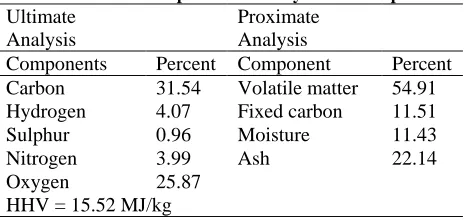
To study the fluidized bed gasification and feed stock wood powder selected with different granular sizes. These biomaterials were collected from rural industries of Cuddalore district, India. The proximate and ultimate analyses of wood powder used as feed stock are presented in Table 1.
Table 1 Ultimate and proximate analysis of wood powder
Ultimate Analysis
Proximate Analysis
Components Percent Component Percent Carbon 31.54 Volatile matter 54.91 Hydrogen 4.07 Fixed carbon 11.51
Sulphur 0.96 Moisture 11.43
Nitrogen 3.99 Ash 22.14
Oxygen 25.87
HHV = 15.52 MJ/kg
The wood powder was represented as CH1.49O0.64 on molar basis. The inert bed material used was sand and its particle size distribution was selected as 0.400 mm using sieve analysis. The properties of these materials and the procedures followed in finding out physical and chemical properties are mentioned in detail. Absolute specific gravity of the selected materials was measured using specific gravity bottle method. To minimize the complexities, resulting from the non-uniform particle size distribution in the bed, Sieve analysis is commonly used to predict the particle size distribution of the feed stock having size of 70-500 µm. The test materials were dried and then sieved in a set of standard sieves and particle size distribution was observed [17]. Using oven method (110°C till reaching standard borne dry weight), moisture content of feed stock was measured (ASTM, E – 871). Proximate composition such as volatile matter (ASTM, E – 872) and ash (ASTM, E- 830) and fixed carbon (by weight difference) was found out by ASTM procedures. The elemental composition of the feed stock was found out using Elemental Analyzer (Carlo Erba EA 1108) coupled with auto sampler AS-200 and data processor DP 200-PRC. The minimum fluidization velocity was measured using pressure drop method. U tube manometers are used to measure the pressure drop below and above the distributor plate and at different heights of fluidized bed reactor. The air velocity corresponding to the peak pressure drop gives the experimental value of minimum fluidization velocity [17].
B. Experimental Set up
inside diameter up to a height of 1400 mm made of carbon steel material having inside refractory lining of thickness 0.1 m. The gasifier is fitted with a multiple hole distributor plate of 105 mm diameter was used for air distribution The ash discharge systems were provided for periodical disposal through the lock hopper arrangements. Silica sands were initially put into the gasifier through the screw feeder and air was introduced at the bottom of gasifier to maintain the bed in fluidized state. The air flow, after the discharge of blower, was controlled by a regulating valve and the flow was then estimated by an orifice meter placed in the supply pipe on the basis of pressure drops recorded across it. The orifice had been calibrated prior to the experiment with two reference instruments; namely a digital micromanometer (make: Furnace Control, England) and a thermal anemometer (make: Dantec, Denmark). The pressure drops across the orifice were recorded in the manometer and the corresponding flow rates were measured by the anemometer.
Fig, 1 Experimental Set Up
During experiment, the pressure drops were noted to get the corresponding air flow rates from the curve at different equivalence ratios. External electric heating was used for preheating the bed materials as well as the refractory lining during start up. The electric heating was switched onto and the gasifier was allowed to run until the bed temperature was 450°C. The raw wood powder was then fed through the under-bed feeding system having a screw feeder. The feed rate was controlled by the screw feeder fitted to a variable speed drive and it push the solid fuel immediately into the gasifier preventing pyrolysis outside the chamber. Supply of air was then regulated to maintain the desired equivalence ratio.The cyclone at the outlet of gasifier was used to separate the solid particles from the fuel gas mixture. The bag filter placed after the cyclone further cleaned up the gas by capturing dust and other smaller particles. The water cooler and an ice trap system were used in series to cool the fuel gas to
separate the tar through condensation. A second orifice meter (50 mm diameter) was positioned in the fuel gas pipe (108 mm diameter) to estimate the gas yields. As wood powder has high ash content, it requires larger fraction of the fuel to be burnt – this ultimately demands a higher equivalence ratio [18]. In Hartiniati et al. [19], it is reported that the equivalence ratio was maintained between 0.30 and 0.48 during experimentation in a pilot scale fluidized bed gasifier fueled by wood powder. Later on, Mansaray et al. [20] also investigated the wood powder gasifier performance in a fluidized bed system by varying the equivalence ratio at 0.25, 0.30 and 0.35. In view of these observations, the gasifier was operated with equivalence ratios of 0.20-0.50 in the present investigation to get the experimental results.
C. Important factors and the feasible working limit From the studies [21-30], the predominant factors that have a greater influence on the quality of the producer gas and the cold gas efficiency have been identified. A number of trial experiments were carried out in the laboratory and the detailed review from the literature [21-30] and the following conclusions have been arrived at;
i. If the bed temperature was less than 650°C, the catalyst was required for higher production of hydrogen and nitrogen. The temperature at the bottom part of the gasifier is stable for all the fuels at around 650°C [21].
ii. If the bed temperature was greater than 950°C, expected that the gas composition will change with temperature inside the gasifier, but no clear trend was observed for the individual gas components during gasification [22].
iii. If the pressure is less than 1 bar, the high purity of the produced gas is not required [23].
iv. If the pressure is greater than 5 bar, the process control for chemical cycles due to the production of hydrogen in high pressure is to some extent difficult [24].
v. If the feed rate was less than 5 kg/hr, but as time passes, feed stock and ned materials gather on the bottom, forming a solid bed. [25]
vi. If the feed rate was less than 20 kg/hr, may decrease the residence time of the material inside it and thus decrease its exposure to melting inside it. Hence, the gasifier used for the present work id designed with the maximum feed rate of 20 kg/hr [26].
vii. If the equivalent ratio is less than 0.2, the change is temperature is very insensitive.
which is in good agreement with the results of the study conducted [22, 27].
ix. If the particle size is less than 70 µm, implied higher conversions, and with lower solid temperatures into the bed and lower concentration of some gases, this means lower combustion richness [28].
x. If the particle greater than 500 µm, reduces the pre-treatment costs, but the devolatilization time increases, and thus for a defined throughput the gasifier size increases [29, 30].
D. Experimental Design Matrix
Five factors and central composite rotatable design matrix was chosen to minimize number of experiments. The assay conditions for the reaction parameters were taken at zero level (center point) and one level (-1) and (+1). The design was extended up to a ± α (axial point) of 2.378. The center values for variables were carried out at least 10 times for the estimation of error and single runs for each of the other combinations; thirty two runs were done in a totally random order. The design would consist of the 10 corner points of the 25 cube, the 16 star points, and 6 center points. The star points would have a = 32^ (1/4) = 2.378
For the convenience of recording and processing experimental data, the upper and lower levels of the factors were coded here as +2.378 and
-2.378 respectively. The coded values of any intermediate value could be calculated using following relationship
Xi = (2.378x{2X-[Xmax - Xmin]})/(Xmax - Xmin) (1) Where
Xi is the required coded value of a variable X, X is any value of the variable from Xmin to Xmax .
Design matrix consisting of 32 sets of coded conditions (comprising a full replication five factorial of 16 points, 10 corner points and six centre points) was chosen in this investigation. Table 2 represents the ranges of factors considered, and Table 3 shows the 32 sets of coded and actual values with experimental results.
Table 2 Important factors and their levels
Factors Units Factors levels
-2.378 -1 0 +1 +2.378
Bed Temperature
(T)
Celsius 650 725 800 875 950
Pressure (P) MPa 1 2 3 4 5
Feed rate (F) Kg/h 5 8.75 12.5 16.25 20
Particle size
(S) µm 70 142.5 215 357.5 500
Equivalence
ratio (E) 0.2 0.275 0.35 0.425 0.5
Table 3 Experimental Results
Ex. No
Input parameters Gas Composition
Bed Temperature(
°C)
Pressu re (bar)
Feed Rate(kg/h
r)
Equivale nt ratio
Particl e size (µm)
Oxyg en
Hydrog en
Carbon monoxi
de
Carbon-di-oxide
Metha ne
Nitrog en
Tar yield
Cold gas efficien
19 800 1 12.5 0.35 285 0.26 3.36 12.14 10.84 1.32 54.21 4.18 64.21 20 800 5 12.5 0.35 285 0.41 6.45 11.21 12.45 1.35 53.32 3.46 64.56 21 800 3 5 0.35 285 0.28 6.29 12.46 11.15 1.32 53.36 3.58 65.45 22 800 3 20 0.35 285 0.17 4.16 12.18 10.59 1.54 54.28 4.36 64.14 23 800 3 12.5 0.2 285 0.19 4.28 12.25 10.17 1.28 54.53 4.54 64.72 24 800 3 12.5 0.5 285 0.31 6.27 12.56 10.78 1.32 54.64 4.41 64.24 25 800 3 12.5 0.35 70 0.33 6.45 12.23 12.15 1.24 53.72 3.54 63.98 26 800 3 12.5 0.35 500 0.19 4.89 11.14 10.36 1.45 52.25 2.54 63.65 27 800 3 12.5 0.35 285 0.32 5.26 11.56 10.64 1.26 53.56 3.15 63.12 28 800 3 12.5 0.35 285 0.21 3.24 11.84 9.23 1.65 52.45 2.65 62.63 29 800 3 12.5 0.35 285 0.13 3.34 11.86 9.24 1.23 52.34 2.33 62.38 30 800 3 12.5 0.35 285 0.14 3.32 11.84 9.54 1.18 52.35 2.37 62.37 31 800 3 12.5 0.35 285 0.12 3.31 11.81 9.46 1.19 52.37 2.36 62.35 32 800 3 12.5 0.35 285 0.13 3.32 11.83 9.52 1.16 52.34 2.38 62.35
E. Experimental Testing
During experimentation, special care was taken to maintain the desired bed temperatures as the selected feedstock was wood powder which had 17.09% ash, higher than any woody biomass and its ash had more than 95% silica. One of the important features of wood powder gasification is that the bed temperature can be kept as low as 600–650°C, thereby preventing sintering and agglomeration of this ash which would otherwise cause serious operational problems during the conversion process [31]. The upper temperature is fixed by slagging phenomena which primarily depends upon the ash
composition and the reaction atmosphere (like oxidation or reduction). Above this temperature, silica and potassium oxide in ash fuses on the surface of wood powder char particles forming a glass-like barrier that prevents the further reaction of the remaining carbon [32]. Some studies [33, 34] also indicate that oxidation of wood powder at a temperature higher than 900°C results in a physical structural transformation of silica from its original amorphous state to a crystalline state thereby encapsulating residual carbons. In view of this, the gasifier was operated in the range of 600– 950°C when the experiments were carried out with equivalence ratio 0.2 and 0.5. The gasification temperature was raised up to 700°C only in case of equivalence ratio of 0.25. A syringe of volume capacity of 10 ml was used to collect the gas sample. The sample was analyzed in the Gas Chromatograph (Make – Chemito, model – GC1000) to get the raw experimental data and those were compared with the predicted values of the developed model.The energy content of the gas is assessed through the variable CGE (cold gas efficiency). This variable represents the ratio between the energy content of the permanent gas (HHVgas) and the energy content of the initial biomass feedstock (HHVwood powder ) without taking into account the heat input in the reactor:
CGE = HHVgas/HHVwood powder …… (1) At the end of the experiment the residual tar were weighed and stored in a sealed recipient for further characterization. The tar yield is expressed as the ratio of the residual tar to the initial mass of wood powder
YTar%= [(MTar) / (Mwood powder)]x100 ….. (2)
III. DEVELOPING THE EXPERIMENTAL DESIGN MATRIX
In the present investigation, to correlate the process parameters and the quality of the prodcer gas, a second order quadratic model was developed. In this study, the RSM provides a quantitative form of relationship between the desired response (Quality of the Producer gas ) and the independent input variables, bed temperature (T), pressure (P), the feed rate of the feed stock (F), the equivalence ratio (E) and particle size (S), and can be expressed as a function, as in Equation (3)
Producer gas (G) = f (T, P, F, E, S)... (3)
The empirical relationship must include the main and interaction effects of all factors and hence the selected polynomial is expressed as follows:
Y = bo + ∑bi xi + ∑ bii xi2
+ ∑ bij xi xj ….. (4)
For five factors, the selected polynomial could be expressed as;
Quality of the Producer Gas (G) = {b0 +b1 (T) + b2
(P) +b3 (F) +b4 (E) +b5(S) + b11(T2) + b22(P2) + b33(F2)
+ b44(E2) + b55(S2) + b12 (TP) + b13 (TF) + b14(TE)
b15(TS) + b23(PF) + b24(PE) + b25(PS) + b34(FE) +
b35(FS) + b45(ES)} ….. (5)
where b0 is the average of response and b1, b2, b3… b11, b12, b13… b22, b23, b33, are the coefficients that depend on their respective main and interaction factors, which are calculated using the expression given below,
Where ‘i’ varies from 1 to n, in which Xi the corresponding coded value of a factor and Yi is is the corresponding response output value (Producer Gas) obtained from the experiment and ‘n’ is the total number of combination considered. After determining the significant coefficients (at 95% confidence level), the final relationship was developed including only these coefficients.
The Analysis of Variance (ANOVA) technique was used to find the significant main and interaction factors. The determination coefficient (r2) indicated the goodness of fit for the model. The Model F-value of (Oxygen = 3.84, Hydrogen = 5.85, Nitrogen = 5.23, Carbon-monoxide = 4.41, Carbon-di-oxide = 5.33, Methane = 4.15, Cold Gas Efficiency = 4.97 and Tar Yield = 8.11) implies the model is significant. There is only a 0.01% chance that a "Model F-Value" this large could occur due to noise.
IV. RESULTS AND DISCUSSION
A. Effect of Temperature
O2, N2, H2 and CO concentrations were found to increase with increase in bed temperature, and decreased the concentrations of CH4 and CO2. This may be explained withLe Chatelier’s principle which states that higher temperature favors the reactants in exothermic reactions and the products in endothermic reaction. Higher temperatures favoured the formation of O2, N2, H2 and CO coupled with increased reforming of methane., which is favoured at high temperatures. In this case, the maximum H2/CO ratio occurred at between 750-950°C, but this varied according to the other operating variables. According to previous studies [35, 36]. This correlates with the results presented here, since at 850°C all the carbon was converted, and the highest system efficiency was observed for all cases, due to the increase in external gasifier heat requirements at elevated temperatures. However, this is the theoretical case and is only applicable when the residence time is long enough for equilibrium to be reached. Based on the bagasse gasifier tested by DeFilippis et al. [17], this minimum temperature was assumed 650°C for the purposes of this study. It was also found that the experimentally measured CH4 concentrations were more than the calculate values. At 950°C and 0.35 ER, the measured concentration of CH4 was experimentally found to be 1.34 % whereas the calculated value was 1.46 % – the possible explanation could be that the equilibrium state might not have reached in the bed. Some of these facts might have caused to vary the predicted values from the experimental data. At 950°C, at equivalence ratio of 0.35, the cold gas efficiency is higher.
B. Effect of Pressure
An increase in gasifier pressure leads to reduced partial pressures of CO and CH4 coupled with
an increase in CO2, H2 and O as reflected in Table 4. This trend is consistent with LeChatelier ’s principle, and has been reported in the literature for other feedstock and gasifier types [37, 38]. In practice, high pressure gasification may have economic advantages in upstream processing due to smaller equipment sizes. Higher overall efficiencies could also be achieved if hot gas cleaning is used, but this is still in development. The cold gas efficiency was estimated during gasification period, to 64 %. Generally, increasing the pressure will increase the cold gas efficiency since the heating value of the produced gas will increase with pressure [23] as a result of CH4 production through the steam reforming reaction. On the other hand, increasing temperature will decrease the heating value of produced gas and hence lower the cold gas efficiency [24]. A produced gas with a high CH4 content could be used for example power production. However, if the produced gas is intended to be used for catalytic conversion to methanol, DME, Fischer Tropsch products etc, then the yield of H2 and CO and the O2 ratio should instead be considered [17] Improvements in determining the syngas flow through e.g. flow measurement or by trace experiments will be evaluated in future work as well as optimization of the operation. Similarly, cold gas efficiencies varied from 20 to 87% in an entrained flow biomass gasifier and depended on addition of steam and air preheating [39]. The composition of the syngas at equilibrium was determined at 5 bar, 0.36 % O2 and 53% N2. The calculations are performed by determining the minimum of Gibbs free energy of a specific system based on a database containing thermodynamic data for various chemical species and phases. Compared to thermodynamic equilibrium the syngas contains less CO but more CO2. The syngas also contains 1.3% CH4 which is not predicted at all at equilibrium.
C. Effect of Feed rate
of 4–8% (wood powder). The results of earlier researches [40, 41] showed the same trend of decrease of CO and reduction of H2 with increase of feed rate. The reduced level of methane content in the product gas of wood powder was noted during increased feed rate. The content of methane was increasing during the progress of gasification and hence maximum value of methane content was observed at the later stages of gasification. The overall range of methane content was 1–1.3% in all the trials of fluidized bed gasification. With the increase of rate of feed stock, the percentage of oxygen and hydrogen was decreased. The same pattern of change of synthetic gas constituents was observed in the earlier study conducted [42].
D. Effect of Equivalence ratio
Equivalence ratio (ER) is defined as the ratio of the actual air– fuel ratio to the stoichiometric air–fuel ratio. It is found the theoretical optimum conditions for maximum efficiency and hydrogen production from atmospheric gasification of dry biomass to be 825°C and an equivalence ratio of 0.35.However, they did not account for practical considerations such as tar formation. It has been reported in literature that a 20% secondary air injection above the gasifier freeboard can reduce tar formation [43]. The results from the study [38] showed a good correlation between experimental and predicted results for bagasse gasification with no tar formation at equivalence ratios of 0.35. It was seen that higher ER values decreased the concentrations of hydrogen and carbon-di-oxide and degraded the gas quality with more N2 dilution and higher CO2 concentration due to oxidization of larger fraction of carbon in feedstock; as a result, the heating values of fuel gas decreased. High degree of combustion occurs at high equivalent ratio which supplies more air into the gasifier and improves char burning to produce CO2 instead of combustible gases such as CO, H2 and CH4. In biomass gasification, the ER varies from 0.10 to 0.50 [44],From the present research, the effect of ER variation (0.2-0.4) is one of the most important operation parameters on the quality of the producer gas. H2 production peaked at ER of 0.35. Lower heating value of the producer gas was obtained at high ER which was due to the promotion of the oxidation reaction and dilution of the producer gas with N2. . E. Effect of Particle size
It has been accepted that small particle size biomass significantly increases the overall energy efficiency of the gasification process, but it also increases the gasification plant cost. On the other hand, an increase in biomass particle size reduces the pre-treatment costs, but the devolatilization time increases, and thus for a defined throughput the gasifier size increases. Therefore, a balance should be considered
while investigating the effect of biomass particle size on the gasification efficiency.observed that the producer gas yield, LHV and carbon conversion were improved as the biomass particle size decreased. It was explained that small biomass particles contribute to large surface area and high heating rate which in turn produce more light gases and less char and condensate. Therefore, the yield and composition of the producer gas improved while using the small particle biomass. A possible explanation is that for small particle sizes the pyrolysis process is mainly controlled by reaction kinetics; as the particle size increases, the product gas resultant inside the particle is more difficult to diffuse out and the process is mainly controlled by gas diffusion.
V. CONCLUSIONS
The present study was focused on the gasification of wood powder in a pilot scale fluidized bed reactor installed in the laboratory. The gasifier was operated at bed temperatures ranging from 650 °C to 950 °C with varying equivalence ratios of 0.2 – 0.5 , pressure 1 to 5 bar, feed rate 5 -20 kg/hr and particle size 70 -500 µm to investigate the fuel gas compositions. The empirical relation was developed in order to quantify the composition of fuel gas. This model gave results with high accuracy showing similar trends in predicting the variation of gas species concentrations in line with experimental data.It was noticed that the amount of CH4 produced during the gasification process was more in comparison to the predicted values. The possible reason could be that the equilibrium state might not have reached for not having enough bed temperature in gasifier.It was seen that hydrogen, oxygen, nitrogen and carbon monoxide contents in fuel gas were increased with rise in bed temperatures, equivalent ratios.The cold gas efficiency was found to increase at higher temperature, equivalence ratio and pressure due to presence of more CO2 and O2 in the fuel gas, even though the rate of carbon conversion was more with the rise in bed temperature.
REFERENCES
[1] A.V.Bridgwater, The technical and economic feasibility of
biomass gasification for power generation. Fuel. 74(3)(1995) 631–53.
[2] C. Di Blasi, Kinetic and heat transfer control in the slow and flash pyrolysis of solids, Industrial and Engineering Chemistry Research 35 (1) (1996) 37–46.
[3] A.Ergudenler, Gasification of wheat straw in a dual distributor type fluidized bed reactor. Unpublished PhD. thesis, Technical
University of Nova Scotia, Halifax, Nova Scotia,
Canada;(1993).
[4] Mitchell D (2008) A note on rising food prices. Policy Research
[5] Farrell AE, Plevin RJ, Turner BT, Jones AD, O’Hare M, Kanman DM (2006) Ethanol can contribute to energy and environmental goals. Science 311:506–509.
[6] Rammamorth R, Kastury S, Smith WH (2000) Bioenergy:
vision for the new millennium. Science Publishers, Enfield
[7] Huber GW, Iborra S, Corma A (2006) Synthesis of
transportation fuels from biomass: chemistry, catalysts, and engineering. Chem Rev 106:4044–4098.
[8] Foust TD, Wallace R, Wooley R, Sheehan J, Ibsen K, Dayton
D, Himmel M, Ashworth J, McCormick R, Hess JR, Wright C, Radtke C, Perlack R, Mielenz J, Wang M, Synder S, Werpy T (2007) A national laboratory market and technology assessment of the scenario. Technical Report, NREL/TP-510-4094.
[9] Czernik S, Bridgwater AV (2004) Overview of applications of
biomass fast pyrolysis oil. Energy Fuels 18(2):590–598
[10] M.M.Bergqvist , K.S. Wardh, A.Das, E.O.Ahlgren, A
techno-economic assessment of rice husk-based power generation in the Mekong River Delta of Vietnam. Int J Energy Res. 32(12) (2008)1136e50.
[11] C.R. Altafini, P.R. Wander, R.M.Barreto. Prediction of the
working parameters of a wood waste gasifier through an equilibrium model. Energy Convers Manage. 44(2003)2763–77.
[12] M.Baratieri, P.Baggio, L.Fiori, M.Grigiante. Biomass as an
energy source: thermodynamic constraints on the performance of the conversion process. Bioresour Technol. 99(2008)7063– 73.
[13] Z.Zainal , R. Ali , C.Lean , K.Seetharamu,. Prediction of
performance of a downdraft gasifier using equilibrium modeling for different biomass materials. Energy Convers Manage. 42(2008)1499–515.
[14] K.J.Ptasinski, M.J.Prins, A.Pierik, Exergetic evaluation of
biomass gasification. Energy. 32( 2007)568–74.
[15] M.J.Prins, K.J.Ptasinski , F,Janssen. From coal to biomass
gasification: comparison of thermodynamic efficiency.
Energy.32 (2007)1248–59.
[16] M.R.Mahishi, D.Goswami, Thermodynamic optimization of
biomass gasifier for hydrogen production. Int J Hydrogen Energy. 32(2007)3831–40.
[17] P.De Filippis, C.Borgianni ,M.Paolucci , F.Pochetti ,
Gasification process of Cuban bagasse in a two-stage reactor. Biomass Bioenergy.27(2004)247–52.
[18] Z.A. Bin ZainalAlauddin, L. Pooya, M. Mohammadi, A.R.
Mohamed, Gasification of lignocellulosic biomass in fluidized beds for renewable energy development. ar eview, Renewable and Sustainable Energy Reviews. 14(2010) 2852–2862.
[19] K.G.Mansaray, A.E.Ghaly, A.M.Al-Taweel, F. Hamdullahpur,
Ugursal, Air gasification of rice husk in a dual distributor type fluidised bed gasifier. Biomass Bioenergy. 17(1999)315–332. (Temperare)
[20] Simin Shabani, Mojtaba Aghajani Delavar, Mohammadreza
Azmi. Investigation of biomass gasification hydrogen and electricity co-production with carbon dioxide capture and storage, international jornal of hydrogen energy 38, pp. 3630-3639, 2013 (Pressre)
[21] Koc R, Kazantzis NK, Hua Ma Y. A process dynamic modeling
and control framework for performance assessment of Pd/ alloy-based membrane reactors used in hydrogenproduction. Int J Hydrogen Energy 36:4934e51.(2011)
[22] P.Mathieu, R.Dubuisson, Performance analysis of a biomass
gasifier. Energy Convers. Manage..Eqivalent ratio & Feed rate. 43(2002)1291–1299
[23] C.L.Lin, M.L.Wey, S.D.You, The effect of particle size
distribution onminimum fluidization velocity at high
temperature. Powder Technol. 126 (2002) 297–301. (Particle Size & Feed rate)
[24] A.V.Drift, J.Doorn, J.W.Vermeulen, Ten residual biomass fuels
forcirculating fluidized-bed gasification. Biomass Bioenergy. 20(2009) 45–56.
[25] S.Luoa, B.Xiao, Z. Hua, S. Liua,Y. Guana, L. Caia, Influence of
particle size on pyrolysis and gasification performance of
municipal solid waste in a fixedbed reactor. Bioresour Technol. 101(16)(2010) 6517–6520. (Particle Size)
[26] Susana Martı´nez-Lera, Jose´ TorricoJavier Pallare´s Antonia
GilDesign and first experimental results of a bubbling fluidized bedfor air gasification of plastic waste, J Mater Cycles Waste Manag.15 (2013)370–380.
[27] M. Risberg, O.G.W. Ohrman , B.R. Gebart , P.T. Nilsson, A. Gudmundsson , M. Sanati, Influence from fuel type on the performance of an air-blown cyclonegasifier, Fuel. 116 (2014) 751–759.
[28] K.G.Mansaray, A.E.Ghaly, Al-Taweel AM, Hamdullahpur F,
Ugursal VI. Airgasification of rice husk in a dual distributor type fluidized bed gasifier.Biomass Bioenergy.17(1999)315–32.
[29] Kaupp Albrecht. Gasification of rice hulls: theory and practices.
Deutsches Zentrum Fuer Entwicklungs Technologien (GATE): Eschborn; (1984).
[30] G.F. Schiefelbein , Biomass thermal gasification research,
recent results – UnitedStates DOE’s research program. Biomass.19(1989)145–59.
[31] Z.A. Bin Zainal Alauddin, L. Pooya, M. Mohammadi, A.R.
Mohamed, Gasification of lignocellulosic biomass in fluidized beds for renewable energy development: a review, Renewable and Sustainable Energy Reviews. 14 (2010) 2852–2862.
[32] J.Hanb, H.Kimb, H.Minamib, W. Shimizuc, T.G Wang, The
effect of the particle size of alumina sand on the combustion and emission behavior of cedar pellets in a fluidized bed combustor. Bioresour. Technol. 99(9)(2008) 3782–3786.
[33] Y. Zhao, S. Sun, H. Zhou, R. Sun, H. Tian, J. Luan, J. Qian, Experimental study onsawdust air gasification in an entrained-flow reactor, Fuel Processing Technology.91 (2010) 910–914.
[34] P.K. Senapati, S. Behera, Experimental investigation on an
entrained flow typebiomass gasification system using coconut
coir dust as powdery biomass feedstock,Bioresource
Technology. 117(2012) 99–106.
[35] L.Wang, C.L.Weller, D.D.Jones, M.A.Hanna. Contemporary
issues inthermal gasification of biomass and its application to
electricity and fuel production.Biomass Bioenergy.
32(2008)573–81.
[36] P.Mathieu, R.Dubuisson, . Performance analysis of a biomass
gasifier. EnergyConvers. Manage. 43(2002) 1291–1299.
[37] A.K.Sharma. Equilibrium modeling of global reduction
reactions for a downdraft (biomass) gasifier. Energy Convers Manage. 49(2008)832–42.
[38] M.Vaezi ,M.Passandideh-Fard, M.Moghiman, M.Charmchi.
Gasification of heavy fuel oils: a thermochemical equilibrium approach. Fuel. 90(2011) 878–85.
[39] S.Rapagna, N.Jana, A.Kiennemann, P.U.Foscolo,
Steam-gasification of biomass in a fluidized-bed of olivine particles. Biomass Bioenergy. 19(2000)187–197.
[40] C.Franco, F.Pinto, I.Gulyurtlu, I.Cabrita, . The study of
reactions influencing the biomass steam gasification process. Fuel. 82(2003) 835–842.
[41] M.J.C.Van der Stelt, H.Gerhauser, J.H.A.Kiel, K.J.Ptasinski,
Biomass upgrading by torrefaction for the production of biofuels: a review. Biomass Bioenergy. 35(2011)3748–3762.
[42] J.I.Hayashi, S.Hosokai, N.Sonoyama, Gasification of low-rank
solid fuels with thermochemical energy recuperation for hydrogen production and power generation. Process Saf. Environ. 84(2006) 409–419.
[43] S. Hu, J. Xiang, L. Sun, M. Xu, J. Qiu, P. Fu, Characterization
of char from rapid pyrolysis of rice husk. Fuel Process Technol. 89(2008)1096–1105.
[44] D. Lv, M. Xu, X. Liu, Z. Zhan, Z. Li, H. Yao, Effect of cellulose, lignin, alkali and alkaline earth metallic species on
biomass pyrolysis and gasification, Fuel Processing