www.wjpmr.com
Kapusevska et al. World Journal of Pharmaceutical and Medical Research
66
ABBREVIATED METHOD FOR FABRICATION OF DENTURES WITH USE OF
ECLIPSE MATERIAL: CASE REPORT
Kapusevska Biljana*1, Dereban Nikola2, Tanatarec Ivan3, Dimitrovski Oliver4, Andonovska Marija5, Vanco
Spirov4, Dashtevski Blagoja1, Mijoska Aneta1, Stavreva Natasa1, Jurukovska Shotarovska Vesna1, Bajraktarova
Valjakova Emilija1, Petkov Marjan1, Baftijari Florent1
1Department of Prosthodontics, Faculty of Dentistry, University “St. Cyril and Methodicus”, Republic of Macedonia. 2
Private Health Institution ”D-r. Dereban”, Struga, Republic of Macedonia.
3Department of Orthodontis, Faculty of Dentistry, University “St. Cyril and Methodicus”, Republic of Macedonia. 4Department of Oral Surgery, Faculty of Dentistry, University “St. Cyril and Methodicus”, Republic of Macedonia.
5Department of Endodontics, Faculty of Dentistry, University “St. Cyril and Methodicus”, Republic of Macedonia.
Article Received on 01/02/2016 Article Revised on 21/02/2016 Article Accepted on 12/03/2016
1. INTRODUCTION
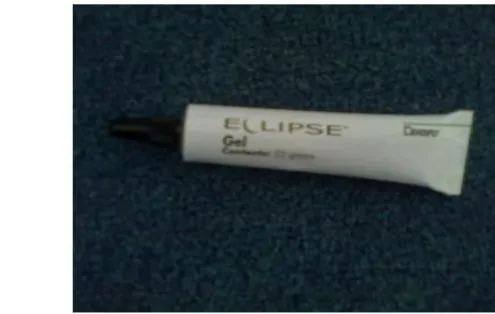
The eclipse material has been used (light curing material with 3 types of resin – base plate, shaping and contouring resin) (Fig 1.). With this material the process is escalated, because there is no need of investing, casting, spruing and substitution of the wax for acrylic material.
When this material is being used, it is applied directly and the layers of the material are adapted, so that after the successful try in the mouth of the patient, the dentures are adjusted, readapted and handed to the patient.[1]
Fig 1. Eclipse resin material
ISSN 2455-3301
WJPMR
AND MEDICAL RESEARCH
www.wjpmr.com
*Correspondence for Author: Dr. Biljana Kapusevska
Department of Prosthodontics, Faculty of Dentistry, University “St. Cyril and Methodicus”, Republic of Macedonia.
ABSTRACT
A duplication method of the old dentures has been shown to be an effective technique of making total prostheses at patients in third age of their lives. The making of new total prostheses by denture duplication method is conducted according to protocol of three clinical visits and two laboratory phases. Selection of the box tray is done according the old denture. Then wax sprue is placed posteriorly. Next the denture is impressed with irreversible hydrocolloid on the outside, and the inside with silicone material and then we apply plaster, through previously posted retention elements. After separate the denture from both impressions, the mould is filled with molten wax. On the received wax replica, wax teeth are replaced with acrylic teeth resulting with new wax trial denture. Finally after the functional impression and convencional procedures new denture is obtained. In this way the patient has positively adjusted to the new prosthetic solution in the form of “new prosthesis”. Thus the problems, which would occur as result of errors during the de novo making are avoided.
www.wjpmr.com 67 In recent decades, it has been reported a extension of
human lifespan, especially in the developed countries and in our country as well. Thus, we often meet people who are older than 65 years. The dentistry approach to these patients care, especially in the field of mobile prosthetic, is a little more specific. Therefore, it is necessary a special care dentistry for these patients.[2]
Human aging is a continuous process followed by psychological, physiological, pathological and sociological features that they must be taken into consideration. Several changes take place in the human body as it ages: intense processes of bone tissue atrophy, decelerate of metabolic processes, decrease of cell division rate, and reduction of neuromuscular activity. Therefore, the adaptation to new made prosthesis is hindered in these patients. Other factors, that provoke a low adaptation capability to the new made prosthesis, are associated with reduced working capacity of muscles and loss of their mass. This brings to muscle activity attenuation, which ultimately leads to impaired control of various motor functions.[3]
All these changes cause us inconveniences in determination of correct occlusal relationship. In such patients, if it is made a large correction in the occlusion and the volume of the denture base, the new made prostheses cause them difficulties due to the their reduced adaptation ability. Patients who suffer from Alzheimer's and Parkinson's disease are peculiar case that should be taken into account, because they characterize by neuromuscular dysfunction, which brings to them difficulties in adjusting to the new prosthesis.[4]
The elderly patients and those with chronic diseases are the most risk group. They are often emotionally unstable, fearful, depressed, and their mental capacity is reduced. Furthermore, they hardly communicate in an environment as well as hardly adapt to the environment changes. Due to their difficult adaptation to the new conditions, including those in the oral cavity, the duplication method of the old dentures to make replicas has been shown to be an effective technique of making of total prostheses. (As patients get older they have more difficulty adjusting to new dentures and so copying the old ones would be sensible approach.) This method facilitates the way of making good dentures, less clinical time is required and most importantly, it allows easily adjusting to the new denture.[5,6]
Taking into consideration the fact that elderly population are prone to chronic deseases, it is necessary at first to make a datailed insight into their health condition. Before to give an appropriate therapy, doctors need to conduct the respect protocol, anamnesis, clinical examination and with diagnostic procedures to evaluate the oral health in these patients. Thus, the treatment plan and procedures must be adjusted to their physical and mental conditions. These may be accomplished with
simple procedures for work in order to save the patient time being in the dentist clinic.[7,8]
I. PURPOSE
Is to display a fast and simple method for fabrication of dentures in patients in their third age of life, that require dental prosthesis.
II. MATERIAL AND METHODS
As material we chose group of five patients (>65 year of age) from our current practice characterized by strong need of upper and lower total prosthesis. The preparation of dentures takes places in our surgery and laboratory according to our norms and work principles.
1.1. Clinical Procedures - First Visit
We chose box trays slightly larger than the patient‟s dentures, into which an impression material (normally irreversible hydrocolloid) was placed to record the external surfaces of the denture. If cost is of lesser consideration, polyvinyl siloxane putty may be used for this purpose, but a large quantity is required. In general, the material used need not be a clinical impression material; a laboratory material, which is considerably cheaper, is acceptable. We used sticks of periphery wax to attach a wax sprue to each side of the denture posteriorly. Next, we filled the box tray with a mixture of an irreversible hydrocolloid, and we pressed the denture into it so that the impression material extrudes almost flushed with the periphery of the denture. Once it was set, we trimed this border of the impression material flat, and we placed location grooves as shown in. For the fitting surface, a putty material (laboratory type) was required because of any undercuts that may be present. We pressed this putty into the fitting surface so that covered the remaining periphery visible above the alginate borders. While the putty was still soft, bent paper clips was half buried in the material for retention of the plaster support. Then we used quick-setting impression plaster to cover the putty and the adjacent (notched) borders of the impressions so that the entire denture was invested.
www.wjpmr.com 68 When the plaster was set, we separated the impressions
of the fitting and polished surfaces, and we removed the dentures, along with the periphery wax sprues. Carefully we reunited the 2 halves of the investment, and we placed sticky wax along the junction. If any pieces of plaster have been fractured off, we fit them back together and sealed with sticky wax. If alginate was used for the external surface impression, we kept the whole mould humid by wrapping in moist paper towels and sealing inside a plastic bag. If the denture has an acceptable vertical height and the teeth allow the denture to be articulated by hand, a jaw registration is not required. However, if the teeth are so worn that the dentures cannot be hand-articulated out of the mouth, or if the vertical dimension must be increased (by no more than about 3 mm), then we must prepare a jaw registration using a suitable registration material. At the end of the
first visit the patient chose the color for his new denture and returned back old prosthesis. The mould was sent in the dental labaratory.
1.2. Laboratory Procedures after First Clinical Visit
– Duplication of the Denture in Wax
Melt pink modelling wax, combined with 10% sticky wax, in a metal jug. The sticky wax makes the wax a little harder, which should prevent any distortion. Pour the molten wax into the mould through one sprue and wait for it to overflow out of the other sprue hole. Use heat-resistant gloves for this step. Keep the moulds moist while waiting for the wax to cool and harden. Then separate the halves of the mould to reveal a wax replica of the denture (Fig 3).
Fig 3. Duplication of the denture in wax
The half consisting of the silicone impression of the fitting surface, reinforced by the impression plaster, is then trimmed if necessary, in preparation for articulation. The impression of the polished surfaces should not be discarded until an adequate wax replica has been obtained; a plaster model can then be poured using these impressions, if a reference to the previous dentures is required (although this is usually not necessary).
Articulate the 2 wax replicas on their models, by hand or with the jaw registration, sealed them together, and mounted them on an articulator.
1.2.1. Setting the teeth
Remove the wax teeth one by one and replace them with artificial teeth of the correct shape and size. If a new jaw registration is made at an increased vertical dimension, set the occlusal plane at the previously determined position. Begin by replacing every other tooth, to help maintain arch form and tooth position. After replacing the anterior teeth, and if an absolute likeness of the old dentures is desired, use the plaster cast of the denture to evaluate the arrangement (Fig 4). Wax up the completed trial dentures in preparation for the next clinical visit.
www.wjpmr.com 69 1.3. Clinical Procedures— Second Visit
We evaluated the trial dentures by using conventional clinical techniques. It is important to realize that the trial dentures cannot be repositioned on an articulator after the final impressions are made, so any repositioning of teeth must be done at this stage. When the trial dentures was satisfactory, we made the final impressions for the new dentures using zinc oxide-eugenol paste or, if cost is less of a consideration, elastomeric impression materials. The impression technique is identical to that used in rebasing a denture and a “closed-mouth” technique can be used to maintain the proper jaw and tooth relations during the impression procedure.
1.4. Laboratory Procedures after Second Clinical Visit
At this phase the trial denture is initially processed and final smooth while is still in wax and then it follows flasked, processing, and polishing to a high sheen of a finished denture.
1.5. Clinical Procedures — Third Visit
In the last clinical visit we handed the denture to the patient. Patients of the „new denture‟ quickly and easily adapted because this prosthetic solution actually combines the favorable characteristics of the old and the new denture, and also minimize their negative sides. Examination we did after three days because it is elderly patients tend to rapid illness. On this visit we check: mucosa, occlusion and the ability to utter some voices. The next control review was scheduled after three weeks. During that visit once again we scrubs the teeth and the denture because we want to achieve the most optimal occlusion.
III. RESULTS AND DISCUSSION
The results of the investigation show that besides the quality of the denture itself, other key factors for the therapy success are included: oral health and attitude of the patient to the prosthesis. It should be take into consideration the fact that the adaption ability of the patient depends on the health of the tissue scaffold, their neuromuscular coordination, the patient motivation and learning of new skills. Thus, patients are able to wear a denture that is inadequate, but is efficient and "convenient” for them, and they are able to control it with their muscle skills that are developed over a long period of time. That is the reason why patients are often satisfied with the old ones, even if the dentures are objectively poorly made.[9,10]
Wearing such dentures causes inconveniences in the form of wounds (decubitus, bite on the cheek, bruxism etc. These deficiencies appear through the years, so patients have a longer period to get used to them. Despite these disadvantages, it is considered better to use that denture that lies badly but on the other hand it is well accepted by the patient, rather than the denture that according to expert criteria should work well but could not be accepted by patient. Taking into account all the above facts, a possible therapeutical solution to making a new denture is the duplication method of the old dentures to make replicas.[11, 12]
This technique offers 4 distinct advantages: 1. The familiar features of previously successful dentures are retained; 2. The new dentures are completed in 3 visits, 3. The technique is particularly suited to the treatment of elderly patients (Fig 5). 4. The technique is cost-effective.[13]
Fig 5. Finished treatment of eldery patients with abbreviated elcipse method for fabricating dentures
The only disadvantage of this method is determining of the vertical and horizontal interarch relations. If all procedures are followed step by step, to determine carefully interarch relations and recover consequently with wax, the success of such a method is inevitable.[14]
During the preparation of removable dentures, it is sometimes desirable to make a few minimal denture corrections in patients who use dentures through the years, but they are still happy with them. And for these
patients can be also made dentures by the duplicate method and success of their use can be credible. This procedure offers to patient‟s alternative way to use their old dentures during the laboratory phase of the preparation of the new dentures.[15,16]
www.wjpmr.com 70 because they are made on the base of the old dentures,
which it allows better and easier adaptation to the new prosthesis. However, in order for an old denture to be duplicated, it must meet several basic conditions, ie, it must be physically and aesthetically acceptable, and it has adequate vertical dimension and centric relation.[17,18]
IV. CONCLUSION
The making of removable dentures in the elderly patients represents a particular challenge for therapists. The attitude of the patient to the therapy and the new made denture may be equally important for the therapy success as the technical part of the preparation. It is noteworthy to emphasize that during the first clinic visit the dentist should consider the psychological profiles of those patient whose negative attitude, a state of their oral and systemic health, may adversely affect on the outcome of the therapy. In order to avoid these obstacles, the dentist should establish a good communication with the patient as well as to hear his concerns and problems. Dentist must know that the new denture often requires defining of new boundaries/limits of muscle movements, and the elderly patients and those with severe systemic diseases often are not in condition to fulfill it. Therefore, it is important for the dentist to recognize on time the patients, who may have difficulties in adaptation or are unable to overcome the new skills to control the denture. In such cases, it is necessary a therapy strategy that consists of minimal changes in regard to the old denture. The duplication method of the old dentures to make replicas is the most suitable method in this regard. This method allows the dentist to transfer the favorable characteristics, of which the patient has positively adjusted to the new prosthetic solution in the form of a “new prosthesis”. Thus the problems, which would occur as result of errors during the de novo making, are avoided.
ACKNOWLEDGEMENTS
This unnumbered section is used to identify people who have aided the authors in accomplishing the work presented and to acknowledge sources of funding. The institutions that helped with the preparation of this scientific paper are as they follow:
1. Faculty of dentistry, University “St. Cyril and Methodicus”, Skopje, Republic of Macedonia. 2. Department of prosthodontics, Public Health Clinic
„‟St. Panteleimon, Skopje, Republic of Macedonia. 3. Private Health Institution. “D-r. Dereban”, Struga,
Republic of Macedonia.
REFERENCES
1. Bouillaguet S, Schutt A, Alander P, Schwaller P, Buerki G, Michler J, et al. Hydrothermal and mechanical stresses degrade fiber–matrix interfacial bond strength in dental fiber-reinforced composites. Journal of Biomedical Materials Research Part B Applied Biomaterials, 2006; 76: 98–105.
2. Craig RG, Powers JM, Wataha JC Dental materials. 7th Ed. St. Louis: Mosby, 2000.
3. Giordano 2nd R. Fiber reinforced composite resin systems.General Dentistry, 2000; 48: 244–9. 4. Natali A. Dental biomechanics. London: Tailor and
Francis, 2003.
5. Rammelsberg P, Spiegl K, Eickemeyer G, Schmitter M. Clinical performance of metal-free polymer crowns after 3 years in service. Journal of Dentistry, 2005; 33: 517–23.
6. Rawls RH. Dental polymers ln. Aesthetic Ptulhps'sclenca of denralmatf! flals, llthed St. LOUIS Saundors, 2003; I 43: I 69.
7. Ellakwa A, Thomas GD, Shortall AC, Marquis PM, Burke FJ. Fracture resistance of fiber-reinforced composite crown restorations. American Journal of Dentistry, 2003; 16: 375–80.
8. Ferraceno JL. Polymeric materilals the baSICS ln. dentistry, pnnciples and applications, 2nd ed L•ppencott W•lllams And Wllkons. 2001. 255·200 9. Wataha, J.C. Principles of Biocompatibility for
Dental Practicioners, J Prost Dent, 2001; 86: 203-209.
10. Culy, G., Tyas, Mj.,(1998): Direct Resin Bonded Fiber Reinforced Anterior Bridges, Aust Dent J, 43 :1-4
11. Kapusevska B., Dereban N., Popovska M., Nikolovska J., Radojkova, E. V. Zabokova Bilbilova. Technology and use of the acrylics for provisional dentin protection. Contributions (Прилози), Sec. of Med. Sci., MASA, 2013; 34(3): 113-120.
12. Behr M, Rosentritt M, Handel G. Fiber-reinforced composite crowns and DENTAL BRIDGESs: a clinical report. International Journal of Prosthodontics, 2003; 16: 239–43.
13. Terry, D.A., Mcguire, M. The Perio Aesthetic Restorative Approach For Anterior Reconstruction, Pract Proced Aesthet Dent, 2002; 14: 363-369. 14. Behr, M., Rosentritt, M., Handel, G. Fiber
Reinforced Composite Crowns And Dental bridges‟s, Int J Prosthodont, 2003; 16: 239-243. 15. Cho L, Song H, Koak J, Heo S. Marginal accuracy
and fracture strength of ceromer/fiber-reinforced composite crowns: effect of variations in preparation design. Journal of Prosthetic Dentistry, 2002; 88: 388–95.
16. Ozcan M, Breuklander MH, Vallittu PK. The effect of box preparation on the strength of glass fiber-reinforced composite inlay-retained dental bridges. Journal of Prosthetic Dentistry, 2005; 93: 337–45 17. Paolantonio M, D‟Ercole S, Perinetti G, Tripodi D,
Catamo G, Serra E, et al. Clinical and microbiological effects of different restorative materials on the periodontal tissues adjacent to subgingival class V restorations. Journal of Clinical Periodontology, 2004; 31: 200–7.