January-February 2017 91
Research
Paper
Preparation, Characterization and Evaluation of Human
Guarded Chlorpyrifos Urea Co-inclusion Complexes
M. DHALL AND A. K. MADAN*
Faculty of Pharmaceutical Sciences, Pt. B. D. Sharma University of Health Sciences, Rohtak-124 001, India
Dhall and Madan: Human Guarded Chlorpyrifos Urea Co-inclusion Complexes
Present study pertains to preparation, characterization and evaluation of human guarded chlorpyrifos urea inclusion complexes for agricultural use. Chlorpyrifos a widely used organophosphate insecticide was co-included along with long linear chain rapidly complexing agent in urea lattice. A three component powder form comprising of urea as host cum fertilizer, oleic acid as an insect pheromone and an insecticide for killing/ disabling the insects was prepared. Resulting insecticide fertilizer amalgamation offered improvement in safe handling and formulation characteristics. Insecticide was engulfed in tunnels of hexagonal urea and is accordingly not accessible for either contact with skin or for inhalation/odour. Hence, personnel engaged in handling of chlorpyrifos will not be exposed to its toxic effects after co-inclusion in hexagonal urea. Insecticide will be activated/released only after chlorpyrifos urea co-inclusion complex comes in contact with water following switching on of automated water sprinkling system in agricultural fields. Steep reduction in mercaptan like odour of chlorpyrifos was observed following engulfment of chlorpyrifos in hexagonal urea lattice. Minimum proportion of long linear chain rapidly complexing agent required for co-inclusion of insecticide in urea lattice was determined calorimetrically. Chlorpyrifos urea co-inclusion complexes were characterized by Fourier transform infrared spectroscopy, X-ray powder diffraction, differential scanning calorimetry and 1H-nuclear magnetic resonance spectroscopy studies. Regression analysis depicted gradual
increase in heat of decomposition with corresponding increase in molar fraction of rapidly complexing agent. Increased heat of decomposition simply indicates better physical stability of complexes. These complexes chlorpyrifos urea co-inclusion complex revealed uniform formulation composition and improved dissolution profile of chlorpyrifos. Studies reveal insecticide fertilizer amalgamation to be a promising approach for formulation of poorly soluble hazardous insecticide into an effective rapidly soluble human guarded insecticide product with improved handling/formulation characteristics at minimal cost.
Key words: Toxicity, chlorpyrifos, odour reduction, safe handling characteristics, dissolution rate, urea co-inclusion complex
Insecticides are hazardous substances released intentionally into the environment to kill pests. These were mainly responsible for increase in agricultural
productivity in 20th century. However, the use of
insecticides alters the ecosystems effectively and even ensures its presence/concentration along the food chain. Insecticides are toxic to humans and are responsible
for various human health hazards[1].Insecticides are
equally toxic to other species such as fish, birds and
mammals[2].
Organophosphates belong to class of contact insecticides. These insecticides target on insect nervous system and kill/disable the insect by disrupting
nerve impulses[3]. Chlorpyrifos (CHF), O,O-diethyl
0-3,5,6-trichloro-2-pyridyl phosphorothioate (fig. 1)
is an organophosphate insecticide. CHF is effective against a variety of insect pests including, cockroaches,
grubs, flea beetles, fire ants, lice, flies and cutworms.
It is used as an insecticide for crop protection on cotton, grains, fruit, nut and vegetable crops as well as ornamental/lawn plants. CHF acts on the nervous system of insect pests by interfering with the signals
from neurotransmitter acetylcholine[4]. One of the
metabolite of CHF, CHF-oxon, binds permanently to acteylcholinesterase preventing this enzyme from deactivating acetylcholine in the synapse. This results in a built up of the concentration of acetylcholine between neurons leading to a longer lasting signal to the next neuron[5,6].
*Address for correspondence E-mail: [email protected]
This is an open access article distributed under the terms of the Creative Commons Attribution-NonCommercial-ShareAlike 3.0 License, which allows others to remix, tweak, and build upon the work non-commercially, as long as the author is credited and the new creations are licensed under the identical terms
Accepted 17 January 2017 Revised 09 November 2016
92
The World Health Organization (WHO) classified
CHF as a class II, moderately toxic insecticide for
acute effects[7]. Acute toxicity from CHF exposure
can result from higher doses[8,9]. The mild poisoning
can cause watering of eyes, skin irritation, increased sweating and saliva, nausea, diarrhoea/vomiting, headache and muscle spasms/weakness. Symptoms resulting from severe poisoning include seizures, paralysis, unconsciousness, suffocation and chest discomfort[10,11].
CHF is a white, granular crystalline solid having mercaptan like odour that is practically insoluble in water and is poorly absorbed from soil. Therefore,
it is naturally of utmost significance to devise an effective approach for enhancing the solubility profile
of CHF so as to improve its bioavailability in soil[12].
Improvement of water solubility of CHF has been achieved through inclusion in cyclodextrins[13-15]. In the
current study; an attempt has been made for improving the solubility, odour reduction and safe handling of CHF through co-inclusion of CHF in urea using a
modified technique[16-18]. The fertilizer cum insecticide
amalgamation in the current study might result in the production of co-inclusion complexes of CHF in urea lattice exhibiting two-in-one product i.e. providing urea as a fertilizer, a convenient source of nitrogen and an insecticide for killing/disabling the insect pests. The insecticide, CHF with poor solubility in water is complexed with urea lattice in the presence of long chain rapidly complexing agents (RCA). The co-inclusion of CHF in hexagonal urea tunnels led to weakening/collapse of urea host lattice, which ensures instantaneous release of the incorporated insecticide
on coming in contact with water. Moreover, CHF possessed mercaptan like odour and contains volatile contaminants, which are responsible for the offensive odour of the insecticide. Urea co-inclusion complexes of CHF offered complete incorporation of insecticide in urea lattice leading to a marked reduction in the unacceptable odour of CHF. The mercaptan/offensive odour of the CHF is released only after spraying with water.
CHF is considered as a hazardous substance as per US occupational safety and Health Administration
(OSHA) guidelines for chlorpyrifos[19]. As per
Environmental Protection Agency (EPA) regulations, safer handling is required by the personnel involved in preparation, processing, transportation, administration and disposal of the insecticide. It is strongly advised that the personnel should wear safety glasses, goggles or face shields, gloves and proper chemical protective clothing during handling operations of an insecticide. Insecticide is engulfed in tunnels of hexagonal urea and is accordingly not accessible for either contact with skin or for inhalation/odour. As a result, personnel engaged in the handling of insecticide will not be exposed to the insecticide after its co-inclusion in urea lattice.
Literature revealed numerous host molecules such as urea, cyclodextrins, thiourea, porphyrins, deoxycholic acid, tri-o-thymotide, hydroquinone, zeolites, calixarenes, cryptophanes and crown ethers
for formation of inclusion complexes[20]. Amongst
these host molecules, urea has acquired commercial/ industrial prominence. Urea is used as a component
of fertilizer providing a cheap source of fixed nitrogen
to promote growth of plants[21,22]. Hence, urea being
highly soluble, safe, non-toxic, stable, biocompatible, economical and easily available was selected as a host molecule in the current study for performing dual function of acting as an adductor/host as well as a fertilizer for providing cheap source of nitrogen for plants growth.
The guest molecules with long chain length are rapidly incorporated in the host urea channels. Such guests
serve as a “pathfinder” and are categorized as RCA.
Cyclic compounds or highly substituted compounds do not form complexes with urea and these may be categorized as normally non-complexing guests (NNCG). However, substituted cyclic compounds with
sufficient chain length may form complex with urea
either alone or in the presence of RCA[23,24].
Dramatic improvement in the dissolution profile of Fig. 1: Chemical structure of chlorpyrifos as NNCG, urea as
host and oleic acid as RCA
January-February 2017 93
NNCG drugs for oral use as inclusion complexes have been reported. These NNCG drugs included enalapril maleate, glipizide, amiloride hydrochloride, lafutidine,
simvastatin and ezetimbe[25-30]. Co-inclusion of NNCG
drugs in urea has also been reported for reduction in moisture sensitivity of nicorandil and improvement of safe handling and photostability characteristics of cis-retinoic acid[31,32].Co-inclusion complex of viscous
liquid malathion in urea has been recently reported for improvement of safe handling and formulation characteristics of hazardous insecticide[33].
In the current study, an environment friendly approach has been successfully employed for safe use of CHF
through co-inclusion in urea. CHF a significantly
substituted cyclic organic compound, which will not form complex with urea on its own under any known conditions. However, CHF can be rapidly incorporated in urea channels in the presence of a suitable long chain
RCA[34].Hence, oleic acid was adopted as a suitable
long chain RCA for co-inclusion of CHF in hexagonal urea lattice. Oleic acid is also reported to function as an insect pheromone, which is emitted by the decaying bodies of number of insects, including bees and ants. Its smell might indicate danger to living insects and triggers the instincts of living workers to remove dead bodies from hive[35].
MATERIALS AND METHODS
CHF was supplied as a gift sample by Insecticides (India) Ltd, Chopanki, Bhiwadi, Rajasthan. Urea crystals and oleic acid were procured from CDH, while methanol was from Rankem. All other chemicals/ reagents used in the study were of analytical grade.
Preparation of urea co-inclusion complexes of CHF:
One gram of CHF was dissolved in 30 ml methanol containing 10 g urea by gentle heating. Subsequently, 1.0 g of oleic acid was incorporated as a long chain RCA to the above solution resulting in the immediate precipitation of the crystals of urea co-inclusion complex upon cooling. The crystals were separated
from the mother liquor by filtration, dried and suitably
packed[16-18].
Calorimetric method for determination of minimum proportion of RCA:
A calorimetric method was employed for determination of minimum proportion of RCA required for co-inclusion of CHF in urea host lattice. The said method comprised of two phases. The phase I was utilized for
determination of stoichiometric ratio between urea and RCA and phase II for determination of minimum ratio of RCA and CHF for formation of urea co-inclusion complexes[25,30].
Fourier transform infrared spectroscopy (FTIR) analysis:
The FTIR spectra of urea, urea/oleic acid complex (UOAC), CHF and CHF urea co-inclusion complex (CHUCIC) were recorded on FTIR (Shimadzu 02205 model) utilizing KBr disc process and all samples were
scanned over a range of 400-4000 cm-1.
Differential scanning calorimetry (DSC):
Thermal analysis of urea, UOAC, CHF and CHUCIC was performed using Perkin Elmer DSC 4000 by heating each sample approximately (~5 mg) in an aluminium pan at a scanning rate of 10°/min from ambient temperature to 200° in an atmosphere of nitrogen gas by passing N2 gas at a flow rate of 20 cc/
min.
Powder X-ray diffraction studies (XRD):
X-ray diffraction studies of urea, UOAC, CHF and CHUCIC were conducted using Philips X-ray diffractometer type PW1710 having Cu based tube
anode. The operational parameters were Cu-Kα radiations [α1=1.54060Å and α2=1.54443Å], generator
tension 45 kV, current 40 mA, divergence slit 1ϕ,
intensity ratio 0.500 and scanning rate 2°/min over a
2ѳ range of 0-50°.
Proton nuclear magnetic resonance (1H-NMR) studies:
The 1H-NMR spectra of urea and UOAC were
performed using Bruker FT-NMR of 400 MHz intensity using deuterated d6-DMSO (d6-dimethyl sulfoxide)
(δH=2.5 ppm) as the solvent. The 1H-NMR spectra
of CHF, oleic acid and CHUCIC were performed in Bruker Avance II 400 NMR spectrometer (400 MHz)
using DMSO as solvent.
Determination of minimum ratio of RCA for co-inclusion of CHF in urea:
In phase I, a Zimmerschied calorimetric procedure was utilized for calculation of stoichiometric ratio between
urea and long chain RCA[36]. Oleic acid was adopted as
a suitable linear chain RCA. A Dewar flask possessing
94
methanol was gently shaken in the calorimeter until an equilibrium temperature was achieved. The increments of 0.5 ml of oleic acid were successively introduced into the calorimeter using a burette. Temperature was recorded after each addition[28-30]. A graph representing
an increase in temperature following incremental addition of oleic acid as a suitable rapidly complexing agent to methanolic solution of urea was plotted. In phase II, minimum proportion of linear chain RCA required for the formation of co-inclusion complexes of
CHF and RCA in urea was determined using modified
calorimetric procedure based on the measurement of increase in temperature following addition of oleic acid
(RCA) to the methanolic solution of urea and CHF
[16-18]. Hence, 12 g urea and 3 g CHF were dissolved in 70
ml methanol and gently shaken in the calorimeter until an equilibrium temperature was recorded. The initial increments of 0.2 ml and subsequently 0.5 ml of oleic acid as a suitable RCA were successively added into the calorimeter. The graph of rise in temperature versus the amount of RCA added to a solution of urea and CHF in methanol was obtained[28-30].
Effect of relative proportion of RCA on heat of decomposition of CHUCIC complexes:
Numerous urea CHF-RCA co-inclusion complexes containing different proportions of CHF and RCA (Table 1) were prepared by adding 2 g of guests to 30 ml methanol containing 10 g urea. The resulting crystals upon cooling were separated from the mother
liquor by filtration, dried and suitably packed. The urea
inclusion complexes were subjected to DSC analysis from ambient temperature to 350° to study the effect of relative proportion of RCA on heat of decomposition of CHUCIC complexes.
Assay procedure:
CHF was determined by spectrophotometrically utilizing LabIndia UV/Vis 3000 spectrophotometer.
Both urea and oleic acid did not interfere in the estimation of CHF. The absorbance was recorded
of various dilutions of CHF at λmax of 235 nm in methanol for content uniformity analysis and in methanol:distilled water (25:50 v/v) for conducting dissolution rate studies[37].
Aqueous solubility studies:
In order to conduct aqueous solubility studies, excess amount of solute i.e. CHF was added to 10
ml of distilled water in 25 ml volumetric flask. This volumetric flask was capped properly and shaken
at 25° on a temperature controlled magnetic stirrer
(shaking flask method) for 24 h. The saturation was confirmed by the presence of un-dissolved solute.
The resulting samples containing un-dissolved solid
particles suspended in volumetric flasks were filtered,
suitably diluted and analysed spectrophotometrically at 235 nm. A similar procedure was repeated for various co-inclusion complexes (CHUCIC-1 to CHUCIC-5). All the experiments were conducted thrice to precise the measurement.
Content uniformity studies:
In order to conduct content uniformity analysis, exactly weighed quantities of randomly drawn ten samples of CHUCIC complexes each containing a quantity equivalent to 10 mg of CHF were dissolved in methanol and suitably diluted. The drug contents were determined at 235 nm in methanol spectrophotometrically[38]. Dissolution rate studies:
The dissolution rate studies were attempted using Lab India dissolution apparatus II in 900 ml of distilled water, maintained at 37±0.5° at a speed of 50 rpm. The quantity of CHF equivalent to 10 mg in co-inclusion complex (CHUCIC-1 and CHUCIC-2) was added to dissolution medium. Aliquots of 5 ml of the
samples were withdrawn at specified time intervals and
Product Wt fraction of RCA in guests
Molar fraction of RCA in guests
Onset (°)
Peak (°) Final (°) Area (mJ) Peak height (mW) Heat of decomposition (J/g)
CHUCIC-1 0.50 0.55 112.24 116.13 121.61 135.184 7.1138 26.3674
CHUCIC-2 0.60 0.65 113.05 116.08 120.93 160.372 9.7706 32.6222
CHUCIC-3 0.70 0.74 107.19 116.43 122.27 171.918 8.0388 37.8393
CHUCIC-4 0.80 0.83 107.62 116.46 121.84 202.048 8.2528 39.0459
CHUCIC-5 0.90 0.92 110.74 117.04 122.27 245.051 10.2837 49.1116
UOAC 1.00 1.00 108.17 117.84 122.15 349.059 13.8746 58.1766
January-February 2017 95
1150 cm-1 in tetragonal urea to 1165 cm-1, symmetric
C-N frequency raised at 1018 cm-1 from 1003 cm-1
in urea indicating characteristic peaks of hexagonal
urea[41]. Moreover, FTIR spectrum of CHUCIC crystals
indicate certain absorption bands of insecticide CHF
at 972, 1018 and 1165 cm-1 (P-O-C antisymmetric and
C-O stretching); 1273 cm-1 (C-O stretching); 2855
and 2924 cm-1 (alkane C-H stretching) in co-inclusion
complex[40]. The presence of characteristic bands of
insecticide CHF in co-inclusion complex indicated inclusion of guest moiety (CHF) in CHUCIC complex. Fig. 3 shows the thermograms of urea, UOAC, CHF and CHUCIC. The thermogram of urea displays onset of melting at 134.31° with sharp melting endotherm at a peak temperature of 141.0°. The thermogram of
UOAC exhibits melting of urea in two stages. The first
stage is attributed to collapse of the hexagonal structure of the UOAC at 117.34° to yield the tetragonal urea while the second step exhibits melting of tetragonal
urea at 134.83°[28-30]. Pure CHF displays a melting
endotherm in the temperature range of 39.73°-50.05°
with a sharp melting endothermic peak at 46.26°[42].
CHUCIC thermogram depicts that urea crystals melt
in two stages. The first stage (112.24°) pertains to the
decomposition of the hexagonal urea (co-inclusion complex) to yield the guest moiety (CHF) and the tetragonal urea while the second stage (129.98°) is
attributed to the melting of tetragonal urea[43]. The
disappearance of a sharp melting endotherm of CHF at 46.26° clearly indicates the complete inclusion of the insecticide (CHF) into the urea lattice and presence of insecticide CHF in an amorphous state in CHUCIC complex.
Fig. 4 displays powder X-ray diffractograms of urea, UOAC, CHF and CHUCIC. The X-ray powder diffractograms displays interplanar spacings of tetragonal urea at 2.4368, 2.5419, 2.8294, 3.0528, 3.6144 and 4.0198°A. Similarly, interplanar spacings indicating presence of hexagonal urea in UOAC appears at 3.2637, 3.3858, 3.4089, 3.5920, 3.8481,
4.1031 and 7.0769°A[28-30]. Pure CHF exhibits a highly
crystalline nature depicted by sharp diffraction peaks at interplanar spacings 7.87743, 7.44938, 3.91461,
3.76072, 3.19315, 3.10483, 2.48390 and 2.34318°A[44].
The diffractograms of CHUCIC co-inclusion complexes depicts important peaks at interplanar spacings 3.2617, 3.29670, 3.3875, 3.55589, 3.8494, 4.1082, 4.1453 and 7.0821°A, which are characteristic
peaks of the hexagonal urea[45]. The complete absence
of intense peaks of CHF indicates that guest molecules replenished with fresh distilled water. Subsequently,
2.5 ml of methanol was added to all samples and assayed spectrophotometrically at 235 nm. All the experiments were performed in triplicate[39].
RESULTS AND DISCUSSION
In the current study, an attempt has been made successfully for preparation, characterization and evaluation of human guarded CHUCICs. CHF is normally non-complexing substituted cyclic organic compound and is wide enough to be entrapped inside the narrow urea channels. Thus, CHF was incorporated in urea lattice in the presence of a suitable long chain RCA. Hence, addition of oleic acid as a linear chain RCA to a methanolic solution of urea and CHF led to an immediate precipitation of crystals of CHUCIC complex. The present investigation employs insecticide cum fertilizer amalgamation for the preparation of co-inclusion complexes of insecticide resulting in two-in-one product for agricultural use i.e. providing urea as a fertilizer and an insecticide for killing/disabling the insects. CHUCIC complexes were characterized
by FTIR, DSC, XRD and 1H-NMR. However,
further studies are being contemplated for biological evaluation of said products against various pests/
insects commonly encountered in agricultural fields
through collaborative work with agricultural scientists. Fig. 2 depicts the FTIR spectra of urea, UOAC, CHF and CHUCIC. FTIR spectrum of urea reveals characteristic peaks of tetragonal urea at 787, 1003, 1150, 1458, 1597,
1659, 3325 and 3429 cm-1. The similar bands depicting
important peaks of hexagonal urea appears at 794,
1157, 1015, 1481, 1597, 1658.78, 3225 and 3383 cm
-1[28-30]. FTIR spectrum of CHF exhibits characteristic
bands of CHF at 633 cm-1 (C-Cl stretching); 833 cm-1
(aromatic C-H out of plane bending); 964, 1026 and
1165 cm-1 (P-O-C antisymmetric and C-O stretching);
1273 (C-O stretching); 1412 cm-1(C=C stretching);
1551 cm-1(P=S stretching); 1597 and 1627 cm-1(C=O
stretching); 2985 cm-1 (alkane C-H stretching); 3426
cm-1 (N-H stretching)[40]. FTIR spectrum of CHUCIC
crystals indicates out-of-phase vibrations at 3410
cm-1and in-phase vibrations at 3224 cm-1, which are
prominent peaks of hexagonal urea. Similarly, bands
between 1675 and 1590 cm-1 were observed at 1651,
1628 and 1597 cm-1 (due to NH
2 bending and C=O
stretching vibrations), skeletal out-of-phase bending
frequency slightly raised at 794 cm-1 in CHUCIC from
787 cm-1, C-N vibration frequency increased from
1458 to 1489 cm -1, NH
96
January-February 2017 97
98
January-February 2017 99
are engulfed inside and isolated from one another in the honey-comb network of urea lattice and do not contribute towards crystallinity of CHF.
The 1H-NMR spectra of urea, UOAC, CHF, oleic
acid and CHUCIC are illustrated in (fig. 5). The
transformation of tetragonal urea into hexagonal form of urea in CHUCIC is evident by shift of N–H
proton from 5.510 to δH=5.483-5.585 ppm with high
prominence due to interaction between (–NH2) group
of urea and (–COOH) group of oleic acid. Moreover, O–H proton from carboxylic function of oleic acid
at δH=11.8211 ppm deplete in CHUCIC complex indicating that oleic acid is incorporated as a guest in
CHUCIC complex. Also, C9H=C10H protons of oleic
acid exhibiting peak at δH=5.270-5.347 appeared at 5.284-5.347 ppm in CHUCIC indicating incorporation of oleic acid in CHUCIC[28-30]. Similarly, 20 protons of
oleic acid at C3-C7 and C12-C16 at1.262-1.285 appeared
at δH=1.219-1.275 ppm in CHUCIC; C2H2 protons at
2.158-2.196 appeared at 2.152-2.189 ppm; C8H2 and
C11H2 protons of oleic acid at 1.948-2.054 appeared
at 1.940-2.006 ppm; C17H2 protons at 1.507-1.542
appeared at δH=1.448-1.482 ppm; C18H3 at
0.853-0.887 appeared at δH=0.818-0.852 ppm in CHUCIC indicating complete inclusion of oleic acid as guest moiety in CHUCIC complex. Most of exposed protons
of CHF e.g. 3H-CH3 protons at 1.288-1.371(triplet)
appeared at 1.319-1.3547 ppm in CHUCIC; 2H-CH2
protons at 4.275-4.384 (multiplet) appeared at 4.289-4.349 ppm and 1H-aromatic proton at 8.572-8.574
(singlet) appeared at 8.607-8.694 ppm in CHUCIC[46].
The digitized integral values for integrals printed below the peaks in NMR spectrum of CHUCIC complex were observed to calculate the total area (204.52 mm) and then dividing the total area by total number of hydrogen atoms to determine the actual number of protons in the complex. Thus, 11 protons of CHF, 33 protons of oleic acid and 4 protons of urea appeared in CHUCIC complex indicating the complete incorporation of guest moieties (oleic acid and CHF) in urea to form CHUCIC complex.
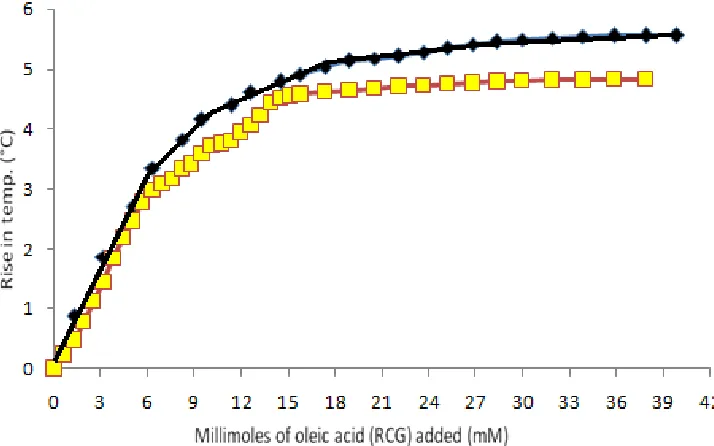
In the calorimetric method, the initial rise curve and
final curve were extrapolated in (fig. 6a) to obtain the
intersection point to calculate the amount of linear chain RCA required for inclusion with given quantity of urea. The minimum amount of oleic acid required for inclusion in urea was found to be 2.98 g of oleic acid/12 g of urea. This corresponds to 10.55 mmol of oleic acid required for inclusion in 0.20 M of urea[28-30].
In modified calorimetric procedure, the initial rise curve Fig. 5:
100
Fig. 6: Rise in temperature following addition of successive increments of oleic acid (RCA)
■- Solution of urea in methanol; -♦- solution of urea and CHF in methanol
and intermediate transition phase curve of temperature
rise were extrapolated (fig. 6b) to obtain an intersection
point for obtaining the minimum amount of long chain
RCA required for co-inclusion of CHF in urea.The
minimum ratio of RCA:CHF required for incorporation of CHF in urea was 0.71:1 g/g. The minimum amount of oleic acid in terms of mmol (mM) required for co-inclusion in 8.55 mmol of CHF was found to be 7.57 mmol of oleic acid[28-30].
The curve obtained had a smooth sigmoid shape for addition of oleic acid to methanolic solution of urea
(fig. 6a) but the same curve in the presence of the
insecticide CHF revealed the following sequence of events, that is, an initial temperature rise, followed by an intermediate transition phase, subsequently second
temperature rise curve and then attainment of a final
temperature. The second stage of temperature rise is due to the displacement of CHF (NNCG) with RCA as evident by the fact that the overall temperature rise is almost similar to that of RCA alone. The optimum formulation ratio of RCA:CHF calculated in terms of molar ratio required per mole of CHF for co-inclusion in urea was found to be 0.89:1.0 (0.71:1 g/g). After determining minimum ratio of RCA:CHF and urea co-inclusion complexes containing varying molar fractions of RCA in guests (Table 1) were prepared and subjected to further studies.
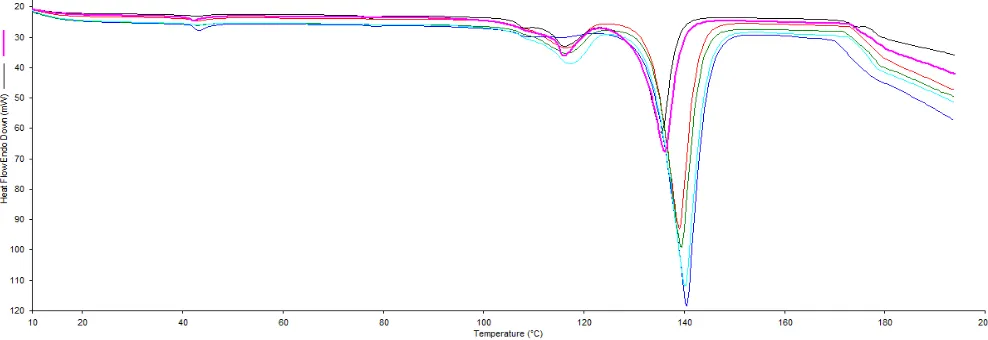
The overlay of DSC thermograms of co-inclusion complexes containing varying proportions of RCA and
CHF is illustrated in (fig. 7). In all these thermograms,
a low temperature endotherm was obtained corresponding to the decomposition of the complexed urea and to the release of a guest molecule and the solid tetragonal form of urea. The disappearance of the melting endotherm at 46.26° indicates the inclusion of the insecticide into the host lattice in an amorphous state.
Fig. 8 exhibited the plot of heat of decomposition value against the molar fraction of RCA in guests in CHUCIC co-inclusion complexes. The results for heat of decomposition of urea co-inclusion complexes of
CHF (CHUCIC) are listed in Table 1. The influence of
the molar fraction of RCA on the heat of decomposition was statistically studied and the data exhibited the
following relationship, ΔH=66.28R-11.28, (R2=0.947), ΔH is the heat of decomposition (J/g) of CHF urea
co-inclusion complex (CHUCIC) and R is the molar fraction of long chain RCA in guests.
The heat decomposition curve shows an increase in the
heat of decomposition value (J/G) in various CHUCIC
complexes containing increasing molar fractions of long chain RCA and exhibits saturation level up to urea/
oleic acid (UOAC) complex without CHF[28-30]. The plot
shows that an increase in molar fraction of linear chain RCA in the complex leads to corresponding rise in the heat of decomposition value with consequent better stability of the urea co-inclusion complex. The models for prediction of value of heat of decomposition of different urea inclusion complexes containing aliphatic
guests have already been reported[47]. Since CHF is a
January-February 2017 101
to be entrapped inside the hexagonal channel formed by urea lattice. However, in the presence of the oleic acid (RCA), CHF is co-included along with linear straight RCA in urea.
Aqueous solubility studies indicated that aqueous solubility of chlorpyrifos increased in various co-inclusion complexes of chlorpyrifos in urea (CHUCIC-1 to CHUCIC-5) in comparison to pure insecticide. This increased solubility may be simply attributed to inclusion of chlorpyrifos in urea (Table 2). Content uniformity test listed in United States Pharmacopoeia (USP) was conducted to ensure homogeneity in a batch of low content insecticide. Though USP norms are basically meant for various dosage forms for human use but this test can also indicate extent of uniform distribution of insecticides in formulations for agricultural use. In order to meet the USP criterion of content uniformity, the formulation
must possess 85-115% active ingredient of the label claim. The data of content uniformity analysis for different CHUCIC complexes containing varying RCA to insecticide ratios is compiled in Table 3. This table clearly revealed that an insecticide is uniformly distributed in urea co-inclusion complexes of CHF.
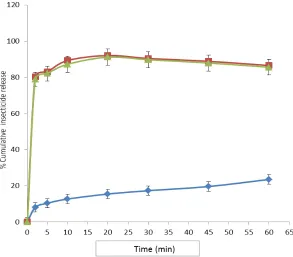
Fig. 9 illustrates the dissolution profiles obtained from
the experimental values of pure CHF and its urea co-inclusion complexes CHUCIC-1 and CHUCIC-2 in distilled water. Though USP norms are basically meant for dosage forms for human use but this test can also provide vital information with regard to rate at which insecticide will dissolve when exposed to
water in agricultural fields. The dissolution profiles
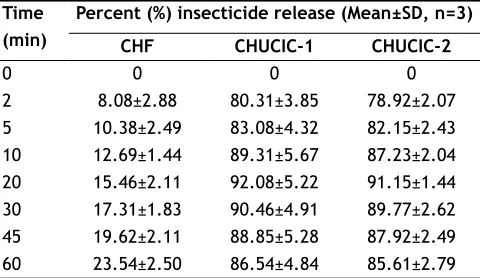
were determined by the dissolution percentage (DP) at 2, 5 and 10 min. The amount of the insecticide CHF released in water was found to be quite low. This was evident by determining values of DP exhibiting release
of pure insecticide as DP2~8.08%; DP5~10.38% and
Fig. 7: DSC thermograms of CHF-RCA-urea co-inclusion complexes containing varying proportions of CHF and RCA ▬ CHUCIC-1; ▬ CHUCIC-2; ▬ CHUCIC-3; ▬ CHUCIC-4; ▬ CHUCIC-5
y = 66.286x - 11.288 R² = 0.9476
0 10 20 30 40 50 60 70
0.5 0.6 0.7 0.8 0.9 1 1.1
Molar fraction of RCG in guests
Heat
o
f de
co
mpo
sition
(J
/g)
102
CHF. The hexagonal urea lattice dissolves rapidly as CHUCIC comes in contact with an aqueous dissolution medium and results in an instantaneous release of an incorporated insecticide. The co-inclusion of a NNCG drug along with linear straight RCA in urea hexagonal tunnels leads to weakening/distortion of urea host lattice and facilitates further dissolution enhancement. However, this immediate release of the insecticide was followed by a subsequent decrease in insecticide
contents in solution and DP60 was found to be ~86.53%
in CHUCIC-1. Since, as CHF has limited aqueous solubility, the initially released insecticide molecules undergo crystallization in excess of the solubility. However, in normal practice there is plentiful of
water available in fields and hence initially released/
activated insecticide molecules on spraying of water
in fields/soil will not undergo crystallization because
of possible adsorption/absorption in crops/soil. Thus, urea co-inclusion complex formation can be exploited as a valuable technique for the development of rapid release formulation of insecticide CHF.
In current investigation, a successful attempt has been made for preparation, characterization and evaluation of human guarded chlorpyrifos urea co-inclusion complexes. CHF, a moderately toxic class II insecticide was successfully formulated into insecticide- fertilizer co-inclusion complex in order to overcome its toxicity, offensive odour, poor solubility and handling problems. CHF was incorporated in urea host lattice
Product Solubility (µg/ml) (Mean±SD, n=3)
CHF 18.205±0.654
CHUCIC-1 42.718±0.464
CHUCIC-2 42.179±0.437
CHUCIC-3 40.384±0.629
CHUCIC-4 39.641±0.512
CHUCIC-5 39.436±0.464
TABLE 2: AQUEOUS SOLUBILITY DATA OF CHF AND CHUCIC CO-INCLUSION COMPLEXES
Fig. 9: Dissolution profile of insecticide CHF and CHUCIC co-inclusion complexes
-♦-CHF; -■-CHUCIC-1; -▲-CHUCIC-2
DP10~12.69% However, co-inclusion of CHF in
hexagonal urea resulted in an enhancement in release rate of insecticide as described in Table 4 by release of
contents DP2~80.30%; DP5~83.07% and DP10~89.30%
(CHUCIC-1); DP2~78.92%; DP5~81.23% and
DP10~87.23% (CHUCIC-2). The dissolution profiles of
CHUCIC-1 and CHUCIC-2 were found to be almost similar.
The insecticide release was rapid from co-inclusion complexes of CHF as compared to pure insecticide
Product Percent (%) insecticide incorporated* (Mean±SD, n=10)
CHUCIC-1 92.664±0.320
CHUCIC-2 91.344±0.368
CHUCIC-3 90.118±0.345
CHUCIC-4 89.684±0.361
CHUCIC-5 89.172±0.487
TABLE 3: CONTENT UNIFORMITY DATA OF CHUCIC CO-INCLUSION COMPLEXES
January-February 2017 103
in the presence of a suitable linear chain RCA. CHF, a widely used toxic insecticide is entrapped in tunnels of hexagonal urea lattice and is accordingly not available for inhalation/odour or for contact with skin. Hence, personnel engaged in handling of an insecticide will not be exposed to its toxic effects after its co-inclusion in hexagonal urea. Pests will be exposed to insecticide only after co-inclusion complex of the insecticide comes in contact with water following switching on of an automated water sprinkling system in the
agricultural fields. The formation of chlorpyrifos urea co-inclusion complexes was duly confirmed by DSC,
FTIR, XRD and 1H-NMR studies. Since, CHF is
engulfed in urea channels, therefore, a steep reduction in unacceptable odour of CHF was observed. Thermal/ regression studies reveal that an increase in the molar fraction of long chain RCA in the urea co-inclusion complex leads to rise in heat of decomposition value with consequent improved physical stability. CHUCIC complex revealed uniform formulation composition
and improved dissolution profile of CHF. Steep
reduction in odour of hazardous insecticide coupled
with significant improvement of formulation and safe
handling characteristics offer proposed insecticide-fertilizer amalgamation technique a vast potential for agricultural use.
Acknowledgements:
Authors are thankful to Insecticides (India) Ltd, Chopanki, Bhiwadi (Rajasthan) for providing gift
sample of Chlorpyrifos. Authors thank JCDM College
of Pharmacy, Sirsa, India for providing facilities for DSC studies. Authors are thankful to Indian Agricultural Research Institute, New Delhi, India for allowing XRD studies. Thanks are also due to SAIF, Panjab University, Chandigarh, India for providing NMR and XRD facilities.
Conflicts of the interest:
Authors have not received any funds/financial
assistance or grants from any funding agency for conducting the said research. Authors declare that they
have no conflict of interest.
Financial support and sponsorship:
Nil.
REFERENCES
1. Damalas CA, Eleftherohorinos IG. Pesticide exposure, safety
issues and risk assessment indicators. Int J Environ Res Public
Health 2011;8:1402-9.
2. Story P, Cox M. Review of the effects of organophosphorus and carbamate insecticides on vertebrates. Are there implications for locust management in Australia? Wild Res 2001;28:179-93.
3. Galloway T, Handy R. Immunotoxicity of organophosphorous pesticides. Ecotoxicol 2003;12:345-63.
4. Flaskos J. The developmental neurotoxicity of organophosphorus
insecticides: A direct role for the oxon metabolites. Toxicol Lett 2012;209:81-93.
5. Sanchez SF, Canadas F, Flores P, Lopez GM, Cardona D. Long-term functional neurotoxicity of paraoxon and chlorpyrifos: behavioral and pharmacological evidence. Neurotoxicol Teratol 2004;26:305-17.
6. Bushnell PJ, Kelly KL, Ward TR. Repeated inhibition
of cholinesterase by chlorpyrifos in rats: behavioural,
neurochemical and pharmacological indices of tolerance. J
Pharmacol Exp Ther 1994;270:15-25.
7. World Health Organization. The WHO Recommended
Classification of Pesticides by Hazard and Guidelines to Classification (Report) 2009.
8. Connors SL, Levitt P, Matthews SG, Slotkin TA, Johnston MV,
Kinney HC, et al. Fetal mechanisms in neurodevelopmental disorders. Paediatr Neurol 2008;38:163-76.
9. Eaton DL, Daroff RB, Autrup H, Bridges J, Buffler P, Costa
LG, et al. Review of the toxicology of chlorpyrifos with an emphasis on human exposure and neurodevelopment. Crit Rev Toxicol 2008;38:1-125.
10. Jett DA, Navoa RV, Lyons MA. Additive inhibitory action
of chlorpyrifos and polycyclic aromatic hydrocarbons on acetylcholinesterase activity in vitro. Toxicol Lett 1999;105:223-9.
11. Sanchez-Amate MC, Flores P, Sanchez-Santed F. Effects of chlorpyrifos in the plus-maze model of anxiety. Behaviour Pharmacol 2001;2:285-92.
12. Wu XM, Yu YL, Li M, Long YH, Fang H, Li SN. Prediction of bioavailability of chlorpyrifos residues in soil to earthworms.
J Soil Sci Plant Nutr 2011;11:44-57.
13. Zhang B, Qin L, Che G, Li-Meng Z, Fan Z. Molecular
recognition of chlorpyrifos by β-cyclodextrin. Chin Agri Sci
Bull 2010;17:10-17.
14. Karim Z, Adnan R. The β-cyclodexrin-chitosan inclusion
complex: characterization and application in the removal of pesticides in wastewater. Arch Environ Sci 2012;6:1-12. 15. Lucas-Abellan C, Gabaldon-Hernandez JA, Penalva J, Fortea
MI, Nunez-Delicado E. Preparation and characterization of
Time (min)
Percent (%) insecticide release (Mean±SD, n=3)
CHF CHUCIC-1 CHUCIC-2
0 0 0 0
104
inclusion complex of chlorpyrifos in cyclodextrins to improve
insecticide formulations. J Agri Food Chem 2008;56:8081-5.
16. Madan AK. Microencapsulation of low dose drugs. Ph.D Thesis. IIT, New Delhi: India; 1994.
17. Madan AK, Grover PD. A process for preparation of urea based inclusion compounds of vitamin A esters. Indian Patent Number 180627; 1993.
18. Madan AK, Bajaj V. A process for preparation of urea based inclusion compounds of vitamin E and its esters. Indian Patent Number 182620; 1994.
19. US Department of Labour. Occupational safety and health guidelines for chlorpyrifos 1995;1-8.
20. Frank SG. Inclusion compounds. J Pharm Sci
1975;64:1585-1604.
21. Marsh KL, Sims GK, Mulvaney RL. Availability of urea to autotrophic ammonia oxidizing bacteria as related to the fate of 14C- and 15N-labeled urea added to soil. Biol Fert Soil 2005;42:137-45.
22. Torello WA, Wehner DJ. Urease activity in a Kentucky bluegrass turf. Agron J 1983;75:654-6.
23. Harris KDM. Meldola Lecture: Understanding properties of urea and thiourea inclusion compounds. Chem Soc Rev 1997;26:279-89.
24. Smith AE. The crystal structure of urea-hydrocarbon complexes. Acta Crystallogr 1952;5:224-35.
25. Thakral S, Madan AK. Urea inclusion compounds of enalapril maleate for the improvement of pharmaceutical characteristics.
J Pharm Pharmacol 2007;59:1501-7.
26. Thakral S, Madan AK. Urea co-inclusion compounds of
glipizide for the improvement of dissolution profile. J Incl
Phenom Macrocycl Chem 2008;60:203-9.
27. Thakral S, Madan AK. Adduction of amiloride hydrochloride
in urea through a modified technique for the dissolution enhancement. J Pharm Sci 2008;97:1191-1201.
28. Dhall M, Madan, AK. Simultaneous improvement in
dissolution profile and content uniformity of lafutidine through co-inclusion in urea. J Incl Phenom Macrocycl Chem
2015;82:335-50.
29. Dhall M, Madan, AK. Studies on urea co-inclusion complexes of simvastatin for improvement of pharmaceutical characteristics.
J Incl Phenom Macrocycl Chem 2015;81:105-20.
30. Dhall M, Madan, AK. Steep improvement in dissolution
profile of ezetimbe through co-inclusion in urea. J Pharm
Invest 2016;46:1-19.
31. Thakral S, Madan AK. Urea co-inclusion compounds of 13 cis-retinoic acid for simultaneous improvement of dissolution
profile, photostability and safe handling characteristics. J
Pharm Pharmacol 2008;60:823-32.
32. Thakral S, Madan AK. Reduction in moisture sensitivity/ uptake of moisture sensitive drugs through adduction in urea.
J Pharm Innov 2008;3:249-57.
33. Dhall M, Madan AK. Conversion of viscous liquid
malathion into free flowing solids through co-inclusion in urea for multiple benefits. J Incl Phenom Macrocycl Chem
2016;86:135-51.
34. Dhall M, Madan AK. Urea complexes of chlorpyrifos, malathion bifenthrin and cypermethrin for improving safe handling and other characteristics. Indian Patent No. 201611002986. 2016.
35. Pumamadjaja AH, Russell RA. Pheromone communication in a robot swarm: Necrophoric bee behavior and its replication. Robotica 2005;23:731-42.
36. Zimmerschied WJ, Dinnerstein RA, Weitkamp AW,
Marschner, RF. Crystalline adducts of urea with linear aliphatic compounds. Ind Eng Chem 1950;42:1300-6.
37. Salem IB, Errami M, Menzi M, Salghi R, Ebenso EE, Hammouti B, et al. Biological, ionizing and ultraviolet radiation and electrochemical degradation of chlorpyrifos
pesticide in aqueous solutions. Int J Electrochem Sci
2014;9:342-51.
38. Uniformity of dosage units. In: United States Pharmacopeia and National Formulary USP 28–NF 23. Rockville MD: United States Pharmacopeial Convention Inc; 2011. p. 2505-10.
39. Brown WL, Policello GA. Antidrift composition. Patent application Number WO2014018070 A1. 2014.
40. Xiao G, Dong D, Liao T, Li Y, Zheng L, Zhang D, et al. Detection of pesticide (chlorpyrifos) residues on fruit peels through spectra of volatiles by FTIR. Food Anal Meth 2015;8:1341-6.
41. Fischer PHH, McDowell CA. The infrared absorption spectra
of urea-hydrocarbon adduct. Can J Chem 1960;38:187-93.
42. Frederickson HK, Hansen HC, Borggaard O, Pedersen M. Starch encapsulated chlorpyrifos: release rate, insecticidal activity
and degradation in soil. J Microencapsul 2002;19:319-31.
43. McAdie MG. Thermal decomposition of molecular complexes.
Can J Chem 1963;41:2144-53.
44. Wu JW, Laird DA. Interactions of chlorpyrifos with colloidal materials in aqueous systems. J Environ Qual
2004;33:1765-70.
45. Brodman BW, Radell J. X-ray powder diffraction patterns
of some alkanone urea inclusion compounds. Seperation Sci 1967;2:139-42.
46. Silambarasan S, Abraham J. Ecofriendly method for
bioremediation of chlorpyrifos from agricultural soil by
novel fungus Aspergillus terreus JAS1. Water Air Soil Pollut
2013;224:1369.
47. Thakral S, Madan AK. Topological models for prediction of heat of decomposition of urea inclusion compounds
containing aliphatic endocytes. J Incl Phenom Macrocycl


![Fig. 2: FTIR spectra of CHF, urea, urea/oleic acid complex (UOAC) [28-30] and CHUCIC](https://thumb-us.123doks.com/thumbv2/123dok_us/9167687.1455845/6.612.56.554.34.724/fig-ftir-spectra-chf-oleic-complex-uoac-chucic.webp)
![Fig. 3: DSC thermograms of CHF, urea, UOAC [28-30] and CHUCIC](https://thumb-us.123doks.com/thumbv2/123dok_us/9167687.1455845/7.612.63.553.52.759/fig-dsc-thermograms-chf-urea-uoac-chucic.webp)
![Fig. 4: X-ray diffractograms of CHF, urea, UOAC [28-30] and CHUCIC](https://thumb-us.123doks.com/thumbv2/123dok_us/9167687.1455845/8.612.122.494.38.735/fig-x-ray-diffractograms-chf-urea-uoac-chucic.webp)
![Fig. 5: 1H-NMR spectra of CHF, urea, UOAC [28-30] and](https://thumb-us.123doks.com/thumbv2/123dok_us/9167687.1455845/9.612.316.548.51.733/fig-h-nmr-spectra-chf-urea-uoac.webp)