University of South Florida University of South Florida
Scholar Commons
Scholar Commons
Graduate Theses and Dissertations Graduate School
March 2020
"The Fiery Furnaces of Hell": Rhetorical Dynamism in Youngstown,
"The Fiery Furnaces of Hell": Rhetorical Dynamism in Youngstown,
OH
OH
Joshua M. Rea
University of South Florida
Follow this and additional works at: https://scholarcommons.usf.edu/etd Part of the Rhetoric Commons
Scholar Commons Citation Scholar Commons Citation
Rea, Joshua M., ""The Fiery Furnaces of Hell": Rhetorical Dynamism in Youngstown, OH" (2020). Graduate Theses and Dissertations.
https://scholarcommons.usf.edu/etd/8285
This Dissertation is brought to you for free and open access by the Graduate School at Scholar Commons. It has been accepted for inclusion in Graduate Theses and Dissertations by an authorized administrator of Scholar
“The Fiery Furnaces of Hell”: Rhetorical Dynamism in Youngstown, OH
by
Joshua M. Rea
A dissertation submitted in partial fulfillment of the requirements for the degree of
Doctor of Philosophy in English
with a concentration in Rhetoric and Composition Department of English
College of Arts & Sciences University of South Florida
Major Professor: Lisa Melonçon, Ph.D. Carl G. Herndl, Ph.D.
Nathan R. Johnson, Ph.D. Nicole Guenther Discenza, Ph.D.
Date of Approval: 21 February, 2020
Keywords: rhetoric, place, invention, new materialism Copyright © 2020, Joshua M. Rea
Table of Contents
Table of Contents ... i
List of Figures ... iii
Abstract ... iv
Introduction ... 1
“Here in Youngstown” ... 4
Westlake Terrace and Idora Park ... 7
Theoretical Exigency and Framework ... 10
Dynamism ... 12
Chapter Outlines ... 16
Notes ... 18
Chapter One: Rhetoric, Place, and Dynamism ... 19
Rhetoric’s Spatial Turn ... 19
Place as Setting for Rhetoric ... 20
Rhetorical Practices of Engaging With Place ... 21
Place as an Organizational Practice ... 22
Place as a Topos for Public Discourse ... 22
Place’s Effect on Identity ... 23
Relationship Between Place and Memory ... 24
Building a Foundation: Ecologies, Force, and Ambience ... 25
Ecologies and Subjectivity ... 26
Rhetorical Force ... 28
Ambience ... 29
Moving Toward Dynamism ... 30
Rhetorical Dynamism ... 32
Invention and Re-invention... 33
Rhetorical Tensions ... 37
Fluidity and Evolution ... 39
Place as Reciprocal Participant ... 41
Developing a Heuristic ... 43
Chapter Two: Archives, Histories, and Dynamism ... 45
Rhetorical History ... 46
The Public Library of Youngstown and Mahoning County ... 51
Reading the Archives ... 52
The Materiality of Place in Research ... 55
Why Archives? Why History? ... 56
Limitations ... 57
Conclusion ... 60
Notes ... 60
Chapter Three: Westlake Terrace ... 61
Slums and Beginnings: The Invention of Westlake ... 62
Building Westlake: Re-Inventing the Space of Slums ... 66
A Nice Place to Live: New Meanings and New Tensions ... 70
Desegregation and Freeway Construction: Material Refigurations ... 76
De-segregation and White Flight ... 76
Freeway Development and Material Re-invention ... 79
Dynamic Decay: The Decline of Westlake ... 81
The Villages at Arlington: A New Invention ... 87
Conclusion ... 89
Notes ... 90
Chapter Four: Idora Park ... 92
The History of Idora Park ... 93
The Invention of Idora ... 100
Idora Park’s Shifting Rhetorical Tensions ... 106
The Fluidity and Evolution of Idora Park ... 109
Idora Park as a Reciprocal Participant ... 112
Conclusion ... 114
Chapter 5: Conclusions and Implications ... 117
Westlake Terrace and Idora Park as Rhetorically Dynamic Places ... 117
Invention and Re-invention... 118
Rhetorical Tensions ... 120
Fluidity and Constant Evolution ... 122
Place as Reciprocal Participant ... 124
Material Impact of Place ... 126
Inventing Better Places? ... 129
Implications... 134 Future Research ... 136 Conclusion ... 137 Notes ... 137 References ... 138 Appendix A ... 150
List of Figures
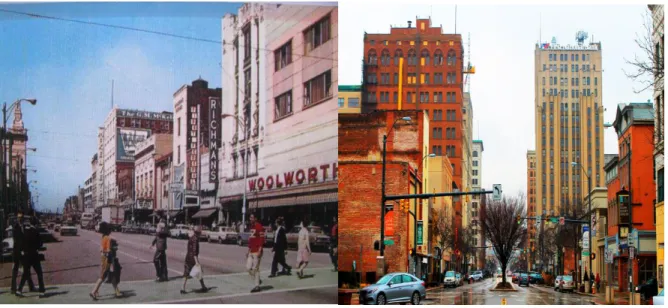
Figure 1.1: Downtown in 1965 vs. Downtown now ...2
Figure 1.2: Youngstown’s position relative to nearby cities ...5
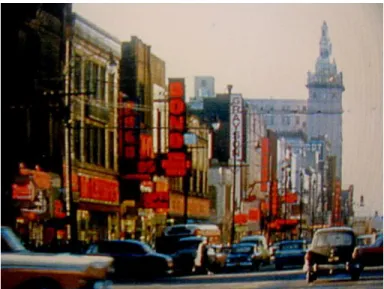
Figure 1.3: Downtown Youngstown c. 1950 ...6
Figure 1.4: Abandoned steelworker homes on Youngstown’s east side ...7
Figure 1.5: Westlake Terrace (left) and the Village at Arlington (right) ...9
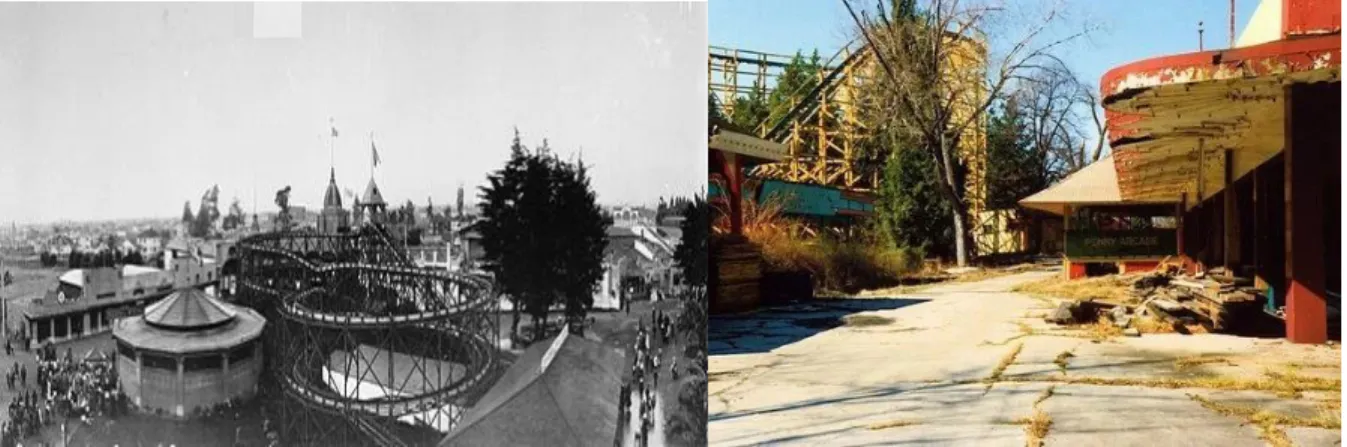
Figure 1.6: Idora Park in its prime (left) and after its closure (right) ...10
Figure 3.1: Images of Slums ...68
Figure 4.1: Idora Park in 1910 ...100
Figure 4.2: A home on Volney Ave. in Idora ...102
Figure 4.3: The fire at Idora Park...104
Figure 4.4: The South Side after Idora Park ...105
Abstract
This dissertation seeks to define the theory of rhetorical dynamism and illustrate how this theory can be applied to studies of rhetoric and place. The study builds on current rhetorical scholarship and adds to it with the four characteristics of rhetorical dynamism: that places are rhetorically invented, that they hold rhetorical tensions, that they are fluid and constantly evolving, and that they are active participants in a reciprocal rhetorical process. Rhetorical dynamism is illustrated in two places, Westlake Terrace and Idora Park, each in Youngstown, OH. By building a rhetorical history of each site, the study shows how each place is
representative of the study’s theoretical claims. Finally, the study finds that rhetorical dynamism can be usefully applied as a heuristic in future rhetorical scholarship to uncover instances of inequality and injustice and to find avenues to address these issues as they are grounded in particular places.
Introduction
In Youngstown, Ohio’s heyday, downtown (Figure 1.1 below) was a center of entertainment, business, and shopping. One could safely stroll down Federal Street or take a trolley to see Aretha Franklin perform at the Oaks Ballroom, shop at the Woolworth’s department store, or watch a play at Stambaugh Auditorium. The downtown many current residents grew up with, however, was far different. From the 1970s on, if people even dared to brave this dangerous part of town, it was only to go to work at one of the few call centers populating the small skyscrapers or to drown their sorrows in a dingy dive bar. Boarded doors, empty buildings, and broken windows were the portrait of downtown for years. This makes the revived downtown of the past decade or so a stark contrast, but the signs of Youngstown’s decay and struggle are still prevalent. There are still demolished buildings and vacant storefronts, but they’re interspersed with new restaurants, bars, and even the first downtown hotel in 44 years. Businesses are finally starting to come back (see figure 1.1), young professionals live in downtown lofts, and entertainment is making a comeback. Yet many people are still uneasy walking downtown; they stick to Federal Street, they don’t go down the dark alleys, and they walk quickly past the broken windows to get to the sparkling new places of a city rebuilding.
Youngstown, then, is an example of how places are constantly (re-)invented and change dynamically over time. This brief example is one among many in Youngstown that make evident that the actual geographical and architectural landscapes that make up places are rhetorical - not just rhetorical artifacts to be read, but complex actors that are invented as rhetorical artifacts and
Figure 1.1: Downtown in 1965 vs. Downtown now
Images courtesy of John Harris (left) and The Business Journal (right)
then generate their own rhetoric as they evolve and change. While some, such as Rai (2016), examine the rhetoric of place as a force enacted through dialogue and argument, I argue that places also enact rhetoric of their own, acting as “a form of communication” (Relph, 1976, p. 34; also see Adams et al 2001). Here I want to develop a theory of places that rests on the idea that places are both constructed by and generative of rhetoric. To encapsulate these concepts, I use the term rhetorical dynamism, which I employ because of the relative dearth of terminology available for rhetoricians to study places. While there are some terms, such as Rice’s (2012b) ecologies, Rai’s (2016) rhetorical force, or Rickert’s ambience (2013), to name a few, none quite capture the fluid, evolutionary, reciprocal, and active nature of place that rhetorical dynamism provides.
In this introduction, I begin to build a theory of rhetorical dynamism as a guiding framework for understanding place. Rhetorical dynamism means that places are active participants in an ongoing process of producing rhetoric, a process that is defined by shifting contexts and tensions. Dynamism connotes energy, force, power, movement, and vigor. As
Adams et al (2001) point out, “place is increasingly recognized as dynamic and fluid” (p. xxi), and rhetorical dynamism helps us understand these qualities of place in conjunction with places’ inherently rhetorical qualities. Rhetorical dynamism, then, means that places (or other rhetorical actors) are active participants in an ever-present kairotic (see Rickert 2007) process of meaning-making and negotiation; because of this process places are characterized by constant change, progress, and evolution. Furthermore, actors other than the place itself can be either the thing changing or the thing that is causing change at any given moment in the process of rhetoric. These actors are crucial to dynamism because places evolve with them in a reciprocal manner; they are part and parcel of the dynamism of a particular place.
Along with rhetorical dynamism, I use several other terms that have contested or complicated histories; because of this, I want to provide brief definitions now to lay the
foundation for the rest of the dissertation. These will be discussed in more detail in Chapter One and appear throughout the dissertation. These terms include:
● Placemaking - a specific approach to urban planning, design, and management that emphasizes communal strengths to create places that promote the overall well-being of the populace. Good placemaking practices generally involve transforming under-utilized space into productive urban places (Lynch 1960; Lynch 1984; Schneekloth and Shibley 1995).
● Place and space - Though I focus primarily on place, space will come up as well,
especially as I discuss how space becomes place. These terms are too often conflated, and I want to make a clear distinction here:
○ Space is that which we move through, the empty and open dimensions in which we all exist (Tuan 1977; Casey 1993). As Gieryn (2000) puts it, space “is more
properly conceived as abstract geometries … detached from material form and cultural interpretation” (p. 465).
○ Place is a particular location, position, or portion of space which is built,
purposed, named, etc. As Tuan (1977) puts it, “enclosed and humanized space is place” (p. 54).
These definitions inform my understanding of invention and of the rhetorics of place and help build my theory of rhetorical dynamism. I put these concepts into play in a study of Youngstown, Ohio. This dissertation explores Youngstown as one site that has been marked by the dynamism of place. Two of Youngstown’s places in particular, Westlake Terrace and Idora Park, capture the tension of what cultural geographers call “a living design which changes and is eventually replaced by that of a future generation” (Jackson 1951). Similar to the example of downtown above, these places have each experienced significant change over their histories and provide tangible examples of places enacting rhetoric. Furthermore, each of these shows how the rhetorical invention of places can have significant and far-ranging material impacts, especially for under-privileged and marginalized groups.
In what follows, I provide some general background on Youngstown and then introduce the two places I will study, Westlake Terrace and Idora Park, both for those unfamiliar with the city and to show why it is a rich site of study. Then, I will outline my theoretical exigence, including how my terms and theoretical framework help us understand place. Finally, I will conclude with an overview of the rest of the dissertation.
“Here in Youngstown”
Situated in the Mahoning River Valley on the border of Ohio and Pennsylvania (see Figure 1.2), Youngstown was once a thriving industrial town. With a peak population of
Figure 1.2: Youngstown’s position relative to nearby cities Image courtesy Sperling’s Best Places
170,002 in 1930 (United States Census Bureau 1930), Youngstown was an important producer of steel, a place built upon huge, roaring furnaces and blazing foundries, most notably the famous Jeannette Blast Furnace (Linkon and Russo 2002). The city featured an amusement park (Idora Park), a bustling downtown, a public research university, and, at one point, even a professional football team, the Youngstown Patricians. Connected to other industrial cities by the Erie Canal, the Ohio-Pennsylvania Canal, and extensive rail networks, Youngstown was once the top
producer of steel in the country, surpassing even Pittsburgh for a time (Linkon and Russo 2002). Steel made Youngstown a picture of prosperity. Neighborhoods embodied the city’s success with extremely high homeownership rates and a burgeoning and increasingly diverse population (Linkon and Russo 2002).
Unfortunately, on “Black Monday,” September 19, 1977, the Youngstown Sheet and Tube Company’s Campbell Works shut down. Almost all of the other mills in the area would soon follow suit, putting thousands out of work (Linkon and Russo 2002). “Steeltown USA” had been a “company town,” and now those companies were gone. Westlake Terrace, Brier Hill, and other upscale neighborhoods fractured as residents lost their livelihoods and subsequently their
Figure 1.3: Downtown Youngstown c. 1950 Image courtesy of John Harris
homes. Much of the city, including the Idora Park amusement park, literally burned to the
ground.1 Instead of industry, the city came to be known for crime, unrest, and decay. The mafia seized upon the chaos, and the Saturday Evening Post dubbed Youngstown “Crimetown USA,” one among a series of unfortunate nicknames that also included “Murdertown USA” and “Bomb Town USA” (Grann 2000; Linkon and Russo 2002; Milliken 2012). While the mafia was mostly eradicated by the early 2000s, the city is still considered dangerous2 and is visibly in decline (see Figure 1.4). The city’s demographics tell a tale of continued hardship: the median household income is $24,000 (United States Census Bureau 2011), the lowest of any U.S. city with a population over 65,000 (Christie 2007). The population is down to 66,982, with the decline of over 103,000 since its peak being the largest decline of any city in the U.S. (United States Census Bureau 2010). And the vacant housing rate is twenty times the national average (Tavernise 2010) in a city that once boasted the largest homeownership rate in the country (Linkon and Russo 2002).
Figure 1.4: Abandoned steelworker homes on Youngstown’s East Side Image courtesy of Johnny Joo
Youngstown, as a city and as a rhetorical edifice, is full of complexities. Its decline is infamous and is emblematic of the issues seen in other Rust Belt cities. The city and its people are proud and still build on a blue collar, working class ethos, and yet the industry that provided that ethos is gone. In its wake lie entire city blocks of vacant houses, rows of empty storefronts, and overgrown lots. At the core of this decline is urban planning and land management, and this is why Youngstown is both an ideal site for my study and a site in need of more productive placemaking practices.
To explore how rhetorical dynamism works, I study the places of Youngstown. As interrogating the city holistically would be too large of a scope for this project, I have narrowed the project down to two of Youngstown’s places, Westlake Terrace and Idora Park. These two places each have unique and rich histories, but are also emblematic of larger trends across the city.
Westlake Terrace and Idora Park
Westlake Terrace (Figure 1.5) was one of the first public housing projects in the United States, and the first authorized by the U.S. Public Housing Act of 1937 (Linkon and Russo
2002). When initially built, the neighborhood was populated by steel mill workers, as were most of Youngstown’s neighborhoods. Westlake Terrace was built because there weren’t enough houses in Youngstown to meet demand. The project was initially a segregated, low-income, family-oriented community; one even had to show their marriage license with their application. In the 1950s, the Madison Avenue Expressway cut Westlake Terrace in half, creating a physical barrier between the two halves of the community and cutting parts of the project off from key resources (Linkon and Russo 2002). The community gradually fell into decline thereafter, coming to be known for vandalism, drugs, and transients. Later, a maximum security county prison was built right next door to Westlake, another decision that deeply impacted the community. Finally, the project was torn down and replaced with a new housing project, the Village at Arlington (Figure 1.5), in 2013 (Milliiken 2013).
Figure 1.5: Westlake Terrace (left) and the Village at Arlington (right) Left image courtesy of Jessica Kanalas; Right image courtesy of apartments.com Idora Park (Figure 1.6) provides a different sort of site. Built in 1899, Idora Park was initially a “trolley park,” which were amusement parks built at the end of trolley lines to generate extra revenue, especially on weekends (Deblasio 2010). The park featured a roller coaster, a haunted house, a fun house, a bandstand, and a large ballroom, among other attractions. Though Idora faced stiff competition from other amusement parks in the area (Kennywood, Cedar Point, and Geauga Lake, to name a few), it continued to thrive for many years. As people began to be
able to travel more easily to further, larger-scale parks, Idora morphed into a picnic area for various cultural organizations, churches, and companies. However, after Black Monday, Idora Park turned into a repository for old rides from other shut-down parks (Kyriazi 1986). Finally, an enormous fire swept the park in 1984, destroying much of it, and the park closed that same year. After its closure, there were several more fires over the years, some intentional, some not. The remaining attractions were left standing but were not maintained, becoming a stark reminder of what had been; where once there was an amusement park, now there was a collection of
decaying, vandalized roller coasters beset by weeds and other flora (see Figure 1.6). Intense debates occurred over whether to keep or demolish these historic relics. Eventually, after yet another fire in 2001, the remaining structures were demolished. At the same time, the housing market in the surrounding neighborhood plummeted, and when African Americans began to move in, the white residents fled to the suburbs. The neighborhood decayed along with the park, becoming a food desert with soaring vacancies and crime. Now, the parkstands as an empty lot embroiled in a lawsuit over delinquent property taxes, surrounded by a neighborhood that is just now undergoing revitalization efforts.
Figure 1.6: Idora Park in its prime (left) and after its closure (right)
At first glance, these sites might seem quite disparate, and in some senses they are. Their relation, especially in terms of my project, will become clear in the next section as I lay out my theoretical framework for the rhetorical dynamism of place.
Theoretical Exigency and Framework
This dissertation explores Youngstown’s rhetorical dynamism and the inventional
processes that underlie these two places’ dynamic evolution. I claim that places are dynamic and generative of their own rhetoric, rather than simply being topoi for arguments. In doing so, I attempt to extend work that studies the ways that people argue about place (Rai 2016, Rice 2012b) or the ways in which places open up space for discourse (Fleming 2008, Cintron 1997). Rather, I want to understand how the built environment reflects a confluence of cultural,
economic, and societal demands (Casey 1993), and how places reflect and construct the contexts in which they are made. Furthermore, dynamism means understanding that place is not a
permanent fixture (Rice 2012a). Understanding places as instead fluid, as cultural geographers do (Adams et al 2001), allows us to understand them as dynamic, constantly changing entities (Huyssen 2003). Finally, I want to move toward understanding how place impacts and is invented by everyday, material practices (de Certeau 2011).
Rhetorical dynamism and its characteristics grow out of three realizations and extensions of current scholarship. First, that places are rhetorical in and of themselves. Places have suasive power (Rickert 2013; Herndl and Zarlengo 2018) and are rhetorical in their very being, affecting our ontological understanding by changing how we think of our place in the world and how we inhabit our surroundings (Larsen and Johnson 2017). Places affect our relations with one another and with Others; both those that inhabit a place with us and those in different places. They
change how we are able to negotiate our being-in-the-world, and I view this as the core of rhetoric - the negotiation of being (and specifically, being with others).
Second, Places are rhetorically invented. Places are invented for specific purposes, to reach specific audiences, and to organize our physical existence. Most often, places are invented as a means of organizing people in space (Rice 2012a; Foucault 2010; Cintron 1997). Yet no single rhetor invents a place; rather, the invention of a place is a distributed process in which multiple parties, such as city planners, architects, politicians, journalists, residents, and the place itself participate (Latour 2012). The invention of place, furthermore, is reciprocal; places both reflect and construct their context (Johnson et al 2017). The context surrounding a place is built into its invention, and it then affects and constructs its future context(s) in its rhetorical
dynamism.
Finally, places are constantly evolving. Rather than static, permanent fixtures, places are, as Fleming (2008) puts it, “plastic.” Indeed, Rice (2012a) explains that “treating space as
permanent is an ideological gesture often meant to keep things in their place” (p. 13). Places are constantly re-invented in various ways; as Rai (2016) argues, they are “remade through everyday practice, institutions, and spaces” (p. 6). When studying places, we too often fall into the same trap that Gries (2013) points out with images: treating them “as fixed, transitive things that have already been built” (p. 336) rather than as fluid and emergent processes of continual re-invention. This could occur because of the way that people talk about a place, because of change in the way we inhabit a place, or because of physical changes to a place. In any case, the place changes, as does its rhetorical affect.
These three points each help build rhetorical dynamism and define it and its
characteristics. In the next section, I will provide a brief overview of rhetorical dynamism and discuss how it applies to each of the sites I investigate in this study.
Dynamism
I argue, then, for the rhetorical dynamism of places. Rhetorical dynamism brings rhetorical understandings of place into conversation with cultural geographers, helping us understand place as constantly changing and evolving. This theory responds to Jenny Rice (2013), who called on rhetoricians to engage with place as a “generative concept and practice” and puts this in conversation with Casey’s (1997) claim that place “has an active power as well as an incorporeal and definitive reality,” which I understand as part of rhetorical dynamism. This project will build on these claims to move toward framing place not just as a conceptually generative heuristic for rhetoric, but as an enacted form of organized space invented by and generative of rhetoric. I want to interrogate how places both are enactments of and enact rhetoric, and the ways in which these enactments are ongoing, dynamic processes and constant sites of change and tension. A rhetorically dynamic place, then, has the characteristics of being
rhetorically invented, having rhetorical tensions embedded within it, being fluid and subject to constant evolution, and being an active and reciprocal participant in these processes. While I detail each of these characteristics in the next chapter, I will take a moment here to discuss invention closely, since invention is a fraught term in rhetoric.
I am viewing invention under the less traditional light here, following Lefevre’s (1986) conception of invention as a social act and John Muckelbauer’s (2009) understanding of topos as a “reciprocal and generative fusion of body and place” (p. 136). I focus on invention’s processual nature to argue that invention is not a single action but something that is continually done and
re-done. I want to build on this, as well, to argue that non-humans impact invention as well.
Invention, then, is a recursive process that flows through humans and non-humans alike, which a view that moves away from the more conservative notions of invention as an anthropocentric act of pure creative force. As Simonson (2014) shows, this understanding follows “Hawhee,
Muckelbauer, and others in advancing a post-humanist understanding of the way invention flows through agentic pathways beyond individuals, minds, and purposeful directiveness” (p. 311). I follow this tradition to argue that invention is something that happens as a distributed process arising from interactions between places, bodies, and language. Invention is here a dynamic and active process of continual discovery and re-figuration.
Places have been involved with invention from the beginning, even in more traditional notions. Since Aristotle, invention has been understood to draw on topoi, or commonplaces. Yates (1966) shows us that place was deeply linked to both memory and invention, especially in the study of mnemonics where places were invented as mnemonic devices. And while topoi are often interpreted as topics of arguments that we “discover” in the invention process, the word literally translates to “places.” Indeed Rai (2016) re-orients topoi as “places of invention” (p. 8) to capture the way that rhetorical forces circulate through places. Here, I want to follow Rickert (2007) and argue for a deeper relation between place and invention. Places are, as Rickert (2007) points out, necessary for invention; in his reading of Plato, Rickert traces the thought that ideas must first have a place in order to grow, and thus “place and making are conjoined” (p. 254). In other words, our ideas flow through and are both mapped onto and affected by place. This process goes in and out of place fluidly; it invents them consistently, and then places re-invent their contexts, and the cycle continues. As Rickert (2007) puts it, “there is a movement to invention, a going beyond boundaries and returning, that precludes its being fixed in place, even
though it simultaneously emerges in and through place” (p. 270). Refiguring invention in this way shows us that invention occurs not as a singular act of imposing a creator’s ideas onto an empty void, but a process of negotiation through which places and those actors that interact with them are made and remade. This process is a key characteristic of rhetorical dynamism, and I will elaborate more fully in chapter 1.
Rhetorical dynamism and its characteristics manifest in Youngstown in several ways. Broadly, the inventional decisions made in the city’s heyday are still apparent in many instances but often conflict with the present reality and with more recent decisions about how to use space and invent place. As an example of what I mean here, in the early 20th century the city vastly expanded residential areas and built new homes and neighborhoods as more people were migrating there for work. However, as the population declined, some neighborhoods now have only one or two people left in them, and the city no longer has the resources to support these neighborhoods, especially if they’re out of the way of larger and more populated areas. The city realized this and embraced a placemaking framework of shrinkage with the Youngstown 2010 Plan, which would focus on “providing services to the neighborhoods with the most people, converting abandoned land into green space, and supporting the burgeoning healthcare industry” (Campbell 2016).3 The city was moving forward with place-based decisions leaning towards using place to re-invent the city’s identity and change its common narratives.
Many of Youngstown’s issues can be understood through examining inventional moments like neighborhood expansion and smart shrinkage. Youngstown has sought, and still seeks, to rehabilitate its image and stem the further shrinkage of its population through spatial and platial decisions such as the revitalization of downtown and elimination of entire
places, and provides a city where intervention by rhetoricians and the implementation of
placemaking practices would prove quite productive, especially in the two places I have chosen to look at.
Of the many places exhibiting clear markers of rhetorical dynamism, Westlake is one that very clearly shows the material impact of rhetorical processes. Furthermore, Westlake serves as a useful example theoretically because, from its inception as a slum-clearance project, the place is constituted as a process of invention that deeply impact the lives of Westlake’s residents and that made the place itself into arguments about what the area should be, how it related to its
immediate surroundings, and the value and purpose of its community. Namely, these rhetorical moves, especially the many that promoted structural racism, asserted that this neighborhood should be segregated, was dangerous, and needed to be constantly policed. These moves also show clearly how the invention of a single place can be driven by wider social contexts such as structural racism.
On the other hand, Idora Park shows us how places are rhetorically invented and some of the tensions that occur when a place’s meaning is in flux. The debates and decisions surrounding its decline and destruction provide insight into conflicts over how publics should remember their pasts and how those memories should shape the future, especially when that memory is anchored to a place (Dickinson, Blair, and Ott 2010). Idora Park, then, acts as both a memory place and a metonym for arguments about the city’s future. This case shows how the materiality of an empty lot or a decaying ghost town of an amusement park remain dynamic in spite of or even because of its emptiness and decline. Indeed, as Casey (1997) points out, some argue that places become more powerful as they become less material, and this is certainly the case - the stark portrait of Idora’s overgrown and falling down coasters and buildings present a vivid and tangible rhetoric
of loss. Idora also shows clearly how a place can drive changes in its surroundings, as we can see a clear relation between Idora’s prosperity and the development and decline of the neighborhood surrounding the park.
A housing project and an amusement park are obviously different places that illustrate different rhetorical moves. They have different purposes and audiences, and their design reflects that. Yet each place is a site of rhetorical dynamism. They provide evidence for the rhetorical nature and plasticity of places. Westlake and Idora also capture some of the tensions inherent in the rhetoric of place, as well as some of the tensions playing out more broadly across
Youngstown. Finally, in each instance, the rhetoric and invention of place led to material impacts for under-privileged and under-represented groups, and many of the choices that were made by those in power ignored the concerns of these groups at best and negatively affected them at worst. Westlake Terrace and Idora Park, then, are ideal cases for showing the potential power and use of rhetorical dynamism as a theoretical concept and methodological framework. Moreover, seeing Westlake Terrace and Idora Park’s rich archival history and current material state through the framework of rhetorical dynamism demonstrates how places are rhetorical, how placemaking is a practice of rhetorical invention, and how rhetoricians can productively
intervene in placemaking practices. Chapter Outlines
To begin this process, Chapter 1 builds my theory of rhetorical dynamism. To do so, I examine literature from primarily rhetoricians and cultural geographers. Here, I will fully outline the rhetorical processes of place, bringing together and expanding existing theoretical concepts to build rhetorical dynamism as a theory. First, I provide an outline of how rhetoricians have studied place thus far and how that body of scholarship informs my own thoughts. Next, I engage
with Rice (2012b), Rai (2016), and Rickert (2013) to build a foundation for rhetorical dynamism. Finally, I use that foundation to define rhetorical dynamism and provide a full description of each of its characteristics: invention and re-invention, rhetorical tensions, evolution and fluidity, and place as a reciprocal participant.
In Chapter 2, I examine rhetorical history more fully as a methodological framework for my study. I explain that using rhetorical history and archival methods within a framework of rhetorical dynamism helps us understand the evolution and re-invention of places over time, illustrating places’ fluidity, tension, and change. I also discuss in detail how the framework will be applied to each of my sites. This chapter will also explain what archival materials I have found and how these archival materials will be read and integrated into the study. To explore how these concepts manifest in Youngstown, I build a rhetorical history of Westlake Terrace and Idora Park in order to identify key moments and tensions in each of their continued
re-inventions.
Chapter 3 details some of the key moments in Westlake Terrace’s history that map its rhetorical dynamism. Here, I unravel the tensions that were consistently present in Westlake, the multiple roles the project took on, and its movement between sets of binaries, such as slum vs. home or “nice” neighborhood vs. high-crime area. Westlake will be traced from its inception as a slum-clearance project through its destruction and replacement, identifying the rhetorical moves that were made along the way. Furthermore, I will point to clear connections between race, place, and invention in this chapter as they manifested in Westlake.
Similarly, Chapter 4 will Trace Idora Park’s history. The chapter will show Idora’s changing identity over its lifetime and then examine the rhetorical power that it still held even after it was burnt down. The debates that surrounded its destruction and its memorialization will
be interrogated as effects of its rhetorical dynamism. The chapter will also note the impact that Idora Park’s opening and closure had on its surrounding neighborhood to examine both its material impacts and the ways that inventions of places can lead to future inventions of other places.
Chapter 5 will bring together the two places to explore the similarities between them. This chapter will also examine the material impacts that placemaking can have, and argue that rhetoricians can and should productively intervene in placemaking. The dissertation thus ends with some criticism of the inventional practices in these two places and some recommendations for better placemaking practices based on the theory of rhetorical dynamism mapped out in the rest of the project basing these recommendations on the characteristics of the theory. Finally, the chapter details the implications of this study for rhetorical theory and points to areas for future research.
Notes
1 It’s important to note that many of these fires weren’t considered arsons or ever investigated as such; the arsons were widely suspected to be a mob racket, and the Fire Chief was later indicted as a bagman for one of the prominent mob families (Linkon and Russo 2002).
2 The crime rate in Youngstown is 44 per 1,000 residents; the violent crime rate in 6.45 per 1,000 residents, which is more than twice the state average and 50% higher than the national average. Perhaps the most striking number is the murder rate, which is 0.19, which is nearly four times the national murder rate (0.05) (NeighborhoodScout 2018).
3 Unfortunately, this often leaves a few people stranded in less populated neighborhoods. The city makes efforts to relocate these people, but sometimes they don’t want to or simply can’t move. This consequence is an issue that needs more attention in this process; people cannot simply be abandoned with no resources.
Chapter One: Rhetoric, Place, and Dynamism
In this chapter, I fully detail rhetorical dynamism and the need for this new term. First, I will review the relevant literature on rhetoric, space, and place. Next, I will turn to Rice (2012b), Rai (2016), and Rickert (2013), as their theories of ecologies, rhetorical force, and ambience are foundational to my thinking about rhetorical dynamism. These three theories will be put into conversation to show what they collectively add to an understanding of rhetoric and place, and then show why a new term is needed to continue building on this understanding. Then, I discuss how rhetorical dynamism extends these theories and provide a definition of the term, as well as its key characteristics. Finally, I will detail each of these characteristics to provide a full picture of rhetorical dynamism.
Rhetoric’s Spatial Turn
Drawing on diverse, interdisciplinary work from philosophy, geography, and other disciplines, rhetoric and composition scholars have begun to ask questions about the intersections of space, place, and rhetoric. This “spatial turn” in rhetorical theory has been ongoing for some time, tracing its roots to philosophers such as de Certeau and Lefebvre as well as to geographers such as Tuan. There are several major threads of scholarship related to place and rhetoric, namely:
● Place as setting for rhetoric
● Rhetorical practices of engaging with space and place
● Place and space as an organizational practice that affect public discourse ● Place as a topos for public discourse
● Place’s effect on identity (either individual or collective) ● The relationship between place and memory
These themes are important to outline this project because they help to showcase and organize the ways that rhetoricians have previously studied space and place. Much of this helps shape my thinking about space and place, and thus these threads of scholarship help to build toward rhetorical dynamism. Each of these are key areas of study, and in this section I will discuss each of them to provide a thorough portrait of how rhetoricians have studied place thus far.
Place as Setting for Rhetoric
A number of rhetoricians have studied the ways that places serve as the setting for different types or practices of rhetoric, which is an important starting point that moves/ toward places as integral to rhetoric. This thread of scholarship extends back to analysis of Ancient Greek rhetoric in examining the placial nature of topos (Rickert 2007) and the ways that the Agora functioned as a space for discourse (Fleming 2008). Fleming (2008) in particular argues that “Greek cities were built by and productive of rhetoric” (p. 53). The idea of the place of an argument being productive either of the argument or as a topos for that argument extends into contemporary analysis, as well. For instance, Endres and Senda-Cook (2011) examine how the location of protests can be a rhetorical choice on the part of the protestors, and the place can act to reinforce the protest’s message. The places where discourse occurs can also have a deep impact on that discourse; for example, Enoch (2008) explains that the physical space of
classrooms are deeply gendered in a way that has made them “enclosed, private, and feminine” (p. 276). Each of these call attention to the importance of the place of rhetoric; where we practice rhetoric matters, and changes how we are able to do so.
The idea that place is important as the setting for rhetoric moves us toward an idea of place being rhetorical itself. These scholars help us understand that the where of rhetoric is key to how rhetoric is practiced. Though I will extend this scholarship to theorize how places are inherently rhetorical, this theme in rhetorical scholarship provides an important starting point for that idea.
Rhetorical Practices of Engaging With Place
Others have studied how we engage with place rhetorically, borrowing from de Certeau to examine the ways that people use strategies and tactics to navigate and “re-write” places. For instance, Topinka (2012) argues that walking can be a rhetorical strategy that resists
constructions of space that attempt to restrict agency or impose ideology. And Rice (2009; 2012a) uses Detroit to illustrate writing and rhetoric as a network through which we can uncover the multiple meanings of a place. Here, meanings are mobile and distributed, and mobilizing spaces allows those meanings to travel. Rai (2016) explores this as well, asking how people can affect place through everyday practices. And Rice (2012b) discusses the ways that people engage or disengage with places through particular rhetorical subjectivities. Rhetoricians, then, have come to view everyday practices as ways to rhetorically engage with places.
Examining the ways that people engage with places rhetorically is a key part of understanding how places contribute to ongoing rhetorical processes and how they are
rhetorically invented. Here, much of the focus is on how people orient themselves to place and how that orientation encourages particular forms of discourse. This is a key foundation for rhetorical dynamism, as it shows that people are engaged with places in rhetorical and suasive processes, and I extend this theme to understand the ways that places actively contribute to this suasiveness.
Place as an Organizational Practice
Places also organize people, and through this organization they impact how we can communicate. Cintron (1997) shows this through his ethnography of Angelstown, which provides us with a sense of place as “the management of the body politic, hence, public discussion” (p. 25). And Fleming (2008) argues likewise, claiming that “the physical
organization of our neighborhoods, cities, and metropolitan areas affects our practices of political expression and debate - the ways we represent our histories to one another, render and negotiate our differences, and determine together our future” (p. xi). Places, then, are not just important for thinking about where we practice rhetoric, but also because the ways that people are implaced impacts how we can participate in public discourse. This organizational aspect of place is additionally important because of the ways that it can perpetuate inequalities; Rice (2012a) reminds us that place can be an oppressive construct that “keeps people in their place” (p. 13), and this is precisely why Fleming (2008) argues that place “matters most for those with the least” (p. 192). How we are implaced, then, not only deeply impacts our capacity as citizens but also shows the potential of place for social justice work.
Places’ ability to organize people is one of the ways in which they deeply affect our practices of rhetoric. This informs my own thinking because it shows the power of place to affect our relationships and the possibilities of discourse. Places’ organizational capacity is one that will come into play in my own theory as one of the ways that places are able to actively exercise rhetorical power.
Place as a Topos for Public Discourse
Places not only affect public discourse but are often used in it, as well. Often, places will be evoked as a topos to help make an argument. Because places have so much meaning built into
them, conjuring up the place immediately conjures all of the meanings constellating around it. For instance, Rai (2016) discusses how when one brings up Wilson Yard in Uptown Chicago, it immediately brings to bear ideas about democracy, public housing, safety, and home ownership. Similarly, Rice (2012b) explores how places in Austin come to be topoi generating a discourse of urban crisis. And Simpson (2009) shows us through Ybor City how these discursive
constructions of place can flatten the place and present it as a simulacra that can lose some of its materiality and history. These all point to the evocative power of place in discourse; places have meanings and memories attached to them that circulate throughout public discourse.
Here, I extend the idea of place as a topos by examining the way that these associated meanings become sedimented within places and create a series of shifting rhetorical tensions. Place, then, is not only a topos in discourse, but the discourses within which places are evoked become attached to the place and become a part of that place’s rhetoric.
Place’s Effect on Identity
The meanings that are attached to places can also come to attach themselves to the people that live there. Dickerson (2012) argues that people and the places in which they live can become rhetorically synonymous; a place can create a metonymic relationship with the people who live there, and can even take on an ontological argument. Furthermore, Johnson et al (2017) show that places such as Ybor City have a defined cultural identity that can be read through the artifacts produced by those places. And Wright (2015) explores the way that places can be built as a reflection of collective identity. So, places are not only able to conjure meaning when they are brought up in discourse, they can also attach that meaning to others, which can have a real, material effect on people’s lives.
The theme of identity in the scholarship informs my thinking in two ways. First, it shows one of the ways in which places accrete meaning and become rhetorical - that is, identity is one of the topoi that place presents arguments about. Second, it is one of the ways that places work in reciprocity with their surrounding contexts. Places, people, and other actors work together to build a sense of cultural identity, and this reciprocity is one of the key ways that places develop a rhetoric.
Relationship Between Place and Memory
One of the ways in which places gather and project meaning is through public memory, and this has been one of the major areas that rhetoricians have used to explore place. The
connection between place and memory has been present since Ancient Greece; indeed, in Yates’ (1966) history of mnemonic systems, the art of memory depended on creating mnemonic
associations with places, and this connection runs from Simonides to Bruno. More
contemporarily, Dickinson et al (2010) explicitly link rhetoric, memory, and place, arguing that public memory is fundamentally rhetorical and is manifested in places. Likewise, Wright (2005) uses cemeteries to examine public memory and place, claiming that the cemetery affects public memory practices by being a material space of loss that also creates what we consider as our available past. And Huyssen (2003) understands certain places like the Berlin Wall and Times Square as palimpsests on which public memory is continually written and re-written. Many rhetoricians, then, understand memory, especially collective memory, as that which maps meanings on place and as the mechanism by which we receive meanings from places.
Studies on place and memory are foundational in rhetoric, and they deeply contribute to my understanding of places and their rhetorics. Here, I understand memory as one of the vehicles that drives the sedimentation of rhetorical meanings in places. I do contend, however, that this is
simply one of the ways in which places build their rhetorics, and we must continue to build a fuller picture of those processes. Memory, after all, is only one of the canons of rhetoric, and I argue that we can use others as well, such as invention, to understand places’ rhetorics.
Building a Foundation: Ecologies, Force, and Ambience
We have, then, productively analyzed the relationships between place, publics, discourse, and memory, albeit from a decidedly anthropocentric perspective. As Larsen and Johnson (2017) note, much of the work done thus far describes place as “the platform for human agency, the locale for social interaction, or the colorful stage upon which human meaning, history, and experience are set” (p. 17). But places affect our relationships with ourselves and our
surroundings, both discursively and in a material, real sense. Some argue that places affect our ontological understanding by changing how we think of our place in the world and how we inhabit our surroundings; Larsen and Johnson (2017), for instance, argue that “place convenes our being together, bringing human and nonhuman communities into the shared predicaments of life, livelihood, and land” (p. 1). Combining these various ideas about places tells us that places both have a deep and material impact on our everyday, lived experience of the world and that they impact our capacities as citizens in the public sphere. Places tell us something about who we are, which in turn modifies our ability to participate in public discourse, which place also serves as the platform for.
The threads of scholarship above tell us much about the ways that places can affect publics or how publics make use of places, which is a key aspect of places’ rhetoricity. Rhetoricians have productively studied how places serve as a platform and topos for public discourse, how people engage with places rhetorically, how places can serve as a control
is an understanding of place as a way to help organize and make sense of public discourse. This scholarship points to places as either an object of rhetoric or as a heuristic for understanding rhetoric. Yet they simultaneously point to places as inextricable from rhetoric and our practice of it, which I see as a disconnect that needs to be addressed. If place and rhetoric are so deeply intertwined, then this relationship must be more than places serving as a platform for rhetoric, as a text to be read, or as helpful in understanding discourse. Rather, places should be thought of as having a rhetoric of their own, rather than as a static object that rhetoric is done to.
I want to extend this scholarship by adding to it that places have their own rhetoric. As Relph (1976) tells us, places are a “form of communication in which all the elements may have messages” (p. 34). And I claim that this rhetoricity extends beyond public discourse (though that is certainly one platform for it), and that memory is not the only avenue through which places accrete meaning (though it is one of them). I claim that places are both invented for rhetorical purposes and generative of their own rhetoric, a rhetoric that is fluid and evolving, full of tension between multiple meanings, and reflective of a place’s context. To help build toward this
understanding, I look at Rice (2012b), Rai (2016), and Rickert (2013), whose theories specifically show that places are agentive bodies that are sites of rhetorical invention and the development of public subjectivies. These three scholars provide the most relevant connection to my own work, as they provide a foundation on which I build and diverge.
Ecologies and Subjectivity
Rice (2012b) uses Austin, TX as a case study to interrogate development, gentrification, and urban sprawl discourse. Using this case, Rice (2012b) outlines three ways that publics rhetorically work against development initiatives: injury claims (the public is injured by
memory claims (epideictic claims memorializing what a place used to be), and equivalence claims (which take the position that gentrification is both good and bad and that these negate each other). These claims become the topoi for discourse of urban crisis in Austin; they are at once sites for invention, driven by place, and for the creation of what Rice (2012b) calls the “exceptional public subject.” This subjectivity is one that does not consider itself outside of public life, but also does not participate or intervene productively; it is somewhere between publicity and isolation or withdrawal, and is connected to the public only through affective attachments. Rice’s primary claim, then, is that we must focus on cultivating different subjectivities that encourage interaction with the public and intervention in public issues.
Furthermore, Rice (2012b), understands rhetoric as ecological rather than situational (as traditionally conceived), which helps us see rhetoric as constantly changing and fluid. In her ecologies, the place, those affected by and affecting it, and the places and spaces surrounding it all form an interconnected whole where each part is constantly interacting with and changing the other (Rice 2012b). Ecologies, then, help us understand places not as isolated but as
interconnected with their wider contexts, publics, and exigencies. To understand a place’s
rhetoric, one must understand this entire ecology and how each part is participating in the overall process of rhetoric.
Rice’s work here provides several key aspects to understanding the rhetoric of place. First, the claims that she discusses are invented in conjunction with places themselves, pointing to the capacity of places to participate in the inventional process. Second, understanding places as participants in ecological rhetoric helps us understand them as fluid, evolutionary, and deeply affected by their contexts. However, the focus here is very much on the way that people talk about and use places in public discourse. To move beyond this focus on public discourse as seen
in Rice’s work, scholars such as Rai (2016) move to a focus on the more dynamic aspects of places. Rai’s (2016) work expands Rice’s ideas by that show how places are participants in rhetorical processes and shows that places are forceful and active.
Rhetorical Force
Focusing on a study of Uptown Chicago, Rai (2016) seeks to understand the complex workings of democracy in public discourse. Rai (2016) argues that spaces, places, and the bodies that inhabit them have rhetorical force that determines their effect in the world. As Rai (2016) puts it, as a place has “more arguments, stories, experiences, human energies, and public memories become implicated in and tethered to its evocation, [it] increasingly absorb[s] and vibrate[s] with rhetorical force” (p. 5), which shows us that places absorb the social effects and meanings that are invented for them and then are active in projecting those outward. Rhetorical force also helps us understand that places are remade constantly as they accrete meaning. As they are remade, they become, to Rai, symbols that have the power to project the entire network of meanings that have become associated with them.
Rai (2016) also argues that invention can be understood as a complication of place, wherein physical places can discursively become commonplaces, or topoi, from which
arguments are made. In this conception, democratic and rhetorical ideals are materialized in the everyday practices of people in places. Democracy is an ambivalent concept, here, however; it is full of paradoxes and rife with competing publics who use appeals to democracy itself to forward incommensurate viewpoints based on moral and ethical grounds. Within this milieu, Rai
recommends finding the places of invention in the kairotic, exigent democratic situation as it is situated materially and rhetorically in order to create civic change.
Places, for Rai, become commonplaces onto which arguments are mapped; furthermore, these commonplaces can only be mobilized within the kairotic contextual situation in which they operate. Rai shows this through her exploration of Wilson Yard; this space becomes a topoi onto which was mapped arguments about gentrification, housing, class, ownership, etc. Furthermore, Rai (2016) argues that inhabiting a place is key to understanding its rhetoric, an important methodological claim.
Again, however, the focus here is very much on discourse. Rhetorical force moves us closer to the ways that places can be active participants in rhetoric, but in Rai’s formulation, rhetorical force is something that seems to operate exclusively through discourse. In other words, places project their rhetoric into the way that people talk about those places, and that force continually circulates as people use topoi related to the place. So, while Rai helps us understand places as more active and forceful in the process of rhetoric, we are still sitting with public discourse, just as in Rice’s work. Scholars still need to work to understand the other ways and arenas in which places are rhetorical, and Rickert is useful here in helping us understand the ways that places are active participants in an ongoing process of rhetoric.
Ambience
Rickert (2013) argues that external environments are integral to practices of rhetoric. His concept of ambience reminds us of the agency of places and other nonhuman actors. Ambience moves us beyond understanding rhetoric as a person or persons participating in discourse, showing that rhetoric is inseparable from the entire context, or ecology, surrounding any rhetorical act performed by any actor, human or nonhuman. Because of the inseparability of environment from rhetoric, the places in which we practice rhetoric necessarily have a deep impact on that practice, and indeed can have suasive power of their own.
Ambience helps us move between the subject/object dichotomy that pervades much of the scholarship on place, wherein places are inchoate objects acted upon or talked about by people. Rather, for Rickert, as Herndl and Zarlengo (2018) explain, “rhetoric encompasses not only human intention and language, but also the material environs in which we dwell as co-producers of meaning, perception and interpretation” (p. 54). Here, place has a distinct agency of its own as a co-participant in a processual rhetoric. Humans and places (and other non-human actors) create meaning together, rather than any single actor creating meanings and projecting them outwards. Thus, place is both the grounds of our lived, embodied experience and an agentive actor participating persuasively at the scene of invention to create a shared understanding of the world.
Ambience responds to the anthropocentric nature of previous scholarship by putting humans and nonhumans in conversation and making them co-participants in the process of rhetoric. The ambient and distributed nature of Rickert’s (2013) theory allows to see place as joining together the physical, social, and symbolic and to understand the persuasive nature of this joining. Places are indeed material artifacts that are also overlain by symbolism and wrapped up in social context. And while they may not have intentionality, they do have agency, if we read agency as a capacity to effect change. What ambience does not do, however, is capture the invented nature of places or the tensions that occur in the process of distributed meaning-making. Nor does it capture the fluid and evolutionary nature of places.
Moving Toward Dynamism
Taken together, Rice (2012b), Rai (2016), and Rickert (2013) show us that places should be understood in relation to their surrounding contexts and that they are able to contribute to the process of rhetoric in tandem with other actors. They show us that places encourage particular
forms of rhetorical subjectivity that should be understood ecologically (Rice 2012b), that places are sites of invention for rhetorical discourse through the rhetorical force they exert (Rai 2016), and that they are an active and agentive participant in a distributed process of rhetoric (Rickert 2013). These theoretical lenses show that places do indeed have a rhetoric; they have an ambient rhetorical force that is dependent upon their ecology. Furthermore, these each show in different ways that places are actors or participants at the scene of rhetoric and that they are at least involved in the process of rhetoric. These theorists go together by helping us understand the importance of context and showing us that places do contribute to rhetoric as active participants, in discourse as well as in other rhetorical processes.
However, while these provide a foundation, I want to build upon that foundation to capture the full dynamics of place. What we do not find here is an explication of the tensions inherent in the rhetorical processes of places, or the ways that places can be generative of rhetoric. Finally, they do not show the fluidity of places or the way that they constantly evolve through a processual rhetoric. They do not quite go far enough in showing us that places are dynamically evolving, generative rhetorical actors produced by inventional processes and rhetorical tensions. For that reason, we need to further build on these theories to more fully understand how places themselves are rhetorical.
When read together, then, Rice (2012b), Rai (2016), and Rickert (2013) move toward a better understanding of places and their rhetorics, but we can build on them to more fully capture the fluid, evolutionary, reciprocal, and active nature of place, and to see how place’s rhetorics are contested and filled with tension. Thus, we need to continue to find new terms and concepts to add to our lexicon and fully understand the relationship between place and rhetoric. To that end, I turn to rhetorical dynamism as a term that helps fill some of those gaps.
Rhetorical Dynamism
To build upon the limitations of previous scholarship as I have described them and to more fully understand places and rhetoric, I propose the term rhetorical dynamism. For something to have rhetorical dynamism means that it is an active participant in an ongoing process of producing rhetoric, a process that is defined by shifting contexts and tensions. In a rhetorically dynamic place, then, the following characteristics must be present:
● Invention and re-invention ● Rhetorical tensions ● Fluidity and evolution
● Place as reciprocal participant
Rhetorical dynamism builds on previous scholarship by asking us to attend to the ways that places’ rhetorics dynamically evolve over time in conjunction with their contexts and interlocutors. Dynamism does this work in several ways. First, dynamism complicates other theorists’ notions of the link between invention and place. Others have primarily explored place as a grounds for invention or a complicating factor in the invention of public discourse; in other words, invention has been viewed rather anthropocentrically. I view invention as more of a sociocultural practice driven by shifting contexts and everyday practices. The invention of place is an ongoing process wherein places are constantly made and remade through emergent
rhetorical processes.
Dynamism also asks to attend to places as living histories that are still being written. Many studies might discuss some short history of a place, but for the most part examine the place in current context; however, Lefebvre (1992) reminds us that “if there is a productive process, then we are dealing with history” (p. 46), and Casey (1993) argues that “place is historical” (p.
31). Places are historic because, to fully understand them, we must understand the way that their rhetorics have shifted and changed overtime in a dynamic inventional process. Places are
“dynamic and fluid” (Adams et al, 2001, p. xxi), and are “emergent or becoming” (Relph, 1976, p. 3). Rhetorical dynamism asks us to attend to this dynamic and emergent nature of places, to sit with them as they go through processes of continual change, and to continually turn back to the place to find the moments of invention and change embedded within it.
In the rest of this chapter, I will draw on relevant scholarship to expand on this definition of rhetorical dynamism by explaining each of the theory’s characteristics in turn.
Invention and Re-invention
Rhetorical dynamism first posits that places are invented through rhetoric and iteratively re-invented by rhetoric. I am viewing invention as a recursive process that flows through humans and non-humans alike, a view that moves away from more conservative notions of invention as an anthropocentric act of pure creative force. As Simonson (2014) shows, this follows Rickert, “Hawhee, Muckelbauer, and others in advancing a post-humanist understanding of the way invention flows through agentic pathways beyond individuals, minds, and purposeful directiveness” (p. 311). This process goes in and out of place fluidly; it re-invents them consistently, and then places re-invent their contexts in a cyclical and iterative manner. As Rickert (2007) puts it, “there is a movement to invention, a going beyond boundaries and returning, that precludes its being fixed in place, even though it simultaneously emerges in and through place” (p. 270). Invention, then, is a dynamic and active process of continual discovery and refiguration. Furthermore, places are not simply one of the things invented but, as Rickert points out, necessary for invention; in his reading of Plato, Rickert traces the thought that ideas must first have a place in order to grow, and thus “place and making are conjoined” (p. 254). In
other words, our ideas flow through and are both mapped onto and affected by place, and invention occurs not as a singular act of imposing a creator’s ideas onto an empty void but a process of negotiation through which places and those actors that interact with them are made and remade.
Places are an invented form of space, yet also invent space. By this I mean that places are invented from empty, abstract space, or as Casey (1997) put it “void,” which “names the
circumstance of unoccupied space” (n.p.). When a place is invented, it “names the situation of occupied space; it refers to the location of a sensible thing in space” (Casey, 1997, n.p., emphasis in original). A place is invented to morph space into a tangible form that we understand, a
rhetorical artifact that situates us within the world. Space is then refigured as the (still-empty) stretches between places. As Casey (1997) says, “space makes room for place” (n.p., emphasis in original), and place then makes space mean something different. This initial inventive process is key as a starting point for the dynamic rhetorical processes that unfold thereafter.
Place is what occurs when empty space is produced into specific, individualized social space with a specific purpose and audience. This is an extension of Lefebvre (1992), who argues that “space is undoubtedly produced” (p. 75), and I answer that it is produced as or into place. My reading of Lefebvre (1992) brings me to this conclusion; the “productive process” (p. 46) that Lefebvre talks about is invention in this interpretation. Furthermore, Lefebvre (1992) is clear that “space is not a thing but rather a set of relations between things” (p. 83), and Tuan (1977) adds that “the human being, by his mere presence, imposes a schema on space” (p. 37). Those things and schemas are places, as “every social space then, once duly demarcated and oriented, implies a superimposition of certain relations upon networks of named places” (Lefebvre, 1992, p. 193). Social spaces are the relations between places, which must first be invented. Once places
are named as such, then relations build between them and this is social space. Social spaces are what pull places together at various levels into neighborhoods, cities, states, and so on - and thus are important here as the connective tissue that holds places together via their relations to one another.
Place is thus invented as a way to centralize and coordinate networks of relations and meanings. Heidegger realized this as well; in his figuration, the place comes first, and does so by both the material aspects of its being and the meanings we build into it. We then understand space in reference to those places. Heidegger (1971) explains this by using an example of a bridge, saying that “the locale is not already there before the bridge is. Before the bridge stands, there are of course many spots along the stream that can be occupied by something. One of them proves to be a locale, and does so because of the bridge” (p. 356, emphasis in original). In other words, we first have empty, abstract space that means nothing of its own accord. Once a bridge is built, that specific spot on the stream becomes a place, now laden with meaning and becoming a rhetorical artifact. As Heidegger (1971) explains, “building fulfills its nature by erecting places through the joining of their spaces” (p. 360). Only after this can we have space in the sense of the social space that Lefebvre discusses: “only things that are locales in this manner allow for
spaces” (Heidegger, 1971, p. 356). In this way, “spaces receive their essential being from locales and not from ‘space’” (Heidegger, 1971, p. 356, emphasis in original). Space receives its
meaning from the invention of place; before place, space can have no meaning for Heidegger. After place, space is the connections between places and so helps define them going forward.
Upon the initial invention of the place, there is always a purpose that the place is meant for; this is a rhetorical act, meant to convince people to use the place in just such a way. Yet sometimes the re-invention of place is almost immediate, as people miss the original purpose or