IMPROVING THE ANALYSIS OF FOREIGN AFFAIRS: EVALUATING STRUCTURED ANALYTIC TECHNIQUES
By
Stephen J. Coulthart
B.A. in Political Science, State University of New York at Oswego, 2006 M.A. in International Relations and Diplomacy, Seton Hall University, 2010
M.P.A in Public Administration, Seton Hall University, 2010
Submitted to the Graduate Faculty of the Graduate School of Public and International Affairs in partial fulfillment of the requirements for
the degree of PhD in Public and International Affairs
UNIVERSITY OF PITTSBURGH
GRADUATE SCHOOL OF PUBLIC AND INTERNATIONAL AFFAIRS
This dissertation was presented By
Stephen Coulthart
It was defended on June 4, 2015 and approved by
Shawn Bird, PhD, Division Chief, U.S. Department of State-Bureau of Intelligence and Research
Michael Kenney, PhD, Associate Professor, Graduate School of Public and International Affairs, University of Pittsburgh
Phil Williams, PhD, Professor, Graduate School of Public and International Affairs, University of Pittsburgh
Dissertation Chair: William N. Dunn, PhD, Professor, Graduate School of Public and International Affairs, University of Pittsburgh
Copyright © by Stephen J. Coulthart
Research suggests that foreign affairs analysis is weak—even the best analysts are accurate less than 35 percent of the time (Tetlock 2005). To compensate for analytic weaknesses, some have called for the use of structured analytic techniques, that is, formalized intelligence analysis methods. This imperative was enshrined in the Intelligence Reform and Terrorism Prevention Act (2004), which mandates that analysts use these techniques. This research investigates how the techniques have been applied in the U.S. intelligence community (IC) while making a modest attempt to evaluate 12 core techniques.
The investigation of how the techniques are applied is based on semi-structured interviews with 5 intelligence experts and a survey of 80 analysts at an IC agency, along with follow-up interviews with 15 analysts. Interestingly, 1 in 3 analysts reported never using the techniques. Two factors were related to the use of the techniques: analytic training (p=0.001, Cramer's V=0.41) and the perception of their value (p=.049, Cramér's V= 0.23). There was not a statistically significant relation between the time pressure under which analysts work and their use of the techniques (p=0.74).
Questions about the effectiveness of the techniques were answered in part by employing a “systematic review,” a novel methodology for synthesizing a large body of research. A random sample of more than 2,000 studies, suggests that there is moderate to
IMPROVING ANALYSIS OF FOREIGN AFFAIRS: EVALUATING STRUCTURED ANALYTIC TECHNIQUES
Stephen Coulthart, M.P.A./M.P.A University of Pittsburgh, 2015
strong evidence affirming the efficacy of using three techniques: Analysis of Competing Hypotheses, Brainstorming, and Devil’s Advocacy. There were three main findings: face-to-face collaboration decreases creativity, evidence weighting appears to be more important than seeking disconfirming evidence, and conflict tends to improve the quality of analysis. This research also employed an experiment with 21 graduate intelligence studies students, which confirmed the first two findings of the systematic review.
The findings of the dissertation represent a contribution to “evidence-based intelligence analysis,” the systematic effort to develop a robust evidence-base linking the use of specific analytic techniques to the improvement of analysis in foreign affairs. Future research might build on the evidence-base presented here to improve intelligence analysis, one of the most important areas of judgment in foreign affairs.
TABLE OF CONTENTS
1.0 CHAPTER 1: ADDRESSING THE LIMITS OF FOREIGN AFFAIRS
ANALYSIS ... 1
1.1THE LIMITATIONS OF EXPERTISE IN FOREIGN AFFAIRS ANALYSIS .... 2
1.2 SPANNING THE DIVIDE: IMPROVING DECISION AND ANALYSIS IN
FOREIGN AFFAIRS ... 4
1.2.1 The Theory-Application Gap- Evaluating the Intelligence Reform Act 6
1.3 DEVELOPING A THEORY OF STRUCTURED ANALYTIC TECHNIQUES
10
1.3.1 A Theory of Structured Analytic Techniques ... 13
1.4 ADOPTING EVIDENCE-BASED INTELLIGENCE ANALYSIS TO ANSWER
THE RESEARCH QUESTIONS ... 17
1.4.1 Research Question 1: The Implementation of Structured Analytic
Techniques ... 18
1.4.2 Research Question 2: The Effectiveness of Structured Analytic
Techniques ... 20
1.5 AT THE FRONTIER OF FOREIGN AFFAIRS ANALYSIS ... 24
2.0 CHAPTER 2: ASSESSING THE QUALITY OF INTELLIGENCE ANALYSIS: A
SYNTHESIS AND REFORMULATION ... 26 2.1 WHAT IS ‘QUALITY’ INTELLIGENCE ANALYSIS AND WHY IT’S SO HARD TO PRODUCE? ... 28
2.1.1 Defining Intelligence Analysis Quality ... 29
2.1.2 The Diminishing Returns of Expert Judgment ... 34
2.2 REFRAMING INTELLIGENCE ANALYSIS AS AN “INEXACT SCIENCE” 38
2.2.1 Intelligence Analysis as an “Inexact Science” ... 39
2.2.2 A Justification for Structured Analytic Techniques: System 1 and 2
Thinking ... 44
2.2.3 A New Theory of Structured Analytic Techniques ... 46
2.3IMPLEMENTING STRUCTURED ANALYTIC TECHNIQUES IN THE IC . 51
2.3.1 The Answer is in the Head, not the Numbers ... 51
2.3.2 New Era, New Analysis ... 54
2.3.3 Intelligence Reform and Terrorism Prevention Act of 2004 and
Large-Scale Implementation ... 57
2.3.4 Factors Affecting the Implementation of Structured Analytic
Techniques ... 59
2.4 SUMMARIZING THE ARGUMENT ... 62
3.0 CHAPTER 3: RESEARCH DESIGN AND METHODOLOGY ... 65
3.1 FIELD STUDY: IMPLEMENTING STRUCTURED ANALYTIC
TECHNIQUES 66
3.1.1 Semi-structured Interviews with Intelligence Analysis Experts ... 67
3.1.2 Survey and Interviews at the Bureau of Intelligence and Research .. 68
3.2 EVALUATING STRUCTURED ANALYTIC TECHNIQUES: A SYSTEMATIC
3.2.1 A Systematic Review of Structured Analytic Techniques... 77
3.2.2 An Experiment of ACH and Indicators ... 84
3.3 CONCLUSION ... 94
4.0 CHAPTER 4: WHO USES STRUCTURED ANALYTIC TECHNIQUES AND WHY?: A SURVEY IN THE INTELLIGENCE COMMUNITY ... 96
4.1 FRAMING THE STUDY: TESTING THE VARIABLES AT STATE DEPARTMENT INR ... 97
4.1.1 Study Hypotheses ... 98
4.1.2 State Department’s Bureau of Intelligence and Research ... 99
4.1.3 Gauging the Use of Structured Analytic Techniques at INR ... 101
4.2 STUDY HYPOTHESIS 1: ANALYST TRAINING ... 102
4.3 PERCEPTIONS OF THE TECHNIQUES, TIME PRESSURE AND DEMOGRAPHICS ... 106
4.3.1 Perception of Structured Analytic Techniques ... 107
4.3.2 Time Pressure ... 110
4.3.3 Demographics: Age ... 112
4.4 SUMMARY OF RESULTS AND CONCLUSIONS ... 115
5.0 CHAPTER 5: “WHAT WORKS?” A SYSTEMATIC REVIEW OF STRUCTURED ANALYTIC TECHNIQUES ... 117
5.1 OVERVIEW: “WHAT WORKS?” ... 120
5.1.1 Selecting and Describing the Evaluative Studies ... 121
5.2 UNDER WHAT CONDITIONS ARE THE TECHNIQUES EFFECTIVE? 127
5.2.1 Analysis of Competing Hypotheses Studies ... 128
5.2.2 Analysis of Competing Hypotheses Discussion ... 130
5.2.3 Brainstorming Studies ... 132
5.2.4 Brainstorming Discussion ... 136
5.2.5 Devil’s Advocacy Studies... 137
5.2.6 Devil’s Advocacy Discussion ... 142
5.3 SUMMARY OF FINDINGS ... 143
6.0 CHAPTER 6: AN EXPERIMENT OF ANALYSIS OF COMPETING HYPOTHESES ... 145
6.1 FRAMING THE STUDY ... 147
6.1.1 Task Background and Procedures ... 147
6.1.2 Study Hypotheses ... 149
6.2 TESTING THE STUDY HYPOTHESES ... 151
6.2.1 Study Hypotheses 1 and 2: Collaboration and Multiple Rival Hypotheses ... 151
6.2.2 Study Hypothesis 3: Hypothesis Disconfirmation and Accuracy .... 156
6.2.3 Study Hypothesis 4: Interaction effect of the techniques and reasoning styles 160 6.3 DISCUSSION OF RESULTS ... 164
6.3.1 Face-to-Face Collaboration is a Limiter of Creativity and Next Steps 164
6.3.2 Beyond Confirmation Bias: Evidence Weighting ... 166
6.3.3 Cognitive Reasoning Style and Structured Analytic Techniques ... 167
6.4 SUMMARY AND CONCLUSIONS ... 170
7.0 CHAPTER 7: EVIDENCE-BASED PRINCIPLES FOR IMPROVING INTELLIGENCE ANALYSIS... 172
7.1 EVIDENCE-BASED PRINCIPLES FOR INTELLIGENCE ANALYSIS 174 7.1.1 Training and the Value of Evidence ... 174
7.1.2 Avoid Face-to-Face Collaboration ... 176
7.1.3 Focus on Evidence Weighting ... 178
7.1.4 Harness Conflict Carefully ... 180
7.2 SEEKING TO BE “APPROXIMATELY RIGHT”: SUMMARY AND POLICY IMPLICATIONS ... 183
8.0 METHODOLOGICAL APPENDIX A: SURVEY AND INTERVIEW PROCEDURES ... 186
9.0 METHODOLOGICAL APPENDIX B: SYSTEMATIC REVIEW PROCEDURES ... 191
10.0 METHODOLOGICAL APPENDIX C: EXPERIMENT PROCEDURES ... 216
LIST OF TABLES Table 1.1: “Core” Structured Analytic Techniques Table 1.2 Selected Rigor Attributes and Description
Table 2.1: Truncated and Reproduced Rigor Attributes from Zelik et. al. (2010) Table 2.2: Structured Analytic Techniques
Table 3.1: Research Questions
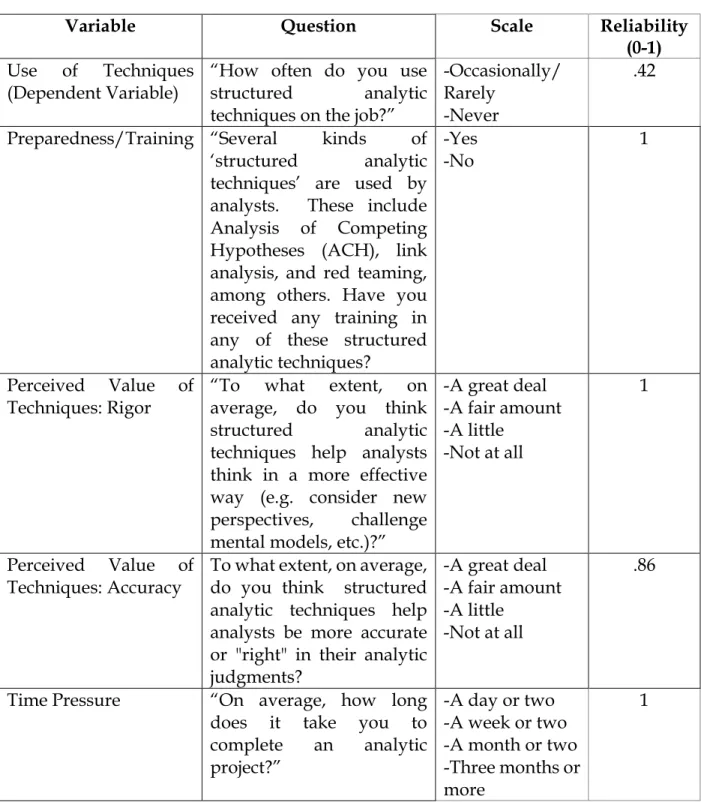
Table 3.2: Selected Interview Questions and Variables Table 3.3: Survey Variables and Questions
Table 3.4 Follow-up Interviews Table 3.5: Excluded Studies
LIST OF FIGURES
Figure 3.1: Formula for Estimating Sample Size (adapted from Dillman et al. 2011) Figure 3.2: Calculation of Appropriate Sample Size
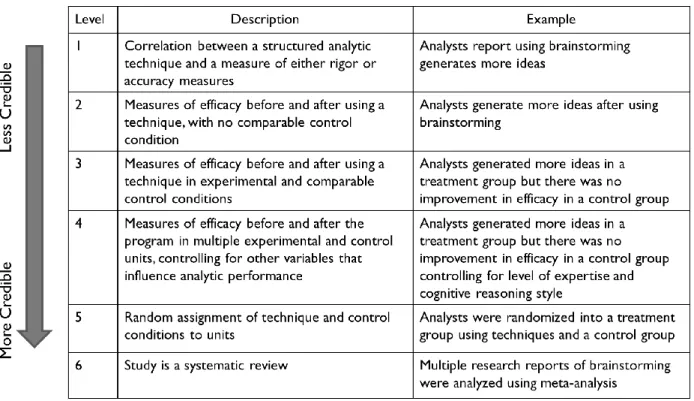
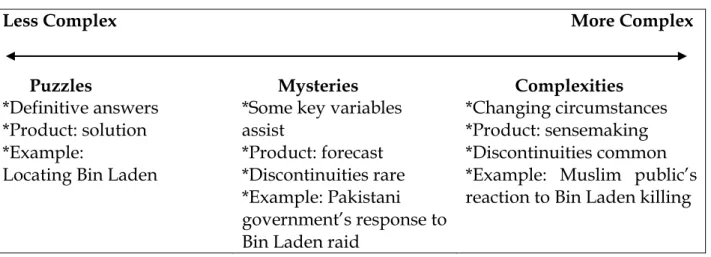
Figure 3.3: The Maryland Scientific Methods Scale Figure 3.4: Intelligence Task Complexity
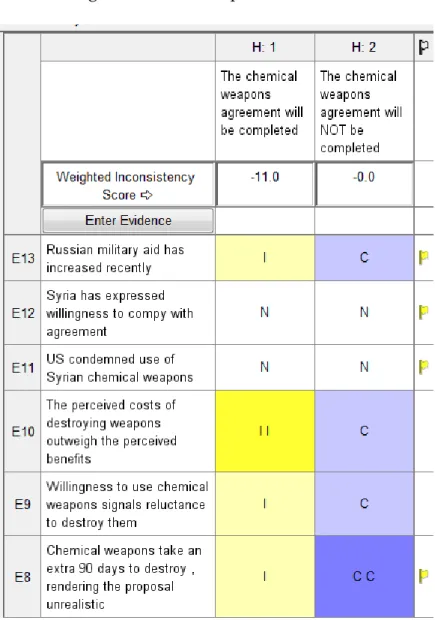
Figure 3.5 An Example ACH Matrix
Figure 3.6: Snippet of Narrative with Hypotheses Figure 3.7: Example of Distribution of Hypotheses Figure 4.1 Use of Structured Analytic Techniques at INR Figure 4.2: Perception of Techniques (Rigor)
Figure 4.3: Analysts’ Self-Reported Average Analytic Product at INR Figure 4.4: Age Cohorts at INR
Figure 5.1: Techniques Included in this Study Figure 5.2: Number of Evaluative Studies
Figure 5.3: Modified Maryland Scientific Methods Scale Figure 5.4: What Works?: A Display of the Overall Results
Figure 6.1: Indicators group’s hypotheses before using the technique Figure 6.2: Indicators group’s hypotheses after using the technique Figure 6.3: ACH group’s hypotheses before using the technique Figure 6.4: ACH group’s hypotheses after using the technique Figure 6.5: Between Groups Comparison
Figure 6.7: Pretest and Posttest of ACH
Figure 6.8: Foxes hypotheses before using a technique Figure 6.9: Hedgehogs hypotheses before using a technique Figure 6.10: Foxes hypotheses after using a technique
Figure 6.11: Hedgehogs hypotheses after using a technique Figure 6.12 Cumulative Frequency of Hypotheses
PREFACE
For Beatriz:
“Caminante, son tus huellas el camino, y nada más; caminante, no hay camino, se hace camino al andar…”
1.0 CHAPTER 1: ADDRESSING THE LIMITS OF FOREIGN AFFAIRS ANALYSIS
“Good judgment” wrote Mark Twain “is the result of experience and experience the result of bad judgment.” Decades of psychological research suggest Twain was on to something: experts excel in domains where they can try, and try again, failing, and then learning from their mistakes, to develop expert judgment (Kahneman and Klein, 2009). In these domains experts are able to learn by trial and error and develop accurate, internalized models of a problem situation upon which they can draw to make judgments (Simon, 1965). Consider the chess master who plays game after game, learning from each failure and, in the process, stores tens of thousands of distinct move patterns in his mind (Chase and Simon, 1973), or the fireman who, after responding to thousands of structure fires, intuitively “knows” from his experience that a backdraft is on the other side of the door. In each case the decision maker has had enough opportunities to develop expert judgment on thousands of chances to make ‘bad judgments.’1
1 Similar findings exist at the organizational-scale. For example Petroski (2008) argues that in order to
improve performance, engineering should look to past failures rather than successes. For an extended discussion with examples, see: Petroski, Henry. Success through failure: The paradox of design. Princeton University Press, 2006.
1.1 THE LIMITATIONS OF EXPERTISE IN FOREIGN AFFAIRS ANALYSIS
Analysts of foreign affairs, who study issues of war and peace, face a gloomier situation: unlike the chess master or firefighter, the foreign affairs analyst has little or no feedback because the events of interest rarely occur, or in the case of nuclear war, hopefully never occur.2 Even when foreign affairs analysts get feedback, it is all too easy for political and ideological reasons for the analysts to ignore or write off their inaccurate judgments (Tetlock 2005). Take for example, the foreign policy “hawk" who might view the collapse of the USSR not as a moment to recalibrate future predictions about aggressors, but as an unlikely “one-off” occurrence. Complicating matters even further, the foreign affairs analysts lack valid indicators (Kaheman and Klein, 2009). While the firefighter has many indicators to tell him what is or will happen, such as a weak support beam suggesting imminent collapse, the foreign affairs decision maker has almost none. For example, a column of armor massing on the Ukrainian border can mean different things: Is a Russian invasion is imminent? Or is the armored column just a sign of Russian resolve? In short, unlike other professionals with more valid indicators and repetitive and clear feedback, the foreign affairs expert has few ways to develop expert intuitive judgment.
2 There are exceptions in political forecasting, most notably the statistical forecasting by Nate Silver in U.S.
elections. Statistical analysis “works” in these cases for reasons similar to those that enable the chess master to acquire precise intuitive judgment: ample and reliable feedback, in the form of survey data, are used to draw inferences, rather than expert judgment. For an extended discussion of this issue, see: Jay Ulfelder “Why the World Can't Have a Nate Silver,” Foreign Policy, November, 2012.
Researchers have long known that foreign affairs analysts and decision makers struggle to make valid judgments, and in the process sometimes commit errors of reasoning, such as underestimating or overestimating the aggressiveness of an adversary. For example, Jervis (1976) pointed out that leaders often see what they expect and/or want to see, and in the process act in unexpected, and dangerous ways. Janis (1972) explored the limitations of expert judgment in foreign affairs at the group-level with his influential work on “groupthink,” a term that has since moved into the vernacular for undue group consensus. However, it was not until Philip Tetlock’s seminal work Expert Political Judgment (2005) that the full extent of judgmental deficiency in foreign affairs was systematically laid bare. Over the course of several years Tetlock asked 280 experts to make judgments about foreign events. While Tetlock found his experts outperformed undergraduate students, they “were not superior to untrained readers of newspapers in their ability to make accurate long-term forecasts of political events” (Kahneman and Klein, 2009, p. 520). The experts’ ability to easily outperform undergraduates but inability to significantly top observers suggests that there is a diminishing return expertise. Further, even the highest performing experts achieved an accuracy rate only slightly greater than chance alone. Or, in other words, the forecasts of this elite group were, on average, only slightly better than the flip of a coin. It is here, at the frontier of expert competence that the research problem emerges: what can be done to improve foreign affairs judgments?
1.2 SPANNING THE DIVIDE: IMPROVING DECISION AND ANALYSIS IN FOREIGN AFFAIRS
Despite the recognition among scholars that foreign affairs judgment is limited, there is little work in the international relations literature on how to improve it.3 Most of the literature that does address this problem dates back to the 1970s and focuses on improving executive decision making. For example, George (1972) developed “multiple advocacy,” a method4 designed to promote diversity of perspectives using an appointed arbiter to control discussion in executive decision making. Another example is Devil’s Advocacy, a method that uses a designated individual or group to take an unpopular position in order to “combat the problems posed by an excessive tendency” toward “consensus-seeking behavior”—Janis’ groupthink (George, 1975, pp. 286–287). Outside of the international relations literature there is a much larger body of research on techniques to improve judgment in environments as complex as foreign affairs. For
3 Stephen Walt provides an excellent explanation on why research on conducting analysis of foreign
affairs is limited: “I think it is partly because scholars in international relations have tended to focus on grand theory (realism, liberalism, constructivism, etc.), or on trying to identify recurring laws or tendencies between states or other groups…In other words, most scholars stand apart from the policy process and treat international affairs as something to be studied from a safe distance.” Stephen Walt, “Policy analysis in global affairs: What should my students read?” ForeignPolicy.com, November 2011, available at:
http://www.foreignpolicy.com/posts/2011/11/22/policy_analysis_in_global_affairs_what_should_my _students_read
4 Kaplan (1973) defines methods in three ways 1) broad methods that involve broad procedures (e.g.
induction); 2) mid-range methods sufficiently general to be common to all sciences that have somewhat specific procedures (e.g. forming concepts, using research designs); 3) and short-range methods with specific procedures and purposes(e.g. factor analysis). This research uses the term technique and method interchangeably to refer to short-range methods.
example, a technique very similar to Devil’s Advocacy was used to improve the U.S. Census Bureau’s planning process (Mitroff et al. 1977).
Despite the promising literature that sets forth new methods of foreign affairs analysis, there is little research that explicitly tests their efficacy, although there are some notable exceptions outside the foreign affairs community and international relations literature (for example, see Armstrong 2006). The efficacy question is important from a theoretical standpoint as researchers attempt to develop and test theories on foreign policy decision making and in a practical sense because of the important decisions that are made based on these methods. Consider the empirical evidence for the efficacy of the Alternative Futures Analysis, a technique used to identify a set of important drivers that can lead to various scenarios that, once reported to the organization’s leadership can be used to prevent surprise (Schwartz 1991, p. 3-4). Supporters point to examples of effectiveness of scenarios, specifically its use by Royal Dutch Shell in the 1970s. This example suggests because Shell used scenarios it was prepared for rising tensions in the Arab world after the Yom Kippur War. Tetlock (2005, p. 192) is less convinced and argues that because users of the technique write several scenarios, they virtually ensure that at least one will resemble the outcome. Simply stated, it is not possible to know if a technique is effective without rigorous empirical tests, tests which we lack for most methods. One rebuttal to Tetlock is that the techniques are not designed to forecast
specific outcomes, but still, a valid question is whether the scenarios are plausible and internally consistent.5
The question of efficacy of foreign affairs methods is of paramount importance because these methods could address the deficiencies of expert judgment and improve decisions that drive high stakes decisions. To situation this dissertation, the inquiry focuses on examining perhaps the largest producer of foreign affairs analysis the world has ever known, the U.S. intelligence community (IC).
1.2.1 The Theory-Application Gap- Evaluating the Intelligence Reform Act
Similar to analysts in other domains, such as policy and business analysis, intelligence analysts apply their expertise to weight data and compare, contrast, and evaluate information concerning important events (Johnston, 2005, p. 3). This process requires that analysts sort through “enormous volumes of data and combine seemingly unrelated events to construct an accurate interpretation of a situation and make predictions about complex, dynamic events” (Pirolli 2005). Intelligence analysts produce intelligence “products,” documents and presentations of different types. These products can vary greatly with some focusing on providing warning to decision maker of a potential threat to providing descriptive research about a particular country or leader. Intelligence
5 Thomas Barnett argues that the National Intelligence Council’s Global Trends 2030 report lacks of
internally “consistent logic throughout each of the worlds presented.” Available at:
http://nation.time.com/2012/12/21/just-how-intelligent-is-the-national-intelligence-councils-global-trends-2030/
analysts also work in high-stakes environments where intelligence errors can occur, factual inaccuracies in analysis (Johnston 2005, p. 6). The avoidance of error cannot be overstated as even slight errors--if reproduced and replicated at the organizational level--can potentially lead to multi-billion dollar intelligence and policy failures.
One such example where intelligence error contributed, at least in part, to an intelligence failure is in the lead-up to the Iraq War. In the National Intelligence Estimate, the IC’s authoritative assessment of Iraq’s weapons of mass destruction program, all the IC agencies but State Department’s Bureau of Intelligence and Research6 determined Iraq had continued its programs (National Intelligence Council 2002). After the invasion turned up no weapons of mass destruction, the analytic practices of the IC came under tight scrutiny as panels, committees, and commissions initiated investigations. In a conclusion typical of these probes, one congressional panel co-chairman argued that the IC estimate on Iraq’s nuclear program was “inconsistent” and based on “tortured presumptions” (Stout 2005). The resounding message of the investigation was that U.S. intelligence analysis needed nothing less than an analytic transformation, and in 2004 the Intelligence Reform and Terrorism Prevention Act (henceforth, the “Intelligence Reform Act”) laid out a legal framework to accomplish exactly that.
6 The State Department’s Bureau for Intelligence and Research (INR) concluded: “Saddam continues to
want nuclear weapons and that available evidence indicates that Baghdad is pursuing at least a limited effort to maintain and acquire nuclear weapons-related capabilities. The activities we have detected do not, however, add up to a compelling case that Iraq is currently pursuing what INR would consider to be an integrated and comprehensive approach to acquire nuclear weapons.” National Intelligence Council, “Iraq's Continuing Programs for Weapons of Mass Destruction” (2002),
There have been many prior efforts to reform intelligence analysis. What sets the Intelligence Reform Act apart from most other IC reforms is that it is a reform of day-to-day analytic practices to address what Betts (2007) terms an “enemy” of intelligence: the inherent limits of human cognition in intelligence analysis. As a result of the focus on improving the process of analysis, the Intelligence Reform Act and the initiatives it set in motion are sometimes referred to as the “analytic transformation” or “analytic reform movement” (Immerman 2011; Fingar 2011). The added emphasis on analysis, or analytic tradecraft as it is called in the IC, is in contrast to previous reforms that focused on improving information sharing through greater organizational collaboration, restructuring, or a combination of both. In terms of analytic practice, where the Intelligence Reform Act arguably makes the biggest impact is the requirement that analysts be trained in and use methods called structured analytic techniques (section 1017, sub-section A).
While the Intelligence Reform Act mandated structured analytic techniques, their implementation has been gaining momentum in the IC for the last three decades. Beginning in the late 1970s, the IC experimented with formalizing analysis by exploring new analytical methods leading to a focus on techniques designed to avoid certain cognitive biases (Heuer 1978). In the 1990s, changing international threats, a quicker intelligence cycle, and data overload, created more interest in implementing “alternative
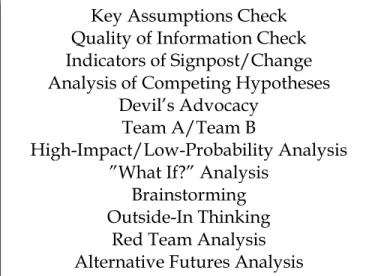
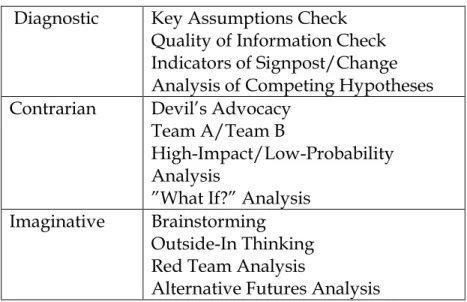
analysis techniques”7 as the techniques were known at that time. Reformers argued that the techniques could improve analysis by encouraging analysts to consider multiple rival hypotheses and challenge their assumptions. After the Intelligence Reform Act the impetus to implement the techniques grew and reformers sought to import methods from other disciplines including policy analysis, political science, and business. Consequently, there are literally hundreds of possible methods that fall under the rubric of “structured analytic techniques.” To reduce this number to a workable set this research focuses on the twelve “core” techniques identified in the U.S. Government’s Analytic Tradecraft Primer (2009) (see Table 1.1 below).
Table 1.1: “Core” Structured Analytic Techniques Key Assumptions Check
Quality of Information Check Indicators of Signpost/Change Analysis of Competing Hypotheses
Devil’s Advocacy Team A/Team B
High-Impact/Low-Probability Analysis ”What If?” Analysis
Brainstorming Outside-In Thinking
Red Team Analysis Alternative Futures Analysis
As of 2011, more than 4,000 analysts have received training in these twelve techniques, representing a quarter of the IC’s analytic workforce (Defense Intelligence Agency, 2011). At the same time, this growth is expected to accelerate as more
7 Alternative analysis techniques were renamed structured analytic techniques to encourage analysts to
intelligence agencies mandate training programs (Heuer and Pherson, 2010, p. 343) and more intelligence analysis education programs train the next generation of analysts. A recent analysis of these education programs found at least 13 that have been founded since 2001 (Crosston and Coulthart, forthcoming).
Notwithstanding the push for training, there are serious barriers for reformers to implement the techniques. For example, ethnographies of the IC suggest that analysts are reluctant to utilize techniques because of the increasing current reporting requirements that emerged in the 1990s and accelerated after September 11th (Johnston 2005, pp. 26-27; Dixon and McNamara 2008). At same time many techniques require a perceived, significant time investment to decompose a problem and externalize the information to paper or a screen (Heuer 1999, p. 86). Understanding how to implement the techniques is important if they can be shown to leverage expertise and improve analysis.
1.3 DEVELOPING A THEORY OF STRUCTURED ANALYTIC TECHNIQUES
Despite the mandate for structured analytic techniques, there is no overall theory explaining why the techniques should improve intelligence analysis. The theoretical justification that does exist is rooted in research from cognitive psychology conducted in the 1970s and 1980s. This research was based on the heuristics and biases research conducted by Daniel Kahneman and Amos Tversky. They found that respondents in lab experiments used mental shortcuts or rules of thumb to make quick judgments, and that
these heuristics led to predictable errors. For example, in a classic study (Tversky and Kahneman 1983), respondents were told about a young woman named Linda:
Linda is 31 years old, single, outspoken, and very bright. She majored in philosophy. As a student, she was deeply concerned with issues of discrimination and social justice, and also participated in anti-nuclear demonstrations.
Respondents were then asked which is more probable: a) Linda is a bank teller, or b) Linda is a bank teller and is active in the feminist movement. Most respondents chose ‘b,’ and in making this choice, respondents used the representative heuristic. People use this heuristic to quickly estimate probabilities on the basis of previous experience. Since respondents can imagine Linda easier as a feminist bank teller than just a bank teller they disregard a simple fact about probability: the probability of two events occurring in conjunction is always less than one event.
Heuer imported Kahneman and Tversky’s findings into intelligence analysis with his classic, The Psychology of Intelligence Analysis (1999), which was later the basis for a justification of structured analytic techniques. Heuer argues that the subjects in Kahneman and Tversky’s experiments are similar to intelligence analysts, who also use heuristics that increase the likelihood of errors (Heuer 1999). For example, an analyst making a judgment about which foreign terrorist group will attack the U.S. might invoke the availability heuristic, a mental short-cut based on the last or most memorable event. Since al Qaeda is the last perpetrator of a major terrorist attack, the analyst might focus only on this group and therefore commit an error of reasoning, thereby ignoring other known or emerging groups that may attack.
Due to these errors Heuer and Pherson (2014) argue that analysts should use techniques that switch analysts’ thinking from quick and intuitive thinking that use heuristics to slow and effortful thinking. Kahneman (2011) refers to these two types of thinking as systems 1 and 2. A common example of system 1 is the type of effortless, intuitive thinking a morning commuter uses to find his way to work, while system 2 thinking is used in difficult reasoning tasks, such as solving a complex math problem. Heuer and Pherson argue that the problem of cognitive biases lays in system 1 because they argue that all biases are the result of fast thinking (p. 4). Therefore, they conclude, the answer lies in using more system 2 thinking, specifically through using structured analytic techniques, which they claim “help identify and overcome the analytic biases inherent in system 1 thinking” (p.5). In short, according to Heuer and Pherson, using structured analytic techniques should engender slow analytic thinking that should reduce cognitive biases.
Even with Heuer and Pherson’s notable effort to provide a theoretical justification of structured analytic techniques, there are issues with their explanation. One issue is that Heuer and Pherson focus exclusively on cognitive biases as the main performance standard of the techniques. This is problematic because it narrows the standard for measuring the effectiveness of the techniques. The normative standards in the Linda example above, whether the respondent violated the conjunction fallacy—the belief that two events occurring is more likely than one-- is illustrative. While certainly it matters that analysts not violate rules of formal logic and probability theory, other standards also matter in intelligence analysis, perhaps even more so. For example, while adherence to
probability theory matter to researchers, managers and intelligence consumers appear to view rigor more in line with depth and scope of analysis (Zelik et al. 2009).
At the same time, there are serious methodological challenges of proving that a bias violated formal logic and probability theory, as several psychological research studies have demonstrated the difficulty of replicating biases in even highly controlled experiments (Hammond 1996, pp-203-213). This latter point is important for theory development and testing as any justification for structured analytic techniques should show a replicable outcome. In addition, while Heuer and Pherson give the use of system 2 as a rationale for the techniques, this justification does not explain why the techniques might improve analysis because system 2 is as susceptible to biases as system 1 (Kahan
et al. 2006, pp. 1093-1094). Another problem is that the techniques pull from both systems. For example, the use of Alternative Futures Analysis encourages intuitive, imaginative thinking to conjure possible outcomes and effortful thinking to identify contextual drivers. The issue does not stop here; many other techniques fit this general description, relying on both systems. As a result of these limitations a new causal theory of structured analytic techniques is needed.
1.3.1 A Theory of Structured Analytic Techniques
To address the limitations of Heuer and Pherson’s theoretical justification, a causal theory is needed that explains outcomes in terms of prior actions or conditions. In this research the causal theory addresses how the use of structured analytic techniques can improve
the quality of intelligence. Astute readers might notice that the use of “theory” in this context is similar to “method,” however, there is an important distinction. While a method implies a procedure of some kind to reach a desired goal (Kaplan 1973), a theory sets forth a set of propositions to explain a particular phenomenon. In this context the theory was formulated to explain how the techniques improve the quality of analysis.
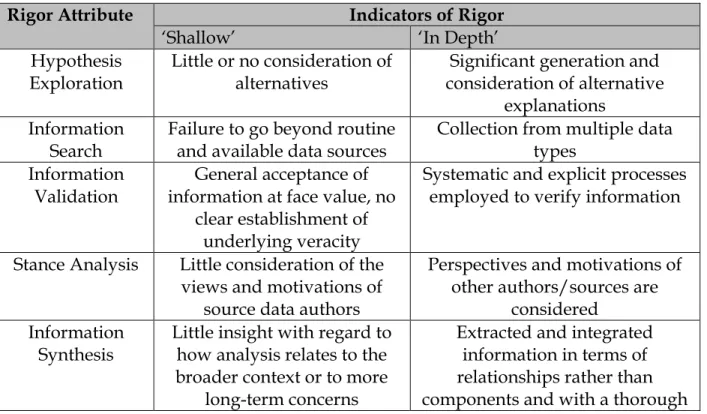
For the purposes of this research the quality of intelligence analysis has two components: 1) it is sufficiently rigorous and 2) accurate. Analysis can be said to be rigorous when it is in-depth, as reflected in intelligence reports. Researchers at the Ohio State University (Miller, Patterson, and Woods, 2006; Zelik, Patterson, and Woods, 2007) identified eight attributes of rigor in intelligence analysis by observing and surveying analysts, thus creating a grounded measure of analytic rigor. These include whether the analyst explored a range of hypotheses, questioned the reliability of sources, among others (see table 1.2, below). The term “sufficient” is also important because sufficiency is dependent on the factors that shape the analytic task: complexity/breadth of topic, data availability, and time (Greitzer 2004; Scholtz and Hewett 2004). Relying on these characteristics it is possible to determine basic “rules of thumb” for sufficient rigor. For example, a complex task, with available data, and a project length of several months, such as a long-term strategic forecast, would require more rigorous analysis than a one day project. It is important to note that this framework subsumes cognitive bias. For example, confirmation bias--the error of seeking to confirm rather than disconfirm one’s beliefs— would be subsumed under “hypothesis exploration” as low hypothesis exploration would be related to confirming a favored hypothesis. In other words, the Ohio State
University scale does not replace cognitive biases but provides a reliable measure grounded in how analysts evaluate rigor.8
Table 1.2 Selected Rigor Attributes and Description Hypothesis
Exploration The construction and evaluation of potential explanations for collected data. Information Search The focused collection of data bearing upon
the analysis problem. Information
Validation The critical evaluation of data with respect to the degree of agreement among sources Stance Analysis The evaluation of collected data to identify the relative positions of sources with respect to the broader contextual setting
In addition to rigor, analysis is high quality when it is accurate, that is, when there is a high degree of correspondence between the analytic judgment and what subsequently happened in the external world (Tetlock, 2005, p. 10; Hammond 1996). Or in other words, the extent to which an analyst “gets it right.” In intelligence studies, accuracy is sometimes conceptualized as a “batting average” (Betts 2007, p. 187). Yet, assessing accuracy is not as simple as checking the box scores; many tasks in foreign affairs are covert and complex, rendering evaluation of judgment accuracy difficult (e.g. did country X build a nuclear weapon?). For this reason great caution should be exercised in evaluating accuracy.9
8 Evaluation of the reliability of the Ohio State scale has been positive. In one experiment, intercoder
reliability across 12 evaluations was strong between two coders (κw = 0.86) (Zelik et al. 2007, p. 11)
9 For an excellent discussion of the challenges of evaluating tests of accuracy in foreign affairs, see: Jay
Ulfelder, “Jay Ulfelder on the Rigor-Relevance Tradeoff” The Good Judgment Project, May, 2014, available at: https://goodjudgmentproject.com/blog/?p=200
The causal theory of structured analytic techniques suggests that each structured analytic technique is designed to encourage analysts to engage in broadening checks, actions in the analytic process that "slow the production of [an] analytic product and make explicit the sacrifice of efficiency in pursuit of accuracy" (Zelik 2007 et al.). One broadening check is falsification which requires analysts to challenge status quo thinking by searching for rival hypotheses, thus increasing the scope of analysis, and rejecting as many of these as possible. For example, the Analysis of Competing Hypotheses (ACH) is based on the philosopher Karl Popper’s argument that rigorously challenging and rejecting hypotheses is necessary for extending knowledge (Popper 1953). Popper (1972, p. 265) summed up this argument when he wrote “whenever a theory appears to you as the only possible one, take this as a sign that you have neither understood the theory nor the problem which it was intended to solve.” Popper’s point is as simple as it is profound: knowledge grows through testing multiple hypotheses and evidence rigorously rather than one.
Another proposition of the theory is that the more broadening checks in the analysis, the more that the triangulation of judgments can occur, thus producing a more accurate judgment. Underlying this proposition is the theory of triangulation (Campbell and Fiske 1959; Campbell et. al. 1966; Denzin 1978; Cook 1985). The basis of triangulation theory comes from geodetic survey methods which states that to find a position on a map, a surveyor should rely on multiple bearing points to get a closer approximation of where the target position falls (Dunn 2012, p.16). The wider the distance between bearing points the better, as each helps the surveyor find the target position. Divergent points let the
surveyor know how far away from the target position; convergent points tell him he is getting closer. In intelligence analysis, the points are not GPS coordinates, but pieces of evidence, hypotheses, and perspectives, which together increase the rigor of analysis. With each new piece of information the analyst takes in more information, increasing the relative completeness of what is known about the analytic problem. Increasing relative completeness is necessary for achieving greater accuracy, the ultimate target of triangulation. This theory is explained in more detail in Chapter 2.
1.4 ADOPTING EVIDENCE-BASED INTELLIGENCE ANALYSIS TO ANSWER
THE RESEARCH QUESTIONS
Evaluating the theory of structured analytic techniques in the context of the Intelligence Reform Act requires an approach that focuses on “what works,” that is, whether the effort to improve analysis by using structured analytic techniques has been effective. One such approach is evidence-based practice, which has been implemented in fields ranging from medicine (Sackett 2000), policy (Davies et al., 2001), to policing (Sherman, 1998), to counterterrorism (Lum et al. 2006). The promise of evidence-based practice has led some intelligence practitioners to call for evidence-based intelligence analysis (Marrin 2012; Chauvin and Fischhoff 2010; Pool, et al. 2009), however, these researchers have yet to define it in the context of intelligence analysis. In this research, I define evidence-based analytic practice as the deliberate effort to develop a robust evidence-base linking the use
of specific analytic methodologies to quality intelligence analysis. Underlying this approach is the goal of building a robust body of evidence through carefully constructed evaluations of using analytic techniques.
Structured analytic techniques provide one remedy to improving intelligence analysis and foreign affairs, generally. However, to determine if the techniques can address this problem two issues must be addressed: whether the techniques can be implemented and if they are effective, and if so, under what circumstances. To answer these questions an evidence-based approach was taken using semi-structured interviews, a survey, a systematic review of research on the techniques, and an experimental simulation.
1.4.1 Research Question 1: The Implementation of Structured Analytic Techniques
The first research question addresses implementation: How often are structured analytic techniques used in the IC and what factors affect their use? There have been several attempts to implement structured analytic techniques, such as the Global Future Partnership which, brought experts outside of the IC to use the techniques.10 Efforts at the National Intelligence Council (NIC) have also introduced the Alternative Futures Analysis technique to produce the Global Trends series of reports. However, the Global
Future Partnership and NIC are an exception. Other research suggests that structured analytic techniques are rarely used on the job (Johnston 2005).
Several variables might explain why analysts could be reluctant to use the techniques. For example, Moore and Hoffman (n.d.) argue quality of training in the techniques—an organizational variable— is important. They assert that the current curriculum does not take into account analysts’ individual learning styles and insufficient time is given to practice the techniques. Marrin (2007) argues that belief systems of analysts are an important variable. Anecdotal accounts from the IC paint a portrait of analysts suspicious of the value of the techniques, especially older analysts, which Moore and Hoffman (n.d.) attribute to the inability of structured analytic technique proponents to “make a convincing case that [analysts] ought to try something new” (Moore and Hoffman n.d., p. 2). However, there is no research on how pervasive this view is in the IC. At the same time the IC is undergoing a demographic shift, it is also facing a veritable ‘catch 22’ from tasking requirements: the amount of current reporting has increased (Johnston 2005, pp. 26-27; Dixon and McNamara, 2008) while analysts are under more pressure to use structured analytic techniques which are perceived to require more time (Heuer 1999, p. 86).
In Chapter 4, an attempt is made to answer the implementation question by using key informant interviews and a survey of a US intelligence agency with 80 analysts—the largest ever attempted. The informant interviews were held with expert members of the IC willing to share their knowledge of the analytic reform movement and intelligence methodology. These informants were selected through a purposive and snowball
sampling strategy. While the key informant interviews focused on the overall implementation of structured analytic techniques in the IC, an in depth field study of INR was used to examine the variables hypothesized to affect the use of the techniques. The study included both a survey of 80 intelligence analysts and follow-up interviews with 15 analysts to probe the interpretation of the study variables. The results of the survey were analyzed with descriptive and inferential statistics and integrated with qualitative data from the interviews.
1.4.2 Research Question 2: The Effectiveness of Structured Analytic Techniques
The second research question addresses the effectiveness of the techniques: do structured analytic techniques improve the quality of intelligence analysis and, if so, under what circumstances? The U.S. Government’s Analytic Tradecraft Primer (2009) lists 12 “core” structured analytic techniques (see table above), including scenarios (under the name alternative scenarios analysis), Team A/Team B, and red teaming. This list is significant not because it is comprehensive—Johnston (2005) identified more than 190 techniques used in the IC— but because it has been used to create the curriculum of the analytic reform movement’s seminars and training materials. Therefore, the list is a representative sample of techniques promoted in the reform effort. However, it is unclear to what extent these core techniques might improve the quality of intelligence analysis except for some scattered anecdotal evidence (Marrin 2012).
To begin to answer the effectiveness research question, a systematic review was conducted of the evidence on structured analytic techniques. Defined, a systematic review is an “explicit method to identify, select, and critically appraise relevant research” (Cochrane Glossary 2014). Such reviews are used in evidence-based policy to sum up the best available evidence on a specific question to determine “what works” (Campbell Collaboration 2014). While the systematic review is similar to its close relative, the literature review, there is an important difference: transparency. Unlike a traditional literature review, the researcher conducting a systematic review makes his procedures of his review explicit, such as specifying the criteria for why a research study is (or not) included. This transparency should decrease the possibility of “cherry picking” evidence that fits the researcher’s preconceived notions of the data (Cooper 2009). For example, at the beginning of a systematic review, the researcher must set the inclusion criteria, the rules for using research reports.
Studies for the review were drawn from within the intelligence studies literature and outside in numerous disciplines, such as policy analysis and business. Evidence from intelligence studies comes from de-classified documents from the IC, such as a use of the Team A/Team B exercise during the Cold War (Mitchell 2006) and research conducted by students at intelligence training centers and universities. While these sources are useful, there is also a large body of evidence outside the intelligence literature. This evidence is available in the form of research studies published in peer reviewed academic journals. However, it is important to note that not all evidence is equal; an anecdotal
impressions is less credible evidence than a randomized control trial. Therefore, this research also takes into the quality of evidence by assessing each study’s research design.
To supplement the systematic review, an experiment was conducted to evaluate two particular structured analytic techniques: ACH and Indicators or Signposts of Change (henceforth: Indicators). The Indicators technique requires analysts to list “observable events that one would expect to see if a postulated situation is developing” (U.S. Government 2009). In practice this might mean analysts listing the indicators of an upcoming coup, for example (e.g. the presence of rioting, political assassinations). ACH differs from Indicators in that it includes Karl Popper’s idea that knowledge should advance through a process of conjectures and refutations, a process of “falsification.” The use of ACH is fairly straightforward: analysts start by creating a matrix and then insert evidence in the rows and hypotheses in the columns. Next, each piece of evidence is compared with each hypothesis to attempt to determine what Heuer refers to as “diagnosicity”—the extent to which each of piece of evidence is consistent (or inconsistent) with each hypothesis. In generating evidence, analysts are encouraged to try to disconfirm the hypotheses. Once the matrix is complete, hypotheses that can stand up against the evidence remain. It is in this falsification process that ACH differs from Indicators. However, an open question is the extent to which ACH helps analysts falsify, rather than confirm their own beliefs, a phenomena found in both the psychological (Wasson 1968) and intelligence studies literatures (Tolcott et al. 1989).
The experiment was a forecasting simulation involving 21 foreign graduate intelligence studies students from the University of Pittsburgh randomized into two
experimental groups, ACH or Indicators group. Within each group were three analytic teams made up of 3-5 students. The task of the simulation was a realistic intelligence analysis task: study participants were asked to provide a percentage of chemical weapons that would be removed and destroyed from Syria as per the United Nations Security Council resolution for that country to destroy its stockpiles. Along with their predictions, participants also provided a narrative so that rigor could be assessed, and completed a short cognitive reasoning style questionnaire. To determine what extent structured analytic techniques improve over intuition, each group (the experts, students using ACH, and students using indicators) made intuitive judgments without using a structured analytic technique. However, after their initial intuitive judgment, student teams spent three hours analyzing the task using their assigned technique and made another set of analytic judgments.
Research from diverse literatures, such as social psychology (Thompson and Wilson 2014) and forecasting (Armstrong 2006) suggests that face-to-face collaboration can lead to social conformity which can in turn reduce the quality of analysis. Therefore, it was expected that the hypotheses participants generate in aggregate before collaborating face-to-face, will be greater than after the number of hypotheses generated after face-to-face collaboration, regardless of the technique used. This study hypothesis is particularly important for ACH because the technique’s procedures call for analysts to collaborate and generate a full set of plausible hypotheses (Heuer and Pherson, 2011, p. 32).
This experiment also addresses how cognitive reasoning style might interact with the use of the techniques. Cognitive reasoning style is important in intelligence analysis because if an analyst has a more open style s/he is more willing to collect more disparate information and therefore likely to triangulate down to the correct answer in foreign affairs analysis (Tetlock 2005; Bar-Joseph and McDermott 2008). However, it is not clear to what extent, if at all cognitive reasoning style will interact with techniques on the rigor and accuracy of analysis.
1.5 AT THE FRONTIER OF FOREIGN AFFAIRS ANALYSIS
The analytic reform movement presents an opportunity to determine to what extent foreign affairs judgment can be improved. Tetlock’s (2005) finding that expertise has clear limitations and a diminishing return on improving judgments of foreign affairs confirms what many in political psychology have long suspected: in the complex, chaotic international realm experts do little better than well-informed observers in making mid and long-term forecasts. Compounding the problem, foreign affairs is an area of policy making where being wrong is costly in both blood and treasure. Perhaps no other institution understands this fact as the world’s largest producer of foreign affairs analysis, the United States intelligence community.
Fortunately, there are possibilities for improving foreign affairs analysis through structured analytic techniques. However, there are two important questions. First, while
the techniques hold promise for improving the rigor and accuracy of analysis, anecdotal accounts suggest that analysts are wary of using them. The literature provides several reasons ranging from increasing time pressure to the availability of training. Second, there are significant knowledge gaps in how the techniques should improve analysis.
The next chapter synthesizes and reframes the literature on intelligence to set a testable standard for quality analysis and a theory of how the techniques might improve analysis. With the inquiry framed and structured, Chapter 3 outlines the multi-method research design to answer the research questions. The empirical chapters, Chapters 4, 5 and 6, present results of this research. In the final chapter, the results from the empirical chapters are synthesized to develop a set of evidence-based principles for intelligence analysis. Additionally, the final chapter sets forth steps to implement the evidence-based principles to improve intelligence analysis in the IC.
2.0 CHAPTER 2: ASSESSING THE QUALITY OF INTELLIGENCE ANALYSIS: A SYNTHESIS AND REFORMULATION
The purpose of the analytic reform movement is to improve the quality of intelligence analysis (Immerman 2011, p. 180; Fingar 2008), although defining “quality” is controversial and conceptually difficult (Marrin 2012). Section 2.1 examines the standard measure of intelligence and decision quality from the literature, the presence of cognitive biases. An examination of the cognitive biases literature suggests that while cognitive biases certainly exist in intelligence analysis—or any kind of information analysis for that matter--it is a narrow and unreliable measure. In place of cognitive biases, a two componment measure of analytic quality is suggested. This framework for evaluating analytic quality takes into account the accuracy and whether analysis complies with a set of established rigor standards, including elements related to cognitive biases. Using accuracy and rigor as a standard, section 2.1 concludes with a discussion of how there is a dimishing returns on expertise.
In Section 2.2 intelligence analysis is reframed as an “inexact science” (Rescher and Helmer 1959) that can be improved through structured analytic techniques which leverage expertise and make the analytic process explicit. Next, the section covers the theoretical justification for the techniques from Heuer and Pherson (2014) that claims structured analytic techniques lead to system 2 (slow thinking) that debias system 1 (fast
thinking). However, this account misinterprets a key finding in the psychological literature: system 2 can be susceptible to the same unconcious screening and manipulation of information as system 1 (Kahan et al. 2006, Kahan 2013).
In section 2.3 a theory of how structured analytic techniques improve intelligence analysis is proposed based on a theory of triangulation (Campbell and Fiske 1959; Webb, Campbell, Schwartz and Sechrest 1966; Denzin 1978; Cook 1985). Specifically, I argue that the techniques require analysts to engage in a set of broadening checks that widen the scope of the analysis. As the analysis widens, analysts are able to triangulate to make more accurate judgments. It should be noted that while this theory is explanatory it is also normative in that it provides potential guidelines for how to improve intelligence analysis. In other words, it is a theory of a method.11The final section (2.3) of this chapter traces the intellectual history of structured analytic techniques and the eventual wide-scale implementation of these techniques as a key feature of the analytic reform movement. An important question about the success of the movement centers on the extent to which structured analytic techniques have been implemented. The literature on knowledge utilization and intelligence studies is synthesized to identify several variables—training, time pressure, and the demographic shift in the IC.
11 A similar example would be game theory. In game theory certain assumptions are made and there is a
2.1 WHAT IS ‘QUALITY’ INTELLIGENCE ANALYSIS AND WHY IT’S SO HARD TO PRODUCE?
The mission of the intelligence community (IC) is to generate intelligence analysis to guide decision makers. However, a critical question is what constitutes analytic quality. The common determinant of quality in the international relations and intelligence studies literature is whether cognitive biases were mitigated or reduced but follow-up research on cognitive biases casts some doubt on this as a reliable measure of intelligence quality. Most notably, researchers have been unable to replicate many biases, even in lab settings (Hammond 1996, pp-203-213).
Instead, an alternative measure is a modified version of Hammond’s (1996) two part measure that takes into account whether the analysis was sufficiently rigorous, such as the exploration of multiple hypotheses and verification of evidence, and also whether the analysis is empirically accurate.12 Applying this measure as a benchmark of analytic quality, a probe of the literature suggests that expert judgment provides diminishing
benefits for reliably generating quality intelligence analysis. In other words, expertise matters but not as much as conventional wisdom would lead us to believe. Further complicating matters, the use of heuristics in expert judgment, the limitations of an
12 Assessment of empirical accuracy in foreign affairs tasks is undoubtedly difficult but possible. For a
discussion of the challenges of evaluating empirical accuracy, see:
Jay Ulfelder, “Jay Ulfelder on the Rigor-Relevance Tradeoff” The Good Judgment Project, May, 2014, available at: https://goodjudgmentproject.com/blog/?p=200
individual perspective (sometimes referred to as “mental models”), and the sheer complexity of international affairs appear to limit the effectiveness of expert judgment.
2.1.1 Defining Intelligence Analysis Quality
Each day the (IC) collects enough data to fill the Library of Congress—the largest repository of public knowledge in the U.S.—several times over (Aid 2013). This raw data is processed by approximately 20,000 government analysts plus a larger but unknown number of contractors funded by an estimated 75 billion dollar annual budget (Priest and Arkin, 2011). Central to this process is intelligence analysis, which one of its founders called the “[application] of the instruments of reason” to inform national security decision making (Kent 1949). To conduct analysis, intelligence analysts apply their expertise and reasoning to a myriad of data sources classified under a bewildering array of acronyms, such as HUMINT (human intelligence), SIGINT (signals intelligence), OSINT (open source intelligence), to name a few (Krizan, 1999). The products of this massive system are intelligence reports, disseminated to decision makers in a variety of mediums including presentations, briefing papers, and memos. Garst (1989, pp. 5-7) identifies six types of intelligence products including research, current, estimative, operational, scientific/technical, and warning. These products differ greatly in their purpose with some focusing on future or potential events (e.g. estimate and warning), while others can focus on short or near-term events (current).
However, the intelligence analysis process does not always produce “quality” intelligence analysis and in fact, even a cursory reading of the literature provides a long
list of cases from Pearl Harbor (Wohlstetter, 1962) to the Iraq War (Jervis 2006) where intelligence analysis errors—at least in part—led to foreign policy disasters. In analyzing these events, intelligence studies and foreign affairs scholars have retrospectively judged failure in terms of cognitive biases and errors of reasoning. For example, Jervis (2006) concluded the IC failed to question its assumptions about Iraq’s weapons of mass destruction program and did not give due diligence, to invoke the famous Sherlock Holmes case, to the “dogs that did not bark.” In other words, Jervis claims the IC fell prey to confirmation bias, the error of seeking to confirm rather than disconfirm one’s beliefs.
Jervis’ and other scholars work on cognitive biases are based on Nobel Prize winning research by cognitive psychologists Daniel Kahneman and Amos Tversky. Kahneman and Tversky used lab experiments to show that subjects do not think according to the tenets of rationality—extensive information search and proper weighting of utility functions. Instead they used mental shortcuts called “heuristics,” and in the process, violated rules of probability theory or formal logic. These violations of probability theory and formal logic are called cognitive biases. In the 1970s, this research was imported to intelligence analysis (Heuer 1999) and international relations (Jervis 1976) as a basis for evaluating foreign affairs decision making and intelligence analysis. However, in the 1980s, long after Kahneman and Tversky’s cognitive bias framework had migrated to the international relations and intelligence literatures, other cognitive psychologists began questioning the internal and external validity of their findings,
criticisms that are rarely discussed in international relations or intelligence literatures to this day. 13
In the 1980s, after the cognitive biases literature had been imported into international relations and intelligence studies, psychologists found that if they slightly tweaked experimental conditions many of the cognitive biases would disappear. For example, Nisbett (1980) instructed test subjects in basic probability theory and found that so-called innate errors of human reasoning melted away. Also, other researchers have questioned whether the abstract reasoning tasks that Kahneman and Tversky employed to ‘expose’ cognitive biases are generalizable to applied settings such as high-level political decision making (Suedfeld and Tetlock 1992) and intelligence analysis (Moore and Hoffman n.d.). Tversky’s and Kahneman (1982) study of representative bias speaks to the abstract nature of many of the tasks—in the experiment they asked subjects to: “consider the letter R, Is R more likely to appear in the first position of a word or the third position of a word?” To date Kahneman has not addressed these criticisms. This follow-up research does imply that cognitive biases do not exist—it is undeniably true that humans are boundedly rational and make errors in judgment (Simon 1972). Rather, the problem is whether using cognitive biases as a psychometric measure based on probability theory and formal logic as a benchmark is a reliable measures of analytic performance.
13 For an extensive discussion of the methodological foundation of the cognitive biases research, see
An alternative approach is to examine whether analytic judgments confirm to the established rules and norms of analysts and whether they are empirically accurate. Zelik,
et al. (2010) explored what counts as the norm for quality intelligence analysis by surveying and observing analysts and developed a multi-attribute scale of depth covering eight attributes, which, when combined, reveal a composite assessment of analytic rigor derived from practitioners (see Table 2.1, below). For example, a key issue for attaining analytic depth is the exploration of alternative hypotheses, which subsumes elements of the cognitive bias, confirmation bias. Other depth attributes include the validation and extent to which diverse information sources were sought out, among five other depth attributes.
Table 2.1: Truncated and Reproduced Rigor Attributes from Zelik et. al. (2010)
Rigor Attribute Indicators of Rigor
‘Shallow’ ‘In Depth’
Hypothesis
Exploration Little or no consideration of alternatives consideration of alternative Significant generation and explanations
Information
Search Failure to go beyond routine and available data sources Collection from multiple data types Information
Validation
General acceptance of information at face value, no
clear establishment of underlying veracity
Systematic and explicit processes employed to verify information
Stance Analysis Little consideration of the views and motivations of
source data authors
Perspectives and motivations of other authors/sources are
considered Information
Synthesis
Little insight with regard to how analysis relates to the broader context or to more
long-term concerns
Extracted and integrated information in terms of relationships rather than components and with a thorough
consideration of diverse interpretations of relevant data. A more difficult issue is defining what counts as “sufficient” analytic rigor. Due to the sheer diversity of tasks analysts undertake, to recommend high rigor in all attributes across all is setting the bar unrealistically high (Zelik et al. 2007). Consider an analyst working alone on current reporting, an analytic task with short turnaround (less than a day): is it realistic for this analyst to achieve high depth across the eight attributes? Most likely not. To make sense of what counts as sufficient rigor, we can factor in the characteristics of the analytic task. Greitzer (2004) and Scholtz and Hewett (2004) surveyed analysts to provide analytic task characteristics, with two important for determining sufficient depth: complexity/breadth of topic and available time. Relying on these characteristics it is possible to determine a “rule of thumb” for sufficient rigor. For example, a complex task with a project length of several months, such as a long-term strategic forecast, would require rigorous analysis across the eight attributes to be considered sufficiently rigorous.
In addition to rigor standards, analytic quality can be evaluated by determining if an analyst ‘got it right.’ This measure is referred to as empirical accuracy because it is the extent to which an analyst’s judgments correspond with event in the observable world (Tetlock 2005; Hammond 1996). For example, if an analyst concluded the Soviet Union would fall in the late 20th century, and foresaw the Arab Spring he would score high on the correspondence measure. To date, the largest application of the empirical accuracy standard was Tetlock’s (2005) study in which he asked more than 200 foreign affairs
experts to make thousands of judgments over several years. In intelligence studies literature similar attempts have been made, albeit on a smaller scale. Feder (1995) reported a similar study when he disclosed the results of a forecasting model used at the CIA called Policon which was reportedly twice as accurate as a team of CIA analysts in forecasts of political instability. In addition to this work, other researchers have assessed correspondence by abstracting historical events to hide key details. For example, Folker (2000) provided abstracted vignettes of real events, such as the Allied invasion of Nazi Europe during World War II, to test how analysts utilizing an analytic methodology fared against those who did not.
2.1.2 The Diminishing Returns of Expert Judgment
The traditional approach to intelligence analysis, expert judgment, is based on the intuitive judgments of analysts, often working alone, in a variety of regional and functional areas (Johnston 2005). In its purest form, this mode of analysis relies on intuitive reasoning on the basis of expertise (Marrin 2012; Khalsa 2009). In addition, the traditional form of analysis is also understood to be a solitary activity, with most collaboration occurring after or at the end of the analytic process, rather than throughout.14 The solitary nature of expert judgment can be problematic because a single perspective is unlikely to subsume enough important information to conduct in depth
analysis of complex issues (Churchman 1971). This threat is discussed in the intelligence literature through the concept of mental models, “the distillation of the intelligence analyst's cumulative factual and conceptual knowledge into a framework for making estimative judgments on a complex subject” (Davis 1992). Depending on the mental model of the analyst he or she will filter information differently, potentially excluding key information, such as hypotheses or pieces of information. Muller (2007) explores this concept through political affiliation and points out conservative and liberal analysts are likely to filter information differently because each has a different mental model, giving each side an incomplete picture of international threats.
Nowhere else has the