February 2014 Elaine Batty, Steve Green, Kesia Reeve, David Robinson and Ian Wilson Centre for Regional Economic and Social Research, Sheffield Hallam University
Promoting mobility through mutual exchange
Learning lessons from the housing mobility demonstration
projects
© Queen’s Printer and Controller of Her Majesty’s Stationery Office, 2014
Copyright in the typographical arrangement rests with the Crown.
You may re-use this information (not including logos) free of charge in any format or medium, under the terms of the Open Government Licence. To view this licence, visit
http://www.nationalarchives.gov.uk/doc/open-government-licence/ or write to the Information Policy Team, The National Archives, Kew, London TW9 4DU, or e-mail: [email protected].
This document/publication is also available on our website at www.gov.uk/dclg
Any enquiries regarding this document/publication should be sent to us at: Department for Communities and Local Government
Eland House Bressenden Place London
SW1E 5DU
Telephone: 030 3444 0000
For all our latest news and updates follow us on Twitter: https://twitter.com/CommunitiesUK February, 2014
Contents
Executive summary ... 4
1. Introduction ... 9
2. Promoting mobility: Local authority and landlord experiences ... 19
3. Tenant experiences of mobility ... 30
Executive summary
Introduction
This report provides a distillation of the key lessons to be learnt from 12 authorities or partnerships of authorities selected by the Department for Communities and Local Government (DCLG) to participate in a mobility demonstration project. This project had three broad objectives: to identify the steps that social landlords can take to increase mobility via mutual exchange; to identify the benefits arising for different organisations from increased mobility via mutual exchange in the social rented sector; and to review whether a payment by results pricing model for the provision of mutual exchange services can increase mobility in the sector.
Mutual exchange is now the main mechanism through which many local authorities expect tenants to secure a move. Exercising their right to set their own transfer policies for
tenants not in reasonable preference, local authorities can now limit access to the transfer list to only those people in greatest need or tenants seeking to downsize. All other tenants interested in moving can be directed to pursue a mutual exchange. This approach holds some obvious benefits for landlords. Mutual exchange is a tenant led process, in contrast to the landlord led transfer process with its associated administration costs and rent loss during void periods. Mutual exchange can also hold benefits for tenants, providing people who would struggle to secure a transfer with a means of moving to what might be more suitable or affordable accommodation, including tenants that might wish to move due to welfare reform changes. Questions remain, however, about how to maximise the efficiency and effectiveness of mutual exchange as a mechanism for promoting mobility amongst social tenants. The housing mobility demonstration project set out to try and provide some answers.
The research set out to explore the effectiveness of the different approaches to promoting mobility trialled by the 12 demonstration projects (DPs). It involved a process evaluation centred on three discrete activities: analysis of the delivery process and lessons learnt across the DPs; a survey of tenant experiences; and the collection and analysis of
management data on outcomes. A full impact evaluation was not possible given the limits of mutual exchange data, the different contexts in which the DPs were working, the very different approaches they were trialling and the consequent difficulties attributing change and establishing the counterfactual.
Promoting mobility: local authority and landlord experiences
The key lessons learnt across the 12 demonstration projects (DPs) about what works (and what does not) promoting mutual exchange can be summarised under seven headings:• making the case for mutual exchange - willingness to commit the time, effort and resources required to effectively promote mutual exchange is unlikely to be forthcoming if a local authority and its partner landlords are unclear about the
associated costs and benefits. The local authority needs to make clear the business case for mutual exchange, the synergies with other strategic priorities explained and the benefits for both landlords and tenants understood. This can prove difficult. Many landlords do not collect robust information about the number of mutual
exchanges. Data relating to inputs (actions and costs), outputs (moves) and
outcomes (related consequences for landlords and tenants) is rarely available. The benefits and associated savings accruing to other services, including health and social care, therefore remain hidden. Consequently, the costs and benefits of mutual exchange are hard to trace. However, evidence points to various benefits that can be associated with mutual exchange. These include the possibility of cost savings, mutual exchange being reportedly cheaper than tenants move via a transfer. It might also represent the only realistic option available to many tenants wanting to move. Mutual exchange can also support local authorities to meet
statutory duties and responsibilities associated with their strategic housing function. An important caveat however, is that the extent to which these benefits can be realised depends upon the specifics of the local context.
• the mutual exchange scheme - a number of DPs explored the possibility of replacing the annual subscription fee that landlords typically pay to a mutual exchange provider with a payment by results arrangement, in a bid to increase efficiency and effectiveness. Under these trials, the mutual exchange provider collected a payment for each successful move, rather than a fixed annual subscription fee. Various challenges rendered these attempts impractical or
ineffective, including concerns about budgets, the problem of attribution and who is benefitting from the results and should therefore pay. DPs’ efforts to address
problems raised by different landlords being registered with different mutual exchange providers focused on the development of local mutual exchange
schemes. These can run alongside, and be linked into, the national schemes that landlords subscribe to, which might be relied upon to support cross-border moves. Local schemes respond to the fact that most tenants are seeking a move within the local area. They aim to maximise the number of properties in the local area that tenants can view and increase the probability of a tenant finding a match and securing a move. One productive approach to developing a local mutual exchange scheme is to integrate it into the existing local choice based lettings (CBL) scheme.
• collaboration and leadership - partnership working is integral to the promotion of mutual exchange. Mutual exchange typically involves tenants moving relatively short distances. The more landlords in an area that are actively promoting and supporting the mutual exchange process the more opportunities tenants will have to secure a move. This will demand cooperation, communication and coordination between the local authority, landlords and other service providers to ensure a
consistent and reliable system that minimises barriers and maximises the
opportunities provided by mutual exchange. DPs typically met these requirements by working through existing partnership arrangements linked to the local Choice Based Lettings (CBL) scheme.
• staffing - experience from the DPs points to the importance of having dedicated staffto fulfil a series of key tasks that are critical to efforts to promote mobility through mutual exchange. These include: promoting support for mutual exchange amongst partner landlords; securing the commitment of local authority managers and elected members; reaching agreement with partners regarding the specifics of the local approach, including roles and responsibilities, policy, practice and
resourcing; overseeing the development and the on-going management of systems and processes, including the mutual exchange website; raising knowledge and awareness about mutual exchange amongst housing officers and within other relevant services; marketing mutual exchange to tenants; and guiding tenants through the mutual exchange process. These tasks were typically delivered by staff working within the CBL team, working in partnership with staff from the different landlord organisations. It is also important that housing officers and staff in allied services are familiar with the opportunities provided by mutual exchange and the practicalities of the process so they can provide advice and signpost clients to further information and assistance.
• making mutual exchange a viable and attractive proposition - various steps can be taken to make mutual exchange a more attractive and viable proposition for
tenants. Financial incentives might be introduced, for example, to encourage tenants to downsize via a mutual exchange. These might mirror the financial
incentives often made available to transferring tenants. Landlords might also decide to be flexible in their application of regulations governing mutual exchange in order to minimise the risks associated with mutual exchange for tenants. Landlords may wish to undertake repairs on exchanged properties on a similar basis to transferred properties, in response to tenant concerns about being liable for the condition of their new property. Another opportunity for flexibility explored by some landlords in the DPs relates to the grounds on which consent for a mutual exchange is withheld. If the various rules and procedures governing the mutual exchange process are going to beinterpreted flexibly, it is helpful if the landlords in an area adopt a
common approach in a bid to ensure clarity and consistency in the way tenants are treated.
• raising tenant knowledge and awareness - tenants who are unaware or uncertain about the opportunities presented by mutual exchange are unlikely to engage with the process, reducing the pool of properties from which tenants seeking a mutual exchange might secure a match. Increasing knowledge and awareness is therefore critical to efforts to promote mobility through mutual exchange. Typically, promoting engagement was found to demand more intensive interventions and direct contact with tenants. Two types of approach were pursued by DPs: raising knowledge and
awareness among housing staff, so that they were able to inform tenants about the opportunities provided and how to go about seeking an exchange; and targeting advice and information about mutual exchange at particular tenants, including people on the transfer list seeking a move and under-occupiers. Speed-dating events proved to be a productive means of promoting mutual exchange, particularly when targeted at tenants actively seeking a move or in a situation likely to prompt interest in moving. DPs reported a number of factors that were deemed critical to efforts to promote tenant interest and engagement with mutual exchange and increase the number of moves taking place: ensure mutual exchange is an attractive product; make tenants aware of the benefits of mutual exchange; and ensure tenants understand their rights and responsibilities.
• support and assistance and incentives - tenants require support and assistance to successfully secure a move through mutual exchange. This can range from
information and advice about the process, through to more intensive support through the exchange process. The active, tenant-led nature of the process can present problems for some tenants, who are unlikely to move via mutual exchange without assistance. DPs reported that 'hand-holding' through the process was the only way to overcome the challenges that vulnerable tenants can encounter.
Tenant experiences of mobility
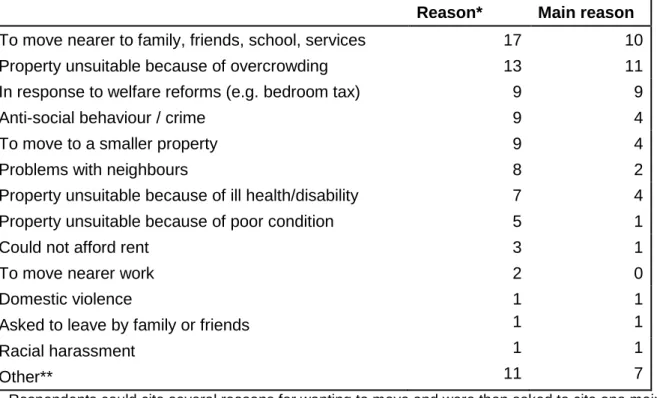
A total of 56 tenants were interviewed using a structured telephone questionnaire comprising mainly closed questions. These respondents typically sought a mutual
exchange in order to escape inadequate, problematic, or unsuitable housing situations. No respondents reported seeking to move to access a 'nicer' house, or to move to a ‘better’ neighbourhood. They were seeking to meet housing need rather than satisfy aspiration. Moving through mutual exchange typically resulted in tenants securing an improved or more satisfactory residential situation. Most tenants reported that they had resolved the issue that had prompted them to move. A series of tangible benefits were found to have accrued to households that moved. In some cases the benefits gains were numerous and significant. Improved physical and mental health and well-being was a commonly reported consequence of moving. Other reported benefits included: better access to key services; lower living costs; being able to provide help and support to family members; access to care and support from family members; and greater independence. Potential benefits (including cost savings) were apparent for service providers. For example, being closer to family and friends was reported by some tenants to result in reduced reliance on health and social care services.
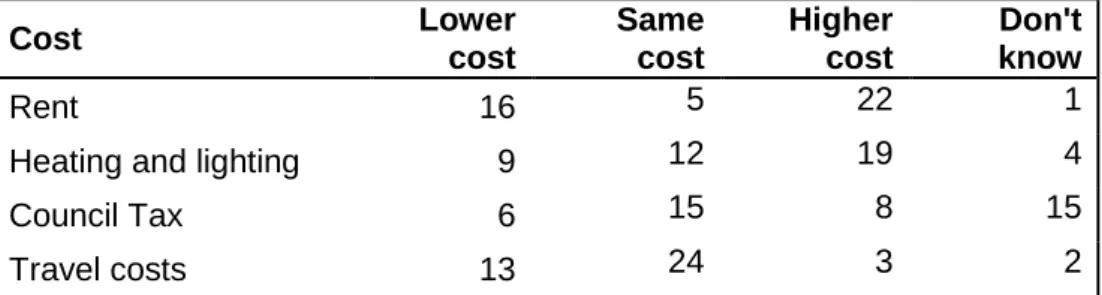
The benefits of moving were typically reported to outweigh the costs, but moving house nearly always involved a compromise. Respondents frequently appeared to have
sacrificed living conditions (which were often reported to be worse after moving) for the benefits of living closer to family or to particular services or amenities. Poor neighbourhood quality and higher living costs were reported by a minority of respondents following a move.
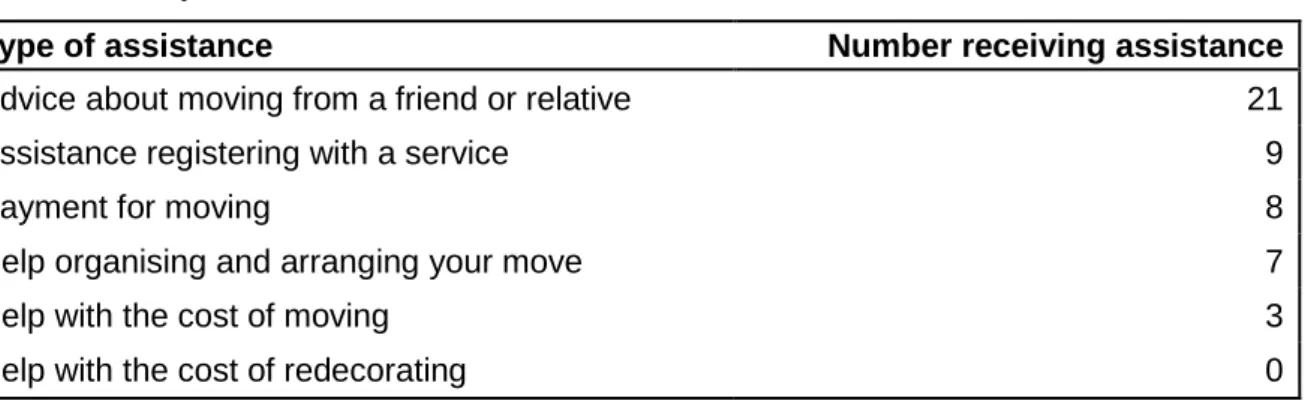
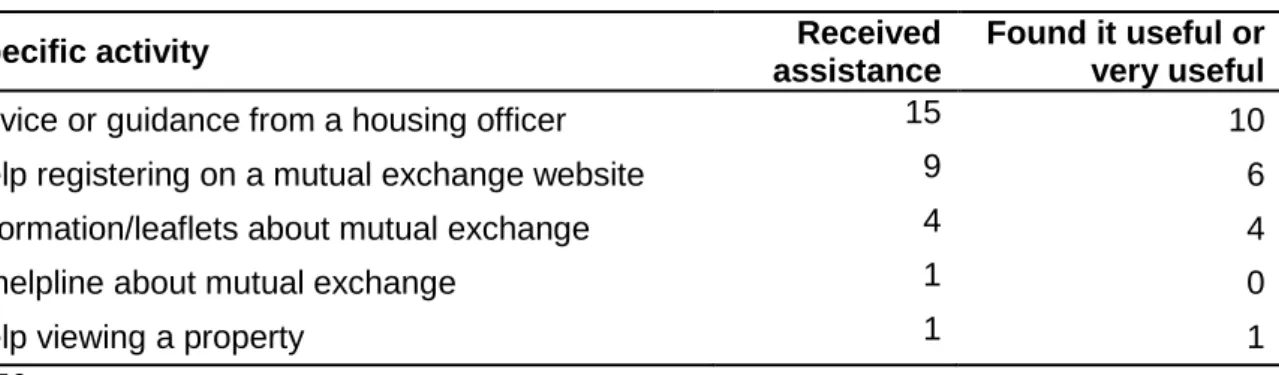
Mutual exchange appears to have a role to play promoting more effective use of the housing stock, judging by the number of tenants seeking an exchange in a bid to escape overcrowding and the number of people who had moved to a larger or smaller property through mutual exchange. However, some tenants will not secure a move through mutual exchange without help and assistance. Finally, tenants do not appear to be enticed to move by incentive payments (although it is possible that more generous payments might provoke a different response). The opportunity to talk in person to a housing officer who can provide guidance, advice and assistance does appear to promote mobility through mutual exchange.
Promoting mobility: Outcomes
Key points to note in terms of outcomes from the mobility demonstration projects include:
• DCLG gave just under £809,000 in grant funding to 12 DPs to test 'what works in' and 'who benefits from' increasing mobility in the social housing sector; an
additional £100,000 was also given to House Exchange to provide a mobility helpline
• the largest expenditure category was staffing (40 per cent) which typically covers employing officers to promote and support mutual exchange; new or improved IT systems (14 per cent), rewards and incentives (11 per cent) and marketing activities (11 per cent) also accounted for substantial activities of projects
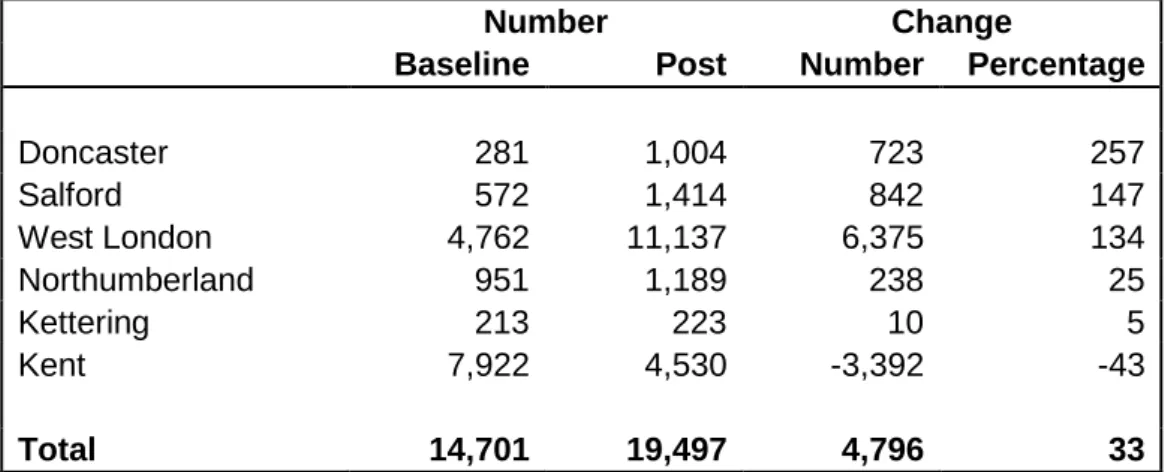
• there was an increase in registrations for mutual exchanges and in the number of mutual exchanges taking place, although it is not possible to directly attribute this increase to the activities of the DPs
• evidence suggests that employing housing officers to promote and support mutual exchange has led to the largest increases in mobility
• identifying potential impact that increased mobility may bring requires local
authorities and landlords to systematically collect more robust information on inputs, outputs and outcomes from mutual exchange
1. Introduction
This report provides a distillation of the key lessons to be learnt from 12 authorities or partnerships of authorities selected by the Department for Communities and Local Government (DCLG) to participate in a mobility demonstration project. This project had three broad objectives: to identify the steps that social landlords can take to increase mobility via mutual exchange; to identify the benefits arising for different organisations from increased mobility via mutual exchange in the social rented sector; and to review whether a payment by results pricing model for the provision of mutual exchange services can increase mobility in the sector.
A team from the Centre for Regional Economic and Social Research, Sheffield Hallam University was commissioned to assess the costs, benefits and transferable lessons from the 12 mobility demonstration projects (DPs). This report outlines findings under the following headings:
• Promoting mobility: Local authority and landlord experiences - summarises the key lessons learnt across the 12 DPs about promoting mutual exchange. This includes attention to what works and barriers to promoting mobility
• Tenant experiences of mobility - explores tenant experiences of mobility and associated outcomes, drawing on the findings of a survey of tenants who have engaged with the mutual exchange process
• Promoting mobility: Outcomes - presents headline monitoring data and reviews the insights provided into the effectiveness of different approaches to promoting mutual exchange
The remainder of this chapter details the background to the housing mobility
demonstration project, including an introduction to mutual exchange, an overview of the 12 DPs and a summary of the research approach.
1.1 Housing mobility and mutual exchange
In recent years, concerns have been raised about unmet demand for mobility among social tenants. A number of barriers to mobility have been identified. Key is the difficulties existing tenants can encounter securing a move through the traditional route of applying for a transfer. Transfer applications have traditionally been placed on the waiting list and tenants allocated a property in line with local housing allocation policy. Priority might be awarded if a tenant was under occupying their current home, but otherwise they were treated the same as any other applicant for housing and awarded priority according to their current circumstances. Unless they are deemed to be in greatest housing need, transfer applicants could find themselves waiting years before ever receiving an offer.
Mutual exchange: The regulatory framework
Mutual exchanges for secure tenants operate within a regulatory framework laid down by the Housing Act 1985. A secure tenant has the statutory right to swap homes with another tenant, provided the other tenant is the tenant of a social landlord, and they both have the written consent of their landlords
A landlord can only withhold permission for a mutual exchange in certain circumstances that are defined in Schedule 3 to the Housing Act 1985. These include where:
• a court has granted an order for possession of either of the properties involved;
• an anti-social behaviour injunction is in force against the tenant or a person who lives with them; the landlord is seeking possession for anti-social behaviour; or the court has granted a
suspended possession order or a demotion order because of anti-social behaviour;
• a property was designed or adapted for someone with a physical disability and no-one in proposed incoming household requires the adaption;
• the exchange would result in a property being overcrowded or under occupied.
If there are rent arrears, the landlord may give consent subject to the condition that the arrears are paid. Landlords must refuse an exchange within the maximum period of 42 days (including
weekends). The 42 days commence on the day the application is delivered to their landlord. If the 42 day period expires without the landlord refusing the exchange then the landlord can no longer rely on the grounds for refusal in Schedule 3 of the Housing Act 1985 and will have to grant consent. The landlord must still consent in writing to enable the exchange to proceed.
Landlords may seek possession of properties where a mutual exchange has taken place and a payment was made in relation to that exchange (for example, where one tenant gave money to the other to secure the exchange).
Tenants of a housing association are likely to have an assured tenancy. An assured tenant’s right to assign their tenancy to another person is determined by the tenancy agreement. It would be for the individual landlord to determine their criteria for allowing a mutual exchange.
The Localism Act 2012 gave landlords the power to issue flexible tenancies. Secure or assured tenants whose tenancies were issued before 1 April 2012 have the right to be issued with an equivalent secure or assured tenancy if they move.
In cases where at least one of the tenants who wishes to transfer has a secure or assured tenancy, which began before 1 April 2012, and at least one of the tenants has a flexible tenancy or a fixed term assured shorthold tenancy. Such exchanges must be done by surrender and then granting of new tenancies. The new landlord must grant the tenant(s) whose secure or assured tenancy predated 1 April 2012:
• A secure (not flexible) tenancy, (if they are a local authority) or
• An assured (not assured shorthold) tenancy (if they are a housing association).
Various initiatives have been introduced over the last 30 years in a bid to help tenants overcome barriers to securing a move. Mutual exchange has been a consistent feature of these schemes. A mutual exchange is when two tenants of a local authority, Arm's Length Management Organisation (ALMO), housing association agree to swap properties with each other. Mutual exchanges can take place between tenants of the same or different landlords living anywhere in the UK. Mutual exchange offers the possibility of a move regardless of immediate housing need and priority status on the local housing register. The Housing Organisations Mobility and Exchange Services (HOMES) was launched in the early 1990s and administered several mobility schemes including the Tenant
Exchange Scheme, later renamed HomeSwap1. This was a tenant led mobility initiative, which involved tenants consulting lists held by housing departments to find another tenant interested in a mutual exchange. HOMES was delivered, under grant, by HOMES Ltd but was ended in 2004 after concerns about its performance and value for money. A private sector contract was awarded in 2004 to take over operation of mobility schemes then rebranded as “moveUK”. The moveUK contract was terminated in 2006 following problems with the development of a website that was intended to serve as a one stop shop providing social tenants with information about housing and employment. With no national mobility scheme in operation, a patchwork of support and provision emerged. Many social
landlords signed up to one of a number of independent mutual exchange support providers that emerged to fill the gap left by the demise of HOMES (see Table 1.1). Other landlords engaged with software solutions companies to integrate mutual exchange systems into their choice based lettings systems (see the Abritas example in Table 1.1).
In 2009 the then Conservative Shadow Housing Minister (and later Housing Minister) Grant Shapps requested that a number of organisations in the housing sector including the National Housing Federation, the Confederation of Co-operative Housing and the Local Government Association come together to form a mobility taskforce charged with coming up with ideas to improve the opportunities for social housing tenants to move. The
taskforce's report was published in 2010 and focused on how to create opportunities for social tenants to move by making the best use of existing stock. In particular, it spotlighted the possibilities of increasing mobility through mutual exchanges and transfers. In a bid to increase opportunities for mutual exchange, the taskforce supported the idea of landlords signing up to at least one mutual exchange service. It also recommended better publicity for mutual exchange services and improvements in the sharing of information between these services so that all potential swaps across the UK can be viewed by tenants. Since 2010, the coalition government has placed tenant mobility at the heart of its reform of the social housing system. Arguing that increasing levels of mobility can bring wider benefits, for example, in improved health, reduced need for state supplied social care and improvements in educational attainment, plans were set out for making it easier for tenants
1
to move within social housing2. These included new allocation provision within the Localism Act by taking tenants not deemed to be in housing need out of the allocation system and ensuring that there is a social home swap programme allowing social tenants to maximise their chances of securing a match and moving by exchanging their tenancy with another household.
In 2011, the government launched HomeSwap Direct. This online scheme is designed to make it easier for tenants to find a mutual exchange by allowing them to view matches held by four participating mutual exchange providers (see Table 1.1), rather than only being able to view matches held by the provider that their landlord subscribes to. To this end, House Exchange, HomeSwapper, Locata and Abritas signed a membership
agreement setting out the conditions under which information will be shared. In addition, the Social Housing Regulator has set a new a Tenancy Standard that ensures registered providers subscribe to an internet based mutual exchange service that is a signatory to an agreement such as HomeSwap Direct3. As a result, tenants are now able to easily search for matches across all four providers. They can access further details about matches on free of charge on sites that their landlord subscribes to. Otherwise, they can choose to comply with the subscription rules of the mutual exchange provider themselves. The Standard also requires that registered providers publicise mutual exchange services and provide reasonable support to tenants who do not have access to the internet.
Table 1.1: Web-based mutual exchange schemes
Organisation Summary
HomeSwapper
http://www.homeswa pper.co.uk/
HomeSwapper is a service operated by Housing Partners Limited. It claims to be the market leading mutual exchange service with partnerships formed with more than 750 councils and housing
associations and now freely accessible to more than 3.2 million social households across the UK. It also claims that over 25,000 households are swapping homes through HomeSwapper each year.
House Exchange
http://www.houseexc hange.org.uk/
House Exchange claims to be the largest, national, not-for-profit mutual exchange system for home swaps and house exchanges. It was established by Circle and reports to have thousands of tenants move through House Exchange every month, with around 80 per cent moving within just six months of registration.
Locata
http://www.locata.org .uk/
A web based application and allocation system which serves five London boroughs and 13 housing associations. Locata provides dedicated websites for landlords (see, for example,
http://www.locata.org.uk/Ealing/). Locata focuses its activities on Choice Based lettings schemes, but also offers a mutual exchange service to landlords. Abritas http://www.abritas.co .uk/housing-options- mobility/mutual-exchange.aspx
Abritas provides web-based software for housing and social care options. This includes mutual exchange systems, which can be integrated into the choice based lettings systems also provided by Abritas, allowing automatic enrolling of transfer applicants into mutual exchange programmes. 2 https://www.gov.uk/government/uploads/system/uploads/attachment_data/file/8514/1853054.pdf 3 https://www.gov.uk/government/uploads/system/uploads/attachment_data/file/8484/2109186.pdf
Mutual exchange is now the main mechanism through which many local authorities expect tenants to secure a move. Exercising their right to set their own transfer policies for
tenants not in reasonable preference4, local authorities are increasingly restricting access to the transfer list to people in greatest need and to tenants seeking to downsize. All other tenants interested in moving are often encouraged to pursue a mutual exchange. This approach holds some obvious benefits for landlords. Mutual exchange is a tenant led process, in contrast to the landlord led transfer process with its associated administration costs and rent loss during void periods. Mutual exchange can also hold benefits for
tenants, providing people who would struggle to secure a transfer with a means of moving to what might be more suitable or affordable accommodation, including tenants that might wish to move due to welfare reform changes. Questions remain, however, about how to maximise the efficiency and effectiveness of mutual exchange as a mechanism for
promoting mobility amongst social tenants. The housing mobility demonstration project set out to try and provide some answers.
1.2 The housing mobility demonstration project
In order to identify barriers and appropriate solutions to promoting mobility, the
government made up to £1 million available to 12 local authority led mobility demonstration projects (DPs). These projects were charged with testing innovative and cost-effective ways of supporting mobility. Table 1.2 summarises the original aims and planned activities in each DP. The projects were due to start in October 2011, but some experienced delays and did not commence until 2012. The DPs ran for between one and two years.
The 12 authorities or partnerships of authorities were selected on the grounds that they explored different outcomes in relation to three questions:
• what works? - six DPs set out to explore the practical steps that social landlords might take to increase mobility and how much each of these activities cost. These DPs targeted particular groups of tenants likely to require extra support to move, including under-occupiers, non IT users, elderly and disabled tenants, people seeking moves across a local authority boundary and people interested in moving into the private rented sector. A number also set out to test the value of a dedicated helpline for tenants looking to move through mutual exchange.
• who gains? - six DPs focused on identifying organisations that benefit from
increased mobility. Particular issues to be explored included whether increasing the number of mutual exchanges reduces the number of managed transfers and
reduces costs for landlords; whether costs to health and social care providers can be reduced by arranging moves for tenants in need of care or for their carers; and whether costs for children's services can be reduced by arranging moves for certain families.
4
https://www.gov.uk/government/publications/allocation-of-accommodation-guidance-for-local-housing-authorities-in-england
• payment by results - four DPs set out to test whether paying mutual exchange providers per successful move rather than by annual subscription (as is the norm) would incentivise providers to actively pursue exchanges and improve the services they offer.
The focus of attention within the DP programme was on how to effectively promote mobility through mutual exchange. However, some DPs did explore other options for promoting mobility (see Table 1.2). These included the possibility of increasing choice by supporting social tenants to move into the private rented sector. This proved to be
challenging and little progress was made during the course of the DP programme. This report therefore focuses on lessons learnt in relation to mutual exchange.
Table 1.2: Original aims and objectives of the 12 demonstration projects*
DP Doing What? How?
Bracknell Forest What works? By brokering exchanges between overcrowded and under-occupying tenants. The aim is to create a chain of lets, which will generate a final void that can be let at an affordable rent.
Devon Who gains? By identifying 20 (rolling) cases where other statutory agencies
(e.g. police) are supporting a house move and promoting mutual exchange and chain lets as a housing option to this group. Doncaster What works? By actively promoting mobility through estate agent style
dedicated staff, use of different media and mobility helpline support. Tenants requesting a transfer move will be automatically registered for a mutual exchange.
Hertfordshire Who gains? By identifying the barriers for non-IT users and comparing the cost of providing this support (e.g. through a dedicated helpline) against the saving made through a mutual exchange
Kent What works? By enabling the Kent Homechoice mutual exchange system to be
accessible via DigiTV and mobile phone apps.
Kettering What works? By promoting and marketing transfers and mutual exchange as a
housing option for older and disabled people needing adaptations to their home, and providing officer and helpline support through the move.
Leeds What works
Who gains?
By promoting and supporting tenants to move into the private rented sector; encouraging moves between social landlords; providing advice and information for tenants on the benefits of moving through mutual exchange rather than a transfer and training staff to promote this as a housing option.
Northampton Who gains?
Payment by results?
By commissioning a mutual exchange provider to handle potential mutual exchanges; supporting people who have obtained work in the borough to move into the area; supporting people to leave hospital and move into more appropriate accommodation in the social and private rented sector; supporting existing tenants who want to move into the private rented sector; and test the viability of helpline support.
Northumberland Payment by
results
By developing a pricing model and then rewarding their mutual exchange provider for each successful mutual exchange that takes place, rather than paying the usual upfront subscription fee.
Salford What works?
Payment by results
By commissioning one of the existing mutual exchange providers to handle potential mutual exchanges beyond the local authority boundaries; by promoting mutual exchange as a housing option to tenants, and offering helpline support to find an exchange partner.
West London What works?
Payment by results
Two boroughs will share in-house officer support for tenants to encourage transfer applicants to take up mutual exchange, brokering, administering and assisting households and identifying the wider social and economic costs and benefits of moving; five boroughs will use better IT with dedicated helpline staff who support mutual exchange applicants, paid on the basis of the number of moves they achieve; and the costs and benefits of each approach will be measured and compared.
Worcestershire What works
Who gains?
By developing a service for social housing tenants with mental health needs to improve their accommodation circumstances by using the private rented sector.
1.3 The research approach
The research set out to explore the effectiveness of the different approaches to promoting mobility trialled by the 12 DPs. It involved a process evaluation centred on three discrete activities: analysis of the delivery process and lessons learnt across the DPs; a survey of tenant experiences; and the collection and analysis of management data on outcomes. A full impact evaluation was not possible given the limits of mutual exchange data, the different contexts in which the DPs were working, the very different approaches they were trialling and the consequent difficulties attributing change and establishing the
counterfactual.
(i) Reviewing the delivery process
This strand of analysis involved in-depth work with each of the 12 DPs. The aim was to generate insights into the delivery of DPs and the initiatives they were trialling. Relevant documentation was reviewed, including original submissions to DCLG and project plans to confirm objectives and planned working arrangements. A visit was made to each of the DPs shortly after they commenced work and discussions held with the lead officer, delivery staff, partner organisations and, where relevant and possible, the mutual exchange
provider. This meeting provided an opportunity to establish links and develop rapport, discuss and confirm data requirements and reporting mechanisms, explore the delivery plan and any changes made to the approach since submission of the project plan to DCLG. Telephone and email contact was maintained with each DP for the duration of the project to keep in touch with developments and a formal telephone interview was
conducted at the mid and end point of each DP. The aim was to understand the different approaches taken by the DPs to promote mobility, implementation challenges and how they are overcome, lessons learnt and evidence of benefits.
At the end of the programme, all 12 DPs were invited to an interactive event hosted by the research team. The event provided an opportunity for the research team to feed back findings and test conclusions with the DPs, clarify views and opinions about barriers to promoting mobility in different contexts and ways of overcoming these challenges, confer about the most effective approaches to promoting mutual exchange and consider the future of efforts to promote mobility. The focus group environment also promoted
interaction and information sharing between the DPs. The event was attended by 11 out of the 12 DPs.
(iii) A survey of tenant experiences
One of the research objectives was to explore the customer insights of social tenants who engaged with the DPs in an effort to garner their views and experience of the various DP activities and secure information about mobility outcomes. This was delivered through a telephone survey of 56 tenants. A telephone survey allowed the team to collect responses to closed questions and also to explore experiences, views and opinions about mutual exchange through open ended questions. A postal or e-survey might have allowed the
team to question a larger sample and facilitated quantification of the benefits arising from mutual exchange, but the challenges of securing contact details from DPs limited the population of tenants from which the team were able to sample.
Efforts were made to draw the sample of tenants from across the 12 DPs and to include tenants who had successfully completed a mutual exchange, as well as tenants who had been unsuccessful. The hope was that details of people completing a mutual exchange or withdrawing from the process would be forwarded to the evaluation team by the 12 DPs on an on-going basis. Sampling from this population would then be purposeful, with the team reviewing the accumulating sample on an on-going basis to ensure the representation of tenants targeted by and engaging with each of the 12 DPs. However, most local
authorities and landlords were not able to provide details of tenants moving through mutual exchange, reflecting the paucity of data about mutual exchanges. Seven DPs responded by reviewing records to try and identify tenants who had pursued a mutual exchange. Details of some 70 tenants were provided. These tenants were contacted by letter and telephone and invited to participate in the survey. In total, 56 tenants were interviewed, 44 of whom had recently moved house. The interviews explored the reasons why tenants wanted to move, opportunities for moving, experiences of the mutual exchange process, help and assistance received and life after the move. Interviews were conducted over the telephone using a standardised schedule, with particular questions tailored to the specifics of the relevant DP.
(iv) Collection and analysis of management data
This element of the work programme focused on the collation and analysis of management information (financial and monitoring data) and administrative and secondary data in order to:
• provide contextual information on existing mobility within social rented sector in DP areas
• assess the performance (net additional outputs and outcomes) and value for money of the demonstration projects: individually, collectively and by the payment model being trialled
• identify factors that influence the outputs and outcomes achieved
• identify changes in the patterns of mobility
• identify the costs and benefits of the measures trialled by the demonstration projects (to demonstration project authorities and other organisations benefiting from increased mobility).
The first task within this strand of work was to draw on secondary and administrative data to provide contextual information on:
• baseline mobility rates: overall rates and by the mechanism by which tenants have moved
• a profile of the stock of tenants; including demographic and household characteristics
• a profile of the stock of properties; including the size and type of properties
• local prosperity and deprivation; including estimates of local jobs and crime levels. Data on the first four issues were obtained from Local Authority Housing Statistics (LAHS) and Continuous Recording (CORE). Data relating to the last point were drawn from Office of National Statistics (ONS) neighbourhood statistics and official labour market statistics through ‘NOMIS’. Subsequently, attention focused on the collection of baseline
management information from each of the 12 DPs and the on-going collection and
monitoring of data to support analysis of delivery and impacts. To assist with this process, the DPs were issued with a baseline and monitoring templates. Various challenges were encountered securing these data on a regular on-going basis, undermining the insights provided into performance, effectiveness and value for money. These issues are
2. Promoting mobility: Local authority and
landlord experiences
2.1 Introduction
This chapter presents a distillation of the key lessons learnt across the 12 demonstration projects (DPs) about what works, and what does not, promoting mutual exchange. It is organised under seven headings:
• making the case for mutual exchange - emphasises the importance of providing a clear business case for mutual exchange in order to secure the commitment to local efforts to promote mutual exchange of the local authority (officers and elected
members), landlords and other relevant services
• the mutual exchange scheme - considers what form the web-based mutual exchange scheme might take and considers a payments by results approach
• collaboration and leadership - spotlights the lead role to be played by the local authority, working in partnership with landlords, to promote tenant mobility through mutual exchange
• staffing - highlights the importance of dedicated staff driving forward efforts to promote mutual exchange
• making mutual exchange a viable and attractive proposition - explores various steps that can be taken to make mutual exchange a more attractive and viable proposition for tenants
• raising tenant knowledge and awareness - addresses the challenge of raising knowledge and awareness of mutual exchange amongst tenants
• support and assistance and incentives - acknowledges the fact that many tenants will require help negotiating the mutual exchange process
2.2 Making the case for mutual exchange
Willingness to commit the time, effort and resources required to effectively promote mutual exchange is unlikely to be forthcoming if a local authority and its partner landlords are unclear about the associated costs and benefits. The local authority needs to make clear the business case for mutual exchange, the synergies with other strategic priorities explained and the benefits for both landlords and tenants understood.
This can prove difficult. Many landlords do not collect robust information about the number of mutual exchanges. Data relating to inputs (actions and costs), outputs (moves) and
outcomes (related consequences for landlords and tenants) is rarely available. The benefits and associated savings accruing to other services, including health and social care, therefore remain hidden. Consequently, the costs and benefits of mutual exchange are hard to trace. The consensus across the DPs was that the management costs
associated with mutual exchange were a fraction of the costs associated with a transfer. One DP, for example, calculated the cost of a transfer to be £2,512.67, compared to £122.37 for a mutual exchange. Transfer costs included the landlord contribution to the local choice based lettings scheme and estimations of the costs of managing a void and associated rent loss. The costs of managing a mutual exchange took into account the fee paid by the landlord to sign up to a mutual exchange provider, through which tenants could search for a mutual exchange match. However, the various activities reported by DPs as necessary to maximise the effectiveness of a mutual exchange scheme (discussed below), including marketing mutual exchange to tenants and providing tenants with support and assistance through the mutual exchange process, were not included in this calculation and will inevitably raise the cost of a mutual exchange. Also, calculations of this kind imply that a mutual exchange is a direct substitution for transfer, resulting in savings being made. This might not be the case. Mutual exchange might allow tenants to move who might never have moved via a transfer.
Various benefits can be associated with mutual exchange, in addition to potential cost savings. In high demand housing markets, mutual exchange might provide tenants with the only realistic option of securing a move and landlords with the only practical tool for promoting mobility in a bid to maximise efficient use of their stock to best meet housing need and minimise management problems, such as rent arrears. Even in less pressured housing markets, mutual exchange may be the most viable option for tenants not in reasonable preference for an allocation. Major benefits can also accrue to other services. For example, helping tenants to move through mutual exchange to more suitable
accommodation rather than having their property adapted can result in savings to the local authority's aids and adaptations budget. Helping a tenant to move through mutual
exchange to be closer to family and friends might serve to reduce demand on health and social care services and generate related cost savings.
Mutual exchange can also support local authorities to meet statutory duties and
responsibilities associated with their strategic housing function. More effective use of the housing stock through mutual exchange can help local authorities deliver on their
responsibility to support strong, vibrant and healthy communities by providing the supply of housing to meet the needs of current and future generations5. It can help local authorities fulfil on the responsibility outlined in guidance on the allocation of housing6 to provide tenants with greater opportunities to move within the social rented sector and make best use of the social housing stock. It can support efforts to address housing need and prevent 5 https://www.gov.uk/government/uploads/system/uploads/attachment_data/file/6077/2116950.pdf 6 https://www.gov.uk/government/uploads/system/uploads/attachment_data/file/14786/Housing _allocation_guidance_for_local_authorities.pdf
homelessness, for example, by promoting a better match between tenant needs and housing situation. This includes efforts to assist tenants to manage financial challenges. For some this may mean seeking a property with a lower rent, and for tenants who receive rental support via housing benefit this may mean seeking a property with fewer bedrooms so as to avoid costs arising from the removal of the spare room subsidy.
An important caveat to be appended to discussion of the benefits of mutual exchange is that the extent to which these benefits can be realised depends upon the specifics of the local context. Some aspects of the local context might serve to undermine efforts to promote mutual exchange. Some of these features of the local context might be
addressed. For example, the local allocations policy might be revised to rebalance the relative appeal of seeking a transfer compared to pursuing a mutual exchange.
Partnership working and improved collaboration between landlords might be nurtured to support development of a more effective mutual exchange scheme. Some factors will prove more intractable. These include the specifics of the local housing system and the profile of supply, demand and provision. For example, one DP reported problems meeting demand from tenants seeking to downsize into one-bedroom properties in response to the removal of the spare room subsidy because of a shortage of one-bedroom properties within the local social rented stock. It is important that any assessment of the potential contribution of mutual exchange, the setting of targets and measurement of success are sensitive to aspects of the local context.
2.3 The mutual exchange scheme
The Tenancy Standard which came into force on 1 April 2013 requires registered providers to subscribe to an internet based mutual exchange service that is a signatory to an
agreement such as HomeSwap Direct.7 DPs explored new working arrangements with mutual exchange providers in a bid to improve efficient and effectiveness. In particular, attention focused on the possibilities offered by a payment by results approach, whilst some DPs sought to address the problems posed by the fact that different landlords are registered with different mutual exchange providers through the development of local mutual exchange schemes.
A number of DPs explored the possibility of replacing the annual subscription fee that landlords typically pay to a mutual exchange provider with a payment by results arrangement, in a bid to increase efficiency and effectiveness. Under these trials, the mutual exchange provider collected a payment for each successful move, rather than a fixed annual subscription fee. Four key challenges rendered these attempts impractical or ineffective:
• problems were encountered negotiating a contract that satisfied both the landlord(s) and the mutual exchange provider. Landlords raised concerns about managing the
7
risks of payment by results. A particular worry was that costs could escalate and exceed the available budget. Underpinning these concerns was the fact that landlords were unclear whether payments made against outcomes (for example, the number of mutual exchanges) would be offset by other benefits and cost savings. In response, DPs explored the possibility of capping total payments. However, breaking the link between outcomes and payments undermined the incentive for mutual exchange providers to invest in efforts to increase the number of mutual exchanges
• it is difficult to determine what the desired objective might be for payment by results, beyond an increase in the number of exchanges. This reflects uncertainty about what represents a realistic or optimal number of mutual exchanges
• the problem of attribution - to what extent might an increase in mutual exchange be attributed to the work of a mutual exchange provider? What about the other
agencies involved in the mutual exchange process? For example, landlords pointed out that their efforts marketing mutual exchange and guiding tenants through the process were key to the number of exchanges taking place. Also, as chapter 3 reveals, some mutual exchanges take place without the involvement of a mutual exchange provider
• there is the challenge of measuring outcomes, given that lack of robust data detailing the number of mutual exchanges. The number of mutual exchanges counted by social landlords was often found to differ from the number recorded by the mutual exchange provider
DPs efforts to address problems raised by different landlords being registered with
different mutual exchange providers focused on the development of local mutual exchange schemes, which respond to the fact that most mutual exchanges involve tenants moving a relatively short distance within the same area.
In 2011, the government launched the HomeSwap Direct scheme, which is designed to make it easier for tenants to find a mutual exchange. HomeSwap Direct allows tenants looking to move to see whether there are any matches both on the website subscribed to by their landlord and on the websites of other mutual exchange providers who participate in HomeSwap Direct (see chapter 1). This increases the likelihood of a tenant finding a relevant match and the chances of securing an exchange. However, tenants can only access further details about matches free of charge on sites that their landlord subscribes to. Otherwise, they have to comply with the subscription rules of the mutual exchange provider themselves. Local schemes set out to avoid the need for tenants to subscribe with multiple providers to view full details of matches in the local area, recognising that this requirement can amplify the problems tenants encounter with the mutual exchange process and raise the costs of pursuing a mutual exchange.
One productive approach to developing a local mutual exchange scheme is to integrate it into the existing local choice based lettings (CBL) scheme. Doing so can hold a number of
benefits. First, landlords might be more willing to buy into a local mutual exchange scheme if it is presented as a natural extension of existing collaborative efforts to increase choice and mobility. Second, landlords are already cooperating around choice based lettings. Partnership structures and working relations are already established. Third, tenants already know to visit the local CBL website to look for information and advice about
securing a move. It can be obvious place to advertise the opportunities provided by mutual exchange and signpost tenants to more information. Fourth, mutual exchange can be presented to tenants as one of a number of options available when looking for a new home, rather than a distinct, separate and alternative proposition to the more familiar option of applying for a transfer. An example is the online mutual exchange service available to tenants in Salford Home Search.8 Managed by Salford City Council, the mutual exchange facility is part of the choice based lettings website. Tenants are able to register for a mutual exchange and search for a swap with more than 10 landlords with stock in the area.
2.4 Collaboration and leadership
Partnership working is integral to the promotion of mutual exchange.Mutual exchange typically involves tenants moving relatively short distances. The more landlords in an area that are actively promoting and supporting the mutual exchange process the more
opportunities tenants will have to secure a move. This will demand cooperation,
communication and coordination between the local authority, landlords and other service providers to ensure a consistent and reliable system that minimises barriers and
maximises the opportunities provided by mutual exchange. Effective partnership working demands that the aims and objectives are agreed and owned by all partners, roles and responsibilities are clearly defined and there is clear and effective leadership. DPs typically met these requirements by working through existing partnership arrangements linked to the local CBL scheme.
Local authorities coordinate and manage local CBL schemes as part of the statutory duty to maintain an allocation scheme for determining priorities between applicants for housing and which sets out the procedure to be followed when allocating housing accommodation. Management of a local mutual exchange scheme represents a natural extension of this responsibility. It is also difficult to point to another organisation that could fulfil this role. As the democratically accountable body with responsibility for the well-being of the local population, local authorities have a role to play directing policy and practice to meet the (housing) need in the area. Local authorities are also experienced in partnership working, which is now the means through which many programmes and services are now delivered at the local level.
8
2.5 Staffing
Experience from the DPs points to the importance of having dedicated staff to fulfil a series of key tasks that are critical to efforts to promote mobility through mutual exchange. These include:
• promoting support for mutual exchange amongst partner landlords
• securing the commitment of local authority managers and elected members
• reaching agreement with partners regarding the specifics of the local approach, including roles and responsibilities, policy, practice and resourcing
• overseeing the development and the on-going management of systems and processes, including the mutual exchange website
• raising knowledge and awareness about mutual exchange amongst housing officers and within other relevant services
• marketing mutual exchange to tenants
• guiding tenants through the mutual exchange process
In the DPs, these tasks were typically delivered by staff working within the CBL team, working in partnership with staff from the different landlord organisations.
It is also important that housing officers and staff in allied services are familiar with the opportunities provided by mutual exchangeand the practicalities of the process so they can provide advice and signpost clients to further information and assistance. Active
promotion of mutual exchange demands that housing officers understand and are aware of the practicalities of the mutual exchange process and the opportunities it offers, so they can inform and advise relevant tenants. Training or briefing sessions for staff are one approach employed by DPs to increase knowledge and awareness about mutual
exchange within the staff base. Supporting mutual exchange might also involve landlords assuming a more flexible approach to mutual exchanges and reforming policies that limit the number of exchanges taking place. To this end, it might be necessary to raise
knowledge and understanding of mobility options and the opportunities provided by mutual exchange to chief officers, senior staff and elected members.
Raising awareness and understanding among other service providers about the mutual exchange process and the opportunities it provides can increase the number of people engaging with the process. Services working with people requiring a move, such as occupational therapists and other health and social care services, are unlikely to refer clients to a mutual exchange service if they are unclear about what is involved and help that might be available to assist people through an exchange. Recognising this fact, DPs held mutual exchange information sessions for health and social care practitioners who frequently request transfers on behalf of clients. The sessions provided information about
how the mutual exchange process operated and how it could support service delivery and provide cost savings. However, making the case for mutual exchange (particularly when exploring the possibility of financial support for mutual exchange) can be difficult without hard data or illustrative case studies to evidence the contribution that mutual exchange can make.
Some DPs also actively promoted knowledge and understanding of mutual exchange within public-facing services likely to come into contact with tenants. In one DP, briefing sessions were held with staff working for the local authority’s customer contact centre, which answers switchboard enquiries, handles many types of service specific enquiries and transactions and, where appropriate, refers people on to specialist services. Another DP held surgeries in jobcentre plus offices and met with local employers who may have recruited people from outside the area who required a cross boundary move.
2.6 Making mutual exchange a viable and attractive
proposition
Various steps can be taken to make mutual exchange a more attractive and viable proposition for tenants. Financial incentives might be introduced, for example, to
encourage tenants to downsize via a mutual exchange (although experience from the DPs suggests that relatively small incentives of £100 or £200 have little impact). These might mirror the financial incentives often made available to transferring tenants. Landlords might also decide to be flexible in their application of regulations governing mutual exchange in order to minimise the risks associated with mutual exchange for tenants. This might include undertaking repairs on exchanged properties on a similar basis to transferred properties, in response to tenant concerns about being liable for the condition of their new property. Tenants making a mutual exchange sign a report on the condition of the property they are intending to move into to say that they accept the property in its current condition. It is therefore important that the tenant inspects the property thoroughly. This is not always possible. There is also the possibility that damage might occur to the property after the inspection. However, if the repair is deemed to be the result of inappropriate or malicious damage the landlord has no duty to carry out the repairs. In contrast, in the case of a transfer, the landlord carries out void works before the tenant moves in. A gas safety check is completed, an electrical test is performed. Any necessary repairs are completed so the transferring tenant can move into a problem-free property.
Another opportunity for flexibility explored by some landlords in the DPs relates to the grounds on which consent for a mutual exchange is withheld. A landlord can withhold consent for a mutual exchange on one or more of the grounds set out in Schedule 3 of the Housing Act 1985 (as amended by the Housing Act 2004). These include: if legal action has been taken against the tenant because of anti-social behaviour; the property the tenant wishes to move to is deemed too large for their needs (one spare bedroom is normally considered reasonable); the property the tenant wants to move to is too small for their needs; or if the property has features which make it particularly suitable for people
with disabilities. Consent for a mutual exchange is not withheld if a tenant is in rent arrears, but it can be made a condition of the permission granted by the landlord that the tenant clear all arrears before the mutual exchange takes place. Some landlords rigidly enforce this guidance, ignoring the fact there may be a sound business case (as well as moral grounds) for interpreting the guidance more flexibly. Consent is withheld, regardless of the potential benefits for the tenant and the landlord of the exchange proceeding. For example, consent might be withheld from a tenant with modest rent arrears, even though the exchange would result in them moving to a smaller property where they can afford to pay the rent and would be less likely to accrue rent arrears. Consent might be withheld on the basis that the tenant was moving into a property with one spare bedroom, even though the tenant could afford the rent (for example, they might be beyond working age and qualify to receive the spare room subsidy) and would benefit from moving into what might be more suitable accommodation (for example, a ground floor flat, an adapted property or a dwelling nearer to the support of family and friends). A more productive approach
involves weighing up the costs and benefits of consenting to an exchange.
If the various rules and procedures governing the mutual exchange process are going to interpreted flexibly, it is helpful if the landlords in an area adopt a common approach in a bid to ensure clarity and consistency in the way tenants are treated.
2.7 Raising tenant awareness
Many tenants are unaware or unclear about the possibilities provided by mutual exchange. Tenants who are unaware or uncertain about these opportunities are unlikely to engage with the process, reducing the pool of properties from which tenants seeking a mutual exchange might secure a match. Increasing knowledge and awareness is therefore critical to efforts to promote mobility through mutual exchange.
DPs were unconvinced about the effectiveness of flyers and leafleting as a means of raising awareness and understanding among tenants. Articles in tenant newsletters were also reported to have had little impact. Advertising on buses and on local radio was reported to have proved more effective at raising awareness of mutual exchange.
Typically, promoting engagement was found to demand more intensive interventions and direct contact with tenants. Two types of approach were pursued by DPs:
• raising knowledge and awareness about mutual exchange among housing staff, so that they were able to inform tenants that they come into contact with about the opportunities provided and how to go about seeking an exchange
• targeting advice and information about mutual exchange at particular tenants, including people on the transfer list seeking a move, under-occupiers (including tenants who wish to move due to welfare reforms) and people seeking adaptations. Speed-dating events proved to be a productive means of promoting mutual exchange, particularly when targeted at tenants actively seeking a move or in a situation likely to prompt interest in moving. These events involve issuing invitations to tenants to attend a
session where they can find out about opportunities for moving, are introduced to mutual exchange and are assisted to register and search for possible matches. Sessions might usefully focus on people over and under-occupying and tenants wishing to move due to welfare reforms. Mutual exchange providers can also provide useful customer insights about particular shortfalls in the types and locations of property available, based on the searches run by tenants, which might inform the targeting of marketing activities.
DPs reported a number of factors that were deemed critical to efforts to promote tenant interest and engagement with mutual exchange and increase the number of moves taking place:
• ensure mutual exchange is an attractive product - to this end, steps might have to be taken to address problems tenants can sometimes encounter after moving via a mutual exchange. These include the poor conditions that some tenants experience. In response, a landlord might review its policy on repairs to mutual exchange
properties; when moving via a mutual exchange a tenant agrees to accept the property in its current condition and the landlord is not liable to decorate or change or repair any alterations or damage made by the previous tenant. Concerns about a deterioration in tenancy rights might also serve to render a mutual exchange less attractive. It is important to counter such fears by explaining to tenants that the Localism Act gives protection to tenants with a secure or assured tenancies granted before April 2012 who exchange with a tenant with a flexible or assured shorthold tenancy. In this situation, the new landlord must grant a secure tenancy for local authority tenants or an assured tenancy for housing association tenants.
• make tenants aware of the benefits of mutual exchange - mutual exchange can prove a much quicker way of securing a move than waiting for a transfer. Tenants with little chance of securing a transfer might be able to move via mutual exchange. Making tenants aware of these facts can increase interest in mutual exchange. For the same reason, it is important to inform tenants if the odds of securing a transfer lengthen because of changes to how the waiting list is managed. Positive
casestudies help make tenants aware of the possibilities provided by mutual exchange. They also highlight how mutual exchange might be able to help tenants solve problems with where they live, such as the need for adaptations, distance from friends and relatives, and difficulties paying the rent.
• ensure tenants understand their rights and responsibilities - tenants need to be clear that mutual exchange is a tenant led process demanding active engagement on an on-going basis, which is more akin to buying or selling a house than seeking a transfer. he implications of the move also need to be clearly understood,
2.8 Support, assistance and incentives
Tenants require support and assistance to successfully secure a move through mutual exchange.This can range from information and advice about the process, as outlined above, through to more intensive support through the exchange process. The active, tenant-led nature of the process can present problems for some tenants, who are unlikely to move via mutual exchange without assistance. DPs reported that 'hand-holding'
through the process was the only way to overcome the challenges that vulnerable tenants can encounter. These include:
• accessing and using mutual exchange websites
• reviewing matches on an on-going basis
• managing inquiries about their property
• negotiating with other tenants
• managing the move
• home-making following the move (for example, repairs and decoration).
The ideal response would be one to one support to guide people through the process, help them with the move and settle them into their new property. However, this is likely to prove impractical from a resource point of view. The response in some DPs was to focus support on the most vulnerable tenants or on facilitating moves of the greatest strategic value to the landlord. Another response was to provide less resource intensive forms of advice and support. Telephone helplines were provided by a mutual exchange provider in five DPs. However, helpline services were reported to have proved relatively unpopular with tenants, who were reported to prefer face to face contact with a housing officer.
Moving home can prove a daunting prospect for some tenants. Tenant concerns reported by DPs included the costs and practicalities of moving, concerns about the condition of the new accommodation and the costs of putting right any problems. These concerns can undermine willingness to consider a mutual exchange. Some DPs countered these
concerns and practical challenges by providing financial and practical assistance with the move and ensuring that people are not moving into poor conditions, by carrying out basic repairs and providing help connecting to utilities. Once again, addressing these concerns has resource implications. One approach adopted by DPs was to ensure that the mutual exchange process was comparable, in terms of costs and outcomes for the tenant, with the transfer process. This included comparability of incentives offered to encourage under-occupiers to move to a smaller property.
2.9 Conclusion
The experience of the DPs suggests that mutual exchange can play an important role facilitating mobility within the social rented sector. However, maximising this contribution requires that local authorities and social landlords actively commit to promote mutual exchange. This involves leaving behind the notion that mutual exchange is a tenant led process and becoming actively involved in guiding tenants through the process. Key lessons learnt across the DPs include:
• effective marketing of mutual exchange can increase the number of tenants
registered with a mutual exchange provider and actively seeking a match. The more tenants registered for a mutual exchange the more tenants have a chance of
securing a match
• local authorities and social landlords will need to work together to create common protocols, systems and processes to support local efforts to promote mobility through mutual exchange
• dedicated staff are necessary to deliver the range of tasks that are required to make mutual exchange a realistic and realisable option for the majority of tenants
• local authorities and social landlords will need to provide direct support and assistance to tenants in order to maximise the gains that can be secured through mutual exchange
• tensions between mutual exchange and other aspects of policy and practice will need to be minimised and synergies maximised. This might include, for example, greater flexibility to allow people with arrears to move through mutual exchange.