Munich Personal RePEc Archive
Information system solutions for the
management of Romanian small and
medium size enterprises
Moga, Liliana Mihaela
The Bucharest Academy of Economic Studies, Romania, Dunarea de
Jos University of Galati, Romania
15 September 2011
Information System Solutions for the Management of Romanian Small and
Medium Size Enterprises
Author: Liliana Mihaela MOGA, PhD., [email protected]
Postdoctoral Researcher at The Bucharest Academy of Economic Studies, Romania Associate Professor at Dunarea de Jos University of Galati, Romania
Abstract
In order to survive in a turbulent economy and to survive the economic crisis, enterprises should be able to adapt quickly to the continuous changes that occur in the increasingly dynamic business environment. This paper identifies the limits of the traditional design methods used to develop the information systems. It is intended to solve this problem by working on the main cause which generates this situation – analysis and design methods. Previous literature and empirical studies related to information systems design was reviewed. Based on these reviews was introduced the succession of a product’s stages that have to be covered in order to design the information systems by using the Value Analysis. By using the Value Analysis in Software Engineering, the unification of the recent research accomplished in this field with those carried out in software architecture is intended. Another modality for increasing the competitiveness of the Romanian economy is by developing a safe and dynamic e-Business environment, by increasing the number and exploitation degree of the e-Business opportunities by the Small and Medium Size Enterprises. By means of this paper, the author will investigate the manner in which are stimulated in Romania, through the development policies and their application instruments, the development of local economies, the creation of a new inter-relational culture between enterprises, the adoption of innovative e-business type solutions and the creation of local development plans and their integration in the regional strategy.
Keywords: Management Information Systems, Software Engineering, policies, methodology, Value Analysis
1. Introduction:
computer system share in the information system. On the other hand, the application of information technology in companies is often regarded as the best solution for the removal of economic processes malfunctions. Most of the existing problems cannot find their solutions just by information generalized access and by increasing the information processing speed. One of the recommended solutions refers to a combination of computerization with re-engineering being applied in companies. Reengineering, in Hammer and Champy’s opinion is defined as a radical rethinking and radical redesign of business processes in order to achieve dramatic improvements in critical, contemporary measures of assessing performance (Hammer and Champy, 1995).
Value Analysis is a method that can ensure substantial reduction in costs, while maintaining or even improving the products’ technical and functional parameters. Due to the interaction of the technical criteria with the economic and social ones, it encourages professionals’ creativity in order to achieve an optimal balance between the user’s requirements and the quality of goods, on the one hand and their implementation costs on the other. The Value Analysis is fundamentally different from the conventional design methods that are currently used to reduce costs. While most of these methods start from a physical object, for which the most economical manufacturing solutions are looked for, in case of Value Analysis the goods are studied starting from the customers’ needs, from the characteristics they should have in order to satisfy the end-users requirements. Unlike the classical methods of design that improve something which already exists, the Value Analysis designs or redesigns the product/service as required, it aims at accomplishing a function by ignoring current constructive solution.
Due to the results recorded by the companies that had applied the Value Analysis, it has gained international recognition even starting with the second half of the last century. Currently, there are a growing number of organizations worldwide that are specialized in Value Analysis. The internationally-recognized success of this method has facilitated its introduction in Romania since 1968. The theoretical achievements resulted in the development of Romanian standards of Value Analysis: STAS 11272/1-79 “Value Analysis. General concepts” and STAS 11272/2-79 “Value Analysis. Applying the methods to products”, which created the guide for the unitary application of the method. Nevertheless significant progress has been noticed in terms of working methods, resulting in the development of specific methodologies for value analysis application in the design of technological processes and the investment objectives, achievements which even currently are considered novelties on the international level. The present paper aims at accomplishing an inventory of the methodological instruments of the Value Analysis by developing an innovative method intended for software design.
2. Methodology
3. Tendencies in Management Information Systems design
The latest trend recorded on the European level in developing integrated business computing applications, consists of customizing the management needs of small and medium enterprises (SMEs). Nevertheless we notice the recognition on the European level of the fact that Small and Medium Size Enterprises (SME) management displays certain information requirements and in order to meet those requirements certain solutions should be developed. There are more than 25 million SMEs operating in the European Union (EU) having over 100 million employees, thus constituting an attractive market for suppliers of integrated solutions.
They have already reacted by constantly adapting their products and services. Systems, Applications and Products in Data Processing Company (SAP) is one of the global leaders in providing IT solutions for businesses that has rapidly adapted its research and production to the requirements of the SME sector. Most current investments are oriented towards developing solutions for SMEs. Moreover the company has also designed software for SME that can be applied in 27 fields of activity. Another important presence on the software market is Wizrom Software, which provides efficient products for business management that can be integrated in any business. The most important Wizrom Software customers segment is represented by SMEs that have implemented WizSalary and WizCount software packages that provide solutions in finance and accounting, fixed assets, sales, distribution and payrolls. Currently, the number of SMEs that have purchased Wizrom Software products and services are over 1,100. The same thing happens in the production of computer equipment.
The Romanian market for business software should be taken into consideration due to its products diversity on the one hand, and to its remarkable increase potential on the other. The potential market for Enterprise Resource Planning (ERP) solutions and services in Romania is without doubt one of the most significant in the region. Except for 2009, the ERP market in Romania has increased steadily. The need for business management solutions is very high, both for public and private institutions.
If the structure of the main providers is analyzed, based on data provided by IDG Romania results that the market leader is SAP, with 28.3% market share, followed by Siveco, with 19.30% and Oracle with 17.40%. The difference of 35% of market share is held by small and medium-sized companies which are mainly Romanian.
The business solutions implementers which are active in Romania can be divided according to the national membership criterion into two broad categories: international companies, which own 45.7% market share and local companies with 54.3% market share.
An analysis of the companies that benefit from IT solutions in relation to the size of providers reveals some certain similarities:
− multinational companies prefer corporate level-implemented solutions, mainly due
to the need for a uniform reporting;
− regarding the Romanian companies, the delineation is more difficult to accomplish,
however Romanian solutions are preferred as they adapt easily to market specifics, taking into account the continuously changing legislation.
4. Policies for the Implementation of Management Information Systems
In the last years, the European Union, through its instruments, supports the introduction of the Information Technology and Communications in enterprises, as manner of increasing the efficiency of the activities performed. These programs open new financing opportunities for software for Romanian business and online projects. In Romania, the Sectoral Operational Program for the Increase of the Economic Competitiveness (SOP IEC) is one of the most recent programs which include measures that support the introduction of Information Technology and Communications (ITC) in enterprises. Starting with 2011, within SOP ICE, Axis 3, were launched measures 331 and 332 destined for the financing of the implementation of software systems for micro-enterprises and small and medium enterprises (SME’s). Through measure 311 is supported the access to broadband and connected services.
Operational Program – Human Resources Development (SOP-HRD), Sectoral Operational Program Environment, Sectoral Operational Program – Administrative Capacity Development (SOP – ACD), Sectoral Operational Program Transport, Fishery Operational Program.
5. Introducing of the Value Based Methodology for Information System Design
In the new trend it is subscribed the approach based on value, which has materialized itself using two development directions. The first one (having a pluridisciplinary nature, including in the software engineering concepts belonging to Value Engineering, quality management, risk management, human resource management) it is promoted by Boehm et al. (2005). The second line is developed by the observers Faulk, Raffo, and Harmon (2005), which take over some of the vital concepts of Value Engineering that they transpose into the software engineering. The research is concentrated mainly on finding the information systems’ requirements. In the framework developed by these ones, for the first time it is pointed out the difference between the internal perception of the companies developing information systems on the use value assigned by the beneficiary, and the manner how the beneficiaries perceive it. Also, it is pointed out the existence of some different perceptions on the value of the information system inside the identified group. Through the proposed research it is planned to continue this reasoning, extending it on the beneficiary companies.
In Romania, there are no applicative implementations in the software engineering domain. Thus, as Ionita mentioned (2000), Value Analysis was used to realize some practical applications in domains such as investment objectives and technological processes for which there were elaborated specific applying methods, which represent an innovation on international level. The first standard of Value Analysis issued by Romanian specialists - 11272/1-79 – doesn’t name the information systems as a possible object for Value Analysis, but it doesn’t limit the use of the method to the enumerated objects, either. The European Standard EN 1325 - 1:1996 entitled “Value management, value analysis, functional analysis vocabulary”, was issued after 17 years. Romania adhered to it. This standard doesn’t name the informational systems as possible study object; this includes some of their basic elements: hardware and software.
The possibility to include the information systems in the category of that Value Analysis’s study objects it is mentioned by Ionita (2000). The recommended methodology is the one applied to products, which must be particularized depending on the specific elements belonging to information systems. This matter is sustained by Radu, Ursacescu, Ionita (2001) who proposed introducing Value Analysis to determine information systems’ specifications. This way, one step forward has been done in applying Value Analysis methodology in the design of information systems through the determination of the social need that these have to satisfy: providing the management system with the required information in the structure, quantity, quality and at the proper moment for decision making.
and, on the other hand, by specialists in information technology. The researches done until this moment have marks on themselves left by the preparation of each of the named categories, until the time being existing no centralization and standardization of the achieved acknowledges and experience, under the shape of a unitary information systems projection methodology using Value Analysis, as well as this exists in applying the Value Analysis method on the information system, treated as a product, and on the transfer of these concepts to the enterprises that develop information solutions for companies’ information systems.
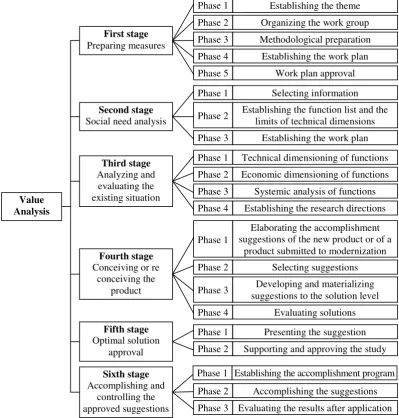
[image:7.595.106.506.324.743.2]The proposed approach allows eliminating the non-concordance between beneficiaries’ expectations and the characteristics of the delivered information systems, as the main drawback brought by using traditional methods, by the position of beneficiaries’ demands in the methodology’s center. The research represents a innovation, from the point of view of the functional approach in design information systems, and this has a specific technical and methodological utility by changing thinking mode of managers, software developers and specialists, too, by passing from the constructive approach (from what it is the information system), to the functional one.
Figure 1: The methodology of information system design
Value Analysis
First stage
Preparing measures
Phase 1 Establishing the theme Phase 2 Organizing the work group Phase 3 Methodological preparation Phase 4 Establishing the work plan
Phase 5 Work plan approval
Second stage
Social need analysis
Phase 1 Selecting information
Phase 2 Establishing the function list and the limits of technical dimensions Phase 3 Establishing the work plan
Third stage
Analyzing and evaluating the existing situation
Phase 1 Technical dimensioning of functions Phase 2 Economic dimensioning of functions Phase 3 Systemic analysis of functions Phase 4 Establishing the research directions
Fourth stage
Conceiving or re conceiving the
product
Phase 1
Elaborating the accomplishment suggestions of the new product or of a
product submitted to modernization
Phase 2 Selecting suggestions
Phase 3 Developing and materializing suggestions to the solution level
Phase 4 Evaluating solutions
Fifth stage
Optimal solution approval
Phase 1 Presenting the suggestion Phase 2 Supporting and approving the study
Sixth stage
Accomplishing and controlling the approved suggestions
Phase 1 Establishing the accomplishment program
The methodology that will be used in the design of the information systems is structured into six stages as it is presented in Figure 1. The methodology does not differ in the structure of the stages of application from the one applied to products, but its content presents considerable characteristics and it has been elaborated and improved by including the Function Analysis System Technique (FAST) Diagrams.
The contribution to the new information system design methodology can be seen particularly in the presentation of the methodology specific stages. They differ significantly in point of content from the currently-practiced methodologies in the products design, thus providing a clear-cut specific the proposed methodology for information systems designing. A good example in point is the stage that refers to the setting of classification function, where the FAST Diagram is being used.
Since the current methodology, the functions of a product or service identification and defining raises certain questions for practitioners, as it is a very complex task that requires knowledge belonging to different specialties as well as substantial practical experience, it is suggested that FAST diagram should be included to the extent of methodology improvement, which is used in the American methodology. The main characteristic of the FAST Diagrams refers to the elimination of empiricism in the functions hierarchy by using instruments that promote the separation logically and justified of the basic or main functions of the auxiliary ones. The method has been developed under the auspices of the American Society for Value Engineering (SAVE). The FAST diagram displays two forms: Technically Oriented FAST Diagram and Task Oriented FAST Diagram. The first type of diagram focuses on the technical aspects, beginning from what does the studied product. The second diagram distinguishes by the fact that it describes the product or service as a whole, starting from the most important task it performs as a reflection of the consumer or user’s requirement. What all FAST Diagram variants have in common, considered as a distinctive for the method it is employed is the use of the "How?" question in order to rank the functions according to their importance and of the "Why?" question to justify the reasoning. In other words, a function should answer simultaneously to both questions. Since this method presents a significant advantage in establishing and ranking functions of a product / service, the improvement of the current methodology is intended, developed by the Romanian specialists who suggest the integration of the FAST diagram specific elements which is used in the United States. However, its integration into the Romanian methodology may represent an important step towards finalizing a uniform methodology that could be adopted on the European level.
The next step is to determine requirements that should be met and this aspect leads to the social need achievement. In order to accomplish this aspect, the concept issued by Faulk, Harmon and Raffo (2000) was taken over and developed. According to this view, the requirements identification for an information system is a process that takes place in three stages and which involves the direct contact with beneficiaries or potential beneficiaries, with developers of information systems and identification of their common points of view. In the first stage beneficiaries opinions are being analyzed. The participants are interviewed on their expectations, requirements concerning the computer system. Moreover, their reactions are analyzed concerning a suggested conceptual model, competitive options and price they are willing to pay in order to purchase a complete software solution. The second stage aims at familiarizing with the existing design knowledge in the supplying companies, in connection with use value.
The research that has been conducted so far revealed that within these companies there still are several groups that have different viewpoints, namely developers, product managers, marketing department, sales agents and service-providing employees. Frequently the perceptions of the above-mentioned categories are the only ones to be found in products at the expense of beneficiaries and end-users expectations. The employment of the Task Oriented FAST methodology allows compensating these deficiencies by supplementing the specialists’ opinion that are trained in information technology and communications with the opinion of the groups identified among beneficiaries and end-users. The third stage deals with the reconciling the internal perception on the use value in companies that provide information systems with that of the beneficiaries/users.
In this stage the greatest discrepancies occur between the design-team opinion and of the stakeholders' expectations regarding the use value. The results thus obtained have a significant impact upon the aligning process of the design team objectives to the use value expected by the beneficiaries.
The lengthy discussions on the own-products requirements that take place in software-developing companies frequently focus on the product characteristics, performance, cost and potential competitive advantages compared to similar products. Nevertheless the internal discussions that focus on the benefits customers will have as a result of using the product or the key factors identification in the purchasing decision occur rather rarely.
Moreover to these points of view, we consider it appropriate to add another factor which should be taken into account when formulating the information system requirements, namely the legal framework (when it exists). This should be the proper approach to be taken into account in companies’ decision-making process that develop and implement business-design information systems.
For information systems, the main categories that involve costs are the following: hardware, operating system, software, implementation and maintenance. In case of information systems, the cost of raw materials and materials is replaced by the expenses incurred to purchase the necessary equipment and operating system. Operating systems also involve a situation which is specific to IT systems.
The price-cut can be substantial, as there is the possibility of purchasing open source solutions. The effect of employing these solutions is twofold, affecting both the manufacturing overhead cost of application software developers, who will not purchase licenses for operating systems, databases and servers used. Regarding the labour cost, we should mention that it is generated by the main activities of system implementation: the application program (software) development process, in which case it can be included in the production costs, the actual implementation period, in which case it is classified as consulting expenses and during the operation stage (maintenance) when it is included in the expenses dedicated to post-implementation service.
Systematic analysis of the information system functions
Setting the costs for each of the functions identified in the information system (regardless the capture aspects - globally or for each separate major component, depending on the method used for determining and ranking), allows the analysis of the cost and importance level report of for each function and by comparing the weights in use value and total cost of the information system. The following aspects can be highlighted by comparing this report:
a) the most expensive functions;
b) the functions that cost too much in relation to their use value contribution to information system;
c) the functions accomplished due to the constructive and technological solutions are too expensive compared with other possible solutions.
The optimum solution is determined when the weight of each function in the use value is directly proportional to the weight it has in the information system cost.
Setting the research directions
The conclusions that can be drawn from the results obtained during the systemic analysis of the functions on which the decision-making process is based regarding the functions elimination, adding new functions, namely functions are identified and for their implementation new technological solutions should be looked for as a way to eliminate disproportions that were noticed in the previous stage in terms of functions weight in the IT system cost.
Selection of proposals for information system accomplishment
team members will have access to the conclusions summarized in the critical analysis stage, so that the possible variants should be judiciously based. The proposals selection should take into account of restrictions imposed by the company that accomplishes the implementation (for instance the use of the majority of the existing equipment) as well as the maximum price the recipient is willing to pay for the implemented solution, possibly by spreading-out in separate payments for each main component, or maintenance costs for applications further updating.
The solutions technical and economic characterization made during this stage displays an indicative character, the aim being that of dividing them into two broad categories, namely in feasible and unfeasible solutions. The remove of unfeasible solutions should be preceded by the selection of the novelty items that could generate useful ideas.
The method employed in the view of identifying feasible alternatives is the one suggested by Crum (1976) known as T Diagram. The method is in fact a balance that has on a pan the advantages of every idea mentioned and on the other the disadvantages, thus facilitating the selection of those ideas whose advantages are more numerous and ensuring at the same time the retention of the eliminated ideas advantages, aiming at associating and creating new ideas. The balance can be developed by including the criteria that measure the potential effectiveness of ideas, whose size can be quantified, thus ensuring an appropriate justification degree of decisions concerning the issued ideas acceptance or rejection.
An important factor in ranking the variants suggested for the information system development is the duration of its implementation. One of the fundamental arguments for shortening the implementation period is the involvement of the company staff which leads to disruptions in their daily activity. Moreover, a widely-used method for new ITC solutions implementation refers to the gradual transition from the old solution to the new ones, by introducing new data and checking the results simultaneously on both systems - old and new, which implies significant labour consumption. The implementation period is influenced by the allocation of financial resources in time, both to the developer and the company that that accomplishes the implementation. This category includes licenses and equipment purchases.
An overview of the actual state of each information system component that is redesigned sue to the FAST diagram employment was obtained by comparing the level of cost on functions with their level of importance in the overall use value.
6. Conclusions:
enterprise’s service of the informational system. This is, in fact, one of the fundamental concepts which constitutes the basis of the products’ design, by using the Value Analysis and which represents the connection link between the soft approach and the approach we suggested, respectively that which uses the concepts of the Value Analysis. Using the suggested approach will allow the elimination of the discrepancies between the beneficiaries’ expectations and the characteristics of the delivery information systems – as main shortcoming caused by the use of the traditional methods – by placing in the centre of the methodology the beneficiaries’ demands. The initiative is considered an innovation from the perspective of the functional approach in the design of the information systems of the enterprises, and is also technically and methodologically highly useful because it changes the managers, designers, specialists and executors’ way of thinking, from the constructive approach (from what the information system is) to the functional one (to what the information system does).
Acknowledgments
This work was co-financed from the European Social Fund through the Sectoral Operational Programme Human Resources Development 2007-2013, project number POSDRU/1.5/S/59184 „Performance and excellence in postdoctoral research in Romanian economics science domain”.
References:
1. Braniff, L., To avoid crises, microfinance needs good information systems, March 24, 2010, Avaiable at http://technology.cgap.org/2010/03/24/to-avoid-crises-microfinance-needs-good-information-systems/;
2. Biffl, S., Aurum, A., Boehm, B., Erdogmus, H., Grünbacher, P., Value-Based Software Engineering, 2005, Hardcover;
3. Bourdariat, J., IT Governance Would Have Avoided the Financial Crisis Analysis, Information Systems Control Journal, Volume 6, 2001;
4. Checkland, P., Soft Systems Methodology, 14 September 2004, http://ecis2001.fov.uni-b.si/ECIS-DC_Papatsoutsos.pdf;
5. Crum, L. W., Value Engineering, Tehnica Publishing House, Bucharest, 1976
6. Faulk, S.R., Harmon, R., Raffo, D.M., Value-Based Software Engineering – A Value-Driven Approach to Product-Line Engineering, First International Conference on Software Product-Line Engineering, Denver, Colorado, August 28, 2000, Flynn D., Information Systems Requirements: Determination and Analysis, Mc Graw Hill, 2000;
7. Hammer, M., Champy J., Reengineering the Corporation, Technical Publishing House, Bucharest, 1995, pp. 57- 64;
8. Ionita, I., Value Engineering, Economic Publishing House, Bucharest, 2000;
9. Lethbridge T. C., Laganiere R., Object Oriented Software Engineering, McGraw Hill, 2001; 10. Nicolescu, O., Nicolescu, L., Knowledge based economy, company and management,
Economica Publishing House, Bucharest, 2005, pp. 22;
11. Oprea, D., Airinei D., Fotache M., Business Informational Systems, Polirom Publishing House, 2002;
13. National Institute of Statistics, Yearly Statistic Report 2009, Companies activity, http://www.insse.ro;