ScholarWorks @ Georgia State University
ScholarWorks @ Georgia State University
Middle-Secondary Education and Instructional Technology Dissertations
Department of Middle-Secondary Education and Instructional Technology (no new uploads as of Jan. 2015)
Summer 8-11-2011
Becoming the Generalized Other: An Analysis of the Narratives of
Becoming the Generalized Other: An Analysis of the Narratives of
Teach for America Teacher-Bloggers
Teach for America Teacher-Bloggers
Neil J. Rigole
Georgia State University
Follow this and additional works at: https://scholarworks.gsu.edu/msit_diss
Part of the Education Commons
Recommended Citation Recommended Citation
Rigole, Neil J., "Becoming the Generalized Other: An Analysis of the Narratives of Teach for America Teacher-Bloggers." Dissertation, Georgia State University, 2011.
https://scholarworks.gsu.edu/msit_diss/86
This Dissertation is brought to you for free and open access by the Department of Middle-Secondary Education and Instructional Technology (no new uploads as of Jan. 2015) at ScholarWorks @ Georgia State University. It has been accepted for inclusion in Middle-Secondary Education and Instructional Technology Dissertations by an authorized administrator of ScholarWorks @ Georgia State University. For more information, please contact
ACCEPTANCE
This dissertation, BECOMING THE GENERALIZED OTHER: AN ANALYSIS OF THE NARRATIVES OF TEACH FOR AMERICA TEACHER-BLOGGERS, by NEIL J. RIGOLE, was prepared under the direction of the candidate's Dissertation Advisory Committee. It is accepted by the committee members in partial fulfillment of the requirements for the degree Doctor of Philosophy in the College of Education, Georgia State University.
The Dissertation Advisory Committee and the student's Department Chair, as representatives of the faculty, certify that this dissertation has met all standards of excellence and scholarship as determined by the faculty. The Dean of the College of Education concurs.
______________________________ _________________________________ Laurie B. Dias, Ph.D. Mary B. Shoffner, Ph.D.
Committee Chair Committee Member
______________________________ _________________________________ Deron R. Boyles, Ph.D. Ewa McGrail, Ph.D.
Committee Member Committee Member
______________________________ Date
______________________________ Dana L. Fox, Ph.D.
Chair, Department of Middle-Secondary Education and Instructional Technology
______________________________ R. W. Kamphaus, Ph.D.
AUTHOR‘S STATEMENT
By presenting this dissertation as a partial fulfillment of the requirements for the
advanced degree from Georgia State University, I agree that the library of Georgia State University shall make it available for inspection and circulation in accordance with its regulations governing materials of this type. I agree that permission to quote, to copy from, or to publish this dissertation may be granted by the professor under whose direction it was written, by the College of Education's director of graduate studies and research, or by me. Such quoting, copying, or publishing must be solely for scholarly purposes and will not involve potential financial gain. It is understood that any copying from or publication of this dissertation which involves potential financial gain will not be allowed without my written permission.
_______________________________________
NOTICE TO BORROWERS
All dissertations deposited in the Georgia State University library must be used in
accordance with the stipulations prescribed by the author in the preceding statement. The author of this dissertation is:
Neil J. Rigole 68 Country Trail Macon, GA 31220
The director of this dissertation is:
Dr. Laurie Brantley-Dias
Department of Middle-Secondary Education and Instructional Technology College of Education
VITA
Neil J. Rigole
ADDRESS: 68 Country Trail Macon, GA 31220
EDUCATION: Ph.D. 2011 Georgia State University Instructional Technology
M.Ed. 1999 Georgia College & State University Instructional Technology
B.S. 1996 Georgia College
Middle Grades Education
PROFESSIONAL EXPERIENCE
2009 - Present Chief Technology Officer Monroe County Schools
2006 – 2009 Director, Instructional Technology Monroe County Schools
2004 – 2006 Director, Teacher Career Center
Board of Regents of the University System of GA 2001 – 2004 Director, Academic Services
Georgia Virtual Technical College
PUBLICATIONS AND PRESENTATIONS
Brantley-Dias, L., Kinuthia, W., Shoffner, M. B., de Castro, C., & Rigole, N. (2007) Developing pedagogical technology integration content knowledge in preservice
teachers: A case study approach. Journal of Computing in Teacher Education,23
(4), 143–149.
Rigole, N. (2006) E-Portfolios as tools for performance assessment. Presentation on the use of the Open Source Portfolio Initiative system to support faculty engagement in preparing teachers to teach the Georgia Performance Standards.USG Faculty Academy for Performance Assessment, Atlanta, GA.
Rigole, N. (2003) Learning objects 101: The future of e-learning and the case for reusable media. Presentation on the development and implementation of the GVTC
Learning Object Repository.GVTC Summit, Waco, GA.
Rigole, N. (2002) Using technology as a tool for development. Presentation on state agencies partnering in transforming the delivery of existing face-to-face employee training to the latest in distance education course management systems.
ABSTRACT
BECOMING THE GENERALIZED OTHER: AN ANALYSIS OF THE NARRATIVES OF TEACH FOR AMERICA
TEACHER-BLOGGERS by
Neil J. Rigole
A teachers‘ professional identity has been shown to increase job satisfaction,
which has been linked to job retention (Hatch, 1999; Billingsley & Cross, 1992; Stobart,
Sammons, & Kington, 2006; Cha, 2008). Beginning teachers are at greater risk of leaving
the profession than their more experienced counterparts (e.g. Grissmer & Kirby, 1997;
Huling-Austin, 1990; Ingersoll, 2003) with teacher attrition being especially high in
schools serving low income and minority students (Barnes, Crowe, & Schaefer, 2007).
The purpose of this narrative research study was to investigate the identity development
process of a purposefully selected (Creswell, 2003) group of beginning teachers
participating in an alternative certification program known as Teach For America. The
participants (n=3) were middle or high school teachers who had taught in high needs, low
income urban school settings. They had also blogged on the ―Teach For Us‖ blog hosting
site about their experiences in the classroom as beginning teachers. Through the lenses of
Sfard and Prusak‘s (2005) narrative theory of identity and Mead‘s (1934) social theory of
identity and the role of the ―Generalized Other‖, narrative research techniques were used
to analyze the stories found in their blog postings. Clarification and additional
information was gained via email exchanges with the participants as well as a ten item
questionnaire sent to each participant. The study specifically utilized Creswell‘s (2005)
steps for conducting narrative research to analyze the stories of the participants. A key
new narrative that has been mutually constructed by both researcher and the participants
in the study.
Their stories show that these teachers were ill prepared for the realities they
would face and that teaching in a challenging, high poverty, urban school setting was at
times overwhelming. The duality and struggle between their Generalized Other concepts
of a TFA corps member and who they were becoming as a teacher was found throughout
their stories. The stories also show that over time, each became more confident in their
abilities and in who they were becoming as a teacher. With this growth came more job
satisfaction, yet each decided to leave their TFA placement schools after their second
year to pursue other options. Several themes were found within and across the stories,
including the struggles the teachers faced their first year, the transformation into a much
more experienced and ―in control‖ teacher during their second year, the conflicts between
their Teach For America corps member identity and their teacher identity, the impact of
high stakes testing and racial issues on their identity development, and the cathartic
nature of blogging for each of the participants. Contributions of the study include
additional insights into the areas of research on teacher identity development, factors
related to retention, and the role that Web 2.0 technologies such as blogging can play in
BECOMING THE GENERALIZED OTHER: AN ANALYSIS OF THE NARRATIVES OF TEACH FOR AMERICA
TEACHER-BLOGGERS by
Neil J. Rigole
A Dissertation
Presented in Partial Fulfillment of Requirements for the Degree of
Doctor of Philosophy in
Instructional Technology in
the Department of Middle-Secondary Education and Instructional Technology in
the College of Education Georgia State University
Copyright by Neil J. Rigole
ii
Completing a work of this nature cannot be done in isolation. I am truly fortunate
to have numerous individuals that have assisted in my ability to see this project to
fruition. First, I wish to thank my Doctoral Committee Chair and advisor Dr. Laurie
Brantley-Dias. I know there were times when you thought I would not make it, but you
continued to offer your advice and support as I took the ―slow road‖ to the completion of
my degree. You definitely went beyond the call of duty to support not only me, but your
other doctoral students as well, and for having you as an advisor and friend I am forever
grateful.
To the others of my committee, Dr. Mary Shoffner, Dr. Deron Boyles, and Dr.
Ewa McGrail. You each challenged me to go beyond my limits and your advice was
always taken to heart. I particularly want to thank Dr. Shoffner for instilling an interest in
a technological innovation such as blogging to research, Dr. McGrail for having me
consider the ethical issues related to this Internet research, and Dr. Boyles for putting the
―Ph‖ in my Ph.D.!
To Dr. Skip Atkinson, your kick in my rear at the end of this journey greatly
―inspired‖ me to finish it. Also, to Dias‘ Doctoral Writing Group (Anissa, Valora,
Crystal, Erin, and Debbie). Your feedback and support was always ―spot on‖ and this
work is stronger because of you.
To all of the teachers in my life, particularly Oscar Jackson and Erin Weaver. You
both embody my perception of what the consummate teacher should be, and I am still in
iii
To the participants (Ms. A., Mr. Z., and Ms. E.) who agreed to participate in this
project. Your willingness not only to participate in my research, but to offer up your
compelling stories to the world is inspiring. Your stories are honest and forthright, and
you each provided a window into a world that few are able to view.
To my parents Claude and Hazel Rigole. Your love and support have been
unwavering. Thank you for believing in me!
To my children Emily, Zachary, and Abigail (the ―real‖ Ms. E., Mr. Z. and Ms.
A.). I love you with all of my heart and I am so proud of each of you! I am sorry that this
project caused me to work countless nights and weekends, which took me away (mentally
and physically) from multiple activities and time with you. I ―owe you‖ big time but I
hope you will learn from my experience and follow your dreams to completion. Always
remember, ―see your future, be your future‖ (Ty Webb, 1980).
Finally, to the love and light of my life, my wife Tina. You are truly my best
friend and soul mate and without you I would not be the man I am today. Your love and
encouragement sustain me, and words alone cannot do justice for all I owe you for
allowing me to complete this journey. This completion is ours together and ours to
iv
TABLE OF CONTENTS
Page
List of Figures ... viii
Abbreviations ... ix
Chapter 1 INTRODUCTION ...1
My Personal Narrative ...1
Statement of the Problem ...3
Alternative Routes to Teacher Certification ...4
Theoretical Framework – The Role of Identity ...6
Teachers Finding Voice and Self on Blogs ...9
Statement of Purpose ...11
Research Questions ...12
Limitations ...12
Delimitations ...13
Definition of Terms...13
Summary ...14
Chapter 2 LITERATURE REVIEW ...16
Introduction ...16
Challenges of Beginning Teachers ...16
The Intent to Stay, Alternative Certification, and the Need for Support ...16
Realistic Expectations and the Teachers Persona ...18
Urban Teacher Challenges ...20
Teach For America and Retention ...27
Summary ...29
Teachers‘ Identity Development Process...30
Identity as Process...30
Future Talk and Expertise ...36
Summary ...40
The Role of Society in Identity Development ...40
The Generalized Other ...41
Summary ...43
On Biography, Talk, and Blogging in Teacher Identity Development ...44
Biography ...44
Talk ...45
Blogging ...47
Summary ...55
v Chapter
3 METHODOLOGY ...58
Introduction ...58
Rationale for the Selection of the Methodology ...59
Narrative Research as a Methodology ...61
Context for the Study ...62
Teach For America ...63
―Teach For Us‖ ...65
Participant Selection ...66
Ethical Considerations for Participant Selection ...68
The Participants ...70
Ms. A...70
Ms. E. ...70
Mr. Z. ...71
Steps for Conducting Narrative Research ...71
Attending to Researcher Bias...77
Establishing Trustworthiness ...78
Evaluating Narrative Research as a Methodology ...79
Summary ...79
Chapter 4 THE STORY OF MS. A. ...81
Introduction ...81
Year One ...82
The Struggle to Survive and Overcome Failure ...82
Teaching as a Battle ...84
Losing One Identity and Gaining Two Others ...86
Trading Perfection for Balance ...90
Testing, Time, and Two Identities ...100
Writing as Therapy ...102
Questioning the Value in the Struggle ...104
From Survival to Achievement ...109
Racism and the ―Achievement Gap‖ ...111
The Generalized Other Student ...116
Year Two ...120
Turning Tears into Triumphs ...120
An Expanding Identity ...128
The ―Few‖ vs. the Rest ...131
The Blog is Discovered ...136
It‘s All about Math ...140
Saving the ―Teacher-Soul‖ ...143
―Bigger and Better Things‖ ...147
Shifting Identities ...148
Freedom without Fear ...149
Chapter 5 THE STORY OF MR. Z. ...152
vi
Year One ...152
Big Goals ...152
Chaos...157
Putting Up a Front ...158
Un-TFA ...162
Restructuring and Balance ...166
The Need for a Break ...172
―Why Not?‖ and Resolutions ...174
Sick ...177
Tired ...178
The Institutionalized Individual ...184
―Significant Gains‖ vs. ―Significant Impact‖ ...187
Year Two ...192
Doing Better = Less Blogging ...192
Deciding to Leave and Questioning Impact ...194
Racial and Ethnic Identity ...197
Not Letting Up ...199
Questioning the Decision to Leave ...201
Chapter 6 THE STORY OF MS. E. ...203
Introduction ...203
Year One ...204
New and Nervous ...204
Seeking Help and Assistance ...207
Issues of Race and Ethnicity ...212
Uncommon School Visit ...216
The Generalized Other Co-Teacher and Students ...218
Continued Support ...223
Un TFA ...224
Hoping for Teacher Rebirth ...226
The Importance of a Good Day ...228
Transformation ...230
Continued Racial and Ethnic Issues ...234
College Visit ...235
Acceptance of a New Identity ...240
Year Two ...242
Learning from Experience ...242
Continued Discipline and Racial Issues ...246
No Longer a Battle ...248
Inspired by her Students...251
The Best Reward ...256
Dealing with Tragedy ...258
College Visit, Part Two...261
Responding to Comments ...262
On Leaving and Staying with TFA ...265
vii Chapter
7 FINDINGS, DISCUSSION, AND CONCLUSION ...269
Introduction ...269
The Identity-Oriented Stories ...270
The Story of Ms. A. ...271
The Story of Mr. Z. ...272
The Story of Ms. E. ...273
Identity Development Process ...274
Discussion of Themes ...276
First Year Struggles and Battles ...276
Help-Seeking and Support ...278
Decision to Leave Despite Improvement ...280
Teacher vs. TFA Corps Member Identities...282
Focus on Test Scores ...285
Racial and Ethnic Issues ...287
Blogging Benefits ...290
The Teacher Identity Process Models Revisited ...293
A Revised Model ...298
Study Contributions ...300
Future Research ...302
Conclusion ...304
References ...306
viii
LIST OF FIGURES
Figure Page
1 Three Components of a Critical Perspective ...22
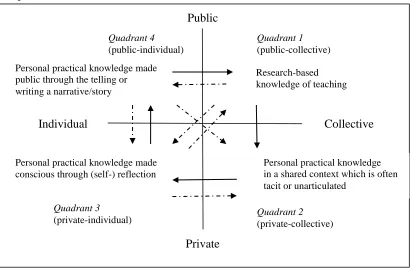
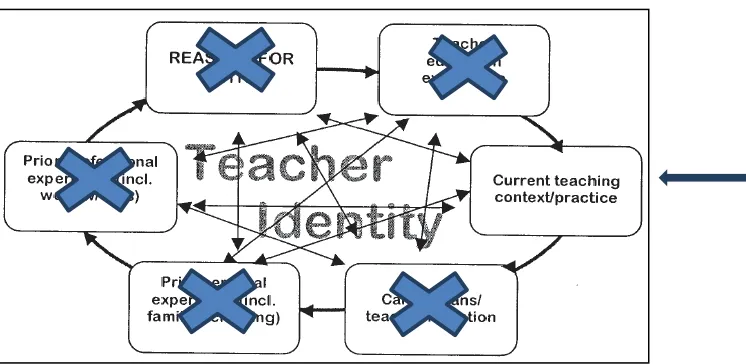
2 Representation of Professional Identity Formation from a Teachers‘ Knowledge Perspective ...32
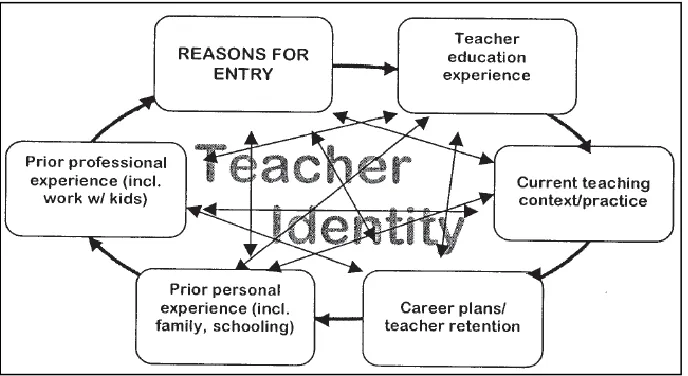
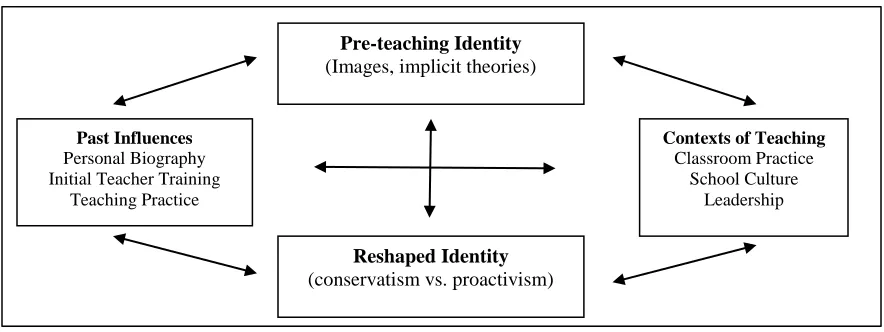
3 Teacher Identity as Dynamic, Holistic Interaction among Multiple Parts...34
4 Key Mediating Influences on the Formation of Teacher Identity...36
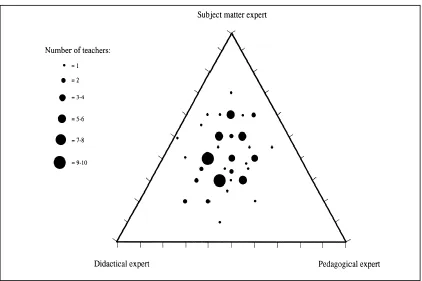
5 Representation of the Teachers‘ Perspective of their Professional Identity ...39
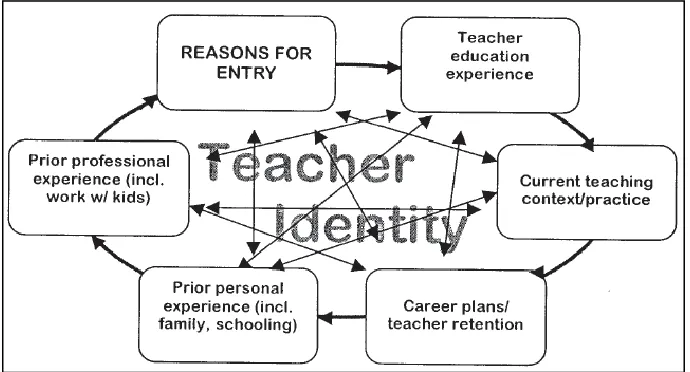
6 Teacher Identity as Dynamic, Holistic Interaction among Multiple Parts...293
7 Author Modified from Olsen (2008)...294
8 Author Modified from Olsen (2008) #2...294
9 Key Mediating Influences on the Formation of Teacher Identity...295
10 Author Modified from Flores & Day (2006) ...296
11 Representation of Professional Identity Formation from a Teachers‘ Knowledge Perspective ...297
12 Author modified from Beijaard, Meijer, & Verloop (2002) ...298
ix
ABBREVIATIONS
AIS Academic Intervention Services
AYP Adequate Yearly Progress
CM Corps Member
CTT Collaborative Team Teaching
EOCT End of Course Test
IEP Individualized Education Plan
NCLB No Child Left Behind
PD Professional Development
SIP School Improvement Plan
TFA Teach For America
1 CHAPTER 1
INTRODUCTION
My Personal Narrative
I went into teaching with hopes and aspirations of doing something with my life
that would make a difference in the lives of others. I had initially failed at going off to
college. Being the first and only child in my family to be able to attend a university away
from home, I succumbed to the social aspect of attending what was considered a ―party
school.‖ I didn‘t even make it a year, and was soon back at home, living with my parents,
attending a community college. I left my floundering studies a few years later when I was
hired at the highest paying factory in my hometown. During my first year working as a
Materials Handler Technician in the Supply Department, I made more money than many
in my community had ever earned in a year throughout their lives (and I was still in my
early twenties). Life was good, but something was missing.
The ―something‖ that was missing was related to the work I was doing. Not only
was it menial, the product the factory produced was cigarettes as I was employed by the
third largest tobacco corporation in the world at the time. While I was no saint, and had
partaken in the product of our production, the thoughts of what the overall impact of the
millions of cigarettes we produced daily began to weigh heavily on my conscious. What
would my life‘s work say about my life when it was all said and done? I ended up having
While at first not knowing what to major in, I ended up selecting education due to
the influence of my soon-to-be wife. She was in college as well at the time and was an
education major. Knowing my desire to do something more positive than work for the
tobacco industry, she had me consider who the positive influences in my life were. The
thoughts of my teachers from high school, Mr. Jackson and Ms. Crumbliss came to mind,
then thoughts of Jr. High with Señor Perez, and elementary school with Ms. Hawkins.
These individuals had a positive impact on the student I was under them, as well as the
person I am today. I could be like them…I could make a difference…I could become a
teacher!
And I did! I graduated a few years later and accepted a position at an elementary
school in the same school system which I had attended from 1st grade through the 12th.
Yet again, something wasn‘t right. It wasn‘t quite what I expected. Long days with no
break from the students. Never being able to go out to lunch (a small perk in the business
world), or even take a restroom break! Nights staying up late grading mountains of
papers, apathetic students and parents, lack of an administrator that fostered my growth
as an educator. Finally, a lack of resources and a feeling of isolation in a building with
over 20 teachers that I rarely interacted with, except at the occasional faculty and staff
development meetings, clinched my feelings of dissatisfaction.
I ended up leaving the classroom after two years. I took a position as an
Instructional Technologist at the school board office. It was a growing field, and there
was more money to be made. But it wasn‘t just about the money. It was the pressures of
teaching that drove me out of the classroom. I really feel as if I did make a difference in
enough. I went in with high hopes, and left as soon as an exit opened. Was the identity I
had in mind of a ―teacher‖ totally wrong? Had I romanticized the profession? What I
have discovered since is that I wasn‘t alone in the decision to leave teaching behind after
only a few short years.
Statement of the Problem
As I discovered, teaching can be a rewarding albeit challenging career filled with
dilemmas, paradoxes, and uncertainty (Halliwell, 1993; J. A. Hatch, 1999). As such,
every year thousands leave teaching behind to pursue other interests (Shakrani &
Michigan State Univ, 2008). Beginning teachers are at greater risk of leaving the
profession than their more experienced counterparts. Ingersoll and Smith (2004) note
that ―nearly 3 out of 10 new teachers move to a different school or leave teaching all
together at the end of their first year‖ (p. 37). Attrition is especially high in schools
serving low income and minority students, particularly among new teachers (Barnes,
Crowe, & Schaefer, 2007; Guin, 2004; Hanushek, Kain, & Rivkin, 2004; Imazeki, 2005).
Studies show that within five years of entry into the occupation, nearly 50% of all
beginning teachers have left teaching altogether (Grissmer & Kirby, 1997;
Huling-Austin, 1990; Ingersoll, 2003; Murnane, Singer, Willett, Kemple, & Olsen, 1991). While
those such as Ingersoll and Smith (2004) argue for induction and mentoring to stem the
tide of new teachers leaving and to slow down the ―revolving door‖ (p. 29), others such
as Sawchuk (2008) have found that induction programs do little to boost rates of
retention.
The high attrition rate can have a devastating impact on public schools and the
these urban and rural districts are more likely to fill vacancies with ―less qualified
teachers‖, substitutes, or by simply increasing class size (p. 432). The financial costs of
replacing these teachers can be staggering as well. In a report by the Alliance for
Educational Excellence (2005), the cost of replacing public school teachers ranges from
$2.2 billion to $4.9 billion per year. The National Commission on Teaching and
America‘s Future estimated that teacher turnover cost the nation more than $7 billion in
the 2003 – 2004 school year alone (Honawar, 2007). In times of economic crisis for the
states and the nation, these costs are devastating for school systems that have increased
demands on their budgets, combined with more accountability for student achievement.
Alternative Routes to Teacher Certification
Alternative routes to teacher certification have increased over the years, all the
while promising to boost retention rates, increase the quality and diversity of the
workforce, and impact teacher shortages (Scribner & Heinen, 2009). Recent research
(Mac Iver & Vaughn, 2007) found that during the first two years after their hire date,
teachers in certain alternative routes may be more likely to remain with the system than
either certified teachers or conditionally certified teachers not involved in an alternative
route. Yet this is conflicting with national trend data (Boe, Cook, & Sunderalnd, 2006),
which found that the attrition rate for beginning teachers in an alternative route with little
or no preparation was twice as high as for teachers prepared in more traditional programs
with extensive preparation.
The Obama administration has shown its support for alternative routes to teacher
certification. Through the American Recovery and Reinvestment Act of 2009 (ARRA),
education reform in the history of the United States‖ or as Secretary of Education Arne
Duncan called it ―education reform‘s moon shot‖ (Duncan, 2009). In November of 2009,
the U.S. Department of Education released the rules to what is now known as the ―Race
to the Top‖ competition (U.S. Department of Education, 2009a). A point system for the
competitive grants was devised by the U.S. Department of Education with six selection
criteria:
A. State Success Factors (125 points) B. Standards and Assessment (70 points)
C. Data Systems to Support Instruction (47 points) D. Great Teachers and Leaders (138 points)
E. Turning Around the Lowest-Achieving Schools (50 points)
F. General Selection Criteria (55 points) (U.S. Department of Education, 2009b, p. 3)
Criterion D ―Great Teachers and Leaders‖, which has the opportunity for states to
be awarded the most points (138) for their application, is of particular interest. It states
that in order to be awarded points in this area, states should have:
…high-quality pathways for aspiring teachers and principals. The extent to which the State has—
(i) Legal, statutory, or regulatory provisions that allow alternative routes to certification [emphasis added] (as defined in this notice) for teachers and principals, particularly routes that allow for providers in addition to[emphasis added] institutions of higher education;
(ii) Alternative routes to certification [emphasis added] (as defined in this notice) that are in use; and
(iii) A process for monitoring, evaluating, and identifying areas of teacher and principal shortage and for preparing teachers and principals to fill these areas of shortage [emphasis added] (U.S. Department of Education, 2009b, p. 9).
In his article in the Washington Post, Secretary Duncan pointed out that ―states
that limit alternative routes to certification for teachers and principals, or cap the number
of charter schools, will be at a competitive disadvantage‖ (Duncan, 2009). While it is
teacher shortages, one has to ponder if they have considered the research that show that
―extensive teacher preparation contributes to a more stable and qualified teaching force
and to a reduction in the demand for a fresh supply of novice teachers to replace those
who would otherwise have left teaching employment‖ (Boe, et al., 2006, p. ii).
Theoretical Framework – The Role of Identity
As will be further investigated in the literature reviewed for this study (Chapter
2), teacher professional identity has been difficult to define (Beijaard, Meijer, & Verloop,
2002; Connelly & Clandinin, 1990), yet there is a body of research (Beijaard, et al., 2002;
Flores & Day, 2006; Olsen, 2008) that does conceptualize teacher identity as a process,
as opposed to being a fixed entity. The two theories framing this study are Sfard and
Prusak‘s (2005) narrative theory of identity and Mead‘s (1934) social theory of identity
and the role of the Generalized Other. Both theories view identity as a process, not a
fixed entity. While both of these theories are also explored in greater detail in Chapter 2
of this work, I will give an overview of how these theories are tied intrinsically to the
professional identity development of teachers and job satisfaction, which is a key
indicator of retention.
Hatch (1999) states that ―how a teacher sees himself or herself in relation to
teaching can be vitally important in determining job satisfaction‖ (p. 235), and job
satisfaction is a factor leading to retention (Billingsley & Cross, 1992). Day, Stobart,
Sammons, & Kington (2006) also found that a teachers‘ sense of professional identity
leads to more self-efficacy, motivation, commitment to teaching, and job satisfaction. A
study by Cha (2008) found that teachers who were satisfied with their jobs were less
than either salary or professional development. Therefore, identity is of utmost
importance to teacher retention and to this research.
People are ―storytelling organisms who, individually and socially, lead storied
lives‖ (Connelly & Clandinin, 1990, p. 2). Sfard and Prusak (2005) have developed a
narrative theory of identity in which identity is found within the construction of stories.
They in fact ―equate identity with stories about persons. No, no mistake here: We did not
say that identities were finding their expression in stories – we state they were stories‖ (p.
14). They assert that
…as stories, identities are human-made and not God-given, they have authors and recipients, they are collectively shaped even if individually told, and they can change according to the authors' and recipients' perceptions and needs. As
discursive constructs, they are also reasonably accessible and investigable. (p. 17)
Sfard and Prusak‘s (2005) definition of identity as a collection of stories about
persons also ascribes that these stories should be:
Reifying - through the use of the words be, have, can, always, never, usually;
Endorsable - with the person the story is about;
Significant - particularly with regard to membership of a community.
These identifying stories are represented by the triple BAC where A is the identified
person, B is the author, and C the recipient. They note that there is one special identity
which is a first-person, self-told story represented as the triple A– AAA. ―Being a part of
our ongoing conversation with ourselves, the first-person self-told identities are likely to
have the most immediate impact on our actions‖ (Sfard & Prusak, 2005, p. 17).
Sfard and Prusak (2005) split the narratives about a person into two subsets:
actual identity and designated identity. Actual identity consists of stories about the actual
case, either in the present moment or in the future. ―Designated identities are stories
believed to have the potential to become a part of one‘s‘ actual identity‖ (p. 18). Identity
development can then be seen as a narrowing of the gap between the actual and
designated identities, and this is an ongoing process.
This research also relies heavily on the theory of the Generalized Other by the
American pragmatist George Herbert Mead (1934). Mead‘s social theory of the self was
one of the first to define the self solely within a societal context (Aboulafia, 1986; Dodds,
Lawrence, & Valsiner, 1997). While Mead divided the self into two ―aspects, or
phases…the ‗I‘ and the ‗me‘‖ (Mead, 1934, p. 192), he situates the I/me self with that of
the Generalized Other. The Generalized Other molds the self to the image of the group.
As Mead states:
The attitude of the Generalized Other is the attitude of the whole
community…and can direct our own behavior accordingly. It is in the form of the Generalized Other that the social process influences the behavior of the
individuals involved in it and carrying it on, i.e., that the community exercises control over the conduct of its individual members. (p. 154-155)
According to Dodd, Lawrence, and Valsiner (1997), the Generalized Other is a special
type of role taking, and involves the adoption of a set of social roles, rules and
conventions for group conduct (pp. 497- 498). They go on to state that:
A group or society places the individual in situations that require him to take up attitudes belonging to a variety of roles and to discern the common attitude and the rules. The individual actually becomes the Generalized Other internally by self-interrogation while being the object of personal thought in taking up the imagined roles and reflecting upon himself in them. (p. 498)
To summarize, for the purpose of this study, a teachers‘ career or professional
identity will be found in their stories, or as Juzwik (2006) refers to it as the
Generalized Other, where traits of the Generalized Other are made explicit in the actual
and designated identity stories. Beginning teachers, in taking on the role of the
Generalized Other, take on the persona and attitude of a teacher from their unique
situational perspectives. From the concepts of self as story and self as Generalized Other,
I will now turn to means that may provide researchers an ability to study both through the
voice of the teacher via their blogs.
Teachers Finding Voice and Self on Blogs
Interviews, oral histories, anecdotes, personal and reflective journals, biographies,
autobiographies, critical events, and case studies have historically been used by
researchers in order to hear and understand the voices and lives of teachers (Butt,
Raymond, McCue, & Yamagishi, 1992; Cole & Knowles, 2000; Cortazzi, 1993;
Knowles, 1992; Nelson, 1992; Webster & Mertova, 2007). According to Hatch and
Pointer Mace (2007), there are now new technologies that ―offer unprecedented
opportunities for practitioners, researchers and the general public to explore and examine
teaching and learning in settings inside and outside the classroom‖ ( p.1). One such new
technology that may offer voice to the teacher, while providing entre into their
experience, is the blog.
Blogs, or weblogs, are web pages that are frequently updated and contain archived
posts in reverse chronological order. They can include multimedia content and graphics,
links (or tags) to other websites, be categorized, and can include comments or posts from
readers. The Pew Internet and American Life Project (Lenhart & Fox, 2006) reported that
at the time, eight percent of Internet users, or about 12 million American adults, kept a
―blogosphere‖ and they are blogging for a variety of reasons (Ramirez, 2008; Shapira,
2008; "Teachers finding their voice on Blogs," July 10, 2005; Toppo, 2006). Blogs can
also be considered mechanisms for teachers to create first-person, self-told stories (the
triple A– AAA) as noted by Sfard and Prusak (2005).
Herring, Scheidt, Bonus and Wright (2005) categorized blogs according to a
modified version of Blood's (2002) three blog types:
filter blogs where the content is external to the blogger (world events and online happenings),
personal journal blogs in which the content is internal (primarily reporting events in the bloggers life, her thoughts, and reflections), and
k(nowledge)-logs (repositories of information and observations focused around an external topic, project, or product. (p. 147)
They also report that at the time of their study, the personal journal blog was by far the
most predominant genre of blog found in their sample at 70.4% of those they studied
(Herring, et al., 2005).
The survey conducted by Pew (Lenhart & Fox, 2006) found that the most popular
topic among bloggers is their life and experiences. While blogs can be viewed as the
personal journal of the early 21st century (Herring, et al., 2005), Nardi, Schiano, and
Gumbrecht (2004) assert that blogs are much more than online diaries due in part to the
social nature of the blog. van Dijck (2004) would counter that this is a myth, and is
misleading. She asserts that diaries have always been more than a personal record written
for private purposes. She notes that diaries have often been written with a reader in mind,
more importantly in how they are addressed (i.e. Dear Diary, or to God, or as Anne Frank
to ―Kitty‖). This form of communication is a ―form of self-expression‖, signaling the
―need to connect, either to someone or something else, or to oneself later in life‖ (van
…diaries involve a personal project centred (sic) on the self: the blog is a means of self-clarification and self-validation. By sustained writing about the events, thoughts, and emotions of one‘s life, one is able to discover and develop who one ‗is‘. On the other hand, there is a need get to know others, to develop a
community of sympathizers. Otherwise there would be no point in publishing one‘s diary in the open.(2008, p. 60)
Yet blogging is not without risk. In the introductory chapter of his book on the
history of blogging, Scott Rosenberg (2009) posited the following questions:
How much of your life should you expose to the Web?
What line should you draw between your job and home, colleagues and friends?
At what point does sharing edge into Too Much Information? (p. 13)
Some bloggers are notorious for publishing publically what many would consider
to be private information, which could in turn be perilous. There is even a term for losing
one‘s job because of one‘s blog – that of being ―dooced‖ – so named for the firing of
blogger Heather Armstrong who had written about co-workers on her blog dooce.com in
2002 (Rosenberg, 2009, p. 229). The Washington Law Review also gives examples of the
―doocing‖ of a Delta employee fired because of her blog posting of provocative pictures
of herself in her uniform, and a Microsoft employee fired for posting pictures of Apple
computers purchased by the company (Cote, 2007). Given that teachers are risking the
possibility of being ―dooced‖ to provide readers with insight into their beginning years,
the data in this study provided stories that offered significant clues related to the
participants‘ identity development process.
Statement of Purpose
A teachers‘ professional identity is a construct that has been shown to increase job
satisfaction, which has been linked to increases in retention. Blogging about one‘s life as
k-12 public school teachers in the United States are taking part. The purpose of this
research will be to investigate the identity development process of a purposively selected
group of beginning teachers blogging about their experiences in an alternative
certification program (Teach For America).
Research Questions
How do the stories in blog postings assist in the understanding of the identity
development process of beginning teachers?
a. What are the teacher identity-oriented stories told by the participants?
b. What do these stories reveal about the identity development process of
these Teach For America teachers?
Limitations
This research was constrained by the fact that the participants were all Teach for
America corps members assigned to teach in an urban middle or high school setting.
Generalizability to a larger group is not the intended purpose of this study. These teachers
blogged for a myriad of reasons, with much of the data being considered nonreactive
because the teachers were not aware at the time of their postings that their postings would
one day be used for research. The blogs are self-reported data and are also the central
data source for inquiry. While the participants may have blogged longer than their first
two years, only the first two years of their teaching experience was utilized as a data
source. Only teachers blogging on the ―Teach For Us‖ site were selected as participants,
even though there may be other Teach For America corps members blogging on other
Delimitations
Delimitations of this research include the purposive sampling of beginning
teachers blogging about their beginning years in the classroom as a teacher in the Teach
for America program. Their postings were written publicly and voluntarily on the blog
site ―Teach For Us‖ (http://teachforus.org) , which is not officially affiliated with the
Teach for America program. The sustained reflections found in their postings were for a
two-year time period. The blogs provided a unique window into the experiences of these
teachers, and these experiences provided insight into their identity development, which
warranted the investigation.
Definition of Terms
Alternative Routes to Certification - As defined by the U.S. Department of Education
(2009b) these are
…pathways to certification that are authorized under the State‘s laws or regulations, that… (a) can be provided by various types of qualified providers, including both institutions of higher education and other providers operating independently from institutions of higher education; (b) are selective in accepting candidates; (c) provide supervised, school-based experiences and ongoing support such as effective mentoring and coaching; (d) significantly limit the amount of coursework required of have options to test out of courses; and (e) upon completion, award the same level of certification that traditional preparation programs award upon completion. (pp. 11 – 12)
Blog – Blogs are user generated web pages that are frequently updated and contain
archived posts in reverse chronological order. They can include multimedia content and
graphics, links (or tags) to other websites, be categorized, and can include comments or
Corps Member–An individual who has been accepted into the Teach For America
program. Predominantly recent college graduates who did not major in education, corps
members are assigned to teach in high needs rural and urban public schools throughout
the United States.
Institute –An intensive five-week summer training program required of all Teach For America corps members before beginning teaching in their school assignment.
Narrative –The telling of a story.
Restorying – Used in narrative research, it is the process of the researcher retelling the
story of the participant in the researcher‘s own words. This consists of the placing of
experiences in a chronological sequence. Elements such as setting, characters, actions,
problem, and resolution may be used in the restorying. Other elements that may be used
are interaction, continuity, and situation.
Story – Found within a narrative, a story is a sequence of events involving entities.
Teach for America –An alternative teacher certification program founded by Wendy
Kopp in 1990 as a part of her senior thesis at Princeton University. Kopp sought to
develop a national teacher corps modeled after the Peace Corps and existing alternative
teaching programs in which recent college graduates would commit to teach at least two
years in high needs rural and urban public schools.
Summary
I, like thousands of teachers annually, left the classroom and teaching after a few
short years. There is an ongoing national crisis with teacher attrition and retention,
particularly among rural and urban high poverty schools. Alternative routes to
address teacher shortages in critical areas. A teacher‘s professional identity has been
shown to increase job satisfaction, which has been shown to increase job retention. For
the purpose of this study, identity is equated with stories and with the taking on of the
role(s) of the Generalized Other. Beginning teachers in the Teach For America program
who blogged about their experiences will serve as the participants and their blogs serve as
the data source for the stories from which the identity development process can be
analyzed.
The next chapter will review the literature that will help situate the research
within the areas of the challenges of beginning teachers, teacher identity development,
and the role of society, biography, talk and blogging on the teacher identity development
process. These studies provide the foundation from which the findings of this current
16 CHAPTER 2
LITERATURE REVIEW
Introduction
The literature reviewed in this chapter will help situate the study within the body
of knowledge on the challenges of beginning teachers, teacher identity development, and
the role of society, biography, talk and blogging on the teacher identity development
process. The studies cited are useful for both the researcher as well as the reader in
providing a foundation and context for this study.
Challenges of Beginning Teachers
The first years as a teacher may be difficult to get through for some, thus the high
attrition rates as noted in the first chapter (Grissmer & Kirby, 1997; Huling-Austin, 1990;
Ingersoll, 2003; Murnane, et al., 1991). This research shows that the first year is
especially critical, and suggests that a major goal of a first year teacher is just to make it
to the second year. First year teachers use adjectives such as ―exhilarated and exhausted,
hopeful and cynical, fulfilled and dejected‖ in descriptive narratives that pivot between
―epiphany and disillusionment‖ (Liston, Whitcomb, & Borko, 2006, p. 351).
The Intent to Stay, Alternative Certification, and the Need for Support
Even considering the challenges of the first years, it appears that young teachers
are going into the profession with the intent to stay. There is recent research (Coggshall,
Ott, Behrstock, & Lasagna, 2010) that suggests that beginning Generation Y teachers
in the classroom for more than 10 years. The researchers conducted a random-sample
survey with 890 public school teachers in the spring and summer of 2009, in which there
was an over-sample of 241 teachers in the age 32 and under Generation Y category.
Coggshall, Ott, Behrstock, and Lasagna even found that 56 percent of the Generation Y
teachers they surveyed were interested in staying a classroom teacher for life. They note
that this finding is ―somewhat surprising, though hopeful, in light of the oft-cited statistic
that roughly half of all new teachers nationwide leave within their first five years in the
classroom‖ (p. 17). The report does not note if any of these teachers were involved with
or have taken part in alternative programs such as Teach For America (TFA), yet the
majority of TFA corps members are a part of Generation Y. It would be of interest to
better understand the long term plans of these particular beginning teachers.
Another recent study (Carter & Keiler, 2009) did in fact seek to explore the
experiences of new teachers in what they refer to as the ―intersection of three major
policy agendas – alternative certification, new teacher retention, and the small schools
movement‖ (p. 437). Noting that the ―newest teachers in urban American schools are
increasingly products of alternative certification‖ (p. 460), Carter and Keiler conducted
interviews with nine teachers participating in a university-based alternative certification
program in New York City in order to answer the following two questions:
1. How do the realities of school reform, including both small schools and alternative certification, affect the experiences of new teachers in urban schools?
2. What can the experiences of these teachers tell us about the needs of new teachers in today‘s urban schools? (p. 438)
The participants in Carter and Keiler‘s (2009) study were not all members of
were either in their first or second year in the classroom as a teacher in what had been
identified as being a ―small high school‖ (p. 443). Their findings indicate that for these
teachers, they were not prepared for the shared leadership responsibilities placed upon
them in their schools. They also received very little curricular support from their
administration and as such tended to rely heavily on support from their inexperienced
peers.
While each of these teachers had to take part in a seven week summer program
designed to prepare them for the experience of teaching in an urban school setting, the
researchers were concerned about the lack of targeted support to assist these teachers
through their beginning years. They conclude that ―current structures of mentorship,
administration and leadership, and summer retreats do not adequately prepare and support
new teachers to thrive in urban small schools‖ (p. 456). While not noted in Carter and
Keiler‘s (2009) study, it would have been informative to include whether or not the
teachers they studied remained in their urban classrooms, moved to a different school, or
left the profession altogether, especially since they assert that the type of environment
these teachers were in ―can hardly be expected to contribute to effective teacher
retention‖ (p. 453).
Realistic Expectations and the Teacher Persona
Hebert and Worthy (2001) provide a unique case study of success of a first year
teacher (Haley). The selection of Haley was admittedly purposive and convenient for the
researchers. She was a former student with whom the researchers were familiar, and she
was newly employed at a public high school close to their universities. The purpose of
on Haley‘s ―perspectives, feelings, and experiences‖ (p. 900). Data were collected
throughout a school year (September through April). Seven interviews were conducted
and to supplement the interviews, three observations were held, each spaced throughout
the course of the year. The observations were not of her teaching, but of her interacting
with her students, fellow teachers, and administrators in informal settings.
While addressing the challenges of first year teachers noted in other studies (the
social and political system of the school; the sense of isolation; the feelings of insecurity
and inadequacy), Hebert and Worthy (2001) claim that ―beginning teachers often have
unrealistic expectations and beliefs about teaching, students, the workplace, and the
difficulty of teaching in general‖ (p. 899). One of the reasons they cite concerning the
success of Haley in her first year was in her realistic expectations upon entering the
teaching profession. This finding is similar to that of Worthy (2005) whom, in her case
study of first year teacher ―Mark‖, also found that prospective teachers should have a
―realistic picture of the demands of teaching‖ (p. 393). This begs a question related to my
research with Teach For America teachers: How realistic of a picture of teaching in a
high needs urban school setting did the teachers in my study have before entering the
classroom?
McCann and Johannessen (2004) conducted interviews with eleven novice high
school English teachers. They stated that what began as a ―somewhat casual process of
conversations led to a more deliberate program of investigation into the concerns that
drive new teachers from the profession and the attitudes and support systems that help
retain them‖ (p. 138). Interviews in a variety of settings were conducted and audio taped
utilized to review the transcriptions while looking for (a) causes of stress, (b) coping
methods, and (c) preparation and support received by the novice teachers. Follow-up
interviews were then conducted with six of the original eleven teachers, focusing on areas
of stress and tracking changes in the experiences of these teachers over their first years as
a teacher. Two of the participants had left teaching and the questions asked to them
focused on what could possibly bring them back in to the profession.
The researchers noted that their results indicate that the ―major difficulty that
beginning teachers face is the challenge to define for themselves their teacher persona”
(McCann & Johannessen, 2004, p. 139). They go on to state that
Before entering teaching, novice teachers have assumed many roles, son/daughter, student, employee, but the role of teacher is a new one. They struggle with
various questions: How am I supposed to act in this situation? How do real teachers do this? Am I aggressive enough in contending with management challenges? Am I overreacting? Am I insisting on unreasonable standards? Am I being too lax? These questions must be answered by means of comparing one‘s behavior against a recognizable standard. (p. 139)
While not noted as a theoretical underpinning of their research, the previous quoted
paragraph from McCann and Johannessen directly parallels that of George H. Mead‘s
(1934) Generalized Other, which is the theoretical framework for this research.
Urban Teacher Challenges
Beginning teachers in urban settings face the same challenges, and more, as those
of their peers in other settings, with poverty being a critical concern. In describing their
struggles with getting teacher candidates in a field-based preparation program to spend
two years in residence in an urban school, Leland and Harste (2005) state that
Leland and Harste‘s (2005) teacher preparation program was located at a
university within a major Midwestern city with a large African American population, yet
the majority of their students were White and came from suburban or rural areas. They
note that these students were ―less than enthusiastic about spending time in urban
schools‖ and they had an ―expectation that they would do their fieldwork and student
teaching in communities that were similar to the ones they came from‖ (p. 61). Their
third cohort was ―particularly vocal in their criticism of the program‖ (p. 66).
Leland and Harste‘s (2005) research highlights two cases of particularly vocal
pre-service teachers whom upon graduation decided to stay and work in the same urban
system where they completed their field work. After finding out their decisions, they
interviewed the teachers and also analyzed their field journals in order to ―look for
evidence of movement toward a critical perspective‖ (p. 67). Figure 1 illustrates their
Figure 1
Three Components of a Critical Perspective
_______________________________________________________________________
The model represents three dimensions, yet they note that their data is not clear in
determining ―whether these dimensions occur in a developmental sequence‖ (p. 68).
These dimensions represent an understanding of the positioning of people by systems of
meaning and power (Dimension 1 – the innermost circle), a realization of one‘s own
complicity with these power systems (Dimension 2 – the middle circle), and a
commitment to take social action to address the inequities caused by these systems
(Dimension 3 – the outer circle). Critical literacy grows throughout all three dimensions. Interrogate
Personal Involvement Take Social
Action
Understand Systems of Meaning
[image:39.612.108.500.126.444.2]Critical Literacy
The researchers used this model during the analysis of their former students‘ journals and
their interview transcripts.
Leland and Harste‘s (2005) findings suggest that both of their prior students
indeed took social action (Dimension 3) in accepting positions as urban teachers. They
report that their findings support the notion that ―contrary to much of the rhetoric of the
standards movement, teachers of children from poverty need more than a grasp of content
knowledge about the different subject areas they will be teaching‖ (pp. 75 – 76). These
teachers need to see themselves as change agents, yet ―this attitude is not developed
overnight or in the safety of a college classroom. It is the product of inner struggle,
self-interrogation, and the realization that anyone can grow into a new kind of person‖ (p. 76).
The researchers‘ statement of these teachers‘ ability to ―grow into a new kind of
person‖ is a direct link to the identity development process which this study is focused.
While the two teachers in Leland and Harste‘s (2005) program did modify their initial
feelings regarding teaching in an urban environment, there is no indication in this study
as to if these teachers (or other prior students from their program) continued to stay
teaching in urban setting and if Leland and Harste‘s program positively impacts retention.
Noting the high attrition rates and teacher shortages in high-needs urban and rural
settings, a recent study (Castro, Kelly, & Shih, 2010) sought to investigate the resilience
strategies of fifteen beginning teachers. This qualitative, interpretive study consisted of
interviews with the participants over a five month period. Five of the teachers were from
rural areas, five were from urban, and five were special education teachers, all first-year
questions the researchers hoped to answer were related to resilience and new teacher
retention, with those questions being
1. What strategies do new teachers employ in response to adverse situations?
2. What resources do beginning teachers rely on to overcome challenges and
obstacles to teaching? (p. 623)
Findings from the research (Castro, et al., 2010) showed that the teachers in the
study needed to seek out mentors and allies to solve various problems. One specific
problem faced by many of the teachers was in the acquisition of resources. The
researchers found that ―help-seeking‖ was a particular resilience strategy employed by
the new teachers. They note that the ―burden for success falls on the shoulders of the
beginning teacher; help-seeking, in the form of seeking ‗adopted‘ mentors, advocating for
resources, and acquiring allies to resolve problems, begins with the novice teacher taking
agency‖ (p. 625). By taking agency, new teachers can ―transform negative aspects in their
environment‖ and ―create new resources where none previously existed‖ (p. 628). The
researchers point out that ―resilience strategies can place additional burdens on the
beginning teachers‖ (p. 629). They also acknowledge that there needs to be future work
on the differences between ―successful teachers and unsuccessful teachers (those who
leave the profession after the first year)‖ (p. 629).
Another study sought to determine the impact of a specific urban teacher
preparation program on retention (Quartz & The TEP Reseach Group, 2003). The
―Center X‖ program was founded at UCLA following the unrest resulting from the 1992
Rodney King trial. This alternative certification program ―would become a
colleges and universities across the nation in preparing a high-quality and stable teacher
workforce for urban schools‖ (p. 99). The Center X Teacher Education Program (TEP) is
described as ―an intensive 2-year program leading to state certification and a master‘s
degree‖ (p. 102). After completion of the program, teachers take part in an Urban
Educator Network (UEN) and ―ongoing professional development that supports urban
teachers as they continue their learning within schools.‖ (p.102)
The two-year study conducted by Quartz and the TEP Research Group (2003)
utilized both qualitative and survey methodologies. A database was kept by Center X
which included retention information for its alumni. For this study, the population was
the alumni who graduated between 1997 and 2000 (326 teachers). Interviews were
conducted by phone with 233 of the alumni the first year of the study (graduates between
1997 and 1999), and the following year the entire alumni population (n=326) was
surveyed using an electronic instrument.
The results show that Center X graduates are more likely to stay in teaching at a
far greater extent than national averages. As expected, their attrition rate did increase
over time, yet the study found an astonishing 70% of their graduates were still teaching
after five years, with an additional 17% still in education. This includes individuals who
had become ―school administrators, graduate students studying education, a college
professor, Peace Corps teachers, curriculum specialists, teacher educators, educational
technology experts, counselors, and others‖ (p. 104). What the researchers want to
highlight is that, even in the group that left classroom teaching for other educational
are dependent upon self-reports from their alumni, they do note the following themes as
playing a key role in the ability of the program to support retention:
Learning to build on the strengths of urban communities – through the use
of non-deficit theories designed to better understand the riches of urban
neighborhoods.
Becoming a change agent – For example, by the alumni making their
school ―a more just and caring place‖ (p. 107). This was also found in the
study by Leland and Harste (2005).
Joining a profession – Supporting professional growth through the use of
an Urban Educator Network, an online journal, extensive professional
development through the California Subject Matter Projects, and ongoing
support to achieve certification from the National Board for Professional
Teaching Standards. This type of support is exactly what was missing, and
what was suggested, for the teachers in the study by Carter and Keiler
(2009) focusing on the needs of alternatively certified teachers in urban
settings.
Of interest in the description of the Center X program (Quartz & The TEP
Reseach Group, 2003) is the statement that Center X is striving to be a ―community of
practice (Wenger, 1998) in which educators – including faculty, staff, graduate students,
community members, and novice teachers – learn and develop their identities [emphasis
added] by negotiating what it means to be a member of a social justice community‖ (p.
further investigated in the next section of this literature review, and is a part of the
theoretical framework for this research.
Teach For America and Retention
While limited, there are two recent research studies (Donaldson, 2008; Mac Iver
& Vaughn, 2007) that investigate the propensity of Teach For America teachers to stay in
the teaching profession. Donaldson (2008) sought to better understand whether the
complexity of a teaching assignment might influence retention. She selected TFA
teachers because they are ―an important sub-population of new teachers today‖ and
―schools need good information about what retains TFA teachers – and others like them –
through their 2-year obligation and what might prolong their stay. Conversely, schools
need to know what hastens the departure of these teachers from their initial placement
school and the profession‖ (pp. 7-8). Donaldson asserts that her study was the first to
examine the retention of TFA teachers longitudinally and on a national scale.
Donaldson‘s (2008) study was of a sample of 2,029 TFA teachers who were a part
of the 2000, 2001, and 2002 TFA cohorts. The data for the study came from an online
survey conducted with the individuals in January and March of 2007. Donaldson did
indeed find that the complexity of the teaching assignment for TFA teachers did impact
attrition. Teachers teaching multiple grade levels were more like to leave their school and
resign in year 1 than teachers assigned to teach a single grade level. Being assigned to
teach multiple subjects at the secondary level was also an indicator of leaving the school
in year 1 and resigning from the profession in all years. She also found that math and
social studies teachers teaching out-of-field (teaching in an area in which they did not
different from science teachers teaching out-of-field (non-science majors), whom were
found to be less likely to leave than science teachers with a major in science. She notes
that there may be unmeasured factors that have led to this finding.
Mac Iver and Vaughn (2007) compared the retention rates of TFA teachers,
teachers from other selected alternative certification programs, conditionally certified
teachers not in an alternative program, and fully certified teachers from traditional
programs. Their primary research question was ―whether teachers who came to the
district fully certified already were more likely to stay with the district than those who
came through alternative certification programs and acquired state certification while
working as the teacher of record in a district classroom‖ (pp. 34-35). The study only
focused on one urban school district, the Baltimore City Public School System.
Mac Iver and Vaughn (2007) discovered that while most of the TFA teachers
tended to leave by the end of year three, their retention rates were as high as three-year
retention rates for traditionally certified teachers in three of the four cohorts they studied.
They also found that teachers in another alternative certification program, known as
Project Site Support, ―remained with the system at higher rates than regularly certified
teachers through years four and five‖ (p. 40). Project Site Support was a partnership with
Johns Hopkins University, Morgan State University, and the University of Maryland. It
provided the teachers with professional development, mentoring, and graduate
coursework leading to state certification and a master‘s degree in teaching. What is of
interest in this study is that the researchers note that the Project Site Support teachers
would have their tuition for the master‘s degree reimbursed by the school system ―in
Vaughn also note that traditionally certified new teachers, as well as the TFA teachers,
also were participating in master‘s programs in which their tuition could also be
reimbursed for a five-year commitment. What the research fails to do is provide the
reader with information as to if the subset of TFA and traditionally certified teachers
(who made the five-year commitment) had retention rates on par with the Project Site
Support teachers.
Summary
While there is research that Generation Y teachers are going into the profession
with intentions on remaining in the classroom for more than 10 years (Coggshall, et al.,
2010), there are other findings (Carter & Keiler, 2009) that indicate that young beginning
teachers, who are increasingly products of alternative certification programs, are given
very little curricular support from their administration and as such tend to rely heavily on
support from their inexperienced peers. Seeking support has been shown to be a
resilience strategy, but can place additional burdens on beginning teachers (Castro, et al.,
2010). Having a realistic expectation about teaching has been shown to be an indicator of
how successful a beginning teacher feels about their first years in the profession (Hebert
& Worthy, 2001; Worthy, 2005). The creation of a teacher persona was found to be a
challenge for beginning teachers (McCann & Johannessen, 2004), as well as urban
teachers having a grasp of more than content knowledge when faced with teaching
children from poverty, which requires growing into a new type of person (Leland and
Harste, 2005). In terms of issues causing Teach For America teachers to leave the
profession, one study (Donaldson, 2008) found that the complexity of the teaching