
Palmprint Recognition using Phase Symmetry
Subhajit Karar*, Ranjan Parekh**
*Information Technology, Jadavpur University, Kolkata, India **School of Education Technology, Jadavpur University, Kolkata, India
Abstract-
This paper proposes an automated system for recognizing palmprints for biometric identification of individuals. Palmprint images are converted to the frequency domain using 2D DFT and thereafter bandpass filtered using a log-Gabor filter to extract the phase symmetry information. Classification is done on basis of correlation between training and testing set images. The approach is tested over a data set of 200 images divided into 10 classes and seen to provide 100% recognition accuracy. A contemporary technique is also implemented on the current dataset for comparison of accuracy results.Index Terms- Palmprint recognition, Biometric identification,
Phase symmetry
I. INTRODUCTION
iometrics helps to identify individuals based on their physiological and behavioral characteristics, which can be used for their personal identifications. Various physical characteristics like retina patterns, iris patterns, fingerprint patterns, palmprint patterns, facial features etc. are utilized for such purposes. Palmprint recognition involves identifying an individual by matching the various principal lines, wrinkles and creases on the surface of the palm of the hand. The basis for using palmprints lies in the fact that since palmprint patterns are generated by random orientations of tissues and muscles of the hand during birth, no two individuals have exactly the same palmprint pattern. Advantages of using palmprints include the fact that such patterns remain more or less stable during one’s lifetime and also that reliable images of the palm can be obtained quite easily using standard digital imaging techniques. Challenges in palmprint recognition include building a reliable data model to represent the randomly oriented lines of the palm with sufficient accuracy as also to find ways of comparing the models generated from different palmprint images with reliability. Added to this is the fact that different images can have different rotational variation, size, lighting conditions and resolution. This paper presents an efficient algorithm for palm print recognition by utilizing phase symmetry obtained from the images. The organization of the paper is as follows: section 2 provides an overview of the related works, section 3 outlines the proposed approach, section 4 details the experimentations done and results obtained, section 5 analyses the current work vis-à-vis contemporary works, section 6 brings up the overall conclusions and future scopes.
II. RELATEDWORK
A number of techniques have been proposed for palmprint recognition over the years. Some of the earlier works are based on Gabor wavelets and transforms for feature extraction [1, 2]. Neural networks have been used for classification in some cases [3] while in others features like entropy have been combined with wavelet based features to improve recognition [4]. PCA and LDA based techniques have been proposed to reduce dimensions of wavelet based features [5, 6]. Another technique frequently used for plamprint recognition is the use of Zernike moments [7]. Neural networks have been used to classify Zernike based features [8]. Features based on a combination of Zernike moments and Gabor filters have also been proposed [9]. A number of approaches based on shape and contour based techniques for modeling the principal lines have been proposed. Modeling of principal lines using curvelet transforms [10], Radon transform [11], Fourier transform [12] and wavelet transforms [13] have been studied. Alignment techniques for the principal lines have been used in [14] to improve recognition rates. Image moments have been used to model palmprint textures in [15, 16] while in [17] features based on hand geometry have been used in combination with palmprint textures. Another class of works have used multiple features extracted from the palmprint lines and creases, often using edge detection techniques and thereafter correlation filters to classify them [18, 19]. In some works binary pattern vectors have been used for classification. A binary co-occurrence vector have been used in [20] while local binary patterns (LBP) have been proposed in [21, 22]. Other related techniques involve combination of features extracted from 2D and 3D images [23], using specialized symbolic representations [24], specialized distances [25], classifiers like SVM [26] and using hand shapes by truncating the fingers [27]. A comparative study of several palmprint recognition techniques is presented in [28].
III. PROPOSEDAPPROACH
A. Phase
Transform, which is the series expansion of an image function over the space domain in terms of orthogonal basis functions. The definitions of the forward transform and the inverse transform are given below :
( ) ∑ ∑ ( ) ( )
(1)
( )
∑ ∑ ( )
( )
(2)
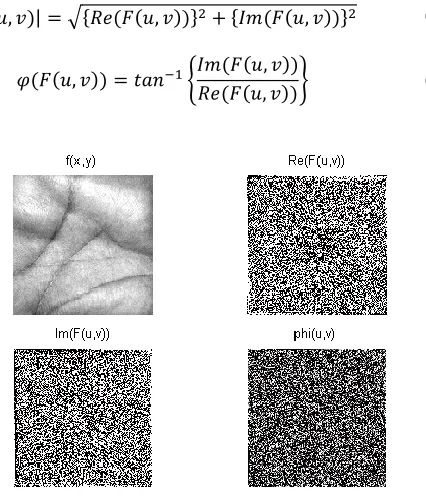
[image:2.612.69.282.265.513.2]Here ( ) is the image and is real, but ( ) is in general complex. Generally, ( ) is represented by its magnitude and phase rather that its real and imaginary parts, where the magnitude | ( )| and phase ( ( )) are represented as:
| ( )| √{ ( ( ))} { ( ( ))} (3)
( ( )) { ( ( ))
( ( ))} (4)
Figure 1: Frequency domain components of a sample image
Briefly, the magnitude depicts how much of a certain frequency component is present and the phase provides information as to where the frequency component is in the image. Figure 1 shows sample representations corresponding to quantities described above
B. Phase Symmetry
Symmetry is a useful mechanism for identification of objects in an image, without any prior recognition or segmentation of objects. An important aspect of symmetry is that objects exhibit periodicity in structure clearly noticeable in the Fourier series. Symmetric points are points with maximum or minimum values in all sine waves (phase 0 or π). Hence it is feasible to detect symmetry with phase information [30, 31].
To calculate phase symmetry, the frequency domain image is filtered using a bandpass log-Gabor filter. Log-Gabor filters are used as an alternative to standard Gabor filters used when broad spectral information are required, as maximum bandwidth of a standard Gabor filters are limited to about one octave. Suggested by Field [32], log-Gabor filters use a logarithmic frequency scale instead of a linear scale. The transfer function of a log-Gabor filter is of the form below where is the filter’s center frequency.
( ) [ { ( ) } { ( ) }] (5)
The band-passed image in frequency domain is obtained by applying the bandpass log-Gabor filter to the frequency domain image.
( ) (6)
The filtered image is converted back to the spatial domain using eqn. (2). Let represent the real part of the bandpass image in spatial domain. Then
{ ( )} (7)
For adaptive windowing of the log-Gabor bandpassed image, a monogenic filter derived from the horizontal and vertical extents of the image, is convolved with the bandpassed image. Let represent the window filtered image i.e.
( ) (8)
The squared amplitudes of the filtered results are
{ ( )} { ( )} (9)
The energy of the filtered image is calculated as the cumulative sum of the energy of the bandpassed image and the filter outputs over a number of bandpassed versions of the image.
∑ √ (10)
The symmetry energy is given by
∑( √ ) (11)
The normalized phase symmetry is then given by
(12)
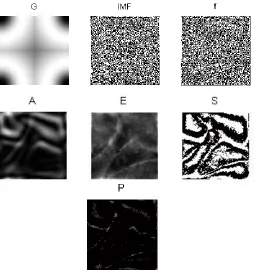
Figure 2: Phase symmetry components of a sample image
IV. EXPERIMENTATIONSANDRESULT
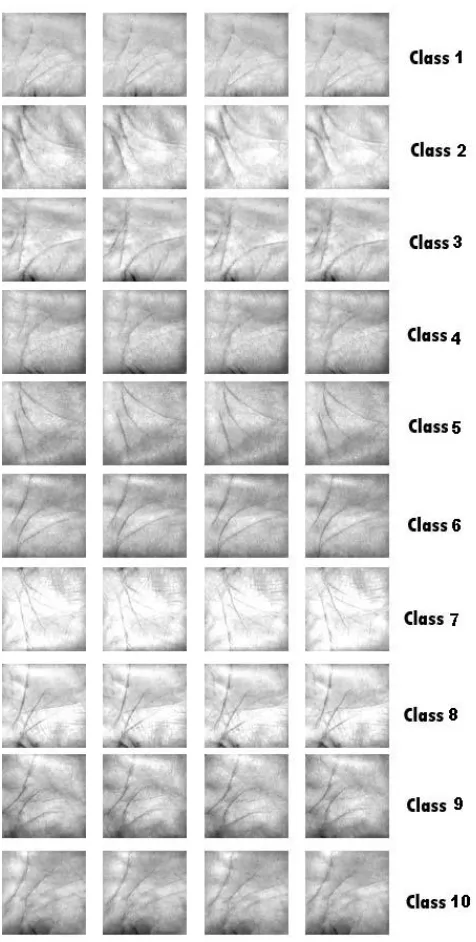
Experiments are conducted by using 200 palm images from the PolyU palm print database [33]. The dataset is divided into 10 classes, each class consisting of 10 training images and 10 testing images. The Region of Interest (ROI) from each image is extracted manually and resized into 160 by 160 pixels in dimension and stored in BMP format. Samples of training and testing ROI images are shown in Figures 3 and 4.
Figure 3: Samples of Training set images
The symmetry energy and normalized phase symmetry information is extracted from each image using the method outlined above. Number of bandpassed versions used is 5. The mean of the correlation value, between the phase and symmetry energy of the training and the testing datasets, are used for accuracy calculations. Test samples are assumed to belong to the class for which the correlation value is maximum. Let
represent test sample of class . If ( ) represent the
mean differences in symmetry energy between test sample
and all training samples of class and ( ) represent the
[image:3.612.45.299.59.332.2]Figure 4: Samples of Testing set images
[
( ) ( ) ( )
( ) ( ) ( )
( ) ( ) ( )
]
[
( ) ( ) ( )
( ) ( ) ( )
( ) ( ) ( )]
Since correlation between similar items is maximum, ideally row for each of the above matrices should contain maximum values. A test sample is classified as belonging to class if the
-row of or i.e. ( ) or ( ) is maximum for .
( )| ( ) (13)
[image:4.612.317.576.157.576.2]The classification plots for and for class-1 test samples are given below in Figure 5.
Figure 5: Classification based on and features for class-1
[image:4.612.55.279.574.685.2]The percentage of the correct recognition rate for the testing samples of the 10 classes is shown in Table 1.
Table 1: Percent recognition accuracy using proposed approach
Class Accuracy
Class 1 100%
Class 2 100%
Class 3 100%
Class 4 100%
Class 6 100%
Class 7 100%
Class 8 100%
Class 9 100%
Class 10 100%
Overall 100%
Thus the overall accuracy for the current dataset using phase symmetry method is 100%.
V. ANALYSIS
[image:5.612.48.288.57.131.2]Automated discrimination of palmprint images belonging to 10 classes is done using phase symmetry method and the best accuracy of 100% is obtained. The CPU time required is 108 seconds for calculating accuracies of all 10 classes. To put the results in perspective with other contemporary techniques, the SAX (Symbolic Aggregate approximation) based method outlined in work [24] is also applied to the current dataset for a comparison. With this method the input of a time series is converted into a symbolic string representation. Each image in the training and testing dataset is represented with 8 characters. The SAX representation of training and testing dataset is shown below in Figure 6.
Figure 6: SAX [24] representation of training and testing samples
[image:5.612.307.545.92.238.2]The minimum distance between two strings is used for comparisons between training and testing sets. The percentage of correct recognition of the testing samples using SAX on the current dataset is shown in Table 2.
Table 2: Percent recognition accuracy using SAX approach [24]
Class Accuracy
Class 1 40%
Class 2 30%
Class 3 80%
Class 4 100%
Class 5 100%
Class 6 100%
Class 7 90%
Class 8 70%
Class 9 100%
Class 10 100%
Overall 81%
Table 2 shows that the overall accuracy using SAX representation on the current dataset is 81%. The proposed method is therefore seen to provide an improvement over it for the current dataset. Some of the best reported accuracies reported in contemporary works include 97% [1], 97% [3], 97% [4], 96% [5], 98% [6], 97.5% [8], 96% [9] etc.
VI. CONCLUSIONSANDFUTURESCOPES
This paper proposes an efficient algorithm for palm print recognition using phase symmetry. Palmprint images are first converted to frequency domain using a 2D DFT, and then filtered using a bandpass log-Gabor filter. The bandpassed image is then convolved with a monogenic filter for adaptive windowing, and the symmetry energy is calculated from the windowed version of the image. The method is tested over a dataset of 200 palmprint images divided into 10 classes, and classification is done by using correlation values between training and testing images. A recognition accuracy of 100% is achieved for the current dataset, and CPU overheads are seen to be minimal. In comparison, accuracy values reported in contemporary literature mostly ranges between 97% to 98%. An existing technique (SAX) applied to the current dataset yields an accuracy of 81%. Hence the proposed method has potentials to be incorporated as a quick, simple and efficient palmprint classification algorithm within a biometric security system. Future work to improve the system would involve combining phase symmetry with other methods like Moment Invariance and Legendre Moments. Also statistical classifiers like neural network can be used for more robust classifications.
[image:5.612.42.298.356.635.2]REFERENCES
[1] M.Hassan, M.Mustafa, B.M A. Afzal, M. A. Bin, Khan Shoab A, “Wavelet Based Palmprint Authentication System”, IEEE International Symposium on Biometrics and Security Technologies, 2008, pp. 1-7.
[2] D. Han, Z. Guo, D. Zhang,“ Multispectral Palmprint Recognition using Wavelet-based Image Fusion”, IEEE ICSP Proceedings, 2008, pp. 2074-2075.
[3] W. Xuan, L. Li, W. Mingzhe, “Palmprint verification based on 2D – Gabor wavelet and pulse-coupled neural network”, Elsevier Knowledge-Based Systems 2012, pp. 451–455
[4] H. B. Kekre, V. A. Bharadi, V. I. Singh and A. A. Ambardekar “Palmprint Recognition Using Kekre’s Wavelet’s Energy Entropy Based Feature Vector”, ACM International Conference & Workshop on Emerging Trends in Technology, 2011, pp. 39-45.
[5] H. T. Van and T. H. Le, “GridLDA of Gabor Wavelet Features for Palmprint Identification”, ACM, 2012, pp. 125-134.
[6] H. T. Van, P. Q. Tat and T. H. Le, “Palmprint Verification using GridPCA for Gabor Features”, ACM SoICT, 2011, pp. 217-225.
[7] R.Gayathri, P.Ramamoorthy, “Automatic Palmprint Identification based on High Order Zernike Moment”, American Journal of Applied Sciences, 2012, pp. 759-765.
[8] Y.Wang-li, Li-li Wang, “Research of PalmPrint Identification Method Using Zernike Moment and Neural Network”, IEEE Sixth International Conference on Natural Computation, 2010, pp. 1310-1313.
[9] S. G. Florence, M . Niveditha, K.Srinandhini, S.Narmadha, “Hand Based Biometric Recognition Based on Zernike Moments and Log Gabor Filters”, International Journal of Research and Reviews in Information Sciences (IJRRIS). 2011, pp. 119-125.
[10] J . Sun and W. Abdulla, “Palm Vein Recognition using Curvelet Transform”, ACM IVCNZ. 2012, pp. 435-439.
[11] H. De-Shuang, J. Wei, Z. David, “Palmprint verification based on principal lines”, ELSEVIER Pattern Recognition, 2008, pp. 1316-1328
[12] M.Akinbile, O. Rotinwa, A.M.Aibinu, M. J. E. Salami, “Palmprint Recognition Using Principal Lines Characterization”, IEEE First International Conference on Informatics and Computational Intelligence, 2011, pp. 278-282.
[13] H. K. Kalluri, M. V. N. K. Prasad and A . Agarwal, “Palmprint Identification Based on Wide Principal Lines”,ACM International Conference on Advances in Computing, Communications and Informatics. 2012, pp. 918-924.
[14] W. Li, B. Zhang, L. Zhang, “Principal Line-Based Alignment Refinement for Palmprint Recognition”, IEEE Transactions On Systems, Man, And Cybernetics—Part C: Applications And Reviews, Vol. 42, No. 6, 2012, pp. 1491-1499.
[15] M. A. Leo. Vijilious, S .Ganapathy and V. S. Bharathi, “Palmprint Feature Extraction approach using Nonsubsampled Contourlet Transform and Orthogonal Moments”, ACM International Conference on Advances in Computing, Communications and Informatics, 2012, pp. 735-739. [16] P. Y.-Han, T.B.J Andrew, N.C.L David, H. Fu San, “Palmprint Verification
with Moments”, 12th Int. Conf. of Winter School of Computer Graphics (WSCG), 2004, pp. 325-332.
[17] F.Juan Jose, M.T.Carlos, A. F.Miguel. and B. A.Jesus, “ Intra-Modal Biometric System Using Hand-Geometry and Palmprint Texture”, IEEE International Carnahan Conference on Security Technology, 2010, pp. 318-322.
[18] J. Dai and J. Zhou, “Multifeature-Based High-Resolution Palmprint Recognition”, IEEE Transactions On Pattern Analysis And Machine Intelligence, Vol. 33, No. 5, 2011, pp. 945-967.
[19] H. Pablo, S. Marios, K. B.V.K. Vijaya, “Palmprint Recognition with Multiple Correlation Filters Using Edge Detection for Class-Specific Segmentation”, IEEE Workshop on Automatic Identification Advanced Technologies. 2007, pp. 214-219
[20] Z. Guo, D. Zhang, L. Zhang, W. Zuo, “Palmprint verification using binary orientation co-occurrence vector”, Elsevier Pattern Recognition Letters, 2009, pp. 1219-1227
[21] M. Mu, Q. Ruan and Y. Shen, “Palmprint recognition based on discriminative local binary patterns statistic feature”, IEEE International Conference on Signal Acquisition and Processing, 2010, pp. 193-197. [22] M. G. K. Ong, C. Tee, T. A. B. Jin, “Touch-less palm print biometrics:
Novel design and implementation”, ELSEVIER Image and Vision Computing, 2008, pp. 1551-1560
[23] D. Zhang,V. Kanhangad, N. Luo, A. Kumar, “Robust palmprint verification using 2D and 3D features”, Elsevier Ltd. Pattern Recognition, 2010, pp. 358-368
[24] Jiansheng Chen, Yiu-Sang Moon, Ming-Fai Wong, Guangda Su, “Palmprint authentication using a symbolic representation of images”, ELSEVIER Image and Vision Computing, 2010, pp. 343–351
[25] A.M. Mahmood, G.Mubeen, T.Imtiaz A, “Palm Print Recognition Using Oriented Hausdorff Distance”, IEEE Proceedings of the 2011 Frontiers of Information Technology. 2011, pp. 85-88.
[26] D.Ning, Q.Miao, Z.Yinan, K.Jun, “Palmprint Verification based on Specific-user” IEEE Second International Symposium on Electronic Commerce and Security. 2009, pp. 314-317
[27] Su.Ching-Liang, “Palm extraction and identification”, ELSEVIER Expert Systems with Applications. 2009, pp. 1082-1091.
[28] D. Zhang, W. ZuO and F. Yue, “A Comparative Study of Palmprint Recognition Algorithms” ACM Computing Surveys, Vol. 44, No. 1, Article 2,. 2012, pp. 314-317.
[29] N. Sharbnik, Y. Y. Zeevi, C.Sagiv, “The Importance of Phase in Image Processing”, CCIT Technical Report #773, Dept. of Electrical Engineering, Israel Instritute of Technology, 2010
[30] P. Kovesi, “Symmetry and Asymmetry from Local Phase”, Tenth Australian Joint Conference on Artificial Intelligence”, 1997
[31] W. Jun, Y. Zhaoxuan, F. Dengchao, “A Method of Image Symmetry Detection based on Phase Information”, Transactions of the Tianjin University, 11(6), 2005, pp. 428-432
[32] D. J. Field, “Relation between statistics of natural images and the response properties of cortical cells”, J. Opt. Soc. American Association., 4(12), 1987, pp. 2379-2394.
[33] PolyU palmprint database:
(http://www4.comp.polyu.edu.hk/~biometrics/index_db.htm).
AUTHORS
First Author – Subhajit Karar, ME research scholar, Dept. of
Information Technology, Jadavpur University, Kolkata, [email protected]
Second Author – Dr. Ranjan Parekh, Assistant Professor,
School of Education Technology, Jadavpur University, Kolkata, [email protected]
Correspondence Author – Dr. Ranjan Parekh,
![Table 2: Percent recognition accuracy using SAX approach [24]](https://thumb-us.123doks.com/thumbv2/123dok_us/9109526.984417/5.612.42.298.356.635/table-percent-recognition-accuracy-using-sax-approach.webp)
