S T U D Y P R O T O C O L
Open Access
Transfusion requirements in septic shock (TRISS)
trial - comparing the effects and safety of liberal
versus restrictive red blood cell transfusion in
septic shock patients in the ICU: protocol for a
randomised controlled trial
Lars B Holst
1*, Nicolai Haase
1, Jørn Wetterslev
2, Jan Wernerman
3, Anders Åneman
4, Anne B Guttormsen
5,
Pär I Johansson
6, Sari Karlsson
7, Gudmundur Klemenzson
8, Robert Winding
9, Lars Nebrich
10, Carsten Albeck
10,
Marianne L Vang
11, Hans-Henrik Bülow
12, Jeanie M Elkjær
12, Jane S Nielsen
13, Peter Kirkegaard
14, Helle Nibro
15,
Anne Lindhardt
16, Ditte Strange
16, Katrin Thormar
16, Lone M Poulsen
17, Pawel Berezowicz
18, Per M Bådstøløkken
19,
Kristian Strand
20, Maria Cronhjort
21, Elsebeth Haunstrup
22, Omar Rian
22, Anders Oldner
23, Asger Bendtsen
24,
Susanne Iversen
25, Jørn-Åge Langva
26, Rasmus B Johansen
26, Niklas Nielsen
27, Ville Pettilä
28, Matti Reinikainen
29,
Dorte Keld
30, Siv Leivdal
31, Jan-Michael Breider
32, Inga Tjäder
3, Nanna Reiter
1, Ulf Gøttrup
1, Jonathan White
1,
Jørgen Wiis
1, Lasse Høgh Andersen
1, Morten Steensen
1and Anders Perner
1Abstract
Background:Transfusion of red blood cells (RBC) is recommended in septic shock and the majority of these patients receive RBC transfusion in the intensive care unit (ICU). However, benefit and harm of RBCs have not been established in this group of high-risk patients.
Methods/Design:The Transfusion Requirements in Septic Shock (TRISS) trial is a multicenter trial with
assessor-blinded outcome assessment, randomising 1,000 patients with septic shock in 30 Scandinavian ICUs to receive transfusion with pre-storage leuko-depleted RBC suspended in saline-adenine-glucose and mannitol (SAGM) at haemoglobin level (Hb) of 7 g/dl or 9 g/dl, stratified by the presence of haematological malignancy and centre. The primary outcome measure is 90-day mortality. Secondary outcome measures are organ failure, ischaemic events, severe adverse reactions (SARs: anaphylactic reaction, acute haemolytic reaction and transfusion-related circulatory overload, and acute lung injury) and mortality at 28 days, 6 months and 1 year.
The sample size will enable us to detect a 9% absolute difference in 90-day mortality assuming a 45% event rate with a type 1 error rate of 5% and power of 80%. An interim analysis will be performed after 500 patients, and the Data Monitoring and Safety Committee will recommend the trial be stopped if a group difference in 90-day mortality withP≤0.001 is present at this point.
Discussion:The TRISS trial may bridge the gap between clinical practice and the lack of efficacy and safety data on RBC transfusion in septic shock patients. The effect of restrictive versus liberal RBC transfusion strategy on mortality, organ failure, ischaemic events and SARs will be evaluated.
(Continued on next page)
* Correspondence:[email protected] 1
Department of Intensive Care, Copenhagen University Hospital, Rigshospitalet, Denmark
Full list of author information is available at the end of the article
(Continued from previous page)
Trial registration:ClinicalTrials.gov: NCT01485315. Registration date 30 November 2011. First patient was randomised 3 December 2011.
Keywords:Sepsis, Septic shock, Intensive care medicine, Red blood cell transfusion, Fluid therapy
Background
The first line treatments for patients with septic shock are antibiotics, source control and resuscitation with intrave-nous fluids and vasopressor/inotropic drugs to optimise circulation and organ perfusion. These interventions may be supplemented with red blood cells (RBCs) in case of anaemia and persistent hypoperfusion [1].
It is known from large prospective studies in European and North American intensive care units (ICUs) that an-aemia is very common in critically ill patients; 65% of critically ill patients have haemoglobin (Hb) level <12 g/dl (7.4 mM) at time of admission to the ICU and a mean admission Hb level of 11.3 g/dl (7 mM) [2,3]. As a result of this, 40 to 50% of patients admitted to ICUs are trans-fused with RBCs during their stay, and 90% of transfu-sions are administered to non-bleeding patients with a mean of 5 units of RBC per transfused patient. The mean pre-transfusion Hb level - the trigger - in ICU patients is reported to be around 8.5 g/dl (5.3 mM) [4,5].
RBC transfusion has traditionally been perceived as an effective treatment for patients with anaemia - especially for patients with clinical signs of reduced tissue oxygen-ation [6]. The main function of RBCs is to transport oxy-gen from the pulmonary to the peripheral capillaries. Thus, RBCs are administered to increase Hb levels and thus blood oxygen-carrying capacity in patients with sepsis to prevent tissue hypoxia and thereby multiple organ failure. However in patients with septic shock, oxygen delivery (DO2) may increase after RBC transfusion without a
corre-sponding increase in oxygen consumption (VO2) [7].
Sev-eral mechanisms may lie behind this observation.
Firstly, tissue hypoxia in the early phase of sepsis might be due to heterogeneous perfusion (stagnant hypoxia) [8], which may not be amenable to RBC transfusion. Secondly, the stored RBCs may not deliver oxygen as efficient as native cells, perhaps due to biochemical and rheological changes of the RBC suspension ex vivo, so called storage lesion [9,10]. Thirdly, organ cells may be unable to exploit the increase in oxygen tension due to mitochondrial changes and such cytopathic hypoxia [11] will not be amenable to increased DO2in general [12,13].
In addition, RBC suspensions may have immunomod-ulatory properties, which can be harmful to patients with sepsis [14,15].
The two trials randomising adult patients with sepsis to different RBC transfusion strategies have shown diver-gent results. The trial by Rivers and colleagues indicated
increased survival with a complex early goal-directed pro-tocol (the goal being central venous oxygen saturation (ScvO2) ≥70%) including RBC transfusion. Mortality was
31% with early goal-directed therapy versus 47% in controls, but the role of RBC transfusion was unclear since transfu-sion was given only if hypoperfutransfu-sion persisted after initi-ation of mechanical ventiliniti-ation, fluid and administriniti-ation of inotropic drugs [16]. On the other hand, the Transfusion Requirements in Critical Care (TRICC) trial randomising 838 resuscitated and normovolaemic ICU patients to a transfusion trigger of either 7 g/dl (4.3 mM) (restrictive) or 10 g/dl (6.2 mM) (liberal) found no significant difference in the primary outcome measure - 30-day mortality - between the two groups [17]. Hospital mortality was higher in the liberally transfused patients, who also had significantly more cardiopulmonary complications in the ICU than those in the restrictive group. Predefined subgroup analyses indi-cated lower mortality in the restrictive transfusion group in younger (age <55 years) and less severely ill patients (Acute Physiology and Chronic Health Evaluation (APACHE) II-score <20).
The results of this trial should be interpreted with cau-tion, since the planned inclusion of 1,600 patients was not achieved due to slow recruitment. The patient popu-lation may not be representative for ICU patients in gen-eral because cardiovascular disease was more common in the excluded patients than in the included. Thus, po-tential negative effects of restrictive transfusion practice in cardiac patients may not have been discovered. Fur-thermore the patients were transfused with non-leuko-depleted RBCs stored in citrate suspension, making it difficult to adapt the results to clinical practice today, where pre-storage leuko-depleted blood is widely used. Finally, all patients were resuscitated and deemed normovolaemic by the clinicians when randomised and therefore less likely to have tissue hypoperfusion.
with a significant reduction in the rate of infections and hospital mortality but not 30-day mortality. The authors of the Cochrane review concluded that current evidence sup-ports the use of a restrictive transfusions strategy for most patients, including patients with pre-existing cardiovascular disease, but more research is needed to evaluate the effects of restrictive transfusion in high-risk patients.
Taken together, RBC transfusion for patients with sep-tic shock remains controversial because important effi-cacy and safety questions have not been firmly addressed in previous trials. The optimal Hb-guided transfusion strategy that outbalances risk and benefit remains to be established in this subgroup of high-risk patients.
Aim
The aim of the TRISS trial is to assess the effects of two well-defined Hb-trigger guided transfusion strategies on mortality and morbidity in ICU patients with septic shock.
Methods/Design
This is a multicentre trial with computer generated al-location sequence, centralised stratified randomisation, concealed allocation, and blinded outcome assessment of patients with septic shock. The patients will be stratified by centre and by the presence or absence of haemato-logical malignancy and randomised 1:1 to RBC transfusion at Hb ≤7 g/dl (4.3 mM) or Hb ≤9 g/dl (5.6 mM). The latter stratification variable was chosen because these pa-tients have very high mortality rates (70% at 90 days in the 6S trial [19]) and will only be included at few trial sites. Therefore, centre stratification alone may not ensure equal distribution of these patients into the two trial arms.
Hypothesis
The present evidence is not sufficient to support either restrictive or liberal transfusion strategy in ICU patients with septic shock underlining the need for this trial. The transfusion triggers chosen for this trial are well within the range of the current transfusion practice. We do not have a priori expectations on superiority/inferiority of one of the transfusion strategies in this trial. However, a restrictive transfusion strategy in patients with septic shock has the potential to reduce the relative risk of death by 20% (9% absolute risk reduction) compared with a liberal strategy based on the subgroup of patients with severe infection in the TRICC trial [17].
Trial interventions
Enrolled patients are given a RBC transfusion when they reach their assigned trigger level (Hb≤9 g/dl (5.6 mM) or 7 g/dl (4.3 mM)) during the entire ICU stay to a max-imum of 90 days after randomisation. After ICU discharge or 90 days after randomisation transfusions are given at the discretion of the clinicians despite group allocation. If
the patient is readmitted to the ICU within 90 days after randomisation, the Hb-trigger value assigned at random-isation will be reused regardless of the readmission diag-nose or status.
RBCs will be transfused as single units followed by renewed Hb assessment by point-of-care testing within 3 hours of termination of the last transfused unit or be-fore the initiation of a new transfusion. All other inter-ventions will be at the discretion of clinicians.
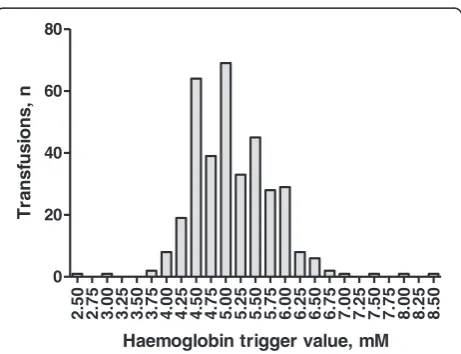
The choice of the two transfusion triggers is based on data from observational studies representing current trans-fusion practice in septic shock patients in Scandinavia [5,20] [Figure 1].
All trial sites will use pre-storage leuko-depleted RBCs suspended in saline-adenine-glucose-mannitol (SAGM). The intervention is to be administered as an intravenous infusion after making sure that a match of recipient and donor blood has been carried out. The exact amount of blood (ml) in each unit and the exact amount of blood transfused will be recorded by the clinical staff on a transfusion registration sheet when SAGM transfusions are initiated and terminated.
Concomitant medication/treatment
All other interventions will be at the discretion of the clinicians.
Inclusion criteria
Adult (age 18 years or above) patients in the ICU who:
Have anaemia (Hb≤9 g/dl (5.6 mM)) AND
2.50 2.75 3.00 3.25 3.50 3.75 4.00 4.25 4.50 4.75 5.00 5.25 5.50 5.75 6.00 6.25 6.50 6.75 7.00 7.25 7.50 7.75 8.00 8.25 8.50 0
20 40 60 80
Haemoglobin trigger value, mM
T
ran
sf
u
s
io
n
s
[image:3.595.307.538.489.666.2], n
Fulfil the criteria for septic shock [see full criteria in Additional file1] [21]:
a) Fulfil at least two systemic inflammatory response syndrome (SIRS) criteria within the last 24 hours [22]
And
b) Has a suspected or verified focus of infection And
c) Has hypotension (systolic or mean arterial blood pressure≤90 mmHg or≤70 mmHg, respectively) despite fluid therapy OR requires infusion of vasopressor/inotropic agents to maintain blood pressure.
Exclusion criteria
Patients fulfilling one or more of the following criteria will not be included:
Documented wish against transfusion Previous SAR with blood products (except
transfusion-associated circulatory overload (TACO)) Presence of ongoing myocardial ischaemia at time of
randomisation ((defined as: 1) Patients diagnosed with : a) acute myocardial infarction (ST-elevation myocardial infarction or non-ST elevation
myocardial infarction) or b) unstable angina pectoris during current hospital admission, according to the criteria in the clinical setting in question (for example, elevated biomarkers, ischaemic signs on ECG, clinical presence)AND2) the patient has received treatment, initiated during current hospital admission, as a consequence of this (reperfusion strategies (PCI/thrombolysis) or initiated/increased antithrombotic drug treatment))
Life-threatening bleeding at time of randomisation defined as: (1) Presence of haemorrhagic shock, as judged by research or clinical staff OR (2) the need for surgical procedure, including endoscopy to maintain Hb levels
RBC transfusion during current ICU admission, administered before randomisation
Withdrawal from active therapy or brain death Acute burn injuries regardless of severity or total
burn surface area
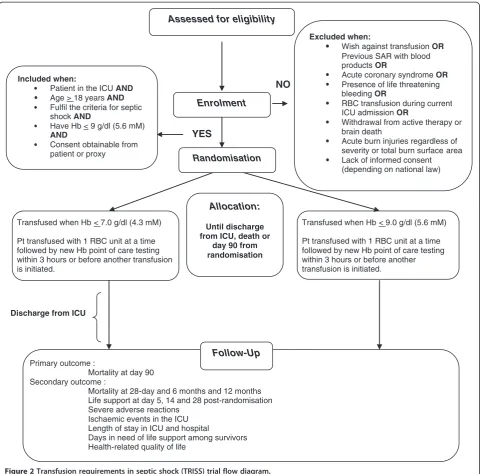
Lack of informed consent (in Sweden, Norway, Finland and Iceland consent is obtained from next of kin prior to randomisation; in Denmark delayed consent is obtained from next of kin and general practitioner after randomisation), [Figure2].
Randomisation
Screening and randomisation are centralised, web-based, and accessible 24-hour around-the-clock according to the allocation list, the stratification variables and varying
block size created by the Copenhagen Trial Unit (CTU) and kept secret from the investigators to allow immedi-ate and concealed allocation to the intervention.
Primary outcome measure
Mortality 90 days post-randomisation
Secondary outcome measures
Mortality within the whole observation period reported at day 28, 6 months and 1 year after randomisation of the last patient
Life support at day 5, 14 and 28 post randomisation as use of mechanical ventilation, renal replacement or vasopressor/inotropic therapy [23]
Severe adverse reactions in the ICU including anaphylactic/allergic reactions, acute haemolysis, transfusion-associated acute lung injury (TRALI), and transfusion associated circulatory overload (TACO)
Ischaemic events in the ICU including acute myocardial-, cerebral-, intestinal- and acute peripheral limb ischaemia
Days alive and out of hospital
Days alive without mechanical ventilation in the 90 days after randomisation
Days alive without dialysis/haemofiltration in the 90 days after randomisation
Days alive without vasopressor/inotropic therapy in the 90 days after randomisation
Health-related quality of life (HRQoL) for Danish patients assessed using the Physical and Mental Component Summary (PCS and MCS) scores of the country specific Short Form health survey questionnaire (SF-36 [24,25]) one-year after randomisation
Blinding
patient notes, but the statistician doing the final analyses will be blinded for the allocation. The members of the data and safety monitoring committee (DMSC) will remain blinded unless they request otherwise and after the in-terim analysis has provided strong indications of one intervention being beneficial or harmful.
Participant withdrawal
Patients may be withdrawn from the trial at any time if consent is withdrawn by the person(s), who has given proxy consent or by the patient.
The person(s) demanding withdrawal from trial inter-vention will be asked for permission to continue data
registration. In the event the patient does not prohibit obtaining information on the primary outcome measure, it will be obtained centrally. Thus, there may be the fol-lowing types of withdrawal:
From intervention only (allowing for all data registration and follow-up)
From intervention and further registration (but maintaining already registered data and centralised outcome assessment)
From intervention, further registration, follow-up, and previously registered data demanding deletion of already registered data. Only the patient can YES
NO
Discharge from ICU
Assessed for eligibility
Excluded when:
Wish against transfusionOR Previous SAR with blood products OR
Acute coronary syndrome OR Presence of life threatening bleeding OR
RBC transfusion during current ICU admission OR
Withdrawal from active therapy or brain death
Acute burn injuries regardless of severity or total burn surface area Lack of informed consent (depending on national law)
Primary outcome :
Mortality at day 90 Secondary outcome :
Mortality at 28-day and 6 months and 12 months Life support at day 5, 14 and 28 post-randomisation Severe adverse reactions
Ischaemic events in the ICU Length of stay in ICU and hospital
Days in need of life support among survivors Health-related quality of life
Transfused when Hb < 7.0 g/dl (4.3 mM)
Pt transfused with 1 RBC unit at a time followed by new Hb point of care testing within 3 hours or before another transfusion is initiated.
Follow-Up Enrolment
Randomisation
Transfused when Hb < 9.0 g/dl (5.6 mM)
Pt transfused with 1 RBC unit at a time followed by new Hb point of care testing within 3 hours or before another transfusion is initiated.
Allocation:
Until discharge from ICU, death or
day 90 from randomisation Included when:
Patient in the ICU AND Age > 18 years AND Fulfil the criteria for septic shock AND
Have Hb < 9 g/dl (5.6 mM) AND
[image:5.595.58.542.88.562.2]Consent obtainable from patient or proxy
demand deletion of already registered data and only if the patient did not consent previously.
If patients deny use of data, we are obliged to delete all data. We expect few of these denials and that the trial will continue until full sample size has been reached to maintain statistical power without further violating the randomisation scheme [19].
Patients who are transferred to another ICU will be withdrawn from the transfusion protocol. However, if the new ICU is an active trial site, the allocated transfu-sion Hb-trigger level will be maintained in this new ICU. In any case, patients who are transferred to another ICU will be followed up for the primary outcome measure.
Suspension of protocol
The protocol may temporarily be suspended for the indi-vidual patient, at the discretion of the attending doctor, in case of [see Additional file 2 for details]:
Life-threatening bleeding or Ischaemic events
After stabilisation in these instances, the patient will re-enter the protocol. For non-life-threatening bleed-ing, including surgical procedures, the protocol will be maintained.
Severe adverse reactions
Serious Adverse Reactions will be registered and are [see Additional file 3 for details]:
Anaphylactic/allergic reactions Severe haemolytic complications
Transfusion associated acute lung injury (TRALI) Transfusion associated circulatory overload (TACO)
Patients who experience a SAR will not be withdrawn from the trial protocol.
Use of hydroxyethyl starch
The recently completed Scandinavian Starch for Severe Sepsis/Septic Shock (6S) trial showed significantly increased mortality (51% versus 43%, P = 0.03) and use of renal re-placement therapy (RRT) (22% versus 16%,P= 0.04) in pa-tients with severe sepsis or septic shock who received HES 130/0.42 compared with those receiving Ringer’s acetate [18]. These findings are supported by other recent trials [26,27]. Therefore, we prohibit the use of all starch prepara-tions (that is, Voluven™, Tetraspan™etcetera) in the TRISS trial.
Statistics
For this study, 2 × 500 patients will be needed to show a 9% absolute risk difference in 90-day mortality (relative risk reduction of 20% with restrictive transfusion among patients with severe infection in the TRICC trial) and mortality of 45% (obtained from 41% in the East Danish Septic Shock Cohort [28] and 51% in a later cohort of septic shock patients in Danish ICUs [29], alpha of 0.05 (two-sided) and power of 80% (1-beta). The Trial Se-quential Analysis [30] showed that at least an informa-tion gap of 1,000 patients may be expected assuming a 19% relative risk reduction of mortality, and a diversity (D-square) of 0%, and a control event percentage of 11% as found in the traditional meta-analysis of the relevant trials. A type 1 and 2 error rate of 5% and 10%, respec-tively, were used for the trial sequential analysis [see Additional file 4].
The primary analyses will be by intention-to-treat comparing the two groups by logistic regression analysis for binary outcome measures adjusted for stratification variables (site and presence of haematological disease). An unadjusted Chi-square test for differences in the bi-nary outcomes will be done as a co-primary analysis.
We will perform per protocol analyses of the primary outcome and the most important secondary outcomes excluding patients with one or more major protocol violations [see Additional file 5]. SAS software, version 9.3 (Cary, NC, US) will be used for data management and analysis.
Interim analysis
An interim analysis will be conducted when patient num-ber 500 has been followed for 90 days [see Additional file 6 for details].
The independent DMSC will recommend pausing or stopping the trial if it finds:
A group difference in the primary outcome measure
P<0.001 (Haybittle-Peto criterion) [31,32]. If an analysis of the interim data from 500 patients fulfils the Haybittle-Peto criterion the inclusion of further patients will be paused and an analysis including patients randomised during the analysis period will be performed. If this second analysis also fulfils the Haybittle-Peto criterion or if the group sequential monitoring boundaries are reached the DMSC will recommend stopping the trial.
80%) and a control event proportion percentage of 45%.
Intervention accountability
Every patient will be allocated a transfusion registration sheet. This will be kept on site in the site master file. The transfusion registration sheet will include the allo-cated patient screening number, time for initiation of transfusion and unit volume.
Registration
Data will be registered into the electronic web-based case report form (eCRF) from patient notes (source data) by trial site personnel. The CTU in cooperation with the coordinating investigator will establish the trial database from an export of data from the eCRF. Paper CRF will be used in case of technical difficulties. Any deviation from the protocol will be captured either in the eCRF or in notes-to-file. Data registration is performed at each participating site by trained personnel.
The following data will be registered
Pre-randomisation and baseline characteristics: Basic pa-tient characteristics (national identification number or date of birth and site of inclusion (dependent on national law), sex, estimated weight, suspected or confirmed site of infec-tion, surgery during current admission (emergency, elective or not), date of admission to hospital and date and time of admission to ICU and from where the patient was admit-ted to ICU, co-morbidity (haematological malignancy or not (assessed at screening), chronic obstructive pulmonary disease, asthma or other chronic lung disease or not, car-diovascular disease or not (defined by history of acute myocardial infarction, stable/unstable angina pectoris, pre-vious coronary intervention (CABG or PCI), chronic heart failure (NYHA class 3 to 4) [34], vascular disease (as previ-ous central (aortic or iliac) or peripheral vascular inter-vention) or ischaemic stroke (including infarction and transitory cerebral ischaemia) and use of RRT.
24 hours prior to randomisation: Lowest/highest Hb level, volume of transfused blood components (specified as RBCs, plasma and platelets), lowest values of ScvO2,
highest value of p-lactate and data for Simplified Acute Physiology Score (SAPS) 2 [35] and Sepsis-related Organ Failure Assessment (SOFA) scoring [36].
Daily during the entire ICU stay: Hb-levels (daily mini-mum, maximum and number of assessments), volumes of transfused blood products (RBCs, plasma and plate-lets), time for initiation of RBC transfusion, unit ID, blood storage time, fluid in-/output, renal replacement therapy or not, vasopressor/inotropic infusion or not, mechanical ventilation or not, lowest PaO2/FiO2, lowest
ScvO2, highest p-lactate, surgery or not, any bleeding,
ischaemic events, severe adverse reactions (SAR), and decision on not resuscitate in case of cardiac arrest.
90 days after randomisation: Survival status and hos-pital discharge status obtained from hoshos-pital or civil registries, and date of death if the patient has deceased.
Last day of any of the following interventions if the pa-tient was discharged from the trial ICU receiving any of these: Renal replacement therapy, vasopressor/inotropic infusion and mechanical ventilation. We plan to perform a landmark mortality analysis for all randomised patients with a follow-up for each patients of 90 days, the pri-mary analysis will be a logistic regression analysis ad-justed for stratification variables. Further, we plan to perform survival analyses including Kaplan-Meier esti-mates within the total observation time. That is until the last randomised patient has been followed for 3 month. Within the total observation time we will also perform an adjusted proportional hazards analysis (Cox regres-sion analysis), provided the criterion on proportional hazards is fulfilled, adjusting for all the pre-specified co-variates listed in the protocol [37-39].
Twelve months after randomisation: Survival status obtained from hospital or civil registries and date of death if the patient is deceased. Days in need of life support (mechanical ventilation, renal replacement or vasopressor/ inotropic therapy) in survivors: Status obtained from hos-pital or civil registries. Health-related quality of life in sur-vivors obtained by posting of the SF-36 questionnaire followed by phone contact if the patient does not reply.
Data handling and record keeping
Data will be handled according to the data protection agencies of the different countries. All original records (including consent forms, eCRFs, and relevant corre-spondences) will be archived at trial sites or at CTU for 15 years. The clean electronic trial database file will be anonymised and delivered to the Danish Data Archive and maintained for 15 years.
Monitoring
Monitoring will adhere to good clinical practice (GCP [40]) principles and be performed according to a prede-fined monitoring plan including the following issues:
Initiation visits at all sites
For all patients: Documented informed consent For all patients: Primary outcome according to
national or hospital registries
For 100 patients being the first two patients at each trial site, and another two patients randomly chosen at each trial site: Documented delivery or
The coordinating centre will continuously monitor that all eCRFs are fulfilled according to the protocol Termination visit at all sites: Documenting informed
consent for all participants.
A centralised day-to-day monitoring of the eCRF and adherence to the protocol (for example, the ability of in-dividual centres to transfuse at assigned transfusion values only) will be done by the coordinating investiga-tor or his delegates. Additional moniinvestiga-toring visit will be made to selected sites if the steering committee finds this necessary based on monitoring findings.
Ethical considerations
The trial will be conducted in adherence to the current version of the Helsinki Declaration [41] and to the stan-dards of GCP. Screening of patients will only start after approval by the ethics committee and data protection agency in the countries of the trial sites.
There is no conclusive evidence from RCTs on the po-tential benefit or risk of RBC transfusion in adults with septic shock. RBC transfusion is part of the current treatment of septic shock, and the Hb-trigger values chosen for the present trial are well within those ob-served in clinical practice. Thus, the participants will not be exposed to known risks when included into the trial.
Furthermore, the research question is in the public’s interest and the trial design will provide meaningful data with the potential to reach statistical significance and therefore lead to the acceptance or rejection of the null hypothesis.
Ethical approvals
By 8 January 2013 the study had been approved by: (Denmark) De Videnskabetiske Komiteer - Region
Hovedstaden (H-3-2011-114); (Sweden) Regionala
etikprövningsnämnden i Stockholm (2011/2:8)
(2012/814-32); (Norway) Regionale Komiteer For Medicinsk og Helsefaglig Forskningsetikk (2011/2270/REK vest); (Finland) Tampereen Yliopistollisen Sairaalan Erityisvastuualueen Alueellinen Eettinen Toimikunta (R12269).
Informed consent
The majority of patients assessed for enrolment in the trial will be unable to give informed consent because of severe illness or as a consequence of the treatment (sed-ation). Some patients will thus be randomised and en-rolled before obtaining informed consent if applicable by national law and after approval by the Ethics Committee for each of the participating ICUs.
There is no alternative to this approach as no clinically relevant model of septic shock exists and no conscious patients have the combination of severe infection, shock and multiple organ failure.
Furthermore, septic shock is an acute life-threatening condition and rapidly initiated resuscitation according to guidelines [1] is important to give the patient the best chance of survival. It would therefore be unacceptable to delay initiation of treatment while awaiting informed consent.
As soon as possible after enrolment proxy consent will be obtained from the patient’s next of kin or general practitioner/regional medical officer of health according to national law. Patients who regain consciousness, will be asked for informed consent as soon as possible.
Duration
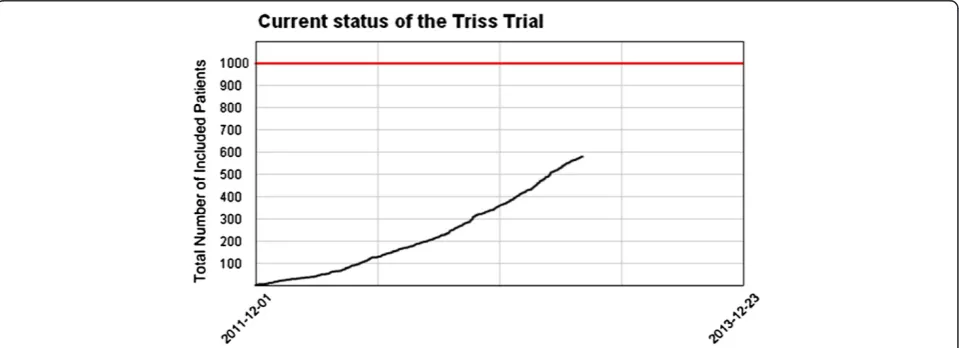
[image:8.595.59.539.542.716.2]Patients from 31 Scandinavian ICUs are expected to be included during a 2-year inclusion period starting December 2011. Based on data from 6S trial it is realistic to include a mean of two patients per ICU per month [19] [Figure 3].
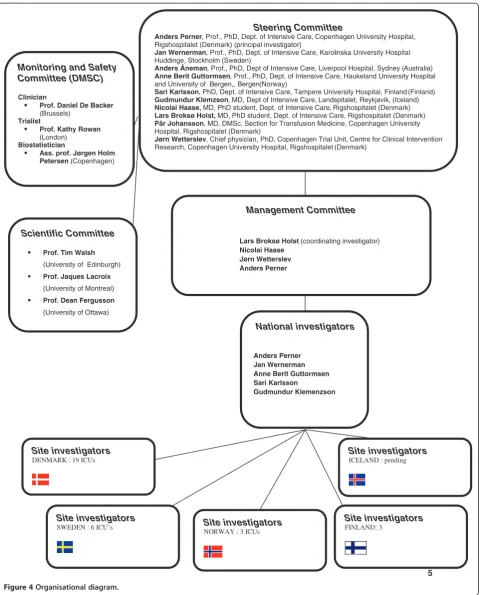
5 Management Committee
Lars Broksø Holst(coordinating investigator)
Nicolai Haase Jørn Wetterslev Anders Perner
Steering Committee
Anders Perner, Prof., PhD, Dept. of Intensive Care, Copenhagen University Hospital, Rigshospitalet (Denmark) (principal investigator)
Jan Wernerman, Prof., PhD, Dept. of Intensive Care, Karolinska University Hospital Huddinge, Stockholm (Sweden)
Anders Åneman, Prof., PhD, Dept of Intensive Care, Liverpool Hospital, Sydney (Australia)
Anne Berit Guttormsen, Prof., PhD, Dept. of Intensive Care, Haukeland University Hospital and University of Bergen,, Bergen(Norway)
Sari Karlsson, PhD, Dept. of Intensive Care, Tampere University Hospital, Finland (Finland)
Gudmundur Klemzson, MD, Dept of Intensive Care, Landspitalet, Reykjavik, (Iceland)
Nicolai Haase,MD, PhD student, Dept. of Intensive Care, Rigshospitalet (Denmark)
Lars Broksø Holst, MD, PhD student, Dept. of Intensive Care, Rigshospitalet (Denmark)
Pär Johansson, MD, DMSc, Section for Transfusion Medicine, Copenhagen University Hospital, Rigshospitalet (Denmark)
Jørn Wetterslev, Chief physician, PhD, Copenhagen Trial Unit, Centre for Clinical Intervention Research, Copenhagen University Hospital, Rigshospitalet (Denmark)
Monitoring and Safety Committee (DMSC)
Clinician
Prof. Daniel De Backer
(Brussels)
Trialist
Prof. Kathy Rowan
(London)
Biostatistician
Ass. prof. Jørgen Holm Petersen(Copenhagen)
Scientific Committee
Prof. Tim Walsh
(University of Edinburgh)
Prof. Jaques Lacroix
(University of Montreal)
Prof. Dean Fergusson
(University of Ottawa)
National investigators
Anders Perner Jan Wernerman Anne Berit Guttormsen Sari Karlsson
Gudmundur Klemenzson
Site investigators DENMARK : 19 ICUs
Site investigators
SWEDEN : 6 ICU’s Site investigators NORWAY : 3 ICUs
Site investigators FINLAND: 3
[image:9.595.59.540.87.683.2]Site investigators ICELAND : pending
Low recruitment contingency plan
In case of low recruitment we will involve new trial sites to reach the goal of including 1,000 patients within the 2-year time period.
Co-enrolment
We will assess the eligibility of patients included in the TRANSFUSE trial (ClinicalTrials.gov identifier: NCT01 638416) but not of patients included in the ARISE trial (ClinicalTrials.gov identifier: NCT00975793).
Timeline
2011: Protocol, approvals from ethical committees, trial tool development (eCRF and randomisation system) 2012 to 2013: Inclusion of patients
Mid-2013: Interim analyses
2014: The database is expected to be closed in March 90 days after the inclusion of the last patient. Data analyses and writing of the manuscript will be in April followed by submission for publication shortly thereafter
Trial organisation
This trial is investigator-initiated as a collaborative re-search programme between the Scandinavian Critical Care Trials Group, Rigshospitalet, Copenhagen Trial Unit and 31 ICUs in all the Nordic countries. [Figure 4]
Publication plan
The trial is registered on www.clinicaltrials.gov. Upon trial completion the main manuscript will be submitted to one of the major clinical journals regardless of the re-sult, and the results will in any case be published at the SCCTG home page. The Steering Committee will grant authorship in adherence to the Vancouver guidelines [42] and number of patients enrolled by the individual investigator. If a trial site investigator is to gain author-ship, the site has to include 25 patients or more. If the site includes 50 patients or more, two authorships will be granted per trial site, 75 patients will give three au-thorships per trial site and so on.
Finances
The TRISS trial is funded by the Danish Council for Strategic Research (09–066938) and Copenhagen Uni-versity Hospital, Rigshospitalet. The funding sources will have no influence on trial design, trial conduct, data handling, data analysis, or publication.
Perspectives
Severe sepsis affects millions of patients worldwide with high rates of complications and mortality. Outcome dif-ferences between therapies for sepsis will therefore have
a major impact on global health and healthcare costs. As far as the investigators are aware, no other RCTs are assessing the effects or safety of RBC transfusion in pa-tients with septic shock.
Discussion
Performing the TRISS trial is in line with recommenda-tions from the 2012 updated Cochrane review [18] and American Association of Blood Bankers [43] guidelines, both stating the need for trials assessing the effects of transfusion triggers in high risk populations.
The TRISS trial may bridge the gap between clinical practice and evidence providing urgently needed data on the efficacy and safety of RBC transfusion for patients with septic shock. The TRISS trial investigators have fa-cilitated a network of Scandinavian ICUs enrolling a high number of patients with septic shock.
Trial Status
The first patient was randomised 3 December 2011. As of 19 March 2013 31 ICUs are participating, 779 pa-tients have been screened, and 578 papa-tients have been randomised. Ethical approvals in Iceland are pending, and we are expecting 2 to 3 new trial sites to be initiated in the following months.
Additional files
Additional file 1:Trial criteria for septic shock.
Additional file 2:Protocol suspension criteria.
Additional file 3:Severe adverse reactions (SARs).
Additional file 4:Trial sequential analysis.
Additional file 5:Statistical analysis plan.
Additional file 6:Charter for the independent Data Monitoring and Safety Committee (DMSC) of the TRISS trial.
Abbreviations
6S:Scandinavian tarch for evere Sepsis/eptic hock trial; ALI: Acute lung injury; ARDS: Acute respiratory distress syndrome; ARR: Absolute risk reduction; CTU: Copenhagen Trial Unit; DMSC: Data monitor and safety committee; DO2: Oxygen delivery; eCRF: electronic (web based) case report form;
FiO2: Fraction of inspired oxygen in a gas mixture; Hb: Haemoglobin;
ICH-GCP: Guidelines for Good Clinical Practice; ICU: Intensive care unit; PaO2: Partial pressure of oxygen in arterial blood; POC: Point of care;
Pt: Patient; RBC: Red blood cells; RCT: Randomised clinical trial; RRR: Relative risk reduction; RRT: Renal replacement therapy; SAE: Serious adverse event; SAGM: Saline-adenine-glucose-mannitol; SAR: Suspected adverse reaction; SC: Steering committee; SCCTG: Scandinavian Critical Care Trials Group; ScvO2: central venous oxygen saturation; SIRS: Systemic inflammatory
response syndrome; TACO: Transfusion associated circulatory overload; TRALI: Transfusion associated acute lung injury; TRICC: Transfusion Requirements in Critical Care; TRISS: Transfusion Requirements in Septic Shock trial; Tx: Transfusion; VO2: Oxygen consumption.
Competing interests
Authors’contributions
All authors made substantive contributions to the TRISS trial as trial site investigators and revised and gave final approval of the manuscript. LBH drafted the manuscript together with NH, JW and AP. AP is the principal investigator and sponsor of TRISS. LBH designed the trial together with NH, JW, JWM, AÅ, ABG, SC, GK and AP. LBH is coordinating investigator and member of the steering and management committee. AP, JWM, ABG, SC and GK are national investigators.
Acknowledgements
We wish to thank the following: Clinical staff at all trial sites. The Scientific Committee for reviewing the protocol: Tim Walsh (Edinburgh), Jacques Lacroix (Montreal), and Dean Fergusson (Ottawa).The Data Monitoring and Safety Committee: Daniel De Backer, Chair (Brussels), Kathy Rowan (London), and Jørgen Holm Petersen (University of Copenhagen, Dept. of Biostatistics) The TRISS trial is funded by the Danish Council for Strategic Research and Rigshospitalet.
Author details
1Department of Intensive Care, Copenhagen University Hospital, Rigshospitalet, Denmark.2Copenhagen Trial Unit, Centre for Clinical Intervention Research, Copenhagen University Hospital, Rigshospitalet, Denmark.3Department of Intensive Care, Karolinska University Hospital, Huddinge, Sweden.4Department of Intensive Care, Liverpool Hospital, Sydney, Australia.5Department of Intensive Care, Haukeland University Hospital and University of Bergen, Bergen, Norway.6Section for Transfusion Medicine, Copenhagen University Hospital, Rigshospitalet, Denmark. 7Department of Intensive Care, Tampere University Hospital, Tampere, Finland.8Department of Intensive Care, Landspitalet, Reykjavik, Iceland. 9Department of Intensive Care, Herning Hospital, Herning, Denmark. 10Department of Intensive Care, Hvidovre Hospital, Hvidovre, Denmark. 11Department of Intensive Care, Randers Hospital, Randers, Denmark. 12Department of Intensive Care, Holbæk Hospital, Holbæk, Denmark. 13Department of Intensive Care, Kolding Hospital, Kolding, Denmark. 14Department of Intensive Care, Næstved Hospital, Næstved, Denmark. 15Department of Intensive Care, Århus University Hospital Nørreborgade, Århus, Denmark.16Department of Intensive Care, Bispebjerg Hospital, Bispebjerg, Denmark.17Department of Intensive Care, Slagelse Hospital, Slagelse, Denmark.18Department of Intensive Care, Vejle Hospital, Vejle, Denmark.19Department of Intensive Care, Gentofte Hospital, Gentofte, Denmark.20Department of Intensive Care, Stavanger Hospital, Stavanger, Norway.21Department of Intensive Care, Södersjukhuset, Stockholm, Sweden. 22Department of Intensive Care, Horsens Hospital, Horsens, Denmark. 23Department of Intensive Care, Karolinska University Hospital, Solna, Sweden.24Department of Intensive Care, Glostrup Hospital, Glostrup, Denmark.25Department of Intensive Care, Slagelse Hospital, Slagelse, Denmark.26Department of Intensive Care, Ålesund Hospital, Ålesund, Norway.27Department of Intensive Care, Helsingborg Hospital, Helsingborg, Sweden.28Department of Intensive Care, Helsinki University Hospital and University of Helsinki, Helsinki, Finland.29Department Of Intensive Care, North Karelia Central Hospital, Joensuu, Finland.30Department of Intensive Care, Århus University Hospital Skejby, Århus, Denmark.31Department of Intensive Care, Sønderborg Hospital, Sønderborg, Denmark.32Department of Intensive Care, Centrallasarettet, Växjö, Sweden.
Received: 18 January 2013 Accepted: 25 April 2013 Published: 23 May 2013
References
1. Dellinger RP, Levy MM, Rhodes A, Annane D, Gerlach H, Opal SM, Sevransky JE, Sprung CL, Douglas IS, Jaeschke R, Osborn TM, Nunnally ME, Townsend SR, Reinhart K, Kleinpell RM, Angus DC, Deutschman CS, Machado FR, Rubenfeld GD, Webb S, Beale RJ, Vincent J-L, Moreno R: Surviving Sepsis Campaign: international guidelines for management of severe sepsis and septic shock, 2012.Intensive Care Med2013, 39:165–228.
2. Vincent JL, Baron JF, Reinhart K, Gattinoni L, Thijs L, Webb A:Anemia and blood transfusion in critically ill patients.JAMA2002,288:1499–1507. 3. Corwin HL, Gettinger A, Pearl RG, Fink MP, Levy MM, Abraham E:The CRIT
Study: Anemia and blood transfusion in the critically ill–current clinical practice in the United States.Crit Care Med2004,32:39–52.
4. Finfer S, Liu B, Taylor C, Bellomo R, Billot L, Cook D:Resuscitation fluid use in critically ill adults: an international cross-sectional study in 391 intensive care units.Crit Care2010,14:R185.
5. Perner A, Smith SH, Carlsen S, Holst LB:Red blood cell transfusion during septic shock in the ICU.Acta Anaesthesiol Scand2012,56:718–723. 6. Trzeciak S, Dellinger RP, Parrillo JE, Guglielmi M, Bajaj J, Abate NL:Early
microcirculatory perfusion derangements in patients with severe sepsis and septic shock: relationship to hemodynamics, oxygen transport, and survival.Ann Emerg Med2007,49:88–98.
7. Napolitano LM, Corwin HL:Efficacy of red blood cell transfusion in the critically ill.Crit Care Clin2004,20:255–268.
8. Goldman D, Bateman RM, Ellis CG:Effect of decreased O2 supply on skeletal muscle oxygenation and O2 consumption during sepsis: role of heterogeneous capillary spacing and blood flow.Am J Physiol Heart Circ Physiol2006,290:H2277–H2285.
9. Triulzi DJ, Yazer MH:Clinical studies of the effect of blood storage on patient outcomes.Trans Aphe Sci2010,43:95–106.
10. Frenzel T, Westphal-Varghese B, Westphal M:Role of storage time of red blood cells on microcirculation and tissue oxygenation in critically ill patients.Curr Opin Anaes2009,22:275–280.
11. Fink MP:Bench-to-bedside review: Cytopathic hypoxia.Crit Care2002, 6:491–499.
12. Singer M:Mitochondrial function in sepsis: acute phase versus multiple organ failure.Crit Care Med2007,35:S441–S448.
13. Sjovall F, Morota S, Hansson MJ, Friberg H, Gnaiger E, Elmer E:Temporal increase of platelet mitochondrial respiration is negatively associated with clinical outcome in patients with sepsis.Crit Care2010,14:R214. 14. Benson AB, Moss M, Silliman CC:Transfusion-related acute lung injury
(TRALI): a clinical review with emphasis on the critically ill.Br J Haematol
2009,147:431–443.
15. Pettila V, Westbrook AJ, Nichol AD, Bailey MJ, Wood EM, Syres G:Age of red blood cells and mortality in the critically ill.Crit Care2011,15:R116. 16. Rivers E, Nguyen B, Havstad S, Ressler J, Muzzin A, Knoblich B:Early
goal-directed therapy in the treatment of severe sepsis and septic shock.N Engl J Med2001,345:1368–1377.
17. Hebert PC, Wells G, Blajchman MA, Marshall J, Martin C, Pagliarello G, Tweeddale M, Schweitzer I, Yetisir E:A multicenter, randomized, controlled clinical trial of transfusion requirements in critical care. Transfusion Requirements in Critical Care Investigators, Canadian Critical Care Trials Group.N Engl J Med1999,340:409–417.
18. Carson JL, Carless PA, Hebert PC:Transfusion thresholds and other strategies for guiding allogeneic red blood cell transfusion.
Coch Database Syst Rev2012,4, CD002042.
19. Perner A, Haase N, Guttormsen AB, Tenhunen J, Klemenzson G, Aneman A, Madsen KR, Møller MH, Elkjær JM, Poulsen LM, Bendtsen A, Winding R, Steensen M, Berezowicz P, Søe-Jensen P, Bestle M, Strand K, Wiis J, White JO, Thornberg KJ, Quist L, Nielsen J, Andersen LH, Holst LB, Thormar K, Kjældgaard AL, Fabritius ML, Mondrup F, Pott FC, Møller TP,et al:Hydroxyethyl starch 130/0.42 versus Ringer's acetate in severe sepsis.N Engl J Med2012, 367:124–134.
20. Rosland RG, Hagen MU, Haase N, Perner A:Clinical characteristics and outcomes associated with blood transfusion in patients with septic shock.Intensive Care Med2011,37:S6–314.
21. Russell JA, Walley KR, Singer J, Gordon AC, Hebert PC, Cooper DJ: Vasopressin versus norepinephrine infusion in patients with septic shock.N Engl J Med2008,358:877–887.
22. American College of Chest Physicians/Society of Critical Care Medicine Consensus Conference:Definitions for sepsis and organ failure and guidelines for the use of innovative therapies in sepsis.Crit Care Med
1992,20:864–874.
23. Heyland DK, Muscedere J, Drover J, Jiang X, Day AG:Persistent organ dysfunction plus death: a novel, composite outcome measure for critical care trials.Crit Care2011,15:R98.
24. Ware JE Jr, Sherbourne CD:The MOS 36-item short-form health survey SF-36. Conceptual framework and item selection.Med Care1992,30:473–483. 25. Ware JE Jr:SF-36 health survey update.Spine (Phila Pa 1976)2000,
25:3130–3139.
26. Guidet B, Martinet O, Boulain T, Philippart F, Poussel JF, Maizel J: Assessment of hemodynamic efficacy and safety of 6%
27. Myburgh JA, Finfer S, Bellomo R, Billot L, Cass A, Gattas D:Hydroxyethyl starch or saline for fluid resuscitation in intensive care.N Engl J Med
2012,367:1901–1911.
28. Carlsen S, Perner A:Initial fluid resuscitation of patients with septic shock in the intensive care unit.Acta Anaesthesiol Scand2011,55:394–400. 29. Smith SH, Perner A:Higher vs. lower fluid volume for septic shock: clinical
characteristics and outcome in unselected patients in a prospective, multicenter cohort.Crit Care2012,16:R76.
30. Wetterslev J, Thorlund K, Brok J, Gluud C:Trial sequential analysis may establish when firm evidence is reached in cumulative meta-analysis.
J Clin Epidemiol2008,61:64–75.
31. Lan KKG, Demets DL:Discrete Sequential Boundaries for Clinical Trials.
Biometrika1983,70:659–63.
32. Haybittle JL:Repeated assessment of results in clinical trials of cancer treatment.British J Rad1971,44:793–797.
33. Wetterslev J, Thorlund K, Brok J, Gluud C:Estimating required information size by quantifying diversity in random-effects model meta-analyses.
BMC Med Res Methodol2009,9:86.
34. Bennett JA, Riegel B, Bittner V, Nichols J:Validity and reliability of the NYHA classes for measuring research outcomes in patients with cardiac disease.Heart Lung2002,31:262–270.
35. Le Gall JR, Lemeshow S, Saulnier F:A new Simplified Acute Physiology Score (SAPS II) based on a European/North American multicenter study.
JAMA1993,270:2957–2963.
36. Vincent JL, Moreno R, Takala J, Willatts S, De Mendonca A, Bruining H, Reinhart CK, Suter PM, Thijs LG:The SOFA (sepsis-related organ failure assessment) score to describe organ dysfunction/failure. On behalf of the working group on sepsis-related problems of the European Society of Intensive Care Medicine.Intensive Care Med1996,22:707–710. 37. Chan AW, Tetzlaff JM, Altman DG, Laupacis A, Gotzsche PC, Krleza-Jeric K:
SPIRIT 2013 Statement: Defining Standard Protocol Items for Clinical Trials.Ann Intern Med2013,158:200–207.
38. Kahan BC, Morris TP:Reporting and analysis of trials using stratified randomisation in leading medical journals: review and reanalysis.
BMJ2012,345:e5840.
39. Kahan BC, Morris TP:Improper analysis of trials randomised using stratified blocks or minimisation.Stat Med2012,31:328–340. 40. ICH-GCP:International Conference on Harmonisation of thecnical
requirements for registration of pharmaceuticals for human use. [http://ichgcp.net/].
41. 59th WMA General Assembly:WMA Declaration of Helsinki - Ethical Principles for Medical Research Involving Human Subjects. http://www.wma.net/en/30publications/10policies/b3/].
42. International Committee of Medical Jourjal Editors:Uniform Requirements for Manuscripts Submitted to Biomedica.[http://www.icmje.org/]. 43. Carson JL, Grossman BJ, Kleinman S, Tinmouth AT, Marques MB, Fung MK,
Holcomb JB, Illoh O, Kaplan LJ, Katz LM, Rao SV, Roback JD, Shander A, Tobian AA, Weinstein R, Swinton McLaughlin LG, Djulbegovic B:Clinical Transfusion Medicine Committee of the AABB: Red blood cell transfusion: a clinical practice guideline from the AABB*.Ann Intern Med2012,157:49–58. 44. Villanueva C, Colomo A, Bosch A, Concepción M, Hernandez-Gea V, Aracil C,
Graupera I, Poca M, Alvarez-Urturi C, Gordillo J, Guarner-Argente C, Santaló M, Muñiz E, Guarner C:Transfusion strategies for acute upper gastrointestinal bleeding.N Engl J Med2013,368:11–21.
doi:10.1186/1745-6215-14-150
Cite this article as:Holstet al.:Transfusion requirements in septic shock (TRISS) trial - comparing the effects and safety of liberal versus restrictive red blood cell transfusion in septic shock patients in the ICU: protocol for a randomised controlled trial.Trials201314:150.
Submit your next manuscript to BioMed Central and take full advantage of:
• Convenient online submission • Thorough peer review
• No space constraints or color figure charges • Immediate publication on acceptance
• Inclusion in PubMed, CAS, Scopus and Google Scholar
• Research which is freely available for redistribution