Munich Personal RePEc Archive
ICT4D and the human development and
capabilities approach: the potentials of
information and communication
technology
Hamel, Jean-Yves
United Nations Development Programme
27 September 2010
Online at
https://mpra.ub.uni-muenchen.de/25561/
Human Development
Research Paper
2010/37
ICT4D and the Human Development
and Capabilities Approach:
The Potentials of Information
and Communication Technology
United Nations Development Programme
Human Development Reports
Research Paper
September 2010
Human Development
Research Paper
2010/37
ICT4D and the Human Development
and Capabilities Approach:
The Potentials of Information
and Communication Technology
U
nited Nations Development Programme
Human Development Reports
Research Paper 2010/37
September 2010
ICT4D and the Human Development
and Capabilities Approach:
The Potentials of Information and
Communication Technology
Jean-Yves Hamel
Abstract
This study frames a review of information and communication technology for development (ICT4D) within the human development and capabilities approach. Looking at the basic dimensions of human development, which make up the core measurement of its achievements: health, education and a income, and additionally at the dimensions of participation and empowerment, a survey of research and evidence seeks to evaluate whether or not ICTs have demonstrated positive outcomes for these dimensions of human development and more broadly to the practice of its approach. The paper reviews the literature and research conducted in these dimensions in order to establish a sense of the scope and potential that ICTs have for human development. By doing so, the paper seeks to assess whether or not the use of ICTs is pertinent to the human development of the poor, and if so, which are documented cases and outcomes that can perhaps be replicated in differing development contexts. The paper also seeks to answer questions on the role of government policy and investment in ICTs as keys to their success in development and whether or not ICTs should be emphasized at all in poor countries. The paper concludes with the important realisation that ICTs alone cannot improve peoples’ lives; the use of ICTs needs to occur within broader strategies that are tailored to make the most use of these tools and techniques in order to reap their potential benefits for human development.
Keywords: human development, information and communication technology, ICT4D, telecommunications reform, empowerment, participation.
JEL classification: D1, I0, O3, O15, Z1
Introduction
There are in the development community several schools of thought that advocate that the
progress of societies is about much more than increases in wealth and growth in macroeconomic
indicators. The human development and capability approach in particular sees development as a
multidimensional and multidisciplinary process of enlarging people's choices and freedoms. The
approach is often seen as having been launched by the Human Development Report (HDR) of
the United Nations Development Programme (UNDP) but it is much broader than this series of
publications. The first HDR proposed a rather simple yet resonating vision for development, “to
create an enabling environment for people to enjoy long, healthy and creative lives" (UNDP,
1990: 9). This objective rings as true today as it did twenty years ago since human development
brings to the forefront of the debate concerns for agency, voice and empowerment and it "draws
attention to 'what makes life worthwhile': people” (Alkire and Deneulin, 2009: 25). This study
frames a review of information and communication technology for development (ICT4D) within
the human development and capabilities approach. Looking at the basic dimensions of human
development, which make up the core measurement of its achievements: health, education and a
income, and additionally at the dimensions of participation and empowerment, a survey of
research and evidence demonstrates that despite major inequalities across the world and
continued gaps on access and use of information and communication technologies (ICTs), these
tools and techniques can have positive impacts for human development.
The paper understands ICTs as tools or techniques that allow recording, storing, using,
diffusing and accessing electronic information (World Bank, 2002). This paper also accepts more
broadly that ICTs are “tools that facilitate communication and the processing and transmission of
paper understands dimensions of human development as categories of achievements and choices
that are essential for human life to flourish. As Alkire (2002: 186) notes, dimensions of human
development are “non-hierarchical, irreducible, incommensurable and hence basic kinds of
human ends” that are clear and valuable objectives for human progress that go beyond social or
cultural values. Like human rights for advocates of international law, dimensions of human
development are structured to represent valued outcomes that people have a reason to wish and
work for. The paper focuses on health, education, and income because these are both the most
commonly reported dimensions of human development and perhaps the most universally
accepted. Participation and empowerment are also included because they are increasingly
discussed in the development literature that seeks to push the frontiers of development thinking.
They are also of particular interest to the author. As Sen (1999) established, development is
fundamentally about freedom. This makes participation and empowerment two essential
components of contemporary theory and research about human development.
The key questions asked by the paper are whether or not ICTs have demonstrated positive
outcomes for these dimensions of human development and more broadly to the practice of its
approach. By doing so, the paper seeks to assess whether or not the use of ICTs is pertinent to
the human development of the poor, and if so, which are documented cases and outcomes that
can perhaps be replicated in differing development contexts. If these tools and techniques can be
shown to increase outcomes in health, education and income of people and if it can be
furthermore demonstrated that ICTs are positively increasing peoples’ participation and
empowerment within their communities and society, then we will be able to say that ICTs can be
good for human development. The challenge will be the measurement of the extent to which
will be discussed, evidence surveyed is often anecdotal or illustrative and causalities are very
often impossible to establish. Despite these caveats, the paper reviews the literature and research
conducted in these dimensions in order to establish a sense of the scope and potential that ICTs
have for human development. The paper also seeks to answer questions on the role of
government policy and investment in ICTs as keys to their success in development and whether
or not ICTs should be emphasized at all in poor countries. As with any approach to development,
there are potential downsides and these will be surveyed along with examples commonly seen as
success stories. All of these difficult assessments will be essential to the evolving field of ICT4D
since claims that ICTs divert development funds from more pressing concerns will be justified if
these technologies are not able to deliver added benefits for the poor. This point of is of immense
importance to developing countries where “there inevitably are trade-offs among the competing
claims of stakeholders for scarce resources for investment” (Mansell, 2009).
To achieve these objectives, the paper begins by introducing the reader to the concepts of
human development and the capabilities approach while demonstrating its linkages to the field of
information and communication technology for development (ICT4D) in order to consequently
explain how ICTs have the potential of being capability enhancers. A survey of statistical data on
the availability and use of ICTs across Human Development Index (HDI) groupings since 1990
is then presented to show progress on use of ICTs around the world but also to establish an
understanding of the obstacles that exist on the ground when including ICTs in the practice of
development. These reviews serve as the foundation to discuss the impacts of ICTs for the
human development dimensions of participation and empowerment followed by health,
education and income. Although no technology can be a panacea for development the reviews
development but that their success is always tied to the particularities of each context and the
design and implementation of their use within development. The paper concludes with the
assertion that ICTs can enhance capabilities for human development when applied with
foresight, clear objectives, a firm understanding of the obstacles that exist in each context and
proper policies that establish an institutional framework that promote the use and benefits of
ICTs for the poor.
ICT4D and the Human Development and Capability Approach
Human development is an evolving framework benefiting from the intellectual contributions of
an extensive network of researchers around the world. The approach is born from the concerns of
development practitioners and continues to evolve with new development challenges.
Synthesising the various views on the approach, which are largely defined by Amartya Sen's
work and by the global HDRs, we can understand that the aim of human development is: "to
expand people’s freedoms – the worthwhile capabilities people value – and to empower people
to engage actively in development processes, on a shared planet… People are both the
beneficiaries and the agents of long term, equitable human development, both as individuals and
as groups." (Alkire 2010: 40). The essential components of this definition, which are of special
relevance to this paper, are the idea that human development is a process that is participative and
empowering. These core principles of the approach have served human development well as
evident by its reception around the world. The approach is commonly seen by its advocates as
today's most relevant approach to development and the embodiment of the United Nations’
In a rapidly changing world, where networked technology has not only become ubiquitous but
also necessary for the governing of states and the maintenance of our global economy (Castells,
2000), how can we understand the linkages between the human development and capabilities
approach and the impact that technologies can have on peoples’ lives? There has been a concern
within the development community as to the rapidly growing use of ICT and its relevance to
development since the early 1980s when the International Telecommunications Union (ITU)
undertook the first major research project on some of their linkages. The conclusions of this first
major study were that ICTs and the networks linking them needed to be strengthened across the
world in order to share the benefits that these technologies bring to “health and other social
services, administration and commerce, but also in stimulating economic growth and enhancing
the quality of life” (Maitland, 1984: 65). This field is now commonly known as information and
communication technology for development (ICT4D). Twenty years later, the World Summit on
the Information Society (WSIS) convened by the United Nations in 2003 and 2005 served to
solidify opinions amongst government and development practitioners on the potential impacts of
ICTs and their role in development (WSIS, 2005). Seen as able to deliver on both human
development concerns for participation and empowerment, as well being significant to the
Millennium Development Goals, ICTs are advocated to play an important role as enablers of
development (UN, 2000; Rezaian, 2006), On the ground, ICT4D is essentially a framework for
the application of tools and techniques to the practice of development. It is a multidisciplinary
field within the practice of development that has benefited tremendously from the research,
application and immense support from academia, the private sector and major development
agencies (Unwin, 2009d). It can be summarised as the use of ICTs to reach development
phones and the World Wide Web, which have revolutionised the ease with which people are able
to exchange and share information across vast distances. Their potential for accumulation of
searchable knowledge and information are responsible for what many are now calling the advent
of the Information Age (Castells, 2000). Contrary to the physical objectives of ICTs, which are
fundamentally to overcome limitations of existing techniques of information storing and sharing,
ICT4D has a "profoundly moral agenda" that aims to empower people and communities by
answering the difficult questions of not only "what should be done" in the practice of
development but also "how we should do it" (Unwin, 2009a: 33).
Mahbub ul Haq, intellectual founder of the HDRs, wrote that achieving development and
promoting choices in peoples' lives does not only mean increased levels of health and security, it
also means increased access to information that leads to knowledge (Haq, 1995). Mchombu
(2004) explains that the human development and capability approach therefore wants to see ICTs
as tools to establish and increase access to information for marginalised groups within society, as
tools that promote autonomy and participation, as means to promote and protect local knowledge
and as vehicles that are complimentary to traditional channels of communication. Capabilities
are what Amartya Sen dubbed "doings and beings". Essentially, they are the skills, aptitudes,
endowments and potentials that individuals have to make choices in their lives, and in
consequence live the life of their choosing. Capabilities are bound by freedom and represent the
essence of a person's potential in life, what they can achieve under their current circumstances,
whether those limitations are inherent or imposed. As Sen (2009: 5) states, "Capability reflects a
person's freedom to choose between different ways of living." They are heavily influenced by the
context in which the person lives and the sum of their experiences and desires. Viewed in this
increase our capabilities by allowing us to do more with our life, or at the very least to do
different things with our life. In practice, their material possession matters much less than the
potential that they extend to our lives. For example, information that is shared through
technology such as ICTs can become capability enhancers, allowing people to make better
judgments by virtue of having access to knowledge that was once not available to them. Sen
considers this interplay between information and one's capabilities to be of immense importance.
He sees knowledge as a resource that can be acted upon. It is essential to human life since
"Informational limitation restricts or distorts consequential judgments" (Sen, 1984: 302).
Knowledge can be liberating (Freire, 2000), which complements well the view that development
is fundamentally about promoting human freedom, the freedom to choose how to use our
capabilities (Sen, 2009).
Practitioners of ICT4D understand that technology itself cannot contribute to human
development. What ultimately makes a difference in peoples' lives is the specific use of
technology and the extent to which they help communities and individuals reach their
development objectives. Ultimately, the concern is with the wider context. Problematic to this
aim is that the design and import of new technologies consequently replace older or established
ways of doing things. As Sen (2001) notes, policy makers and practitioners need to reflect on the
appropriateness of technologies being used in development since the choices made in this area
are in effect essential components of all development strategies. As new technologies displace
older ways of doing things, there will inevitably be tradeoffs and hidden costs that will rarely
figure amongst the analysis of ICT4D advocates. Looking at development from a
macroeconomic perspective, one might be hesitant to retool a business sector and transform its
qualified and therefore earning wages in an economy that may already suffer from high
unemployment rates and limited opportunities for those displaced workers. There is such a
concept as appropriate technology but there is unfortunately little consensus of its meaning on
the ground across the world, especially for the poor. Many studies show that ICTs and the
changes that accompany them are “demonstrably disruptive” for many people in developing
countries despite the wealth that they generate (Mansell, 2009: 8). However, these caveats should
not discourage us from exploring the impacts that ICTs can bring to development, they remind us
of the importance for proper planning and design of development strategies that reflect local
needs, conditions and capabilities.
ICT Indicators: Progress since 1990
Recent years have witnessed an incredible spread of mobile phone connectivity and use around
the world, especially in developing countries where land-lines are scarce (ITU, 2009b). There are
now more than 4 billion mobile phone subscriptions around the world with 75 per cent of them
in developing countries. Access to the Internet has also grown with more than 1.5 billion Internet
users around the world as of 2008 and nearly 60 per cent of them live in developing countries
(ITU, 2009c). Looking at average growth rates for ICTs we see very encouraging trends. Mobile
and fixed-line telephone subscribers have increased by an average of 909.9 per cent overall for
HDI ranked countries between 1990 and 2008, representing an average of 79.2 subscriptions per
100 inhabitants in 2008. The percentage of the world population now covered by mobile cellular
networks is above 82 per cent for the world and above 50 per cent for low HDI countries.
Internet users have grown by more than 137 per cent since 2002, representing an average of 23.7
world having access to electricity including 63.2 per cent of rural areas (IEA, 2008). Globally,
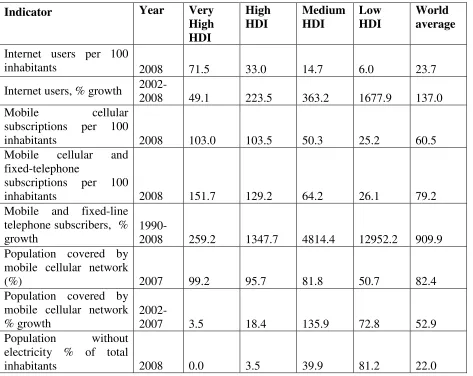
[image:14.612.73.546.180.556.2]there is clear progress and promising potential for the use of ICTs in development.
Table 1: ICT Indicators by HDI classification
Indicator Year Very
High HDI High HDI Medium HDI Low HDI World average
Internet users per 100
inhabitants 2008 71.5 33.0 14.7 6.0 23.7
Internet users, % growth
2002-2008 49.1 223.5 363.2 1677.9 137.0 Mobile cellular
subscriptions per 100
inhabitants 2008 103.0 103.5 50.3 25.2 60.5 Mobile cellular and
fixed-telephone
subscriptions per 100
inhabitants 2008 151.7 129.2 64.2 26.1 79.2 Mobile and fixed-line
telephone subscribers, % growth
1990-2008 259.2 1347.7 4814.4 12952.2 909.9 Population covered by
mobile cellular network
(%) 2007 99.2 95.7 81.8 50.7 82.4 Population covered by
mobile cellular network % growth
2002-2007 3.5 18.4 135.9 72.8 52.9 Population without
electricity % of total
inhabitants 2008 0.0 3.5 39.9 81.2 22.0 Source: IEA, 2008; ITU 2009c and World Bank 2010.
Developed countries on average have seen continuous growth in mobile and fixed-line
telephone subscriptions by a factor of 259.2 per cent between 1990 and 2008, representing 151.7
2002, now reaching 71.5 users per 100 inhabitants. For the high HDI group, we see impressive
numbers with growth of 1347.7 per cent, or 129.2 subscriptions per 100 inhabitants in 2008 for
mobile and fixed-line telephones. Internet is lower in this group that saw growth by a factor
223.5 per cent since 2002, totalling 33 users per 100 inhabitants in 2008. For the medium HDI
countries, growth in mobile and fixed-line telephone subscriptions is at 4,814.4 per cent since
1990, representing in 2008 64.2 users per 100 inhabitants. The growth of Internet users drops
substantially as compared to mobile phones for this group and represents an increase of 363.2 per
cent since 2002, averaging 14.7 users per 100 inhabitants in 2008. As we can see, the numbers
quickly dwindle as we consider poorer countries and the contrast is starkest when looking at
those classified with low HDIs. For this group, mobile and fixed-line telephone subscriptions
have grown by a higher factor than in any other HDI group with 12,952.2 per cent since 1990.
This figure represents the important climb from a very low starting point, reaching in 2008 an
average of 26.1 subscriptions per 100 inhabitants. The rapid spread of mobile telephony is
responsible for this impressive increase in use of ICTs in the low HDI group but for Internet use,
the numbers are at the lowest scale for all ICT indicators. They have grown by 1677.9 per cent
since 2002, but represent an average of 6 users per 100 inhabitants. Electrification rates are also
at their lowest in this group with an average of 81.2 per cent of inhabitants without access to
electricity. They represent a total of 1.2 billion people of the 1.5 billion around the world who do
not have access to electricity (IEA, 2008).
As we can see from the ITU (2009c) data, mobile coverage is quite high all around the world
which will continue to promote its use and impact to development. Access to the Internet on the
other hand continues to be low especially in Africa, Latin America, the Caribbean and the
indicative of investments made in low and middle income countries. In 2007 alone, this group of
countries spent approximately 6 per cent of their GDPs, totalling nearly 800 billion USD on ICTs
(Heeks, 2009). Looking at data on electrification rates for all regions, there is another clear
divide that appears and has tremendous implications for human development. There are an
estimated 1.5 billion people worldwide who do not have access to electricity and 85 per cent of
them live in rural areas of developing countries (IEA, 2009). Unwin (2009e) remarks that it is
rather difficult to make use of ICTs for development where there is no power supply, as is the
case for many communities of sub-Saharan Africa where only 15 per cent of rural households
have access to electricity. An important development agenda for engineers is therefore the
development of "new, low-cost devices for local electricity generation; better ways to store, carry
and transmit electricity; and lower power consumption by ICT devices" (Heeks, 2009: 6).
As the use of ICTs continues to grow around the world, it is expected that the technologies
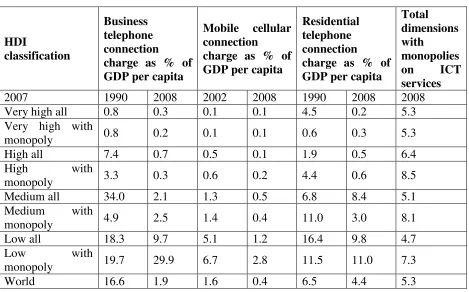
will become increasingly affordable for users. Looking at data from ITU (2009c), comparing
connection costs for business and residential fixed-line telephones and mobile cellular telephones
as a percentage of GDP per capita, we find confirmation of a predictable trend in all HDI
classifications; telephone services are becoming increasingly affordable relative to incomes.
Business telephone connection charges as a percentage of GDP per capita have gone down by
nearly 89 per cent around the world since 1990 and by more than 32 per cent for residential
fixed-lines. Mobile cellular connection charges have also been dramatically reduced by 75 per
cent around the world since 2002. Prices have dropped most significantly for the very-high HDI
group of countries, with connection charges averaging at 0.35, 0.24 and 0.07 per cent of GDP per
capita in 2008 for business, residential and mobile cellular telephones respectively. The low HDI
same services. The high HDI and medium HDI groups have average costs closer to the very-high
HDI group with the exception of residential fixed-lines for medium HDI countries which
averages at above 8 per cent of GDP per capita in 2008. Linking these prices to the level of
competition within national telecommunications market we can further see that on average,
countries that have monopolies on 5 or more dimensions of ICT service delivery are paying 23
per cent more overall for equivalent services. In very-high HDI countries, monopolies on ICTs
represent a 14 per cent increase of average prices for all 3 categories of services. In high HDI
countries, the increase is more than 21 per cent. Contrary to all other groups, in medium HDI
countries, monopolies seem to bring down the average connection costs of services. As a group
these countries pay only slightly above 80 per cent of the average charges of other countries
within the group. The countries that bear the largest burden are again those with low HDIs. In
this group, monopolies on telephone services are more than doubling connection charges as
Table 2: Changes in connection charges of telephone services HDI classification Business telephone connection
charge as % of GDP per capita
Mobile cellular connection
charge as % of GDP per capita
Residential telephone connection
charge as % of GDP per capita
Total dimensions with monopolies on ICT services
2007 1990 2008 2002 2008 1990 2008 2008 Very high all 0.8 0.3 0.1 0.1 4.5 0.2 5.3 Very high with
monopoly 0.8 0.2 0.1 0.1 0.6 0.3 5.3 High all 7.4 0.7 0.5 0.1 1.9 0.5 6.4 High with
monopoly 3.3 0.3 0.6 0.2 4.4 0.6 8.5 Medium all 34.0 2.1 1.3 0.5 6.8 8.4 5.1 Medium with
monopoly 4.9 2.5 1.4 0.4 11.0 3.0 8.1 Low all 18.3 9.7 5.1 1.2 16.4 9.8 4.7 Low with
monopoly 19.7 29.9 6.7 2.8 11.5 11.0 7.3 World 16.6 1.9 1.6 0.4 6.5 4.4 5.3 Source: Adapted from ITU 2009c.
Research conducted in 30 developing countries demonstrates that an effective regulatory
authority coupled with privatisation can increase ICT diffusion and service access but regulation
must be put into place early to assure that foreign private interests are not favoured above those
of the local population (Wallsten, 2001). Another survey of 177 countries further shows that
aggressive reform and the introduction of competition in the telecommunications sector has a
direct impact on the successful diffusion of ICTs (Li and Xu, 2004). Seeing the above numbers
shines additional light into this issue which will be discussed further below.
Ultimately, before ICT4D can take off at the individual or even at the household level in the
developing world, especially in countries with a low HDI value, policy makers will need to
impacts on ICT use in most developing countries. Furthermore, as these technologies continue to
spread, another important dimension to consider is the environmental impact from the
production, use and disposal of ICTs (ITU, 2009a). It is estimated that ICTs as a whole have
contributed 2 per cent of all CO2 emissions between 2002 and 2007 and will reach 3 per cent by
2020 (POST, 2008). The disposal of ICTs as waste, of which an important part is hazardous and
toxic materials, is another important issue since millions of metric tons of ICTs are improperly
disposed as garbage every year (UNEP, 2009). It is therefore vital that the environmental impacts
of ICTs figure as part of national telecommunication strategies to ensure their environmental
sustainability and limit their contribution to environmental degradation and climate change. As
statistics on ICT use continue to climb around the world, ensuring the environmental
sustainability of the technologies will be an increasingly important challenge.
Statistically speaking, there is still much that needs to be done in terms of investments in
infrastructure and accessibility for ICTs to reach near universal access. Looking at the trends
outlined above, we see great inequality and disparity between HDI groups. When reviewing the
data supplied by ITU (2009c) we also see great inequalities between regions. Based on the
review of the characteristics of the digital divide in the earlier section, we can infer that the same
is true within countries. What is encouraging though is the speed at which developing countries
are closing the gap with the developed world, especially in terms of access to mobile phones.
With the convergence of voice and data through increasingly advanced mobile handsets, it is
easy to imagine that access to the Internet will see important growth in this group and perhaps
significantly so in the next 5 to 10 years. Encouragingly, table 1 demonstrates that there has been
convergence in access to ICTs since 1990 between developed and developing countries and that
mobile phones, which make up the largest user base of ICTs surveyed and are the focus of an
increasing amount of research on the potential benefits of ICTs for development. Because of
their low costs and high penetration rates in most developing countries, mobile phones are
according to many academics an ICT that may have tremendous potentials for improving the
lives of the poor (Ling and Donner, 2009). There is evidently much progress that is still required
in developing countries to achieve the levels of access and use of ICTs in developed countries,
and few may actually catch up to this group that has been at the forefront of technological
production and use since the beginning of ICTs. Given the data presented above, and if current
trends maintain themselves, we can nevertheless be optimistic that the gap will continue to
shrink.
ICT, Empowerment and Participation
Empowerment can be defined as a process of "enhancing an individual's or group's capacity to
make effective choices and translate these choices into desired actions and outcomes" (Alsop and
Heinsohn, 2005: 5). Together with participation, which entails having the opportunity to be
involved in decision making processes, empowerment is an important dimension of human
development. Access to ICTs can have tremendous impacts on peoples' sense of empowerment
and ability to be active participants in their societies at both social and political levels (Brown et
al., 2001; Kleine, 2009). Norris (2001) is a firm advocate that ICTs can enhance the
empowerment of civil society by augmenting their capacity to work as organised networks both
within and beyond borders. For example, the Internet can increase opportunities for political
activism through online networks that can compliment physical networks. She understands the
of these dimensions can both permit and limit the potential for empowerment. They have
positive and negative implications on the choices and freedoms available to users based on
individual, cultural, social and political realities (such as gender, ethnicity, age, income and
liberty). When these barriers are overcome, ICTs can greatly enhance civil society's ability to
promote change by creating channels of communication that facilitate collaboration on common
goals. In a sense, these tools can be significant amplifiers of voices for change (Cammaerts and
Van Audenhove, 2003). In particular, ICTs are most effective when they are seen as means of
engagement and enhancers of participation, which are crucial for human development because,
"Any development programme that regards people as mere recipients, rather than as the actual
creators of change and progress, usually fails" (Fraser and Villet, 1994: un-paginated).
By making content available online and creating avenues for engagement, governments can
also positively influence the adoption of ICTs by being active users themselves (Borge, 2006).
By creating linkages to governmental processes, ICTs can contribute to increasing the
transparency of governmental processes and contributes to the empowerment of citizens and civil
society by promoting their participation in policy debates. By investing in the creation of a
proper environment with incentives and means for use, governments can positively impact the
likelihood of the use of ICTs. The Internet in particular can be an effective platform for
increasing participation and, for example, the transparency of governmental processes and
budget allocations by allowing the creation of websites that feature such information. Infonet,
created by the Social Development Network of East Africa, and FarmSubsidy.org, a non-profit
project in Sweden, are built on the principle of freedom of information (TTC, 2009). The former
posts government funding allocations for development projects and the latter government
and in Africa through mobile phones, and have created spaces where people can post questions
and comments online. These portals quickly became vehicles to scrutinise the governments’
support and funding for projects and enterprises in their communities. The East African initiative
has allowed users to review the use of funds for more than 36,000 projects in the region thereby
empowering them to exercise pressure on their respective governments so that spending reflects
local priorities and benefit local communities (ibid). Making important administrative
information freely accessible online, as does the Office of Management and Budget (OMB) of
the United States Government, is another example of ways by which ICTs can increase the
transparency of a country’s administration. Their public access website allows users to review
annual budgets going back to 1996 along with important policy documents and data for
legislative, executive and judiciary branches of government (OMB, 2010). As Guida and Crow
(2009: 301) observe, “the relationship between e-government and ICT4D is reciprocal; the
investment in technology and skills necessary to make e-government relevant also builds the
foundation for a networked world, and e-government services themselves can be a draw to entice
citizens to participate on the internet.” Applying the human development and capabilities
approach in this way can be effective in "forcing policy makers to face the complex challenges
of equity of access with respect to vital resources and capabilities, the sustainability of resources
and institutions, the acquisition and distribution of knowledge for human empowerment and
people's participation" (Hamelink, 1999: 35).
The use of community radio is a common example of the positive uses of ICTs for
development and community empowerment. Jewel (2006) demonstrates that the use of
community radio in Bangladesh strengthens local democratic processes by putting the tools and
to promote political participation through the sharing of information and discussion of issues that
have an impact on peoples' lives. Community radio was not only seen as a tool for empowerment
and participation but also an effective means to promote local culture and values. An advantage
of radio over other forms of ICTs is its general pervasiveness across the world and relatively low
cost of ownership. In making community radio a development priority, CIMA (2007: 9) states
that, "The potential of community radio to bring about social change is not a matter of mere
observation but… an empirically proven fact". The other side of the coin is that ICTs, such as
radio, can also be used to curtail freedom and be made into tools of oppression and violence. The
known cases of radio transmission and calls to genocide in Rwanda in 1994 are grim reminders
that technologies themselves do not guarantee any prescribed outcome or contribution to
development. In this case, radio served to fuel hatred and was a tool to mobilise mobs to commit
genocide (Des Forges, 1999). As this sombre example reminds us, technology may be used and
“serve to tyrannize publics as well as to liberate them” (Rosenau and Johnson, 2002: 55).
As tools for dissent and mobilization, ICTs can facilitate the distribution of alternative voices
and information, which can be threatening to authorities. Analyzing Usenet groups and
chat-rooms, Hill and Hughes (1998) have discovered that political opinions formed the most
substantial part of online exchanges in states that were commonly considered repressive. Many
governments have realized these powerful facets of ICTs and therefore attempt to render
traceable the identity of Internet users. The debates on child pornography and terrorism
constantly resurface as legitimate concerns and reasons for eliminating anonymity online yet
many advocates of online freedom fear that these causes are but scapegoats of something greater
and ultimately represent a push for politically geared censorship (Slevin, 2000). The policies of
Uzbekistan and Vietnam make them the most repressive states for Internet use in the world today
(RSF, 2009). The ECHELON system, managed by the United States, the United Kingdom,
Canada, Australia and New Zealand, also comes to mind for those who are familiar with global
digital monitoring and surveillance systems1
Several Asian states are at the forefront of technological advancements in the control of ICTs
and recurrently surface when discussing online censorship. These states regulate and limit access
to the tools themselves, the Internet and a slew of websites that host content deemed illegal.
Licenses, fines, and imprisonment serve to reinforce state systems that seek to control and censor
civil society’s use of the Internet. This has been the case in Singapore, a country known for its
successful economic development policies but otherwise an author of repressive Internet
legislation. Although set on maintaining their image as a technological leader and the
‘information hub’ of the Asia-Pacific region, there have been within the state strong
commitments to control the reigns of political opinion (Rodan, 1998). The banning of satellite
television, the control of foreign press and the control of Internet Service Providers (ISPs) are all . Issues of censorship and monitoring are
fundamental to the use of ICTs (Jordan, 1999), and a state wanting to control the use of these
technologies has many options from the physical control of equipment and services to the
blocking of online networks (Castells, 2001). Liberty, or the lack of it, has repeatedly been an
obstacle to the accessibility of information in societies that are undemocratic or repressive. News
media censorship and control of the Internet are two facets of the same coin in the Information
Age, and are both intricately interwoven. Kedzie and Aragon (2002) caricature the adoption of
ICT in repressive states as “the dictator’s dilemma” because these tools can both be gateways to
wealth and influence while also being potential channels of dissent and civil mobilization.
1
strategies that strongly undermine the civic potential of ICTs in the country. Singapore’s case
demonstrates the ease with which governments may monitor and investigate online activity. In
this country, the use of ICTs for political activism has been marred by fear and suspicion because
the government, acting as both owner and regulator, has either directly or indirectly controlled all
ISPs within the country. This consolidated approach to managing technology has permitted the
government to monitor users to the extent that websites discussing religion or politics have had
to be officially registered in order to be legal. Additionally, privately owned ISPs have been
liable for content deemed subversive that is hosted on their servers or posted through their
services. Similarly, publishers of online media were obliged to assist the government in its
investigations of dissent by making public all their records of use and content creation. The
Newspaper and Printing Press Act, applicable online, was created to impose as much self-control
and self-censorship as possible through a system of licences and penalties. The success of this
model was acclaimed in 1996 by all members of ASEAN, except the Philippines, as the best
means to control the Internet and was a foreseeable action to be implemented by members of the
association. The model was clearly replicated in Burma where mandatory licenses for ownership
of many ICTs, including fax machines and modems, are given only to those who are trusted by
the government; unlicensed users are imprisoned when discovered (Dudley, 2003). This context
renders public access Internet, such as cyber-cafés, virtually inexistent but as was discovered,
clandestine uses of such ICTs, despite the risks involved, are observable in the country (ibid).
ICTs have despite these obstacles become central for the country’s international solidarity
movement who struggle to establishing communication links with activists within the borders of
the country. These links are vital given that, as Reporteurs Sans Frontières (2006) report, many
labelled foreign interference into domestic affairs. Nevertheless, local bloggers continue to find
new and innovative ways of circumventing censorship and control of the Internet and are able to
post comments, upload videos created from mobile phones and small video cameras and spread
information of the ongoing political repression in their country (TTC, 2009).
China today demonstrates perhaps the most advanced forms of control and censorship of
ICTs. With climbing amounts of arrests and imprisonment of Chinese journalists, on charges of
espionage and threats to national security, China positions itself as a firm obstacle to online
freedom of expression (RSF, 2006). Google’s acceptance to include in their Chinese version of
the popular search engine automatic blocks and censorship of keywords and sites determined to
be subversive by Chinese authorities was a clear indication to the world that the country was not
ready to open itself to increased transparency.2
2
Censoring all content deemed subversive by the Chinese government, ‘google.cn’ was launched in 2006. A spokesperson at Google was quoted defending the decision by saying that, "While removing search results is inconsistent with Google's mission, providing no information… is more inconsistent with our mission" (BBC, 2006). Continued controversy and rising tensions Yahoo!’s collaboration with Chinese officials,
resulting in the arrest and imprisonment of a local journalist on charges of dissent because of a
critical blog posting is another sombre example of the Chinese ability to restrain freedom of
expression (RSF, 2005). As Chase and Mulvenon (2002) suggest, the advent of the Internet in
China has drastically altered the power structures and capabilities of both the government and
civil society. Civil society’s new found technological ability to exchange ideas and information
has triggered governmental ‘counter-measures’ to seek out and punish activists. Despite the
threat of imprisonment, local Chinese activists are continuing to compile email lists, authoring
websites, finding ways to circumvent barred access to websites of organizations such as Human
countless more, and adapting peer-to-peer networking software for the sharing of political
documents. This is truly “Internet guerrilla warfare” against silence, propaganda, and control of
citizens’ voices (ibid: 31).
Despite such obstacles, the potential of ICTs to empower social movements, promote
participation and assist in the mobilization of people as agents of change was made evident
countless times around the world, the most recent example being in Iran following the elections
of 2009. As a response to the outcome of the vote, masses of demonstrators defiantly took to the
streets in protest. The government proceeded to crack-down on all means of communication,
including the press, in order to limit the spread of opinions that openly criticized the government.
During these violently repressed demonstrations, Twitter users with mobile phones were able to
keep a window open into the events of Tehran despite the government’s efforts to the contrary
(Poniewozik, 2009). International news outlets consequently found on the Internet a collection of
live feeds of the events on the streets. The result was live broadcasting around the world of
repression and shooting of unarmed civilians. These images shocked the world and their
repercussions are still being felt in the press since they have severely affected the image of the
political leadership in Iran. Similar events unfolded in Ethiopia in 2005 after another deeply
contested election. Despite laws defending press freedoms, freedom of assembly and freedom of
expression, student groups, political opposition parties and several media outlets became targets
of a massive crack-down on political opposition to the re-election of the government. With
protests on the rise across the country and reports of arbitrary arrests and detentions, text
messaging capabilities on mobile phones within the country were suddenly disabled by the
telecommunications service provider who has a monopoly over the service (USDS, 2006). This
the government. Such examples are not limited to developing countries, as was demonstrated by
the Independent Media Collective, commonly known for its website domain Indymedia.org.
They have experienced firsthand the extent to which democratic governments are ready to
dismantle and even attack independent news outlets when they consider the censorship of
information a political necessity. This was the case in Seattle (United States), Québec (Canada),
and Genoa (Italy) during massive anti-globalization protests occurring between 1999 and 2001.
Police raided the sites of online broadcasting, seized computer equipment, and arrested civilians
for their roles in disseminating first person accounts of the protests and the police repression that
ensued (Kidd, 2003). It is therefore important to consider the safety of users in using ICTs for
political mobilisation and information dissemination, especially when they are located in
undemocratic societies where state violence, repression and censorship are common. Amnesty
International concurs that in their work, ICTs are powerful tools. It is the distributive capacity of
email and the Internet that can enable the ‘deterritorialization’ of activism by facilitating,
coordinating, disseminating, and mobilizing efforts at social change across the world (Lebert,
2003).
Although the examples cited above all seem to have ended with little or no resolve due to
repressive measures by governments, ICTs can become means to enhance the capabilities of
individuals and communities to make choices and become active agents of participation into the
political processes that govern their lives. The latter was proven to be possible in Timor-Leste
prior to its independence from Indonesia. In this particularly violent period of the nation’s
history, all channels of communication were monitored and controlled by Suharto’s military. In
order to circumvent this barrier, computers were smuggled into the territory and installed under
local human rights and sovereignty activists clandestinely collected stories of human rights
abuses and tactical information on the military’s presence in the territory. This information was
channelled to one location in particular where use of Pretty Good Privacy (PGP) encryption
masked the contents of the information being funnelled out of the territory through
communication channels created with ICTs. The individuals involved in these networks all
served to “sway international public opinion” in favour of Timor-Leste (Budiardjo, 2004: 70).
This use of ICTs was not unique to Timor-Leste during the final years of Suharto’s reign. Across
Indonesia, the Internet became a parallel form of public media that escaped the censorship of the
press and facilitated the distribution of dissent and opposition to the policies of the aging dictator
(Hill and Sen, 2005). As this case demonstrates, the ability to connect people, a strategy that
proved vital to organizing major simultaneous demonstrations across the country, ICTs can
facilitate the distribution of content that can tip the scales of power. Printed copies handed out,
faxed, posted in public places and even sold alongside official press publications all serve as
testimony to the resourcefulness of individuals in the attempt to overcome the limits of
censorship and the digital divide. With its proven efficacy in bypassing media censorship in the
months leading up to Reformasi (the reform), the Internet can be an effective technology when
both criticizing an oppressive regime as well as seeking support and solidarity against it (Lim,
2005). One of the strengths of the Internet in this example has evidently been its ability to expose
the propaganda published by government controlled press agencies in Indonesia therefore
stimulating public debates within the country and abroad (Hill and Sen, 2005).
Solidarity networks have existed prior to the advent of ICTs but it is fascinating how, from
the onset, these technologies have become tools for resistance and alternative communications
Chiapas, Mexico, who in 1994 started making use of the Internet to engage directly with press
agencies around the world to win support for their cause. Equipped with a laptop computer and a
modem, the movement opened a line of communication between their isolated group in rural
Chiapas and networks of supporters and the press, who were all interested in covering the
quickly escalating conflict and stand-off between this indigenous group and the Mexican
government (Froehling, 1997; Morello, 2007). As Froehling (1997: 291) writes, "The Internet
rapidly became an important tool for disseminating information and organizing support on an
international level, and it provided a forum in which events were watched by a variety of civil
organizations, thereby limiting the possible range of actions for a government concerned about
its international image." Their successful use of ICTs enabled them to circumvent the Mexican
government's official message and perspective on the conflict thereby significantly increasing
their negotiating power and becoming an important political entity in the country (Morello,
2007). More contemporary uses of the internet by civil society include the reporting of human
rights violations by activists on the ground through blog style websites. In these examples, local
civil society organisations are making use of the World Wide Web to publish human rights
information that is rarely discussed in the press and in the broader society. In Egypt for example,
a country termed an enemy of press and Internet freedoms (RSF, 2009), a website was created by
a local journalist to document instances of police brutality. In an attempt to bring accountability
to the police department, videos and photos are posted along side testimonials in order to
mobilise support for individuals who at times can be wrongly accused of crimes they did not
commit and to end violence and corruption in the ranks of the police department. As TTC (2009)
reports, this portal has been successful in the liberation of at least one wrongly convicted person
document examples of blogging against injustice in Belarus, Burma, the Democratic Republic of
Congo, India, Lebanon, Madagascar, Morocco, South Africa, Sweden, Tunisia and Zimbabwe.
Having reviewed government attempts to thwart expression and mobilization it is important
to remember that these political outcomes of ICTs are not the only dimensions of empowerment
and participation that are observable in the field. For example, mobile phones are proven to be
effective tools that can help people deal with shocks by allowing them to mobilise resources
within their family networks and facilitate the reception of remittances from contacts both at
home and abroad (Hamel, 2009). They can also help nourish social and cultural bonds over long
distances and across borders, helping people preserve their sense of identity despite migration
(ibid). These are arguably examples of human security but ICTs also allow new forms of
personal insecurity as was documented in Kenya where women users of ICTs are often victims
of harassment and violence due to the vulnerability of online information. While online spaces
can allow people to express themselves in privacy and with anonymity, they can also be usurped
for criminal ends such as stalking and physical abuse, as in these reported cases of violence
against women (Munyua et al., 2010).
Successful use of ICTs to enhance human development, empower and involve the
participation of stakeholders is in most cases characterised by the ability to have a direct and
positive impact on the problems and obstacles that exist in peoples’ lives (Day and Greenwood,
2009). Engaging the local community is a critical factor in meeting these objectives. The use of
ICTs in development therefore needs to be conceptualised from the ground-up since top-down
approaches have failed many times simply because they did not meet user’s needs and they did
not take into account the particular context in which they operate (Robinson, 2006). As
importance in some contexts. Involving stakeholders into the decision making and design
processes are therefore important contributions that increase the likelihood of success of ICTs in
development since successful ICT4D assesses the capabilities and goals of stakeholders in order
to design systems that are valuable to them.
ICT and Health
The modern notion of health is intimately tied to technology (WHO, 2004). From the clinical
understanding of illness, its successful diagnosis or the practice of medicine itself, technology
has become omnipresent in the field. In the practice of development, the intersection of ICTs and
health is commonly called e-health. It is essentially the use of ICTs in medicine for knowledge
management and service delivery, a combination which can essentially improve the delivery of
medical services and can by consequence improve health outcomes (UNDESA-GAID, 2009).
The World Health Organization (WHO, 2007) determines that there are five essential
components to e-health: structural enhancement in the delivery of health services, engagement
with stakeholders and the private sector in improving the availability and appropriateness of
technologies, learning how to use the tools, creation of standardised norms and practices, and
evaluation and monitoring of the application and impact of ICTs to health. E-health is essentially
a collaborative model that functions as a network of experts and resources that are able to be
mobilised at a distance and beyond borders. The use of ICTs in medicine has been common in
developed countries for several decades now. The impact of ICTs to the practice of medicine and
the management of health services cannot be overstated. A study of “Enhanced 911” services in
the United States, meaning an emergency response system that includes database driven
“enhances the timeliness of emergency response” and “reduces mortality and hospital costs”
when they are coupled to broad organizational reforms and strategic resource allocation (Athey
and Stern, 2002). Although many would point out obvious obstacles to such systems in
developing countries, such as the lack of standardised street addresses, the creation of digital
records, databases for tracking the spread of disease, online resources on treatment and diagnosis
of illness, management tools, support for clinical care, publishing of research findings and alerts,
collaborative approaches to dealing with pandemics, and recent advances in telemedicine make
ICTs an essential part of the practice of medicine today in all corners of the world (Yunkap
Kwankam et al., 2009). Surveillance and information gathering systems that allow the recording
and analysis of data on spreadable diseases is an example of ICTs in this field and is essential in
managing the safety of populations (Bellows et al., 2006). Accessibility of research findings and
publications, especially access to medical journals, is an important dimension of the role of ICTs
in healthcare. There is already a large body of medical knowledge that exists in the world and is
accessible on the World Wide Web through electronic subscriptions and medical associations.
Extending access to these resources can become an effective dimension of aid in the
development of medical practice in developing countries (Wresch, 2009). With the recent advent
of the Internet, techniques and information that were once the domain of national and even local
networks of health practitioners now have the potential to be shared across much larger
geographies. The key is the establishment of shared standards that allow for the posting and
sharing of medical information by multiple users in diverse contexts. Once these are put in place
and agreed upon by stakeholders, the potential of e-health can greatly impact the practice of
E-health systems exist in various degrees of complexity and address myriad needs and
objectives. Many are already familiar with health help lines, where medical advice is readily
available and only phone calls away. More complex systems, such as the Heartbeat Jordan
programme and an equivalent initiative in Ethiopia, allow medical experts to give advice to
doctors in remote areas where either no specialist is present or travel by the patient to visit a
specialist is impossible. In Jordan, the use of ICTs for remote diagnostic of patients gradually
resulted in reductions on the need to mobilize resources in order to bring patients and doctors
together. Some impressive outcomes include the reduction of unnecessary visits to the limited
heart specialists of the country by a factor of 50 per cent, representing cumulative savings of
millions of US dollars for the health system of Jordan. Similar outcomes have been reported by
the South African Department of Health which has also established remote diagnostic services in
order to maximise access to medical specialists, with a particular focus being placed in remote
areas. Other outcomes include decrease of medical errors as a result of increased access to
information and expertise. "Telehealth, electronic health records, computer-assisted prescription
systems, accessing clinical databases and other aspects of e-health are transforming health today
and hold even greater promise for the future" (Yunkap Kwankam et al., 2009: 254). As the
technologies continue to evolve and their use becomes more ubiquitous, the field of medicine
will see further increases in its capabilities through enhanced "remote consultation, coordination,
and diagnosis" (Bellows et al., 2006: 247).
What is inevitably at play in the use of ICTs for health is essentially the creation of shared
knowledge management systems that are accompanied by infrastructure and access to
equipment. Essential to their success is also the need for stakeholder participation in the design
all ICT driven initiatives, in all fields of intervention. For example, the successful
implementation of an e-health project in Peru by the Hispano-American Health Link engaged
health practitioners from the very beginning of the project. Surveys were used to determine the
needs of users as a precursor to designing the system, as opposed to building a tool and expecting
the users' needs to adapt to it. The outcome was the establishment of an information sharing and
training network that mainly functions via email to send training materials and health alerts on
topics of immediate relevance to health practitioners in the field. The project makes use of solar
power and sends it signal using radio waves to overcome geographical obstacles and lack of
infrastructure within the communities where they are active (Martinez et al., 2002). The creation
of the Baobab system of electronic records in Malawi, which has effectively cut down waiting
and registration times related to a range of administrative processes, is another simple example
of how ICTs can assist health practitioners better manage their time and resources making the
health delivery system of the country increasingly efficient over time (UNDESA-GAID, 2009).
An immense gap inevitably exists between the implementation of such systems in developed
countries and their counterparts in the developing world. A common position is that although
ICTs can significantly increase the reach and resources of medical practitioners in developing
countries, policymakers must take into account urgent medical needs. ICTs need to be designed
and implemented as to complement urgent local needs and not compete against them. Each
developing country is battling against a unique set of health problems. Although there are some
regional similarities, resources and infrastructure are highly differentiated across the globe. It is
therefore important that any technological intervention into the practice of medicine and
healthcare delivery do not impede upon the potential for health practitioners to tackle immediate
between technology and public spending and this has been observed in the context of health care
spending between the years 1994-96. A balance needs to be struck between the long term
potential of financial savings that are possible from incorporating ICTs into healthcare systems
and immediate needs to meet demands. In tackling these concerns, Yunkap Kwankam et al.
(2009) identify a series of obstacles that need to be remedied to enhance the benefits of e-health.
These can be summarised as: organisational structures, legal and ethical policies and
evidence-based decision-making. There needs to be a clear indication that the field is ready to support and
utilize technology in a way that will positively contribute to the delivery of healthcare and
enhance health outcomes of the country. As the authors note,
"Despite the great potential of e-health, many countries, especially in the developing
world, are unable to derive benefit from it because they lack the capacity systematically to
evaluate developments in ICT and make informed decisions about potential applications,
country readiness for their adoption and adaptation to country-specific needs,
circumstances and resources" (ibid: 277).
This observation also applies to the design of electronic health systems. Research on the
development of electronic health information systems in India illustrates the need to consider the
expected results of creating new systems. It is not enough to define the form that data must have
when it is entered into a system; stakeholders need to be clear on the desired outcomes of
electronic health systems and the means to make the data actionable so that the richness of
information that is accumulated can be used by health practitioners in the field (Ranjini and
Sahay, 2006).
Considering the importance of access, sharing and distribution of information in healthcare
overcome in the developing world. Bellows et al. (2006:236) advocate this necessity based on
the idea that "the intersection of ICT into health may be one of the greatest means to positively
enhance development." The important element to this success is that the use of ICTs always be
combined to broader efforts at reform of health care delivery and strategies to increase outcomes
in this dimension of human development (UNDESA-GAID, 2009). A recurrent observation in
the literature is the important realisation that ICTs alone cannot change peoples’ lives, they need
to be part of broader strategies that are tailored or reformed to make the most use of them in
order to reap their potential benefits. In making ICTs part of broader efforts to impact the health
outcomes of people in development, it is advocated that governments must play a major role.
Able to mobilise “political capital, financial resources and organizational capacities”, ICTs are
most effective in the health dimension of human development when fully incorporated in
national health plans and strategies (ibid: 9). Partnerships with the private sector are again
essential to these aims in order to reduce the costs associated with the use of these tools. Given
the limited resources of governments in developing countries in combating poverty and
delivering quality health services to the poor and the review of existing strategies and outcomes
in many developing countries, the overall priority of policy makers must rest in assuring that any
decision and consequential investment in e-health be accompanied with sufficient financing,
proper organizational reforms and development strategies that will deliver not only short-term
results but long terms gains in health outcomes for the poor (ibid). An interesting analysis that
sought to assess if the mere presence of ICTs and their use could have spill over effects to
peoples’ health measured the presence of ICT infrastructure in 70 developing countries over the
period 1960-2004 and found a positive correlation between the presence of information and
economic indicators, which would distort the analysis due to the fact that “more telephones and
TV sets are associated with people who earn more money, live in urban areas and have better
track record of immunization” (Monzumber and Marathe, 2007: 4). Health outcomes are
important measures of development and research shows that ICTs have the potential of
positively contributing to them when they are part of well planned nationally tailored
interventions. Information can save lives and ICTs are designed specifically to facilitate the
sharing and retrieval of knowledge that in the case of health and medicine can mean life or death.
ICT and Education
The benefits of online information are a source of great optimism and offer immense potentials
for ICTs to fill a large learning resource gap in the developing world. This is a primary reason
for many in the field of education to advocate that the biggest role of ICTs in education is their
use as means to enhance learning (Selinger, 2009). Interestingly, the creation of new learning
materials coupled with a push for increased technology in the classroom is not new. Angrist and
Levy (2002) note that as far back as the 1920s, motion pictures were seen as a major
improvement to pedagogical materials in the United States. In the 1950s, “teaching machines”
were imagined that “would make learning dramatically more efficient” and allow the emergence
of an education system that would increasingly be home-based (ibid: 735). We now have such
devices through the combination of home computers, online courses and distance education
which allow students who have access to such technologies to be enrolled in school programmes
that are perhaps on the other side of the globe and otherwise unavailable to them in their
community or even in their country. No one would argue against the potential added benefits that