ISSN Online: 2151-4771 ISSN Print: 2151-4755
An Informal Science Educator/Elementary School
Teacher Collaboration: Changing Fifth Grade Girls’
Perceptions of Scientists and Engineers
Florence F. McCann1, Edmund A. Marek1, Carell Falsarella2
1Instructional Leadership and Academic Curriculum, Jeannine Rainbolt College of Education, University of Oklahoma, Norman, OK,
USA
2Norman Public Schools, Norman, OK, USA
Abstract
This study examined how an informal science educator-elementary school teacher partnership based on a coordination relationship(Weiland & Akerson, 2013) oper-ated in the development and implementation of a STEM (Science, Technology, En-gineering and Mathematics) Club for girls. A case study methodology was used to understand how the informal science educator-elementary school teacher partner-ship functioned in the context of the STEM Club. Images of scientists and engineers drawn by the girls before and after participation in the STEM Club were written arti-facts used to assess the girls’ perceptions of scientists and engineers. The girls main-tained the traditional images of scientists that they brought to the Club, modified, however, to include more female images after participation in STEM Club. The girls’ perceptions of engineers changed dramatically from non-existent or mechanics/ repairmen to realistic images of engineers, including female images, involved in de-sign, laboratory investigation and testing activities. The percentage of female images drawn by the girls increased by 30% and 42% for scientist images and engineer im-ages, respectively.
Keywords
Educator Partnerships, Engineer Stereotypes, Gender Issues, Gifted Education, Scientist Stereotypes
1. Introduction
The stereotypical image of the scientist as white and male remains largely unaltered
How to cite this paper: McCann, F. F., Marek, E. A., & Falsarella, C. (2016) An Informal Science Educator/Elementary School Teacher Collaboration: Changing Fifth Grade Girls’ Perceptions of Scientists and Engi-neers. Creative Education, 7, 2459-2475.
http://dx.doi.org/10.4236/ce.2016.716234
Received: September 24, 2016 Accepted: October 17 2016 Published: October 20, 2016
Copyright © 2016 by authors and Scientific Research Publishing Inc. This work is licensed under the Creative Commons Attribution International License (CC BY 4.0).
http://creativecommons.org/licenses/by/4.0/
over the past fifty years. Despite efforts by educators and the STEM (Science, Technol-ogy, Engineering and Mathematics) community to change girls’ identities in science
(Scantlebury, Tal, & Rahm, 2007) and to increase participation of females and ethnic minorities in STEM careers, the STEM workforce likewise remains predominantly white and male (Rawson & McCool, 2014). Women and ethnic minorities have been marginalized and their contributions undervalued by the STEM community (Tucker- Raymond, Varelas, Pappas, Korzh, & Wentland, 2007).
Children’s images of scientists become fully developed and stable between the 3rd and 5th grades(Chambers, 1983). A recent study by Walls (2012) of African-American 3rd graders validated this 30 year old finding that children formulate their views of scien-tists by the lower elementary school grades. Joyce and Farenga (1999)concluded that high ability children have decided whether they will study science by age 9. Maltese & Tai (2010)studied a group of scientists and found that these scientists developed their interest in science before middle school.Silver & Rushton (2008b) concluded that it is “children’s stereotypical images of scientists, rather than an actual dislike of science and design technology that dissuades them from becoming scientists and engineers” (Silver & Rushton, 2008b: p. 66). They identified a “need to provide more positive, inspiring images of the work of scientists and engineers if children are to be encouraged to con-sider these career options” (Silver & Rushton, 2008b: p. 66).
Girls’ attrition from science begins between the ages of 9 and 14 starting with entry into upper elementary school grades (Steinke & Long, 1996). Children need “to tie the word scientist to a particular person” (Ashbrook, 2010: p. 26). Teen girls need that “particular person” to be female. Female mentors encourage persistence in STEM (Na-tional Science Teachers Association [NSTA], 2011a,2011b;Vanmali & Abell, 2009)and are “effective and important in improving self-efficacy” (Bohrmann & Akerson, 2001: p. 51).
Programs that bring scientists and/or engineers into elementary school classrooms have had mixed results in changing elementary school students’ perceptions of scien-tists. The Horsham Greenpower Goblin Challenge (HGGC) in the UK (Silver & Rush-ton, 2008a;Silver & Rushton, 2008b) was a project-based program that involved 9 - 11 year olds in building and racing a single-seat electric car. Children built the cars as a class during a 1 - 2 week period, typically during school hours. Adults assisted and a female engineer provided technical expertise and final safety inspections. After partici-pation in HGGC, students drew images of scientists that were more stereotypical than the scientist images they had drawn prior to participation. Likewise, their engineer im-ages showed more repairing activities and car mechanic stereotypes.
In other interventions at the elementary school level, scientists and engineers visited formal science classes during the school day. A visit by a female STEM practitioner re-sulted in more girls drawing female scientist images after the visit than did a visit by a male STEM practitioner (Bodzin & Gehringer, 2001: p. 38). However, another study
their elementary school classrooms on a daily basis over a four week period. While in the classrooms, these scientists led physical science inquiry activities and discussed their research careers with the children. The students actually “questioned the true identity of the scientists, categorizing them as teachers” (Buck et al., 2002: p. 1). By contrast, an after-school, museum sponsored informal science education program en-hanced gifted 4th and 5th grade students’ understanding of scientists’ work and increased their interest in science careers (Melber, 2003).
In all of the foregoing studies, the scientists or engineers were strictly visitors. There was no indication that any type of relationship was established between them and the classroom teachers whose rooms they visited. Weiland & Akerson (2013)showed that fifth grade students gained content knowledge from a life science lesson prepared and implemented as a result of an informal educator and elementary school teacher part-nership. They explored this relationship using a case study methodology and examined the roles that each educator played in the partnership. The informal educator provided “expertise and resources not readily available to them” (Weiland & Akerson, 2013: p. 1333). The elementary school teacher’s role included “classroom management, making connections to classroom activities and curricula and clarifying concepts” (Weiland & Akerson, 2013: p. 1333). Significantly, the two educators, the informal science educator and the elementary school teacher, felt that these roles were “critical to the optimization of the short time frames (1 h) the informal educator was in the classroom” (Weiland & Akerson, 2013: p. 1333).
There is a clear need for informal STEM education opportunities for girls between the ages of 9 and 14 that can provide authentic images of STEM practitioners, including scientists and engineers. Elementary school age children, including children identified as gifted, can engage in scientific inquiry (McNeill, 2011) and develop more sophisti-cated understandings of scientists’ works. The specific nature of the intervention is an important factor in determining whether and how children’s, especially girls’, percep-tions of scientists and engineers can be influenced. An interactive partnership between an informal science educator (ISE) and an elementary school teacher (EST) such as the relationship of “coordination” described by Weiland & Akerson (2013, pp. 1336-1337)
holds promise for development and implementation of an informal science education program for girls, a STEM Club. The STEM Club must preserve the scientist/engineer’s identity with regular, but not daily, interactions with the girls. It must provide high quality inquiry STEM learning experiences in the informal learning environment that can be created through collaboration of an informal science educator and an elementa-ry school educator.
2. Research Design
2.1. Research Questions
There were two research questions for the study:
& Akerson (2013) operate in the development and implementation of a STEM Club for gifted fifth grade girls?
2) How does participation in such a STEM Club affect gifted fifth grade girls’ percep-tions of scientists and engineers?
The purpose of this study was two-fold. First, to examine how a partnership built on a coordination relationship between a female informal science educator and a female elementary school teacher could develop and implement an informal science education program, a STEM Club for gifted fifth grade girls, in an elementary school setting. Se-condly, the research addressed how participation in a STEM Club affected gifted fifth grade girls’ perceptions of practitioners of science and engineering, scientists and engi-neers. The girls’ perceptions of practitioners of technology and mathematics, “technol-ogists” and mathematicians, respectively, were not considered. For the purposes of this paper, scientists are defined as practitioners of the natural sciences including “school science” (Schibeci, 1986: p. 139), i.e., “the natural sciences (physical and bio-logical) sciences with the addition of earth science”. Engineers are defined as practi-tioners of civil, environmental, aerospace, mechanical, structural, chemical, materials, electrical, computer or petroleum engineering.
2.2. Method
Following the approach taken by Weiland & Akerson (2013), the present study used a case study approach to explore how the informal science educator-elementary school teacher partnership and the gifted fifth grade girls interacted in the classroom based STEM Club. Fifth grade girls were chosen because girls’ attrition from science begins between the ages of 9 and 14 starting with entry into upper elementary school grades
(Steinke & Long, 1996). The unit of analysis for the study (Patton, 2002) was the infor-mal science educator/elementary school teacher partnership and the gifted fifth grade girl STEM Club participants. The study was approved by the University of Oklahoma Institutional Review Board.
2.3. Participants
2.3.1. The Informal Science Educator
The informal science educator (ISE) was one of the co-authors, Florence McCann, a European-American female. She was then a doctoral student in science education and had experience providing informal STEM education programs for elementary school age children for almost 10 years (McCann, Marek, Pedersen, & Falsarella, 2007; McCann, Millsap, Schmidt, & Falsarella, 2010; McCann, Pedersen, Falsarella, & McCann, 2008) when this research was conducted. She had a bachelor’s degree in physics and a master’s degree in materials science and engineering and had published articles in peer reviewed journals in these STEM fields.
2.3.2. The Elementary School Teacher
for school wide and pull-out enrichment programs for grades pre-K-5 at a large subur-ban elementary school. She had bachelor’s and master’s degrees in education and over 40 years of combined experience as an elementary and middle school classroom teach-er, reading specialist, and gifted resource coordinator. In addition to her science enrichment work with the ISE, she also had extensive experience organizing science and invention fairs.
2.3.3. The Gifted Fifth Grade Girls—The STEM Club Members
All identified gifted girls in the fifth grade were invited to join STEM Club. The selec-tion criteria were that the girls be identified gifted fifth grade girls. The only demo-graphic information collected was that the girls were identified as gifted and partici-pated in the Norman Public Schools district gifted and talented program. Of the 12 girls who accepted the invitation, 8 gave their assent and had parental consent to participate in the current study. The remaining 4 girls, who were not part of the study, attended all STEM Club meetings and took part in all Club activities. However, their scientist and engineer drawings were returned to them and were not included as data for the present study. The EST advertised the Club to gifted female 5th graders as well as to their par-ents and fifth grade teachers. She recruited Club members and study participants. She obtained all parental consents and children’s assents for girls participating in the study. Only the EST knew the identities of the girls who were participating in the study. The ISE did not know the identities of study participants. The number of participants, 12, was adequate for the study, since the research design involved a case study approach.
2.4. Data Sources
Multiple forms of data were collected and analyzed according to a data triangulation method (Patton, 2002) as used by Weiland & Akerson (2013). Primary data sources in-cluded both the ISE and EST co-authors’ first-hand impressions of their planning ses-sions for STEM Club curriculum, and their observations during the monthly STEM Club meetings. Secondary sources were emails between the ISE and EST regarding the curriculum and organization for the monthly STEM Club meetings; notes from their meetings; lesson plans; notes and photos taken by the EST during STEM Club meet-ings; as well as pre- and post- STEM Club participation images of scientists and engi-neers drawn by the girls.
3. Results
3.1. The STEM Club
The STEM Club was an enrichment activity offered at a large (over 600 students), sub-urban elementary (grades pre-K-5) school in the Southwestern United States. Fewer than 40% of students at the school qualified for free or reduced-price lunch. The EST and the ISE led the Club. STEM Club met 7 times, approximately once monthly, for 40 minutes during the school day in the elementary school teacher’s classroom.
1) learning STEM by doing, (2) making STEM learning fun, and (3) connecting STEM learning to real life experiences (NSTA, 2011a,2011b;2010). These criteria guided them in selection and design of the elementary school STEM Club activities. Since STEM Club members were identified gifted 5th graders, the ISE and EST incorporated instruc-tional strategies that addressed the particular needs of gifted STEM learners (Park & Oliver, 2009) into each Club meeting. Activities were appropriately paced and chal-lenging questions were welcomed. The ISE and EST encouraged risk taking to counter the perfectionism and fear of failure often experienced by gifted students, especially gifted girls (Park & Oliver, 2009). They provided a psychologically safe environment where the girls could explore their STEM abilities and develop their STEM identities
(Carlone, Hauen-Frank, & Webb, 2011; O’Neill, 2010). Within this safe environment, the ISE and EST deliberately implemented strategies to improve the girls’ STEM self-efficacy, including “specific praise”(Bohrmann & Ackerson, 2001: p. 51). The ISE and EST consistently complimented the girls when they displayed scientific reasoning and practice skills in the context of independent decision-making. They referred to each girl as a “scientist” and/or “engineer”.
During each STEM Club meeting, the girls collaborated in teams of four (NSTA, 2011a,2011b;Vanmali & Abell, 2009) on inquiry science investigations developed spe-cifically for STEM Club by the ISE and EST. The EST informed the ISE about the science curriculum that the girls were learning in their formal science classes. The ISE then assumed primary responsibility for developing STEM Club investigations. She provided some equipment and materials. The EST obtained additional equipment and supplies.
These investigations used a two-pronged lesson model such as those found at www.lessonplanet.com. The ISE embedded two-pronged STEM Club lessons within a 5-E (engage, explore, explain, extend and evaluate) instructional approach (Marek, 2009). The first “prong” of the lesson was the STEM content. The second “prong” was a “life lesson” that suggested ways to use STEM understanding to be a responsible citizen
(Hodson, 2004;2003). The ISE designed the lessons to support the girls’ science learn-ing by encouraglearn-ing them to be part of a solution to a STEM-related problem faclearn-ing so-ciety (Vanmali & Abell, 2009). Specifically, the unifying theme of these life lessons was “living green” by using STEM knowledge to be a more efficient energy consumer. The lessons also prompted the girls to be the inventors of the next generation of green energy solutions.
Prior to each STEM Club meeting, the EST reminded the girls and their teachers about the Club meeting in her classroom. She assigned the students to work together in groups of four that best accommodated the girls’ individual work styles and disposi-tions. EST arranged tables and chairs in her classroom for each group based on her group assignments and set out supplies along with the girls’ laboratory notebooks. The ISE arrived about an hour before each Club meeting. The ISE and EST discussed the agenda for the meeting and completed set up of materials and equipment.
girls collaborated in their groups to perform materials rich inquiry activities and collect data needed to develop the STEM concept. While the EST was primarily responsible for classroom management (Weiland & Akerson, 2013), both the ISE and EST circulated among the groups during the explore phase. They encouraged the girls to analyze and interpret their data. The girls made entries in their STEM Club notebooks. The ISE-helped the girls use their laboratory notebooks to record data and document how their thinking and understanding had developed over the course of the school year (Leffler & Crauder, 2011). During the explain phase, all Club members together developed the STEM concept.
In the extend phase, the girls revisited the life lesson first introduced in the engage phase and made connections to the STEM concept. The extend phase offered strategies for how the girls could use their STEM knowledge to “make a difference” (Kaufman, 2010). Life lessons were intended to go beyond a science-technology-society (STS) cur-riculum perspective. Rather, they were designed to help the girls become proactive in developing their own positions regarding responsible use of energy resources and then take action within their homes and families (Hodson, 2004;2003).
The evaluate phase began at the end of each Club meeting when the girls classified that day’s investigation as “S” for science, “E” for engineering, “T” for technology or “M” for mathematics. This was an opportunity for the girls to exercise their metacogni-tive skills as they reflected on their learning. Typically, there was lively discussion about how best to classify each investigation. The investigations deliberately integrated at least 3 and occasionally all 4 STEM disciplines. Debates indicated that the girls accurately perceived how the activities included content from multiple STEM disciplines. Most often, the girls concluded that there was some content from each STEM discipline, but that one discipline predominated.
In order to maintain a relaxed club atmosphere, the ISE and EST made informal as-sessments of the girls’ learning during and after each Club meeting. These included formative assessments of the girls’ understanding based on observations of group dis-cussions and responses to questions during Club meetings. The girls’ notebook entries were reviewed after each Club meeting by the ISE and EST to gain insight into the de-velopment of their STEM reasoning and grasp of STEM content (Carlisle, 2011). The EST kept the laboratory notebooks in her classroom.
3.2. The Effect of STEM Club Participation on the Gifted Fifth Grade Girls’ Perceptions of Scientists and Engineers
Figure 1. Male scientist images drawn by a girl on the DAST pre-test.
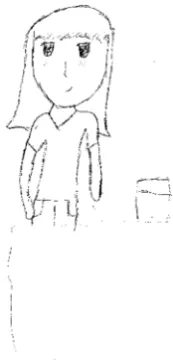
Figure 2. Female scientist DAST post-test image drawn by the same girl who drew the pre-test image shown in Figure 1.
sulting in faint lines and caption lettering. In order to preserve the integrity of these ar-tifacts as expressions of the girls’ perceptions, the drawings were scanned without any retouching or editing to make lines or letters more distinct.
[image:8.595.265.480.300.573.2]Figure 3. DAET test drawing of a male figure holding a tool, pre-sumably to repair a broken car light.
Figure 4. DAET post-test image of a female engineer doing laboratory work drawn by a girl who before attending STEM Club had no idea of what an engineer was or did.
Figure 5. DAET pre-test drawing of a stereotypical male mechanic wearing dirt spattered clothing and standing beside a car.
science education, the third co-author. Descriptive statistics were calculated because 1) DAST-C and the E-DAST were written artifacts of the ISE/EST partnership (and re-sulting STEM Club) impact on the girls’ perceptions of scientists and engineers and 2) the sample size, n, was small. The mean pre-test score and the mean post-test score were compared as indicators of trends in the girls’ perceptions.
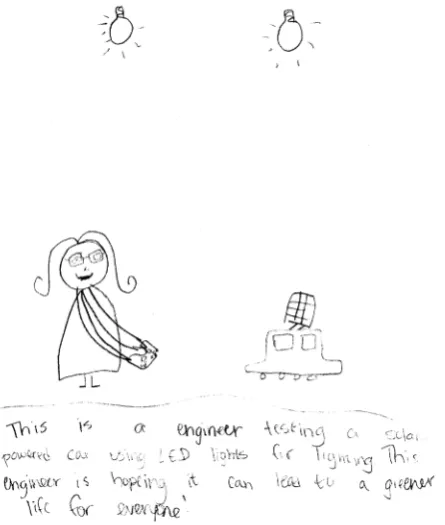
[image:9.595.258.489.446.563.2]Figure 6. DAET post-test image drawn by the same girl who drew the male engineer image in Figure 5.
ventoried symbols in a drawing associated with a stereotypical image of a scientist that appears in a drawing. A high DAST-C score was associated with a stereotypical scientist image; a low score was associated with a realistic scientist image. DAST-C scores for 7 of the 8 girls either stayed the same or declined slightly after participation in STEM-Club. These data indicated that most girls maintained the traditional(Chambers, 1983; Silver & Rushton, 2008b), although not monstrous or cartoonish, scientist images that they brought to the Club or developed slightly more realistic scientist images. The ap-pearance of the drawings corroborated the trend in the pre- and post-DAST-C scores.
were not just viewed as teachers the girls had spent the day with, but had become real people to them (Farland-Smith, 2012: p. 15)”.
The E-DAST scoring rubric enabled a more sophisticated interpretation of the DAST drawings by characterizing the scientist image according to the criteria of “Appear-ance”, “Location” and “Activity”. These criteria were scored as “Can’t Be Categorized”, “Sensationalized”, “Traditional” or “Broader than Traditional” (Farland-Smith & McComas, 2009: p. 50). The highest possible E-DAST score, 9, indicated a scientist im-age that transcended the traditional stereotypical appearance, location and activity, while lower scores were associated with stereotypical images.
For more than half of the girls, E-DAST scores increased after participation in STEM Club. Eighty-six percent of post-test scores were in the range of 7 - 9, placing them so-lidly in the category of “Broader than Traditional" images. By comparison, 100% of pre-test scores were in the range of 5 - 7 indicating that students held “Traditional” scientist images when they began STEM Club. This trend in E-DAST scores was evi-dence that the gifted fifth grade girls’ images of scientists had evolved from traditional, stereotypical images to more realistic images that went beyond the standard, stereotyp-ical image.
The girls’ drawings likewise corroborated that their scientist images after participa-tion in STEM Club extended beyond the tradiparticipa-tional, mostly male stereotype. The drawings showed change, not only in terms of including more depiction of female scientists, but in showing settings other than a laboratory.
Each pre and post-test DAET drawing was separately scored according to two ru-brics, the Knight & Cunningham (2004)image frequency analysis(Knight & Cunning-ham, 2004)and the “DAET Scoring Guide” (Thompson & Lyons, 2008: pp. 199-200). The ISE, EST, and the science education professor scored the DAET drawings inde-pendently.
The image frequency analysis (Knight & Cunningham, 2004)identified and tallied the occurrence of traditional, stereotypical images associated with engineering in DAET drawings. This rubric designated 6 thematic groupings: 1) images of building/fixing, 2) images of designing, 3) images of products of mechanical engineering, 4) images of products of civil engineering, 5) images of trains, and 6) images of laboratory work. The pre-test drawing in Figure 3 linked the activity of fixing to a product of mechanical en-gineering, the car. Another drawing depicted building activity and incorporated tradi-tional symbols associated with construction, a hard hat and a nail gun. However, the image went beyond the stereotypical construction/building image by showing a female construction worker. The girls did not draw any train-related images on the pre-test.
ele-ments as evidence that the girls had retained the science and engineering content from the STEM Club activities. Neither gender nor race/ethnicity was included in the Knight & Cunningham (2004)image analysis rubric.
The evolution of the fifth grade girls’ perception of engineers was evident in the im-ages they drew on the DAET. Their post-test DAET imim-ages showed designing activity and laboratory work as aspects of engineering as well as female engineers. Girls’ engi-neer images created after participating in STEM Club reflected a more realistic, sophis-ticated understanding of engineering. These post-test drawings replaced the fixing and building or creating products shown in the images drawn before participation in the Club with design and laboratory research activity. On the pre-test DAET, one girl was unable to draw an image of an engineer. Instead, she wrote, “Nothing in my mind … what does an engineer do?” On her post-test DAET, she drew an image of a non- stereotypical, female engineer doing laboratory work is shown in Figure 4.
The DAET Scoring Guide(Thompson & Lyons, 2008) was a tool for assessing the extent to which the image conveyed an accurate and complex understanding of engi-neering. The Guide scored drawings on a scale from 0-2 based on 4 categories: (1) “En-gineering Artifacts (Tools/Equipment/Models/Symbols); (2) “Diversity of Fields”; (3) “Engineering Processes”; and (4) “Portrayals of Engineering” (Thompson & Lyons, 2008). Overall scores obtained using the DAET Scoring Guide could range from 0-8 corresponding to levels of understanding of engineering from total ignorance about the field (0) to a highly nuanced understanding (8). The sophisticated understanding of en-gineering encompassed realistic design, experimentation and presentation of informa-tion.
Comparison of pre and post-test DAET Scoring Guide scores showed that for 7 of 8 girls, DAET scores increased after being a member of STEM Club. Pre- and post-test DAET drawings corroborated the trend in the DAET scores. One girl’s engineer image developed from a traditional male auto mechanic standing near a car (Figure 5) to a female engineer performing laboratory testing on a model of a “green” car equipped with solar panels and LED lights (Figure 6). This girl’s post-test engineer drawing was identical to her post-test scientist drawing, except for changing the word “scientist” to “engineer” in the caption of the engineer drawing. This similarity may have reflected her understanding of the inter-connected nature of the science and engineering STEM disciplines that was evident during Club discussions. Both post-test drawings also demonstrated this girl’s retention and synthesis of science content and the life lesson she learned during STEM Club inquiry investigations.
4. Conclusions
ground up”. The EST knew the needs and interests of the gifted fifth grade girls. She communicated them to the ISE and together they developed a curriculum that inte-grated science/engineering and social studies to engage the girls. Together, the ISE and EST monitored the girls’ learning of science/engineering content knowledge through informal discussions and the written artifacts of the girls’ lab notebooks. Drawing based instruments revealed that through the STEM Club, this synergistic partnership changed gifted fifth grade girls’ perceptions of scientists and engineers.
Gifted fifth grade girls’ DAST and DAET drawings provided insight into how their understandings of scientists and engineers changed over the course of 7 STEM Club meetings. The most dramatic change was observed in their perceptions of engineers. Images drawn before participation in STEM Club were highly stereotypical representa-tions that associated engineers with repairmen, mechanics or construction workers, al-beit a female construction worker for one girl. These pre-test images were consistent with the findings of Silver & Rushton (2008b). Images drawn after STEM Club in-volvement replaced those traditional images with non-traditional images of females doing authentic design or laboratory work. One girl’s perception moved from a com-pletely naïve understanding of not knowing what an engineer was or did, to that of a non-stereotypical female engineer doing laboratory work as shown in Figure 4.
Changes in the girls’ perceptions of scientists were more subtle. Their pre-STEM Club images of traditional, male scientists primarily doing bench chemistry work with beakers and flasks were broadened to less traditional images that included female scien-tists or scienscien-tists engaged in teaching. However, some traditional images did persist even after participation in STEM Club. These results were consistent with Melber’s
(2003)findings that gifted fourth and fifth graders drew DAST images with fewer ste-reotypical elements after participating in a museum after-school outreach program.
These gifted fifth grade girls already had fairly well established perceptions of scien-tists as reflected in the images of scienscien-tists that they drew. These findings were consis-tent with those ofChambers (1983)who showed that children’s scientist images stabi-lized between the 4th and 5th grades. Participation in a STEM Club with a female scien-tist/engineer ISE was successful in modifying these images to be somewhat less tradi-tional, particularly with respect to scientist gender. Drawings made after STEM Club participation showed a 30% increase in the number of female scientist images. This in-crease in the number of female scientist images was consistent with the findings of
Bodzin & Gehringer (2001). Their study found that 4th and 5th grade students visited by a female STEM practitioner drew more female scientist images than students in the classroom visited by a male STEM practitioner.
par-ticipation in STEM Club. For engineer drawings, the change in the engineer image gender was also greater than the change observed for scientist images. The number of post-test female engineer images showed a 42% increase from the pre-test compared to the 30% increase in female scientist images from the pre-test. The female scientist/ engineer ISE role model may have influenced the girls to replace male scientist or engi-neer images with female images. By contrast with the findings of Buck et al. (2002), the ISE retained her STEM practitioner identity. Unlike the female scientists in theBuck et al. (2002) study, she was not categorized as a teacher. The coordination relationship of the ISE-EST partnership allowed the ISE and EST to play distinct roles which were rec-ognized as such by the students.
Likewise, this study’s results, 1) broadening perceptions of scientists beyond the tra-ditional male stereotype to include more females; 2) developing realistic perceptions of engineers involved in design and laboratory research, rather than as mechanics or con-struction workers; and 3) dramatically broadening perceptions of engineers to include more females, differ from the results of the HGGC project (Silver & Rushton, 2008a; Silver & Rushton, 2008b). In the present study, gifted fifth grade girls’ perceptions of scientists and engineers became more realistic while those of the fifth graders who par-ticipated in the HGGC project became more stereotypical. These divergent outcomes suggested that a short (1 - 2 weeks) intensive building project, the HGGC electric car, reinforced scientist and engineer stereotypes. By contrast, the STEM Club that was created through an ISE-EST partnership dispelled scientist and engineer stereotypes. The synergistic relationship between the ISE and EST as distinguished from the visitor role played by the scientists and engineers in these earlier studies was critical to devel-oping more realistic scientist and engineer images.
In their study of middle school students in grades 6 - 8, Fralick, Kearn, Thompson & Lyons (2009) found that even these older students had limited understanding of engi-neers and their work. Middle school students either had “no perception of engineering”
(Fralick et al., 2009: p. 60) or associated engineering with manual labor. Like the gifted fifth grade girls in this study, the middle school students had more developed images of scientists as experimenters and observers. The persistence of naïve engineer stereotypes into the middle school grades identified by Fralick et al. (2009)together with the indi-cation from this study that gifted fifth grade girls who participated in a STEM Club de-veloped realistic and sophisticated perceptions of engineers suggest that outreach ef-forts to introduce children to engineering should begin in elementary school.
5. Suggestions for Future Work
References
Ashbrook, P. (2010). Inquiry at Play. Science and Children, 48, 26-27.
Bodzin, A., & Gehringer, M. (2001). Breaking Science Stereotypes. Science and Children, 39, 36- 41.
Bohrmann, M. L., & Akerson, V. L. (2001). A Teacher’s Reflections on Her Actions to Improve Her Female Students’ Self-Efficacy toward Science. Journal of Elementary Science Education, 13, 41-55. http://dx.doi.org/10.1007/BF03176219
Buck, G. A., Leslie-Pelecky, D., & Kirby, S. K. (2002). Bringing Female Scientists into the Ele-mentary Classroom: Confronting the Strength of EleEle-mentary Students’ Stereotypical Images of Scientists. Journal of Elementary Science Education, 14, 1-10.
http://dx.doi.org/10.1007/BF03173844
Carlisle, P. (2011). Scientists on a Mission. Science and Children, 48, 74-79.
Carlone, H. B., Hauen-Frank, J., & Webb, A. (2011). Assessing Equity beyond Knowledge-and Skills-Based Outcomes: A Comparative Ethnography of Two Fourth Grade Reform-Based Science Classrooms. Journal of Research in Science Teaching, 48, 459-485.
http://dx.doi.org/10.1002/tea.20413
Chambers. D. W. (1983). Stereotypic Images of the Scientist: The Draw-A-Scientist-Test. Science Education, 67, 255-265. http://dx.doi.org/10.1002/sce.3730670213
Farland-Smith, D. (2012). Personal and Social Interactions between Young Girls and Scientists: Examining Critical Aspects for Identity Construction. Journal of Science Teacher Education, 23, 1-18. http://dx.doi.org/10.1007/s10972-011-9259-7
Farland-Smith, D., & McComas, W. (2009). Teaching the Human Dimension of Science. Science and Children, 46, 48-51.
Finson, K. D., Beaver, J. B., & Cramond, B. (1995). Development and Field Test of a Checklist for the Draw-A-Scientist Test. School Science and Mathematics, 95, 195-206.
http://dx.doi.org/10.1111/j.1949-8594.1995.tb15762.x
Fralick, B., Kearn, J., Thompson, S., & Lyons, J. (2009). How Middle Schoolers Draw Engineers and Scientists. Journal of Science Education and Technology, 18, 60-73.
http://dx.doi.org/10.1007/s10956-008-9133-3
Hodson, D. (2003). Time for Action: Science Education for an Alternative Future. International Journal of Science Education, 25, 645-670. http://dx.doi.org/10.1080/09500690305021
Hodson, D. (2004). Going beyond STS: Towards a Curriculum for Sociopolitical Action. The Sci- ence Education Review, 3, 2-7.
Joyce, B. A., & Farenga, S. J. (1999). Informal Science Experience, Attitudes, Future Interest in Science, and Gender of High-Ability Students: An Exploratory Study. School Science and Ma-thematics, 99, 431-437. http://dx.doi.org/10.1111/j.1949-8594.1999.tb17505.x
Kaufman, E. E. (2010). Making a Difference for the Future. NSTA Reports, 22, 3.
Knight, M., & Cunningham, C. (2004). Draw an Engineer Test (DAET): Development of a Tool to Investigate Students’ Ideas about Engineers and Engineering. In E. Matson, & S. Deloach (Eds.), Proceedings of the 2004 American Society for Engineering Education Annual Confe-rence & Exposition (pp. 2530-2540). Salt Lake City, UT: American Society for Engineering Education.
Leffler, B., & Crauder, B. (2011). T’ was the Start of Science Notebooking. Science and Children, 49, 56-61.
International Journal of Science Education, 32, 669-685.
http://dx.doi.org/10.1080/09500690902792385
Marek, E. A. (2009). Genesis and Evolution of the Learning Cycle. In W.-M. Roth, & K. Tobin (Eds.), World of Science Education: Handbook of Research in North America (pp. 141-156). Rotterdam, Netherlands: Sense Publishers.
McCann, F., Marek, E. A., Pedersen, J., & Falsarella, C. (2007). CLSI: Cool Life Science Investiga-tions. Science and Children, 45, 26-29.
McCann, F., Millsap, K., Schmidt, S., & Falsarella, C. (2010). Time for a Change. Science and Children, 47, 41-45.
McCann, F., Pedersen, J., Falsarella, C., & McCann, P. (2008). There’s More to Light than Meets the Eye. Science Scope, 31, 33-39.
McNeill, K. L. (2011). Elementary Students’ Views of Explanation, Argumentation and Evidence, and Their Abilities to Construct Arguments over the School Year. Journal of Research in Sci- ence Teaching, 48, 793-823. http://dx.doi.org/10.1002/tea.20430
Melber, L. H. (2003). Partnerships in Science Learning: Museum Outreach and Elementary Gifted Education. Gifted Child Quarterly, 47, 251-258.
http://dx.doi.org/10.1177/001698620304700402
National Science Teachers Association. (2010). NSTA Reports, 21(7), 1-4. National Science Teachers Association. (2011a). NSTA Reports, 22(6), 20-21. National Science Teachers Association. (2011b). NSTA Reports, 23(4), 22-23.
O’Neill, T. B. (2010). Fostering Spaces of Student Ownership in Middle School Science. Equity & Excellence in Education, 43, 6-20. http://dx.doi.org/10.1080/10665680903484909
Park, S., & Oliver, J. S. (2009). The Translation of Teachers’ Understanding of Gifted Students into Instructional Strategies for Teaching Science. Journal of Science Teacher Education, 20,
333-351. http://dx.doi.org/10.1007/s10972-009-9138-7
Patton, M. Q. (2002). Qualitative Research & Evaluation Methods. Thousand Oaks, CA: Sage Publications.
Rawson, C. H., & McCool, M. A. (2014). Just Like All the Other Humans? Analyzing Images of Scientists in Children’s Trade Books. School Science and Mathematics, 114, 10-18.
http://dx.doi.org/10.1111/ssm.12046
Scantlebury, K., Tali, T., & Rahm, J. (2007). FORUM: “That Don’t Look Like Me.” Stereotypic Images of Science: Where Do They Come from and What Can We Do with Them? Cultural Studies of Science Education, 1, 545-558. http://dx.doi.org/10.1007/s11422-006-9023-z
Schibeci, R. A. (1986). Images of Science and Scientists and Science Education. Science Educa-tion, 70, 139-149. http://dx.doi.org/10.1002/sce.3730700208
Silver, A., & Rushton, B. S. (2008a). The Effect of the Horsham Greenpower Goblin Challenge on Children’s Attitudes towards Science, Engineering and Technology. Education, 36, 339-350. Silver, A., & Rushton, B. S. (2008b). Primary-School Children’s Attitudes towards Science,
Engi-neering and Technology and Their Images of Scientists and Engineers. Education, 36, 51-67. Steinke, J., & Long, M. (1996). A Lab of Her Own? Portrayals of Female Characters on Children's
Educational Science Programs. Science Communication, 18, 91-115.
http://dx.doi.org/10.1177/1075547096018002001
Tucker-Raymond, E., Varelas, M., Pappas, C. C., Korzh, A., & Wentland, A. (2007). “They Prob-ably Aren’t Named Rachel”: Young Children’s Scientist Identities as Emergent Multimodal Narratives. Cultural Studies of Science Education, 1, 559-592.
http://dx.doi.org/10.1007/s11422-006-9017-x
Vanmali, B. H., & Abell, S. K. (2009). Finding a Place for Girls in Science. Science and Children, 46, 62-63.
Walls, L. (2012). Third Grade African American Students’ Views of the Nature of Science. Jour-nal of Research in Science Teaching, 49, 1-37. http://dx.doi.org/10.1002/tea.20450
Weiland, I. S., & Akerson, V. L. (2013). Toward Understanding the Nature of a Partnership be-tween an Elementary Classroom Teacher and Informal Science Educator. Journal of Science Teacher Education, 24, 1333-1355. http://dx.doi.org/10.1007/s10972-013-9343-2
Submit or recommend next manuscript to SCIRP and we will provide best service for you:
Accepting pre-submission inquiries through Email, Facebook, LinkedIn, Twitter, etc. A wide selection of journals (inclusive of 9 subjects, more than 200 journals)
Providing 24-hour high-quality service User-friendly online submission system Fair and swift peer-review system
Efficient typesetting and proofreading procedure
Display of the result of downloads and visits, as well as the number of cited articles Maximum dissemination of your research work