i
“It's Been Devastating”: An Interpretative Phenomenological
Analysis of the Experience of being Cyberstalked
Kathie Reveley
(1120948)
A thesis submitted in partial fulfilment of the requirements of the School of
Psychology, University of East London for the degree of Professional Doctorate
in Counselling Psychology
ii ABSTRACT
Internet usage across the globe has grown exponentially over the past sixteen years from 361 million users in 2000 to 3.68 billion users in 2016, constituting an increase of over 918% (Miniwatts Marketing Group, 2016a). The increase in utilization and advancement of communication technologies has led to an increase in the prevalence of cyberstalking (Parsons-Pollard & Moriarty, 2009). Consequently, cyberstalking has become a global epidemic (Maple, Short & Brown, 2011). However, in contrast to the ubiquitous nature of cyberstalking, there is relatively little research examining the impact of cyberstalking on victims (Dressing, Bailer, Anders, Wagner & Gallas, 2014; Parsons-Pollard & Moriarty, 2009).
The current study aimed to address this paucity in research and explore and understand more about the lived experience of being cyberstalked. Interviews were carried out with five people who had been cyberstalked and transcripts were analysed using Interpretative Phenomenological Analysis (IPA). Three superordinate themes emerged including ‘feeling powerless’, ‘loss’ and ‘trying to make sense of the perpetrator’.
iii
LIST OF CONTENTS
Abstract ii
List of Contents iii
List of Tables viii
List of Figures viii
List of Abbreviations viii
Acknowledgements ix
CHAPTER 1: INTRODUCTION 1
1.1 Research Background 1
1.2 Relevance to Counselling Psychology 2
1.3 Reflexive Note 3
CHAPTER 2: LITERATURE REVIEW 4
2.1 Introduction 4
2.2 Defining Cyberstalking 4
2.2.1 Cyberstalking and Offline Stalking 6
2.2.2 Historical Context of Stalking 7
2.2.3 Social Construction of Stalking 8
2.3. Characteristics of Stalking 10
2.3.1 Gender of Victim and Perpetrator 10 2.3.2 Victim and Perpetrator Relationship 11
2.3.3 Stalking Motives 13
2.4 Mental Health Distress 14
2.5 Quantitative Research Design Assessing
Mental Health Distress 15
2.6 Qualitative Research Design Assessing
Mental Health Distress 19
2.7 Coping Strategies 22
2.8 Rationale for the Current Research Project
iv
2.9. Research Questions 27
CHAPTER 3: METHODOLOGY 28
3.1 Introduction 28
3.2 Paradigms 28
3.3 Rationale for choosing IPA 30
3.3.1. Phenomenology 32
3.3.2 Hermeneutics 33
3.3.3 The Hermeneutic Circle 35
3.3.4 Idiography 36
3.4 Participant Selection and Recruitment 37
3.5 Data Collection 39
3.6 Data Analysis 40
3.7 Validity 43
3.7.1 Sensitivity to Context 43
3.7.2 Commitment and Rigour 44
3.7.3 Transparency and Coherence 44
3.7.4 Impact and Importance 45
3.8 Ethics 45
3.9 Reflexivity 46
CHAPTER 4: ANALYSIS 49
4.1 Introduction 49
4.2 Superordinate Theme One: Trying to Make
sense of the perpetrator 50
4.2.1 Subtheme One: Characterising the perpetrator as
pathologised: “He’s just not right in the head” 50 4.2.2 Subtheme Two: The dichotomised perpetrator:
“This is like two different people messaging
and neither one of them would go away” 54
v
“I don’t have enough pieces of the puzzle here
to figure it out” 57
4.3 Superordinate Theme Two: Feeling powerless 60 4.3.1 Subtheme One: Feeling victimised: “That’s What
they did to me” 61
4.3.2 Subtheme Two: The invasive perpetrator invoking fear and helplessness: “Oh my God, she’s coming
in! She’s coming in!” 63
4.3.3 Subtheme Three: Empowering parties exacerbating distress: “They do not support you they fall away” 66 4.3.4 Subtheme Four: Desperation and suicide ideation:
“I nearly took my own life” 72
4.4 Superordinate Theme Three: Loss 75
4.4.1 Subtheme One: Loss of relationships and subsequent isolation: “All of my relationships have changed because of this and being really
alone in the world” 76
4.4.2 Subtheme Two: Loss of freedom: “You’re in limbo.
You’re sitting, waiting and wondering” 80
4.4.3 Subtheme Three: The diminished self: “I kind of
had to re, rebuild, had to build my self-esteem” 83 4.4. Subtheme Four: Unhelpful coping strategies 85
compounding distress, resulting in a diminished quality of life: “it felt like it wasn’t my life I was leading”
CHAPTER 5: DISCUSSION 90
5.1 Introduction 90
5.2 Summary of Findings 90
vi
5.2.2 Powerless 93
5.2.3 Empowering Parties Exacerbating Distress 94 5.2.4 Desperation and Suicidal Thoughts 97
5.2.5 Loss 98
5.2.6 The Diminished Self 100
5.2.7 Coping Strategies 101
5.3 Characteristics of Stalking Victimization
and Perpetration 104
5.4 Clinical Implications 105
5.4.1. Multiple Relational Dyads 106
5.4.2 A Containing Space 106
5.4.3 Making Sense of Anger and Processing Anger 108
5.4.4 A Relational Approach 109
5.4.5 Coping Strategies 110
5.5 Reflexivity 112
5.6 Limitations 115
5.7 Further Research 116
5.8 Conclusion 117
REFERENCES 119
APPENDICES
Appendix A: Invitation to Participate and Consent Form 131 Appendix B: Participant information Table 135
Appendix C: Interview Schedule 136
Appendix D: Exploratory Notes & Emergent
Themes (Barbara) 137
Appendix E: Diagram of Themes (Rafiq) 138
Appendix F: Converging Themes 140
Appendix G: UEL Ethics Approval Letter 141
vii
Appendix I: Risk Assessment Checklist 143
viii
LIST OF TABLES
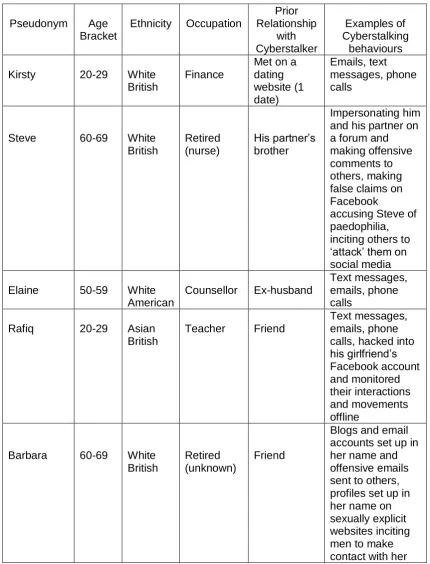
Table 1 Participant Details 39
LIST OF FIGURES
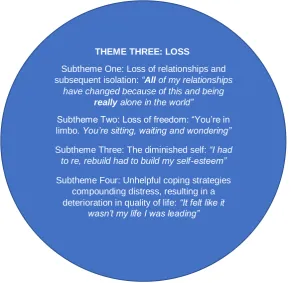
Figure 1 Diagram of themes and subthemes 49 Figure 2 Diagram of theme one and subthemes 50 Figure 3 Diagram of theme two and subthemes 60 Figure 4 Diagram of theme three and subthemes 75
ABBREVIATIONS
GAD Generalized Anxiety Disorder
IPA Interpretative Phenomenological Analysis ONS Office for National Statistics
ix
ACKNOWLEDGMENTS
I would like to thank the participants who took the time to take part in this research
project and share their experiences with me. Your strength, courage and
authenticity in recounting your experiences is acknowledged and very much
appreciated.
I am grateful to my research supervisor Dr Sharon Cahill who provided
encouragement and motivation throughout the research process.
I would also like to thank my wonderful friends and family for their support and
understanding of the time and internal resource required in such an endeavour.
A special thanks to my mother-in-law, Liz, for her support and belief in me and
for the many cards she sent to spur me on. Sincere thanks also, to Andrea and
Amy for their friendship, kindness and camaraderie throughout our journey on the
Doctoral programme.
Most of all, I would like to thank my dear husband Gavin for his enduring love,
strength and unwavering belief in me. Without you this would not have been
1
CHAPTER 1: INTRODUCTION
1.1 Research Background
In 2016 the internet was used daily or almost daily by 82% of adults (41.8 million)
in Great Britain and the most popular online activity was communicating with
others (ONS, 2017). Social network sites, email, instant messaging, blogging
and chat rooms and are just some of the means by which people in today’s
society can interact with one another. Such web-based technologies facilitate
fast-paced, asynchronous, low cost methods of communication (Bryant,
Sanders-Jackson & Smallwood, 2006). The rise in popularity of online communication is
reflected in the vast number of subscriptions to Facebook, which currently stands
at 1.68billion subscribers (Miniwatts Marketing Group, 2016b), constituting 22.9% of the world’s population. Increased ownership and usage of smart phones and
mobile devices has facilitated the growth in online communication (Statista, 2017)
and social media has become a part of everyday life and a cultural norm (Smith,
Smith & Blazka, 2017).
When used appropriately, online communication can decrease loneliness and
depression (McKenna, Green & Gleason, 2002), provide a valuable source of support for vulnerable individuals (Aakhus & Rumsey, 2010) and expand one’s
social network (Chaulk & Jones, 2011; McKenna et al., 2002). However, there is
mounting evidence of online communication being used malevolently to monitor,
pursue or harass others (Dressing et al., 2014). The growing use of electronic
media mean that victims can be targeted through multiple channels (Maple et al.,
2011) and reports indicate that cyberstalking is expanding at a rapid pace (Alexy,
2
In comparison to offline stalking, cyberstalking has received considerably little
attention (Reyns, Henson & Fisher, 2012) and further research into this
phenomenon is essential (Parsons-Pollard & Moriarty, 2009). Much of the
research into cyberstalking that has been undertaken, has gathered statistical
data related to the prevalence of cyberstalking (e.g. Dressing et al., 2014; Reyns
et al., 2012) and characteristics of cyberstalking behaviour (e.g. Dressing et al.,
2014; Alexy et al., 2005; Sheridan & Grant, 2007). Of the few studies that have
focused on the impact of cyberstalking, quantitative methods have commonly
been employed (e.g. Dressing et al., 2014; Maple et al., 2011; Chaulk & Jones,
2011). It is anticipated that the use of exploratory qualitative methods in the
current study will facilitate a detailed and rich understanding of the experience of
being cyberstalked.
1.2 Relevance to Counselling Psychology
Cyberstalking may suffer from being dismissed as less real and detrimental than offline stalking (Maple et al., 2011) and terms such as ‘Facebook stalking’
trivialize the seriousness of cyberstalking (Dressing et al., 2014). However, the
consequences of being cyberstalked are multifaceted and affect the psychological, social and economic aspects of the victim’s life (Maple et al., 2011)
with cyberstalking victims reporting depression, suicide ideation, PTSD
symptomology, fearfulness and anger (Short, Linford, Wheatcroft & Maple, 2014).
The profession of Counselling Psychology strives to enhance and build upon an individual’s wellbeing and empower clients and research participants (Cooper,
2009). In line with the values of Counselling Psychology, this research project
3
victims of cyberstalking to learn more about the experience and psychological
impact of this form of harassment. Support for victims of cyberstalking is vital
(Short et al., 2014) and it is anticipated that the current research project will
illuminate the role of Counselling Psychology in providing support to those
affected.
1.3 Reflexive Note
Prior to the commencement of this research project, I had made a conscious
decision not to join any of the popular social networking sites such as Facebook,
Twitter or Instagram. The possibility of online communication being used
malevolently to harm me left me feeling anxious and fearful. Despite my friends,
family and work colleagues encouraging me to join such social networking
forums, I firmly opted out. However, when an increasing number of reports
started to appear in the media in 2012 of people being cyberstalked, trolled and
cyberbullied, I felt concerned for those targeted and my interest in malevolent
online communication and the mental health distress that it created grew. The
government seemed unable to stop perpetrators and there appeared to be little
sympathy from the public towards those targeted, despite the apparent distress
inflicted. I decided that instead of circumventing social media, I wanted to begin
engaging with it to learn more about the lived experience of people who were
4
CHAPTER 2: LITERATURE REVIEW
2.1 Introduction
This chapter begins by defining cyberstalking before presenting research locating
cyberstalking to commonly exist in parallel with offline stalking. The historical
context and social construction of stalking is discussed followed by a brief
overview of the key characteristics of offline and online stalking. Research and
theory examining the experience of being cyberstalked including mental health
distress created and coping strategies employed are presented and critiqued.
Finally, the chapter concludes with a rationale for this research project and the
research questions it aims to answer.
2.2 Defining Cyberstalking
Cyberstalking is defined within the literature in a multiplicity of ways (Sheridan &
Grant, 2007) and definitions are likely to continue to evolve as technology
progresses (Reyns at al., 2012). Maple et al. (2011) suggest that while definitions
vary, they all include the common theme of a repetition of harassing behaviour
leading to fear in the victim. The Protection from Harassment Act (1997) states that ‘an offence of stalking can only be established where an offence of
harassment has taken place which involves ‘causing the person (victim) distress
or alarm’ on at least two occasions (Home Office, 2012). Therefore, the victim’s
perception of the perpetrator’s actions is pivotal in deciphering if the behaviour
constitutes online stalking. The National Centre for Cyberstalking Research (2012a) defines cyberstalking as ‘a course of action that involves more than one
5
while also not specifying a definitive list of online behaviours that may soon
become out of date. It is the definition proposed by the National Centre for
Cyberstalking Research that will be employed for the current research project when referring to ‘cyberstalking’ and ‘online stalking’.
Examples of online stalking behaviour include repeated unwanted emails or
instant messages, posting false or hostile details about the victim online, hacking into personal accounts, subscribing to products or services in the victim’s name
and recruiting others to harass the victim (Sheridan & Grant, 2007).
Cyberstalking shares similarities with other forms of online malevolent behaviour
such as cyber harassment, cyberbullying and trolling (Cavezza & McEwan,
2014). The period of time over which the behaviour occurs differentiates
cyberstalking from cyber harassment with cyberstalking taking place over a
protracted period of time (Ogilvie, 2000). Beran and Li (2005) suggest that
cyberbullying is the equivalent of cyber harassment but that the former is
associated with children while the latter is relevant to adults. Trolling is
characterised by the intentional provocation of an emotional response through
online comments or posts (Hardaker, 2010). Cyberstalking differs from trolling in
that the former is targeted towards a specific person whereas the latter is
undertaken indiscriminately (Hardaker, 2010).
Contradictory prevalence rates of cyberstalking studies abound owing to
variations in samples drawn on, methods employed and how the term ‘cyberstalking’ is operationalised (Sheridan & Grant, 2007; Cavezza & McEwan,
2014). A study by Dressing et al. (2014) found prevalence rates varying from
43.4% to 6.3% depending on the definition employed, particularly if a duration or
particular quality of the unwanted contacts is specified within the definition.
6
and this further compounds the difficulty of establishing prevalence rates. An
Accurate estimate of the prevalence of cyberstalking is therefore unknown (Short
et al., 2014).
2.2.1 Cyberstalking and Offline Stalking
Reyns, et al. (2012) suggest that the matter of whether cyberstalking is a variant
of stalking rather than distinct from stalking is open to debate. However,
Sheridan and Grant (2007) propose that cyberstalking exists in parallel with
offline stalking and occurs in varying degrees rather than as a separate form of
stalking in isolation. They propose that electronic methods such as emails or blogging websites offer alternative weapons in a stalker’s arsenal. Similarly,
Maple et al. (2011) suggest that stalkers have become cyberstalkers and utilise
new and evolving electronic resources at their disposal to target victims. In their
study they found that 76% of participants were stalked offline and this progressed
to include online stalking, 4% were stalked online and this progressed to include
offline stalking and 20% of participants were stalked purely online. A strikingly
similar proportion of participants (74.2%) in a study by Dressing et al. (2014)
reported that they had been subjected to both online and offline stalking. In their
study, they recruited 6379 participants from a social networking site. Their study
revealed that 42% of participants experienced simultaneous onset of
cyberstalking and offline stalking, 16.5% reported that cyberstalking preceded
offline stalking and in 15.8% of cases, offline stalking preceded cyberstalking.
The authors propose that cyberstalking should be considered as an adjunct or a
variant of offline stalking. Other studies have yielded similar results, primarily
7
by their perpetrators (e.g. Cavezza & McEwan, 2014; Short et al., 2014; Alexy et
al., 2005).
Cumulatively these findings suggest that cyberstalking often occurs in
conjunction with offline stalking. While the focus of this piece of research remains
centred on the experience of cyberstalking, it is essential to consider it within the
broader context of offline stalking in order to locate and examine the experience
of cyberstalking within this. The following sections will consider the historical
context of stalking and parties contributing to its construction.
2.2.2 Historical Context of Stalking
Stalking behaviour is millennia old despite the crime being of relatively contemporary construction and was captured in Shakespeare’s Othello (Meloy,
1998) and Louise May Alcott’s novel ‘A Long Fatal Love Chase’ written in 1866
(Cupach & Spitzberg, 2004). Stalking was one of the last interpersonal crimes to
be criminalised (Miller, 2012) and as of 1989 stalking was not legally prohibited
in any country. However, after Robert Bardo murdered actress Rebecca
Schaeffer in 1989 and following a succession of murders in California by persons
under restraining orders, the first anti-stalking law was passed in 1990 in
California (Spitzberg & Cupach, 2003). By 1999 every other US state and
numerous other countries around the world had passed similar legislation
(Spitzberg & Cupach, 2007). In the UK, The Protection from Harassment Act
came into effect on 16th June 1997 (Home Office, 2012). National Stalking
Awareness Day was introduced in 2011 and falls on 18th April (Ministry of Justice,
2012). The aim of the day is to encourage more victims to report the crime, seek
8 2.2.3 Social Construction of Stalking
Stalking was not discovered but constructed as a way to conceptualise a
particular type of relational behaviour (Mullen, Pathe & Purcell, 2001). Crimes such as stalking are social constructions brought to the public’s attention through
claims making by activists, officials or the press (Holstein & Miller, 2003). The
introduction of this legislation was prompted by the media who labelled the term ‘stalking’ (Keenahan & Barlow, 1997). The media plays a pivotal role in the
construction of social problems and following the sensationalised media
coverage of the murder of Rebecca Schaefer, stalking was understood as an
irrational, random and violent crime committed by a mentally unstable fan and was initially dubbed ‘star-stalking’ (Lowney & Best, 1995). News coverage is
often socially distorted, rooted in assumptions, myths and stereotypes and
presented in accordance with the ideology of the media distributor (Spitzberg &
Cadiz, 2002). Claims about a new crime usually typify the offender, the victim
and the crime (Lowney & Best, 1995) and men unknown to women are commonly
depicted in the media as potential psychopaths (Brockway & Heath, 1998). The
media constructed stalking to be a violent, gendered crime carried out by a
psychopathic stranger usually a male to a helpless victim, typically a woman. This
construction invoked entrenched societal stereotypes of women being victimised
by men and resonated with cultural narratives (Spitzberg & Cadiz, 2002).
Lowney and Best (1995) suggest that stalking wasn’t constructed as a social
problem until the murder of Rebecca Schaefer as it wasn’t presented in a way
that conformed to cultural myths. They argue that Rebecca Schaeffer was not
the first celebrity to be stalked, John Hinckley stalked actress Jodie Foster before
9
therefore, did not simply emerge following a well-publicised crime against a celebrity but rather Schaeffer’s murder became the typifying example of stalking.
The media’s coverage of celebrities being ‘star-stalked’, initiated a focus on
instances of non-celebrities being stalked and illuminated plentiful examples of
women being targeted. News stories emerged about women being targeted by
a former spouse or partner and stalking was understood to be a precursor to serious violence. Social movements such as the battered women’s movement
and the victim’s rights movement supported the new legislation and star stalking
was reconstructed as a violent crime by current or former husbands or partners against women and renamed ‘stalking’. However, it continued to be perceived to
be perpetrated by a person with a mental health disorder. (Lowney & Best, 1995).
Spitzberg and Cupach (2003) propose that tensions exist within the field
regarding the conceptualisation and theoretical underpinnings of stalking owing
to the conflicting agendas of contributing parties. They propose that legal domains conceptualise stalking as a pure crime whereas feminists and victim’s
groups conceptualise stalking as an issue of power, protection and patriarchy.
Furthermore, clinical groups view stalking as a product of individual pathology
while social scientists position stalking as existing within the realms of
interpersonal relationship theory. Spitzberg and Cupach (2003) suggest that the
reconceptualising of stalking as relational as opposed to the prototypical actions
of a crazed individual in pursuit of a high-status celebrity represents a sea change
10 2.3 Characteristics of Stalking
Stalking is a relational behaviour (Spitzberg & Hoobler, 2002) and the victim’s
experience of being stalked is shaped by the complex interplay of dynamics
between the perpetrator and themselves. Therefore, characteristics of the
co-created cyberstalker-victim relationship will be considered in order to
contextualise the victim’s experience. As cyberstalking often occurs in parallel
with offline stalking, it is essential to briefly draw on the extensive literature on
offline stalking before considering the available literature on cyberstalking.
2.3.1 Gender of Victim and Perpetrator
Research into the characteristics of offline stalking has revealed that it is most
commonly perpetrated by male perpetrators against female victims (Meloy &
Felthous, 2011; Miller, 2012; Blaauw, Winkel, Arensman, Sheridan & Freeve,
2002; Meloy, 1998). Spitzberg and Cupach (2007) conducted a meta-analysis of
175 studies of offline stalking representing over 122,00 individuals and found that between 60 and 80% of victims were female. While this suggests that the media’s
construction of stalking as a gendered crime rings true, this leaves between 20 and 40 % of victims within Spitzberg and Cupach’s (2007) analysis who were
male and who’s experience of stalking is therefore juxtaposed to societal
assumptions of stalking. Spitzberg and Cadiz (2002) argue that such stereotypes
may emasculate men who have been stalked by women and lead to a reluctance
in them reporting the crime, suggesting that the actual figure of male victims could
be considerably higher.
In line with Spitzberg and Cupach’s (2007) analysis, Dressing et al. (2014) found
11
were female (80.5%). However, they found that comparatively, the proportion of
female perpetrators of cyberstalking in their study (28%) was significantly higher
than the proportion of female perpetrators reported in studies examining offline
stalking. They suggest that cyberstalking is comprised of indirect aggression and
that this form of aggression may be more appealing to women than direct forms
of aggression such as confrontation, inherent in offline stalking. Similarly, Maple
et al. (2011) suggest that a higher proportion of men are stalked online compared
to offline because physical stature and strength is irrelevant in the digital
environment. Further evidence that a higher percentage of men are being stalked
online compared to offline is apparent in a study by Alexy et al. (2005). They
found that men were significantly more likely than women to have been
cyberstalked.
Together, these findings suggest that the binary assumption of stalking as a crime
perpetrated by men against women may not be the case for cyberstalking. Therefore, referring to cyberstalking as a ‘gendered crime’ fails to take into
account the nuances and complexities that exist within this form of behaviour and
promotes a unidimensional discourse on the topic that adheres to the
stereotypical instances of men victimising women. Furthermore, it fails to
recognise, validate and explore scenarios beyond the confines of this stereotype.
2.3.2 Victim and Perpetrator Relationship
Negotiating the quagmire of relational distance within relationships can be
problematic, particularly at the beginning of romantic relationships. The
stereotype of the persistent pursuer eventually winning over the object of their
12
persistent romantic is applauded (Miller, 2012). The heroic pursuit of the pursuer
to get the object of their desire and the threatening behaviour understood to be a
part of stalking behaviour creates a tension within society leading to ambivalence
as to the acts that constitute romantic persistence and those that comprise
stalking behaviour (Spitzberg & Cupach, 2003). Behaviours such as sending a
gift, showing up unexpectedly or calling victims at night may appear romantic,
benign or harmless to others but in the context of previous behaviours and taken
holistically can induce fear and distress in victims (Johansen & Thomsen, 2016).
Offline stalking develops most commonly from ex-intimate relationships (Mullen
et al., 2001; Miller, 2012; Spitzberg & Cupach, 2007; Blaauw et al., 2002; Meloy,
1998), followed by work, friendship or non-romantic relationships with stalkers
being unknown to their victims being the least common relational dyad (Miller, 2012). Spitzberg and Cupach’s (2007) meta-analysis of 175 studies revealed
that 79% of victims were acquainted with the perpetrator and almost half (49%)
of all stalking emerged specifically from a romantic relationship. Other relational contexts in which stalking occurred included ‘service related’ (e.g. teacher,
counsellor etc.) (29%), ‘acquaintance’ (23%) and ‘intimate non-romantic’ (e.g.
friend, family member) (15%).
Studies exploring the relationship between perpetrators and victims of
cyberstalking have yielded mixed results. Research by Cavezza and McEwan
(2014) and Dressing et al. (2014) found that cyberstalkers were more likely to be
ex-intimate partners than any other form of relationship category. However, a study by Short et al. (2014) found ‘acquaintance’ was the most common
relationship type with similar proportions of ‘current’ or ‘ex-partners’, and ‘strangers’. Short et al. (2014) suggest that perpetrators may find cyberstalking
13
of law enforcement. Similarly, Maple et al. (2011) found little difference in the
proportions of ‘acquaintance’ (20.4%), ‘stranger’ (21.7%), ‘someone I dated casually for a while’ (18.2%) and ‘unknown’ (16.4%). Interestingly, in their study
there was no tick box for ex-partners, unless they were married to them, lived
with them or had children with them and this accounted for 9.7%. This could account for the high percentage (16.4%) of participants selecting the ‘unknown’
relationship category.
2.3.3 Stalking Motives
An awareness of the motives of perpetrators and what they bring to the
relationship can facilitate an insight into the complex dynamic between the perpetrator and victim and the victim’s subsequent experience of cyberstalking.
A study by Meloy (2007) found that stalking perpetrators felt shunned or rejected
and pursued their victims following the end of a romantic relationship in order to
rekindle the romance or exact revenge on them. Miller (2012) reviewed the
literature on typologies of stalkers and found that stalkers fell into one of three
principal categories. In line with Meloy (2007), the first consisted of intimacy
seeking and the second involved intimidating or punishing the victim following
rejection from a relationship. A third category proposes the sadistic or predatory
stalker motivated by power and control. Miller (2012) suggests a fourth category
consisting of those with a psychotic overidentification with the stalker who
possesses a desire to replace him or her by essentially aiming to become them.
However, the findings from Spitzberg and Cupach’s (2007) meta-analysis of 175
studies suggest that the issue of stalking perpetration is more complex than a
14
one of four overarching types of motive; intimacy based, aggression based,
disability based and task conflict or issues. Intimacy related motives included
abandonment, dependency, infatuation, jealousy/envy, love, obsession,
reconciliation, relationship development and sexual. Aggression based motives
consisted of anger/revenge, attack, control/possession and intimidation.
Disability based motives included drugs and mental illness while task conflict
consisted of scenarios such as neighbourhood disputes or conflict over money. Their analysis suggests that the ‘typical’ stalking case is fuelled by multiple
motives from different categories which appear to be contradictory and
juxtaposed.
In terms of cyberstalking, much less research has been carried out to establish
the motivation as perceived by the victim or identified by the perpetrator.
However, in line with the findings of Meloy (2007), a study by Parsons-Pollard
and Moriarty (2009) found that perpetrators cyberstalked their victims to pursue
a relationship with them or to seek revenge following rejection.
2.4 Mental Health Distress
Research into the psychological impact of offline stalking has found increased
rates of depression, suicide ideation, anxiety and PTSD symptomology among
community based samples (e.g. Purcell, Pathe & Mullen, 2005) and clinical based
samples (e.g. Pathe & Mullen, 1997). Kuehner, Gass and Dressing (2007)
conducted a community-based study investigating the association between
stalking victimisation and specific DSM-IV mental disorders and recruited 675
participants. Psychiatric morbidity was assessed using the PRIME-MD Patient
15
had a significantly higher incidence of major depression and panic disorder and suffered from co-morbid disorders compared to those who hadn’t been targeted.
There has been very little research to date focussing on cyberstalking and much
less on the psychological distress of cyberstalking. The following section will
address studies that have explored the psychological impact and critically
evaluate them, beginning with quantitative studies before addressing qualitative
research.
2.5 Quantitative Research Design Assessing Mental Health Distress
Dressing et al. (2014) explored the prevalence, characteristics and impact of cyberstalking on victims’ well-being and mental health and recruited 6379
participants from StudiVZ, a social network site in Germany. The WHO-5 was
administered and participants were provided with a list of 16 psychological,
psychosomatic and social consequences and asked if they had suffered from any
of them as a result of being cyberstalked. The results revealed that victims of
cyberstalking experienced significantly poorer mental wellbeing than non-victims
and there was no significant difference between those who were purely
cyberstalked and those who were also stalked offline. Furthermore, 68.2%
reported feeling mistrustful towards others, 55.4% reported feelings of
helplessness, 54.9% reported feelings of anger/aggression, 49.6% reported
reticence towards unknown people, 34.6% reported feeling depressed, 34.6%
experienced a loss of control, 34.6% reported social withdrawal and 23.1%
reported experiencing panic attacks.
This study was conducted from a positivist stance using standardised measures
16
cyberstalking. However, the WHO-5 questionnaire consists of only five questions and as such its scope in establishing a participant’s ‘wellbeing’ is somewhat
limited. Furthermore, the design of the study prevents us from ascertaining in
what way the psychological, psychosomatic and social consequences (e.g.
helplessness, anger, depression) were experienced and the factors that
contributed to such feelings. The complex and nuanced impact of cyberstalking
beyond the parameters of these specified 16 consequences and five WHO
questions remains unexplored. It is also important to bear in mind that the mean
age of participants was 24.4 years old and as such the results indicate the impact
of cyberstalking on young adults.
The Network for Surviving Stalking (NSS) commissioned a team of researchers
at the National Centre for Cyberstalking Research to explore the prevalence,
motivation, nature and impact of cyberstalking. A questionnaire was devised and
hosted on the NSS website and 324 self-selected participants took part. Maple et
al. (2011), affiliates of the National Centre for Cyberstalking Research, conducted
an analysis of the findings. Anxiety and PTSD was measured using the GAD-7
and PTSD Checklist, Civilian version (PCL-C), respectively. The Post-Traumatic
Cognitions Inventory (PTCI) was also employed to measure trauma-related
thoughts and beliefs, believed to underlie post-traumatic psychopathology. This
measure consists of 36 items and three dimensions: negative cognitions about
the world, negative cognitions about the self and self-blame.
The results revealed that 34.9% of participants experienced all clusters of PTSD
symptoms, with 68.5% experiencing cluster B symptoms (re-experiencing of
event), 51.9% experiencing cluster C symptoms (avoidance and numbing) and
45.7 % experiencing cluster D symptoms (hyper-arousal). Furthermore, those
17
themselves and the world and were likely to blame themselves for negative
experiences or the trauma. Their study revealed that those categorised as being
PTSD symptomatic reported on average a higher number of methods through
which they had been stalked. Maple et al. (2011) suggest that this indicates a
link between the extent of harassment and level of psychological harm inflicted.
In terms of anxiety, the results revealed that 36.4% of participants experienced
severe anxiety, 17.0% reported moderate anxiety, 17.9% reported mild anxiety
and 12.7% reported no anxiety. Their study revealed that there were no
significant differences in the scores (GAD-7, PTSD, PTCI), between those who
experienced face to face harassment and those who only feared it. The authors
propose that this indicates that the threat or fear of physical confrontation from a
perpetrator can have a similar psychological impact as actual confrontation.
As regards fear, 80.9% of participants reported feeling fearful and 94.1% felt
distressed and respondents were asked to indicate what their primary fear was from a list of 6 ‘main fears’. These included ‘physical injury to self’, ‘injury to
feelings’, ‘damage to reputation’, ‘financial loss’, ‘physical injury to significant
others’ and ‘other’. The results revealed that participants were most fearful of
damage to their reputation (34.3%) followed by fearfulness of physical injury to
themselves (23.8%). Participants were also asked to identify from a list of 13
behaviours common to cyberstalking, which types of harassment had caused them fear. Examples of such behaviours included receiving ‘repeated unsolicited
emailing’ and ‘hostile material, misinformation and false messages’ about them.
The results showed that all 13 behaviours created fear and that the behaviour reported by most (79.6%) was the perpetrator ‘seeking and compiling information’
18
The study has provided a broad overview of cyberstalking, some useful statistics
and illuminated that cyberstalking creates fear, anxiety and PTSD symptomology
in its victims. In terms of research design, the authors state that the survey
consisted of free text boxes to provide qualitative information in addition to the
questions involving a Likert-type scale. However, they do not provide us with a
copy of the qualitative information or provide any insight into the nature of this qualitative information. They also don’t indicate how it was interpreted in terms
of their data analysis. The absence of any qualitative data and the application of
standardised measures such as the GAD-7, PCL-C and PTCI suggests that the
authors have adopted a positivist stance. Such measures ascertain if a participant has experienced anxiety or PTSD on a superficial level but don’t tell
us what aspect brought on the anxiety/PTSD symptomology, how it accumulated over time (or didn’t), which parts of their experience were anxiety provoking, how
it was manifested, the meaning they attribute to such experiences and how they
coped. Similarly, the PTCI ascertained the existence of self-blame and negative
cognitions but didn’t elicit any rich detail about the substance of such negative
self or world views or self-blame. This study is a good starting point in terms of
identifying the relevance of anxiety and PTSD but the binary methods employed have failed to capture and unlock the essence of the participant’s experience in
terms of anxiety, PTSD symptomology and self and world views.
The design of the study has ascertained that the majority of victims feel fearful
and that a variety of behaviours induce fear. However, as participants were asked
to indicate their primary fear from a pre-populated list, any fears beyond the
parameters of the list were not captured in the results. The shortcomings of the
19
Additionally, the authors don’t clarify how they have compiled the list of 13
fear-inducing behaviours and why these are favoured over others. Furthermore, the
design of the study has not uncovered in any detail what it is like for participants
to experience those fears, why one fear was comparatively more prevalent for
them, the meaning they attach their experiences or how they coped with those
fears.
Overall, the study provides a useful starting point in recognising the types of
distress that victims incur such as fear, anxiety, PTSD symptomology and
negative cognitions. However, the absence of the qualitative aspect of their study
and the inclusion of pre-populated lists (e.g. fears) means that the results are
shaped and limited by the prior assumptions of the researchers. Consequently,
the complex and multifaceted experience of being cyberstalked and the meaning
of their experiences has not been uncovered. As such, the authors assertion that ‘For the first time, we have a picture of what cyberstalking means to victims in the
UK’ (p.3) is perhaps undermined.
2.6 Qualitative Research Design Assessing Mental Health Distress
A study by Johansen and Thomsen (2016) explored how victims experience the
phenomenon of stalking (online and offline), the coping strategies employed and
how such coping strategies affect well-being. They conducted semi-structured
interviews with 25 stalking victims in Denmark and interpreted the data using
thematic content analysis. Their study revealed that the central component of a victim’s experience appeared to be the unpredictability of the stalker’s future
actions and consequential feelings of powerlessness. They found that this was
20
tangible acts of stalking (however recent), such as receiving unwanted emails or
threats of violence. The authors suggest that stalking should be conceptualised as a latent form of violence on the basis of the stalker’s unpredictability leading
to feelings of powerlessness.
Johansen and Thomsen (2016) draw on Foucault’s concept of panopticism and
advocate its relevance to stalking in terms of understanding the power
relationship between stalker and victim. They suggest that the stalker possesses
power over the victim and not because of concrete acts of stalking, but instead
due to the feeling of constantly being surveyed and the unpredictability of the
nature and timing of future acts of harassment. Johansen and Thomsen (2016) suggest that victims’ attempts to take back control of their lives (e.g. by
withdrawing from social activities or relocating) paradoxically feeds into the power
dynamic between the stalker and the victim, as the manifold and varied ways in which the victim changes their behaviour reinforces the stalker’s power.
The authors offer a useful perspective on the concept of powerlessness and how
this can be conceptualised as a latent form of violence within stalking. The use of
open ended questions and semi-structured interviews elicited rich material and
provided a valuable insight into the participants’ experience of stalking. This
facilitated a key finding; the centrality of not knowing what was coming next or
being able to stop the perpetrator and subsequent feelings of powerlessness.
The authors propose that coping strategies lead to participants being socially
isolated and briefly refer to literature linking social isolation with low self-worth, inferiority and feelings of condemnation and suggest that ‘similar feelings were
described by the victims’ (p.887) in their study. On this basis, they suggest that
21
(p.887). However, they do not specify what feelings were reported by the
participants, how/if such feelings were directly related to them withdrawing from their social network and how/if this impacted on their ‘mental distress’. It appears
that validity of their study, in terms of transparency and coherence (Yardley,
2000) may have been compromised due to tenuous claims undermining reader
resonance. Validity would perhaps have been ameliorated if they had provided
extracts from participants explicitly reporting on their feelings, coping strategies
and mental health (Shinebourne, 2011). Overall this study offers tremendous
value to the field of stalking including cyberstalking as it has provided a useful
insight into the complex experience of cyberstalking from the perspective of the
victims and highlights the centrality of powerlessness to their experience.
A study by Short et al. (2014) examined the ‘diversity of experiences’ (p.133)
reported by people who have been cyberstalked using thematic analysis. They
recruited 100 participants online and asked them to answer six questions in a
maximum of 500 words. The questions were as follows: How did it all begin?
When did you realize that this was becoming a problem? Provide examples of
each of the harassment behaviours experienced. Did any actions improve the
situation? Did any actions make the situation worse? Are there any actions that
you feel would have protected you better if they had been available to you? What
else could have helped improve the situation? The results yielded five key themes including ‘control and intimidation’, (online and offline), ‘the determined offender’,
‘development of the harassment’, ‘negative consequences’ and ‘lack of support’.
Negative consequences they classified psychologically and socially with the
former including fear, paranoia and anger, flash backs, panic attacks and PTSD.
Social effects included damaged reputation, damaged familial relations and loss
22
these five overarching themes, the authors also assert that some participants
expressed helplessness and lowered perceptions of control.
This is one of the first qualitative studies exploring the experience of being
cyberstalked and is a good starting point in developing our understanding. The aim of Short et al.’s (2014) study was to ‘qualitatively expand understanding’
(p.134) of cyberstalking and by identifying pertinent themes across the data supported by participant’s extracts, they have succeeded in doing this. Many of
the six questions asked for details pertaining to the stalking behaviours themselves (e.g. how did it all begin?’ ‘provide examples of each of the
harassment behaviours experienced’). However, introducing a humanistic
element relating to how participants felt about the onset of stalking, the emotions
that such behaviours created and explicitly what impact they felt the cyberstalking
had had on their life may have facilitated a better insight into the ‘impact of cyberstalking’ and ‘the lived experience’, as the title of their study promises.
Furthermore, limiting interview questions to six and responses to 500 words per
question may have prevented some participants from sharing everything that was
pertinent to their experience from doing so.
2.7 Coping Strategies
While much of the literature on stalking has focussed on prevalence rates and
types of stalking behaviour, far less has centred on coping strategies (Johansen
& Thomsen, 2016; Amar & Alexy, 2010). Cupach and Spitzberg (2003)
constructed a typology of coping strategies and proposed five types of coping behaviours including ‘moving with’, moving against’, ‘moving away’, ‘moving
23
or plead with the stalker (e.g. ‘this can’t go on’, ‘let’s be friends’), while ‘moving
against’ involves efforts to threaten, or deter the stalker (e.g. ‘I’ll call the police’,
‘report you to the boss’). Strategies consisting of creating physical and online
distance from the stalker (e.g. changing telephone numbers, changing routes and
schedules, blocking email addresses, producing a smaller physical and electronic footprint) are classified as ‘moving away’ and are intended to make pursuit more
time consuming and exhausting. ‘Moving inward’ tactics involve strategies such
as denial, distraction or redefinition of their experience and as such can be
conceptualised psychodynamically as defences that are operationalised unconsciously to deal with pain or conflict (Lemma, 2003). Finally, ‘moving
outward’ strategies consist of seeking out and engaging with assistance from third
parties. Spitzberg and Cupach (2003) suggest that third parties may include
formal parties such as the police or counselling organisations or informal parties
such as friends and family.
This study is a useful starting point in gaining a sense of the broad types of coping
strategies that victims may employ to deal with stalking behaviour. The authors
have drawn on the vast stalking literature and synthesised the multitude of coping
strategies to construct five over-arching types of coping behaviours. However,
the reductionist nature of the proposed typology has perhaps oversimplified the
coping responses of victims and minimised the nuanced, grey areas that exist
between the five aforementioned typologies. As individuals, our behaviours do
not exist neatly within boxes and generalising coping strategies in such a way in
likely to diminish the complex, overlapping and perhaps juxtaposition of coping
strategies employed throughout the course of being stalked. Additionally, it
seems possible that several strategies could be used simultaneously, at different
24
strategies elucidating (or not elucidating) the desired results. Furthermore, a
typology of coping behaviours does not provide rich insight into what it was like
for participants to employ such strategies, the thought processes that underpinned them, the factors that they did or didn’t take into account when
consciously or unconsciously operationalising a coping strategy and how they felt
about executing such strategies. While such complexities do not seem to have been accounted for within Cupach and Spitzberg’s (2003) classification system,
it does offer a useful overview of coping strategies and provides a springboard
from which an exploration of engaging in such coping behaviours can be
undertaken.
Johansen and Thomsen (2016) found in their study (as discussed in section 2.6)
that victims of online and offline stalking employ internal and external coping
strategies with the latter consisting of formal and informal categories. Informal
external strategies include talking to friends, family or colleagues for support,
while formal external strategies consist of obtaining legal advice, approaching the
police or obtaining a restraining order. They found that internal coping strategies
predominated in their study and propose that such strategies consist of the multiplicity of ways that victims ‘regulated their behaviour’ (p.886) to cope with
the unpredictability of their stalker and re-establish a sense of control. They reported that participants ‘self-regulated’ by restricting their movement (e.g.
withdrawing from or avoiding social activities), relocating, or establishing security
routines (e.g. withdrawing from social media, changing passwords, changing routes to work). However, as previously stated, victim’s attempts to take back
control of their lives paradoxically feeds into the power dynamic between the
25
(2016) study offers an interesting perspective on how participants’ coping
behaviours could be contributing to rather than alleviating their distress and
suggests potential for clinical intervention in terms of identifying unhelpful
strategies and introducing behaviours that may improve wellbeing.
2.8 Rationale for the Current Research Project and Relevance to Counselling Psychology
While research into offline stalking has progressed significantly over the last two
decades, research focussing on cyberstalking is still sparse (Dressing et al.,
2014; Reyns et al., 2012; Cavezza & McEwan, 2014; National Centre for
Cyberstalking Research, 2012b). Of the studies that have focussed on
cyberstalking, the majority have been quantitative in design and aimed to gather
statistics on prevalence rates (e.g. Reyns et al., 2012; Dressing et al., 2014),
characteristics (e.g. Alexy et al., 2005; Sheridan & Grant, 2007; Dressing et al.,
2014) and risk factors for victimisation (e.g. Reyns et al., 2012) and many of these
studies have recruited from collegiate populations. Studies that have investigated
the psychological impact of cyberstalking have primarily employed quantitative
measures (e.g. Dressing et al., 2014; Maple et al., 2011) and such studies provide
a useful overview of the experience of being cyberstalked and add value to the
field of enquiry. However, quantitative research design is limited in its scope to
access the complex and nuanced experience of cyberstalking that exists beyond
the constraints of surveys and questionnaires that are often guided by the existing
knowledge and assumptions of researchers. It is anticipated that adopting an
26
current research project will facilitate a rich understanding of the multifaceted
experience of being cyberstalked and the psychological impact for victims.
Stalking is very relevant to the field of mental health as it produces psychological
distress in its victims (McEwan, Mullen & Purcell, 2007) and those working in the
field of mental health have a duty to develop their understanding of stalking in
order to adequately support this type of victimisation (Miller, 2012; Mullen et al., 2006). Unhelpful terms such as ‘Facebook stalking’ trivialises the seriousness of
cyberstalking (Dressing et al., 2014 p.65) and poor advice instructing victims to
turn off their computer (Miller, 2012) invalidates the impact for victims and leaves
them bereft of support. The emerging literature on cyberstalking is in its infancy
and at too early a stage to provide clinicians with empirically derived evidence
upon which to base their clinical practice. The current study aims to address this
deficit in knowledge by examining, in depth, the experience of being cyberstalked
from the perspective of victims using a qualitative research design. It is hoped
that a focus on this impoverished research area will illuminate the consequences
for victims and offer insight into how those affected can be best supported by
Counselling Psychologists. The dearth of research focussing on cyberstalking
raises questions relating to whether this form of stalking yields an entirely new
type of distress from that of offline stalking, exacerbates the sort of impact felt by
offline stalking or if offline and online stalking interact to create an entirely new
and different type of experience. With this in mind, the current research project
27 2.9 Research Questions
• How is cyberstalking experienced?
• How do people make sense of their experience of being cyberstalked?
• How do people cope with being cyberstalked?
The next chapter presents a methodology to answer the above research
28
CHAPTER 3: METHODOLOGY
3.1 Introduction
This chapter begins with a discussion of paradigmatic positions, after which my
epistemological stance is presented followed by a rationale for my choice of
methodology and its philosophical underpinnings. Details pertaining to participant
selection and recruitment are provided next along with data collection and
analysis methods including how validity was achieved within my research. Ethical
considerations and reflexivity conclude the chapter.
3.2 Paradigms
A paradigm is a collection of beliefs that provide the principles for understanding
the world and as such represent the basic principles underpinning research
(Langdridge, 2007). A multitude of competing research paradigms are
acknowledged to exist within social science (Madill & Gough, 2008). The chosen
paradigm not only guides the researcher in terms of philosophical assumptions
but also in the selection of tools, instruments, participants and methods deployed
in the study (Denzin & Lincoln, 2000).
Ponterotto (2005) proposes four principle research paradigms based on Guba and Lincoln’s (1994) classification of research frameworks including positivism,
post positivism, critical-ideological and constructivism-interpretivism. Each
paradigm differs in terms of their ontology, axiology, and epistemology.
Positivists adopt a naïve realist ontology whereby, an objective, external reality
is believed to exist that can be identified, apprehended and measured using
29
position is assumed whereby the researcher and participant are deemed to be
distinct and separate entities. Standardized, rigorous procedures are deployed in
order to ensure that the research topic is studied objectively and researcher
values are kept separate to the topic being studied.
Post positivists adopt a critical realist ontology whereby it is believed that one true
reality exists but that this can only be apprehended and measured imperfectly. A
modified dualist position is adopted whereby steps are taken to maintain
objectivity and preserve distinct boundaries between the researcher and the
participant, but it is acknowledged that researcher values may impact upon the
research process.
Critical-ideologists propose that multiple constructed realities exist that are
shaped by culture, gender, social and political values. Within this paradigm, a
focus is placed on the realities created by a power imbalance with the aim of
emancipating oppressed groups and creating a more democratic social order.
The enmeshed, collaborative relationship between the researcher and participant
is a central component of this paradigm in inciting transformation and
empowerment in participants.
Constructivist-interpretivists have a relativist ontology whereby multiple equally
valid, subjective, constructed realities exist in parallel in the minds of individuals
rather than one true reality. Therefore, truth is not situated in the opposite polarity
to falsity, rather truth is intertwined with perception (McConnell-Henry, Chapman
& Francis, 2009). This position adopts a hermeneutic approach, which places
the dynamic and interaction between the researcher and the participant at the heart of the research in order for the participant’s constructed reality to be
30
understanding every day idiosyncratic, lived experiences by stepping back from a position of unreflective acceptance of a “taken for granted” world towards a
reflection and examination of the way in which the world presents itself and how
phenomena are experienced (Shinebourne, 2011).
Stalking is a complex phenomenon and central to the issue of stalking is the recipient’s perception of being harassed as stalking is recognized as being
experienced by different people in different ways (Mullen, Pathe, Purcell & Stuart,
1999). Therefore, stalking benefits from being researched from a
constructivist-interpretivist stance, as multiple realities of the same phenomena are believed to
exist in parallel, rather than one true objective reality. Thus, in terms of a
paradigmatic position, the current study sits within a constructivist-interpretivist
approach, hermeneutics and phenomenology. Approaching the topic of enquiry
from this position facilitates an understanding of the idiosyncratic, diverse and
complex experience of being cyberstalked
3.3 Rationale for choosing IPA
The choice of methodology is influenced by the paradigm underpinning the
research and the choice of paradigm influences the way in which data is collected
and analysed (Madill & Gough, 2008). Quantitative research methods such as
questionnaires and surveys are underpinned by a positivist paradigm (Madill &
Gough, 2008), whereby one external reality is believed to exist. However,
stalking is recognised as being a complex phenomenon and experienced by
people in a multitude of different ways (Mullen et al., 1999). Quantitative research
31
juxtaposed to the epistemological position of the current research project
whereby multiple equally valid realities of being cyberstalked are posited to exist.
Qualitative research methods strive to explore and unravel the complex
experiences of people by obtaining intricate, descriptive data (Howitt, 2010) and
various qualitative methodologies were initially considered. Grounded theory
aims to generate a theoretical level account of a phenomenon, often requiring a
large sample (Smith et al., 2009). Discourse analysis assumes a social
constructionist stance, focusing on how people use discourse as a tool to achieve
interpersonal and social objectives and on how phenomena are constituted in
discourse (Willig, 2013). The focus of the current study is not to generate a
theoretical perspective of how cyberstalking is experienced or to examine how
online stalking is constituted in discourse. Instead this study aimed to capture the
detailed, nuanced accounts of individual experiences of online stalking from the
point of view of those targeted and to learn how they make sense of their personal
experience. IPA is underpinned by phenomenology and hermeneutics and
adopts an ideographic perspective, aiming to explore lived experiences and the meanings people attribute to these experiences (Shinebourne, 2011). IPA’s
epistemological position is aligned with the research aims and questions of the
current project and therefore represents the most appropriate choice of
qualitative research method.
Data from semi-structured interviews was analysed using IPA, enabling the rich,
multifaceted and personal experience of cyberstalking and the meanings
participants attribute to their experiences to be uncovered (Rhodes & Smith,
2010). In order to understand how phenomenology, hermeneutics and
ideography have contributed to IPA, each philosophical movement will be
32 3.3.1 Phenomenology
Ultimately all phenomenologists subscribe to a similar goal of exploring the lived
experience (McConnell-Henry et al., 2009). The core principle of
phenomenological enquiry is that experience should be examined in the way that
it occurs and in its own terms (Smith, Flowers & Larkin, 2009). Husserl, a
transcendental phenomenological philosopher, focused on exploring a means by
which some-one might know their own experience of a phenomenon to such an
extent that would enable them to delineate the essential qualities of that experience (Smith et al., 2009). He advocated adopting the “phenomenological
attitude” which involves turning one’s gaze towards how the object appears to
consciousness, considering it in its own right and separate from other entities
(Shinebourne, 2011).
Husserl strived to develop a means for studying human experience objectively
and suggested that in order to generate valid data it was essential that the
researcher bracket any presuppositions they may have in relation to the research
question (McConnell-Henry et al., 2009). Husserl advocated phenomenological
reduction, as it enabled the researcher to access the essence of the object under scrutiny objectively, without it being distorted by the researcher’s agenda
(McConnell-Henry et al., 2009). Free imaginative variation is one such technique
and if considering an object such as a house, this technique would involve considering different possible instances of house, one’s past experiences of
houses, what makes a house and not a shop, for example, in order to establish
the essential features of ‘houseness’ and therefore its essence (Smith et al.,
2009). Husserl suggested that an examination and reflection upon every salient
aspect of a given phenomenon should be considered in order to access the core
33
placed upon the process of reflection in accessing the lived experience itself and
describing it in terms of its particular features have most influenced
phenomenological psychology including IPA (Smith et al., 2009).
While Husserl believed that conscious awareness equated with knowledge,
Heidegger, a hermeneutic phenomenologist, focussed on moving from
description to interpretation propelled by a desire to uncover and unravel the
meaning of being (McConnell-Henry et al., 2009). In his major work, Being and
Time (1962), Heidegger postulated that the person is always and inextricably a
person in context and that relatedness to the world is a fundamental element of
our make-up. (Smith et al., 2009). Heidegger disputed the concept of bracketing
and suggested that the researcher is as much a part of the research as the
participant and that there is no such thing as interpretive research free of
judgement or influence of the researcher (McConnell-Henry et al., 2009). The key
concepts that Heidegger has contributed to IPA are that of being thrown into a
world of objects, relationships and language, our being in the world is always
perspectival, temporal and in relation to something and finally that the
interpretation of meaning making is central to phenomenological enquiry in
psychology (Smith et al., 2009).
3.3.2 Hermeneutics
The term hermeneutics derives from the ancient Greek hermeneuein, which means “to interpret” or “to understand” and derives from the Greek God Hermes,
the messenger of divine truth (Ablett & Dyer, 2009). Its origins lie in the
deciphering of ancient biblical texts (Hammersley, 2012). Heidegger believed that