HEALTH TECHNOLOGY ASSESSMENT
VOLUME 23 ISSUE 27 JUNE 2019 ISSN 1366-5278
DOI 10.3310/hta23270
A self-management programme to reduce falls and
improve safe mobility in people with secondary
progressive MS: the BRiMS feasibility RCT
A self-management programme to reduce
falls and improve safe mobility in people
with secondary progressive MS: the BRiMS
feasibility RCT
Hilary Gunn,
1
Jackie Andrade,
2
Lorna Paul,
3
Linda Miller,
4
Siobhan Creanor,
5,6
Kara Stevens,
6
Colin Green,
7
Paul Ewings,
8
Andrew Barton,
9
Margie Berrow,
5
Jane Vickery,
5
Ben Marshall,
10
John Zajicek
11
and Jennifer Freeman
1
*
1
School of Health Professions, Faculty of Health and Human Sciences, Peninsula
Allied Health Centre, University of Plymouth, Plymouth, UK
2
School of Psychology, Faculty of Health and Human Sciences, University of
Plymouth, Plymouth, UK
3
School of Health and Life Sciences, Glasgow Caledonian University, Glasgow, UK
4Douglas Grant Rehabilitation Unit, Ayrshire Central Hospital, Irvine, UK
5
Peninsula Clinical Trials Unit at Plymouth University (PenCTU), Faculty of
Medicine and Dentistry, University of Plymouth, Plymouth, UK
6
Medical Statistics Group, Faculty of Medicine and Dentistry, University of Plymouth,
Plymouth, UK
7
University of Exeter Medical School, Health Economics Group, University of Exeter,
Exeter, UK
8
National Institute for Health Research (NIHR) Research Design Service
(South West), Musgrove Park Hospital, Taunton, UK
9
National Institute for Health Research (NIHR) Research Design Service, Faculty
of Medicine and Dentistry, University of Plymouth, Plymouth, UK
10
Service user representative
11
School of Medicine, University of St Andrews, St Andrews, UK
*Corresponding author
Declared competing interests of authors:Paul Ewings is a member of the National Institute for Health Research Health Technology Assessment Clinical Evaluation and Trials Board.
This report should be referenced as follows:
Gunn H, Andrade J, Paul L, Miller L, Creanor S, Stevens K,et al. A self-management programme to reduce falls and improve safe mobility in people with secondary progressive MS: the BRiMS feasibility RCT.Health Technol Assess2019;23(27).
Health Technology Assessmentis indexed and abstracted inIndex Medicus/MEDLINE,Excerpta Medica/EMBASE,Science Citation Index Expanded(SciSearch®) andCurrent Contents®/
Health Technology Assessment
HTA/HTA TARISSN 1366-5278 (Print)
ISSN 2046-4924 (Online)
Impact factor: 4.513
Health Technology Assessmentis indexed in MEDLINE, CINAHL, EMBASE, The Cochrane Library and the Clarivate Analytics Science Citation Index.
This journal is a member of and subscribes to the principles of the Committee on Publication Ethics (COPE) (www.publicationethics.org/).
Editorial contact: [email protected]
The full HTA archive is freely available to view online at www.journalslibrary.nihr.ac.uk/hta. Print-on-demand copies can be purchased from the report pages of the NIHR Journals Library website: www.journalslibrary.nihr.ac.uk
Criteria for inclusion in theHealth Technology Assessmentjournal
Reports are published inHealth Technology Assessment(HTA) if (1) they have resulted from work for the HTA programme, and (2) they are of a sufficiently high scientific quality as assessed by the reviewers and editors.
Reviews inHealth Technology Assessmentare termed‘systematic’when the account of the search appraisal and synthesis methods (to minimise biases and random errors) would, in theory, permit the replication of the review by others.
HTA programme
The HTA programme, part of the National Institute for Health Research (NIHR), was set up in 1993. It produces high-quality research information on the effectiveness, costs and broader impact of health technologies for those who use, manage and provide care in the NHS. ‘Health technologies’are broadly defined as all interventions used to promote health, prevent and treat disease, and improve rehabilitation and long-term care.
The journal is indexed in NHS Evidence via its abstracts included in MEDLINE and its Technology Assessment Reports inform National Institute for Health and Care Excellence (NICE) guidance. HTA research is also an important source of evidence for National Screening Committee (NSC) policy decisions.
For more information about the HTA programme please visit the website: http://www.nets.nihr.ac.uk/programmes/hta
This report
The research reported in this issue of the journal was funded by the HTA programme as project number 14/176/12. The contractual start date was in September 2016. The draft report began editorial review in May 2018 and was accepted for publication in October 2018. The authors have been wholly responsible for all data collection, analysis and interpretation, and for writing up their work. The HTA editors and publisher have tried to ensure the accuracy of the authors’report and would like to thank the reviewers for their constructive comments on the draft document. However, they do not accept liability for damages or losses arising from material published in this report.
This report presents independent research funded by the National Institute for Health Research (NIHR). The views and opinions expressed by authors in this publication are those of the authors and do not necessarily reflect those of the NHS, the NIHR, NETSCC, the HTA programme or the Department of Health and Social Care. If there are verbatim quotations included in this publication the views and opinions expressed by the interviewees are those of the interviewees and do not necessarily reflect those of the authors, those of the NHS, the NIHR, NETSCC, the HTA programme or the Department of Health and Social Care.
© Queen’s Printer and Controller of HMSO 2019. This work was produced by Gunnet al.under the terms of a commissioning contract issued by the Secretary of State for Health and Social Care. This issue may be freely reproduced for the purposes of private research and study and extracts (or indeed, the full report) may be included in professional journals provided that suitable acknowledgement is made and the reproduction is not associated with any form of advertising. Applications for commercial reproduction should be addressed to: NIHR Journals Library, National Institute for Health Research, Evaluation, Trials and Studies Coordinating Centre, Alpha House, University of Southampton Science Park, Southampton SO16 7NS, UK.
NIHR Journals Library Editors
Professor John Powell Chair of HTA and EME Editorial Board and Editor-in-Chief of HTA and EME journals. Consultant Clinical Adviser, National Institute for Health and Care Excellence (NICE), UK, and Honorary Professor, University of Manchester, and Senior Clinical Researcher and Associate Professor, Nuffield Department of Primary Care Health Sciences, University of Oxford, UK
Professor Andrée Le May Chair of NIHR Journals Library Editorial Group (HS&DR, PGfAR, PHR journals) and Editor-in-Chief of HS&DR, PGfAR, PHR journals
Professor Matthias Beck Professor of Management, Cork University Business School, Department of Management
and Marketing, University College Cork, Ireland
Dr Tessa Crilly Director, Crystal Blue Consulting Ltd, UK
Dr Eugenia Cronin Senior Scientific Advisor, Wessex Institute, UK
Dr Peter Davidson Consultant Advisor, Wessex Institute, University of Southampton, UK
Ms Tara Lamont Director, NIHR Dissemination Centre, UK
Dr Catriona McDaid Senior Research Fellow, York Trials Unit, Department of Health Sciences, University of York, UK
Professor William McGuire Professor of Child Health, Hull York Medical School, University of York, UK
Professor Geoffrey Meads Professor of Wellbeing Research, University of Winchester, UK
Professor John Norrie Chair in Medical Statistics, University of Edinburgh, UK
Professor James Raftery Professor of Health Technology Assessment, Wessex Institute, Faculty of Medicine, University of Southampton, UK
Dr Rob Riemsma Reviews Manager, Kleijnen Systematic Reviews Ltd, UK
Professor Helen Roberts Professor of Child Health Research, UCL Great Ormond Street Institute of Child Health, UK
Professor Jonathan Ross Professor of Sexual Health and HIV, University Hospital Birmingham, UK
Professor Helen Snooks Professor of Health Services Research, Institute of Life Science, College of Medicine, Swansea University, UK
Professor Ken Stein Professor of Public Health, University of Exeter Medical School, UK
Professor Jim Thornton Professor of Obstetrics and Gynaecology, Faculty of Medicine and Health Sciences, University of Nottingham, UK
Professor Martin Underwood Warwick Clinical Trials Unit, Warwick Medical School, University of Warwick, UK
Please visit the website for a list of editors: www.journalslibrary.nihr.ac.uk/about/editors
Abstract
A self-management programme to reduce falls and improve
safe mobility in people with secondary progressive MS:
the BRiMS feasibility RCT
Hilary Gunn,
1Jackie Andrade,
2Lorna Paul,
3Linda Miller,
4Siobhan Creanor,
5,6Kara Stevens,
6Colin Green,
7Paul Ewings,
8Andrew Barton,
9Margie Berrow,
5Jane Vickery,
5Ben Marshall,
10John Zajicek
11and Jennifer Freeman
1*
1School of Health Professions, Faculty of Health and Human Sciences, Peninsula Allied Health
Centre, University of Plymouth, Plymouth, UK
2School of Psychology, Faculty of Health and Human Sciences, University of Plymouth,
Plymouth, UK
3School of Health and Life Sciences, Glasgow Caledonian University, Glasgow, UK
4Douglas Grant Rehabilitation Unit, Ayrshire Central Hospital, Irvine, UK
5Peninsula Clinical Trials Unit at Plymouth University (PenCTU), Faculty of Medicine and
Dentistry, University of Plymouth, Plymouth, UK
6Medical Statistics Group, Faculty of Medicine and Dentistry, University of Plymouth, Plymouth, UK
7University of Exeter Medical School, Health Economics Group, University of Exeter, Exeter, UK
8National Institute for Health Research (NIHR) Research Design Service (South West), Musgrove
Park Hospital, Taunton, UK
9National Institute for Health Research (NIHR) Research Design Service, Faculty of Medicine and
Dentistry, University of Plymouth, Plymouth, UK 10Service user representative
11School of Medicine, University of St Andrews, St Andrews, UK
*Corresponding author [email protected]
Background:Balance, mobility impairments and falls are common problems for people with multiple sclerosis (MS). Our ongoing research has led to the development of Balance Right in MS (BRiMS), a 13-week home- and group-based exercise and education programme intended to improve balance and encourage safer mobility.
Objective:This feasibility trial aimed to obtain the necessary data and operational experience to finalise the planning of a future definitive multicentre randomised controlled trial.
Design:Randomised controlled feasibility trial. Participants were block randomised 1 : 1. Researcher-blinded assessments were scheduled at baseline and at 15 and 27 weeks post randomisation. As is appropriate in a feasibility trial, statistical analyses were descriptive rather than involving formal/inferential comparisons. The qualitative elements utilised template analysis as the chosen analytical framework.
Setting:Four sites across the UK.
Participants:Eligibility criteria included having a diagnosis of secondary progressive MS, an Expanded Disability Status Scale (EDSS) score of between≥4.0 and≤7.0 points and a self-report of two or more falls in the preceding 6 months.
DOI: 10.3310/hta23270 HEALTH TECHNOLOGY ASSESSMENT 2019 VOL. 23 NO. 27
© Queen’s Printer and Controller of HMSO 2019. This work was produced by Gunnet al.under the terms of a commissioning contract issued by the Secretary of State for Health and Social Care. This issue may be freely reproduced for the purposes of private research and study and extracts (or indeed, the full report) may be included in professional journals provided that suitable acknowledgement is made and the reproduction is not associated with any form of advertising. Applications for commercial reproduction should be addressed to: NIHR Journals Library, National Institute for Health Research, Evaluation, Trials and Studies Coordinating Centre, Alpha House, University of Southampton Science Park, Southampton SO16 7NS, UK.
Interventions:Intervention–manualised 13-week education and exercise programme (BRiMS) plus usual care. Comparator–usual care alone.
Main outcome measures:Trial feasibility, proposed outcomes for the definitive trial (including impact of MS, mobility, quality of life and falls), feasibility of the BRiMS programme (via process evaluation) and economic data.
Results:A total of 56 participants (mean age 59.7 years, standard deviation 9.7 years; 66% female; median EDSS score of 6.0 points, interquartile range 6.0–6.5 points) were recruited in 5 months; 30 were block randomised to the intervention group. The demographic and clinical data were broadly comparable at baseline; however, the intervention group scored worse on the majority of baseline outcome measures. Eleven participants (19.6%) withdrew or were lost to follow-up. Worsening of MS-related symptoms unrelated to the trial was the most common reason (n= 5) for withdrawal. Potential primary and secondary outcomes and economic data had completion rates of > 98% for all those assessed. However, the overall return rate for the patient-reported falls diary was 62%. After adjusting for baseline score, the differences between the groups (intervention compared with usual care) at week 27 for the potential primary outcomes were MS Walking Scale (12-item) version 2–7.7 [95% confidence interval (CI)–17.2 to 1.8], MS Impact Scale (29-item) version 2 (MSIS-29vs2) physical 0.6 (95% CI–7.8 to 9) and MSIS-29vs2 psychological–0.4 (95% CI–9.9 to 9) (negative score indicates improvement). After the removal of one outlier, a total of 715 falls were self-reported over the 27-week trial period, with substantial variation between individuals (range 0–93 falls). Of these 715 falls, 101 (14%) were reported as injurious. Qualitative feedback indicated that trial processes and participant burden were acceptable, and participants highlighted physical and behavioural changes that they perceived to result from undertaking BRiMS. Engagement varied, influenced by a range of condition- and context-related factors. Suggestions to improve the utility and accessibility of BRiMS were highlighted.
Conclusions:The results suggest that the trial procedures are feasible and acceptable, and retention, programme engagement and outcome completion rates were sufficient to satisfy the a priori progression criteria. Challenges were experienced in some areas of data collection, such as completion of daily diaries. Future work:Further development of BRiMS is required to address logistical issues and enhance
user-satisfaction and adherence. Following this, a definitive trial to assess the clinical effectiveness and cost-effectiveness of the BRiMS intervention is warranted.
Trial registration:Current Controlled Trials ISRCTN13587999.
Contents
List of tables xiii
List of figures xvii
List of abbreviations xix
Plain English summary xxi
Scientific summary xxiii
Chapter 1Introduction 1
Background 1
Balance and falls in multiple sclerosis 1
Implications of impaired mobility and falls for society and for health practice 1
The BRiMS programme 2
Development of the BRiMS programme 2
Overview of the BRiMS programme 2
Intervention description and standardisation 3
Trial rationale and objectives 5
Trial feasibility objectives 5
Potential full trial outcome objectives 6
BRiMS programme feasibility (process evaluation) objectives 6
Health economics objectives 6
Chapter 2Trial design and methods 7
Trial participants 7
Inclusion criteria 7
Exclusion criteria 7
Trial settings 8
Sample size 8
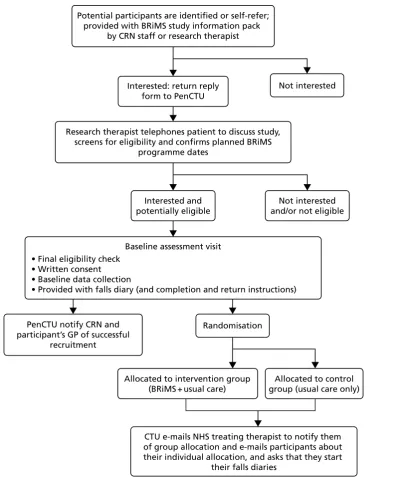
Recruitment and screening 8
Recruitment 8
Screening 10
Randomisation, concealment and blinding 11
Treatment 12
Usual care (usual-care group) 12
Usual care plus BRiMS (intervention group) 13
Data collection and outcome measures 13
Evaluation of trial feasibility (objectives i–vi) 15
Feasibility outcomes 15
Participant safety and adverse events 15
Trial outcome objectives (vii–ix) 16
Potential primary outcome for the definitive trial 16
Outcome time points 16
DOI: 10.3310/hta23270 HEALTH TECHNOLOGY ASSESSMENT 2019 VOL. 23 NO. 27
© Queen’s Printer and Controller of HMSO 2019. This work was produced by Gunnet al.under the terms of a commissioning contract issued by the Secretary of State for Health and Social Care. This issue may be freely reproduced for the purposes of private research and study and extracts (or indeed, the full report) may be included in professional journals provided that suitable acknowledgement is made and the reproduction is not associated with any form of advertising. Applications for commercial reproduction should be addressed to: NIHR Journals Library, National Institute for Health Research, Evaluation, Trials and Studies Coordinating Centre, Alpha House, University of Southampton Science Park, Southampton SO16 7NS, UK.
Procedures 17
Baseline measures 17
Potential primary outcomes 17
Potential secondary outcomes 18
Programme feasibility objectives (x–xii) 20
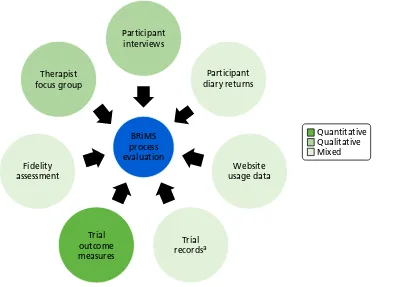
Evaluation of programme feasibility: BRiMS process evaluation 20
The process evaluation plan 20
Sources of data 20
Methods of evaluation 22
Health economics objectives (xiii–xiv) 23
Health economics outcomes 23
Progression to definitive trial 24
Trial governance 24
Ethics and research governance 24
Patient and public involvement 24
Human and data management 25
Trial Management Group 25
Trial Steering Committee 25
Data Monitoring Committee 26
Protocol amendments 28
Data analyses 28
Statistical methods 28
Statistical analyses 29
Trial feasibility outcome analyses 30
Analysis of patient-reported and clinician-rated outcome measures 30
Safety data 31
Analysis 1 (reported) 32
Analysis 2 (expected) 32
Analysis 3 (randomised) 32
Process evaluation analyses 32
Fidelity assessment 32
Qualitative analyses 32
Health economics analyses 33
General principles of the health economics analyses 33
Analysis of resource use and cost of intervention delivery 33
Analysis of data on health, social care and other resource use 34
Analysis of data on health outcomes 34
Chapter 3Trial results 35
Trial feasibility objectives (i–vi) 35
Trial procedures and implementation 35
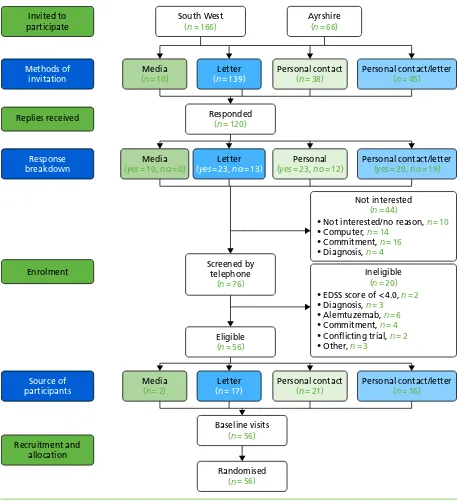
Recruitment methods 36
Recruitment of blocks of participants 38
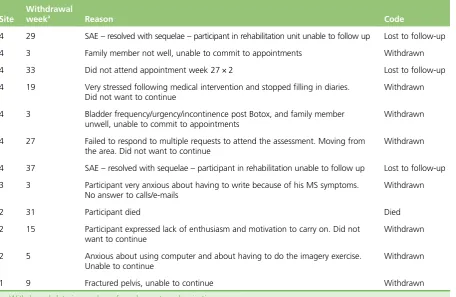
Retention 39
Safety and adverse events 41
Feasibility of trial procedures 44
Blinding 44
Participant experiences 44
Trial outcome objectives (vii–ix) 48
Data completion and accuracy 48
Baseline data 52
Performance of potential trial outcome measures 56
Calculation of sample size required for a fully powered randomised controlled trial to
evaluate the effectiveness of the BRiMS intervention 65
Programme feasibility: BRiMS process evaluation (objectives x–xii) 66
Application of process evaluation plan 66
Findings 69
Implementation of the BRiMS programme 70
Factors affecting delivery 73
Sessions and resources 74
Exercise activities 76
Logged minutes of exercise 78
Maintaining challenge in exercise practice 81
BRiMS exercise programme reviews 81
Use of imagery techniques 82
Session-specific feedback 84
Mechanisms of impact 89
Context 91
Health economics outcomes 94
Intervention costs (objective xiii) 94
Effectiveness of the proposed health economics evaluation methods (objective xiv) 95
Resource use and associated costs at baseline (objective xiii) 95
Resource use over the trial period (27-week follow-up) 95
Health state values (EuroQol-5 Dimensions, five-level version, and MSIS-8D) and
quality-adjusted life-years 99
Chapter 4Discussion, conclusions and recommendations 103
Specific learning points and recommendations 103
Trial feasibility 103
Trial outcomes 104
Process evaluation 109
Health economics 112
Conclusions 112
Acknowledgements 115
References 119
Appendix 1Daily diary example 131
Appendix 2Fidelity assessment generic scoring 137
Appendix 3Unit costs of BRiMS resource items 139
Appendix 4Gantt chart 143
Appendix 5Correlations between outcome measures at each assessment
time-point 145
DOI: 10.3310/hta23270 HEALTH TECHNOLOGY ASSESSMENT 2019 VOL. 23 NO. 27
© Queen’s Printer and Controller of HMSO 2019. This work was produced by Gunnet al.under the terms of a commissioning contract issued by the Secretary of State for Health and Social Care. This issue may be freely reproduced for the purposes of private research and study and extracts (or indeed, the full report) may be included in professional journals provided that suitable acknowledgement is made and the reproduction is not associated with any form of advertising. Applications for commercial reproduction should be addressed to: NIHR Journals Library, National Institute for Health Research, Evaluation, Trials and Studies Coordinating Centre, Alpha House, University of Southampton Science Park, Southampton SO16 7NS, UK.
Appendix 6Original estimate of therapist resource requirement for delivery of
BRiMS 147
Appendix 7Detailed breakdown of actual contact/administration time for
delivery of BRiMS one-to-one sessions 149
Appendix 8Resource-use costs over the 27 weeks of the trial 151
Appendix 9Baseline (previous 6 months) resource use and costs data 155
Appendix 10Potential associations between potential primary outcomes and
List of tables
TABLE 1 Overview of BRiMS content 5
TABLE 2 Outcome measures and data collection schedule 14
TABLE 3 The BRiMS trial approvals timeline 35
TABLE 4 Recruitment methods and conversion rate 36
TABLE 5 Time taken in days to recruit participants to randomise a block 39
TABLE 6 Reasons for participants not completing the trial 41
TABLE 7 Serious adverse events 42
TABLE 8 Number and percentage of reports of new or worsening problems and
relapses in the 2-week diary entries 43
TABLE 9 System Organ Classification of new and worsening problem reports 43
TABLE 10 Summary statistics on elapsed times between key trial time points 44
TABLE 11 Participant characteristics of the qualitative interview sample 45
TABLE 12 Completeness of the potential primary outcomes 48
TABLE 13 Completeness of the potential clinician-rated secondary outcomes 49
TABLE 14 Activity monitor return data 51
TABLE 15 Summary statistics of participants’demographic data at baseline 52
TABLE 16 Summary statistics of participants’clinical characteristics at baseline 53
TABLE 17 Summary statistics, mean, SD and range of the potential primary outcomes 57
TABLE 18 Summary statistics, mean, SD and range of the potential secondary
outcomes 58
TABLE 19 Number of participants with activPAL data 60
TABLE 20 Summary statistics, mean, SD and range of activPAL accelerometer
data at baseline, week 15 and week 27, by allocated group 61
TABLE 21 Falls and injurious falls rate per person per year 63
TABLE 22 Number and percentage of participants who reported injuries in the
diary entries 64
TABLE 23 Sample size calculation for a definitive trial 67
DOI: 10.3310/hta23270 HEALTH TECHNOLOGY ASSESSMENT 2019 VOL. 23 NO. 27
© Queen’s Printer and Controller of HMSO 2019. This work was produced by Gunnet al.under the terms of a commissioning contract issued by the Secretary of State for Health and Social Care. This issue may be freely reproduced for the purposes of private research and study and extracts (or indeed, the full report) may be included in professional journals provided that suitable acknowledgement is made and the reproduction is not associated with any form of advertising. Applications for commercial reproduction should be addressed to: NIHR Journals Library, National Institute for Health Research, Evaluation, Trials and Studies Coordinating Centre, Alpha House, University of Southampton Science Park, Southampton SO16 7NS, UK.
TABLE 24 Mapping of fidelity assessments 68
TABLE 25 Therapist focus group participants 69
TABLE 26 Session attendance rates 70
TABLE 27 Fidelity assessment of facilitation style 71
TABLE 28 Fidelity assessment: utilisation of MS-specific knowledge and expertise 72
TABLE 29 Fidelity assessment: developing and maintaining challenge and motivation 72
TABLE 30 Supporting self-management skills and autonomy 73
TABLE 31 Summary statistics on the usage of the home education programme 75
TABLE 32 Cumulative number of weeks where participants entered exercise data
in the online exercise diary 77
TABLE 33 Number and percentage of participants who entered exercise data in
the online exercise diaries by programme week 77
TABLE 34 Number of minutes logged by exercise category 78
TABLE 35 Summary statistics of the amount of time participants spent doing exercise 80
TABLE 36 Number and percentages of each programme review completed by
treating therapists 82
TABLE 37 Fidelity scoring for session 1 85
TABLE 38 Fidelity scoring for home visits (n=7) 86
TABLE 39 Fidelity scoring for sessions 3–5 (group sessions) 87
TABLE 40 Resource use per participant for delivery of the BRiMS intervention 94
TABLE 41 Health and social care resource use per participant over the 27 weeks
of the trial 96
TABLE 42 Summary of health and social care/informal care costs (£) per week
(27-week follow-up) and cost of days off work over 27 weeks 99
TABLE 43 Health state values and QALYs 100
TABLE 44 Health state values and QALYs, estimated/derived using MSIS-29 data
and the MSIS-8D MS-specific QALY measure 100
TABLE 45 Lessons learnt, challenges faced and recommendations for a definitive
RCT: trial feasibility 104
TABLE 46 Lessons learnt, challenges faced and recommendations for a definitive
TABLE 47 Lessons learnt, challenges faced and recommendations for a definitive
RCT: trial outcomes–2b 108
TABLE 48 Lessons learnt, challenges faced and recommendations for a definitive
RCT: process evaluation–3a 109
TABLE 49 Lessons learnt, challenges faced and recommendations for a definitive
RCT: process evaluation–3b 110
TABLE 50 Lessons learnt, challenges faced and recommendations for a definitive
RCT: health economics 113
TABLE 51 Unit costs of BRiMS resource items 139
TABLE 52 Pearson’s correlation coefficient between baseline and weeks 15 and 27 with exact two-sided 95%, one-sided lower 90% and one-sided lower 80%
confidence bounds for the potential primary and secondary outcomes 145
TABLE 53 Health and social care costs per person over the 27 weeks of the trial 151
TABLE 54 Medication costs per person over the 27 weeks’follow-up of the trial 152
TABLE 55 Informal care cost per week over the 27 weeks’follow-up of the trial
by type of task and days off work 153
TABLE 56 Health and social care resource use per person at baseline (6 months
prior to trial) 155
TABLE 57 Baseline (previous 6 months) health and social care cost data 156
TABLE 58 Medication use in weeks used per participant at baseline (6 months
prior to trial) 158
TABLE 59 Medication costs per participant at baseline (6 months prior to trial) 158
TABLE 60 Informal care use, hours per week per participant at baseline by type
of task and days off work 159
TABLE 61 Informal care cost per week per participant at baseline by type of task
and days off work 159
TABLE 62 Number of participants in each category with follow-up data, mean and 95% CI of the potential primary outcomes at week 27 by demographic and
clinical characteristics at baseline 162
DOI: 10.3310/hta23270 HEALTH TECHNOLOGY ASSESSMENT 2019 VOL. 23 NO. 27
© Queen’s Printer and Controller of HMSO 2019. This work was produced by Gunnet al.under the terms of a commissioning contract issued by the Secretary of State for Health and Social Care. This issue may be freely reproduced for the purposes of private research and study and extracts (or indeed, the full report) may be included in professional journals provided that suitable acknowledgement is made and the reproduction is not associated with any form of advertising. Applications for commercial reproduction should be addressed to: NIHR Journals Library, National Institute for Health Research, Evaluation, Trials and Studies Coordinating Centre, Alpha House, University of Southampton Science Park, Southampton SO16 7NS, UK.
List of figures
FIGURE 1 The BRiMS programme delivery plan 3
FIGURE 2 The BRiMS programme logic model 4
FIGURE 3 Recruitment pathway 9
FIGURE 4 Participant pathway 12
FIGURE 5 The BRiMS process evaluation framework 21
FIGURE 6 Sources of data for the BRiMS process evaluation 22
FIGURE 7 Recruitment sources 37
FIGURE 8 BRiMS recruitment: January–June 2017 38
FIGURE 9 The CONSORT flow diagram 40
FIGURE 10 The proportion of participants who fell at least once per week by
diary week number and allocation group 62
FIGURE 11 The proportion of participants with at least one injurious fall per
week by diary week number and allocation group 62
FIGURE 12 Proportion of exercise activity logged per week by category 79
FIGURE 13 The BriMS trial Gantt chart 144
DOI: 10.3310/hta23270 HEALTH TECHNOLOGY ASSESSMENT 2019 VOL. 23 NO. 27
© Queen’s Printer and Controller of HMSO 2019. This work was produced by Gunnet al.under the terms of a commissioning contract issued by the Secretary of State for Health and Social Care. This issue may be freely reproduced for the purposes of private research and study and extracts (or indeed, the full report) may be included in professional journals provided that suitable acknowledgement is made and the reproduction is not associated with any form of advertising. Applications for commercial reproduction should be addressed to: NIHR Journals Library, National Institute for Health Research, Evaluation, Trials and Studies Coordinating Centre, Alpha House, University of Southampton Science Park, Southampton SO16 7NS, UK.
List of abbreviations
2MWT Two-Minute Walk Test
AE adverse event
BRiMS Balance Right in MS
CI confidence interval
CONSORT Consolidated Standards of
Reporting Trials
CPI Community Participation Indicators
CRF case report form
CRN Clinical Research Network
CTU clinical trials unit
DMC Data Monitoring Committee
EDSS Expanded Disability Status Scale
EQ-5D-3L EuroQol-5 Dimensions, three-level version
EQ-5D-5L EuroQol-5 Dimensions, five-level version
ETC excess treatment cost
FES-I Falls Efficacy Scale–International
FIT functional imagery training
ICC intracluster correlation
IQR interquartile range
IT information technology
Mini-BEST Mini-Balance Evaluation Systems Test
MS multiple sclerosis
MSIS-8D Multiple Sclerosis Impact Scale (8-dimensions)
MSIS-29vs2 MS Impact Scale (29-item) version 2
MSWS-12vs2 MS Walking Scale (12-item) version 2
NICE National Institute for Health and
Care Excellence
NIHR National Institute for Health
Research
PenCTU Peninsula Clinical Trials Unit
PPI patient and public involvement
QALY quality-adjusted life-year
QoL quality of life
RCT randomised controlled trial
RR relapsing–remitting
RRMS relapsing–remitting multiple
sclerosis
SAE serious adverse event
SPMS secondary progressive multiple
sclerosis
TMG Trial Management Group
TSC Trial Steering Committee
DOI: 10.3310/hta23270 HEALTH TECHNOLOGY ASSESSMENT 2019 VOL. 23 NO. 27
© Queen’s Printer and Controller of HMSO 2019. This work was produced by Gunnet al.under the terms of a commissioning contract issued by the Secretary of State for Health and Social Care. This issue may be freely reproduced for the purposes of private research and study and extracts (or indeed, the full report) may be included in professional journals provided that suitable acknowledgement is made and the reproduction is not associated with any form of advertising. Applications for commercial reproduction should be addressed to: NIHR Journals Library, National Institute for Health Research, Evaluation, Trials and Studies Coordinating Centre, Alpha House, University of Southampton Science Park, Southampton SO16 7NS, UK.
Plain English summary
P
eople with secondary progressive multiple sclerosis (SPMS) often have problems with walking and balance, which lead them to fall. Undertaking exercise and learning about falls prevention could help reduce injury risk and improve mobility.We developed a mobility, balance and falls programme called Balance Right in MS (BRiMS). Before testing its effectiveness in a large-scale trial, we needed to conduct a small-scale version of the trial.
We asked people with SPMS who had balance and mobility problems to be assigned by chance to undertake the BRiMS programme plus their usual care, or to continue with usual care only.
Questionnaires were used to ask people about their mobility, falls and quality of life, and we measured their balance and activity levels. We interviewed participants about BRiMS and being in the trial, and collected information about costs.
Fifty-six people entered the trial from three areas of the south-west and from Ayrshire. At completion of the study we were able to review 44 people. The key measures were completed by 98% of those we assessed, but only around half (62%) of the diaries detailing falls were returned. As this was a feasibility trial, the numbers were too small for us to look at differences between the groups.
Participants liked the BRiMS programme; some did a lot of exercise and learning activities, but most did not manage the amount we asked them to do. People reported feeling a little overwhelmed by the educational content of BRiMS, and that this should be reduced in future. They told us that they felt that their balance had improved and that they fell less frequently after the BRiMS programme.
Our assessment of the trial methods we used showed that it would be possible to conduct a full-scale trial using this design, but that we need to adapt the BRiMS programme further to make it more user-friendly.
DOI: 10.3310/hta23270 HEALTH TECHNOLOGY ASSESSMENT 2019 VOL. 23 NO. 27
© Queen’s Printer and Controller of HMSO 2019. This work was produced by Gunnet al.under the terms of a commissioning contract issued by the Secretary of State for Health and Social Care. This issue may be freely reproduced for the purposes of private research and study and extracts (or indeed, the full report) may be included in professional journals provided that suitable acknowledgement is made and the reproduction is not associated with any form of advertising. Applications for commercial reproduction should be addressed to: NIHR Journals Library, National Institute for Health Research, Evaluation, Trials and Studies Coordinating Centre, Alpha House, University of Southampton Science Park, Southampton SO16 7NS, UK.
Scientific summary
Background
Multiple sclerosis (MS) is an incurable, unpredictable but typically progressive, life-long neurological condition, affecting approximately 100,000 people in the UK (Royal College of Physicians.The National Audit of Services for People with Multiple Sclerosis 2011. London: Royal College of Physicians; 2011). Although most people start with a relapsing–remitting disease course, approximately two-thirds move to a progressive phase, with a steady rise in the total percentage of progressive cases as the disease advances.
Within approximately 15 years of a MS diagnosis, an estimated 50% of people are unable to walk unaided, and eventually 25% are dependent on a wheelchair. An important contributor to difficulties in mobility is impaired balance, which is reported by roughly 75% of people and has been shown to be more compromised in those with secondary progressive multiple sclerosis (SPMS) than in those with relapsing–remitting multiple sclerosis (RRMS). Rehabilitation interventions that improve balance and physical activity and decrease the risk of falls may slow this deterioration, providing a persuasive argument for ensuring that optimal physical management is a clinical priority. With only limited medical interventions available for this patient group, such rehabilitation programmes are considered key to the treatment of SPMS but currently lack a robust evidence base.
In partnership with service users, providers, other key stakeholders (including commissioners) and
international collaborators, our ongoing research programme systematically developed Balance Right in MS (BRiMS), an innovative evidence-based, user-focused self-management programme designed to improve safe mobility and reduce falls for people with MS. BRiMS is a novel 13-week, therapy-led personalised education and exercise programme structured to maximise the development of self-efficacy and support participant engagement. It addresses modifiable risk factors, enabling self-management through the use of individualised mobility, safety and falls risk management strategies.
The National Institute for Health Research commissioning brief (Health Technology Assessment commissioning call reference number 15/47) requested applications for studies undertaking primary research in rehabilitation therapies to improve quality of life (QoL) in patients with SPMS. Having previously developed BRiMS, it was critical, and timely, to assess the feasibility of the delivery of this programme and proposed evaluation methods before undertaking a definitive trial to assess the clinical effectiveness and cost-effectiveness of the programme.
Research questions
l Is it feasible and acceptable to conduct a multicentre randomised controlled trial of the BRiMS intervention?
l Is it feasible and acceptable to deliver the BRiMS programme for ambulant people with SPMS who live in the community?
Aim
This feasibility trial aimed to obtain the necessary data and operational experience to finalise the planning of an intended future definitive multicentre randomised controlled trial to compare a manualised 13-week education and exercise programme (BRiMS) plus usual care with usual care alone in improving mobility and
DOI: 10.3310/hta23270 HEALTH TECHNOLOGY ASSESSMENT 2019 VOL. 23 NO. 27
© Queen’s Printer and Controller of HMSO 2019. This work was produced by Gunnet al.under the terms of a commissioning contract issued by the Secretary of State for Health and Social Care. This issue may be freely reproduced for the purposes of private research and study and extracts (or indeed, the full report) may be included in professional journals provided that suitable acknowledgement is made and the reproduction is not associated with any form of advertising. Applications for commercial reproduction should be addressed to: NIHR Journals Library, National Institute for Health Research, Evaluation, Trials and Studies Coordinating Centre, Alpha House, University of Southampton Science Park, Southampton SO16 7NS, UK.
QoL and reducing falls in people with SPMS. The intention was to learn lessons to enable a definitive trial to be successfully delivered with confidence. The objectives were grouped into four clusters:
l trial feasibility
l trial outcomes
l process evaluation
l health economics analysis.
Methods
The trial recruited from four UK sites: Cornwall, Plymouth, East Devon and Ayrshire. The sample size was set at 60 to ensure that the feasibility objectives could be achieved with a sufficient degree of certainty. Participants were identified through several sources: local and national advertising through MS centres, MS Society (www.mssociety.org.uk) branches and support groups, websites and newsletters; adoption onto the local Clinical Research Network portfolio and via the caseload of local MS neurologists, MS nurse specialists and NHS therapists.
Potentially eligible participants were screened by telephone interview undertaken by a research therapist linked to the recruiting site. As each delivery of BRiMS was pre-scheduled to ensure the availability of staffing and facilities, potential participants were assigned to a specific BRiMS delivery at this point (if they were randomised to the BRiMS intervention plus usual-care group). Final eligibility checking, informed consent and baseline measures were undertaken at a single face-to-face meeting at a health-care venue local to the participant, at a time point no more than 2 weeks before the pre-scheduled randomisation date for each BRiMS delivery.
Randomisation was undertaken by the Peninsula Clinical Trials Unit after the baseline assessments were completed for all participants in a block (block size 8–12 participants). Participants were individually randomised on a 1 : 1 basis, blocked within each site.
Participants were followed up on two occasions: 13 weeks (±1 week) and 27 weeks (±1 week) following randomisation. This reflected an assessment at the end of the intervention period and a further follow-up 3 months later.
Participants
The target population was English-speaking men and women, aged≥18 years, with a confirmed diagnosis of SPMS, who reported having walking difficulties and experiencing falls.
Inclusion criteria
The patient:
l had a confirmed diagnosis of MS as determined by a neurologist; and, in the secondary progressive phase, as confirmed by a MS specialist clinician
l was aged≥18 years
l was willing and able to understand/comply with all trial activities
l had an Expanded Disability Status Scale (EDSS) score of between≥4.0 and≤7.0 points
l had self-reported two or more falls in the past 6 months
l was willing and able to travel to and participate in BRiMS group sessions at local sites and to commit to undertaking their individualised home-based programme
Exclusion criteria
The patient:
l Had reported relapse or receiving steroid treatment within the past month {patient-reported relapse was defined as‘the appearance of new symptoms, or the return of old symptoms, for a period of 24 hours or more–in the absence of a change in core body temperature or infection’[MS Society.Relapsing Remitting MS (RRMS). 2016. URL: www.mssociety.org.uk/what-is-ms/types-of-ms/relapsing-remitting-rrms (accessed 21 December 2016)]}.
l Had any recent changes in disease-modifying therapies. More specifically, patients were excluded if they:
¢ had ever had previous treatment with alemtuzumab (Lemtrada®, Sanofi Genzyme, Cambridge,
MA, USA); or
¢ had ceased nataluzimab (Tysabri®, Biogen, Cambridge, MA, USA) in the past 6 months; or
¢ were within 3 months of ceasing any other MS disease-modifying drug.
l Had participated in a falls management programme (e.g. for older people) within the past 6 months.
l Had comorbidities that may have influenced their ability to participate safely in the programme or that were likely to have an impact on the trial (e.g. uncontrolled epilepsy).
l Had been recruited to a concurrent interventional trial.
Interventions
Participants were randomised to one of two groups: BRiMS plus usual care or usual care alone. Those allocated to undertake the BRiMS programme were invited to attend two one-to-one sessions (an initial assessment and a home visit), to undertake a home exercise programme and falls prevention education programme supported by online resources and a paper manual, and to attend three group sessions for peer support, group exercise and interactive learning activities. Participation in the attended sessions was recorded by the treating therapists, and engagement in the online activities was captured by website log-in and usage. Participants were asked to record their adherence to the home exercise programme, and details of the progression of exercises undertaken, in a weekly diary that was integrated into the online exercise platform.
Outcomes
Trial feasibility
The outcomes were participant recruitment, retention and completion rates, trial acceptability and feasibility (via participant interviews), measures of trial safety and adverse events.
Trial outcomes
In addition to those on participant demographics, clinical characteristics and medication use, data were collected to inform the potential primary and secondary outcomes for a future definitive trial.
Potential primary outcomes
l MS Walking Scale (12-item) version 2 (MSWS-12vs2).
l EuroQoL-5 Dimensions, five-level version.
l MS Impact Scale (29-item) version 2 (MSIS-29vs2).
DOI: 10.3310/hta23270 HEALTH TECHNOLOGY ASSESSMENT 2019 VOL. 23 NO. 27
© Queen’s Printer and Controller of HMSO 2019. This work was produced by Gunnet al.under the terms of a commissioning contract issued by the Secretary of State for Health and Social Care. This issue may be freely reproduced for the purposes of private research and study and extracts (or indeed, the full report) may be included in professional journals provided that suitable acknowledgement is made and the reproduction is not associated with any form of advertising. Applications for commercial reproduction should be addressed to: NIHR Journals Library, National Institute for Health Research, Evaluation, Trials and Studies Coordinating Centre, Alpha House, University of Southampton Science Park, Southampton SO16 7NS, UK.
Potential secondary outcomes
l Falls frequency and injury rates (from participant self-report daily paper diaries).
l Physical activity [measured for 1 week after each trial assessment using an activPAL™
(Paltechnologies Ltd, Glasgow, UK) activity monitor].
l Two-Minute Walk Test.
l Mini-Balance Evaluation Systems Test.
l Functional Reach and Lateral Reach Tests.
l Falls Efficacy Scale–International.
l Community Participation Indicators.
BRiMS programme feasibility (process evaluation)
This included an assessment of programme acceptability and utilisation (from participant and therapist interviews), records of attendance at face-to-face sessions, online exercise diary completion and web-based programme log-in data.
Health economics
Evaluation of the feasibility of the proposed methods for assessing health, social care and other resource use in a future definitive trial was undertaken, plus evaluation of the intervention delivery costs for the BRiMS programme.
Results
A total of 56 participants (mean age 59.7 years, standard deviation 9.7 years; 66% female; median EDSS score of 6.0 points, interquartile range 6.0–6.5 points) were recruited in 5 months; 30 were block randomised to the intervention group.
Trial feasibility objectives
A total of 11 participants (19.6%) withdrew or were lost to follow-up, seven of whom were in the intervention group. Worsening of MS-related symptoms unconnected to the trial was the most common reason (n= 5) for withdrawal.
There were nine reports of serious adverse events during the trial, none of which was assessed to be related to the BRiMS intervention. The adverse events reported were not unexpected for this sample of people with progressive MS, and are in line with other MS rehabilitation and exercise trials.
Qualitative feedback indicated that trial processes and participant burden were acceptable, although some areas for improvement were highlighted. For example, participants recommended that written pre-trial information be reviewed to ensure that the content and format are straightforward while remaining comprehensive.
Trial outcome objectives
The groups were broadly comparable at baseline, although the intervention group scored worse on the majority of the baseline outcome measures. Potential primary and secondary outcomes had excellent completion rates of > 98% for all those assessed at each time point. There were a number of issues with diary data, which meant that the overall return rate was 62%, with a rate of 58.6% of the expected total for falls, and 40.6% of the expected total for injurious falls.
After one outlier was removed, a total of 715 falls were reported over the 27-week trial period, with substantial variation between individuals (range 0–93 falls). Of these 715 falls, 101 (14%) were reported as injurious. The falls rate at week 27 was 25.9 falls per person per year in the usual-care group and 21.9 falls per person per year in the intervention group. The injurious falls rates at 27 weeks were 4.7 falls per person per year (usual care) and 2.2 falls per person per year (intervention).
Based on this feasibility study and other relevant data, with MSWS-12vs2 as the primary outcome and 27 weeks post randomisation as the primary end point, the estimated sample size for a definitive trial would be within a range of 575 to around 990.
Process evaluation objectives
Therapists and participants were generally positive when describing their engagement with the BRiMS programme. Therapists particularly valued the ethos of the programme, and the resources provided to them, which they felt enabled them to deliver a structured and comprehensive approach to support self-management, incorporating both educational and exercise activities.
Levels of participant engagement with the programme varied both over time and between participants, influenced by a range of condition- and context-related factors. A number of suggestions were made by therapists and participants to improve the utility and accessibility of the programme model and delivery methods.
Patterns of participant recorded exercise varied, with only six (21%) of the 28 participants who
commenced the programme logging at least 100 of the advised 120 minutes of weekly exercise activity over the 12 weeks. Participants and treating therapists reported a number of technical and logistical issues with the recording of exercise activities.
Participants highlighted both physical and behavioural changes that they perceived had resulted directly from undertaking the BRiMS programme. These included changes in balance confidence and competence, an increased awareness of falls risk and the introduction of falls prevention strategies.
Health economics analysis objectives
As with the potential primary and secondary outcome measures, the health economics resource-use questionnaires and therapist contact sheets had excellent completion rates, at > 98% for all those assessed.
The estimated mean cost for the delivery of BRiMS was £400 per person, although qualitative feedback from treating therapists suggests that the time allocation should be increased in future deliveries by approximately 15%.
Participants reported relatively modest levels of resource use, predominantly focused on primary and secondary care. Provision of informal unpaid care was consistent between the groups at 24–25 hours per week. When applying a unit cost to hours of informal care, the estimated weekly cost of this care is approximately £445 per participant.
Conclusions and recommendations
This trial aimed to assess the feasibility of undertaking a definitive trial to compare BRiMS plus usual care with usual care alone in a sample of people with SPMS. The results suggest that the trial procedures are feasible and acceptable, and the retention, programme engagement and outcome completion rates were sufficient to satisfy the a priori trial progression criteria. Challenges were experienced in some areas of data collection, such as the recording of adherence to exercise activity and the completion of daily diaries; the lessons learnt in this feasibility trial will enable these processes to be refined for a future trial. Further
DOI: 10.3310/hta23270 HEALTH TECHNOLOGY ASSESSMENT 2019 VOL. 23 NO. 27
© Queen’s Printer and Controller of HMSO 2019. This work was produced by Gunnet al.under the terms of a commissioning contract issued by the Secretary of State for Health and Social Care. This issue may be freely reproduced for the purposes of private research and study and extracts (or indeed, the full report) may be included in professional journals provided that suitable acknowledgement is made and the reproduction is not associated with any form of advertising. Applications for commercial reproduction should be addressed to: NIHR Journals Library, National Institute for Health Research, Evaluation, Trials and Studies Coordinating Centre, Alpha House, University of Southampton Science Park, Southampton SO16 7NS, UK.
development of the BRiMS programme is required to address logistical issues and enhance user satisfaction and adherence. Following this, a definitive trial to assess the effectiveness and cost-effectiveness of
the BRiMS intervention is warranted. Estimated sample sizes for this trial range from 575 to around 990 participants.
Trial registration
This trial is registered as ISRCTN13587999.
Funding
Chapter 1
Introduction
Background
Multiple sclerosis (MS) is an incurable, unpredictable but typically progressive, life-long neurological condition, affecting approximately 100,000 people in the UK.1It is the most common cause of neurological disability
in young adults, with an estimated cost of £1.4B per annum to the NHS and society.2More recently, new
insights into the burden and costs of MS in Europe have demonstrated that, on average, costs are€22,800 in mild,€37,100 in moderate and€57,500 in severe disease (adjusted for purchasing power parity).3Although
most people start with a relapsing–remitting (RR) disease course, approximately two-thirds move to a progressive phase, with a gradual rise in the total percentage of progressive cases as the disease advances.4
At this point, medical interventions are limited and further disease progression is usually inevitable.5People in
this phase, the majority of whom have limited mobility, are often excluded from clinical trials, which tend to focus on the RR stage.6
Balance and falls in multiple sclerosis
Eighty-five per cent of people with MS report gait disturbance as their main problem.7Within approximately
15 years of diagnosis, 50% of people are unable to walk unaided, and over time an estimated 25% are dependent on a wheelchair.8It is, therefore, unsurprising that mobility is a major concern for people with
MS and the health professionals involved in their care, and an area that is consistently highlighted by research, policy and service user fora. Surveys of people with MS consistently rank mobility as their highest priority9and the most important, yet most challenging, daily function.10Furthermore, mobility has been
correlated with employment status, earnings and quality of life (QoL).11,12An important contributor to
difficulties in mobility is impaired balance, which is reported by approximately 75% of people with MS13and
has been shown to be more compromised in people with secondary progressive multiple sclerosis (SPMS) than in those with relapsing–remitting multiple sclerosis (RRMS).14Our own work suggests that falls may be
an early marker of mobility deterioration associated with disease progression.15Rehabilitation interventions
that improve balance and physical activity and decrease the risk of falls may slow this deterioration, providing a persuasive argument for ensuring that optimal physical management is a clinical priority. With only limited medical interventions available for this patient group, such rehabilitation programmes are considered key to the treatment of SPMS but currently lack a robust evidence base.5
Our research,16in line with that of others, demonstrates that, alongside impaired mobility and balance,
falls are a common issue for people with SPMS, who are twice as likely to fall as those with RRMS.17
The evidence shows that approximately 70% of people with MS fall regularly,15at a rate of > 26 falls per
person per year with SPMS.16More than 10% of these falls lead to injuries18and people with MS are three
times more likely to sustain a fracture than the general population.19Falling and fear of falling have a
profound impact on individuals, leading to activity curtailment, social isolation and a downwards spiral of immobility, deconditioning and disability accumulation.20This has significant implications for an individual’s
health, well-being and QoL. Unsurprisingly, 4 out of the 10 research priorities identified by the James Lind MS Priority Setting Partnership relate directly to this area.21This trial has provided an opportunity for
people with SPMS, whose limited mobility often excludes them from clinical trials, to participate in a trial targeting what they themselves consider to be a key concern.
Implications of impaired mobility and falls for society and for health practice
There are substantial economic and social costs related to increasing immobility, impaired balance and falls in people with MS. Costs of health and social care have been shown to increase steeply with increasing disease severity/immobility.2By this stage of the disease, rehabilitation interventions form the mainstay of
treatment and drug therapy options are limited. The mean cost per wheelchair-dependent patient is four to five times higher than that for an ambulatory patient.22This, together with the associated costs of falls
DOI: 10.3310/hta23270 HEALTH TECHNOLOGY ASSESSMENT 2019 VOL. 23 NO. 27
© Queen’s Printer and Controller of HMSO 2019. This work was produced by Gunnet al.under the terms of a commissioning contract issued by the Secretary of State for Health and Social Care. This issue may be freely reproduced for the purposes of private research and study and extracts (or indeed, the full report) may be included in professional journals provided that suitable acknowledgement is made and the reproduction is not associated with any form of advertising. Applications for commercial reproduction should be addressed to: NIHR Journals Library, National Institute for Health Research, Evaluation, Trials and Studies Coordinating Centre, Alpha House, University of Southampton Science Park, Southampton SO16 7NS, UK.
for those who continue to ambulate, underlines the importance of optimising safe mobility for as long as possible: a key aim of our work. This is particularly relevant given recent evidence that people with MS are living longer, leading to a rising population living with the disease.23This has important implications for
resource provision in the UK and for the NHS, as highlighted in a national audit of neurological services,24
which demonstrated a significant increase in emergency hospital admissions in people with progressive neurological disability, including MS. The importance of mobility and falls is emphasised by their consistent prominence in recent policy documents for long-term neurological conditions.25
An overwhelming proportion of a physiotherapist’s MS caseload comprises people who have balance and mobility impairments, many of whom are falling. Improving balance and mobility in people with SPMS and reducing falls is likely to have a significant impact on QoL and independence. Our recent literature reviews, however, demonstrate that there is a lack of available evidence to support this assertion, although data from mixed samples of patients with RRMS or SPMS are suggestive.5,26Furthermore, professionals and patients
have identified serious problems with the feasibility and sustainability of a traditional weekly outpatient model of programme delivery.27The emphasis on evidence-based practice heavily influences whether or not
interventions are provided, as does local policy. These decisions rely on the availability of robust evidence of clinical effectiveness and cost-effectiveness. Currently, there is minimal evidence-based guidance to inform optimal mobility management and none to inform falls management in people with MS. This paucity of evidence is highlighted in the National Institute for Health and Care Excellence (NICE) clinical guideline 186,25
which nominates the rehabilitation of mobility as one of its five key research recommendations. Although evidence is available for older people and for other neurological conditions, research suggests that translating existing interventions to people with MS is likely to be ineffective.28,29Small, limited-duration
studies have evaluated single elements of MS balance and falls interventions, individually demonstrating short-term improvements in mobility, balance or falls awareness,13,30,31but these elements have not yet been
implemented or evaluated collectively. Moreover, no studies have focused on people with SPMS.
The BRiMS programme
Development of the BRiMS programme
Health-care policy prioritises the need to empower patients to self-manage through partnership working and self-management programmes,32with emphasis placed on a future NHS that implements interventions
that promote self-care and lifestyle behavioural change and are community based.33
In partnership with service users, providers, other key stakeholders (including commissioners) and
international collaborators, our ongoing research programme systematically developed Balance Right in MS (BRiMS), an innovative, evidence-based, user-focused self-management programme, designed to improve safe mobility and reduce falls for people with MS. The development of BRiMS has been based on the Medical Research Council framework34for the development and evaluation of complex interventions and
supplementary guidance identifying specific tasks to be undertaken in the development process.35It was
informed by input from a number of internationally recognised experts,36which is explicitly acknowledged
in the programme documentation. The programme’s underlying philosophy is based on the premise that interventions must promote lifestyle behavioural change, be community based and focus on prevention and self-care, an approach in line with the future direction of the NHS.33
Overview of the BRiMS programme
BRiMS is a novel 13-week, therapy-led personalised education and exercise programme structured to maximise the development of self-efficacy and support participant engagement (Figure 1). It addresses modifiable risk factors, enabling self-management by individualised mobility, safety and falls risk management strategies.
from the outset. As emphasised in the NICE guideline,25this combined approach (which was developed
in collaboration with people with MS, physical therapists, sports scientists, occupational therapists and psychologists) aims to equip the person with MS with the knowledge, skills and motivation to sustain long-term behaviour change. Developing and supporting motivation is addressed throughout using new functional imagery techniques37,38to supplement established motivational techniques.
The BRiMS education component aims to improve exercise self-efficacy and develop individualised falls prevention and management practices through the acquisition and application of relevant knowledge and skills.39This component is delivered through a mix of home and group activities embedded throughout
the programme. It utilises a number of evidence-based self-management practices, specifically group brainstorming, problem-solving and action-planning.40It also applies the principles of cognitive–behavioural
therapy to facilitate self-efficacy enhancement. In group sessions, BRiMS utilises peer modelling, vicarious learning, social persuasion and guided mastery to boost self-efficacy41and encourages the setting and
imagery of short-term exercise goals to boost the desire to achieve them.42
The BRiMS exercise component is designed to achieve a minimum of 120 minutes of individualised, progressive, gait, balance and functional training per week. The content is guided by a comprehensive literature review of MS balance exercise interventions,43while the structure and format are informed by
comprehensive stakeholder input.27
The BRiMS exercise component is designed to be predominantly home-based, with exercise planning and progression undertaken in partnership between the participant and the programme leader. The group sessions include exercise activities to encourage peer support and problem-solving. Motivational support is built into both elements. Additionally, BRiMS integrates an online exercise prescription resource (https://webbasedphysio.com)44to support and guide participants’home-based practice. The resource
can be customised to the participant’s individual exercise prescription and remotely amended during the programme to maintain an appropriate level of challenge.
Intervention description and standardisation
The BRiMS programme has been manualised to provide a detailed description of the intervention and to ensure consistency of content, approach and delivery of sessions across time, region and groups. The manual includes identification of the critical elements of each part of the programme, key objectives of each session and detailed guidance/scripts for programme leaders along with accompanying participant resources.
Figure 2shows the BRiMS‘logic model’,45which maps the programme content and delivery methods,
along with causal assumptions, the mechanisms that are theorised to drive the programme and any expected external factors that may affect the outcomes.Table 1provides an overview of the schedule of content delivery.
Assessment
Week 1 2 3 4 5 6
BRiMS programme
7 8 9 10 11 12 13
Home visit
Group session 1
Group session 2
Home package
1
Home package
2
Home package
3
Home package
4
Group session 3
Home exercise programme (guided by online resource)
FIGURE 1 The BRiMS programme delivery plan.
DOI: 10.3310/hta23270 HEALTH TECHNOLOGY ASSESSMENT 2019 VOL. 23 NO. 27
© Queen’s Printer and Controller of HMSO 2019. This work was produced by Gunnet al.under the terms of a commissioning contract issued by the Secretary of State for Health and Social Care. This issue may be freely reproduced for the purposes of private research and study and extracts (or indeed, the full report) may be included in professional journals provided that suitable acknowledgement is made and the reproduction is not associated with any form of advertising. Applications for commercial reproduction should be addressed to: NIHR Journals Library, National Institute for Health Research, Evaluation, Trials and Studies Coordinating Centre, Alpha House, University of Southampton Science Park, Southampton SO16 7NS, UK.
Problem Evidence base Resources/inputs Activities Outcomes Impact People with MS
fall frequently. Falls are related to injury, activity curtailment and an increased risk of mobility deterioration
• Exercise (especially gait, balance and functional training) can improve balance and mobility among people with MS43
• Highly challenging gait, balance and functional training can reduce falls in older people46 • A falls education programme can increase confidence, falls self-efficacy and awareness of falls prevention strategies30 • There are a range of factors that have an impact on the design, content and structure of a MS-specific falls prevention plan27
Programme resources
Specialist programme therapists with MS-specific knowledge and experience
BRiMS programme manual
• Individualised progressive exercise programme • Strategies to support long-term adherence to exercise and physical activity • Identification of personal fall risk factors (using BAASE analysis) • Development of individual plans to reduce fall risk factors (via falls action-planning) • Increasing the individual’s confidence in balance and safe mobility
• Identification of barriers to, and facilitators of, fall prevention plan enactment (via problem-solving activities)
Completion of the programme will lead to:
• improved balance • improved mobility • improved falls self-efficacy • reduced incidence of falls
• reduced related injuries • reduced resource use for falls-related care
Improvements in mobility and reduction in falls will slow mobility deterioration and improve QoL/ community participation Home package 1 Assessment Home visit Group session 1 Group session 2
Home exercise programme (guided by online resource)
[image:34.595.90.771.107.494.2]Group session 3 Home package 2 Home package 3 Home package 4 1 2 3 4 5 6 7 8 9 10 11 12 13
FIGURE 2 The BRiMS programme logic model. BAASE, Behaviours and Attitudes, Activities, MS Symptoms, Environment.
INTRODUCTION
NIHR
Journals
Library