Can methods applied in medicine be used to summarize and disseminate
conservation research?
I O A N F A Z E Y1* , J A N E T G . S A L I S B U R Y2, D A V I D B . L I N D E N M A Y E R1, J O H N M A I N D O N A L D3 A N D R O B E R T D O U G L A S4
1Centre for Resource and Environmental Studies, Building 43, Australian National University, Acton, Canberra, ACT 0200, Australia,2Biotext,
113 Hopetoun Circuit, Yarralumla, ACT 2600, Australia,3Mathematical Sciences Institute, Building 27, Australian National University, Canberra, ACT 0200 Australia and4National Centre for Epidemiology and Population Health, Australian National University, Canberra, ACT, 0200, Australia
Date submitted: 21 April 2004 Date accepted: 1 September 2004
SUMMARY
To ensure that the best scientific evidence is available to guide conservation action, effective mechanisms for communicating the results of research are necessary. In medicine, an evidence-based approach assists doctors in applying scientific evidence when treating patients. The approach has required the development of new methods for systematically reviewing research, and has led to the establishment of independent organizations to disseminate the conclusions of reviews. (1) Such methods could help bridge gaps between researchers and practitioners of environmental conservation. In medicine, systematic reviews place strong emphasis on reviewing experimental clinical trials that meet strict standards. Although experimental studies are much less common in conservation, many of the components of systematic reviews that reduce the biases when identifying, selecting and appraising relevant studies could still be applied effectively. Other methods already applied in medicine for the review of non-experimental studies will therefore be required in conservation. (2) Using systematic reviews and an evidence-based approach will only be one tool of many to reduce uncertainty when making conservation-related decisions. Nevertheless an evidence-based approach does complement other approaches (for example adaptive management), and could facilitate the use of the best available research in environmental management. (3) In medicine, the Cochrane Collabora-tion was established as an independent organizaCollabora-tion to guide the production and dissemination of systematic reviews. It has provided many benefits that could apply to conservation, including a forum for producing and disseminating reviews with emphasis on the requirements of practitioners, and a forum for feedback between researchers and practitioners and improved access to the primary research. Without the Cochrane Collaboration, many of the improvements in research communication that have occurred in
*Correspondence: Mr Ioan Fazey Fax: +61 2 61250757 e-mail: [email protected]
medicine over the last decade would not have been possible.
Keywords: conservation research, disseminating research, evidence-based conservation, implementing science, science communication, systematic reviews
INTRODUCTION
Pullin and Knight (2001) recently proposed a framework based on evidence-based practice in clinical medicine and public health to revolutionize the way conservation management is conducted. Conservation practitioners intervene with the aim of improving the health of ecological systems just as doctors try to improve the health of their patients. Conservation interventions include the restoration of habitats (Pywellet al. 2002) and populations (Raesly 2001), mitigation of human activity (Cosgrove & Hastie 2001), removal of invasive species (Craik 1998) and controlling rates of species harvestings (Soerhartono & Newton 2001). Practitioners also intervene using legislation (Salvatori et al. 2002), economic incentives (Musterset al. 2001; Richards 1996) and landscape planning (Lutz & Bastian 2002; Meegan & Maehr 2002).
Although ecological studies can be useful for guiding such interventions (Ormerod et al. 1999, 2002; Flaspohler
et al. 2000), there are relatively few direct studies of the effectiveness of interventions in the literature. Only 12.6% of 547 studies published in 2001 in three prominent conservation journals (Biological Conservation, Conservation Biology and
Biodiversity and Conservation) specifically tested or reviewed an intervention. Only 6% of the 547 publications were reviews of conservation research (I. Fazey, unpublished data 2001).
1990–2004). Journals are often obscure or expensive, and reports and environmental impact statements are generally accessible only to those for whom the work was originally intended. While some individual scientists do work hard to disseminate their findings, it is more often left to the practitioner to locate, synthesize and assess the relevance of information.
A recent study in clinical medicine found that doctors did not use ‘evidence’ if they could not access a relevant piece of information within two minutes (Elyet al. 1999). We believe that similar problems exist in conservation. Without accessible information, practitioners will inevitably fall back on personal experience or subjective judgements. The value of experience in solving environmental problems cannot be understated (Woodwell 1989), yet we can still do much more to ensure that existing research is readily available to practitioners and encourage them to use it.
Can conservation biology learn from medicine?
Since the 1970s, there have been major improvements in the accessibility of science to medical researchers, doctors and patients. Systematic methods for identifying, selecting and critically appraising the primary literature and associated data have been developed to mitigate the biases that can occur when individuals review information. Organizations have also been formed to guide the production and dissemination of these reviews. The best known of these organizations is the Cochrane Collaboration (CC), which was established in 1993 to oversee international editorial groups that review systematic reviews, assess and develop the methods for reviewing data, and address issues of communicating science to doctors and patients.
The approach adopted in clinical medicine and public health has become known as ‘evidence-based medicine’ (or ‘evidence-based practice’). This approach can be defined as ‘the integration of best research evidence with clinical expertise and patient values’ (Sackettet al. 2000). It aims to review evidence as objectively as possible for the effectiveness of a specific practice, and ensure that practitioners understand and apply the results of research. It is not about making decisions based solely on scientific data; clinicians still have to integrate the data with other individual patient factors (Chalmers 1993).
Pullin and Knight (2001) have suggested that conservation management adopt a similar approach. So far there has been no detailed discussion about whether an evidence-based approach would be appropriate for conservation. In this paper we expand the debate and highlight how the methods and organizational structures in medicine could assist communication between researchers and practitioners. We address three main questions. (1) Can we systematically review evidence for conservation management? (2) Is an evidence-based approach appropriate for conservation management? (3) How can we make results from systematic reviews widely accessible?
(1) CAN WE SYSTEMATICALLY REVIEW
EVIDENCE FOR CONSERVATION MANAGEMENT?
Systematic reviews in medicine
The purpose of a systematic review is to use explicit methods to identify, select and critically appraise relevant research and to collect and analyse data from the studies that are included in the review. Statistical methods (meta-analysis) may or may not be used to analyse and summarize the results (Glasziou
et al. 2001). In medicine, most reviews of basic science are published in scientific journals, whereas systematic reviews of the effectiveness of healthcare procedures are generally published through organizations such as the CC or in specialist publications. Systematic reviews have begun to be applied to other basic sciences, such as ecology (Gates 2002), but have not yet been used to assess the effectiveness of conservation management interventions (Pullin & Knight 2001).
There are three main components that typically make reviews ‘systematic’ (as applied in medicine; Clarke & Oxman 1999). The first is the method that is used to find relevant studies in the literature, such as the choice of databases, whether journals are to be searched by hand, or if studies published in other languages are to be considered. The second is the way in which studies from the searches are chosen for inclusion in the review and the criteria that are used to do this. Once the criteria have been defined, it is usually expected that at least two independent reviewers read each study because this dramatically reduces the bias associated with deciding whether it should be included. The third component is the process by which evidence from the separate studies is critically appraised, such as using statistical methods (see Gates 2002 for a detailed account of how systematic reviews differ from traditional narrative reviews and meta-analyses in an ecological context).
Systematic reviews published by the CC are reviewed in a similar way to journal papers, although the process is more rigorous. A formulated question, protocol for the methodology and the completed review are all assessed in separate stages by the most relevant editorial board before the review is published. A section on the implications for research and practice are mandatory and the authors must state any conflicts of interest that may have influenced their judgements, including personal, political, academic or financial (Clarke & Oxman 1999). Reviews are not published if there are strong conflicts (for example a pharmaceutical company funding a review of one of their own products).
Types and quantity of evidence in conservation
Table 1Similarities between medicine and conservation management.
Subject Similarity
Overall aim Common goal of doing more good than harm
Applied science Interaction and communication between researchers and practitioners is essential to achieve effective outcomes
Intervention Procedures and interventions are common, and are essentially experiments in progress
Monitoring outcomes Essential for informing future practice
Crisis discipline Decisions are often made in the absence of perfect information Experience Has an important role and is widely used by practitioners
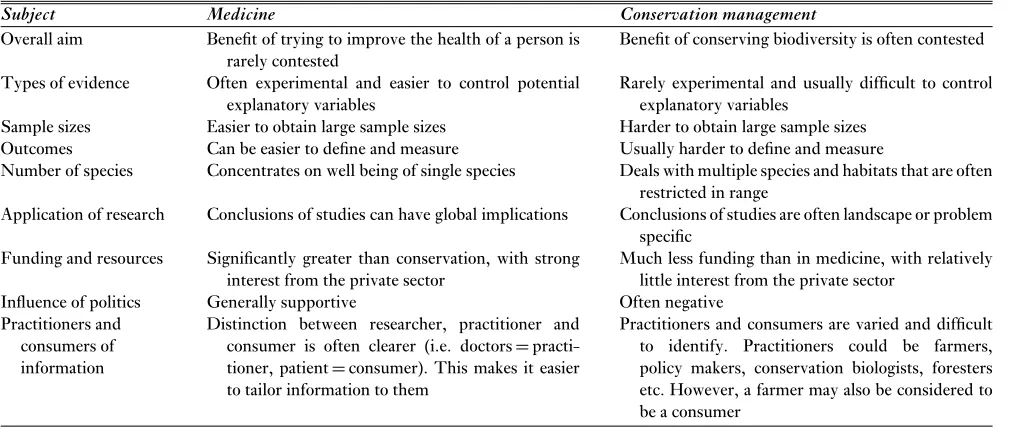
Table 2Differences between medicine and conservation management.
Subject Medicine Conservation management
Overall aim Benefit of trying to improve the health of a person is rarely contested
Benefit of conserving biodiversity is often contested
Types of evidence Often experimental and easier to control potential explanatory variables
Rarely experimental and usually difficult to control explanatory variables
Sample sizes Easier to obtain large sample sizes Harder to obtain large sample sizes Outcomes Can be easier to define and measure Usually harder to define and measure
Number of species Concentrates on well being of single species Deals with multiple species and habitats that are often restricted in range
Application of research Conclusions of studies can have global implications Conclusions of studies are often landscape or problem specific
Funding and resources Significantly greater than conservation, with strong interest from the private sector
Much less funding than in medicine, with relatively little interest from the private sector
Influence of politics Generally supportive Often negative Practitioners and
consumers of information
Distinction between researcher, practitioner and consumer is often clearer (i.e. doctors= practi-tioner, patient=consumer). This makes it easier to tailor information to them
Practitioners and consumers are varied and difficult to identify. Practitioners could be farmers, policy makers, conservation biologists, foresters etc. However, a farmer may also be considered to be a consumer
These differences affect the type and quantity of infor-mation available for synthesis and review. The more controlled the conditions of the original studies, the more robust the review conclusions will be. In medicine, the CC deals only with reviews of clinical trials that have been carried out under the most robust experimental conditions, in other words randomized controlled trials (RCTs). Such experimental conditions are rarely attainable in conservation biology. Some study designs, such as natural experiments that compare situations before and after an event, or that use a natural standard as a control (see Lindenmayer et al. 2001), have characteristics similar to true experiments (Diamond 1986). The use of these designs is increasing in conservation, and there are also opportunities for collecting more evidence from interventions that we use to manipulate environmental conditions.
Despite these opportunities, there is proportionately much less evidence from studies conducted under controlled con-ditions in conservation management compared to medicine. This is partly because obtaining adequate replication is diffi-cult (Eberhardt & Thomas 1991), as in the case of replicating wetlands with specific vegetation communities when assessing the effect of water level management (see La Peyreet al. 2001). There are also problems in measuring desirable outcomes, and even if they can be measured, there can be disagreements on
what constitutes a successful intervention. For example, the eradication of rabbits on Round Island, Mauritius, resulted not only in the positive outcome of the regeneration of endemic tree and reptile species, but also in the spread of the previously sparse exotic grassChloris barbata(Northet al. 1994).
One much discussed issue in the medical literature is whether experimental units in the primary studies (usually patients) have been randomly assigned to treatments. Ran-domization is the only means for controlling for unknown and unmeasured differences between comparison groups as well as those that are known and measured (Kunz & Oxman 1998). In experimental design, unpredictability is therefore introduced by using random allocation to protect against the unpredict-able bias that can occur in non-randomized designs. Failure to include randomization can result in either an increase or a decrease in the effect of an intervention (Kunz & Oxman 1998).
Statistical and methodological improvements have helped to eliminate some of the biases that affect conclusions of systematic reviews that are based on observational (non-randomized) studies (Benson & Hartz 2000). However, introducing some element of randomization in the primary studies where possible is important. For example, in the Tumut fragmentation ‘natural’ experiment, Lindenmayer
enumerating a large number of eucalypt forest patches, and then randomly selecting from them.
In environmental conservation, a huge range of variables may drive an issue. Directly controlling for the variables or controlling for them indirectly by using randomization may be very difficult. However, this is also the case for many areas of medicine (such as epidemiology or neuropsychiatry), which have difficulties conducting experiments to identify whether an action truly causes a phenomenon (van Reekum
et al. 2001). In these cases various criteria have been used to help pull together different strands of observational evidence and provide a process and framework upon which to build a balanced judgement. A number of different sets of criteria for inferring causation have been proposed, the most well known of which are the criteria published in response to the issue of whether smoking causes lung cancer (Hill 1965). The criteria include assessing the consistency, strength, specificity, temporal relationship and coherence of the association (Fox 1991, and references within). Applying such criteria has greatly influenced the use of observational data in medicine and public health and has direct relevance to conservation management.
A system that ranks the ability of the original study to control for bias is also used to synthesize less robust studies (NHMRC [National Health and Medical Research Council] 2000). Similar systems could be applied to evaluating conservation procedures that include a wide range of evidence, including anecdotal and expert opinion (Pullin & Knight 2001). Expert opinion and experience will always be an important part of making decisions; the goal has to be to use the best available scientific evidence. Adopting such an approach encourages researchers to develop and use more rigorous experimental designs wherever possible in order to improve the ranking of the evidence they collect.
Despite some clear differences between medicine and conservation, we see no reason why attempts could not be made in conservation management to begin to use more of the techniques applied in medicine that help to objectively synthesize and apply what may initially appear to be disparate types of evidence. This includes using at least some of the components of systematic reviews. Conclusions from such reviews may not be as robust as those that synthesize randomized experimental data, but would be an improvement on more traditional reviews that do not acknowledge the many sources of bias associated with them (see Gates 2002).
Are the types of questions about conservation interventions amenable to systematic review?
In medicine, considerable emphasis is placed on formulating questions that systematic reviews can answer. Precise questions allow focused reviews. Producing systematic reviews therefore necessarily lends itself to a reductionist approach. In ecology, such reductionism emphasizes the structural aspects of natural systems and focuses on individual
species and population dynamics of species within isolated ecosystems, compared to more holistic approaches that focus on macro-level functional aspects (de Leo & Levin 1997).
Fully controlled experiments are likely to be most appropriate for answering specific questions. However, in some cases it may be impossible or inappropriate to isolate conservation interventions if they act synergistically, such as in the use of multilateral accords, declarations and actions to reduce seabird mortality in longline fisheries (Gilman 2001). Thus, finding solutions to conservation problems often requires a more integrated or interdisciplinary approach (Ludwiget al. 1993) that takes advantage, where possible, of any experimental evidence.
To illustrate the problem of systematically reviewing specific questions of conservation management, we consider the effectiveness of wildlife underpasses constructed under roads for amphibians in the Northern hemisphere. Wildlife underpasses are often used to mitigate the detrimental effect of roads that kill individual animals (Lode 2000) and fragment and reduce the viability of populations (Hels & Nachman 2002). There are many questions about the effectiveness of underpasses for amphibians that could be reviewed. Some of these might be: (1) does a particular frog species use the underpass? (2) For amphibian species, do underpasses, compared to having no underpasses, reduce mortality? (3) For an amphibian species, do underpasses increase the viability of the metapopulation in the long term?
When faced with a development application for a road, a review of question (1) could provide some information for an environmental impact statement. Similarly, it may be possible to review studies that ask if underpasses reduce mortality (question 2). However, while knowing if wildlife underpasses maintain the viability of frog populations is the most useful question (question 3), it may also be the least practical. Tunnels may maintain viability in some cases, such as when there are relatively stable populations on either side of the road, but not in others where other factors may be influencing population viability. These issues are further complicated when multiple species are considered, because roads have different impacts on species (de Maynadier & Hunter 2000) and underpasses provide variable benefits (Clevenger & Waltho 2000).
Table 3Degrees of uncertainty (Modified from Dovers 2001).
Degree of uncertainty Definition
Identified risk Sufficient information exists for believable probability distributions to be assigned to possible outcomes of future states (e.g. intervening to trap introduced American mink that are predating on breeding colonies of terns nesting on an island; Craik 1998)
Uncertainty Although we are confident of the direction of the likely change, we cannot assign probability distributions to future states (e.g. releasing a virus to control rabbits; Cooke & Saunders 2002)
Ignorance We cannot be confident of the direction of likely change and where threshold effects and likely surprises lurk (e.g. the impact of altering sediment flux washed out of estuaries onto coral reefs; McCullochet al.2003)
(2) IS AN EVIDENCE-BASED APPROACH APPROPRIATE FOR CONSERVATION MANAGEMENT?
Because of the complexity of ecological systems, even if the likely outcome of an intervention is known, there will often be a high degree of uncertainty that cannot be predicted even with the best scientific evidence (Table 3). For example, while a review of introducing grazing on lowland heaths in the United Kingdom (UK) found that higher stocking rates generally increased plant species richness, the precise effects on species composition varied widely between sites (Bullock & Pakeman 1997). Without near-perfect information, conservation-related decisions will often rely heavily on value-based judgements (Doverset al. 2001) and expert judgement (Woodwell 1989). Thus, to confront uncertainty, a number of complementary approaches (such as quantitative risk assessment, safe minimum standards and the precautionary principle) will always be required (Mooney & Sala 1993).
Adaptive management is one such approach that is promoted in conservation. While an evidence-based approach using reviews of the literature asks if there is prior evidence for an intervention, adaptive management aims to learn through the continued reflective process of reviewing management decisions. In this respect adaptive management actively acknowledges uncertainty because it tries to learn from it, while an evidence-based approach does not do this directly.
Unfortunately, adaptive management is rarely well structured and implemented (Taylor 1997), and while one of the claimed benefits of adaptive management is that practitioners are forced to work closely with researchers, there is no mechanism for ensuring such cooperation (Allan & Curtis 2003). Ensuring that reviews of research are available to practitioners will therefore always be an important part of conservation.
As in medicine, it is likely that many reviews of conservation management would find little evidence to support or reject the use of a certain procedure. For example, in the UK, translocation is a common mitigation strategy for reptiles and amphibians faced with habitat loss as a result of economic development. The intervention is expensive, but there are few studies that have assessed the effectiveness of the approach, and translocation is often used without full awareness of its
limitations (cf. Seigel & Dodd 2002). Many management actions are also not monitored (Block et al. 2001), and any review that highlights the lack of available information strengthens the argument for the collection of more and better evidence. Adopting an evidence-based approach could thus complement and work with adaptive management that requires monitoring to be effective. The results of adaptive management projects could feed into an evidence-based approach to ensure that results are widely available. An evidence-based approach will therefore be appropriate for conservation, as long as it is not applied in isolation from other approaches.
(3) HOW CAN WE MAKE RESULTS FROM SYSTEMATIC REVIEWS WIDELY ACCESSIBLE?
The Cochrane Collaboration
There is no point in conducting reviews if they are not acces-sible to researchers and practitioners or if the implications of the reviews for conservation management are unclear. In medicine, it was recognized that an organization was needed specifically to guide the production and dissemination of systematic reviews. The international non-profit CC now includes 49 international editorial review groups for different areas of medicine, 11 groups that investigate the methods for reviewing information and disseminating their findings, 15 Cochrane Centres that support the CC worldwide, and consumer networks that ensure the information provided is continually relevant and useful. Reviews are available from the Cochrane Library on compact disk or via the Internet. In some countries access is free, such as in the UK and Australia, where there is government sponsorship. Cochrane Centres are usually funded by their respective governments, while the majority of individuals making up the editorial and working groups do so voluntarily, or as part of their existing jobs in academic and health care institutions.
Why is an independent organization devoted to disseminating reviews important?
Table 4Summary of the benefits of the CC for medicine that could also apply to conservation management.
Direct benefits Other benefits from reviewing and disseminating reviews through the CC
Forum for the development of methods for Global collaboration
reviewing evidence Reviews clarify limits to current research and knowledge Forum and process for disseminating research to Greater accessibility to primary research
practitioners The collection of more and better evidence Forum and process for feedback from practitioners Greater inclusion of null results in the literature
to researchers Highlights the importance of an applied discipline to the wider community Encourages incentives for synthesizing information
an unbiased and non-political way. The principles aim not only to maintain the core principles of science, such as rigour and objectivity, but also to promote the accessibility of science to society. The ten principles are: collaboration, building on the enthusiasm of individuals, avoiding duplication, minimizing bias, keeping up to date, striving for relevance, promoting access, ensuring quality, maintaining continuity and enabling wide participation (Cochrane Collaboration, http://www.cochrane.org).
There have been many direct and indirect benefits of an independent organization that guides the production and dissemination of systematic reviews (Table 4). Recognition for synthesizing activities has increased, and conducting a systematic review is now considered to be an important part of an academic’s portfolio and postgraduate research. Reviews have highlighted the limits of current information and there is now greater emphasis on publishing studies with null results and obtaining more and better evidence. There have also been major improvements in accessibility of the primary literature through free comprehensive search databases, journals and databases of clinical trials (such as PubMed, http://www.ncbi.nlm.nih.gov/entrez/).
Access to data, primary studies and reviews are currently limited in conservation. This is either because of the physical difficulty of accessing the research or because it is not produced in formats that are clear, concise and under-standable. Current incentives do not encourage collabora-tion and synthesis activities, and academics face strong disincentives for applied research that may not be as new, exciting or publishable as pure research. Conservation journals have a longer time from submission to publication than other ecological and evolution journals (Kareivaet al. 2002), and access to them is limited if an individual is not affiliated with a large institution that can afford a wide range of journals or expensive search databases. The conclusions of conservation-related reviews are also likely to be biased by primary studies with positive results (cf. Jennions & Moller 2002) and practitioners may be using interventions despite unpublished studies that have found them to be unsuccessful.
It is essential for conservation to find mechanisms that demonstrate its importance to the wider community. In medicine, the CC has influenced more than just research and direct practice. Reviews have been used by patients, in parliamentary reviews, commissions and inquiries, and have
facilitated the transparency of medical science in the public arena (J. Salisbury, personal observation 1995–2004).
Are there existing organizations like the CC in conservation?
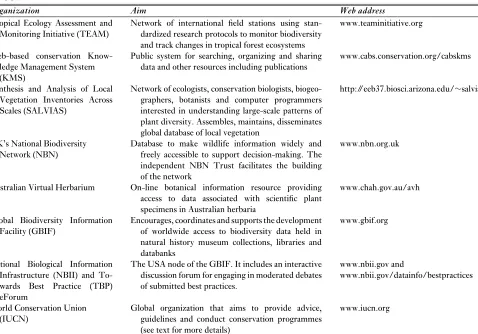
We are unaware of any organizations or programmes in conservation with the same objectives and principles as the CC. Some conservation organizations have principles similar to the CC (Table 5). Some systematic processes aim to review information and make reliable conclusions from it in a similar fashion to the application of the results of systematic reviews in medicine, for example designating risk status of species (Shank 1999) or assessing the loss of individuals and habitat of endangered species (Smallwood et al. 1999). Some conservation-related journals are dedicated to reviews (such as Annual Review of Ecology and Systematics), aim to make research results more understandable to practitioners (such as Frontiers in Ecology and Environment published by the Ecological Society of America and Conservation in Practice produced by the Society for Conservation Biology) or aim to make quality science freely accessible to society (such as PloS Biology http://www.plosbiology.org). Some learned organizations might provide guidance based on reviewing information (for example briefing papers produced by the Fisheries Society of the British Isles, http://www.le.ac.uk/biology/fsbi). However, there are no organizations with the same principles of collaboration, altruism and independence as the CC, which directly aim to develop methods for reviewing studies of conservation management, guide the production of the reviews and widely disseminate their findings at low cost or free of charge.
Table 5Examples of conservation organizations and programmes that aim to achieve similar outcomes or are based on similar principles to the CC.
Organization Aim Web address
Tropical Ecology Assessment and Monitoring Initiative (TEAM)
Network of international field stations using stan-dardized research protocols to monitor biodiversity and track changes in tropical forest ecosystems
www.teaminitiative.org
Web-based conservation Know-ledge Management System (KMS)
Public system for searching, organizing and sharing data and other resources including publications
www.cabs.conservation.org/cabskms
Synthesis and Analysis of Local Vegetation Inventories Across Scales (SALVIAS)
Network of ecologists, conservation biologists, biogeo-graphers, botanists and computer programmers interested in understanding large-scale patterns of plant diversity. Assembles, maintains, disseminates global database of local vegetation
http://eeb37.biosci.arizona.edu/∼salvias
UK’s National Biodiversity Network (NBN)
Database to make wildlife information widely and freely accessible to support decision-making. The independent NBN Trust facilitates the building of the network
www.nbn.org.uk
Australian Virtual Herbarium On-line botanical information resource providing access to data associated with scientific plant specimens in Australian herbaria
www.chah.gov.au/avh
Global Biodiversity Information Facility (GBIF)
Encourages, coordinates and supports the development of worldwide access to biodiversity data held in natural history museum collections, libraries and databanks
www.gbif.org
National Biological Information Infrastructure (NBII) and To-wards Best Practice (TBP) eForum
The USA node of the GBIF. It includes an interactive discussion forum for engaging in moderated debates of submitted best practices.
www.nbii.gov and
www.nbii.gov/datainfo/bestpractices
World Conservation Union (IUCN)
Global organization that aims to provide advice, guidelines and conduct conservation programmes (see text for more details)
www.iucn.org
of accurate data, information and knowledge to guide conservation action (IUCN 2001, p. 59). However, the IUCN does not currently produce reviews in the same way as the CC because its main focus is to provide information on biodiversity rather than on reviews of management action
per se. Despite these differences, as a well-respected global and independent organization with extensive networks of expertise, the IUCN may be well positioned to be an umbrella body to guide the production of systematic reviews of conservation interventions.
ACHIEVING BETTER COMMUNICATION
BETWEEN RESEARCHERS AND PRACTITIONERS
We believe that the accessibility of primary research for conservation managers is currently inadequate. Conservation biologists who wish their work to be of relevance to the world’s environmental problems should ensure that their research is understandable and widely accessible. Greater incentives for reviews and finding more effective ways to disseminate them will be a necessary part of this process. Practitioners will not waste time sifting through primary literature that has not been well synthesized and will be in a better
position to implement conservation strategies that are based on evidence of effectiveness rather than on opinion or trial and error.
Although it will not be possible to use precisely the same methods as those of the CC that review tightly controlled experimental data, many of the systematic components can be used for reviews of conservation management. Some of these methods can be used immediately, including being more specific in how studies are searched for and the criteria used for deciding whether a study should be included in a review. This would highlight the current difficulties of accessing primary research and may prompt improvements in database access. Stating the implications of reviews for research and practice is now a standard procedure in many medical journals, and editors of conservation-related journals could also encourage this (as in theJournal of Applied Ecology).
(http://www.campbellcollaboration.org) that aims to help people make well-informed decisions about the effects of interventions in the social, behavioural and educational arenas. It is important to recognize that systematic reviews in medicine and the CC were driven predominantly by the enthusiasm of a few people, headed by Iain Chalmers in Oxford, UK. Most of the expense of the CC supports the Cochrane Centres, while the library of reviews is predominantly funded by the non-profit returns from its wide-scale use. It may, for example, require relatively little funding for researchers to form editorial review groups to work on selected conservation topics. Many collaborations of scientists already exist and may be able to act as editorial groups (for example the Declining Amphibian Task Force, http://www.open.ac.uk/daptf/index.htm). In the experience of medicine, once the process of systematic reviews took hold and the limits to current information became apparent, the work of reviewing research attracted more support from outside the medical profession.
Despite the many advantages of the CC it is important to recognize there are still substantial gaps with respect to getting good quality research evidence into medical practice (Waddell 2001). Summarizing research is a necessary first step, and one in which researchers must play an important role, but more effort will be required to ensure that well-attested science is implemented. Because there are rarely single answers to conservation issues, and many of the problems are social or political rather than purely biological, we will need effective methods to integrate and implement a wide variety of different types of information. Thus, introducing a CC-like organization in conservation would not meet all of conservation’s information needs, but would be an important step to achieving the more effective use of science in management.
ACKNOWLEDGEMENTS
The paper is the result of numerous discussions with a wide range of practitioners and academics from both the medical and environmental sciences. Some of the ideas expressed in this paper were also the result of a one-day symposium in June 2002, which addressed the broader issue of evidence-based environmental management (Salisbury & Fazey 2002). We thank J. Fischer and A. Felton for valuable comments on earlier versions of the manuscript. Ioan Fazey was supported by an Endowment for Excellence scholarship from the Australian National University.
References
Allan, C. & Curtis, A. (2003) Learning to implement adaptive management.Natural Resource Management6: 25–30.
Benson, K. & Hartz, A.J. (2000) A comparison of observational studies and randomized, controlled trials.New England Journal of Medicine342: 1878–1886.
Block, W.M., Franklin, A.B., Ward, J.P., Ganey, J.L. & White, G.C. (2001) Design and implementation of monitoring studies to evaluate the success of ecological restoration on wildlife.
Restoration Ecology9: 293–303.
Bullock, J.M. & Pakeman, R.J. (1997) Grazing of lowland heath in England: management methods and their effects on heathland vegetation.Biological Conservation79: 1–13.
Chalmers, I. (1993) The Cochrane collaboration: preparing, maintaining, and disseminating systematic reviews of the effects of health care.Annals of the New York Academy of Sciences703: 156–165.
Clarke, M. & Oxman, A.D. (1999)Cochrane Reviewers’ Handbook, 4.0 edition. Oxford, UK: The Cochrane Collaboration.
Clevenger, A.P. & Waltho, N. (2000) Factors influencing the effectiveness of wildlife underpasses in Banff National Park, Alberta, Canada.Conservation Biology14: 47–56.
Cooke, B. & Saunders, G. (2002) Rabbit haemorrhagic disease in Australia and New Zealand.Wildlife Research29: U3–U3. Cosgrove, P.J. & Hastie, L.C. (2001) Conservation of threatened
freshwater pearl mussel populations: river management, mussel translocation and conflict resolution.Biological Conservation99: 183–190.
Craik, J.C.A. (1998) Recent mink-related declines of gulls and terns in west Scotland and the beneficial effects of mink control.Argyll Bird Report14: 98–110.
de Leo, G.A. & Levin, S. (1997) The multifaceted aspects of ecosystem integrity.Conservation Ecology1: 3.
de Maynadier, P.G. & Hunter, M.L. (2000) Road effects on amphibian movements in a forested landscape. Natural Areas Journal20: 56–65.
Diamond, J. (1986) Overview: laboratory experiments, field experiments, and natural experiments. In:Community Ecology, ed. J. Diamond & T.J. Case, pp. 3–22. New York, USA: Harper & Row.
Dovers, S. (2001) Informing institutions and policies. In:
Towards Sustainability: Emerging Systems for Informing Sustainable Development, ed. J. Venning & J. Higgins, pp. 197–220. Sydney, Australia: University of New South Wales Press.
Dovers, S., Norton, T.W. & Handmer, J.W. (2001). Ignorance, uncertainty and ecology: key themes. In:Ecology, Uncertainty and Policy: Managing Ecosystems for Sustainability, ed. J.W. Handmer, T.W. Norton & S.R. Dovers, pp. 1–25. Harlow, UK: Pearson Education Limited.
Eberhardt, L.L. & Thomas, J.M. (1991) Designing environmental field studies.Ecological Monographs61: 53–73.
Ely, J.W., Osheroff, J.A., Ebell, M.H., Bergus, G.R., Levy, B.T., Chambliss, M.L. & Evans, E.R. (1999) Analysis of questions asked by family doctors regarding patient care.British Medical Journal
319: 358–361.
Flaspohler, D.J., Bub, B.R. & Kaplin, B.A. (2000) Application of conservation biology research to management. Conservation Biology14: 1898–1902.
Fox, G.A. (1991) Practical causal inference for ecopidemiolo-gists.Journal of Toxicology and Environmental Health 33: 359– 373.
Gates, S. (2002) Review of methodology of quantitative reviews using meta-analysis in ecology.Journal of Animal Ecology71: 547– 557.
Glasziou, P., Irwig, L., Bain, C. & Colditz, G. (2001)Systematic Reviews in Healthcare: A Practical Guide. Cambridge, UK: Cambridge University Press.
Hels, T. & Nachman, G. (2002) Simulating viability of a spadefoot toadPelobates fuscusmetapopulation in a landscape fragmented by a road.Ecography25: 730–744.
Hill, A.B. (1965) The environment and disease: association and causation.Proceedings of the Royal Society of Medicine58: 295– 300.
IUCN (2001) Stepping into the new millennium - International Union for the Conservation of Nature’s Intersessional Programme. Unpublished report. Gland, Switzerland: IUCN. Jennions, M.D. & Moller, A.P. (2002) Publication bias in ecology
and evolution: an empirical assessment using the ‘trim and fill’ method.Biological Reviews77: 211–222.
Kareiva, P., Marvier, M., West, S. & Hornisher, J. (2002) Slow-moving journals hinder conservation efforts.Nature420: 15–15. Kunz, R. & Oxman, A.D. (1998) The unpredictability paradox:
review of empirical comparisons of randomised and non-randomised clinical trials.British Medical Journal317: 1185–1190. La Peyre, M.K., Reams, M.A. & Mendelssohn, I.A. (2001) Linking actions to outcomes in wetland management: An overview of US state wetland management.Wetlands21: 66–74.
Lindenmayer, D.B., Cunningham, R.B., MacGregor, C., Tribolet, C. & Donnelly, C.F. (2001) A prospective longitudinal study of landscape matrix effects on fauna in woodland remnants: experimental design and baseline data.Biological Conservation101: 157–169.
Lindenmayer, D.B., Cunningham, R.B. & Pope, M.L. (1999) A large-scale ‘experiment’ to examine the effects of landscape context and habitat fragmentation on mammals.Biological Conservation88: 387–403.
Lode, T. (2000) Effect of a motorway on mortality and isolation of wildlife populations.Ambio29: 163–166.
Lomas, J. (1993) Diffusion, dissemination, and implementation: who should do what?Annals of the New York Academy of Sciences703: 226–237.
Ludwig, D., Hilborn, R. & Walters, C. (1993) Uncertainty, resource exploitation, and conservation - lessons from history.Science260: 17.
Lutz, M. & Bastian, O. (2002) Implementation of landscape planning and nature conservation in the agricultural landscape - a case study from Saxony. Agriculture Ecosystems and Environment 92: 159– 170.
McCulloch, M., Fallon, S., Wyndham, T., Hendy, E., Lough, J. & Barnes, D. (2003) Coral record of increased sediment flux to the inner Great Barrier Reef since European settlement.Nature421: 727–730.
Meegan, R.P. & Maehr, D.S. (2002) Landscape conservation and regional planning for the Florida panther.Southeastern Naturalist
1: 217–232.
Mooney, H.A. & Sala, O.E. (1993) Science and sustainable use.
Ecological Applications3: 564–566.
Musters, C.J.M., Kruk, M., De Graaf, H.J. & Ter Keurs, W.J. (2001) Breeding birds as a farm product.Conservation Biology15: 363–369.
NHMRC (2000)How to Review the Evidence: Systematic Identification and Review of the Scientific Literature. Canberra, Australia: National Health and Medical Research Council.
North, S.G., Bullock, D.J. & Dulloo, M.E. (1994) Changes in the vegetation and reptile populations on Round- Island, Mauritius, following eradication of rabbits.Biological Conservation67: 21–28. Noss, R.F. (2000) Science on the bridge.Conservation Biology14:
333–335.
Ormerod, S.J., Barlow, N.D., Marshall, E.J.P. & Kerby, G. (2002) The uptake of applied ecology.Journal of Applied Ecology39: 1–7. Ormerod, S.J., Pienkowski, M.W. & Watkinson, A.R. (1999) Communicating the value of ecology.Journal of Applied Ecology
36: 847–855.
Pullin, A.S. & Knight, T.M. (2001) Effectiveness in conservation practice: pointers from medicine and public health.Conservation Biology15: 50–54.
Pywell, R.F., Bullock, J.M., Hopkins, A., Walker, K.J., Sparks, T.H., Burke, M.J.W. & Peel, S. (2002) Restoration of species-rich grassland on arable land: assessing the limiting processes using a multi-site experiment.Journal of Applied Ecology39: 294–309. Raesly, E.J. (2001) Progress and status of river otter reintroduction
projects in the United States.Wildlife Society Bulletin29: 856– 862.
Richards, M. (1996) Protected areas, people and incentives in the search for sustainable forest conservation in Honduras.
Environmental Conservation23: 207–217.
Sackett, D.L., Strauss, S.E., Richardson, W.S., Rosenberg, W. & Haynes, B. (2000)Evidence-based Medicine: How to Practice and Teach EB, 2nd edition. Edinburgh, UK: Churchill Livingstone. Salisbury, J. & Fazey, I. (2002) Evidence-based environmental
management: what can medicine and public health tell us? National Institute for the Environment, Australian National University, Canberra [www document]. http://eprints.anu.edu.au/archive/ 00002150/
Salvatori, V., Okarma, H., Ionescu, O., Dovhanych, Y., Find’o, S. & Boitani, L. (2002) Hunting legislation in the Carpathian Mountains: implications for the conservation and management of large carnivores.Wildlife Biology8: 3–10.
Seigel, R.A. & Dodd, C.K. (2002) Translocations of amphibians: proven management method or experimental technique?
Conservation Biology16: 552–554.
Shank, C.C. (1999) The committee on the status of endangered wildlife in Canada (COSEWIC): a 21-year retrospective.Canadian Field-Naturalist113: 318–341.
Smallwood, K.S., Beyea, J. & Morrison, M.L. (1999) Using the best scientific data for endangered species conservation.Environmental Management24: 421–435.
Soehartono, T. & Newton, A.C. (2001) Conservation and sustainable use of tropical trees in the genus Aquilaria II. The impact of gaharu harvesting in Indonesia.Biological Conservation97: 29–41. Taylor, B., Kremsater, L. & Ellis, R. (1997) Adaptive management of
forests in British Columbia. British Columbia Ministry of Forests, Forest Practices Branch., Victoria, British Columbia, Canada. van Reekum, R., Streiner, D.L. & Conn, D.K. (2001) Applying
Bradford Hill’s criteria for causation to neuropsychiatry: challenges and opportunities. Journal of Neuropsychiatry and Clinical Neurosciences13: 318–325.
Waddell, C. (2001) So much research evidence, so little dissemination and uptake: mixing the useful with the pleasing.Evidence Based Mental Health4: 3–5.
Woodwell, G.M. (1989) On causes of biotic impoverishment.Ecology