Green Supply Chain Collaboration and Incentives: Current trends and
future directions
Abstract: This editorial piece discusses the current trends and future research directions in green supply chain collaboration and incentives. The discussion begins with evolution of green supply chain collaborations and few contributions made so far. The editorial piece introduces the special issue papers which address the green collaboration challenges and offers a general framework suggesting pathways for future research. The article ends with the open research questions in green supply chain collaborations and incentives.
Keywords: Green supply chain; collaboration; incentives; further research
1. Introduction
Supply chain collaboration is a relationship between supply chain partners developed over a period of time to achieve lower cost, higher quality, greater product innovation, reduce risks and enhance market value. In addition to the above benefits, recent happening to some of the focal companies such as Nike, Satyam Computer Services, and Coca-Cola in terms of workforce-related malpractice, corporate fraud, non-compliance on environmental issues created numerous pressures to the focal company from governing agencies, customers and stakeholders to be socially responsible. These pressures make focal companies to push their boundaries and make them to collaborate with their members to asses and ensure they are socially responsible. Latest version of greenness in supply chain refers to the responsibility of members or firms to ensure coordination for environmental, social and ethical compliance from upstream to downstream members. It is very well reported that green collaboration requires a substantial commitment of resources and organizational capabilities. Hence the basic question lies among researchers and practitioners is how focal companies should collaborate to become greener.
This special issue specifically attempted to address the following basic three challenging open questions with respect to green supply chain collaboration and incentives:
• How focal companies should collaborate to become greener?
• How focal company should design incentive structures for green initiatives?
• How should the focal company reward policy appropriately across the members in supply chain?
Suggested topics to this special issue are as follows: Resources and organizational capabilities requirements for green collaboration, Buyer-supplier green relationship, Guanxi and green collaboration, Drivers and barriers for green supply chain collaboration, Incentive mechanism and supply chain network cooperative performance, Environmental management practices and incentives, Green knowledge management and rewards, Eco innovation and green supply chain collaboration, Remanufacturing and balanced incentive strategies, Organizational proactive environmental management strategies and joint decision making, Supply chain integration and green collaboration, Influence of recent technology on green supply chain collaboration, Cultural aspects in green collaboration, Role of trust and belief, Environmental supplier selection and supplier monitoring and Technology sharing and incentives.
2. Evolution of green supply chain collaboration
To trace the evolution of green supply chain collaboration we searched Scopus and EBSCO databases using keyword “green supply chain collaboration” within title, abstract and keywords during last five years. Interestingly we find 15 articles, with help of the key articles we tried to understand the pathway for green collaboration starting from green benefits, green integration, green relationship and green practices on performance.
Green benefits
how the green benefits can be shared among the members. Green collaboration benefits listed out in the previous studies are reduction of business waste (Azevedo et al., 2011), environmental impact (reducing pollutant emission, using renewable energy sources, avoiding the use of toxic substances, and using environmentally friendly materials), market performance (access to new markets; competitive advantage), corporate image performance (reputation; regulatory compliance), manufacturing performance (efficiency in the use of materials; energy efficiency, innovation), financial performance(Increased margins or market share; customers willingness to pay a premium price for products)and supply chain cost (Dangelico and Pontrandolfo, 2013). The overall benefits out of green collaboration reside with the focal companies and few studies reported the burden to the upstream suppliers. Specifically upstream suppliers in emerging economy context will suffer a lot due to green collaboration without any additional benefits (Chen and Hung, 2012).Out of 15 articles, one article discussed the benefits of reverse revenue sharing contract in downstream supply chain to improve the coordination between manufacturers and retailers to collect back the used materials for collaborative manufacturing (De Giovanni, 2011).
Green relationship
Green integration
Traditionally integration refers how the business processes between inter organizations are aligned within supply chain to create synergy and to achieve synchronized actions. Integration is one among the enablers besides relationship to achieve collaboration. Similarly, it is important to know green thinking is aligned among the supply chain members process and products. Previous studies so far acknowledged the importance of capabilities development within focal companies and suggested how it will be helpful to achieve collaboration with different type of actors (Dangelico and Pontrandolfo, 2013; Gavronski et al., 2011). It is rare to find a study which discusses how green external integration can be achieved similar to ones like Keiretsu process.
Green practices
Practices to achieve green benefits have been well reported in the literature. Azevedo et al. (2011) studied the relationship between green practices and firm performance. They studied the effect of greening the supply process practices, advanced green practices, product based green practices and greening the delivery process on combined performance system. Usha et al. (2014) discussed the influence of various pressures to manufacturers, upstream suppliers and downstream distributors to reduce carbon emission. Using exploratory study of Canadian and North America firms,Vachon (2007) examined the linkages between green supply practices and the selection of environmental technologies. Later on, Vachon and Klassen (2008) investigated the relationship between environmental collaborative practices such as joint environmental goal setting, shared environmental planning and working together to reduce environmental impacts on manufacturing performance. Similarly, Koh et al. (2012) studied the variation of environmental management diffusion among supply chain members and the effect of environmental management system adaption.
4. Introduction to special issue papers
Green benefits
Ala-Harja and Helo used a performance measurement framework to analyses green logistics decision in food industry and compared it with various financial and environmental metrics. They compare supply chain decisions and analyze where environmental effects are improving, together with cost efficiency and on-time delivery performance, and when the impacts point to different directions. The paper presents three case studies and an analysis of the performance measures. Finally, they have developed a framework with three decision types such as supply chain structure (supplier selection, plant location), logistics media (transportation mode, packaging materials, and packaging size) and planning and timing structures. They compared the tradeoff between operational efficiency impact and emission impact.
Green supply chain management has emerged as a key strategy for organizational sustainability. Azadi et al. proposed two data envelopment analysis approaches to determine targets for two-stage network structures.. The proposed procedure is a methodological contribution and will be a useful tool for managers to set targets and monitor the performance of green supply chain performance through green transportation. They argue that monitoring, evaluating, benchmarking, and planning for partners in supply chain will bring a variety of green supply chain benefits to management and company.
Green relationship
Green supply chain and logistics have become a major focus in both manufacturing and services. Participating members along the supply chain operations demand a balance between economic and environmental interests. Lun et al. explored the logistics service providers greening capability practices. According to them, the green propensity is the involvement of customers in performing logistics service activities to achieve environmental performance. They have attempted to understand the status of logistics service providers with a greening propensity to adopt green operations, for carrying out their business activities and the relationship between green capability and firm performance in terms of customer satisfaction and sales growth. Details of an empirical research with logistics service providers in Hong Kong are reported in this paper. They study the following hypotheses: (1) Different logistics service bundles provided by LSPs can lead to cooperation in managing green logistics operations and in turn improved performance; (2) Different categories of greening capability in the logistics industry result in green operations and enhanced business performance that is increase in customer satisfaction and sales; and (3) Greening capability of LSPs is positively associated with their firm performance in terms of customer satisfaction and sales.
Green Integration
Green supply chain management focuses on manufacturing operations (product, process) in terms of waste (all forms), energy use, and resource use including material consumption. Kristianto and Helo investigate the implications of product architecture modularity for the operational economy of green supply chains with manufacturing process uncertainty. Their integrated model links traditional supply chain profit maximization with environmental and societal costs. They study the integration between: (i) between product & manufacturing process design and ecology & social principles, life cycle assessment, product life cycle extension & reusability; and (ii) supply chain networks design and production line scheduling and more environmentally friendly products, processes and supply chains. They argue, “Green product design through product architecture modularity increases supply chains profit and product reusability. Therefore, product life cycle is extended, manufacturing lead times are reduced and disposal is minimized.
growth in China, the logistics services are gaining attention in China for timely delivery of high quality and competitively priced products. This is due to outsourcing, ecommerce, and related freight activities, nevertheless, small to medium sized companies play a major role contemporary supply chains. Subramanian et al. studied the short term and long term benefits between logistics and cloud computing (CC) service providers in the Chinese medium and small logistics service providers through an empirical research. The major contribution of their study is to develop cost benefits analysis model based on innovation diffusion theory and validate it in the Chinese context. Considering the size and lack of resources and expertise for innovative technologies focusing on effective integration of operations of SMEs with focal companies, this paper proposes the integration of logistics and cloud computing service providers. The proposed research model includes three major dimensions of cloud computing in SME logistics providers: (1) perceived cost and benefits of CC, (2) perceived green benefits of CC, and (3) perceived need for CC adoption. The CC green benefits measurement model includes: costs and benefits (efficient IT, less investment in IT, reduce travels, enhanced resource utilization, reduced physical material usage and up to date technology).
Green practices
quality, poor dependability, lack overpricing scheme, and lack of quality assurance and after-sales service.
Companies around the world started recognizing that sustainability should be from all the three major perspectives, economic, social and environmental. However, many have attempted to achieve balance among them as a short-term focus. For example, environmental and social objectives have a long-term return. Because of the globalization of market and operations, the volume of goods exchanged through sea transport is huge and this highlights the importance of maritime industry’s commitment to green supply chain. Understanding the importance of this, Li et al. in their paper considered reuse of empty container in the maritime industry context. They developed a procedure to include empty and laden containers considering both volume and weight as well as with empty container storage cost to enhance green effort. They highlight the importance of collaborative approach to empty container repositioning and reuse for maximizing the profit. They conclude that empty container reuse requires supply chain collaboration, in particular greening activities is bound to add value to a shipping supply chain.
Green supply chain management is the key activity that depends on relationships and supplier management. In order to achieve green supply chain management, it is essential that suppliers support the effort of greening through implementing suitable strategies, tactics and operations that will protect the environment at the upstream side of the supply chains. Dai et al. examine how influence of rivalry and stakeholder pressure motivates firms to implement green practices. The study brings in the role of competition and its role in integration of green issues with suppliers. Their attempt involved three levels of suppliers in green supply practices. The role of top management support has been highlighted to effectively react to competitive pressures and in turn implementing green supply chain management practices. They have tested their model interviewing a sample of supply chain professionals. They conclude that environmental pressure from rivals and stakeholders impact green supply chain management effort through top management support for environmental initiatives.
environmental management maturity, external GSCM practices and environmental performance of firms. Jabbour et al. tested the new conceptual model based on the relationship between quality management, environmental management maturity, adoption of external practices of green supply chain management and green performance from Brazilian firms. The research method employed in this paper is based on a survey in which research experts in the subject are asked about their perception of relevant organizational aspects. The conceptual model includes the following major building blocks: quality management, green purchasing, status of environmental management, collaborate with consumers, and green performance. The results indicate that the quality management is an important antecedent for a firm’s environmental management maturity which in turn influences the adoption of external GSCM practices and green performance.
Transportation is a major part of supply chain operations which means focusing on greening transportation (logistics) will support tremendously the green supply chain management effort and organizational performance for sustainable operations. Ramanathan et al. proposed a strategic approach to improve sustainability in transportation service procurement process. Their complete enumeration method is a useful approach to compare other methodologies. The major strategy employed in this paper is a full truck load transportation service with the objective of assuring sustainability in logistics. A carrier assignment problem is involved in truck load contract auction and two methodologies (complete enumeration and heuristics approaches) are proposed to solve the problem. The model has been tested with a real life case study.
5. Green collaboration research framework
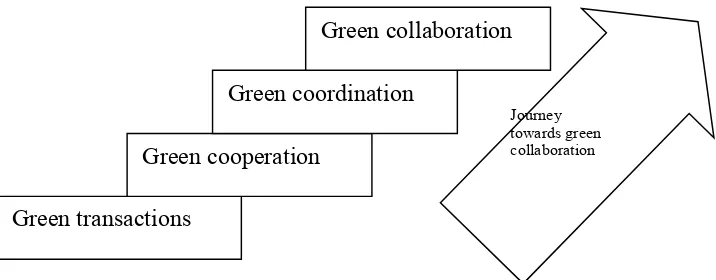
Figure 1: Green collaboration research framework
Green transactions
Green transaction includes green aspects in any transactions between a buyer and supplier. This includes consideration of green attributes that relates to short and long term sustainability in performing any activities within supply chain. Along with traditional attributes consideration of triple bottom triad is a starting point for researchers to proceed further. It is sparse to find studies which discuss the importance of green elements that takes place during multiple interactions within supply chain from upstream to downstream side. It is evident that few attempts were made to develop framework to capture and reveal selective green criteria from upstream to downstream supply chains. Still researchers need to think how to make green criteria friendly to people involved in transactions. Similarly, simple procedures and practices linking green benefits for green transactions need to be developed further. For example we had couple of papers by Ala-Harja and Helo and Azadi et al. discussed green benefits and not on how to carry out green transactions. Green transactions includes has multiple forms in supply chain management that can include, tangibles such as products, technology, dollars, people, etc. and intangibles such as trust, flexibility, good relationship, collaboration, knowledge, innovation and entrepreneurship. These aspects should be considered in developing conceptual and analytical models as well as conducting case study and empirical research.
Green cooperation
We refer green cooperation as a combined version of green relationship with cooperation. It is expected in the future that green cooperation builds long term relationship with the emphasis on the mutual benefits of partners in sharing revenues towards green practices. The
Green transactions
Green cooperation
Green coordination
Green collaboration
first step towards green cooperation is to consider green aspects in choosing both upstream and downstream members who are willing to share green benefits. The cooperation is a mechanism to reduce risk and information asymmetry in order to meet performance objectives with less investment. The cooperation can occur in all areas of supply chain management including product development, procurement, planning and forecasting, information technology, resources (both financial and non-financial), communication and contracts. So far studies have discussed buy back contract, quality flexibility contract, price-discount contract, revenue sharing contract and cooperative contract in traditional context and to certain extent in the green context. The green cooperation involves working together on common projects and objectives by considering green issues and long term relationship. However, there is no equity when it comes to sharing outcomes which means there is a disparity depending upon the partnering firms and their participation in adding value to customers and creating wealth. The cooperation employs a long-term contract to enforce most productive way of matching demand and supply. Hence it is not well known how the two aspects namely green relationship and cooperation are connected. The factors (variables and parameters) that will define the cooperation for greening supply chain need to be identified and then develop a conceptual model/framework for in-depth understanding so that this can be modelled later on for the implementation using appropriate optimization. In this special issue we had couple of papers by Luo et al. and Lun et al. discussing more about green relationship especially the influence of cultural aspects on firm’s green performance and green inclinations of firms, green capability and performance in logistics sector respectively. In the future we expect many research will take place to understand the role of soft element relationship on mutual agreements between buyer and seller.
Green coordination
sharing. Suitable attributes that will define the successful outcomes of coordination should be identified in order to determine the level of coordination for greening of supply chains. Analytical models with integration and cooperation variables can be developed in the future to evaluate the performance based on green cooperation. More empirical and case study research will build green cooperation theories and understanding. Two papers in our special issue namely Kristianto and Helo and Subramanian et al. discussed the green integration in the manufacturing and logistics scenario. As per Kristianto and Helo, integration of product architecture modularity into design and manufacturing will contribute to reusability and green issues. Similarly, Subramanian et al. analyzed the cost and green benefits based on the integration of logistics and cloud service providers.
Green collaboration
remanufacturing practice and importance of collaboration to overcome barriers in an emerging economies context by Zhu et al. In the forward logistics context two papers by Li et al. and Ramanathan et al. discussed the relevance of collaborative approach. In Li et al. work they emphasized on positioning and reuse of empty container in the maritime context and Ramanathan et al. proposed two methodologies to improve the sustainability in the full truck load service procurement process. The antecedents to implement green practices by upstream supply chain members have been discussed by Dai et al. The vitality of quality practices to green the supply chain has been discussed by Jabbour et al. Few papers in our special issues discussed practices to improve collaboration. This is only the beginning and still a long way to go to really understand pathways to green collaboration. The summary of special issue papers based on our research framework is given below in table 1
Table1: Summary of special issue papers Green
collaboration stages
Authors Research question Contribution Remarks
Green transaction (Green benefits and transaction)
Ala-Harja and
Helo
Analyse green logistics decisions within the food
industry using a
performance measurement
framework and to
compare alternative
scenarios using financial
and environmental
metrics.
Provide framework for supply chain
structure related
decisions, logistics media decision and planning and timing decisions
It is not clear how
green benefits
can be shared
within supply
chain
Azadi et al. How to set clear,
achievable, and realistic targets To meet green
supply chain
requirements?
propose two data envelopment
analysis (DEA)
approaches to find targets for
two-stage network structures
Practical issues
need to be related to the model to
improve the
models usage in understanding green benefits Green
cooperation (Green
relationship and cooperation)
Luo et al. How buyer–seller
relationship, competitive environment
and guanxi affect Chinese manufacturers’ decision
to implement Green
Supply Chain
Collaboration (GSCC)
Study contextually buyer–seller
relationships in
GSCC
Micro details of cooperation and
relationship is
missing. How far it is applicable to other industries?
Lun et al. What are the categories
of greening capability in logistics service providers (LSPs)? What are the performance outcomes of LSPs’ greening
capability? Green
coordination (Green
Kristianto and
Helo
integration and coordination) Green collaboration (Green practices and
collaboration)
Zhu et al. Li et al. Dai et al. Jabbour et al. Ramanthan et al.
6. Concluding remarks
We have received about 40 submissions for the special issue. Each paper was reviewed by at least two experts and most papers have gone through two cycles of revisions. About 100 anonymous reviewers who read the papers and submitted their reviews on time and without their generous help and support, we would not have completed this special issue.
Reviewing the papers which appear in the special issue and their research limitations, the following research topics can be considered for further investigations:
1. The effect of buyer-supplier relationships on collaboration between companies of different locations or countries (and comparisons) and its impact on green supply chain management. Also, other determinants of buyer-supplier relationships in green supply chain management should be considered.
2. Sustainable/green food supply chain offers a great scope for further research
considering the perishability, health reasons and government policies ®ulations.
3. Develop analytical and simulations models at the implementation/operational level decision making for greening supply chain through collaboration and incentives. Tools or techniques such as game theory, fuzzy logic, linear and integer-programming as well as simulation can be utilized for optimization.
4. Global operational factors such as product pricing, import duty, tax and
environmental regulations should be considered in green supply chain decisions.
forwarding, customs clearance, and sea freight shipment on door-to-door or to port service companies.
6. Multi-criteria decisions making models can be developed for extending the models reported in the special issue so that other real life factors can be considered in order to increase the scope of the applications of such models in green supply chain
development.
7. Studies reported have some limitations with reference to sample size and geographical coverage and the hypotheses explored. Also, both the financial and non-financial performance objectives should be considered as a part of future research effort.
8. How to prioritize the efforts and focus areas in organizations for greening supply chain based on the value-added activities? Whether a company should focus on remanufacturing or recycling, procurement, process improvement, and logistics and so on. Depending upon the core business process, companies should decide the effort or initiatives for greening the supply chain.
The following are some of the future research directions in greening supply chain management:
• Green supply chain collaboration and incentives are combination of intangibles and tangibles which demands further investigations on performance measures and metrics for measuring greening, supply chain collaboration, outcomes, and incentivization.
• There are many empirical and case study articles in the literature to deal with the importance of green supply chain collaboration and incentives, but very limited research on the implementation of them with suitable modeling and analysis including suitable constraints and objective functions. For example, agency theory can be applied for optimal profit sharing between stakeholders in green supply chain effort and management.
• Developing cost management models for green supply chain management
management in short-term. Therefore, long-term costs and benefits should be considered while evaluating alternatives for collaboration and incentives for green supply chain management.
• Quality management models and standards should be developed incorporating the dimension of collaboration and incentives.
• The government policies and industrial regulations in different countries could influence the success of collaboration and incentive levels. These need to be incorporated in future studies of green supply chain management.
• Analytical models that would clearly provide costs and benefits both in short-term and long-term should be developed for making decisions related to green initiatives in supply chain management.
• The integration of greening efforts between small and medium enterprises and focal companies need to be investigated in detail with reference to collaboration and incentives.
• An integrated green supply chain model incorporating the costs and benefits of collaboration among stakeholders along the whole supply chain operations starting from the extract of the raw materials until the product goes back to the earth.
• The aspects of human dimension have not been given due attention in the study of greening of supply chain management, including the role of different managers in an organization. This needs further research and development to be successful with supply chain collaboration and motivation.
• The social element has been given limited importance in most of the greening activities in supply chain management. This offers a great scope for further research.
• Big data and business analytics are yet to be looked into when developing frameworks for greening supply chain through collaboration, incentives and other initiatives. Multi-national or international studies and social media data can be utilized to determine critical success factors for greening supply chain.
We hope this special issue will be a starting point for moving forward with the research to address the above issues for greening supply chain management.
Acknowledgements
Our sincere thanks and appreciation go to all the reviewers and the Editor-In-Chief, Professor Jiuh-Biing Sheu for their excellent support throughout the editing of this special issue.
References
Vachon, S., &Klassen, R. D. 2008. Environmental management and manufacturing performance: The role of collaboration in the supply chain. International Journal of Production Economics, 111(2): 299-315.
Vachon, S. 2007. Green supply chain practices and the selection of environmental technologies. International Journal of Production Research, 45(18-19): 4357-4379.
Azevedo, S. G., Carvalho, H., & Cruz Machado, V. 2011. The influence of green practices on supply chain performance: A case study approach. Transportation Research Part E: Logistics and Transportation Review, 47(6): 850-871.
Cheng, J.-H. 2011. Inter-organizational relationships and knowledge sharing in green supply chains—Moderating by relational benefits and guanxi. Transportation Research Part E: Logistics and Transportation Review, 47(6): 837-849.
De Giovanni, P. 2011. Environmental collaboration in a closed-loop supply chain with a reverse revenue sharing contract. Annals of Operations Research, 220(1): 135-157.
Gavronski, I., Klassen, R. D., Vachon, S., &Nascimento, L. F. M. d. 2011. A resource-based view of green supply management. Transportation Research Part E: Logistics and Transportation Review, 47(6): 872-885.
Sheu, J.-B. 2011. Bargaining framework for competitive green supply chains under governmental financial intervention. Transportation Research Part E: Logistics and Transportation Review, 47(5): 573-592.
Sheu, J.-B., & Talley, W. K. 2011. Green Supply Chain Management: Trends, Challenges, and Solutions. Transportation Research Part E: Logistics and Transportation Review, 47(6): 791-792.
Koh, S. C. L., Gunasekaran, A., & Tseng, C. S. 2012.Cross-tier ripple and indirect effects of directives WEEE and RoHS on greening a supply chain. International Journal of Production Economics, 140(1): 305-317.
Dangelico, R. M., &Pontrandolfo, P. 2013. Being ‘Green and Competitive’: The Impact of Environmental Actions and Collaborations on Firm Performance. Business Strategy and the Environment: DOI: 10.1002/bse.1828
Trencher, G. P., Yarime, M., & Kharrazi, A. 2013. Co-creating sustainability: cross-sector university collaborations for driving sustainable urban transformations. Journal of Cleaner Production, 50: 40-55.
Chen, P.-C., & Hung, S.-W. 2014. Collaborative green innovation in emerging countries: a social capital perspective. International Journal of Operations & Production Management, 34(3): 347-363.
Helen Walker, P. S. S. P., Prajogo, D., K.Y. Tang, A., & Lai, K.-H. 2014. The diffusion of environmental management system and its effect on environmental management practices. International Journal of Operations & Production Management, 34(5): 565-585.
Jabbour, A. B. L. d. S., Jabbour, C. J. C., Latan, H., Teixeira, A. A., & de Oliveira, J. H. C. 2014. Quality management, environmental management maturity, green supply chain practices and green performance of Brazilian companies with ISO 14001 certification: Direct and indirect effects. Transportation Research Part E: Logistics and Transportation Review, 67: 39-51.
Ramanathan, U., Bentley, Y., & Pang, G. 2014. The role of collaboration in the UK green supply chains: an exploratory study of the perspectives of suppliers, logistics and retailers. Journal of Cleaner Production, 70: 231-241.
Sheu, J.-B. 2014. Green Supply Chain Collaboration for Fashionable Consumer Electronics Products under Third-Party Power Intervention—A Resource Dependence Perspective. Sustainability, 6(5): 2832-2875.