Proceedings of the 57th Annual Meeting of the Association for Computational Linguistics, pages 2142–2152
2142
Unsupervised Neural Single-Document Summarization of Reviews
via Learning Latent Discourse Structure and its Ranking
Masaru Isonuma1 Junichiro Mori1,2 Ichiro Sakata1
1The University of Tokyo 2RIKEN
{isonuma, isakata}@ipr-ctr.t.u-tokyo.ac.jp [email protected]
Abstract
This paper focuses on the end-to-end abstrac-tive summarization of a single product review
without supervision. We assume that a review can be described as adiscourse tree, in which the summary is the root, and the child sen-tences explain their parent in detail. By re-cursively estimating a parent from its children, our model learns the latent discourse tree with-out an external parser and generates a concise summary. We also introduce an architecture thatranksthe importance of each sentence on the tree to support summary generation focus-ing on the main review point. The experimen-tal results demonstrate that our model is com-petitive with or outperforms other unsuper-vised approaches. In particular, for relatively long reviews, it achieves a competitive or bet-ter performance than supervised models. The induced tree shows that the child sentences provide additional information about their par-ent, and the generated summary abstracts the entire review.
1 Introduction
The need for automatic document summarization is widely increasing because of the vast amounts of online textual data that continue to grow. As for product reviews on E-commerce websites, succinct summaries allow both customers and manufacturers to obtain large numbers of opin-ions (Liu and Zhang, 2012). Under these cir-cumstances, supervised neural network models have achieved wide success, using a large number of reference summaries (Wang and Ling, 2016;
Ma et al., 2018). However, a model trained on
these summaries cannot be adopted in other do-mains, as salient phrases are not common across domains. It requires a significant cost to pre-pare large volumes of references for each domain (Isonuma et al.,2017).
An unsupervised approach is a possible solu-tion to such a problem. Previously, unsupervised learning has been widely applied to extractive ap-proaches (Radev et al.,2004;Mihalcea and Tarau, 2004). As mentioned in (Carenini et al., 2013; Gerani et al., 2014), extractive approaches often fail to provide an overview of the reviews, while abstractive ones successfully condense an entire review via paraphrasing and generalization. Our work focuses on the one-sentence abstractive sum-marization of a single-review without supervision. The difficulties of unsupervised abstractive summarization are two-fold: obtaining the repre-sentation of the summaries, and learning a lan-guage model to decode them. As an unsuper-vised approach for multiple reviews,Chu and Liu (2018) regarded the mean of the document embed-dings as the summary, while learning a language model via the reconstruction of each review. By contrast, such an approach cannot be extended to a single-review directly, because it also condenses including trivial or redundant sentences (its perfor-mance is demonstrated in Section4.4).
To overcome these problems, we apply the dis-course tree framework. Extractive summariza-tion and document classificasummariza-tion techniques some-times use a discourse parser to gain a concise representation of documents (Hirao et al., 2013; Bhatia et al.,2015;Ji and Smith,2017); however, Ji and Smith(2017) pointed out the limitations of using external discourse parsers. In this context,
Liu and Lapata (2018) proposed a framework to
Good quality floor puzzle
(1) This floor puzzle is a nice size not huge but larger
than normal kid puzzles
(2) The pieces are thick and lock together well even on carpet
(5) My son put it together on berber carpet without having any issues with pieces not staying together (3) The pieces are cardboard but
are very dense almost like wood but not quite that solid
Summary:
Body:
(4) I bought this puzzle for my son for his first birthday at the store
…
… … …
[image:2.595.85.513.64.196.2]… …
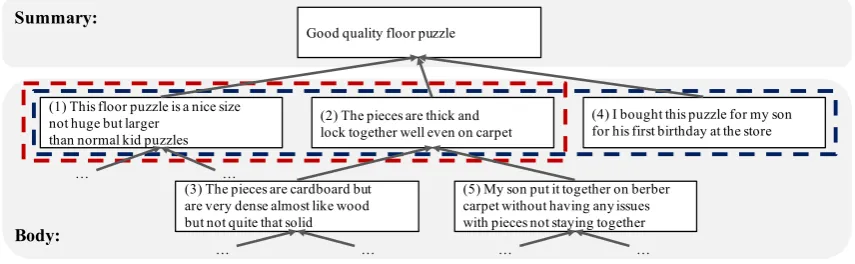
Figure 1: Example of the discourse tree of a jigsaw puzzle review. StrSuminduces the latent tree and generates the summary from the children of a root, whileDiscourseRanksupports it to focus on the main review point.
Figure 1 shows an example of a jigsaw puz-zle review and its dependency-based discourse tree. The summary describes its quality. The child sentences provide an explanation in terms of the size (1st) and thickness (2nd), or provide the background (4th). Thus, we assume that re-views can generally be described as a multi-root non-projective discourse tree, in which the sum-mary is the root, and the sentences construct each node. The child sentences present additional in-formation about the parent sentence.
To construct the tree and generate the summary, we propose a novel architecture;StrSum. It recon-structs a parent from its children recursively and induces a latent discourse tree without a parser. As a result, our model generates a summary from the
surrounding sentences of the rootwhile learning a language model through reconstruction in an end-to-end manner. We also introduceDiscourseRank, which ranks the importance of each sentence in terms of the number of descendants. It supports StrSum to generate a summary that focuses on the main review point.
The contributions of this work are three-fold: • We propose a novel unsupervised end-to-end
model to generate an abstractive summary of a single product review while inducing a la-tent discourse tree
• The experimental results demonstrate that our model is competitive with or outperforms other unsupervised models. In particular, for long reviews, it achieves a competitive or bet-ter performance than the supervised models. • The induced tree shows that the child
sen-tences present additional information about their parent, and the generated summary ab-stracts for the entire review.
2 Proposed Model
In this section, we present our unsupervised end-to-end summarization model with descriptions of StrSum and DiscourseRank.
2.1 StrSum: Structured Summarization
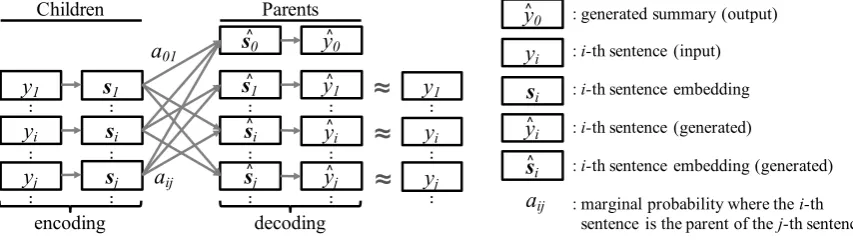
Model Training: The outline of StrSum is pre-sented in Figure 2. yi andsi ∈ Rd indicate the
i-th sentence and its embedding in a document D = {y1, . . . , yn}, respectively. wti is the t-th
word in a sentenceyi ={w1i, . . . , wli}. si is
com-puted via a max-pooling operation across hidden statesht
i ∈ Rdof the Bi-directional Gated
Recur-rent Units (Bi-GRU): − →
hit=−−−→GRU(−→hit−1, wit) (1) ←−
hti =←−−−GRU(←h−ti+1, wit) (2)
hti = [−→hit,←−hti] (3) ∀m∈ {1, . . . , d}, si,m= max
t h t
i,m (4)
Here, we assume that a document D and its summary compose adiscourse tree, in which the root is the summary, and all sentences are the nodes. We denote aij as the marginal probabil-ity of dependency where the i-th sentence is the parent node of the j-th sentence. In particular, a0j denotes the probability that a root node is the
parent (see Figure 2). We define the probability distributionaij (i ∈ {0, . . . , n}, j ∈ {1, . . . , n})
as the posterior marginal distributions of a non-projective dependency tree. The calculation of the marginal probability is explained later.
Similar to (Liu and Lapata, 2018), to prevent overload of the sentence embeddings, we decom-pose them into two parts:
yi
si
: generated summary (output)
: i-th sentence (input)
: i-th sentence embedding
: i-th sentence (generated)
:i-th sentence embedding (generated)
: marginal probability where the i-th sentence is the parent of the j-th sentence aij y0 yi si ^ ^ s0 s1 si sj s1 si sj a01
aij ^
^ ^
≈
y1 [image:3.595.80.507.68.189.2]yi yj
≈
≈
: : : : : : y1 yi yj : : y1 yi yj : : encoding decoding Children Parents y0 : : : : : ^ ^ ^ ^ ^ ^Figure 2: Outline of StrSum.
where the semantic vector sei ∈ Rde encodes the semantic information, and the structure vector
sfi ∈ Rdf is used to calculate the marginal proba-bility of dependencies.
The embedding of the parent sentence sˆi and
that of thesummarysˆ0 are defined with parame-tersWs∈ Rde∗deandbs∈ Rde as:
ˆ
si = tanh
{
Ws( n
∑
j=1
aijsej) +bs
} (6)
Using sˆi, the GRU-decoder learns to
recon-struct thei-th sentence,i.e., to obtain the parame-tersθthat maximize the following log likelihood:
n ∑ i=1 l ∑ t=1
logP(wit|wi<t,sˆi,θ) (7)
Summary Generation: An explanation of how the training contributes to the learning of a lan-guage model and the gaining of the summary em-bedding is provided here. As for the former, the decoder learns a language model to generate gram-matical sentences by reconstructing the document sentences. Therefore, the model can appropriately decode the summary embedding toyˆ0.
As for the latter, if thej-th sentence contributes to generating the i-th one, aij get to be higher.
This mechanism models our assumption thatchild sentences can generate their parent sentence, but not vice versa, because the children present addi-tional information about their parent. Hence, the most concisek-th sentences (e.g., the1st,2nd, and 4th in Figure 1), provide less of a contribution to the reconstruction of any other sentences. Thus, aikget to be lower for∀i:i̸= 0. Becauseaik
sat-isfies the constraint∑ni=0aik= 1,a0kis expected
to be larger, and thus thek-th sentence contributes to the construction of the summary embeddingsˆ0.
Marginal Probability of Dependency: The calculation of the marginal probability of depen-dency, aij, is explained here. We first define
the weighted adjacency matrix F = (fij) ∈
R(n+1)∗(n+1), where the indices of the first col-umn and row are 0, denoting the root node. fij
denotes the un-normalized weight of an edge be-tween a parent sentence i and its child j. We define it as a pair-wise attention score following (Liu and Lapata,2018). By assuming amulti-root
discourse tree,fij is defined as:
fij =
exp(wr⊤sfj) (i= 0∧j≥1)
exp(p⊤i Wfcj) (i≥1∧j≥1∧i̸=j)
0 (j = 0∨i=j)
(8)
pi= tanh(Wpsfi +bp) (9)
cj = tanh(Wcsfj +bc) (10)
whereWf ∈ Rdf∗df andwr ∈ Rdf are
param-eters for the transformation. Wp ∈ Rdf∗df and bp ∈ Rdf are the weight and bias respectively,
for constructing the representation of the parent nodes.Wc∈ Rdf∗df andbc∈ Rdf correspond to
those of the child nodes.
We normalizefij into aij based on (Koo et al.,
2007). aij corresponds to the proportion of the
total weight of the spanning trees containing an edge(i, j):
aij(F) =
∑
t∑∈T:(i,j)∈tv(t|F) t∈Tv(t|F)
(11)
= ∂logZ(F) ∂fij
(12)
v(t|F) = ∏
(i,j)∈t
fij (13)
Z(F) =∑
t∈T
whereT denotes the set of all spanning trees in a documentD. v(t|F)is the weight of a treet∈T, and Z(F) denotes the sum of the weights of all trees inT. From the Matrix-Tree Theorem (Tutte, 1984),Z(F)can be rephrased as:
Z(F) =|L0(F)| (15)
whereL(F)∈ R(n+1)∗(n+1) andL0(F) ∈ Rn∗n are the Laplacian matrix of F and its principal submatrix formed by deleting row0 and column 0, respectively. By solving Eq. 12,aijis given by:
a0j =f0j
[
L−01(F)]jj (16)
aij =fij
[
L−01(F)]jj−fij
[
L−01(F)]ji (17)
2.2 DiscourseRank
StrSum generates the summary under the large in-fluence of the child sentences of the root. There-fore, sentences that are not related to the rating (e.g., the 4th in Figure 1) also affect the sum-mary and can be considered noise. Here, we as-sume that meaningful sentences (e.g., the 1st and 2nd in Figure1) typically have moredescendants, because many sentences provide the explanation of them. Hence, we introduce the DiscourseR-ank to rank the importance of the sentences in terms of the number of descendants. Inspired by PageRank (Page et al., 1999), the DiscourseRank of the root and n sentences at the t-th iteration
rt= [r0, . . . , rn]∈ R(n+1)is defined as:
rt+1=λAˆrt+ (1−λ)v (18)
ˆ aij =
0 (i= 0∧j = 0)
1
n (i≥1∧j = 0)
aij (j≥1)
(19)
where Aˆ = (ˆaij) ∈ R(n+1)∗(n+1) denotes the
stochastic matrix for each dependency, λ is a damping factor, andv ∈ R(n+1) is a vector with all elements equal to 1/(n+ 1). Eq.18 implies thatrireflectsrj more if thei-th sentence is more
likely to be the parent of the j-th sentence. The
r solution and updated score of the edge (0, j) ¯
a0j (j∈ {1, . . . , n})are calculated by:
r= (1−λ)(I−λAˆ)−1v (20) ¯
a0j =a0jrj (21)
The updated score¯a0jis used to calculate the
sum-mary embeddingsˆ0 instead of Eq.16. As a result, the generated summary reflects the sentences with a higher marginal probability of dependency on the root, while focusing on the main review point.
3 Related work
3.1 Supervised Review Summary Generation
Several previous studies have addressed ab-stractive summarization for product reviews (Carenini et al., 2013; Di Fabbrizio et al., 2014; Bing et al.,2015;Yu et al., 2016); however, their output summaries are not guaranteed to be gram-matical (Wang and Ling,2016). Neural sequence-to-sequence models have improved the quality of abstractive summarization. Beginning with the adaptation to sentence summarization (Rush et al., 2015; Chopra et al., 2016), several studies have tackled the generation of an abstractive summary of news articles (Nallapati et al.,2016;See et al., 2017;Tan et al.,2017;Paulus et al., 2018). With regard to product reviews, the neural sequence-to-sequence based model (Wang and Ling, 2016) and joint learning with sentiment classification (Ma et al., 2018; Wang and Ren, 2018) have im-proved the performance of one-sentence summa-rization. Our work is also based on the neu-ral sequence-to-sequence model, while introduc-ing the new concept of generatintroduc-ing the summary by recursively reconstructing a parent sentence from its children.
3.2 Unsupervised Summary Generation
Although supervised abstractive summarization has been successfully improved, unsupervised techniques have still not similarly matured. Ganesan et al.(2010) proposedOpinosis, a graph-based method for generating review summaries. Their method is word-extractive, rather than abstractive, because the generated summary only contains words that appear in the source document. With the recently increasing number of neural summarization models,Miao and Blunsom (2016) applied a variational auto-encoder for semi-supervised sentence compression.
Chu and Liu (2018) proposed MeanSum, an
un-supervised neural multi-document summarization model for reviews. However, their model is not aimed at generating a summary from a single document and could not directly be extended. Al-though several previous studies (Fang et al.,2016;
Dohare et al., 2018) have used external parsers
3.3 Discourse Parsing and its Applications
Discourse parsing has been extensively re-searched and used for various applications.
Hirao et al. (2013); Kikuchi et al. (2014);
Yoshida et al. (2014) transformed a rhetorical
structure theory-based discourse tree (RST-DT;
Mann and Thompson, 1988) into a
dependency-based discourse tree and regarded the root and the surrounding elementary discourse units as a sum-mary.Gerani et al.(2014) constructed a discourse tree and ranked the aspects of reviews for summa-rization. Bhatia et al.(2015);Ji and Smith(2017) also constructed a dependency-based discourse tree for document classification. Ji and Smith (2017) pointed out the limitations of using exter-nal parsers, demonstrating that the performance depends on the amount of the RST-DT and the domain of the documents.
Against such a background, Liu and Lapata (2018) proposed a model that induces a latent discourse tree without an external corpus. In-spired by structure bias (Cheng and Lapata,2016; Kim et al., 2017), they introducedStructured At-tention, which normalizes attention scores as the posterior marginal probabilities of a non-projective discourse tree. The probability distri-bution of Structured Attention implicitly repre-sents a discourse tree, in which the child sentences present additional information about their parent. We extend it to the unsupervised summarization,
i.e., obtaining a summary as the root sentence of a latent discourse tree. WhileLiu and Lapata(2018) introduce a virtual root sentence and induce a la-tent discourse tree via supervised document clas-sification, we generate a root sentence via recon-structing a parent sentence from its children with-out supervision.
4 Experiments
In this section, we present our experiments for the evalation of the summary generation performance of online reviews. The following section provides the details of the experiments and results.1
4.1 Dataset
Our experiments use the Amazon product review
dataset (McAuley et al., 2015; He and McAuley, 2016), which contains Amazon online reviews and their one-sentence summaries. It includes 142.8 1The code to reproduce the results is available at:
https://github.com/misonuma/strsum
Domains Train Valid Eval
Toys & Games 27,037 498 512
Sports & Outdoors 37,445 511 466
[image:5.595.307.523.62.118.2]Movies & TV 408,827 564 512
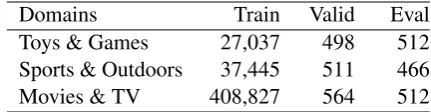
Table 1: Number of reviews for training (Train), vali-dation (Valid) and evaluation (Eval).
million reviews spanning May 1996 - July 2014. Ma et al.(2018); Wang and Ren (2018) used this dataset for the evaluation of their supervised sum-mary generation model. The same domains con-sidered in their previous work are selected for this study; Toys & Games, Sports & Outdoors, and
Movies & TV.
Because our model is trained by identifying and reconstructing a parent sentence from its children, it sometimes fails to construct an appropriate tree for relatively short reviews. It also has a negative influence on summary generation. Therefore, we use reviews with10or more sentences for training, and those with5or more sentences for validation and evaluation. Table 1 indicates the number of reviews in each domain.
4.2 Experimental Details
The source sentences and the summaries share the same vocabularies, which are extracted from the training sources of each domain. We limit a vo-cabulary to the 50,000 most frequent words ap-pearing in training sets.
Domain Toys & Games Sports & Outdoors Movies & TV
Metric R-1 R-2 R-L R-1 R-2 R-L R-1 R-2 R-L
Unuspervised approaches
TextRank 8.63 1.24 7.26 7.16 0.89 6.39 8.27 1.44 7.35
Opinosis 8.25 1.51 7.52 7.04 1.42 6.45 7.80 1.20 7.11
MeanSum-single 8.12 0.58 7.30 5.42 0.47 4.97 6.96 0.35 6.08
StrSum 11.61 1.56 11.04 9.15 1.38 8.79 7.38 1.03 6.94
StrSum+DiscourseRank 11.87 1.63 11.40 9.62 1.58 9.28 8.15 1.33 7.62
Supervised baselines
Seq-Seq 13.50 2.10 13.31 10.69 2.02 10.61 7.71 2.18 7.08
[image:6.595.73.525.61.215.2]Seq-Seq-att 16.28 3.13 16.13 11.49 2.39 11.47 9.05 2.99 8.46
Table 2: ROUGE F1 score of the evaluation set (%). R-1, R-2 and R-L denote ROUGE-1, ROUGE-2, and ROUGE-L, respectively. The best performing model among unsupervised approaches is shown inboldface.
4.3 Baseline
For the comparisons, two unsupervised baseline models are employed. A graph-based unsuper-vised sentence extraction method,TextRankis em-ployed (Mihalcea and Tarau, 2004), where sen-tence embeddings are used instead of bag-of-words representations, based on (Rossiello et al., 2017). As an unsupervised word-level extractive approach, we employ Opinosis (Ganesan et al., 2010), which detects salient phrases in terms of their redundancy. Because we observe repetitive expressions in the dataset, Opinosis is added as a baseline. Both methods extract or generate a one-sentence summary.
Furthermore, a third, novel unsupervised baseline model MeanSum-single is introduced, which is an extended version of the unsu-pervised neural multi-document summarization model (Chu and Liu,2018). While it decodes the mean of multiple document embeddings to gen-erate the summary, MeanSum-single gengen-erates a single-document summary by decoding the mean of the sentence embeddings in a document. It learns a language model through reconstruction of each sentence. By comparing with MeanSum-single, we verify that our model focuses on the main review points, and does not simply take the average of the entire document.
As supervised baselines, we employ vanilla neural sequence-to-sequence models for abstrac-tive summarization (Hu et al., 2015), following previous studies (Ma et al., 2018;Wang and Ren, 2018). We denote the model asSeq-Seqand that with the attention mechanism asSeq-Seq-att. The encoder and decoder used are the same as those used in our model.
-14 15-29
30-Number of sentences in each document 0
5 10 15 20
RO
UG
E-L
F1 11.0111.0516.06
10.1912.62
16.20 14.3215.5615.87 Toys & Games
-14 15-29
30-Number of sentences in each document 0
5 10 15 20
RO
UG
E-L
F1
8.53 9.0911.82 10.7010.48 9.85 11.1411.78 7.03 Sports & Outdoors
-14 15-29
30-Number of sentences in each document 0
5 10 15 20
RO
UG
E-L
F1
6.33 7.248.25 7.80 8.40
10.08 9.93 8.63 5.45 Movies & TV
: StrSum+DiscourseRank : Seq-Seq-att : StrSum
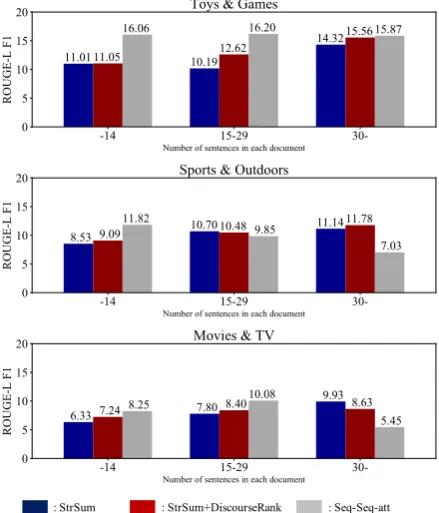
Figure 3: ROUGE-L F1 score on evaluation set with various numbers of sentences.
4.4 Evaluation of Summary Generation
Table2 shows the ROUGE scores of our models and the baselines for the evaluation sets.2 With regards to Toys & Games and Sports & Out-doors, our full model (StrSum + DiscourseRank) achieves the best ROUGE-F1 scores among the unsupervised approaches. As for ROUGE-1 and ROUGE-L, two-tailed t-tests demonstrate that the
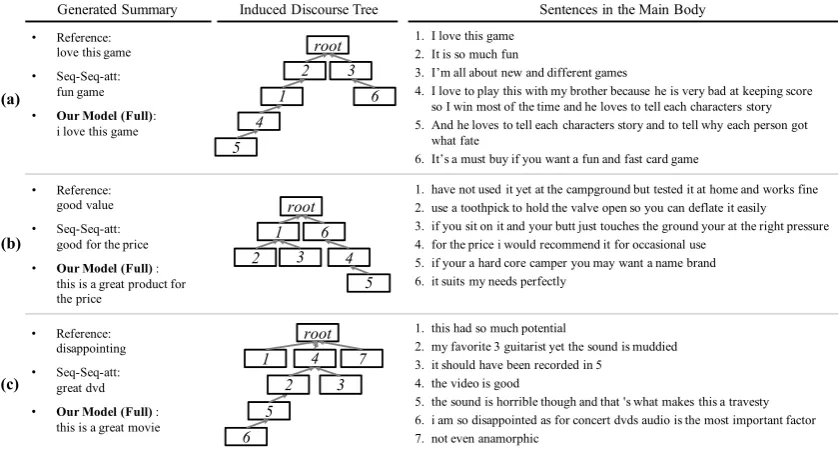
[image:6.595.306.526.269.526.2]• Reference: love this game
• Seq-Seq-att: fun game
• Our Model (Full): i love this game
• Reference: good value
• Seq-Seq-att: good for the price
• Our Model (Full) : this is a great product for the price
Generated Summary
(a)
(b)
• Reference: disappointing
• Seq-Seq-att: great dvd
• Our Model (Full) : this is a great movie (c)
1. I love this game 2. It is so much fun
3. I’m all about new and different games
4. I love to play this with my brother because he is very bad at keeping score so I win most of the time and he loves to tell each characters story 5. And he loves to tell each characters story and to tell why each person got
what fate
6. It’s a must buy if you want a fun and fast card game
1. have not used it yet at the campground but tested it at home and works fine 2. use a toothpick to hold the valve open so you can deflate it easily 3. if you sit on it and your butt just touches the ground your at the right pressure 4. for the price i would recommend it for occasional use
5. if your a hard core camper you may want a name brand 6. it suits my needs perfectly
Induced Discourse Tree Sentences in the Main Body
1. this had so much potential
2. my favorite 3 guitarist yet the sound is muddied 3. it should have been recorded in 5
4. the video is good
5. the sound is horrible though and that 's what makes this a travesty 6. i am so disappointed as for concert dvds audio is the most important factor 7. not even anamorphic
root
1 7
5 6
4 3 2
root 1 6 2
5 4 3
root 2 3 1
4
6
[image:7.595.91.511.70.299.2]5
Figure 4: Examples of generated summaries and induced latent discourse trees.
difference between our models and the others are statistically significant(p < 0.05). Because the abstractive approach generates a concise summary by omitting trivial phrases, it can lead to a bet-ter performance than those of the extractive ones. On the other hand, for Movies & TV, our model is competitive with other unsupervised extractive approaches; TextRank and Opinosis. One possible explanation is that the summary typically includes named entities, such as the names of characters, actors and directors, which may lead to a better performance of the extractive approaches. For all datasets, our full model outperforms the one us-ing only StrSum. Our models significantly outper-form MeanSum-single, indicating that our model focuses on the main review points, and does not simply take the average of the entire document.
Figure3shows the ROUGE-L F1 scores of our models on the evaluation sets with various num-bers of sentences compared to the supervised base-line model (Seq-Seq-att). For the case of a dataset with less than 30 sentences, the performance of our models is inferior to that of the supervised baseline model. Because our full model generates summaries via learning the latent discourse tree, it sometimes fails to construct a tree, and thus ex-periences a decline in performance for relatively short reviews. On the other hand, for datasets with the number of sentences exceeding30, our model achieves competitive or better performance than the supervised model.
5 Discussion
5.1 Analysis of the Induced Structure
Figure4presents the generated summary and the latent discourse tree induced by our full model. We obtained the maximum spanning tree from the probability distribution of dependency, us-ing Chu–Liu–Edmonds algorithm (Chu, 1965; Edmonds,1967).
Figure 4(a) shows the summary and the latent discourse tree for a board game review. Our model generates the summary,”i love this game”, which is almost identical to the reference. The induced tree shows that the2nd sentenceelaborateson the generated summary, while the 3rd sentence pro-vides itsbackground. The 4th and5th sentences
explain the 1st sentence in detail, i.e., describe why the author loves the game.
Figure4(b) shows the summary and latent dis-course tree of a camping mattress review. Al-though there is no word-overlap between the ref-erence and generated summary, our model focuses on the positivity in terms of theprice. On the in-duced tree, the1st to3rd sentences provide a back-groundof the summary and mention the high qual-ity of the product. The6th sentence indicates that reviewer is satisfied, while the4th sentence pro-vides its explanation with regards to theprice.
Toys & Games StrSum StrAtt
Projective 38.58% 66.07%
Height 3.06 2.42
Sports & Outdoors StrSum StrAtt
Projective 41.26% 58.85%
Height 2.72 2.50
Movies & TV StrSum StrAtt
Projective 36.31% 61.20%
Height 3.63 2.37
Table 3: Descriptive statistics for induced latent dis-course trees. StrAtt denotes the Structured Attention Model (Liu and Lapata,2018).
our model generates a positive summary, ”this is a great movie”. The induced tree shows that the sentences describing the high potential (1st), qual-ity of the video (4th), and preference to the pic-ture (7th), all affect the summary generation. Our model regards the sound quality as a secondary factor to that of thevideo. Therefore, it fails to pri-oritize the contrasting aspects; the sound and the video, and generates an inappropriate summary. DiscourseRank cannot work well on this exam-ple, because the numbers of sentences mention-ing each aspect are not significantly different. To solve such a problem, the aspects of each product must be ranked explicitly, such as in (Gerani et al., 2014;Angelidis and Lapata,2018).
Table3summarizes the characteristics of the in-duced latent discourse trees. These are compared with those obtained by the Structured Attention model, StrAtt (Liu and Lapata, 2018). StrAtt in-duces single-root trees via the document classifi-cation task based on the review ratings. For each domain, our model induces more non-projective trees than StrAtt. Additionally, the height (the av-erage maximum path length from a root to a leaf node) is larger than that of StrAtt. Our model es-timates the parent of all the sentences and can in-ducedeepertrees in which the edges connect triv-ial sentences. On the other hand, StrAtt identi-fies salient sentences required for the document classification, and thus inducesshallowtrees that connect the salient sentences and others. As our model prevents the summary from focusing on trivial or redundant sentences by inducing deep and complex trees, it specifically achieves higher performance when considering relatively long re-views.
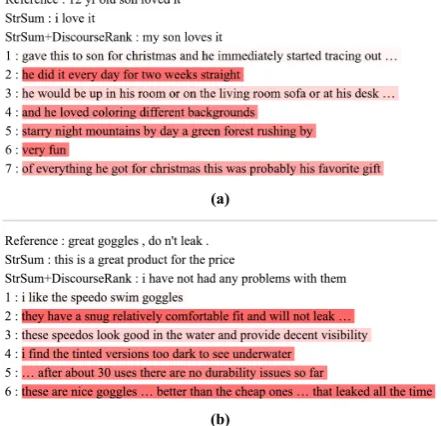
(a)
[image:8.595.76.286.62.201.2](b)
Figure 5: Visualization of DiscourseRank. The darker the highlightning, the higher the rank score. The refer-ences and generated summaries are also shown.
5.2 DiscourseRank Analysis
In this section, we demonstrate how DiscourseR-ank affects the summary generation. Figure5 vi-sualizes the sentences in the main body and their DiscourseRank scores. We highlight the sentences that achieve a high DiscourseRank score with a darker color.
A review of a car coloring book is presented in Figure5(a). As expected, the score of the1st sentence is low, which is not related to the re-view evaluations, that is, DiscourseRank empha-sizes theevaluativesentences, such as the2nd and 6th sentences.
A review of swimming goggles is presented in Figure 5(b). The reviewer is satisfied with the quality of the product. The highlighting shows that DiscourseRank focuses on the sentences that mention leaking (e.g., the2nd and5th). While our model (with only StrSum) emphasizes the price
sufficiency, DiscourseRank generates a summary describing that there is no issue with thequality.
6 Conclusion
[image:8.595.306.527.67.280.2]particular, for relatively long reviews, our model achieved competitive or better performance com-pared to supervised models. The induced tree shows that the child sentences present additional information about their parent, and the generated summary abstracts the entire review.
Our model can also be applied to other appli-cations, such as argument mining, because argu-ments typically have the same discourse structure as reviews. Our model can not only generates the summary but also identifies the argumentative structures. Unfortunately, we cannot directly com-pare our induced trees with the output of a dis-course parser, which typically splits sentences into elementary discourse units. In future work, we will make comparisons with those of a human-annotated dataset.
Acknowledgments
We would like to thank anonymous reviewers and members of the Sakata&Mori Laboratory at the Graduate School of Engineering for their valuable feedback. This work was supported by CREST, JST, the New Energy and Industrial Technology Development Organization (NEDO) and Deloitte Tohmatsu Financial Advisory LLC.
References
Stefanos Angelidis and Mirella Lapata. 2018. Sum-marizing opinions: Aspect extraction meets senti-ment prediction and they are both weakly super-vised. In Proceedings of the 2018 Conference on Empirical Methods in Natural Language Process-ing, pages 3675–3686.
Parminder Bhatia, Yangfeng Ji, and Jacob Eisenstein. 2015. Better document-level sentiment analysis from rst discourse parsing. In Proceedings of the 2015 Conference on Empirical Methods in Natural Language Processing, pages 2212–2218.
Lidong Bing, Piji Li, Yi Liao, Wai Lam, Weiwei Guo, and Rebecca Passonneau. 2015. Abstractive multi-document summarization via phrase selection and merging. InProceedings of the 53rd Annual Meet-ing of the Association for Computational LMeet-inguistics and the 7th International Joint Conference on Nat-ural Language Processing of the Asian Federation of Natural Language Processing, volume 1, pages 1587–1597.
Giuseppe Carenini, Jackie Chi Kit Cheung, and Adam Pauls. 2013. Multi-document summariza-tion of evaluative text. Computational Intelligence, 29(4):545–576.
Jianpeng Cheng and Mirella Lapata. 2016. Neural summarization by extracting sentences and words. InProceedings of the 54th Annual Meeting of the As-sociation for Computational Linguistics, pages 484– 494.
Sumit Chopra, Michael Auli, and Alexander M Rush. 2016. Abstractive sentence summarization with at-tentive recurrent neural networks. InProceedings of the 2016 Conference of the North American Chap-ter of the Association for Computational Linguistics: Human Language Technologies, pages 93–98.
Eric Chu and Peter J Liu. 2018. Unsupervised neural multi-document abstractive summarization. Com-puting Research Repository, arXiv:1810.05739v3. Version 3.
Yoeng-Jin Chu. 1965. On the shortest arborescence of a directed graph. Scientia Sinica, 14:1396–1400.
Giuseppe Di Fabbrizio, Amanda Stent, and Robert Gaizauskas. 2014. A hybrid approach to multi-document summarization of opinions in reviews. In
Proceedings of the 8th International Natural Lan-guage Generation Conference, pages 54–63.
Shibhansh Dohare, Vivek Gupta, and Harish Karnick. 2018. Unsupervised semantic abstractive summa-rization. InProceedings of ACL 2018, Student Re-search Workshop, pages 74–83.
Jack Edmonds. 1967. Optimum branchings. Journal of Research of the National Bureau of Standards B, 71:233–240.
Yimai Fang, Haoyue Zhu, Ewa Muszy´nska, Alexander Kuhnle, and Simone Teufel. 2016. A proposition-based abstractive summariser. In Proceedings of COLING 2016, the 26th International Conference on Computational Linguistics, pages 567–578.
Kavita Ganesan, ChengXiang Zhai, and Jiawei Han. 2010. Opinosis: a graph-based approach to abstrac-tive summarization of highly redundant opinions. In
Proceedings of the 23rd International Conference on Computational Linguistics, pages 340–348.
Shima Gerani, Yashar Mehdad, Giuseppe Carenini, Raymond T Ng, and Bita Nejat. 2014. Abstractive summarization of product reviews using discourse structure. InProceedings of the 2014 Conference on Empirical Methods in Natural Language Process-ing, pages 1602–1613.
Ruining He and Julian McAuley. 2016. Ups and downs: Modeling the visual evolution of fashion trends with one-class collaborative filtering. In Pro-ceedings of the 25th International Conference on World Wide Web, pages 507–517.
Baotian Hu, Qingcai Chen, and Fangze Zhu. 2015. Lc-sts: A large scale chinese short text summarization dataset. InProceedings of the 2015 Conference on Empirical Methods in Natural Language Process-ing, pages 1967–1972.
Masaru Isonuma, Toru Fujino, Junichiro Mori, Yutaka Matsuo, and Ichiro Sakata. 2017. Extractive sum-marization using multi-task learning with document classification. InProceedings of the 2017 Confer-ence on Empirical Methods in Natural Language Processing, pages 2101–2110.
Yangfeng Ji and Noah A Smith. 2017. Neural dis-course structure for text categorization. In Proceed-ings of the 55th Annual Meeting of the Associa-tion for ComputaAssocia-tional Linguistics, volume 1, pages 996–1005.
Armand Joulin, Edouard Grave, and Piotr Bo-janowski Tomas Mikolov. 2017. Bag of tricks for efficient text classification. In Proceedings of the 15th Conference of the European Chapter of the As-sociation for Computational Linguistics, volume 2, pages 427–431.
Yuta Kikuchi, Tsutomu Hirao, Hiroya Takamura, Man-abu Okumura, and Masaaki Nagata. 2014. Single document summarization based on nested tree struc-ture. InProceedings of the 52nd Annual Meeting of the Association for Computational Linguistics, vol-ume 2, pages 315–320.
Yoon Kim, Carl Denton, Luong Hoang, and Alexan-der M Rush. 2017. Structured attention networks. In Proceedings of the 5th International Conference on Learning Representations.
Terry Koo, Amir Globerson, Xavier Carreras, and Michael Collins. 2007. Structured prediction mod-els via the matrix-tree theorem. In Proceedings of the 2007 Joint Conference on Empirical Methods in Natural Language Processing and Computational Natural Language Learning, pages 141–150.
Chin-Yew Lin. 2004. Rouge: A package for auto-matic evaluation of summaries. InProceedings of the Workshop on Text Summarization Branches Out, volume 8.
Bing Liu and Lei Zhang. 2012. A survey of opinion mining and sentiment analysis. InMining text data, pages 415–463. Springer.
Yang Liu and Mirella Lapata. 2018. Learning struc-tured text representations. Transactions of the Asso-ciation of Computational Linguistics, 6:63–75.
Shuming Ma, Xu Sun, Junyang Lin, and Xuancheng Ren. 2018. A hierarchical end-to-end model for jointly improving text summarization and sentiment classification. In Proceedings of the 27th Interna-tional Joint Conference on Artificial Intelligence, pages 4251–4257.
William C Mann and Sandra A Thompson. 1988. Rhetorical structure theory: Toward a functional the-ory of text organization. Text-Interdisciplinary Jour-nal for the Study of Discourse, 8(3):243–281.
Julian McAuley, Christopher Targett, Qinfeng Shi, and Anton Van Den Hengel. 2015. Image-based recom-mendations on styles and substitutes. In Proceed-ings of the 38th International ACM SIGIR Confer-ence on Research and Development in Information Retrieval, pages 43–52.
Yishu Miao and Phil Blunsom. 2016. Language as a latent variable: Discrete generative models for sen-tence compression. InProceedings of the 2016 Con-ference on Empirical Methods in Natural Language Processing, pages 319–328.
Rada Mihalcea and Paul Tarau. 2004. Textrank: Bring-ing order into texts. InProceedings of the 2004 Con-ference on Empirical Methods in Natural Language Processing, pages 404–411.
Ramesh Nallapati, Bowen Zhou, Cicero dos Santos, Caglar Gulcehre, and Bing Xiang. 2016. Ab-stractive text summarization using sequence-to-sequence rnns and beyond. In Proceedings of the 20th SIGNLL Conference on Computational Natu-ral Language Learning, pages 280–290.
Lawrence Page, Sergey Brin, Rajeev Motwani, and Terry Winograd. 1999. The pagerank citation rank-ing: Bringing order to the web. Technical report, Stanford InfoLab.
Romain Paulus, Caiming Xiong, and Richard Socher. 2018. A deep reinforced model for abstractive sum-marization. InProceedings of the 6th International Conference on Learning Representations.
Dragomir R Radev, Hongyan Jing, Małgorzata Sty´s, and Daniel Tam. 2004. Centroid-based summariza-tion of multiple documents. Information Processing & Management, 40(6):919–938.
Gaetano Rossiello, Pierpaolo Basile, and Giovanni Se-meraro. 2017. Centroid-based text summarization through compositionality of word embeddings. In
Proceedings of the MultiLing Workshop on Sum-marization and Summary Evaluation Across Source Types and Genres, pages 12–21.
Alexander M Rush, Sumit Chopra, and Jason Weston. 2015. A neural attention model for abstractive sen-tence summarization. In Proceedings of the 2015 Conference on Empirical Methods in Natural Lan-guage Processing, pages 379–389.
Jiwei Tan, Xiaojun Wan, and Jianguo Xiao. 2017. Abstractive document summarization with a graph-based attentional neural model. InProceedings of the 55th Annual Meeting of the Association for Com-putational Linguistics, volume 1, pages 1171–1181.
William Thomas Tutte. 1984. Graph theory, vol-ume 21. Addison-Wesley.
Hongli Wang and Jiangtao Ren. 2018. A self-attentive hierarchical model for jointly improving text sum-marization and sentiment classification. In Pro-ceedings of the 10th Asian Conference on Machine Learning, pages 630–645.
Lu Wang and Wang Ling. 2016. Neural network-based abstract generation for opinions and arguments. In
Proceedings of the 2016 Conference of the North American Chapter of the Association for Computa-tional Linguistics: Human Language Technologies, pages 47–57.
Yasuhisa Yoshida, Jun Suzuki, Tsutomu Hirao, and Masaaki Nagata. 2014. Dependency-based dis-course parser for single-document summarization. In Proceedings of the 2014 Conference on Empiri-cal Methods in Natural Language Processing, pages 1834–1839.