© 2019, IRJET | Impact Factor value: 7.211 | ISO 9001:2008 Certified Journal | Page 579
Handwritten Signature Verification using Local Binary Pattern
Features and KNN
Tejas Jadhav
1M.Tech in Computer Science Engg., Mukesh Patel School of Technology Management & Engineering,
NMIMS University, Mumbai, India
---***---Abstract -
An offline signature verification method hasbeen described in this paper. Handwritten signature has been critical person identification technique for decades. Whether one signs a petition, work documents, contract, or wants to approve payment of a check, he/she uses personal signature to do all those things. The objective of this paper is to give away an efficient biometric signature recognition and verification techniques The paper intends to give away information all about the application of biometrics i.e. signature detection and also about the various stages that are necessary to be studied by a designer while creating an application that will use it. The system works in different stages which includes pre-processing, LBP image conversion, feature extraction, and classification. A total of 40 different signature recognition approaches were read and studied before designing the system here that are been taken from different research papers. The output obtained is evaluated in the papers itself by performing experimental analysis and can be compared with another existing system in this paper.
Key Words: Signature, biometrics, Otsu thresholding, fuzzy, local binary pattern, texture
1
INTRODUCTIONBiometrics is currently perceived as a vital technology for setting up secure access control. It utilizes physiological qualities of humans for recognizing individual, and signature is one of the characteristics usable for biometrics. Singular recognizable proof technology utilizing human countenances, more often than not called confront acknowledgment technology, has been concentrated primarily in western nations since 1990s. It has been the most widespread tool for paper documents verification for many decades. In real life the human-expert can verify handwritten signatures easily, but it is a complicated task for doing by machines today.
In this research paper, there are a total of 40 different approaches used in 40 different research papers that were studied before the design of the system. These use not just image processing tools but also some level of machine learning. The approaches listed use feature extraction and classification techniques such as radon transforms, altitude and direction of pen movement, fuzzy logic, adaptive variance reduction, artificial neural network, support vector machine, Euclidian distances. The system
we propose is developed in python 3.6 and used MySQL for storing data related features and classes in database. The development was done in PyCharm python IDE which allows intelligent code completion, on-the-fly error checking and quick-fixes, easy project navigation and much more.
1.1
Real life applications
[1]
1. Finance: IT-Processing centres of German savings banks are offering their customers solutions to embed dynamic signatures securely into electronic documents
2. Insurance: Signing an insurance contract and documenting the consulting process that is required by EU legislation
3. Real Estate: Increasingly popular among real estate agents in USA are options of paperless contracting through signing on Tablet PCs.
4. Health: The Ingolstadt hospital is capturing and verifying the doctor’s signature that fill electronic patient records on tablet PCs.
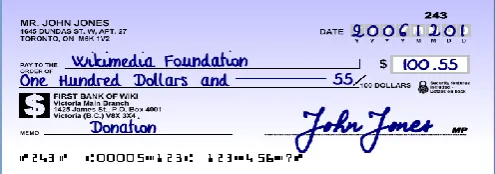
[image:1.595.310.558.511.598.2]5. Telecom: Signing phone and DSL contracts in the telecom shops is another emerging market.
Figure 1: A sample bank cheque with signature
1.2
Types & methods of Signature Verification
1. Offline Signature Verification Methods:
© 2019, IRJET | Impact Factor value: 7.211 | ISO 9001:2008 Certified Journal | Page 580
2. Online Signature Verification Methods:Here the system makes use of special acquisition devices like stylus pens and tablets that can take in signature features in real time
2
ABOUT THE DOMAIN
To understand the in depth concepts of the different approaches, that are listed and explained in the later part, we might require some basic pre-requisite knowledge of the domain they work under.
2.1
Image processing
Image processing [41] is working on images using mathematical operations by form of signal processing for which the input is an image, a series of images, or a video, such as photographs or video frame; the output of image processing could be either an image or a set of characteristics or parameters related to an image. Most image-processing approaches allow treating the image as a two-dimensional array or signal and applying standard signal-processing techniques to it.
2.2
Biometrics
Biometrics [42] is the measurement or statistical analysis of people's physical/behavioural characteristics. The approach is mainly used for identification, security and access control, or for investigating individuals that are under surveillance. The basic idea of biometric authentication is that every person is unique and an individual can be identified by his or her intrinsic physical or behavioural traits. The term "biometrics" is taken from the Greek words "bio" and "metric" meaning life and meaning to measure respectively
2.3
Machine Learning
Machine learning [44] is a branch of science that deals with programming the systems in such a way that they on their own learn and improve with experience. In ML, learning actually means recognizing and understanding input data and making and giving wise decisions based on that supplied data. It is very hard to cater to all those decisions based on all possible data inputs. To approach this problem, researchers develop algorithms that build knowledge from specific data and past experience with the principles of statistics, logic, probability theory, search, combinatorial optimization, reinforcement learning & control theory.
3
LITERATURE REVIEW
This section lists down the various algorithms that we are to study. Most of them work in 3 stages, which are pre-processing, main processing i.e. feature extraction and then post-processing stage which includes decision
making or classification. There are a high number of algorithms that can be implemented for recognition of handwritten signatures these days, but following are the algorithms which give other newly formulated algorithms a backbone.
In paper [1] the researchers are considering some simple parameters like speed, acceleration, pen down time, distance, etc. and based on the literature studies they discuss how these features can be used in the Image processing environment to improve the performance of handwritten signature. The approach provides a PI of 97.5 %.
The paper [2] presents a crowdsourcing experiment to establish the human baseline performance for signature recognition tasks and a novel attribute-based semi-automatic signature verification system inspired in FDE analysis. It combines the DTW algorithm with Attribute based algorithm to obtain better accuracy and increase the recognition rate. With EER of 5%, we can say that recognition rate is 95%.
The proposed system in paper [3] functions in three stages. Pre-processing stage; this consists of gray scale conversion, binarization and fitting boundary box. Feature extraction stage where total 16 radon transform based projection features are extracted which are used to distinguish the different signatures. Finally in the classification stage; an efficient BPNN, Back Propagation Neural Network is prepared and trained with 16 extracted features. The average recognition accuracy of this system ranges from 87% - 97% with the training set of 10–40 persons. Global features include Height of the signature, Width of the signature, and Centroid along both X axis, Centroid along both Y axis
© 2019, IRJET | Impact Factor value: 7.211 | ISO 9001:2008 Certified Journal | Page 581
The proposed system of paper [7] functions in threestages. Pre-processing stage consists of four steps namely grey scale conversion, binarization, thinning and fitting boundary box process in order to make signatures ready for the important feature extraction. Feature extraction stage consists total 59 global and local wavelet based energy features to be extracted which are used to classify the different signatures. Finally in classification, a simple Euclidean distance classifier is used as decision tool. The average recognition accuracy obtained using this model ranges from 90% to 100% with the training set of images of 10 to 30 persons.
In paper [12], a bank cheque is taken and the signature is collected from the bank cheque by taking it out by cropping the area of interest. The image is then trained and stored into the trained database using an efficient Feed forward artificial neural network. Then signatures to be tested are compared with the signatures that are stored into the test database. The accuracy of the system is tested out to be 85.00%. In pre-processing, Otsu’s thresholding or binarization algorithm is used which is one of the finest one, allows image object to be separated from its background and later Gaussian low pass filter is applied to remove unwanted noise.
Fuzzy Logic and Artificial Neural Network Based Off-line Signature Verification and Forgery Detection System is presented in paper [13]. As there are distinct and necessary variations in the feature set of each signature, so in order to match a particular signature image with the database image, the structural features of the signatures and also the local feature variations in the signature characteristics are used. The paper suggests that, variation in personality of signatures, because of age, sickness, geographic location and emotional state of the person actuates the problem.
An offline signature verification using neural network is projected in paper number [20], where the signature is written on a paper are obtained using a scanner or a camera captured and presented in an image format. In pre-processing, colour to grayscale, and finally to black and white, Resizing the image, thinning. Features extracted include Eccentricity, Skewness, Kurtois, Orientation Entropy, Euler number, Solidity, Mean, Standard deviation. The classification is done using a Cascaded feed-forward back-propagation networks and recognition rate of 92.5% is obtained.
The paper [24] examines authentication systems based on handwritten signature and the main informative parameters of signature such as size, shape, velocity, pressure, etc. along with DCT, DFT. System using K-Nearest neighbours’ algorithm and Random forest algorithm for classification and the accuracy of 95% is shown.
In this paper [26], the trace transform based affine invariant features are applied for signature verification. The diametric and trace functions are appropriately chosen to compute a set of circus functions from each signature image. Recognition rate of 76% is obtained. Low accuracy, more invariant functional will be designed for usefulness in signature verification.
Paper [28] uses a texture base approach called the Local binary Pattern algorithm along with SVM, The signature models are trained with genuine signatures on white background and tested with other genuine and forgeries mixed with different backgrounds. Results depict that a basic version of local binary patterns (LBP) or local directional and derivative patterns are more robust than others like GLCM features to the grey level distortion with SVM with histogram oriented kernels as a classifier or rotation invariant uniform LBP. The proposed configurations are checked and evaluated under different situations and conditions: changing the number of training signature images, database with different inks, multiple signing sessions, increasing the number of signers and combining different features Results have also been provided when looking for the signature in the check and segmenting it automatically. In all these cases, the best results were obtained with the LDerivP feature set, which improve the results obtained in the predefined baseline, showing quite significant improvements with fictitious signature images.
Paper [29] uses Conic section function neural network (CSFNN) circuitry was designed for offline signature recognition. CSFNN is a unified framework for multilayer perceptron (MLP) and radial basis function (RBF) networks and the size of feature vectors was not suitable for designed CSFNN chip structure owing to the input limitations of the circuit. Pre-processing is done using noise reduction algorithm, skeletonization. The few main disadvantages of analog systems include its sensitivity to ambient noise and to temperature. Accuracy shown is 95.5%.
This paper [30] explores the usefulness of local binary pattern (LBP) and local directional pattern (LDP) texture measures to discriminate off-line signatures. Comparison between these several texture normalizations is generated in order to look for reducing pen dependence. The recognition rate is 91.92%. The pre-processing techniques include binarized, cropped, or-exclusive operation, Texture histogram normalization. Least Squares Support Vector Machine (LS-SVM) is applied for classification.
© 2019, IRJET | Impact Factor value: 7.211 | ISO 9001:2008 Certified Journal | Page 582
Polar Coordinates, Feature Vector Based on CartesianCoordinates. Classification is performed using The HMM Signature Model, Support Vector Machine Signature Model and Euclidean Distance-Based Signature Model.
In this paper [37] an efficient off-line signature verification method based on an interval symbolic representation and a fuzzy similarity measure is proposed. 88.26% Local Binary Pattern, interval-valued symbolic model. A histogram-based threshold technique, mean filter for noise removal, minimum bounding boxes. Classification of the signature image is done based on the similarity value, an adaptive writer-dependent acceptance threshold
This paper [40] presents a new approach for online signature verification that exploits the potential of local stability information in handwritten signatures. Different from previous models, this approach classifies a signature using a multi domain strategy. Accuracy obtained is 97.90%. Both variable and stable regions of a signature image object could be considered for supporting the advanced personalized techniques in signature verification and recognition, since probably, from a behavioural point of view, a variability model of a signer/author could also be very complementary and informative to a stability model.
4
DATASET PREPARED
The signature verification system would need a set of image dataset having handwritten signatures from different authors. The data set prepared was taken from web uploaded by researchers online on the website [42]. The CEDAR signature dataset is one of the benchmark datasets for signature verification. Since the dataset downloaded is vast and contains a lot of images we have prepared a subset of the vast dataset and kept aside directory of folders of images which contains total 26 Authors, all having genuine as well as forged signatures and thus 52 different classes.
[image:4.595.311.557.64.284.2]The dataset is divided in an approximate ratio of 4:1 for preparing training and testing data respectively. Therefore 988 training images and 260 testing images kept in two different folders combine to a total of 1248 images.
Figure 2: Dataset of signature images
The dataset is renamed and kept in a directory in such a manner that the system will be able to retrieve, process and analysed them easily within the system. All the images are kept in ‘.png’ format and are named in format that will depict its class and also will be used as a unique id or a primary key for our database. For instance, G_orig_08.png means author G’s original image number 8, the class would ‘G_orig’ and the unique primary key would be G_orig_08.
5
PROPOSED APPROACH
This paper gives a system that works in different stages which includes pre-processing, LBP image conversion, feature extraction and classification. The system like most other systems would give as input set of signature images which would include training set and testing set. The system would give a decision class for all the testing images which we can use to compare with their actual classes to find the accuracy of the system.
[image:4.595.308.561.532.745.2]© 2019, IRJET | Impact Factor value: 7.211 | ISO 9001:2008 Certified Journal | Page 583
5.1
Pre-processing
[image:5.595.310.558.199.258.2]The pre-processing stage is responsible for taking in raw images and convert them into pre-processed form which means the images are ready for processing and feature extraction. The pre-processing stage includes RGB to Grey image conversion which will turns the 3 dimensional colour signature images into a 2 dimensional grey image of having intensity 0 to highest of 255. Then image is turned into a binary image having intensities of 0 or 255 only. To do so we use Otsu thresholding method which dynamically finds the threshold intensity level of image. In the end we crop the image to have only the signature object and no extra white margins.
Figure 4: Pre-processing stage: (a) Input signature image; (b) Preprocessed image
5.2
LBP image conversion
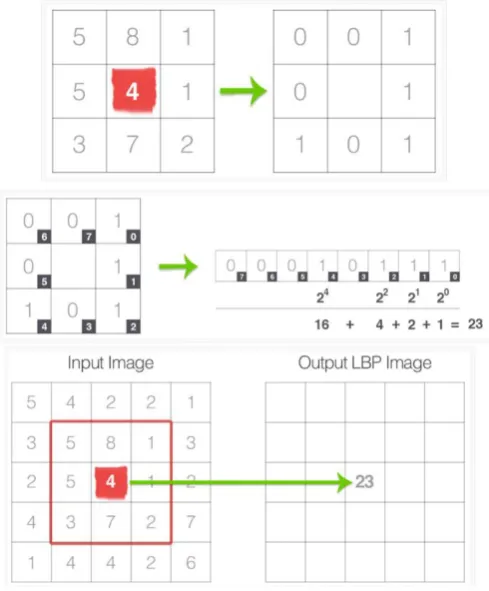
LBP stands for Local Binary Pattern. The grey image is converted to a LBP image in this stage. This LBP image is dark in colour and is very much useful to extract texture based features out of the image.
Figure 5: LBP image conversion algorithm
[image:5.595.37.297.262.323.2]The first step in constructing a LBP is to take the 8 pixel neighbourhood surrounding a center pixel and threshold it to construct a set of 8 binary digits. Taking the 8 bit binary neighborhood of the center pixel and converting it into a decimal representation. The calculated LBP value is then stored in an output array with the same width and height as the original image. The mask is then moved ahead in the image and the process repeats.
Figure 7: LBP image conversion: (a) Grey image; (b) LBP image
5.3
Feature extraction
Feature extraction stage means to take out numeric values out of the image so that an algorithmic process can compare them and in turn compare the image. We can use a feature set having a huge number of features but that will not do any good if their impact is not much over their image. Thus we narrow down to a feature vector set having 16 features which includes 8 normal features and 8 texture features. The pre-processed image is used for taking out normal features and LBP image is given to extract texture features.
The normal shape based features that are extracted from the pre-processed image are given below:
1. Aspect Ratio: The ratio of the width to the height of an image or screen.
2. Center of Gravity - X: The Center of Gravity or Center of Mass statistic calculates where the COG of the image lies. The COG of X is calculated by:
COG_X = COG_X + (I*x)
3. Center of Gravity - Y: The Y- Center of Gravity : COG_Y = COG_Y + (I*y)
4. Baseline Shift: This depicts which side (left or right) is the signature waited more and by how much. Calculated difference of left and right COG_Y.
5. Energy: the sum of square elements in GLCM
6. Dissimilarity: the weights with which GLCM probabilities are multiplied increase linearly away from the diagonal
7. Haralick: describe the overall texture of the image using measures
8. Kurtosis: Kurtosis is a measure of the combined weight of a distribution's tails relative to the center of the distribution
[image:5.595.39.284.440.736.2]© 2019, IRJET | Impact Factor value: 7.211 | ISO 9001:2008 Certified Journal | Page 584
9. Contrast: measure of the intensity contrast between apixel and its neighbor over the whole image
10. Normalized Area: The amount of darker pixels that constitute the object in the image divided by the total size (no of pixels) in the image.
11. Homogeneity: value that calculates the tightness of distribution of the elements in the GLCM to the GLCM diagonal
12. Energy: the sum of square elements in GLCM 13. Dissimilarity: Dissimilarity measure of LBP image 14. Haralick: Haralick feature of LBP image
15. Skewness: asymmetry in a statistical distribution, in which the curve appears distorted or skewed either to the left or to the right
16. Kurtosis: Kurtosis measure of LBP image
5.4
Classification
The classifier we have used is KNN which stands for k-nearest neighbours. It is basically a classification algorithm that means it assigns a class to a test image based on its feature values. The k-nearest neighbours’ algorithm uses Euclidian distance method to find the distance between two training points. Thus using Euclidian distance we find k nearest neighbouring training points of our test point based on its features and the class with maximum number of occurrences is taken as the decision class for that test image and is assigned to that image. If the decision class is ‘orig’ with same signer the image is ‘Accepted’ and otherwise ‘Rejected’.
5.5
Evaluation and Analysis
For system to be useful for the society it needs to be accurate and has to work well. For our signature recognition and verification system, accuracy of the system is basically how correctly does our system recognizes a particular signature by giving us whom does it belongs to and whether it is forged or genuine.
The evaluation parameter used for measuring accuracy of the system is recognition rate. We find the FAR and FRR which stand for False Acceptance Rate and False Rejection Rate. The number of falsely accepted images over the total images is FAR and the number of falsely rejected images over the total images is FRR
In our experimentation, we find our accuracy to be highest with 85.66% at K = 22 in our KNN classifier. The table below shows the different recognition rates for different values for K.
Table 1: Expermintatal Analysis
K 10 20 22 30 40
FRR 19.7% 15.4% 13.79% 15.3% 17.7%
FAR 2.9% 2.2 % 1.92% 2.7 % 2.7%
Accuracy 77.3% 83.4% 84.29% 81.9% 79.6%
We can also compare our system with an existing system which we retrieved from the web. This system uses a Convolutional Siamese network along with the constrastive loss function. They chose Euclidian distance as the distance metric for comparing the output feature vectors. The model gave an accuracy of 73.34%. Designer explains that the deviations seen 1-2% could be possible as accuracy depends on the threshold. The threshold for the Siamese network is computed by taking the average of True positive rate and True negative rate using ROC. The data used is same as the one used in our system described in this paper and thus we could compare our systems
6
CONCLUSION
We can conclude by stating that the remarkable work done by the researchers in over 40 different papers have led and motivated us to design a system which is clearly described in this paper. We provide full credits to all the authors of these papers for sharing their knowledge and their astonishing work they have put forward that led us to our study. By looking at them and comparing, we can say which one is good by merely looking at their recognition rates. But choosing a system does not just depends on the systems efficiency, there are many other aspects that must be considered while designing a system such as application of the system, time requirements, space requirements of the system, complexity of the algorithms and cost of setting up the application and so on.
7
FUTURE WORK
The research allowed us to learn more and more about the domain and the problem of signature recognition and verification. The research work of over 40 different research work on the problem of signature recognition/verification was done for this paper which allowed to prepare and plan for a signature verification system that was designed and presented in this paper. The system’s accuracy which comes out to be around 85% can still be brought up by adding more amount of research and combining the existing techniques with our work. The system’s does take time to train which can also be improvised but testing phase is much quicker. The Local binary Pattern algorithm allows to extract texture based features which has shown great results in similar systems such as face recognition. There are still many approaches out there that may be better than what are listed here and thus the work does not end here.
8
REFERENCES
[1] S. F. A. Zaidi and S. Mohammed, “Biometric Handwritten Signature Recognition,” 2007.
© 2019, IRJET | Impact Factor value: 7.211 | ISO 9001:2008 Certified Journal | Page 585
Conf. Identity, Secur. Behav. Anal., 2016.[3] S. A. Angadi, S. Gour, and G. Bhajantri, “Offline Signature Recognition System Using Radon Transform,” 2014 Fifth Int. Conf. Signal Image Process., pp. 56–61, 2014.
[4] S. Hangai, S. Yamanaka, and T. Hammamoto, “ON-LINE SIGNATURE VERIFICATION BASED ON ALTITUDE AND DIRECTION OF PEN MOVEMENT,” Proc. 15th Int. Conf. Pattern Recognition. ICPR-2000, vol. 3, no. l, pp. 479–482, 2000.
[5] I. V Anikin and E. S. Anisimova, “Handwritten signature recognition method based on fuzzy logic,” 2016 Dyn. Syst. Mech. Mach., 2016.
[6] E. Ozgunduz, T. Senturk, and M. E. Karsligil, “Off-line signature verification and recognition by support vector machine,” 13th Eur. Signal Process. Conf., no. 90, pp. 1–4, 2005.
[7] S. A. Angadi and S. Gour, “Euclidean Distance Based Offline Signature Recognition System Using Global and Local Wavelet Features,” 2014 Fifth Int. Conf. Signal Image Process., pp. 87–91, 2014.
[8] Ruangroj Sa-Ardship and K. Woraratpanya, “Offline Handwritten Signature Recognition Using Adaptive Variance Reduction,” 7th Int. Conf. Inf. Technol. Electr. Eng. (ICITEE), Chiang Mai, Thail. Offline, pp. 258–262, 2015.
[9] M. A. Djoudjai, Y. Chibani, and N. Abbas, “Offline signature identification using the histogram of symbolic representation,” 5th Int. Conf. Electr. Eng. - Boumerdes, pp. 1–5, 2017.
[10] A. B. Jagtap and R. S. Hegadi, “Offline Handwritten Signature Recognition Based on Upper and Lower Envelope Using Eigen Values,” Proc. - 2nd World Congr. Comput. Commun. Technol. WCCCT 2017, pp. 223–226, 2017.
[11] T. Marušić, Ž. Marušić, and Ž. Šeremet, “Identification of authors of documents based on offline signature recognition,” MIPRO, no. May, pp. 25–29, 2015. [12] S. L. Karanjkar and P. N. Vasambekar, “Signature
Recognition on Bank cheques using ANN,” IEEE Int. WIE Conf. Electr. Comput. Eng., no. December, 2016. [13] G. S. Prakash and S. Sharma, “Computer Vision &
Fuzzy Logic based Offline Signature Verification and Forgery Detection,” IEEE Int. Conf. Comput. Intell. Comput. Res., 2014.
[14] M. S. Shirdhonkar and M. B. Kokare, “Document image retrieval using signature as query,” 2011 2nd Int. Conf. Comput. Commun. Technol. ICCCT-2011, pp. 66–70, 2011.
[15] R. Sa-Ardship and K. Woraratpanya, “Offline Handwritten Signature Recognition Using Polar-Scale Normalization,” 8th Int. Conf. Inf. Technol. Electr. Eng. (ICITEE), Yogyakarta, Indones., pp. 3–7, 2016. [16] A. Piyush Shanker and A. N. Rajagopalan, “Off-line
signature verification using DTW,” Pattern Recognit. Lett., vol. 28, no. 12, pp. 1407–1414, 2007.
[17] Nancy and P. G. Goyal, “Signature Processing in Handwritten Bank Cheque Images,” Int. J. Recent Innov. Trends Comput. Commun., vol. 2, no. 5, pp. 1239–1243, 2014.
[18] A. T. Nasser and N. Dogru, “Signature recognition by using SIFT and SURF with SVM basic on RBF for voting online,” Proc. 2017 Int. Conf. Eng. Technol. ICET 2017, vol. 2018–Janua, pp. 1–5, 2017.
[19] A. Kumar and K. Bhatia, “A Robust Offline Handwritten Signature Verification System Using Writer Independent Approach,” 3rd Int. Conf. Adv. Comput. Autom., 2017.
[20] H. Anand, “Enhanced Signature Verification and RECOGNITION USING MATLAB,” Int. J. Innov. Res. Adv. Eng., vol. 1, no. 4, pp. 88–94, 2014.
[21] B. H. Shekar and R. K. Bharathi, “Eigen-signature: A robust and an efficient offline signature verification algorithm,” Int. Conf. Recent Trends Inf. Technol. ICRTIT 2011, pp. 134–138, 2011.
[22] A. R. Rahardika, “Global Features Selection for Dynamic Signature Verification,” Int. Conf. Inf. Commun. Technol. Glob., pp. 348–354, 2018.
[23] T. Handhayani, A. R. Yohannis, and Lely Hiryanto, “Hand Signature and Handwriting Recognition as Identification of the Writer using Gray Level Co- Occurrence Matrix and Bootstrap,” Intell. Syst. Conf., no. September, pp. 1103–1110, 2017.
[24] A. Beresneva, A. Epishkina, and D. Shingalova, “Handwritten Signature Attributes for its Verification,” pp. 1477–1480, 2018.
[25] M. P. Patil, Bryan Almeida, Niketa Chettiar, and Joyal Babu, “Offline Signature Recognition System using Histogram of Oriented Gradients,” Int. Conf. Adv. Comput. Commun. Control, 2017.
[26] M. M. Kumar and N. B. Puhan, “Offline signature verification using the trace transform,” 2014 IEEE Int. Adv. Comput. Conf., pp. 1066–1070, 2014.
[27] O. Miguel-Hurtado, L. Mengibar-Pozo, M. G. Lorenz, and J. Liu-Jimenez, “On-Line Signature Verification by Dynamic Time Warping and Gaussian Mixture Models,” 2007 41st Annu. IEEE Int. Carnahan Conf. Secur. Technol., pp. 23–29, 2007.
[28] M. Ferrer and J. Vargas, “Robustness of offline signature verification based on gray level features,” IEEE Trans. Inf. FORENSICS Secur., vol. 7, no. 3, pp. 966–977, 2012.
[29] B. Erkmen, N. Kahraman, R. A. Vural, and T. Yildirim, “Conic section function neural network circuitry for offline signature recognition,” IEEE Trans. Neural Networks, vol. 21, no. 4, pp. 667–672, 2010.
© 2019, IRJET | Impact Factor value: 7.211 | ISO 9001:2008 Certified Journal | Page 586
Conf. Telecommun., pp. 1–6, 2011.[31] M. Tahir and M. U. Akram, “Online Signature Verification using Hybrid Features,” Conf. Inf. Commun. Technol. Soc. Online, pp. 11–16, 2018. [32] M. Pal, S. Bhattacharyya, and T. Sarkar, “Euler
number based feature extraction technique for Gender Discrimination from offline Hindi signature using SVM & BPNN classifier,” 2018 Emerg. Trends Electron. Devices Comput. Tech., pp. 1–6, 2004. [33] W. Pan and G. Chen, “A Method of Off-line Signature
Verification for Digital Forensics,” 12th Int. Conf. Nat. Comput. Fuzzy Syst. Knowl. Discov., pp. 488–493, 2016.
[34] M. A. Ferrer, J. B. Alonso, and C. M. Travieso, “Offline geometric parameters for automatic signature verification using fixed-point arithmetic,” IEEE Trans. Pattern Anal. Mach. Intell., vol. 27, no. 6, pp. 993–997, 2005.
[35] S. A. Farimani and M. V. Jahan, “An HMM for Online Signature Verification Based on Velocity and Hand Movement Directions,” Iran. Jt. Congr. Fuzzy Intell. Syst., pp. 205–209, 2018.
[36] G. Pirlo and D. Impedovo, “Verification of static signatures by optical flow analysis,” IEEE Trans. Human-Machine Syst., vol. 43, no. 5, pp. 499–505, 2013.
[37] A. Alaei, S. Pal, U. Pal, and M. Blumenstein, “An Efficient Signature Verification Method Based on an Interval Symbolic Representation and a Fuzzy Similarity Measure,” IEEE Trans. Inf. Forensics Secur., vol. 12, no. 10, pp. 2360–2372, 2017.
[38] D. S. Guru and H. N. Prakash, “Online Signature Verification and Recognition: An Approach based on Symbolic Representation.,” IEEE Trans. Pattern Anal. Mach. Intell., vol. 31, no. 6, pp. 1059–73, 2009. [39] A. Sharma and S. Sundaram, “On the Exploration of
Information from the DTW Cost Matrix for Online Signature Verification,” IEEE Trans. Cybern., vol. 48, no. 2, pp. 611–624, 2018.
[40] G. Pirlo, V. Cuccovillo, M. Diaz-Cabrera, D. Impedovo, and P. Mignone, “Multidomain Verification of Dynamic Signatures Using Local Stability Analysis,” IEEE Trans. Human-Machine Syst., vol. 45, no. 6, pp. 805–810, 2015.
[41] Exisiting project used for comparison https://github.com/Aftaab99/OfflineSignatureVerifi cation
[42] Image Processing TutorialsPoint: https://www.tutorialspoint.com/dip
[43] Machine Learning TutorialsPoint: https://www.tutorialspoint.com/machine_learning_ with_python
[44] Dataset source :- http://www.iapr-tc11.org/mediawiki/index.php?title=Datasets_List# Handwritten%20Documents
9
BIOGRAPHIES
Mr. Tejas M. Jadhav pursed Bachelor of Technology in Computer Science and Engineering from NMIMS University, Mumbai, India in 2017. He is currently pursuing Masters of Technology in Computer Science and Engineering from NMIMS University, Mumbai, India. He is currently working as Software Engineer in Diebold Nixdorf LTD, Mumbai, since 2018. His main research work
focuses on Image processing,