http://wrap.warwick.ac.uk/
Original citation:
Cristea, Alexandra I., Floes, D., Stash, N. and De Bra, P. (2003) MOT meets AHA! In:
12th International PEG Conference (PEG 2003), St. Petersburg, Russia, 28 Jun - 1st Jul
2003
Permanent WRAP url:
http://wrap.warwick.ac.uk/61256
Copyright and reuse:
The Warwick Research Archive Portal (WRAP) makes this work by researchers of the
University of Warwick available open access under the following conditions. Copyright ©
and all moral rights to the version of the paper presented here belong to the individual
author(s) and/or other copyright owners. To the extent reasonable and practicable the
material made available in WRAP has been checked for eligibility before being made
available.
Copies of full items can be used for personal research or study, educational, or
not-for-profit purposes without prior permission or charge. Provided that the authors, title and
full bibliographic details are credited, a hyperlink and/or URL is given for the original
metadata page and the content is not changed in any way.
A note on versions:
The version presented in WRAP is the published version or, version of record, and may
be cited as it appears here.For more information, please contact the WRAP Team at:
MOT meets AHA!
Alexandra Cristea, Davy Floes, Natalia Stash and Paul De Bra {acristea, nstach, debra}@win.tue.nl, [email protected]
Eindhoven University of Technology, Department of Computing Science P.O. Box 513, Eindhoven, The Netherlands
Tel: +31 40 2474350
Abstract.MOT (My Online Teacher) is an adaptive hypermedia system (AHS) web-authoring environment. MOT is now being further developed according to the LAOS five-layer adaptation model for adaptive hypermedia and adaptive web-material, containing adomain-,goal-,user-,adaptation– andpresentationmodel. The adaptation itself follows the LAG three-layer granularity structure, figuringdirect adaptation techniques and rules, anadaptation languageandadaptation strategies. In this paper we shortly describe the theoretical basis of MOT, i.e., LAOS and LAG, and then give some information about the current state of MOT. The purpose of this paper is to show how we plan the design and development of MOT and the well-known system AHA! (Adaptive Hypermedia Architecture), developed at the Technical University of Eindhoven since 1996. We aim especially at the integration with AHA! 2.0. Although AHA! 2.0 represents a progress when compared to the previous versions, a lot of adaptive features that are described by the LAOS and the adaptation granulation model and that are being implemented into MOT are not yet (directly) available. So therefore AHA! can benefit from MOT. On the other hand, AHA! offers a running platform for the adaptation engine, which can benefit MOT in return.
Keywords:adaptive hypermedia, authoring AHS, automatic authoring
1 LAOS authoring model
Now-a-days there are many options available for Web authoring, such as transferring materials 'by-hand' directly on-line in HTML, XML, GIF, JPG, Flash, etc. formats or by using authoring tools such as WCB, Topclass, WebCT, CyberProf, Instructional Toolkit, Blackboard. However, in order to use the full power of the Internet telecommunication network, but not to loose the 'human touch' of the classroom setting, two possibilities for on-line courses appear:
one is on-linecollaboration(Cristea et al., 2002), and the other one
the combination of ITS and adaptive hypermedia techniques for usercustomization(Brusilovsky, 2001; Cristea et al., 2002; De Bra et al., 2002) of the environment.
Ideally, a combination of the above would be best, with special focus onpedagogical validity of the choices and combinations. However, tools for constructing such an environment practically don't exist (Brusilovsky, 2001) and to build everything from scratch is very difficult (Cristea & Aroyo, 2002).
Thus, we can consider the goal as being a specific end-state, and the constraints to be defined as sub-layers of the goal and constraints model, where the goal and constraints model is a multiple sub-layer model).
Table 1.Why AHS are not so popular yet. complexity of authoring task
absence of good authoring tools(related to the first issue)
difficulty in re-usage(due to grain-size, meta-data annotation, ontology compatibility problems) absence of expressive structural overview possibility(also expressed as domain-dependence, mixture of different grain-size structures, absence of relevant meta-data)
complicated adaptation model(no overview possible, similar to above, lack of different level views on adaptation goals and methods)
possibility of gradual, iterative extension not developed (again, due to lack of overview, domain-dependence, etc.)
possibility of authoring cooperation not really taken into consideration
lack of standardization of adaptive behaviour in adaptive (educational) hypermedia(i.e., many authors use similar techniques, but because of the lack of standardization, everybody has to invent everything from scratch, and reuse is minimized up to non-existence).
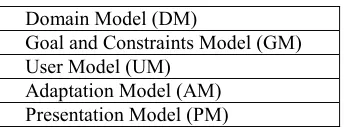
[image:3.612.207.379.315.380.2]Therefore, LAOS extends AHAM (Wu, 2002) and contains the five layers presented in Table 2.
Table 2.The five layers of the LAOS model.
Domain Model (DM)
Goal and Constraints Model (GM) User Model (UM)
Adaptation Model (AM) Presentation Model (PM)
The authoring steps of adaptive hypermedia with the LAOS model are as follows:
Table 3.Authoring steps in the LAOS model. STEP 1 write concepts and concept hierarchy
STEP 2 define concept attributes (define main and extra attributes) STEP 3 fill concept attributes (write contents)
STEP 4 add content related adaptive features regarding goal and constraints model (design alternatives - AND, OR, weights, etc.)
STEP 5 add user model related features (simplest way, tables as in AHAM (Wu, 2002), with attribute-value pairs for the user-related entities, but a more complex user model is allowed as described in (Cristea & Kinshuk, 2003).
STEP 6 decide among adaptation strategies, write in adaptation language medium-level adaptation rules (such as defined in (Calvi & Cristea, 2002) or give the complete set oflow level adaptation rules(Cristea & Calvi, 2003) (such as condition-action (CA) (Wu, 2002) or IF-THEN rules).
STEP 7 define format (presentation means-related; define chapters)
STEP 8 add adaptive features regarding presentation means (define variable page lengths, variables for figure display, formats, synchronizations points (SMIL), etc.).
2 LAG
Adaptive features that have been successfully introduced and implemented until now are often too fine grained, and an author easily looses the overview. Even more dangerous are combinations of fine and course grained implementations, where the overview is easily lost, without a proper structure.
thegranulation level of authoring of adaptive hypermedia can be precisely established, and authors therefore can work at the most suitable level for them. For example, 'beginner' authors can directly refer to high level adaptation strategies, letting the system do the rest automatically for them, whereas more experienced authors would want to use adaptation language to modify strategies or to build new ones, or even to use the classical direct adaptation techniques (that can be expressed as condition-action rules). Moreover, such issues as termination (e.g., infinite loops prevention) and confluence (e.g., prevention of order of rule execution influencing the outcome) aims can be taken out of the hands of the author, especially at the adaptive strategy level usage (where everything is predefined).
moreover, this isa step towards standardization of adaptive techniques, especially by grouping them into a higher-level adaptation language or strategies. In this way, not only adaptive hypermedia authoring, but also adaptive techniques exchange between adaptive applications can be enabled.
Finally, especially for the educational domain, the'missing link' between the adaptive hypermedia systems and its educational purpose can be made explicit, as adaptive strategies can be directly connected to educational and pedagogical strategies.
More details on the LAG model, i.e., the definition of a medium level adaptation language and some examples of adaptation strategies, corresponding to educational (pedagogic) strategies can be found in (Cristea & Calvi, 2003).
3 The sources to merge
3.1 MOT: My Online Teacher
MOT is an AHS web authoring environment, constructed based on MyET (Cristea et al., 2000) and on the three-layer model for authoring adaptation, as introduced in (Cristea & De Bra, 2002), basically containing a conceptual hierarchical layer (of atomic and composite concepts, built of a number of attributes), a lesson layer, dealing with alternative presentation of contents at attribute level or above, and a third layer of student adaptation and presentation adaptation. This structure is in conformity with the requirements of W3C towards the third generation Web, called the Semantic Web (Berner-Lee, 1998). MOT is now being further developed according to the flexible LAOS (Cristea & de Mooij, 2003b) five-layer adaptation model for adaptive hypermedia and adaptive web-material, containing a domain -, goal -, user -, adaptation – and presentation model. The adaptation itself follows a three-layer granularity structure, figuring direct adaptation techniques and rules, an adaptation language and adaptation strategies. MOT is gradually implementing the ideas and definitions introduced by LAOS and LAG. MOT can demonstrate at present the ideas of separating domain model and goal and constraints model, as well as some of the ideas on automatic authoring (specifically, automatic generation of links within the concept domain model and automatic generation of an instance of the goal and constraints model from an instance of the domain model).
Finally, MOT is going to make the connection to AHA!, to allow to implement LAOS and LAG flexibility into the AHA! system.
3.2 AHA!: Adaptive Hypermedia Architecture
AHA! is a general-purpose adaptive Web-based engine, first created as a simple support engine for adaptive on-line courses (De Bra & Calvi, 1998; De Bra & Ruiter, 2001). AHA! was studied and experimented with over the years, so it offers some stability guaranties. AHA! provides two kinds of adaptation: fragments of a page can be conditionally included or excluded, and links can be conditionally hidden or presented in a different colour. AHA! 2.0, the current version, shows more versatile structures for the user model and concepts. However, AHA! still uses a combined domain/adaptation model to indicate how concepts relate to each other and how the system should update the user model.
4. URD for MOT extension
As stated, in the case of MOT, we are planning to use as adaptation engine the one of the famous AHA!-system, version 2.0. With this goal in mind, we have constructed a URD (user requirements document) for specifying the way in which MOT is going to be extended.
Table 4. General Requirements.
1. Further development of the existing MOT system, based on the continued implementation of the LAOS 5-layer-model. It will stay a web application (MOT works with Apache 1.3.20; ActiveState ActivePerl Build 626 v.5.6.1; Java 1.4.0.); the existing pieces (MyET and MOT) should be merged together.
2. User models, concept maps, lessons, adaptation rules, etc. will be stored in a (MySQL) database. Specifically, issues such as security and scalability should be considered to organize the database in a better manner.
3. Multimedia contents should also be made explicitely available (till now it was left as textual pointers – http addresses – to the figure/video/flash/etc/, but maybe a special attribute should be added to the concept (as in MyET (Cristea et al., 2000)), or another solution should be sought.
4. Connection with the AHA!-system. For our Adaptation Model, we can consult AHAM (Wu, 2002). The Adaptation Engine of AHA! should be able to present the lessons constructed in MOT.
At the moment, there are two kinds of teachers that can use MOT, but they can be one and the same person: theteacher who provides information(text, audio, video, etc.) through the creation and manipulation of concept maps, and theteacher that constructs lessonsout of concept attributes of existing concept maps. In fact, each layer in the LAOS model can be created by a different person. The result is then a collaborative work. We can divide the following requirements induced by teachers’ needs as follows in table 5.
Table 5.Teacher Requirements. Providing information
1. The information that a teacher provides to the system should be safe in a sense that only the teacher who provided it can manipulate the concept maps he created (except that other teachers are allowed to link to that information, or copy it (but then the correct references should be made)). So the accounts that teachers have in MOT should be secured.
2. The calculation and suggestion of ‘relatedness’ relations between concept attributes should be improved. Also, the presentation of related concept attributes may be improved.
Constructing Lessons
1. Again, the lessons a teacher constructed should be safe in a sense that no other teacher can make changes to it (except that other teachers are allowed to link to that information, or copy it (but then the correct references should be made)). So the accounts that teachers have in MOT should be secured.
2. In the current system, a teacher can use information provided by another teacher in a course of his own, but he has to create a concept map for himself and link to the wanted information, followed by the conversion to a lesson. It would be interesting to have the option to make your concept maps public, such that other teachers can construct courses of it directly, but with the correct references to the author of the information.
3. In the current system, a lesson has a hierarchical structure, in which the teacher can add and remove sub-lessons. The only other directives a teacher can put in his course, are weighted alternatives (‘OR’) or lesson-parts that will all be presented to the student in a given order (‘AND’). The intention of MOT is to be able to create adaptive hypermedia. Therefore, a teacher should have the option to let MOT do a minimal automatic generation of adaptive documents and a teacher should be able to put directives in his course manually that make it adaptive:
3.1. There should be a tool for the automatic generation of lessons (like the already existing tool), but with minimal proper adaptation abilities according to design goals provided by the teacher. This tool can be based on the existing one and on the different tools present in AHA!
deduced, that can be interpreted by the AHA! engine.
3.3. Once a teacher has constructed such an adaptive course, teachers should be able to view (parts of) their course with/ without the adaptive directives beside it, to see if everything is the way they wanted it (i.e., parts or integrated views of the DM, GM, AM, UM, PM). If not, they should be able to change things. A tool for this viewing could should be developed (e.g., with some extra functionality of verification: the system could look for properties of termination and confluence, such that no unexpected behaviour turns up when students take the course online).
3.4. The link-suggestion based on ‘relatedness’ relations should stay included in the tools described above, but may be improved upon.
A student takes a course constructed with MOT by browsing through it (hence, it should be a web application). He may or may not be aware of the fact that the provided hypermedia is adaptive. Actually, Really <good> adaptive hypermedia courseware should basically give the impression of a linear course that is ‘perfect’ for the current user (given student). This is especially useful when we talk about beginner level students. However note that more advanced students might want to have more insight into their choices and make them themselves. This is what is called the balance betweenadaptivity(system decides what’s good for you) andadaptability(you tune your own parameters by hand).
Table 6.Student Requirements.
1. The student has to log into the system that will run on the AHA! Adaptation Engine, to be able to maintain a user model of him/her. Therefore, a student has to register first. His/her user model will be stored in the database.
2. Presentation of the courses is important, but not within the scope of this work. The presentation should be done by the AHA! engine, so the presentation choices should be left to the latter.
As it is the intention to use the AE of AHA! v.2.0 for the constructed lessons/courses, there are some requirements induced by the connection to the AHA! adaptation engine (AE).
Table 7.AHA! Requirements.
1. All elements of the LAOS model represented in MOT (that are used by the AE) should be broken down to a language that is interpretable by the AE.
2. There should be some bridging between AHA! and MOT, as it would be easier to use but 1 database. Because the format of the MOT-database and the one that AHA! expects are slightly different, some conversions are needed.
5 Transformation from MOT into AHA!
The transformation of the AHS data stored by MOT into AHA! should follow the LAOS model. In the following, we will sketch these transformations for each layer in particular. Please note that this is an input oriented presentation. We will discuss for each of these inputs what the AHA! engine output would look like (corresponding to the expected output for this particular engine). Also note that some of the expressivity of MOT can be lost during the transfer into AHA!, as the final system sets the constraints on the expression possibilities. The issue becomes then how to tackle this problem.
5.1 Transformation of DM layer
The DM (domain model) layer in MOT (conform to the LAOS model) contains a hierarchy of concepts and their respective attributes. Moreover, the DM contains (typed, weighted) relations between the concepts, other than the hierarchical ones.
Elements of the DM can be implied in adaptation, only in the special case in which more information than is present in the GM is sought. There are two cases in which this can happen:attributesfrom the DM have to be used to be displayed, orrelationsin the DM are used (e.g., for search of related issues).
appear in more than one condition, it will have to be pasted as a conditional fragment in each of the (xhtml) pages in which it could appear (so, we will be obliged to input some redundancy).
The relations within the DM layer have no real equivalent at the moment in AHA 2.0 (except the hierarchical relationships). They would have to be interpreted as in section 5.4.
5.2 Transformation of GM layer
The GM (goal and constrains model – previous lesson model) has similar elements to the DM, so similar transformations can be expected. One major difference is determined by the (weighted) AND-OR relations, which can be directly interpreted asprerequisite relations, allowed by the AHA! engine. Please note, however, that they can just as well be interpreted by a higher-level adaptation strategy as something else, e.g., asknowledge updates. Again, these relations would have to be translated into (xhtml) pages that AHA! understands.
5.3 Transformation of UM layer
This layer has not yet been implemented in MOT. In (Cristea & Kinshuk , 2003) a possible UM is given. These values will have to be mapped on the values that AHA! v.2.0 allows, i.e., access, knowledge, interest, suitability,visited.
5.4 Transformation of AM layer
The rules of the lowest adaptation level (If-Then rules) will be stored in MOT in a MySQL database, for flexibility and easy extensibility purposes. Out of these, the interface to AHA! will have to generate xhtml rules, of the two types that are known to the AHA! engine:knowledge updatesandprerequisite relationships.
5.5 Transformation of PM layer
The presentation issues will be left for the AHA! engine to decide. The current developments of MOT do not include presentation layer aspects.
6 Discussion, Conclusions and Further Steps
This paper starts by briefly presenting MOT, an AHS authoring system, in the context of its theoretical background based on LAOS, a five-layer AHS authoring model, and LAG, a three-layer representation of adaptive behaviour. The focus of this paper is to integrate MOT with the AHA! system, an adaptive hypermedia system (and especially for our purposes, engine) tested over many generations.
As previously mentioned, we do not expect the transfer from the MOT system into the AHA! system to be totally without any problems. Beside the implementation and technical problems, one of the main issues is how to keep the MOT expressivity and still obtain the translation into the very famous AHA! format.
One possible solution is to generate multiple AHA! presentations, depending on some initial triggers in MOT. Another possibility is to respond with custom generation of AHA! compatible format. Then, however, the problem is shifted towards translating the AHA! events into MOT events and back. In short, there are two major options:
when a teacher composes a lesson out of a concept map, there is a routine that writes all the necessary data into the appropriate tables of the AHA! database; the AHA!-engine does the rest. But then we are duplicating data, and large amounts of data are involved.
when a teacher composes a lesson, it is just recorded in the MOT database, and there is an interface between the AHA!-engine and this database, such that for the engine, it looks like it is performing its tasks on its own database. Moreover, another important issue is that AHA! itself is developing. While the transformation will aim at the (current) AHA! 2.0, the interface development has to keep in mind possible further developments of AHA!, that will allow more expressivity, but, unfortunately, will generate also more complexity.
Acknowledgements
References
Berner-Lee, T. (1998). What the semantic web can represent. W3C 1998. http://www.w3.org/DesignIssues/RDFnot.html.
Brusilovsky, P. (2001). Adaptive Hypermedia,User Modeling and User-Adapted Interaction, 11,87-110.
Calvi, L., and Cristea, A.I. (2002). Towards Generic Adaptive Systems: Analysis of a Case Study. InProceedings of AH 2002, Adaptive Hypermedia and Adaptive Web-Based Systems, LNCS 2347, Springer, 79-89.
Cristea, A.I., Okamoto, T. and Belkada, S. (2000). Concept Mapping for Subject Linking in a WWW Authoring Tool: MyEnglishTeacher: Teachers' Site, InProceedings of ANNIE'00, Eds. Drs. Dagli et al, ASME Press.
Cristea, A.I., and De Bra, P. (2002).Towards Adaptable and Adaptive ODL Environments. InProceedings of AACE E-Learn’02, Montreal, Canada, October 2002, 232-239.
Cristea, A.I., Okamoto, T. and Kayama M. (2002). Considerations for Building a Common Platform for Cooperative &Collaborative Authoring Environments. InProceedings of the AACE E-Learn'02, Montreal, Canada, 800-807. Cristea, A.I. and Aroyo, L. (2002). Adaptive Authoring of Adaptive Educational Hypermedia, InProceedings of AH 2002, Adaptive Hypermedia and Adaptive Web-Based Systems, LNCS 2347, Springer,122-132.
Cristea, A.I. and De Mooij, A. (2003a). Adaptive Course Authoring: MOT, My Online Teacher}. InProceedings of ICT-2003, IEEE LTTF International Conference on Telecommunications,"Telecommunications + Education" Workshop, Feb 23 - March 1, CD-ROM.
Cristea, A.I. and De Mooij, A. (2003b). LAOS: Layered WWW AHS Authoring Model and their corresponding Algebraic Operators. To be published inProceedings of the Twelfth International World Wide Web Conference (WWW'03), Budapest,Hungary W3C, ACM.
Cristea, A.I. and Calvi L. (2003). The three Layers of Adaptation Granularity. To be published inProceedings of the ninth International Conference on User Modelling (UM'03), Pittsburg, US, Springer.
Cristea, A.I. and Kinshuk. (2003). Considerations on LAOS, LAG and their Integration in MOT. To be published Proceedings of ED-MEDIA'03, Honolulu, AACE.
De Bra, P., Calvi, L. (1998). AHA: a Generic Adaptive Hypermedia System, InProceedings of the 2nd Workshop on Adaptive Hypertext and Hypermedia, Pittsburgh, 1998, 5-12.
De Bra, P., Ruiter, J.P. (2001). AHA! Adaptive Hypermedia for All. InProceedings of the WebNet Conference, October, 262-268.
De Bra, P., Aerts, A., Smits, D., Stash, N. (2002). AHA! Version 2.0, More Adaptation Flexibility for Authors. In Proceedings of the AACE ELearn'2002 conference, October 2002, 240-246.