Study of Inter-Satellite Optical Wireless Communication
System with different Modulation Techniques
Akshita Parmar
Research Scholar
Sri Sai University
Palampur, India
Abhishek Sharma
Assistant Professor
Sri Sai University
Palampur, India
Chandni
Assistant Professor
Sri Sai University
Palampur, India
ABSTRACT
Communication has become a utility like electricity and water. With the advancement in the technology, needs of users, services, demands have been increasing day by day. So it requires high bandwidth, higher data rates, and better reliability. So for these reasons optical fibers have been used. Optical communication has advanced from long strands to wireless technology. This has resulted to use the optical communication in space. Inter-Satellite communication is one among them. Large numbers of satellites are revolving around the Earth. So a network is required which can hand-off data from one satellite to another and afterwards to the ground station. Inter-Satellite communication is one of the remarkable technologies. In this paper, inter-satellite optical wireless communication system (Is-OWC) is analyzed using different modulation techniques and formats. Various specifications such as bit error rate, Q factor, and input power are studied.
Keywords
Optical fiber, Inter-satellite, Modulation, Bandwidth, Communication
1.
INTRODUCTION
Communication plays a great role in our life. We use different services like voice, video, text, data etc. Day by day, the demand of these services is increasing. Also there is large demand of transmission capacity. So, light wave technology has been used which includes higher data rate, enormous bandwidth. [1, 2]. Fiber optic systems are used worldwide for broadband networks. It is a method of transmitting information from one place to another by using light pulses through an optical fiber. Its main benefits are low loss, higher data rates, can be used up to large distances, used in light prone areas, no crosstalk, higher reliability etc. [3,4] Its applications include short-run remote communication, which includes convenient computers, to laser in space links. [5]
Indoor applications include infrared correspondence and outside remote correspondence includes Free Space Optics (FSO) and its one of the applications is Inter-Satellite Optical Wireless Communication System (Is-OWC). Is-OWC includes Line Of Sight and laser links from transmitter to receiver [6-29]
Is-OWC can be used to connect one satellite to other. Commonly used orbits are GEO, LEO, MEO. [30] It provides higher data transmission, low Power requirement, and small size as compared with microwave satellites. [31] It provides huge communication capacity as it has unlicensed optical wavelengths. But there are homogeneities in pressure, temperature in the atmosphere which changes the refractive index which leads to change in the transmission path. This results in fading. These faded links results in increased bit error rate (BER) and delay in the transmission. [32-33]. Modulation is the process to vary the characteristics of the
carrier signal with respect to the input signal which is the modulating signal that contains the original information [34-47].
Some of the modulation techniques are described as follows:
(a) ASK: Amplitude Shift Keying. It is a type of modulation in which the amplitude of the carrier signal is varied while the frequency and phase remains constant. If the value of signal is 1 then the carrier is transmitted otherwise not.
(b) PSK: Phase Shift Keying. It is a technique in which the phase of the carrier is varied in terms of the Sin and Cosine inputs while there is no change in amplitude and frequency.
(c) FSK: Frequency Shift Keying. In this method the frequency of the carrier signal is varied. It is commonly used for radio signals, caller ID etc.
(d) DPSK: Differential Phase Shift Keying. In DPSK, there is no reference signal. The phase of the next input signal is shifted and compared to the previous signal. Next bit depends on the previous bit.
(e) QPSK: Quadrature Phase Shift Keying. This is a type of Phase Modulator in which two successive bits are grouped together. These grouped bits are called as symbol. These are grouped together and then modulated.
(f) QAM: Quadrature Amplitude Modulation. It is used for both analog as well as digital signals. Two carrier waves are transmitted at a time whose amplitude is varied using the Amplitude Shift Keying (ASK). These carries waves have the same frequency but their phase differs by 90 degrees. That is why they are called as Quadrature Carriers.
25
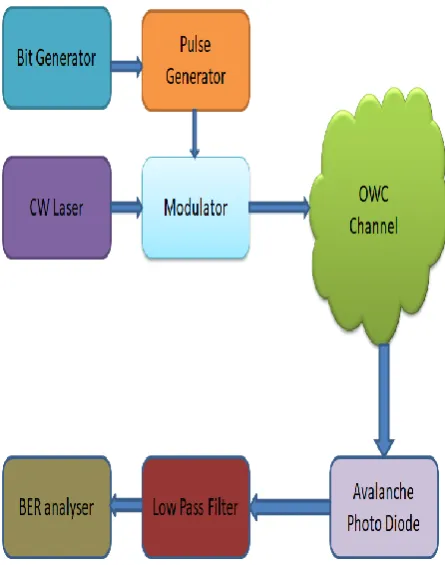
Fig. 1: Basic Structure of Is-OWC Scheme
In this paper a review is done on previous works of Is-OWC. Performance analysis is done with various modulation techniques such as QPSK, DPSK, QAM etc. and some formats like NRZ, RZ. Section II contains the previous work which is done based on the modulation techniques and section III contains the conclusion.
2.
STUDY RELATED WORK
In 2012 investigated the simulation and design of Is-OWC system by using Quadrature Phase Shift Keying (QPSK). Q factor, bit error rate and eye diagrams were analyzed. The objective was to achieve the highest coverage distance and highest data rates. For a power level of 30dbm with bit rates of 400, 160 and 100 Gbps respectively, the coverage distance were 4767, 7542 and 9352 Km respectively. Also this system was compared with the system designed by Sodnaiket.al and Hashim et.al. bit rate of 5.6Gbps at a distance of 40.06 Km and 438 Gbps at distance of 5000 Km were obtained. [48]
In 2014, a study regarding the performance of Inter-Satellite optical wireless communication was carried out at wavelengths of 980nm and 1550nm. A link between two satellites was established at a distance of 1300 Km at the data rate of 3Gbps. This study found that for wavelength 980nm, Q factor was calculated as 7.30323 and BER was 1.25525e-0.13 and for the wavelength 1550nm, Q factor was 14.4179 and BER was 1.58648e-0.47. This study shows that 1550nm wavelength has better results as compared to 980nm [49].
In 2014, a study regarding the inter - satellite links under the effect of atmospheric turbulences was made using different modulation techniques such as binary phase shift keying-subcarrier intensity module (BPSK-SIM), differential phase shift keying (DPSK), differential phase shift keying- subcarrier intensity module (DPSK-SIM), M Mary pulse position modulation (M-PPM) and Polarization shift keying (POISK). Bit Error Rate (BER) and channel capacity for these modulation techniques has been compared. Out of these, DPSK has the best BER performance and POISK has the best
probability performance and again DPSK has the highest channel capacity [50].
Another study in 2014 includes the simulation and design of inter-satellite using the Quadrature Phase Shift Keying (QPSK) modulator. A Laser source of wavelength1550nm and data rate of 2.5 Gbps is used. Mach-Zehnder modulator has been used and for demodulation LiNB03 is used. Moreover, different parameters such as Q factor, BER, Eye diagrams have been taken into consideration for comparing Quadrature Phase Shift Keying (QPSK) and Differential Phase Shift keying (DPSK).Various graphical results shows that QPSK has low BER as compared to DPSK and Quality factor is high for QPSK. Max Q factor for QPSK is 9.25 and for DPSK, it is 7.94. And Bit Error Rate (BER) for QPSK s 1.05*10^-20 and for DPSK it is 9.45*10^-16. This shows that QPSK modulation which is used for free space is better than DPSK [51].
A study in 2016 includes analyzing high-speed WDM-PI based Inter-Satellite system which is studied under the influence of Transmitting and Pointing errors. It includes transmission of 120Gbps data over a distance of 1000 Km. It studied the influence of transmitting pointing errors from 1 to 5microrad for all channels. Acceptable SNR of 20db and total received power of -80dbm is obtained at 5microrad of transmitting pointing error [29].
In order to compare the modulation formats and evaluate which one is better, a study was made in 2017. This study compared two modulation formats .They are Return To Zero (RZ) and Non Return to Zero (NRZ) at a distance of 100 Km and 400Km single-channel and wavelength Division Multiplexing (WDM) optical networks with bit rate of 10gb/s and 160gb/s. By studying the eye diagram parameters for the distance of 100 Km using the RZ format, the maximum Q factor is 34.19242 and minimum BER is 1.42307e-256 and for that of NRZ format, Q factor is 28.8535 and BER is 2.12699e-183. Now for the distance of 400 Km, Q factor and BER for RZ format is 8.92451 and 1.88235e-019 and for that of NRZ format Q factor and BER is 11.064 and 7.49404e-029 respectively. The results show that RZ technique is better and it is efficient for shorter distance communication [52].
In 2017, a study was made using Dense Wavelength Division Multiplexing (DWDM) Multiplexing technique for inter-satellite communication. The main aim was to compare the modulation formats Non Return to Zero (NRZ) and Return to Zero (RZ) at different input power levels. It is used for transmission up to the longer distances. Data rate of 10 Gbps for a range of 5000 kilometers is used. Moreover Quality factor and Bit Error Rate (BER) have also been analyzed. Different input powers of 10, 20, 30db are used. Transmission wavelength of 900nm and channel wavelength of 1550nm is used. A 31-channel DWDM transmitter is used. Q factor and BER are analyzed for 10, 20, 30dB power levels. They are given below:
a. For 10db power input, Q factor and BER for NRZ format is 12.99 and 6.74*10-39 and for RZ format it is 12.26 and 1.28*10-28
b. For 20db , Q factor and BER for NRZ is 13.36 and 4.92*10-41 and for RZ format , it is 12.98 and 7.9*10-39
c. For 30db power input, Q factor and BER for NRZ is 13.37 and 4.5*10-41 and for RZ it is 13.09 and 1.72*10-39
the system is obtaining best results in case of 30db by using the RZ format but at the same time power input is very high. So NRZ format with power input of 20db is best out of these 3 input levels [53].
3.
CONCLUSION
Inter-Satellite is one of the best ways for communication between the satellites. Research is a thing which is endless. A lot of systems are being designed to prove better than the older by doing some improvements. In this review paper, we have analyzed the inter-satellite communication system by taking into consideration various modulation techniques. These techniques are used in order to enhance the performance of the system. Various factors such as Quality factor, Bit Error Rate, data rate, range, and power input levels, capacity are studied. Researchers have used different modulation schemes such as QPSK, DPSK, WDM-PI, DPSK-SIM, M-PPM, POISK, QAM, NRZ, and RZ to perform better results. Out of these NRZ format is performing the best with highest Q factor and low BER. Moreover in future more advanced modulation schemes can be used in future in order to enhance the system.
4.
REFERENCES
[
1] T. Nagatsuma, G. Ducournau, and C. C. Renaud, "Advances in terahertz communications accelerated by photonics," Nature Photonics, vol. 10, pp. 371-379, 2016.[2] M. C. Wu, O. Solgaard, and J. E. Ford, "Optical MEMS for lightwave communication," Journal of Lightwave Technology, vol. 24, pp. 4433-4454, 2006.
[3] J. M. Senior and M. Y. Jamro, Optical fiber communications: principles and practice: Pearson Education, 2009.
[4] S. E. Miller, E. A. Marcatili, and T. Li, "Research toward optical-fiber transmission systems," Proceedings of the IEEE, vol. 61, pp. 1703-1704, 1973.
[5] A. C. Boucouvalas, "Challenges in optical wireless communications," Optics and Photonics news, vol. 16, pp. 36-39, 2005.
[6] Chaudhary, Sushank, and Angela Amphawan. "The role and challenges of free-space optical systems." Journal of Optical Communications 35.4 (2014): 327-334
[7] Chaudhary, Sushank, Angela Amphawan, and Kashif Nisar. "Realization of free space optics with OFDM under atmospheric turbulence." Optik-International Journal for Light and Electron Optics 125.18 (2014): 5196-5198.
[8] Amphawan, A., Sushank Chaudhary, and V. W. S. Chan. "2 x 20 Gbps-40 GHz OFDM Ro-FSO transmission with mode division multiplexing." Journal of the European Optical Society-Rapid publications 9 (2014).
[8] Sharma, Vishal. "High speed CO-OFDM-FSO transmission system." Optik-International Journal for Light and Electron Optics 125.6 (2014): 1761-1763.
[9] Chaudhary, Sushank, Preety Bansal, and Manisha Lumb. "Effect of beam divergence on WDM-FSO transmission system." International Journal of Computer Applications 93.1 (2014).
[10] Amphawan, Angela, and Sushank Chaudhary. "Free-space optical mode division multiplexing for switching
between millimeter-wave picocells." International Conference on Optical and Photonic Engineering (icOPEN 2015). Vol. 9524. International Society for Optics and Photonics, 2015
[11] Chaudhary, Sushank, Preety Bansal, and Gurdeep Singh. "Implementation of FSO network under the Impact of atmospheric turbulences." International Journal of Computer Applications 75.1 (2013).
[12] Sharma, Vishal, and Sushank Chaudhary. "Implementation of hybrid OFDM-FSO transmission system." International Journal of Computer Applications 58.8 (2012): 37-40.
[13] Amphawan, Angela, et al. "Optical mode division multiplexing for secure Ro-FSO WLANs." Advanced Science Letters 21.10 (2015): 3046-3049.
[14] Amphawan, Angela, Sushank Chaudhary, and Brij B Gupta. "Secure MDM-OFDM-Ro-FSO System Using HG Modes." International Journal of Sensors Wireless Communications and Control 5.1 (2015): 13-18.
[15] Sharma, Vishal, and Sushank Kumar. "Empirical evaluation of wired-and wireless-hybrid OFDM–OSSB– RoF transmission system." Optik-International Journal for Light and Electron Optics 124.20 (2013): 4529-4532.
[16] Amphawan, Angela, et al. "5Gbps HG 0, 1 and HG 0, 3 optical mode division multiplexing for RoFSO." Signal Processing & Its Applications (CSPA), 2015 IEEE 11th International Colloquium on. IEEE, 2015.
[17] Chaudhary, Sushank, and Saurabh Sharma. "Role of turbulences in WDM-polarization interleaving scheme based inter-satellite communication system." International Journal of Computer Applications 104.10 (2014).
[18] Amphawan, Angela, Sushank Chaudhary, and Tse-Kian Neo. "Hermite-Gaussian mode division multiplexing for free-space optical interconnects." Advanced Science Letters 21.10 (2015): 3050-3053.
[19] Sarangal, Himali, et al. "A cost effective 100 Gbps hybrid MDM–OCDMA–FSO transmission system under atmospheric turbulences." Optical and Quantum Electronics 49.5 (2017): 184.
[20] Chaudhary, Sushank, and Angela Amphawan. "High-speed MDM-Ro-FSO system by incorporating spiral-phased Hermite Gaussian modes." Photonic Network Communications 35.3 (2018): 374-380.
[21] Chaudhary, Sushank, and Angela Amphawan. "Optimization of AMI-MDM-RoFSO under atmospheric turbulence." EPJ Web of Conferences. Vol. 162. EDP Sciences, 2017.
[22] Upadhyay, Kamal Kishore, et al. "High-Speed 120 Gbps AMI-WDM-PDM Free Space Optical Transmission System." Journal of Optical Communications.
[23] Chaudhary, Sushank, Xuan Tang, and Xian Wei. "Comparison of Laguerre-Gaussian and Donut modes for MDM-WDM in OFDM-Ro-FSO transmission system." AEU-International Journal of Electronics and Communications 93 (2018): 208-214.
27 transmission systems." Laser Physics 28.7 (2018):
075106.
[25] Chaudhary, Sushank, and Angela Amphawan. "Solid core PCF-based mode selector for MDM-Ro-FSO transmission systems." Photonic Network Communications (2018): 1-9.
[26] A. Amphawan and S. Chaudhary, "Free-space optical mode division multiplexing for switching between millimeter-wave picocells," in International Conference on Optical and Photonic Engineering (icOPEN2015), 2015, pp. 95242H-95242H-6.
[27] S. Chaudhary, N. Chaudhary, S. Sharma, and B. Choudhary, "High Speed Inter-Satellite Communication System by Incorporating Hybrid Polarization-Wavelength Division Multiplexing Scheme," Journal of Optical Communications.
[28] S. Chaudhary and A. Sharma, "6 x 20Gbps Long Reach WDM-PI based High Altitude Platform Inter-Satellite Communication System," International Journal of Computer Applications, vol. 122, 2015.
[29] S. Chaudhary, A. Sharma, and N. Chaudhary, "6× 20 Gbps hybrid WDM–PI inter-satellite system under the influence of transmitting pointing errors," Journal of Optical Communications, vol. 37, pp. 375-379, 2016.
[30] Z. Sodnik, B.Furch and H. Lutz, “Free-Space Laser Communication Activities in Europe: SILEX and beyond”, Lasers and Electro-Optics Society (LEOS), pp.78-79, 2006.
[31] P. M. Hill, R. Olshansky, and W. Burns, "Optical polarization division multiplexing at 4 Gb/s," IEEE photonics technology letters, vol. 4, pp. 500-502, 1992.
[32] Krainak, M.A. 1992. “Inter-satellite communications optoelectronics research at the Goddard Space Flight Center”, IEEE Aerospace Electronic Systems Magazine, 7, pp. 44-47.
[33] Kaur N, Soni G. Performance analysis of inter-satellite optical wireless communication (Is-OWC) system at 980 nm and 1550 nm wavelengths. Int J Sci Res Publ 2015
[34]https://en.wikipedia.org/w/index.php?title=Modulation&o ldid=842281422
[35] Sharma, A., Chaudhary, S., Thakur, D., Dhasratan, Vigneswaran “A Cost-Effective High-Speed Radio over Fibre System for Millimeter Wave Applications”, Journal of Optical Communications, Published Online: 2017-12-15 | DOI: https://doi.org/10.1515/joc-2017-0166
[36] Sushank Chaudhary, Priyanka Chauhan, Abhishek Sharma, “High Speed 4× 2.5 Gbps-5 GHz AMI-WDM-RoF Transmission System for WLANs”, Journal of Optical Communications, Published Online: 2017-07-18 | DOI: https://doi.org/10.1515/joc-2017-0082
[37] Sushank Chaudhary, Deepika Thakur, Abhishek Sharma, “10 Gbps-60 GHz RoF Transmission System for 5 G Applications”, Journal of Optical Communications, Published Online: 2017-07-22 | DOI: https://doi.org/10.1515/joc-2017-0079
[38] Rudrakshi Kapoor, Abhishek Sharma, Sushank Chaudhary, “Empirical Evaluation of 4 QAM and 4 PSK in OFDM-based Inter-Satellite Communication System”,
Journal of Optical Communications, Published Online: 2017-06-29 | DOI: https://doi.org/10.1515/joc-2017-0059
[39] Abhishek Sharma, Neetu, “ANALYSIS AND MITIGATION OF RECEIVER POINTING ERROR
ANGLE ON INTER-SATELLITE
COMMUNICATION” International Journal of Innovative Technology and Research, Volume 3, Issue 6, Pages 2540-2544, Nov 2015
[40] Savita Rana Abhishek Sharma, “Comprehensive study of Radio over Fiber with different Modulation Techniques – A Review”, International Journal of Computer Applications, Volume 170, Issue 4, Pages 22-25, Aug 2017 DOI: 10.5120/ijca2017914829
[41] Abhishek Sharma, Deepika Thakur, “A Review on WLANs with Radio-Over-Fiber Technology”, International Journal of Electronics and Communication Engineering (IJECE), Volume 6, Issue 5, Pages 1-6, Aug 2017.
[42] Kanika Thakur Abhishek Sharma, “Comparison of MDRZ, CSRZ and DRZ schemes using different Communication Channels”, International Journal of Computer Applications, Aug 2017 DOI: 10.5120/ijca2017915106
[43] Kanika Thakur Abhishek Sharma, “Study of Radio over Fiber with Different coding Channel – A Review”, International Journal of Computer Applications, Aug 2017, DOI: 10.5120/ijca2017915033
[44] Abhishek Sharma, Priyanka Chauhan, “A Study of Radio over Fiber Technology in WLAN Applications” International Journal for Research in Applied Science & Engineering Technology (IJRASET) Volume 5 Issue VIII, Page 416-420, August 2017
[45] Abhishek Sharma, Rudrakshi Kapoor, “STUDY OF VARIOUS CHALLENGES IN Is OWC: A Review”, International Journal for Research in Applied Science & Engineering Technology (IJRASET) Volume 5 Issue VIII, Page 802-807, August 2017
[46] Abhishek Sharma, Savita Rana, “Implementation of Radio over Fiber Technology with different filtration techniques” International Journal for Research in Applied Science & Engineering Technology (IJRASET) Volume 5 Issue VIII, Page 783-789, August 2017.
[47] Priya Sood, Abhishek Sharma and Chandni. Analysis of FSO System and its Challenges - A Review. International Journal of Computer Applications 179(52):42-45, June 2018. DoI: 10.5120/ijca2018917353
[48] B. Patnaik, P.K. Sahu, “Inter-satellite optical wireless communication system design and simulation,” IET Commun. 2012, Vol 6, Iss. 16, pp. 2561-2567
[49] N. Kaur, G. Soni, “Performance Analyis of inter-satellite optical wireless Communication (IsOWC) system at 980 Nm and 1550nm wavelenghts,” 2014 International Conference on Contemporary Computing and Informatics (IC31)
[51] Faramarz E. Seraji, Marzieh Sadat Kiaee, “ Eye-Diagram-Based Evaluation of RZ and NRZ Modulation Methods in a 10-Gb/s Single-Channel and a 160-Gb/s WDM Optical Networks,” International Journal of Optics and Application 2017, 7(2): 31-36
[52] A Penchala Bindushree, Nataraju A.B, Vijesh TV, Laxmiprasad A S, “Design and Simulation of QPSK Modulator For Optic Inter Satellite Communication,”
International ajournal of Science and Technology Research Volume 3, Issue 8, August 2014