_____________________________________________________________________________________________________
*Corresponding author: E-mail: [email protected];
www.sciencedomain.org
Curcumin as a Bioactive Component
Siqi Hu
1and Maria Luz Fernandez
1*1
Department of Nutritional Sciences, University of Connecticut, Storrs, CT 06269, USA.
Authors’ contributions This work was carried out in collaboration between both authors. Author SH wrote the manuscript and
created the table. Author MLF edited the manuscript, agreed with the content and created figure 2. Both authors read and approved the final manuscript.
Article Information
DOI: 10.9734/BJMMR/2016/28370
Editor(s):
(1) Chan-Min Liu, School of Life Science, Xuzhou Normal University, Xuzhou City, China.
Reviewers:
(1) Obeagu,Emmanuel Ifeanyi, Michael Okpara University of Agriculture,Umudike,Abia State, Nigeria. (2)Rajendra Nath, King George’s Medical University, Lucknow (Up), India. Complete Peer review History:http://www.sciencedomain.org/review-history/15809
Received 16th July 2016 Accepted 10th August 2016 Published 20th August 2016
ABSTRACT
Curcumin, a bioactive polyphenol found in the plant Curcuma longa is a natural supplement available worldwide. Curcumin has been recognized for its anti-oxidant and anti-inflammatory properties for a number of years. Further, its therapeutic potential has been demonstrated in animal studies and clinical trials. Numerous reports exist on the mechanisms of action by which curcumin can protect against those chronic diseases associated with oxidative stress and inflammation. Several studies have addressed the effects of curcumin on Alzherimer’s disease, type 2 diabetes, cardiovascular diseases and asthma. Although, curcumin has been shown to directly affect inflammatory pathways and production of inflammatory cytokines as well as to effectively scavenge free radicals and improve endothelial function, a number of clinical trials have failed to demonstrate efficiency due to its poor bioavailability, physicochemical instability and rapid metabolism. The use of nanoencapsulation to improve delivery of curcumin to target tissues suggests that nanodelivery could increase the healing efficiency of curcumin. In this review, the therapeutic potential of curcumin to protect against chronic disease and the underlying mechanisms will be discussed.
Keywords: Curcumin; availability; Alzheimer’s disease; cardiovascular disease; type-2 diabetes; asthma.
Hu and Fernandez; BJMMR, 17(6): 1-13, 2016; Article no.BJMMR.28370
ABBREVIATIONS
Aβ: β-amyloid; AD: Alzheimer’s disease; AGE: Advanced glycation end products; CMC: curcumin-carboxymethyl chitosan; CVD: cardiovascular disease; HO-1:Haem oxygenase-1; HbA1c:glycosylated hemoglobin; LOX-1: lectin-like oxidized LDL receptor-1; NFƙβ:MCP-1:monocyte chemotactic protein-1: Nrf-2: Nuclear factor erythroid-2 related factor 2; NF ƙβ; Nuclear factor ƙβ; NO: nitric oxide; ROS: reactive oxygen species; VSMC: Vascular smooth muscle cell.
1. INTRODUCTION
Curcumin, a member of the ginger family is a bioactive polyphenol found in the rhizomes of turmeric (Curcuma longa). In 1815, Vogel and Pelletier [1] isolated for the first time this bright yellow chemical from Curcuma longa and named it curcumin. Later in 1910, Vogel and Pellatier [2] identified the chemical structure of curcumin. Curcumin or 1,7-bis-(4-hydroxy-3-methoxyphenyl)-hepta-1,6-diene-3,5-dione, is also represented by its condensed formula C21H20O6 [3]. Commercially available curcumin
powder commonly contains two curcuminoids: 17% demethoxycurcumin and 3% bisdemethoxycurcumin [4]. At room temperature, curcumin is a bright yellow-orange powder with a molecular weight of 368.39 g/mol. It is a hydrophobic compound capable to dissolve in organic solvents, including methanol, ethanol, acetone, and dimethyl sulfoxide. However, in alkaline aqueous solution, the curcumin molecule is deprotonated and its water solubility increases. Curcumin has three different pKa values of 8.54, 9.30 and 10.69, corresponding to the dissociation of protons in the enolic and the two phenolic groups [5]. Typically, curcumin has maximum absorption at 415–420 nm and 430 nm in the UV/visible absorption spectra when dissolved in methanol and acetone, respectively [6].
The natural source of curcumin, turmeric, has been used as an herbal medicine and as a food colorant in Asian countries for centuries. Nowadays, as a safe natural supplement, curcumin is available worldwide. According to the Joint FAO/WHO Expert Committee on Food Additives, daily consumption of 0.1–3 mg/kg has been established as an acceptable dose for curcumin [7]. Curcumin has been granted Generally Recognized as Safe (GRAS) status by the Food and Drug Administration. Abundant research findings support that curcumin may have favorable anti-oxidant, anti-inflammatory, antimicrobial and antifungal properties [8-11]. Curcumin may exhibit its antimicrobial and antifungal properties by suppressing the growth of pathogens and activating immune responses of the host, including M1 macrophage activation
[9,10]. Further, during the past three decades, numerous clinical trials have provided evidence of therapeutic potentials from this phytochemical against a wide range of human chronic diseases, including type 2 diabetes [12], autoimmune diseases, asthma [13], inflammatory bowel disease [14], rheumatoid arthritis [15], cardiovascular diseases [16], and cancer [17,18]. Thus curcumin could be considered as a safe therapeutic option for chronic diseases. The following paragraphs will provide an updated review of the beneficial effects of curcumin on a variety of chronic diseases, including Alzheimer’s disease (AD), type 2 diabetes and cardiovascular diseases (CVD) as well as the underlying mechanisms.
2. ANTI-OXIDANT PROPERTIES OF
CURCUMIN
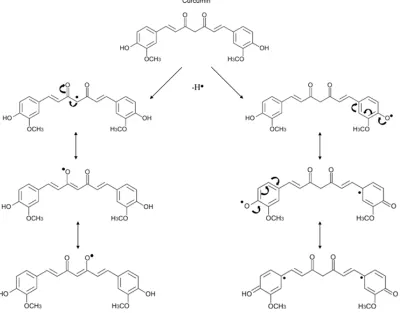
Fig. 1. Sites for proton donation for the curcumin molecule
thereby forming a diradical. This diradical may be further degraded into smaller phenols such as ferulic acid, vanillic acid and feruloylmethane or converted into stable compounds like quinones [3]. The sites for proton donation in the curcumin molecule are represented in Fig. 1 above.
3. ANTI-INFLAMMATORY PROPERTIES OF CURCUMIN
Many studies have indicated curcumin is able to modulate the nuclear factor Kappa β (NF-κβ) pathway [24-26], which has close links to both oxidative stress and the inflammatory response. Curcumin inhibits the NF-κβ pathway by chelating and scavenging ROS, the stimulus for the NF-κB pathway activation [27,28]. Moreover, curcumin can also suppress NF-κB activation through inhibiting the degradation of inhibitor kβ
(IkB) and modifying the NF-κB/IκB complex, in order to retain NF-κB in the inactive form [27]. Subsequently, curcumin suppresses a variety of NF-κB dependent pro-inflammatory factors by blocking this pathway. For instance, in an
alcoholic liver disease study, Nanji et al. [29] reported curcumin suppressed the expression of tumor necrosis factor-α (TNF-α), interleukin (IL)-12, monocyte chemotactic protein-1 (MCP-1), and cyclooxygenase-2 both in vitro and in vivo. They also observed curcumin reduced the binding activity of NF-κB to downstream genes22.
Hu and Fernandez; BJMMR, 17(6): 1-13, 2016; Article no.BJMMR.28370
4. CURCUMIN AND CHRONIC DISEASES
4.1 Curcumin and Alzheimer’s Disease
Alzheimer's disease (AD) is considered as a progressive neurodegenerative disease. It is characterized by progressively deteriorated cognition along with challenging behavior. According to a recent report, approximately 5.2 million Americans are suffering from AD. Further, during the period 2000 to 2010, the proportion of deaths resulting from AD increased by 68% in the US [33]. Ng et al. [34] reported that regular curcumin consumption resulted in better cognitive performance in the elderly, indicating curcumin may be a possible choice for AD treatment.
Abnormal extracellular deposition of β-amyloid (Aβ) peptides is hypothesized as the fundamental cause of AD and modulation of amyloid peptides clearance is one of the therapeutic effects of curcumin against this disease. Yang and colleagues [35] revealed that low-dose and chronic oral consumption of curcumin dramatically inhibited amyloid level and plaque burden in transgenic mice. They demonstrated that curcumin directly binds small Aβ fragments, thus blocking their aggregation both in vitro and in vivo via binding to the N terminus of Aβ monomers [36]. Interestingly, a recent report indicated curcumin reduced the toxicity of β-amyloid aggregates by encouraging the formation of nontoxic soluble oligomers and prefibrillar aggregates instead of inhibiting the aggregation of Aβ [37].
In addition to the direct interaction with Aβ
molecules, curcumin may also modulate the innate immune system thereby promoting the clearance of Aβ deposits by utilizing its anti-inflammatory properties. In AD mice models, the Aβ-binding ability and phagocytosis capacity of microglia are impaired, as a result of chronic inflammation [38]. He and colleagues [39] reported curcumin ameliorated defective microglial phagocytosis by restoring the expression of milk fat globule-EGF factor-8 protein, suppressing the expression of NF-κB p65 and phospho-signal transduced and activator of transcription-3.
Metal ions like Cu+2 and Zn+2 are widely distributed in the brain and closely related to Aβ
plaque formation. Dysregulation of the homeostasis of these ions encourages their binding with Aβ and subsequent Aβ aggregation, contributing to progression of AD [40]. By reducing Cu+2 to Cu+1, Aβ releases ROS,
resulting in oxidative damage to neural cells [41]. As an efficient metal chelator, curcumin is able to bind to copper, zinc and iron ions [42]. Therefore this property can also potentially contribute to the protective effects of curcumin against AD. In addition, a microscopic study revealed curcumin significantly compromised the formation of β -sheet of the Aβ peptide, which is promoted by metal ions such as Cu+2 and Zn+2 in a time dependent manner. It is known that β-sheet structure facilitates aggregation of Aβ [43].
Recently, Kochi et al. [44] studied the reactivity of curcumin and its derivatives with Aβ particles with/without metal association. According to the results, compared to free curcumin and Cur-S (a water-soluble form of curcumin), Gd-Cur (curcumin conjugated to a potential Aβ imaging agent) was superior in regulating copper-induced Aβ aggregation. Thus Gd-Cur could be considered a possible diagnostic agent for AD. Another study used magnetic resonance imaging for Aβ plaque detection with the assistance of biocompatible curcumin conjugated magnetic nanoparticles (Cur-MNPs). The results showed Cur-MNPs were specifically co-localized with amyloid plaques, providing a new alternative diagnostic method for AD [45]. Both studies indicated the possibility of using modified curcumin molecules for diagnosis of AD.
4.2 Curcumin and Type 2 Diabetes
Diabetes mellitus is considered as a serious
threat for public health. Among all three categories of diabetes: type 2 diabetes is the most common type, accounting for approximately 90% of cases [46]. Type 2 diabetes is characterized by insulin resistance, which is associated with impaired insulin secretion [47]. It is known that oxidative stress and chronic low-level inflammation have significant roles in the initiation and progression of type 2 diabetes [48].
significantly reduced fasting blood glucose, glycosylated hemoglobin (HbA1c), and insulin resistance index in type 2 diabetic patients. The anti-diabetic effects of curcumin may be a result of the following plausible mechanisms: curcumin is able to modulate activation of multiple cell signaling pathways related to inflammatory responses (including PI3K/Akt, Nrf2 and NF-κB) [53-55] and the level of bioactive molecules in the circulation system, thereby improving insulin sensitivity,. Curcumin treatment has been shown to increase the antioxidant status of pancreatic β -cells and suppress blood glucose levels by activating peroxisome proliferator-activated receptor gamma [56,57]. Curcumin is also involved in the inhibition of sterol regulatory element-binding protein, a transcription factor involved in the regulations of genes associated with biosynthesis of lipids, in order to ameliorate obesity and insulin sensitivity [58]. Na and colleagues [12] suggested curcumin may exert anti-diabetic effects partly by reducing serum adipocyte-fatty acid binding protein levels and serum free fatty acids In addition, a recent study indicated curcumin improved β-cell function and proliferation both in vitro and in vivo by functioning as a proteasome inhibitor [59].
4.3 Curcumin and Cardiovascular Diseases
Cardiovascular diseases including coronary artery diseases, stroke and atherosclerosis, are the main cause of deaths globally [60]. Quite a few clinical trials and in vitro studies have shown oxidative stress, chronic inflammation and subsequent endothelial dysfunction play significant roles in the pathophysiology of CVD [61]. Furthermore, bioactive molecules including pro-inflammatory cytokines, adhesion molecules and vasoactive factors are all closely related to CVD [62]. Over the past decade, polyphenols have been used as a therapeutic agent for CVD, including olive oil, tea and soy derived polyphenols to successfully improve oxidative stress, arterial stiffness and endothelial function [63].
As a polyphenolic compound, curcumin has also shown beneficial effects against CVD from multiple aspects, such as inhibiting lipoprotein oxidation, impairing smooth muscle cell migration, and restoring endothelial cell function [64]. The oxidation and macrophage uptake of LDL contributes to inflammatory responses in the intimal space, foam cell formation and subsequent thrombotic events playing a key role in the initiation and progression of
atherosclerosis [65]. In 1999, Ramı́rez-Tortosa and colleagues [66] revealed curcumin could prevent oxidized LDL formation in an atherosclerosis study with a rabbit model. As an anti-oxidant, curcumin could directly protect LDL by donating hydrogen-atom from its phenolic group [67]. Later, Kou et al. [68] reported curcumin ameliorated LDL oxidation and macrophage uptake by inducing HO-1 expression and inhibiting cluster of differentiation-36 in macrophages. Furthermore, a recent in vivo study demonstrated curcumin treatment significantly enhanced serum paraoxonase-1 activity thereby reducing the susceptibility of LDL to oxidation [69].
Vascular smooth muscle cell (VSMC) migration and proliferation are pivotal steps in the progression of CVD. Curcumin was found to be responsible for blocking the platelet-derived growth factor (PDGF)-Erk/Akt signaling pathways, which induces VSMC migration and proliferation [70]. On the other hand, curcumin is also able to impair VSMC proliferation by reducing cyclinD1 and E2F activities and activating the caveolin-1/ mitogen activated protein kinase signaling pathway [71]. Yu et al. [72] suggested curcumin prevented VSMC migration via inhibition of
TNF-α induced matrix metalloproteinase-9 expression. According to a recent report, curcumin may inhibit VSMC proliferation via down-regulation of sirtuin7 levels, inducing rRNA gene promoter hypermethylation and therefore inhibiting rRNA synthesis. This inhibition may also result from p53/p21 induced cell cycle arrest [73].
reduced advanced glycation end product (AGE) formation. Therefore it could be hypothesized that curcumin improved endothelial dysfunct by inhibiting AGE formation. This hypothesis was later confirmed [79]. In addition, curcumin protects against lipopolysaccharide
endothelial dysfunction in a rat model via suppressing the expression of thrombospondin and transforming growth factor‑β1 [80]
4.4 Curcumin and Asthma
Asthma is one of the most prevalent chronic respiratory diseases worldwide, especially among young-age groups, imposing abundant direct and indirect economic costs
inflammation has been found to be a significant component in the pathophysiology of asthma, therefore current treatments mainly employ anti inflammatory drugs such as inhaled corticosteroids [82]. In 1997, Kobayashi et al reported curcumin inhibited proliferation, production of interleukins, and release of granulocyte macrophage colony
factor in lymphocytes isolated from asthmatic patients, indicating curcumin may have a potential effect on controlling asthma. Then another in-vitro study suggested curcumin
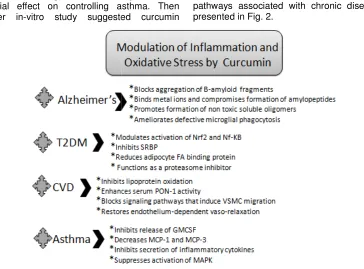
Fig. 2. Modulation of inflammatory pathways and oxidative stress by Curcumin, which result in protection against chronic disease: Alzheimer’s, type
Abbreviations used: Nfr-2: Nuclear factor erythroid
regulatory binding protein; PON-1: paraoxonase 1; GMCSF: granulocyte macrophage colony stimulating factor; MCP: monocyte chemotactic protein MAP
Hu and Fernandez; BJMMR, 17(6): 1-13, 2016; Article no.
reduced advanced glycation end product (AGE) formation. Therefore it could be hypothesized curcumin improved endothelial dysfunction by inhibiting AGE formation. This hypothesis was . In addition, curcumin protects against lipopolysaccharide-induced endothelial dysfunction in a rat model via suppressing the expression of thrombospondin-1
[80].
Asthma is one of the most prevalent chronic respiratory diseases worldwide, especially age groups, imposing abundant direct and indirect economic costs [81]. Airway inflammation has been found to be a significant component in the pathophysiology of asthma, therefore current treatments mainly employ anti-inflammatory drugs such as inhaled
. In 1997, Kobayashi et al. [83] nhibited proliferation, production of interleukins, and release of granulocyte macrophage colony-stimulating factor in lymphocytes isolated from asthmatic patients, indicating curcumin may have a potential effect on controlling asthma. Then o study suggested curcumin
induced a significant decrease in human airway smooth muscle cell derived chemokine level, including eotaxin, MCP-1 and MCP
Further, curcumin inhibited the secretion of pro inflammatory cytokines (TNF-α and IL
inflammatory cytokine IL-10 and adhesion molecule ICAM-1 in activated eosinophils and bronchial epithelial cells, probably via inhibition of the NF-κB and AP-1 pathways [85]
and colleagues [86] conducted an
with guinea pigs in which they demonstrated oral curcumin consumption ameliorated allergen induced airway constriction and airway hyper reactivity A recent study suggested that curcumin activates the Nrf2/HO-1 pathway and alleviates airway inflammation and goblet cell hyperplasia in asthmatic mice. In addition to oral treatment, nasal-delivered curcumin successfully lowered bronchial prostaglandin level thereby attenuat airway hyper-reactivity and inflammation Curcumin also suppressed the activation of mitogen-activated protein kinases, which are responsible for expression and activation of asthmatic inflammatory factors [87]
The effects of curcumin in the regulation of pathways associated with chronic disease are presented in Fig.2.
Fig. 2. Modulation of inflammatory pathways and oxidative stress by Curcumin, which result in protection against chronic disease: Alzheimer’s, type-2 diabetes (T2DM), cardiovascular
disease (CVD) and Asthma
2: Nuclear factor erythroid-2 related factor 2; NF-kb: nuclear factor: kB; SRBP: sterol 1: paraoxonase 1; GMCSF: granulocyte macrophage colony stimulating factor; MCP: monocyte chemotactic protein MAPK: mitogen activated protein kinases
; Article no.BJMMR.28370
induced a significant decrease in human airway smooth muscle cell derived chemokine level, 1 and MCP-3 [84]. Further, curcumin inhibited the secretion of
pro-α and IL-1β), anti-10 and adhesion 1 in activated eosinophils and bronchial epithelial cells, probably via inhibition of [85]. Later, Ram conducted an in vivo study guinea pigs in which they demonstrated oral curcumin consumption ameliorated allergen-induced airway constriction and airway hyper-reactivity A recent study suggested that curcumin
1 pathway and alleviates et cell hyperplasia in asthmatic mice. In addition to oral treatment, delivered curcumin successfully lowered thereby attenuating reactivity and inflammation [86]. Curcumin also suppressed the activation of activated protein kinases, which are responsible for expression and activation of
[87].
The effects of curcumin in the regulation of pathways associated with chronic disease are
Fig. 2. Modulation of inflammatory pathways and oxidative stress by Curcumin, which result in 2 diabetes (T2DM), cardiovascular
5. BIOAVAILABILITY OF CURCUMIN
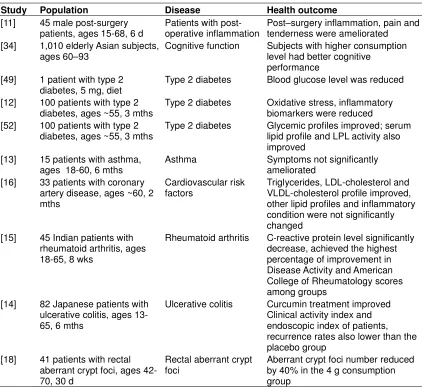
Although curcumin has promising potentials for treatment of a wide range of chronic diseases, its clinical practices have been limited due to physiochemical instability, rapid metabolism, and low oral bioavailability [88]. Curcumin showed no significant effect in a number of human trials possibly due to its bioavailability problems [13,16]. Table 1 presents the positive and negative results of clinical trials conducted with Curcumin. Previous studies have shown the extremely low bioavailability of curcumin in both murine and human subjects. Research in this area could be tracked back to 1978, in a report where orally administrated curcumin at a high dose of 1 g/kg to rats, showed that plasma curcumin levels were only trace amounts, while
most curcumin was lost in the feces, indicating that curcumin was barely absorbed in the intestine [89]. Then in a later study, an oral administration at a dose of 2 g/kg curcumin, resulted in serum curcumin levels of only 1.35 ± 0.23 µg/m in Wistar rats after 1 hour, whereas in human subjects, the serum curcumin levels were barely detectable [90]. Therefore, to further apply curcumin in therapeutics, its bioavailability should be improved. In recent years, nanoencapsulation has been employed to improve the gastrointestinal absorption of curcumin, resulting in a higher blood level and lower kinetic elimination and thereby improving the bioavailability of this polyphenol. A pharmacokinetic study conducted by Ray and colleagues [91] could be a good example. In this study, despite having a lower dose,
Table 1. Randomized clinical trials with curcumin and health outcomes
Study Population Disease Health outcome
[11] 45 male post-surgery patients, ages 15-68, 6 d
Patients with post-operative inflammation
Post–surgery inflammation, pain and tenderness were ameliorated [34] 1,010 elderly Asian subjects,
ages 60–93
Cognitive function Subjects with higher consumption level had better cognitive
performance [49] 1 patient with type 2
diabetes, 5 mg, diet
Type 2 diabetes Blood glucose level was reduced
[12] 100 patients with type 2 diabetes, ages ~55, 3 mths
Type 2 diabetes Oxidative stress, inflammatory biomarkers were reduced [52] 100 patients with type 2
diabetes, ages ~55, 3 mths
Type 2 diabetes Glycemic profiles improved; serum lipid profile and LPL activity also improved
[13] 15 patients with asthma, ages 18-60, 6 mths
Asthma Symptoms not significantly ameliorated
[16] 33 patients with coronary artery disease, ages ~60, 2 mths
Cardiovascular risk factors
Triglycerides, LDL-cholesterol and VLDL-cholesterol profile improved, other lipid profiles and inflammatory condition were not significantly changed
[15] 45 Indian patients with rheumatoid arthritis, ages 18-65, 8 wks
Rheumatoid arthritis C-reactive protein level significantly decrease, achieved the highest percentage of improvement in Disease Activity and American College of Rheumatology scores among groups
[14] 82 Japanese patients with ulcerative colitis, ages 13-65, 6 mths
Ulcerative colitis Curcumin treatment improved Clinical activity index and endoscopic index of patients, recurrence rates also lower than the placebo group
[18] 41 patients with rectal aberrant crypt foci, ages 42-70, 30 d
Rectal aberrant crypt foci
Hu and Fernandez; BJMMR, 17(6): 1-13, 2016; Article no.BJMMR.28370
curcumin-carboxymethyl chitosan (CMC) nanoparticles (5 mg/kg) appeared to have a higher cardiac bioavailability compared to free curcumin (35 mg/kg) in a rat model. Moreover, nanoencapsulation in CMC dramatically increased the efficacy of curcumin on regressing cardiac hypertrophy [92]. These results indicate that nanoencapsulation could significantly increase both bioavailability and therapeutic potential of curcumin even at a lower dose.
6. CONCLUSIONS
Curcumin has been shown to exhibit therapeutic potential for various chronic diseases, mainly by exploiting its anti-oxidant and anti-inflammatory properties. Both in vitro and in vivo studies suggest curcumin is able to modulate multiple bioactive molecules, including transcription factors, protein kinases and cell-cycle regulators, thereby controlling gene expression, cell proliferation and immune responses, which have been identified as having close associations with the pathophysiology of chronic diseases. However, as reported in some studies, the therapeutic use of curcumin is still limited due to its poor absorption, rapid metabolism, and low oral bioavailability. Those problems need to be improved before it can be widely utilized in clinical practice.
CONSENT
It is not applicable.
ETHICAL APPROVAL
It is not applicable.
COMPETING INTERESTS
Authors have declared that no competing interests exist.
REFERENCES
1. Aggarwal BB, Sundaram C, Malani N, Ichikawa H. Curcumin: The Indian solid gold. Edtion ed. In: Aggarwal BB, Surh Y-J, Shishodia S, eds. The Molecular Targets and Therapeutic Uses of Curcumin in Health and Disease. Boston, MA: Springer US. 2007;1-75.
2. Jagetia GC, Aggarwal BB. “Spicing Up” of the immune system by curcumin. Journal of Clinical Immunology. 2007;27(1):19-35.
3. Ghosh S, Banerjee S, Sil PC. The beneficial role of curcumin on inflammation, diabetes and neurodegenerative disease: A recent update. Food and Chemical Toxicology. 2015;83:111-24.
4. Huang M-T, Ma W, Lu Y-P, Chang RL, Fisher C, Manchand PS, Newmark HL, Conney AH, You M. Effects of curcumin, demethoxycurcumin, bisdemethoxy-curcumin and tetrahydrobisdemethoxy-curcumin on 12-O-tetradecanoylphorbol-13-acetateinduced tumor promotion. Carcinogenesis. 1995;16(10):2493-7.
5. Shen L, Ji H-F. Theoretical study on physicochemical properties of curcumin. Spectrochimica Acta Part A: Molecular and Biomolecular Spectroscopy. 2007;67(3– 4):619-23.
6. Goel A, Kunnumakkara AB, Aggarwal BB. Curcumin as “Curecumin”: From kitchen to clinic. Biochemical Pharmacology. 2008; 75(4):787-809.
7. NCI D. Clinical development plan: curcumin. J Cell Biochem S. 1996;26:72-85.
8. Cole GM, Lim GP, Yang F, Teter B, Begum A, Ma Q, Harris-White ME, Frautschy SA. Prevention of Alzheimer's disease: Omega-3 fatty acid and phenolic anti-oxidant interventions. Neurobiology of Aging. 2005;26(1, Supplement):133-6.
9. De R, Kundu P, Swarnakar S, Ramamurthy T, Chowdhury A, Nair GB, Mukhopadhyay AK. Antimicrobial activity of curcumin against Helicobacter pylori isolates from India and during infections in mice. Antimicrobial Agents and Chemotherapy. 2009;53(4):1592-7.
10. Huang L, Zhang J, Song T, Yuan L, Zhou J, Yin H, He T, Gao W, Sun Y, Hu X, et al. Antifungal curcumin promotes chitin accumulation associated with decreased virulence of Sporothrix schenckii. International Immunopharmacology. 2016; 34:263-70.
11. Satoskar R, Shah S, Shenoy S. Evaluation of anti-inflammatory property of curcumin (diferuloyl methane) in patients with postoperative inflammation. International Journal of Clinical Pharmacology, Therapy, and Toxicology. 1986;24(12):651.
patients with Type 2 diabetes. Biomedical and Environmental Sciences. 2014;11(27): 902-6.
13. Kim DH, Phillips JF, Lockey RF. Oral curcumin supplementation in patients with atopic asthma. Allergy & Rhinology. 2011;2(2):e51.
14. Hanai H, Iida T, Takeuchi K, Watanabe F, Maruyama Y, Andoh A, Tsujikawa T, Fujiyama Y, Mitsuyama K, Sata M. Curcumin maintenance therapy for ulcerative colitis: randomized, multicenter, double-blind, placebo-controlled trial. Clinical Gastroenterology and Hepatology. 2006;4(12):1502-6.
15. Chandran B, Goel A. A randomized, pilot study to assess the efficacy and safety of curcumin in patients with active rheumatoid arthritis. Phytotherapy Research. 2012; 26(11):1719-25.
16. Mirzabeigi P, Mohammadpour AH, Salarifar M, Gholami K, Mojtahedzadeh M, Javadi MR. The effect of curcumin on some of traditional and non-traditional cardiovascular risk factors: A Pilot randomized, double-blind, placebo-controlled trial. Iranian Journal of Pharmaceutical Research. 2015;14(2):479. 17. Gupta SC, Patchva S, Aggarwal BB. Therapeutic roles of curcumin: Lessons learned from clinical trials. AAPS J. 2013;15(1):195-218.
18. Carroll RE, Benya RV, Turgeon DK, Vareed S, Neuman M, Rodriguez L, Kakarala M, Carpenter PM, McLaren C, Meyskens FL. Phase IIa clinical trial of curcumin for the prevention of colorectal neoplasia. Cancer Prevention Research. 2011;4(3):354-64.
19. Ramaswamy TS, Banerjee BN. Vegetable dyes as antioxidants for vegetable oils. Ann Biochem Exp Med. 1948;8(1-2):55-68. 20. Fujisawa S, Atsumi T, Ishihara M, Kadoma Y. Cytotoxicity, ROS-generation activity and radical-scavenging activity of curcumin and related compounds. Anticancer Res. 2004;24(2B):563-9.
21. Brouet I, Ohshima H. Curcumin, an anti-tumor promoter and anti-inflammatory agent, inhibits induction of nitric oxide synthase in activated macrophages. Biochemical and Biophysical Research Communications. 1995;206(2):533-40.
22. Chan W-H, Wu H-J, Hsuuw Y-D. Curcumin inhibits ROS Formation and apoptosis in methylglyoxal-treated human hepatoma G2 cells. Annals of the New York Academy of Sciences. 2005;1042(1):372-8.
23. Mishra B, Priyadarsini KI, Bhide MK, Kadam RM, Mohan H. Reactions of superoxide radicals with curcumin: Probable mechanisms by optical spectroscopy and EPR. Free Radical Research. 2004;38(4):355-62.
24. Shishodia S, Potdar P, Gairola CG, Aggarwal BB. Curcumin (diferuloylmethane) down-regulates cigarette smoke-induced NF-κB activation through inhibition of IκBα kinase in human lung epithelial cells: correlation with suppression of COX-2, MMP-9 and cyclin D1. Carcinogenesis. 2003;24(7):1269-79. 25. Biswas SK, McClure D, Jimenez LA,
Megson IL, Rahman I. Curcumin induces glutathione biosynthesis and inhibits NF-kappaB activation and interleukin-8 release in alveolar epithelial cells: Mechanism of free radical scavenging activity. Antioxid Redox Signal. 2005;7(1-2):32-41.
26. Shishodia S, Amin HM, Lai R, Aggarwal BB. Curcumin (diferuloylmethane) inhibits constitutive NF-κB activation, induces G1/S arrest, suppresses proliferation, and induces apoptosis in mantle cell lymphoma. Biochemical Pharmacology. 2005;70(5): 700-13.
27. Leclercq IA, Farrell GC, Sempoux C, Peña Ad, Horsmans Y. Curcumin inhibits NF-κB activation and reduces the severity of experimental steatohepatitis in mice. Journal of Hepatology. 2004;41(6):926-34. 28. Morgan MJ, Liu ZG. Crosstalk of reactive
oxygen species and NF-kappaB signaling. Cell Res. 2011;21(1):103-15.
29. Nanji AA, Jokelainen K, Tipoe GL, Rahemtulla A, Thomas P, Dannenberg AJ. Curcumin prevents alcohol-induced liver disease in rats by inhibiting the expression of NF-kappa B-dependent genes. Am J Physiol Gastrointest Liver Physiol. 2003;284(2):G321-7.
Hu and Fernandez; BJMMR, 17(6): 1-13, 2016; Article no.BJMMR.28370
31. Liu L, Shang Y, Li M, Han X, Wang J, Wang J. Curcumin ameliorates asthmatic airway inflammation by activating nuclear factor-E2-related factor 2/haem oxygenase (HO)-1 signalling pathway. Clin Exp Pharmacol Physiol. 2015;42(5):520-9. 32. Li B, Wang L, Lu Q, Da W. Liver injury
attenuation by curcumin in a rat NASH model: an Nrf2 activation-mediated effect? Ir J Med Sci. 2016;185(1):93-100.
33. Alzheimer's A. 2013 Alzheimer's disease facts and figures. Alzheimer's & Dementia. 2013;9(2):208-45.
34. Ng TP, Chiam PC, Lee T, Chua HC, Lim L, Kua EH. Curry consumption and cognitive function in the elderly. Am J Epidemiol. 2006;164(9):898-906.
35. Yang F, Lim GP, Begum AN, Ubeda OJ, Simmons MR, Ambegaokar SS, Chen PP, Kayed R, Glabe CG, Frautschy SA, et al. Curcumin inhibits formation of amyloid beta oligomers and fibrils, binds plaques, and reduces amyloid in vivo. J Biol Chem. 2005;280(7):5892-901.
36. Fu Z, Aucoin D, Ahmed M, Ziliox M, Van Nostrand WE, Smith SO. Capping of Aβ42 oligomers by small molecule inhibitors. Biochemistry. 2014;53(50):7893-903. 37. Thapa A, Jett SD, Chi EY. Curcumin
attenuates amyloid-β aggregate toxicity and modulates amyloid-β aggregation pathway. ACS Chemical Neuroscience. 2016;7(1):56-68.
38. Babcock AA, Ilkjær L, Clausen BH, Villadsen B, Dissing-Olesen L, Bendixen ATM, Lyck L, Lambertsen KL, Finsen B. Cytokine-producing microglia have an altered beta-amyloid load in aged APP/PS1 Tg mice. Brain, Behavior, and Immunity. 2015;48:86-101.
39. He G-L, Liu Y, Li M, Chen C-H, Gao P, Yu Z-P, Yang X-S. The amelioration of phagocytic ability in microglial cells by curcumin through the inhibition of EMF-induced pro-inflammatory responses. Journal of Neuroinflammation. 2014;11(1): 1-13.
40. Ghalebani L, Wahlström A, Danielsson J, Wärmländer SKTS, Gräslund A. pH-dependence of the specific binding of Cu(II) and Zn(II) ions to the amyloid-β peptide. Biochemical and Biophysical Research Communications. 2012;421(3):554-60. 41. Huang X, Cuajungco MP, Atwood CS,
Hartshorn MA, Tyndall JD, Hanson GR,
Stokes KC, Leopold M, Multhaup G, Goldstein LE, et al. Cu(II) potentiation of alzheimer abeta neurotoxicity. Correlation with cell-free hydrogen peroxide production and metal reduction. J Biol Chem. 1999;274(52):37111-6.
42. Baum L, Ng A. Curcumin interaction with copper and iron suggests one possible mechanism of action in Alzheimer's disease animal models. J Alzheimers Dis 2004;6(4):367-77; discussion 443-9. 43. Banerjee R. Effect of Curcumin on the
metal ion induced fibrillization of Amyloid-β peptide. Spectrochimica Acta Part A: Molecular and Biomolecular Spectroscopy. 2014;117:798-800.
44. Kochi A, Lee HJ, Vithanarachchi SM, Padmini V, Allen MJ, Lim MH. Inhibitory Activity Of Curcumin Derivatives Towards Metal-free And Metal-induced Amyloid-beta Aggregation. Curr Alzheimer Res. 2015;12(5):415-23.
45. Cheng KK, Chan PS, Fan S, Kwan SM, Yeung KL, Wáng Y-XJ, Chow AHL, Wu EX, Baum L. Curcumin-conjugated magnetic nanoparticles for detecting amyloid plaques in Alzheimer's disease mice using magnetic resonance imaging (MRI). Biomaterials. 2015;44:155-72.
46. Melmed S, Polonsky KS, Larsen PR, Kronenberg HM. Williams textbook of endocrinology: Elsevier Health Sciences; 2015.
47. David G, Gardner D, Dolores R. Greenspan's basic & clinical endocrinology. McGraw-Hill, New York; 2011.
48. Wellen KE, Hotamisligil GS. Inflammation, stress, and diabetes. J Clin Invest. 2005;115(5):1111-9.
49. Srinivasan M. Effect of curcumin on blood sugar as seen in a diabetic subject. Indian Journal of Medical Sciences. 1972;26(4): 269.
50. Tian L, Zeng K, Shao W, Yang BB, Fantus IG, Weng J, Jin T. Short-term curcumin gavage sensitizes insulin signaling in dexamethasone-treated C57BL/6 mice. The Journal of Nutrition 2015;145(10): 2300-7.
52. Na LX, Li Y, Pan HZ, Zhou XL, Sun DJ, Meng M, Li XX, Sun CH. Curcuminoids exert glucose-lowering effect in type 2 diabetes by decreasing serum free fatty acids: a double-blind, placebo-controlled trial. Mol Nutr Food Res. 2013;57(9):1569-77.
53. Yu W, Zha W, Ke Z, Min Q, Li C, Sun H, Liu C. Curcumin protects neonatal rat cardiomyocytes against high glucose-induced apoptosis via PI3K/Akt signalling pathway. J Diabetes Res. 2016;2016: 4158591.
54. He HJ, Wang GY, Gao Y, Ling WH, Yu ZW, Jin TR. Curcumin attenuates Nrf2 signaling defect, oxidative stress in muscle and glucose intolerance in high fat diet-fed mice. World J Diabetes. 2012;3(5):94-104. 55. Soetikno V, Suzuki K, Veeraveedu PT,
Arumugam S, Lakshmanan AP, Sone H, Watanabe K. Molecular understanding of curcumin in diabetic nephropathy. Drug Discov Today. 2013;18(15-16):756-63. 56. Zhou H, Beevers CS, Huang S. The
targets of curcumin. Curr Drug Targets. 2011;12(3):332-47.
57. Shehzad A, Rehman G, Lee YS. Curcumin in inflammatory diseases. Biofactors. 2013;39(1):69-77.
58. Ding L, Li J, Song B, Xiao X, Zhang B, Qi M, Huang W, Yang L, Wang Z. Curcumin rescues high fat diet-induced obesity and insulin sensitivity in mice through regulating SREBP pathway. Toxicology and Applied Pharmacology. 2016;304:99-109. 59. Weisberg S, Leibel R, Tortoriello D.
Proteasome inhibitors, including curcumin, improve pancreatic β-cell function and insulin sensitivity in diabetic mice. Nutrition & Diabetes. 2016;6(4):e205.
60. Mendis S, Puska P, Norrving B. Global atlas on cardiovascular disease prevention and control: World Health Organization; 2011.
61. Siti HN, Kamisah Y, Kamsiah J. The role of oxidative stress, antioxidants and vascular inflammation in cardiovascular disease (a review). Vascular Pharmacology. 2015;71: 40-56.
62. Galley HF, Webster NR. Physiology of the endothelium. British Journal of Anaesthesia. 2004;93(1):105-13.
63. Tomé-Carneiro J, Visioli F. Polyphenol-based nutraceuticals for the prevention
and treatment of cardiovascular disease: Review of human evidence. Phytomedicine. 64. Aggarwal BB, Harikumar KB. Potential
therapeutic effects of curcumin, the anti-inflammatory agent, against neurodegenerative, cardiovascular, pulmonary, metabolic, autoimmune and neoplastic diseases. Int J Biochem Cell Biol. 2009;41(1):40-59.
65. Parthasarathy S, Steinberg D, Witztum J. The role of oxidized low-density lipoproteins in the pathogenesis of atherosclerosis. Annual Review of Medicine. 1992;43(1):219-25.
66. Ramı́rez-Tortosa MC, Mesa MD, Aguilera MC, Quiles JL, Baró L, Ramirez-Tortosa CL, Martinez-Victoria E, Gil A. Oral administration of a turmeric extract inhibits LDL oxidation and has hypocholes-terolemic effects in rabbits with experimental atherosclerosis. Atheros-clerosis. 1999;147(2):371-8.
67. Chen W-F, Deng S-L, Zhou B, Yang L, Liu Z-L. Curcumin and its analogues as potent inhibitors of low density lipoprotein oxidation: H-atom abstraction from the phenolic groups and possible involvement of the 4-hydroxy-3-methoxyphenyl groups. Free Radical Biology and Medicine. 2006;40(3):526-35.
68. Kou MC, Chiou SY, Weng CY, Wang L, Ho CT, Wu MJ. Curcuminoids distinctly exhibit antioxidant activities and regulate expression of scavenger receptors and heme oxygenase-1. Mol Nutr Food Res. 2013;57(9):1598-610.
69. Singh P, Ibrahim Rizvi S. Role of curcumin in modulating plasma PON1 arylesterase activity and susceptibility to LDL oxidation in oxidatively challenged wistar rats. Letters in Drug Design & Discovery. 2015;12(4):319-23.
70. Yang X, Thomas DP, Zhang X, Culver BW, Alexander BM, Murdoch WJ, Rao MN, Tulis DA, Ren J, Sreejayan N. Curcumin inhibits platelet-derived growth factor– stimulated vascular smooth muscle cell function and injury-induced neointima formation. Arteriosclerosis, Thrombosis, and Vascular Biology. 2006;26(1):85-90. 71. Qin L, Yang Y-B, Tuo Q-H, Zhu B-Y, Chen
Hu and Fernandez; BJMMR, 17(6): 1-13, 2016; Article no.BJMMR.28370
Biochemical and Biophysical Research Communications. 2009;379(2):277-82. 72. Yu YM, Lin HC. Curcumin prevents human
aortic smooth muscle cells migration by inhibiting of MMP-9 expression. Nutrition, Metabolism and Cardiovascular Diseases. 2010;20(2):125-32.
73. Lewinska A, Wnuk M, Grabowska W, Zabek T, Semik E, Sikora E, Bielak-Zmijewska A. Curcumin induces oxidation-dependent cell cycle arrest mediated by SIRT7 inhibition of rDNA transcription in human aortic smooth muscle cells. Toxicol Lett. 2015;233(3):227-38.
74. Hadi HA, Carr CS, Al Suwaidi J. Endothelial dysfunction: Cardiovascular risk factors, therapy, and outcome. Vasc Health Risk Manag. 2005;1(3):183-98.
75. Ramaswami G, Chai H, Yao Q, Lin PH, Lumsden AB, Chen C. Curcumin blocks homocysteine-induced endothelial dysfunction in porcine coronary arteries. Journal of Vascular Surgery. 2004;40(6): 1216-22.
76. Fang XD, Yang F, Zhu L, Shen YL, Wang LL, Chen YY. Curcumin ameliorates high glucose‐induced acute vascular endothelial dysfunction in rat thoracic aorta. Clinical and Experimental Pharmacology and Physiology. 2009;36(12):1177-82.
77. Lee H-S, Lee M-J, Kim H, Choi S-K, Kim J-E, Moon H-I, Park W-H. Curcumin inhibits TNFα-induced lectin-like oxidised LDL receptor-1 (LOX-1) expression and suppresses the inflammatory response in human umbilical vein endothelial cells (HUVECs) by an antioxidant mechanism. Journal of Enzyme Inhibition and Medicinal Chemistry. 2010;25(5):720-9.
78. Fleenor BS, Sindler AL, Marvi NK, Howell KL, Zigler ML, Yoshizawa M, Seals DR. Curcumin ameliorates arterial dysfunction and oxidative stress with aging. Experimental Gerontology. 2013;48(2): 269-76.
79. Sun YP, Gu JF, Tan XB, Wang CF, Jia XB, Feng L, Liu JP. Curcumin inhibits advanced glycation end product-induced oxidative stress and inflammatory responses in endothelial cell damage via trapping methylglyoxal. Mol Med Rep. 2016;13(2):1475-86.
80. Lu W, Jiang JP, Hu J, Wang J, Zheng MZ. Curcumin protects against lipopolysaccharide-induced
vasoconstric-tion dysfunction via inhibition of thrombospondin-1 and transforming growth factor-β1. Experimental and Therapeutic Medicine. 2015;9(2):377-83.
81. Ehteshami-Afshar S, FitzGerald JM, Doyle-Waters MM, Sadatsafavi M. The global economic burden of asthma and chronic obstructive pulmonary disease. Int J Tuberc Lung Dis. 2016;20(1):11-23. 82. Adcock IM, Caramori G, Chung KF. New
targets for drug development in asthma. Lancet. 2008;372(9643):1073-87.
83. Kobayashi T, Hashimoto S, Horie T. Curcumin inhibition of Dermatophagoides farinea-induced interleukin-5 (IL-5) and granulocyte macrophage-colony stimulating factor (GM-CSF) production by lymphocytes from bronchial asthmatics. Biochem Pharmacol. 1997;54(7):819-24. 84. Wuyts WA, Vanaudenaerde BM, Dupont LJ,
Demedts MG, Verleden GM. Involvement of p38 MAPK, JNK, p42/p44 ERK and NF-kappaB in IL-1beta-induced chemokine release in human airway smooth muscle cells. Respir Med. 2003;97(7):811-7. 85. Wong CK, Li ML, Wang CB, Ip WK, Tian
YP, Lam CW. House dust mite allergen Der p 1 elevates the release of inflammatory cytokines and expression of adhesion molecules in co-culture of human eosinophils and bronchial epithelial cells. Int Immunol. 2006;18(8):1327-35.
86. Ram A, Das M, Ghosh B. Curcumin attenuates allergen-induced airway hyperresponsiveness in sensitized guinea pigs. Biol Pharm Bull. 2003;26(7):1021-4. 87. Subhashini, Chauhan PS, Dash D, Paul
BN, Singh R. Intranasal curcumin ameliorates airway inflammation and obstruction by regulating MAPKinase activation (p38, Erk and JNK) and prostaglandin D2 release in murine model of asthma. International Immunopharmacology. 2016;31:200-6. 88. Anand P, Kunnumakkara AB, Newman RA,
Aggarwal BB. Bioavailability of curcumin: problems and promises. Mol Pharm. 2007;4(6):807-18.
89. Wahlstrom B, Blennow G. A study on the fate of curcumin in the rat. Acta Pharmacol Toxicol (Copenh). 1978;43(2):86-92. 90. Shoba G, Joy D, Joseph T, Majeed M,
curcumin in animals and human volunteers. Planta Med. 1998;64(4):353-6.
91. Onoue S, Takahashi H, Kawabata Y, Seto Y, Hatanaka J, Timmermann B, Yamada S. Formulation design and photochemical studies on nanocrystal solid dispersion of curcumin with improved oral bioavailability. J Pharm Sci. 2010;99(4):1871-81.
92. Ray A, Rana S, Banerjee D, Mitra A, Datta R, Naskar S, Sarkar S. Improved bioavailability of targeted Curcumin delivery efficiently regressed cardiac hypertrophy by modulating apoptotic load within cardiac microenvironment. Toxicology and Applied Pharmacology. 2016;290:54-65.
_________________________________________________________________________________
© 2016 Hu and Fernandez; This is an Open Access article distributed under the terms of the Creative Commons Attribution License (http://creativecommons.org/licenses/by/4.0), which permits unrestricted use, distribution, and reproduction in any medium, provided the original work is properly cited.
Peer-review history: