ABSTRACT
COCKERHAM, REBECCA CAROLINE. Textile Digital Library System for Product Development. (Under the direction of Dr. Lisa Parrillo Chapman, Dr. Cindy Istook, and Dr. Trevor Little.)
The objective of this research was to create a system for the management of fabric samples at a vertical textile mill in order to facilitate the search, view, and retrieval of woven fabrics and provide a guide for implementation of the system. Termed the Textile Digital Library System (TDL System), the research was grouped into three parts: development, pilot testing, and evaluation. In addition to a literature review, case study research – combining qualitative and quantitative techniques which include primary data, secondary data, observation, informal interviews, and surveys – was used to gather data.
Textile Digital Library System for Product Development
by
Rebecca Caroline Cockerham
A thesis submitted to the Graduate Faculty of North Carolina State University
in partial fulfillment of the requirements for the degree of
Master of Science
Textiles
Raleigh, North Carolina 2012
APPROVED BY:
_______________________________ Dr. Lisa Parrillo Chapman
Committee Chair
________________________________ ________________________________
Dr. Trevor Little Dr. Cindy Istook
DEDICATION
BIOGRAPHY
ACKNOWLEDGMENTS
My sincere appreciation goes to all those who have supported and inspired me through their guidance, friendship, honesty, humor, and wisdom
A special thanks to:
Dr. Lisa Chapman
Dr. Trevor Little & Dr. Cindy Istook
Miguel Ortiz de Zevallos, Andrea Aramburu, Teddy Quimper, & Ariana de Toro Kristie Arias & Laura Sacchi
Federico, Claudia, Carmen, Juan Carlos, y La Chica Loca Julianna
Claire Stanhope, Garry Atkinson, Mor Aframian, Mallory McConnell & John Knox Brittany Styers, Lauren Bostian, & Helen Shaffer
TABLE OF CONTENTS
List of Tables ……… xi
List of Figures ……… xii
Chapter 1: Introduction ... 1
1.1 Relevance ... 2
1.2 Research Objectives ... 3
1.3 Limitations ... 5
1.4 Definition of Terms ... 5
Chapter 2: Literature Review ... 9
2.1 Sustainable Product Development ... 9
2.1.1 Communication and Collaboration for Sustainable Design ... 11
2.1.2 Sustainable Design Support and Assessment Tools ... 14
2.1.3 Considerations for Designing Sustainably ... 17
2.1.4 Levels of Sustainability ... 29
2.1.5 Obstacles of Sustainable Product Development ... 33
2.2 Digital Archiving ... 34
2.2.1 Metadata ... 35
2.2.2 Digital Image Capture & Image Management ... 36
2.2.3 Digital Archiving Systems ... 38
2.3 Systems Implementation ... 43
2.4 Summary ... 45
Chapter 3: Methodology ... 46
3.1 Research Objectives ... 46
3.2 Research Design ... 47
3.3 Phase 1 Development: Determination of Internal and External need of the TDL System ... 51
3.3.1 Observational Tasks ... 52
3.3.2 Survey Development ... 56
3.4 Phase 2 Pilot Testing: Initial Development of the TDL System ... 57
3.4.2 Fabric Image Capture ... 59
3.4.3 Metadata & Search Function Development ... 60
3.5 Phase 3 Evaluation: Prototype Development and Evaluation ... 60
3.5.1 Initial Development of Program Requirements ... 61
3.5.2 Development of Functional Requirement Guide ... 63
3.6 Summary ... 64
Chapter 4: Results ... 65
4.1 Development ... 65
4.1.1 Result 1: Determination of Needs for a TDL System ... 65
4.1.2 Result 2: Identification of Current Fabric Sample Organization ... 66
4.1.3 Result 3: Survey Measuring Client Needs for a TDL System ... 72
4.1.4 Result 4: Metadata and Search Topic Identification ... 79
4.2 Pilot Testing ... 83
4.2.1 Result 5: Initial Identification of Six Digital Archiving Programs ... 85
4.2.2 Result 6: Pilot Testing of Three Digital Archiving Systems ... 85
4.3 Evaluation ... 92
4.3.1 Result 7: Initial Development of System Requirements ... 92
4.3.2 Result 8: Development of Functional Requirement Guide ... 94
4.4 Summary ... 100
Chapter 5: Conclusions ... 101
5.1 Benefits ... 104
5.2 Limitations ... 106
5.3 Future Recommendations ... 109
Chapter 6: References ... 111
Chapter 7: Appendices ... 118
Appendix A. Survey ... 119
Appendix B. Fabric Codification System ... 121
Appendix C. Survey Consent Form ... 122
Appendix D. Survey Cover Letter ... 123
LIST OF TABLES
Table 1. Average Life Expectancy of Textile Items in Years (IFI, 1988) ... 28
Table 2. Task 1 - Weaving Plant Observation ... 53
Table 3. Task 2 - Review of Existing Fabric System ... 54
Table 4. Cut and Sew Production Process Observation ... 56
Table 5. Initial Requirements for Digital Archiving Programs ... 63
Table 6. Metadata ... 81
Table 7. Metadata Continued ... 82
Table 8. Initial TDL System Functional Requirements ... 93
LIST OF FIGURES
Figure 1. Sustainable Value Model (Hart, Milstein, & Caggiano, 2003) ... 31
Figure 2. Research Design ... 50
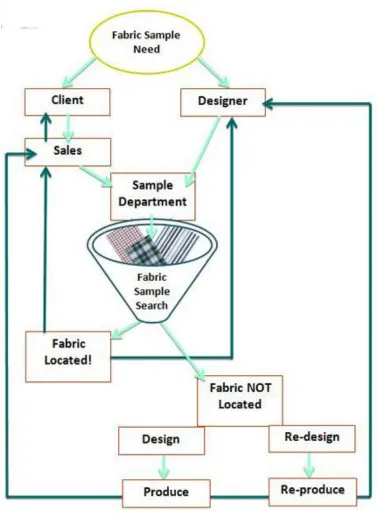
Figure 3. Fabric Sample Acquisition Process Flow ... 71
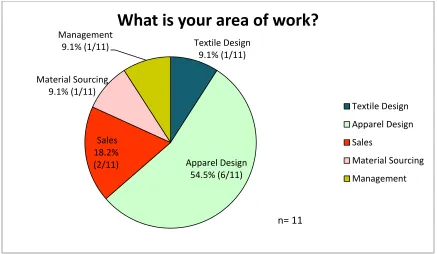
Figure 4. Survey Question 1 ... 73
Figure 5. Survey Question 2 ... 74
Figure 6. Survey Question 3 ... 75
Figure 7. Survey Question 4 ... 76
Figure 8. Survey Question 5 ... 77
Figure 9. Survey Question 6 - Response of Very Important ... 79
Figure 10. Narrowing of Programs ... 84
Figure 11. Digital Camera - Regular Scale ... 89
Figure 12. Scanner - Regular Scale ... 89
Figure 13. CAD Simulated Image - Regular Scale ... 89
Figure 14. Digital Camera - Zoom ... 89
Figure 15. Scanner - Zoom ... 90
Figure 16. CAD Simulated Image - Zoom ... 91
Figure 17. Functional Requirement Guide - Master ... 97
Figure 18. Functional Requirement Guide - Microsoft Sharepoint ... 98
Figure 19. Functional Requirement Guide - LUNA Imaging ... 99
Figure 20. Functional Requirement Guide - Canto Cumulus ... 100
Figure 21. Fabric Sample Acquisition Process with TDL System ... 102
Chapter 1
1
Introduction
Product development and design significantly affect the sustainability of textile and apparel products and processes. Designers should be empowered by knowledge and supported by systems which assist in the creation of higher quality products, reduce time, lessen waste, and spark innovation – starting from the ideation and conceptualization stages of product development. Implementation of systems and technologies which facilitate sustainable design decisions is essential to creating an efficient product development process. The objective of this research is to develop, pilot, and evaluate a Textile Digital Library System (TDL System) for product development in order to facilitate the search, view, and retrieval of woven fabrics and further enable rapid and sustainable design, sampling, and communication at a vertical textile mill.
a necessary system for sustainable product development. However, before the
sustainability of the system could be tested, the development, pilot testing, and evaluation of the TDL System was necessary. Therefore, this research explains and evaluates the development of a system. The PI performed a case study analysis to determine the functional requirements of Company X as they relate to the TDL System. The on-site case study data collection period lasted for 30 days and allowed the Principle Investigator (PI) to collect primary and secondary data from Company X. Qualitative and quantitative data collection occurred by 1) observational methods, 2) conducting formal interviews with company personnel, 3) administering an external survey to industry partners, and 4) creating a system evaluation tool. Qualitative data collected consisted of photographs, physical fabric samples, and written descriptions of processes and company requirements. Quantitative data consisted of survey responses and the Functional Requirement Guide – an evaluation tool created by the PI to help determine the best digital archiving system for Company X. This research provides a literature review of sustainable textile product
development and digital archiving, a case study analysis of Company X, a description of the methodology used to develop, pilot test, and evaluate a TDL System, an analysis of the study, and conclusions and recommendations for future work needed in this area.
1.1 Relevance
and efficiency of the textile and apparel value chain by reducing waste. Product developers need quick and easy access to fabric designs so as to discourage the wasteful, time
consuming, and unsustainable process of designing (or re-designing) and producing (or re-producing) fabric when similar or identical designs already exist. Furthermore, the TDL System is necessary to promote communication and collaboration regarding fabric designs within the interrelated departments of textile companies and between the
companies and their clients. This research will benefit textile and apparel companies who wish to have an efficient, internet based method of archiving, organizing, and retrieving fabric designs.
1.2 Research Objectives
The objective of this research was to create a system for the management of fabric samples at a vertical textile mill in order to facilitate the search, view, and retrieval of woven fabrics and provide a guide for implementation of the system. Termed the Textile Digital Library System (TDL System), the research was grouped into three parts:
development, pilot testing, and evaluation. In order to support the main research objective, the following sub-objectives were established:
Development
SO1: Identify the needs for the Textile Digital Library System (TDL System)
o SO1B: Identify search topics and corresponding metadata which will assist product developers in browsing fabric designs.
o SO1C: Identify internal and external needs for the TDL System
Pilot Testing
SO2: Pilot test the digital archiving programs to determine system capabilities and
limitations.
o SO2A: Review existing digital archiving programs and supporting
software/hardware which fulfill SO1.
o SO2B: Determine initial program requirements for the TDL System
o SO2C: Identify and sample three different digital archiving systems based on
observation and secondary research.
Evaluation
SO3: Evaluate the digital archiving programsto determine which program is best for the
TDL System.
o SO3A: Develop an evaluation tool to rate the different digital archiving systems.
o SO3B: Determine which digital archiving program best suits the needs of
1.3 Limitations
Time was a limitation of this research as the PI only had six weeks (30 days) to
develop, pilot test, and evaluate the Textile Digital Library System. The implementation and testing of the TDL System should continue over an extended amount of time in order to determine the actual effects on sustainable product development, once the program has been implemented and put into use by Company X and its clients.
Another possible limitation of this research was that it was conducted in a Spanish speaking country and the system and its information were constructed in Spanish. Conducting this research in various languages, such as English, Mandarin, or Hindi, may assist in broadening the audience of the research. Seeing that the textile industry is global and often involves the collaboration of many different cultures and languages, development of systems in various languages may be beneficial.
Finally, the implementation of the Textile Digital Library System was limited to one company. Implementing the TDL System within various companies and further comparing those results may provide diverse information about TDL Systems and indicate capabilities or limitations within one company which did not exist within another.
1.4 Definition of Terms
Textile Digital Library System: A centralized repository for digital fabric files and varied
Sustainability: Development that meets the needs of the present without compromising the ability of future generations to meet their own needs (Brundtland Commission, 1987)
Metadata: Data describing other data (Hammer, 1999). For example, the metadata for a
Pima Cotton is M70, the metadata for the color blue is CZ17, and the metadata for stripes is P100, so the complete metadata for a pima cotton, blue, striped fabric is M70CZ17P100.
Digital Archiving: The long-term storage, preservation and access to information that is
born digital, created and disseminated primarily in electronic form, or for which the digital form is considered to be the primary archive (Hodge, 2000)
Digital Images: Electronic pictures taken of a scene or scanned from documents (for
example: photographs, printed texts, artwork, textiles) in which the image is mapped as a grid of dots or picture elements, known as pixels. The pixels are represented by codes or
bits which can then be reduced to a mathematical representation and can be read by a computer. (Cornell University Library, 2003)
Computer Aided Design (CAD) for Apparel Product Development: The application of
Environmentally Conscious Design (ECD): A design approach in which the product’s aggregate environmental impact is as small as possible across the lifecycle without compromising cost, performance, quality, and feasibility (Huang et al., 2009)
Ecological Footprint (EF): An instrument for assessing the environmental impact of a textile
plant which assists in reporting to consumers and stakeholders increases or reductions of energy, resources, and waste (Herva, 2008)
Cut and Sew: An apparel manufacturing process involving the purchasing of fabric and
cutting and sewing to make a garment (NAICS, 2012)
Slow Fashion: The valuation of local, transparent, and sustainable textile and apparel
production and consumption (Clark, 2008)
A-POC (A Piece of Cloth): A manufacturing method that uses computer technology to
Lifetime: The duration of the life of a product starting from acquisition and ending at the moment of replacement, relating to the time of use by the consumer (Van Nes & Cramer, 2005)
Footprint: A measurement of impacts on the environment and natural resources
(Wirtenberg, Russell, & Lipsky, 2009)
Handlooms: Samples produced in short runs by hand in order to create a small sample for
clients
Case Study Research: an empirical inquiry that investigates a contemporary phenomenon
Chapter 2
2
Literature Review
Secondary research of scholarly literature based on sustainable product
development and digital archiving was conducted with the purpose of determining the methods in which a TDL System can facilitate communication, elicit sustainable design decisions, and affect the level of sustainability adopted within a textile enterprise. The following secondary research of scholarly literature considered: sustainable product development, digital archiving, and systems implementation.
2.1 Sustainable Product Development
apparel sustainability have increased opportunities for research, innovation, and the development of new products and systems (Verona, 1999).
Designers can play a vital part in product development. The designer’s function in product development includes, but is not limited to, materials choices, line planning, forecasting, product construction, technical design, and color development. These choices directly affect the sustainability of products and processes, during production and use. Beyond these functions, the designer must consider their influential power and ability to shape thinking and actions of consumers (Stegall, 2006). Huang, Liu, Zhang and Sutherland (2009) stated, “Once a product has been designed and enters into production, its
environmental performance is largely fixed. The environmental impact of a product is directly influenced by the environmental attributes of the materials used” (p. 1074). Products which are designed with inherent sustainable qualities and through sustainable manners are thought to have an even greater influence on the sustainability of the textile value chain than processing, manufacturing, or technology enhancements (Albino, Balace, & Deangelico, 2009). For these reasons, the designer’s role warrants knowledge, involvement, and communication in all stages of textile and apparel development – from manufacturing, sourcing, usage, and throughout the lifetime of products. In an interview by Fast Company (2012) the President, CEO, and a former designer at Nike, Mark Parker, stated the following quote regarding the importance of design:
helping to set [and] shape strategy and direction for the company. Designers are by nature more inquisitive, more connected, they dig a little deeper in terms of insights and turn those insights into innovation. It’s critical that design isn’t subjugated to the back room as a short order cook for marketing, merchandising, or sales, [design] has to be up front.
2.1.1 Communication and Collaboration for Sustainable Design
Fluid communication, collaboration, and cross-functional participation, must exist throughout business structures, beginning with design. Design must become an integrated task of study, planning, and management (Perks, Cooper, & Jones, 2005). Design cannot be limited to its traditional duty of aesthetic design in the development of new products; designers must assume many more responsibilities in order to create products that enrich lives (Perks, Cooper, & Jones, 2005). The sustainability of products is directly influenced by the product developer’s ability to communicate designs and to collaborate with coworkers and clients of varying disciplines (Perks, Cooper, & Jones, 2005).
Many different agents influence the product development process, including designers, team members, management, suppliers, and customers (Brown & Eisenhardt, 1995). Brown and Eisenhardt (1995) argued that a successful product is the combination of thorough planning and communication around a target market, execution by a cross-functional team, support from senior management, as well as deeply integrated
ideals must first be built into the company as whole, throughout all different departments and systems to facilitate efficient and transparent sustainable development (Simon et al., 2000). This further implies the need for designers to integrate tasks and collaborate with marketing, sales, suppliers, management, and the consumer. A sustainable product should reflect a sustainable process by which all divisions of the supply chain are connected through fluid communication and collaboration, strategies are backed by incentives and facilitate innovation, and design based thinking is implemented throughout the entire process.
The communication between designers and stakeholders is of utmost importance when implementing a plan for sustainability. Stakeholders, which include all decision
makers within a company, have the ability to make influential choices and to relay messages throughout the firm and entire supply chain. These key players should understand how their decisions and actions affect the environment and need incentives and support through sustainable systems to make the correct choices. Hallstedt, Ny, Robert, and Broman (2010) stated that a combination of commitment, participation, and communication through clear goal setting and involvement of all staff will allow firms to be successful when implementing sustainable initiatives and systems. The communication of incentives and benefits of
they should engage in language that phrases words like environment and sustainability into quantifiable information that can add value to the company.
Baumgartner and Korhonen (2010) stated, “When any work is performed in a strategic manner, all individual activities serve a common purpose…All actors and their actions contribute to a common vision, an overall goal. The actors and their activities do not go in different directions, nor are they competing” (p. 73). To achieve strategic, sustainable thinking, companies must have objectives, a vision for the system, strategic principles, implementation strategies which are practical and concrete, and indicators and metrics which can measure the actions taken (Baumgartner & Korhonen, 2010). Cross functional and vertical integration of tasks, from the senior executives to designers and management, can enhance the value chain with expertise from different disciplines and angles.
Companies can then begin to use sustainable product development as an opportunity for innovation and growth.
be limited to the conception and drawing stage (Perks, Cooper, & Jones, 2005). Design and sustainability must occur simultaneously, fluently, and intentionally throughout all phases and departments of apparel product creation.
2.1.2 Sustainable Design Support and Assessment Tools
Design and decision supporting systems assist in sustainable product development. Rapid communication and instant access to information, specifications, and design through new systems and technologies has enabled faster reaction time, shorter lead times, and overall greater efficiency of textile and apparel processes (Glock & Kunz, 2005). Design related tools support the communication of designs and the integration of processes (Kumar & Malegeant, 2006). These design management tools help to connect the activities involved in the development process, allowing for easy communication and fast access to information.
process, should be supported by systems in order to create more innovative and functional products, produced faster and more cost effectively.
Hallstedt et al (2010) stated that sustainability should be built into a business strategy through incentive and disincentive approaches which are backed by decision support tools, such as eco-indexes or guidelines. To understand factors driving eco-design and sustainability, Simon, Poole, Sweatman, Evans, Bhamra, and Mcaloone (2000) explored the issues constituting eco-design by evaluating different methods. The DEEDS project (Design for Environmental Decision Support) aimed to report and analyze the appropriate tools which create success in sustainably integrated companies (Simon et al., 2000). A framework for sustainable initiatives should be built into initial tasks, thoughts, and responsibilities and further supported by incentives (Kumar & Malegeant, 2006).
Measuring and reporting expenditures are important to the tracking progress within a company. Ecological Footprints (EF), another method of measuring sustainability,
concentrates specifically on the energy, resources, and waste used in the textile process (Herva, 2008). An EF is used as an instrument for assessing the environmental impact of a textile plant and to assist in reporting to consumers and stakeholders increases or
reductions of energy, resources, and waste (Herva, 2008). Ecological Footprints can help point out what processes are most detrimental and further highlight areas where
Finally, Computer Aided Design (CAD) for apparel product development, defined as the application of computer technology to the development of a garment up to the point of production, can also help reduce processes and waste in product development integrating tasks and decreasing the need for traditional, time consuming methods of hand drawn patterns (Glock & Kunz, 2005). CAD can assist designers in conceptual design, pattern cutting, grading, and maker making. Traditional, two-dimensional (2D) CAD systems exist where the designer creates patterns on a computer through a point system, much like connect the dots. Three-dimensional (3D) CAD systems have helped to further integrate design and production by enabling flat, 2D pattern pieces to be sampled in 3D form on the computer, without using physical materials (Lectra, 2012). Though 3D CAD programs are complex and in a continuing process of development, they can reduce time and materials used in sampling and can assist in rapid prototyping. Drape of fabric is a major obstacle and studies have been conducted to figure out how to emulate natural fabric drape on a
computer. Through the use of 3D CAD, the cut and sew process will radically change as clothing can become more customized and made to order, reducing waste of clothing which is badly fit (Lectra, 2012). The overall objective of 2D and 3D computer aided design is to improve and quicken the development process, with less error (Glock & Kunz, 2005).
external design assistance. Crawford stated the following regarding the benefits of implementing a CAD system (as cited in Glock & Kunz, 2005):
By giving our textile designers access to the Internet and [CAD], we have expanded our toolbox for design inspiration to include virtually any image on the Web. This has afforded us the opportunity to capture new trends just in time for market,
something that old-fashioned methods would not have allowed…We have reduced redundant work efforts…We have been able to reduce the time [spent designing]. (p.196)
2.1.3 Considerations for Designing Sustainably
Certain aspects should be taken into consideration when designing and when
implementing systems to elicit sustainable processes and products. Those principles include minimization of material types within one product; reduction of product weight, volume, and size; selection of materials compatible for the environment and in compliance with laws; selection of reusable and recyclable materials which create minimal waste or
2.1.3.1 Reduction of Waste
Waste generated during the textile and apparel production and development process emerges throughout all different departments, stages, and forms (Ganaris & Okun, 2011). Waste can be tangible, in the form of materials or water, or it can be intangible, in the form of time or energy and waste can be created by production as well as consumers. Growing textile waste throughout the entire apparel supply chain is filling landfills and polluting the environment (McGill, 2009). In 2009, the equivalent of 375 million t-shirts were consumed in the United Kingdom alone and 74 percent of this was down cycled into the landfill (McGill, 2009). Birtwistle and Moore (2007) conducted research regarding the consumers’ role in the creation of waste. The consumer’s perception that clothing is disposable, cheap, and easily replaceable has greatly added to waste. Consumers were grouped into three main categories; fashion innovators, fashion followers, and fashion laggards. The fashion innovators were impulse buyers seeking self-gratification through shopping and were the largest contributors to waste generation by textiles and apparel (Birtwistle & Moore, 2007). In addition, cheap prices supplement the throwaway fashion attitude as faded styles can easily be replaced. Birtwistle and Moore (2007) found that most consumers were unaware of the negative environmental effects and consumer education was suggested in order to extend the lifespan of clothing.
as fast fashion companies, for creating expansive waste. To create clothing quickly enough to keep up with the fashion innovators, more problems are created. McGill (2009) stated that the speed in which clothing is produced also effects the sustainability of the system as poor quality checks frequently lead to defects, shorter lifetime of clothing, and increased waste. McGill (2009) concluded that in order to reduce the waste, the fashion industry should slow down.
From farming, to ginning, spinning, weaving, dying, finishing, inspecting, distributing, and retailing, many processes are involved in the textile and apparel supply chain. Tracking and regulating supply chains can be very difficult (McGill, 2009). In order to respond to demand, contractors often hire sub-contractors to complete orders on time- creating even more complexities and problems (McGill, 2009). Vertical operations, where all processes are contained to one facility, have assisted in making supply chains more efficient as they increase cross functional tasks and collaboration between different departments. Any possible reduction of processes can create a more sustainable supply chain and reduce waste. Furthermore, reducing waste can be achieved by implementing systems and technologies which combine steps, simplify operations, and reduce errors (McGill, 2009).
When concerning reduction of waste in the apparel production process, researchers, industry, and government organizations have identified the main topics of interest as
increased efficiency within manufacturing, increased savings of materials, and reduced input to landfills (Ganiaris & Okun, 2001). Efficiency of operations can create large savings and can prevent fabric waste. Developments in technology of the cutting, spreading, and marker making processes have assisted in the optimization of fabric. Fabrics with minimum defects, which are well packaged, and have minimal shade disparity will be more efficient and create less waste in cutting rooms (Ganiaris & Okun, 2001).
Rissanen (2005) expanded on the idea of optimizing fabric use noting that a majority of fabric waste is generally created in the marker making process and more efficient
markers can create less waste and save companies money. Historically, fabric was
manufacturing expertise can help to create a more responsible fashion network, resulting in less waste.
2.1.3.2 Recycling and Reuse
Recycling and reuse of textiles are methods which can reduce waste or prolong product lifetime. Both are important factors for product developers to consider during the initial stages of product conceptualization. There are many options for recycling textiles; however, McGill (2009) stated that the increased mixing of different fibers within garments in order to decrease costs and obtain specific fabric hand have made recycling less feasible. Rissanen (2005) reaffirmed that problems involving the mixing and sorting of materials and processing involved makes recycling difficult, suggesting that avoiding waste through better design is a more efficient method.
Design for Recycling, a model within the Design for X theory, is a method in which products are designed with consideration to their ability to be recycled (Holt & Barnes, 2010). DFX models aim to decrease products from becoming waste and product developers should choose the model most suitable for their target market. Product developers
attempting to Design for Recycling should consider both the positive and negative impacts of recycling as certain barriers do exist (Holt & Barnes, 2010). Barriers to apparel recycling include: economic feasibly, lack of equipment and technology, and low consumer
(2010) found that the act of collecting, handling, and processing the used garments through recycling used more energy than just reusing the item. Recovery and collection methods consist of repairing and reusing, refurbishing, remanufacturing, cannibalization, and recycling (Kumar and Malegeant, 2006). Though recovering/recycling may consume more energy than reuse, recycling textiles was preferred over disposal and should be considered by designers (Kumar and Malegeant, 2006). With the correct tools, information, and awareness, textile and apparel firms would be more likely to take advantage of these
opportunities. Recycling apparel could create jobs, reduce waste, save space in landfills, and reduce certain costs for manufacturers.
2.1.3.3 Materials
Material selection is another method designers can use to reduce waste and reduce environmental impact. Important choices regarding materials include: material
performance, quality, feasibility, extraction, processing, manufacturing, distribution, use, and end of life. Design principles that should be followed for sustainable product
of cotton, Capagain (2006) stated that farming and production uses about 2.6 percent of water globally and Ingram (2002) stated that cotton uses 25 percent of the agricultural pesticide worldwide. Huang et al. (2009) suggested that environmental impact, cost, and performance of materials must be optimized for environmentally conscious design. Material choices have wide ranging effects which should be considered by product developers.
Huang, Liu, Zhang, and Sutherland (2009) proposed that materials selection was a key element in environmentally conscious design and believe that decisions regarding materials should be integrated into the design process as early as possible. Environmentally conscious design (ECD), is defined as a design approach in which the product’s aggregate environmental impact is as small as possible across the lifecycle without compromising cost, performance, quality, and feasibility (Huang et al., 2009). The major aspects that must be accounted for in ECD are materials extraction, materials processing, manufacturing, distribution, use, and end of life. All of these factors are in some manner affected by the materials choice. Every possible impact of a material should be considered at the design stage while satisfying the necessary function of the product (Huang et al., 2009).
2.1.3.4 Lifetime
comfort, quality or design, and overall new desires (Van Nes & Cramer, 2005). The development of dynamic and quality products that can be upgraded or repaired is an important aspect of increasing product lifetimes and the sustainability of products (Van Nes & Cramer, 2005). Lifetime is defined as the duration of the life of a product starting from acquisition and ending at the moment of replacement, relating to the time of use by the consumer (Van Nes and Cramer, 2005). Items with a long lifetime, also known as slow fashion items, should be designed intentionally for the target market and with added value to the consumer (Clark, 2008). Clark (2008) explained how the oxymoronic term slow fashion could possibly be the saving grace of the fashion industry today. The term slow fashion describes the valuation of local, transparent, and sustainable production (Clark, 2008). The producer and consumer can become closely connected, giving more value and a longer life to clothing (Clark, 2008). Cooper (2005) concurred that the reduction of
Van Nes and Cramer (2005) discussed manners in which the product development process can move towards a more sustainable consumption pattern, determining that the nature of the product can lead towards better behavior on the consumer end. Generally, stakeholders assumed that creating a longer lifetime of products prevented consumers from buying new products and reduced profits for the company (Van Nes and Cramer, 2005). This theory ignored the idea that extending product lifetimes may actually increase profit by creating a better product and forming new venues for services, like repairs and upgrades. Van Nes and Cramer (2005) stated that effective design of products for extended life was dependent upon four stages of product development. Firstly, the company must have a strategy in place and make the decision to attempt creating higher quality, more durable products. Secondly, planning and objectives must be established and checked by a list of requirements. The third stage included actual development where objectives are turned into designs, while the fourth stage encompassed production and bringing the product to market. Researchers concluded that adherence to these stages will increase the longevity of products (Van Nes and Cramer, 2005).
intentional products. Though controversy exists regarding extended lifetime and decreased consumption, researchers believe that increased lifetimes will actually make the product and company more competitive. Van Nes and Cramer (2006) specified four stages and design activities within these stages which will create longer lasting products; formulation of a strategy, product planning, actual development, and realization of the product. Lifetime aims should be translated into a general design objectives and requirements; decisions which would take place in the second stage of the development process (Van Nes and Cramer, 2006). Designers should also consider that longer lifetimes can create greater lifecycle impact as the product is used. Creating products which do not use energy during their usage and have real discontinuous environmental impact may solve this issue, for example, products which do not require laundering (Van Nes & Cramer, 2006).
Understanding the reasons for consumption and replacement is vital to creating longer lasting product and the creation of dynamic and flexible products is fundamental to optimize the lifetime of clothing.
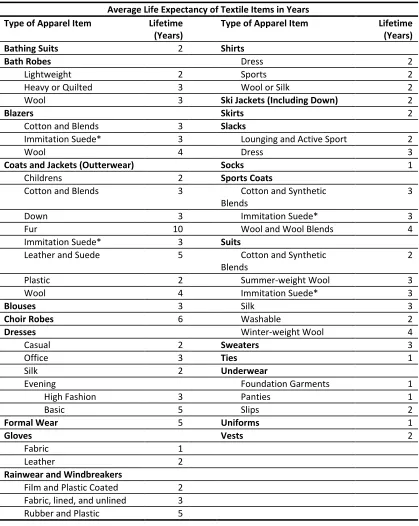
Table 1. Average Life Expectancy of Textile Items in Years (IFI, 1988)
Average Life Expectancy of Textile Items in Years
Type of Apparel Item Lifetime
(Years)
Type of Apparel Item Lifetime
(Years)
Bathing Suits 2 Shirts
Bath Robes Dress 2
Lightweight 2 Sports 2
Heavy or Quilted 3 Wool or Silk 2
Wool 3 Ski Jackets (Including Down) 2
Blazers Skirts 2
Cotton and Blends 3 Slacks
Immitation Suede* 3 Lounging and Active Sport 2
Wool 4 Dress 3
Coats and Jackets (Outterwear) Socks 1
Childrens 2 Sports Coats
Cotton and Blends 3 Cotton and Synthetic
Blends
3
Down 3 Immitation Suede* 3
Fur 10 Wool and Wool Blends 4
Immitation Suede* 3 Suits
Leather and Suede 5 Cotton and Synthetic
Blends
2
Plastic 2 Summer-weight Wool 3
Wool 4 Immitation Suede* 3
Blouses 3 Silk 3
Choir Robes 6 Washable 2
Dresses Winter-weight Wool 4
Casual 2 Sweaters 3
Office 3 Ties 1
Silk 2 Underwear
Evening Foundation Garments 1
High Fashion 3 Panties 1
Basic 5 Slips 2
Formal Wear 5 Uniforms 1
Gloves Vests 2
Fabric 1
Leather 2
Rainwear and Windbreakers
Film and Plastic Coated 2 Fabric, lined, and unlined 3
2.1.4 Levels of Sustainability
All companies who employ sustainable strategies obtain different levels of sustainability and experience different issues. Understanding the level obtained can highlight areas of possible improvement and adjustments to strategies. Sustainability is a key competency for textile firms as enterprises stand to reduce risk, decrease costs, increase profit, build reputation, increase future growth trajectory, create innovative products, and create disruptive change (Hart, Milstein, & Caggiano, 2003). Baumgartner and Ebner (2010) explored different profiles and maturity levels of sustainability efforts in corporations so as to highlight disparities between intentions and actual implementation. Sustainability in product development warrants a fundamental change in business
strategies as well as choices made at the conceptualization stage (Huang et al., (2009). Processes and technologies can become as environmentally, socially, and economically viable as possible, however, the value, benefits, and sustainability of the actual product must first be taken into consideration and must be carried out through the entire product cycle (Cooper, 2005).
and more focused on the marketing and public relations opportunities which can increase the value of the brand. Furthermore, Albino, Balice, and Dangelico (2009) stated three factors of motivation for sustainably driven companies – legitimacy, competitiveness, and social responsibility (Albino, Balice, and Dangelico, 2009). These factors of motivation coupled with strategies for implementation can create a more sustainable company.
The extroverted strategy was divided into two groups; conventional and transformative (Baumgartner & Ebner, 2010). The conventional strategy was based on marketing whereas the transformative approach sought to actually change market perceptions by driving the ideals of sustainability, which proved more successful than conventional methods. The conservative strategy was explained as a tactic centered on cost efficiency. Corporations who adopt this strategy may have to make initial capital
The Sustainable Value Model (Figure 1) by Hart , Milstein, and Caggiano (2003) exemplified each stage of progression as a company develops their sustainable profile and is comparable to Baumgartner and Ebner’s (2010) sustainability profiles. The Sustainable Value Model represents the characteristics of attaining sustainability and the positive outcomes for a corporation. Figure 1 depicts the interrelated stages of adoption, from internal to external, today to tomorrow, explaining the strategies, drivers, and benefits during each stage.
The first stage of Sustainable Value, internal/today, is driven by the need to reduce pollution, consumption, and waste. A strategy of pollution prevention through the
minimization of waste and emissions from operations is normally implemented due to possible cost and risk reductions to the company. The main purpose of internal/today is to save money. The second stage, external/today, is driven by transparency, connectivity, and civil society. The strategy is to integrate stakeholder views into business processes and to build reputation and legitimacy through product stewardship. The purpose of this stage is to be perceived by consumers as sustainable. These two stages of the Sustainable Value Model, internal/today and external/today, can be implemented into a company’s
sustainability strategy immediately, whereas the internal/tomorrow and external/tomorrow
stages require more complex, holistic adoption. (Hart, Milstein, & Caggiano 2003)
During the external/tomorrow stage, a company is driven by external factors such as population, poverty, and inequality (Hart, Milstein, & Caggiano 2003). A shared vision and mapped plan is developed during this stage to become a company which is socially as well as environmentally and economically sustainable. During the final stage of the Sustainability Value Model, the internal/tomorrow stage, business strategies are innovated and
2.1.5 Obstacles of Sustainable Product Development
Uncertainties regarding the material production, actual product lifecycle, safety, and performance create difficulties in the selection process of sustainable materials, but all are important aspects to take into consideration (Baumgartner & Korhonen, 2010). Among the many obstacles that must be overcome when creating a sustainable product, researchers suggested specific reasons for product and process failure created by upper management and design (Baumgartner & Korhonen, 2010). Multidimensional thought and collaboration were considered essential to the employment of sustainable products. Companies who lacked communication and did not treat sustainability as an interrelated cycle or web of activities lost opportunities for creating sustainable products. Baumgartner and Korhonen (2010) investigated the reasons for failed and slow sustainable development and contribute it largely to the idea of reductionism. Reductionism reflects the idea that all systems are cause-and-effect chains, suggesting that systems must be addressed as a whole rather than by each singular problem. Baumgartner and Korhonen (2010) stated, “Reductionism leads to situations where exiting problems are handled within a certain system while new problems are created elsewhere in this system or in its subsystem or in the future of the same system” (p. 72). Firms which address problems as single issues rather than as a part of a system miss the opportunity for transformation and innovation. Verona (1999) stated that strategic thinking involves using resources to enhance performance, cut out
2.2 Digital Archiving
Implementing systems which facilitate sustainable design decisions is vital to the product development process. Digital archiving was defined by Hodge (2000) as the long-term storage, preservation and access to information that is born digital, created and disseminated primarily in electronic form, or for which the digital form is considered to be the primary archive. A digital archiving system can assist textile and apparel product development by creating a repository of design files which designers can access for
inspiration or product information (Glock & Kunz, 2005). As well, digital archiving protects, preserves, and stores designs and intellectual property which are critical assets to textile companies. Through digital archiving of fabric samples, internet access to assets are
unbound by geographic location, time zone, or language and are available for use by textile companies – facilitating and expediting communication and collaboration within companies and to clients. As cited in Glock and Kunz (2005), Crawford made the following statement in reference to CAD systems and archiving designs:
By leveraging an archive of images stored in a central repository, our designers can jump-start the design process using digitally prepared motifs…We have reduced redundant work efforts in scanning, color reduction, and textile art cleanup…By integrating our CAD system to an apparel specifications solution, we have been able to reduce the time an apparel designer needs to have a sketch rendered on CAD. (p. 196)
of records, remote access to the database, ability to access and upload information through email, and storage of information on a secure server. The main topics regarding digital information security are: availability – maintaining that data is accessible in good time; integrity – ensuring that data is complete and accurate; and confidentiality – safeguarding that information is only available to authorized users (Addabbo and Annizuiato, 2006). Furthermore, advantages regarding digital archiving were noted by Abelson (1995), including: compactness, portability, durability, rapid accessing of records, minimal storage space required, and ease of information transfer. Various studies have been devoted to the topic of the digital archiving of data however, very little is documented regarding the digital archiving of fabric images. Systems for digital archiving and the use of metadata in digital archiving are topics of further research.
2.2.1 Metadata
Developing metadata is essential to the organization and preservation of data in the TDL System. Metadata is essentially data about other data (Hammer, 1999). Clyde (2002) explained that the purpose of metadata is to describe and index resources in a website in the same manner that cataloging is used in traditional libraries – to have coded or
company (Clyde, 2002). “Metadata provides an all-encompassing data model and a
description of how physical databases and applications relate to that model. Metadata tells you where you have come from, where you have been, how and when you got there, what you did on the way, and what would happen if something changed” (Hammer, 1999, p. 32).
Metadata inputs vary for differing projects and companies, depending on the needs, subject matter, resources, and target market (Hodge, 2000). Though some metadata formats exist, metadata should describe data specific to the company, should be consistent, and should be developed during the creation stage of data or products so as to incorporate the consistent metadata throughout other processes (Hodge, 2000). “Many project
managers acknowledged that the best practice would be to create the metadata at the object creation stage, or to create the metadata in stages, with the metadata provided at creation augmented by additional elements during the cataloging/identification stage” (Hodge, 2000, Section 4.1, para. 5)
2.2.2 Digital Image Capture & Image Management
Digital image capture and image management is an important part of digital archiving. Digital images are electronic pictures taken of a scene or scanned from
documents (for example: photographs, printed texts, artwork, textiles) in which the image is mapped as a grid of dots or picture elements (Cornell University Library, 2003). The pixels are represented by codes or bits which can then be reduced to a mathematical
assets helps to preserve originals and allows access to assets beyond the physical document or product (Cornell University Library, 2003).
A variety of tools can capture digital images, including a digital camera and a scanner. A study conducted by Cornell University Library (2003) stated that the method in which images are captured should be determined with regard to the product and methods should stay consistent. In addition, the environment in which the images are captured should be controlled (Cornell University Library, 2003). Consistency and controlled
environments are important when conducting digital image capture as disparities between real products/documents and digitized images can be vast, depending on the circumstances in which the image was taken. Sachs (1999) stated that the process of making images appear the same between the real image and between two or more computers can be complex and expensive. Some important issues to consider when managing color in digitized images are the hue, saturation, brightness, luminance, and chrominance (Sachs, 1999). Sachs also noted that when viewing digital images, the image viewing conditions should be standardized in addition to the image capturing conditions. Calibrating computers by adjusting the brightness control, the gamma curve, the white point, and using a standard set of phosphors can create almost identical images (Sachs, 1999).
management system (CMS) could be implemented to decrease issues with color perception (Cornell University Library, 2003).
Furthermore, images can differ depending on the program and the file format used to view the digital images. Some factors affecting the file format used are: bit depths supported, compression techniques supported, color management, proprietary versus standard file format, web browser capabilities, user computer capabilities, and metadata capability (Cornell University Library, 2003). The standard file formats used are TIFF, GIF, and JPEG as these can be viewed in most platforms (Cornell University Library, 2003). Though image management is a complex process and continued research is needed to ensure consistent color and image perception, following these recommendations may create less disparity between digital images, differing computers, and real documents.
2.2.3 Digital Archiving Systems
2.2.3.1 Canto Cumulus
Canto Cumulus is a digital asset management company that creates software that assists in the organization, search, and sharing of any type of digital files. Started in 1990, the company seeks to improve productivity and workflow, control and standardize
branding, track usage of assets, and maximize benefits from intellectual property (Canto Cumulus, 2012). Canto Cumulus digital asset management capabilities include the ability to share specific information and files with clients, crop and edit photos, remote access to files, cross platform support, and security. “Canto Cumulus provides easy, permissions-controlled access for users on both sides of the file sharing equation” (Canto Cumulus, 2012, Partner Portal Two-way Sharing section, para. 4). Furthermore, Canto Cumulus offers technical services and business development services which include installation,
configuration, custom development, training, consulting and needs assessment, project management, and change management. Canto Cumulus’s software is configured
specifically for each individual company’s needs and employees are trained on how to use the software. Regular system updates allow Canto Cumulus to be relevant with changing needs. (Canto Cumulus, 2012)
2.2.3.2 LUNA Imaging, Inc.
LUNA Imaging, Inc., a specialist in digital imaging, provides availability of
networks), flexible, efficient, and cross-disciplinary. The program consists of four different components, LUNA, Luna Insight, Insight Studio, and Luna Inscribe. The four parts together allow users to quickly and easily build collections of images and data and further catalogue the images, linking them with data records. With LUNA, users can browse categories, perform simple keyword searches as well as more complex searches, can organize their results as needed (LUNA Imaging, 2010). LUNA has been primarily used in archiving for institutions, such as the North Carolina State University Archive Photograph Collection. In a comparison of LUNA Imaging with other digital archiving software programs, Oblinger (2005) stated, “[LUNA] has well developed image and multimedia indexing and viewing functions but is not a full-fledged DAM (digital asset management) product. [LUNA] does not currently accept Word documents or datasets, for example” (p.20). Although LUNA was perceived not to be a full-fledged DAM product, it was still implemented by NC State
University as the other capabilities of the program were suitable for their archiving needs. Differing capabilities of archiving programs could benefit certain institutions or enterprises while being a detriment to others, depending on the needs of the institution or enterprise.
2.2.3.3 Mosaic
password protected and allows user groups and permissions, it is browser based and files are not stored on an internal repository (Mosaic, n.d.). Mosaic can assist in brand
management, marketing management, media management, asset management, and for general photography needs. A customer stated, “[Mosaic] has also proved to be very easy to use. Internally and across our various suppliers we are probably saving ourselves at least five hours of image search time per week” (Mosaic, n.d., Clients section, para. Genesis Energy). By saving time, companies could also save money and become more sustainable – another value of implementing a digital archiving system.
2.2.3.4 Microsoft Sharepoint
Microsoft Sharepoint is a Microsoft application which assists in group collaboration. Within Microsoft Sharepoint, a company can create web sites to share information, search images, manage documents, and publish reports (Sharepoint, 2011). The user builds the site and inputs all content with no outside programming, management, or configuration
2.2.3.5 SeeFile
SeeFile is a browser based digital image archiving system. “The main advantage of SeeFile is that it updates continuously from your file system, without requiring uploads at your end. SeeFile lets you make specified areas visible to one or more colleagues, each with their own username and password. The main method of accessing SeeFile is a fixed IP location or URL, which can be linked to your website wherever it is located” (SeeFile, 2010, Product section, para. 2). SeeFile allows uploads and downloads, approvals, previews of images, private folders, and branding. ThoughSeeFileis password protected, it is browser based and files are not stored on an internal repository (SeeFile, 2012). A review of Seefile found the program to have an easy learning curve and smart filters for searching (PR Newswire, 2011). A client of SeeFile stated, “[SeeFile is] a phenomenal way to handle a range of client communication issues” (Seefile, 2010, Homepage section)
2.2.3.6 Textronics
(Textronics, 2010, Design Management section, para. 1). Because Textronic is specific to textile and apparel archiving, searching categories are preset to color, design type, fabric style, design style, fabric type, weave, yarn type, season, month, and number of colors (Textronics, 2010). Furthermore, Textronics has CAD and 3D design capabilities which can make viewing fabrics and products easier (Textronics, 2010). This capabilities differentiates Textronics from other digital archiving programs.
2.3 Systems Implementation
conversions, 5) multiple copies of the software and database, 6) software training, and 7) through testing.
Barry (2010) stated, “It can take six to 12 months after implementation to feel comfortable with a new system; training can help shorten the learning curve” (p. 46). Pilot testing can assist employee adoption and training regarding a system. Van Teijlingen and Hundley (2001) stated that conducting pilot testing may reduce the possibility that a system could fail. De Vaus (1993, p. 54) found the following were important reasons for conducting pilot studies when implementing systems:
Developing and testing adequacy of research instruments Assessing the feasibility of a full scale study
Designing a research protocol
Assessing whether the research protocol is realistic and workable Establishing whether the sampling frame and technique are effective Assessing the likely success of proposed recruitment approaches
Identifying logistical problems which might occur using proposed methods Estimating variability in outcomes to help determining sample size
Collecting preliminary data
Determining what resources (finance, staff) are needed for a planned study Assessing the proposed data analysis techniques to uncover potential problems Developing a research question and research plan
Training a researcher in as many elements of the research process as possible Convincing funding bodies that the research team is competent and
knowledgeable
Convincing funding bodies and stake holders that the main study is feasible and worth funding
qualitative data should be gathered through interviews and survey methodology before pilot testing the system. Though system implementation is a complex process, awareness and adherence to the stated steps and suggestions may assist in successful systems.
2.4 Summary
Chapter 3
3
Methodology
A case study methodology was carried out in order to fulfill the objectives of the research. The following sections explain the methods used in order to develop, pilot test, and evaluate a Textile Digital Library System.
3.1 Research Objectives
The objective of this research was to create a system for the management of fabric samples at a vertical textile mill in order to facilitate the search, view, and retrieval of woven fabrics and provide a guide for implementation of the system. Termed the Textile Digital Library System (TDL System), the sub-objectives were grouped into three parts: development, pilot testing, and evaluation. In order to support the main research objective, the following sub-objectives were established:
Development (Phase 1): Determination of the TDL System Requirements
SO1: Identify the needs for the Textile Digital Library System (TDL System)
o SO1A: Identify the current process of fabric sample organization
o SO1B: Identify search topics and corresponding metadata which will assist
product developers in browsing fabric designs.
Pilot Testing (Phase 2): Initial Testing of Digital Archiving Programs and the TDL System
SO2: Pilot test the digital archiving programs to determine system capabilities and
limitations.
o SO2A: Review existing digital archiving programs and supporting
software/hardware which fulfill SO1.
o SO2B: Determine initial program requirements for the TDL System
o SO2C: Identify and sample three different digital archiving systems based on
observation and secondary research.
Evaluation (Phase 3):Refinement and Evaluation of the TDL System
SO3: Evaluate the digital archiving programsto determine which program is best for the
TDL System.
o SO3A: Develop an evaluation tool to rate the different digital archiving systems.
o SO3B: Determine which digital archiving program best suits the needs of
Company X.
3.2 Research Design
implemented. Case study research was defined by Yin (as cited in Woodside, 2010, p. 16) as an empirical inquiry that investigates a contemporary phenomenon within its real life context. This type of research is useful because it allows a deep understanding of processes or thinking which may not be attainable only through surveys or interviews (Woodside, 2010). Eisenhardt (1989) stated that case study research normally consists of combining analysis of archives, interview, questionnaires, and observations and the data gathered may be quantitative or qualitative. Woodside (2010) suggested that in order to obtain a deep understanding of processes or thinking, one should observe the environment directly, ask questions of participants about operational data, and analyze written documents and natural sites. Eisenhardt (1989) noted that case study research involves the constant iteration of backwards and forward steps, even if the researcher is focusing on a single part of the process at one time. Case study research should build a theory which can result in new insights and be can be further tested in future research projects (Eisenhardt, 1989)
responses and the Functional Requirement Guide – an evaluation tool created by the PI to help determine the best digital archiving system for Company X.
The methodology was composed of three phases; (1) Determination of the Textile Digital Library System Requirements, (2), and (3) Refinement of the TDL System and
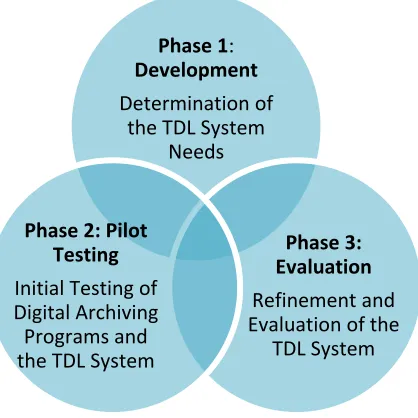
Evaluation. During Phase 1, a case study was conducted through direct observation of tasks and processes in order to determine the needs and requirements of Company X and its clients for a TDL System. During Phase 2, a review of existing digital archive systems was conducted to determine current programs which could be used for the TDL System and three of those systems were pilot tested. Information regarding each digital archiving software system was gathered through internet queries, informal interviews with personnel of Company X, and informal interviews with industry professionals. Finally, in Phase 3, the PI evaluated three different digital archiving systems in order to suggest a program for use by Company X’s TDL System. During Phase 3, the PI created the Functional Requirement Guide to evaluate each program. Figure 2 depicts the three phases of the methodology;
Figure 2. Research Design
Preliminary ideas were collected in Phase 1 through exploratory and observational research by means of a Case Study at Location A, a vertical weaving plant, and Location B, a cut and sew factory. During this phase, the PI conducted informal interviews while
observing managers and personnel of the spinning, weaving, dying, finishing, printing, sampling, quality control, inspection, and cut and sew departments of the mill. A survey was also developed during this period to gauge the needs and perceived important search topics of Company X employees, regarding a TDL System (See Appendix A for Survey Instrument). During Phase 2, the PI pilot tested the programs to gain an understanding of the capabilities and limitations of each system and to determine which program was the best for the TDL System. Finally in Phase 3, the requirements for the system were further refined and the Functional Requirement Guide was created. The Functional Requirement
Phase 1:
Development
Determination of the TDL System
Needs
Phase 3: Evaluation
Refinement and Evaluation of the
TDL System
Phase 2: Pilot Testing
Guide was a tool created by the PI to gauge which digital archiving program was best for the TDL System. Information was gathered pertaining to previously implemented digital
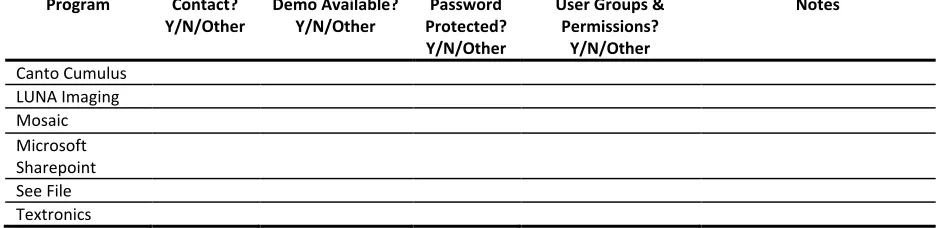
archiving systems of other organizations. Next, six digital archiving programs were studied to determine which would fulfill the needs of Company X’s Textile Digital Library. Programs were weighed according to the Functional Requirements Guide. Final weighted averages of each program allowed the PI to recommend a program most suitable for the TDL System.
3.3 Phase 1 Development: Determination of Internal and External need of the TDL System
The PI conducted an on-site case study of Company X in order to determine the internal needs which included an overview of the departments within the company related to the TDL System, observation and analysis of the current archival system, and an
understanding of the terminology related to the classification of woven fabrics. The case study analysis lasted for a period of seven days, five of which were spent at the Weaving Plant (Location A) and two at the Cut and Sew Plant (Location B). A total of 11 different divisions were observed. The divisions observed the Weaving Plant were: sampling, spinning, weaving, dyeing and finishing, quality control, and inspections. The divisions observed in the Cut and Sew Plant were: product development, cutting, sewing, finishing, and quality control. An assessment of the needs of Company X for a TDL System was
information about external, client needs for the TDL System. (See Appendix A for the Survey Instrument)
3.3.1 Observational Tasks
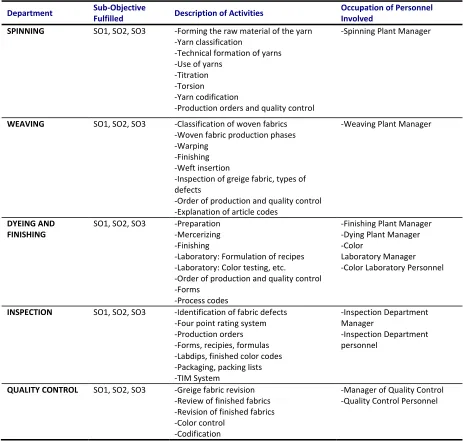
The following tasks were assumed by the PI during Phase 1 in order to obtain a general understanding of mill processes and to identify areas of the Company X which could affect and/or be benefited by a TDL System. As well, observation of departments and processes helped shape the Functional Requirement Guide.
3.3.1.1 Task 1: Observation of Weaving Plant Production Processes
Table 2. Task 1 - Weaving Plant Observation
Department Sub-Objective
Fulfilled Description of Activities
Occupation of Personnel Involved
SPINNING SO1, SO2, SO3 -Forming the raw material of the yarn -Yarn classification
-Technical formation of yarns -Use of yarns
-Titration -Torsion
-Yarn codification
-Production orders and quality control
-Spinning Plant Manager
WEAVING SO1, SO2, SO3 -Classification of woven fabrics -Woven fabric production phases -Warping
-Finishing -Weft insertion
-Inspection of greige fabric, types of defects
-Order of production and quality control -Explanation of article codes
-Weaving Plant Manager
DYEING AND FINISHING
SO1, SO2, SO3 -Preparation -Mercerizing -Finishing
-Laboratory: Formulation of recipes -Laboratory: Color testing, etc. -Order of production and quality control -Forms
-Process codes
-Finishing Plant Manager -Dying Plant Manager -Color
Laboratory Manager -Color Laboratory Personnel
INSPECTION SO1, SO2, SO3 -Identification of fabric defects -Four point rating system -Production orders -Forms, recipies, formulas -Labdips, finished color codes -Packaging, packing lists -TIM System
-Inspection Department Manager
-Inspection Department personnel
QUALITY CONTROL SO1, SO2, SO3 -Greige fabric revision -Review of finished fabrics -Revision of finished fabrics -Color control
-Codification
3.3.1.2 Task 2: Review of Existing Fabric Archival System
The objective of reviewing the existing fabric archival system in the Sample Department was to obtain an understanding of the 1) fabric sample organization, 2) the work process flow, 3) the activities of employees, and 4) the time spent locating samples. The purpose was to provide a basic understanding of current processes and to determine processes which should be improved, changed, omitted, or included in the TDL System. Table 3 explains the different tasks observed while reviewing the Sample Department.
Table 3. Task 2 - Review of Existing Fabric System
Department Description of Activities Occupation of Personnel Involved
SAMPLING
-Sample room observation/tour -Fabric analysis
-CAD Sample Analysis
-Handloom Sample Process Observation -Codifications and notices
-Order tracking
-Sample Department Manager -CAD Designer
-Sample Department Personnel -Sample Department Manager -Woven Textile Designer
3.3.1.3 Task 3: Review of Current Fabric Classification and Numerical Coding
System
coding relates to sample organization, 3) to identify the different designs available, and 4) to distinguish the extent of design information provided by the codes. The PI studied the fabric codification model located in Appendix A.
3.3.1.4 Task 4: Cut and Sew Production Process Observation