SMART CARD APPLICATION DESIGN
by
John S m e h , B.Bus(Hons) V U T , BSci V U T , Dip.Sci. V U T
a dissertation submitted to the
Faculty of Business and L a w School of Information Systems
VICTORIA UNIVERSITY
in partial fulfilment of the requirementsfor the degree of
Master of Business Research
Written under the direction of
Tas Adam
FTS THESIS
006 SME
30001007645296
Smeh, John
ABSTRACT OF THE THESIS
SMART CARD APPLICATION DESIGN
by
John S m e h , B.Bus(Hons) V U T , B.Sci V U T , Dip.Sci. V U T
This study investigated sociotechnical criteria in the design and specification processes of smart card based projects through a case study. The adoption of the innovations in the case study was investigated.
The study consisted of three phases: analysis, design and implementation. These were in relation to sociotechnical design criteria and its incorporation into a design
methodology.
Results from this study indicated that the adoption of the innovations was largely based on the design and specification processes. A formal model for these processes
w a s constructed based on the case study.
A recommendation for ongoing research into the refinement of the model presented is suggested. A n extended research project m a y focus on the model, or on one specific
TABLE OF CONTENTS
Page
ACKNOWLEDGMENTS iv
PREFACE v
CHAPTER 1 INTRODUCTION 1
CHAPTER 2 LITERATURE REVIEW 5
CHAPTER 3 METHODOLOGY AND METHODS 23
CHAPTER 4 DATA PRESENTATION AND ANALYSIS 29
CHAPTER 5 CONCLUSIONS 79
A C K N O W L E D G M E N T S
M a n y people contributed substantively to this study. They include m y parents and m y sister w h o supported m e . Tas A d a m has served for years as a mentor, as well as serving as a formal supervisor. I a m m u c h in the debt to the Department of Information Systems of Victoria University, for m a n y acts of kindness, sound advice, and substantive help throughout m y years of association with V U . T h e Victorian Education Foundation, for its scholarship supporting this research is greatly appreciated.
PREFACE
T h e primary purposes of this study were to provide a basis for the generation of a model of the smart card design process incorporating sociotechnical design criteria.
The development of a design methodology is an essential step to increase business acceptance and understanding of the technology.
The study is reported in five chapters. Chapter 1 presents an introduction to the problem, beginning with an analysis of the past and current states of smart card and related technologies. T h e problem is stated in general and then in specific terms.
Chapter 2 is a formal review of the literature of smart card technology and sociotechnical methodologies.
Chapter 3 describes the research design, which included the use of case study with a group of collaborating organisations. T h e case study consisted of several smart card based projects and their design and specification processes.
Chapter 4 presents analysis of the data obtained through the case study. Analysis addressed the identification of phases of the concept and specification processes. Descriptive analysis of the sociotechnical objectives and the innovation adoption perceptions, and appropriate inferential analyses are presented.
CHAPTER 1 INTRODUCTION
A smart card is a credit card sized plastic card that contains memory and a
microprocessor beneath (typically) contact pads. This circuit stores information in an electronic structure that can easily, securely and accurately be retrieved by smart card equipped terminals. Following the introduction of smart cards in banking and
telecommunications, further development has been ongoing in public transport, medical services and retail shopping.
The growth in smart cards for financial transactions is being coupled by the use of the memory capabilities of the cards for data storage in areas such as the health sector (Zoreda, J.L. & Oton, J.M. 1994, p. 145).
The state of smart card development would indicate a technology looking for a purpose. It is a product that needs diffusion into a larger market. A single purpose smart card has very little attraction to a user.
A single card may hold several functions with different purposes, protection stipulations, and complexity. It is mentioned by Zoreda et al.(1994, pl30) that the multipurpose
'Unless we issue as many cards as applications that our user requires
(thus producing packs of cards like the current ones), we must agree
with other personalizers on crucial details concerning data handling and
storage. Even worse, the applications need not materialize at the same
time or in the same place; in a multipurpose card, the eventual presence
of unknown applications must be foreseen from the very first issue of the
card containing perhaps just one application.'
The multipurpose smart card can also be described as a universal smart card. The only difference is that the term universal implies a much wider use than a few applications.
A universal smart card can be in theory used on any smart card equipped device with a reasonable expectation of successful interaction.
Smart card (intelligent card) systems evolved in the 1970s and progressed through the 1980s, however, their globalisation and potential has not yet been achieved. In some countries, France for example, they have been accepted and implemented to a very high degree, while in others the technology is just emerging. Research into the sociotechnical and proprietary issues has highlighted some of the relevant factors that account for the slow proliferation of such systems.
The research question investigated was: How has the design of smart card based systems influenced their adoption?
The null hypothesis that was tested: H0: There is no impact to the adoption of smart
A n innovation can be an idea, practice or object that is perceived as n e w (Rogers, E.M.
1995 p.l 1). For this research the innovation considered is the smart card. Adoption is a decision to make full use of an innovation as the best course of action available (Rogers, E.M. 1995 p.21). Diffusion is the method by which an innovation is conveyed over time among the members of a social system (Rogers, E.M. 1995 p.5). The rate of adoption is typically measured by the length of time required for a social system to adopt an innovation (Rogers, E.M. 1995 p.23).
Rogers (1995 p.7) makes an important comment regarding innovation diffusion, which is very much valid in the case of smart cards:
'Many technologists believe that advantageous innovations will sell
themselves, that the obvious benefits of a new idea will be widely
realized by potential adopters, and that the innovation will therefore
diffuse rapidly. Seldom is this the case. Most innovations, in fact, diffuse
at a disappointingly slow rate.'
To understand the innovation, the smart card, and its adoption, this research sought to understand the design issues and innovation systems involved.
Sociotechnical Systems Theory (STS) is an open systems approach that endeavours to
This research presents a modelling approach, the waterfall model, which w a s applied to smart card systems in a case study. The major design phases adapted from the waterfall model include concept, specification, design and implementation.
The case study used in this research is Australian based. This geographic limitation does not preclude its validity worldwide due to the globalisation of business and technology. The innovation is actually limited largely by overseas conditions as the smart card chips are all manufactured outside of Australia. So the same relative technical issues are valid worldwide as for Australia.
The size of the case study with the participating organisations does limit result analysis and possible conclusions. The size of the case study was limited due to the number of organisations in the smart card industry in Australia at the time that were willing to participate. Thus any statistical significance is negated and the results should be viewed with a potential towards a form of future research and theory generation.
CHAPTER 2 LITERATURE REVIEW
The smart card revolution has been underway in France and other European countries for more than 10 years (Fancher, 1996 p.25). The U.S. along with the rest of the world has been lagging. One of the major instigators of the deployment of smart cards has been telecommunications policy as suggested by Fancher (1996 p.25):
'In the U.S., where telephone calls are cheap and it is a simple matter to
attach a magnetic-stripe reader to a telephone line, the fraud-reduction
aspects of smart cards are not necessarily worth the extra expense.
Instead merchants can dial up a central database to make sure a card is
valid before completing a transaction. In Europe, where calls are
generally more expensive and connecting modem-equipped devices to
phone lines is more difficult, security was a significant driving force
behind smart card introduction.'
This security requirement is a major benefit in favour of the smart card. Smart cards contain a number of hardware and software security features (Zoreda et al. 1994 p.39). These features are based on data access control and the use of encryption techniques for software, and by the IC (Integrated Circuit) during manufacture for hardware.
Since smart cards provide both software and hardware security their use is set to rise with the evolution of new IC technology being able to create smaller and faster circuitry.
Another motivation 'for smart-card introduction in the U.S. today is the possibility of multiple uses for the same card' (Fancher, 1996 p.25). It is possible, so far only in
medical record carrier and as a cash substitute. T h e possibilities are only really limited by industry and end user acceptance for these electronic media.
The development of smart card applications has traditionally been a lengthy and difficult process (Chen, Z. 2000 p.7). The smart cards are standardised in size, shape and
communications protocols. The internal workings and software interfaces however have not been standardised.
The Card Standards
The standardisation of plastic cards is handled by the International Organisation for Standardisation (ISO). The various ISO standards relating to plastic cards cover everything from the placement of contacts on the face of a smart card (ISO 7816-2) so that any card and reader will be able to interface, to the placement of embossed characters on plastic cards (ISO 7811-1 1995).
Unfortunately, 'standardisation in the card world was a consequence of market trends rather than a previously agreed-on framework' (Zoreda et al. 1994 p.3). The ISO 7816
series of standards, which are constantly in a state of flux, are devoted to chip cards. It is rare to find cards and applications that completely comply with the ISO standards.
Presently several consortiums are developing sub-standards, for example the EMV standard from Europay, Visa, and MasterCard which extends parts of the ISO 7816 standards.
information is stored and retrieved. It is an interesting feature that often plastic cards will share the same features, for instance a smart card m a y also contain a magnetic stripe
(Zoreda etal. 1994 p.3).
M a g n e t i c Stripe C a r d s
I S O 7811 contains a description of the position, size and other characteristics 'of a 0.5-inch magnetic stripe located either in the front or rear surface of the card' (Zoreda et al.
1994 p.3).
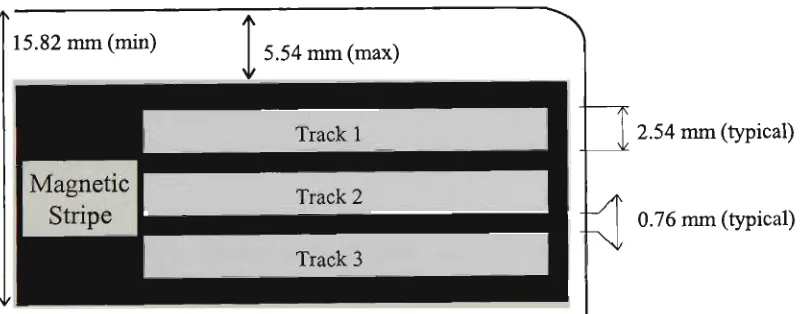
A magnetic stripe in cards is divided into three longitudinal parallel tracks (Figure 2.1). T h e first and second tracks hold read-only information and the third track m a y be written to.
/tl
V
15.82 m m (min)
K ^
5.54 m m (max) t
Track 1
r^^^^^^ii ^H i^^^B HHHi^^HI
Magnetic I Track 2 | L B ^ ^ ^ ^ ^ H M ^ ^ H H H
Track 3
• • • • • i ^ B H l
2.54 m m (typical)
0.76 mm (typical)
Figure 2.1 Location and dimensions of magnetic stripe track.
It is relatively easy to read and alter a magnetic stripe (Zoreda et al. 1994 p.4).
Track one of the magnetic stripe is reserved for the International Air Transportation Association (LATA) for automating ticketing applications. It has a 210-bpi (bits per inch) storage density, which makes room for 79 alphanumeric characters (Zoreda et al. 1994 p.3).
Track two was proposed by the American Bankers Association (ABA) to permit on-line
financial transactions. It has a storage density of 75-bpi, which results in a 40 numeric characters capacity (Zoreda et al. 1994 p.4).
Track three is used for financial transactions. It has a storage density of 210-bpi, and may only contain up to 107 digits. It is rewritten every time the track is used (Zoreda et al. 1994 p.4).
Optical Cards
Optical cards, also known as laser cards, are made of 'two layers: one very thin, highly reflective layer covering a second, nonreflective layer (or the other way round: a
nonreflective layer on a highly reflective one)' (Zoreda et al 1994 p.4). These layers are then covered by transparent protective plastic layers.
C h i p C a r d s
The term chip card is often used to describe a circuit containing card. This type of card always contains some amount of erasable or nonerasable memory, and possibly a
microprocessor (Zoreda et al. 1994 p.5).
There exist two families amongst the chip cards:
• Memory Cards Without A Microprocessor.
Typically they hold less than 1 Kilobyte of nonrewritable memory. They cannot be
reprogrammed and execute preprogrammed instructions. A typical application would
be prepaid phone cards.
• Smart Cards With A Microprocessor.
In practice a smart card is a microcomputer lacking a power supply, display and
keyboard. The card typically has several kilobytes of memory (usually RAM, ROM and
EEPROM). All data access is via the microprocessor. Some modern cards have maths
coprocessors to handle cryptographic algorithms.
The main advantage of a smart card is its security. Their microprocessors are very useful (Rhee, M.Y. 1994 p.449):
'... not only for data storage, but for information processing as well. They store, process, and control internal cryptographic algorithms, and
are thus eminently suitable for establishing identity, and enhancing
T h e security aspect can be a major emphasis in the selling of smart card technology.
Cards used for security and financial purposes incorporate many very different security measures, each of which adds to the difficulty of using a card fraudulently or producing a counterfeit card (Hendry, M. 1997 p.9).
Design Criteria - Standards
During the evolution of smart cards a number of standards and specifications have been defined to ensure that the cards, card acceptance devices, and applications can work together (Chen, Z. 2000 p.24). The following section lists some of the prominent standards and specifications.
ISO 7816 Standards
Published by the International Organization for Standardization (ISO), ISO 7816
Integrated Circuit Cards with Contacts, describes 'the locations of the contacts' (Dreifus, H. & Monk, J.T. 1998 p.32) and more. It comprises a number of sections that define the physical characteristics, layout, data access techniques, data storage techniques, numbering systems, and registration procedures (Dreifus, H. et al 1998 p.32).
• Part 1 - physical characteristics
• Part 2 - dimension and location of contacts
• Part 3 - electronic signals and transmission protocols
• Part 4 - interindustry commands for interchange
• Part 6 - interindustry data elements
• Part 7 - interindustry commands for SCQL
GSM
The telecommunications industry currently deploys the majority of smart cards for use in GSM (Global System for Mobile Communications) (Dreifus, H. et al 1998 p.5). A GSM
phone has a subscriber identity module (SIM), which is a smart card.
The GSM as defined by the European Telecommunications Standards Institute (ETSI) is
a specification for a an international terrestrial mobile telephone system (Chen, Z. 2000 p.25). There are several relevant GSM standards:
• GSM 11.11- specification of the SIM-mobile equipment interface
• GSM 11.14 - specification of the SIM application toolkit for the SIM-mobile equipment interface
• GSM 03.48 - security mechanisms for the SIM application toolkit
• GSM 03.19 - SIM API (Application Programming Interface) for the Java Card Platform
EMV
Europay, MasterCard and Visa defined a specification based on ISO 7816 with proprietary features to meet the needs of the financial industry:
• E M V '96 Integrated Circuit Card Terminal Specification
• EMV '96 Integrated Circuit Card Application Specification
Open Platform
The Open Platform defines card and terminal specifications as well as development
tools. It works across different cards and operating systems but standardises the process for back-end systems such as personalisation, key management and application loading. It allows smart card issuers to select between operating systems and application development tools while making available a core security and card management technology. The Open Platform specifications are owned and managed by the GlobalPlatform organisation.
The Open Platform specifications were initially developed by Visa and now have been transferred to GlobalPlatform (Chen, Z. 2000 p.26).
OpenCard Framework
The OpenCard Framework (OCF) architectural model 'makes a distinction between
applications and service developers on one hand and card and terminal providers on the other' (Hansmann, U, Nicklous, M.S., Schack, T. & Seliger, F. 2000 p.84). The aim 'is to reduce dependence on each of these parties as well as dependence on the platform providers' (Chen, Z. 2000 p.26).
Since the first Network Computers had smart card readers, 'the idea of a Java
provide a standard interface for interacting with smart card readers and applications in the card.
PC/SC
The PC/SC Workgroup is an industry consortium to define a general purpose architecture for smart cards on personal computers.
OCF and PC/SC are similar in concept. OCF can access a card reader device on a Windows platform through a PC/SC resource manager (Chen, Z. 2000 p.26).
The ISO 7816 group of standards provide a framework for the other standards. For
example, how the data is arranged and how a file is retrieved. The other standards are at the application level. For example, what format the data is in or which application the data belongs to. It is at this application level that a consensus must occur to have any true interoperability.
New Technologies
There are several new developments that are steadily growing in popularity in the smart card industry - Multos and Java Card.
They are not smart card operating systems, but are application prograrnming interfaces (API). They define software program calling conventions with which an application
Essentially they are an attempt to put a standardised interface between the smart card operating system and the application. Some of the benefits of this approach are:
• Application development will be easier.
• Security will be improved with an extra layer of protection.
• Hardware independence will be increased.
• Multiple applications will be possible with the extra security features.
• Backward compatibility with ISO 7816 standards.
The expectations of these new innovations have increased with each new iteration of the API. For instance the Java Card API 1.0 was introduced in November 1996. The latest version was Java Card version 2.1.1.
Expectations
The expectations for the smart card were most likely set high by the industry. In a networked world, the mass media and the smart card industry has increased the
knowledge of the technology amongst society.
In 1997, Hendry (p.6) listed several reasons w h y smart cards might be about to enter a period of rapid growth:
• The main patents have expired and the field is therefore free for many more players, possibly including some smaller and more innovative companies, to enter the market.
• Concerns about the security of the main competing technology, the magnetic stripe, have increased, and it may now be cheaper to replace the technology than to continue to upgrade the security of magnetic stripe cards.
• Several applications that are strongly linked to smart cards (such as health cards, digital mobile telephony, electronic purses, and satellite television decoding) are themselves growing rapidly in almost every country.
• The potential market for electronic purses and telephone cards in the former planned economies and the developing world is estimated at over a billion cards a year.
This potential growth was also illustrated in 1998 (Dreifus, H. et al. pp.4-14) with a worldwide market growth of smart card systems in many different industries, the
declining cost of smart cards, and emerging electronic commerce systems.
'Finally, 1999 will be the year of the smartcard in Australia. After years
of talk and trials and fiddling at the margins, smartcards will play a
significant part in Australian commercial life over the next 12 months and beyond.' (Phillipson, G. 1999p.35)
The smart card might be recognised by some as the next generation financial transaction card (Hansmann, U. et al 2000 p. 15). Despite this it has not been adopted into everyday life in Australia.
Freedman, G. (2000 p.l, 7) discusses the 'fading of many blue-sky speculations about a smart card in every hand has not weakened industry faith in the productive future of the technology'. The reality behind the marketing of the technology shows that 'while
suitable technology standards and real shipping product have been available for years, the adoption of smart cards has still fallen far short of even the most cautious early predictions' (Braue, D. & Groves, B. 2000 p.41).
Smart cards do have many advantages, yet there is no clear design or implementation path visible for smart card implementation in a practical business environment other than general design descriptions found in various literature (Kaplan, J.M. 1996, Hendry, M. 1997, Rankl, W. & Effing, W. 1997, Dreifus et al. 1998, Guthery, S.B. et al. 1998).
Sociotechnical Design Principles
It is simply a system design methodology that incorporates social considerations (Cooper, J., Gencturk, N. & Lindley, R. 1996 p.3).
Purser (1992, pp.383-384) describes the general principles of sociotechnical design according to the principles stated below.
Principle 1: Compatibility of the design process.
"This principle simply states that the process by which technology and
organizational structure is designed and implemented must be
compatible with the needs of multiple and diverse users.'
Principle 2: Variance control.
'Sociotechnical design of an organisation should result in the control of
'variances' at their source. What this means is that the social system of
organization should be designed and equipped to detect, correct, and
eliminate technical errors, defects, or problem states before they become
transmitted to other locations or departments downstream.'
Principle 3: Boundary location.
'According to this principle, boundaries in the organization should not
be drawn where task interdependencies require close coordination, and
Principle 4: Deliberation legitimisation.
'Decisions in a non-routine, highly integrated technical environment
require well designed social deliberations (ie. Meeting, teams,
committees, etc.) to support and coordinate integrated activities. The
process by which key technical decisions are made in tightly integrated
systems is a crucial determinant of organizational effectiveness. Thus,
specific attention must be focussed in the topology of the
decision-making process. '
Principle 5: Redundancy of functions (the multi-functional principle). 'Sociotechnical theory is built upon the principle that organizations are
open systems which must continually adapt to their environments if they
are to ensure their own survival. The open systems view maintains that
the organization must obtain and transform inputs to valued outputs.
This transformation, or technical conversion process, consists of a series
of interrelated steps. ... Traditionally, organizations have viewed people
who perform technical tasks as redundant parts. While highly
specialized and narrow jobs may afford the organization some degree of
flexibility (because the cost of replacing these parts is minimal), this
flexibility is limited to the short-term. ... The contribution of
sociotechnical theory has been to offer an alternative, variety increasing
form of work organization, based on a key design principle of building
redundant functions. With this type of design, variety and flexibility is
gained through multi-functional skilling and combining disciplines into
A Sociotechnical A p p r o a c h T o S m a r t C a r d Systems Design
Presently there is only a limited amount of research available involving sociotechnical systems and smart cards. The majority of the available research originated in Australia from Cooper et al. (1996).
Cooper et al. (1996) reported a case study, in which the collective smart card experiences of Australian firms known to be adopting smart card technology was analysed. They also presented a way of incorporating a sociotechnical strategy appropriate to the introduction of a smart card technology system.
Cooper et al. (1996 p.6) provided the following illustration of their interpretation of a model for a sociotechnical design system.
For completeness, the model is reproduced here (Figure 2.2). The reader may find it
helpful to refer to Cooper et al. (1996) for a complete discussion on their interpretation and application of a suitable model.
It should be noted here that an exhaustive search has resulted in Cooper et al. (1996) as being the principle instigators for research in the field of smart card design.
This investigation also drew on the innovation adoption and diffusion work by Rogers
(1995). In particular it looked at Rogers criteria for successful diffusion with respect to adoption in the Cooper et al. model for a sociotechnical design system.
model draws o n experience obtained elsewhere. Consequently each sociotechnical model is different.
USER
a
Define user requirements
"
INTERFACE
Establish organisational objectives Determine technological parameters
ORGANISATION TECHNOLOGY
Figure 2.2 M o d e l of a sociotechnical design system
Source: Cooper et al. 1996, p.6.
This model attempts the '... joint optimisations of the technical and social aspects [which
is] not easy unless social scientists take the time to learn enough about the technology to understand the kinds of options that the technology can offer.' (Cooper et al. 1996 p.6)
K e y sociotechnical objectives for smart card systems design
• Establish an appropriate user awareness effort si
• Conduct pre-design user consultation S2
• Conduct design stage user consultation S3
• Conduct implementation stage user consultation S4
• Develop an on-going user consultation plan S5
• Maintain existing or alternative means to access the service provided S6
• Make the design provide an improved quality of life S7
• Produce a design compatible with both user and organizational goals, and within the predetermined technological parameters S8
• Ensure that the system has ongoing design flexibility S9
Table 2.1 Identified key sociotechnical objectives.
Source: Cooper et al. 1996, p.7.
The reader should note that Table 2.1 shows how each objective is tagged by a reference numbered from SI - S 9 (Smeh, J. & A d a m , T. 1998 p.417). These references are
applied later in this research to the respective phases of a design process, in a model adopted and expanded from Rankl, W . & Effing, W . (1997 p.284).
maintained at an operational level through all stages of design from planning through to implementation' (1996, p.9).
While this may be true for the organisations that were surveyed by Cooper et al., it only serves to show an appendage to a completed smart card project. It would be more
beneficial to analyse and apply their 'key sociotechnical objectives' in a live project or case study
Lindley (1997 p. 219), a co-author in the Cooper study, continued with an analysis of four distinct stages of smart card innovation:
1. Feasibility Trials 1974-1985
2. Single Applications 1985-1995
3. Multiple Applications 1995-2005
'Over the past two years, a number of projects involving multiple
applications and operating on a national or global scale were
announced and associated trials began. This period of development can
be associated with the potential use of multiple applications, the
increased scale of projects and involving the need for several
organisations to cooperate.'
4. Market Maturity and Standardisation
2005-This research is placed in Stage 3: Multiple Applications. 2005-This is considered in the
CHAPTER 3 M E T H O D O L O G Y AND M E T H O D S
This undertaking is an applied research endeavour. A descriptive research methodology is most appropriate as it allowed the researcher to actively participate in the project rather than being an observer. This allowed the researcher to directly observe Cooper et al's sociotechnical objectives.
According to Hedrick, T.E., Bickman, L. & Rog, D.J. (1993), the overall purpose of
descriptive research is to provide a picture of a phenomenon as it naturally occurs, as opposed to studying the impacts of the phenomenon or intervention. Descriptive
research can be designed to answer questions of a univariate, normative, or correlative nature (i.e., describing only one variable, comparing the variable to a particular standard, or summarizing the relationship between two or more variables).
Resulting data consisted of:
• self-reports (eg., attitudes and circumstances of individuals),
• observations (eg., events or actions), and
• various kinds of documentary evidence (eg., letters, meeting minutes, plans, reports).
A case study was conducted with the assistance of several collaborating organisations. The case study incorporated several smart card projects which involved the same
T h e collaborators in the case study were used to refine a smart card design methodology (Figure 3.2) and to test the null hypothesis (H0).
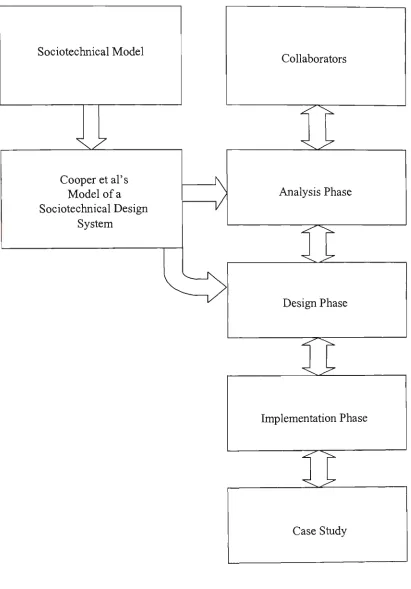
Figure 3.1 shows the various components of the research process and its links to Cooper et al's sociotechnical design model.
The case study followed Cooper et al's sociotechnical objectives format. This involves three parts: analysis, design and implementation. These parts are intertwined under the sociotechnical design system (Figure 2.1) with the result being the 'interface' as seen in the figure.
More specifically, this involved discussions with users and collaborators, and considerations of the impact of the technology.
The research draws on experience with the collaborators at all levels of their
organisational structures where available. Information from point of sale terminals was sought to obtain behavioural patterns; other considerations, for example, standards, were dealt with through the technical collaborators.
Sociotechnical Model
Collaborators
iz
Cooper et al's Model of a
Sociotechnical Design
System
V
Analysis PhaseDesign Phase
Implementation Phase
Case Study
T h e implementation of the key sociotechnical objectives assisted in developing a systematic design - implementation methodology for smart cards in the business world.
The criteria for this design methodology are:
• Smart Card Standards (ISO 7816)
• Range of Applications (Banking/Financial, Medical Services,
Telecommunications, Transport, Retail Shopping, Customer Loyalty Scheme)
• Sociotechnical Issues (Organisational Objectives, User Requirements, Technical Requirements)
• Security Features
In the design of a system where the ownership of information gives the system value, security concerns must be addressed for both economic as well as sociotechnical reasons.
The previously mentioned collaborators provided access to their resources so that information could be collected to analyse, design and implement this model.
This undertaking was an applied research endeavour. As formerly stated a descriptive research methodology was the most appropriate as this allowed the researcher to actively participate in the project rather than being an observer. This allowed the researcher to directly implement Cooper et al's sociotechnical objectives.
and project participation with the case study collaborators. It w a s not possible to collect project level data from all the collaborators. This w a s due to the size of s o m e of the corporations, the geographic location of s o m e of the projects and the ever changing business world.
Interviews with collaborators lasted a number of hours. Each interview began with a series of open ended questions. These questions were aimed at furthering an understanding of the organisational functions, scope, size and methods. Often these interviews also continued in the form of formal and informal meetings and telephone conversations.
Open ended introductory questions were intended to allow respondents the chance to explain the company's smart card design processes and management practises. This however did not always w o r k as intended. Often the collaborators were cautious and wary of potentially giving a w a y latent competitive information to an outsider. This resulted in frequent return site visits, confidence and trust building periods. This situation prolonged the research process.
The result was a view from an internal perspective of several smart card based projects. The questions asked were complex and technical enough that n o one person in any of
the organisations w a s able to answer. Although this also increased the frequency of contacts, it provided a enhanced view of internal procedures as a denizen.
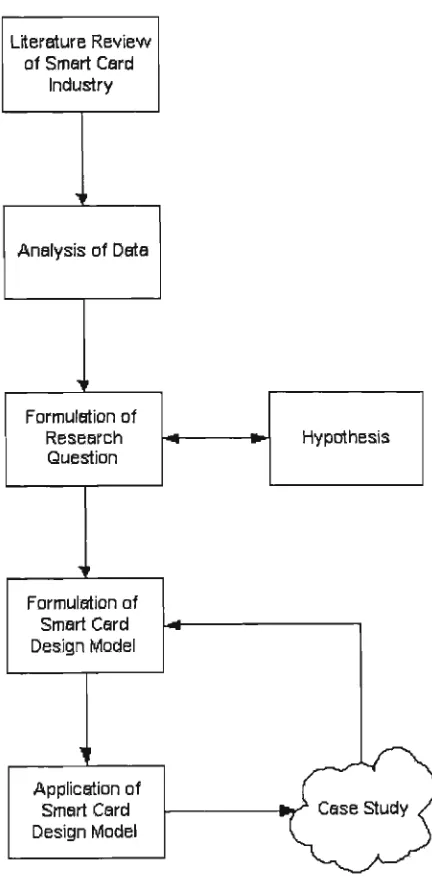
Figure 3.2 illustrates the research process undertaken with respect to the case study and the research question. T h e models and processes presented are the result of iterations
Literature Review of Smart Card
Industry
Analysis of Data
Formulation of Research Question
Hypothesis
Formulation of Smart Card Design Model
Application of Smart Card Design Model
CHAPTER 4 DATA PRESENTATION AND ANALYSTS
Presently there is only a limited amount of research available involving sociotechnical systems and smart cards. The majority of the available research originates in Australia from Cooper et al. (1996) and Lindley (1997).
Cooper et al. (1996) describe a case study, in which the combined smart card practice of Australian firms that had implemented smart card technology were examined. They also present a way of incorporating a sociotechnical strategy appropriate to the introduction of a smart card technology system. This study describes the design procedures and
issues, and how these incorporate the various sociotechnical criteria in the design phase of smart card applications.
Although these sociotechnical objectives are identified for smart card systems, they are actually general sociotechnical objectives that can be associated with any type of technology.
Several collaborators were involved in this research. These collaborators can be
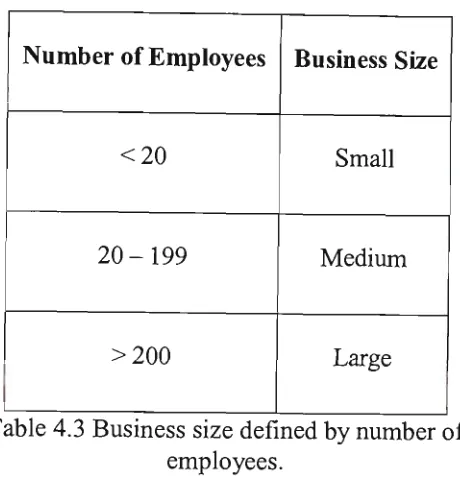
described by the initial criteria of location and industry involvement. The definition of the business size used in this research is as follows. Small businesses are classified as those having fewer than 20 employees, medium sized businesses are classified as those having 20 to 199 employees, and large businesses as those having 200 or more
employees (Australian Bureau of Statistics 2000).
The collaborator criteria of location, whole business size, Australian smart card business size, and smart card industry activity are combined in Table 4.4. The reason for
w a s due to s o m e organisations having international operations. This provides a realist representation of the collaborators organisations. For example, Collaborator A has international operations, yet only has a sales division for smart cards in Australia.
The interplay of five forces that were also examined: commerce and competitive issues, financial issues, technology issues, labour force issues, and the demographics will be discussed with reference to each collaborator later.
Location
1.
2.
3.
4.
5.
6.
Australia
Europe
North America
South America
Asia
Africa
Smart Card Industry Activity
1. Manufacturer
2. Integrator/Reseller
Table 4.2 Smart card industry activity criteria.
Number of Employees
<20
20-199
>200
Business Size
Small
Medium
Large —
Table 4.3 Business size defined by number of employees.
Collaborator
A
B
C
D
Location 1,2,3,4,5,6 1,2,3,4,5,61
1
Whole Business Size Large Large Small Medium Australian Smart Card Business Size Small Small Small Small Smart Card Industry Activity Manufacturer Manufacturer, Integrator/Reseller Integrator/Reseller Integrator/ResellerTable 4.4 Collaborator criteria combined.
Collaborator Descriptions
Collaborator A (ColA)
Collaborator B (ColB)
This organization manufacturers smart card capable P O S (Point of Sale) devices and
other associated equipment internationally. They sell directly to both integrators and the final customers. ColB has developers in Australia and hence can customise POS
solutions to sell to their customers.
Collaborator C (ColC)
This organization customises POS devices. They have been investigating the
possibilities of smart card systems replacing their traditional magnetic stripe based systems as used in their customer loyalty applications. Their other products are promotional schemes for the purposes of brand loyalty such as scratch tickets and the marketing that surrounds such promotions.
Collaborator D (CoRO)
This organization is both a customer of Collaborator C and a reseller of other related products. They add their own hardware and software to other products to make
T h e Case Study
T h e case study w a s not simple by any definition. It involved several organisations, each
with a vested interest in gaining market share. The peculiar element of this study, and perhaps an indication of the industry, was that regardless of being competitors they were also each others customers.
To illustrate this, a situation in point. Collaborator D (ColD) would purchase a POS system from either Collaborator C (ColC) customised, or directly from Collaborator B un-customised. ColD could them purchase smart card chips directly from ColA and have another party embed them in plastic and program them or have ColB or ColC organise it.
Decisions such as these were made at a senior management level and often involved internal politics and business agreements. Unfortunately with the nature of business agreements being mainly confidential this information was not to be included in the results as agreed with the collaborators. It should be satisfactory to state that such decisions were intended to be for the financial benefit of the organisations involved.
The case study observed several smart card projects and their progress from the concept stage through to implementation or abandonment over a three year period. Out of all the projects at concept stage, only one reached the implementation phase. The research did not follow that project as closely as the others due to geographic constraints.
None of the collaborators had implemented any evident project design or management methodologies. Each project was seen as a short term event that should proceed as
w a s n o radical change either in management or innovation observed in the companies.
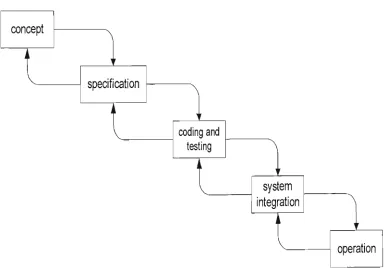
This caused difficulty for any outside observer in understanding what processes, if any, were in place. Fortunately, each organisation did unintentionally follow a waterfall model approach to project workflow as suggested by Rankl et al. (1997 p.284). It was discovered that previously this workflow pattern had been repeated to the extent that it became an unwritten procedure in each organisation and was hence incorporated into the research. A waterfall model was adopted for the research due to the lack of any other observable methodologies amongst the collaborators or the smart card industry at the time. A waterfall model provided an extension of existing familiar methodologies that would be readily comprehended by the collaborators.
Figure 4.1 illustrates the steps of the adapted Waterfall model for the manufacture of software for smart cards.
concept
f
A
I
1 'specification
^{
1 fcoding and
testing
\K
1 fsystem
integration
\V
operation
T h e five steps or stages of the adapted waterfall model are typically performed
consecutively. The waterfall model allows for the backtracking of steps. This is useful because in the development of a product or solution circumstances and problem
definitions can unavoidably change. Rankl et al. (1997 p.284) discuss the need to often overlap the steps, a method known as simultaneous engineering.
Simultaneous engineering obscures an expansion of the model by creating a situation where steps overlap and jump between internal phases of the expanded model.
This research studied the design stages in detail of the various smart card projects in the case study. The design stage covers the Concept Process and the Specification Process.
Concept
Start
Define User Requirements
Define Organisational
Objectives
Conduct User Consultation
Concept Document
Figure 4.2 Concept Process.
Source: S m e h , J. & A d a m , T. 1998 p.418
Rankl et al. (1997 p.284) describes the concept process as the step that determines
"what" the finished software/system has to perform. This is an accurate description. It may seem obvious, yet in the course of the research it was observed that a key
component was missing, namely the end user.
were always regarding financial matters and contract approvals. The users were not consulted.
When the management at ColB were questioned regarding this, they referred to past POS implementations and avoided the issue. Despite the fact that a smart card based
loyalty program has little to do with a large financial institution's EFTPOS system. This issue later returned to trouble them.
The end user was mostly overlooked in the concept stages of all the smart card projects observed. Instead the system provider and the organisation involved dictated the system design. ColC was the only organisation to consider the ability of the end user to use the POS equipment and change it accordingly.
In the Define User Requirements phase, the system designers endeavour to analyse and interpret the user requirements from the system. In this approach we can include S6 and S7 from the sociotechnical objectives from Table 2.1.
By maintaining existing or alternative means to access the service provided, the designers are attempting to maximise end user acceptance of new technology. Often however this would bring added expense in maintaining and duplicating services. For instance, a bank could maintain both a smart card and magnetic stripe EFTPOS network while phasing in the smart cards. While a small retailer could not probably afford the extra expense of the often numerous hardware options required to do so. Thus cost is a large issue in S6.
locked them into remaining with the magnetic stripe technology. T o convert to the smart card system they had two options: purchase an add on card reader and invest in rewriting their POS software, or to convert to a single function smart card based POS device and invest in completely new POS software.
Sociotechnical objective S6: 'Maintain existing or alternative means to access the
service provided' is assuming that there was a previous service and system that is being replaced by the smart card system. In the case study this situation only occurred once, with ColB and the previously described car park system. This system will be examined later in detail regarding its outcome and adoption of innovation.
In making the design provide an improved quality of life (S7), designers are again attempting to maximise end user acceptance of new technology. A new system does not always improve quality of life. A smart card based electronic purse system can appear to reduce the need to carry numerous coins. Whether this improves the quality of life for anyone other than the card issuer is questionable.
In the Define Organisational Objectives phase, the system designer identifies and defines what the organisation requires the system to do. This can be any business
activity, for example, moving the organisation into the world of electronic commerce, or collecting data for loyalty marketing purposes.
user in the Conduct User Consultation phase. T h e S 8 sociotechnical objective does m a k e a reappearance in the Specifications Process.
The system designers decide the Conduct User Consultation phase in detail. It could consist of user focus groups, user trials, questionnaires or surveys. A s noted previously there w a s n o user involvement in any of the smart card projects in the case study. Conduct User Consultation can be viewed in the concept stage as being the sociotechnical objective S 2 'Conduct pre-design user consultation'.
Regardless of the method of user consultation followed, the end result is what is crucial. M o s t of the collaborators did not anticipate the end users of the systems being
conceptualised. T h e user should have an input as to what the end product of the system design is. This user feedback is then iterated back into the Concept stage.
When the designers are positive that they have determined "what" the finished software/system performance targets are, they can then produce the Concept Document. The Concept D o c u m e n t should list in detail what is exactly expected from the system so that the design can be precisely defined in the Specification stage.
Specification
Rankl et al. (1997 p. 285) describes the specification step as establishing a "how to do it" process. T h e final result is a formal specification document which the application
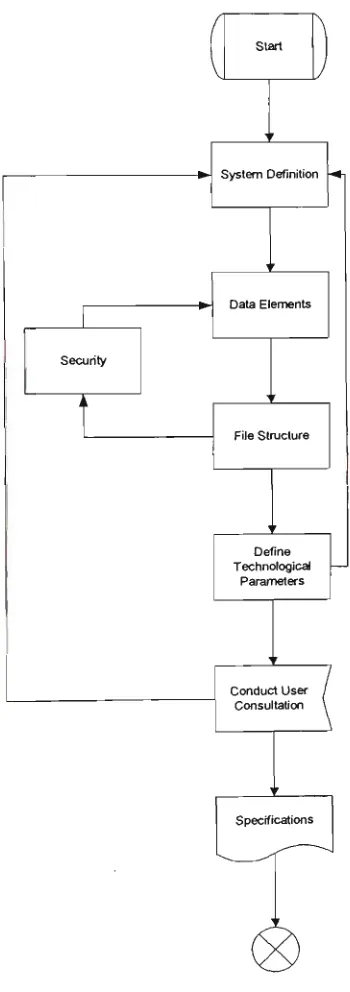
and system is based on. A n expansion of the Rankl waterfall model specification stage is illustrated in Figure 4.3.
7816 standards which define some of the c o m m o n elements of every smart card such as the file system.
Thus it is in the System Definition phase that the hardware and software platforms for
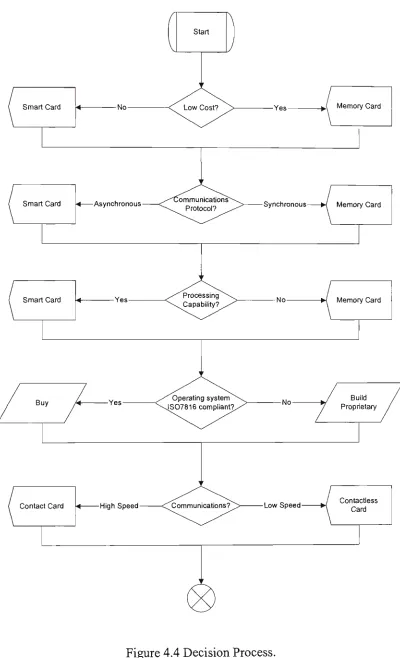
the smart card system are selected. Figure 4.4 illustrates some of the many choices that have to be made in this process.
Security
Start
System Definition
Data Elements
File Structure
Define Technological
Parameters
Conduct User Consultation
Specifications
Figure 4.4 Decision Process.
The diagram in Figure 4.4 shows s o m e of the possible System Definition issues faced by
a designer in the Specification Process. At this stage the design focuses on the specifics of the system. This stage relies on the input of the Concept Document which is required in some form. It is in the System Definition where the concept is translated to the individual components of a smart card system - software and hardware.
The initial decisions are based on cost and function. Usually a memory card is half the cost of a smart card. The management who made such decisions in the case study did not distinguish the difference between the two technologies. They saw no difference on the outside because the contacts are the same for both. There was a need for the
designers to highlight the security, communication and processor differences.
The management at Collaborator B in the car park project knew about the differences. They felt that the cost difference was the more important issue. This issue will be discussed later regarding this project.
With the high cost of custom writing a smart card operating system (OS), what remains is a choice of the remaining operating systems. Until recently this choice had depended on the smart card integrated circuit because each manufacturer had a few OS choices for their chips. In the early years of smart cards, the designer only had one choice of an OS - the one from the manufacturer. Each manufacturer would customise the OS so no two
different cards would have the same OS functions. For instance, one might have
mathematical function extensions, and the other might have very limited functionality.
T h e use of proprietary functions in the O S places a limitation o n the likelihood of worldwide interoperability. If the cards operated differently, there was no chance of interoperability.
A most important design decision is that of the internal file system specification layout. A smart card is simply a storage device with limited processing power. The developer
must base the file system layout decision on what scheme is being used, for example EMV, GSM or any other proprietary scheme.
A constant in all smart card OS designs that are based on the ISO 7816 standards are the definitions for the types of files: MF, DF and EF.
The MF is the master file. It is the root directory and contains all other directories and files. The DF is the dedicated file. These are directories that contain further files. They can be though of as a subdirectory. The EF is called the elementary file. It contains the user data, and can have several internal data structures - linear files, cyclic files, purse files, and transparent files (Guthery, S.B. et al. 1998 p.73).
The files on a smart card contain data to regulate secure access within the file system. The access rights are resolved when a file is created. The scope of possible file access conditions varies between each smart card OS. Thus a complete smart card OS
specification is necessary to design a secure system.
instance, should there be any security at all? W h a t level of security is required at the M F , DF, and EF levels?
When the designer has completed the Security iteration the result should be a file system plan with the appropriate security. This should also include the size of the data to be stored. This is another reason why the concept phase is critical.
The next step is to Define Technological Parameters. This is a broad area, which can include hardware constraints on memory usage, smart card scheme standards and OS limitations and functions. For example, if the GSM or EMV standards were to be
included in the system, they should be listed in the Define Technological Parameters phase.
The Define Technological Parameters phase contains the sociotechnical issue, S8. The associations between the social and technical elements of the system need to be
optimised, they effectively constrain and become parameters of each other. An example is a smart card scheme not requiring extensive security, and the end user requesting to use PIN numbers. If the user and organisational goals are not compatible the user will go elsewhere.
The phase, Conduct User Consultation, is similar to the one in the Concept Process
This Conduct User Consultation phase fulfils the S3 sociotechnical objective, 'Conduct design stage user consultation'.
The user could be involved in feasibility trials to produce cost-benefit analysis for the organisations involved at this stage. This would contribute to the final Specifications for the system.
Ensuring the sociotechnical objective of ongoing design flexibility of the system, S9, can be achieved in several phases. It is appropriate for the System Definition phase; the Define Technological Parameters phase; and the Conduct User Consultation phase. The
specification of design flexibility in this context is not an easy task. It may enter into consideration of the social or technical aspects of the design. For instance, is there enough memory on the smart card for multiple applications? Design flexibility can encompass several processes and phases.
Several of the key sociotechnical issues have not been listed in the Concept and
Specification stages because they are more suited to the other stages of the waterfall model. Namely these are sociotechnical objectives SI, S4 and S5.
Sociotechnical objective SI, 'Establish an appropriate user awareness effort', would be a part of the Systems Integration and Operation stages of the Rankl waterfall model
(Figure 4.1).
Sociotechnical objective S5, 'Develop an on-going user consultation plan', does not really fit into the Rankl waterfall model. This is because there is user consultation throughout the model, so the planning for this consultation should have occurred previously. This would have been a management and design guideline to emphasize the user consultation in the design methodology.
The design methodology presented offers an adaptable smart card application design system that is readily comprehended by people in the business community.
This model is adaptable and scalable due to the relevant ISO standards in place in the smart card industry. Most smart card schemes support more than the bare minimum
standards of the file system. This leaves for a lot of flexibility in underlying phases of the processes discussed.
With the proliferation of design tools, the design of smart card applications could be facilitated through other software technologies, for example, Rapid Application
Case Study Projects
Car Park Loyalty System
As mentioned previously, Collaborator B (ColB) was to design and implement a smart card based car park user loyalty scheme. This was planned to involve several car parks, major retailers near the car parks and at a later stage there was the future possibility of using car parking meters and a stored value system. The ultimate goal was to create a
cashless central business district car parking scheme.
At the stage when the researcher joined this project it was already six months behind schedule. Management gave those involved the ambitious task of designing and
implementing the system within another six months.
This was to be this organisation's first major smart card based rollout in Australia. They had previously participated in some banking trials as POS providers.
They found themselves in an unusual position, they were their own client for a change. They could not rely on someone else dictating the design criteria and specifications. Thus it was left to management to make the decisions. Unfortunately their decisions were not technology focused but profit and cost focused.
Thus another separate company was formed with a controlling interest coming from a Middle Eastern financier. So in the interests of profit, the management has effectively handed control of the project to someone else.
again. T h e designs were rewritten to use the cheaper m e m o r y cards instead of smart cards.
This was a serious change in the view of the designers, as the loyalty scheme would provide car park discounts and substantial prizes as a reward for customer loyalty. This change would m a k e it easier for the security to be compromised.
By this stage six months had passed. The main reason for the slow progress was managements continuing negotiations with the relevant car park owners and the city authorities.
When the design was again finalised another problem occurred. This time the financial backer had grown impatient and it w a s decided that a group of overseas programmers would complete the project. There seemed nothing wrong with this decision at first since the designers were also busy working on other projects simultaneously and would enjoy the reduced workload.
However a problem soon appeared - language. Very few of the overseas programmers could understand the specifications as they were written in English. Thus they decided to w o r k to their o w n verbal specifications and ignored the written English version.
It was at this stage that the research involvement with this Collaborator ended. Further contact w a s maintained through occasional telephone calls to discover any
developments. It w a s discovered six months later that they were set to go into a rollout of the project into the car parks.
worldwide. T h e overseas developed code did not have this problem but a more unusual one - the October bug. The programmers had used their own specifications and had
used only one digit to represent the month field. Hence the month could only be January (1) to September (9). The way this problem was discovered was due to some of the
systems being installed in a production environment in October.
It then took them roughly a month to rectify this problem. By this stage an Internet and print media campaign had been launched to promote the system, its benefits and
incentives.
The system soon failed with very few participating end users and mounting debt. The company running the scheme became insolvent with over one million dollars in debt. They left some of the employees unpaid and some very unhappy financiers.
Entertainment Loyalty Smart C a r d Project
Both Collaborators C and D were interested in using smart card technology in a variety of venues for customer loyalty purposes. The difference in the project was that they had previously used magnetic stripe technology to implement such systems.
At the time of the research, the magnetic stripe based systems were successfully in use at venues such as bars and hotels. They were interested in the ability of the smart cards to be used for multiple applications such as stored value, customer loyalty and advertising.
A s mentioned previously this project w a s discontinued due to the high cost of smart cards. Magnetic stripe technology was mainstream, cheap and readily available.
Another factor was the lack of electronic purse or stored value smart card standards at the time. Also at the time there were only proprietary multi-application smart card schemes available that had been unproven in an Australian market. Thus this project did not pass the Concept and Specification Process stages.
Other Smart Card Projects
For this research another two companies involved in the smart card industry were
contacted and interviewed. The other participants were not involved to the extent of the Collaborators previously discussed.
These two organisations were by the Australian Bureau of Statistics definition, classified as small and large businesses. The smart card systems involved were single application only at that stage. The large business was about to run a trial pilot multi-application stored value smart card system. Subsequent to the research that trial took place, and later their multi-application effort was abandoned.
Innovation In T h e Case Study
The majority of business ideas are beyond the power of one person to pursue
(Christiansen, J.A. 2000 p.73). This was evident in the research case study. Many
people contributed to each project, hi each project profit was the aim of the innovation. However one project stood out for its profit focus. In all the interviews with ColB
management, cost and profit were always of the primary concern.
The smart card designers involved with Collaborator B held the view that the design -innovation process was obstructed by input from management. This was significant and
it should be noted as some of the key activities during the project life-cycle include idea generation, funding, development and implementation (Christiansen, J.A. 2000 p.72).
Every project starts with an idea for an innovation. The people with the idea then go looking for funding. Nothing in business occurs without funding. Depending on the organisation this can be a simple or a long process. As previously illustrated funding and profit can cloud perception of innovation issues. The development and
implementation activities mainly are the same with any project life-cycle. They vary depending on the technology and size of the organisational infrastructure.
A summary of the goals, decisions and results of the project undertaken by Collaborator Barefisted in Table 4.5.
managers w h o had to report o n the state of the project regularly. T h e pressure to create profit increased severely after any decision was made.
M a n a g e m e n t Goals
Better funding
Better development
Faster development
Reducing costs
Decision
External funding
Faster development
Overseas developers
Reduce specifications
Result
Reduced project control
M o r e bugs in the system
Ignore specifications
Demoralise staff
Table 4.5 Collaborator B M a n a g e m e n t Decisions.
The management goal of better development w a s based on the belief that it meant faster
development. Funding was the primary criteria that led to the overseas developers, who then ignored the system specifications to the detriment of the final solution.
There w a s a hidden management reason for pursuing this project that took a long time to discover. This reason was revealed by a designer at the end of their involvement with the organisation. Each division of the organisation has an annual sales quota. Thus the pressure on the managers to meet a quota that previously they had not was colossal. This extended to the idea of creating a project to meet a quota - the Car Park Loyalty System.
Thus the flawed innovation in ColB can be seen to be the result of a series of managerial errors that compounded over time to produce a failed smart card system.
The management felt that they were not to blame for the failure. They thought it was a problem of lack of users, hi a sense they were correct. So the question is raised, why didn't people use this smart card system? Why wasn't this innovation adopted?
Note that the term smart card system is still used to describe the system despite it being a memory card system. In the industry the terms are interchangeable due to the
appearance of the two being identical to the ordinary consumer.
As stated previously, diffusion is the method by which an innovation is conveyed over time among the members of a social system. Innovations that are perceived as most economically rewarding and least risky are adopted more rapidly (Rogers, E.M. 1995 p.89).
If a user were to read the conditions of the loyalty scheme they would discover that to
receive any of the incentives (prizes) that were offered they would probably not join. There is no economical reward to joining a system that costs money only to never in
reality receive a reward. The initial designers revealed that part of the deployed systems conditions for receiving a reward made it extremely unlikely that anyone would ever
receive anything.
There existed another problem, the mail out to the user with a card. This would take at least a month. So the user saw nothing for their money for at least a month. In the meantime the card readers were idle.
The users did not gain any convenience from the system either. An example, when
entering a car park they would first have to find their card, insert it into the card reader. This would put a time stamp in its memory. Then the user has to drive further to get a
ticket from the car park ticketing machine.
On exiting the car park the user would give the card to an attendant who would insert the card into another reader and enter the amount spent at the card park. This would update a counter to an appropriate amount on the card. Then the user pays for the car park.
This scenario only adds an extra step to the users activities. It has no immediate benefit. It only adds another single function plastic card to their wallet or purse.
Perceived Attributes of Innovation
Relative advantage
Compatibility
Complexity
Trialability
Observability
Car Park Loyalty System
No
No
Yes
No
No
Table 4.6 Perceived attributes of the car park loyalty system.
Relative advantage is the degree to which an innovation is perceived as being better that
the one that it replaces (Rogers, E.M. 1995 p.212). This loyalty scheme had no relative advantage because it was not replacing a previous system. As mentioned previously the user had little chance of benefiting from it.
Compatibility can be technical and social. This system was technically incompatible with any other card based system - proprietary. Socially, the more familiar a system or product is the more compatible it potentially is with the users needs. Since this was a first for Australia we can say that it was not familiar. The social aspect is examined later.
those w h o designed it. T h e users often found it hard to understand h o w the rewards scheme functioned.
This system had not been tested in end user acceptance or in any limited basis. The car park owners just had a final system installed. The end user bought a card. There was no method for either the user or owner to try before they committed to the system - no trialability.
Due to the system being hardware based, everything happened in the software. There was no observable benefit at the car park for the user. There was no flashing computer graphics to catch the user's eye.
The extent of promotion of the scheme was a factor in the adoption. The media chosen by the managers were: an Internet web site, Point of Sale (in the car park) and in free teenage alternative music newspapers. This would suggest that they were targeting the youth market. In can be suggested that they were targeting the wrong market. The type of youths who read free alternative music newspapers are not likely to be car parks major clientele. A manager later revealed this newspaper media as being chosen purely based on cost. The incentives policy was aimed at a long term, constant and frequent user.
Thus the chance of a person who is interested in free offers, purchasing a card that had no visible advantage is small. This plus the nature of the social system that they were targeting explains the resulting small uptake of the car park loyalty scheme.