R E S E A R C H A R T I C L E
Open Access
A systematic review of randomised
controlled trials on the effectiveness of
exercise programs on Lumbo Pelvic Pain
among postnatal women
Pei-Ching Tseng
1, Shuby Puthussery
2*, Yannis Pappas
1and Meei-Ling Gau
3Abstract
Background:A substantial number of women tend to be affected by Lumbo Pelvic Pain (LPP) following child birth. Physical exercise is indicated as a beneficial method to relieve LPP, but individual studies appear to suggest mixed findings about its effectiveness. This systematic review aimed to synthesise evidence from randomised controlled trials on the effectiveness of exercise on LPP among postnatal women to inform policy, practice and future research. Methods:A systematic review was conducted of all randomised controlled trials published between January 1990 and July 2014, identified through a comprehensive search of following databases: PubMed, PEDro, Embase, Cinahl, Medline, SPORTDiscus, Cochrane Pregnancy and Childbirth Group’s Trials Register, and electronic libraries of authors’institutions. Randomised controlled trials were eligible for inclusion if the intervention comprised of postnatal exercise for women with LPP onset during pregnancy or within 3 months after delivery and the outcome measures included changes in LPP. Selected articles were assessed using the PEDro Scale for methodological quality and findings were synthesised narratively as meta-analysis was found to be inappropriate due to heterogeneity among included studies.
Results:Four randomised controlled trials were included, involving 251 postnatal women. Three trials were rated as of‘good’methodological quality. All trials, except one, were at low risk of bias. The trials included physical exercise programs with varying components, differing modes of delivery, follow up times and outcome measures. Intervention in one trial, involving physical therapy with specific stabilising exercises, proved to be effective in reducing LPP intensity. An improvement in gluteal pain on the right side was reported in another trial and a significant difference in pain frequency in another.
Conclusion:Our review indicates that only few randomised controlled trials have evaluated the effectiveness of exercise on LPP among postnatal women. There is also a great amount of variability across existing trials in the components of exercise programs, modes of delivery, follow up times and outcome measures. While there is some evidence to indicate the effectiveness of exercise for relieving LPP, further good quality trials are needed to ascertain the most effective elements of postnatal exercise programs suited for LPP treatment.
Keywords:Systematic review, Lumbo Pelvic Pain, Exercise, Postnatal women, Randomised controlled trial
* Correspondence:[email protected]
2Department of Clinical Education and Leadership & Institute for Health
Research, University of Bedfordshire, Putteridge Bury, Hitchin Road, Luton LU2 8LE, Bedfordshire, UK
Full list of author information is available at the end of the article
© 2015 Tseng et al.Open AccessThis article is distributed under the terms of the Creative Commons Attribution 4.0 International License (http://creativecommons.org/licenses/by/4.0/), which permits unrestricted use, distribution, and reproduction in any medium, provided you give appropriate credit to the original author(s) and the source, provide a link to the Creative Commons license, and indicate if changes were made. The Creative Commons Public Domain Dedication waiver (http://creativecommons.org/publicdomain/zero/1.0/) applies to the data made available in this article, unless otherwise stated.
Tsenget al. BMC Pregnancy and Childbirth (2015) 15:316
Background
Pain in the lower back and pelvic regions, collectively known as Lumbo Pelvic Pain (LPP), tends to be com-monly reported among pregnant and postnatal women with varying prevalence rates. Lumbo Pelvic Pain (LPP) refers to self-reported pain in areas of lower back, anter-ior pelvis, posteranter-ior pelvis, or any combination of these locations [1, 2]. Majority of women report LPP in preg-nancy with prevalence rates ranging from 26.5 % to 91 % [3–12]. A substantial number of women continue to ex-perience the pain in the postnatal period with varying in-tensity and duration [13, 14]. A higher range of variation is reported in LPP prevalence in the postnatal period compared to its prevalence in pregnancy due to apparent differences in follow-up times, methods of measurement and definitions [12, 14–20]. For instance, using a self-rated Visual Analogue Scale (VAS), Líndal et al., [16] re-ported prevalence rates of 75 % at 3 days after delivery among women who had lower back pain in pregnancy, and 54 % at 90-days after delivery. In a population based survey, Stapleton et al., [18] found that 8 % of women reported the onset of recurrent low back pain soon after pregnancy whereas the figures rose to 13 % at 1 year after child birth. In another prospective cohort study of pregnant women, 28.9 % of all pregnant women had some type of back pain during the index pregnancy and 5 % had pain 3 years after birth [17].
The presence of LPP is often identified and confirmed by diagrammatic representations of self-reported pain location alone or in combination with clinical tests [3, 12, 21–26]. Most LPP is reported in and around the lumbar area, which is responsible for supporting the majority of the upper body weight [27]. Factors associated with LPP occurrence in pregnancy and in the postnatal period include maternal age, parity, high Body Mass Index (BMI), smoking, oral contraceptives, previous history of LPP, uncomfortable working conditions, and lack of exercise [4, 10, 15, 26, 28–31].
Persistent LPP can negatively impact women’s ability to perform daily activities and quality of life. Among postnatal women it has been shown that LPP leads to sleep problems, depression, fatigue, anxiety, and a gen-eral inability to doing activities that involve carrying or lifting [25, 32–35]. For instance, Gutke et al., [35] found that women suffering from LPP are three times more likely to experience symptoms of postnatal depression compared to those without. In another study [25], 40 % of women with postnatal LPP reported moderate to se-vere disability with pain intensity being the major ex-planatory variable for disability level. The same study also found that the impact of having pelvic girdle pain, combined pain, or lumbar pain were equivalent in terms of disability, pain intensity, health-related quality of life, activity level and kinesiophobia [25].
Different interventions have been used to reduce LPP in general including exercise acupuncture, drugs, the-rapies using heat/cold, traction, laser, ultrasound, short wave, massage, and corsets [36, 37]. A systematic review of randomised controlled trials of treatment methods to prevent or reduce the incidence or severity of pelvic or back pain in pregnancy have indicated moderate quality evidence suggesting the effectiveness of acupuncture or exercise tailored to the stage of pregnancy, in signifi-cantly reducing evening pelvic pain or lumbo-pelvic pain more than usual care alone [38]. The same review also suggested acupuncture as significantly more effective than exercise for reducing evening pelvic pain. Clinical approaches for LPP management have specified the im-portance of activation of muscles for motor control and stability of the lumbopelvic region [39] and physical exercise has been indicated as a beneficial method to relieve LPP during pregnancy and after child birth [22, 40–42]. Emerging studies on the effectiveness of ex-ercise on LPP among postnatal women, however, appear to indicate mixed findings and do not provide sufficient evidence on their own to inform clinical practice in this area. A systematic synthesis of the existing evidence on the effectiveness of physical exercise on postnatal LPP is yet to be conducted. This review aimed to synthesise find-ings from randomised controlled trials on the effectiveness of exercise on LPP among postnatal women to inform policy, practice and future research in the area.
Methods
This review follows the Preferred Reporting Items for Systematic Reviews and Meta Analyses (PRISMA) guide-lines (http://www.prisma-statement.org/PRISMAStatement/ Checklist.aspx). The review question was framed using Population, Intervention, Comparator, Outcome, and Study design (PICOS) framework. The population comprised of postnatal women who reported LPP onset either in pregnancy or within 3 months after delivery. The interventions comprised of physical therapy with a suite of exercise programs specifically designed to strengthen deep local muscles and global muscles in the lumpopelvic region. The comparators included no ther-apy; or physical therapy using other methods such as massage relaxation, joint mobilization, manipulation, electrotherapy, hot packs, and simple back strengthening exercises. The primary outcome measure was changes in LPP. This review considered randomised controlled trials published between 1990 and 2014. Randomised controlled trials were eligible for inclusion if the reported interven-tion comprised of postnatal exercise for women who re-ported LPP onset during pregnancy or within 3 months after delivery, and the outcome measures included changes in LPP. The review protocol was agreed between the four authors.
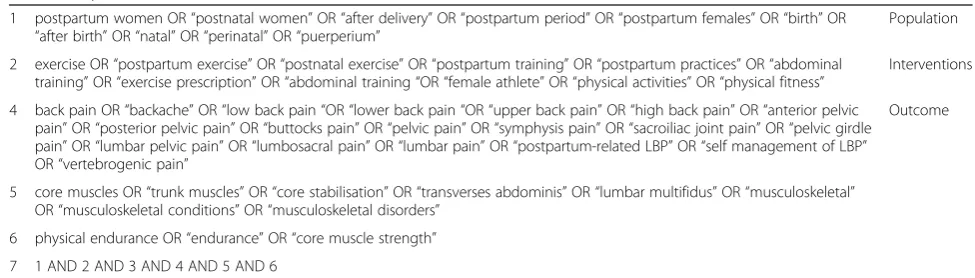
A comprehensive search of the following databases was undertaken during February and March 2014 to identify relevant studies: PEDro CINAHL, MEDLINE, PUBMED, SPORTDiscus. Other review data bases such as Cochrane Central Register of Controlled trials, Cochrane Pregnancy and Childbirth Group’s Trials Register, Centre for Reviews and Dissemination University of York, and electronic libraries of authors’ institutions were also searched. Additional sources included Google Scholar and reference list of relevant articles and book chapters. Authors identi-fied through the search process were contacted to identify any further publications. The key search terms used for searches across all databases is provided in Table 1. An updated search was completed in July 2014. The retrieved articles were scanned for relevance based on the title, abstract and full text.
Methodological quality assessment and data analysis The selected articles were subsequently assessed using the PEDro Scale (http://www.pedro.org.au/english/downloads/ pedro-scale/) which consists of 11 items for rating meth-odological quality of randomised controlled trials. The scale has been used in other reviews [43]. A score of 9–10 on the scale represents ‘excellent’ quality; a score of 6–8 represents ‘good’ quality; and a score of 4–5 represents
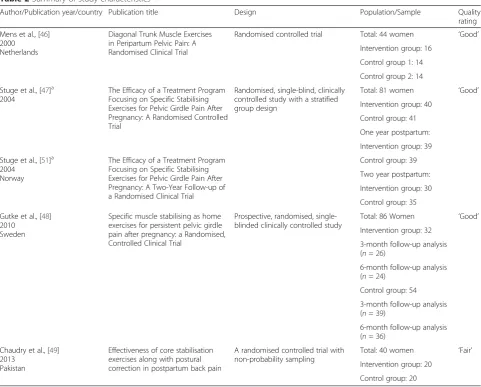
‘fair’quality [43, 44]. Two authors (PcT and SP) independ-ently assessed the risk of bias in all the included trials using Cochrane Collaboration’s tool for assessing risk of bias [45]. The data from selected studies were extracted into tables comprising of study characteristics along with qual-ity assessment ratings for each study as shown in Table 2 and Table 4.
Results
Study selection
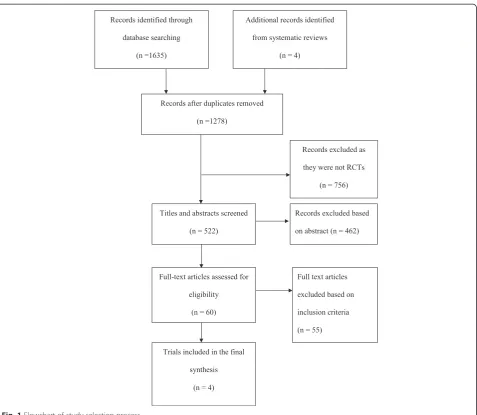
The results of the search and study selection are shown in Fig. 1. The search process produced 1639 titles and 1278 records were retrieved after duplicates were removed. 756 were further excluded as these were not
randomised controlled trials. The remaining 522 were exported to the reference software Mendeley and the titles and abstracts were screened. 60 articles were selected for full text screening. Following full text screening, 55 articles were excluded due to discordance with the inclusion criteria. Finally, five articles originat-ing from four trials were included in the review as shown in Table 2.
The methodological quality assessment using the PEDro scale revealed a mean score of 6 (range = 4–8). Three tri-als [46–48] were found to be of ‘good’ methodological quality. Although one trial [49] was rated as of‘fair’ meth-odological quality, the reported information was in-adequate to make a full assessment. This trial was included in the review based on the appropriateness of the study design and reported outcome measures. The results of the risk of bias assessment using the Cochrane tool are presented in Table 3. All the studies except one [49] were at low risk of bias on key domains such as sequence gen-eration, allocation concealment, blinding of participants and personnel, completeness of outcome data for each main outcome, and selective reporting. In Chaudry et al’s trial [49], patients were reported to be randomly allocated, but the available information was largely insufficent to make clear judgement on other domains.
Although the interventions included exercise pro-grams, the components of the intervention, outcome measures, and follow up times were too diverse to allow a meta-analysis of the study findings. This was further confirmed by testing homogeneity with the Meta-Analysis Add-In for Microsoft Excel software package [50] and hence a narrative synthesis was undertaken.
Study characteristics
The study participants included 251 postnatal women reported in four trials who experienced LPP onset either in pregnancy or within 3 months after child birth as de-scribed in Table 2. The overall sample size in individual trials ranged from 40 to 86 [48, 49] with the size of the
Table 1Key search terms
1 postpartum women OR“postnatal women”OR“after delivery”OR“postpartum period”OR“postpartum females”OR“birth”OR “after birth”OR“natal”OR“perinatal”OR“puerperium”
Population
2 exercise OR“postpartum exercise”OR“postnatal exercise”OR“postpartum training”OR“postpartum practices”OR“abdominal training”OR“exercise prescription”OR“abdominal training“OR“female athlete”OR“physical activities”OR“physical fitness”
Interventions
4 back pain OR“backache”OR“low back pain“OR“lower back pain“OR“upper back pain”OR“high back pain”OR“anterior pelvic pain”OR“posterior pelvic pain”OR“buttocks pain”OR“pelvic pain”OR“symphysis pain”OR“sacroiliac joint pain”OR“pelvic girdle pain”OR“lumbar pelvic pain”OR“lumbosacral pain”OR“lumbar pain”OR“postpartum-related LBP”OR“self management of LBP” OR“vertebrogenic pain”
Outcome
5 core muscles OR“trunk muscles”OR“core stabilisation”OR“transverses abdominis”OR“lumbar multifidus”OR“musculoskeletal” OR“musculoskeletal conditions”OR“musculoskeletal disorders”
6 physical endurance OR“endurance”OR“core muscle strength”
7 1 AND 2 AND 3 AND 4 AND 5 AND 6
intervention group varying between 16 and 41 women [46, 51]. Two articles had originated from the same trial reporting outcome measures at different intervals such as the week after the 18–20 week intervention, 1-year, and 2-years postpartum [47, 51]. One study divided par-ticipants into three groups: an experimental group with 16 postnatal women and two control groups with 14 each [46]. The included trials were from different coun-tries: Netherlands [46], Norway [47, 51], Sweden [48] and Pakistan [49].
The assessment data were collected at different time points such as baseline [46–49, 51]; soon after inter-vention [46]; at 3- and 6- months follow up [48]; and at 1- and 2- years after delivery [47, 51]. Only one trial assessed the long term effect of the intervention with outcomes reported at 1- and 2 -year follow-up periods [47, 51]. One trial did not clearly report the time points when the assessment data was collected [49].
Interventions and comparators
The interventions consisted of various exercise programs as presented in Table 2. Three trials used stabilisation exercise programs as the intervention - either specific [48] or core [47, 49, 51], while the third trial used diag-onal trunk muscle systems training program [46]. The core stabilisation exercise program used by Stuge et al., [47, 51] was focused on training the deep local muscles (the transverse abdominal wall muscles with co-activation of the lumbar multifidus in the lumbosacral region) and global muscles (m. gluteus maximus, m. latissimus dorsi, the oblique abdominal muscles, m. erector spinae, m. quadratus lumborum, and hip adductors and abductors). The initial focus of this exercise was on specific contrac-tion of the transverse abdominal muscles. In addcontrac-tion to stabilisation exercises, postural correction techniques in different positions such as supine, crook lying, half sitting and prone were also employed for the intervention group Table 2Summary of study characteristics
Author/Publication year/country Publication title Design Population/Sample Quality
rating
Mens et al., [46] 2000
Netherlands
Diagonal Trunk Muscle Exercises in Peripartum Pelvic Pain: A Randomised Clinical Trial
Randomised controlled trial Total: 44 women ‘Good’
Intervention group: 16
Control group 1: 14
Control group 2: 14
Stuge et al., [47]a
2004
The Efficacy of a Treatment Program Focusing on Specific Stabilising Exercises for Pelvic Girdle Pain After Pregnancy: A Randomised Controlled Trial
Randomised, single-blind, clinically controlled study with a stratified group design
The Efficacy of a Treatment Program Focusing on Specific Stabilising Exercises for Pelvic Girdle Pain After Pregnancy: A Two-Year Follow-up of a Randomised Clinical Trial
Specific muscle stabilising as home exercises for persistent pelvic girdle pain after pregnancy: a Randomised, Controlled Clinical Trial correction in postpartum back pain
A randomised controlled trial with non-probability sampling
Total: 40 women ‘Fair’
Intervention group: 20
Control group: 20
a
Both publications originated from the same trial
in another trial [49]. The specific stabilising exercises re-ported by Gutke et al., [48] focused on strengthening the transversely oriented abdominal, lumbar multifidus, and the pelvic floor muscles, and on improving motor control and stability.
The interventions were varied in their frequency and duration. The frequency of the exercise ranged from≥2 times per day [48] to three days per week [46, 47, 51]. The exact frequency of the exercise was not reported in one trial [49]. In this trial, women in the treatment Fig. 1Flowchart of study selection process
Table 3Risk of bias
Domains Risk of bias
Mens et al. [46] Stuge et al. [47]a& [51]a Gutke et al. [48] Chaudry et al. [49] Random sequence generation Low risk of bias Low risk of bias Low risk of bias Low risk of bias
Allocation concealment Low risk of bias Low risk of bias Low risk of bias Unclear risk of bias
Blinding of participants and personnel Unclear risk of bias Low risk of bias Low risk of bias Unclear risk of bias
Incomplete outcome data Low risk of bias Low risk of bias Low risk of bias Unclear risk of bias
Selective reporting Low risk of bias Low risk of bias Low risk of bias Unclear risk of bias
Other sources of bias Low risk of bias Low risk of bias Low risk of bias Unclear risk of bias
a
Both publications originated from the same trial
group were were given three exercise sessions of half an hour during their stay in the hospital after birth. After discharge from the hospital, these women were called back for follow up sessions of 30 to 40 min treatment [49]. The total reported duration of the intervention was between 8 weeks [46] and 20 weeks [47, 51] although this information was not available in the case of two tri-als [48, 49]. Co-interventions such as the use of a pelvic belt and pain medication were reported to be used for the experimental and control group in one trial [46]. The methods of delivering the interventions differed across trials and included a videotape with instruction of exercises to be performed at home without supervision [46]; individualized exercise program performed mainly at home with guidance by the physical therapist with ad-justments performed once a week or fortnightly [47, 51]; home training with individual guidance and adjustment of the exercise program every two weeks by one of two treating physiotherapists [48]; and treatment sessions at the hospital [49]. Compliance was measured using a training diary in two trials [47, 48, 51] and a designated form in another one [46]. This information was not available in one trial [49]. The home-based approach in one trial was reported to be a barrier to control for compliance with diaries not handed in as expected [48]. One trial reported high compliance with the treatment [47, 51]. Compliance was less optimal in two trials [46, 48]. In one trial, 25 % of the subjects in the ex-perimental group stopped their exercise programme before the end of the study because of increase in pain [46] and only 78 % of the women in the treatment group reached stage 3 of the treatment programme in the other [48]. No compliance information was reported in one trial [49].
The comparators included longitudinal trunk muscle systems training [46]; physical therapy using ergonomics massage, joint mobilization, manipulation, electro-therapy, hot packs [47,51]; simple back strengthening exercises [49]; or no exercise [46, 48]. Mens et al. [46] included two comparison groups - one group with in-structions to train the longitudinal trunk muscle system involving rectus abdominis muscle, longitudinal parts of the erector spinae muscle, and quadratus lumborum muscle, and the other instructed to refrain from exercise.
Outcomes
Primary outcome: Changes in LPP
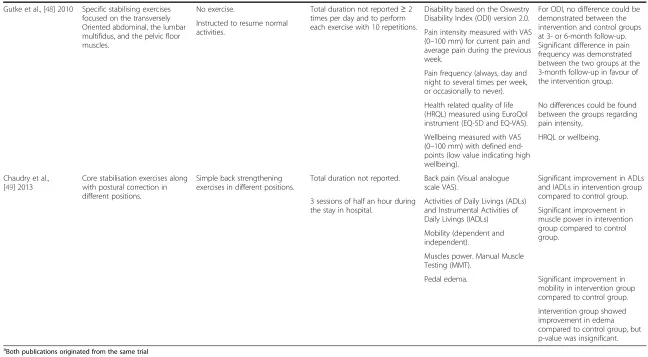
The outcomes reported in the trials are presented in Table 4. The primary outcome considered for this review is the change in LPP intensity among postnatal women at different follow up intervals. All the included trials re-ported changes in pain intensity and related variables as an outcome measure based on assessment using the Vis-ual Analogue Scale (VAS) which is a uni-dimensional measure of pain intensity [52]. Pain intensity was
assessed in the morning and in the evening in two trials as a primary outcome measure [46, 47, 51]; whereas current pain and average pain during the previous week was used as the measure in another trial [48]. The latter trial also assessed pain frequency (always day and night to several times per week, or occasionally to never) [48]. Although VAS was reported to be used to measure pain intensity, the actual changes in pain intensity was un-clear in one trial [49]. Gluteal pain provoked by the Posterior Pelvic Pain Provocation (PPPP) test on the left and right sides was also reported as secondary outcome in one trial [46].
In terms of the effectiveness of the exercise program on LPP, one trial [47, 51] reported significant positive ef-fect on pelvic pain intensity as a result of the exercise. This trial found significant reductions in pain intensity in the morning and evening during the intervention period and at 1- and 2-year follow-ups, with a better re-duction of pelvic girdle pain in the intervention group compared to the control group [47, 51]. The authors ob-served biggest improvements in pain intensity during the intervention period of 20 weeks, with a further but slow improvement over the 6 months following treat-ment, which was also maintained 2 years after delivery. However, low levels of pain sustained in the intervention group 2 years after delivery [47, 51]. Although another trial reported significant improvements in back pain re-lated variables such as restriction in Activities of Daily Livings (ADLs), and Instrumental Activities of Daily Livings (IADLs), changes in pain intensity was not re-ported as such [49]. Gutke et al., [48] rere-ported significant difference in pain frequency between the intervention and control groups at 3-month follow-up in favour of the intervention group, but did not find any differences be-tween the groups with respect to pain intensity, or other related variables such as health related quality of life (HRQDL) and wellbeing. Mens et al., [46] did not find any significant difference with respect to the severity of pain in the morning and evening or related fatigue between the experimental group and both control groups. However, the intervention group scored better than the control groups with respect to changes in the gluteal pain pro-voked by the PPPP test scores on the right side [46]. Within-group comparisons in three trials showed a de-crease in LPP intensity and associated variables in both experimental and control groups at different follow-up intervals compared to baseline [46–48, 51].
Other LPP related outcomes
A number of other LPP related outcome measures were also reported as shown in Table 4. Two trials reported changes in functional status or disability measured using Oswestry Lower Back Pain Disability Questionnaire (ODI) [47, 48, 51] and Disability Rating Index (DRI)
Table 4Summary of findings
Author/Publication year
Intervention Comparator Intervention duration and
frequency
Outcome measures Effectiveness of the intervention (P<05)
Mens et al., [46] 2000 Instructions given by videotape with training of the diagonal trunk muscles (n=16).
Comparator 1: Instructions given by videotape with training of the longitudinal trunk muscles (n=14).
8-week duration. Intensity of pain and fatigue in the morning and evening based on Visual Analogue Scale (VAS).
No significant differences in pain intensity, fatigue, HQRL, or mobility measures between the experimental group and both control groups.
Light exercises to be performed 3 times per day and heavy
exercises 3 times per week Health-related quality of life (HQRL) based on Nottingham Health Profile (NHP).
Comparator 2: Instructions given by videotape without exercises (n=14).
Gluteal pain provoked by the Posterior Pelvic Pain Provocation (PPPP) test on the left and right sides.
Experimental group scored better than the control groups with repect to gluteal pain provoked by the PPPP test on the right side.
Mobility of pubic symphysis (radiographic examination).
Stuge et al., [47]a
2004 & Stuge et al., [51]a2004
Physical therapy with specific stabilising exercises (n=40).
Physical therapy without specific stabilising exercises (n=41).
18 to 20 weeks duration. Pain intensity in the morning and evening based on VAS.
After the intervention and 1 year follow up:
Functional status (Oswestry LBP Disability Questionnaire). Health-related quality of life (SF-36 Health survey).
Pain intensity in the morning and evening was significantly reduced in the intervention group. Functional status in the intervention group significantly better than the control group. Physical endurance (Sӧrensen
Test, ASLR test).
Health-related quality of life shows significant improvement in the intervention group with largest effect in physical function, role physical and bodily pain. 3 days a week with a daily
duration of 30 to 60 min
Significant differences in functional status, evening pain, and morning pain between the groups were maintained 2 years after delivery.
Health-Related Quality of Life at 2 years after delivery revealed that significant differences persisted between the groups in physical functioning, role physical, and bodily pain.
No significant differences between the 2 groups were seen for the other 5 subscales (general health, vitality, social functioning, role emotional, and mental health).
Tseng
et
al.
BMC
Pregnancy
and
Childbirth
(2015) 15:316
Page
7
of
Table 4Summary of findings(Continued)
Gutke et al., [48] 2010 Specific stabilising exercises focused on the transversely Oriented abdominal, the lumbar multifidus, and the pelvic floor muscles.
No exercise. Total duration not reported≥2 times per day and to perform each exercise with 10 repetitions.
Disability based on the Oswestry Disability Index (ODI) version 2.0.
For ODI, no difference could be demonstrated between the intervention and control groups at 3- or 6-month follow-up. Significant difference in pain frequency was demonstrated between the two groups at the 3-month follow-up in favour of the intervention group. Instructed to resume normal
activities. Pain intensity measured with VAS
(0–100 mm) for current pain and average pain during the previous week.
Pain frequency (always, day and night to several times per week, or occasionally to never).
Health related quality of life (HRQL) measured using EuroQol instrument (EQ-5D and EQ-VAS).
No differences could be found between the groups regarding pain intensity,
Wellbeing measured with VAS (0–100 mm) with defined end-points (low value indicating high wellbeing).
HRQL or wellbeing.
Chaudry et al., [49] 2013
Core stabilisation exercises along with postural correction in different positions.
Simple back strengthening exercises in different positions.
Total duration not reported. Back pain (Visual analogue scale VAS).
Significant improvement in ADLs and IADLs in intervention group compared to control group. 3 sessions of half an hour during
the stay in hospital.
Activities of Daily Livings (ADLs) and Instrumental Activities of Daily Livings (IADLs)
Significant improvement in muscle power in intervention group compared to control group.
Mobility (dependent and independent).
Muscles power. Manual Muscle Testing (MMT).
Pedal edema. Significant improvement in mobility in intervention group compared to control group.
Intervention group showed improvement in edema compared to control group, but p-value was insignificant. a
Both publications originated from the same trial
Tseng
et
al.
BMC
Pregnancy
and
Childbirth
(2015) 15:316
Page
8
of
[51]. Stuge et al. [47, 51] reported significant improve-ments in functional status in the intervention group compared to the control group at one week after the intervention and at 1-and 2-year follow ups. However, Gutke et al., [48] could not find any difference with re-spect to functional status between the 2 groups at 3- or 6-month follow-ups.
Changes in health related quality of life in the inter-vention and control groups were reported in three trials using instruments such as SF-36 Health Survey [47, 51], EuroQol instrument (EQ-5D and EQ-VAS) [48], and Nottingham Health Profile (NHP) [46]. Using SF-36 Health Survey, Stuge et al., [47, 51] assessed health re-lated quality of life at the time of entry, within one week after intervention, 1- and 2-years postnatal. On health related quality of life measurements, the same trial re-ported significant differences between the experimental and control groups in physical functioning, role physical, and body pain following the intervention and at 1- and 2-years after delivery [47, 51]. Using NHP, Mens et al., [46] reported overall improvement among study partici-pants on NHP pain scale at 8 weeks of intervention compared to baseline, but could not find any statistically significant difference between the intervention and con-trol groups. No differences were detected between the groups by Gutke et al., [48] on EuroQol instrument (EQ-5D and EQ-VAS) on health related quality of life or wellbeing measured with VAS with defined end-points (low value indicating high wellbeing).
Changes in physical mobility was reported by Mens et al. [46] using radiographic examination to assess mobility of the pubic symphysis on left and right lower extremities at 8 weeks after the intervention [46]. Although there was an overall improvement in physical mobility among par-ticipants at 8 weeks of intervention compared to baseline, there was no statistically significant difference between the experimental and comparison groups [46]. Another study reported marked improvement in mobility depend-ence among the experimental group compared to control group after following core stabilisation exercises and pos-tural correction [49].
Changes in physical endurance was reported based on physical examinations and tests such as Sorensen Test and Active Straight Leg Raising (ASLR) test [47] and muscle function test [48]. Stuge et al., [47] used Sorensen Test and ASLR test at the time of entry, within one week after intervention and one year after delivery and found improvements in physical endurance with statistically sig-nificant differences between the groups in favour of the intervention. Gutke et al., [48] found significant difference between the intervention and control groups for the mean hip extension remaining at 3-month follow up. Within-group comparisons in the same study also showed improvements in both groups in several global muscles,
but not in the pelvic floor muscles at 3- and 6-months fol-low up compared to baseline [48].
Discussion
The current review was undertaken to synthesise the evidence from randomised controlled trials on the effect-iveness of physical exercise on LPP among postnatal women. Despite a comprehensive search, the authors did not find any other systematic reviews focusing on the effectiveness of exercise on LPP among women after child birth. Our review indicates that only a small num-ber of randomised controlled trials have evaluated the effectiveness of exercise on LPP among postnatal women either as a primary or secondary outcome. Further, exist-ing trials appear to suggest inconsistent findexist-ings and do not adequately allow estimates of effect in either direc-tion. Among the four trials included in our review, in-volving 251 post natal women, three were rated as of
‘good’ methodological quality, with a score of 6–8 on a 10 point assessment scale, indicating fairly good methodo-logical rigor. Among these, one trial that involved physical therapy with specific stabilising exercises proved to be ef-fective in terms of reducing LPP intensity both after the intervention and at 1- and 2- year follow ups [47, 51]. The same trial also showed significant positive effect of the ex-ercise program on other related variables such as func-tional status, health related quality of life and physical endurance [47, 51]. The remaining two trials that were rated as of ‘good’ quality did not show any beneficial impact with respect to LPP intensity [46, 48]. However, improvements in gluteal pain on the right side was found in the intervention group in one trial [46], and a signifi-cant difference in pain frequency between the two groups at 3-month follow-up in the other [48]. Reportedly, many participants in the treatment group in one trial com-plained of increasing pain during the exercises with the majority attributing the pain to the exercise aimed at strengthening the hip extensors [46].
The inconsistent findings found in our review may be attributed to methodological factors, variability in the intervention elements and the way the intervention was administered. Previous research has highlighted the im-portance of activation of muscles for motor control and stability of the lumbo pelvic region [39, 53], and a recent pre and post experimental study using convenient sam-pling has suggested lumbo-pelvic stabilisation exercises to be beneficial for improving trunk muscle endurance, pain and functional ability in women with postnatal lumbo-pelvic pain [54]. Among the trials included in our review, only one included thoroughly instructed regu-larly supervised high quality exercises designed to in-volve all relevant muscles of the pelvic girdle [47, 51]. There were also marked differences across trials with re-spect to type of exercises, frequency and duration, and
the way the exercises and instructions were adminis-tered. Compliance to the intervention is also likely to significantly influence the outcomes and is an important indicator of an intervention’s feasibility for future imple-mentation. Among the trials included in our review, only one trial reported good compliance [47, 51]. The ability to exercise without provoking pain, possibility of training at home under the guidance of a therapist, use of a training diary, the ability to gradually increase the resist-ance of individually adapted exercises and the integra-tion of muscle control into funcintegra-tional tasks were all found to be important to encourage compliance [47, 51]. Although VAS was used as measure of pain intensity in all the trials, a range of pain related outcome measures were reported across trials. As evident in our review and as has been indicated by other researchers, a standar-dised set of outcome measures to accurately capture LPP is yet to be developed [46].
The rigorous methodological approach based on a well-defined research question with a comprehensive search strategy, clear inclusion and exclusion criteria, standar-dised quality assessment techniques, and structured data extraction make our findings valid and reliable. The re-view has certain limitations, however. Although the narra-tive synthesis allowed for a thorough discussion on the effectiveness of the interventions, a meta-analysis was not feasible for making estimates of strength of effect due to variations in intervention components, outcome mea-sures, follow up times and study quality among the selected studies. The restriction to randomised controlled trials as inclusion criteria might have resulted in the exclu-sion of non-randomised and other experimental studies that have yielded useful findings. However, randomised controlled trials are deemed to be the most rigorous method to determine the presence of a cause-effect rela-tionship between an intervention and outcome, and there-fore the highest quality of evidence for a systematic review [55, 56]. In spite of a comprehensive search, we were able to identify only four randomised controlled trials that met our inclusion criteria. However, three of the four selected trials were of fairly good methodological quality with blinded assessments and standardised and validated data collection tools to ensure internal validity and the robust-ness of the findings. Although the authors of one trial [49] were contacted for additional information about methodo-logical aspects, this information could not be obtained. We were also unable to explore any potential publication bias resulting from exclusion of unpublished randomised controlled trials or findings reported in grey literature.
Conclusion
Although postnatal exercise is routinely recommended to women, our review indicates a paucity of methodologically rigorous research studies to make reliable conclusions
with respect to the effectiveness of physical exercise on LPP amongst postnatal women. An individually tailored program reported in a fairly good quality trial, with stabi-lising exercises involving all relevant muscles, delivered under the guidance of a therapist with high treatment compliance was shown to be effective on LPP and other related variables. Further high quality rando-mised trials with controlled co-interventions and stan-dardised outcome measures are needed to identify the most effective combination of exercise elements that can have an effect on reducing LPP and the associ-ated health and well-being factors.
As a substantial number of women tend to be affected by LPP following pregnancy and birth with significant po-tential implications for the women, their families, and the society as a whole, effectively managing LPP is an issue for all stakeholders concerned with maternal and women’s health. While physical therapy involving exercise pro-grams tends to be one of the treatment approaches used to relieve LPP, ascertaining its effectiveness is a matter of importance to policy, practice and research in the area.
Abbreviations
ASLR:Active straight leg raising; BMI: Body mass index; LPP: Lumbo pelvic pain; NHP: Nottingham Health Profile; VAS: Visual analogue scale.
Competing interests
The authors declare that they have no competing interests.
Authors contributions
PcT, SP, YP and MlG were involved in conceptualisation and design; PcT, SP, YP developed the search strategy; PcT conducted the searches and carried out screening, quality appraisal and data extraction; SP assisted with full-text screening, quality appraisal and data extraction; PcT and SP drafted the manuscript; all authors reviewed and approved the content of the final manuscript.
Acknowledgements
We thank our subject librarian at the University of Bedfordshire, Janine Bhandol for her assistance in searching the literature.
Author details
1Institute for Health Research, University of Bedfordshire, Putteridge Bury,
Hitchin Road, Luton LU2 8LE, Bedfordshire, UK.2Department of Clinical
Education and Leadership & Institute for Health Research, University of Bedfordshire, Putteridge Bury, Hitchin Road, Luton LU2 8LE, Bedfordshire, UK.
3Graduate Institute of Nurse-Midwifery, National Taipei University of Nursing
and Health Sciences, 365, Ming-Te Road, Peitou, Taipei, Taiwan.
Received: 14 July 2015 Accepted: 10 November 2015
References
1. Vøllestad NK, Stuge B. Prognostic factors for recovery from postpartum pelvic girdle pain. Eur Spine J. 2009;18:718–26.
2. Mens JM, Huis YH, Pool-Goudzwaard A. Severity of signs and symptoms in lumbopelvic pain during pregnancy. Man Ther. 2012;17:175–9.
3. Olsson CB, Nilsson-Wikmar L, Grooten WJ. Determinants for lumbopelvic pain 6 months postpartum. Disabil Rehabil. 2012;34:416–22.
4. Kumle M, Weiderpass E, Alsaker E, Lund E. Use of hormonal contraceptives and occurrence of pregnancy-related pelvic pain: a prospective cohort study in Norway. BMC Pregnancy Childbirth. 2004;4:11.
5. Mogren IM. Previous physical activity decreases the risk of low back pain and pelvic pain during pregnancy. Scand J Public Health. 2005;33:300–6.
6. Ayanniyi O, Sanya A, Ogunlade S, Oni-Orisan M. Prevalence and pattern of back pain among pregnant women attending ante-natal clinics in selected health care facilities. African J Biomed Res. 2006;9:149–56.
7. Skaggs CD, Prather H, Gross G, George JW, Thompson PA, Nelson DM. Back and pelvic pain in an underserved United States pregnant population: a preliminary descriptive survey. J Manipulative Physiol Ther. 2007;30:130–4. 8. Ansari NN, Hasson S, Naghdi S, Keyhani S, Jalaie S. Low back pain during
pregnancy in Iranian women: Prevalence and risk factors. Physiother Theory Pract. 2010;26:40–8.
9. Chang HY, Yang YL, Jensen MP, Lee CN, Lai YH. The experience of and coping with lumbopelvic pain among pregnant women in Taiwan. Pain Med. 2011;12(6):846–53.
10. Al‐Sayegh NA, Salem M, Dashti L, Al‐Sharrah S, Kalakh S, Al‐Rashidi R. Pregnancy‐related lumbopelvic pain: prevalence, risk factors, and profile in Kuwait. Pain Med. 2012;13:1081–7.
11. Gjestland K, Bø K, Owe KM, Eberhard-Gran M. Do pregnant women follow exercise guidelines? Prevalence data among 3482 women, and prediction of low-back pain, pelvic girdle pain and depression. Br J Sports Med. 2013;47:515–20.
12. Robinson HS, Vøllestad NK, Veierød MB. Clinical course of pelvic girdle pain postpartum–impact of clinical findings in late pregnancy. Man Ther. 2014;19:190–6.
13. To WWK, Wong MWN. Factors associated with back pain symptoms in pregnancy and the persistence of pain 2 years after pregnancy. Acta Obstet Gynecol Scand. 2003;82:1086–91.
14. Thorell E, Kristiansson P. Pregnancy related back pain, is it related to aerobic fitness? A longitudinal cohort study. BMC Pregnancy Childbirth. 2012;12:30. 15. Björklund K, Nordström M, Odlind V. Combined oral contraceptives do not increase the risk of back and pelvic pain during pregnancy or after delivery. Acta Obstet Gynecol Scand. 2000;79:979–83.
16. Líndal E, Hauksson A, Arnardóttir S, Hallgrímsson JP. Low back pain, smoking and employment during pregnancy and after delivery-a 3-month follow-up study. J Obstet Gynaecol. 2000;20:263–6.
17. Norén L, Östgaard S, Johansson G, Östgaard HC. Lumbar back and posterior pelvic pain during pregnancy: a 3-year follow-up. Eur Spine J. 2002;11:267–71. 18. Stapleton DB, MacLennan AH, Kristiansson P. The prevalence of recalled low
back pain during and after pregnancy: a South Australian population survey. Aust N Z J Obstet Gynaecol. 2002;42:482–5.
19. Mogren I. Perceived health six months after delivery in women who have experienced low back pain and pelvic pain during pregnancy. Scand J Caring Sci. 2007;21:447–55.
20. Olsson CB, Grooten WJA, Nilsson-Wikmar L, Harms-Ringdahl K, Lundberg M. Catastrophizing during and after pregnancy: associations with lumbopelvic pain and postpartum physical ability. Phys Ther. 2012;92:49–57.
21. Nilsson‐Wikmar L, Pilo C, Pahlbäck M, Harms‐Ringdahl K. Perceived pain and self‐estimated activity limitations in women with back pain post‐partum. Physiother Res Int. 2003;8:23–35.
22. Nilsson-Wikmar L, Holm K, Oijerstedt R, Harms-Ringdahl K. Effect of three different physical therapy treatments on pain and activity in pregnant women with pelvic girdle pain: a randomised clinical trial with 3, 6, and 12 months follow-up postpartum. Spine. 2005;30:850–6.
23. Gutke A, Kjellby-Wendt G, Öberg B. The inter-rater reliability of a standardised classification system for pregnancy-related lumbopelvic pain. Man Ther. 2010;15:13–8.
24. Robinson HS, Mengshoel AM, Veierød MB, Vøllestad N. Pelvic girdle pain: potential risk factors in pregnancy in relation to disability and pain intensity three months postpartum. Man Ther. 2010;15:522–8.
25. Gutke A, Lundberg M, Östgaard HC, Öberg B. Impact of postpartum lumbopelvic pain on disability, pain intensity, health-related quality of life, activity level, kinesiophobia, and depressive symptoms. Eur Spine J. 2011;20:440–8. 26. Malmqvist S, Kjaermann I, Andersen K, Økland I, Brønnick K, Larsen JP.
Prevalence of low back and pelvic pain during pregnancy in a Norwegian population. J Manipulative Physiol Ther. 2012;35:272–8.
27. Walker J. Back pain: pathogenesis, diagnosis and management. Nurs Stand. 2012;27:49–56.
28. Larsen EC, Wilken-Jensen C, Hansen A, Jensen DV, Johansen S, Minck H, et al. Symptom-giving pelvic girdle relaxation in pregnancy. I: Prevalence and risk factors. Acta Obstet Gynecol Scand. 1999;78:105–10.
29. Wang SM, Dezinno P, Maranets I, Berman MR, Caldwell-Andrews AA, Kain ZN. Low back pain during pregnancy: prevalence, risk factors, and outcomes. Obstet Gynecol. 2004;104:65–70.
30. Mohseni-Bandpei MA, Fakhri M, Ahmad-Shirvani M, Bagheri-Nessami M, Khalilian AR, Shayesteh-Azar M, et al. Low back pain in 1,100 Iranian pregnant women: prevalence and risk factors. Spine J. 2009;9:795–801. 31. Bjelland EK, Eskild A, Johansen R, Eberhard-Gran M. Pelvic girdle pain in
pregnancy: the impact of parity. Am J Obstet Gynecol. 2010;203:146. 32. Ko YL, Yang CL, Chiang L. Effects of postpartum exercise program on
fatigue and depression during“doing-the-month”period. J Nurs Res. 2008;16:177–86.
33. Cramp AG, Bray SR. Postnatal women’s feeling state responses to exercise with and without baby. Matern Child Health J. 2010;14:343–9.
34. Ko Y, Lee H. Randomised controlled trial of the effectiveness of using back massage to improve sleep quality among Taiwanese insomnia postpartum women. Midwifery. 2014;30:60–4.
35. Gutke A, Josefsson A, Oberg B. Pelvic girdle pain and lumbar pain in relation to postpartum depressive symptoms. Spine. 2007;32:1430–6. 36. Airaksinen O, Brox JI, Cedraschi C, Hildebrandt J, Klaber-Moffett J, Kovacs F,
et al. Chapter 4 European guidelines for the management of chronic nonspecific low back pain. Eur Spine J. 2006;15 Suppl 2:192–300. 37. Perry M. Low back pain: tackling a common problem. Pract Nurs.
2013;24:356–8.
38. Pennick V, Liddle SD. Interventions for preventing and treating pelvic and back pain in pregnancy. Cochrane database Syst Rev. 2013. http://www. ncbi.nlm.nih.gov/pubmed/23904227. Accessed 21 Jun 2015.
39. Richardson C, Jull G, Hodges P, Hides J. Therapeutic exercise for spinal segmental stabilisation in low back pain: scientific basis and clinical approach. In: Jull G, Hodges P, Hides J, Panjabi MM, editors. The Journal of the Canadian Chiropractic Association Churchill. Edinburgh: The Canadian Chiropractic Association; 1999. p. 43–70.
40. Garshasbi A, Zadeh SF. The effect of exercise on the intensity of low back pain in pregnant women. Int J Gynecol Obstet. 2005;88:271–5.
41. Granath AB, Hellgren MS, Gunnarsson RK. Water aerobics reduces sick leave due to low back pain during pregnancy. J Obstet Gynecol Neonatal Nurs. 2006;35:465–71.
42. Yan CF, Hung YC, Gau ML, Lin KC. Effects of a stability ball exercise programme on low back pain and daily life interference during pregnancy. Midwifery. 2014;30:412–9.
43. Maher CG, Sherrington C, Herbert RD, Moseley AM, Elkins M. Reliability of the PEDro scale for rating quality of randomised controlled trials. Phys Ther. 2003;83:713–21.
44. Foley NC, Teasell RW, Bhogal SK, Speechley MR. Stroke rehabilitation evidence-based review: methodology. Top Stroke Rehabil. 2003;10:1–7. 45. Higgins JP, Altman DG. On behalf of the Cochrane Statistical Methods
Group and the Cochrane Bias Methods Group. Chapter 8: Assessing risk of bias in included studies. In: Higgins JP, Green S editors. Cochrane Handbook for Systematic Reviews of Interventions Version 5.1.0 (updated March 2011). The Cochrane Collaboration, 2011. http://www.cochrane-handbook.org. Accessed 08 May 2015.
46. Mens JM, Snijders CJ, Stam HJ. Diagonal trunk muscle exercises in peripartum pelvic pain: a Randomised Clinical Trial. Phys Ther. 2000;80:1164–73. 47. Stuge B, Lærum E, Kirkesola G, Vøllestad N. The efficacy of a treatment
program focusing on specific stabilising exercises for pelvic girdle pain after pregnancy: a Randomised Controlled Trial. Spine. 2004;29:351–9.
48. Gutke A, Sjödahl J, Öberg B. Specific muscle stabilising as home exercises for persistent pelvic girdle pain after pregnancy: a Randomised, Controlled Clinical Trial. J Rehabil Med. 2010;42:929–35.
49. Chaudry S, Rashid F, Shah SIH. Effectiveness of core stabilisation exercises along with postural correction in postpartum back pain. Rawal Med J. 2013;38:256–9.
50. Kontopantelis E, Reeves D. MetaEasy: A meta-analysis add-in for Microsoft Excel. J Stat Softw. 2009;30:1–25.
51. Stuge B, Veierød MB, Lærum E, Vøllestad N. The efficacy of a treatment program focusing on specific stabilising exercises for pelvic girdle pain after pregnancy: a two-year follow-up of a Randomised Clinical Trial. Spine. 2004;29:197–203.
52. McCormack HM, Horne DJ, David J, Sheather S. Clinical applications of visual analogue scales: a critical review. Psychol Med. 1988;18:1007–19.
53. Vleeming A, Pool-Goudzwaard AL, Hammudoghlu D, Stoeckart R, Snijders CJ, Mens JM. The function of the long dorsal sacroiliac ligament: its implication for understanding low back pain. Spine. 1996;21:556–62.
54. Tanvi A, Shalini G, Parul R, Gaurav S. Effect of proprioceptive neuromuscular facilitation program on muscle endurance, strength, pain, and functional
performance in women with post-partum lumbo-pelvic pain. IOSR J Dent Med Sci. 2013;7:60–7.
55. Kendall JM. Designing a research project: randomised controlled trials and their principles. Emerg Med J. 2003;20:164–8.
56. Olivo SA, Macedo LG, Gadotti IC, Fuentes J, Stanton T, Magee DJ. Scales to assess the quality of randomised controlled trials: a systematic review. Phys Ther. 2008;88:156–75.
Submit your next manuscript to BioMed Central and take full advantage of:
• Convenient online submission
• Thorough peer review
• No space constraints or color figure charges
• Immediate publication on acceptance
• Inclusion in PubMed, CAS, Scopus and Google Scholar
• Research which is freely available for redistribution
Submit your manuscript at www.biomedcentral.com/submit