International Journal of Research (IJR)
e-ISSN: 2348-6848, p- ISSN: 2348-795X Volume 2, Issue 12, December 2015Available at http://internationaljournalofresearch.org
A Novel Approach to Simultaneous Image Segmentation and
Bias Correction
M. Sandhya Rani
1;
A.Durga Prakash2&
Y.Sreenivasulu
31
PG Scholar,Dept of ECE, GVR&S College of Engg & Tech,Budampadu,Guntur,Andhra Pradesh. 2
Assistant Professor,Dept of ECE, GVR&S College of Engg&Tech,Budampadu,Guntur,Andhra Pradesh. 3
Professor&HOD,Dept of ECE, GVR&S College of Engg&Tech,Budampadu,Guntur,Andhra Pradesh.
Abstract-
This paper presents a variational level set approach to joint segmentation and bias correction of images with intensity in homogeneity. Our method is based on an observation that intensities in a relatively small local region are separable, despite of the inseparability of the intensities in the whole image caused by the intensity in homogeneity. We first define a weighted K-means clustering objective function for image intensities in a neighbourhood around each point, with the cluster centres having a multiplicative factor that estimates the bias within the neighbourhood. The objective function is then integrated over the entire domain and incorporated into a variational level set formulation. The energy minimization is performed via a level set evolution process. Our method is able to estimate bias of quite general profiles. Moreover, it is robust to initialization, and therefore allows automatic applications. The proposed method has been used for images of various modalities with promising results.
Index Terms—Bias field; computer vision;
energy minimization; image segmentation;
variational approach
1 .Introduction
A major problem for automatic
segmentation of magnetic resonance (MR) images is the intensity inhomogeneity due to the bias field, which is caused by limitations in
imaging devices and subject-induced
susceptibility effect.
The bias can cause serious
misclassifications when intensity-based
segmentation algorithms are used. Essentially, the misclassification is due to an overlap of the intensity range of different tissues introduced by the bias field, so that the voxels in different tissues are not separable based on their intensities. Intensity inhomogeneities also often occur in images of other modalities, such as X-ray and computed tomography images.
Bias correction has been extensively studied in the past two decades [1,2]. Methods of bias correction can be categorized into two classes: prospective methods and retrospective methods. Prospective methods aim to avoid
intensity inhomogeneities in the image
acquisition process. These methods, while capable of correcting intensity inhomogeneity induced by the imaging device, are not able to remove subject-induced intensity inhomogeneity. In contrast, retrospective methods only rely on the information the acquired images. Therefore, they can also remove intensity inhomogeneities regardless of their sources.
Early retrospective methods include those based on filtering [3], surface fitting [4, 5], and histogram [6]. Segmentation based methods [1, 7,8,9] are more attractive, as they unify segmentation and bias correction within a single framework. These methods consist of the interaction between segmentation and bias correction, which benefit each other to yield final segmentation and bias correction.
International Journal of Research (IJR)
e-ISSN: 2348-6848, p- ISSN: 2348-795X Volume 2, Issue 12, December 2015Available at http://internationaljournalofresearch.org
not smooth, which would lead to poor bias correction and segmentation results.
A moving-average low pass filter is empirically used to force the bias field to
be smooth. In [10], Pham and Prince proposed an energy minimization method for adaptive segmentation and estimation of the bias field. In their method, the smoothness of the bias field is ensured by adding a smoothing constraint term in their objective function, which leads to a highly expensive procedure to solve a space-varying difference equation.
Such an expensive smoothing procedure is avoided in some well-known parametric methods (e.g. [8,7]) by modelling the bias field as a polynomial, which is smooth by nature.
However, due to limited approximation
capability of polynomials, these methods are not able to approximate bias fields of general profiles, such as those in 7T MR images (see Fig. 5 for example).
In this paper, we propose a variational level set approach to bias correction and segmentation for images corrupted with intensity inhomogeneities.
A unique feature of our method is that the computed bias field is intrinsically ensured to be smooth by the data term in our variational formulation, without any additional effort to maintain the smoothness of the bias field, and it can approximate bias fields of more general profiles, such as those in 7T MR images. Moreover, our method is not sensitive to
initialization, thereby allowing automatic
applications.
2. Method
2.1 Model of Images with Intensity Inhomogeneity
Our method is based on the model commonly used to describe images with intensity Inhomogeneity:
I =˜b ˜ J + n (1) (1)
Where I is the measured image intensity, ˜ J is the true signal to be restored,˜b is the bias field,
and n is noise. The superscript tilde in ˜ J and˜b is used to distinguish the unknown true signal ˜ J and the bias field˜b from their estimates, which will be denoted by J and b, respectively.
The generally accepted assumption on the bias field is that it is smooth (or slowly varying). Ideally, the intensity ˜ J in each tissue should take a specific value ˜ci of the physical property being measured (e.g. the proton density for MR images). In general, we assume that the true image ˜ J and the bias field˜b have the following
Properties:
(P1) The bias field˜b is slowly varying in the entire image domain. (P2) The true image intensities ˜ J are approximately a constant within each class of tissue, i.e.
˜ J(x) ≈ ˜ci for x ∈ ˜Ωi, with {˜Ωi}Ni=1 being a partition of Ω.
2.2 Energy Formulation
Our ultimate goal is to separate the image domain Ω into N disjoint regions ˜Ωi, i =1, · · · ,N, based on the measured image I. However, due to the intensity inhomogeneity caused by the bias field, the measured intensities are not separable by using traditional intensity based classification methods. In this section, we will propose a new method for joint segmentation and bias correction. Our method is based on an observation that the intensities in a relatively small region are separable, which can be verified by the above assumptions (P1) and (P2) as explained in the following.
We consider a circular neighbourhood with a relatively small radius ρ cantered at each point x in the image domain Ω, defined by Ox _ {y : |y − x| ≤ ρ}. The partition {˜Ωi}N i=1 induces a partition of the neighbourhood Ox, i.e., {Ox ∩ ˜Ωi}N i=1. For a smooth function ˜b, the values ˜b(y) for all y in the circular neighbourhood Ox can be well approximated by˜b(x), which is at the centre of Ox. Therefore, the intensities ˜b
International Journal of Research (IJR)
e-ISSN: 2348-6848, p- ISSN: 2348-795X Volume 2, Issue 12, December 2015Available at http://internationaljournalofresearch.org
˜b (y)J˜(y) ≈ ˜b(x)˜ci for y ∈ Ox ∩ ˜Ωi
(2)
The constants(x)˜ci can be considered as the approximations of the cluster centres (or means) of the clusters {I(y) : y ∈ Ox ∩ ˜Ωi} within the neighbourhood Ox. Therefore, the intensities in the neighbourhood Ox are around N distinct cluster centres ˜mi ≈ ˜b (x)˜ci. The multiplicative components(x) and ˜ci of the cluster centres ˜mi ≈ ˜b(x)˜ci can be estimated as the following. Consider the task of classifying the intensities I(y) in the neighbourhood Ox into N classes. In view of the reparability of the intensities within
the neighbourhood Ox, this task can be
performed by using the standard K-means clustering method. In this paper, we introduce a K-means clustering method based on the minimization of the following
Weighted objective function
Ex = N_ i=1 _ Ox∩ΩiK(x − y)|I(y) − b(x)ci|2dy
(3)
Where b(x)ci are the cluster centers to be optimized, and K(x − y) is a non-negative weighting function such that K(x−y) = 0 for |x−y| > ρ and _Ox K(x−y)dy = 1.
Although the choice of the weighting function is flexible, it is preferable to use a weighting function K(x−y) such that larger weights are assigned to the data I(y) for y closer to the center x of the neighborhood Ox. In this paper, the weighting function K is chosen as a truncated Gaussian kernel
K(u) = _ 1 a e−|u|2/2σ2 for |u| ≤ ρ 0 else
Where a is a constant such that _ K(u) = 1. The above objective function Ex can be
Rewritten as
Ex = N _ i=1 _Ωi K(x − y)|I(y) − b(x)ci|2dx
(4)
Due to the fact that K(x − y) = 0 for y /∈ Ox. As mentioned above, the measured intensities I(y) within the neighbourhood Ox are separable, and therefore could be classified into N clusters by minimizing the objective function Ex, which results in the optimal cluster centers mi and an optimal partition of Ox. However, we still cannot determine the components b(x) and ci of the computed cluster centers mi. Moreover, our ultimate goal is to find an optimal set of a partition of the entire image domain Ω, the bias
field b, and the constants ci. The minimization of a single objective function Ex, which is defined for a point x, does not achieve this goal. We need to minimize Ex for all the points x. This can be achieved by minimizing the integral of Ex over Ω. Therefore, we define an energy E _ _ Exdx, i.e.
E _ _ _ N _ i=1_ Ωi K(x − y)|I(y) − b(x)ci|2dy_ dx (5)
Directly minimizing the energy with the partition {Ωi}N i=1 as a variable is not convenient. We will use one or multiple level set functions to represent a partition {Ωi}N i=1. The energy minimization can thus be performed by solving a level set evolution equation.
3. Level Set Formulation
We first consider the case of N = 2. In this case, the image domain is partitioned into two regions {Ωi}2 i=1. These two regions can be represented by the regions separated by the zero level contour of a function φ, i.e.,Ω1 _ {φ > 0} and Ω2 _ {φ < 0}. Using Heaviside function H, the energy E in Eq. (5) can be expressed as an energy in terms of φ, b, and c as below
E(φ, b, c) = _ _ 2 _ i=1 _ K(x − y)|I(y) − b(x)ci|2Mi(φ(y))dy_ dx (6) where M1(φ(x)) = H(φ(x)) and M2(φ(x)) = 1 − H(φ(x)). In practice, we use a smoothed Heaviside function H_(x) = 1 2 [1+ 2π arctan( x_ )] to approximate the original Heaviside function H, with _ = 1 as used in [11]. It is necessary to add a regularization termR(φ) to the above energy in the following energy functional:
F(φ, b, c1, c2) _ E(φ, b, c) + R(φ) (7) where R(φ) _ ν _ |∇H(φ)|dx + μ _ (|∇φ| − 1)2dx. The first term in R serves to regularize the zero level contour of φ as in typical level set methods [11], while the second term regularizes the entire level set function φ by penalizing its deviation from Signed distance, as in the level set methods proposed by Li et al.[12,13]. The energy E(φ, b,
International Journal of Research (IJR)
e-ISSN: 2348-6848, p- ISSN: 2348-795X Volume 2, Issue 12, December 2015Available at http://internationaljournalofresearch.org
F(Φ, b, c) _ _ (N _ i=1 _ K(x − y)|I(y) − b(x)ci|2Mi(Φ(y))dy)dx + n_ i=1 R(φi) (8)
Where Mi (Φ) are functions of Φ which are designed such that _N i=1Mi (Φ) = 1. The definition of Mi in the four-phase case is given in [14]. For N = 3 and two level set functions φ1 and φ2, we can define M1(φ1, φ2) = H(φ1)H(φ2), M2(φ1, φ2) = H(φ1)(1−H(φ2)), andM3(φ1, φ2) = 1−H(φ1) to obtain a three-phase formulation. We only describe the energy minimization for the two-phase case in this paper (the multi-phase case can be solved with the similar procedure). For fixed c and b, the minimization of F (φ, c, and b) consists in solving the level set evolution equation as the gradientdescent equation
∂φ−∂F
∂t= ∂φ (9)
4 Experimental Results and Validation
We use the parameters σ = 4, μ = 1, and ν = 0.001 × 2552 for all the images in this paper. Our method is robust to the initialization of the constants c = (c1, · · · , cN), the bias field b, and
the level set functions. For automatic
applications, the constants c1, · · · , cN can be initialized as N equally spaced numbers between the minimum and maximum intensities of the original image, and the bias field b is initialized as b = 1. The level set functions can be automatically generated or manually initialized by the users. The number of phases N depends on the number of tissue types in the images, which is usually known in practice.
We first demonstrate our method in the two-phase case (i.e. N = 2). For example, Fig. 1 shows the result of our method for an X-ray image. Intensity inhomogeneity is obvious in this image. We use this example to show the desirable capability of our method in joint segmentation and bias correction. The bias corrected image is given by the quotient I/ˆb. It is worth noting that our method allows for flexible initialization
Fig. 1. Applications of our method to an X-ray image. (a) Original image and initial contour (dashed black line); (d) Bias corrected image.
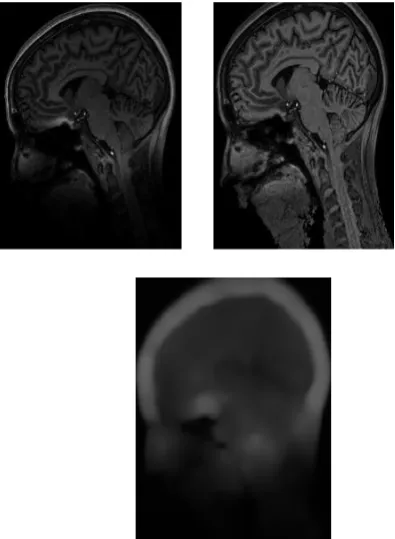
Fig. 5. Application of our method to a 7T
MR image. (a) Original image; (b) Bias corrected image; (c) Computed bias field.
International Journal of Research (IJR)
e-ISSN: 2348-6848, p- ISSN: 2348-795X Volume 2, Issue 12, December 2015Available at http://internationaljournalofresearch.org
bias correction. This result shows the ability of our method to capture and correct such bias, as shown in Fig. 5(b) and 5(c).
5 Conclusions
We have presented a unified framework of bias correction and segmentation. A unique advantage of our method is that the smoothness of the computed bias field is intrinsically ensured by the data term in our variational formulation. Our method is able to capture bias of quite general profiles, and can be used for images of various modalities.
Moreover, it is robust to initialization,
thereby allowing automatic applications.
Comparisons with two well-known bias
correction methods demonstrate the advantages of the proposed method.
References
[1] Wells, W., Grimson, E., Kikinis, R.,
Jolesz, F.: Adaptive segmentation of MRI data. IEEE Trans. Med. Imag. 15(4), 429–442 (1996)
[2] Vovk, U., Pernus, F., Likar, B.: A review
of methods for correction of intensity
inhomogeneity in mri. IEEE Trans. Med. Imag. 26(3), 405–421 (2007)
[3] Lewis, E., Fox, N.: Correction of
differential intensity inhomogeneity in
longitudinal MR images. Neuro. image 23(3), 75–83 (2004)
[4] Dawant, B., Zijdenbos, A., Margolin, R.: Correction of intensity variations in MR images for computer-aided tissues classification. IEEE Trans. Med. Imag. 12(4), 770–781 (1993)
[5] Meyer, C., Bland, P., Pipe, J.:
Retrospective correction of intensity
inhomogeneities in MRI. IEEE Trans. Med. Imag. 14(1), 36 (1995)
[6] Sled, J., Zijdenbos, A., Evans, A.: A nonparametric method for automatic correction
of intensity nonuniformity in MRI data. IEEE Trans. Med. Imaging 17(1), 87–97 (1998)
[7] Leemput, K., Maes, F., Vandermeulen,
D., Suetens, P.: Automated model-based bias field correction of MR images of the brain. IEEE Trans. Med. Imag. 18(10), 885–896 (1999)
[8] Styner, M., Brechbuhler, C., Szekely, G.,
Gerig, G.: Parametric estimate of intensity inhomogeneities applied to MRI. IEEE Trans. Med. Imag. 19(3), 153–165 (2000)
[9] Guillemaud, R., Brady, M.: Estimating
the bias field of MR images. IEEE Trans.Med. Imaging 16, 238–251 (1997)