A Systematic literature review of the contribution of past climate
information services pilot projects in climate risk management
Mary Mwangi 1*, Evans Kituyi 2, and Gilbert Ouma3
1 School of Environment, Water and Natural Resources, South Eastern Kenya University, Kitui
Kenya
2 International Development Research Centre, Regional Office for Sub Saharan Africa 3 Institute of Climate Change and Adaptation, University of Nairobi, Kenya
*Author to whom correspondence should be addressed: School of Environment, Water and Natural Resources, South Eastern Kenya University; P.O Box 170 – 90200, Kitui, Kenya; Tel: +254722966706; Email:[email protected]; [email protected]
Abstract
Many pilot-based initiatives have been developed to promote awareness and use of climate information services among vulnerable smallholder farmers in Africa through million-dollar investments. However, despite their experimental nature, these pilot projects have been successful in raising participating farmers’ awareness and use of climate information services and they can inform transferrable good practices. Through a systematic literature review approach, this review sought to understand ways in which these past pilot projects have contributed to climate risk management in the context of smallholder farming and the factors that led to their success. Results showed that climate information services main contribution to climate risk management has been through facilitating farm level decision making. Factors that led to success of the pilots include: use of downscaled information; building institutional partnerships to add value to climate information; involving farmers through the co-designing and co-developing process; face-to-face way of communication; embedding pre-seasonal workshops in the activities of local institutions for sustainability; using diversity of communication channels to enhance reach among others. These factors can be borrowed as good practices to inform future efforts focused on increasing adoption of climate information services among a wider population beyond pilot project reach.
Keywords: Climate information services; pilot projects; climate risk management, systematic literature review
1. Introduction
The position of agriculture as a leading GDP earner, employer and food provider for most sub-Saharan African countries is increasingly being threatened by climate variability and change [1,2,3,4]. Over 90% of agriculture in Sub-Saharan Africa is rain-fed, leaving smallholder farmers in the region highly vulnerable to climate risks. Traditional climate risk coping strategies are increasingly failing, thereby increasing the vulnerability of the poor to famine and perturbations such as droughts and floods [5,6,7]. Millions of dollars have been invested through initiatives in the search for solutions aimed at cushioning food security on the continent against the impacts of climate change and variability [8].
One such initiative is the promotion of the use of climate information services (hereafter CIS) among smallholder communities. Many CIS initiatives in Africa have tended to be pilot project based and are carried out to either strengthen existing delivery systems or develop these where none existed before [9]. Despite their experimental nature, these pilot cases demonstrate a number of good practices and provide valuable insights for management of climate risks [9]. However, pilots are by nature limited in scale both temporally and geographically. Due to these limitations, only a small portion of the wider community get the opportunity to become pilot beneficiaries. In addition, since pilots are fully dependent on donor funding there is a problem of sustainability of the good practices attained after the pilots come to an end. As a result, good practices learned from pilots have had minimal impact as far as climate risk management is concerned.
2. Methodology
A systematic literature review methodology was adopted to identify the contributions of past CIS pilots and the lessons for scale out and expansion. A systematic literature review is a summary and an assessment of the state of knowledge on a research question or a given topic, which is structured to summarize existing understanding [13]. This review approach is different from the traditional literature review approaches in many ways. One outstanding difference is that the systematic review methodology avoids the inherent bias relating to selection and interpretation of content that characterizes traditional literature review [14]. Recent studies in climate change research have demonstrated the value of this methodology in summarizing state of knowledge from existing literature [13,14,15,16].
Several studies give a discourse of other ways in which the systematic literature review approach differs from the traditional literature reviews [13,17]. First, systematic literature reviews employ pre-defined eligibility criteria for inclusion and exclusion of documents, which enhances both transparency and replicability of the review process. This pre-defined eligibility criteria for documents ensures that the final reviewed documents are based on a criterion that can be defended instead of an ad hoc and biased document selection [17]. Secondly, systematic reviews present a disclosure of the databases searched in the review process and the search keywords used for every database. Lastly, systematic reviews permit the use of qualitative and quantitative approaches to extracting and discuss information from the selected documents. In short, unlike the systematic reviews, the traditional literature review approaches do not provide any details on the review procedures used, which makes it difficult to replicate such studies and validate interpretation [16]. Traditional literature reviews are therefore subjected to researcher bias who can influence the direction of a research question through a biased selection of documents.
results [14,16,17,18,19]. Guided by these authors, this study followed these five systematized methodological steps to select relevant documents for the final review.
2.1 Search for peer review literature
The review focused more on depth rather than breadth of documents following the procedure outlined in [15,14]. Key word searches were performed within the Google scholar and the EBSCO Discovery electronic Tool of the University of Nairobi. The latter brings together the most comprehensive collection of content and creates a unified catalog of the University of Nairobi’s library’s electronic resources accessible through a single search experience. The key words used in EBSCO Discovery tool advanced search included in “all fields” [“climate information service*” or “climate information” or “seasonal forecast*”] AND [“smallholder farm*”]. The advanced search in google scholar included the phrase “climate information services” in “with the exact phrase” field.
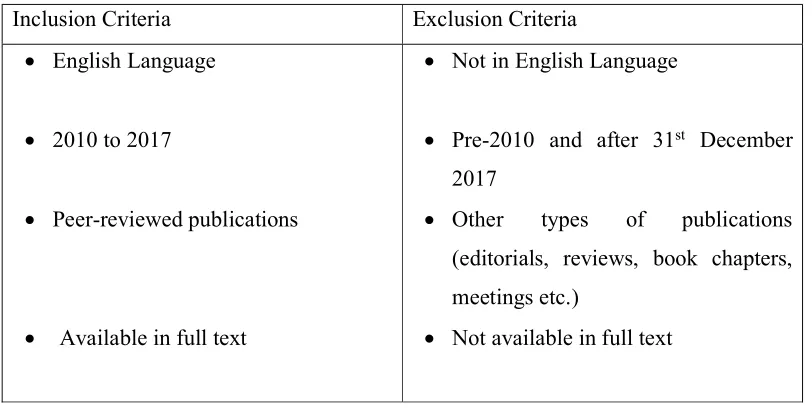
Table 1: Inclusion and exclusion criteria for peer reviewed articles
Inclusion Criteria Exclusion Criteria English Language
2010 to 2017
Peer-reviewed publications
Available in full text
Not in English Language
Pre-2010 and after 31st December
2017
Other types of publications (editorials, reviews, book chapters, meetings etc.)
Not available in full text
2.2 Limitations
notwithstanding, an effort was made to cross check the references cited in the review papers and where deemed fit additional papers were added from the references to minimize this limitation. Another limitation is that the review was based on English written articles only notwithstanding that more relevant articles may be available in other languages.
The review also considered articles published between 2010 and 2018 inclusively. Anything outside the review period was omitted. Lastly [16] observes that challenges of using grey literature are countless adding that a simple search can yield millions of hits. In this regard, the review did not consider grey literature. However, not all pilot project reports are peer reviewed and therefore omission of grey literature affects comprehensiveness. Due to these limitations, the review does not comprehensively capture all there is about the questions at hand but presents just a proxy or a snapshot of the reality.
3. Results and Discussions 3.1 Final review papers
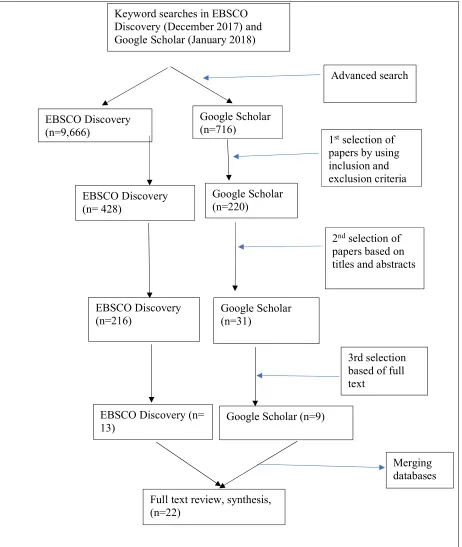
The initial EBSCO Discovery search yielded a total of 9,666 publications. Articles were excluded if published prior to 2010, not published in English, not peer reviewed and not available in full text as shown in the inclusion and exclusion criteria in Table 1. This date was chosen to ensure that research was current. Only full text articles were included. This yielded 428 publications. In the next phase all titles and abstracts were reviewed to ensure relevancy, which yielded 216 publications. In the final step, full texts were assessed to confirm relevancy and this yielded 13 publications for the final review. The Initial google scholar search yielded 716 publications. Limiting the search results to very recent years (2010-2018) and excluding if published prior to 2010 and not available in full text resulted in 220 publications. A review of titles and abstracts resulted in 31 publications that underwent full text review resulting in 9 publications for final review. In total 22 peer review articles were considered for the final review process.
contribution to climate risk management; (2) Key success factors, which considered specific factors that led to pilots’ success with a view to generate lessons for scale up.
Figure 1: Schematic representation of the systematic review process
Keyword searches in EBSCO Discovery (December 2017) and Google Scholar (January 2018)
EBSCO Discovery (n=9,666)
Google Scholar (n=716)
EBSCO Discovery (n= 428)
Google Scholar (n=220)
Advanced search
1st selection of
papers by using inclusion and exclusion criteria
EBSCO Discovery
(n=216) Google Scholar (n=31)
2nd selection of
papers based on titles and abstracts
EBSCO Discovery (n=
13) Google Scholar (n=9)
3rd selection based of full text
Full text review, synthesis, (n=22)
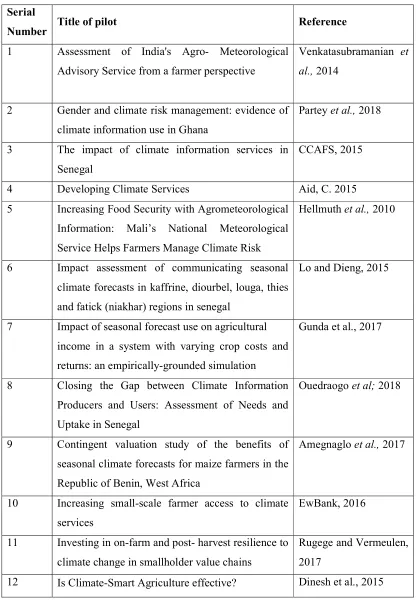
Table 2: Pilot publications that were considered in the final review process
Serial
Number Title of pilot Reference
1 Assessment of India's Agro- Meteorological Advisory Service from a farmer perspective
Venkatasubramanian et al., 2014
2 Gender and climate risk management: evidence of climate information use in Ghana
Partey et al., 2018
3 The impact of climate information services in Senegal
CCAFS, 2015
4 Developing Climate Services Aid, C. 2015
5 Increasing Food Security with Agrometeorological Information: Mali’s National Meteorological Service Helps Farmers Manage Climate Risk
Hellmuth et al., 2010
6 Impact assessment of communicating seasonal climate forecasts in kaffrine, diourbel, louga, thies and fatick (niakhar) regions in senegal
Lo and Dieng, 2015
7 Impact of seasonal forecast use on agricultural income in a system with varying crop costs and returns: an empirically-grounded simulation
Gunda et al., 2017
8 Closing the Gap between Climate Information Producers and Users: Assessment of Needs and Uptake in Senegal
Ouedraogo et al; 2018
9 Contingent valuation study of the benefits of seasonal climate forecasts for maize farmers in the Republic of Benin, West Africa
Amegnaglo et al., 2017
10 Increasing small-scale farmer access to climate services
EwBank, 2016
11 Investing in on-farm and post- harvest resilience to climate change in smallholder value chains
Rugege and Vermeulen, 2017
13 The value and benefits of using seasonal climate forecasts in agriculture: evidence from cowpeas and sesame sectors in climate-smart villages in Burkina Faso
Ouédraogo et al., 2015
14 Review of Climate Service Needs and Opportunities in Rwanda
Nyasimi et al., 2016
15 Review of seasonal climate forecasting for agriculture in sub-saharan africa
Hansen et al., 2011
16 Scaling Up Climate Services for Farmers in Africa and South Asia
Tall et al., 2013
17 Scaling up climate services for farmers: Mission possible.
Tall et al., 2014 a
18 Who gets the information? Gender, power and equity considerations in the design of climate services for farmers
Tall et al., 2014 b
19 The role of climate forecasts in smallholder agriculture: Lessons from participatory research in two communities in Senegal
Roudier et al., 2014
20 Dorward, P., Tall, A., Kaur, H. and Hansen, J. 2014. Training Agricultural Research & Extension Staff to Produce and Communicate Agro-Climatic Advisories, to Enhance the Resilience and Food Security of Farmers and Pastoralists in Tanzania. Preliminary Findings from the GFCS Adaptation Program in Africa. CCAFS Working Paper no. 132. CGIAR Research Program on Climate Change, Agriculture and Food Security (CCAFS). Copenhagen, Denmark.
Dorward et al., 2014
21 Reaching more farmers Innovative approaches to scaling up climate-smart agriculture
Westermann et al., 2015
22 Role of Mobile Phone- enabled Climate Information Services in Gender-inclusive Agriculture
As was stated in the inclusion and exclusion criteria, the review included publications starting from 2010 and above and a graphical representation of publications reviewed by year within the review period is shown in Figure 2.
Figure 2: Number of pilots reviewed by year.
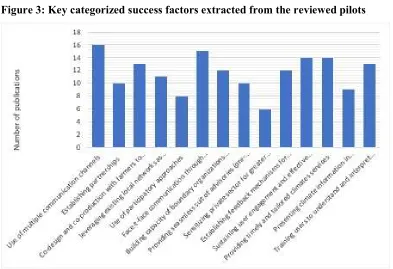
The reviewed articles provide evidence of contribution of CIS to climate risk management through influencing farm level decision making. In addition, the pilot experiences present key factors that contributed to their success, and which can be transferred as good practices to enhance adoption among vulnerable smallholder communities. These two aspects are discussed separately in the following sections.
3.2 Contribution of past CIS pilots to climate risk management in smallholder farming systems
It is evident from reviewed pilots that through effective use of CIS smallholder farmers are able to manage (in other words, anticipate and prepare for) agricultural related climate risks through improved decisions. While these pilot projects employ a wide range of approaches, they collectively demonstrate the utility of CIS in helping smallholder farmers manage climate risk. Specific examples of how CIS contribute to climate risk management are presented in this section. In a pilot experience in Mali, participating farmers through experimental plots on which decisions were made based on agrometeorological information, reported that precise and timely CIS influenced a repertoire of farm decisions ranging from input purchase, irrigation, pesticides and fertilizer use [20]. As a result, participating farmers were able to make better management decisions to confront any kind of risk that climate would pose throughout the cropping season. An experimental study in Burkina Faso consisting of some villages exposed to agro-advisories and control villages that were unexposed to the same demonstrated that climate informed farmers were able to change the way they manage their day to day farm practices for example choosing when to do land preparation, sow, weed and use fertilizer. This enabled them to manage climate risk and improve their resilience [21,22].
Several other pilots continue to demonstrate the contribution of CIS to climate risk management. A pilot initiative in Kenya showed that CIS influenced farmers decisions for instance choosing when to plant, which seed variety to plant, when to weed and use fertilizer among others which enabled them cope through the seasonal climate risks and also led to an increase in yields [25,26]. In addition, farmers also emphasized the importance of receiving seasonal forecasts early enough to inform pre-season management decisions such as seed purchase and land management. In yet another pilot project in Senegal, researchers focused on examining how farmers would make their decisions when provided with different predicted climatic scenarios. Adjusting sowing date in response to dekadal (10 day) forecasts was the common response among farmers [27]. This was unlike the typical tendency to sow as early as the first big rain event has been experienced which could result to loss of seeds in case a dry spell occurs early in the season. This could also lead to greater demands of farm labour as farmers must replant their farms. Other changes in farm management in response to dekadal forecasts in Senegal pilot study included refraining from weeding on the eve of a rainy day to avoid regrowth of the weeds and early harvesting before a rainy dekad to prevent climate risk associated damages.
These findings are similar to those resulting from a pilot project in Ghana where farmers used CIS to inform strategic farm decisions such as when to do land preparation, plant as well as which crop to plant in order to cope with anticipated climate risk [28]. In India, a feedback survey of farmers who were exposed to climate information indicated that the knowledge enabled them to reduce costs on inputs associated with climate uncertainty since they became more aware about the right inputs to use [29]. In another pilot in Wote, Kenya one of the major findings was that farmers tended to adopt conservative farm management strategies in the absence of climate information [30,31]. On the other hand, climate information enabled farmers to plan and implement improved management of crops, which resulted into increased agricultural productivity.
national averages [20]. It was evident from this pilot that increases in farmers ability to understand and hence use agrometeorological information led to increases in farm production and farm incomes. This was similar to Burkina Faso, Kenya, India and Senegal pilots where climate informed farmers obtained higher yields compared to the control groups consisting of climate non-informed farmers [21,23,26,29,30,31]. The increased crop productivity was attributed to the willingness to invest in more expensive inputs by the climate informed farmers. In a pilot project carried out across three pilot sites in Nganyi, Kenya, climate informed farmers reported harvesting three to four times as much maize and sorghum in comparison to what they used to harvest without climate information [5,25,30]. These farmers attributed the increase in the harvest to weather forecast and agrometeorological advisories they received prior to the cropping seasons and seasonal updates they received as the seasons evolved. Similarly, farmers who participated in India’s integrated agrometeorological advisory service pilot initiative reported 10 -15% increase in yields in comparison to farmers who did not receive the advisories [6,30]. These findings are echoed in several pilot initiatives in Senegal [5,30,32,33]. In one of these initiatives comparison was done between test farms which applied climate information and control farms that did not use climate information in order to test increases in yields. The results indicated a 50% increase in souna yields and a 15% increase in groundnut flower yields as a result of using climate information throughout the growing season [33].
population. To this regard, factors that led to the success of the reviewed pilots were extracted and the results are presented in the next section.
3.3 Key success factors emerging from the reviewed pilot experiences, which can be transferred as good practices to enhance adoption of CIS at the County level in Kenya.
The reviewed pilots can be regarded as successful based on their impact on the beneficiary communities. Several factors contributed to the success of the reviewed pilots and these can be borrowed as good practices to inform future endeavors. One success factor is that many of the reviewed pilots used downscaled climate information to develop agrometeorological advisories [6,20,31], which helped to match the forecasts’ geographical scale with that of the farm level decision making. In these pilots, climate forecasts were downscaled using local weather station data since farmers decisions are made at the farms and not over coarse scales of the climate model outputs. This success factor increased the relevancy and usefulness of CIS, which in turn enhanced adoption rate by farmers.
It is also evident that institutional partnerships among climate information providers and agricultural experts are necessary for ensuring that climate information is transformed into agrometeorological advisories that are relevant to the decisions of smallholder farmers through value addition [6,21,23,26,30,20]. These institutional partnerships were enabled through dialogue forums between the climate information providers and agricultural extension officers to translate raw climate information into agriculture advisories just before the beginning of the growing season. The forums enabled gathering together of different expertise needed to transform raw climate information into a form that is usable by farmers, which further increases relevancy of the information. These dialogue forums were later formalized into institutional frameworks for instance in Mali and India [6,20].
Director of Meteorological Services and the County Ministry of Agriculture to develop relevant agricultural advisories.
It is also important to extend these partnerships to include farmers to not only co-produce the climate service but to also co-design the process of information flow [30]. By doing this, farmers perspectives are valued and the provision of climate services is informed by the evolving needs of the farmer. At a County level, these institutional arrangements can be realized through bringing together relevant experts from different ministerial departments and legitimate farmer representatives to co-produce an integrated and tailored CIS. Involving farmers in the co-production process can help to capture the needs of the farmers and therefore tailor climate services to their needs [35]. In addition, co-production process improves farmers’ trust, ownership and uptake of climate services [6,20]. Local radio stations and seed suppliers can also be part of the partnership with the role of communication for instance in [23,30] pilot projects. These broad partnerships contributed to producing, adding value and communicating CIS.
Another success factor is the use of face-to-face way of communicating CIS to the farmers either through various forums such as pre-season workshops and trainings. [30] notes that providing CIS to farmers does not capacitate them to respond and that this capacity can only be realized through participatory face-to-face pre-season training. Through various forms of face-to-face communication, the needs of the farmers can be understood. In addition, farmers views and traditional knowledge can be incorporated into the service thereby realizing the co-production and co-design aspects both of which enhance adoption. The face-to-face communication can also serve as a means to make the probabilistic nature of climate information understandable by the farmers. Pre-season workshops in Burkina Faso enabled farmers to understand the probabilistic nature of climate information as well as its usefulness and limitations [21]. In Wote and Senegal pilots [31,32,33] pre-season workshops were found to be very effective in enhancing farmers’ understanding of probabilistic forecasts as well as identify farmer led farm management decisions in response to the forecasts. These pre-season workshops also provide dialogue space for farmers, climate information providers and agricultural extension officers to co-learn and co-produce relevant CIS [22].
locally existing development organizations that already have interactions with farmers in order to reduce cost [6,30]. This could also ensure sustained provision of services. These organizations include agricultural extension services, Red Cross volunteers, development NGOs and World Vision staff. However, there’s need to build capacity of these organizations to enhance their understanding of the information and ownership so that they can convey and interpret information for farmers [5,33]. There is therefore an opportunity to expand reach and sustain provision of CIS even with limited budget provisions by riding on the numerous local existing networks at the County level. [6] observed that collaboration between climate information providers and local NGOs or other existing projects that have extensive prior interaction with the farmers has the potential to increase reach and uptake of agro-meteorological advisories by embedding it in local practice.
Lack of access to climate information has been a notable obstacle to climate change adaptation [34] and therefore it is important to consider issues regarding information access. Smallholder farmers can be successfully reached through a diversity of communication channels. [28] demonstrates success in exploring different dissemination channels and designs that meet the needs of both men and women farmers. However, these channels should be accessible to rural populations. [6] observed that in the villages where many forms of communication channels were used, awareness and use of climate information ensued. Post season surveys in several pilot projects revealed that farmers have different preferences as far a communication channels are concerned with some preferring either one or a combination of the following: radio, face-to-face village meetings, short message service (SMS), training by agricultural extension agents, announcement over microphones in the villages, farmer groups/clubs, bulletins/booklets among others [6,20,25,26,30,32,33] underscore the need to use a wide mixture of communication methods in order to enhance reach and use of CIS instead of concentrating only on one or a few types.
seems to be no magic bullet when it comes to communication methods. [26] demonstrated success in using mixed communication methods designed through consultation process with the farmers. This did not only ensure taking into consideration the divergent users and gender preferences but also ensured extensive reach of the information. At the County level, farmer consultation can be carried out to establish an effective set of diverse communication channels to ensure wide access and use of CIS.
[35] tapped into agricultural extension services and used them as communication channels, which increased adoption of climate services by smallholder farmers. There was also similar success is using agricultural extension services networks to communicate climate services [6, 30,32,36]. An overarching finding across these pilot projects was that access to extension services increased the likelihood of using climate services. Informed by these past projects, County Director of Meteorological Services can seek support from County agricultural extension staffs to ensure wide farmer access of CIS. Another success factor was presenting climate information in its probabilistic nature rather than simplifying it into a deterministic forecast [26,30,32]. Trainings were conducted to help farmers understand and interpret the probabilistic forecast, which increased transparency of the information and farmers’ confidence in using it. Farmers were empowered to formulate the best bet management decisions to cover the whole envelope of uncertainty. In addition, supplemental seasonal updates were communicated to the farmers in order to assist them to manage uncertainty as the seasons evolved. At the County level farmers can be trained to understand and interpret probabilistic climate information into actionable agro-advisories rather than using deterministic forecast that would be misleading in the long run. This can be supplemented with seasonal forecast updates and advisories for example by issuing 7 or 10 days forecast as the season progresses, which can inform recurrent farm decisions.
trusted local NGOs, CBOs, farm input suppliers, schools, farmer cooperatives and faith-based organizations. These ensure that climate services reach the farmers in the most remote areas operating under marginal infrastructure. In this regard access to CIS can be enhanced at County level by leveraging all local existing networks to act as dissemination units.
Last but not least, two-way communication between the farmer and the climate information providers as well as other stakeholders in the CIS flow chain was found to strengthen farmers confidence in the forecast [5,20,25,26,30,32,35]. These communication means were made either through toll free numbers to CIS providers, interactive radio sessions, climate information call centers and face-to-face meetings. Through the two-way communication, farmers were able to query the information received as well as get clarification regarding information uncertainty, appropriate decision options to consider in response to a forecast among other things, which improved their confidence in using CIS and hence adoption [5,26,32,33,35]. This too can be emulated at County level.
4. Conclusion
Managing climate risk is integral to larger strategies for helping smallholder farmers adapt to the changing climate. CIS offer great opportunity to help smallholder farmers manage impeding climate risk, which contributes to building their adaptive capacity to climate change. As a result, many pilot-based initiatives have been developed to promote awareness and use of CIS among vulnerable smallholder farmers in Africa through million-dollar investments. These pilots have been successful in raising farmers’ awareness and use of CIS and they can inform transferrable good practices. As long as the pilot projects exist, beneficiary farmers are fully engaged in the CIS flow chain starting from data collection (in some pilots) to co-production, delivery, use and evaluation. However, this engagement ends with the end of the pilot projects, which leaves unmet demands as far as climate services are concerned. As a result, the provision, awareness and use of CIS among beneficiary farmers continue to drop soon after the pilot projects end.
establish solutions in two folds: contributions of past CIS pilot projects in climate risk management and success factors that can inform future efforts seeking to enhance wider adoption of CIS.
The review observed that past CIS pilot projects have had enormous contribution towards supporting smallholder farmers to manage climate risk. It is evident across the review that CIS main contribution to climate risk management has been through facilitating farm level decision making. CIS enable smallholder farmers to change the way they manage day to day farm practices through informing strategic farm level decisions such as when to prepare land, sow, weed, use pesticide and fertilizer among others. As a result, smallholder farmers are able to confront any climate related risks throughout the cropping season as well as reduce farm losses that normally result from climate risk. This capacity to manage climate risk through use of CIS improved the resilience of the smallholder farmers and it also resulted in many other associated benefits such as increased farm productivity, farm income, family welfare, food security and health.
On the other fold past CIS pilot projects offer a lot of lessons that can be borrowed as good practices to realize wider adoption of CIS among smallholder farmers. These lessons were based on the factors that contributed to success of the pilot projects. They include: use of downscaled information; building institutional partnerships to add value to climate information; involving farmers through co-designing and co-developing CIS; face-to-face way of communication; embedding pre-seasonal workshops in the activities of local institutions for sustainability; using diversity of communication channels to enhance CIS reach; tapping into the extensive network of agriculture extension services; presenting forecast as probabilistic instead of deterministic; training farmers to understand and interpret probabilistic forecast; two-way-communication between farmers and climate information providers; building capacity of stakeholder organizations to enhance their understanding of the information and ownership of CIS so that they can convey and interpret information for farmers; and sensitizing and involving climate related private sectors in the CIS flow chain.
capacity in the long-term. On the other hand, factors that contributed to the success of the projects can be borrowed as good practices to inform future endeavors seeking to enhance wider adoption among smallholder communities who have been found to be the most vulnerable to climate risk and climate change impacts.
Regarding the methodology employed, this review has proved the superiority of systematic literature review over the traditional literature review methodology. By following a clearly indicated inclusion and exclusion criteria and documenting the search terms and all data bases searched, methodological transparency of the review process and ability to replicate is improved. This is unlike the traditional literature review methodology that neither follows any search criteria nor documents search terms and databases used subjecting it to researcher biased and ad hoc selection of literature. The findings of this review provide a case and a foundation on which to build a wider study towards enhancing wider adoption of CIS.
The Arid and Semi-Arid Lands are usually targeted a lot as test beds for donor projects such as those fronting the use of climate services among the vulnerable inhabitants. However, many of these pilot projects are donor driven and not integrated in the activities of National or County Hydrological Services. This notwithstanding, the factors that make these pilot projects so successful in raising farmers’ awareness and use of climate services can be used to inform the works of National or County Hydrological Services. Guided by these success factors it will be possible to reach more vulnerable farmers sustainably with CIS both at the National and County level. With the now devolved system of governance the County Director of Meteorological Services have the potential to change the narrative surrounding the inadequate use of climate services by raising smallholder farmers’ awareness of the contribution of climate services to climate risk management.
Climate Services (GFCS) is to primarily focus on attaining better access and use of climate services to assist decision making at all levels in support of climate related risks. In this regard, these lessons can be borrowed as good practices in this endeavor.
Author Contributions: Conceptualization, Mary Mwangi; Investigation, Mary Mwangi; Supervision, Evans Kituyi and Gilbert Ouma.
Acknowledgements
The main author gratefully acknowledges Dr. Evans Kituyi and Dr. Gilbert Ouma for their unwavering supervision throughout the study. Collectively, the authors also acknowledge the German Academics Exchange Service (DAAD) for the financial support provided for this study.
Conflict of interest
The authors declare no conflicts of interest
Reference:
1. Müller, C., Cramer, W., Hare, W. L., & Lotze-Campen, H. (2011). Climate change risks for African agriculture. Proceedings of the National Academy of Sciences, 108(11), 4313-4315.
2. Kotir, J. H. (2011). Climate change and variability in Sub-Saharan Africa: a review of current and future trends and impacts on agriculture and food security. Environment, Development and Sustainability, 13(3), 587-605.
3. Calzadilla, A., Zhu, T., Rehdanz, K., Tol, R. S., & Ringler, C. (2013). Economywide impacts of climate change on agriculture in Sub-Saharan Africa. Ecological Economics, 93, 150-165.
4. Dinar, A., Hassan, R., Mendelsohn, R., & Benhin, J. (2012). Climate change and agriculture in Africa: impact assessment and adaptation strategies. Routledge.
on Climate Change, Agriculture and Food Security (CCAFS). Copenhagen, Denmark. Available online at: www.ccafs.cgiar.org
6. Venkatasubramanian K, Tall A, Hansen J, Aggarwal P. 2014. Assessment of India’s integrated agrometeorological advisory service from a farmer perspective. CCAFS Working Paper no. 54. Copenhagen, Denmark: CCAFS.
7. May, S., & Tall, A. (2013). Developing a methodology for the communication of climate services at scale through intermediaries for farmer communities in Africa and South Asia.
8. Spearman, M., & McGray, H. (2011). Making adaptation count: concepts and options for monitoring and evaluation of climate change adaptation. World Resources Institute.
9. Singh, C., P. Urquhart and E. Kituyi. 2016. From pilots to systems: barriers and enablers to scaling up the use of climate information services in smallholder farming communities. CARIAA Working Paper no. 3. International Development Research Centre, Ottawa, Canada and UK Aid, London, United Kingdom. Available online at:
www.idrc.ca/cariaa
10.Singh, C., Daron, J., Bazaz, A., Ziervogel, G., Spear, D., Krishnaswamy, J., ... & Kituyi, E. (2018). The utility of weather and climate information for adaptation decision-making: current uses and future prospects in Africa and India. Climate and Development, 10(5), 389-405.
11.Dilling, L., & Lemos, M. C. (2011). Creating usable science: Opportunities and constraints for climate knowledge use and their implications for science policy. Global environmental change, 21(2), 680-689.
13.Ford JD, Pearce T (2010) What we know, do not know, and need to know about climate change vulnerability in the western Canadian Arctic. Environ Res Lett 5. doi:10.1088/1748-9326/5/1/014008
14.Biesbroek, G. R., Klostermann, J. E., Termeer, C. J., & Kabat, P. (2013). On the nature of barriers to climate change adaptation. Regional Environmental Change, 13(5), 1119-1129.
15.Thompson HE, Berrang-Ford L, Ford JD (2010) Climate change and food security in sub-Saharan Africa: a systematic literature review. Sustainability 2:2719–2733
16.Ford JD, Berrang-Ford L, Bunce A, Mckay C, Irwin M, Pearce T (2014) The status of climate change adaptation in Africa and Asia. Reg Environ Change (this issue). doi:10.1007/s10113-014- 0648-2
17.Berrang-Ford L, Pearce T, Ford JD (2015) Systematic review approaches for climate change adaptation research. Reg Environ Change (this issue). doi:10.1007/s10113-014-0708-7
18. Higgins, J. P., & Green, S. (2011). Cochrane handbook for systematic reviews of interventions 5.1. 0. The Cochrane Collaboration, 33-49.
19.Barth M, Thomas I (2012) Synthesising case-study research—ready
for the next step? Environ Educ Res 18:751–764. doi:10.1080/
13504622.2012.665849
20.Hellmuth, M., Diarra, D.Z., Vaughan, c. and cousin, r. (2010) Increasing Food Security with Agrometeorological Information: Mali’s National Meteorological Service Helps Farmers Manage Climate Risk, World resources report case study, Washington, Dc: World resources report.
22.Ouedraogo, I., Diouf, N. S., Ouédraogo, M., Ndiaye, O., & Zougmoré, R. B. (2018). Closing the Gap between Climate Information Producers and Users: Assessment of Needs and Uptake in Senegal. Climate, 6(1), 13.
23.Dinesh D, Frid-Nielsen S, Norman J, Mutamba M, Loboguerrero Rodriguez AM, and Campbell B. 2015. Is Climate-Smart Agriculture effective? A review of selected cases. CCAFS Working Paper no. 129. Copenhagen, Denmark: CGIAR Research Program on Climate Change, Agriculture and Food Security (CCAFS). Available online at: www.ccafs.cgiar.org
24.Westermann O, Thornton P, Förch W. 2015. Reaching more farmers – innovative approaches to scaling up climate smart agriculture. CCAFS Working Paper no. 135. Copenhagen, Denmark: CGIAR Research Program on Climate Change, Agriculture and Food Security (CCAFS). Available online at: www.ccafs.cgiar.org
25.Ewbank, R. (2016). Increasing small-scale farmer access to climate services. Food Chain, 6(2), 65-76.
26.Aid, C. (2015). Developing Climate Services: Experience in Forecast Use from Kenya. India and Nicaragua [pdf], Programme Experience Report http://programme. christianaid. org. uk/programme-policy-practice/sites/default/files/2016-03/developing-climate-services-experience-feb-2015. pdf> Accessed 17 November 2016.
27.Roudier, P., Muller, B., d’Aquino, P., Roncoli, C., Soumaré, M. A., Batté, L., & Sultan, B. (2014). The role of climate forecasts in smallholder agriculture: lessons from participatory research in two communities in Senegal. Climate Risk Management, 2, 42-55.
29.Mittal, S. (2016). Role of mobile phone-enabled climate information services in gender-inclusive agriculture. Gender, Technology and Development, 20(2), 200-217.
30.Tall A, Hansen J, Jay A, Campbell B, Kinyangi J, Aggarwal PK and Zougmoré R. 2014.
Scaling up climate services for farmers: Mission Possible. Learning from good practice in Africa and South Asia. CCAFS Report No. 13. Copenhagen: CGIAR Research Program on Climate Change, Agriculture and Food Security (CCAFS). Available online at: www.ccafs.cgiar.org
31. International Institute for Sustainable Development (IISD). (2011). Kenya: Increasing
community resilience to drought in Sakai sub-location. Retrieved from
http://www.iisd.org/climate/vulnerability/adaptation_kenya.asp
32.CCAFS. 2015. The impact of Climate Information Services in Senegal. CCAFS Outcome Study No. 3. Copenhagen: CGIAR Research Program on Climate Change, Agriculture and Food Security(CCAFS). Available on line at: www.ccafs.cgiar.org
33.Lo, H. M., & Dieng, M. (2015). Impact assessment of communicating seasonal climate forecasts in Kaffrine, Diourbel, Louga, Thies and Fatick (Niakhar) regions in Senegal: Final Report for CCAFS West Africa Regional Program.
34.Gunda, T., Bazuin, J. T., Nay, J., & Yeung, K. L. (2017). Impact of seasonal forecast use on agricultural income in a system with varying crop costs and returns: an empirically-grounded simulation. Environmental Research Letters, 12(3), 034001. 35.Nyasimi M, Radeny M and Hansen JW. 2016. Review of Climate Service Needs and
Opportunities in Rwanda. CCAFS Working Paper no. 180. CGIAR Research Program on Climate Change, Agriculture and Food Security (CCAFS). Copenhagen, Denmark. Available online at: www.ccafs.cgiar.org