International Journal in Management and Social Science (Impact Factor- 4.358)
Skill Development in MSME – An Observation
Dr. B .Chandra Mohan Patnaik, Associate Professor, School of Management, KIIT University, Bhubaneswar, OdishaDr. Ipseeta Satpathy, D.Litt., Professor,
School of Management, KIIT University, Bhubaneswar; Odisha
Ms. Priti Rachayeeta, Research Scholar
School of Management,KIIT University, Bhubaneswar, Odisha
Abstract
The present paper is an attempt to understand the importance of skill development in MSME.
The objective of the paper to visualize and conceptualize the education profile of labour force, sector wise performance of skill development and list of key skills in demand in various MSME. The data is collected from secondary sources and the paper will give an opportunity for new dimension in the area of MSME research.
Key words- MSME, Skill development, labour and sector An Overview
Creation of business environment is not an easy task as the entire country’s socio economic condition has a direct link with this. A country is investment friendly provided the political, social, technological, legal environment is favourable from the perspective of any kind of future business activities. This is not only true for foreign and Indian big industries; it is equally true for small players as well. As it has been noticed that most of the industrial policy of India, has been focused on development of heavy industries as it was based on the concept of trickle down theory; (which says that as the industrial sector grows) the benefits of the said industrial growth will enrich the lowest strata of the economy. But it never happens in case of India. The end result is uneven distribution of national income and unequal economic development. Today, the sector has come under focus area and lots of initiatives are being implemented so that the true benefits can be utilized properly. Here, one thing that the policy makers should understand that the objective should be long term and the same need to be aligned with growth prospects of the country as well as the people living in that part of the country where MSME activities are taking place. As the sector started growing interest among the different stakeholders it also brings various issues which needs immediate attention so that the true benefits can be achieved in a phased manner. It obvious that even after tremendous government initiatives the sector is lacking in some aspects and these issues should be addressed for the smooth functioning of the sectors. The broad issues as highlighted by the special Prime Minister’s Task Force on MSME sectors are listed below:
Lack of availability of adequate and timely credit High cost of credit
Collateral requirements Limited access to equity capital
International Journal in Management and Social Science (Impact Factor- 4.358)
Problems of storage, designing, packaging and display of products Lack of access to global markets
Inadequate infrastructure facilities Lack of access to modern technology
Lack of skilled manpower for manufacturing, services, marketing etc.
Skill Development
Adequate skilled human resources are one of the key factors for the development of any sector. In case of Indian MSME sector, the skilled resources are not upto the mark and this has obviously affected the growth of the sector in an adequate manner. The skill shortages are obviously an issue and it needs special attention. The sector which has so much of potential in terms of employment generation but it has not able to perform in this regard as lack of skill manpower is a major issue. It is often said that India has the demographic dividend and unlike other developed country where dependency ratio is substantially high, in case of India it is low. This major advantage should be transformed into a skilled manpower so that the industry demand can be made. Today the problem is not related to lack of employment opportunities, it is basically related to the problem of employability. This a major problem in most of the developing countries where young generations are educated but they lack skills which will help them to become industry ready. The government of India has taken various short term as well as long term vocational courses at various stages of education standard so that the students can get technical knowledge along with general education. This system may not be possible to implement single handedly by the government alone, so government has established National Skill Development Council (NSDC) an organization instrumental to implement the skill development initiatives along with various private players who have the expertise in the required field. Various other sector skill councils are also developed as the specific needs of the industry may vary. The idea of providing guiding the students surely helpful to reduce the dropout rate simultaneously which is a major issue in case of Indian education system.
Skill Development & MSME Sector – An Observation
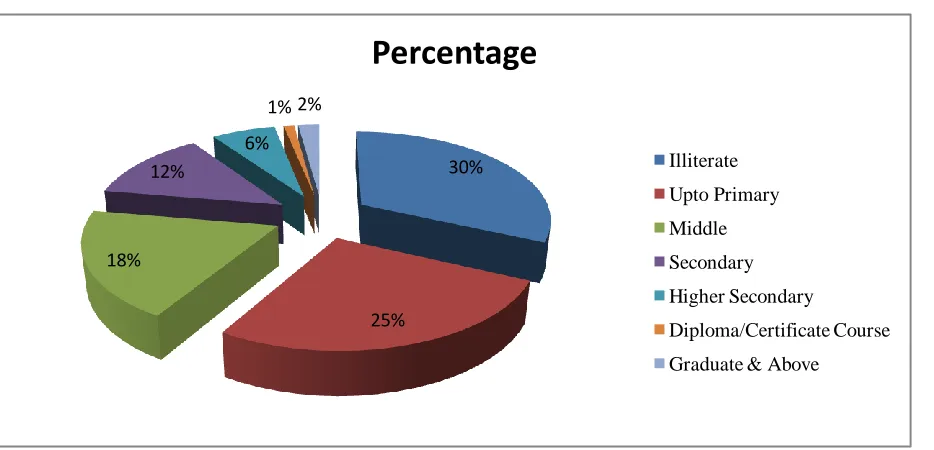
Young population is the main driving force of any nations and they are the segments who are actively taking part in nation building process. India is a country which has a huge population base which automatically transformed into workable forces. It has been estimated that in case of India about 800 million workforces will become ready to join the workforce by 2022 and at present this growth is projected to be 12 million annual year on year growth of workforce.1 Although India is having the advantage of demographic dividend but the real problem lies elsewhere. The ministry, in their reports suggests that till date approximately 38% of the workforce is illiterate, 25% of the workforce is educated upto primary level, 36% of the youth is educated upto middle or higher level and most importantly only 2% of the workforce has formal vocational training.2 This implies a huge gap in terms of demand and supply of skilled manpower. So, the concept of demographic dividend can only be utilized provided the main workforce becomes industry ready. If we look at the educational profile of youth workforce in India in the age group of 15 to 59 years a clear picture of mismatch can be visible. The details is shown in the figure below:
1 Skill Development, Ministry of Micro, Small & Medium Enterprises, 2014 – 15, pp 2 2
International Journal in Management and Social Science (Impact Factor- 4.358) Figure 1.1. Education Profile of Labour Force in India in 15 – 59 Years Age Group
Source: Table 22.19, 12th Plan Document, Volume III, Planning Commission
It can be observed that as the level of education increases the percentage of dropout is also increasing simultaneously. In one of its report of KPMG on Skill Development, 2014, it has calculated that in India, approximately 94 lakh students are taking admission at the primary level but only 12 lakh students are ultimately appearing in the class 12 board examinations. This drop out is across gender and it is quite obvious that percentage of dropout is more among women members as compared to their male counterpart. The graph also suggests that very few percentages of employable workforces have technical knowledge. If only 3% of the educated workforce in the age bracket of 15 to 59 have technical knowledge then surely the gap is quite visible and disturbing also.
The agenda for skill development is understandable and the government has also rightly recognized the need for the same. As the sector has the potential in terms of employment generation and overall economic development of the country, the government of India, has started implementing various skill development initiatives to meet the shortfalls as emerged under the present circumstances.
As the government is more concerned about entrepreneurship activities, the first focus has been given to develop a training programme to train the educated unemployed youth with necessary financial support so that they become self sufficient. The objective is to create a sustainable income opportunities for the required segment along with that in near future this unit may able to generate local employment opportunities. Two separate programmes are implemented by the central government, viz. Entrepreneurship Development Programmes (EDPs) and Entrepreneurship Skill Development Programme (ESDPs). The programme are organized in the trades like electronics, food processing, sericulture, pisciculture, poultry farming, horticulture etc. existing skills of the prospective players may not be sufficient to sustain in the volatile business environment. These are the sectors where high potential for growth is there but the respective players not in a position to nurture the benefits as they are not have been exposed to various technologically upgraded production facilities. This small training can change the entire business environment as it will help to upgrade the skills of the labour as well as entrepreneurs who are willing to expand their business activities with the help of little expertise.
30%
25% 18%
12%
6% 1% 2%
Percentage
Illiterate
Upto Primary
Middle
Secondary
Higher Secondary
Diploma/Certificate Course
International Journal in Management and Social Science (Impact Factor- 4.358)
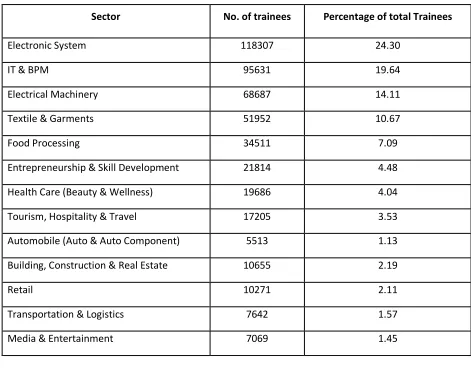
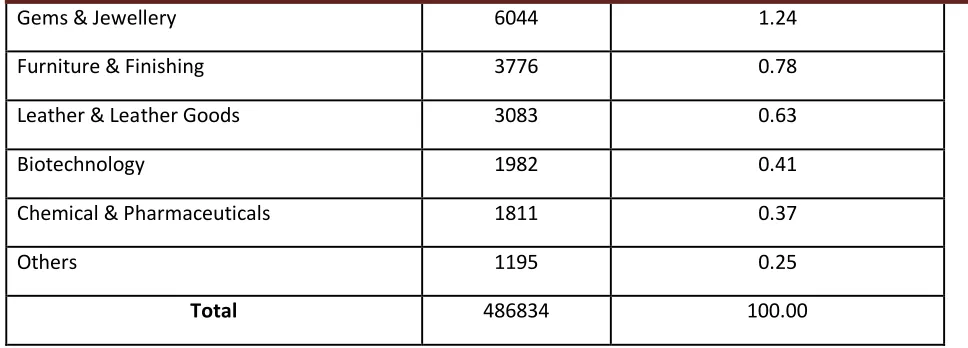
To develop a better exposure for entrepreneurship development programmes the government of India has established The National Institute for Entrepreneurship & Small Business Development (NIESBUD) in the year 1983 followed by Indian Institute of Entrepreneurship in 1993. These autonomous bodies are responsible for development of various training modules as per the requirement of the MSME sectors. In order to promote the entrepreneurial activities the government has introduced the idea of ‘Assistance to Training Institutions (ATI) to spread the market and business opportunities for MSME sectors. The major thrust area is obviously linked to rural development by creating adequate self employment opportunities in the needy areas. Till date the ministry is able to conduct 4, 611 programmes and provided training to approximately 1, 31, 308 trainees.3As the main objective of ATI is to create job opportunities in rural areas as well as urban areas, some of the sectors identified from the beginning where the areas have the potential. The ministry has identified many crucial areas where low skill involvement is a problem and initiatives have been taken to promote the growth initiatives. The table below can throw some light about the sector wise performance and the initiatives taken by the ministry to generate adequate employment opportunities for the rural youth. This sector wise growth needs a clear understanding of the present market demand as well as potential that the area is possessing. Without these two, a proper alignment may not be possible.
Table 1.1 Sector Wise Performance of Skill Development Upto 2014 – 15
Sector No. of trainees Percentage of total Trainees
Electronic System 118307 24.30
IT & BPM 95631 19.64
Electrical Machinery 68687 14.11
Textile & Garments 51952 10.67
Food Processing 34511 7.09
Entrepreneurship & Skill Development 21814 4.48
Health Care (Beauty & Wellness) 19686 4.04
Tourism, Hospitality & Travel 17205 3.53
Automobile (Auto & Auto Component) 5513 1.13
Building, Construction & Real Estate 10655 2.19
Retail 10271 2.11
Transportation & Logistics 7642 1.57
Media & Entertainment 7069 1.45
3
International Journal in Management and Social Science (Impact Factor- 4.358)
Gems & Jewellery 6044 1.24
Furniture & Finishing 3776 0.78
Leather & Leather Goods 3083 0.63
Biotechnology 1982 0.41
Chemical & Pharmaceuticals 1811 0.37
Others 1195 0.25
Total 486834 100.00
Source: Skill Development, Ministry of Micro, Small & Medium Enterprises, 2014 – 15, pp 8 - 9
The table shows that electronic system and IT are the two major areas where most of the training takes place. The government has organized these training to fulfill the job requirement in urban MSME sectors where demands for technologically upgraded manpower resources are of high demand. As the locations of the units are urban specific, it is quite obvious that skill upgradation will also be high in these areas. Along with this it can be observed that the sector wise spread of trained manpower is not even and some of the sectors it is not even 1%. Although the sectors like furniture and finishing, leather and leather goods etc. has a demand in most of the market and geographical places. The numbers of people trained in those sectors are not satisfactory. It can also be observed that even if the objective of the government to promote self employment or entrepreneurial skill development only 4% of the total trained resources have got exposure in this segment. Some of the sectors like automobile, tourism, hospitality etc. have the potential to create self employment opportunities. So more training should be provided to tap these regions.
Table 1.2 Social Category Wise Number of Trainees During 2014 – 15
Category No. of Trainees Percentage
General 103990 79.19
SC 15412 11.74
ST 11906 9.07
Total 131308 100.00
Source: Skill Development, Ministry of Micro, Small & Medium Enterprises, 2014 – 15, pp 8 - 12
International Journal in Management and Social Science (Impact Factor- 4.358)
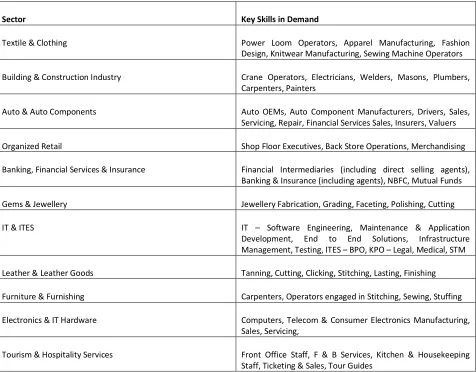
Skill mapping is another important initiative that the government is taking place and an in depth study has already been conducted in all the 652 districts of India in this regard. The idea is to identify the skill gaps and training requirements so as to meet the demand of local industries situated in respective districts. The gap analysis become essential as it leads to create a talent pool which strengthen the supply of manpower for MSME sector. The aim of the initiative is to identify the training institutes, availability of raw materials and types of existing industries in the district so that the right skill gap can be identified and accordingly training programme can be designed for benefit of local workforce. The study thus conducted has identified the key demand drivers and the required skills as demanded by the industry in a specific geographical location are listed below:
Table 1.3. List of Key Skills in Demand
Sector Key Skills in Demand
Textile & Clothing Power Loom Operators, Apparel Manufacturing, Fashion
Design, Knitwear Manufacturing, Sewing Machine Operators
Building & Construction Industry Crane Operators, Electricians, Welders, Masons, Plumbers, Carpenters, Painters
Auto & Auto Components Auto OEMs, Auto Component Manufacturers, Drivers, Sales,
Servicing, Repair, Financial Services Sales, Insurers, Valuers
Organized Retail Shop Floor Executives, Back Store Operations, Merchandising
Banking, Financial Services & Insurance Financial Intermediaries (including direct selling agents), Banking & Insurance (including agents), NBFC, Mutual Funds
Gems & Jewellery Jewellery Fabrication, Grading, Faceting, Polishing, Cutting
IT & ITES IT – Software Engineering, Maintenance & Application
Development, End to End Solutions, Infrastructure Management, Testing, ITES – BPO, KPO – Legal, Medical, STM
Leather & Leather Goods Tanning, Cutting, Clicking, Stitching, Lasting, Finishing
Furniture & Furnishing Carpenters, Operators engaged in Stitching, Sewing, Stuffing
Electronics & IT Hardware Computers, Telecom & Consumer Electronics Manufacturing, Sales, Servicing,
Tourism & Hospitality Services Front Office Staff, F & B Services, Kitchen & Housekeeping Staff, Ticketing & Sales, Tour Guides
Source: Skill Mapping for MSME Sector in India, Published by Office of the Development Commissioner (MSME), Ministry of Micro, Small & Medium Enterprises, Government of India, October 2015, pp 8 – 9
International Journal in Management and Social Science (Impact Factor- 4.358) Concluding Note
It can be seen that an all out effort is visible from different players so that the sector can grow but the problem remains at the implementation level if a sound monitoring facilities failed to be implemented. The rising skill gap is a problem and by 2022 India may be out of skill labour forces even if it has adequate supply of manpower. A human resource without having adequate skills becomes unemployable. The concern is not related to education which they are acquiring at various stages. It is basically related to quality of education and association of technical aspects which sometimes missing from the system. References
Ashu Katyal & Betsy Xaviour (2015); A Study on MSME’s Role in Propelling Economic Development of India & A Discussion on Current HR Issues in MSMEs’ in India, International Journal of Scientific & Research Publication, Vol 5, Issue 2, pp1 – 11
Michael Grimm & Anna Lusia Paffhausen (2013); Interventions for Employment Creation in Micro, Small & Medium Sized Enterprises in Low & Middle Income Countries – A Systematic Review, 8th IZA/ World Bank Conference on Employment & Development
The India Skills Report (2014); CII Report on Skill Development
Empowering MSME through Financing & Linkages (2013); ICC Report