Western University Western University
Scholarship@Western
Scholarship@Western
Electronic Thesis and Dissertation Repository
5-2-2016 12:00 AM
Bed Agglomeration Behavior in a Bubbling Fluidized-Bed
Bed Agglomeration Behavior in a Bubbling Fluidized-Bed
Combustor
Combustor
Ehsan Ghiasi
The University of Western Ontario Supervisor
Prof. Charles Xu
The University of Western Ontario Joint Supervisor Prof Honghi Tran
The University of Western Ontario
Graduate Program in Chemical and Biochemical Engineering
A thesis submitted in partial fulfillment of the requirements for the degree in Master of Science © Ehsan Ghiasi 2016
Follow this and additional works at: https://ir.lib.uwo.ca/etd
Part of the Other Chemical Engineering Commons
Recommended Citation Recommended Citation
Ghiasi, Ehsan, "Bed Agglomeration Behavior in a Bubbling Fluidized-Bed Combustor" (2016). Electronic Thesis and Dissertation Repository. 3758.
https://ir.lib.uwo.ca/etd/3758
This Dissertation/Thesis is brought to you for free and open access by Scholarship@Western. It has been accepted for inclusion in Electronic Thesis and Dissertation Repository by an authorized administrator of
i
Abstract
Agglomeration is a major operational problem during the combustion of biomass containing a high amount of alkali compounds. The agglomerate formation is mainly due to the presence of alkali elements in biomass ashes that form low-melting compounds during the combustion.
In the first part of this project, the critical amount of liquid that would lead to a severe agglomeration/de-fluidization was studied and determined in a lab scale bubbling fluidized bed (BFB) heated at elevated temperatures. To simulate the biomass ashes, various percentages of KCl and KCl-K2SO4 compounds at eutectic composition were mixed with silica sand as the bed material. The results indicated that the formation of channeling/bed-material agglomeration was severe in the presence of KCl or mixture of KCl-K2SO4 with an amount of 0.4-0.6 wt.% with respect to the weight of bed material, being in a good agreement with that was reported by the author’s group in a previous study carried out in a cold BFB test rig using glycerol-water mixture to simulate melted biomass ash. Kaolin and aluminum sulfates were investigated as additives in the BFB and proved to be effective for preventing the bed material agglomeration.
In the second part of this research, we examined the de-fluidization time for BFB combustion of corn stalk (with a high K, Mg, Ca-containing ash) with different bed materials operating at different superficial air velocities. Corn stalk has a high tendency for the unwanted bed agglomeration problems during combustion due to its high contents of K, Ca and Mg in the ash. In combustion of corn stalk, there was a lower deposition tendency of K compounds onto the olivine bed material than that onto the silica sand material, which might account for the longer time to onset of de-fluidization (>12h) for the olivine bed material than that for the silica bed material (8h) during corn stalk combustion. With increasing the superficial gas velocity, the deposited amount of the alkali/alkaline earth elements (K, Ca, Mg) on the bed material (either silica or olivine sand) reduced substantially, which would contribute to reduced tendency of bed agglomeration and de-fluidization.
ii
Co-Authorship Statement
Study of Bed Material Agglomeration in a Bubbling Fluidized Bed (BFB) using KCl and K2SO4
at High Temperatures to Simulate Molten Ash (based on Chapter 3)
Authors: Ghiasi, E., Montes, A., Nanda, M., Tran, H. and Xu, C.
The experiment work was conducted by Ehsan Ghiasi under the supervision of Prof. Charles
(Chunbao) Xu and Prof. Honghi Tran, and the guidance of Dr. Malaya Nanda and Alejandro Montes. Writing and data analysis of this publication was conducted by Ehsan Ghiasi. It was reviewed and
revised by Prof. Charles (Chunbao) Xu and Prof. Honghi Tran. The manuscript will be submitted to “Powder Technology” for consideration of publication.
Behavior and Mechanism of Bed Material Agglomeration in Fluidized-bed Combustion of Corn
Stalk Using Silica or Olivine as Bed Material (based on Chapter 4)
Authors: Ghiasi, E., Tran, H. and Xu, C.
The experiment work and data analysis were conducted by Ehsan Ghiasi. Prof. Charles (Chunbao) Xu, and Prof. Honghi Tran provided general guidance, consultation regarding experimental work and
interpretation of results. The manuscript draft was written and revised by Ehsan Ghiasi, and reviewed
by Prof. Charles (Chunbao) Xu and Prof. Honghi Tran. The manuscript will be submitted to “Energy
iii
Dedication
To
My beloved wife, Fatemeh, &
iv
Acknowledgments
I would like to express my sincere gratitude to my supervisors Professor Charles (Chunbao) Xu at Western University and Professor Honghi Tran at University of Toronto for their valuable guidance, continuous support, encouragement, advice and help throughout my MSc project.
I would like to acknowledge the industrial support from various pulp and paper companies and the Natural Sciences and Engineering Research Council of Canada (NSERC) via the CRD Grant, for their financial support for this project and my master studies.
I would like to thank the faculty and staff of Institute for Chemical and Fuels from Alternative Resources (ICFAR) and Chemical and Biochemical Engineering Department at Western University for providing support and education during my studies.
My gratitude is also extended to all the people I had the pleasure of working with at ICFAR and Western Research Park in Sarnia in the past two years, especially Malaya Nanda, Fang (Flora) Cao, Hojat Seyedy for their contributions and assistance in my research.
My deepest appreciation and sincere gratitude goes to my family; without whom I would have never been able to reach this point. Words cannot express how grateful I am to my parents for their love and support. At last, I would like to gratefully thank my beloved wife, Fatemeh Ferdosian, for her patience, care, unconditional love, encouragement and great support during all these years.
v
Table of Contents
Abstract ... i
Co-Authorship Statement... ii
Dedication ... iii
Acknowledgments... iv
Table of Contents ... v
List of Tables ... ix
List of Figures ... x
List of Appendices ... xiii
List of Abbreviations and Symbols... xiv
1. Chapter 1 ... 1
General Introduction ... 1
1.1 Introduction ... 2
1.2 Fluidized Bed Combustion ... 3
1.3 Bed Agglomeration ... 4
1.4 Knowledge Gaps and Needs of Research ... 5
1.5 Thesis Objective ... 6
1.6 Thesis Structure ... 6
1.7 References ... 8
2. Chapter 2 ... 10
Literature Review... 10
2.1 Biomass ... 11
2.2 Conversion of Biomass to Energy ... 13
vi
Pyrolysis ... 15
Combustion ... 15
2.3 Fluidization and Fluidized Bed ... 16
Minimum Fluidization Velocity ... 17
Experimental approach ... 19
Fluidized Bed Combustor ... 20
Scope of Fluidized Bed Combustor ... 20
2.4 Bed Material Agglomeration and De-fluidization ... 21
Effects of Type of Biomass... 23
Effects of Bed Materials ... 26
Effects of Air Velocity ... 29
Effects of Operation Temperature ... 30
Effects of Additives ... 31
2.5 Summary ... 33
2.6 References ... 35
3. Chapter 3 ... 41
Study of Bed Material Agglomeration in a Bubbling Fluidized Bed (BFB) using KCl and K2SO4 at High Temperatures to Simulate Molten Ash ... 41
Abstract ... 42
3.1 Introduction ... 43
3.2 Experimental ... 45
Experimental Set-up... 45
Materials ... 47
Procedure ... 47
vii
Effects of KCl on formation of agglomerates ... 49
Effects of eutectic mixture of KCl-K2SO4 on formation of agglomerates ... 54
Effects of Additives ... 57
3.4 Conclusions ... 59
3.5 References ... 60
4. Chapter 4 ... 62
Behavior and Mechanism of Bed Material Agglomeration in Fluidized-bed Combustion of Corn Stalk Using Silica or Olivine as Bed Material ... 62
Abstract ... 63
4.1 Introduction ... 64
4.2 Experimental ... 66
Fluidized Bed Combustor (FBC) ... 66
Fuel Preparation ... 68
Methods... 68
4.3 Results & Discussions ... 69
Temperature Profiles ... 69
Composition of Coated Ash-layer on Bed Material ... 72
De-Fluidization Time and Surface Composition of Agglomerates ... 75
Composition of Bottom and Fly Ash ... 79
4.4 Conclusions ... 82
4.5 References ... 84
5. Chapter 5 ... 90
Conclusions and Recommendations ... 90
5.1 Conclusions ... 91
viii
ix
List of Tables
Table 2-1 Major advantages and disadvantages of biomass energy. ... 12
Table 2-2 Different modes of pyrolysis of wood [18,19]. ... 15
Table 2-3 Different values for C1 and C2. ... 19
Table 2-4 Ash analysis (wt%) of three biomass fuels [46]. ... 25
Table 2-5 Physical properties of alumina and silica sands [25]... 26
Table 2-6 Initial de-fluidization temperature of various biomass fuels [30]. ... 27
Table 3-1 SEM-EDX and XPS analytical results for the agglomerates collected after the tests with various amounts of KCl addition. ... 52
Table 3-2 ICP results of washing liquids from pure silica sand and from agglomerates of silica sand with 0.6wt% KCl. ... 53
Table 3-3 SEM-EDX and XPS analysis results for the agglomerates collected after the tests with various amounts of KCl-K2SO4 addition. ... 56
Table 3-4 AAS, IC analysis results of the eutectic mixture of KCl-K2SO4 after heating at 800˚C for various lengths of time. ... 57
Table 3-5 SEM-EDX analysis results for the bed materials collected after the experiments with co-presence of alkali compounds and an additive (Kaolin or Al2(SO4)3). ... 59
Table 4-1 Chemical composition and properties of bed materials. ... 67
Table 4-2 Mineral composition of corn stalk. ... 68
x
List of Figures
Figure 1-1 Biomass resource conversion processes [5]. ... 2
Figure 1-2 Circulating fluidized bed (a) and Bubbling fluidized bed (b) [9,10]. ... 3
Figure 1-3 Chain stoker grate [12]. ... 4
Figure 1-4 schematic of two possible mechanisms of agglomerate formation. ... 5
Figure 2-1 Consumption of energy in the United States in 2008 [1]. ... 11
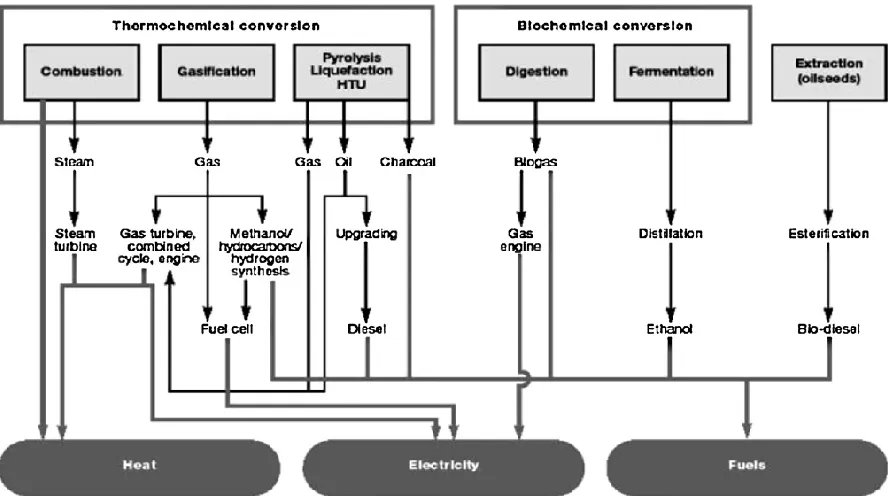
Figure 2-2 Main conversion options for biomass to secondary energy carriers, reprinted with permission from ref. [11]. Copyright (2006) Springer. ... 14
Figure 2-3 Fluidization regimes [27]. ... 17
Figure 2-4 variation in bed pressure drop (ΔP) with superficial velocity (Vg) [29]. ... 20
Figure 2-5 Schematic mechanism of formation of agglomerates (1) Coating-induced mechanism and (2) melt induced mechanism [34]. ... 21
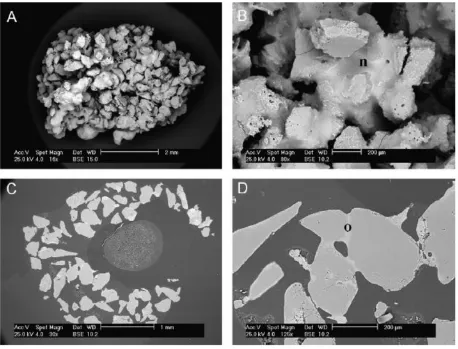
Figure 2-6 SEM micrographs at different magnifications of a typical agglomerate sample (A), details of the external surface (B), cross-section of an agglomerate (C), and details of the agglomerates cross-section (D). Pine seed shells T= 850ºC, dp=212-400 µm, reprinted with permission from ref. [36]. Copyright (2008) Elsevier. ... 22
Figure 2-7 Degree of ash sintering for different biomass fuels at various temperatures [47]. ... 25
Figure 2-8 Effects of bed material size on the de-fluidization time at various temperatures, reprinted with permission from ref. [2]. Copyright (2003) Elsevier... 28
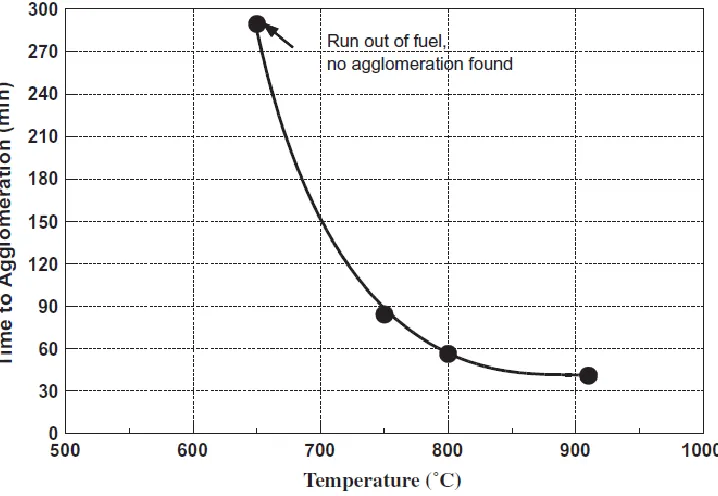
Figure 2-9 Influence of bed material size on de-fluidization time, reprinted with permission from ref. [48]. Copyright (2011) Elsevier. ... 28
xi
Figure 2-11 Influence of temperature on time of agglomeration, reprinted with permission from ref. [48]. Copyright (2011) Elsevier. ... 30 Figure 2-12 Retention of KCl within zeolite 24A and kaolin at various temperatures [61]. ... 32 Figure 3-1 Schematic diagram (A) and photo of lab scale (B) BFB combustor. ... 46
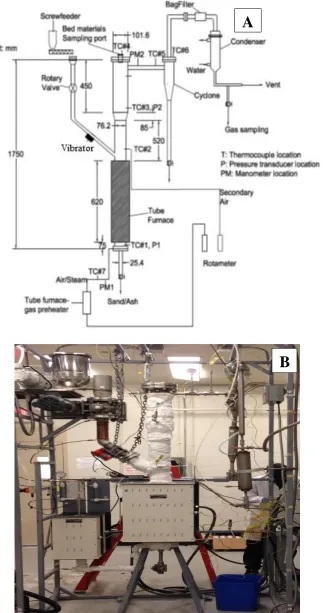
Figure 3-2 Variation of differential pressure (P) and temperature signals with experimental time
in BFB of silica sand particles with 0.0wt% KCl (a); 0.2wt% KCl (b); 0.4wt% KCl(c); 0.6wt% KCl (d). ... 50 Figure 3-3 Formed agglomerates and the bottom view of the BFB reactor. ... 51 Figure 3-4 SEM mapping images of the agglomerates from the test with 0.6% KCl. ... 52 Figure 3-5 Photos of the bed material after the experiment with (A) and without (B) 0.6wt% KCl ... 54
Figure 3-6 Variation of differential pressure (P) and temperature signals with experimental time in BFB of silica sand particles with 0.0wt% KCl-K2SO4 (a); 0.2wt% KCl-K2SO4 (b); 0.4wt% KCl-K2SO4 (c); 0.6wt% KCl-K2SO4 (d). ... 55 Figure 3-7 SEM image (a) and EDX spectra (b) of the formed agglomerates after the BFB test with 0.6wt% KCl-K2SO4... 55 Figure 3-8 SEM mapping images of agglomerates from the test with 0.6% KCl-K2SO4. ... 56
xii
Figure 4-2 Effects of superficial air velocity on the temperature profiles along the reactor height in combustion of corn stalk with silica sand (a) or olivine sand (b) bed material. ... 72 Figure 4-3 EDX results of the surface composition of bed material (silica or olivine sand) after 2, 4, and 6 hours combustion of corn stalk at two air velocities Ug = 2.5Umf (a) and 4Umf (b). ... 74
Figure 4-4 T-P signals at the dense phase bed during combustion of corn stalk in BFB of silica
xiii
List of Appendices
xiv
List of Abbreviations and Symbols
Abbreviation Meaning
BFB Bubbling Fluidized Bed
CFBC Circulating Fluidized Bed Combustor
BFBC Bubbling Fluidized Bed Combustor
FCC Fluid Catalytic Cracking
HHV Higher Heating Value
LHV Lower Heating Value
MSW Municipal Solid Waste
FBC Fluidized Bed Combustion
DDGS Distiller’s Dried Grain with Solubles
IDT Initial De-fluidization Temperature
SEM Scanning Electron Microscopy
EDX Energy Dispersive X-ray
ICP Inductively Coupled Plasma
AAS Atomic Absorption Spectroscopy
IC Ion Chromatography
xv
Symbol Meaning
ρg Gas density (kg/m3)
µg Gas viscosity (Pa.s)
ρp Particle density (Kg/m3)
dp Particle diameter (µm)
G Gravity (m/s2)
Umf Minimum fluidization velocity (m/s)
Bed voidage
εmf Bed voidage at minimum fluidization
condition
Փs Sphericity of solid particles
Vg Superficial gas velocity (m/s)
Wbed particles Net bed weight of the particles (kg)
A Bed cross sectional area (m2)
Lbed Bed height (m)
ΔPbed Bed pressure drop (psi)
Ar Archimides number
Remf Reynold number at minimum fluidization
number
1
1.
Chapter 1
2 1.1 Introduction
Currently, fossil fuels provide almost 80% of the total energy [1]. Relying on single source, depleting the fossil fuel sources, increasing the global energy demand and environmental damages such as global warming and acid rain have forced modern society to seek for reliable and renewable alternative energy sources [2]. There are several types of renewable energy sources such as solar, wind, hydroelectric and biomass. Of these, biomass has received a great attention as it is the only renewable source that can convert into solid, liquid and gaseous fuels, and more importantly chemicals [3]. Biomass has ranked the fourth largest source of energy, providing around 14% of world primary energy [4]. The energy in biomass from plant matter originally comes from solar energy through the process known as photosynthesis [3]. Biomass can be converted into energy or chemicals through various pathways, e.g., physico-chemical, bio-chemical and thermo-chemical (Figure 1-1).
Figure 1-1 Biomass resource conversion processes [5].
Among all these three processes, thermochemical conversion is the fastest and most efficient one. Typical thermochemical conversion processes include combustion, gasification, pyrolysis and liquefaction, etc. [6].
3 1.2 Fluidized Bed Combustion
Fluidized beds are widely used in various industrial processes, including fluid catalytic cracking (FCC), drying, coating on solid item, and solid fuel (such as biomass) conversion for generation of steam, electricity and hydrogen.
Many fluidized bed combustors have been constructed in US, Europe, and southeast of Asia using a wide range of biomass as fuel. Fluidized bed combustion has some advantages such as fuel flexibility (different shapes, sizes, and moisture contents), high efficiency, and low emission level. Fluidized bed boilers are used in pulp and paper mills and sawmills to produce high pressure steam and electric power, particularly in Europe and North America. Fluidized bed combustors can be classified into two main types, circulating fluidized bed combustor (CFBC) and bubbling fluidized bed combustor (BFBC) (Figure1-2). CFBC is preferred in large units especially for sulfur capturing in coal firing while BFBC uses simpler technologies in smaller units to burn biomass [8].
Figure 1-2 Circulating fluidized bed (a) and Bubbling fluidized bed (b) [9,10].
Bubbling fluidized bed (BFB) and chain stoker grate (Figure 1-3) are two main types of biomass boilers that are currently used in pulp and paper mills. Older industries mostly use stoker grate boilers while newer mills use bubbling fluidized boilers as they are larger and most efficient [11].
4
Figure 1-3 Chain stoker grate [12].
Despite all the advantages of fluidized bed combustion, there are some shortcoming such as sintering, deposition of ash particles and bed material agglomeration [13]. Bed material agglomeration is a major operational problem, as discussed in details in the following section.
1.3 Bed Agglomeration
Bed agglomeration is the one of the major problems during the combustion of biomass which could cause partial or complete bed de-fluidization and as a result unscheduled plant shut down. Figure 1-2 shows the schematic mechanism of bed material agglomeration. When two or more particles stick together, they will lose their original weight and cannot be fluidized by the initial gas velocity that was chosen based on the original particle size.
5
Figure 1-4 shows the schematic of two possible mechanisms of agglomerate formation. The mechanism of agglomeration and factors affecting it will be discussed with more details in chapter 2 “literature review”.
Figure 1-4 schematic of two possible mechanisms of agglomerate formation.
1.4 Knowledge Gaps and Needs of Research
6 1.5 Thesis Objective
This research project is a part of a large NSERC CRD project titled “FUNDAMENTAL STUDIES OF DRYING, COMBUSTION AND ASH PROPERTIES OF BIOMASS, AND IMPACTS ON BOILER AND PULP AND PAPER MILL OPERATIONS”, led by The University of Toronto.
The main objective of this CRD project is to obtain fundamental data on drying, combustion and ash properties of biomass mixtures and to use this information to develop viable control strategies and new technologies to improve biomass boiler and mill operations.
This research project carried out by Western University includes 2 parts of studies. Part 1 includes Stage I and Stage II, Part 2 Stage III and Stage IV, as defined below:
Stage I involving experiments in a cold BFB test rig using glycerol-water as the model system to simulate molten ash (the results were reported previously in a published paper by Monte, et al. [18]);
Stage II using a hot BFB (heated to ~400C) and a low melting point salt (KOH) to simulate molten ash (the results are reported in another recent publication by Montes et al. [19];
Stage III involving a hot BFB (heated up to 800C electrically) with addition of different amounts of KCl, K2SO4 and their eutectic mixture to simulate molten ash, and
Stages IV involving a hot BFB (heated to ~800C) with addition of different amount of agricultural residues (corn stalk) with high K contents.
Part 1 of this project (Stage 1 and Stage 2) has been already completed, and drawn the following key conclusions: in the fluidization systems studied the critical liquid amount is 0.2-0.5 wt% (in relation to the weight of bed material loaded) to cause bed material agglomeration and approx. 1wt% to cause severe channeling and very poor fluidization [18,19].
The research results for stages III and IV are presented in Chapters 3 and 4, respectively in this thesis.
1.6 Thesis Structure
7
Chapter 1 briefly describes the importance of renewable energies especially biomass, and introduces the available technologies for conversion of biomass to energy, in particular combustion of biomass and their problems. Finally, the research objectives and thesis structure are outlined.
Chapter 2 presents a summary of available literature studies on biomass energy conversion, with main focus on fluidized bed combustion. Agglomeration as the main operating problem in fluidized bed combustion, and factors affecting the formation of agglomerates and measures to prevent agglomeration are described.
Chapter 3 provides results and discussion from an investigation on critical amount of liquid for bed material agglomeration at high temperature (800ºC) in a bubbling fluidized bed using KCl and K2SO4 to simulate the molten ash. The effect of two additives, i.e., kaolin and aluminum sulfate on prevention of agglomeration were investigated.
Chapter 4 aims to examine the de-fluidization time for BFB combustion of corn stalk (with a high K, Mg, Ca-containing ash) with different bed materials operating at different superficial air velocities.
8 1.7 References
[1] Saidur R, Abdelaziz E a., Demirbas a., Hossain MS, Mekhilef S. A review on biomass as a fuel for boilers. Renew Sustain Energy Rev 2011;15:2262–89.
doi:10.1016/j.rser.2011.02.015.
[2] Boström D, Grimm A, Boman C, Björnbom E, Öhman M. Influence of kaolin and calcite additives on ash transformations in small-scale combustion of oat. Energy and Fuels 2009;23:5184–90. doi:10.1021/ef900429f.
[3] Demirbaş A. Biomass resource facilities and biomass conversion processing for fuels and chemicals. Energy Convers Manag 2001;42:1357–78. doi:10.1016/S0196-8904(00)00137-0.
[4] Demirbas A. Potential applications of renewable energy sources, biomass combustion problems in boiler power systems and combustion related environmental issues. Prog Energy Combust Sci 2005;31:171–92. doi:10.1016/j.pecs.2005.02.002.
[5] Frontier Associates. Texas Renewable Energy Resource Assessment 2008:1–196.
[6] Zhang L, Xu C (Charles), Champagne P. Overview of recent advances in thermo-chemical conversion of biomass. Energy Convers Manag 2010;51:969–82. doi:10.1016/j.enconman.2009.11.038.
[7] Nussbaumer T. Combustion and Co-combustion of Biomass: Fundamentals, Technologies, and Primary Measures for Emission Reduction. Energy and Fuels 2003;17:1510–21. doi:10.1021/ef030031q.
[8] Hupa M. Ash-related issues in fluidized-bed combustion of biomasses: Recent research highlights. Energy and Fuels 2012;26:4–14. doi:10.1021/ef201169k.
[9] Basu P. Combustion of coal in circulating fluidized-bed boilers: a review. Chem Eng Sci 1999;54:5547–57. doi:10.1016/S0009-2509(99)00285-7.
[10] Fernández Llorente MJ, Escalada Cuadrado R, Murillo Laplaza JM, Carrasco García JE. Combustion in bubbling fluidised bed with bed material of limestone to reduce the biomass ash agglomeration and sintering. Fuel 2006;85:2081–92.
9
[11] Montes A. Factors Affecting Bed Agglomeration in Bubbling Fluidized Bed Biomass Boilers. Western University, 2014.
[12] Thai SM, Wilcox SJ, Chong AZS, Ward J, Proctor A. Development of fuzzy based methodology to commission co-combustion of unprepared biomass on chain grate stoker fired boilers. J Energy Inst 2011;84:123–31. doi:10.1179/014426011X12968328625630.
[13] Shimizu T, Han J, Choi S, Kim L, Kim H. Fluidized-Bed Combustion Characteristics of Cedar Pellets by Using an Alternative Bed Material. Energy & Fuels 2006;20:2737–42. doi:10.1021/ef0601723.
[14] Brus E, Marcus O, Nordin A. Mechanisms of Bed Agglomeration during Fluidized-Bed Combustion of Biomass Fuels. Energy & Fuels 2005;1:825–32.
[15] Chirone R, Miccio F, Scala F. Mechanism and prediction of bed agglomeration during fluidized bed combustion of a biomass fuel: Effect of the reactor scale. Chem Eng J 2006;123:71–80. doi:10.1016/j.cej.2006.07.004.
[16] Bartels M, Lin W, Nijenhuis J, Kapteijn F, van Ommen JR. Agglomeration in fluidized beds at high temperatures: Mechanisms, detection and prevention. Prog Energy Combust Sci 2008;34:633–66. doi:10.1016/j.pecs.2008.04.002.
[17] Skrivfars B, Ohman M, Nordin A, Hupa M. Predicting Bed Agglomeration Tendencies for Biomass Fuels Fired in FBC Boilers : A Comparison of Three Different Prediction Methods. Energy & Fuels 1999;13:359–63.
[18] Montes A, Hamidi M, Briens C, Berruti F, Tran H, Xu C (Charles). Study on the critical amount of liquid for bed material agglomeration in a bubbling fluidized bed. Powder Technol 2015;284:437–42. doi:10.1016/j.powtec.2015.07.017.
[19] Montes A, Ghiasi E, Tran H, Xu C (Charles). Study of bed materials agglomeration in a heated bubbling fluidized bed (BFB) using silica sand as the bed material and KOH to simulate molten ash. Powder Technol 2016;291:178–85.
10
2.
Chapter 2
11
This chapter introduces some general aspects of biomass, biomass conversion to energy and fluidization technology. Following a brief overview of mechanism of agglomeration, key factors that are believed to play a role in the formation of agglomerates are discussed.
2.1 Biomass
Biomass is an ancient source of energy that was utilized by mankind because of its availability and accessibility [1]. It is a renewable, carbon-neutral, and abundant source of energy, and is being considered as an alternative to fossil fuels for energy and chemical production [2]. The current production of biomass in the world is estimated to be around 146 billion metric tons a year [3], approx. 8 times the total energy consumption. Biomass is currently the fourth source of energy in the world, after petroleum, coal and natural gas. According to Oregon Department of Energy, biomass accounts for approximately 3% of the total primary energy in the United States (in 2008) (Figure 2-1). The annual biomass energy use reaches ~69 MTOE (million tons of oil equivalent) of energy in Europe in 2003 [4] .
Figure 2-1 Consumption of energy in the United States in 2008 [1].
Usage of biomass as a source of energy has several advantages and disadvantages. The major advantages and disadvantages are summarized in Table 2-1.
Petroleum, 37% Natural Gas
24%
Coal
23% Nuclear Electric Power
9%
1% Solar Energy 34% Hydroelectric 5% Geothermal
Energy
53% Biomass
7% Wind Energy 7% Renewable
12
Table 2-1 Major advantages and disadvantages of biomass energy.
Advantages Disadvantages
Renewable and inexhaustible fuel source
Commonly low content of ash, C, S, N
It reduces environmental hazards
Capturing of some hazardous components by ash during combustion
Relatively cheap resource
It may generate additional coproducts that are valuable
Commonly high contents of moisture, Cl, K, Na, Mn,
Low energy density
Odor, potential emission and leaching of hazardous components during disposal and heat treatment
Potential competition with food and feed production
Great harvesting, collection, transportation and storage cost
Many forms of biomass are available only seasonally
Perishable
The most important sources of biomass are wood, wood wastes, agricultural crops and residues, municipal solid waste (MSW) and food processing wastes, etc. [5]. Biomasses are characterized based on the following parameters:
1. Structural analysis 2. Proximate analysis 3. Ultimate analysis 4. Ash analysis 5. Heating value
13
biomass is the amount of heat produced from the combustion of the fuel and it is measured as a unit of energy per unit mass or volume of fuel. Heating value divided in two types, lower heating value (LHV) and higher heating value (HHV), where LHV is determined by combustion of the fuel completely to form CO2 and H2O vapor, and HHV is determined by combustion of the fuel completely to form CO2 and condensed H2O liquid.
2.2 Conversion of Biomass to Energy
14
Figure 2-2 Main conversion options for biomass to secondary energy carriers, reprinted with
permission from ref. [11]. Copyright (2006) Springer.
Gasification
15 Pyrolysis
Pyrolysis is a thermal decomposition of organic matter at elevated temperatures in the absence of oxygen [16]. In practice, it is not possible to achieve a completely oxygen-free atmosphere as oxygen is present in any biomass, so some oxidation reactions may also occur during the process. Organic materials are transformed in pyrolysis into different products, i.e., gases, liquid, and a solid residue (char) containing mainly carbon and ash. Different proportion of pyrolytic products can be produced by controlling and adjusting the operating conditions, e.g., temperature, pressure, residence time, pyrolysis method and type of biomass. Pyrolysis of biomass could be divided into four stages including removal of moisture (dehydration), decomposition of hemicellulose, cellulose and lignin. Each of these steps proceeds over different temperature ranges [17]. Pyrolysis can be divided into three categories according to the process conditions; i.e. slow pyrolysis, intermediate pyrolysis and fast pyrolysis [18,19]. The conditions of each process are shown in Table 2-2. Slow pyrolysis is carried out at a low temperature for a long vapor residence time which leads to produce more charcoal. The intermediate pyrolysis is carried out at a moderate temperature
and residence time. In contrast, fast pyrolysis is conducted at a high temperature, a short residence time, and in the absence of oxygen to produce more liquid fuels [20]. Increasing attention is now being paid on fast pyrolysis process, as the obtained liquid product, fast pyrolysis oil, could be used as fuels and chemicals [18]. Fast pyrolysis process is significantly influenced by factors such as mass and heat transfer, as well as chemical reaction kinetics [16,20].
Table 2-2 Different modes of pyrolysis of wood [18,19].
Types of pyrolysis Residence Time Temperature (ᵒC) Yield (%)
Liquid Char Gas
Slow Hours/Days 400 30 35 35
Intermediate 10-30s 500 50 25 25
Fast ~1s 500 75 12 13
Combustion
16
basic reactions of combustion are oxidation of C and H to form carbon dioxide and water. Combustion of biomass, although being ancient, still requires improvement in combustion efficiency, emissions and cost reduction to be a reliable substitute for fossil fuels. Besides C, H and O, there are some undesired elements such as N, K and Cl in biomass that are sources of NOx emission and KCl – causing operating problems (agglomeration and fouling) [23].
When compared to fossil fuel-fired boilers, biomass boilers emit a larger amount of NOx. Several options have been proposed to reduce the emission of NOx during biomass combustion, such as (1) the usage of native wood owing to its low contents of nitrogen and ash, and (2) co-firing of biomass and another fuel (such as coal) to reduce the NOx emission by providing lower combustion temperature [24]. For large-scale industrial applications, biomass combustion technologies include pulverized bed combustion, fixed bed combustion and fluidized bed combustion. Among these technologies, fluidized bed combustion is widely adopted for burning biomass even for the low quality of biomass with high ash content and low heating value [25].
2.3 Fluidization and Fluidized Bed
Fluidization is a process in which the solid bed materials can behave as a fluid by passing the gas or liquid upward through the bed. Usually, fluidization is applied in industries for two types of processes that require rapid heat and mass transfer in the process [26]:
1) Physical processes, such as drying, mixing of particles.
2) Chemical processes, such as fluid catalytic cracking (FCC), solid fuel conversion and gas-solid reactions.
17
Figure 2-3 Fluidization regimes [27].
Minimum Fluidization Velocity
The minimum fluidization velocity (Umf) (“incipient fluidization velocity”) is the superficial gas velocity (Vg) that can suspend/fluidize the solid particles in the bed. At this point the bed material behaves as a liquid. The minimum fluidization velocity depends upon a number of factors, such as, particle density, particles size, particles shape, viscosity and density of fluid, temperature and pressure. Umf can be determined by using some empirical correlations based on the famous Ergun’s equation and more accurately by experiments.
2.3.1.1 Empirical Calculation of Umf
Leva [28] proposed a correlation in 1959 which is most commonly used in industries. It works well when Remf <30 (Remf is the Reynold number at minimum fluidization condition) for relatively small particles: 88 . 0 06 . 0 94 . 0 82 . 1 4 ) ( 10 169 . 7 g g g p p mf gd U (2-1)
18 2.3.1.2 Theoretical Calculation of Umf
At minimum fluidization, the bed is at boundary between fixed and fluidized condition. The frictional bed pressure drop (ΔPfbed) can be predicted by Ergun’s equation for a fixed bed with height H:
) ( ) 1 ( 75 . 1 ) ( ) 1 (
150 3 2 2 3
2 dp V d V H P g g p g g bed fbed
(2-2)
where Vg is the superficial gas velocity, µg is the viscosity of the gas, ε is the voidage, Փ is the sphericity of the particles, dp is the mean diameter and ρg is the gas density.
On the other hand, the fluidization occurs when the frictional bed pressure drop becomes equal to the weight of the bed particles per unit area
) )(
1
( mf p g
bed es bedparticl fbed gH A W
P
(2-3)
where Wbed particles is the net weight of particles, A is the bed cross sectional area and εmf is the bed voidage at the minimum fluidization condition.
Umf can then be calculated by combining Equations (2-2) and (2-3) for ΔPbed:
g g mf p s mf mf g g mf p s mf g g s g
p g d U d U
d 2 3 2 3 2 3 ) 1 ( 150 75 . 1 ) ( (2-4)
Equation (2-4) can be simplified to:
2 3 2 3 Re 75 . 1 Re ) 1 ( 150 mf s mf mf s mf mf r A
(2-5)
where Archimides number (Ar) and Reynolds number (Remf) are:
g g mf p mf U d
Re (2-6)
2 ) ( g g s g p r g d A
19 The solution of Equation (2-5) is
1 5 . 0 2 1 ) (
Remf C C Ar C (2-8)
with s mf C ) 1 ( 86 . 42 1
2 (2-9)
3
2 0.5714 s mf
C (2-10)
Table 2-3 Different values for C1 and C2.
Reference C1 C2
Wen and Yu (1966) 33.7 0.0408
Richardson & St Jeronimo (1971) 25.7 0.0365
Thonglimp et al. (1894) 31.6 0.0425
Thus, the minimum fluidization velocity can be found:
1) If sand mfare known, Remf and Umf can be calculated directly.
2) If s andmfare not known (unfortunately the usual case), correlated values for C1 and C2 must be used.
Experimental approach
The pressure drop method can be used to determine the Umf by plotting ΔP vs Vg curve.This method involves the use of data on variation in bed pressure drop across a bed of particulate solids (particle size not too small) with fluid velocity [26].
20
ε0 to εmf, resulting in a decrease in pressure drop to a value which is independent of fluid velocity (static pressure drop of the bed). At point B, the fixed bed starts to change to the fluidized bed until point C. The bed pressure drop beyond the point C remains unchanged even by increasing the superficial gas velocity (Vg). By decreasing the upward flow of gas and retracing the path, as it shown in Figure 2-4 by line DCG. It shows that the pressure drop was less when the gas flow decreased in compare with when the upward flow gas increased. Point C is the transition point between a fixed bed and fluidized bed. The velocity corresponding to this transition point, determined graphically, is the minimum fluidization velocity (Umf) [29].
.
Figure 2-4 variation in bed pressure drop (ΔP) with superficial velocity (Vg) [29].
Fluidized Bed Combustor
Fluidized-bed combustion (FBC) is considered as the most suitable technology for burning different types of biomass. Two most popular modes of fluidized bed combustion installations are circulating fluidized-bed combustion (CFBC) and bubbling fluidized-bed combustion (BFBC). CFBC is mainly used in large scale burning of coal and BFBC has a simpler reactor configuration so is commonly used for biomass combustion [30].
Scope of Fluidized Bed Combustor
21
lower pollutant (particularly NOx) emission, and homogenous temperature distribution. In spite of the advantages of fluidized bed combustion of biomass, there are some issues in the process such as corrosion, fouling, and agglomeration. Sulfur and chlorine in the biomass that release during the combustion are the main routes of corrosion. The corrosion mechanism in a biomass combustor or boiler can be divided into three types: (1) gas species corrosion (2) solid phase corrosion (3) molten phase corrosion. Fouling or the formation of ash deposits on the surface of heat transfer equipment leads to falling of the thermal efficiency of biomass boilers.
2.4 Bed Material Agglomeration and De-fluidization
Agglomeration is the most important operating problem encountered in fluidized bed biomass combustors. It causes partial or complete de-fluidization, leading to unscheduled plant shut downs [31]. Figure 2-5 shows a schematic mechanism of the formation of agglomerates. When two or more small particles stick together, they form bigger particles, which will no longer be able to fluidize with the same gas velocity [32]. The formation of a sticky molten ash layer around the bed material is the main cause of agglomerate formation. In addition, the reactions of alkali compounds that are present in the ash and bed material at high temperature may lead to formation of low melting-point compounds that might contribute to the bed material agglomeration [32,33].
Figure 2-5 Schematic mechanism of formation of agglomerates (1) Coating-induced mechanism and
(2) melt induced mechanism [34].
22
effects of alkali melt compounds (potassium) in the agglomeration process with silica sand particles in a fluidized bed.
Figure 2-6 SEM micrographs at different magnifications of a typical agglomerate sample (A), details
of the external surface (B), section of an agglomerate (C), and details of the agglomerates
cross-section (D). Pine seed shells T= 850ºC, dp=212-400 µm, reprinted with permission from ref. [36].
Copyright (2008) Elsevier.
23
KOH was used to simulate the molten ash. The results revealed that 0.5wt% and 0.8wt% were the critical amount of liquid that initiate the de-fluidization in BFB at 3.9 Umf and 5.9 Umf, respectively.
Many factors including type of biomass, nature of bed material, air velocity, operating conditions and additives can affect the formation of agglomerates in the bed.
Effects of Type of Biomass
Characteristics of biomass depend on the type of plant and the growth conditions. Biomasses with a larger amount of K are most problematic during the combustion due to the higher potential of bed material agglomeration. Several studies have been reported on the effect of different fuel types on the formation of agglomerates [39–42]. For example, Grimm et al. [31] conducted a study on the influence of four different biomass fuels on bed agglomeration in a bench scale bubbling fluidized-bed reactor. The used biomass fuels in this study included willow, logging residues, wheat straw, and wheat distiller’s dried grain with solubles (wheat DDGS). It was found that the content of potassium had a pronounced effect on the de-fluidization temperature. Among these fuels, wheat straw consists of the higher amount of K with the lowest initial de-fluidization temperature at 750ºC, and in contrast, logging residues exhibited the highest initial de-fluidization temperature approximately at 1060ºC for both bed materials (olivine and silica sand). Both DDGS (rich in K and Mg) and wheat straw (rich in Si and K) demonstrated similar bed agglomeration tendency regardless of the type of bed materials.
24
et al. [44] investigated the mechanism of bed agglomeration during the fluidized bed combustion of five different biomass fuels including bark, reed canary grass, peat, olive residues, and straw in a bench-scale system. The fuel characteristics showed that bark, olive residues and peat contain high percentages of Ca in ash (39, 18 and 24wt%, respectively) while the percentage of K is much dominant in olive residue-ash (18wt%) and straw-ash (25wt%). It was observed that an ash-layer formed around the bed material during the combustion of all fuels except straw. In the case of olive residues and bark, the main compound of the formed layer was potassium calcium silicates. The layer formed with olive residues contains mainly potassium and silicon with small amount of calcium and magnesium. However, the ash layer from bark mainly consists of potassium, calcium and silicon. In another study, the initial agglomeration temperatures of four different agricultural residues, i.e., rice husk, bagasse, cane trash and olive flesh, were examined in a fluidized bed for combustion or gasification of these feedstocks [45]. The initial de-fluidization temperatures of all biomass fuels were lower than the predicted values from the ASTM standard ash fusion test. The initial agglomeration temperature of rice husk and bagasse were reported to be more than 1000ºC, but cane trash and olive flesh have higher agglomeration tendency leading to a lower de-fluidization temperature. In addition, when lime was used as a bed material instead of silica sand, the de-fluidization happened at a higher temperature. Accordingly, rice husk and bagasse with a higher agglomeration temperature are more suitable biomass feedstocks for fluidized-bed biomass combustors.
25
Table 2-4 Ash analysis (wt%) of three biomass fuels [46].
Compound Giant Reed Sweet Soghum Bagasse Olive Bagasse
SiO2 44.2 31.6 26.4
Al2O3 1.8 1.9 4.8
Fe2O3 0.9 0.4 7.3
CaO 1.8 10.9 27.1
MgO 2.8 6.3 4.7
TiO2 0.1 - 0.3
Na2O 0.5 0.2 -
K2O 30 31.6 25.8
P2O5 3.2 3.8 2.6
Cl - 5.1 -
Others 14.7 8.2 1
A comprehensive study [43] has been reported on the ash sintering of nine different agricultural residues. Figure 2-7 presents the ash sintering and melting behaviours of these fuels. As shown in the Figure, wheat waste has the lowest sintering temperature at 700ºC which could be due to its high contents of K, Cl, P and S in the ash, along with low contents of Ca and Si. In contrast, the highest ash sintering temperature was observed with bluegrass seed likely owing to the low concentration of K, P, Cl, S and Ca in the ash, and its large Si content (42g/kg dry fuel).
26 Effects of Bed Materials
It is well known that silica sand is the most common bed material for biomass combustion in fluidized bed combustors due to its low price among other bed materials. However, silica sand is the most problematic type of bed material for the combustion of biomass fuels. Silica sand can react with alkali compounds from the biomass ashes, and form a low melting-point alkali silicate, which would accelerate the bed material agglomeration [48]. Many studies have been reported on the effects of types and particle size of bed materials on the bed material agglomeration [45,48,49].
Shimizu et al. [25] investigated effects of bed materials on the de-fluidization time and temperature during combustion of cedar pellet. In this study, silica sand and porous alumina were employed as bed materials (Table 2-5). The maximum operating temperature for the system with silica sand was 800ºC and the system had to be stopped after 1hour operation due to the occurrence of severe agglomeration and de-fluidization of bed materials. Whereas, when alumina was used a bed material, the bed could be operated up to 950ºC without apparent formation of agglomerates. The porous structure of alumina captured the volatile compounds released from the combustion of fuel pellets and most of the combustion took place in the reactor bed (dense phase). Therefore, the temperature of alumina bed was higher than that of the silica sand bed, with a higher temperature gradient between the bed material and the freeboard zone.
Table 2-5 Physical properties of alumina and silica sands [25].
Bed material Specific surface area (m2/g)
Average diameter (µm)
Bulk density (kg/m3)
True density (kg/m3)
Alumina sand 214 500 780 3200
Silica sand 9.2 150 1223 2600
27
and Ca, and the inner layers of the agglomerates formed in the olivine bed made of primarily Mg, Si, and Ca.
Table 2-6 Initial de-fluidization temperature of various biomass fuels [30].
Fuel Olivine bed (ºC) Silica bed (ºC)
Willow ˃ 1060 900
Logging residues ˃ 1060 1030
DDGS Total def. during comb. at ~
800
Total def. during comb. at ~ 800
Wheat straw 740 750
28
Figure 2-8 Effects of bed material size on the de-fluidization time at various temperatures, reprinted
with permission from ref. [2]. Copyright (2003) Elsevier.
The influence of bed material size on agglomeration was also studied by Chunjiang et al. [48] for combustion of high-alkali straw. They adjusted the minimum fluidization velocity in accordance to the variation of the bed material particle size in order to evaluate the effects of bed particle size on bed de-fluidization. Figure 2-9 shows the de-fluidization time versus the bed material size. Again, the smaller particles demonstrated low tendency towards agglomeration due to better heat and mass transfer throughout the bed, reducing the extent of hot spot in the bed and hence the extent of ash melting, and eventually the tendency of agglomeration and de-fluidization.
29 Effects of Air Velocity
The ratio of superficial gas velocity to the minimum fluidization velocity, Vg/Umf, is called the fluidization number. When the minimum fluidization velocity remains constant, the fluidization number increases with increasing the gas velocity. The effects of air velocity (or fluidization number) on the de-fluidization time for fluidized-bed combustion of biomass have been studied [50–52]. Rozainee et al. [51] reported that the optimum fluidization number for combustion of rice husk in a fluidized bed reactor was about 3.3. Further increasing the fluidization number would prevent the rice husk (with a light density) from being well mixed with the bed material. This results in pyrolysis of the biomass mainly in the freeboard. However, if the fluidization number is below the optimum value, the de-fluidization time becomes shorter due presumably to the poor mixing of the feedstock in the bed. Lin et al. [2] showed that increasing the fluidizing gas velocity extended the de-fluidization time due to better mixing of bed materials and forming bigger bubbles in the bed, which could break the formed agglomerates. In a study by Shiyuan et al. [53], the effects of gas velocity on de-fluidization time were investigated at 900ºC. The obtained results are presented in Figure 2-10. The de-fluidization occurred at a longer time when the gas velocity increased. At a higher gas velocity, the forces of attrition and breaking acting on agglomerates increased, resulting in more fly ash particles entrained in the flue gas. Both would lead to retarding the de-fluidization time. Similar results were reported in other studies on fluidized bed combustion of biomass [32,48,54,55].
30 Effects of Operating Temperature
Temperature is another pronounced factor which could be adjusted to control the formation of agglomerates in fluidized bed biomass boilers. As per Lin et al. [52], de-fluidization process was very sensitive to temperature. Their results showed that the formation of agglomerates was enhanced with increasing the operating temperature. At low temperatures, the agglomeration process was retarded with a longer de-fluidization time. In contrast, at high temperatures, alkali compounds in the ash of biomass could react with silica sand bed material and form low melting point eutectics quickly, which would cover the surface of bed particles and accelerate the agglomeration and de-fluidization. Chunjiang et al. [48] investigated the effects of operating temperature on agglomeration time for combustion of rice straw at temperatures ranging from 650ºC to 900ºC. Figure 2-11 displays the effects of temperature on agglomeration. As expected, the fastest de-fluidization happened at 900ºC due to enhanced reactions between the alkali ash with bed material forming form low melting point eutectics, which promotes the formation of agglomerates.
Figure 2-11 Influence of temperature on time of agglomeration, reprinted with permission from ref.
31
Similarly, Li et al. [53] reported the influence of the bed temperature on the de-fluidization time in fluidized bed combustion of wheat straw. The de-fluidization was achieved after around 14h and 0.2h at two different temperatures of 750ºC and 950ºC, respectively. The above results demonstrated negative effects of temperature on bed material agglomeration in fluidized bed combustors.
Effects of Additives
Additives refer to a group of minerals or chemicals that can retard formation of bed material agglomeration by increasing the melting temperature of ashes and capturing the problematic components. Use of additives is one of the most practical options to mitigate the ash related problems during biomass combustion. The commonly used additives can be categorized in four groups of materials based on their reactive components, including Al-silicate, sulphur, calcium and phosphorous based materials. Additives can mitigate the ash related problems through the following mechanisms:
1) Increasing the biomass ash melting temperature by introducing inert elements in ash residues,
2) Physical adsorption and elutriating troublesome ash species from combustion facilities,
3) Capturing problematic ash species via chemical adsorption and reactions,
4) Restraining biomass ash sintering via the diluting effects of the additives [56].
Potential additives for reducing biomass ash related problems have been investigated in many studies in the last decades [47,57,58].
32
due to the higher content of potassium in wheat straw. In another investigation by Ohman et al. [60], effects of addition of kaolin and limestone were studied on the slagging of problematic and problem-free wood fuels. The authors demonstrated that, the addition of 5wt% of limestone (with respect to the bed material) to fluidized bed of silica sand with the problematic stemwood raw material resulted in complete prevention of slagging tendency probably due to the formation of high melting-point calcium-silicates and oxides. On the other hand, it was found that the addition of kaolin had a minor effect on reduction of agglomeration tendency of the problematic raw material, but surprisingly increased the slagging tendency of the problem-free stem wood. The possible reason is that with the problem-free biomass, kaolin reacted with the high melting-point Ca-Mg oxides to form low melting-point Ca-Al-K compounds, which hence accelerated the formation of agglomerates. As well known, the presence of KCl plays a major role in ash sintering and bed material agglomeration during combustion of biomass fuels. The addition of additives can also be effective for capturing the KCl and preventing the formation of agglomerates. The influence of two mineral additives, kaolin and zeolite 24A, on the capturing of KCl was investigated [61]. The results indicated that both zeolite and kaolin had high capacity for retention of KCl (Figure 2-12). As shown in the Figure, almost 50% and 40% of KCl can be captured by zeolite 24A and kaolin, respectively, at 1000ºC. The KCl-capturing capacity of both additives is higher at 900ºC than that at 1000ºC.
33
The mechanism of the interaction between vapor phase potassium species and kaolin was studied at temperatures ranging from 600ºC to 1000ºC by a surface ionization detector [21]. The possible mechanism proposed in the formation of the high melting compounds involves the following reactions:
Al2O3.2SiO2 + 2 KCl+ H2O(g) → 2KAlSiO4 + 2HCl(g) (2-11)
Al2O3.2SiO2 + K2SO4→ 2KAlSiO4 + SO3(g) (2-12)
Al2O3.2SiO2 + 2 KOH → 2KAlSiO4 + H2O(g) (2-13)
These reactions show that different potassium species (KCl, K2SO4 and KOH) can be captured by meta-kaolinite to form a Kalsilite which has high melting temperature at around 1500ºC.
Peat was suggested as an innovative additive for reduction or prevention of the formation of agglomerates for fluidized bed combustion of forest biomass fuels [62]. For instance, the addition of 5wt% of the Rojnoret peat as a co-combustion biomass into the spruce bark prevented the agglomeration of the bed materials, and blending <30wt% of the peat fuels with bark could eliminate bed material agglomeration completely.
2.5 Summary
34
35 2.6 References
[1] Saidur R, Abdelaziz E a., Demirbas a., Hossain MS, Mekhilef S. A review on biomass as a fuel for boilers. Renew Sustain Energy Rev 2011;15:2262–89.
doi:10.1016/j.rser.2011.02.015.
[2] Lin W, Dam-Johansen K, Frandsen F. Agglomeration in bio-fuel fired fluidized bed combustors. Chem Eng J 2003;96:171–85. doi:10.1016/j.cej.2003.08.008.
[3] Demirbaş A. Biomass resource facilities and biomass conversion processing for fuels and chemicals. Energy Convers Manag 2001;42:1357–78. doi:10.1016/S0196-8904(00)00137-0.
[4] Kopetz H. Biomass- a burning issue: Policies needed to spark the biomass heating market. Refocus 2007;8:52–4,56–8.
[5] Demirbas MF, Balat M, Balat H. Potential contribution of biomass to the sustainable energy development. Energy Convers Manag 2009;50:1746–60.
doi:10.1016/j.enconman.2009.03.013.
[6] Zhang L, Xu C (Charles), Champagne P. Overview of recent advances in thermo-chemical conversion of biomass. Energy Convers Manag 2010;51:969–82. doi:10.1016/j.enconman.2009.11.038.
[7] Abbasi T, Abbasi SA. Biomass energy and the environmental impacts associated with its production and utilization. Renew Sustain Energy Rev 2010;14:919–37.
doi:10.1016/j.rser.2009.11.006.
[8] García R, Pizarro C, Lavín AG, Bueno JL. Biomass proximate analysis using
thermogravimetry. Bioresour Technol 2013;139:1–4. doi:10.1016/j.biortech.2013.03.197.
[9] Sluiter JB, Ruiz RO, Scarlata CJ, Sluiter AD, Templeton DW. Compositional analysis of lignocellulosic feedstocks. 1. Review and description of methods. J Agric Food Chem 2010;58:9043–53. doi:10.1021/jf1008023.
[10] Cpareda SC. Introduction to Biomass Energy Conversions. CRC Press, Taylor & Francis Group; 2013.
36 2006;11:335–67.
[12] Cheng J. Biomass to Renewable Energy Process. CRC Press; 2009.
[13] McKendry P. Energy production from biomass (part 3): Gasification technologies. Bioresour Technol 2002;83:55–63. doi:10.1016/S0960-8524(01)00120-1.
[14] Rajvanshi AK. Biomass Gasification. Altern. Energy Agric. Second, CRC Press; 1986, p. 83–102.
[15] Orı A, Aznar MP. Biomass Gasification with Air in an Atmospheric Bubbling Fluidized Bed . Effect of Six Operational Variables on the Quality of 1996;5885:2110–20.
[16] Balat M, Balat M, Kırtay E, Balat H. Main routes for the thermo-conversion of biomass into fuels and chemicals. Part 1: Pyrolysis systems. Energy Convers Manag
2009;50:3147–57. doi:10.1016/j.enconman.2009.08.014.
[17] Mazlan MAF, Uemura Y, Osman NB, Yusup S. Fast pyrolysis of hardwood residues using a fixed bed drop-type pyrolyzer. Energy Convers Manag 2015;98:208–14. doi:10.1016/j.enconman.2015.03.102.
[18] Bridgwater a. V. Review of fast pyrolysis of biomass and product upgrading. Biomass and Bioenergy 2012;38:68–94. doi:10.1016/j.biombioe.2011.01.048.
[19] Bridgwater T. Biomass for energy. J Sci Food Agric 2006;86:1755–68. doi:10.1002/jsfa.2605.
[20] Bridgwater a. V., Peacocke GVC. Fast pyrolysis processes for biomass. Renew Sustain Energy Rev 2000;4:1–73. doi:10.1016/S1364-0321(99)00007-6.
[21] Tran KQ, Iisa K, Steenari BM, Lindqvist O. A kinetic study of gaseous alkali capture by kaolin in the fixed bed reactor equipped with an alkali detector. Fuel 2005;84:169–75. doi:10.1016/j.fuel.2004.08.019.
[22] Shafizadeh F. Introduction to pyrolysis of biomass. J Anal Appl Pyrolysis 1982;3:283– 305. doi:10.1016/0165-2370(82)80017-X.
37
[24] Sami M, Annamalai K, Wooldridge M. Co-firing of coal and biomass fuel blends. Prog Energy Combust Sci 2001;27:171–214. doi:10.1016/S0360-1285(00)00020-4.
[25] Shimizu T, Han J, Choi S, Kim L, Kim H. Fluidized-Bed Combustion Characteristics of Cedar Pellets by Using an Alternative Bed Material. Energy & Fuels 2006;20:2737–42. doi:10.1021/ef0601723.
[26] Kunii D, Levenspiel O. Fluidization engineering. Wiely; 1969.
[27] Ruud Van Ommen J., Ellis N. JMBC/OSPT Course Particle Technology. 2010.
[28] Leva M. Fluidization. Mc. Graw Hill; 1959.
[29] Gupta C., Sathiyamoorthy D. Fluid Bed Technology in Materials Processing. CRC Press; 1999.
[30] Hupa M. Ash-related issues in fluidized-bed combustion of biomasses: Recent research highlights. Energy and Fuels 2012;26:4–14. doi:10.1021/ef201169k.
[31] Grimm A, Marcus O, Fredriksson A, Bostro D. Bed Agglomeration Characteristics in Fluidized-Bed Combustion of Biomass Fuels Using Olivine as Bed Material. Energy & Fuels 2012;26:4550–9.
[32] Chaivatamaset P, Sricharoon P, Tia S. Bed agglomeration characteristics of palm shell and corncob combustion in fluidized bed. Appl Therm Eng 2011;31:2916–27.
doi:10.1016/j.applthermaleng.2011.05.021.
[33] Chirone R, Miccio F, Scala F. Mechanism and prediction of bed agglomeration during fluidized bed combustion of a biomass fuel: Effect of the reactor scale. Chem Eng J 2006;123:71–80. doi:10.1016/j.cej.2006.07.004.
[34] Montes A. Factors Affecting Bed Agglomeration in Bubbling Fluidized Bed Biomass Boilers. Western University, 2014.
[35] Bartels M, Lin W, Nijenhuis J, Kapteijn F, van Ommen JR. Agglomeration in fluidized beds at high temperatures: Mechanisms, detection and prevention. Prog Energy Combust Sci 2008;34:633–66. doi:10.1016/j.pecs.2008.04.002.
38 doi:10.1016/j.biombioe.2007.09.009.
[37] Montes A, Hamidi M, Briens C, Berruti F, Tran H, Xu C (Charles). Study on the critical amount of liquid for bed material agglomeration in a bubbling fluidized bed. Powder Technol 2015;284:437–42. doi:10.1016/j.powtec.2015.07.017.
[38] Montes A, Ghiasi E, Tran H, Xu C (Charles). Study of bed materials agglomeration in a heated bubbling fluidized bed (BFB) using silica sand as the bed material and KOH to simulate molten ash. Powder Technol 2016;291:178–85.
doi:10.1016/j.powtec.2015.12.030.
[39] Bizon KD, Jong W De, Siedlecki M, Chirone R. Investigation of Agglomeration Phenomena During Fluidized Bed Combustion of Biomass in a 1 MW Shallow Bed Boiler. 32nd Meet. Combust., 2009, p. 1–6.
[40] Skrivfars B, Ohman M, Nordin A, Hupa M. Predicting Bed Agglomeration Tendencies for Biomass Fuels Fired in FBC Boilers : A Comparison of Three Different Prediction Methods. Energy & Fuels 1999;13:359–63.
[41] Bartels M, Nijenhuis J, Lensselink J, Siedlecki M, De Jong W, Kapteijn F, et al.
Detecting and counteracting agglomeration in fluidized bed biomass combustion. Energy and Fuels 2009;23:157–69. doi:10.1021/ef8005788.
[42] Anthony E. Fluidized bed combustion of alternative solid fuels; status, successes and problems of the technology. Prog Energy Combust Sci 1995;21:239–68.
doi:10.1016/0360-1285(95)00005-3.
[43] Fernández Llorente MJ, Escalada Cuadrado R, Murillo Laplaza JM, Carrasco García JE. Combustion in bubbling fluidised bed with bed material of limestone to reduce the biomass ash agglomeration and sintering. Fuel 2006;85:2081–92.
doi:10.1016/j.fuel.2006.03.018.
[44] Brus E, Marcus O, Nordin A. Mechanisms of Bed Agglomeration during Fluidized-Bed Combustion of Biomass Fuels. Energy & Fuels 2005;1:825–32.
39
[46] Fryda LE, Panopoulos KD, Kakaras E. Agglomeration in fluidised bed gasification of biomass. Powder Technol 2008;181:307–20. doi:10.1016/j.powtec.2007.05.022.
[47] Steenari BM, Lundberg A, Pettersson H, Wilewska-Bien M, Andersson D. Investigation of ash sintering during combustion of agricultural residues and the effect of additives. Energy and Fuels 2009;23:5655–62. doi:10.1021/ef900471u.
[48] Yu C, Qin J, Nie H, Fang M, Luo Z. Experimental research on agglomeration in straw-fired fluidized beds. Appl Energy 2011;88:4534–43. doi:10.1016/j.apenergy.2011.05.046.
[49] Arromdee P, Kuprianov VI. Combustion of peanut shells in a cone-shaped bubbling fluidized-bed combustor using alumina as the bed material. Appl Energy 2012;97:470–82. doi:10.1016/j.apenergy.2012.03.048.
[50] Gatternig B, Karl J. The influence of particle size, fluidization velocity and fuel type on ash-induced agglomeration in biomass combustion. Front Energy Res 2014;2:1–12. doi:10.3389/fenrg.2014.00051.
[51] Rozainee M, Ngo SP, Salema a. a., Tan KG, Ariffin M, Zainura ZN. Effect of fluidising velocity on the combustion of rice husk in a bench-scale fluidised bed combustor for the production of amorphous rice husk ash. Bioresour Technol 2008;99:703–13.
doi:10.1016/j.biortech.2007.01.049.
[52] Lin C-L, Peng T-H, Wang W-J. Effect of particle size distribution on
agglomeration/defluidization during fluidized bed combustion. Powder Technol 2011;207:290–5. doi:10.1016/j.powtec.2010.11.010.
[53] Shiyuan L, Qinggang L, Haipeng T. Agglomeration During Fluidized -Bed Combustion of Biomass. 13th Int. Conf. Fluid. - New Paradig. Fluid. Eng., 2010.
[54] Chaivatamaset P, Sricharoon P, Tia S, Bilitewski B. The characteristics of bed
agglomeration/defluidization in fluidized bed firing palm fruit bunch and rice straw. Appl Therm Eng 2014;70:737–47. doi:10.1016/j.applthermaleng.2014.05.061.
40
[56] Wang L, Hustad JE, Skreiberg Ø, Skjevrak G, Grønli M. A critical review on additives to reduce ash related operation problems in biomass combustion applications. Energy
Procedia 2012;20:20–9. doi:10.1016/j.egypro.2012.03.004.
[57] Steenari BM, Lindqvist O. High-temperature reactions of straw ash and the anti-sintering additives kaolin and dolomite. Biomass and Bioenergy 1998;14:67–76.
doi:10.1016/S0961-9534(97)00035-4.
[58] Boström D, Grimm A, Boman C, Björnbom E, Öhman M. Influence of kaolin and calcite additives on ash transformations in small-scale combustion of oat. Energy and Fuels 2009;23:5184–90. doi:10.1021/ef900429f.
[59] Öhman M, Nordin A. The Role of Kaolin in Prevention of Bed Agglomeration during Fluidized Bed Combustion of Biomass Fuels 2000, Volume 14. Energy & Fuels 2000;14:737–737. doi:10.1021/ef000065n.
[60] Öhman M, Boström D, Nordin A, Hedman H. Effect of kaolin and limestone addition on slag formation during combustion of wood fuels. Energy and Fuels 2004;18:1370–6. doi:10.1021/ef040025+.
[61] Wang L, Becidan M, Skreiberg Ø. Testing of Zeolite and Kaolin for Preventing Ash Sintering and Fouling during Biomass Combustion. Chem Eng Trans 2013;35:1159–64. doi:10.3303/CET1335193.
[62] Lundholm K, Nordin A, Marcus O, Bostro D. Reduced Bed Agglomeration by
41
3.
Chapter 3
Study of Bed Material Agglomeration in a Bubbling Fluidized Bed
(BFB) using KCl and K
2SO
4at High Temperatures to Simulate
42
Abstract
43 3.1 Introduction
Biomass has great potential to be used as a substitute for fossil fuels for the production of energy and chemicals, as it is renewable, carbon-neutral and abundant. Therefore, the use of biomass on a large scale can contribute to reduction of greenhouse gases emission. In fact, biomass, being the fourth largest source of energy in the world, provides about 14% of the world’s total energy consumption [1].
Combustion is the most common technology for conversion of biomass to energy for production of heat, electricity and steam [2]. There are various technologies for biomass combustion in different types of reactors such as fixed beds, moving beds and fluidized beds [3]. Fluidized bed combustion (FBC) technology has many advantages, such as high fuel flexibility, high combustion efficiency, lower process temperature (contributing to less NOx formation, hence lower environmental impact) over other technologies. [4,5]. Therefore, FBC has been considered as the most efficient technology for combustion among others [1]. In spite of all these advantages, combustion of biomass in fluidized bed reactors still has some areas to improve. Currently, the bed material agglomeration seems to be a major operational issue in the fluid bed reactors.
Bed material agglomeration in fluidized bed reactors occurs during the combustion of biomass via different mechanisms such as melt-induced agglomeration, direct reaction of alkali compounds with bed material and coating-induced agglomeration [6,7]. Thus, the presence of alkali elements in biomass ash was commonly believed to be one of the main reasons for agglomeration. At high temperatures (>700˚C), alkali compounds in biomass ash such as potassium chloride (KCl) would melt or react with silica bed material forming silicate compounds of a low melting point, which could result in bed material agglomeration [8]. The bed material agglomeration could eventually cause bed de-fluidization and unwanted expensive shutdown [4].
![Figure 1-1 Biomass resource conversion processes [5].](https://thumb-us.123doks.com/thumbv2/123dok_us/1996802.1264342/18.612.145.459.328.473/figure-biomass-resource-conversion-processes.webp)
![Figure 1-2 Circulating fluidized bed (a) and Bubbling fluidized bed (b) [9,10].](https://thumb-us.123doks.com/thumbv2/123dok_us/1996802.1264342/19.612.79.510.360.606/figure-circulating-fluidized-bed-and-bubbling-fluidized-bed.webp)
![Figure 2-3 Fluidization regimes [27].](https://thumb-us.123doks.com/thumbv2/123dok_us/1996802.1264342/33.612.74.541.73.329/figure-fluidization-regimes.webp)
![Figure 2-4 variation in bed pressure drop (ΔP) with superficial velocity (Vg) [29].](https://thumb-us.123doks.com/thumbv2/123dok_us/1996802.1264342/36.612.176.436.249.457/figure-variation-bed-pressure-drop-dp-superficial-velocity.webp)
![Table 2-4 Ash analysis (wt%) of three biomass fuels [46].](https://thumb-us.123doks.com/thumbv2/123dok_us/1996802.1264342/41.612.120.503.435.681/table-ash-analysis-wt-biomass-fuels.webp)
![Figure 2-12 Retention of KCl within zeolite 24A and kaolin at various temperatures [61]](https://thumb-us.123doks.com/thumbv2/123dok_us/1996802.1264342/48.612.112.503.459.689/figure-retention-kcl-zeolite-a-kaolin-various-temperatures.webp)