University of South Carolina
Scholar Commons
Theses and Dissertations
2017
Two Essays on Social Sharing Effects on Consumer
Memories
Li Huang
University of South Carolina
Follow this and additional works at:https://scholarcommons.sc.edu/etd
Part of theBusiness Administration, Management, and Operations Commons
This Open Access Dissertation is brought to you by Scholar Commons. It has been accepted for inclusion in Theses and Dissertations by an authorized administrator of Scholar Commons. For more information, please [email protected].
Recommended Citation
Huang, L.(2017).Two Essays on Social Sharing Effects on Consumer Memories.(Doctoral dissertation). Retrieved from
TWO ESSAYS ON SOCIAL SHARING EFFECTS ON CONSUMER
MEMORIES
by
Li Huang
Bachelor of Business Administration South China Normal University, 2005
Master of Arts
City University of Hong Kong, 2006
Master of Philosophy
City University of Hong Kong, 2010
Doctor of Philosophy
City University of Hong Kong, 2013
Submitted in Partial Fulfillment of the Requirements
For the Degree of Doctor of Philosophy in
Business Administration
Darla Moore School of Business
University of South Carolina
2017
Accepted by:
Priyali Rajagopal, Major Professor
Anastasiya Pocheptsova Ghost, Committee Member
Abhijit Guha, Committee Member
Nicole Votolato Montgomery, Committee Member
ACKNOWLEDGEMENTS
I would like to express my deepest gratitude to my advisor, Dr. Priyali Rajagopal,
for her continuous support throughout the entire Ph.D. program. This dissertation is not
possible without her guidance, motivation, and patience. She is my real model of a
rigorous researcher and an excellent mentor (competent and warm). From her, I learned
not only how to do research but also how to be a better person. I feel so blessed and
fortunate to have her as my advisor.
I would also like to thank my committee members, Drs. Anastasiya Pocheptsova
Ghosh, Abhijit Guha, and Nicole Votolato Montgomery, for their insightful comment for
this dissertation. I am grateful for their sincere help in planning my academic career.
My sincere gratitude is due to Dr. Robert S. Wyer who inspired me to pursuit
Ph.D in marketing and also provided helpful comment on my research. I am also grateful
to Dr. Jennifer Argo who offered timely advice on the first essay of my dissertation. This
dissertation is certainly better with their guidance.
Lastly, I thank my parents Jianqiu Huang and Weihong Dai, husband Bin Chen,
ABSTRACT
Social sharing is universal in everyday life. Every day consumers share news,
opinions, and personal experiences using different media, including face-to-face
communications, cellphones, texting, email, and other social media platforms (e.g.
Facebook, Twitter). Word-of-Mouth, a common type of social sharing has been found to
be fundamental to marketing and has been shown to significantly impact firms’ sales and
revenues. However little is known about the effects of WOM on consumer memories.
Since consumer memory is an important variable in marketing due to its significant
impact on consumer judgments and decisions, my dissertation addresses this gap and
examines the effects of social sharing on consumer memory. Specifically, essay 1
considers whether the retelling of consumption experiences with others enhances or
decays memory for that experience, while essay 2 considers the differences between the
retelling of experiences with human partners versus technological partners (e.g.
Facebook, Blogging, Review sites).
Traditional memory literature predicts an enhancement effect after social sharing
based on the fact that retelling promotes memory rehearsal, and thereby enhances
memory accessibility. However, in Essay 1, I propose and document a
“forgetting-after-sharing effect” due to memory outsourcing. Across five studies, I find that when people
share identity relevant experiences (versus control) with close (distant) others, they forget
decrease memory for the shared event depending on the type of event shared (identity
relevance, valence) and who the event is shared with (e.g. close friend versus distant
stranger human vs technology – study 5).
As people adapt to sharing with technological partners (e.g. social media),
researchers are not clear how aspects of the technological partners can change the way
the shared information is remembered. In essay 2, I focus on examining whether and
when technological devices may function like human partners to create a memory cloud,
and find significant differences between sharing with humans versus technologies.
Specifically, I find that technologies work like distant human sharing partners (e.g.
acquaintances) rather than close friends and hence do not lead to memory decay (study
1). However, anthropomorphizing technologies makes them similar to close human
partners, leading to memory outsourcing and subsequent memory decay and attitude
strength dilution (study 2), but altering the accessibility of the anthropomorphized
technology attenuates this memory decay (study 3). Finally, I find that memory
outsourcing to technology is driven by perceptions of partner quality and that changing
the roles anthropomorphized technologies play (partner versus servant) can impact
TABLE OF CONTENTS
ACKNOWLEDGEMENTS ... iii
ABSTRACT ... iv
LIST OF FIGURES ... viii
INTRODUCTION ...1
ESSAY 1: “WE” HAVE A MEMORY CLOUD: HOW SOCIAL SHARING AFFECTS CONSUMER MEMORIES ...7
1.1 ABSTRACT ...8
1.2 INTRODUCTION ...8
1.3 SHARING AND MEMORY ...12
1.4 RELATIONSHIP CLOSENESS AND MEMORY CLOUD ...13
1.5 MODERATING ROLE OF IDENTITY RELEVANCE ...15
1.6 MEMORY OUTSOURCING AND FORGETTING ...16
1.7 STUDY 1 ...18
1.8 STUDY 2 ...25
1.9 STUDY 3 ...30
1.10 STUDY 4 ...35
1.11 STUDY 5 ...40
1.12 GENERAL DISCUSSION ...46
2.2 INTRODUCTION ...63
2.3 SOCIAL SHARING AND TECHNOLOGY ...68
2.4 ANTHROPOMORPHISM AND PERCEIVED PARTNER QUALITY ...70
2.5 PERCEIVED PARTNER QUALITY AND OUTSOURCING ...71
2.6 STUDY 1 ...73
2.7 STUDY 2 ...79
2.8 STUDY 3 ...84
2.9 STUDY 4 ...91
2.10 GENERAL DISCUSSION ...95
CONCLUSION ...111
LIST OF FIGURES
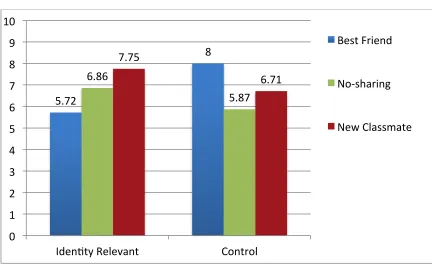
Figure 1.1 Study 1 Corrected Recognition by Sharing Partner and Identity Relevance ....51
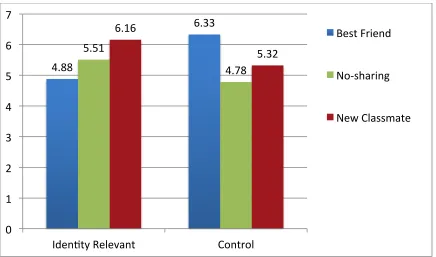
Figure 1.2 Study 1Cued Recall by Sharing Partner and Identity Relevance ...52
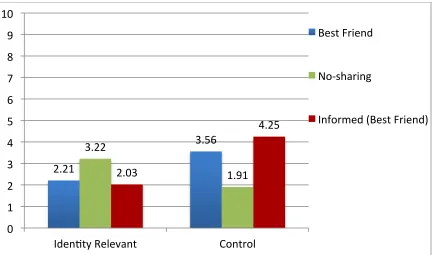
Figure 1.3 Study 2 Corrected Free Recall by Sharing Partner and Identity Relevance ...53
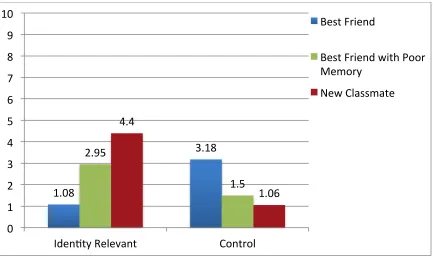
Figure 1.4 Study 3 Corrected Free Recall by Sharing Partner and Identity Relevance ...54
Figure 1.5 Study 3 Corrected Recognition by Sharing Partner and Identity Relevance ....55
Figure 1.6 Study 4 Corrected Free Recall by Sharing Partner and Identity Relevance ...56
Figure 1.7 Study 4 Corrected Recognition by Sharing Partner and Identity Relevance ....57
Figure 1.8 Study 4 Perceived Enjoyment by Sharing Partner and Identity Relevance ...58
Figure 1.9 Study 5 Corrected Recognition by Sharing Partner and Identity Relevance ....59
Figure 1.10 Study 5 Brand Accessibility by Sharing Partner and Identity Relevance ...60
Figure 1.11 Study 3 Attitude Confidence by Sharing Partner and Identity Relevance ...61
Figure 2.1 Study 1 Corrected Recognition by Sharing Partner and Identity Relevance ..103
Figure 2.2 Study 1 Corrected Hits by Sharing Partner and Identity Relevance ...104
Figure 2.3 Study 2 Corrected Recognition by Sharing Partner and Identity Relevance ..105
Figure 2.4 Study 2 Attitude Confidence by Sharing Partner and Identity Relevance ...106
Figure 2.5 Study 3 Corrected Recognition by Sharing Partner and Identity Relevance ..107
Figure 2.6 Study 3 Attitude Confidence by Sharing Partner and Identity Relevance ...108
Figure 2.7 Study 4 Corrected Recognition by Sharing Partner and Identity Relevance ..109
INTRODUCTION
Social sharing - defined as the act of communicating with another person
(Echterhoff, Higgins, and Levine 2009) - is widely prevalent among consumers because
people have a fundamental tendency to talk and share with others (Rimé et al. 1991) as
well as due to the positive outcomes of such sharing, including enhanced interpersonal
relationships, subjective well-being, and physical health (Pennebaker and Rimé 2001). In
marketing, as Belk (2013) points out, we have entered an “era of social sharing” with
consumer sharing of consumption experiences having become incredibly easy and
popular with the aid of digital technologies such as the Internet, computer, social media,
mobile phone, digital cameras etc. (Berger 2014). Through various means including
face-to-face verbal communication, SMS texting, instant messaging, twittering, blogging,
emailing etc., consumers communicate and interpret their experiences, construct
memories, and develop and maintain relationships (Schank and Abelson 1995).
Due to its frequency and importance, both marketers and academics have paid
much attention to this phenomenon. Recent work on social sharing effects on consumer
behavior has revealed that it can influence consumers’ product trial and adoption (Arndt
1967), switching behavior (Wangenheim and Bayon 2004), and attitudes (Bone 1995).
Word of mouth (WOM), a type of social sharing that involves brand/product mentioning,
has been found to have positive effects on sales revenues (Chevalier and Mayzlin 2006),
While this prior research on consumers’ social sharing has examined what drives
people to share (Berger 2014), what topics people talk about (Berger 2013) and how to
increase sharing volume (Berger and Schwartz 2011; Chen and Berger 2013; Berger and
Milkman 2012; Chen and Berger 2016), the one area that has received scant attention is
the effects of social sharing on consumer memory. Given the importance of memory on
consumer attitudes, intentions and behaviors, this is an important omission (Alba,
Hutchinson and Lynch 1991). While marketing scholars and practitioners widely
acknowledge that understanding memory is vital to understanding consumer behavior,
surprisingly little is known about how social factors impact encoding and retrieval of
consumer knowledge (Dahl 2013). My dissertation addresses these gaps and examines
how social sharing of consumption experience affects consumer memory.
While the majority of prior research looks at memory at the individual level and
emphasizes how personal factors shape memory, my dissertation examines memory at a
group level and explores how the notion of “group mind” can develop and be utilized in
social sharing situations. Because consumer sharing involves at least two parties in a
social context, I investigate the sharing effects from a person-situation perspective.
Specifically, I focus on how the characteristics of the sharer (e.g. motivation to protect
memory), the sharing partners (relationship closeness, memory ability, human vs.
nonhuman), the type of experience shared (identity relevance, valence) and their
joint-interaction affects memory and attitudes.
Two essays constitute this dissertation. Essay 1 examines whether social sharing
can enhance or attenuate consumer memories and finds that social sharing of
sharing can lead to forgetting when there is a memory cloud available for outsourcing
(i.e. close partner) and when the experiences are worth saving to this cloud (i.e. identity
relevant). This “forgetting-after-sharing” is novel and intriguing since prior memory
literature only documents memory enhancement after sharing/rehearsal. I further
document that beliefs about the memory safety on the memory cloud is the key to
facilitate this “forgetting-after-sharing” effect. Essay 2 focuses on the differences
between sharing with human versus nonhuman technological partners and finds
significant differences between the two. In human-technology interaction, people’s
perceptions about the technology can significantly alter their memories. Thus, I find that
an anthropomorphized technological partner can successfully mimic human partners such
that sharing with an anthropomorphized technology also induces the
forgetting-after-sharing effect. However, forgetting-after-sharing with a non-anthropomorphized (objectified)
technological partner does not result in the forgetting-after-sharing effect. I argue that this
happens because anthropomorphism enhances perceived partner quality and makes the
technology more equivalent to human close partner and therefore a memory cloud is
activated during sharing, while non-anthropomorphized technologies are rated as lower in
perceived partner quality and hence do not activate the memory cloud.
In the next section, I will review the literature related to the concept of memory
cloud and outline how my dissertation builds on and extends past research. I then
summarize the impact and, followed by two completed essays with empirical results.
Literature Review
Early research about interdependent cognition by Wegner, Giuliano, and Hertel
those of intimate dyads. Subsequent research has shown that close relationship partners
(e.g. spouses, friends) are believed to be interdependent in many aspects, including their
thoughts. The central idea of cognitive interdependence is transactive memory, which
concerns how knowledge is transferred, stored and collectively retrieved (Wegner 1995).
A transactive memory system (TMS) operates on three components: specialization
(unique knowledge for each member); credibility (regard other member’s knowledge as
credible); and coordination (access each other’s expertise) (Lewis 2004). Within
transactive memory systems therefore there are clear labor divisions – e.g. one person
will remember details about finances while the other will remember details about
household chores. Such memory systems are cognitively efficient since each member of
the system has to remember only partial information.
In my research, I conceptualize “memory cloud” as akin to but also different from
TMS. Specifically, I propose that a memory cloud is an informal, unstructured, and
unconscious storage device which develops over time in close relationships. Thus, it is
different from a transactive memory system which is a formally structured way to store
information. Research has shown that people in close relationships can develop a shared
memory system that pools cognitive resources for better efficiency (Wegner et al. 1985).
Such partners use each other’s memories as extensions of their own. Consistent with this
basic notion of expanding cognitive capacity by using others’ memories, I make the
prediction that close partners have a virtual memory cloud for uploading and saving
meaningful memories. Social sharing can activate memory uploading when a memory
cloud is available (e.g. talking to a close friend), especially when the memories shared are
memories to the memory cloud secures people by having a backup copy on the cloud. On
the other hand, people are motivated to free cognitive resources to process new
information and remember externally unavailable information (Storm and Stone 2015).
Thus, the memories which have been shared (which have a copy externally) are more
likely to be erased than those that have not been “backed up”. Ironically, an attempt to
backup meaningful memory induces individual memory decay for that memory, I term
this effect “forgetting-after-sharing” effect.
This memory cloud differs from TMS that it does not need expertise to divide
cognitive labor. It can operate on a belief that the other person is trustworthy, the memory
storage is safe, and the person is accessible. My conceptualization of memory cloud is
more flexible than TMS that it has no imposed formal structure and it can function on
perceptual beliefs, rather than actual coordination. Most of the research on TMS relies
heavily on the visible availability of the knowledge (e.g. knowing the information is on
Google, the pictures are on the digital camera), while the memory cloud concept I
propose does not necessarily require real availability. It is shored up by the sharer’s belief
that closer other will remember what is important to him/her. This distinction from TMS
expands the literature on cognitive interdependence by providing a framework that can
explain shared cognition in a less formal social setting.
Based on this concept of a memory cloud, my two essays examine whether, when
and how social sharing activates memory clouds and the impact of such activation on
consumer memories for the shared experience. Essay 1 finds that important memories are
shared and outsourced to the memory cloud (to save). However, saving a copy externally
memory cloud can lead to forgetting of the details of that memory. I also investigate
important moderators to this forgetting-after-sharing effect including information type
(identity relevance and valence) and partner type (relationship quality, memory
reliability).
Building on the findings from Essay 1, I examine how memory clouds differ
when the sharing audience is non-human (technology). While recent research has begun
to look at reliance on technology as a TMS partner (e.g. sparrow et al. 2011, Henkle
2014; Storm and Stone 2015), they all treat technology as a still storage tool little work
has considered technology as an interacting partner from the perspective of shared
cognition. To the best of my knowledge, my research is the first to examine
anthropomorphism of technology as an interaction partner and how the humanized
perception affects memory.
To summarize, my dissertation contributes by exploring the understudied area –
how memory is transferred at group level and how a group level memory cloud operates
in social sharing setting. While past memory literature only documents memory
enhancement effect after rehearsal, my research is the first to demonstrate the intriguing
effect that sharing can impair memory regardless of additional rehearsal. My dissertation
also fills an important gap in the literature on how anthropomorphism can impact
1.1 ABSTRACT
Can sharing memories about an event enhance or decrease memory for that event?
In the present research, I focus on answering this question and show that sharing can
enhance or decrease memory for the shared event depending on the type of event shared
(identity relevance, valence) and who the event is shared with (e.g. close friend versus
distant stranger human vs technology). Specifically, I find that when a highly
identity-relevant event is shared with a close sharing partner (relative stranger), memory for the
event is attenuated (enhanced) rather than enhanced (attenuated). I find the reverse for
low identity-relevant events. In other words, contrary to the intuition and research on how
sharing facilitates memory rehearsal and thereby enhances memory strength; I find that
sharing with a close relationship partner may decrease memory. I suggest that this finding
occurs to a reliance on a memory cloud among close others. That is, thinking of having
backed up the memories to the memory cloud decreased need to remember the
identity-relevant event.
1.2 INTRODUCTION
Consumers often discuss and share their memories of experiences with others.
Thus, we talk to and text with our friends on the phone, we post on Facebook and
Instagram, tweet on Twitter and may blog about our experiences. Indeed, 40% of all
conversations have been found to consist of consumers talking about themselves (Tamir
and Mitchell 2012). What effect does such sharing have on our memories for the shared
event? An intuitive view supported by past research is that sharing involves retelling of
the event, thereby facilitating rehearsal in memory, which ought to increase memory
access). Thus, the more we share our experiences, the better we ought to remember those
experiences.
In contrast to this intuition, I suggest that sharing our memories may either
enhance or attenuate our memories for the shared event depending on the type of event
shared (identity relevance) and who the event is shared with (e.g. close friend versus
distant stranger). I find that when highly identity-relevant experiences (e.g. details of a
“girls’ night out”) are shared with close friends/partners, memory for such experiences is
attenuated, rather than enhanced. I term this effect the “forgetting-after-sharing” and
suggest that it occurs due to memory outsourcing to the memory cloud (a collective
memory storage) among close others. In computing terminology, a memory cloud is a
server that all computers within a network upload to and backup stored information to be
later accessed (Rudo 2012). I posit that close partners are akin to computers in the same
network using the shared server, which stores members’ uploaded memories. Further,
believing the memories have been backed up to a cooperative storage obviates the need to
remember the details oneself. For example, a husband relying on his wife to remember
family and friends’ birthdays may not feel the need to personally remember these dates.
This prediction is in line with recent findings in the transactive memory systems (TMS)
literature, which suggest that relying on external storage aids such as the Internet
(Sparrow, Liu, and Wegner 2011) and digital cameras (Henkel 2014) to preserve
memories, may lead to poorer memories for these events. This is because consumers
encode less information due to reliance on the external repository for future memory
access (e.g.” I have a picture of the event and hence don’t need to remember it since I can
sharing of consumption episodes such that consumers believe that their conversational
partner(s) will remember the experience, thereby reducing the motivation to personally
remember the experience (Wegner 1985).
I find support for my prediction across five studies manipulating different social
identities - student (study 1 & 3), gender (study 2 & 4), nationality (study 5), and
consumption experiences (shopping: studies 1-4, product fair experience: study 5). I also
identify moderators to the forgetting-after-sharing effect in the form of perceived security
of the outsourced memory, experience valence and partner type, and show that the
forgetting-after-sharing is more likely when the sharing partner has good memory (study
3), the shared experience is positive rather than negative (study 4) and the partner is
human rather than nonhuman (e.g. Facebook– study 5). Further, I show that while the
memory attenuation after sharing does not significantly impact attitudes towards the
experience, it reduces attitude confidence and strength (study 5). Thus, I identify the
interactions between relationship characteristics (closeness), experience characteristics
(valence, identity relevance) and partner characteristics (memory reliability) to gain a
better understanding of the phenomenon of memory decay after sharing.
This research contributes to the literatures on memory and social identity in ways.
First, my finding that increased rehearsal may in fact decrease memory is a novel
contribution to the memory literature, which has largely supported a positive effect of
rehearsal on memory (Gable et al. 2004, p. 229; Langston 1994, p. 1113; Bohn and
Berntsen 2007; Tinti et al. 2014). Specifically, I examine memory outsourcing as the
memory distortions; two phenomena little examined in the marketing and consumer
psychology literatures.
Second, I firstly bridge the memory outsourcing research (Sparrow et al. 2011,
Henkle 2014) with the social sharing literature and examine the moderating effect of
identity relevance on memory outsourcing - an important yet understudied factor, and
show that identity relevant information motivates memory outsourcing. Two, I document
that memory decay after outsourcing can be a retrieval phenomenon as compared to the
current research that has only documented forgetting due to encoding deficits. Thus,
despite encoding all aspects a consumption experience, consumers may nonetheless
forget these aspects after sharing the experience with a close friend/partner. Three, we
add a moderator – experience type – that helps better understand the type of memories
that are more likely to be outsourced (identity relevant, positive). Four, while memory
outsourcing has been extensively studied in an organizational/group performance setting,
I extend this literature to the domain of consumer memories and showcase the deleterious
effects of outsourcing memories on downstream marketing variables such as attitudes and
attitude strength.
Finally, while past research on consumers’ word-of-mouth (Berger 2014) has
focused on consumer perceptions, choices and preferences, the effects on consumer
memories have as yet not been fully understood, and my research address this gap. My
finding that sharing memories of an event may in fact attenuate consumer memory for
that event suggests that social sharing may not always be beneficial to consumers and
certain consumption settings and promoting word of mouth among close others may be
detrimental to some brands.
The remainder of the paper is organized as follows. I begin by referencing
relevant literatures in social identity and memory outsourcing and developing my
hypotheses. I then present results from five studies testing my predictions and conclude
with a summary of the contributions and implications of my research as well as ideas for
future research.
1.3 SOCIAL SHARING AND MEMORY
Memory enhancement after sharing has been frequently documented in the
learning (e.g. Wogan and Waters 1959) and the marketing literatures (e.g. Campbell and
Keller 2003), with repetition enhancing memories of the repeated event (Blumen and
Rajaram 2008). Such enhancement is due to several reasons. First, sharing increases
rehearsal and therefore accessibility of the shared event in memory. This was
documented by Blumen and Rajaram (2008) in their experiment wherein participants
viewed a series of pictures and then discussed the pictures with others. This “second
study opportunity” refreshed the accessibility of the pictures and improved individual
recall. Second, the retelling process is believed to create a better organization of the
mental representations resulting in the positive effect of increasing the understanding of
the shared event via its verbalization, and such improved understanding enhances
memory for the event. Finally, Rimé et al. (1998)’s work on the social sharing of emotion
asserts that the feelings associated with an emotional memory can be reactivated during
social sharing. Likewise, Gable et al. (2004) contend that sharing a positive event results
The enhancement effect articulated above ought to be greater for identity-relevant
experiences as compared to identity-irrelevant experiences since identity-relevant
experiences are used to express, define and affirm consumers’ self-identities (Chernev,
Hamilton, and Gal 2011), and hence are likely to be more important and impactful than
identity-irrelevant experiences. In this regard, identity relevance has been documented to
elicit more favorable brand attitudes (Reed et al. 2012), increase product preference
(Berger and Heath 2007) and generate better memory for identity-linked promotions
(Mercurio and Forehand 2011). Recent research has also found that consumers remember
more identity-linked information, when their identity is primed (Dalton and Huang 2014).
Therefore, it seems intuitive that memory enhancement is likely to occur when
identity-relevant experiences are shared. However, contrary to this intuition, I suggest that this
advantage may not hold when the memory is shared with close sharing partners due to
the greater likelihood of a memory cloud among close others. When there is a memory
cloud to storage your important memories, consumers will feel less responsible to
remember those memories internally. In other words, the likelihood of backing up
identity relevant memories to close sharing partners is expected to be high, thus reducing
the need to remember those memories.
1.4 RELATIONSHIP CLOSENESS AND MEMORY CLOUD
We have to admit that our mind has limits. As wise humans, we always seek to
expand our cognitive capacity through different means- e.g. reliance on books, calendars,
and computers (Storm and Stone 2015). The pursuit of cognitive efficiency stimulates
consumers to extend cognition to external agents that could save and storage information
powerful agent for storage (“Data is stored on remote servers accessed from the Internet”
(Wikipedia). I suggest that just as such external objects can serve as memory storage, so
too can other consumers. That is humans in close relationships can also develop a virtual
memory cloud and maintain a collective cloud memory (I remember yours and you
remember mine) to enhance efficiency.
Past research on transactive memory systems (TMS) provides some support for
reliance on other humans as external memory storage. Studies in organizational behavior
find that close group members often share responsibility for remembering events (e.g.
you remember part A and I remember part B) for a better group performance (Wegner
1987). Such division of responsibilities reduces the memory burden on each individual
member and enhances overall group memory. People develop a TMS when they work
closely, trust each other (a safe memory storage), believe other’s specialized knowledge
(knowing who knows what), and have a good coordination (access the information
easily) (Liang et al. 1995). Interpersonal relationships, team training, and group member
familiarity have been found to facilitate TMS development (Prichard and Ashleigh 2007).
These studies suggest that intimate groups are more likely to rely on each other’s memory
because of trust, perceived memory safety, and easy accessibility. Likewise, a memory
cloud should be more likely to be available among close others, because such groups
have a higher trust and they have a better sense of what others will remember and will be
readily to help. Such shared understanding of the implicit cognitive cooperation is less
likely among strangers (Hollingshead 2001).
While the memory cloud concept that I propose shares characteristics with TMS,
group) and clearly articulates division of labor according to each member’s expertise
while a memory cloud is simply an invisible memory server that develops informally
among close others. It is a belief that consumers can reference each other’s memories (I
remember what you said and you remember what I said). The memories do not
necessarily have to be relevant to one’s domain knowledge, and no explicit request is
required for help in remembering. The memory cloud operates in a shared belief of
secure memory storage and motivates memory uploading to this server and thereby
outsourcing the responsibility of remembering.
Consumers are known to share their consumption experiences with various
audiences, ranging from close family members, best friends and colleagues to
acquaintances and online strangers (e.g. Twitter, blogs). The social sharing is a process of
memory transferring (imagine that a computer is uploading data to the server). As a
result, memory can be outsourced to the memory cloud (sharer and listener’s memory
cloud). Hence, I suggest that in social sharing situations, when there is a memory cloud
available (e.g. among close sharing partners such as best friends), people’s likelihood of
uploading memories - expecting that conversing partners will also remember - will be
much higher than no such memory cloud available (e.g. when sharing with strangers).
1.5 MODERATING ROLE OF IDENTITY RELEVANCE
What kind of memories we really want to save and are more likely to backup to
the memory cloud (if it is available)? Prior research suggest that special and meaningful
memories are held more vivid, and confidently (Talarico and Rubin 2004). In fact, not all
memories are equally meaningful and worthy of remembering. Identity relevant
meaningful for us to main self-definition. For instance, watching a university football
game, attending the classical music concert, joining the cosplay party, etc. These are all
the memories we desire to remember and preserve. If there is a memory cloud (server)
that can save memories, we can expect that the identity relevant memories (e.g. visit a
store to celebrate the university anniversary) that we cherish will be more likely to be
backed up to the server than the neutral memories (e.g. visit the store as usual). Highly
identity-relevant experiences are likely to be perceived as more important and impactful
than experiences with low identity-relevance (Rydell, Rydell, and Boucher 2010),
thereby triggering a higher felt need to protect and preserve such memories. Along these
lines, “special” experiences (which are arguably identity-relevant) have been shown to be
viewed as assets that require protecting (Zauberman, Ratner, and Kim 2009). Research
has also found that identity-relevant experiences have been shown to be important
possessions that may lead consumers to delay experiences that could weaken the link
between such important memories and self-identity (Mercurio, Reed II, and Forehand
2013). Following this line of research, I suggest that the desire to protect identity relevant
memories can be a driving force for memory outsourcing because saving the meaningful
memories to a safe repository is a good strategy for memory protection and thereby
identity preservation. Therefore, I predict that identity-relevant experiences are more
likely to be outsourced than identity-irrelevant experiences.
1.6 MEMORY OUTSOURCING AND FORGETTING
What happens after a memory is backed up to the memory cloud? Ideally, we
believe that that is an increased security (e.g. I remember and I have also backed up the
very resource-rational and is always seeking to minimize “need-to-remember”
information. We therefore have lower motivation to remember externally available
information. Albert Einstein once said: “I do not carry such information in my mind since
it is readily available in books” (Isaacson 2007), and recent research suggests the
availability of the information online decreases people’s motivation to encode that
information. For example, Sparrow et al. (2011) found that participants who were
instructed to type information into a computer, and believed that what they typed would
be saved by the computer (vs. would be erased), recalled less information because they
did not feel a need to encode the information when they believed they could look it up on
that computer. Relying on the digital cameras (Henkel 2014) to save memories may lead
to poorer encoding for the events because of believing future memory access (e.g.” I have
a picture of the event and hence don’t need to remember it since I can go back to the
picture any time”). Furthermore, Storm and Stone (2015) show that saving one file before
studying a new file improves memory for the new file because saving motivates
offloading and therefore we have more cognitive resources to remember new
information. Once the memories have been shared with close others (uploaded and
backed up to the memory cloud), they become externally accessible and thus have lower
need to be kept internally (allocate memory resources to information we expect to be
unavailable through external means). Interesting enough, we share and we back-up
important memories in order to remember them; ironically, our memory system
deprioritizes those currently unneeded to-be-remembered memories, and leads to
Sparrow et al. (2011), saved information is less recalled than erased information; instead,
people remember where to find the information (the folder name on the computer).
Therefore, I suggest that sharing experiences with close friends may trigger
memory decay because of memory outsourcing to the memory cloud, i.e. consumers
believe that there is a secure repository for their memories and hence feel relieving to let
go. Thus, after the memory is shared and outsourced, details of the individual memory
are replaced by a label of the memory location (e.g. “I remember I have told my best
friend”), fostering a secure feeling of identity preservation, but leading to decay of
memory for the details of the experience.
To summarize, I predict that consumers will backup memories of their
consumption experiences to sharing partners such that memory outsourcing are more
(less) likely for identity-relevant (identity-irrelevant) experiences with close (distant)
relationship partners and that memories for such saved experiences will attenuate as
compared to unsaved experiences.
1.7 STUDY 1
The objective of study 1 was to examine the interaction of identity-relevance and
sharing partner on memory for the shared experience. Two hundred and sixty
undergraduate students from an American university participated in a 2
(identity-relevance: high vs. low) x 3 (shared with close friend vs. acquaintance vs. no-sharing)
between-subjects study in exchange for course credit. They read a shopping scenario,
which was either relevant or irrelevant to a student identity, and were instructed to write
down a conversational script for recounting their experience to their best friend/new
sharing condition). The writing task was included to ensure that the control condition
respondents had a task similar to the experimental condition thereby ruling out
differences in cognitive resources as an alternate explanation for our findings. Since my
research purpose is to establish that the act of sharing can lead to memory outsourcing
and therefore memory decay, I want to control other potential factors that may also
contribute to the memory decay (e.g. variances in the sharing amount, the sharing goal).
Thus, after the same encoding, I gave them the instruction to share as many details of the
experience as possible so that their sharing goal of being accuracy should be identical. I
measure the time spent on the sharing task and the word counting of the sharing content.
They then participated in several unrelated studies for about 20 minutes prior to recalling
their shopping experience.
I used two different measures of recall: cued recall and corrected recognition.
Cued recall was measured by asking respondents 5 specific questions about the scenario
(“where did you go”, “what did you buy” (three different items were bought), “how many
hours did you spend”, “how much were the shoes”, and “when did you get the catalog”).
Each response was coded as 1 = correct and 0 = incorrect. Thus, the maximum possible
score for the cued recall measure was 7. Recognition measure comprised a set of 20
items, of which 10 were accurate pieces of information used in the scenario (e.g. spent 3
hours in the mall) and 10 were filler items that were not used in the scenario (e.g. spent 5
hours in the mall). I computed corrected recognition by subtracting the number of filler
items selected from the number of correct items selected (Dalton and Huang 2014); thus
1.7.1 PRETEST OF STUDENT IDENTITY MANIPULATION
Prior to the main study, I conducted a pretest of our identity relevance
manipulation. Forty-five American Amazon Mechanical Turk (MTurk) workers were
randomly assigned to one of two conditions (identity relevant vs. irrelevant) in a
between-subjects design. Following Coleman and Williams (2013), participants were
instructed to either “Think about the ways you would show someone else that you were a
university student. Please think about behaviors you would do and steps you would take
to demonstrate that you were a university student. Please show at least 3 behaviors you
would show” (identity relevant condition) or “List at least 3 things that you plan to do
tomorrow” (identity irrelevant condition). To further make the identity relevant to a
shopping experience, participants in identity relevance condition read “At the beginning
of the year, there are usually big sales in a lot of stores, some of which offer special
discounts to university students. As a university student, you can enjoy saving by
showing your university student ID card.” In contrast, participants in identity irrelevant
condition read “At the beginning of the year, there are usually big sales in a lot of stores.
People say that winter (especially from November to February) is the best season for
shopping.” After these manipulation procedures, all the participants were direct to an
imaginary shopping experience scenario. The details of a one-day shopping event were
described (e.g. stores visited, brands considered). Respondents then indicated their
opinions on a 7-point identity relevance scale (1 “strongly disagree” to 7 “strongly
agree”; adopted from Berger and Heath (2007)), reported perceptions of scenario validity,
their task involvement and demographics (e.g. age, gender) before being debriefed and
An analysis of variance confirmed the successful manipulation of identity
relevance (Mrelevant= 4.30 vs. Mirrelevant= 3.17, F (1, 44) = 7.69, p < .01), with no
differences on perceptions of scenario validity or reported task involvement (p’s > .1).
1.7.2 RESULTS
I expected to find worse (better) recall when the identity relevant (irrelevant)
experience was shared with a close friend as compared to an acquaintance, suggesting an
interaction between identity-relevance and relationship partner. This is because the
identity relevant experience ought to increase motivation to save them to the memory
cloud and the presence of the close friend ought to enhance the availability of a memory
cloud.
Analysis of the Sharing Content. Because my research focus is to test when people
share the same amount of information, will their post-sharing memories vary depending
on thinking of whom they have shared with and what kind of experience they shared, I
first ensured that there were no differences with respect to the sharing content. An
analysis of variance confirmed that there was no significant interaction between sharing
partner and identity relevance on time spent on the sharing task (F (2, 254) = 1.40, p >
.24) and the total number of words typed (F (2, 254) = 1.08, p > .34). In particular, I
checked the interaction of the two independent variables on how much detailed
information in the scenario was shared (in the best friend and new classmate conditions)
and found no significant interaction (F (1, 168) = .20, p > .66). Thus, I can be confident
that the memory effects I find are not due to the differences in the encoding or sharing
Cued Recall. An analysis of variance revealed a significant main effect of sharing
partner (F (2, 254) = 3.59, p < .03) and the expected significant interaction between the
sharing partner and identity relevance (F (2, 254) = 15.4, p < .001). Consistent with the
free recall results, participants in the high identity relevant condition recalled less
information when the sharer was a best friend as compared to a new classmate and the
no-sharing (Mbest_friend = 4.88, Mnewclassmate = 6.16, Mnosharing = 5.51; F (2,254)= 7.57, p <
.01), supporting our contention that memory would be negatively impacted, while
participants in the low identity relevance condition recalled more information when
sharing with a best friend as compared to sharing with a new classmate and no-sharing
(Mbest_friend = 6.33, Mnewclassmate = 5.32, Mnosharing = 4.78; F (2, 254)= 11.6, p < .001). Cued
recalls when sharing with best friend (p < .001) and new classmate (p = .10) were higher
than no-sharing, which is consistent with prior memory literature of memory
enhancement effect after rehearsal.
Corrected Recognition of Shopping Experience. An analysis of variance revealed
a marginally significant main effect of sharing partner (F (2, 254) = 2.75, p < .07) and the
expected significant interaction between sharing partner and identity-relevance on
corrected recognition (F (2, 254) = 13.0, p <. 001). Planned contrasts revealed that for
highly identity-relevant experiences, consumers forgot more after sharing their
experience in the best friend condition as compared to the new classmate condition and
no-sharing condition (Mbest_friend = 5.72, Mnewclassmate = 7.75, Mnosharing = 6.86; F (2, 254)=
7.49, p < .01). When student identity was made relevant, the corrected recognition of the
experience shared with close friend condition was significantly lower than the no-sharing
contention that sharing highly identity-relevant experiences result in poorer memory
when shared with close others. This is an intriguing finding since it suggests that the
decay in memory due to outsourcing negates any enhancement effects of the additional
rehearsal due to sharing. In other words, despite respondents in the sharing condition
rehearsing the experience while sharing, they still recalled less information than
respondents in the no-sharing condition, who did not enjoy such a rehearsal advantage.
However, for low identity-relevant experiences, respondents remembered more
details in the best friend condition than classmate condition (Mbest_friend = 8.00,
Mnewclassmate = 6.71, Mnosharing = 5.87; F (2, 254)= 8.43, p < .001). Notably, both sharing
conditions (no matter with best friend (p < .001) or new classmate (p = .10)) showed
better memories than no-sharing condition, which is consistent with the previous memory
literature of memory enhancement after rehearsal.
While corrected recognition was my primary measure of interest, I also analyzed
total recognition and false recognition to examine if there were differences on these
measures.
Total Recognition of Shopping Experience. An analysis of variance revealed a
significant main effect of sharing partner (F (2, 254) = 4.49, p < .02) and an interaction
between sharing partner and identity-relevance on total recognition (F (2, 254) = 12.7, p
<. 001). Planned contrasts revealed that for highly identity-relevant experiences,
consumers forgot more after sharing their experience in the best friend condition as
compared to the new classmate condition and no-sharing condition (Mbest_friend = 7.21,
Mnewclassmate = 8.59, Mnosharing = 7.84; F (2, 254)= 6.87, p < .01). However, for low
condition than the other two conditions (Mbest_friend = 8.72, Mnewclassmate = 7.81, Mnosharing =
7.02; F (2, 254)= 10.5, p < .001). Both sharing conditions (no matter with best friend (p <
.001) or new classmate (p < .04)) showed better memories than no-sharing condition,
replicating the memory enhancement effect after rehearsal.
False Recognition. An analysis of variance revealed a significant interaction of
sharing partner and identity relevance on false recognition (F (2, 254) = 12.7, p <. 001).
Planned contrasts showed that participants in the high identity relevant conditions
reported greater false memories when the sharer was a best friend as compared to a new
classmate and no-sharing (Mbest_friend = 1.48, Mnewclassmate = .84, Mnosharing = .98; F (2,
254)= 4.11, p < .02), while participants in the low identity relevance condition did not
report significantly different levels of false recognition among the conditions (Mbest_friend
= .72, Mnewclassmate = 1.10, Mnosharing = 1.16; F (2, 254)= 1.96, p > .14). These findings
suggest that memory errors were greater when the identity-relevant experience was
shared with a best friend rather than an acquaintance or no-sharing thereby leading to
poorer memory in this condition.
1.7.3 DISCUSSION
Study 1 shows an intriguing forgetting effect of social sharing. My results suggest
that when sharing general (e.g. low identity relevant) information with a distant audience
(e.g. a new classmate), sharing indeed can strengthen memory through the additional
rehearsal, thus replicating past findings documenting memory enhancement. However,
when the sharing partner is close (memory cloud is available), identity relevance ought to
motivate consumers to backup the memory they desire to save to the memory cloud, and
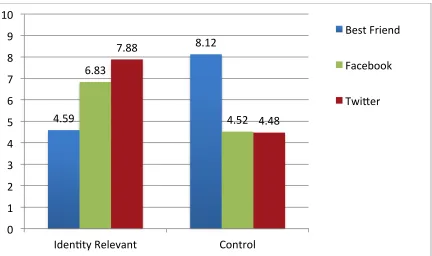
Further, the patterns of recognition suggest that forgetting the outsourced
memories occurs due to lower recognition for the details of the experience (i.e. lower
total recognition) as well as a larger number of errors in recognition the details (i.e.
greater false recognition). Thus, outsourcing memories appears to result in remembering
less as well as remembering worse.
1.8 STUDY 2
Study 2 extends the findings from study 1 in several ways. First, I use a gender
identity rather than a student identity and a non-student adult sample to generalize our
results. Second, I added a condition wherein I informed respondents in advance that they
would share their experience with a best friend. Adding this condition allowed me to test
if the forgetting-after-sharing effect is due to errors at encoding versus retrieval. If being
informed in advance that they would share the experience resulted in forgetting as
compared to when not so informed, then it suggests an encoding disadvantage while if I
found no differences between the two sharing conditions, it suggests a retrieval
disadvantage. Third, I increased the delay between exposure to the scenario and recall of
the experience to 48 hours for a more conservative test of my hypotheses.
1.8.1 PRETEST OF GENDER IDENTITY MANIPULATION
To develop a gender identity relevance manipulation for non-student adult
samples, I modified the identity relevance manipulation used by Berger and Heath (2007)
and made it appropriate for different genders- “Sometimes people believe that their
shopping experience can express what type of person they are (e.g. masculine or
feminine) because where to shop and what to buy often signal one's personal tastes and
your shopping experience. The shopping experience below can therefore express who you
are to the people around you.” In addition, a control condition without any identity prime
only mentioned they would read a shopping scenario in a mall. Thirty MTurk workers
participated in this pretest in return for monetary compensation (50 cents). They were
randomly assigned to two conditions (high identity relevance vs. control). After reading
the manipulation, they read a shopping scenario and reported their perceptions of identity
relevance (α = .925) and demographics (age, gender). An analysis of variance showed a
significant difference on identity relevance perception (Midentity = 4.51 Mcontrol = 2.98; F
(1,29) = 5.08, p < .04), confirming a successful manipulation of identity relevance.
1.8.2 PARTICIPATNS, DESIGN AND PROCEDURE
One hundred and fifty eight American MTurk workers participated in a 2 (gender
identity vs. control) x 2 (informed about sharing with close friend vs. not informed about
sharing with close friend vs. no-sharing) between-subjects study in return for monetary
compensation (55 cents). After the identity manipulation, and before they read the
shopping experience, participants were randomly assigned to the three sharing conditions.
In the informed about sharing condition, participants were told “Next you will read a
scenario about your shopping experience in a mall. You will be asked to tell your best
friend about this experience later.” In the not informed about sharing condition and
control condition, they read “Next you will read a scenario about your shopping
experience in a mall.” After reading the shopping scenario, participants were either asked
to share the experience in detail with a best friend (sharing conditions) or to write down
the description of a movie or a book that they liked (no-sharing condition). Finally,
shopping experience (e.g. where did you go shopping?). Thus, the cued recall measure
ranged from -10 to 10. I included the cued recall measure to capture potential differences
in encoding of the shopping information across conditions.
Forty-eight hours after completing the first survey, all participants were contacted
for an online follow-up study about their memory of this shopping experience. Corrected
free recall of the experience constituted our dependent measure, and was computed by
subtracting false recall from total correct recall. Two coders unaware of the experimental
conditions coded the data. Inter-rater agreement was 95% and was resolved through
discussions.
1.8.3 RESULTS
Immediate Cued Recall. An analysis of variance revealed a non-significant
interaction of identity relevance and sharing on immediate cued recall (F (2,152) = 1.45,
p > .23). Planned contrasts revealed no significant simple effect of sharing within identity
relevant (F (2,152) = .44, p > .64) or control conditions (F (2,152) = 2.27, p > .11). There
were no significant differences between the two sharing conditions when gender identity
was made relevant (Minformed = 5.10, Mnot_informed = 4.57, p > .38) or when it was not
(Minformed = 5.04, Mnot_informed = 4.52, p > .42). The lack of difference between the
informed in advance about sharing and not being informed conditions suggests that the
decrease in memory for the shopping experience is not due to encoding differences, but
rather differences in retrieval. Thus, respondents in both the sharing conditions encoded
similar amounts of correct information about the shopping experience.
Delayed Corrected Free Recall. An analysis of variance revealed a significant
in the identity relevant condition. Importantly, I also found the expected interaction of
identity relevance and sharing on corrected free recall (F (2,152) = 9.09, p < .001).
Planned contrasts revealed that when gender identity was made relevant, there were no
significant differences between the two sharing conditions (Minformed = 2.03, Mnot_informed = 2.21, p > .75) but both conditions were marginally significantly lower than the no sharing
condition (Mno_sharing = 3.22; F (2,152) =2.39, p < .10).
In the control condition (no identity prime), there were no differences between the
two sharing conditions (Minformed = 4.25, Mnot_informed = 3.57, p > .26), but they both
reported better memory than the no-sharing condition (Mno_sharing = 1.91, p’s < .02). These
results also replicate our findings from study 1 and provide further support for the
moderating role of identity-relevance in transacting memories.
Delayed Total Free Recall. An analysis of variance revealed an expected
interaction of identity relevance and sharing on total free recall (F (2,152) = 8.01, p <
.001). Planned contrasts revealed that when gender identity was made relevant, there
were no significant differences between the two sharing conditions (Minformed = 2.67,
Mnot_informed = 2.71, p > .92) but both conditions showed worse recall than the no sharing
condition (Mno_sharing = 3.44). In the control condition (no identity prime), there were no
differences between the two sharing conditions (Minformed = 4.50, Mnot_informed = 3.74, p >
.18), but they both reported better memory than the no-sharing condition (Mno_sharing =
2.18, p’s < .02).
Delayed False Recall. Although the interaction of social sharing and identity
relevance on false recall was not significant level (p = .16), planned contrasts revealed
significant in the identity relevant conditions (F (2,152) = 3.16, p < .05) but not for the
control conditions (p >.85). Specifically, sharing the shopping experience with a best
friend lead to a higher incidence of false memories as compared to the no-sharing
condition. There were no significant differences between the two sharing conditions (p >
.66) or the control conditions (p’s > .5).
1.8.4 DISCUSSION
The results of study 2 replicate and extend the results of study 1 by documenting
memory decay for identity-relevant information after sharing with close others,
regardless of prior knowledge about future sharing the experience. These results support
retrieval-based forgetting of identity-relevant information, rather than encoding-based
forgetting as the mechanism for our results. The lack of any significant differences
between the two identity relevant sharing conditions immediately after being exposed to
the scenario suggests that the respondents encoded the experience similarly. Further, the
results suggest that the act of sharing is critical to initiating memory outsourcing. Once
shared, the identity-relevant memory can be outsourced to a collective repo
sitory-memory cloud (i.e. best friend). In the absence of sharing, sitory-memory outsourcing processes
do not appear to be triggered, resulting in the rehearsal advantage to sharing and thereby
improved memory for the experience. Intriguingly, the differences in memory between
the sharing and no-sharing conditions suggests that the effect of memory outsourcing can
go beyond just eliminating a rehearsal advantage and actually decrease memory
compared with a no-rehearsal (i.e. No-sharing) condition.
In study 3, I added another sharing condition- best friend with poor memory - to
decay after sharing with close others is due to reliance on a safe memory cloud, forgetting
ought to be mitigated if the sharing partner is perceived to have poor memory, rendering
them an unsecure repository.
1.9 STUDY 3
Ninety-three undergraduate students in an American university participated in a 2
(identity-relevance: high vs. low) x 3 (sharing with new classmate vs. best friend vs. best
friend with poor memory) between-subjects study in return for course credit. The identity
prime, dependent variables and study procedures were similar to study 1, with the
exception of the addition of recognition as a dependent measure. Our recognition
measure of comprised a set of 20 items, of which 10 were accurate pieces of information
used in the scenario (e.g. spent 3 hours in the mall) and 10 were filler items that were not
used in the scenario (e.g. spent 5 hours in the mall ). We computed corrected recognition
by subtracting the number of filler items selected from the number of correct items
selected (Dalton and Huang 2014); thus our recognition measure could potentially range
from -10 to 10.
1.9.1 RESULTS
Corrected Free Recall. An analysis of variance revealed a marginally significant
main effect of identity relevance (F (1, 87) = 2.85, p < .10) with the highly relevant
experience recalled more than the low identity relevance experience. Importantly, I also
found the expected significant interaction between identity-relevance and sharing partner
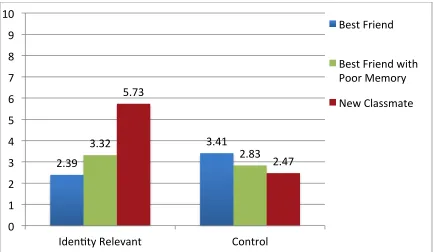
on corrected recall (F (2, 87) = 9.07, p < .001). In line with my predictions, sharing with
a best friend who has poor memory also resulted in memory enhancement rather than
the experience when it was shared with a classmate than the other two conditions
(Mbest_friend = 1.08, Mnewclassmate = 4.40, Mfriendwithpoormemory = 2.95; F (2, 87) = 6.03, p < .01).
Interestingly, the differences among all three conditions were significant (Best friend vs.
New classmate (p < .01); Best friend vs. Best friend with poor memory (p < .05); New
classmate vs. Best friend with poor memory (p = .10). Thus, memory impairment of the
best friend did attenuate the memory decay, but not to the same extent as sharing with a
new classmate.
For the low identity relevance experience, consumers forgot marginally more in
the new classmate and best friend with poor memory conditions than the best friend
condition (Mbest_friend = 3.18, Mnewclassmate = 1.06, Mfriendwithpoormemory = 1.50; F (2, 87) =
2.63, p < .08), suggesting that the memory impairment of the best friend rendered them
similar to a distant partner (new classmate).
Total Free Recall. An analysis of variance revealed a significant main effect of
identity relevance (F (1,87) = 4.43, p < .04) with the high identity-relevant experience
recalled more than the low identity-relevant experience. Importantly, I also found the
expected significant interaction between identity-relevance and sharing partner (F (2,87)
= 7.06, p < .01). In line with my predictions, sharing with a best friend who has poor
memory resulted in memory enhancement rather than decay. For the high
identity-relevance experience, respondents correctly recalled more of the experience when it was
shared with a classmate than the other two conditions (Mbest_friend = 1.85, Mnewclassmate =
4.40, Mfriendwithpoormemory = 3.32; F (2, 87) = 4.67, p < .02). Sharing with best friend yielded
poor memory (p < .07). However, sharing with new classmate and sharing with best
friend with poor memory did not differ significantly (p > .15).
For the low identity relevance experience, consumers forgot marginally more in
the new classmate and best friend with poor memory conditions than the best friend
condition (Mbest_friend = 3.24, Mnewclassmate = 1.65, Mfriendwithpoormemory = 1.75; F (2,87) = 2.63,
p < .08), suggesting that the memory impairment of the best friend rendered them similar
to a distant partner (new classmate).
False Recall. An analysis of variance on false recall revealed a marginally
significant interaction between identity-relevance and sharing partner on false recall (F
(2, 87) = 3.07, p < .06). In line with expectations, sharing the highly identity relevant
experience with a best friend elicited higher false recall (Mbest_friend = .77) than sharing
with either a classmate (Mnewclassmate = .07) or best friend with impaired memory
(Mfriendwithpoormemory = .53, (F (2,87) = 2.76, p < .07). There were no significant differences
in false recall in the low identity relevant conditions (p’s > .1). These findings are
consistent with my predictions that memories of the identity relevant experience will be
more accurate when sharing with a classmate than best friend, but that this effect will be
attenuated when the best friend has poor memory.
Corrected Recognition. An analysis of variance revealed marginally significant
main effects of sharing partner (F (2,87) = 2.61, p < .08) and identity relevance (F (1,87)
= 3.71, p < .06) and but also the expected interaction between identity-relevance and
sharing partner on corrected recognition (F (2,87) = 7.28, p < .01). As expected, sharing
with a best friend who has poor memory resulted in memory enhancement rather than
of the experience when it was shared with a classmate than the other two conditions
(Mbest_friend = 2.38, Mnewclassmate = 5.73, Mfriendwithpoormemory = 3.32; F (2, 87) = 8.63, p <
.001). The differences in identity irrelevant conditions were not significant (p > .47).
1.9.2 DISCUSSION
The results of study 3 replicate and extend my findings from studies 1 and 2 and
provide evidence consistent with the reliance on a safe memory cloud as the underlying
mechanism for the memory decay effects. Thus, I replicated the forgetting-after-sharing
effect when secure memory cloud was available (i.e. best friend), but when there was no
secure memory cloud (i.e. best friend with poor memory), memory for the
identity-relevant experience was less impaired, and the memory decay effect was attenuated.
These findings are consistent with my contention that close relationship partners elicit
perceptions of safe repositories for identity relevant memories, thereby initiating memory
outsourcing leading to forgetting. However, when safety perceptions are threatened,
reliance on the repository is not desirable, thereby attenuating forgetting.
While studies 1-3 consistently provide evidence for the outsourcing of
identity-relevant experiences to close relationship partners, there are several limitations of these
studies. One, only positive experiences were examined in these studies whereas in reality,
consumers share both positive and negative experiences (Rimé et al. 1992). Hence, in
study 4 I include a negative experience to examine if memory decay after outsourcing
extends to negative experiences. Prior research has documented systematic differences
between memories for positive versus negative information. Thus, some research has
documented that negative information is more memorable than positive information
(Christianson 1992; Kensinger 2007; Loftus 1993; Ochsner 2000) for negative
information. Other research has shown that a primary objective of remembering negative
experiences is to learn from these experiences in order to avoid re-experiencing them
(Rasmussen and Berntsen 2009). This suggests that it would be important for consumers
to personally remember negative experiences. Furthermore, sharing negative experiences
with close partners activate a motive to protect others by warning them about potential
cons of products and services (Dubois, Bonezzi and Angelis 2016). Storm and Stone
(2015) point out that our memory system keeps track of the currently unneeded
information and releases the cognitive capacity. Taken together, when people share
negative experiences with close others, they will upload to the memory cloud but not
delete the copy stored internally because remembering it personally is the best way to
protect self. That is, the double-security mode (I remember and you remember) may
even strengthen the memories of the negative experience shared with close others as
compared to a single security-mode (I remember) when shared with a stranger. I therefore
predict that the memory decay effect should be attenuated for negative experiences as
compared to positive experiences.
A second limitation of the previous studies is that I do not examine the
consequences of the memory outsourcing on subsequent evaluations of the experience. I
therefore included a measure to capture consumers’ perceived enjoyment of the shopping
1.10 STUDY 4
1.10.1 PRETEST OF NEGATIVE SHOPPING EXPERIENCE
To validate the manipulation of valence for our main study, sixty-eight MTurk
participants were randomly assigned to either a negative or a positive shopping scenario.
Similar to study 2, gender identity was manipulated before exposure to the shopping
scenario. The dependent measures included identity relevance (α = .88), valence (overall
feeling of this shopping experience from “1=very unhappy, very unpleasant, very
unenjoyable to 7= very happy, very pleasant, very enjoyable; α = .97).
An analysis of variance showed the expected significant difference on the valence
measure (Mpositive= 5.15 vs. Mnegative= 2.28; F (1, 67) = 85.6, p < .001) with no differences
on perceived identity relevance (p > .2). Thus, regardless of experience valence,
participants perceived the scenario as equally relevant to their gender identity.
1.10.2 PARTICIPANTS, DESIGN AND PROCEDURE
Two hundred and nine American MTurk participants completed the main study
for monetary compensation (55 cents). The study was a 2 (sharing partner: best friend vs.
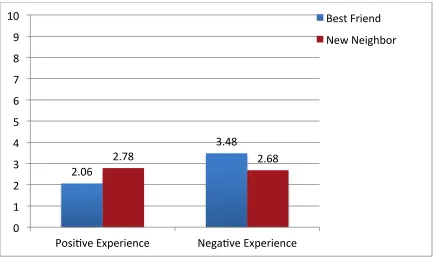
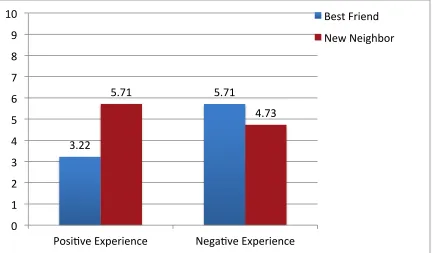
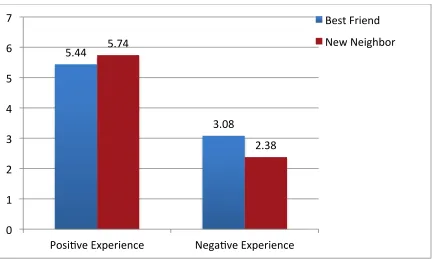
new neighbor) x 2 (experience valence: positive vs. negative) between-subjects study.
Respondent gender was measured at the beginning of the survey to enable us to assign
men versus women respondents randomly to a positive or negative shopping experience
relevant to their gender. After reading the scenario, they were encouraged to share this
experience with a best friend or a new neighbor. Forty-eight hours later, they were asked
to recall this shopping experience in as much detail as possible. Our dependent measures