EMERGING PARADIGMS FOR ANALYZING, PROCESSING AND MAKING SENSE OF LARGE HETEROGENEOUS DATASETS.
L K Sravanthi Potti1, Dr. Satheesh Kumar Nagineni2 Department of Computer Science and Engineering
1,2
OPJS University, Churu, Rajasthan
Abstract
This thesis explores the problem of large scale Web mining by using Data Intensive Scalable
Computing (DISC) systems. Web mining aims to extract useful information and models from data on the
Web, the largest repository ever created. DISC systems are an emerging technology for processing huge
datasets in parallel on large computer clusters.
Challenges arise from both themes of research. The Web is heterogeneous: data lives in various
formats that are best modeled in different ways. Effectively extracting information requires careful
design of algorithms for specific categories of data. The Web is huge, but DISC systems offer a platform
for building scalable solutions. However, they provide restricted computing primitives for the sake of
performance. Efficiently harnessing the power of parallelism offered by DISC systems involves rethinking
traditional algorithms.
1. Introduction
An incredible “data deluge” is currently drowning the world. Data sources are everywhere, from Web
2.0 and user-generated content to large scientific experiments, from social networks to wireless sensor
networks. This massive amount of data is a valuable asset in our information society.Data analysis is the
process of inspecting data in order to extract useful information. Decision makers commonly use this
information to drive their choices. The quality of the information extracted by this process greatly
benefits from the availability of extensive datasets. The Web is the biggest and fastest growing data
repository in the world. Its size and diversity make it the ideal resource to mine for useful information.
Data on the Web is very diverse in both content and format. Consequently, algorithms for Web mining
need to take into account the specific characteristics of the data to be efficient.
As we enter the “petabyte age”, traditional approaches for data analy-sis begin to show their limits.
Commonly available data analysis tools are unable to keep up with the increase in size, diversity and
rate of change of the Web. Data Intensive Scalable Computing is an emerging alternative technology for
virtualized manner. These systems are built to scale to thousands of computers, and focus on fault
tolerance, cost effectiveness and ease of use.
1.1 The Data Deluge
How would you sort 1GB of data? Today’s computers have enough memory to keep this quantity of
data, so any optimal in-memory al-gorithm will suffice. What if you had to sort 100 GB of data? Even if
systems with more than 100 GB of memory exist, they are by no means common or cheap. So the best
solution is to use a disk based sorting algorithm. However, what if you had 10 TB of data to sort? At a
transfer rate of about 100 MB/s for a normal disk it would take more than one day to make a single pass
over the dataset. In this case the bandwidth between memory and disk is the bottleneck. In any case,
today’s disks are usually 1 to 2 TB in size, which means that just to hold the data we need multiple disks.
In order to obtain acceptable completion times, we also need to use multiple computers and a parallel
algorithm.
We can think that the intrinsic characteristics of the object to be an-alyzed demand modifications to
traditional data managing procedures.
Figure 1: Data Information Knowledge Wisdom hierarchy.
Alternatively, we can take the point of view of the subject who needs to manage the data. The emphasis
1.2 Mining the Web
The Web is easily the single largest publicly accessible data source in the world (Liu, 2007). The
continuous usage of the Web has accelerated its growth. People and companies keep adding to the
already enormous mass of pages already present.
In the last decade the Web has increased its importance to the point of becoming the center of our
digital lives (Hammersley, 2011). People shop and read news on the Web, governments offer public
services through it and enterprises develop Web marketing strategies. Investments in Web advertising
have surpassed the ones in television and newspaper in most countries. This is a clear testament to the
importance of the Web.
The estimated size of the indexable Web was at least 11.5 billion pages as of January 2005 (Gulli and
Signorini, 2005). Today, the Web size is estimated between 50 and 100 billion pages and roughly
doubling every eight months (Baeza-Yates and Ribeiro-Neto, 2011), faster than Moore’s law.
Furthermore, the Web has become infinite for practical purpose, as it is possible to generate an infinite
number of dynamic pages. As a result, there is on the Web an abundance of data with growing value.
Web structure mining mines the hyperlink structure of the Web usinggraph theory. For example, links are used by search engines to find important Web pages, or in social networks to discover communi-ties
of users who share common interests.
Web content mining analyzes Web page contents. Web content miningdiffers from traditional data and text mining mainly because of the semi-structured and multimedial nature of Web pages. For example,
it is possible to automatically classify and cluster Web pages according to their topics but it is also
possible to mine customer product reviews to discover consumer sentiments.
Web usage mining extracts information from user access patterns foundin Web server logs, which record the pages visited by each user, and from search patterns found in query logs, which record the
terms searched by each user. Web usage mining investigates what users are interested in on the Web.
Mining the Web is typically deemed highly promising and rewarding. However, it is by no means an
easy task and there is a flip side of the coin: data found on the Web is extremely noisy.
The Web is a very diverse place. It is an open platform where anybody can add his own contribution.
Resultingly, information on the Web is heterogeneous. Almost any kind of information can be found on
it, usually reproduced in a proliferation of different formats. As a consequence, the categories of data
available on the Web are quite varied.
Data of all kinds exist on the Web: semi-structured Web pages, structured tables, unstructured texts,
explicit and implicit links, and multimedia files (images, audios, and videos) just to name a few. A
complete classification of the categories of data on the Web is out of the scope of this thesis. However,
we present next what we consider to be the most common and representative categories, the ones on
which we focus our attention. Most of the Web fits one of these three categories:
Bags are unordered collections of items. The Web can be seen as a col-lections of documents when ignoring hyperlinks. Web sites that collect one specific kind of items (e.g. flickr or YouTube) can also be
modeled as bags. The items in the bag are typically represented as sets, multisets or vectors. Most
classical problems like similarity, clustering and frequent itemset mining are defined over bags.
Graphs are defined by a set of vertexes connected by a set of edges. TheWeb link structure and social networks fit in this category. Graph are an extremely flexible data model as almost anything can be seen
as a graph. They can also be generated from predicates on a set of items (e.g. similarity graph, query
flow graph). Graph algorithms like PageRank, community detection and matching are commonly
employed to solve problems in Web and social network mining.
Streams are unbounded sequences of items ordered by time. Search queries and click streams are traditional examples, but streams are generated as well by news portals, micro-blogging services and
real-time Web sites like twitter and “status updates” on social net-works like Facebook, Google+ and
LinkedIn. Differently from time series, Web streams are textual, multimedial or have rich metadata.
Traditional stream mining problems are clustering, classification and estimation of frequency moments.
3. Data Intensive Scalable Computing
Let us highlight some of the requirements for a system used to perform data intensive computing on
large datasets. Given the effort to find a novel solution and the fact that data sizes are ever growing, this
solution should be applicable for a long period of time. Thus the most important requirement a solution
Scalability is defined as “the ability of a system to accept increased input volume without impacting
the profits”. This means that the gains from the input increment should be proportional to the
increment itself. This is a broad definition used also in other fields like economy. For a system to be fully
scalable, the size of its input should not be a design parameter. Forcing the system designer to take into
account all possible deployment sizes in order to cope with different input sizes leads to a scalable
architecture without fundamental bottlenecks.
However, apart from scalability, there are other requirements for a large scale data intensive
computing system. Real world systems cost money to build and operate. Companies attempt to find the
most cost effective way of building a large system because it usually requires a sig-nificant money
investment. Partial upgradability is an important money saving feature, and is more easily attained with
a loosely coupled sys-tem. Operational costs like system administrators’ salaries account for a large
share of the budget of IT departments. To be profitable, large scale systems must require as little human
intervention as possible. Therefore autonomic systems are preferable, systems that are self-configuring,
self-tuning and self-healing. In this respect fault tolerance is a key property.
Fault tolerance is “the property of a system to operate properly in spite of the failure of some of its
components”. When dealing with a large number of systems, the probability that a disk breaks or a
server crashes raises dramatically: it is the norm rather than the exception. A performance degradation
is acceptable as long as the systems does not halt completely. A denial of service of a system has a
negative economic impact, especially for Web-based companies. The goal of fault tolerance techniques
is to create a highly available system.
4. Contributions
DISC systems are an emerging technology in the data analysis field that can be used to capitalize on
massive datasets coming from the Web. “There is no data like more data” is a famous motto that
epitomizes the opportunity to extract significant information by exploiting very large volumes of data.
Information represents a competitive advantage for actors operating in the information society, an
advantage that is all the greater the sooner it is achieved. Therefore, in the limit online analytics will
Algorithm Structure
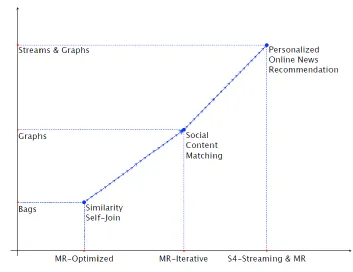
Figure 2: Complexity of contributed algorithms.
5. Conclusion
Data Intensive Scalable Computing is an emerging technology in the data analysis field that can be
used to capitalize on massive datasets coming from the Web. In particular MapReduce and streaming
are the two most promising emerging paradigms for analyzing, processing and making sense of large
heterogeneous datasets. While MapReduce offers the capability to analyze large batches of stored data,
streaming solutions offer the ability to continuously process unbounded streams of data online.
“It is not who has the best algorithms that wins, it is who has more data” is a well-known aphorism.
The importance of big data is widely recognized both in academia and in industry, and the Web is the
largest public data repository available. Information extracted from the Web has the potential to have a
big impact in our society.
6. References
1. Fabian Abel, Qi Gao, G.J. Houben, and Ke Tao. Analyzing User Modeling on Twitter for Personalized
2. G Adomavicius and ATuzhilin. Toward the next generation of recommender systems: A survey of the
state-of-the-art and possible extensions. IEEE Trans-actions on Knowledge and Data Engineering,
pages 734–749, 2005. 99
3. Foto N Afrati and Jeffrey D. Ullman. A New Computation Model for Cluster Computing. 2009. URL
http://ilpubs.stanford.edu:8090/953/. 27,53
4. Foto N. Afrati and Jeffrey D. Ullman. Optimizing Joins in a Map-Reduce En-vironment. In EDBT ’10:
13th International Conference on Extending Database Technology, pages 99—-110, 2010. 34
5. Foto N. Afrati and Jeffrey D. Ullman.Optimizing Multiway Joins in a Map-Reduce Environment. IEEE
Transactions on Knowledge and Data Engineering, 23(9):1282 – 1298, 2011. 34
6. Foto N. Afrati, Anish Das Sarma, David Menestrina, AdityaParameswaran, and Jeffrey D. Ullman.
Fuzzy Joins Using MapReduce. Technical report, Stanford InfoLab, July 2011a. URL
http://ilpubs.stanford.edu:8090/1006. 34
7. Foto N. Afrati, DimitrisFotakis, and Jeffrey D. Ullman. Enumerating Subgraph Instances Using
Map-Reduce. Technical report, Stanford University, 2011b. URL http://ilpubs.stanford.edu:8090/1020/.
35