University of South Carolina
Scholar Commons
Theses and Dissertations
2017
Serpentinization and Synthesis: Searching for
Abiotic and Biotic Non-Volatile Organic Molecules
in the Subsurface of the Atlantis Massif
Katherine A. Hickok
University of South Carolina
Follow this and additional works at:https://scholarcommons.sc.edu/etd
Part of theGeology Commons
This Open Access Thesis is brought to you by Scholar Commons. It has been accepted for inclusion in Theses and Dissertations by an authorized administrator of Scholar Commons. For more information, please [email protected].
Recommended Citation
SERPENTINIZATION AND SYNTHESIS: SEARCHING FOR
ABIOTIC AND BIOTIC NON-VOLATILE ORGANIC MOLECULES
IN THE SUBSURFACE OF THE ATLANTIS MASSIF
by
Katherine A Hickok
Bachelor of Science Clemson University, 2014
Submitted in Partial Fulfillment of the Requirements
For the Degree of Master of Science in
Geological Sciences
College of Arts and Sciences
University of South Carolina
2017
Accepted by:
Susan Lang, Director of Thesis
Lori Ziolkowski, Reader
Michael Bizimis, Reader
ii
iii
ACKNOWLEDGEMENTS
Much appreciation must be given to the crews of the RSS James Cook, the
operators of the RD2 and MeBO rock drills, and the ECORD and ESO operators.
We truly appreciate the spectacular facilities of the Kochi Core Center and the
assistance of Nan Xiao and the entire Geomicrobiology Group in processing
samples. We would also like to thank the KCC for giving us the GX-P film and
Escal Neo bags to analyze. We also like thank Mike Walla at the University of
South Carolina Mass Spectrometry Services for the use of their GC-MS.
Funding for this research was provided by the U.S. Science Support
Program Office subaward 23(GG00939-01) (NSF OCE-14-50528). Purchase of
critical laboratory instrumentation was supported by awards from
NSF-EAR/IF-1349539 and the Deep Carbon Observatory.
I would also like to personally thank my advisor, Susan Lang, for all of her
support and assistance with this project, and for taking me to Japan. This degree
was a once in a lifetime experience and I appreciate all of her guidance. Thanks
again to my family, my old Clemson friends, and my new USC friends for helping
iv
ABSTRACT
High concentrations of hydrogen created during serpentinization can
promote the formation of abiotic organic carbon molecules such as methane,
formate, and short chain hydrocarbons and, in laboratory experiments, larger
molecules containing up to 32 carbon atoms. Subsurface archaeal and bacterial
communities can use these reduced compounds for metabolic energy.
International Ocean Discovery Project Expedition 357 drilled 17 boreholes into the
Atlantis Massif with the goals of investigating carbon cycling and the presence of
life in a zone of active serpentinization. The expedition recovered multiple
lithologies including gabbros, basalts, carbonate sands, and serpentinites. A subset
of contrasting lithologies were analyzed for n-alkane and fatty acid content to
determine if non-volatile organic molecules are produced abiotically in
serpentinizing environments and to identify ‘hot spots’ of microbial life in the
subsurface. Given the high potential for contamination during drilling, a suite of
materials used in sample collection and processing were also analyzed to
characterize their signatures.
Biologically-derived lipid biomarkers could not be identified in any of the
v
Massif were in abundances below our ability to detect them. An n-alkane series
ranging from C18 to C30 with δ13C isotopic values of -30.9‰ to -28.8‰ were present
in various lithologically diverse samples. The distribution of these compounds
was similar to those observed in previous grab samples from the same region, and
to compounds formed abiotically in laboratory experiments. For the current set of
samples, multiple lines of evidence point to the rock saw used to remove core
exteriors during sample processing as the source of the n-alkanes. This result
highlights the importance of careful prevention and characterization of
contamination to allow for more accurate interpretations of complex and dynamic
subsurface processes. Many of the other sample-handling procedures designed to
reduce surface contamination were determined to be effective and should be
implemented in future projects. The definitive detection and identification of
abiotic and biological lipids in the subsurface of an actively serpentinizing system
would be a significant step towards understanding the evolution of pre-biotic
chemistry and life in extreme environments, but future reports of these
vi
TABLE OF CONTENTS
ACKNOWLEDGEMENTS ... iii
ABSTRACT ... iv
LIST OF TABLES ... viii
LIST OF FIGURES ... ix
CHAPTER 1: INTRODUCTION ...1
CHAPTER 2: BACKGROUND ...7
CHAPTER 3: MATERIALS AND METHODS ...13
3.1 SAMPLE COLLECTION AND PROCESSING ...13
3.2 CONTAMINANT COLLECTION ...15
3.3 SOLVENT EXTRACTION ...16
3.4 GC-MS AND ISOTOPE ANALYSIS ...17
CHAPTER 4: RESULTS ...21
4.1 SAMPLE SELECTION CRITERIA ...21
4.2 LIPIDS SIGNATURES OF POTENTIAL CONTAMINANTS ...22
4.3 LIPID SIGNATURES OF SAMPLES ...23
vii
5.1 STEPS TO MINIMIZE CONTAMINATION ...32
5.2 NO DEFINITIVE EVIDENCE FOR BIOTICALLY DERIVED LIPIDS ..34
5.3 SOURCE OF THE ALKANE SERIES ...36
CHAPTER 6: CONCLUSIONS ...45
REFERENCES ...49
viii
LIST OF TABLES
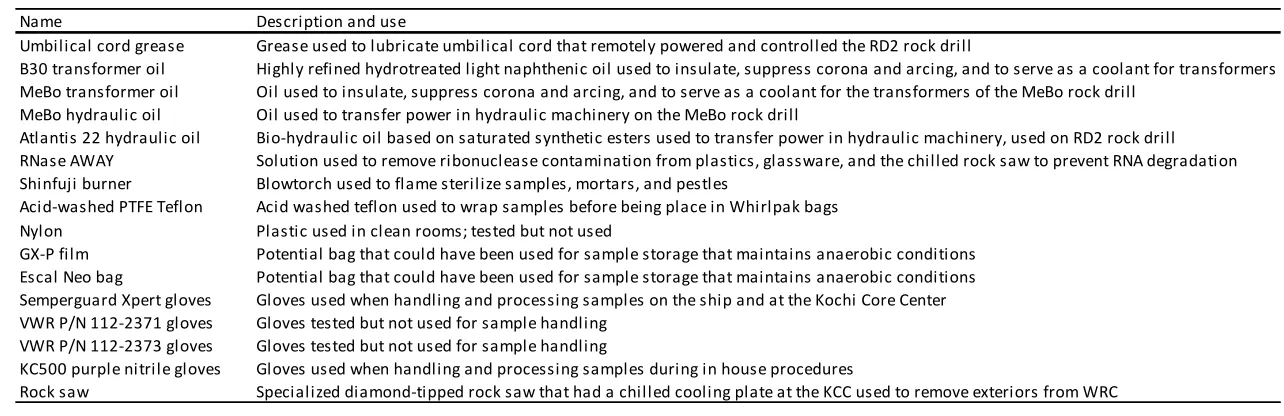
Table 3.1 Potential contaminants ...19
Table 4.1 Samples selected for analyses ...25
Table 4.2 N-alkane concentrations and δ13C values...26
ix
LIST OF FIGURES
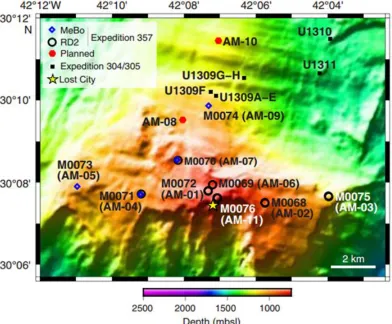
Figure 2.1 Map of the Atlantis Massif ...11
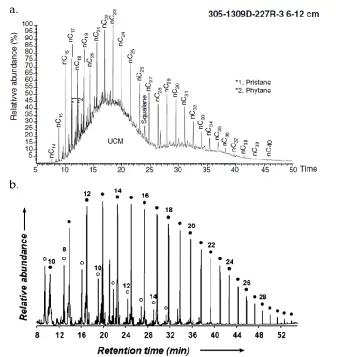
Figure 2.2 Key biotic and abiotic chromatograms ...12
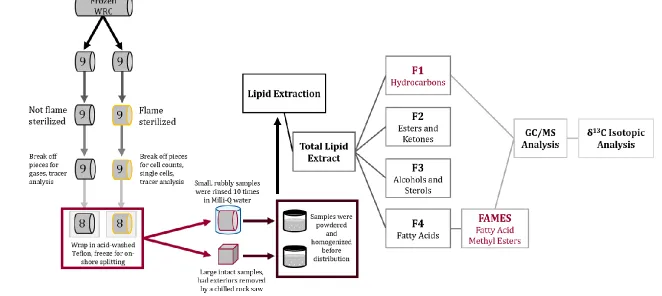
Figure 3.1 Sample processing steps ...20
Figure 4.1 Core visualizations ...28
Figure 4.2H2 and CH4 fluid concentrations. ...29
Figure 4.3Rock saw and umbilical cord grease chromatograms ...30
Figure 4.4 Expedition 357 sample chromatograms ...31
Figure 5.1δ13C isotopic values compared to biologically derived lipids ...43
Figure 5.2 δ13C isotopic values compared to abiotically derived compounds ...44
FigureA.1 Contaminant chromatograms: bags ...58
Figure A.2 Contaminant chromatograms: gloves ...59
Figure A.3 Contaminant chromatograms: oils ...60
Figure A.4 Contaminant chromatograms: Shinfuji burner, RNase AWAY ...61
Figure A.5 Expedition 357 chromatograms: cut serpentinites ...62
Figure A.6 Expedition 357 chromatograms: cut samples ...63
1
CHAPTER 1
INTRODUCTION
Serpentinization is a series of spontaneous reactions that ensue when
seawater hydrates olivine and pyroxene in ultramafic peridotites, ultimately
producing serpentine, brucite, magnetite, and hydrogen (Moody, 1976).
Environments where these reactions occur have the potential for the abiotic
formation of organic molecules via Fischer-Tropsch Type (FTT) synthesis from the
resulting hydrogen (Sherwood Lollar et al., 2002; Proskurowski et al., 2008).
Volatile compounds such as methane, ethane, propane, butane, and formate have
been identified in fluids from serpentinite-hosted hydrothermal systems and have
been attributed to abiotic synthesis reactions (Kelley et al., 2001; 2005;
Proskurowski et al., 2008; Lang et al., 2010). The steady production of these
reduced compounds also provides a favorable habitat for chemolithotrophic and
heterotrophic microbial communities (Schrenk et al., 2013). These environments
may therefore represent a unique biome or provide insight in the physiochemical
conditions needed to sustain life.
Serpentinization is widespread in the oceans and on continents. Seafloor
2
lithosphere inducing detachment faulting, which uplifts these deep crustal and
upper mantle rocks to form extensive massifs called oceanic core complexes (OCC)
(Blackman et al., 2002; Früh-Green et al., 2004; Karson et al., 2006).
Faulting-induced fractures promote seawater infiltration and circulation through
subsurface peridotites resulting in the ideal conditions for serpentinization (Kelley
et al., 2001; 2005; Früh-Green et al., 2003, Klein et al., 2015). Continental ophiolite
complexes consist of emplaced oceanic mafic and ultramafic rocks that also
undergo serpentinization processes (Barnes et al., 1967; 1978). The ubiquity of
detachment faulting and fracturing along spreading centers implies that
serpentinization processes are more widespread than have been currently
recognized (Früh-Green et al., 2004) and suggests similar processes may have
existed since early Earth (Sleep et al., 2011).
A major interest in serpentinizing systems is the potential for abiotic
synthesis of organic molecules. Highly reducing environments
thermodynamically favor abiotic organic compound formation catalyzed by iron-
and nickel-bearing minerals (Shock and Schulte, 1998; Horita et al., 1999,
Foustoukos and Seyfried, 2004). Laboratory experiments have demonstrated that
long-chain non-volatile organic compounds containing up to 32 carbon atoms can
be synthesized under serpentinizing conditions. (McCollom and Seewald, 2006).
3
surfaces, such as the pore spaces in carbonate deposits, to form lipid bilayers that
mimic cellular membranes (Martin and Russell, 2003). Phosphate- and
boron-enriched minerals in similar locations can provide niches where these elements
can be incorporated with abiotic organic compounds to synthesize nucleic acids
(Holm et al., 2006; Ricardo et al., 2004). Verifying the presence of abiotically
synthesized long-chain non-volatile organic molecules in field environments
could provide strong evidence that similar processes could have played a central
role in the formation of early life. As yet, none have been conclusively identified
in field environments.
A second key interest in these environments is the ability of microbes to
utilize the large quantities of metabolic energy generated from serpentinization
reactions. The oxidation of the hydrogen produced during serpentinization fuels
the metabolic activity of multiple archaeal and bacterial communities by acting as
an electron donor (Kelley et al., 2005, McCollom, 2007a). Sulfur-, methane-, and
hydrogen- cycling microorganisms have been identified in serpentinization
environments throughout the world (Schrenk et al., 2004; 2013; Brazelton et al.,
2006; Suzuki et al., 2013). However, most of these observations have been from
surface settings where the presence of oxygen changes the types of
4
geographical region that could support a significant and diverse microbial
community, but direct observations of these ecosystems have yet to be made.
Recent research indicates similar reactions could be occurring on
extraterrestrial bodies. Serpentinization reactions have been proposed to occur on
Mars (Oze and Sharma, 2005), Enceladus (Malamud and Prialnik, 2013), and Titan
(Niemann et al., 2005, Tobie et al., 2006). Spectral signatures of aliphatic organic
molecules were identified on the surface of the dwarf planet Ceres, localized in a
region of ammonium-bearing hydrated phyllosilicates, carbonates, and water ice
(De Sanctis et al., 2017). While the mechanism for how these compounds were
generated is unknown, it is speculated that aqueous hydrothermal alteration on
Ceres could be the source (De Sanctis et al., 2015; De Sanctis et al., 2016;
Ammannito et al., 2016; Combe et al., 2016). Certain phyllosilicate minerals are
serpentinization products (Nozaka et al., 2008) that are capable of adsorbing
organic compounds onto their surfaces (Pearson et al., 2002; Hedges et al., 1977).
Thus, if organic compounds are present, they could be localized in regions of
active serpentinization. Ironically, it may be easier to identify abiotically produced
organic molecules on extraterrestrial bodies where the organic signatures of life
do not interfere with the abiogenic signals.
To date, biological lipids have been identified in serpentinites from the
5
Multiple isoprenoidal biomarkers and an n-alkane series were discovered in the
Atlantis Massif samples (Delacour et al., 2008). Bacterial nonisoprenoidal
dialkylglycerol diether (DEG) lipids, archeaol, and acyclic glycerol dibiphytanyl
glycerol tetraether (GDGT) lipids were identified in brucite-calcite veins from
Iberia Margin serpentinites (Klein et al., 2015). However, samples from both
locations were surface exposed and may not be representative of in situ processes.
The Atlantis Massif samples were collected via submersible from the seafloor
(Delacour et al., 2008), while the Iberia Margin samples were originally drilled in
1993 and stored in a non-sterile fashion in an oxygenated atmosphere before being
subsampled in 2014 (Klein et al., 2015). Previous subsurface samples collected
from the Atlantis Massif did not include serpentinites. Thus, pristine subsurface
serpentinites have not yet been examined for biological or abiotic lipids.
Due to the inherently low abundances of biomass and other organic
compounds suspected to be present in the subsurface, it is essential to prevent
contamination during sample collection and of the collected rock cores. Cell counts
are anticipated to be low, and similar compounds could be present in the multiple
oils, greases, and plastics used during drilling and handling processes (Yanagawa
et al., 2013). Therefore, it is critical to implement contaminant testing to indicate if
collected samples were compromised and could affect the geochemical and
6
The goals of this research are to investigate biotic and abiotic synthesis
reactions that occur in serpentinizing environments present in subsurface rocks.
Specifically, we seek 1) to determine if long-chain, non-volatile abiotic organic
molecules are present in the oceanic serpentinite subsurface and 2) to determine if
biological lipids can be identified and, if so, identify what types of lithologies and
7
CHAPTER 2
BACKGROUND
The recent discovery of the low-temperature Lost City Hydrothermal Field
upon the Atlantis Massif (Figure 2.1), located off-axis of the Mid-Atlantic ridge,
provides an excellent opportunity to understand how active serpentinization
influences the oceanic subsurface biosphere and carbon cycle (Kelley et al., 2001).
Thus, it has been the target of multiple International Ocean Discovery Program
expeditions. The recently completed Expedition 357 drilled 17 boreholes across the
massif “to explore the subsurface environment, the potential for a hydrogen-based
deep biosphere, and hydrocarbon synthesis in an active serpentinite-hosted
hydrothermal system” (Früh-Green et al., 2010).
The Atlantis Massif is an OCC uplifted between 1.5 and 2 million years ago
at the intersection of the Mid-Atlantic Ridge and the Atlantis Transform Fault
(Karson et al., 2006; Früh-Green et al., 2004; Kelley et al., 2001). The Lost City
Hydrothermal Field (LCHF) lies at the peridotite-dominated southern end, which
is one of the most studied regions of active serpentinization in the ocean (Kelley et
al., 2001). Throughout the 400 m length field, there are multiple 60 m high
8
venting reducing fluids that are both warm (41-90°C) and alkaline (9-11) (Kelley
et al., 2001, 2005; Früh-Green et al., 2003; Ludwig et al., 2011). These hydrothermal
fluids contain elevated concentrations of hydrogen (1-15 mmol/kg), methane (1-2
mM), short-chain alkanes (C2-C4) (1-2 nmol/kg), and formate (36-146 μM) (Kelley
et al., 2001; 2005; Proskurowski et al., 2008; Lang et al., 2010). The alkaline, Ca2+
-rich hydrothermal fluids react with any available CO2 or dissolved inorganic
carbon (DIC), rapidly precipitating calcium carbonate (CaCO3). This process can
happen in the subsurface during seawater downwelling (Eickmann et al., 2009a,
Proskurowksi et al., 2008), with mantle-derived CO2, (Eickmann et al., 2009b), and
after fluids exit the seafloor and mix with deep ocean water (Kelley et al., 2001;
2005; Ludwig et al., 2006; Greene et al., 2015). Fluids at Lost City and continental
serpentinite-hosted springs therefore contain vanishingly small amounts of
dissolved inorganic carbon (Bradley et al., 2009; Schrenk et al., 2010;
Schwarzenbach et al., 2013). Sulfate is present in milli-molar concentrations in the
Lost City fluids and is the dominant sulfur phase in the basement peridotites
(Kelley et al., 2005; Delacour et al., 2008; Lang et al., 2012).
The chimney structures of the Lost City Hydrothermal field, located
adjacent to the drill locations of Expedition 357, harbor biofilms that help
precipitate calcium carbonate and have been the focus of many microbiological
9
2009; Brazelton et al., 2011; Lang et al., 2012; Méhay et al., 2013). These biofilms are
dominated by a methane-cycling archaea known as the Lost City
Methanosarcinales (Schrenk et al., 2004; Brazleton et al., 2006). Additionally,
geochemical trends across the field strongly indicate that microbial sulfate
reduction is occurring in the subsurface (Proskurowski et al., 2006; Lang et al.,
2012). Given these microbiological and geochemical studies of the LCHF,
methane-cycling archaea and sulfate reducing bacteria are the most likely
organisms to be present in the Atlantis Massif subsurface (Schrenk et al., 2004;
Brazelton et al., 2006).
Previous organic geochemical analysis of rocks collected from the Atlantis
Massif identified organic molecules in surficial and subsurface serpentinites and
gabbros (Delacour et al., 2008). Surficial rocks collected by submersible from the
southern wall and subsurface rocks drilled from the central dome IDOP Site 1309D
contained a saturated hydrocarbon distribution of long-chain n-alkanes and
isoprenoidal compounds including phytane, pristane, norpristane, and squalane
(Figure 2.2a, Delacour et al., 2008). Carbon isotopic analyses on the surface grab
samples had δ13C values ranging from -38.6‰ to -24.6‰ (Delacour et al., 2008).
The rocks recovered by drilling did not contain enough material for isotope
analyses and no serpentinites were recovered (Delacour et al., 2008). These
10
incorporated during seawater circulation through the massif and subsequent
sorption onto serpentinized phyllosilicate minerals (Delacour et al., 2008). The
possibility that FTT synthesis could have generated some of these compounds
could not be ruled out, but the lack of isotopic data from the central dome samples
along with the presence of isoprenoids and higher n-alkane abundances suggests
that, instead, marine DOC was the source of the compounds present in these
11
Figure 2.1 Map of the Atlantis Massif. Locations of RD2 (black circle) and
12
Figure 2.2 Key biotic and abiotic chromatograms. GC/MS chromatograms displaying the distribution of n-alkanes,
13
CHAPTER 3
MATERIALS AND METHODS
3.1 Sample collection and processing
Rock samples analyzed in this study were collected during IODP
Expedition 357 which drilled a North-South and an East-West profile of
continuous core sequences across the Atlantis Massif (Figure 2.1), specifically
targeting sites that are anticipated to be dominated by active serpentinization,
microbial activity, and fluid flow (Früh-Green et al., 2017a). Two sea-bed rock
drills, the MARUM Center for Marine Environmental Sciences
Meeresboden-Bohrgerät 70 (MeBo) and the British Geological Survey RockDrill2 (RD2),
recovered approximately 50 m of core with multiple lithologies including
serpentinites, carbonate sands, basalts, and gabbros (Früh-Green et al., 2017a).
Upon arrival on deck, a small whole-round core (WRC) was cut and
processed immediately for time-sensitive microbiological and geochemical
analysis (Figure 3.1). Approximately half of these samples were flame-sterilized to
eliminate surficial microbial contamination while the remainder were not flame
sterilized. In both cases, the WRC was then wrapped in acid-washed and
14
flushed with N2 and heat sealed to maintain anoxic conditions. The bags were then
frozen at -80˚C for shore-based processing at the Kochi Core Center.
At the Kochi Core Center, the frozen WRCs were further processed,
homogenized, and distributed. These activities took place within a class 10,000
clean room to minimize the contribution of cells and particles through air transfer
(Masui et al., 2009). If the rock cores were large enough, the exterior was removed
using a specialized diamond-tipped rock saw that had a chilled cooling plate. This
design eliminated the need for cooling water and thus minimized the introduction
of microbial or organic surficial contaminants. The rock saw isolated within a clean
booth under HEPA-filter units (Masui et al., 2009). All rock saw surfaces, including
the entirety of the band saw blade, were cleaned with RNase AWAY and methanol
between each sample. If the rock cores were too small for cutting or composed of
rubble, they were placed into combusted (5 hr, 500˚) glass beakers and rinsed 10
times with Milli-Q water. After being cut or rinsed, the samples were crushed and
homogenized with stainless steel impact mortars and pestles into a fine powder,
which were cleaned with RNase AWAY and methanol between each sample to
prevent cross contamination. Homogenization with impact mortars was
performed while working between a KOACH benchtop laminar flow system. Due
to time constraints at the Kochi Core Center, eleven samples were processed at
15
distributed to multiple principal investigators so that samples would be subjected
to multiple geochemical and microbiological analyses.
3.2 Contaminant collection
Sixteen samples of potential contaminants were collected before, during,
and after the expedition (Table 3.1). They included laboratory gloves that were
available for use on the ship, at the Kochi Core Center, and in-house: Semperguard
Xpert, VWR Nitrile 112-2373, VWR Nitrile 112-2371, and KC500 purple nitrile
gloves (VWR 32934-082). Four different bags and plastics were tested to determine
their suitability for sample storage: Escal Neo, GX-P film, nylon sheeting (VWR
P/N 12243-186), and Teflon sheeting (McMaster Carr P/N 8569K75, 36" wide x
0.003" thickness x 20' length). The Escal Neo, GX-P film, and nylon sheeting were
rinsed with 9:1 DCM:MeOH before testing. The Teflon sheeting was acid washed
with a 10% HCl soak overnight, then Milli-Q soak overnight. Five types of oils and
greases used to operate rock drills and the ship were tested: MeBo transformer oil,
B30 transformer oil, Atlantis hydraulic oil, MeBo hydraulic oil, and umbilical cord
grease. RNase AWAY and a Shinfuji burner were used to remove ribonuclease
contamination and to flame-sterilize samples, respectively. To collect potential
contaminants from the rock saw, combusted filters dipped in methanol were
16
in the typical fashion then the blade was run for 1 minute. This focused on areas
where the WRC was in contact with the saw during the exterior removal process.
3.3 Solvent extraction
Prior to extraction, 19 rocks and sands were freeze-dried to remove water.
Each rock sample was ultrasonically extracted three times with methanol (MeOH),
three times in a 3:1 mixture of dichloromethane (DCM): MeOH, and two times
with DCM. Multiple samples of freshly combusted (5 hrs, 500C) sand were
treated identically to assess any contamination introduced during extraction and
processing. Gloves and bags were cut into 2 gram pieces then ultrasonically
extracted three times with 9:1 DCM:MeOH. A small aliquot of the grease samples
were also extracted three times with 9:1 DCM:MeOH. The oil samples were tested
by dissolving 10 μL of oil into 1 mL of hexane.
Extracts were combined and concentrated by rotary evaporation. If needed,
samples were filtered through combusted glass wool to remove particles. The
filtered solvent was then passed through a column of Na2SO4 to remove water. The
remaining total lipid extract was separated over a SepraTM NH2 (Sigma-Aldrich
P/N 57212-U) bulk packing column into multiple fractions by eluting with solvents
of increasing polarity: F1: n-alkanes (eluted with hexane), F2: esters and ketones
17
acetone), and F4: fatty acids (eluted with 4% formic acid in DCM). Elemental sulfur
was removed from the n-alkane (F1) fraction using activated copper. The fatty acid
(F4) fraction was methylated with HCl/MeOH (8% w/v) at 45˚C for 14 hours. These
fractions were dissolved in a known volume of hexane prior to gas
chromatography- mass spectrometry (GC-MS) and gas chromatography-
combustion- isotope ratio mass spectrometry (GC-C-IRMS) analyses.
3.4 GC-MS and isotope analysis
The n-alkane and fatty acid fractions were analyzed by GC-MS on an
Agilent Technologies 5975 Inert XL Mass Selective Detector with an Agilent J&W
GC HP-5MS UI capillary column capillary column (30 m ⨯ 0.25 mm; 0.25 μm film
thickness) using He as a carrier gas. Samples were injected in pulsed splitless
mode. The temperature program was 70-150 ˚C (15 ˚C/min), 150-200 ˚C (5 ˚C/min),
200-300 ˚C (5 ˚C/min), and held at 300 ˚C for 10 minutes. Concentrations of each
peak were quantified by comparison to a four- point standard curve of either a C7
-C30 alkane series (P/N 49451-U, Sigma Aldrich) or a mixture of 37 fatty acids (P/N
47885-U, Sigma Aldrich).
The compound-specific carbon isotope ratios for each n-alkane and fatty
acid fraction were analyzed by GC-C-IRMS using a Thermo Trace 1310 gas
18
column (30 m ⨯ 0.25 mm, 0.25 µm film thickness) with helium as the carrier gas.
A Gerstel CIS-6 inlet was held in splitless mode during injection then set to a 10:1
split after three minutes. The column inlet temperature program was initially at 40
˚C then ramped to 150 ˚C at 16 ˚C/min, and then ramped to 300 ˚C at 12 ˚C/min.
The temperature program of the GC was initially held at 45 ˚C for one minute then
ramped to 130 ˚C at 40 ˚C/min, then ramped to 250 ˚C at 6 ˚C/min, then ramped to
290 ˚C at 2 ˚C/min, then ramped to 320 ˚C at 6 ˚C/min, and then held at 320 ˚C for
six minutes. Each sample was injected in duplicate and a standard mixture of
n-alkanes (A6 Standard, Arndt Schimmellman, Indiana University) with known
isotopic composition was analyzed every third injection as an external isotope
standard and to monitor system performance. The isotopic signatures of the fatty
acids were corrected for the contribution of additional carbon during methylation.
The standard deviation of duplicate injections ranged from 0.00 to 0.43. The carbon
isotope (δ13C) ratios of each compound are expressed as per mil (‰) relative to the
19
Table 3.1 Potential contaminants. List of potential contaminants and their uses.
Name Description and use
Umbilical cord grease Grease used to lubricate umbilical cord that remotely powered and controlled the RD2 rock drill
B30 transformer oil Highly refined hydrotreated light naphthenic oil used to insulate, suppress corona and arcing, and to serve as a coolant for transformers MeBo transformer oil Oil used to insulate, suppress corona and arcing, and to serve as a coolant for the transformers of the MeBo rock drill
MeBo hydraulic oil Oil used to transfer power in hydraulic machinery on the MeBo rock drill
Atlantis 22 hydraulic oil Bio-hydraulic oil based on saturated synthetic esters used to transfer power in hydraulic machinery, used on RD2 rock drill RNase AWAY Solution used to remove ribonuclease contamination from plastics, glassware, and the chilled rock saw to prevent RNA degradation Shinfuji burner Blowtorch used to flame sterilize samples, mortars, and pestles
Acid-washed PTFE Teflon Acid washed teflon used to wrap samples before being place in Whirlpak bags Nylon Plastic used in clean rooms; tested but not used
GX-P film Potential bag that could have been used for sample storage that maintains anaerobic conditions Escal Neo bag Potential bag that could have been used for sample storage that maintains anaerobic conditions Semperguard Xpert gloves Gloves used when handling and processing samples on the ship and at the Kochi Core Center VWR P/N 112-2371 gloves Gloves tested but not used for sample handling
VWR P/N 112-2373 gloves Gloves tested but not used for sample handling
KC500 purple nitrile gloves Gloves used when handling and processing samples during in house procedures
20
Figure 3.1 Sample processing steps. Schematic of core handling, sample processing, and lipid extraction procedures
21
CHAPTER 4
RESULTS
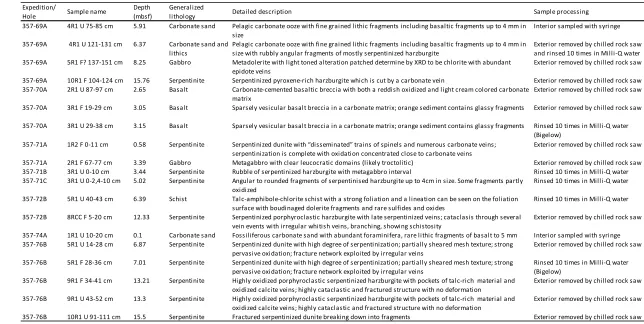
4.1 Sample selection criteria
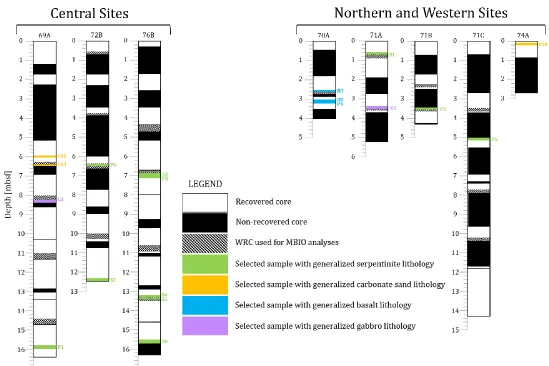
Of the 60 core samples obtained from 17 boreholes during the expedition,
19 rocks and sands were carefully selected because they were expected to
represent drill sites with the greatest probability of finding lipid biomarkers (Table
4.1, Figure 4.1). Initial efforts were focused on sites 69, 72, and 76 which are located
on the central dome of the Atlantis Massif and are closest to the Lost City
Hydrothermal Field. Shipboard gas analysis of subsurface fluids exiting these
drilled boreholes indicated that these central dome sites contain the highest H2 and
CH4 concentrations (Figure 4.2,Früh-Green et al., 2017b) and are therefore likely
to be zones of active serpentinization. Preference was also given to samples that
had high volumes and had the exterior removed by cutting rather than Milli-Q
rinsing. These specimens were expected to be more representative of in situ
conditions and be exposed to less contamination than those that have been rinsed
with Milli-Q water. To determine if there were lithological relationships with the
presence of biomarkers, samples from a variety of rock types (serpentinites,
22 4.2 Lipid signatures of potential contaminants
The saturated hydrocarbon chromatograms for the potential contaminant
samples varied highly. The Escal Neo bag and GX-P film chromatograms
contained a series of even-numbered alkanes ranging from C14 to C30, but lacked
bell-shaped humps, also known as unresolved complex mixtures (UCM), caused
by the coelution of many cyclic and branched compounds that the gas
chromatograph cannot fully resolve (Figure A.1). The nylon and Teflon sheeting
chromatograms were relatively clean and had an absence of peaks (Figure A.1).
The hydrocarbon fraction of the four glove types used during sample processing
and handling showed large UCMs with the two VWR gloves containing elevated
concentrations of benzene hydrocarbons and the KC500 gloves containing the
same compounds as above plus an identifiable n-alkane series ranging from C22 to
C27 (Figure A.2).
The hydrocarbon fraction of the four transformer and hydraulic oils used
during drilling were dominated by UCMs (Figure A.3). The umbilical cord grease
chromatogram was comprised of a series of alkanes ranging from C16 to C32 with
an average isotopic signature of -31.2 ± 0.3‰ and a slight even-over-odd carbon
number predominance (Figure 4.3). The Shinfuji burner, used to sterilize samples,
and the RNase AWAY solution, used to remove ribonuclease contamination,
23
phthalates in the Shinfuji burner chromatogram (Figure A.4). The rock saw
chromatogram contained a series of n-alkanes ranging from C18 to C32 with no odd
over even carbon number predominance (Figure 4.3). Compound-specific isotope
analysis of these compounds range from -31.0‰ to -30.1‰ with an average value
of -30.6 ± 0.4‰.
Thirteen contaminants contained hexadecanoic acid and nine contaminants
contained octadecanoic acids in their fatty acid chromatograms. The compound
specific δ13C isotopic analysis of the fatty acids exhibited a large range, between
-30.9‰ and -25.2‰ for C16 fatty acids and between -30.4‰ and -24.8‰ for C18 fatty
acids.
4.3 Lipid signatures of samples
The saturated hydrocarbon fraction of extracted core samples contained
either a characteristic series of n-alkanes ranging from C18 to C30 and up to C32 or
contained no detectable n-alkanes (Figures 4.4, A.5, A.6). Concentrations of
measurable saturated hydrocarbons ranged from 6- 180 ng/g rock (Table 4.2). Of
the 11 samples that contained the n-alkane series, there was no relationship with
lithology or amount of sample extracted. The highest n-alkane concentrations
occurred in carbonate sand and lithics 69A 4R1 U 121-131 and serpentinite 76B 9R1
24
serpentinite 76B 10R1 U 91-111. The chromatogram of the n-alkane series showed
no odd or even carbon number predominance, and abundances decreased as
carbon number increases (Figures 4.4, A.5, A.6).
Compound-specific isotope analysis of the saturated hydrocarbons ranged
from -30.9‰ to -28.8‰ with an average value of -30.3 ± 0.4‰ for samples that
contained enough material for isotopic analysis (Table 4.2). The isotopic values
were uniform between n-alkane and lithology.
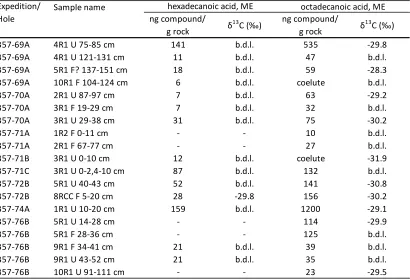
The fatty acid fraction of extracted samples contained predominantly
hexadecanoic (6- 159 ng compound/ g rock) and octadecanoic (10- 1200 ng
compound/ g rock) fatty acids (Table 4.3). All samples contained detectable C18
fatty acid and all but five samples contained C16 fatty acid. Carbonate sands 69A
4R1 U 75-85 and 74A 1R1 U 10-20 contained approximately 10-100 times higher
concentrations of octadecanoic acid (535 and 1200 ng compound/ g rock,
respectively) than the remaining samples. Compound-specific δ13C isotope
analysis of octadecanoic acids ranged from -28.3‰ and -31.9‰ with an average of
-29.9 ± 1.0‰ (Table 4.3). The only sample with sufficient hexadecanoic acid for
isotope analysis had a δ13C value of -29.8‰. The isotopic values for the C18 fatty
25
Table 4.1 Samples selected for analyses. List of samples selected for extraction with detailed descriptions
summarized from Onshore Section Overview Reports, how each sample was processed, and amount processed.
357-69A 4R1 U 75-85 cm 5.91 Carbonate sand
357-69A 4R1 U 121-131 cm 6.37
357-69A 5R1 F? 137-151 cm 8.25 Gabbro
357-69A 10R1 F 104-124 cm 15.76 Serpentinite Serpentinized pyroxene-rich harzburgite which is cut by a carbonate vein Exterior removed by chilled rock saw 357-70A 2R1 U 87-97 cm 2.65 Basalt
357-70A 3R1 F 19-29 cm 3.05 Basalt
357-70A 3R1 U 29-38 cm 3.15 Basalt
357-71A 1R2 F 0-11 cm 0.58 Serpentinite
357-71A 2R1 F 67-77 cm 3.39 Gabbro Metagabbro with clear leucocratic domains (likely troctolitic) Exterior removed by chilled rock saw 357-71B 3R1 U 0-10 cm 3.44 Serpentinite Rubble of serpentinized harzburgite with metagabbro interval Rinsed 10 times in Milli-Q water 357-71C 3R1 U 0-2,4-10 cm 5.02 Serpentinite
357-72B 5R1 U 40-43 cm 6.39 Schist
357-72B 8RCC F 5-20 cm 12.33 Serpentinite
357-74A 1R1 U 10-20 cm 0.1 Carbonate sand Fossiliferous carbonate sand with abundant foraminifera, rare lithic fragments of basalt to 5 mm Interior sampled with syringe 357-76B 5R1 U 14-28 cm 6.87 Serpentinite
357-76B 5R1 F 28-36 cm 7.01 Serpentinite
357-76B 9R1 F 34-41 cm 13.21 Serpentinite
357-76B 9R1 U 43-52 cm 13.3 Serpentinite
357-76B 10R1 U 91-111 cm 15.5 Serpentinite Fractured serpentinized dunite breaking down into fragments Exterior removed by chilled rock saw Carbonate sand and
lithics
Serpentinized dunite with “disseminated” trains of spinels and numerous carbonate veins; serpentinization is complete with oxidation concentrated close to carbonate veins
Exterior removed by chilled rock saw
Angular to rounded fragments of serpentinised harzburgite up to 4cm in size. Some fragments partly oxidized
Rinsed 10 times in Milli-Q water
Highly oxidized porphyroclastic serpentinized harzburgite with pockets of talc-rich material and oxidized calcite veins; highly cataclastic and fractured structure with no deformation
Exterior removed by chilled rock saw Serpentinized dunite with high degree of serpentinization; partially sheared mesh texture; strong
pervasive oxidation; fracture network exploited by irregular veins
Exterior removed by chilled rock saw
Serpentinized dunite with high degree of serpentinization; partially sheared mesh texture; strong pervasive oxidation; fracture network exploited by irregular veins
Rinsed 10 times in Milli-Q water (Bigelow)
Highly oxidized porphyroclastic serpentinized harzburgite with pockets of talc-rich material and oxidized calcite veins; highly cataclastic and fractured structure with no deformation
Exterior removed by chilled rock saw Talc-amphibole-chlorite schist with a strong foliation and a lineation can be seen on the foliation
surface with boudinaged dolerite fragments and rare sulfides and oxides
Rinsed 10 times in Milli-Q water
Serpentinized porphyroclastic harzburgite with late serpentinized veins; cataclasis through several vein events with irregular whitish veins, branching, showing schistosity
Exterior removed by chilled rock saw Carbonate-cemented basaltic breccia with both a reddish oxidized and light cream colored carbonate
matrix
Exterior removed by chilled rock saw
Sparsely vesicular basalt breccia in a carbonate matrix; orange sediment contains glassy fragments Exterior removed by chilled rock saw
Sparsely vesicular basalt breccia in a carbonate matrix; orange sediment contains glassy fragments Rinsed 10 times in Milli-Q water (Bigelow)
Pelagic carbonate ooze with fine grained lithic fragments including basaltic fragments up to 4 mm in size
Pelagic carbonate ooze with fine grained lithic fragments including basaltic fragments up to 4 mm in size with rubbly angular fragments of mostly serpentinized harzburgite
Exterior removed by chilled rock saw and rinsed 10 times in Milli-Q water Metadolerite with light toned alteration patched determine by XRD to be chlorite with abundant
epidote veins
Exterior removed by chilled rock saw Expedition/
Hole Sample name
Depth (mbsf)
Generalized lithology
Interior sampled with syringe
26
Table 4.2 N-alkane concentrations and δ13C values. Concentrations and δ13C compound-specific isotopic signatures
of n-alkanes extracted from the Atlantis Massif subsurface. Sample name
Amount (g)
Alkanes
C18 21 b.d.l. - - - - 6 b.d.l. - - - - 14 b.d.l. - - - -
C19 22 b.d.l. - - - - 7 b.d.l. - - - - 15 b.d.l. 21 b.d.l. - - - -
C20 30 b.d.l. - - - - 7 b.d.l. - - - - 16 b.d.l. 36 -30.2 - - - -
C21 48 -30.4 14 b.d.l. - - 10 b.d.l. 13 b.d.l. 20 b.d.l. - - 24 -30.4 68 -30.7 32 b.d.l. - -
C22 86 -30.7 16 b.d.l. 10 b.d.l. 16 -30.3 13 b.d.l. 21 b.d.l. - - 34 -30.4 104 -30.6 43 -30.6 - -
C23 104 -30.4 17 b.d.l. 11 b.d.l. 20 -30.3 14 b.d.l. 21 b.d.l. 5 b.d.l. 41 -30.5 139 -30.7 47 -30.4 7 b.d.l.
C24 113 -30.6 17 b.d.l. 12 b.d.l. 22 -30.2 15 b.d.l. 22 b.d.l. 5 b.d.l. 44 -30.3 139 -30.8 45 -30.2 7 b.d.l.
C25 103 -30.3 19 b.d.l. 14 -30.2 22 -30.2 15 b.d.l. 22 b.d.l. 6 b.d.l. 44 -30.3 180 -30.8 45 b.d.l. 9 b.d.l.
C26 96 -30.6 19 b.d.l. 14 -30.0 20 -30.4 15 b.d.l. 22 b.d.l. 6 b.d.l. 42 -30.4 154 -30.7 42 b.d.l. 9 b.d.l.
C27 81 -30.3 17 b.d.l. coelute -29.2 18 -30.3 12 b.d.l. 21 b.d.l. 6 b.d.l. 38 -30.1 130 -30.7 37 b.d.l. 9 b.d.l.
C28 75 -30.7 19 b.d.l. 15 -28.8 16 -30.3 13 b.d.l. 22 b.d.l. - - 37 -30.6 113 -30.9 39 b.d.l. 9 b.d.l.
C29 55 -30.5 19 15 b.d.l. 15 -30.3 13 b.d.l. 21 b.d.l. - - 34 -30.5 97 -30.7 39 b.d.l. 9 b.d.l.
C30 60 b.d.l. - - 14 b.d.l. 12 b.d.l. 13 b.d.l. - - - - 32 -30.7 82 -30.6 - - 9 b.d.l.
69A 4R1 U 121-131 20.35 ng compound/
g rock δ 13C (‰)
69A 5R1 F? 137-151 30.78 ng compound/
g rock δ 13C (‰)
69A 10R1 F 104-124 43.93 ng compound/
g rock δ 13C (‰)
70A 2R1 U 87-97 70A 3R1 F 19-29 68.48 31.52 ng compound/
g rock δ
13C (‰) ng compound/ g rock δ
13C (‰)
71A 1R2 F 0-11 48.7 ng compound/
g rock δ 13C (‰)
71A 2R1 F 67-77 88.41 ng compound/
g rock δ 13C (‰)
76B 5R1 U 14-28 76B 9R1 F 34-41 76B 9R1 U 43-52 76B 10R1 U 91-111 41.3 20.3 17.02 67.75
δ13C (‰) ng compound/ g rock δ
13C (‰) ng compound/
g rock δ
13C (‰) ng compound/ g rock δ
27
Table 4.3 Fatty acid concentrations and δ13C values. Concentrations and δ13C
values of fatty acid methyl esters extracted from the Atlantis Massif subsurface.
357-69A 4R1 U 75-85 cm 141 b.d.l. 535 -29.8 357-69A 4R1 U 121-131 cm 11 b.d.l. 47 b.d.l. 357-69A 5R1 F? 137-151 cm 18 b.d.l. 59 -28.3 357-69A 10R1 F 104-124 cm 6 b.d.l. coelute b.d.l. 357-70A 2R1 U 87-97 cm 7 b.d.l. 63 -29.2 357-70A 3R1 F 19-29 cm 7 b.d.l. 32 b.d.l. 357-70A 3R1 U 29-38 cm 31 b.d.l. 75 -30.2 357-71A 1R2 F 0-11 cm - - 10 b.d.l. 357-71A 2R1 F 67-77 cm - - 27 b.d.l. 357-71B 3R1 U 0-10 cm 12 b.d.l. coelute -31.9 357-71C 3R1 U 0-2,4-10 cm 87 b.d.l. 132 b.d.l. 357-72B 5R1 U 40-43 cm 52 b.d.l. 141 -30.8 357-72B 8RCC F 5-20 cm 28 -29.8 156 -30.2 357-74A 1R1 U 10-20 cm 159 b.d.l. 1200 -29.1 357-76B 5R1 U 14-28 cm - - 114 -29.9 357-76B 5R1 F 28-36 cm - - 125 b.d.l. 357-76B 9R1 F 34-41 cm 21 b.d.l. 39 b.d.l. 357-76B 9R1 U 43-52 cm 21 b.d.l. 35 b.d.l. 357-76B 10R1 U 91-111 cm - - 23 -29.5 Expedition/
Hole
Sample name hexadecanoic acid, ME octadecanoic acid, ME ng compound/
g rock δ
13C (‰) ng compound/
g rock δ
28
Figure 4.1 Core visualizations. Visualization of core depth comparisons and generalized lithology locations for each
29
Figure 4.2 H2 and CH4 fluid concentrations. Dissolved H2 and CH4 in fluid samples across the Atlantis Massif. Figure
30
Figure 4.3 Rock saw and umbilical cord grease chromatograms. GC/MS chromatograms displaying the distribution of
31
Figure 4.4 Expedition 357 sample chromatograms. GC/MS chromatograms displaying the distribution of n-alkanes
32
CHAPTER 5
DISCUSSION
5.1 Steps to minimize contamination
Our interest in long-chain aliphatic compounds in subsurface rocks
presented a unique challenge. To minimize external contamination and limit
background signals, IODP drilling and sample processing procedures were, to the
extent feasible, designed to maximize our ability to identify desired compounds
without interference. Since all samples were to be shared between multiple PIs,
additional steps were necessary to store samples in a manner appropriate for other
analyses. For example, microbial culture experiments required maintaining anoxic
conditions.
Prior to sampling, materials were tested for possible interference with lipid
analysis. The bags used regularly to store core microbiological samples on the
IODP vessel Chikyū (Escal Neo, GX-P film) contained high abundances of even
n-alkanes and were deemed problematic for organic geochemical analyses, but had
the benefit of keeping samples anoxic until they could be processed. Since
acid-washed Teflon sheeting had a low contribution of lipid biomarkers, samples were
33
with N2 and sealed. Nylon bags were found to be inappropriate for sample storage
due to high contributions of amino acids, which could interfere with other future
analyses (S. Lang, personal observations). The alkane series found in the core
samples did not contain the even-over-odd carbon number predominance found
in the Escal Neo bags, indicating that this compromise was effective in preventing
contamination from the bags.
While all attempts were made to only touch the cores with the Teflon
sheeting or cleaned metal instruments, it was at times necessary to touch the
samples with gloved hands shipboard. Several different glove types were tested
to identify those that would minimize the contribution of undesirable compounds.
Three glove types were available at sea: Semperguard Xpert, VWR Nitrile
112-2373, and VWR Nitrile 112-2371. Semperguard Xpert gloves contained a large
UCM peak but no identifiable alkanes and were therefore used at sea and at the
Kochi Core Center during sample cutting and crushing. The KC500 purple nitrile
gloves were used during all in-house extraction and separation procedures,
though at this time it was never necessary to touch the sample directly and great
care was taken to avoid contact between the gloves and the sample.
The outcome of these initial studies lead to the recommendation that upon
arriving on deck, samples should be wrapped in acid-washed Teflon sheeting then
34
357. The lack of bag-derived alkanes and glove-derived UCM humps, plus clean
lab processing blanks of combusted sand, suggested that these steps were
largely effective.
5.2 No definitive evidence for biotically derived lipids
Archaea and bacteria produce distinct lipid biomarkers that can be used to
identify their presence. Multiple microbiological and geochemical studies of the
LCHF suggest methane-cycling archaea and sulfate reducing bacteria are the most
likely microorganisms to be present in the Atlantis Massif subsurface (Schrenk et
al., 2004; Brazelton et al., 2006). The 2,6,10,15,19-pentamethylicosane (PMI)
compound is a highly specific biomarker produced by methanogenic and
methanotrophic archaea (Peters et al., 2005) and has been found previously in the
Lost City chimneys (Bradley et al., 2009). Hexadecanoic and octadecanoic acids are
common fatty acids that indicate biological activity, while other more specific fatty
acids, such as i17:1w7c and 10ME16:0, are also expressed by some sulfate-reducing
bacteria (Peters et al., 2005; Dowling et al., 1988; Londry et al., 2004; Peters et al.,
2005). It is possible that some of these lipids and fatty acids can exist in
serpentinized rocks and be extracted and identified (Klein et al., 2015).
Examination of core sample chromatograms have indicated that there are
35
investigations of the Atlantis Massif, have identified isoprenoidal lipids such as
phytane, pristane, norpristane, and squalane in rocks from both surface grab
samples and subsurface cores (Delacour et al., 2008). The only unequivocally
biological compounds present in the 357 samples were C16 and C18 fatty acids.
Despite these compounds being biologically derived, they are ubiquitous and
were identified in many potential contaminants used in this particular study.
Therefore, the presence of theses fatty acids cannot be used to assess the existence
and extent of a subsurface biosphere.
The lack of these diagnostic molecules did not outright confirm that these
microorganisms are absent. Instead, these compounds could be below detection.
Preliminary results from IODP collaborators have estimated the cell counts from
similar samples to be ≈ 7.1 × 10³ cells per cm3 of rock with even lower estimates at
greater depths (Früh-Green et al., 2017b). Our detection limit was approximately
1 ng of compound on column, and for our typical sample size of approximately 40
g, we would have needed approximately 105 cells per gram of rock to detect these
compounds or sample sizes of 4 kilograms. The low cell counts from our samples
compared to the number needed for detection could explain why no biomarkers
were identified, despite alternative evidence for microbial activity in the
36 5.3 Source of the alkane series
Eleven core samples contained a similar series of straight-chain n-alkanes
with an isotopic signature of -30.9‰ to -28.8‰. These compounds could have been
derived from three potential sources: 1) biologically-derived from in situ microbial
communities or the input of marine DOC, 2) abiotically-derived from FTT
synthesis reactions, or 3) derived from contamination of different oils and greases
used during samples drilling or processing.
5.3.1. Is the alkane series biologically derived?
This n-alkane series exhibited in the 357 rocks strongly resembled a similar
distribution from previously collected serpentinites and gabbros from the Atlantis
Massif (Delacour et al., 2008; Figure 2.2, Figure 4.4). This suite of compounds was
previously attributed to sorption of marine DOC onto the rocks transported by
high seawater fluxes through the massif (Delacour et al., 2008). The δ13C isotopic
values for the n-alkanes were similar between the two samples sets, suggesting
that similar processes may be generating these compounds (Figure 5.1). The rocks
from Expedition 357, however, lacked the previously observed isoprenoidal
phytane, pristane, norpristane, and squalane biomarkers. It is therefore unlikely
37 5.3.2. Is the alkane series abiotic?
Laboratory experiments examining the effects of serpentinization and FTT
reactions have discovered specific trends that are indicative of abiotic compound
synthesis. Abiogenic alkane distributions were characterized by a decrease in
abundance as carbon number increases with no odd over even carbon number
predominance (McCollom and Seewald, 2006; Figure 2.2b). The initial carbon
source that was reacted with hydrogen to produce the alkane series generated
different isotopic fractionation effects. When CO was used as the carbon source,
n-alkanes (C15-C30) were approximately 28‰ more negative than the initial CO
(McCollom et al., 2010). As these compounds are polymerized, the longer chain
compounds had more positive isotopic signatures (McCollom et al., 2010). When
formate was used as the carbon source, the alkanes were synthesized with a
uniform isotopic fractionation of -30‰ (McCollom and Seewald, 2006; McCollom
et al., 2010). Additional polymerization did not introduce a change in isotope
values and there was minimal isotopic distinction between compounds
(McCollom and Seewald, 2006; McCollom et al., 2010). No hydrocarbon
polymerization was observed when CO2 or CH4 acted as the carbon source
(McCollom and Seewald, 2006).
Similar to laboratory experiments, the alkane distribution exhibited in the
38
abundance with increasing carbon number. Also, the δ13C isotopic values of our
long-chain hydrocarbons remained uniform as carbon number increases, which
was also observed in laboratory experiments with formate as a carbon source
(Figure 5.2).
Formate concentrations are elevated in the Lost City fluids (Lang et al.,
2010), which suggests that it is present in the subsurface and could be used as the
carbon source for FTT reactions. With a -30‰ fractionation factor (McCollom and
Seewald, 2006; McCollom et al., 2010), a formate δ13C value of -0.9‰ to +1.2‰
would have been required to be the initial carbon source from which the Atlantis
Massif alkanes were synthesized (-30.9‰ to -28.8‰). Formate in fluids from Lost
City chimneys has recently been determined to consist of a mantle-derived source
with a δ13C of -12.7 ± -3.8‰ and a seawater derived source with a δ13C of +8.4 ±
1.6‰ (Lang et al., submitted). It is, therefore, unlikely that alkanes synthesized
from seawater-derived formate contributed to the observed n-alkane series, unless
formate with a different isotopic composition is present away from the
hydrothermal field. Further information on the carbon system of the Atlantis
Massif and on experimentally-derived isotopic fractionation factors would help to
constrain these possibilities.
39
Sixteen grease, oil, and plastic samples that could have come into contact
with the cores were also characterized for comparison to samples. The majority of
tested contaminants did not contain the same saturated hydrocarbon distribution
that was identified in the rock samples, but were rather composed of UCM humps
or small distributions of even-numbered n-alkanes. The umbilical cord grease was
the only shipboard contaminant with a chromatogram that contained the
distinctive n-alkane signature that was analogous to what was observed in the
rock samples. However, the umbilical cord grease n-alkane distribution had a
minor even-over-odd carbon number predominance, which was not observed in
the rock sample distribution (Figure 4.3). The δ13C values of the umbilical cord
grease n-alkanes (-31.7‰ to -30.8‰) were isotopically lighter than the δ13C values
of the rock sample alkanes (-30.9‰ to -28.8‰). Further, this grease was used only
on one of the two rock drills, and was physically distant from the sample collection
point, as it was used on the cable that lowered the drill to the seabed. It was
therefore unlikely to be responsible for the n-alkanes observed in the samples.
The alkane concentrations were compared to a complementary study that
used a chemical to tracer to assess sample contamination by drilling fluids.
Perfluoromethylcyclohexane (PFC) was used as a tracer to qualify core
contamination during seabed drilling (Früh-Green et al., 2017a; Orcutt et al., in
40
concentrations were measured in rock and fluid samples (Früh-Green et al., 2017a;
Orcutt et al., in prep). The presence of PFC and, therefore, the intrusion of drilling
fluid into the interior of the core, depended on core coherency (intact or rubbly),
lithology, and processing style (Orcut et al., in prep). Regardless of borehole
location, PFC concentrations were lower in the interiors of cores that were intact,
did not contain veins, were not highly serpentinized (no talc), and were rinsed
with Milli-Q water (Orcutt et al., in prep). The samples with the highest PFC
abundances were not the same as the samples with highest alkane abundances.
This implies that the drilling fluid, as identified by tracer intrusion, did not
substantially contribute to the n-alkanes in the rock samples.
Samples processed by rock cutting contained the n-alkane series while
those that were rinsed with Milli-Q water did not (Figure A.7). One possibility is
that the rinse may have washed away loose phyllosilicate minerals which are
expected to contain the highest concentrations of adsorbed organic molecules. This
could have radically reduced the amount of organic compounds present in the
sample. Alternatively, the n-alkane series could have been introduced to the
eleven remaining samples whose exteriors were removed with a chilled rock saw
despite extensive cleaning with methanol and RNase AWAY.
To test this possibility, potential contamination from the rock saw was
41
and chilled plate. The extracts of these filters contained a series of n-alkanes that
were identical to the distribution observed in our samples (Figures 4.3, 4.4).
Subsequent δ13C isotopic analysis of the rock saw hydrocarbons had values
ranging from -31.0‰ to -30.1‰, indistinguishable from what was observed in the
rock samples (-30.9‰ to -28.8‰). For example, the C24 alkane in the carbonate
sand and lithics sample 69A 4R1 U 121-13 had a δ13C isotopic signature of -30.6‰
with a corresponding δ13C isotopic value of -30.9‰ in the rock saw. The
hydrocarbon compounds found in the Atlantis Massif samples were therefore
most likely sourced from the rock saw that was used to remove the core exteriors.
The Kochi Core Center rock saw was optimized to prevent microbiological
contamination by being enclosed in a filtered air clean booth and cleaned with
appropriate solvents but these steps were unfortunately not sufficient to fully
remove contaminants. Minor contamination from a rock saw was recently
implicated as the source of sterols in Archean rocks (French et al., 2015) that had
previously been held as evidence for the rise of eukaryotes at ~2.7 Ga (Brocks et
al., 1999). Even with solvent rinsing, the rock saw was a major source of biomarker
contamination, in particular alkanes, steranes, and hopanes. There was also a
strong correlation between the amount of hydrocarbons detected and the amount
of newly sawed surface (French et al., 2015). Fully removing hydrocarbon
42
ultrasonicating it in a combusted aluminum foil envelope containing solvent
(French et al., 2015).
Despite this result, it must be noted that the lack of a UCM hump in the
Milli-Q rinsed sample chromatograms suggests that the sample processing and
handling procedures implemented during this expedition were generally effective
at eliminating surface or background contamination. Future research will
undoubtedly focus on the detection of similar suites of compounds, particularly
as drilling technology improves and increases recoveries in hard rock settings.
Alternative methods to remove the exterior of rock cores should be explored.
When doing so, consideration should simultaneously be given to preventing
contamination for other analyses, such as microbiological studies, through
43
Figure 5.1 δ13C isotopic values compared to biologically derived lipids. Comparison of δ13C isotopic composition of
sample alkanes to those determined by Delacour et al., 2008. -35
-30 -25
10 15 20 25 30 35
δ
13
C
[
‰
]
Alkane Carbon Number
76B 5R1 U 14-28 76B 9R1 F 34-41 70A 2R1 U 87-97
69A 4R1 U 121-131 3863-1301 Delacour et al., 2008 3867-1623 Delacour et al., 2008
44
Figure 5.2 δ13C isotopic values compared to abiotically derived compounds. Comparison of δ13C isotopic composition
of sample alkanes to those produced abiotically in lab experiments from CO and HCOOH from McCollom et al., 2010.
-65 -60 -55 -50 -45 -40 -35 -30 -25 -20
10 15 20 25 30 35
δ
13 C
[‰
]
Alkane Carbon Number
CO #1 McCollom et al., 2010 CO #2 McCollom et al., 2010 CO #3 McCollom et al., 2010
HCOOH #1 McCollom et al., 2010 76B 5R1 U 14-28 76B 9R1 F 34-41
45
CHAPTER 6
CONCLUSIONS
The definitive detection and identification of abiotic and biological lipids in
the subsurface of an actively serpentinizing system would be an important
advance in understanding the development of pre-biotic chemistry and life in
extreme environments. Accessing these environments requires complex drilling
and processing procedures with numerous opportunities for contamination to
occur. Microbiologists working with these tools in low biomass environments
have been particularly focused on minimizing and characterizing potential
contamination. They have lead the development of chemical, microbiological, and
particulate tracers in an attempt to quantify contamination throughout the entire
drilling process (Smith et al., 2000; Lever et al., 2006; D’Hondt et al., 2007; Santelli
et al., 2010; Frise et al., 2017; Orcutt et al., in prep). For example, methods involving
PFC tracers and fluorescent microspheres have been extensively implemented to
measure the intrusion of drilling fluids and nonindigenous microorganisms,
respectively, into drilled cores (Lever et al., 2006; Orcutt et al., in prep). However,
46
rock or sediment cores have been claimed without explicitly discussing the
possibility of contamination (Smith et al., 2000).
Similar issues face studies of lipid biomarkers and other organic
compounds in subsurface environments. As highlighted in the study of French et
al., (2015), it is difficult to ascertain whether previous conclusions made using
subsurface lipid biomarkers accurately represent in situ processes without in
depth characterization of contaminants. Such characterization is necessary to
avoid ambiguity concerning any future conclusions made using deep biosphere
organic compounds. However, as demonstrated in this study, the simple adoption
of contamination techniques developed primarily for tracking cells is not sufficient
when sample analyses focus on lipids.
Biologically derived compounds could not be definitively identified in the
Atlantis Massif samples, indicating that any active biosphere in the serpentinite
subsurface is present at levels below our detection limits. The cores recovered from
the subsurface contained a series of C18 to C30 n-alkanes with 13C signatures of
-30.9‰ to -28.8‰. These straight-chain hydrocarbons were only identified in
samples that had their exteriors removed with a rock saw rather than being rinsed
with Milli-Q water. The similarity in alkane distributions and isotope signatures
between samples and swipes of the rock saw implicate the rock saw as the source
47
have been present, it was impossible to identify any due to contamination. This
result highlights the critical importance of minimizing and thoroughly
characterizing potential contamination at all steps along the sample processing
pathway in order to prevent misinterpretation.
Despite contaminant-derived compounds being present in our cut samples,
the remaining cores did not contain the same alkane contamination. This suggests
that many of the steps taken to prevent contamination were effective and should
be implemented in future endeavors. It provides some optimism for detecting
compounds in future drilling projects despite the difficulties inherent in
completely eliminating contamination during drilling. However, we advise
caution in the use of a rock saw to remove core exteriors. Harsher cleaning
methods than solvent cleaning are necessary to remove organics from the blade.
The potential loss of material during Milli-Q rinsing also make this approach
somewhat problematic. Alternative mechanisms could be more successful, such as
chipping away the exterior of samples or implementing the cleaning procedures
of French et al. (2015). These approaches should be thoroughly tested prior to and
during implementation and, similar to the requirements for microbiological
studies, future publications should include the results of these assessments.
Detecting lipid biomarkers in serpentinites will continue to be a goal for
48
of life in the subseafloor. As this research progresses, methodological
improvements to the minimization and characterization of potential contaminants
49
REFERENCES
Ammannito, E., De Sanctis, M.C., Ciarniello, M., Frigeri, A., Carrozzo, F.G., Combe, J.-Ph., Ehlmann, B.L., Marchi, S., McSween, H.Y., Raponi, A., Toplis, M.J., Tosi, F., Castillo-Rogez, J.C., Capaccioni, F., Capria, M.T., Fonte, S., Giardino, M., Jaumann, R., Longobardo, A., Joy, S.P., Magni, G., McCord, T.B., McFadden, L.A., Palomba, E., Pieters, C.M., Polanskey, C.A., Rayman, M.D., Raymond, C.A., Schenk, P.M., Zambon, F., Russell, C.T., 2016. Distribution of phyllosilicates on the surface of Ceres. Science 353, aaf4279.
Barnes, I., LaMarche Jr., V.C., Himmelberg, G., 1967. Geochemical evidence of present-day serpentinization. Science 156, 830-832.
Barnes, I., O’Neil, J.R., Trescases, J.J., 1978. Present day serpentinization in New-Caledonia, Oman and Yugoslavia. Geochimica et Cosmochimica Acta 42, 144–145.
Blackman, D.K., Karson, J.A., Kelley, D.S., Cann, J.R., Früh-Green, G.L., Gee, J.S., Hurst, S.D., John, B.E., Morgan, J., Nooner, S.L., Foss, D.K., Schroeder, T.J., Williams, E.A., 2002. Geology of the Atlantis Massif (Mid-Atlantic Ridge,
30N): Implications for the evolution of an ultramafic core complex. Marine
Geophysical Researches 23, 443-469.
Bradley, A.S., Hayes, J.M., Summons, R.E., 2009. Extraordinary C-13 Enrichment of diether lipids at the Lost City Hydrothermal Field indicates a carbon-limited system. Geochimica et Cosmochimica Acta 73, 102-118.