International Journal of COPD 2018:13 2121–2130
International Journal of COPD
Dove
press
submit your manuscript | www.dovepress.com 2121
O r I g I n a l r e s e a r C h
open access to scientific and medical research
Open access Full Text article
Development and validation of a predictive model
to identify patients at risk of severe COPD
exacerbations using administrative claims data
srinivas annavarapu1
seth goldfarb1
Melissa gelb2
Chad Moretz1
andrew renda3
shuchita Kaila2
1Comprehensive health Insights,
louisville, KY, 2Boehringer Ingelheim,
ridgefield, CT, 3humana, louisville,
KY, Usa
Background: Patients with COPD often experience severe exacerbations involving hospitalization, which accelerate lung function decline and reduce quality of life. This study aimed to develop and validate a predictive model to identify patients at risk of developing severe COPD exacerbations using administrative claims data, to facilitate appropriate disease management programs.
Methods: A predictive model was developed using a retrospective cohort of COPD patients aged 55–89 years identified between July 1, 2010 and June 30, 2013 using Humana’s claims data. The baseline period was 12 months postdiagnosis, and the prediction period covered months 12–24. Patients with and without severe exacerbations in the prediction period were compared to identify characteristics associated with severe COPD exacerbations. Models were devel-oped using stepwise logistic regression, and a final model was chosen to optimize sensitivity, specificity, positive predictive value (PPV), and negative PV (NPV).
Results: Of 45,722 patients, 5,317 had severe exacerbations in the prediction period. Patients with severe exacerbations had significantly higher comorbidity burden, use of respiratory medi-cations, and tobacco-cessation counseling compared to those without severe exacerbations in the baseline period. The predictive model included 29 variables that were significantly associ-ated with severe exacerbations. The strongest predictors were prior severe exacerbations and higher Deyo–Charlson comorbidity score (OR 1.50 and 1.47, respectively). The best-performing predictive model had an area under the curve of 0.77. A receiver operating characteristic cutoff of 0.4 was chosen to optimize PPV, and the model had sensitivity of 17%, specificity of 98%, PPV of 48%, and NPV of 90%.
Conclusion: This study found that of every two patients identified by the predictive model to be at risk of severe exacerbation, one patient may have a severe exacerbation. Once at-risk patients are identified, appropriate maintenance medication, implementation of disease-management programs, and education may prevent future exacerbations.
Keywords: Medicare, observational study, COPD risk factors
Background
COPD is a progressive disorder characterized by persistent airflow limitation to the lungs.1 Key symptoms of COPD include chronic and progressive dyspnea, cough,
and sputum production.1 In the USA, COPD is estimated to affect approximately
27 million adults, of which 12 million remain undiagnosed.2 Chronic lower respiratory
diseases, including COPD, are the third-leading cause of death in the USA.3 It poses
a substantial economic burden: in the USA, the annual cost of COPD was estimated to be $36 billion in 2010, of which $32.1 billion was direct cost.4
Correspondence: srinivas annavarapu Comprehensive health Insights, 515 West Market street, louisville, KY 40202, Usa
Tel +1 848 702 8233
email [email protected]
Journal name: International Journal of COPD Article Designation: Original Research Year: 2018
Volume: 13
Running head verso: Annavarapu et al
Running head recto: COPD exacerbation-predictive model DOI: 155773
International Journal of Chronic Obstructive Pulmonary Disease downloaded from https://www.dovepress.com/ by 118.70.13.36 on 22-Aug-2020
For personal use only.
Dovepress
annavarapu et al
Patients with COPD often experience exacerbations: worsening of the typical COPD symptoms.5 The American
Thoracic Society and European Respiratory Society’s 2004 guidelines for the diagnosis and treatment of COPD defined a COPD exacerbation (hereafter referred to as “exacerbation”) as “an event in the natural course of the disease characterized by a change in the patient’s baseline dyspnea, cough and/or sputum beyond day-to-day variability sufficient to warrant a change in management”.6 Exacerbations accelerate the
decline in lung function and lower quality of life.7–9
Exacerba-tion frequency is also considered to be an indicator of COPD stage, with higher frequency of exacerbations indicating more severe disease.1,10 Correspondingly, exacerbations impose a
significant economic burden by accounting for 50%–75% of the total COPD burden.1,6 There were more than 1.2 million
hospitalizations due to acute exacerbations of COPD in the USA in 2006, associated with costs of approximately $14 billion.11
Prevention, early detection, and prompt treatment of exacerbations are important to reduce this burden.1
Predic-tive models to identify individuals likely to have COPD have been developed previously.12,13 Similarly, observational and
retrospective claim-based studies have attempted to identify factors associated with a risk of future exacerbations. These studies suggest that patients with a history of one or more exacerbations leading to hospitalizations have a high risk of future exacerbations.1,14 This study aims to develop and
cross-validate a predictive model to identify patients likely to have severe COPD exacerbations using an administrative claims database. Administrative data collected by health plans include demographic information, health care claims, and encounter records. If patient characteristics predictive of severe COPD exacerbations (leading to a hospitaliza-tion) can be determined, it may enable the identification of patients at high risk of severe exacerbations. Once “high-risk”
patients are identified, appropriate treatment with COPD maintenance medications and implementation of disease-management and education programs may help to prevent future exacerbations.15,16
Methods
study design and data source
A noninterventional observational study was conducted using the Humana administrative claims database. This database contains integrated medical claims, pharmacy claims, and enrollment data, representing more than 12 million current and former Humana members enrolled in commercial, Medi-care Advantage, and prescription drug plans. The data have national coverage, with a high proportion of people residing in Texas, Florida, and Ohio. For this study, Medicare Advan-tage and commercially insured populations were examined. Approval for this research was provided by Schulman IRB, Research Triangle Park, NC, USA.
study population
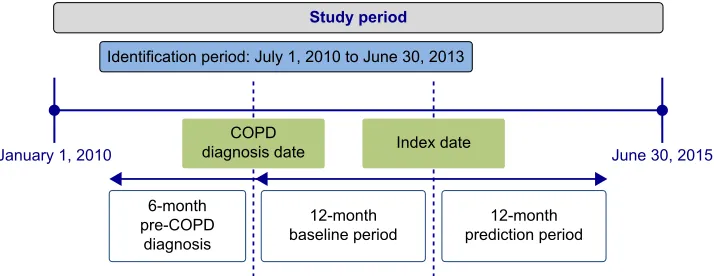
Patients aged 55–89 years with COPD were identified during the study period (January 1, 2010 to June 30, 2015; Figure 1). Patients were considered to have COPD if they had two or more medical claims on distinct dates with a COPD diagnosis code, ie, International Classification of Diseases, Ninth Revision, Clinical Modification (ICD-9-CM) code of 491.xx (chronic bronchitis), 492.xx (emphysema), or 496.xx (COPD, unspecified) in the primary position.12 The second medical
claim with COPD diagnosis was required to be within 90 days of the first claim. The date of the second medical claim with a COPD diagnosis code was termed “diagnosis date”. This date was required to occur during the identification period from July 1, 2010 to June 30, 2013. Patients with a diagnosis of malig-nant neoplasms (ICD-9-CM 140.xx-172.xx, 174.xx-209.3x, or 209.7x), cystic fibrosis (ICD-9-CM 277.0x), fibrosis due
6WXG\SHULRG
,GHQWLILFDWLRQSHULRG-XO\WR-XQH
&23' GLDJQRVLVGDWH
-DQXDU\
PRQWK SUH&23'
GLDJQRVLV
PRQWK
EDVHOLQHSHULRG SUHGLFWLRQSHULRGPRQWK
-XQH
,QGH[GDWH
Figure 1 Patient-selection timeline.
Note: Patients were required to be enrolled continuously for 6 months prediagnosis and 12 months postdiagnosis.
International Journal of Chronic Obstructive Pulmonary Disease downloaded from https://www.dovepress.com/ by 118.70.13.36 on 22-Aug-2020
Dovepress COPD exacerbation-predictive model
to tuberculosis 9-CM 011.4x), bronchiectasis (ICD-9-CM 494.xx), pneumoconiosis (ICD-(ICD-9-CM 500.xx, 501. xx, 502.xx, 503.xx, 505.xx), pulmonary fibrosis (ICD-9-CM 516.3x, 515.xx), pulmonary tuberculosis (ICD-9-CM 011.xx), sarcoidosis (ICD-9-CM 135.xx), or asthma (ICD-9-CM 493.xx) during the study period were excluded. Patients were required to have a minimum of 2 years post- and 6 months pre-COPD diagnosis, continuous enrollment in Medicare Part D or commercial health plans. The index date was defined as 1 year after the diagnosis date. The 1-year period prior to the index date was the baseline period, and the year following the index date the prediction period (Figure 1).
Exacerbations can be classified as severe and not severe.1,17
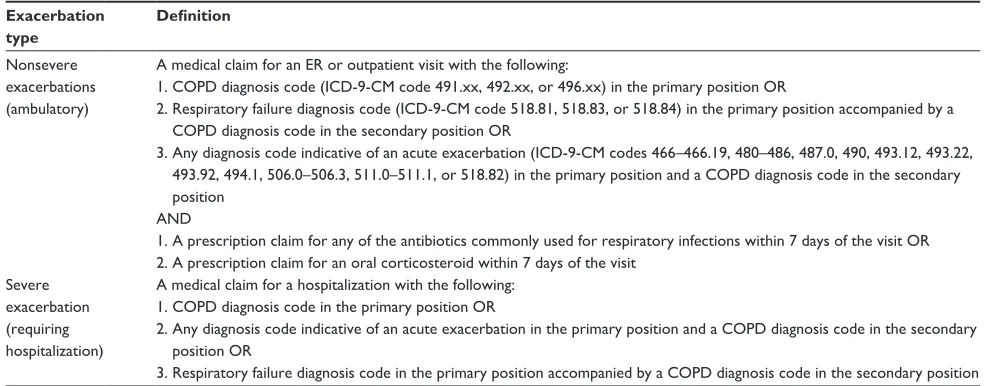
In the current study, severe exacerbations were identified using medical claims for inpatient hospitalizations with either a COPD diagnosis code in the primary position or a diagnosis code for acute exacerbation in primary position and COPD diagnosis code in secondary position or respiratory failure diagnosis code in primary position and COPD diagnosis code in secondary position. Occurrences of COPD exacerbations (severe and not severe) were separately evaluated in both the baseline and the prediction periods. Claim-based definitions were used to identify the COPD exacerbation type (Table 1). Based on the occurrence of severe COPD exacerbations in the prediction period, two cohorts were created: patients with a severe COPD exacerbation and patients without a severe COPD exacerbation.
Patient characteristics
Patient characteristics that may have been associated with the occurrence of a severe COPD exacerbation in the prediction period were evaluated in the 1-year baseline period for both
cohorts: baseline COPD exacerbations and demographic, clinical, and other resource-use-related characteristics. Demo-graphic characteristics included age, sex, race/ethnicity, line of business (Medicare or commercial), and geographical location (Northeast, Midwest, South, or West). Clinical characteristics included measures of disease burden (presence of comorbidi-ties and Deyo–Charlson Comorbidity Index score), COPD-medication use (long-acting bronchodilators, short-acting bronchodilators, inhaled corticosteroids, systemic corticos-teroids, phosphodiesterase 4 inhibitors, methylxanthines, and respiratory antibiotics), oxygen-therapy use, smoking-cessation medication use, smoking-cessation counseling, influenza vaccination, and pneumococcal vaccination. All-cause and COPD-related resource use (hospitalizations, outpatient visits, and emergency-room [ER] visits) and month of exacerba-tion were also evaluated. Variable definiexacerba-tions are provided in the Supplementary materials; Tables S1–S12. Patient characteristics were compared between the two cohorts of interest, where applicable and necessary, using Student’s t-test and χ2 tests based on the nature of the variable.
Outcomes
Severe COPD exacerbation leading to a hospitalization during the prediction period was evaluated as the key study outcome for this study (Table 1). Patients with medical claims for more than one severe exacerbation were classified as having severe COPD exacerbations.
Model development
An analytic data set was assembled from Humana’s inpatient, outpatient, and pharmacy data and consisted of demographic, geographic, diagnostic, treatment, pharmacy, and utilization
Table 1 COPD-exacerbation definitions
Exacerbation type
Definition
nonsevere exacerbations (ambulatory)
a medical claim for an er or outpatient visit with the following:
1. COPD diagnosis code (ICD-9-CM code 491.xx, 492.xx, or 496.xx) in the primary position Or
2. respiratory failure diagnosis code (ICD-9-CM code 518.81, 518.83, or 518.84) in the primary position accompanied by a COPD diagnosis code in the secondary position Or
3. any diagnosis code indicative of an acute exacerbation (ICD-9-CM codes 466–466.19, 480–486, 487.0, 490, 493.12, 493.22, 493.92, 494.1, 506.0–506.3, 511.0–511.1, or 518.82) in the primary position and a COPD diagnosis code in the secondary position
anD
1. a prescription claim for any of the antibiotics commonly used for respiratory infections within 7 days of the visit Or 2. a prescription claim for an oral corticosteroid within 7 days of the visit
severe exacerbation (requiring hospitalization)
a medical claim for a hospitalization with the following: 1. COPD diagnosis code in the primary position Or
2. any diagnosis code indicative of an acute exacerbation in the primary position and a COPD diagnosis code in the secondary position Or
3. respiratory failure diagnosis code in the primary position accompanied by a COPD diagnosis code in the secondary position
Abbreviations: ER, emergency room; ICD-9-CM, International Classification of Diseases, Ninth Revision, Clinical Modification.
International Journal of Chronic Obstructive Pulmonary Disease downloaded from https://www.dovepress.com/ by 118.70.13.36 on 22-Aug-2020
Dovepress
annavarapu et al
variables. The entire cross-sectional cohort was used to inform the predictive model. Each of the two study cohorts was ran-domly partitioned into two data sets: development data set and validation data set, with 50% of observations in each set.
Preliminary models were developed using the devel-opment data set. Stepwise logistic regression (SLR) was employed to predict the probability of severe COPD exac-erbation as a function of one or more independent inputs. For each study population, preliminary parameters were identified. The “best” model, ie, the model with the highest area under the curve (AUC) value based on receiver operating characteristic (ROC) curves, was selected as the more accu-rate prediction tool (the best discriminating model will have the highest AUC). Multicollinearity was checked using the Pearson correlation coefficient (multicollinear factors could remain in the optimal model for discrimination purposes). Goodness-of-fit tests, such as deviance, Hosmer–Lemeshow, and log likelihood, were conducted to ensure model fit. The Wald test and CI were used to test the significance of the variables of the model.
The preliminary models were then applied to the valida-tion data set comprising patients with and without severe exacerbations in the prediction period. Sensitivity, specificity, negative predictive value (NPV), and positive PV (PPV) were measured, and the model with the smallest validation error was deemed optimal and selected as the final model. Then, scoring was performed, and a cutoff point chosen to optimize PPV and number of predicted positive patients.
Results
sample characteristics
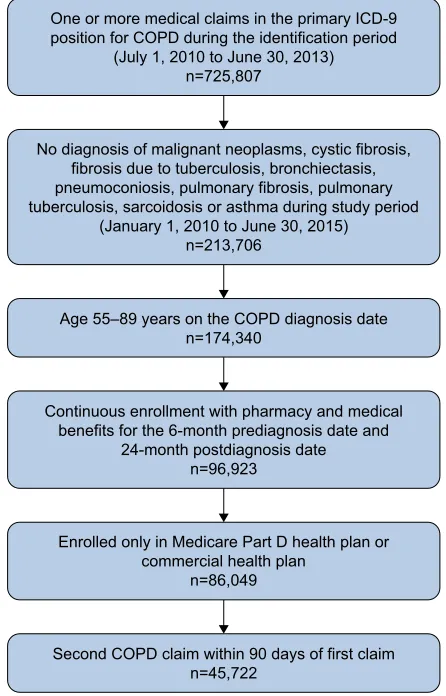
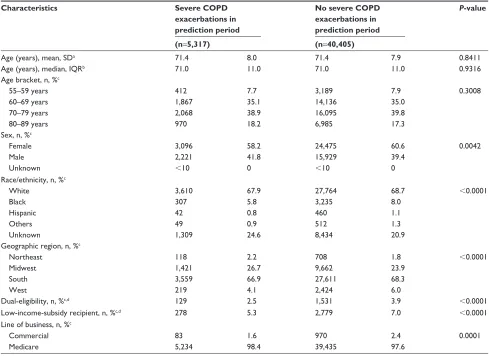
A total of 45,722 patients with COPD met the inclusion and exclusion criteria (Figure 2). Of these, 5,317 patients had experienced severe COPD exacerbations during the predic-tion period (Table 2). All patients were used to inform the predictive model. A comparison of the baseline demographic characteristics between patients experiencing and not experiencing severe COPD exacerbations in the prediction period revealed no statistically significant difference in age (Table 2). A higher proportion of patients experiencing severe exacerbations compared to those not experiencing exacerbations were male (41.8% vs 39.4%, P=0.0042). Lower proportions of patients experiencing exacerbations compared to those not experiencing exacerbations were white or black (67.9% vs 68.7% and 5.8% vs 8.0%, respectively;
P,0.0001). Among patients experiencing exacerbations, a lower proportion resided in the South or West compared to those not experiencing exacerbations (66.9% vs 68.3% and
4.1% vs 6.0%, respectively; P,0.0001). Conversely, a higher proportion of patients experiencing exacerbations resided in the Northeast or Midwest compared to those not experi-encing exacerbations (2.2% vs 1.8% and 26.7% vs 23.9%, respectively; P,0.0001). Lower proportions of patients experiencing exacerbations compared to those not experienc-ing exacerbations were dual-eligible or low-income-subsidy recipients (2.5% vs 3.9%, P,0.0001 and 5.3% vs 7.0%,
P,0.0001, respectively). A higher proportion of patients experiencing exacerbations were enrolled in Medicare plans compared to those not experiencing exacerbations (98.4% vs 97.6%, P=0.0001).
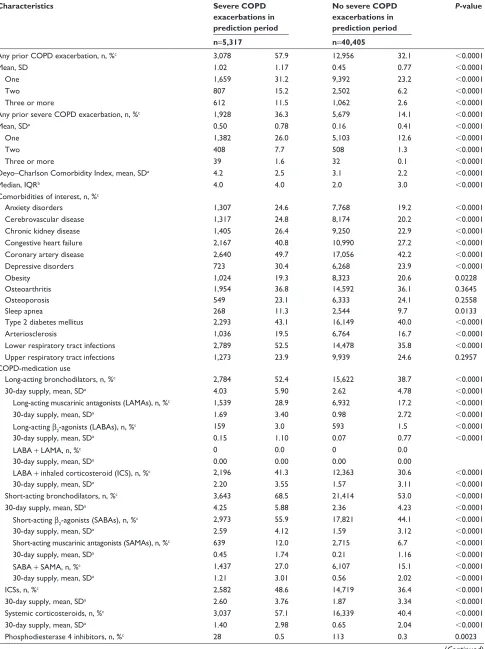
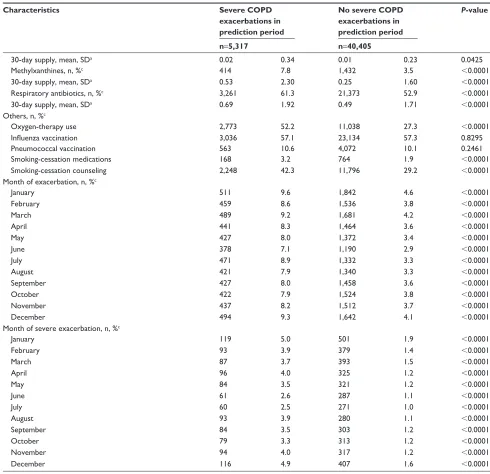
Comparison of the baseline clinical characteristics (Table 3) revealed significantly higher baseline COPD exacerbations (57.9% vs 32.1%, P,0.0001), baseline severe COPD exacerbations (35.0% vs 14.3%, P,0.0001), Deyo–Charlson Comorbidity Index score (mean 4.2 vs 3.1,
P,0.0001), COPD-medication use, oxygen-therapy use (52.2% vs 27.3%, P,0.0001), smoking-cessation medication use (3.2% vs 1.9%, P,0.0001), and smoking-cessation
One or more medical claims in the primary ICD-9 position for COPD during the identification period
(July 1, 2010 to June 30, 2013) n=725,807
No diagnosis of malignant neoplasms, cystic fibrosis, fibrosis due to tuberculosis, bronchiectasis, pneumoconiosis, pulmonary fibrosis, pulmonary tuberculosis, sarcoidosis or asthma during study period
(January 1, 2010 to June 30, 2015) n=213,706
Age 55–89 years on the COPD diagnosis date n=174,340
Continuous enrollment with pharmacy and medical benefits for the 6-month prediagnosis date and
24-month postdiagnosis date n=96,923
Enrolled only in Medicare Part D health plan or commercial health plan
n=86,049
Second COPD claim within 90 days of first claim n=45,722
Figure 2 Patient attrition.
Abbreviation: ICD-9, International Classification of Diseases, Ninth Revision.
International Journal of Chronic Obstructive Pulmonary Disease downloaded from https://www.dovepress.com/ by 118.70.13.36 on 22-Aug-2020
Dovepress COPD exacerbation-predictive model
counseling (42.3% vs 29.2%, P,0.0001) among patients who experienced severe COPD exacerbations during the prediction period compared to those who did not. Most comorbidities (except obesity) were more frequently found in patients who experienced severe COPD exacerbations com-pared to those who did not (Table 3). There was no difference in pneumococcal vaccinations or influenza vaccinations between patients who experienced exacerbations and those who did not (Table 3).
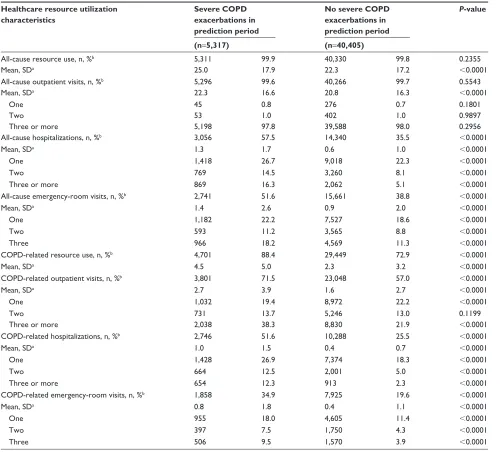
Patients who experienced severe COPD exacerbations were more likely to have all-cause hospitalizations (57.5% vs 35.5%, P,0.0001), all-cause ER visits (51.6% vs 38.8%, P,0.0001), COPD-related resource use (88.4% vs 72.9%, P,0.0001), COPD-related outpatient visits (71.5% vs 57.0%, P,0.0001), COPD-related hospitalizations (51.6% vs 25.5%, P,0.0001), and COPD-related ER visits (34.9% vs 19.6%, P,0.0001) compared to those who did not (Table 4). There was no difference in all-cause resource use or all-cause outpatient visits (Table 4).
Predictive model
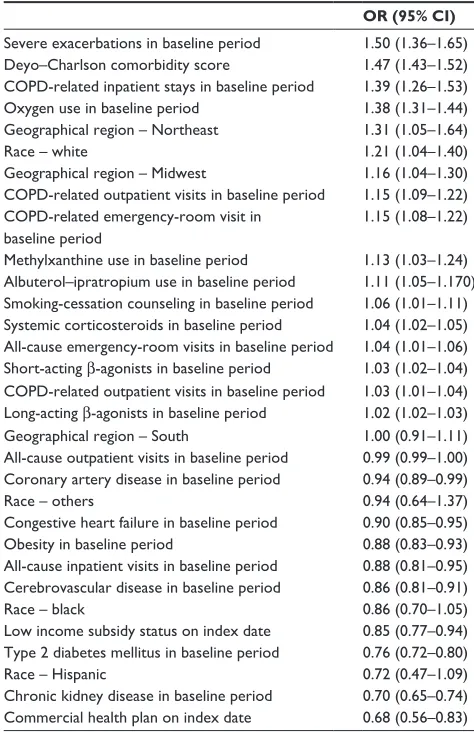
This was a complete-case analysis where 21% of cases had a race classified as unknown. The cohort was split equally between development and validation data sets. The AUC of the best-conforming SLR model was 0.77. A cutoff value of 0.04 was chosen to maximize PPV without sacrificing sensitivity and specificity. Performance parameters for this model were sensitivity 17.3% (95% CI 15.84%–18.75%), specificity 97.5% (95% CI 97.32%–97.75%), PPV 48.1% (95% CI 45.07%–51.07%), and NPV 90.0% (95% CI 89.80%–90.11%). Odds ratios (ORs) and 95% CIs for indi-vidual parameters in the SLR predictive model are provided in Table 5. The complete set of model parameters is provided
in Table S13. After adjustment for covariates, the strongest
predictors of severe COPD exacerbations were history of severe exacerbations during baseline (OR 1.498, 95% CI 1.365–1.645), Deyo–Charlson comorbidity score (OR 1.471, 95% CI 1.429–1.515), COPD-related inpatient stays during baseline period (OR 1.389, 95% CI 1.263–1.529), and oxygen Table 2 Baseline demographic characteristics of study population
Characteristics Severe COPD
exacerbations in prediction period
No severe COPD exacerbations in prediction period
P-value
(n=5,317) (n=40,405)
age (years), mean, sDa 71.4 8.0 71.4 7.9 0.8411
age (years), median, IQrb 71.0 11.0 71.0 11.0 0.9316
age bracket, n, %c
55–59 years 412 7.7 3,189 7.9 0.3008
60–69 years 1,867 35.1 14,136 35.0
70–79 years 2,068 38.9 16,095 39.8
80–89 years 970 18.2 6,985 17.3
sex, n, %c
Female 3,096 58.2 24,475 60.6 0.0042
Male 2,221 41.8 15,929 39.4
Unknown ,10 0 ,10 0
race/ethnicity, n, %c
White 3,610 67.9 27,764 68.7 ,0.0001
Black 307 5.8 3,235 8.0
hispanic 42 0.8 460 1.1
Others 49 0.9 512 1.3
Unknown 1,309 24.6 8,434 20.9
geographic region, n, %c
northeast 118 2.2 708 1.8 ,0.0001
Midwest 1,421 26.7 9,662 23.9
south 3,559 66.9 27,611 68.3
West 219 4.1 2,424 6.0
Dual-eligibility, n, %c,d 129 2.5 1,531 3.9 ,0.0001
low-income-subsidy recipient, n, %c,d 278 5.3 2,779 7.0 ,0.0001
line of business, n, %c
Commercial 83 1.6 970 2.4 0.0001
Medicare 5,234 98.4 39,435 97.6
Note:astudent’s t-test; bWilcoxon rank sum; cχ2; ddenominators Medicare patients only.
Abbreviation: IQr, interquartile range.
International Journal of Chronic Obstructive Pulmonary Disease downloaded from https://www.dovepress.com/ by 118.70.13.36 on 22-Aug-2020
Dovepress
annavarapu et al
Table 3 Baseline clinical characteristics of study population
Characteristics Severe COPD
exacerbations in prediction period
No severe COPD exacerbations in prediction period
P-value
n=5,317 n=40,405
any prior COPD exacerbation, n, %c 3,078 57.9 12,956 32.1 ,0.0001
Mean, sD 1.02 1.17 0.45 0.77 ,0.0001
One 1,659 31.2 9,392 23.2 ,0.0001
Two 807 15.2 2,502 6.2 ,0.0001
Three or more 612 11.5 1,062 2.6 ,0.0001
any prior severe COPD exacerbation, n, %c 1,928 36.3 5,679 14.1 ,0.0001
Mean, sDa 0.50 0.78 0.16 0.41 ,0.0001
One 1,382 26.0 5,103 12.6 ,0.0001
Two 408 7.7 508 1.3 ,0.0001
Three or more 39 1.6 32 0.1 ,0.0001
Deyo–Charlson Comorbidity Index, mean, sDa 4.2 2.5 3.1 2.2 ,0.0001
Median, IQrb 4.0 4.0 2.0 3.0 ,0.0001
Comorbidities of interest, n, %c
anxiety disorders 1,307 24.6 7,768 19.2 ,0.0001
Cerebrovascular disease 1,317 24.8 8,174 20.2 ,0.0001
Chronic kidney disease 1,405 26.4 9,250 22.9 ,0.0001
Congestive heart failure 2,167 40.8 10,990 27.2 ,0.0001
Coronary artery disease 2,640 49.7 17,056 42.2 ,0.0001
Depressive disorders 723 30.4 6,268 23.9 ,0.0001
Obesity 1,024 19.3 8,323 20.6 0.0228
Osteoarthritis 1,954 36.8 14,592 36.1 0.3645
Osteoporosis 549 23.1 6,333 24.1 0.2558
sleep apnea 268 11.3 2,544 9.7 0.0133
Type 2 diabetes mellitus 2,293 43.1 16,149 40.0 ,0.0001
arteriosclerosis 1,036 19.5 6,764 16.7 ,0.0001
lower respiratory tract infections 2,789 52.5 14,478 35.8 ,0.0001
Upper respiratory tract infections 1,273 23.9 9,939 24.6 0.2957
COPD-medication use
long-acting bronchodilators, n, %c 2,784 52.4 15,622 38.7 ,0.0001
30-day supply, mean, sDa 4.03 5.90 2.62 4.78 ,0.0001
long-acting muscarinic antagonists (laMas), n, %c 1,539 28.9 6,932 17.2 ,0.0001
30-day supply, mean, sDa 1.69 3.40 0.98 2.72 ,0.0001
long-acting β2-agonists (laBas), n, %c 159 3.0 593 1.5 ,0.0001
30-day supply, mean, sDa 0.15 1.10 0.07 0.77 ,0.0001
laBa + laMa, n, %c 0 0.0 0 0.0
30-day supply, mean, sDa 0.00 0.00 0.00 0.00
laBa + inhaled corticosteroid (ICs), n, %c 2,196 41.3 12,363 30.6 ,0.0001
30-day supply, mean, sDa 2.20 3.55 1.57 3.11 ,0.0001
short-acting bronchodilators, n, %c 3,643 68.5 21,414 53.0 ,0.0001
30-day supply, mean, sDa 4.25 5.88 2.36 4.23 ,0.0001
short-acting β2-agonists (saBas), n, %c 2,973 55.9 17,821 44.1 ,0.0001
30-day supply, mean, sDa 2.59 4.12 1.59 3.12 ,0.0001
short-acting muscarinic antagonists (saMas), n, %c 639 12.0 2,715 6.7 ,0.0001
30-day supply, mean, sDa 0.45 1.74 0.21 1.16 ,0.0001
saBa + saMa, n, %c 1,437 27.0 6,107 15.1 ,0.0001
30-day supply, mean, sDa 1.21 3.01 0.56 2.02 ,0.0001
ICss, n, %c 2,582 48.6 14,719 36.4 ,0.0001
30-day supply, mean, sDa 2.60 3.76 1.87 3.34 ,0.0001
systemic corticosteroids, n, %c 3,037 57.1 16,339 40.4 ,0.0001
30-day supply, mean, sDa 1.40 2.98 0.65 2.04 ,0.0001
Phosphodiesterase 4 inhibitors, n, %c 28 0.5 113 0.3 0.0023
(Continued)
International Journal of Chronic Obstructive Pulmonary Disease downloaded from https://www.dovepress.com/ by 118.70.13.36 on 22-Aug-2020
Dovepress COPD exacerbation-predictive model
Table 3 (Continued)
Characteristics Severe COPD
exacerbations in prediction period
No severe COPD exacerbations in prediction period
P-value
n=5,317 n=40,405
30-day supply, mean, sDa 0.02 0.34 0.01 0.23 0.0425
Methylxanthines, n, %c 414 7.8 1,432 3.5 ,0.0001
30-day supply, mean, sDa 0.53 2.30 0.25 1.60 ,0.0001
respiratory antibiotics, n, %c 3,261 61.3 21,373 52.9 ,0.0001
30-day supply, mean, sDa 0.69 1.92 0.49 1.71 ,0.0001
Others, n, %c
Oxygen-therapy use 2,773 52.2 11,038 27.3 ,0.0001
Influenza vaccination 3,036 57.1 23,134 57.3 0.8295
Pneumococcal vaccination 563 10.6 4,072 10.1 0.2461
smoking-cessation medications 168 3.2 764 1.9 ,0.0001
smoking-cessation counseling 2,248 42.3 11,796 29.2 ,0.0001
Month of exacerbation, n, %c
January 511 9.6 1,842 4.6 ,0.0001
February 459 8.6 1,536 3.8 ,0.0001
March 489 9.2 1,681 4.2 ,0.0001
april 441 8.3 1,464 3.6 ,0.0001
May 427 8.0 1,372 3.4 ,0.0001
June 378 7.1 1,190 2.9 ,0.0001
July 471 8.9 1,332 3.3 ,0.0001
august 421 7.9 1,340 3.3 ,0.0001
september 427 8.0 1,458 3.6 ,0.0001
October 422 7.9 1,524 3.8 ,0.0001
november 437 8.2 1,512 3.7 ,0.0001
December 494 9.3 1,642 4.1 ,0.0001
Month of severe exacerbation, n, %c
January 119 5.0 501 1.9 ,0.0001
February 93 3.9 379 1.4 ,0.0001
March 87 3.7 393 1.5 ,0.0001
april 96 4.0 325 1.2 ,0.0001
May 84 3.5 321 1.2 ,0.0001
June 61 2.6 287 1.1 ,0.0001
July 60 2.5 271 1.0 ,0.0001
august 93 3.9 280 1.1 ,0.0001
september 84 3.5 303 1.2 ,0.0001
October 79 3.3 313 1.2 ,0.0001
november 94 4.0 317 1.2 ,0.0001
December 116 4.9 407 1.6 ,0.0001
Note:astudent’s t-test; bWilcoxon rank sum; cχ2.
Abbreviation: IQr, interquartile range.
use in baseline period (OR 1.376, 95% CI 1.312–1.442). The study population was categorized by risk score for COPD exacerbations. The risk categories with the highest propor-tions of patients were 0.10-,0.15 (19.1%), 0.15-,0.20 (15.9%), and 0.05-,0.10 (12.3%).
Discussion
This study describes a predictive model to identify patients with COPD at risk of severe exacerbations using administrative claims data. The optimal model selected had a PPV of 48.1%, implying that for every two patients
identified by the model as being at risk of exacerbations, approximately one will have an exacerbation. The model had sensitivity of 17.3%, specificity of 97.5%, and NPV of 90.0%. The predictor with the strongest association with severe COPD exacerbations was history of severe exac-erbations during baseline. This confirms the finding from studies by Hurst et al10 and Santibáñez et al14 that suggested
a history of exacerbations is the best predictor of future predictions. The other predictors of severe exacerbations in our study were Deyo–Charlson Comorbidity Index score and COPD-related inpatient stays during baseline period,
International Journal of Chronic Obstructive Pulmonary Disease downloaded from https://www.dovepress.com/ by 118.70.13.36 on 22-Aug-2020
Dovepress
annavarapu et al
including oxygen use in baseline period. These predictors are representative of increased COPD severity, which has been suggested to be associated with increased exacerbation frequency.10,14 Similarly, Santibáñez et al found that comorbid
heart failure, atrial fibrillation, any severe heart disease, diabetes, and lung cancer were significantly associated with exacerbations leading to hospitalizations.14 However, the
cur-rent study found a significant association between presence of select comorbidities, including chronic kidney disease, type 2 diabetes mellitus, and cerebrovascular disease, in the baseline period and lower risk of severe exacerbations (OR 0.70, 0.76, and 0.86, respectively). Patients with chronic
comorbidities may visit their providers more frequently, resulting in improved diagnosis and management of COPD and fewer exacerbations.
This study describes a predictive model for severe COPD exacerbations utilizing administrative claims data in a primarily US Medicare population. Some studies have developed pre-dictive models to identify patients with undiagnosed COPD using administrative claims.12,13 A COPD-predictive model
described by Mapel et al12 had a PPV of 23% and NPV of
95.4%, while a model developed by Moretz et al13 had a PPV
of 73% and NPV of 66%. The current model had a PPV of 48.1%, between values reported by Mapel et al and Moretz Table 4 Baseline health care-resource utilization of study population
Healthcare resource utilization characteristics
Severe COPD exacerbations in prediction period
No severe COPD exacerbations in prediction period
P-value
(n=5,317) (n=40,405)
all-cause resource use, n, %b 5,311 99.9 40,330 99.8 0.2355
Mean, sDa 25.0 17.9 22.3 17.2 ,0.0001
all-cause outpatient visits, n, %b 5,296 99.6 40,266 99.7 0.5543
Mean, sDa 22.3 16.6 20.8 16.3 ,0.0001
One 45 0.8 276 0.7 0.1801
Two 53 1.0 402 1.0 0.9897
Three or more 5,198 97.8 39,588 98.0 0.2956
all-cause hospitalizations, n, %b 3,056 57.5 14,340 35.5 ,0.0001
Mean, sDa 1.3 1.7 0.6 1.0 ,0.0001
One 1,418 26.7 9,018 22.3 ,0.0001
Two 769 14.5 3,260 8.1 ,0.0001
Three or more 869 16.3 2,062 5.1 ,0.0001
all-cause emergency-room visits, n, %b 2,741 51.6 15,661 38.8 ,0.0001
Mean, sDa 1.4 2.6 0.9 2.0 ,0.0001
One 1,182 22.2 7,527 18.6 ,0.0001
Two 593 11.2 3,565 8.8 ,0.0001
Three 966 18.2 4,569 11.3 ,0.0001
COPD-related resource use, n, %b 4,701 88.4 29,449 72.9 ,0.0001
Mean, sDa 4.5 5.0 2.3 3.2 ,0.0001
COPD-related outpatient visits, n, %b 3,801 71.5 23,048 57.0 ,0.0001
Mean, sDa 2.7 3.9 1.6 2.7 ,0.0001
One 1,032 19.4 8,972 22.2 ,0.0001
Two 731 13.7 5,246 13.0 0.1199
Three or more 2,038 38.3 8,830 21.9 ,0.0001
COPD-related hospitalizations, n, %b 2,746 51.6 10,288 25.5 ,0.0001
Mean, sDa 1.0 1.5 0.4 0.7 ,0.0001
One 1,428 26.9 7,374 18.3 ,0.0001
Two 664 12.5 2,001 5.0 ,0.0001
Three or more 654 12.3 913 2.3 ,0.0001
COPD-related emergency-room visits, n, %b 1,858 34.9 7,925 19.6 ,0.0001
Mean, sDa 0.8 1.8 0.4 1.1 ,0.0001
One 955 18.0 4,605 11.4 ,0.0001
Two 397 7.5 1,750 4.3 ,0.0001
Three 506 9.5 1,570 3.9 ,0.0001
Note:astudent’s t-test; bχ2.
International Journal of Chronic Obstructive Pulmonary Disease downloaded from https://www.dovepress.com/ by 118.70.13.36 on 22-Aug-2020
Dovepress COPD exacerbation-predictive model
et al, suggesting that approximately one in two patients identified will have a severe COPD exacerbation. The high PPV and NPV of the current model suggest that patients can be identified with a high level of accuracy as likely or not likely to have severe exacerbations. Previous studies have shown efficacy of self-management action plans in improving exercise capacity and reduction of exacerbation duration and hospitalizations.18,19 Individuals determined to be at high
risk by the current model can be targeted for similar clinical communications or directed to their primary-care physicians for further evaluation.
The COPD exacerbation-predictive model may enable early identification of patients at risk of developing severe COPD exacerbations, which will allow Humana and other health insurers to target clinical interventions, such as mes-saging, self-care, and disease-management programs to optimize treatment and control disease progression. Early intervention and treatment are expected to reduce morbidity and mortality and improve quality of life.
limitations
The following limitations should be considered when inter-preting the results of this study. The results of this study are based on administrative claims data from a large national health plan. Retrospective database studies using admin-istrative claims are prone to coding errors of omission and commission and incomplete claim information. The Humana claims lack some clinical parameters, such as smoking status and COPD severity, that could influence COPD exacerba-tions. COPD diagnosis was determined using claims with a COPD-diagnosis code. This operational classification may have resulted in misclassification in some cases, since airflow testing (eg, forced expiratory volume in 1 second) results were not available to confirm COPD diagnosis.
Predictive models developed as part of this study may have limited generalizability outside the Medicare popula-tion. However, approximately 5.3 million patients with COPD receive Medicare benefits.20,21 The predictive models
may not perform as well in other clinical settings, when the available data are substantially different than the medical, pharmacy, and enrollment data used to develop these models. Furthermore, predictive models developed as part of this study were rather complex: 103 different variables were assessed, of which 19 were included in the final model. Clinician perception of the utility of the predictive models and uptake may be enhanced if the models were limited to a smaller number of variables that have a large impact on the results.
Conclusion
This study describes a predictive model to identify patients at risk of severe COPD exacerbations. Of every two patients identified by the model to be at risk of severe exacerbations, one may have a severe exacerbation. This model may provide an efficient method of using claims data to identify patients with COPD who are at risk of future severe exacerbations. Once at-risk patients are identified, targeted and timely support may be provided to improve lung function and quality of life and reduce risk of exacerbations. Disease management and education programs, such as pharmacologic interventions, transition-of-care programs, and smoking-cessation counseling, may be implemented to prevent future exacerbations.
Acknowledgments
This study was funded by Boehringer Ingelheim. This paper was presented at the AMCP Managed Care and Specialty Pharmacy Annual Meeting, Denver, Colorado, March 27–30, Table 5 Predictive model: stepwise logistic regression
OR (95% CI) severe exacerbations in baseline period 1.50 (1.36–1.65) Deyo–Charlson comorbidity score 1.47 (1.43–1.52) COPD-related inpatient stays in baseline period 1.39 (1.26–1.53) Oxygen use in baseline period 1.38 (1.31–1.44) geographical region – northeast 1.31 (1.05–1.64)
race – white 1.21 (1.04–1.40)
geographical region – Midwest 1.16 (1.04–1.30) COPD-related outpatient visits in baseline period 1.15 (1.09–1.22) COPD-related emergency-room visit in
baseline period
1.15 (1.08–1.22) Methylxanthine use in baseline period 1.13 (1.03–1.24) albuterol–ipratropium use in baseline period 1.11 (1.05–1.170) smoking-cessation counseling in baseline period 1.06 (1.01–1.11) systemic corticosteroids in baseline period 1.04 (1.02–1.05) all-cause emergency-room visits in baseline period 1.04 (1.01–1.06) short-acting β-agonists in baseline period 1.03 (1.02–1.04) COPD-related outpatient visits in baseline period 1.03 (1.01–1.04) long-acting β-agonists in baseline period 1.02 (1.02–1.03) geographical region – south 1.00 (0.91–1.11) all-cause outpatient visits in baseline period 0.99 (0.99–1.00) Coronary artery disease in baseline period 0.94 (0.89–0.99)
race – others 0.94 (0.64–1.37)
Congestive heart failure in baseline period 0.90 (0.85–0.95)
Obesity in baseline period 0.88 (0.83–0.93)
all-cause inpatient visits in baseline period 0.88 (0.81–0.95) Cerebrovascular disease in baseline period 0.86 (0.81–0.91)
race – black 0.86 (0.70–1.05)
low income subsidy status on index date 0.85 (0.77–0.94) Type 2 diabetes mellitus in baseline period 0.76 (0.72–0.80)
race – hispanic 0.72 (0.47–1.09)
Chronic kidney disease in baseline period 0.70 (0.65–0.74) Commercial health plan on index date 0.68 (0.56–0.83)
International Journal of Chronic Obstructive Pulmonary Disease downloaded from https://www.dovepress.com/ by 118.70.13.36 on 22-Aug-2020
International Journal of COPD
Publish your work in this journal
Submit your manuscript here: http://www.dovepress.com/international-journal-of-chronic-obstructive-pulmonary-disease-journal
The International Journal of COPD is an international, peer-reviewed journal of therapeutics and pharmacology focusing on concise rapid reporting of clinical studies and reviews in COPD. Special focus is given to the pathophysiological processes underlying the disease, intervention programs, patient focused education, and self management protocols.
This journal is indexed on PubMed Central, MedLine and CAS. The manuscript management system is completely online and includes a very quick and fair peer-review system, which is all easy to use. Visit http://www.dovepress.com/testimonials.php to read real quotes from published authors.
Dovepress
Dove
press
annavarapu et al
2017 and was published in the Journal of Managed Care
and Specialty Pharmacy in March 2017.
Disclosure
MG and SK are employees of Boehringer Ingelheim. SA and SG are employees of Comprehensive Health Insights, which conducted the study. CM was an employee of Comprehensive Health Insights at the time of this study and is now employed by GlaxoSmithKline. AR is an employee of Humana and provided project consultation. The authors report no other conflicts of interest in this work.
References
1. Global Initiative for Chronic Obstructive Lung Disease. Global Strategy
for the Diagnosis, Management, and Prevention of COPD. Bethesda
(MD): GOLD; 2015.
2. National Heart, Lung, and Blood Institute. Morbidity and mortality: 2012 chart book on cardiovascular, lung, and blood diseases. 2012. Available from: https://www.nhlbi.nih.gov/files/docs/research/2012_ ChartBook_508.pdf. Accessed September 29, 2015.
3. Hoyert DL, Xu J. Deaths: preliminary data for 2011. Natl Vital Stat Rep. 2012;61(6):1–51.
4. Ford ES, Murphy LB, Khavjou O, Giles WH, Holt JB, Croft JB. Total and state-specific medical and absenteeism costs of COPD among adults aged $18 years in the United States for 2010 and projections through 2020. Chest. 2015;147(1):31–45.
5. American Thoracic Society. Exacerbation of COPD. 2014. Available from: https://www.thoracic.org/patients/patient-resources/resources/ copd-exacerbation-ecopd.pdf. Accessed April 30, 2018.
6. American Thoracic Society, European Respiratory Society. Standards for the diagnosis and management of patients with COPD. 2004. Avail-able from: http://www.ers-education.org/lrmedia/2004/pdf/44029.pdf. Accessed June 04, 2018.
7. Halpin DM, Decramer M, Celli B, Kesten S, Liu D, Tashkin DP. Exac-erbation frequency and course of COPD. Int J Chron Obstruct Pulmon
Dis. 2012;7:653–661.
8. Makris D, Moschandreas J, Damianaki A, et al. Exacerbations and lung function decline in COPD: new insights in current and ex-smokers. Respir
Med. 2007;101(6):1305–1312.
9. Hoogendoorn M, Feenstra TL, Hoogenveen RT, Al M, Mölken MR. Association between lung function and exacerbation frequency in patients with COPD. Int J Chron Obstruct Pulmon Dis. 2010;5:435–444. 10. Hurst JR, Vestbo J, Anzueto A, et al. Susceptibility to exacerbation in
chronic obstructive pulmonary disease. N Engl J Med. 2010;363(12): 1128–1138.
11. Perera PN, Armstrong EP, Sherrill DL, Skrepnek GH. Acute exacerba-tions of COPD in the United States: inpatient burden and predictors of costs and mortality. COPD. 2012;9(2):131–141.
12. Mapel DW, Frost FJ, Hurley JS, et al. An algorithm for the identifica-tion of undiagnosed COPD cases using administrative claims data.
J Manag Care Pharm. 2006;12(6):457–465.
13. Moretz C, Zhou Y, Dhamane AD, et al. Development and validation of a predictive model to identify individuals likely to have undiagnosed chronic obstructive pulmonary disease using an administrative claims database. J Manag Care Pharm. 2015;21(12):1149–1159.
14. Santibáñez M, Garrastazu R, Ruiz-Nuñez M, et al. Predictors of hospi-talized exacerbations and mortality in chronic obstructive pulmonary disease. PLoS One. 2016;11(6):e0158727.
15. Spiriva [prescribing information]. 2014. Available from: http:// bidocs.boehringer-ingelheim.com/BIWebAccess/ViewServlet. ser?ocBase=renetnt&folderPath=/Prescribing+Information/PIs/Spiriva/ Spiriva.pdf. Accessed April 30, 2018.
16. Advair Diskus [prescribing information]. 2014. Available from: https:// www.gsksource.com/gskprm/htdocs/documents/ADVAIR-DISKUS-PI-MG.PDF. Accessed April 30, 2018.
17. Dhamane AD, Moretz C, Zhou Y, et al. COPD exacerbation frequency and its association with health care resource utilization and costs.
Int J Chron Obstruct Pulmon Dis. 2015;10:2609–2618.
18. Effing T, Zielhuis G, Kerstjens H, van der Valk P, van der Palen J. Com-munity based physiotherapeutic exercise in COPD self-management: a randomised controlled trial. Respir Med. 2011;105(3):418–426. 19. Lenferink A, Frith P, van der Valk P, et al. A self-management approach
using self-initiated action plans for symptoms with ongoing nurse sup-port in patients with chronic obstructive pulmonary disease (COPD) and comorbidities: the COPE-III study protocol. Contemp Clin Trials. 2013;36(1):81–89.
20. National Public Radio. Many COPD patients struggle to pay for each breath. 2017. Available from: http://www.npr.org/sections/health- shots/2017/06/02/529759280/many-copd-patients-struggle-to-pay-for-each-breath. Accessed April 30, 2018.
21. Alliance for Retired Americans. Social Security and Medicare current facts and figures. 2016. Available from: https://retiredamericans.org/ social-security-medicare-current-facts-figures-2016. Accessed April 30, 2018.
International Journal of Chronic Obstructive Pulmonary Disease downloaded from https://www.dovepress.com/ by 118.70.13.36 on 22-Aug-2020