
A Monthly Journal of Computer Science and Information Technology
ISSN 2320–088X
IJCSMC, Vol. 2, Issue. 4, April 2013, pg.326 – 332
RESEARCH ARTICLE
© 2013, IJCSMC All Rights Reserved
326
Moving Object Tracking Using Kalman Filter
Hitesh A Patel1, Darshak G Thakore2 1
PG Scholar, Computer Engineering Department, BVM Engineering College, VV Nagar-388120, India 2
Asso. Professor, Computer Engineering Department, BVM Engineering College, VV Nagar-388120, India
1
[email protected]; 2 [email protected]
Abstract— In the field of security automated surveillance systems are very useful. Surveillance system can be used to detect and track the moving objects. First phase of the system is to detect the moving objects in the video. Second phase of the system will track the detected object. In this paper, detection of the moving object has been done using simple background subtraction and tracking of single moving object has been done using Kalman filter. The algorithm has been applied successfully on standard surveillance video datasets of CAVIAR [6] and PETS [7]. The videos used for testing have been taken using still cameras, which are located in indoor as well as outdoor environment having moderate to complex environments.
Key Terms: - Visual surveillance; Kalman filter; Object detection; Background subtraction; Object tracking
I. INTRODUCTION
Visual surveillance systems have been in use to monitor security sensitive areas.The availability of high-powered computers, high quality video cameras, and the increasing need for automated video analysis has generated a great deal of interest in object tracking algorithms. There are three key steps in video analysis: detection of interesting moving objects, tracking of such objects from frame to frame, and analysis of object tracks to recognize their behavior [5].
Video tracking can be defined as an action which can estimate the trajectory of an object in the image plane as it moves within a scene. A tracker assigns consistent labels to the tracked objects in different frames of a video. Tracking of an object can be done by continuously detecting to localize regions, points or features of an image frame by frame [2].
Second section of the paper covers description of the Kalman filter. Third section covers steps to implement Kalman filter for moving object tracking. Fourth section covers results of object tracking. Final section includes conclusion and future work.
II. TRACKING ALGORITHM
Once the object has been detected then it can be tracked along its path. Many standard methods are available for object tracking Wiz. Kalman filter, Particle filter, Mean-shift based kernel tracking etc. Detail description of Kalman filter method is given below.
1) Kalman Filter
© 2013, IJCSMC All Rights Reserved
327
Secondly, the observed likelihood function and motion model must be learnt by some sample of image sequences before tracking is performed [2].
The Kalman filter is a set of mathematical equations that provides an efficient computational (recursive) means to estimate the state of a process in several aspects: it supports estimations of past, present, and even future states, and it can do the same even when the precise nature of the modelled system is unknown [3].
The Kalman filter estimates a process by using a form of feedback control. The filter estimates the process state at some time and then obtains feedback in the form of noisy measurements. The equations for Kalman filters fall in two groups: time update equations and measurement update equations. The time update equations are responsible for projecting forward (in time) the current state and error covariance estimates to obtain the a priori estimate for the next time step. The measurement update equations are responsible for the feedback. That is used for incorporating a new measurement into the a priori estimate to obtain an improved a posteriori estimate. The time update equations can also be thought of as predictor equations, while the measurement update equations can be thought of as corrector equations. Figure 1 shows the final estimation algorithm resembles that of a predictor-corrector algorithm for solving numerical problems .The time update projects the current state estimate ahead in time. The measurement update adjusts the projected estimate by an actual measurement at that time [3].
Time Update Measurement Update ("Predict") ("Correct")
Fig 1. Discrete Kalman filter cycle [3]
The time update projects the current state estimate ahead in time. Time update equations[3,4]: State Prediction Xpredk = A* Xk-1 + B* Uk + Wk-1 (1) Error Covariance Prediction Ppredk = A* Pk-1*A
T
+Q (2)
In eq. (1) Xpredk is vector representing predicted process state at time k. X is a 4-dimensional vector [ x y dx dy ] , where x and y represent the coordinates of the object’s centre, and dx and dy represent its velocity.
Xk-1 is vector representing process state at time k-1.A is a 4x4 process transition matrix of the form[4].
A =
Uk is a control vector and B relates optional control vector Uk into state space. Wk-1 is a process noise. In eq. (2) Ppredk is predicted error covariance at time k. Pk-1 is a matrix representing error covariance in the state prediction at time k-1, and Q is the process noise covariance[4].
Measurement update equations [3,4]:
After predicting the state Xpredk and its error covariance at time k using the time update steps, the Kalman filter next uses measurement to correct its prediction during the measurement update steps[4].
Kalman Gain Kk = Ppredk * HT *(H * Ppredk * HT + R)-1 (3) State Update Xk = Xpredk + Kk * (Zk - H * Xpredk ) (4) Error Covariance Update Pk = (I - Kk * H) * Ppredk (5)
© 2013, IJCSMC All Rights Reserved
328
III. IMPLEMENTATION
Tracking of moving object has been done using Kalman filter. Here tracking of any object can be done by providing the frame number from which tracking has to be started. From the selected frame any object can be picked for tracking by setting the position of the mask and then the object can be tracked in subsequent frames. Following steps have been implemented for tracking a single object.
• Background frame has been calculated by taking average of all the pixels.
• Frame number has been selected from which tracking of any object has to be started.
• From selected frame object to be tracked has been selected by repositioning the mask.
• For selected object its centroid position has been found out and from centroid information all the equation of time and measurement update have been calculated. For selected frame the actual position X and error P has been calculated.
• For all remaining frames following steps have been repeated.
1. Background subtraction has been done to find out all the moving regions in the frame.
2. From the found regions, region with the lowest distance from the region selected in previous frame has been selected.
3. Selected region's centroid and other parameter have been used to calculate time and measurement update equations.
4. Obtained state position values X has been stored in Array for every frame.
5. Line joining each stored point has been drawn in every frame which shows the trajectory of the selected moving object.
IV. RESULTS
The Tracking algorithm has been successfully applied to standard surveillance video of CAVIAR [6] and PETS [7] databases. Results shows that the algorithm has been able to track any single moving objects in indoor as well as in outdoor environments.
The algorithms have been implemented and tested on Matlab 2012a(64 bit) with operating system windows7. The system is having Pentium core i5 processor, 8 Gigabyte memory
CAVIAR dataset's video OneStopMoveNoEnter1cor.avi, with resolution 384 X 288 and 66 seconds in length has been reduced to 320 X 240 resolution and 28 seconds in length. Second video used for testing is PETS[7] dataset's outdoor video camera4.avi. The original video with 786 X 576 resolution of 107 seconds have been reduced to 320 X 240 resolution and 11 seconds in length.
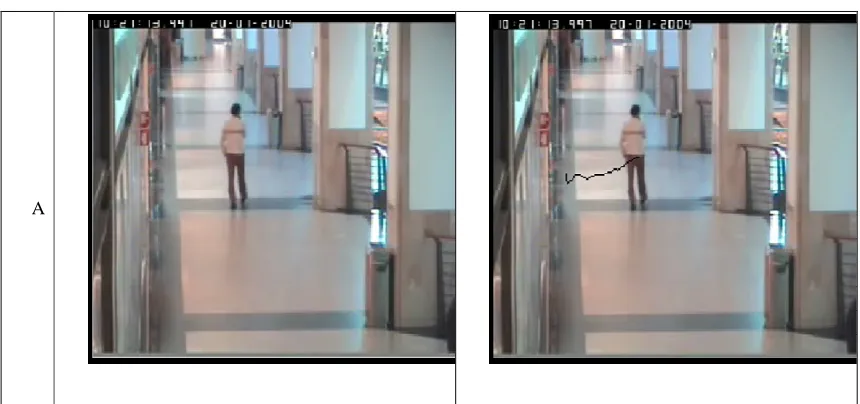
Figure 2 shows output of frame no 50,300,650 for tracking using Kalman filter applied on standard surveillance video OneStopMoveNoEnter1cor.avi of CAVIAR[6] dataset. In the video two people(one man and woman) moves in the corridor. From the second frame a man has been selected for tracking and tracked in the subsequent frames. Black line has been drawn along the path on which man moves in the corridor.
Figure 3 shows output of frame no 50,200,250 for the Kalman filter applied on the PETS[7] dataset video camera4.avi. In the video few people and car are moving. At the initial stage white car has been selected for tracking. Black line has been drawn along the path of the car. The results shows the output of 50,200 and 250 frames.
Table 1 shows the time analysis for both the video. CAVIAR[6] dataset's video
© 2013, IJCSMC All Rights Reserved
329
TABLE I.
Execution Time Analysis for Object Detection And Tracking
Parameter
Caviar Dataset Video OneStopMoveNoEnter1cor .avi
Pets Dataset Video
Camera4.avi
Frame Height 240 240
Frame Width 320 320
Video Length in seconds 28 11
No of Frames 713 343
Total processing time in
seconds 74.47 36.50
© 2013, IJCSMC All Rights Reserved
330
Fig 2.Object Tracking on CAVIAR[6] dataset video using Kalman filter. Left column indicates original frame and right column indicates tracked output[A]50th frame [B] 300th frame [C]650th frame
B
© 2013, IJCSMC All Rights Reserved
331
Fig. 3 Object Tracking on PETS[7] dataset video using Kalman filter. Left column indicates original frame and right column indicates tracked output[A]50th frame [B] 200th frame [C]250th frame
A
B
© 2013, IJCSMC All Rights Reserved
332
V. CONCLUSION
In this work, a visual surveillance system with moving object detection and tracking capability has been presented. Object tracking of any single moving object has been successfully implemented on standard surveillance dataset of PETS [7] and CAVIAR [6] using Kalman filter. The system works on videos of indoor as well as outdoor environment taken using static camera under moderate to complex background condition. This implemented module can be applied to any computer vision application for moving object detection and tracking.
VI.FUTURE WORK
This work can be extended to track multiple moving objects. The complete system with capabilities of detection and tracking can be used for applications domain like security, human computer interaction, Scene analysis and activity recognition, Event detection etc.
REFERENCES
[1] Kalman, R. E.: A new approach to linear filtering and prediction problems, Transaction of the ASME-Journal of Basic Engineering, 35–45, March 1960.
[2] Watada JunzoMusa Zalili , Jain Lakhmi C., and Fulcher John., .," Human Tracking: A State-of-Art Survey.", KES 2010, Part II, LNAI 6277, pp. 454–463, 2010.
[3] Welch, G. and Bishop, G.: An introduction to the Kalmann Filter, In University of North Carolina at
Chapel Hill, Department of Computer Science. Tech. Rep. 95-041, available at
http://russelldavidson.arts.mcgill.ca/e761/kalman-intro.pdf,2004.
[4] Xu, Sheldon, and Anthony Chang. "Robust Object Tracking Using Kalman Filters with Dynamic
Covariance." available at
http://www.cs.cornell.edu/Courses/cs4758/2011sp/final_projects/spring_2011/Xu_Chang.pdf
[5] Yilmaz ,Alper, Omer Javed and Mubarak Shah. " Object tracking : A survey." Acm Computing Surveys (CSUR) 38.4 (2006):13.
[6] http://groups.inf.ed.ac.uk/vision/caviar/caviardata1/
![Fig 1. Discrete Kalman filter cycle [3]](https://thumb-us.123doks.com/thumbv2/123dok_us/7739452.1267630/2.612.230.385.271.393/fig-discrete-kalman-filter-cycle.webp)
![Fig 2.Object Tracking on CAVIAR[6] dataset video using Kalman filter. Left column indicates original frame and right column indicates tracked output[A]50th frame [B] 300th frame [C]650th frame](https://thumb-us.123doks.com/thumbv2/123dok_us/7739452.1267630/5.612.89.518.79.494/object-tracking-caviar-dataset-kalman-indicates-original-indicates.webp)
