Journal of RANGE
MANAGEMENT
V”lume~y,
dX:mber
’Diet of Black-Tailed Jackrabbits on Sandhill Rangeland in
Colorado _______________________________________________.__.___..__-_---_-__---______-__-_-_ Donnie R. Sparks 203 Sagebrush Reinvasion as Affected by some
Environmental Influences _ __.___._.__ _ _.__._._. ____ James R. Johnson and Gene F. Payne 209 Preplanting Treatment to Hasten Germination and
Emergence of Grass Seed ____________________________--__ Wesley Keller and Alvin T. Bleak 213 Carbohydrate Reserves of Sand Reedgrass under
Different Grazing Intensities __________._____________--__-___________________________ Tommy G. Welch 2 16
Seasonal Grazing of Crested Wheatgrass by Cattle __________________________________--__--__---_---_-___ _--___--__--__--_--._-..____ Lorin E. Harris, Neil C. Frischknecht, and Earl M. Sudweeks 221
Forage Ratings for Deer and Cattle on the
Welder Wildlife Refuge _______________.___._..___..____ D. Lynn Drawe and Thadis W. Box 225 Forage Moisture Variations on Mountain
Summer Range __________________________--_----_______________________ C. M. Sharif and Neil E. West 228
Maturity Studies with Western Wheatgrass __________________________________-__--_-_______--__________________ ________________________ L. D. Kamstra, D. L. Schentzel, J. K. Lewis, and R. L. Elderkin 235
Tolerance of Subclover, Rose clover, Hardinggrass,
and Orchardgrass to 2,4-D ______________._____________-_________________..___.___.____ Burgess L. Kay 239 Ranching in PanamaRE _______________________________-___----_--__-_______-_______________________ J. S. McCorkle 242 Rates of Seeding Rambler Alfalfa with
Dryland Pasture Grasses _____________________---_--__ M. R. Kilcher and D. H. Heinrichs 248
The Effects of Fire on Seed Germination ________________________________________---_--__-_______-_______________ ______________-.__--_---___-_- Charles T. Cushwa, Robert E. Martin, and Robert L. Miller 250
Adjusting Cattle Numbers to Fluctuating Forage Production with
Statistical Decision TheoryBE ________ LeRoy F. Rogers and Walter S. Peacock, III 255 Growth and Yield of Legumes in Mixtures with Grasses
on a Mountain Range ______________________________._______-_________________________.____________ A. T. Bleak 259 Technical Notes:
Juniper E x ract t and Deficient Aeration Effects on Germination
of Six Range Species ________ Fred Lavin, Donald A. Jameson, and F. B. Gomm 262 Estimating Percentage Dry Weight in Diets Using a
Microscopic Technique __..____________ Donnie R. Sparks and John C. Malechek 264 Apparent Sap Velocities in Big Sagebrush as Related
to Nearby Environment _____________________---__-_-_____________________ Gerald F. Gifford 266 Demarcation of Small Plots with Spring-Loaded Wires ________________ V. L. Duvall 269 Management Notes:
Recreation and Range Use _________________________---____________________ George R. Wolstad 270 Book Reviews:
The Geography of Soil (Richard S. Driscoll) ____________________--__-____________________________________ 27 1 Wildflowers of the United States: Vol. I. The Northeastern States;
Vol. II. The Southeastern States (George M. Van Dyne) ______________________-____ 271
Viewpoints __ __-- 272
With the Sections ____________________---_--__-______________._---_---__--___-___-___-_---_---__---__---_---______-__ 274
News and Notes ______________________________.________________________________________________________________________________.______ 277 Society Business ______________________.._ _____.___..__ _________________________________________._______________.__.______ ___._.. ________ 279
RE = Resumen en Espanol por Dr. Martin H. Gonzalez, Chihuahua, Chih., Mexico.
cover
Photo-Recreation
Stock Need Forage Too
Diet of
on
Black-Tailed Jackrabbits
Sandhill Rangeland
in Colorado
1 DONNIE R. SPARKSGraduate Research Assistant, Range Science Department, Colorado State University, Fort Collins.2
Highlight
The diet and forage preferences of the black-tailed jack- rabbit (Lepus californicus) were studied by stomach con- tent analysis to determine the degree of competition be- tween cattle and jackrabbits on sandhill rangeland. Grasses were most important in the diet in early spring and sum- mer. Forbs were important during summer and fall and shrubs were eaten in fall and winter. Competition for for- age between jackrabbits and cattle was greatest in early spring and least in late fall and winter. Jackrabbits influ- ence the longevity of reseeded forage stands and the sec- ondary succession on old fields. A thorough knowledge of diet and forage preferences of jackrabbits permits the land manager to make better decisions for efficient range use.
The black-tailed jackrabbit is a common inhabi- tant of much of the western United States. It has been recognized as a pest on range and croplands and has been reported to compete with livestock for forage (Vorhies and Taylor, 1933; Arnold, 1942; Currie and Goodwin, 1966). The food habits of the black-tailed jackrabbit have been studied more intensively than those of other jackrabbits, but little is known about the seasonal diet of jack- rabbits on sandhill rangelands. Previous observa- tions on the study area in eastern Colorado indi- cated that rabbits ate some of the same species of plants that were consumed by cattle (Sanderson,
1959).
The objectives of this study were to determine the seasonal diet and food preferences of the black- tailed jackrabbit on sandhill rangeland and to re- late this information to the diet of cattle grazing on the same pastures.
Methods
Field studies were conducted at the Eastern Colorado Range Station, 17 miles north of Akron, Washington County, Colorado. The climate of the area is semiarid with an aver- age annual precipitation of about 15 inches, most of which comes as rain during the growing season. The terrain is predominately dune type with many small depressions. Range sites vary from the “deep sand” sites in the sand-
l Adapted from a thesis submitted as partial fulfillment of
requirements for the M.S. degree at Colorado State Uni- versity. Published with approval of the Director, Colorado Agricultural Experiment Station, as Scientific Paper No. 1228.
2Present address: Range Conservationist, Bureau of Land Management, Fairbanks, Alaska 99701.
hills to the “sandy plains” sites where the topography is more nearly level and the soil is slightly heavier.
The vegetation of the study area is dominated by blue grama (Bouteloua gracilis), prairie saudreed (Calamovilfa longifolia), and needleandthread (Stipa comata). On the heavier soils western wheatgrass (Agropyron smithii) forms an important portion of the vegetation. Grasses make up about 90% of the total vegetation. Sand sagebrush (Arte- misiu filifolia) is the most abundant shrub, and summer cy- press (Kochia scoparia), wooly indianwheat (Plantago purshii) and scarlet globemallow (Sphaerulceu coccineu) are common forbs. Many species of forbs occur in the area, but each comprises only a small part of the total vegeta- tion. A detailed description of the study area is given by Reppert (1960).
Reclaimed blowouts and old fields on the Station sup- port a variety of seeded and volunteer species, including alfalfa (Medicago sutivu), yellow sweetclover (Melilotus of- ficinulis) and white sweetclover (Melilotus ulbu). Several alfalfa hay fields, fenced to exclude cattle but not jack- rabbits, have been established near the center of the Sta- tion.
The diet of wild black-tailed jackrabbits was studied from September 1965, through November 1966. A total of 250 rabbits were collected for stomach analysis. Ten samples, each consisting of 25 animals, were collected at approxi- mately monthly intervals during the spring and summer and at bimonthly intervals during the fall and winter. Jackrabbits were usually killed during the late evening hours or at night using a shotgun and a spotlight. The stomachs were removed and frozen within a few hours after collection. An attempt was made to collect the rabbits in proportion to their relative numbers from all parts of the Station.
The contents of each stomach were washed, mixed in warm water, and placed on absorbent paper to dry. The dried material was ground in a Wiley laboratory mill over a 20 mesh screen. Ground stomach contents were washed again over a 200 mesh screen to insure mixing and to re- move dirt and very small plant fragments. One microscope slide was prepared from a sample of the contents of each stomach, according to procedures outlined by Bear and Hansen (1966).
Tissue of identified plants collected on the study area was prepared and mounted on microscope slides. Plant species in the stomach samples were identified by compar- ing the epidermal tissue of food material with known plant material on reference slides (Davies, 1959; Croker, 1959; Brusven and Mulkern, 1960; Storr, 1961).
The percentage of each food item in the diet was esti- mated by examining 20 systematically located fields on each stomach slide with a binocular compound microscope at 125 power magnification. The species present in each mi- croscope field were recorded. Average frequency percent- ages were computed for all species present in the composite sample of 25 jackrabbits (500 fields). The frequency per- centages were then converted to density per field (Fracker and Brischle, 1944) and percent composition of each food item was calculated for the sample.
204 SPARKS
Table 1. Seasonal botanical composition (mean percent- age) of the most abundant plants on areas where jack- rabbits were collected.
Plants Fall Winter Spring Summer
Grasses and grass-like plants: Agropyron smithii Andropogon hallii Aristida longiseta Bouteloua gracilis Bromus sp. Buchloe dactyloides Carex heliophila Calamovilfa longifolia Festuca octoflora Sporobolus cryptandrus Stipa comata
Forbs:
Artemisia ludoviciana Conyza canadensis Eriogonum annuum Kochia scoparia Plan tag-o purshii Sphaeralcea coccinea Shrubs:
Artemisia filifolia Opuntia humifusa
4 7 <1 1 1 <1 55 55 <1 -
1 2 2 1 9 12
- -
5 3
4 7
<1 <l <1 <l <1 <l 6 2 <I 1 <1 <1
2 3
<1 <1 13 <1 <1 52
2 <1
3 4 7 1 6
<1 2 <1 <I <1 <1
2 <1
7 <1 <I 46 <1
3 3 11 2 4 6
<1 <1 <1 1 1 <1
2 <1
Botanical composition of the feeding areas was determined for all but the one sample that was taken when the ground was covered with snow. A summary of the botanical com- position of the areas where jackrabbits were killed is pre- sented in Table 1. Food preference indices were deter- mined by dividing the mean percent composition of that species in the diet by the mean percent composition that plant comprised in the feeding areas.
Results
The diet of the black-tailed jackrabbit in the study area followed definite seasonal trends that were influenced by forage maturity and availabil- ity (Fig. 1, Table 2). A total of 4 1 species of plants were identified in the diet. Fifteen species, each comprising at least l%, accounted for 86% of the yearly diet (Table 3).
Grasses
Although grasses comprised approximately 89% of the botanical composition of the study area, they made up only 50% of the yearly diet of the jack- rabbit. Grasses were eaten most frequently during early spring and summer.
Western wheatgrass was the most important plant in the diet. It comprised 22% of the yearly diet and occurred in 72% of the stomachs examined (Table 3). It was eaten throughout the year but was most important in late fall and early spring. The fall regrowth of this grass provided green for- age during the winter season when most plants were dormant, and it was one of the first grasses
I
Festuca moflora 50Spnrobolus crvotavdrus 50
5ol Qountia humiflls,l
1 Medlcaao-Melllotus
All other forbs 50
FIG. 1. Mean percent composition of most important food items in diet of the black-tailed jackrabbit from September 1965, through November 1966.
to initiate growth in the spring. Western wheat- grass constituted 45% of the diet in December and 57% of the diet in early April (Fig. 1, Table 2). It was eaten in but minor amounts throughout the summer.
Sixweeks fescue (Festuca octoflora), an annual grass, was a major component of the diet during the latter part of April, May, and early June. The seed heads of this grass were heavily utilized in late May, when it comprised 48% of the diet (Fig. 1, Table 2). Only small amounts of this grass were eaten during the remainder of the year. Sixweeks fescue made up 8% of the yearly diet and occurred in 28% of the stomachs analyzed (Table 3).
The diet contained 36% sand dropseed (Sfio- robolus cryfitandrus) in August and September, al- though it was seldom eaten during other parts of the year. Jackrabbits ate the leaf sheaths surround- ing the inflorescences and the seeds were common in the stomach contents and in the feces. Sand dropseed was 8% of the yearly diet and occurred in 28% of the stomachs examined.
Needleandthread grass was important for only a short period in early spring. This grass comprised
JACKRABBIT DIET 205
Table 2. Species composition (mean percent of food items) in monthly diet of the black-tailed jackrabbit.
Plants Sept 28 Dee 1 Feb 8 Apr 1 Apr 29 May 20 June 29 Aug 1 Sept 23 Nov 11 Grasses:
Agropyron smithii Festuca octoflora Sporobolus cryptandrus Stipa comata
Calamovilfa longifolia Bromus sp.
Bouteloua gracilis Other grasses Unidentified grasses
Total grasses Forbs:
Medicago-Melilotus Kochia scoparia Physalis sp. Chenopodium album Plan tag-o purshii Eriogonum annuum Other forbs Unidentified forbs
Total forbs Shrubs:
Opuntia humifusa Artemisia filifolia 0 ther shrubs
Total shrubs Seeds 14 <1 <I <l - <l <1 <l 18 6 2 11 13 <1 2 4 4 43 38 - - 38 1 45 <1 <1 3 - 7 <1 <1 <1 57 12 <1 2 2 <1 5 2 2 26 4 12 1 17 <1 <1 - - - <l <l <l 4 <1 7 40 8 - <1 - - <1 3 52 4 34 2 40 2 57 1 - 7 - 4 <I 3 <1 72 22 <1 - - <1 - 3 1 27 <1 - - <1 - 39 21 - 11 <1 2 <I 2 <1 77 14 2 - - <I - 4 2 23 - - - - - 8 48 <1 6 4 2 <1 <1 - 69 9 4 - - 4 - 11 3 31 - - - - - 24 16 1 1 6 1 3 4 <1 57 7 6 1 <1 9 <1 12 7 43 - - - - - 4 - 36 <1 10 - 4 7 2 63 5 11 5 <1 - <1 9 5 36 - - - - <1 14 - 36 1 2 <1 1 2 1 57 14 1 11 - - 2 6 6 40 <1 - - <1 4 12 <1 6 3 <1 3 - <1 <1 24 49 5 5 - <1 1 - 2 62 3 6 - 9 5
smaller amounts during the remainder of the study (Table 2). Although needleandthread occurred in 28% of the stomachs examined, it made up only 3% of the yearly diet (Table 3).
Prairie sandreed was eaten mainly in late spring and summer, although very small amounts were eaten at other seasons. This grass was 10% of the diet of jackrabbits in early August. It comprised 2% of the yearly diet and occurred in 24% of the stomachs examined.
Blue grama and cheatgrass brome (Bromus tectorum) were the other grasses that made up at least 1% of the yearly diet. Grasses and grass-like plants that constituted less than 1% of the yearly diet included: Andropogon hallii, Buchloe dacty-
loides, Carex heliophila, Distichlis stricta, and
Sorghum vulgare.
Forbs
Roughly 9% of the vegetation on the study area was forbs, but they made up 39% of the yearly diet of the black-tailed jackrabbit. Forbs were eaten most frequently during summer and early fall.
Alfalfa was the second most important food item in the diet. It made up 18% of the yearly diet and occurred in 52% of the stomachs examined (Table 3). Rabbits ate alfalfa throughout the year, but it was most important in late fall, winter and early spring. This forb comprised 40% of the diet in
February when the <ground was covered with snow and was 49% of the diet in November 1966 (Fig. 1, Table 2). When snow covered the vegetation on the study area, jackrabbits ate alfalfa hay that had been fed to cattle and they dug through the snow to obtain green growth near the bases of the alfalfa plants.
Alfalfa, as used in this paper, includes yellow sweetclover and white sweetclover as well as alfalfa. The diagnostic characters of these species were so similar that all were recorded as alfalfa. In most cases, alfalfa was probably the major component of the group.
Summer cypress constituted a part of the diet in all seasons although it was most important in Feb- ruary when snow covered the shorter vegetation and from May through August when it was green and succulent. This forb comprised 11% of the diet in August (Table 2). It accounted for 4% of the yearly diet and occurred in 36% of the stom- achs examined (Table 3).
206 SPARKS
Table 3. Occurrence and composition (in percent) of food items in yearly diet of the black-tailed jackrabbit.
Plants Occurrence Composition
Agropyron smithii 72 22
Medicago-Melilotus 52 18
Kochia scoparia 36 4
Festuca octof lora 28 8
Sporobolus cryptandrus 28 8
Physalis sp. 28 4
Stipa coma ta 28 3
Opuntia humif usa 24 5
Calamovilfa longifolia 24 2
Artemisia filifolia 20 5
Bromus sp. 20 2
Chenopodium album 12 2
Plan tago purshii 12 1
Eriogonum annuum 8 1
Bouteloua gracilis 5 1
Unidentified forbs 56 4
Seeds 20 1
Lambsquarters (Chenopodium album) made up
13% of the diet in September 1965, but decreased to 2% by December 1965 (Table 2). During the remainder of the study it was eaten infrequently and in small amounts. It was 2% of the yearly diet and occurred in 12% of the stomachs examined.
The diet contained 9% of wooly indianwheat in late June although it was eaten only in very small amounts during the rest of the year. This forb comprised 1% of the yearly diet and occurred in 12% of the stomachs examined.
Annual buckwheat (Eriogonum annuum) was the only other forb that made up at least 1% of the yearly diet, but the following forbs were eaten in amounts less than 1% of the yearly diet: Artemisia ludoviciana, Astragalus sp., Asclepias sp., Conyxa canadensis, Cryptantha sp., Descurainia sp., Erig- eron sp., Evolvulus nuttallianus, Gaura coccinea,
Lepidium densiflorum, Mentxelia nuda, Portulaca
sp., Psoralea tenuiflora, Salsola kali, Sophora seri-
tea, Sphaeralcea coccinea, Tradescantia occiden-
talis, and Tribulus terrestris.
Shrubs
Shrubs comprised roughly 2% of the vegetation on the study area and were 10% of the yearly diet of the jackrabbit. They were most important in the fall and winter.
Pricklypear was the most important food item in September 1965, when it was 38% of the diet (Fig. 1, Table 2). It was eaten mainly in the fall and winter, but utilization of this species decreased after September. The ripe fruits were relished and were eaten whenever they were available, whereas the pads were eaten in lesser amounts. Pricklypear comprised 5% of the yearly diet and occurred in 24% of the stomachs analyzed (Table 3).
Sand sagebrush was eaten during late fall and winter. This shrub was first detected in the stom- ach contents in December 1965, when it consti- tuted 12% of the diet. It accounted for 34% of the food eaten in February when snow covered most of the vegetation on the study area. This shrub was not eaten during the spring or summer but appeared in the diet again early in November
1966. The yearly diet included 5% sand sagebrush which occurred in 20% of the stomachs examined.
Soapweed (Yucca glauca) eaten in very small amounts, was the only other shrub to appear in the stomach contents.
Seeds
Seeds appeared in the stomach contents primar- ily during the fall and comprised 4% of the diet in September 1966 (Table 2). They made up 1% of the yearly diet and occurred in 20% of the stom- achs analyzed.
Discussion Diet
Only two plants served as staple foods for black- tailed jackrabbits, although many other plants were eaten seasonally or in small amounts. The staples, western wheatgrass and alfalfa, were eaten throughout the year and showed similar trends of importance in the diet (Fig. 1). Preference for the green regrowth of these plants was high during seasons when most of the vegetation was dormant or dead and was low when other green grasses and forbs were plentiful.
After forbs in the sandhill pastures matured and became unpalatable, jackrabbits shifted their feed- ing activities to an area along a draw where west- ern wheatgrass was a common component of the vegetation. Most jackrabbits that were collected in late fall and winter had been feeding in these areas or in alfalfa fields that bordered the draw. Utilization of alfalfa fields was most apparent in February when snow covered the short vegetation and was least apparent in the spring and summer when rabbits probably fed on sweetclover and al- falfa in old fields and on other forbs and grasses in the native pastures. The amounts of western wheatgrass and alfalfa in the diet decreased after the spring period, and they were replaced by spe- cies that have their maximum growth in the sum- mer.
TACKRABBIT DIET 207
Table 4. Jackrabbits with more than and less than 50% alfalfa1 in the diet on all sampling dates.
Sampling dates
More than 500/, alfalfa No. of Percent animals alfalfa
Less than 50% alfalfa No. oE Percent animals alfalfa
September 28 December 1 February 8 April 1 April 29 May 20 June 29 August 1 September 23 November 11
3 6 14 8 4
3
3 15
92
77 65 71 68 66 63 60 84 88
22 19 11 17 21 21 22 24 22 10
1 6 4 2 5 8 4 3 3 8 5 l Alfalfa
alfalfa.
includes white sweetclover, yellow sweetclover as well as
and a larger number that had eaten alfalfa in small amounts or not at all (Table 4).
About 60% of the yearly diet of the jackrabbit was made up of plants that were eaten in small amounts or were preferred only at a particular time of the year. Seasonal foods were usually avail- able in the preferred stage of maturity for short periods. Sixweeks fescue, while it was in a green vegetative stage, was the second most important item in the diet in late April. Utilization of this pass more than doubled after it had developed an inflorescence, making it the most important con- stituent of the diet in late May. It became un- palatable and disappeared from the diet in Au- gust. Sand dropseed was eaten in large amounts only after it had flowered, and utilization decreased sharply before November when it had matured and the seed had shattered. Pricklypear and <groundcherry were relished only when their fruits were ripe in late summer and fall. Sand sagebrush was preferred and eaten only after its leaves began to fall in November. Currie and Goodwin (1966) reported a similar trend on utilization of big sage- brush in Utah. Blue grama and prairie sandreed were preferred only during the summer, although they were the two most abundant plants and were available throughout the year.
The diet of jackrabbits on the study area ap- peared to be influenced by the changing availabil- ity of some plants. Vorhies and Taylor (1933) in- dicated that the availability of food materials has much to do with feeding habits of jackrabbits. In September 1965, both lambsquarters and prickly- pear were consumed in large amounts, but in Sep- tember 1966, lambsquarters was not eaten and pricklypear was eaten only in small amounts. Lambsquarters, an annual, was plentiful in the summer of 1965, whereas it was seldom observed in the pastures in 1966. Pricklypear plants were
laden with fruits and appeared vigorous in Sep- tember 1965, but by December the pads had shriveled and remained in this condition until the study was terminated in November 1966. Few fruits were produced in September 1966, which probably accounted for the small amount of this plant in the diet at that time. To get an accurate estimate of the plants eaten by jackrabbits, their diets should be investigated over a period of sev- eral years.
Preference
The preference for a plant species shown by jackrabbits seemed to be governed by the kinds, the quantity and the condition of the plants pres- ent (Bear and Hansen, 1966). Hayden (1966) sug- gested that the selection of food material in desert areas was strongly influenced by the environment and the necessity of maintaining a water balance. Succulent grasses and forbs were preferred by jack- rabbits during my study. Seasonal preferences for certain plants also could have been influenced by the amount of energy the plant yielded to the ani- mal. Although no energy determinations were made, rabbits may have been harvesting high ener<gy foods when they consumed the seeds of six- weeks fescue and sand dropseed and the fruits of groundcherry and pricklypear.
Preference indices, computed for the most com- mon food items, varied throughout the year for each species. Forbs were more highly preferred than were grasses, and seasonally important foods received higher preference indices than those plants eaten in all seasons. The preference index for west- ern wheatgrass varied from 6.5 in December 1965, to 0.8 in August 1966. Preference indices for some of the seasonally important foods at the peak of their utilization was: lambsquarters, 13 1 .O; prickly- pear, 94.5; annual buckwheat, 27.5; groundcherry, 26.5; sixweeks fescue, 6.9; sand dropseed, 6.6; prairie sandreed, 0.7; and blue grama, less than 0.1. Because jackrabbits probably move over a large area while feeding, preference indices are only an approximate measure of true preference. Botani- cal composition of the vegetation was taken only at the kill site, and it was possible that the jackrabbit had eaten elsewhere.
Grazing Relationships
Competition.- Seasonal diets of cattle have been investigated on the Eastern Colorado Range Sta- tion (Dahl, unpublished data) and Reppert (1960). Both found that blue grama, prairie sandreed, and needleandthread comprised most of the yearly diet of cattle. Western wheatgrass and sunsedge (Carex heliophila) formed an important part of the diet in early spring. Sand dropseed, sand bluestem
(Andropogon hallii), and forbs were eaten in
208 SPARKS Competition for food between jackrabbits and cattle was greatest in early spring when both ani- mals preferred green forage. Western wheatgrass, needleandthread, and sunsedge initiated growth early and were preferred by both classes of animals. At this time of the year green forage was at a pre- mium and any consumer that removed it was competing with cattle.
Although jackrabbits and cattle ate some of the same species during the summer, they did not eat them in similar proportions. Cattle ate large amounts of blue grama, prairie sandreed, and sand bluestem, whereas jackrabbits ate mostly forbs and sand dropseed.
Competition was probably slight during fall and winter when cattle ate needleandthread and blue grama and jackrabbits relied on western wheat- grass, forbs, and shrubs.
Effects on mngeEand.-Jackrabbits probably in- fluence secondary succession on old fields and de- nuded ranges and decrease the longevity of re- seeded forage stands on rangelands. Brown (1947) reported that over a period of 6 months jackrabbits deposited 12.75 lb/acre of sand dropseed seed in fecal pellets on an abandoned field. He also found that the digestive processes of the jackrabbit in- creased the viability of the seed from 4.2% to 3 1.3%. The feasibility of using grass-alfalfa mix- tures on reseeded rangelands was investigated at the Eastern Colorado Range Station (Dahl et al., 1967). Sand dropseed invaded the reseeded pas- tures and increased as the amount of intermediate wheatgrass (Ap-opyron inter-medium) decreased. Data presented in the present paper indicate that alfalfa, sand dropseed, and possibly intermediate wheatgrass (not distinguished from western wheat- grass) are preferred foods of the jackrabbit. Per- haps jackrabbits concentrated on areas seeded with a grass-alfalfa mixture and disseminated sand drop- seed seed while feeding, thus contributing to the invasion of the species.
Conclusions
The major foods in the diet of the black-tailed jackrabbit were western wheatgrass, alfalfa, six- weeks fescue, sand dropseed, pricklypear, and sand sagebrush. The diet followed definite seasonal trends that were influenced by forage maturity and availability. Grasses made up 50% of the yearly diet and were most frequently eaten during early spring and summer. Forbs constituted 30% of the yearly diet and were preferred during sum- mer and early fall. Shrubs were 10% of the yearly diet and were eaten primarily during fall and win- ter. Forbs were preferred over grasses and season- ally important foods received higher preference indices than those that were eaten in all seasons.
Competition for food between jackrabbits and cattle was greatest in early spring when both ani-
mals preferred green forage. At other times they ate some of the same foods but not in the same proportions, so competition was not great for the plants that were preferred by cattle.
Jackrabbits probably decrease the longevity of reseeded forage stands on rangelands and influence secondary succession on old fields and denuded ranges. When a grass-alfalfa mixture is used to re- seed rangelands, it is possible that jackrabbits con- centrate on seeded areas and disseminate the seeds of less desirable grasses and forbs while feeding, thus contributing to the invasion of these species.
LITERATURE CITED
ARNOLD, J. F. 1942. Forage consumption and preferences of experimentally fed Arizona and antelope jackrabbits. Arizona Agr. Exp. Sta. Tech. Bull. 98. 86 p.
BEAR, G. D., AND R. M. HANSEN. 1966. Food habits, growth and reproduction of white-tailed jackrabbits in southern Colorado. Colorado Agr. Exp. Sta. Tech. Bull. 90. 59 p.
BROWN, L. H. 1947. Coaction of jackrabbit, cottontail, and vegetation in a mixed prairie. Kansas Acad. Sci., Trans. 50:28-44.
BRUSVEN, M. A., AND G. M. MULKERN. 1960. The use of epidermal characteristics for the identification of plants recovered in fragmentary condition from the crops of grasshoppers. North Dakota Agr. Exp. Sta. Res. Rep. No. 3. 11 p.
CROKER, B. H. 1959. A method of estimating the botani- cal composition of the diet of sheep. New Zealand J. Agr. Res. 2:72-85.
CURRIE, P. O., AND D. L. GOODWIN. 1966. Consumption of forage by black-tailed jackrabbits on salt-desert ranges of Utah. J. Wildl. Manage. 30:304-311.
DAHL, B. E., A. C. EVERSON, J. J. NORRIS, AND A. H. DEN- HAM. 1967. Grass-alfalfa mixtures for grazing in east- ern Colorado. Colorado Exp. Sta. Colo. State Univ. Tech. Bull. 529-S. 25 p.
DAVIES, I. 1959. The use of epidermal characteristics for the identification of grasses in the leafy stage. Brit. Grassland Sot. J. 14:7-16.
EVANS, R. A., AND R. M. LOVE. 1957. The step-point method of sampling-a practical tool in range research. J. Range Manage. 13:58-65.
FRACKER, S. B., AND J. A. BRISCHLE. 1944. Measuring the local distribution of Ribes. Ecology 25:283-303.
HAYDEN, P. 1966. Food habits of black-tailed jackrabbits in southern Nevada. J. Mammal. 47:42-46.
REPPERT, J. N. 1960. Forage preference and grazing habits of cattle at the Eastern Colorado Range Station. J. Range Manage. 13:58-65.
SANDERSON, H. R. 1959. Relationships between jackrabbit use and availability of forage on native sandhill range. MS. Thesis, Colorado State Univ., Fort Collins. 85 p. STORR, G. M. 1961. Microscopic analysis of feces, a tech-
nique for ascertaining the diet of herbivorous mammals. Austral. J. Biol. Sci. 14:157-164.
Sagebrush Reinvasion as
Affected by some Environmental
Influences
lJAMES R. JOHNSON AND GENE F. PAYNE
Assistant in Range Management, Newell Irrigation and Dryland Field Station, South Dakota State University,
Newell; and Professor of Range Sciences, Department of Animal and Range Sciences, Montana State
University, Bozeman.
Highlight
Five chemically sprayed and 15 plowed and seeded areas in southwestern Montana were examined to determine the influence of several environmental factors on big sage- brush reinvasion. Sagebrush surviving the treatments was found to be the most important factor related to reinva- sion. Plowing near or after sagebrush seed maturation re- sulted in heavy reinfestation of seeded stands. Sagebrush adjacent to treated areas was of no practical importance as a seed source for reinvasion. Non-sagebrush vegetation, slope, erosion, soil texture, and precipitation were seldom related to sagebrush reinvasion. Northwest exposures fa- vored reinvasion.
Large acreages of big sagebrush (Artemisia tridentata) have been treated by various control methods in the Intermountain region. Successful reduction of sagebrush densities has resulted in in- creased grass production. Two common methods of sagebrush removal are chemical spraying and plowing. Spraying has the advantage of not dis- turbing the soil but is successful only when ample desirable grasses are present to assume dominance. Plowing usually requires seeding. Unfortunately, big sagebrush reinvades many treated areas.
Observers generally agree that intensive grazing has resulted in increased density and distribution of sagebrush (Lommasson, 1946; Frischknecht and Plummer, 1955; and others).
Beneficial results of control measures are often temporary due to rapid reinvasion following initial stand reductions (Lommasson, 1947; Bleak and Miller, 1955; Frischknecht and Plummer, 1955; and others).
Seed source is the primary question in sagebrush re-establishment. Mueggler (1956) concluded that wind-borne seed was restricted to within a few
IThis investigation was conducted as part of Western Re- gional Research Project W-25 and published as Journal Series No. 840, Montana Agricultural Experiment Station. Research was completed by the senior author in partial fulfillment of the M.S. degree, Montana State University. Appreciation is expressed to personnel of the Dillon Dis- trict, Bureau of Land Management, for historical informa- tion and maps. Grateful acknowledgment is also given to Dr. James T. Nichols, South Dakota State University, for his critique and suggestions on the manuscript.
hundred feet of the treatment edges, and that re- sidual seed was the greater source for reinvasion on burned areas in Idaho. The maximum distance of seed dissemination by wind was found to be about 33 m by Goodwin (1956) who also indicated that morphological characteristics of sagebrush seed al- lowed adherence to passing objects upon contact. Frischknecht and Plummer (1955) stated that seed was transported to a 45-acre site by wind and to some extent by animals. Lommasson (1946) and Bleak and Miller (1955) concluded that sagebrush reinvasion resulted from seed produced by plants surviving eradication.
Sagebrush seed production and subsequent po- tential re-establishment vary with date of mechani- cal eradication. Bleak and Miller (1955) found spring eradication resulted in low sagebrush kills with the remaining plants becoming prolific seed producers. Pechanec et al. (1944) and Bleak and Miller (1955) stated that fall eradication after seed set scattered the seed and prepared a good seed bed.
Many studies have concluded that seeded grass stands cannot become established unless the com- petitive effects of mature sagebrush are reduced (Pechanec et al., 1944; Blaisdell, 1949). Once pe- rennial grasses are established, however, young sagebrush seedlings tend to become excluded (Pechanec et al., 1944). Beetle (1960) observed that grasses were more likely to establish when a litter layer was present than were sagebrush seed- lings. Robertson ( 1947) reported mature sagebrush plants contributed to sagebrush seedling establish- ment since the areas under the shrubs were void of grasses.
Years favorable for natural sagebrush seedling establishment come at irregular intervals (Blaisdell, 1949). Bleak and Miller (1955) stated that avail- able moisture was a primary factor. Lommasson (1946, 1947) f ound that above normal precipita- tion during the year of establishment as well as in following years enhanced seedling survival. Op- posing this, Beetle (1960) stated drought gave an advantage to sagebrush seedlings, whereas adequate moisture was advantageous to grasses.
To shed further light on the problem of reinva- sion, the following environmental and biological factors were examined on 20 treated areas in south- western Montana: (1) effectiveness of initial sage- brush kill; (2) time of treatment in relation to sagebrush maturity; (3) influence of wind-borne seed; (4) competition with non-sagebrush vegeta- tion; (5) yearly precipitation regimes; and (6) surface soil texture, erosion class, slope, and ex- posure.
Experimental Area and Procedure
Field research was conducted in southwestern Montana, mostly within 50 air miles of Dillon. Fifteen plowed and
210
JOHNSON
AND PAYNE
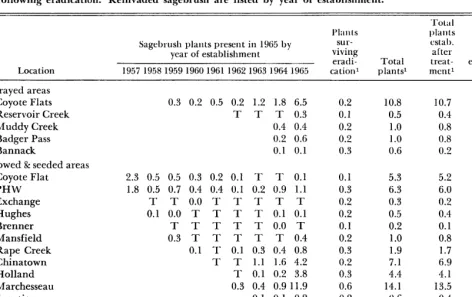
Table 1. Average number of sagebrush per square meter in 5 sprayed areas and 15 plowed and seeded areas, Beaver- head County, Montana, 1965. Earliest year of sagebrush establishment for each location is the first growing season following eradication. Reinvaded sagebrush are listed by year of establishment.
Total Total
1’1;1111s l)lants plants Total plants Sagebrush plants present in 1965 by sur- estab. less estab. after
year of establishment viving alter 1965 treatment eracli- Total treat- establish- less 1965 es- Location 1957 19581959 1960196119621963 19641965 cation1 plan tsl mentl mentl tablishmentl
Sprayed areas
Coyote Flats 0.3 0.2 0.5 0.2 1.2 1.8 6.5 0.2 10.8 10.7 4.4 4.2
T T T 0.3 0.1 0.5 0.4 0.2 0.1
0.4 0.4 0.2 1.0 0.8 0.6 0.4
0.2 0.6 0.2 1.0 0.8 0.4 0.2
0.1 0.1 0.3 0.6 0.2 0.3 0.1
Reservoir Creek Muddy Creek Badger Pass Bannack
Plowed & seeded areas Coyote Flat
PHW Exchange Hughes Brenner Mansfield Rape Creek Chinatown Holland Marchesseau Junction Rock Creek Taylor Creek Cottonwood Creek Trail Creek
2.3 0.5 0.5 0.3 0.2 0.1 T T 0.1 0.1 5.3 5.2 5.2 5.1 1.8 0.5 0.7 0.4 0.4 0.1 0.2 0.9 1.1 0.3 6.3 6.0 5.2 4.9
T T 0.0 T T T T T 0.2 0.3 0.2 0.3 0.1
0.1 0.0 T T T T 0.1 0.1 0.2 0.5 0.4 0.4 0.3
T T T T T 0.0 T 0.1 0.2 0.1 0.2 0.1
0.3 T T T T T 0.4 0.2 1.0 0.8 0.6 0.4
0.1 T 0.1 0.3 0.4 0.8 0.3 1.9 1.7 1.1 0.8
T T 1.1 1.6 4.2 0.2 7.1 6.9 2.8 2.7
T 0.1 0.2 3.8 0.3 4.4 4.1 0.6 0.3
0.3 0.4 0.9 11.9 0.6 14.1 13.5 2.1 1.6
0.1 0.1 0.2 0.2 0.6 0.4 0.4 0.2
0.3 0.2 1.1 0.3 2.0 1.6 0.9 0.5
T T 8.3 0.3 8.6 8.3 0.3 T
3.8 0.4 4.2 3.8 0.4 0.0
0.4 0.7 1.1 0.4 0.7 0.0
IApparent discrepancies due to rounding error. “T” = 0.01 to 0.05 plants per square meter.
seeded locations and five sprayed locations, totaling 28,681 acres were examined in 1965. Treatment dates were from 1957 to 1964.
Most sprayed areas occupy steeply rolling to mountainous foothill sites whereas the plowed areas are on gentler to- pography. The upland soils are mostly Aridisols (Brown, Solochak, and Solonetz) and Mollisols (Chestnut and Chernozem). The normally calcareous soils have A and B horizons with diverse depth and physical characteristics. Calcium carbonate deposits on upturned stones indicate shallow moisture penetration.
Over a 15-year period, precipitation at the Dillon airport ranged from 6.55 to 12.35, with an average of 9.59 inches. April, May, and June received over 50% of the annual pre- cipitation. Isothermal lines drawn in 1961 indicate that most of the experimental sites are in the 8 to 12 inch an- nual precipitation zone. The growing season averages 88 days. The wide climatic extremes often are intensified by wind and exposure.
The native vegetation near the study areas is dominated by a big sagebrush-bluebunch wheatgrass (Agropyron spicatum) aspect. Associated shrubs are rabbitbrush (Chryso- thamnus spp.) and three-tip sagebrush (Artemisia tripartita). Associated perennial grasses include Idaho fescue (Festuca idahoensis), Sandberg bluegrass (Pou secundu), needleand- thread (Stipu comutu), Indian ricegrass (Oryzopsis hymen- oides), and western wheatgrass (Agropyron smithii). The most common forbs are the mat-type phlox (Phlox spp.) and lupines (Lupinus spp.).
Paired plots were placed at predetermined regular inter- vals along transects 150 m in length and at least 50 m apart. Transects used to test whether reinvasion came from out- side the areas were designated “regression transects,” and originated at and perpendicular to treatment edges with potential sagebrush seed sources. Other transects located within the treatment area were designated “interior tran- sects.”
Two types of plots (hence the term “paired plots”) were used in sampling. One plot was one meter square and the other was circular with a radius of one meter, both with the same center.
All sagebrush plants within the square-meter plot were counted and aged by ring counts (Ferguson, 1964). Sage- brush plants established before the treatment within the circular plot were counted and designated as mature plants capable of seed production even though some were not pro- ducing seed at the time of the study. Mature plants were counted when foliage was present within the vertical pro- jection of the circular plot boundaries.
SAGEBRUSH REINVASION 211
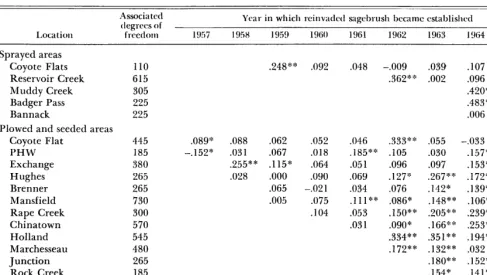
Table 2. Correlation coefficients between mature (treatment surviving) sagebrush and various age classes of reinvaded sagebrush.
Location
Associated tlegrecs of
freedom 1’157 . .
Year in which rcinvadccl sagebrush became established
1058 . . 1959 1960 1961 1962 196s 1964 1965 Sum Sprayed areas
Coyote Flats Reservoir Creek Muddy Creek Badger Pass Bannack
Plowed and seeded areas Coyote Flat.
PHW Exchange Hughes Brenner Mansfield Rape Creek Chinatown Holland Marchesseau Junction
Rock Creek Taylor Creek Cottonwood Creek Trail Creek
110 615 305 225 225 445 185 380 265 265 730 300 570 545 480 265 185 550 225 300
.248”” .092
.089" .088 .062 .052 -.152* .031 .067 .018 .255** .115” .064 .028 .ooo .090 .065 -.02 1 .005 .075
.104
.048 -.009 .362””
.046 .333”” .185** .I05 .051 .096 .069 .127” .034 .076 .111** .086” .053 .150”” .031 .090”
.334”” .172** .039 .002 .055 .030 .097 .267** .142* .148** .205** .166”” .351** .132”* .180”* .154” .275** .107 .096 .420** .483** .006 -.033 .157* .153** .172” .139* .106”* .239** .253”* .194** .032 .152** .141* .112** .021 .072 .266** .284”* .084 .028 .140” .072 .148* .093 .148** .338”* .368** .151** .2 14** .038 .206** .380** .160* .120* .064 .090 .379** .382** .043 .124** .139* .200** .276** .164* .172”” .330”” .367** .184** .216** .097 .233”* .383** .160” .120*
** Indicates significance at the 1% level. * Indicates significance at the 5% level.
species was recorded along one edge of the meter square plot frame.
Field data were recorded on Port-a-punch cards and trans- ferred to standard 80-column IBM cards. Standard mathe- matical and statistical procedures were used to evaluate the results.
Results and Discussion
Sagebrush age classes are shown in Table 1. From 0.1 to 0.7 sagebrush plants/m2 survived the eradication treatments. There was no statistically significant difference between survival on areas that were sprayed and on areas that were plowed and seeded to grass.
Sagebrush plants established following sagebrush control activities varied widely among and within locations (Table 1). With few exceptions, there were more seedlings of 1965 germination (the year of the study) than any other year. This indicates a marked mortality of new seedlings before the second growing season. The column titled, “Total Plants Less 1965 Establishment” gives the best es- timate of the number of sagebrush plants which may be expected to remain in an area. The last column, “Total Plants Established after Treat- ment, Less 1965 Establishment,” is the best esti- mate of re-establishment of sagebrush.
Effectiveness of Initial Sagebrush Kill.-Re-es- tablished brush was found in association with ma- ture brush in all but one of the treatment areas
(Table 2). In 13 of the 20 locations, seedlings ger- minating in 1965 were significantly correlated with the mature brush, although the correlations were fairly low. Sagebrush plants germinating in 1964 likewise were significantly correlated with mature sagebrush in 13 of the 20 locations. Ten of these locations were the same as those having significant correlations for the 1965 seedlings. Ten locations had significant correlations for plants germinating in 1963 and eight for plants germinating in 1962. Plants germinating in earlier years showed few sig- nificant correlations with mature sagebrush.
Of the five chemically sprayed locations, the Muddy Creek and Badger Pass spray areas showed significant positive correlations for the two years since treatment. Six of the plowed and seeded lo- cations lacked significant positive correlations in the first year after treatment. Five of these had significant positive correlations in later years.
212
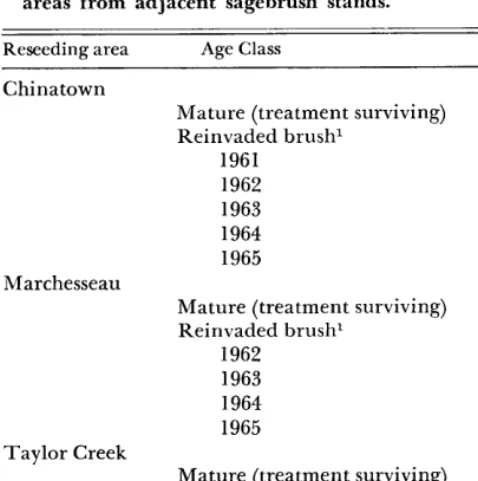
JOHNSON AND PAYNETable 3. Regression coefficients of three study areas to determine whether sagebrush reinvaded brush control areas from adjacent sagebrush stands.
Reseeding area Age Class b value
Chinatown
Marchesseau
Taylor Creek
Mature (treatment surviving) Reinvaded brush1
1961 1962 1963 1964 1965
Mature (treatment surviving) Reinvaded brush1
1962 1963 1964 1965
Mature (treatment surviving) Reinvaded brush1
1963 1964 1965
-.0069* *
-.0005* -.0006” -.0261** -.0284** -.0682**
.0036
.0007
-.0016 -.0068” -.0352
-.OOlS
.0003 -.0002
.0942””
**
1
Indicates significance at the 5% level (one-tailed test). Indicates significance at the 1% level (one-tailed test).
Years 1961 to 1965 represent plants present in 1965 by year of establishment.
Time of Treatment in Relation to Sagebrush Maturity.-Four of the plowed and seeded areas (Coyote Flat, Marchesseau, Cottonwood Creek, and Trail Creek) were believed plowed in late autumn after sagebrush seed maturation. The first year re- established sagebrush plants averaged 2.3, 0.3, 3.8, and 0.4 plants/m2 respectively (Table 1). The ex- ceptionally high early re-establishment rates likely resulted from a scattering of the new sagebrush seed crop throughout the freshly prepared seed- bed. The reduced competition following plowing further served to insure high rates of early brush re-establishment. The practice of mechanically re- moving sagebrush in the autumn after seed mat- uration appears to assure severe reinfestation of the treated areas.
Wind-borne Seed.-Eight of the study locations were adjacent to sagebrush stands suitable for studying the influence of wind-borne seed on rein- vasion. Table 3 lists three of the locations and their corresponding regression coefficients. Of the eight areas, only the Chinatown Reseeding had consistently significant and, generally speaking, slightly higher negative values than the other loca- tions. Even these values for seedlings probably do not indicate seed movement into the treated area from the periphery. The mature plants (potential sources of seed) within the Chinatown Reseeding likewise had a negative value, indicating decreas-
ing densities of unkilled brush from the edge in- ward.
Prevailing wind direction was not considered in evaluating wind-borne seed. Even though this is the case, it is felt that sagebrush adjacent to such large areas is of no practical importance as a seed source for reinvasion.
Influence of Non-sagebrush Vegetation on Rein- vasion .-Basal intercept of live vegetation varied from 0.6 to 3.4%. In all of the correlations exam- ined, only four of 95 were significant, and these were positive. With the exceptions of these four, no trend was found for either positive or negative correlations. Negative correlations would have in- dicated non-sagebrush vegetation was instrumental in preventing sagebrush re-establishment and posi- tive correlations the reverse. The only conclusion which can be reached is that sagebrush re-establish- ment was not influenced by other vegetation.
Precipitation.- Studies in southwestern Montana have shown that sagebrush seed germinated in the spring as soon as temperatures became sufficiently warm (Mont. Agr. Exp. Sta., Progress Reports,
1961-64). In these studies, precipitation never limited germination. Temperature appeared to control germination, but the summer survival of the seedlings was thought to be limited by precipi- tation.
With this in mind, June to July, May to Octo- ber, and annual precipitation patterns were studied to determine whether differences in precipitation accounted for differential reinvasion rates. Three study locations were selected for examining pre- cipitation-reinvasion relationships. These were among the first treated and consequently best suited for regression analyses due to adequate sam- ple size (determined by number of years since the treatment). In addition to the analyses of the three individual areas, all plowed locations and all 20 locations were considered collectively. The results of the regression analyses were non-significant in all cases.
Although these results indicate no relationship between precipitation and reinvasion rates, the possibility should not be discounted. It is possible that the proper precipitation data combination was not used. Perhaps an interaction of factors, in- cluding precipitation, is involved.
Effect of Soil and Topographic Characteristics.- The influence of each of these factors was tested only where major differences in a factor occurred within a treatment area.
HASTENING EMERGENCE 213
texture were not frequently found, it is concluded FERGUSON, CHARLES WESLEY. 1964. Annual rings in big that soil texture was not well related to reinvasion sagebrush. The Univ. Ariz. Press, Tucson, Ariz. 95 p.
rate. FRISCHKNECHT, NEIL C., AND A. PERRY PLUMMER. 1955. A
Significant differences in sagebrush re-establish- comparison of seeded grasses under grazing and protec- ment among erosion classes were found within tion on a mountain brush burn. J. Range Manage. 8: three of 17 locations, but the relationships were 170-175.
not the same among these locations. It is con- GOODWIN, DUMTAYNE LEROY. 1956. Autecological studies eluded that erosion severity is not related to sage- of Artemisia tridentclta Nutt. Ph.D. Thesis. Wash. State
brush re-establishment. Coll. Summary, p. 64-67.
In nine treatment areas re-established sagebrush LoMMASSoNj T* 1946. Transition of sagebrush, Artemisia varied significantly with respect to exposure. The trident&u, on high mountain rangeland in southwestern northwest exposures generally were more favor- Montana, 1915-1945. U.S. Forest Serv., Region 1, Mis- able for re-establishment than south exposures. soula, Mont. Rance Manage. No. 4. 7 p.
Twelve areas were tested to determine if a rela- LoMMASSoNJ T+ 1947. Transition of sagebrush, Artemisin tionship existed between percent slope and sage- tridentutu, on semiarid foothills of the upper Missouri brush re-establishment. Only two areas indicated River valley following burnin?. 1J.S. Forest Serv., Region that a relationship existed, with more sagebrush 1, Missoula, Mont. Range Manage. No. 6. 2 p.
found on steeper slopes. Since 10 of these areas MONTANA AGRICULTURAL EXPERIMENT STATION. 1961-64. showed no relationship, percent slope cannot be Annual propress reports-contributing project to Regional considered an important factor. Project W-25-ecology range. and improvement of brush infested
LITERATURE CITED MUEGGLER, WALTER F. in the soil of burns or is it wind-borne? 1956. Is sagebrush U.S. Forest Serv., seed residual BEETLE, A. A. 1960. A study of sagebrush-the section Intermountain Forest and Range Expt. Sta. Res. Note
Tridentutue of Artenzisia. Wyo. Agr. Expt. Sta. Bull. 368. No. 35. 10 p.
83 p. PECHANEC, JOSEPH F., A. PERRY PLUMMER, TOSEPH H. Ro?-
BLAISDELL, JAMES P. 1949. Competition between sage- ERTSON, AND A. C. HULL, JR. 1944. Eradication of big brush seedlings and reseeded grasses. Ecology 30: 5 12-5 19. sagebrush (Artemisiu tridentutu). 1J.S. Forest Serv., In- BLEAK, A. T., AND WARREN G. MILLER. 1955. Sagebrush termountain Forest and Range Expt. Sta. Res. Paper No.
seedling production as related to the time of mechanical 10. 23 p.
eradication. J. Range Manage. 8:66-69. ROBERTSON, JOSEPH H. 1947. Responses of range grasses DYKSTERHUIS, E. J. 1964. Technicians’ Guide, Part II, E. to different intensities of competition with sagebrush
1J.S. Dept. Agr., Soil Conserv. Serv. 4 p. (Artemisiu tridentutu Nutt.). Ecology 28: 1-16.
% +i? *
Preplanting Treatment to Hasten
Germination and Emergence
of Grass Seed’
WESLEY KELLER AND ALVIN T. BLEAK Agronomist and Range Scientist, Crops Research Division,
Agricultural Research Service, U.S.D.A., Logun, Utah.
Highlight
Seeds in the crested wheatgrass complex were placed under conditions favorable for germination for periods of 10 to 90 hr, superficially dried, and then planted on a greenhouse bench. The most effective treatment was at 63 F for 60 to 70 hr. Seedlings resulting from this treat- ment emerged about 40 hr ahead of untreated seeds. The study suggests that if field tests yield similar results, pre- treatment of seed may contribute towards greater success in range seeding.
1 Cooperative investigation by the Crops Research Division, Agricultural Research Service, U.S. Department of Agri- culture, and the Utah Agricultural Experiment Station.
Many seeding failures have occurred when un- favorable conditions have developed subsequent to planting. Hot drying winds, unexpectedly low temperatures, or rain that briefly wets the surface and causes the soil to crust, are a few conditions that damage range seedings. Failures in this cate- gory should be reduced if practices could be em- ployed that would hasten emergence.