IN SITU EVALUATION OF BASIL OIL ESSENTIAL OIL CYTOTOXICITY (OCIMUM BASILICUM L.)
Maysa Christovam Mangetti1, Rebeca Petroni Af9ini1, Adilson Cesar de Abreu Bernardi2, Nadia Lunardi3,Guilherme José Pimentel Lopes de Oliveira4, Rodolfo Jorge Noeck Neto5, Eloisa Marcantonio Boeck3
1 Araraquara University, Araraquara, SP, Brazil
2 Department of Microbiology, Araraquara University, Araraquara, SP, Brazil 3 Department of Orthodontics, Araraquara University, Araraquara, SP, Brazil 4 Department of Periodontology, Sao Paulo State University, Araraquara, SP, Brazil
5 Department of Surgery, Araraquara University, Araraquara, SP, Brazil
CORRESPONDING AUTHOR: [email protected]
ABSTRACT
Essential oils derived from plants used as condiments represent a large group of natural antimicrobials. Extracts and essential oils from plants have been shown to be efficient in controlling the growth of a wide variety of microorganisms, including filamentous fungi, yeasts and bacteria. Practical uses of these activities are suggested in humans and animals, as well as in the food industry. This study aimed to evaluate the basal basil essential oil (Ocimum basilicum L.) cytotoxicity in NCTC Clone 929 cell line, mouse connective tissue cells (CCIAL 020), which were seeded in Petri dishes and incubated for 48 hours To to form the cell monolayer. For the this test accomplishment of this test, we counted with the collaboration of the Nucleus of Cell Cultures - NCC of the Adolfo Lutz Institute, of the city of São Paulo-SP. The culture medium used is the solid coating medium, and fragments of the samples fragments are were placed on this coating medium and the plates were again incubated for 24 hours. The Biological Reactivity Degree (GR) index, which is the area not stained by the vital dye, is were observed macro and microscopically. Samples were tested in quadruplicates on separate plates. ThusThereunto, the test result showed that the essential oil was cytotoxic in the cell line studied, and that the future work in pharmacology and toxicology needs to be performed to better standardize the therapeutic dose, which is not cytotoxic as the pure oil behaved.o assess the attitude and practice of dental professionals towards using of advance Radiographic technique.
KEYWORDS: Ocimum basilicum L., Coriandrum sativum L., cytotoxicity
http://dx.doi.org/10.19177/jrd.v5e1201716-24
INTRODUCTION
Emergence and dissemination of microorganisms resistant to antimicrobials available in the Market has been reported for decades. Among agents used for bacterial biofilm chemical control called Chlorhexidine digluconate is considered as Golden
standard due to the antimicrobial good effects and its high substantivity, what enables this substance action for longer than other solutions. However, despite its benefit effects, Chlorhexidine digluconate prolonged use may bring side effects, such as staining in teeth, restorations, prosthesis and tongue,
incentive on the search for new sources of substances with antimicrobial activity, like plants used in traditional medicine (Mendes et al., 2011). The World Health Organization stimulates the study of regional medicinal plants for medicine as a way to reduce costs on public health programs. The use of vegetal species as drugs results in low cost products and less production time, consequently being more accessible for population (Mendes et al., 2011; Furlam, 1998). Antioxidant, antimicrobial and antifungal activities of basil (Ocimum basilicum L.) has been reported on literature in several areas (Lee et al., 2005; Opalchenova & Obreshkova, 2003; Alves et al., 2009; Cavalcanti et al., 2012; Araújo da Silva, et al., 2008), what shows effective antimicrobial results.
According to Ostrosky et al., (2008), to evaluate antimicrobial activity of vegetal extracts is necessary determinate the lower amount of substance to inhibit the microorganism test growth. This value is known as Minimal Inhibitory Concentration (MIC). A very relevant aspect to determine vegetal extracts MIC is the concern regarding to antimicrobial, toxicological and legal aspects pertinent to the use of natural composites or their combination in living beings. For the same authors, MIC determination may suffer variations depending on the microorganism or strain used for test. Then, MIC test must be applied according to the primary etiologic agent and the type of pathology in which the medicine will be proposed as therapy. In the study performed by Lourenço et al. (2015), in which MIC of Ocimun basilicum L. and do Coriandrum sativum L. oil extracts were evaluated, the extracts presented inhibitory activity before S. mutans strain. Basil in 1:4 concentration showed bacteriostatic, and in 1:3 concentration, bactericidal.
However, to use a product in the oral cavity, it must be effective against oral pathogens and cannot cause lesions. This study had as aim to evaluate basil (Ocimum baslicum L.) essential oil cytotoxicity in cells NCTC Clone 929 lineage, mouse’s connective tissue (CCIAL 020).
MATERIAL AND METHODS
CELL CULTURE
To perform this test, we count on Nucleus of Cell Culture – NCC of the Adolfo Lutz Institute collaboration, of city of São Paulo-SP.
To carry out the basil essential oil cytotoxicity test, NCTC clone 929 (CCIAL 020) cell lineage was used, mice’s connective tissue from the cell culture section of the Adolfo Lutz Institute.
NCTC clone 929 lineage cell was cultivated in minimal middle Eagle (MME) supplemented with 0.1 nM non-essential amino acid, 1,0 mM Sodium pyruvate and 10% de fetal bovine serum (SFB), no antibiotics (MME 10% SFB).
Maintenance of these lineages was performed at 36ºC in bottles 75cm2 or 250 mL and peal at 72 hours medium interval. Cell monolayer dispersion was carried out using an association of trypsin 0.20% and versene 0.02% (ATV). After dispersion, the cells were suspended again in their respective culture medium and distributed on Petri dish, which were used during the tests performing.
AGAR DIFFUSION METHOD
Cells were seeded in 5mL volume in Petri dishes (60X15 mm), at concentration 3.0X10⁵cells/mL for NCTC – clone 020 lineages. Inoculation was performed during 48 hours at 37ºC in humid atmosphere containing 5% CO2. After this period with monolayer cells
formed, culture medium was discarded and added 5 mL overlay medium in each Petri dish. This medium is composed by equal parts of MEM concentrated twice and agar at 1.8% containing 0.01% neutral red as vital coloring. In the moment of use, agar was melted and mixed to MEM, both at 44 ± 1ºC temperature.
Fragments of latex were used as positive controls, and filter paper dish as n e g a t i v e s o n e s , r e s p e c t i n g 0 . 5 dimensions for both.
Basil essential oil aliquots were placed directly on this cover middle, the dishes were incubated for 24 hours, and this procedure was performed in quadruplicate.
D i s h e s w e r e a n a l y z e d macroscopically and microscopically, and cytotoxicity was noticed out by the presence clear halo under or around the s a m p l e t e s t e d . F r o m t o x i c i t y measurement, zone indexes were graduated according to the table below.
Table 1. Zone Indexes classification (ZI) reference values.
GR – Biological reactivity degree; Positive control: Toxic latex fragment 0.5 cm x 0.5 cm; Negative control: Nontoxic filter paper discs 0.5 cm diameter.
Macro and microscopically we observed the index Biological Reactivity degree (GR) which is the non-colored area by vital coloring. The samples are tested in quadruplicate in dishes separated.
PHARMACOLOGICAL AGENT EVALUATED
Crude vegetal extracts are normally complex mixture constituted almost always divided for several natural products classes containing different functional groups. Separation process of these bioactive natural products correspond to three main stages: e x t r a c t i o n f r o m p l a n t m a t t e r ,
fractionation of extract or oil and purification of active principle.
Ocimum basilicum L. essential oil (basil) used in this research is from Brazil, and the extraction method used was steamed herb, its cultivation was organic non-certified, and obtained at Laszlo Aromaterapia Ltda.
ESSENTIAL OIL CHEMICAL COMPOSITION
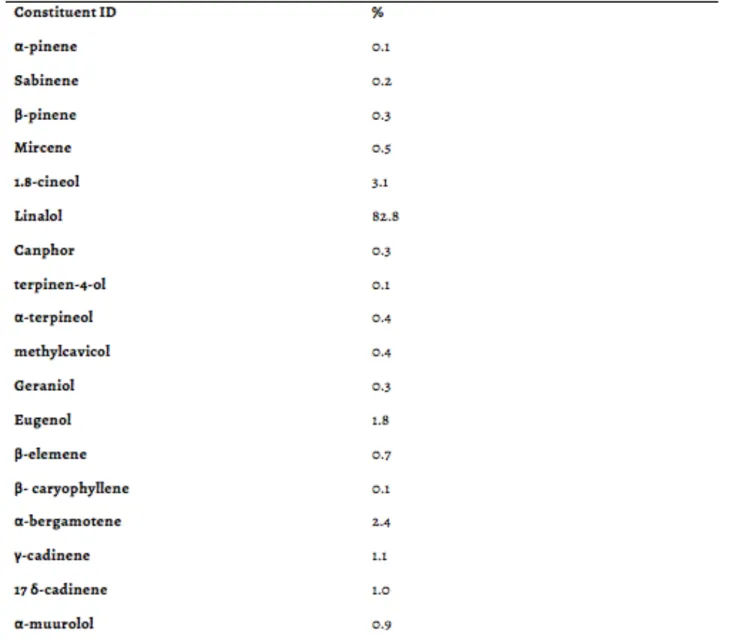
Phytochemistry prospection of samples was obtained through Chromatographic analysis performed by the Federal University of Minas Gerias, solicited by LAZLO AROMATERAPIA LTDA (Table 2).
Table 2. Green Plant Basil essential oil chemical constitution.
BASIL ESSENTIAL OIL ANTIBACTERIAL ACTIVITY
Basil essential oil antibacterial activity was conducted in another research work developed by supervisors and students in Streptococcus mutans strains and the results showed were satisfactory.
To perform this activity verification, microdilution test was used to find out the Minimum Inhibitory Concentration (MIC).
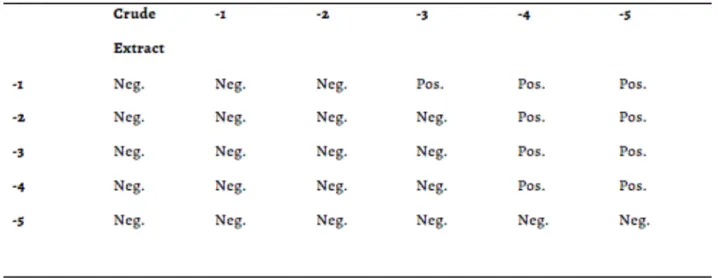
Determination of Minimum Inhibitory Concentration (MIC) by microdilution in broth showed Ocimun basilicum L. essential oil presented
inhibitory activity before S. mutans strain. We observed basil extract with better activity was the crude one until dilution -2, which did not show bacterial growth (Table 3).
The sample presented severe toxic effect for NCTC Clone 929 (CCIAL 020) cell lineage.
Unsatisfactory conclusion on test means the result obtained within reference parameters adopted by Brazilian Pharmacopeia and or ISO
10993-5 standard, whose recommend the sample with reactivity greater than 2 is considered cytotoxic.
Table 3. Basil extract dilution in which there were bacterial growth.
DISCUSSION
Basil is largely used by population, mainly in cooking. Its origin is from Asia and it was introduced in Brazil by Italian Colony that uses it as seasoning in pastry, sauce and meat. Some people consider it as a divine essence and it is chosen by Indians to swear over it in court. It was found growing nest to Christ’s sepulcher after resurrection, and it is used for some churches to prepare the holy water.
It presents in essential oil chemical composition: estragol, linalool, lineol, ancanfor, eugenol, cineol, pinene, thymol. It also contains tannins, saponins, flavonoids, caffeic acid and esculoside. With all this profile, it presents therapeutic properties, as in combat to muscular contractions of stomach and intestinal gases; gargle to cure tonsillitis, laryngectitis and cold sore; against anxieties, being used to treat insomnia; through its galactogenic action, it has the property to stimulate
strongly milk secretion, could normalize problems with breastfeeding; it is a central nervous system and of supra renal cortex; stimulates diuresis.
By this plant therapeutic profile observation and by antimicrobial activity results obtained in other researches with aqueous extract and essential oil, we conducted this work in order to know some further characteristics of basil essential oil in cell cultures in order to verify its cytotoxicity profile to develop prophylactic methods with the use of the o i l t o d e c r e a s e o r e l i m i n a t e Odontopathogenic microorganisms.
Essential oil antimicrobial activity has formed the basis for several applying, including food conservation, pharmaceutical products, alternative medicine and natural therapies. Basil (O. basilicum L.) and its essential oil have received considerable attention because of their medicinal potential properties. Phytotherapic action against S. mutans is reported successfully in literature.
Systematic research to obtain new substances with therapeutic goals may be executed through several processes. New molecules synthesis, molecular changing on natural or s y n t h e t i c s u b s t a n c e s w i t h pharmacological properties defined, and extraction, insulation and purifying of new composites from natural sources, especially from plant are the most used ones. This last one is characterized as an inexhaustible source of substances potentially actives as medicine. On the other hand, medicinal plants must be considered not only as raw material, starting point for new molecules Discovery, but as a natural resource potentially active on standardized and efficient herbal remedy ²³.
microorganisms. Silva, in 2015, also affirmed that knowing bacteria resistant to multiple drugs means a challenge to treat infections. Then, find new efficient new substances to fight against microorganisms is necessary.
It is common finding reports on scientific literature describing microorganisms which tolerates toxic composites presence. This tolerance is associated to mechanisms which also involve resistance, and it depends on strategies that these microorganisms have and which are known as virulence factors, among them we may mention: a) efflux pump; b) toxic component sequestration; c) bacterial membrane permeability reduction; d) enzymatic changes for a less toxic way; and e) target cell sensitivity reduction ¹4.
Silva evaluated, in 2015, the chemical composition of O. basilicum, and determined antibacterial, cytotoxic and genotoxic activities of essential oil and its major composite. Besides, bacterial death kinetics and the study of composite association to standard antibiotics were also analyzed. Chemical composition was determined by gas chromatography coupled to mass spectrometry, and antibacterial activity of composites was evaluated through determination of minimum inhibitory concentration and minimum bacterial concentration by microdilution technique. Antibacterial activity was characterized as bactericidal for strains studied in composite concentration CIMx 4 and after 8h contact.
Linalool is a monoterpenoid composite monoterpênico commonly found as major component of essential oils in aromatic species, such as lavender (Lavandula officinalis), coriander (Coriandrum sativum), nolol (Citrus aurantium) and in great amount in basil
essential oil (Ocimum basilicum), which has been used in reseraches because its antibacterial activity60.
M o r e c o m m o n c h e m i c a l contents of essential oils are formed by combination among terpenes, phenols, aldehydes alcohols, esters, ketones, nitrogen and sulfur³7. Terpenes are formed by isoprene unities containing only hydrogen and carbon in their structures.
Terpene molecules found in essential oils have between 10 and 30 atoms and they are classified according t o t h e n u m b e r o f c a r b o n s (Monoterpenes-10 carbon atoms; Sesquiterpenes-15 carbon atoms; D i t e r p e n e s - 2 0 c a r b o n a t o m s ; Sesterpenes-25 carbon atoms and Triterpenes-30 carbon atoms).
Because their diversity, terpenes are largely studied and able to produce several pharmacological and biological effects³7. Several essential oils and t e r p e n e c o n t e n t s p r e s e n t pharmacological actions already proved. Some among them can be detached, like antibacterial activity, pro-inflammatory, pro-nociceptive, inflammatory, nociceptive, analgesic, antioxidant, anti-convulsivant and Skeletal, cardiac and s m o o t h m u s c l e s c o n t r a c t i l e modulator61,60.
Another important factor is the bacterial adherence to material surfaces. It may lead to an infection or contamination and/or destruction (loss and function) of these materials77.
Bacterial biofilm produced by some organisms is considered an important virulence factor, what enables the bacterial adherence (by extracellular polysaccharide) to biotic surfaces (alive), which has the aim to increase the survival chance in some middle.
Torres et al. (2000) detached some ideas on antimicrobial: low toxicity, and must be recognized the product interaction with buccal epithelium; low permeability, what do not provoke imbalances which lead to other recurrent diseases; and having good retentivity (substantivity), what may be released slowly.
Millenarian use of medicinal plants showed, along years, that some plants present substances potentially dangerous, like Pyrrolizidine alkaloids, a n t h r a q u i n o n e s a n d lactonassespiritoprenes. Then, the balance between biological activities versus toxicity of determined natural product is Paramount parameter to verify its pharmacological application.
Cytotoxic and genotoxic activities of natural composites show themselves important in order to ensure greater safety in use of these products by population. Unfortunately it is unknown the toxic profile of major herbal remedies which are used in self-medication or by medical prescription.
Veiga (2005) asserted, like examples of toxic substances in plants may be cited hepatotoxic effects from apiol, safrole, lignans and alkaloid pyrrolizidine; toxic renal action that can be caused by some vegetal species which contain terpenes and saponins, and some types of dermatitis, caused by species rich in Lactonassesiteraphrenes and natural products type furanocoumarins. Toxic or antinutritional components like oxalic acid, nitrate and erucic acid are in some plants of commercial consumption. Several substances insulated from plants considered medicinal have cytotoxic or genotoxic activity and show relation with tumor incidence. Besides, the same author still mention some main contaminants from plants like heavy metals, which are part of pharmaceutical preparation of several oriental medicine schools, generally used jointly medicinal plants extracts, drugs added in order to increase effects and possibility for microbiological contamination.
Basil essential oil used in this research presented cytotoxicity in NCTC Clone 929 (CCIAL 020) cell lineage in its pure form. We believe that high
concentration of contents may act isolated or jointly presenting this side effect.
Regarding to linalool toxicity, its lethal dose is low, when compared to other contents of essential oils, what becomes target for future therapeutic application. Toxic effects of substances are related with delivery route, time, duration and frequency of dose76. Linalool presented low acute toxicity in several experimental models and with different delivery route, what justifies the interest in its content for several areas of basic sciences. Researches for new exeperiments are necessary in more advanced levels of preclinical toxicology of medicine plants to evaluate the lethal doses 50% (DL50), which consists in delivery of crescent doses; acute toxicity (single doses), carried out before start pharmacological tests, and represents estimate and preliminary evaluation of toxic properties of a herbal remedy; acute toxicity (repeated doses) is a preliminary and estimative evaluation of toxic properties of a herbal remedy, providing information on health risks from exposition to repeated doses in shot time; subchronic toxicity may be performed after obtaining data from DL50 and studies on acute toxicity – single and repeated doses; chronic toxicity has the aim to characterize the toxicological profile of a herbal remedy, used repeatedly in a mammal specie for long period15,23.
Through this study, we observed the basil may be used in its traditional ways without bring damage for human health. However, to use its crude essential oil (pure) in order to develop new products, pharmacological and toxicological tests are necessary.
CONCLUSIONS
We conclude that basil essential oil presented severe toxic effect for NCTC Clone 929 (CCIAL 020) lineage cell, then considered unsatisfactory.
REFERENCES
1. Ahonkhai, B.A. Ayinde, O. Edogun and M.U. Uhuwmangho. Antimicrobial activities of the volatile oils of ocimum bacilicum L. and Ocimum gratissimum L. (lamiaceae) against some aerobic dental isolates. Pakistan Journal of Pharmaceutical Sciences. 2009; 22(4):405.
2. Alcantara RGL, Joaquim HVT, Sampaio SF. Plantas medicinais: o conhecimento e uso popular. Rev. APS. 2015; 18(4): 470 - 482.
3. Albuquerque UP, Hanazaki N. As pesquisas etnodirigidas na descoberta de novos fármacos de interesse médico e farmacêutico: fragilidades e pespectivas. Rev Bras Farmacogn. 2006;16:678 – 689.
4. Almeida LFD, Cavalcanti YW, Castro RD, et al. Atividade antifúngica de óleos essenciais frente a amostras clínicas de Candida albicans isoladas de pacientes HIV positivos. Rev Bras Pl Med. 2012; 14(4): 649-55.
5. Alves et al. In vitro antimicrobial, antiadherent and antifungal activity of Brazilian medicinal plants on oral biofilm microorganisms and strains of the genus Candida. Revista da Sociedade Brasileira de Medicina Tropical 42(2):222-224, mar-abr, 2009.
6. Anderson GG, O'Toole GA. Innate and Induced Resistance Mechanisms of Bacterial Biofilms. Curr Top Microbiol Immunol. 2008; 322: 85-105.
8. Antonio GD, Tesse CD, Moretti-Pires RO. Fisioterapia na atenção primária à saúde. Rev Saúde Pública. 2014; 48(3): 541-53.
9. ASTM F895-84: 1984- Standart test method for agar diffusion cell culture screening for cytotoxicity
10. Barbosa – Filho JM, Medeiros KCP, Diniz MFFM, Batista LM, Athayde – Filho PF, Silva MS et al. Natural products inhibitors of the enzyme acetylcholinesterase. Rev Bras Farmacogn. 2006; 16:258-285.
11. Barnabé W, Mendonça NT, Pimenta FC, et al. Efficacy of sodium hypocholorite and coconut soap used as disinfecting agents in the reduction of denture stomatitis, Streptococcus mutans and Candida albicans. Journal of Oral Rehabilitation, 2004; 31: 453 – 9.
12. Barreto VL, Feitosa AMSC, Araujo TJ, et al. Acción antimicrobiana in vitro de dentifricos conteniendo fitoterápicos. Avances em odontoestomatologia. 2005; 21(4): 195 – 201.
13. Bertini LM, Pereira AF, Oliveira CLL, et al. Perfil de sensibilidade de bactérias frente a óleos essenciais de algumas plantas do nordeste do Brasil. Infarma, 2005; 17 :3-4.
14. Bezerra LMD, Ferreira GLS, Silva ICG, et al. Atividade Antibacteriana In Vitro de Fitoconstituintes Sobre Microrganismos do Biofilme Dentário. Rev Bras Cienc da Saud, 2013;17 (1): 79 – 84.
15. BRUINS, M.R.; KAPIL, S.; OHEME, F.W. Microbial resistence to metals in the environment. Ecotoxicol. Environ. Saf., v. 45, p. 198-207, 2000.
16. BRITO, A.R.M.S. Toxicologia pré-clínica de plantas medicinais in DI ESTASI, L.C. Plantas medicinais: Arte e ciência. Um guia de estudo multidisciplinar. São Paulo: Editora da Universidade Estadual Paulista, 1996.
17. Borba AM, Macedo M. Plantas medicinais usadas para a saúde bucal pela comunidade do bairro Santa Cruz, Chapada dos
Guimarães, MT, Brasil. Acta Bot. Bras. 2006; 20 (4).
18. Buffon MCM, Lima MLC, Galarda I, Cogo L. Avaliação da eficácia dos extratos de Malva sylvestris, Calêndula officinalis, Plantago major e Curcuma zedoarea no controle do crescimento das bactérias da placa dentária. Estudo “in vitro”. Rev Visão Acadêmica. 2001; 2(1): 31-8.
19. Capasso R, Izzo AA, Pinto L, et al. Phytotherapy and quality of herbal medicines. Fitoterapia, v. 71, p.S58-S65, 2000.
20. Carvalho CM, Macedo Costa MR, Pereira MSV, et al. Efeito antimicrobiano in vitro do extrato de jabuticaba (Myrciaria cauliflora (Mart.O. Berg) sobre Streptococcus da cavidade oral. Rev Bras Pl Med, 2009; 11 (1): 79-83.
21. Cavalcanti YW, Pérez ALAL, Xavier GDR, et al. Atividade Antifúngica de Extratos Vegetais Brasileiros sobre Cepas de Candida. Rev Bras Ci Saúde. 2012; 16(1): 43-8.
22. Cowan MN, Plant products as antimicrobial agents. Clin Microbiol Rev 1999; 12: 564-582.
23. Cunha MMC, Gondim RSD, Bonfim BF, et al. Perfil etnobotânico de plantas medicinais comercializadas em feiras livres de São Luís, Maranhão, Brasil. Scientia Plena. 2015; 11(12): 1-12.
24. Di Estasi LC. Plantas medicinais: Arte e ciência. Um guia de estudo multidisciplinar. São Paulo: Editora da Universidade Estadual Paulista, 1996.
25. Drumond MRS, Castro RD, Almeida RVD, et al. Estudo Comparativo in vitro da Atividade Antibacteriana de Produtos Fitoterápicos sobre Bactérias Cariogênicas. Pesq Bras Odontoped Clin Integr. 2004; 4(1): 33-8.
26. Duarte MCT. Atividade Antimicrobiana de Plantas Medicinais e Aromáticas Utilizadas no Brasil. Rev. Multic. 2006;12 (1): 25- 8.
27. Farmacopéia Brasileira, 5ª ed., 2010- Testes de reatividade biológica in vitro.
28. Fernandes COM, Félix SR, Nobre MO. Toxicidade dos fitoterápicos de interesse do SUS: uma revisão. Semina: Ciências Biológicas e da Saúde. 2016; 37(1): 83-96.
29. Fernandes TT, Santos ATF, Pimenta FC. Atividade Antimicrobiana das plantas Plathymenia reticulada, Hymenaea courbaril e Guazuma ulmifolia. Revista de Patologia Tropical. 2005; 34 (2): 113-22.
30. Ferreira FI, Bernardi ACA, Lunardi N, et al. In vitro evaluation of anti-adherence activity of the Ocimum basilicum L. (basil) extract and of the Coriandrum savitium L. (coriander) in acrylic surface of removable orthodontic appliances. JRD. 2015; 3 (1): 637-41.
31. Freire ICM, Pérez ALAL, Cardoso AMR, et al. Atividade antibacteriana de Óleos Essenciais sobre Streptococcus mutans e Staphylococcus aureus. Rev Bras Pl Med. 2014; 16(2): 372-7.
32. Furlam MR. Cultivo de Plantas Medicinais. 15a. ed. Cuiabá: SEBRAE; 1998. 137p.
33. Girolometto G, Avancini CAM, Carvalho HHC, et al. Atividade antibacteriana de extratos de erva mate (Ilex paraguariensis A. St- Hil.). Ver. Bras. Pl. Med., Botucatu. 2009; 11(1): 49 – 55.
34. Gupta D, Bhaskar DJ, Gupta RK, et al. A randomized controlled clinical trial of Ocimum sanctum and chlorhexidine mouthwash on dental plaque and gingival inflammation. J Ayurveda Integr Med 2014; 5:109-16.
35. Ho KY, Tsai CC, Huang HS, et al. Antimicrobial activity of tannin components from Vaccinium vitis – idaea L. J Pharm Pharmacol. 2001; 53: 187-191.
37. Hussain AI ,Anwar F, Sherazi STH, et al. Chemical composition antioxidant and anticrobial activities of basil (Ocimum basilicum L) essential oils depends on seasonal variations. Food Chemistry. 2008; 986-995.
38. ISO 10993.5: 2009- Biological evaluation for medical devices tests for cytotoxicity: in vitro methods.
39. Lavabre M. Aromaterapia: a cura pelos óleos essenciais, 2ed.: Rio de Janeiro,Record, 1993.
40. Lee et al. Identification of volatile components in basil (Ocimum basilicum L.) and thyme leaves (Thymus vulgaris L.) and their antioxidant properties Food Chemistry 91 (2005) 131–137.
41. Leite BA. Estudo da susceptibilidade e resposta dos biofilmes de estafilococos aos agentes antimicrobianos. Tese (doutorado). Universidade Federal de São Carlos – UFSCAR, 2013.
42. Leal-Cardoso JH, Da Silva-Alvez KS, Ferreira-Da-Silva FW, et al.Linalool blocks excitability in peripheral nerves and voltage dependent Na+ current in dissociated dorsal root ganglia neurons. Eur J Pharmacol 25;645(1-3):86-93, 2010.
43. Lourenço et al. Avaliação in vitro da atividade antimicrobiana do extrato oleoso de manjericão ( Ocimum baslicum L.) e coentro (Coriandrum satirum L.) sobre cepas de Streptococus mutans. Trabalho de conclusão de curso (TCC). Centro Universitário de Araraquara- UNIARA, 2015. 77p.
44. Machado FMVF, Barbalho SM, Silva THP, et al. Efeitos do uso de manjericão (Ocimum basilicumL.) no perfil bioquímico de ratos Wistar. J Health Sci Inst. 2011;29(3):191-4.
45. Maekawa LE, Brighenti FL, Lamping R, et al. Atividade antimicrobiana de enxaguatórios bucais sem álcool à base de clorexidina sobre Candida albicans. Rev Odontol UNESP. 2010; 39(1): 15-9.
46. Malhotra R, Grover V, Kapoor A, et al. Comparison of the effectiveness of a commercially available herbal mouthrinse with chlorhexidine gluconate at the clinical and patient level. J Indian Soc Periodontol 2011; 15: 349-52.
47. Martins-Ramos D, Bortoluzzi RLC, Mantovani A. Plantas medicinais de um remascente de Floresta Ombrófila Mista Altomontana, Urupema, Santa Catarina, Brasil. Rev Bras Pl Med. 2010; 12(3): 380-97.
48. Mazutti M, Beledelli B, Mossi AJ, et al. Caracterização química de extratos de Ocimum basilicum L. obtidos através de extração com CO₂ A alta pressão. Química Nova. 2006; 29 (6):1198-1202.
49. Mendes LPM, Maciel KM, Vieira ABR, et al. Atividade Antimicrobiana de Extratos Etanólicos de Peperomia pellucida e Portulaca pilosa. Rev Cie Far Básica e Apl. 2011; 32 (1): 121-125.
50. Michelin DC, Moreschi PE, Lima AC, et al. Avaliação da atividade antimicrobiana de extratos vegetais. Rev Bras Farmacogn. 2005; 15: 316-320.
51. Nascimento GGF, Locatelli J, Freitas CF, et al. Antibacterial Activity of Plant Extracts and Phytochemicals on Antibiotic- Resistant Bacteria. Brazilian Journal of Microbiology. 2000; 31:247-256
52. Nazzaro F; Fratianni F; De Martino L; et al. Effect of Essential Oils on Pathogenic Bacteria. Pharmaceuticals. 2013; 6: 1451-74.
53. Oliveira FQ, Gobira B, Guimarães C, et al. Espécies vegetais indicadas na odontologia. Rev Bras de Farm. 2007; 17 (3): 466-476.
54. Opalchenova G, Obreshkova D. Comparative studies on the activity of basil – na essential oil from Ocimum basilicum L. – against multidrug resistant clinical isolates of the genera Staphylicoccus, Enterococcus and Pseudomonas by using different test methods.Journal of Microbiological Methods. 2003; 54: 105 – 110.
55. Ostrosky EA, Mizumoto MK, Lima MEL, et al. Métodos para avaliação da atividade antimicrobiana e determinação da concentração mínima inibitória (CMI) de p l a n t a s m e d i c i n a i s . R e v B r a s d e Farmacologia. 2008; 18 (2):301 – 307.
56. Pavarina AC, Pizzolitto AC, Machado AL, et al. Na infection control protocol: effectiveness of immersion solutions to reduce the microbial growth on dental prostheses. J Oral Rehabil. 2003; 30 (5): 532- 536.
57. Pereira J V, Sampaio FC, Correia MC, et al. Efeito antibacteriano e antiaderente in vitro do extrato da Punica granatum Linn sobre microrganismos do biofilme dental. Rev Bras de Farmacognosia
Brazilian Journal of Pharmacognosy. 2006; 16(1):88-93.
58. Pinto ATM, Silva DJ, Ribeiro ASC, et al. Atividade Antimicrobiana de Dentifricios Fitoterápicos contra Streptococcus mutans e Staphylococcus aureus. Cient Ciênc Biol, 2013; 15 (4): 259 – 63.
59. Pozzo MD, Viegas J,Santurio DF, et al. Atividade antimicrobiana de óleos essenciais frente a Staphylococcus sp isolados de mastite caprina. Ciência Rural. 2011; 41 (4): 667-672.
60. Rasekh HR, Hosseinzadeh L, Mehri S, et al. Safety Assessment of Ocimum Basilicum Hydroalcoholic Extract in Wistar Rats: Acute and Subchronic Toxicity Studies. Iranian Journal of Basic Medical Sciences. 2011;15(1): 645-65.
61. Rates SMK. Promoção do uso racional de fitoterápicos: uma abordagem no ensino de Farmacognosia. Rev Bras Farmacogn. 2001; 11: 57-69.
62. Rodrigues ACC, Guedes MLS. Utilização de plantas medicinais no Povoado Sapucaia, Cruz das Almas – Bahia Rev Bras Pl.Med. 2006; 8(2):1-7.
Fisiológicas – Universidade Estadual do Ceará.
64. ROSA, M.S.S; MENDONÇA-FILHO, R.R; BIZZO, et al. Antileishmanial Activity of a Linalool-Rich Essential Oil from Croton cajucara. Antimicrobial Agents and Chemotherapy. 47(6): 1895-901, 2003.
65. Runyoro D, Ngassapa O, Vagionas K , et al. Chemical composition and antimicrobial activity of the essential oils of four Ocimum species growing in Tanzania. Food Chemistry .2010; 119: 311–316.
66. Santos EB, Dantas GS, Santos HB, et al. Estudo etnobotânico de plantas medicinais para problemas bucais no município de João Pessoa, Brasil. Rev Bras Farmacogn, 2009; 19 (1B): 321-324.
67. Sedenho JF, Moraes VF, Bernardi ACA, et al. Evaluation in vitro of antimicrobial activity of basil extract (Ocimum basilicum L.) on an acrylic surface of removable orthodontic appliances.Journal of Research in Dentistry. 2014; 2(3).
68. Sienkiewicz M, Monika Lysakowska, Marta Pastuszka, et al.The Potential of Use Basil and Rosemary Essential Oils as Effective Antibacterial Agents Molecules. 2013; 18: 9334-9351.
69. Silva MGF, Carpes ST. Potencial Antioxidante e Antimicrobiano de óleos essenciais e extratos hidroalcóolicos de manjerona (Origanum majorana L.) e manjericão (Ocimum basilicum L.). Depto de Química; Campus Pato Branco; Universidade Tecnológica Federal do Paraná – UTFPR; 2001.
70. Silva MSA, Silva MAR, Higino JS, et al. Atividade antimicrobiana e antiaderente in vitro do extrato de Rosmarinus officinalis Linn. sobre bactérias orais planctônicas. Rev. Bras. Far.; 2008; 18 (2) 236-240.
71. Silva PMB, Acosta EJTR, Pinto LR, et al. Microscopical analysis of Candida albicans biofilms on heat polymerised resin after chlorhexidine gluconete and sodium hypochlorite treatments, 2010.
72. Silva VA. Atividades antimicrobiana, citotóxica e genotóxica do óleo essencial de Ocimum basilicum (Laminaceae) e do linalol. Tese apresentada ao Programa de Pós-graduação em Produtos Naturais e Sintéticos Bioativos do Centro de Ciências da Saúde da Universidade Federal da Paraíba. Centro de Ciências da Saúde da Universidade Federal da Paraíba. 2015; 1-124.
73. Torres CRG, Kubo CH, Anido AA, et al. Agentes antimicrobianos e seu potencial de uso na Odontologia. Pós-Grad Rev Fac Odontol São José dos Campos. 2000; 3(2).
74. US Pharmacopéia 39, 2016- Biological reactivity tests in vitro.
75. Vasconcelos KRF, Veiga Junior VF, Rocha WC, et al. Avaliação in vitro da atividade antibacteriana de um cimento odontológico à base de óleo-resina de Copaifera multijuga Hayne. Rev Bras Farmacogn. 2008; 18: 733-8.
76. Vasconcelos LCS, Sampaio FC, Sampaio M C C , e t a l . M i n i m u m i n h i b i t o r y concentration of adherence ofPunica granatum Linn (pomegranate) gel against S. mutans, S. mitis and C. albicans. Braz Dent J. 2006; 17(3).
77. Veiga VF, Pinto AC, Maciel MAM. Plantas medicinais: Cura segura? Quim. Nova. 2005; 28(3): 519-528.
78. Veiga-Junior VF, Mello JCP. As monografias sobre plantas medicinais. Revista Brasileira de Farmacognosia, v. 18, p. 464-471, 2008.
79. Venâncio AM. Toxicidade aguda e atividade antinociceptiva do óleo essencial do Ocimum basilium L. (manjericão), EM Mus musculus (camundongos). Dissertação (mestrado)- Universidade Federal de Sergipe, Aracajú, 2006.
80. Videla HA. Prevention and controlo f biocorrosion. Int. Biodeterior, Biodegr., vol. 49, p. 259-270, 2002.
81. Vieira DRP, Amaral FMM, Maciel MCG, et al. Plantas e constituintes químicos
empregados em Odontologia: revisão de estudos etnofarmacológicos e de avaliação da atividade antimicrobiana in vitro em patógenos orais. Rev Bras Pl Med. 2014; 16(1): 135-67.
82. ASTM F895-84: 1984- Standart test method for agar diffusion cell culture screening for citotoxicity
83. ISO 10993.5: 2009- Biological evaluation for medical devices tests for cytotoxicity: in vitro methods
84. US Pharmacopéia 39, 2016- Biological reactivity tests in vitro